Watch: Michael Mann’s ‘Collateral’ and Sam Mendes’ ‘Skyfall’: How to Build a Scene

Watch: Michael Mann’s ‘Collateral’ and Sam Mendes’ ‘Skyfall’: How to Build a Scene
For a scene to be truly suspenseful, one must have a sense of the director’s omniscience. What this means is that the viewer must be made to feel on top of, inside, outside, behind, beneath, all over a scene from its beginning to its end, each hairpin plot turn a twist in the viewer’s gut, each moment of respite a breeze on the viewer’s brow. In comparing two key scenes from Michael Mann’s ‘Collateral’ and Sam Mendes’ ‘Skyfall,’ Michael Mclennan shows us how the two directors and cinematographers Dion Beebe and Roger Deakins have placed us inside and outside of the action onscreen simultaneously. 

Watch: Michael Mann’s ‘Heat’ Is an Excellent Story Wrapped in Grander Technique

Watch: Michael Mann’s ‘Heat’ Is an Excellent Story Wrapped in Grander Technique

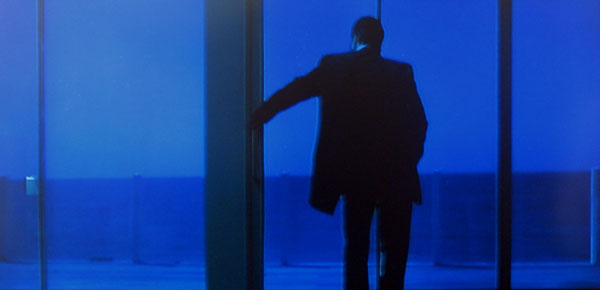
Evan Puschak’s work in his newest ‘Nerdwriter’ installment, on style in Michael Mann’s ‘Heat,’ is fine and detailed. Puschak manages to separate the core of Mann’s L.A. noir tale from the technique Mann adds to it with the precision of someone carving meat away from the bones of a freshly cooked bird. One of the main points the piece makes about Mann’s work is that it is always a blend of what Puschak calls the "functional" and the "stylistic": films that keep you watching through the relentless drive of their stories but have a sleek sheen over them that is unmistakably Mann’s. Puschak has also done his research, pointing out that one of the most famous images from the film, the silhouette shot from behind of DeNiro, looking out into an unbroken blue field (the promo photo for this post, in fact), is actually based on a 1964 painting by Alex Colville called "Pacific"–or that the entire film is based on the true tale of an L.A. detective named Neil McCauley. It’s always a pleasure to revisit Mann’s work, but it’s even more of a pleasure to see it so attentively examined.  

Watch: Michael Mann As a Master of Digital Filmmaking in ‘Public Enemies’

Watch: Michael Mann As a Master of Digital Filmmaking in ‘Public Enemies’

In this installment of "The Unloved," a series of video essays for RogerEbert.com on films which didn’t necessarily find widespread critical acceptance on their delivery, Scout Tafoya takes up ‘Public Enemies,’ Michael Mann’s voyage to the 1930s gangster universe of John Dillinger and his ilk. Tafoya emphasizes the degree to which Mann made digital cinematography his own in the film, an interesting point and one which, if applied properly, could be a mind-changer in looking at this less popular of Mann’s films. At the time the film was released, Press Play published Nelson Carvajal’s gangster movie homage, whose text accompaniment a skeptical eye on the film’s chances—this video piece by Tafoya might encourage those who shared that skepticism to give the film a second look.