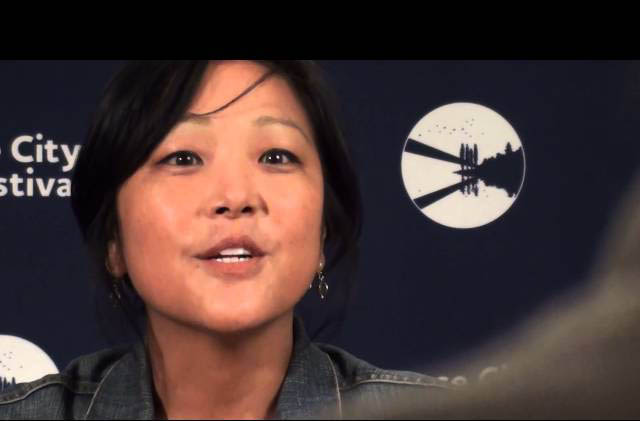
Director Chiemi Karasawa on Elaine Stritch, Documentaries & Working With Spike Jonze

Director Chiemi Karasawa on Elaine Stritch, Documentaries & Working With Spike Jonze

null

One of the great actresses of the cinema, television, and
theater was brought to light recently in the documentary Elaine Stritch: Just Shoot Me. Stritch has won three Primetime
Emmys and been nominated for a Tony five times. Most recently, she played the
hilarious Colleen Donaghy in 30 Rock. Additionally, she
starred on Broadway in multiple plays, including Stephen Sondheim’s Company. 

As director Chiemi Karasawa studied Stritch’s body of work. the idea to make a film about Elaine emerged. Countless actors are interviewed for the documentary, including Alec Baldwin, Tina Fey and James Gandolfini.
Through archival footage from performances and appearances alike, Stritch’s
unique and inspiring talent is showcased.

I had a chance to chat with Karasawa about her path from
script supervisor to documentary producer to director. From working alongside
Spike Jonze, to starting her own production company, to befriending Elaine
Stritch, an inspiring story exists within Karasawa herself.

Meredith Alloway: You first
worked with Stritch on Romance and Cigarettes! She
was in the cast and you were a script supervisor. Did you know her then? 

Chiemi Karasawa: No! That was maybe three years earlier. I do remember the
particular reverence that John Turturro [the director] had towards her.
I had the challenging job of being in charge of her lines and blocking and
continuity. She was a tornado of energy and performance! And she was so
spontaneous. I looked at him and said, ‘How would you like me to handle this?’
He said,  ‘It’s Elaine Stritch. You just
have to let her go.’

MA: Is there a particular
performance of Elaine’s that most impacted you as a filmmaker? 

CK: Having worked in the narrative film business for 15 years
and then getting into documentaries, it was the body of the work and the diversity of it. She is so unconventional
and has such a unique talent that nobody else has. Here is somebody that has
such a history behind her. She had such empathy watching herself 40 years ago.
She’s very complex and dynamic.

MA: There are some
incredible cameos in the film. How do you conduct interviews with acting icons
as well as Elaine, making the atmosphere comfortable and open? 

CK: I think the key to a lot of this success of the
accessibility of filmmaking I really have to hand over to Elaine. We never sat
her down for a formal interview; we never put up a light. As soon as she gets
past that stage of understanding who you are and she can like you, it’s all
access. She doesn’t think of herself as a star by any means. She considered
herself a working actor. She considers herself like anybody else. She kept
asking me why when I wanted to make
this film.  She and I gradually become
close friends. 

MA: Given that she’s
such an icon and you were initially blown away by her work, in what ways did
your image of her change after making the film? 

CK: First of all, I think going into it I had no idea what I
was in for. In the beginning I was so trepidatious. She scared the shit out of
me! She can be really prickly when you don’t know her. When you do know her, you
know you can’t take it personally. Now I see her as a dear friend. I recognize
the vulnerability behind her personality. That she really has such a dynamic
and modern sensibility. There’s something ageless about her that’s so
appealing. Off camera, I was going through so many of my own challenges in my
life and she would offer me so much counsel and conversation. She never
pretended to know everything. She can see so many different perspectives on
things and she’s a survivor. 

MA: You founded
Isotope Films in 2005 in order to produce non-fiction films. How has the
company’s journey been?

CK: I had been working in narrative film and TV for about 15
years as a script supervisor and I had an amazing career. I recognized that I
actually started out as a script supervisor as a stepping-stone to directing. You
have these key relationships with the actors and the DP. The crews were getting
younger and younger and I found myself giving a lot of advice. I started to
think maybe I should be doing this myself.
I recognized it was easier to turn the camera on real life, start
constructing a story, and raise money with that story. By sheer luck I fell into
making the film Billy the Kid with
Jennifer Venditti. We just started working together and that’s when it hit me.
You don’t need millions of dollars and fancy movie stars. Nonfiction filmmaking
has been much easier and more accessible. 

MA: Documentaries are
notorious for not making money and because of this, many filmmakers steer away
from the medium. How can a documentary filmmaker stay passionate about their
non-fiction story without spending too much money? 

CK: I think first off all you have to [want to] tell a story
a lot of people will want to see. That will facilitate investments. Also,
having the talent to bring those stories to life in the best way helps. You have to
have a talented editor. Editors are storytellers, they’re among the most important
elements of the team. The other thing is there are so many other avenues for
filmmaking now. People are making short web content sponsored by industries.
They’re looking for content. A lot of commercials are borrowing from the
non-fiction world. A lot of doc filmmakers are making commercials. People need
to explore all the other avenues of content and figure out how they can align
with corporations and people that have the money.

MA: You’ve been a
script supervisor on some incredible projects, from High Fidelity to Coffee and
Cigarettes
. It’s a position that I think many aspiring writers
and filmmakers overlook. How did you get involved and what does the position
actually entail?

CK: It’s true with many positions below the line on a film
crew. I was exposed to it because I was an assistant to a producer. His film
went into production and I got taken to set many times and that’s when I first
saw the woman sitting next to the director and I thought that’s the job that I want. It’s a perfect vantage point. You’re watching
take after take. You’re engaging with all the key players. You’re on set every
moment the camera’s rolling. Your job is to pay attention to the take. It’s a complicated
job, but it you can master it, it’s the best place to watch a director
direct.

MA: Given Spike
Jonze just won the Oscar for Her, and
you’ve worked with him many times, I have to ask what was it like working with
him!

CK: I worked with him when he was coming out of the music
video world. It’s interesting because by the time I was working with Spike on Adaptation, we’d
already been working in commercial work for seven years. I had a lot more experience working with
directors before he directed his first film. I think he found it a relief for
me to be with him! He is not afraid of experimentation. He’s not afraid of the
first take. He’s not afraid to roll camera without a rehearsal. He exploits the
spontaneity of the situation, the authenticity of response.

MA: So you’ve done
narrative and documentary. What’s next? 

CK: Just because I spent so much of my career in the
narrative world, I really don’t see any boundary between fiction filmmaking and
nonfiction filmmaking. Right now I’m being commissioned to produce a screenplay
of a true story. That’s what I enjoy, bringing a story to the screen. I just
like storytelling, and the way it can change and affect people.

Meredith Alloway is a LA local and Texas native. She is currently Senior
Editor at TheScriptLab.com where she focuses on screenwriting education
and entertainment resources. She also launched her own interview showm
“All the Way with Alloway,” where she scoops the latest up and coming
industry insiders. She received her Playwriting and Theatre degree from
Southern Methodist University and continues to pursue her own writing
for film and stage.
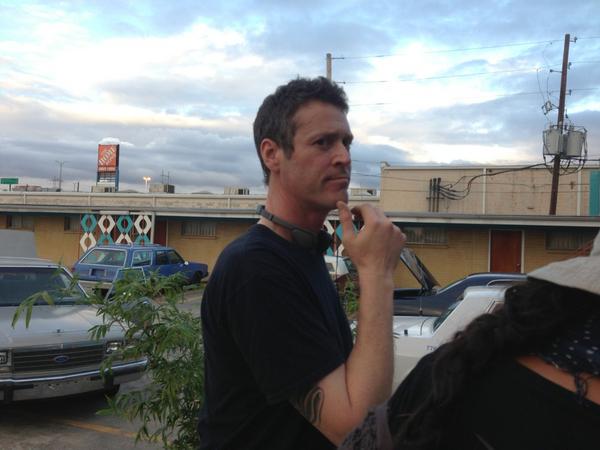
Academy Award Nominated Screenwriter Craig Borten on DALLAS BUYERS CLUB

Academy Award Nominated Screenwriter Craig Borten on DALLAS BUYERS CLUB

null

One of the most
talked about films of the season is Dallas
Buyers Club.
This film has been in development for over a decade, as
star names have come and gone, and directors have been attached and then detached. But as
screenwriter Craig Borten puts it, “The film had so many champions along the
way.”

Writing duo
Borten and Melisa Wallack helmed the script based on real-life AIDS victim Ron
Woodroof, whom Matthew McConaughey plays superbly. In 1985 Texas, Woodroof
begins a grueling battle with the FDA to get the drugs patients need. At the
heart of the story is Ron’s relationship with a victim named Rayon,
played by Jared Leto. The two create their own business, the Dallas Buyers Club,
in order to distribute medication to others who suffer from the epidemic. Jennifer
Garner also stars as Eve, a supportive doctor.

The film has
garnered 6 Academy Award nominations including Best Picture, Best Actor,
Supporting Actor and Best Original Screenplay.

I had a chance
to chat with Borten this week in LA. We discussed the inception of the project and the passion that kept it alive.

Meredith Alloway: The first time you met Matthew he
invited you over for lunch. Tell me about the salmon experience.
 

Craig Borten: You know it
was just a little meet and greet. But when we went outside to have lunch it was just a tiny
little piece of salmon and a plate of greens and some water.

MA: He was already dieting?

CB: He was
already thin and in it. But for the next 6 hours we went through the screenplay. He had
notes from the cover page to the end page. He asked incredible questions about
the FDA and about AZT and AIDS . . . and he just was so invested and such a
passionate person. I didn’t feel like I was meeting with an actor, I was
meeting with a filmmaker. We had just lost all our money. He said, ‘We’re gonna
get ‘er done.’ I’m driving back on the PCH and the sun’s going down and I was
like I think he’s going to get it done. It
was a great moment, a great day.

MA: It sounds like the meeting you had
with Matthew mirrored the meeting you had in 1992 with Ron Woodroof. You saw
this passion. Did you find that those two were parallel?

CB: I think
there’s something incredible about people who have passion and they’re like, I’m going to do this. This is important to
me.
It becomes a self-fulfilling prophecy not only for them, but also for
those around them. Leading by example in a sense. With Ron’s passion to live, the
endgame was awareness more than anything else, more than a cure or even drugs that
worked. For Matthew, it was I’m
going to get this film made.
By virtue of losing the weight, it became Oh, he’s losing it for this film—this
film that has no money right now.
But the perception is that it’s
already happening. His passion affected all of us to go out and make sure we got
this money. I think it was a pervasive feeling for everyone.

MA: A lot of your passion to write about
this comes from your dad surviving cancer. How did that fuel the project?

CB: One part of it is that I had two fathers, actually:
a father and a stepfather who both succumbed to cancer. Suppose someone says to you, ‘You’re
going to die. You have this long to live.’ What does that do to you? You go
through all these stages. That’s how I personally came up with this idea for the
beginning of the movie. I watched these two men go through it, and it’s a pretty
powerful thing to observe. As they were going through it and got more into
their acceptance stage, they became extremely reflective. What it could have been,
what they’d like it to be, and what they hope for. When I met with Ron Woodroof,
those same things came out of him. That was one part. The other part was
some of the ineffectiveness of the doctors in my own experience with
cancer.   Given the drugs available and
their pervasive attitude of this is it,
everyone gets a standard of you have 6 months to live
, there was something
cold about it. There was a lack of self-empowerment: This
is our protocol, you can go by it, and that’s it.
You feel helpless.

MA: Given that you were writing about
the pharmaceutical industry, which is a touchy subject, how was the research process? Were there any roadblocks, anyone that gave you resistance?

CB: As the years
went on, the landscape changed. AIDS changed, the drugs changed, along with the attitude
towards the disease. There were no roadblocks. We didn’t try to meet with any of the
more controversial figures. We didn’t need to. It was all in the public domain. Also, we weren’t doing a documentary.  

MA: I think the film blossoms into
something more than what you think it’s about. Ultimately it’s a friendship
story between Ron and Rayon. How did you cultivate that relationship?

CB: Rayon’s not
real. Eve is not real. They’re created to tell a point of view. We didn’t
even follow traditional three-act structure. Jean-Marc really wanted to
keep it a small movie about this unlikely friendship. The only thing that we
tried to stay true to was the personality of Ron Woodroof for those three
days. It’s based on stories that we heard. But the relationship itself we
created to make an emotional core, a journey that ultimately draws
people into the movie.

MA: You and Melisa went through therapy in
the process of writing this!

CB: I think that
writing partnerships are extremely challenging and incredibly intimate. You’re
spending large amounts of time with someone in a room. It’s gets heated, it’s
passionate. I always say this as a joke, and people think it’s funny, but it’s literally
like being in a relationship with a woman or a man but without sex. So it’s
even harder! There are, in fact, a lot of writing partners who
end up in therapy. If it’s worth it, you want to work through it. 

MA: You really fought for this script
for a long period of time and it’s comparable to the story you’re telling. In
the process of making the film what were the moments of hope that kept you
going?

CB: The film had
so many champions along the way. Robbie Brenner read the script 18 years ago
and she said this is an incredible
story. This would make an incredible character. This is a really great film.
The
remaining people along the way said the same.

MA: So it was the people surrounding you.

CB: Yes, the
people who were moved by the film and the people who supported me as a writer,
and supported Melisa.  The incredible producers Robbie
Brenner, Rachel Winter, Jean-Marc Vallée… and Matthew. They helped pick each other
up as human beings. It’s such a beautiful thing.

MA: Melisa has said, ‘Ron’s unwillingness
to listen and follow protocol literally kept him alive.’  In what ways did your team’s unwillingness to
follow protocol keep the film and script alive?

CB: Hollywood means
going to war. You grow a backbone and you fight your battles, the important
ones. You just learn to be a fighter; I shouldn’t even just say Hollywood, I
just think in life. It’s not kids’ play, it’s business. Business is shrewd.
So you learn and you grow and fight for what’s important. Everyone in the film
is a fighter, very strong passionate people. I think our strength held it
together. Everyone. Matthew, Jared, Jennifer, Jean-Marc. I think you just fight
for your beliefs.

MA: Your next project is also about someone
who is a fighter: [Titan: The Life of] John D. Rockefeller.

CB: He’s an
anti-hero as well. People hated him, but people didn’t really know him. Nobody
can really say who he is. This story will let you inside this man who I
think was an incredible person. Possibly through his need for his father’s
validation, he learned to divide and conquer and to create wealth. It’s character driven, and Lasse Hallström, who’s one of my favorite directors,
is really interested in making a character driven film.

MA: He, like Ron, is a questionable hero, which fascinates our culture right now, as with Walter White. Do you think we relate more to Macbeths and Iagos more than
Othellos?

CB: Human beings are flawed, we’re not perfect people, and I
think that’s what makes us interesting. Really we’re flawed and we have many sides and
shades …and so in cable or smaller movies we’re able to really show those
sides. I think that’s why people are drawn to it. Walter White: look at this
journey, but it started because he was dying and he wanted to help his family.
For that, we’ll forgive him for everything and it’s relate-able.

MA: Oscar day! Is
there anyone you want to meet?

CB: I swear it’s not like that for me! At all these events
I’m meeting these people and it’s almost effortless! It’s really fluid. It’s
just been wonderful. But only because
you ask, I’d love to talk to Bono. He’s a humanitarian ultimately and their
music I’ve loved since I was a teenager and also he’s a big supporter of AIDS research.

Meredith Alloway is a LA local and Texas native. She is currently Senior
Editor at TheScriptLab.com where she focuses on screenwriting education
and entertainment resources. She also launched her own interview showm
“All the Way with Alloway,” where she scoops the latest up and coming
industry insiders. She received her Playwriting and Theatre degree from
Southern Methodist University and continues to pursue her own writing
for film and stage.
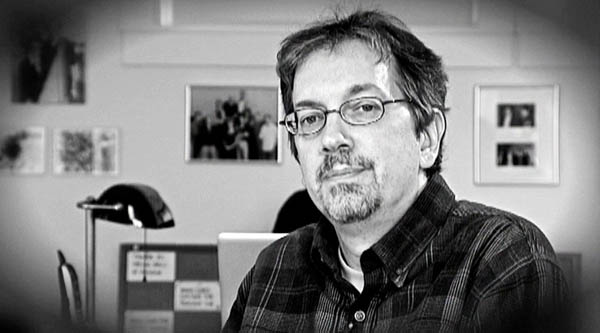
Screenwriter Bob Nelson Talks About What’s Personal and What’s Payne in NEBRASKA

Screenwriter Bob Nelson Talks About What’s Personal and What’s Payne in NEBRASKA

null

Since Premiering at Cannes this year, Nebraska has become an indie darling. The hype around Alexander
Payne’s new feature was buzzing long before its release: Bruce Dern makes his comeback! First time
screenwriter Bob Nelson makes his debut! Nelson has now been nominated for an
Independent Spirit Award and Golden Globe.

Nelson, who worked in TV for years in Seattle on shows like Almost: Live! brings us an impressive,
intimate first feature script. After winning a sweepstakes prize for a million
dollars, Woody Grant (Dern) is set on claiming his prize. His son David (Will
Forte) decides to take him on a trip to obtain the cash, despite the fact that it’s
clearly a scam. The film is a raw, poignant look at a crumbling patriarch and
his compassionate son. Although the story may seem melancholy, the movie finds
levity in its humor. (After all, this is a Payne film.)

I spoke briefly with Nelson about this film at the red carpet
premiere of Nebraska at the AFI Film
Festival:

Meredith Alloway: This is your
first feature. How did you get it in the hands of
Payne? 
 

Bob Nelson: I was working at a Seattle show called The Eyes of Nye. Producer Julie Thompson
came up. I had written a screenplay to try and get a TV job. Julie got the
script to Ron Yerxa and Albert Berger, who have a company called Bona Fide
Productions.  They decided to send it to Alexander
[Payne], not with the intention to direct it but just to produce it and raise
money. I was very fortunate, very lucky, and it doesn’t happen a lot. The one
take-away is that even though I was in Seattle, I was still working in the business.

MA: Nebraska was
optioned back in 2003. What were some elements that Payne infused into your
original draft, over the years?

BN: He’s got a
little bit spread throughout the script. Right off the top, he did some work on
the first act. In my version, David worked in a cubicle and Ross [his brother
played by Bob Odenkirk] was an insurance salesman. He changed their professions,
giving a 40 year old a job where there didn’t seem to be many advancement
possibilities. He created this tension between the brothers, which is nice.
When they have the moment later on with the air compressor, it kind of completes
their story. Mount Rushmore was his idea. He said, ‘You know they’re going
pretty close to Mount Rushmore. Why don’t you have them stop there?’ Those lines that they’re saying in that scene are
pretty much Alexander.

MA: I can’t imagine
anyone else playing Woody. Are there particular moments where you witnessed
Dern make the Woody you wrote his own?
 

BN: It’s pretty much the whole thing—that’s even better. As
much as you can do in your mind when you’re writing, nothing compares to having
an actor fill it out and make it real. This is pretty special. I was on the set
for a week and I got to see a little bit of that. I got in the video truck and
watched. Boy, when I saw the whole thing put together I was amazed. One of the
first scenes I saw him doing was when he walks into the tavern and sees Ed Pegram
[played by Stacy Keach] with the letter. I knew he was Woody.

MA: Which character
are you the most like? I often feel the writer’s voice speaking through David.
Was he your vehicle?
 

BN: The script did start with my own father, my relationship
with my dad. I could have imagined my dad doing this, as he was more confused. He might want to make a trip like that. How
would you deal with it?
I honestly used some real life instances that are
in the movie. David brought up those old thoughts of, what do you do with this person you love that had this addiction? You’re
trying to do the right thing by them and give them dignity and show some
forgiveness. My dad was shot down in WWII and was quite a changed person. He
was a generous guy who loaned tools out and never got them back.  The scene at the railroad tracks was from
real life. I used those and at a certain point I started inventing things based
on that. It did help in the beginning to mine from real life.

MA: My favorite
scene in the movie is when all the men in the family sit in the living room,
drink beer and stare at the TV. The dialogue is so terse that it’s hilarious.
How did this scene evolve from your initial idea to what we saw on screen?

BN: Well that’s Alexander’s staging. In my mind, I was
remembering from my childhood that they wouldn’t necessarily watch TV all the time; they would sit in a circle but still not talk. Alexander came up with the idea
of them staring forward. If they have something to say, they say it. There’s
no awkwardness.

MA: You wrote for
years on Almost Live! What resources
did you use to make the transition and tackle a feature?

BN: In fact, I started out and got to page 20 and realized I
should educate myself. I read some screenplays. Some of them would be Casablanca or North by Northwest, but they helped me to get a feel for the film.
I read some books, but I prefer reading books about people talking about the
screenwriting process.

MA: What are your
feelings on the charges that the film is condescending?
 

BN: Yeah that’s a tough one to talk about. I
come from a comedy background, and I always wanted to do drama and mix the two,
and that’s what Alexander does. Basically if I’m going to write something,
since we’re both humorous at heart, I think every project we do is going to have
some gentle humor about the participants. It’s personal, in a way, because these
are people I love. I don’t think of them as any less smart than we are. I also
don’t want to paint them as “salt of the earth.” The guys staring at the TV,
they had dry senses of humor. I loved those guys. But I can’t change people’s
perceptions. We’re all a little silly. I
could do a scene about some hipsters in New York watching television and make
fun of them talking all the time. That would be the New York version.

MA: Any filmmakers
or artists from this year’s crop of films you find inspiring?

BN: I grew up with Billy Wilder. I love The Apartment. Any screenwriter starting out should watch The Apartment for structure. I grew up
on 70s films. Hal Ashby also combines drama and humor. I also had a
fondness for Horton Foote; you can see that in Nebraska. These days I love the Coen brothers. Albert Brooks was a big
influence. Christopher Guest—there’s a guy who’s accused of being condescending! We
love his films!

MA: What’s up next
for you?

BN: One of my friends is Joel McHale; I’ve written a
script for Joel that I’m directing. We’re out trying to raise
the money now. My last goal in life is to turn Joel McHale into a movie star!

MA: You’ll be
directing this one as well?

BN: That’s what I’m telling people! I have to find someone to
believe it that has money! I just wrote another script that’s even smaller than
Nebraska. It’s inspired by Bicycle Thieves. It’s another dramedy.

Bob Nelson was born on July 18, 1956 in Yankton, South Dakota, USA. He is a writer and actor, known for Nebraska (2013), The Eyes of Nye (2005), and The Magic Hour (1998).

Meredith Alloway is a LA local and Texas native. She is currently Senior
Editor at TheScriptLab.com where she focuses on screenwriting education
and entertainment resources. She also launched her own interview showm
“All the Way with Alloway,” where she scoops the latest up and coming
industry insiders. She received her Playwriting and Theatre degree from
Southern Methodist University and continues to pursue her own writing
for film and stage.