RIP Gordon Willis, 1931–2014: The View from Dallas, Texas

RIP Gordon Willis, 1931–2014: The View from Dallas, Texas

"Manhattan"

Try to sympathize with me, for a second: Dallas, Texas was a
very difficult place to grow up during the 1980s. Put more specifically, it was
a difficult place to grow up if you were artistically minded or vulnerable or
smart, all of which I was. (I think.) Cars were important. Money was important.
Football was important. Status was important. Religion (as long as it was
Christian) was important. The intellectual life? Not highly valued.
Sensitivity? Not highly valued. Wit? Nix. Erudition? Nix. As I got older, all I
began to think of was escape: how
would I free myself from this environment? What could I do, as I grew up, to
ensure that I might live in a world that welcomed me, to a certain extent, or
at least tolerated me? As time passed, the answer became increasingly clear: get
to New York. And Gordon Willis had a great deal to do with that development.

I was nine when I first visited New York; I would be twelve
when I visited it again. I had heard plenty from my parents and their friends,
faculty at the local university, about the life of the city: the subways, the
homeless people, the smell of pretzels, the endless lines of numbered streets, the speed, the intense conversations, the immediacy.
But it was film that would truly draw me in, that would ultimately tell me New
York was my destination. Which films, exactly? Annie
Hall
and Manhattan. Again, I’ll
ask for your empathy. I was 12. Most kids at my age were hopelessly sarcastic;
I was hopelessly self-deprecating. The idea of a man making fun of himself and
gaining something like an artistic reputation for it was both beyond my
understanding and seemingly too good to be true. But even farther beyond my
understanding was the city itself. What world was it Allen and his characters
were living in? A world in which a man and a woman might sit, all night, at
the foot of a grand bridge, its contours shadow-lit as the sun came up. A
world in which a man and a woman might stand on a balcony and the beauty of the
skyline behind them might be just enough to eclipse the wit and awkwardness of
the dialogue rolling out of their mouths. A world in which a writer might
make several false starts to a novel as the camera soared over a Petri dish of
skyscrapers. A world in which the soft-focus intimacy of a bar scene, of a
group of well-heeled friends out for drinks, might be enough to make you forget
Allen’s character was dating a teenager. A world in which there was no trash
on the sidewalks, everyone seemed fairly clean and well-dressed, the sky was
always sunny, the stone of the New York apartment buildings was always a
brilliant white or a blood-dark red or a surprisingly vivid brown. A world
in which the unspoken message was, You
think you’re watching a story onscreen, and you think you’re only here for the
laughs, but in reality, I, the city, am the real story. You’re here for me.

Gordon Willis was responsible for this. I had
emotional reactions to other films Willis had a part in, as well, of course. The first time I saw The Godfather, despite all the
encouragement I had had to dislike it for its glorification of violence, I
would have to admit that its visual lushness was breathtaking—again making the
action on screen, the shootings, the conspiracies, the tests of manhood, the
pathological Mafia rituals, the inherent
sense of machismo, seem almost beside the point. When I saw Pennies from
Heaven
at age 11, I expected little from it besides a novel performance by Steve
Martin (was it going to be funny?); little did I know that, apart from being introduced to the surreal mind
of Dennis Potter, I would have a visual funhouse ride ahead of me: not only was
the intensity of the atmosphere he created—with its rainy nights, its dismal,
impoverished apartments, and its Hopper-like tableaux—thrilling to me, though I
didn’t have the vocabulary to explain why, My Eleven Year Old Self was both
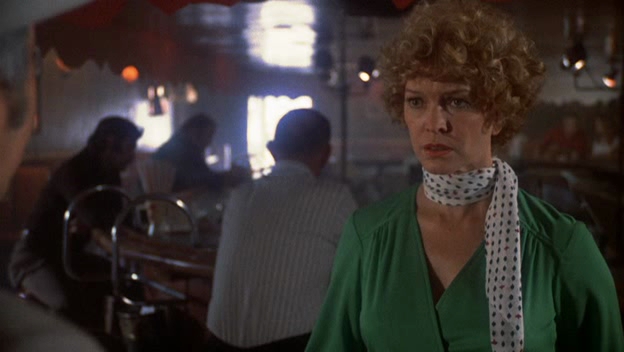
scandalized and exhilarated by Christopher Walken’s dance number. The dimly lit
bar in which Walken tries to seduce Bernadette Peters with a wild tap-dance to
“Let’s Misbehave” was a magical place, not only because of its dim light but
because the light was not dim enough to conceal what seemed to My Eleven Year
Old Self like a waterfall of topless photos of women, a cascade of large,
fulsome female breasts. My Eleven Year Old Self’s jaw stayed open for a week. I
have only Willis to blame, or thank.

The fact is this: if you want real life, live it. If you
want psychodrama, create it. If you want to fall in love, go after it with an
open heart. If you want to be transported, though, if you want to feel that
you’re immersed thoroughly in an individual’s vision of a story, a world, and
the degree to which one might shape the other, go to the movies. Most
specifically, if you wish, Gordon Willis’s movies. He was a master of unearthly
transport who, without knowing it, changed my life. I moved to New York when I
was 18 and would live there, with few interruptions, for 25 years. And, regardless
of what I discovered—that New York is dirty, that not every conversation will
be backlit with golden light, that staying up all night is not as glorious as
it might seem—Willis’s vision stayed with me, and still stays with me.

Max Winter is the Editor of Press Play.
Andrew Garfield’s Face; Or, How Culture Works

Andrew Garfield’s Face; Or, How Culture Works

nullI find myself increasingly tired of seeing Andrew Garfield’s face
these days. This puzzles me, given
that I’m a fan of his of long standing—or as long as one could be for an actor
of his young age. What about his success and sudden ubiquity might bother me?
Wouldn’t I want the best for such a talented, charismatic, young actor? Then it
hits me, as it has hit me so many times before: I’m witnessing the growth and
development of culture, more of a sideways slide than an uphill climb. The
feeling I’m having has little to do with Andrew Garfield, and even less to do
with his face.

Culture will eventually absorb what it at first does not broadly
accept or understand. As it absorbs and assimilates, it makes what previously looked unusual or outstanding into
something far more commonplace. Cell phones, interestingly, give an early,
obvious example of this assimilation in this century. The Motorola Dynatac
phones of the 1970s were unwieldy, strange beasts, seemingly more fit for
comedy than for daily use—remember Zack’s phone in “Saved by the Bell”? As time
passed, they were refined as their utility became more obvious and they began
to resemble more an object which might be put to use, rather than stared at or
envied. And now? Well, you might be reading this on a phone. Ditto for
computers: the earliest usage was purely academic, and their size and bulk made
them seem awkward, even potentially intimidating. (See Mad Men this week?) And yet, as time passed… In the arts, this sort of assimilation is more
rampant and simultaneously more insidious. Examples are everywhere. Take, to
pluck one random example, the career of R. Crumb. Crumb’s comics were, for
decades, many things: obscene, brilliant, earthy, soulful, sexist, misogynist,
complex, hilarious. His women waved their bloated, distended breasts high in
the air, simultaneously thrusting their bulbous posteriors out far beyond the
range of physics; his men, similarly, either thrust their hairy, wizened,
members upwards, or grasped them like there was no tomorrow, or both. In short,
not New Yorker material. And yet,
behold: his last New Yorker appearance
was less than 2 years ago, in September 2012. The Pixies, college-punk
favorites, hatched their sound in garages and bars in the Boston area after
meeting at the University of Massachusetts-Amherst; though they achieved broad
popularity among the college-educated, possibly even Masters-Degree’d set,
their recent appearance on an iPhone commercial set off a small wave of what
seemed either to be a qualified pleasure or a modified horror among the band’s
longtime fans, somewhere between “That’s amazing” and “How could they do that
to my favorite band,” the idea being
that The Pixies’ raffish, loud, angry beauty was somehow being co-opted for a
suspicious cause, embraced by The Establishment. In film, take the career of
Christopher Nolan. If we compare early films like Following or the brave, intriguing and more watchable Memento with the most recent Batman
extravaganzas, it’s hard to believe the films were made by the same
filmmaker—and yet, they were. Somehow, big studios made him their own,
idiosyncratic warts and all. Do the new films have the inventiveness and
imagination of the old films? Sure. More money, more imagination. Do I miss the
Memento director? A little.

Which brings me to the matter of Andrew Garfield’s face,
popping up in magazines, on SNL, on talk shows, on movie posters—everywhere an
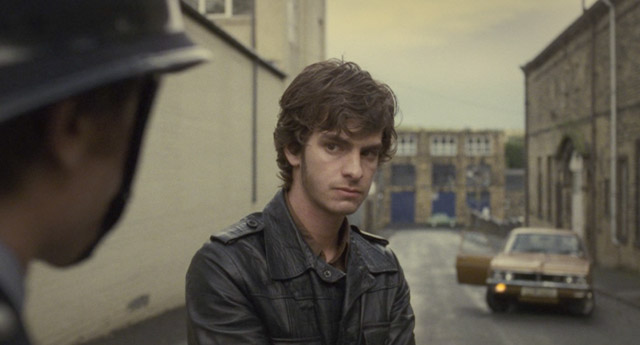
un-careful eye might chance to look. His performance in the first Red Riding TV film was remarkable; as a
young detective in the 1970s U.K., he managed to take a certain type of boyish
affectation characteristic of the period and change it into near-choreography,
even amidst fairly graphic and horrific inner and outer violence. And if I had
to explain why, while watching Never Let
Me Go,
I was slumped in a sobbing heap in the corner of my over-large
theater seat, the most damning piece of evidence would be his devastating performance as a
young man who had held out hope for survival in a cannibalistic future society and then had it taken away from him bluntly and cruelly, leaving
him with no choice but, in a well-known moment from the film, to scream, loudly
and without restraint, into the cold night air. These were small films, in a
sense—they starred well-known actors, but their scope was local, they weren’t
blockbusters, they weren’t aimed at profit. They were aimed at simply doing a
good job at what they were trying to do, be it create a suspenseful crime story
or present an adaptation of Ishiguro’s nightmarish novel. I remember
wincing slightly when I learned he had been cast in The Social Network, not because I thought he would hurt the film—on
the contrary, his turn as Zuckerberg’s sidekick was beyond responsible—but
because I had a sinking feeling in my gut. Oh
no,
I thought. They’ve come for him.
I thought I was the only one who noticed. Ah well… But maybe there’s hope?
 

Enter the new Spider-Man films, stage left. The explosions.
The spider webs. The starlet love interest. The villains. The special effects.
The famous backstory. The famous suit. Here comes Culture: we can be sure that,
regardless of whatever roles Garfield might play in the future, many, many
viewers will know him primarily as Spider-Man. Culture spots the highly
personal performance, the nuanced approach to a role, the note of eccentricity,
and tries to bottle it as soon as possible—in this case, to give an affecting
insecurity to a famous character from a comic book. Whether the actor can climb
out from underneath the weight of Money and Prestige obtained through this
exchange is entirely up to the actor. Kate Winslet has given moving
performances in many films since Titanic,
but if pressed, more moviegoers would remember her for her role in the film
about a huge sinking ship than for her performance in Jude, sadly enough—or even more sadly, for her first film role, as
a murderous teen in Heavenly Creatures. Ditto
for Jake Gyllenhaal: you know him from Brokeback
Mountain
, but do you also know him from Donnie
Darko
, in which he played a far more insecure role? For which film did he
get broader recognition? And ditto for many others, a long list of the
absorbed.

Of course, at this point, it must be asked: who the heck do I think I am? Why am I
making vaguely resentful judgments about people I will never meet? And, above it all, isn’t
acting a job, e.g., that which supplies a pay-check—which must, in the case of
the more low-budget films mentioned above, have been quite small? And hopefully
I’m not pointing the Sell-Out Finger at these poor souls, am I?
No, to the
last two questions. In fairness, though, I seek mainly to raise a question or two of
my own: will there be a time in American culture when the artistic work which
pays its practitioners the most, and in which premium investments are made,
matches that investment with like quality? Or must it always be the case that
that which attracts the masses in the greatest numbers must all-too-frequently
be of lesser quality due to the mercenary nature of its intent? And beyond
that, here are some other questions: how long does it take for Culture to move
on, to lose interest? Does the flavor of the month last for a whole month, or
is closer to a week? And, most importantly, if we accept that our cultural
world is an amoeba, absorbing particles of talent and enterprise into its bulk,
at what point will that amoeba begin to evolve?

Max Winter is the Editor of Press Play.

Of Kisses, Mirrors, and HATESHIP LOVESHIP

Of Kisses, Mirrors, and HATESHIP LOVESHIP

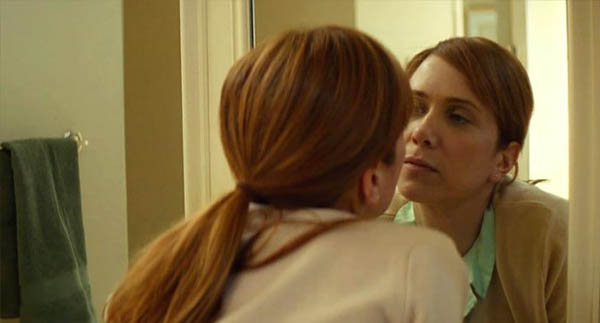
nullThere’s a moment, early on in Hateship Loveship–a new Liza Johnson film sensitively adapted by
Mark Poirier from a story by Canadian literary natural resource Alice Munro–where
Kristen Wiig kisses a mirror. When I say kisses, I suppose I mean more than
that: she really makes out with it. It’s an odd moment, one of many flickers of
oddness coming from Wiig in a film in which everything we know of Johanna
Parry, the habitual caregiver she plays, comes in flickers. And these minute
actions are all tinged with the same brand of socially-challenged peculiarity:
the way she wears her hair, the way she talks, certainly the way she dresses,
somewhere between frumpy and homely, perhaps just north of what they’re calling
“normcore” these days. Although I’m not the first to notice the scene, it
intrigues me, not least because it comes closest, of any juncture in the film,
to a breakout, of sorts, the sort of moment that can topple a movie if
ill-played, but is handled just delicately enough here to work, and near-perfectly.
Johanna has just had good news, or thinks she has: Ken, the estranged father of
Sabitha, the girl she’s traveled to Solon, Iowa to take care of (after her
previous client passed away, at the film’s beginning), seems to have some
romantic interest in Samantha, or so he says in his letters from Chicago, which
are actually written by Sabitha and her nasty-cute best friend, out of the sort
of random sourceless meanness from which stories ranging from A Clockwork Orange to Lord of the Flies to Heavenly Creatures were built. The
unknowing suitor is given sloppy grace here by Guy Pearce, not seemingly a
catch at first, but a man who gradually reveals something of himself—this is
indeed all we can say of him. This is too subtle a movie for a transformation of
Hollywood proportions to occur, as much as the film might try to do so by its
end, with its seemingly patched rifts; no one here changes, really, instead
gravitating towards positions of greater comfort with each other, which is all
we humans can do, 98 per cent of the time. At the moment in question, the make-out
scene with the mirror, we don’t expect anything of this kind to come from Johanna,
or from Wiig, really. It’s awkward when comedic actors play serious roles, a
bit like watching Olympic ice skating, waiting for the big stumble to come—will
it be this jump? Or that swerve? What will finally topple the athlete, destroy
her chances? And yet primarily comedic actors have put on serious clothes and
worn them well in the past: Robin Williams did it in The World According to Garp, and again in Insomnia; Will Ferrell did it in Everything Must Go and Winter
Passing
, with likable but sad aplomb; Jennifer Aniston did it in The Good Girl, a film few saw but many
appreciated. Granted, for someone with Wiig’s past in improv theater, in which
everything rests upon one’s ability to portray grand things about a character
with telling economy, and in which such a spontaneous action, at the right
moment, could explode a scene outwards, or take it in a previously unforeseen
direction, the moment might not be such a stretch. Who knows if it was scripted,
unscripted…? Mirror scenes always carry with them a certain innate charge: from
Robert DeNiro’s famous moment of rhetorical self-interrogation in Taxi Driver to Jon Voight’s more benign
silent exchange with himself in Midnight
Cowboy
, there’s always a bit of static when a mirror appears in a film, as
the lens looks at the lens looks at the lens. Usually, they indicate a moment of insecurity, whether it’s DeNiro’s attempts to bolster his courage with a succession of “You lookin’ at me”s or Jon Voight’s checking of his “look.” In this case, though, the moment is a declaration of self-love–if also an expression of cooped-up lust.  Whatever the case, the moment
forecasts everything that is to follow: Johanna’s trip to Chicago to clean up,
both literally and figuratively, poor Ken’s life, her romance with him, the attempted
repair of a family broken apart by a tragedy, a drunken driving accident which
killed Sabitha’s mother, leaving Sabitha under the unusually buttoned-up and
repressed watch of Mr. McCauley, Ken’s father-in-law, played here quite
modestly by Nick Nolte. And, as we watch these events unfold in quiet fashion,
with a soundtrack peppered with soft honky-tonk songs, we’re reminded that
there is room, indeed, in a medium in which stridency pays, literally and figuratively, for the “small” movie, whose strength grows from the
words people say or don’t say to each other, and the things they do, have done,
and will do. If one is able to look at one’s self in the mirror and then,
rather than turning away, plant a rather maudlin and exaggerated kiss, the kind
you’d only plant if no one else was there, what does that say, in particular,
about where one has arrived and where one might go? At the very least, it suggests that one has looked at one’s self and, rather than seeing its smallness, chosen to embrace its enormity.

Max Winter is the Editor of Press Play.

On Harold Ramis, 1944-2014

On Harold Ramis, 1944-2014

null

I’ll miss Harold Ramis’s presence in the world because no
one in my generation is getting any younger. Before you dismiss that sentence
as a tautology, I should explain. My generation can be roughly defined as those
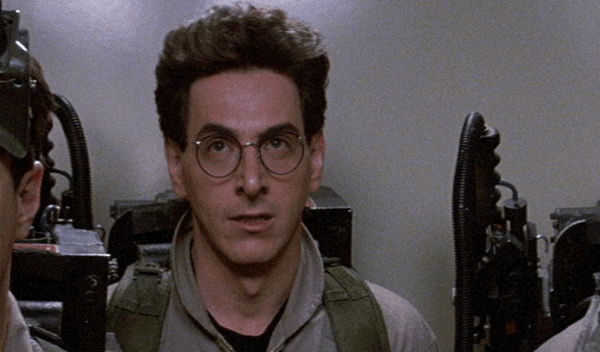
born in or near 1970, growing up watching (read: worshiping) Saturday Night Live, SCTV, and other shows like them, and then finding
that comedies such as Caddyshack, Animal
House,
and Ghostbusters are part
of their culture, their lives, and their minds, regardless of what supposed
intelligence they may, as viewers, presumably bring to the table—and then,
beyond that, finding that they are quite grateful to have Groundhog Day as part of their culture, and then, going even
farther, finding that they loved all of those films, and can’t conceive of replacements
for them, and can’t, as adults, readily explain why. But there is, in fact, a
reason: these movies, with which Harold Ramis was inextricably associated, in
either a large or small degree, stood for a set of comedic values which are no
longer with us.

What values? Well, these films had, as their calling card
and as a force which animated them, a sense of utter abandonment. To crassness.
To vulgarity. To spontaneity. To irreverence. Anything as openly vulgar and as
indulgent of objectification as Animal
House
made these days would either not be noticed or would be placed under
a microscope so intense as to render its integrity as a whole utterly
unrecognizable. No one would dream of making a film as over-the-top as Ghostbusters, with its marshmallow man walking through Manhattan, today—unless it were attached to a franchise, of some sort.
The makers of these films weren’t trying to market anything: they simply wanted
to create an absurd situation and see where it led, to open things up as wide
as they possibly could. Ramis is an indelible part of their success because, as
the most gawky character in the room, he reminded us most strongly of
ourselves, sitting in the dark, living vicariously through others’ adventures
either ghostbusting or being slimed.

And, above and beyond that, these films were successful
executions of outrageous ideas, a harder task to accomplish than one might
think. Groundhog Day is a perfect
example. The story Ramis tells with this movie, that of daily reincarnation, is
a sophisticated one, but he presented it to us with the open-hearted brio of an
everyman filmmaker. The actors he chose, as well, from Murray to MacDowell to
even Elliot or Tobolowsky, are actors it’s hard, in a sense, to dislike—none of
them carried, at the time of filming, any special baggage, any notably
distasteful films in their history, that would have distracted from the
miraculousness of the story—they are wholly participating in the prolonged joke
of this movie, this project, the one they’re in right at that moment. And the
mood Ramis maintained throughout was consistently light—a lightness that
results in a subtlety one doesn’t find that often, an ease of laughter that
recalls much earlier films, even silent films. Is there mean-spirited humor in Groundhog Day? Sure, but it’s comedic
mean-spiritedness. No one’s bones, hearts, or lives are ever at risk of being broken,
though it might look that way: philosophical exercise rendered as comedy.

The cultural influences that produced the sort of comedy
Ramis participated in, wrote, and ultimately directed were very different from
those driving today’s comedies. The cultural legacy Ramis and his
contemporaries had was that of the 1960s and 1970s, eras heralded for their
freedoms and excesses but rarely examined as recovery from the social,
economic, and historical traumas of the 1950s and 1940s. The comedic films made
today are made in the shadow of a technological advancement that has rendered
our culture dispersed and distracted to the point of soullessness. Ramis is, in
a sense, a symbol of certain kind of
comedy: a comedy with a beginning, a middle and an end, all equally ridiculous,
all equally enjoyable, and all developed with the intention of fulfilling a
film’s full potential. Those kinds of comedies—comedies with a soul that you
can practically see—simply don’t exist anymore. Rest in peace.

Max Winter is the Editor of Press Play.

Small Things Writ Large: On OMAR

Small Things Writ Large: On OMAR

null

In large and small ways, the media confront us each day
with realities that are larger than we are, and yet rarely do these realities
touch us in any lasting way. Global warming, for example, is a crushing
problem, but most of us won’t be truly concerned about it until our homes are flooded
by overflowing oceans. War, and its daily presence in other cultures, most
certainly in the Middle East, is another one: we don’t think of what life
side-by-side with bombings, terrorism and other horrors must be like because we
never see the details of that life: the news, as reported, is an abstraction. Omar, the newest film from Hany Abu-Assad,
the director of the suicide-bomber story Paradise
Now
among other films, brings the concept of life in a war-addled clime to viewers as anything but
an abstraction. The film draws its greatest strength from its smallest touches:
the way someone smiles, the way a love letter is folded, the small habits and
quirks an otherwise brutal person might possess. We watch those details,
absorb them, are fascinated by them. Then, when the larger-than-life world
intrudes, we are all the more horrified because we feel as if, in the
flickering way we might “know” a character in a film, we know the people bearing the brunt of the intrusion. 

It doesn’t hurt that the characters here are so personable,
and distinct from one another. In fact it makes the central love triangle in
the film, which is intertwined with the story of three freedom fighters whose working
bond ultimately erodes because of mutual suspicion, all the more wrenching. In
the opening, we watch Omar (Adam Bakri) climbing a city wall in occupied Palestine to see his love, Nadia
(Leem Lubany), the sister of Tarek (Eyad Hourani), one of Omar’s fellow fighters;
Omar is shot at, just as he clears the top. Omar’s path through the film
remains like this: rife with danger and the threat of either death or
imprisonment. The three young men—Tarek, Omar, and Abjan (Samer Bisharat), the
clown of the trio (and also in love with Nadia)—interact with great ease. Their
banter is so spontaneous and funny at times, like electrified small talk, that
it rings Tarantino-esque, even as its backdrop is horrific. Not twenty minutes
into this film, Omar is arrested and imprisoned. His chief questioner, Agent
Rami, is a menace, though you wouldn’t think it. He’s full of humanizing little
gestures, like a nervous consumption of Tic-Tacs. Waleed Zuaiter’s performance
projects a relaxation hiding a more tense, complex spirit—and a deep desire to
get information out of Omar about his operations. Their dialogue has a mood
we’ve seen before, in other films, ranging from Pacino and DeNiro’s interchange
in Heat to Denzel Washington’s prison
interrogation room banter with Russell Crowe’s detective in American Criminal:
predator and prey, circling around each other, pretending otherwise. The
comparison to American suspense movies goes farther, indeed, as there is
something near-breathless about the film’s pace—Omar is a fast runner, but he
seems even faster here because you know what he’s running from. The torture
scenes are unmitigated, as are the scenes in Omar’s cell, where, again, details
take over. Lying still after a long beating, Omar sees a small bug crawling
across the floor. Suddenly he, and we, pay far more attention to that bug than
we might normally, as the camera moves in on it: the bug, in fact, becomes a
metaphor for any number of things. A feeling of humiliation. A sense of
powerlessness. A quality of innocence. At one point, Omar whispers to the
small, green bug: “It will be okay,” summoning hope from who knows what
quarter.

The love story between Omar and Nadia doesn’t really get
happier as it goes along. It starts so sweetly, with Nadia bringing the three
cohorts tea, slipping a note for Omar under his cup, and telling Abjan she
won’t serve him until he imitates Marlon Brando, in a small, Tarantino-esque
move. (Abjan only makes a few sounds, but he does a good job.) The notes Omar
and Nadia pass each other are, yes, an old-fashioned trope, but the clash of
the gesture’s innocence with a violence-drenched backdrop sends out static
sparks. They tell each other little stories in their notes, and speak lyrically
and expansively, the way people do when they first fall in love. Unfortunately,
when the “real world” crashes into their love, all innocence ends. Omar is
placed in prison several times over the course of the film; with each sentence,
his comrades’ suspicion increases that he is informing on them. Also, his love
becomes more complicated with each departure as Nadia’s interest shifts to
Abjan. The love triangle eventually collapses, as one would suspect it would,
and the film milks poignancy from that collapse. There’s no melodrama, here,
very little screaming or fighting. As with the rest of the film, what we notice
are the nuances, such as Nadia’s whispered “okay” when her father asks her if
she will accept her suitor’s hand in marriage, as if he were asking her to pass
a plate of food. The dissolution of love is not the only sad news this movie
brings us—although the other news is delivered with a similarly devastating
lack of fanfare.

It would be enough for Omar
to be a successful action film set in a politically fraught part of the world.
It would also suffice for it be a well-told and tastefully handled love story.
But this film manages to mix and blend the two with tremendous grace. And, more
importantly, it puts a human face on events which are perpetually changing
history but which remain un-absorbed until they are at our doorstep, knocking,
and then entering unasked.

Max Winter is the Editor of Press Play.

John Cusack in ADULT WORLD: No More Mr. Nice Guy

John Cusack in ADULT WORLD: No More Mr. Nice Guy

null

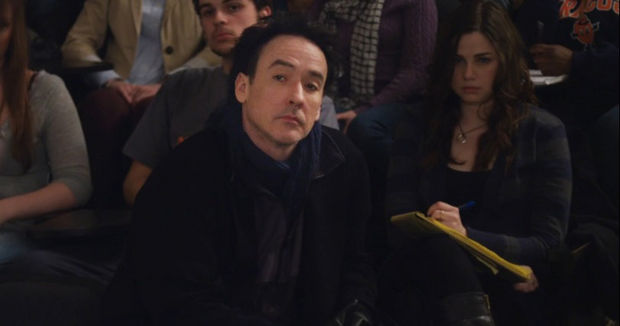
Several times during his turn as Rat Billings, the grizzled
poet at the heart of Adult World, I wanted to punch John Cusack in the face.
It’s a brilliant performance. In the quirky solar system of odd personalities
making up this tale of a young Syracuse grad who wants desperately to be a
published poet and takes Rat as her guide, Cusack makes an erstwhile and unfriendly
sun: the other characters float around Rat like so many misfit asteroids. While
some aspects of the film have an indie-fied clunk to them, Adult World works beautifully as a sad, sensitive character study,
in which two people who could not be more different find some common ground—even
if that common ground involves hostility. The main story of the film—a young
poet needs money, finds work at a porn store, meets lots of interesting, kind
people, and learns something about herself in the process—seems grossly outshadowed
by the Krazy-Kat-and-Ignatz-style love-hate relationship between Cusack and his
young would-be protégé.

This is a curious film, because the key characteristic that
Cusack has always offered his audience is a certain comfort born of geniality.
His emotional highs and emotional lows are always mitigated by a gentle squint
and a soft, vaguely raspy voice. Even when he is seething with romantic rage as
Rob in High Fidelity, or assassinating people with high efficiency in Grosse Pointe
Blank
, or swindling smoothly in The Grifters, you feel sympathy with him: sure,
he just killed a man, but he must be an okay guy, deep down, right? This feeling
we have might stem not so much from an effort on Cusack’s part to please
audiences as from a certain relaxation with the camera—his tendency to “play
himself” in films has been well-documented. His performance in this film gives
little of the prior sense of comfort. Cusack might well be relaxed in the role,
but it’s what he’s relaxing into that’s
significant. 

Rat is a certain kind of writing professor, whom anyone who
has gone through a writing program might recognize (director Scott Coffey must
have done his research): once proud, once tough and able to toss off bons mots with great ease, now settled
into teaching at a university, not as well-praised, pushing himself through
writing courses, possibly wondering if the whole thing is worth continuing, and
taking it out on his students. When Amy (Emma Roberts), an ambitious young
writer just out of college, forces herself on him in an effort to learn from
him, he literally runs away from her—as he does from his students at the end of
one of his writing classes. When the two of them have their first conversation,
everything about Rat suggests enclosure: the way he folds his arms and legs in
on himself, the pursed frown, and the cold look in his eyes, which he maintains
throughout the film. Rat’s nastiness comes out most interestingly in the
details, the small things he does. At one point, early in their acquaintance,
Rat asks Amy, “Did Leyner put you up to this? Did Mark…?” Although Cusack and
Mark Leyner, author of urbane humor classics Et Tu, Babe, My Cousin, My
Gastroenterologist
, and The Sugar-Frosted Nutsack, among others, are
offscreen friends (they wrote War, Inc. together), mentioning Leyner says a lot
about Rat, or what he once was: a young, cocksure, hip, attitudinal upstart who
drew an audience in the early 1990s through his sarcasm and seeming toughness.
At another moment, after Amy has thrown herself at Rat in a drunken stupor, she
ends up in his lap: he heaves her, without much sentiment, onto a sofa, as if
to show what he really thinks of her. His nastiness comes out in broad strokes
too, of course; as he is about to slam his front door on Amy, he tosses off,
“You’re the kind of muse I’d get,” and she’s thrilled, too naïve to hear the
sarcasm. When he meets Amy’s parents, he confides to her mother that she “lacks
all knowledge.”  When a student in his class
asks if a poem’s interpretation will be “on the test,” he tells her, “You’ll be
tested every day, for the rest of your life, and you know what? You’ll fail.” The
director tries to give Rat some moments of tenderness, at the very end of the
film, but it rings falsely; somehow, for him to call Amy a “stem against the
tide,” after having misled her in various ways which I won’t spoil, isn’t quite
enough.

The film is carried, for the most part, by Cusack’s toned-down
but tuned-in performance, though Coffey’s supporting cast is strong as can be.
Funnily enough, John Cullum and Cloris Leachman play the owners of the porn store that gives the movie its title and gives Amy a job:
Cullum’s most famous role in the last 25 years was as Holling in the TV cult favorite Northern
Exposure
, in which his character married a woman a quarter his age, and Leachman
made a breakthrough performance in The
Last Picture Show
, as a football coach’s wife who cheats on her husband with a
teen-aged Timothy Bottoms. Though there is no romance between Rat and Amy, Coffey seems to nod to its possibility with his casting choices. Evan Peters, as the perky, well-adjusted porn store
manager, may be wildly miscast, but it’s easy to forgive, given the exuberance
and energy he brings to the part. Roberts herself could best be described as
intrepid; she brings as much magnitude as she can to what is, essentially, a
“straight man” role,” that is, playing off of Rat’s jaded, tired, vaguely
poisonous energy. There are many times where the movie’s seams show, where
Coffey hits us over the head with a wanna-be tale of “uplift” and “finding
yourself.” But the most interesting aspect of the film is its significance in
Cusack’s career. This part, along with his performance as convict Hillary in
The Paperboy or Richard Nixon in Lee Daniels’ The Butler, are a long way from his performance as
Lloyd Dobler in Say Anything. It will be enjoyable, if unnerving, to see where Cusack turns
next.

Max Winter is the Editor of Press Play.

On THE BLACKLIST: Why James Spader Is the Perfect Star for the Increasingly Unreal Medium of Television

On THE BLACKLIST: James Spader Is the Perfect Star for the Increasingly Unreal Medium of Television

null

The television medium, and the act of watching television,
have always been remarkably surreal, and they only grow more so by the day. The
very action of sitting and watching flickering pixels on a screen which, in
most cases, is smaller than you are stands in direct contradiction to
everything we might call living,
enjoyable and stimulating as this non-life might be. For many viewers, it requires absorption;
for other viewers, it requires absorption and darkness; for still others, it
requires absorption, darkness, and complete silence.   As time has passed, TV has only become more
strange, and private; at one time, the screen formed the hub of a gathering
place, but it is less so now, as increasing numbers of people watch television
on their own terms: on their phones, on their computer screens, at off –hours,
while commuting. The idea of scheduling one’s day around a TV show is
increasingly uncommon. Given these developments, it stands to reason that James
Spader, a shocking presence on The
Practice
and Boston Legal in the
past, and a rousing presence in NBC’s The
Blacklist
, would be its ideal actor.

The reasons why Spader is so appropriate for television have
to do both with his qualities as an actor and, actually, with the history of
television itself, in the last 25 to 30 years. Spader’s arrival in his first
major TV role, that of Alan Shore on The
Practice
, was not universally well-received at its outset. Why was this?
Well, because his film roles in the past had often contained a healthy layer of
sexuality—and often warped sexuality. The three most glaring examples of this
would be his remarkable breakthrough performance in
Steven Soderbergh’s sex, lies, and
videotape
, in which he filmed women talking about sex (and doing other
stuff) and then pleasured himself to videotapes of the sessions, giving an empathetic face to the perversity of voyeurism; his role as James
Ballard in David Cronenberg’s Crash,
including a sex scene with a scar in a woman’s leg; and Steven Shainberg’s Secretary, in which his officious lawyer Mr. Grey “got to know” his employee by masturbating
on her panties as she bent over his desk, skirt up. What was this man doing in
a fairly nondescript show about a law firm? Everything and nothing. At the
time, it seemed fairly clear that he had been added to boost ratings and make
the show more exciting; he did both, in spades. His character’s open-faced form
of brazen dishonesty gave considerable texture to a show which was gradually
building a wall around itself consisting entirely of predictable plots (the
same rut which some of Law and Order’s
variants have fallen into). His great comfort with sleaziness and with
destructive transgressions provided a meaningful satire of the nature of the
law profession and of the hidden altruism within many shows about that
profession, in which show’s characters become heroes by making the “right”
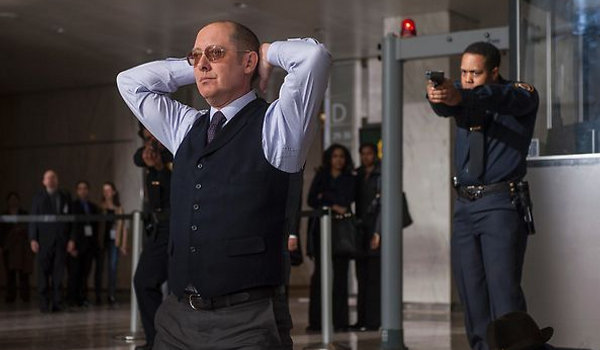
choice. He has roughly the same role in The
Blacklist
’s Raymond “Red” Reddington, a “most wanted” criminal whose wealth
of information makes him ultimately indispensable to his pursuers, and he plays
it with the same aggressively insouciant quality, as if every line he speaks is
not only the best line ever written for a television actor but is also the most
explosive; and the more dramatically he speaks the line, the more of a detonation it sets off.
In a sense, Spader’s delivery is like that of an old-fashioned stage actor,
speaking to an audience who may or may not absorb what he is saying. The
simplest exchanges become broad-voiced utterances; whether you understand the
motivation for the line becomes secondary importance—the main thing is the
momentously frank delivery. And so, in pushing himself outwards in this
theatrical way, isn’t Spader fulfilling the earliest dream of television,
which was to provide a home-based version of the theatrical experience?

But, back to the present. Spader is occupying, with unusual
elan, a historical moment in TV watching and reception: he is with us as TV
becomes an almost entirely private personal phenomenon, in which viewers
develop relationships with characters and plotlines that they cannot quite
shake, sometimes to an almost humorous degree, and in which viewers choose
which shows they wish to watch at length—and at how much length. It is indeed
significant, then, that Spader’s breakout role, his turn as bully Steff in Pretty in Pink notwithstanding, was in sex, lies and videotape, a film about a
man who derives his sole sexual pleasure from watching images on a TV screen,
after the fact, in total solitude and at his command. Fast forward 25 years: many
viewers these days watch television long after its air date, and with utter
control over the conditions of viewership. In 1989, when the film was released,
the VCR, as we know it in its home-friendly form, was less than 10 years old,
and rapidly gaining in popularity. By starring in such a film, Spader
associated himself indelibly with what has become a dominant mode of
viewership: what I want, when I want it. The binge watch. The repeat view. TV
shows ranging from Moonlighting to St. Elsewhere to (even) Mystery Science Theater 3000 nudged us,
at this time, towards a smarter view of what we were seeing on the screen:
couldn’t we view a multi-episode TV show as a kind of novel? Couldn’t we expect more from
television? It’s hard to think that that the development of VCR capability, giving viewers the chance to re-watch and scrutinize certain shows,
didn’t contribute to this change. Granted, the tapes Spader’s character was
watching in Soderbergh’s film were not the VHS tapes we might be familiar with,
but the impulse was the same.

Of course, The
Blacklist
is not necessarily the best vehicle for Spader. The episodic
nature of the show guarantees that viewers will not devour it in the same way
they devour more intellectually complex shows like Breaking Bad or The Wire.
Also, each episode is built around a different number on the FBI’s Most Wanted
list; these figures become much like the villains in comic strips, or their TV
counterparts. Each villain is neatly tracked down by the end of each episode each mystery resolved. Nevertheless, Spader’s presence, and his history, and his delivery—which constantly seems to look back at us as if to ask, If you think you’re above this, why are you watching it?—raise a
question about television, which, though it may have been raised before, can’t
be asked enough. As television continues to become more nuanced and
intellectually demanding, its approach, and its casts, will need to change.
Spader is unique in that he doesn’t give in to the demands of acting for a
smaller screen—the pandering, the mincing, the mugging; the charge we receive
from him is based on his staunch defiance of those requirements. Perhaps his
performance will draw some new colleagues in the future, from a place in which
the screen is brighter and larger, and the audience is darker and more
mysterious.

Max Winter is the Editor of Press Play.

Choose Your Own Adventure: The Allens, the Farrows, and You

Choose Your Own Adventure: The Allens, the Farrows, and You

null

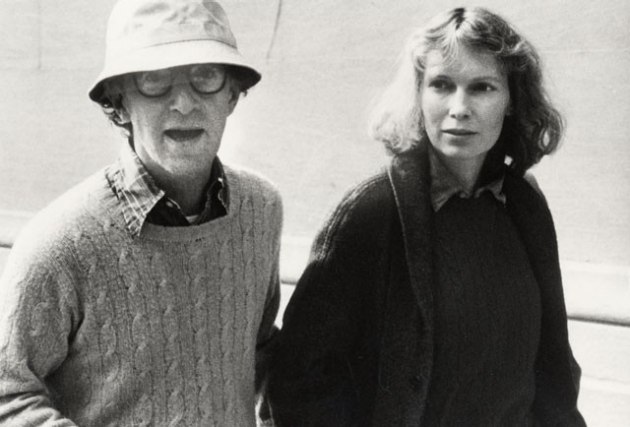
When I was a teenager, I worshipped Woody Allen to an
unhealthy degree. I think, at some particularly unfortunate point, I might have
even dressed like him. To me, and I’m thinking to others, he represented three
things: urbanity and sophistication; a wit born of erudition; and the
possibility that one might, without an excess of good looks or distended
musculature, attract the opposite sex—through the sheer force of words. When it
was revealed that Allen had left Mia Farrow for his daughter/non-daughter,
Soon-Yi Previn, I tried hard to be objective about him, as a figure, but my
grasp of the reality of what one should and shouldn’t do in any human
relationship, combined with the decline in quality of his films after that
revelation, made it difficult to take him seriously, although I continue to
rank Annie Hall, Hannah and Her Sisters,
Husbands and Wives
, and Crimes and
Misdemeanors
among the greatest films of all time (it’s a long list). The
recent unearthing and re-unearthing of allegations that he molested 7-year-old Dylan
Farrow have provoked reams of commentary, consideration, and investigation into
his life, and specifically his life with Mia Farrow and her numerous children. This
fermenting, for lack of a better word, has been disappointing, not so much
because no conclusion has been reached (there isn’t one), but because of a lack
of overview, the inability of those commenting on the scenario to distance
themselves from it, or what it might mean to them, personally. What has resulted from the feverish reaction to these
decades-old events is a gradual tying of our hands, across the board, so that
to even consider the controversy is akin to opening a Choose Your Own Adventure
book, in which the judgment you might make, in whatever public forum, suggests that you possess a particular set
of characteristics—and, as in the books, you can’t make two judgments at once,
just as you can’t read two stories at once.

The problem is mainly one of tone. The words commonly used
to describe Allen at this point—monster, creep, wouldn’t want him alone with my
children, perverted—are not the words one uses when thinking clearly. Granted,
the circumstances don’t allow for too much clear thought—the actions described,
toy train, attic, and all, are horrific. It would be difficult for anyone to
react with equipoise to testimony on such events, real or imagined.
Nevertheless, what happens when public sentiment is stirred, across blogs,
comment boxes, newspapers, and telephone waves, is that a sort of brushfire
starts. If the fire grows too bright, it either subsumes other opinions or
whittles them down, makes them look black and vaguely evil. To suggest, as many
have, sentiments along the lines of “we’ll never know what happened” is to, in
many cases, add a parenthetical “(but we kind of do know).” To shrug about it
becomes, in a sense, a concession to the truth of What Is Written. Suggestions
that Dylan Farrow made up her allegations, her memories having been molded by
her mother’s coaching, end up sounding rather creepy beside the bold and righteous,
“He’s a criminal. He should pay.” A Daily Beast essay by Robert Wiede on the
matter, asserting that the allegations were false, was denounced by Jessica
Winter at Slate as “smarmy,” while Wiede’s tone wasn’t necessarily more or less
hostile than Farrow’s.

But indeed, what of the tone of the father and daughter
involved here? Their poorly written testimonies haven’t helped, speaking more
to deep-rooted rage than anything else. Oddly, the epistles (that’s what they are, really) share a tone,
one of aggression, of pots boiled over, much like the tone of some of Allen’s
most poignant filmic moments. Allen has his “Soon-Yi and I made
countless attempts to see Dylan but Mia blocked them all, spitefully knowing
how much we both loved her but totally indifferent to the pain and damage she
was causing the little girl merely to appease her own vindictiveness” or
“Again, I want to call attention to the integrity and honesty of a person who
conducts her life like that,” while Farrow has her “So imagine your
seven-year-old daughter being led into an attic by Woody Allen” or her “I have
a mother who found within herself a well of fortitude that saved us from the
chaos a predator brought into our home.” Allen finds himself the victim of
serious accusations, while Farrow finds herself the victim of both abuse and
patriarchal oppression following that abuse, making it hard for her to speak up.
Their public records, as it were, are powder kegs, bombs thrown into a movie
house, ultimately dangerous and corrosive, for all of their seeming liberation.
Farrow makes a strange gesture in offering a statement which can neither be
proved nor disproved; Allen makes a strange response in deferring to logic
rather than facts, as in his statement that it makes no sense that he would
molest someone at such a tempestuous time in his relations with Farrow’s
mother. The two statements cancel each other out, neither one more convincing
than the other, really. It’s a loaded spat, close to after-dinner theater—but
any popcorn you might throw has already been thrown. Just check the blogs, the
comment boxes and the social media.

What if the story here is entirely
different from a tale of abuse of power, or a fable about the importance of
speaking up about abuse? What if the story unfolding now points backwards, to the
reasons we enter relationships, and how we need to think those reasons over
carefully? Allen, at the time of the beginning of his relationship with Farrow,
gravitated towards women who did not outshine him, most notably Diane Keaton,
who, comic chops aside, relies on self-effacement for her comedy and will never
have the cultural stature Allen has. Farrow fits this mold as well: a tremendous
talent whose screen presence, at least at the time she met Allen, was never
overwhelming, and who, for all intents and purposes, is no longer an actress.
Farrow, on the other hand, was attracted to powerful men, like, say, Frank
Sinatra, or Andre Previn, men who dwarfed her, in a professional sense. In
becoming involved with Allen, it would seem, she wanted more of the same. And
yet: Allen publicly acknowledged his sexual deviance, both in print and in
other ways too obvious to even refer to directly; Farrow liked to care for
children, often children weakened by disability or poverty. They gravitated
towards each other because they each had something the other wanted, and yet
neither need could sustain a loving relationship. Each chose an adventure, and
unfortunately, their adventures collided somewhere near the end of the book.
The result? Pain that has pursued the family for 20 years. In creating a household together, they ultimately harmed themselves, and those around them, in small and vast ways. And in choosing to
side with one person rather than the other, to say “he done it,” or “she done
it,” we limit ourselves. The harder choice for us, as thinking people who live
in a society that loves celebrities, would be to recognize how different these
celebrities are from us, and to try to glean what wisdom we can from their
repeated, grave errors.

Max Winter is the Editor of Press Play.

VIDEO ESSAY: Women in the Works of Martin Scorsese

VIDEO ESSAY: Women in the Works of Martin Scorsese

The first time I saw After
Hours
(the first of 9 or 10), I was 15, and I had no idea who Martin
Scorsese was, or even that he had directed the movie. I saw it in a shopping
mall in north Dallas, an unlikely place, perhaps. I was surprised, as a 15-year-old boy, to discover a
man had directed it; I had assumed it was directed by a woman.
Why? Because women ruled the show. The female characters in the film—Catherine
O’Hara’s manipulative Samaritan, Rosanna Arquette’s vulnerable and elusive
temptress, Linda Fiorentino’s frequently topless sculptor, Teri Garr’s
threatening sociopath with a beehive—lorded it over the men. Who represents
“the stronger sex” in this film? Griffin Dunne’s hapless wanderer, John Heard’s
sad-sack bartender, and, two pieces de
resistance
, Cheech and Chong’s local burglars. The film chronicles a trip
into the New York demimonde, as such a place ruled by women. And how does the
journey end? Dunne is sealed in a plaster statue—by a woman. He manages to
break free, but still. Such it is with many of Scorsese’s films: while we
cannot call these works matriarchal, by any means, in the struggle between men
and women, everyone gets punished. No one comes out on top. Scorsese rolls out
dramas for us to behold, in which men act badly towards women, women are
aggrieved, men charge off in a cloud of exhaust, and there is no indication that
the director, in the background, has chosen a side.

And so it is with many of Scorsese’s films. When Lorraine
Bracco’s Karen chews out Ray Liotta’s Henry Hill for standing her up in Goodfellas, she doesn’t do it privately:
she does it publicly, in front of a rapt crowd, the most rapt audience member
being Hill himself, half-smiling as his future wife screams at him. Even the
ever-so-famous restaurant tracking shot, in which Hill leads his girlfriend
into a mobster-hangout restaurant through the back way, showing his knowledge
of the place off to her and then showing her off to his friends, presents as a
grand, performative display, too over-the-top to be believable as anything but
a subtle critique of the way men may place women on pedestals in an effort to
cripple them. In Scorsese’s films, this doesn’t work, or at least not smoothly;
most of the men in Goodfellas,
indeed, end up either dead or emasculated. Scorsese pulls an even grander stunt
in Taxi Driver; the two main female
characters in the film, Jodie Foster’s teen prostitute and Cybill Shepard’s politician,
serve little other purpose than to cast Travis Bickle’s tremendous personality
problems into relief. He views these women as icons of purity, figures of worship,
points of escape—but in reality his interactions with them only drive him
further downwards by reminding him of how far upwards he has to climb.

And yet throughout these films, Scorsese watches: he does
not opinionate. In one of the most seemingly humiliating scenes from Wolf of Wall Street, a woman is covered
in money, quite literally, but she notably remains standing and even banters
with her sleazy Wall Street assailants during the process. When DiCaprio’s
Belfort dares his wife to throw a glass of water on him, the moment is
near-comic: Belfort is scared, genuinely scared, of a glass of water. Could he,
despite his success, be powerless in this arena, in some sense? Yes, he could. And
when his wife states that the skirtage around the house is going to be “really
short” after a heated argument, it’s no joke, rather a statement of power, an
assertion of privilege.

Regardless of how raffish, aggressive, or un-controlled
Scorsese’s characters may be at times (and Wolf
of Wall Street
has come under heavy criticism for just this quality), his
dramas take place on a grand scale, in which largeness is the point. When
Sharon Stone’s Ginger struts through Casino, she knows all eyes are on her, and
Scorsese knows it, too, and yet his camera is not objectifying her: he’s
showing our objectification to us. Her collapse, similarly, is immense, and
theatrical, and threatens to swallow the movie at moments—and yet this fall
from grace is a stage in a story, not a stage in a director’s thought process.
It is appropriate that the film that put Scorsese on the map, or at least
pushed him towards it, was Alice Doesn’t
Live Here Anymore
, the tale of a woman’s slow journey towards self-respect. Viewed this way, historically, we come to a surprising conclusion: that a man whose films have largely been about a male-dominated world might have been showing us that world only to reflect women’s views of it.

Nelson Carvajal is an independent digital filmmaker, writer and content
creator based out of Chicago, Illinois. His digital short films usually
contain appropriated content and have screened at such venues as the
London Underground Film Festival. Carvajal runs a blog called FREE CINEMA NOW
which boasts the tagline: “Liberating Independent Film And Video From A
Prehistoric Value System.” You can follow Nelson on Twitter
here.

Max Winter is the Editor of Press Play.

RIP Philip Seymour Hoffman, 1967–2014

RIP Philip Seymour Hoffman, 1967–2014

null

Philip Seymour Hoffman lived very close to us, in Manhattan. He was very visible in the neighborhood, riding his (old) bike, walking with his children, or sitting at a café, either murmuring to a companion while simultaneously filling a room or looking out from a table, alone, as if he belonged in that spot. I would always do an inner double take when I saw him in person. The first take would be to marvel at how relaxed he seemed, how comfortable in his skin, what a man-of-the-people mood he seemed to have about him. And the second take would be to think, my god, I just walked past one of the most intense, malleable, transformable American actors alive today, and I didn’t have to seek him out, didn’t have to stalk him: he was right in front of me. And as I watched more and more of his films, and simultaneously had the experience of passing him on the street, it occurred to me that the quality I was identifying as relaxedness might in fact be readiness: readiness to launch himself into a role, a situation, a life choice that would be dynamic, shocking, not pleasant to watch unfolding, but memorable, all the same, if memorable is an adequate word to use for his performances.

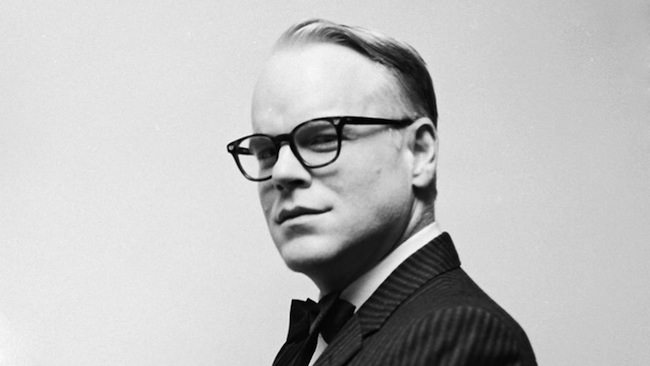
When great actors die as Hoffman did, revealing staggering addictions, or psyches run ragged because some unspecified demon is chasing them, the question always becomes: did the role become the person, or did the person become the role, or both? When Heath Ledger died similarly, Jack Nicholson was quoted as saying, “I warned him,” about the Ambien use that resulted from playing the Joker in Christopher Nolan’s The Dark Knight—one must assume that playing the same character in Tim Burton’s version of the story did a number on Nicholson as well. We could speculate a long time about to what extent actors can be said to “choose” their roles, but we can say, with some certainty, that if you’re validated by your work, then the roles you play begin to form a house you inhabit, shaped to your specifications. Hoffman’s turn as Freddie Miles in The Talented Mr. Ripley, his soft tones evidence of a poisonous mix of wealth and reckless immorality, would form one beam of the house; his
plaintive turn as Scotty J. in Boogie Nights, kissing up with futility to the cuter and better-equipped Dirk Diggler, would form another beam; the personification of sensitivity, intelligence, insidiousness, and self-absorption that was his performance of the title role in Capote would form another beam; his grand but pitiful presence in The Master would form another; and on it goes. The roles he played had in common a sense of uncomfortable intensity, as if there were an oblong, burning form lodged somewhere inside him that he bore patiently, but not without unhappiness that drove everything he did—even at his most relaxed moments on screen, he seemed badly in need of psychic fresh air.

And that’s why we watched Hoffman. And that’s why, with each film, our expectations of him grew. America’s love of its stars and its celebrities is very closely linked to its culture of expectation. From the smallest arenas to the largest, we have expectations. We want our children to over-perform, to impress us; we want each other to constantly succeed, to constantly out-do, over-achieve; and we want our celebrities to be, in a sense, like gods. We don’t want them to grow old. We don’t want them to stumble from grace. And, most of all, we don’t want them to be human. And so, when an actor like Hoffman, possessed of such a great talent along with the inner complexity necessary
to display that talent to its fullest, reveals himself, at the latest count, to have had at least eight empty bags of heroin in his apartment at time of death, we’re
stunned, and shocked, and we remark on the great tragedy of the moment, and
we’re correct to do so. It is tragic. But the significance of such an event should also be to remind us that we’re all human beings, and that part of our expectation, of our celebrities and ourselves, is that we will be just this: beautiful and imperfect, imperfect and beautiful, two qualities which will strive against each other so valiantly that you might mistakenly think one quality might be victorious.

Max Winter is the Editor of Press Play.