EDITOR'S NOTE: The following article contains spoilers for "Boardwalk Empire" season two, episode 10 ("Georgia Peaches"). Read at your own risk.
On one hand, yes, oh my God, oh the humanity, poor Angela Darmody (Aleksa Palladino), rest her soul; what a ghastly exit. Philadelphia gangster/butcher Manny Horvitz (William Forsythe) avenged a botched assassination attempt by Angela’s husband, Jimmy (Michael Pitt), by invading the Darmodys’ seaside house and putting Angela and her girlfriend down like livestock. It was obscenely dark, and I mean that as a compliment. Violence that’s supposed to mean something — to feel “real” and hurt the spectator — can’t be clean, abstract or comic bookish. It needs to have that ’70s movie nastiness, and this killing definitely had it. It reminded me of the murder spree that ended Boys Don’t Cry, with the bodies on the floor and the bloodstains on the wall. Horrifying.
But on the other hand: sooner or later “Boardwalk Empire” had to kill off somebody who was listed in the show’s opening credits, otherwise it would have seemed like Guest Star Murder Theater, and Angela was definitely the most disposable major character. She never drove important plotlines; mostly she reacted to her husband’s macho shenanigans, sometimes suffering in silence, sometimes acting out. Her appearances tended to tease the same question over and over: “Is Angela being true to herself and flirting with women this week, or trying to pass for straight again?” That’s a fascinating predicament for a female character in male-dominated 1920s Atlantic City, with its boho influence bubbling just under the surface, but “Boardwalk” has yet to address it in a meaningful way. We got a parting taste of Angela’s internal conflict during her final episode, but it ultimately felt like a glorified setup for the surprise of seeing a woman coming out of that bathroom instead of Jimmy. (On TV, when unhappy characters try to set things right with the people who mean the most to them, it often means that death is right around the corner.)
If you would like to read the rest of Matt's recap, click here at Salon.
Matt Zoller Seitz is the publisher of Press Play and TV critic for Salon.
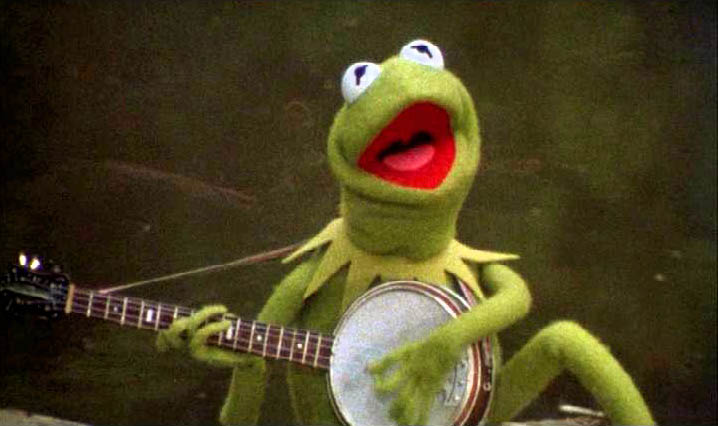
After Jim Henson’s death, the Muppet troupe spent a couple of decades wandering the pop culture wilderness, trying but mostly failing to get in touch with the magic that once fueled their popularity. They got a big step closer two winters ago, when “Muppet Bohemian Rhapsody,” their first hit viral video, debuted on YouTube. This week they’ve got their first big-screen hit in almost three decades, The Muppets, written by and co-starring comic actor and Henson obsessive Jason Segel. “It bumbles along episodically from one thing to the next — hey-ho! — and captures the spirit of Henson’s Muppet Show admirably,” writes my colleague Andrew O’Hehir.
The key to their success is the same one that fueled the success of the classic Warner Bros. characters and Matt Groening’s The Simpsons: the ability to appeal to several age groups at once. Kids laugh at the pratfalls and silly voices. Adults chuckle at the literary references, pop culture in-jokes, puns and innuendo coded just cleverly enough to go over children’s heads.
You can read the rest of Matt's piece here at Salon.
Matt Zoller Seitz is TV critic for Salon and publisher of Press Play.
MATT ZOLLER SEITZ: SONS OF ANARCHY: What happens next, daddy?
EDITOR'S NOTE: The following recap of "Sons of Anarchy" season four, episode 12 contains spoilers. Read at your own risk.
When Charles Dickens was at the peak of his popularity, Americans used to wait on East Coast docks for the latest chapters of his serialized novels to arrive. TV dramas are our version of that. The best have that mix of shamelessness and sophistication that Dickens refined into art — or at the very least, artful melodrama — and the FX biker drama Sons of Anarchy is right up there in the pantheon. Its cliffhanger episode endings are among the most addictive I’ve seen, and last night offered a great example: a three-way standoff between the increasingly evil gang boss Clay Morrow (Ron Perlman), his disaffected lieutenant Jax (Charlie Hunnam) and the vengeful Opie (Ryan Hurst), who discovered his dad’s reeking body and was informed that Clay secretly killed him. Everything about the standoff was utterly shameless: the race-to-the-finish-line lead-up; Opie’s tearful speech; Opie leveling his gun at Clay at the precise moment when Jax burst in and screamed at him to drop it; the shot of Clay’s body slamming against a wall; Jax’s horrified close-up. Cut to black, roll credits. Is he dead? Was he wearing a bulletproof vest?
I laughed out loud at this ending. It was primordially manipulative. It reminded me of watching old Captain America serials on local TV as a kid. (Me: “Mom, is Captain America going to get cut in half by the buzz saw?” Mom: “I guess you’ll have to watch next week to find out, but for now I’ll just remind you that the thing is called Captain America.) It also parallels nicely with the adventure tales I’ve been reading to my young son at bedtime — the kinds of books that’ll end chapters with sentences like, “He held his sword in front of him, moving slowly down the long, dark hallway until he pushed open the door and revealed the most horrifying image imaginable.” My boy’s reaction to these Big Reveal is always the same: “Daddy, what happens next? Can we read just one more chapter?”
If you would like to read the rest of Matt's recap, click here at Salon.
A critic, journalist and filmmaker, Matt Zoller Seitz is the staff TV columnist for Salon.com and the founder of Press Play.
MATT ZOLLER SEITZ: The frustrating sci-fi drama “Terra Nova” finally shows signs of life
Stephen Lang and the dinosaurs: Those are the only two reasons to watch Terra Nova. And that’s depressing when you consider that the Steven Spielberg-produced science fiction series is the most expensive show on TV right now, and that it’s still considered a long shot for renewal even though more worthy network shows — including NBC’s Community and ABC’s Pan Am — have effectively been canceled.
Last night’s episode was solid and surprising, but arriving eight episodes into the series’ run, it’s meager compensation for viewer loyalty. Lang’s character, Commander Taylor — the first explorer to step through the time rift that let inhabitants of a polluted Earth to colonize an unspoiled, alternate, prehistoric version of their planet — finally confirmed what viewers suspected and hoped: that he’s not such a great guy after all. (Of course he isn’t! Why cast the frequently chilling Lang in an unambiguous nice-guy role?) We learned that, like so many colonies throughout real Earth history, Terra Nova is founded on a lie and a crime. That it’s a well-meaning lie and a desperate crime doesn’t mitigate the feeling that Taylor is one dark hombre, and that the Terra Novans’ enemies, a splinter group known as The Sixers, are less an evil force than principled opposition. (I love how they communicate with a spy within the Terra Nova camp via a big dragonfly outfitted with a data chip; here and elsewhere, the series displays a knack for showing you things you’ve never seen before, anywhere.)
You can read the rest of Matt's review here at Salon.
A critic, journalist and filmmaker, Matt Zoller Seitz is the staff TV columnist for Salon.com and a finalist for the Pulitzer prize in criticism. He has worked as a movie critic for The New York Times, New York Press and New Times Newspapers and as a TV critic for The Star-Ledger of Newark.
EDITOR'S NOTE: Matt Zoller Seitz and Ken Cancelosi created Never Before, Never Again: Henson and Oz, a video essay which describes the collaboration between Jim Henson and Frank Oz, to mark the opening of a Jim Henson exhibit at the Museum of the Moving Image in July 2011. Press Play is re-posting that essay in advance of the release of The Muppets. Given the length of their 27-year collaboration and their creative influence on the culture, the essay makes the argument that Henson and Oz should be considered a comedy team on the level of Abbott and Costello and Laurel and Hardy. In addition,we are publishing a conversation between the essay's creators about the challenge of sustaining the Muppets after Jim Henson's untimely death .
Ken: Around 1996 or '97, Frank Oz appeared at the USA Film Festival in Dallas, Texas. He was there to give a comedy master class to young filmmakers, and he appeared at a screening of Muppet Treasure Island. After the movie he engaged the audience in a Q & A. It was interesting, because the first two questions were about the movie we'd just seen, and the next ten were about the fate of the Muppets.
We wanted to know who was going to perform these characters that we loved so much. Practically everyone in the audience was a Muppet fan, and we felt that the characters were in jeopardy because the Henson company and Disney — even in the six or seven years or so since Henson had died — had given the impression that they hadn't settled any of the issues related to how they were going to keep some of these characters alive.
We were all worried about it. The types of questions Oz was getting reflected that.
Matt: Right.
Ken: I finally raised by hand and asked my own question about the fate of the Muppets. Frank Oz answered me in a loud clear voice — after a half-hour of this line of questioning — he said, "You people are the most depressing audience I've ever been in front of."
And, Matt, you could feel the whole audience sort of hold their breath: "Oh my gosh, we pissed off Frank Oz." Well, Oz kind of sensed he'd lost the audience and he backed off a bit. I'm paraphrasing, of course — I can't remember exactly what he said — but it was something like, "What happens when any great artist dies? What happened when Jack Benny died? What happened when Groucho Marx died? We grieved for them. We grieve for Jim (Henson). Then, you look at their body of work and you look at what they have created, and you let it influence you. Once it becomes a part of you, you move on with your life. What choice do you have?"
And then he addressed those issues we were most concerned about — who was going to perform the Muppets. He said, "The Henson company will do the best they can to maintain a certain the integrity of each character, to keep up the quality of those performances. If they can't maintain the quality of the characters they will have to retire them. What choice do they have?" He was really nice about it.
I had no clue that the death of Jim Henson would effect me the degree to which it did. For that audience, his comments sort of had the effect of moving us down the road with regard to this issue.
Matt: To be fair to that audience, there is major difference between the death of, say, Jack Benny, and the death of Jim Henson. It is that the performer is not all there is to the Muppets. The Muppets are a franchise, they're a property, and they have an existence apart from the people who physically operate the Muppets. I think that what Frank Oz was coming up against in that Q&A was the reality of corporate America. These characters were properties, and so for financial reasons they had to continue, just as the Warner Bros cartoon characters had to continue after the death of Mel Blanc. Blanc was the closest thing to a Jim Henson over at Warners, in the sense that he was the creative unifier, the spirit of Warner Bros. cartoons. And, for that matter, it's not unlike what happened after Walt Disney died. After Walt Disney's death, the Disney corporation had to continue making children's entertainment for fiscal reasons. They couldn't just shut down the company. They had to find a way to keep going. Disney was like a David O. Selznick. He was the visionary and the micro-manager, and he was quality control.
Ken: Yeah.
Matt: There are two cameos in The Muppet Movie (1979) tell you everything you need to know about Jim Henson. One is Edgar Bergen's appearance at the county fair — and I believe he died not too soon after that. Right?
Ken: Yes.
Matt: Bergen is obviously so old he can barely even speak, but, it's such an incredibly affectionate close-up of him. That's influence number one. And influence number two is Orson Welles, who gets the last cameo in the film — and it's one of the greatest cameos I've ever seen, because it's like Jim Henson is trying to right the cosmic scales in his fantasy, in a way that never could happen in life. You know, giving Orson Welles, who had to fight like hell throughout most of his career to get anything made, a cameo as the head of a studio — I think that's just fabulous. Ken: [Laughs]
Matt: So in his heart, Jim Henson is Edgar Bergen plus Orson Welles. But, unfortunately, Henson had a studio, or a production company, attached to him. So he dies prematurely, and now suddenly you have the Muppets minus Jim Henson, which is just about as bad as Warner Bros without Mel Blanc or Disney without Disney.
The stuff that was made — I would say all the way up until the viral videos that appeared a couple of years ago — all that stuff didn't have the old flavor that the Muppets had when Henson was alive. They've gotten in touch somewhat with that old spirit, and I guess we'll learn when the new movie comes out whether they can bring it to the big screen again. But Jason Bellamy is right in his video essay when he says the major Muppets characters were kind of downplayed after Henson's death. Kermit wasn't really Kermit in the way that we remembered him.
And yet you've also got Muppets like Pepe the Prawn. Pepe's a fabulous character. I think he's almost as big right now as any of the other Muppet characters — you know, among the younger generation — and that's because he wasn't freighted with all of these expectations, and he wasn't carrying the tragic weight of the Jim Henson's legacy.
Ken: Yeah.
Matt: He could just be a new character.
I kind of get Frank Oz's resentment. I don't think his resentment is against the fans. I think he probably has a financial stake in the Muppets still. So, he can't say to your audience what I bet he really wanted to say, which is they should have packed it in after Henson died.
Ken: So, you think there's corporate pressure at work, not artistic pressure?
Matt: Yeah. I think the problem is that Jim Henson was a performer. He was like an actor, but in addition to that, he was a filmmaker and an impresario and a quality control guy who ran everything. So he was Edgar Bergen and he was Orson Welles, and he was also David O. Selznick. But the heart of what he did was really the performance aspect, and when he died, that was gone and could not be replaced.
I think Henson started to go astray a little bit in the 1980s, quite honestly, with things like — and I know this is blasphemy for some Muppet fans — but things like The Dark Crystal and Labyrinth. Those films are interesting, but they're the Jim Henson equivalent of Woody Allen doing Interiors.
Ken: [Laughs]
Matt: I respect those films for all the imagination involved, but I don't love them in the way that I love The Muppet Show.
Ken: Let's talk directly about why that is. I really do feel that the Muppets were designed to be a satire on the idea of show business. The pressures of show business. The conventions of show business. And when they ceased to be that, that's where the Muppets went wrong. It's a little like casting Eric Cartman as Oliver Twist–
Matt: And having Cartman give a straight performance, yeah. Again, I keep coming back to Warner Brothers. That's one of the things made the Warner Brothers characters so funny. If you watch What's Opera, Doc? the source of humor is very complex, if you think about it. It's not just that Chuck Jones and Mel Blanc and everyone are spoofing Wagner. It's the fact that you are seeing Bugs Bunny and Elmer Fudd perform Wagner with great spirit and great emotion while still retaining their Bugs and Elmer-ness. Daffy Duck playing Robin Hood is still Daffy Duck, and that's what makes it funny. He's not doing an English accent. He just Daffy Duck, but he happens to be wearing a green outfit with those little pointy shoes. Ken: Yes. [Laughs]
Matt: My favorite moment of the post-Henson Muppet film projects is the 2005 TV movie The Muppets' Wizard of Oz, just because it's just so damned weird. To me, the future of the Muppets is in this fantastic moment where Pepe the Prawn, apropos of nothing, turns to the camera and says "Those of you who have Dark Side of the Moon, press play now."
Ken: [Laughs]
Matt: That's the modern equivalent of that great moment on that old Muppet Show where you see Kermit the Frog sitting at his desk backstage, and he's drinking a glass of milk through a straw. The image is surreal, and just as you're thinking "What a surreal image," Kermit pauses, looks up and says something like, "Let's all think about this for a moment." And then he takes another sip.
Ken: One of my favorite moments in The Muppet Show wasn't funny at all. One of the worst shows they created in that series was where they got Sylvester Stallone to be the guest star.
Matt: Somehow I knew you were going to say Stallone!
Ken: It was such a boring, terrible show that Jim Henson as Kermit the Frog could be heard saying as the credits rolled, "You've been a really great laugh track."
Matt: [Laughs]
Ken: It's Jim Henson acknowledging that they know the show is kind of awful. [See below]
Matt: Part of what makes the original 1979 The Muppet Movie so brilliant is that it takes that fourth-wall-breaking self-awareness to the next level. When I saw it recently at that Big Movies for Little Kids screening in Brooklyn, I hadn't seen it all the way through in a number of years, and my appreciation for that film deepened a lot during that viewing. It is a postmodern film.
Ken: It certainly is.
Matt: It's all the level of Looney Tunes Back in Action or Blazing Saddles. It's that kind of a movie. It's a movie that's about the conventions of movies. This is going to sound weird to bring David Mamet into the discussion, but David Mamet wrote this play called Sexual Perversity in Chicago.
Ken: Right. It became the movie About Last Night.
Matt: Right, the studio changed the title to About Last Night, which tells you right away that they didn't get it. I remember reading an interview with Mamet from the '70s or '80s where he said his purpose in writing that play was to completely tear down all the conventions of the love story, and of romance itself, in order to demonstrate why they worked. Well, The Muppet Movie starts with a screening of the film you're about to see, and there's even a point where the film breaks and has to be fixed and the movie you're watching is temporarily interrupted. The Muppet Movie climaxes with that finale on the soundstage, and then ultimately returns to the screening room.
The interesting thing is, though, when you're on that soundstage with the Muppets and they're singing, "Life's like a movie/Write your own ending", you're not actually seeing the scenes that they were supposedly shooting for their little Muppet movie. You're seeing the point of view of the crew that is making the movie. You're seeing the lights, you're seeing the cameras. The song itself is about the act of making art. And then the roof collapses and the rainbow streams through, and it's magical. That's a metaphor for the kind of phenomenon that David Mamet was talking about. You foreground the mechanics and call attention to the conventions, but the rainbow still streams in and makes you feel good.
There's a kind of sorcery to pulling off a movie like that, or a television show like The Muppet Show, a production that wants to have it both ways. And I don't think any of the people in charge of the Muppets who came along after Henson ever quite achieved that. The new viral videos are funny, and in some cases brilliant in their own way. [Click here if you want to see the Muppet's version of Queen's Bohemian Rhapsody.] But then you look at the Henson-era Muppets, and the new stuff seems lacking. The Henson-era Muppets had the conceptual brilliance — it was there in a very casual way, and they weren't making a big deal of it — but they had heart at the same time. That's so hard to do! It's like a magician who sits there and systematically explains to you how he does every magic trick, and yet you still go, "Wow, that was amazing."
Ken: That's precisely it. You could appreciate the Muppets for the characters that they created, but you also respected the craft itself that you were witnessing.
Magic is like that. Most great art is like that, I suppose.
Matt: In a weird way, they fact that you're aware that's it's all an illusion and that you've agreed to believe in it is part of what gives it its power.
Ken: Yes. Avenue Q. You can see the performers on the stage.
Matt: I'm excited to see this new movie, but I'm also extremely skeptical. I hope they get in touch with the old magic. I was somewhat heartened reading interviews with Jason Segel. It turns out that he's not anywhere being cynically fascinated by the Muppets. There is no irony to his appreciation at all, and he obviously a very smart guy. So I'm sure he gets what's buried underneath the surface of these characters.
Ken: Yes.
Matt: I think what the Muppets have needed for decades — and I don't know if Jason Segel is the guy — is some kind of guiding force. Someone who sets the tone for everybody. Since Henson's death, there really hasn't been anybody like that. Brian Henson took control for a while and I thought he did a pretty good job. I interviewed him for the Star-Ledger back in the late '90s, and there was a tragic weight to that guy was very unsettling, a sense that he was almost like a Hamlet figure. He had to come in after the death of his father and take over. There was a sense that he was the prince ascending to the throne and he wasn't psychologically prepared to do it. You see that elsewhere in film history, too. Nobody who ran the Walt Disney company made as strong an impression as Disney, except maybe Michael Eisner, but the tone of the work was very different, and he didn't have as long a run.
Ken: Let's get the video essay that you and I created. We should talk about how it came into existence. We felt the need to acknowledge that fact that Jim Henson and Frank Oz were a comedy team. But no one has ever really marketed them that way. They don't have an agent. And unfortunately, it's too late for them. Someone needed to say they had a unique chemistry that was all their own.
I'm sure everyone in the Henson company knew it. It's taken forever for people to understand the nature of that collaboration. Twenty-seven years of working together — that's longer than many other comedy teams, like Abbott and Costello. Matt: And they're not just doing Kermit and Miss Piggy. They're also doing Animal and Swedish chef. And they're doing all these other combinations of characters. Kermit and Grover. Rowlf and Fozzie Bear. There was a wonderful quote from someone, I wanna say it was Henson: "When Frank Oz does Grover, I think he is a better actor than Lawrence Olivier." Those guys really were actors, performers who could dig deeply into the psychology of their characters. You see the characters thinking. You see the characters struggling with their internal demons. The greatest example of that is Miss Piggy. Miss Piggy is a diva and a star and all that, but they fact of the matter is, she is a terrible actress.
Ken: [Laughs]
Matt: She's awful. She indicates everything. She delivers happy lines happily, sad lines sadly, angry lines angrily, and she takes a big breath before she says something dramatic.
Ken: Her unconvincing diva behavior has always fascinated me, because she exists for the same reason Archie Bunker exists. She's there to satirize that a certain kind of behavior, in this case the behavior you'd associate with big stars.
Matt: I would say that, but I would go a step further and say that the Muppets don't just embody showbiz stereotypes, they show you how people conform to stereotypes without knowing what cliches they are.
I thought about the Muppets what I watched (Woody Allen's) Bullets Over Broadway. You know, that could have been a Muppet movie. Very easily. Diane Wiest's character is basically Miss Piggy. You've got the Jim Broadbent character, who is basically a compulsive eater and he gains five pounds ever time you see him. You know, that's the level that film is pitched at. These are psychologically believable characters, but what makes them so funny is that same thing that makes the Muppets so funny, the fact that they don't know that they're stereotypes.
Ken: Let's talk about Gonzo for a moment. I had to become an adult to truly appreciate that character, to truly understand what Henson was trying to say about performance artists. They're basically freak shows, and we love them for it. Gonzo has a mildew collection. He's a truly adult creation.
Matt: If you actually read about or watch a documentary about Evel Kneivel, he has a kind of a Gonzo-like aspect to his personality. You have to have an upbeat, sunny, "I can do anything!" attitude in order to drive a motorcycle off of a cliff with a parachute on your back. Gonzo really captures that. I also love Gonzo because he is a very well-adjusted guy, and he handles adversity better than any of the other Muppets — including Kermit. You never see Gonzo going off into a funk. Occasionally, Kermit will just decide that he's had enough, and he'll go off by himself and go pout somewhere or something. Of course he always comes back. He's essentially a melancholy personality, like Charlie Brown.
Ken: Yes, that's true. What about Rowlf the Dog?
Matt: I can't think about Rowlf without thinking of my Dad — who is a jazz pianist.
Ken: They seem to have imbued each one of these characters with a heightened sense of realism. When Rowlf plays the piano, he does it with the same nonchalant effortlessness of a real piano player.
Matt: Occasionally you'll hear him make these little involuntary noises!
Ken: That's what real pianists do.
Matt: Those are the moments where you can see that Rowlf kind of surprised himself.
Ken: I've been around a lot of pianists in my life. Most of them look like they are working harder than Rowlf, and they're probably not as good a performer as Rowlf is.
Matt: Subtleties like that are just one small testament to the level of quality control in the Muppet company. From the very beginning, they always insisted that Rowlf's fingering look accurate. They didn't do that thing like when Dooley Wilson is playing the piano in Casablanca and he's just sort of pounding on the keys. With Rowlf, you can see that his fingering is correct. The dog can play.
Ken: In that clip in our video essay, it looks like he's actually playing "Claire de Lune."
Matt: Yeah!
Ken: That's just amazing to me.
Matt It seems a strange word to apply, "realism." But there is a level of realism to the Muppets. On one hand you've got this extremely self conscious post modern quality to everything the Muppets are associated with, and at the same time, there's this parallel sense of physical realism. The vaudeville house where The Muppet Show is performed feels like a real place. I feel as though I could draw a floorplan.
Ken: I can think of another example of what you are talking about, the realism existing on the same plane as the postmodernism. The perfect example of that is Kermit on the bicycle in The Muppet Movie. He looks like he's actually riding a bicycle. Yet there's something post-modern about the very idea of a Muppet riding a bicycle.
Matt: There's a moment in Jason's video essay that is almost kind of an inverse of the bicycle scene in The Muppet Movie. It's the bit where Kermit says, "A lot of you have written in to me asking, 'Can the frog tap dance'? Well, the answer is yes." And then he proceeds to do a dance number, but you never see his feet. The number reaches a dizzying conceptual peak when they cut to a prismatic, fly's eye view, and you see like 25 little images of Kermit dancing the "Happy Feet" number, and you don't see his feet there either!
Ken: Yeah. I remember that.
Matt: There's is not even a cut away to a close-up up of his feet, yet you hear this incredibly vigorous tapping, and the crowd is going crazy because presumably the frog is such a great dancer.
Ken: Would you say Jim Henson's crowning achievement is The Muppet Show?
Matt: I think The Muppet Show and the first movie. I think as a producer as a writer as an impresario, those are his peaks. His peaks as a performer are too numerous to mention.
Ken: Yeah.
Matt: You can say that about all the Muppet performers, really. One of the greatest Muppet sketches I've ever seen is the one with Cookie Monster and the computer, which is like from the early 60s. I mean that is perfection. It's one of the most perfect comedy sketches ever — the way it builds, and that fantastic twist at the end. But, the genius of the performers evident in all sorts of places. There are some Muppet sketches on Saturday Night Live where you can see it. And you can see it in Jim Henson's The Storyteller, which I really think is due for a major re-appreciation. You admire the design of the characters and the sets, and perhaps the lighting and camerawork, but at its core, the Muppets is a performer-driven phenomenon. The troupe during the Henson years was as like-minded and cohesive as the troupe that Robert Altman assembled in the '70s, and that carried him from M.A.S.H. all the way through Popeye — a period where he was using a lot of the same people over and over, both in front of the camera and behind it. In fact, I'm a little surprised that Robert Altman and the Muppets never teamed up. Doesn't it seem like it would have been a natural thing?
Ken: [Laughs] Yes, it does.
Matt: Can't you just imagine McCabe and Mrs. Miller with Miss Piggy and Kermit, with Robert Altman directing. It's widescreen with a lot of slow zooms, and you hear all this overlapping Muppet dialogue. There's Miss Piggy lying there with the opium pipe in her hand, and Kermit in his McCabe outfit trudging through the snow with Leonard Cohen playing. I can dream, can't I?
Ken: How does a character become beloved? How do they enter the culture and stay there from one generation to the next? What is it about the Muppets that will endure? Do you think they will endure?
Matt: I think the Muppets will endure, and have endured. People still watch the original Muppet show and the original Muppet movies. I consider the first three Muppet movie to be the true Muppet movies. Not to get all fanboyish on you, but the ones that came after that are increasingly problematic, even through they have their nice points.
Ken: Yeah, Muppets in Space isn't bad.
Matt: But to go back to that original question that you asked, "What is it that makes a character beloved and make them enter the pop culture consciousness," I think it's really simple. I think the character has to be psychologically rich enough and vivid enough that you feel as if you know them as well as you know a friend or somebody in your family, and they've been around long enough that you get used to them. You kind of give them a spot in your imagination, next to real people that you actually know. Once that happens, then they're in.
It helps tremendously if the artists are able to create a character who's basically a new archetype, or stereotype, somebody who's shorthand for a type of personality that we've all known in real life but that we never saw represented onscreen before, in quite that way. Archie Bunker was that kind of character. Mary Richards on The Mary Tyler Moore show as was that kind of character, and Ralph Kramden. Woody Allen created a new type in his standup, then he built movies around it.
Ken: He did.
Matt: There was nobody ever like Woody Allen. That basic Woody allen persona, that hyper-verbal, intellectual, but extremely neurotic, physically cowardly man, was something new. He was like Bob Hope, but Jewish and with glasses, and encrusted with a kind of Freudian self-awareness that Bob Hope never had.
Ken: Yes.
Matt: It's really rare that you see the creation of a new type. The Muppets did that. Kermit is a new type. Fozzie is a new type. There are a lot of them. And just as performers who came after Woody Allen broke off bits and pieces of that original person and did their own thing with it, pop culture after the Muppets was inspired by, or took things from, the Muppets, and the Muppet characters. I always felt that Judd Hirsch on Taxi was basically kind of like a Kermit type. I think a lot of sitcoms owe a lot to the Muppets in the way they will have this well-adjusted central character who's kind of a calm eye at the center of the storm. Any kind of high-strung pretentious diva character is inevitably going to turn into Miss Piggy. Any sad sack guy who'll do anything to get a laugh is inevitably going to turn into Fozzie bear. Do you remember Neil on Freak and Geeks?
Ken: Of course. Great show.
Matt: I think he's basically Fozzie.
Ken: [Laughs] You're right Matt: When Peter Jackson did Meet the Feebles, one of the more fascinating things about that was that, as the film went on, it became simultaneously a parody of a Muppet movie and a Muppet movie. The movie is NC-17 and its certainly not for children. Ultimately, though, it's strangely like a Muppet movie. The hero in that is a combination of Kermit the Frog and Scooter. You have a hippo character who is basically Ms. Piggy, and the filmmakers aren't trying terribly hard to disguise that. And you find yourself rooting for the hero to save the day just as you'd root for Kermit to save the day in an actual Muppet film. The innocent purity of the Muppets ultimately proves stronger than the corrosive satire and parody that Jackson is attempting. Jackson gives in, and he gives in willingly, with pleasure.
And here we're going back to that David Mamet Sexual Perversity in Chicago comparison. In Meet the Feebles, Peter Jackson sets out to critique, undermine, examine, and perhaps even pulverize all of the cliches and conventions of the Muppets, and what does he end up doing? He ends up using them.
Ken: Yes. If you capture people's imaginations, people will think they know those characters.
Matt: I kind of wish someone would come along and just do a new troupe of Muppet characters with their own personalities.
Ken: Thank you!
Matt: There is part of me that thinks when Henson died, the Muppets died. There is almost a zombie-like quality to it — as much as I love them. Why are they still walking around?
Ken: I'm going to go out on a limb and say I think the Muppets we know — Fozzie, Kermit, Miss Piggy — I'm going to say that their years are numbered. I mean a decade or so down the road; it's going to be very difficult to maintain the quality of the performances. When I say their days are numbered, I don't mean in the sense of some vaudeville act from the 1920s that you've never heard of. I think people will always watch the Muppets. They're so clever and funny. People will always relate to those characters. But they'll relate mainly to the characters that were created in the 1970s. The original chemistry between those two guys, Jim Henson and Frank Oz, has long since gone. There's no way to re-create it.
Matt: Well, when you watch Warner bros. cartoons, do you watch the ones from the 70s?
Ken: No. Matt: No, you don't, despite the fact that Mel Blanc was still involved at that point. The heyday of Warner bros cartoons was roughly the 1930s through maybe the early '60s, and that's being generous. After that it becomes a case of diminishing returns. I think they got a new lease on life in that Joe Dante film from a few years ago, but only because that wasn't just a pure Warner Brothers cartoon. It was a post-modern exercise that was as much about being a Warner brothers fan as it was about the characters themselves.
Ken: Yes. The only way the Muppets can continue to stay in the culture is to create a new set of characters — characters that reflect the sensibility of whatever era they happen to be in.
Matt: Yeah, when I want to experience the Muppets, I pop in The Muppet Movie or watch the DVDs of the original TV series. That's when the Muppets were at their peak. And the people who make the Muppets shouldn't feel embarrassed by that.
Ken: Nope. To endure that long is really something. And that takes us back to what Frank Oz said — that when someone dies, you let their body of work influence your work, and you create something new. You create something beautiful from it.
Maybe that's the lesson from the career of Jim Henson for me — this idea that he made it OK to be creative, to be as nutty and as clever as you can possibly be. He freed everybody's imagination. That's really an amazing legacy.
Matt: Yeah, it is. Think about how many kids were inspired to put on a show because of the Muppets, in the way that earlier generations were inspired by The Little Rascals. It is an amazing thing.
Henson's always been a hero to me. It's not just the fertility of his imagination and the sheer breath of his accomplishments that I admire. It's also the warm and generous spirit that he brought to everything he did.
Ken: Yep.
Matt: If they really want to resuscitate the Muppets, that's what they need to go look for. It would be nice if Jason Segel was the guy. But if it turns out that he's not, then maybe there's somebody else out there. And if there isn't, it just means that what we already suspected is true: Jim Henson was one of a kind.
Ken: We'd like it to not be true because we love the characters. But you may be right.
A critic, journalist and filmmaker, Matt Zoller Seitz is the staff TV columnist for Salon.com. Ken Cancelosi is a writer and photographer living in Dallas, Texas.
Simon Weisenthal’s greatest contribution to the world was his dogged pursuit of Nazi criminals who escaped punishment at the end of World War II. His second greatest contribution was his reminder that despite being described as “the Good War” or “a just war,” not enough good was ultimately done, and comparatively little justice was meted out. Some of the most prominent and heinous architects of mass murder simply got on with their lives, and some were the recipients of largesse — jobs, travel assistance, even money and government protection — that was denied to the people who endured their cruelty. And we tend to forget that for every high-ranking sadist or mass murderer who was imprisoned or executed after the war, thousands more who assisted them directly (through action) or indirectly (through silence) were never even called to account.
This grim fact is the jumping-off point for “Elusive Justice” (Tuesday, PBS; check local listings), a documentary by Jonathan Silvers about Holocaust survivors (and victims) and the German war criminals that still weigh on their minds nearly 70 years after the end of the war. Narrated by Candice Bergen, the movie hits some of the expected topics and people, including the Nuremberg Trials and the efforts of Weisenthal (who disliked being called a “Nazi hunter” because so much of his work consisted of sifting through documents) and Asher Ben Natan, who funded and organized ex-Nazi-tracking operations in Europe.
You can read the rest of Matt's piece here at Salon.
EDITOR'S NOTE: Contributor Tony Dayoub marks the 25th anniversary of the premiere of Michael Mann's Crime Story. We have paired his new piece with Matt Zoller Seitz's video essay Zen Pulp, Pt. 5: Crime Story, which was created for the Museum of Moving Image.
On September 18, 1986, director Michael Mann (Heat) made good on his promising career in TV and film with the debut of his new period cops-and-robbers saga, Crime Story. Not only did Crime Story’s feature-quality production design live up to that of its TV antecedent, Mann’s stylish Miami Vice; Crime Story also fulfilled its aim to present a morally complex world in which it was often difficult to tell those who broke the law from those who upheld it. Set in 1963, the show explores the multiple facets of a young hood’s rise to power in the Chicago Mob through the viewpoints of its three protagonists. Ray Luca (Anthony Denison) is the pompadoured criminal quickly ascending the ranks of the “Outfit.” Lieutenant Mike Torello (Dennis Farina) is the cop in charge of Chicago’s Major Crime Unit (or MCU) who bends the law in the service of justice. And David Abrams (Stephen Lang) is the idealistic young lawyer caught between the two men and their obsessive cat-and-mouse game. Today, a little over 25 years since its premiere, Crime Story: The Complete Series (Image Entertainment) comes out on DVD. At press time, review copies were not made available, so it’s impossible to ascertain if any improvements have been made over the questionable video quality of previous iterations. But this short-lived series, an influential precursor to the well-written serials littered throughout cable this decade (i.e., The Sopranos, Mad Men, Justified, and others), is worth owning despite any potential issues with its digital transfer.
In 1984, the success of Miami Vice’s MTV cops premise had made Mann a household name, allowing him to develop virtually any project for NBC. Mann went back to a theme that informed his earlier films and would recur again and again in subsequent ones: the razor-thin borderline between order and chaos. In his first feature, Thief (1981), Mann focused on the rigid code of honor of a Chicago jewel thief named Frank (James Caan), zeroing in on his professionalism and expertise as counterpoint to the crooked methods used by the police and his criminal associates to bring him under control. Manhunter, a crime procedural, took a different tack, examining how FBI profiler Will Graham (William Petersen) experiences a progressive loss of his own identity as he tries to get inside the head of an active serial killer. With the same skill Vice displayed in applying memorable music to key moments of its violent tale, only now taking a period setting into account, Crime Story represented a sort of apotheosis of all of these elements.
In much the same way Heat would later, Crime Story looked at opposing sides of the law – both in sharp relief and, in some cases, muddled reflection of each other. (Heck, Heat even lifted one scene from Crime Story whole cloth – Al Pacino’s cop discovers he’s being cuckolded and takes his TV as he moves out, just as Torello does in an early episode.) Torello’s poisonous hatred of Luca spills onto his personal life, rupturing his marriage and often bringing death to his loved ones. At one point, Torello acknowledges his obsession privately to Luca, “You know, when you chase someone as long as I’ve chased you, in the end, it really comes down to two people: you and me.” With little regard for his officers – big-hearted Sgt. Danny Krychek (Bill Smitrovich), cigar-chomping Walter Clemmons (Paul Butler), jokester Nate Grossman (Steve Ryan), and rookie detective Joey Indelli (Billy Campbell) – Torello rushes headlong in pursuit of Luca, frequently endangering the lives of innocent bystanders. The lethal Luca, meanwhile, cooly dispatches orders and manages his lackeys in much the same way a company CEO does. Public defender Abrams justifies his work on behalf of criminal scum by righteously pointing out that everyone is entitled to a top-notch legal defense. But as the series continues, Torello begins fumbling the rest of his police work in order to focus on Luca, coming under fire from a federal attorney. Abrams starts feeling the sting of his close association with mobsters, especially when his father (himself a famous mob lawyer) is killed by a car bomb meant for him. The ambitious Luca becomes more reckless in his hunger for power.
By the time Luca makes it to the top of his organization, he is paranoid. Luca turns on his closest henchmen, Pauli Taglia (John Santucci) and Max Goldman (Andrew Dice Clay), in an episode directed by Mann himself, “Top of the World.” The real-life events that inform the episode (perhaps the pinnacle of the entire series) also provide the backstory for Martin Scorsese’s Casino. Like Joe Pesci’s Nicky Santoro, the character of Luca stands in for real-life mobster Anthony “the Ant” Spilotro whose cowboy antics began interfering with the Chicago Outfit’s Vegas dealings. The character of Max Goldman, like Robert De Niro’s “Ace” Rothstein in Casino, is a stand-in for Frank “Lefty” Rosenthal. Casino’s opening scene, in which Rothstein survives an abortive car explosion, is also depicted in “Top of the World;” Goldman survives an explosion meant to eliminate him for discovering Luca cheating with his wife.
Crime Story came by its gritty realism honestly. It was created by Chuck Adamson, a former Chicago cop who consulted Mann on Thief, and Gustave Reininger, a former investment banker turned screenwriter with a tendency to put himself in dangerous undercover situations while researching his work. In fact, Mann filled out Crime Story’s cast, much the same way he did in Thief, with actors who had once been cops or felons in Chicago. Lead actor Farina had been a cop and Adamson’s partner. And Santucci, whose supporting character of Pauli was the show’s breakout favorite, had been a highline jewel thief busted by Adamson and Farina. Santucci’s exploits served as much of the foundation for Thief, and he doubled as a technical consultant on Crime Story.
While it wasn’t the first prime-time series to have serialized elements, Crime Story was one of the most cohesive, at least in the first of its two seasons. The first season follows Luca’s meteoric rise from simple home invader (in the pilot episode directed by Abel Ferrara) in Chicago to chief enforcer for syndicate boss Manny Weisbord (Joseph Weisman) in Las Vegas. Torello rides his coattails, in a sense, graduating to G-man with the Justice Department along with the disillusioned Abrams, both of them tasked specifically with bringing Luca and the Outfit to justice. The time-compressed first season comes to a natural and nihilistic conclusion, in which few of the characters seem to get out alive, Mann’s nod to the slim chances that the ratings-challenged series would return for a second season. But return it did, and now, the Crime Story writing staff, or what was left of it after many moved on to other projects, had to figure out how to get themselves out of the corner that they had painted themselves into. With two, possibly three, of the lead characters at death’s door in the first season finale, the ultimate resolution was far-fetched for a show that had always prided itself for its verisimilitude. The show wound down its second season with inconsistent episodes set in the Vegas milieu before concluding with a tight trilogy of episodes filmed in Mexico, where Torello’s squad goes vigilante in order to finally stop Luca once and for all. One wonders if today’s TV landscape might have been more supportive of Crime Story.
Though ratings played a part in its cancellation, another significant contribution was the expense of recreating the early ‘60s. Today’s cable series have learned to amortize their costs – not to mention increase the production time allotted in filming an episode – by producing seasons that are half the number of episodes as those of network series. With less need for filler episodes – Crime Story produced a number of episodes that mostly consisted of clip compilations to bring its audience up to speed – then season-long storylines take on more potency. Just look at the current season of Sons of Anarchy, another show in which the criminals are the protagonists. Kurt Sutter’s outlaw biker series had to ask for one more episode than its allotted 13 when it became clear this year’s plotline involving SAMCRO’s dealings with a Mexican drug cartel was bursting with too much story potential.
Still, as a forerunner to the morally relativistic worlds seen on TV crime sagas like Boardwalk Empire and its cable confreres, Crime Story stands out as a beautifully executed and engaging exemplar.
Atlanta-based freelance writer Tony Dayoub writes about film and television for his blog, Cinema Viewfinder, and reviews DVDs and Blu-rays for Nomad Editions: Wide Screen, a digital weekly. His criticism has also been featured in Slant’s The House Next Door blog, Opposing Views and Blogcritics.org. Follow him on Twitter.
RECAP: “The Walking Dead” Season Two, episode 5, “Chupacabra.”
"The Walking Dead" has craft and atmosphere; if only the characters weren't so insufferably earnest and dense. This recap contains spoilers for "The Walking Dead" Season Two, episode 5, "Chupacabra." Read at your own risk.
There were huge revelations on Sunday’s episode of “The Walking Dead,” including a tantalizing hint that the missing girl Sophie might still be alive, and a climactic reveal that the courtly old religious veterinarian Hershel (Scott Greene) was keeping captured zombies alive inside his barn, presumably in hopes of one day curing them. There was another big revelation last week in the form of a surprise pregnancy, Lori’s.
But that’s not enough to stave off charges that “The Walking Dead” is taking a Hamburger Helper approach to TV drama, padding out meager amounts of dramatic meat with bags of bland dramatic stuffing. Sophie has been missing for the entire season; Carl has been bedridden since the end of episode two; Lori found out about her pregnancy last week but still hasn’t told Rick; etc. If you added up the screen time devoted to the genuinely interesting elements, they might total maybe ten minutes per episode, if that. The rest is wandering, suffering, and talking, talking, talking, courtesy of characters who are for the most part so naive and/or irritating that if you were watching them on a big screen at a drive-in movie theater, you’d cheer for them to be eaten.
The “WTF?” count in my “Walking Dead” notebook is nearing 200 by now, and this week’s installment, “Chupacabra”, added a few more, including the cutesy back-and-forth between end-of-the-world sex buddies Glenn (Steven Yeun) and Maggie (Laurie Cohen), complete with scribbled dinner-table notes; the protracted sequence of the wounded Daryl (Norman Reedus) falling down that cliff, then climbing up, then falling again; and that somebody-please-kill-all-these-stupid-characters moment when Andrea (Lauren Holden) mistook the returning Daryl for a zombie and winged him across the temple with a rifle shot. (I’m sure the producers didn’t intend this as a “You can’t trust women with guns” moment, but given the male-dominated power structure on this series, that’s how it played.)
You can read the rest of Matt's recap here at Salon.
RECAP: A bear, a baseball glove and “Boardwalk Empire”
Editor's Note: The following article contains spoilers for "Boardwalk Episode" season two, episode eight, "Two Boats and a Lifeguard." Read at your own risk.
“Powerful” episodes of cable dramas make a huge impression on viewers, and are often acclaimed as the best of their season. Sometimes the praise is deserved; other times it’s a reaction to the sight of characters we like being diagnosed with fatal illnesses, beaten, raped, killed, etc. Meanwhile, low-key but complex episodes often get short shrift from critics and viewers. I hope that doesn’t happen with tonight’s “Boardwalk Empire” episode, “Two Boats and a Lifeguard,” because in degree of difficulty, it’s impressive, in some ways extraordinary.
As written by Terence Winter and directed by Tim Van Patten — a dynamic duo on a lot of great “Sopranos” episodes — “Two Boats and a Lifeguard” seems like just a “housekeeping” episode that’s mainly concerned with wrangling subplots and exploring characters. But as I’ll explain in a moment, the episode went way beyond that.
Nucky and Eli buried their father and had an uncomfortable moment of almost-reconciliation at the memorial. (This episode marked the final appearance of the late stage and screen actor Tom Aldredge, who played both Nucky and Eli’s dad and Carmela’s father on “The Sopranos.”) Nucky responded to his dad’s death — the psychological aftershock of the second assassination attempt against him, this one set up by his surrogate son Jimmy Darmody — by declaring that he was quitting his job as Atlantic City treasurer and was going to try to mend his ways and become a respectable citizen. (Fat chance of that happening on a show like this, but it was still a fascinating development that let star Steve Buscemi show us intriguing new shadings.) Nucky even asked Margaret’s son to address him as “Dad” rather than “Uncle Nucky” — a huge step toward commitment and emotional availability, even though it was conveyed in a rigid 19th century manner. Van Alden hired a nanny to take care of his baby with Lucy, in the process confirming his near-total inability to respond to the child as a father should, but revealing very faint glimmerings of potential near the end. (Or was that just wishful thinking on my part? Probably so — Van Alden is such a rancid sour persimmon — and so encrusted with lame graphic novel pathology, from religious fanaticism to sexual hypocrisy to cold sadism and murderous rage — that the writers might be unable to salvage him as a workable character.)
A couple of weeks ago, my young son asked me if I had “any more DVDs of John Williams movies.” It took me a second to register what he meant by this. He thought that the prolific Hollywood composer was actually the director of some of his favorite movies, a list that at this point consists entirely of the fantasy, science fiction and adventure films that thrilled me and his older sister as kids and kids-at-heart: “E.T.,” “Jaws” and “Close Encounters of the Third Kind,” the “Jurassic Park” and “Harry Potter” and “Star Wars” and the Indiana Jones pictures, and many others. I started to explain that Williams was not actually a filmmaker. But then the truth of his assumption hit me: In a sense, Williams is the unnamed co-author of a good many of the films he’s scored. His galloping, wondrous tone promises a particular type of entertainment, and is so recognizable that we can’t think of certain blockbusters without hearing their themes in our heads.
But as even some adult moviegoers sometimes have to stop and remind themselves, there is more to Williams’ career than iconic theme music for tales of mayhem and magic. He’s been the go-to composer for a particular type of blockbuster ever since his second collaboration with Spielberg, 1975′s “Jaws”; their long collaboration will be analyzed on Turner Classic Movies next week in an episode of “AFI Master Class.”
But the 79-year-old multiple Oscar-winner’s work predates the career of Spielberg, George Lucas and almost everyone else he’s worked with. His career spans an array of eras, genres and modes. He started out as a jazz pianist and session musician and has often worked brilliantly in that vein. He’s done superb scores for horror films, mysteries, romances and grim historical epics. He even did fanfare for the 1984 Olympic games and the long-running theme to “The NBC Nightly News With Tom Brokaw.” He’s as versatile as any character actor and as durable as any great movie star. His résumé is so lengthy — 140 titles and counting! — that the following list of 10 favorites could easily be swapped out for a totally different list. And knowing you, my dear reader, you’ll do precisely that in the Letters section.
You can read the read the rest of Matt's slide show here at Salon.
Matt Zoller Seitz is publisher of Press Play and writes for Salon.




 Simon Weisenthal’s greatest contribution to the world was his dogged pursuit of Nazi criminals who escaped punishment at the end of World War II. His second greatest contribution was his reminder that despite being described as “the Good War” or “a just war,” not enough good was ultimately done, and comparatively little justice was meted out. Some of the most prominent and heinous architects of mass murder simply got on with their lives, and some were the recipients of largesse — jobs, travel assistance, even money and government protection — that was denied to the people who endured their cruelty. And we tend to forget that for every high-ranking sadist or mass murderer who was imprisoned or executed after the war, thousands more who assisted them directly (through action) or indirectly (through silence) were never even called to account.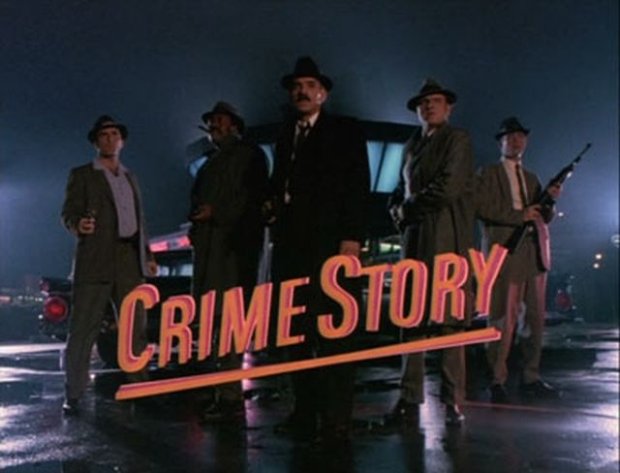



 "The Walking Dead" has craft and atmosphere; if only the characters weren't so insufferably earnest and dense. This recap contains spoilers for "The Walking Dead" Season Two, episode 5, "Chupacabra." Read at your own risk.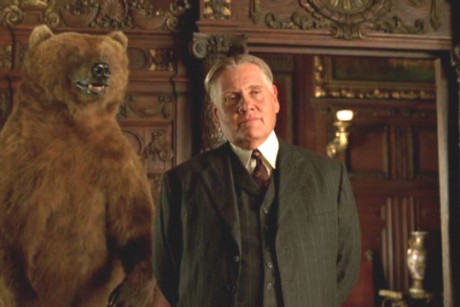
 Editor's Note: The following article contains spoilers for "Boardwalk Episode" season two, episode eight, "Two Boats and a Lifeguard." Read at your own risk.
 A couple of weeks ago, my young son asked me if I had “any more DVDs of John Williams movies.” It took me a second to register what he meant by this. He thought that the prolific Hollywood composer was actually the director of some of his favorite movies, a list that at this point consists entirely of the fantasy, science fiction and adventure films that thrilled me and his older sister as kids and kids-at-heart: “E.T.,” “Jaws” and “Close Encounters of the Third Kind,” the “Jurassic Park” and “Harry Potter” and “Star Wars” and the Indiana Jones pictures, and many others. I started to explain that Williams was not actually a filmmaker. But then the truth of his assumption hit me: In a sense, Williams is the unnamed co-author of a good many of the films he’s scored. His galloping, wondrous tone promises a particular type of entertainment, and is so recognizable that we can’t think of certain blockbusters without hearing their themes in our heads.
 Press Play Video Blog