
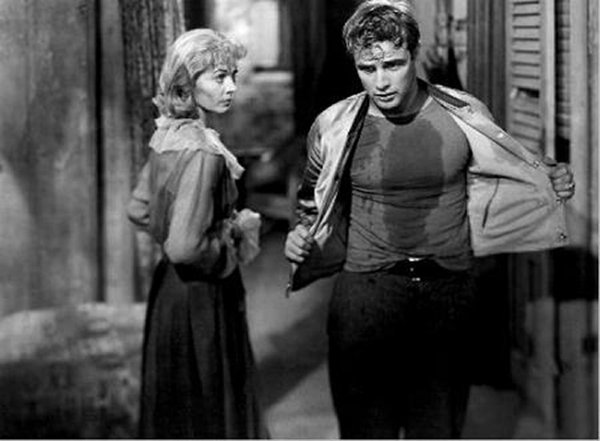
Forget Joaquin Phoenix. Forget Charlize Theron. Forget Christian Bale. Forget Daniel Day-Lewis. Forget Heath Ledger. Forget Jack Nicholson. Forget Philip Seymour Hoffman. Forget Robert DeNiro. Forget Cate Blanchett. Forget Tilda Swinton. Forget Meryl Streep. Forget Glenn Close. These are all actors who, at one time or another, have "disappeared" inside their roles. This sort of disappearance owes its existence in the present day to the early work of Marlon Brando and James Dean, in films like ‘A Streetcar Named Desire,’ ‘On the Waterfront,’ ‘The Wild One,’ ‘Giant,’ and ‘Rebel Without a Cause.’ Without this standard, as it were, the performances mentioned up top might not have taken place, because we would not have realized the potential of method acting to transform the screen. This nearly 30-minute video essay by FilmmakerIQ does a wonderful job of taking us through the developments (starting in ancient Greece!) that led to method acting and explaining its principles as laid out by Constantin Stanislavski. We also get, of course, a sampling of great method performances by Brando, James Dean, and others–as well as a glimpse inside the minds of Stella Adler, Lee Strasberg and other method proponents.
Watch: The History Behind Method Acting: A Video Essay
Watch: The History Behind Method Acting: A Video Essay

 Press Play Video Blog