VIDEO: What Does Oscar-Winning Cinematography Look Like?

VIDEO: What Does Oscar-Winning Cinematography Look Like?

As a bonus to the “Who Should Win” video essay series that identifies this year’s truly deserving Oscar winners, this video compiles some of the most impressive visuals from the five films nominated for the Academy Award for Outstanding Achievement in Cinematography. Of all the Oscar categories, this one may lend itself best to a simple video compilation of clips that lets you decide for yourself which movie deserves to win.  All you have to do is watch and decide. Or is it really that simple?

Of course, one can’t evaluate all the films in their entirety in one sitting. I’ve limited the selections for each film to two standout clips not exceeding a total of 90 seconds. To do this, I enlisted the suggestions of the Twittersphere. Over a dozen people tweeted their standout shots and images from the nominated films, with several moments getting multiple mentions and thus finding their way into this compilation reel. Based on sheer number of enthusiastic tweets on their behalf, it seems that Skyfall and Lincoln are the popular favorites.

I made one additional tweak to the video by removing the audio from the clips. It may be a bit jarring to watch these scenes without a soundtrack, but it’s for the sake of placing sole emphasis on the images and camerawork. I hope you’ll agree with me that, by and large, the visual artistry on display speaks quite well for itself.

Looking at these clips, I have my own opinion on who should win, but I’ll keep mum, as I’d rather see you cast your vote in the comments section. Perhaps a subsequent discussion below might tease out my favorite.

VIDEO ESSAY: Who Should Win the Oscar for Best Supporting Actor

VIDEO ESSAY: Who Should Win the Oscar for Best Supporting Actor

Part of "Who Should Win," a series of video essays co-presented by Indiewire Press Play and Fandor.

This year’s Best Supporting Actor nominees are all previous Oscar winners, which eliminates some of the career achievement concerns that can affect these awards. Let’s hope that puts more emphasis on the quality of the performances, which are all worthy of consideration.

As a wisecracking, world-weary Hollywood producer, Alan Arkin gives a light-hearted lift to Argo’s political thriller proceedings. In Lincoln, Tommy Lee Jones plays the salty senator Thaddeus Stevens. Jones’ performance lives in his eyes. It shows the mental activity of an old man challenged to rethink his politics in order to achieve his lifelong dream of abolishing slavery. Jones is currently the narrow favorite to win the Oscar, but I think there are three performances better than his.

In Django Unchained, Christoph Waltz is a ruthless bounty hunter whose conscience awakens when he helps a freed slave on his quest. Waltz is a master of playing surface-level civility. But in this film, he peels away those layers ever so gradually to reveal his moral outrage seething underneath.

Robert De Niro gives his best performance in years in The Silver Linings Playbook. He plays a football-fixated father, whose attempts to help his son are undermined by his own manic temperament. It’s a display of late-career virtuosity, showing the emotional range he’s mastered over a lifetime: from explosive menace to wisecracking warmth. In this film, he adds an extra dimension through a sense of advanced age and frailty, which he uses to disarming pathos in this scene. But as it turns out, this emotional display is a put-on, as he just wants to loop his son into a crazy scheme. De Niro’s character is an inspired creation of demented obsession, charged with startling vitality.

But I have to give the top prize to Philip Seymour Hoffman for his work as the self-help guru Lancaster Dodd in The Master. It surprises me to say this because I’m not even sure if it’s a complete performance—by the end, his character seems to disappear into the movie’s unresolved clouds of ambiguity. But for the first 90 minutes of The Master, Hoffman is key to making this film work. He’s a pillar of authoritative self-control, a counterbalance to Joaquin Phoenix’s utterly unhinged lead performance.

But Hoffman is doing more than just playing the straight man. There’s an unforgettable scene where Hoffman’s Dodd first processes Phoenix. From Dodd’s face and his line of questioning, we see a refined man fascinated by a wild beast of a human, but we catch a glimpse of that same wildness lurking in him as well. That wildness explodes in a later scene when Hoffman is ambushed, and his lack of self-mastery is exposed. In just these two scenes, Hoffman is able to chart out the entire three-dimensional psychic landscape of a character. It’s this richness that keeps us watching even as the film takes us to increasingly difficult territory.

Kevin B. Lee is Editor in Chief of IndieWire’s PressPlay Video Blog, Video Essayist for Fandor’s Keyframe, and a contributor to Roger Ebert.com. Follow him on Twitter.

VIDEO ESSAY: Who Should Win the Oscar for Best Supporting Actress

VIDEO ESSAY: Who Should Win the Oscar for Best Supporting Actress

For

Part of "Who Should Win," a series of video essays co-presented by Indiewire Press Play and Fandor.

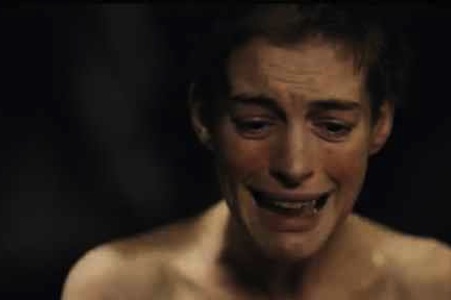
Anne Hathaway is the favorite to win Best Supporting Actress as Fantine in Les Miserables, and that’s just wrong for three reasons. First, she gave a much richer performance as the sly Selina Kyle in The Dark Knight Rises. Second, she’s not even the best supporting performance in Les Miz—that honor goes to Samantha Barks, who’s more nuanced as Éponine—but of course, Éponine always gets overlooked. I think Anne Hathaway is a great actress, but this is the worst performance in this category. It’s a sad puppy act pitched at shrieking full volume, while ripping off Sinead O’Connor and Falconetti’s Joan of Arc. This performance doesn’t just beg for an Oscar, it grovels for it.

Sally Field has won two Oscars, and she’s nominated again as Mary Todd Lincoln in Lincoln, playing an unstrung, emotional foil to the constantly composed president. Field brings an intelligence and dignity that gives an edge to her character’s moments of hysteria. She’s able to convey a mind that’s alert and articulate even when it spins in sadness.

Jackie Weaver is the surprise nominee for Silver Linings Playbook as a mother trying to deal with her son’s bipolar disorder. She has only a handful of lines, mostly appearing in cutaway reaction shots; it’s practically a silent movie-type performance, and not a bad one at that. Expressive even in her silence, she’s a graceful, accepting presence amidst a cast of crazies.

Amy Adams has roughly 20 minutes of screen time in The Master, and boy does she make the most of it. She gives a hand job, turns her eyes black and gives the stare of death while naked and pregnant. Her unnerving intensity casts a spectre over The Master—it’s a pity that she wasn’t utilized more. She practically deserves her own movie.

Another character who deserves her own movie is Cheryl Cohen-Greene, the sex surrogate played by Helen Hunt in The Sessions. Hunt has nearly twice as much screen time as any of the other nominees, which may give her an unfair advantage. But this is the most full-bodied performance of the five. Not just because Hunt appears fully nude, but because she conveys a generosity that gives the film intimacy, as well as intrigue. Hunt’s character helps a disabled man experience the joy of sex. Her confident voice and reassuring gestures make a bizarre situation seem perfectly normal. And just like her character, Hunt manages to give so much of herself while not giving herself away. It’s a performance within a performance, one that explores the personal boundaries of a very unique profession, whether it be sex therapy or screen acting.

Kevin B. Lee is Editor in Chief of IndieWire’s PressPlay Video Blog, Video Essayist for Fandor’s Keyframe, and a contributor to Roger Ebert.com. Follow him on Twitter @alsolikelife

VIDEO ESSAY: Abraham Lincoln in Movies and TV (1915-2012)

VIDEO ESSAY: Abraham Lincoln in Movies and TV (1915-2012)

Steven Spielberg’s Lincoln is a high-profile study of one of America’s greatest presidents leading his country through the perilous Civil War. Too bad it doesn’t show him hunting vampires. Spielberg’s movie may be the more historically accurate evocation of the legendary Lincoln, to say the least, but if there’s one thing that Abraham Lincoln: Vampire Huntershows us, it’s that Lincoln, as icon, transcends historical fact. The Lincoln legend informs our ideals and sparks our imaginations. Lincoln is so familiar to us now; why not have fun with him? The problem with Abraham Lincoln: Vampire Hunter is that ultimately it can’t emancipate Lincoln from the mantle of seriousness that burdens his mythic persona, and the movie ends up taking itself too seriously.

Still, playing fast and loose with Honest Abe is at an all-time high. Beyond the vampire hunting, Lincoln’s been engaged in light sabers duels with George W. Bush in the animated TV skit-com Robot Chicken; he’s gone axe-wieldingly evil in Matt Groening’s Futurama and set George Washington’s wooden teeth ablaze in MTV’s Celebrity Deathmatch.  Lest we think this jocular treatment of this particular president is a recent development, track back to the dawn of the talkies, when Abraham Lincoln is caught babysitting Shirley Temple’s Confederate brat in 1935’s The Littlest Rebel.

What is it about Lincoln that stirs our fantasies? Some answers might be teased out of the enigmatic The Death of Abraham Lincoln (in Three Parts), a 12-minute short by experimental artist Ben Russell that’s filled with American iconography: guns, railroads, the frontier. But there’s nothing idealistic about it—it’s gritty and a little psychotic. A woman obsessively trains to be an assassin. A clown watches toy cowboys and Indians battling on his television. Russell himself impersonates Lincoln like a boy rehearsing for a class play. Indeed, these are images that populate the mind of an American schoolchild caught between history lessons and Saturday cartoons; here they are set loose upon an anarchic wasteland, colliding in a violent free-for-all.

But to find the touchstone for the orthodox rendition of movie Lincoln, look no further than D.W. Griffith’s Abraham Lincoln. Griffith was the first to depict Lincoln in a feature film—the first feature film, The Birth of a Nation—and jumped at making the first-ever talkie about his idol. Both films feature meticulously faithful re-enactments of the president’s assassination at Ford’s Theater, and the sound feature bears the external trappings of authenticity.

Walter Huston’s rock solid baritone, however, veers from historical accounts of Lincoln’s tinny tenor (something thatDaniel Day-Lewis tries to rectify in the Spielberg film); but he set the tone for many a stentorian Lincoln to follow, from Raymond Massey to Hal Holbrook to Gregory Peck.

On the other hand, Huston and Griffith tread fairly uncharted territory with early scenes of a young, randy Abe cavorting with first love Anne Rutledge, only to have her untimely death drive him to suicidal depression. This calamity forges Abraham’s resolve to become a greater Lincoln, and is but one of a series of Christ-like trials on the path of seemingly divine self-possession. It’s a maturation pattern of divine destiny that plays out in just about every Lincoln biopic, even the one where he saves the Union from the scourge of Dixie blood-suckers.

Originally published on Fandor.

UPDATE: This aired after the video was published, but we'd be remiss if we didn't add this to the pantheon of Lincoln portrayals:

Kevin B. Lee is Editor in Chief of IndieWire’s PressPlay Video Blog, Founding Editor and Video Essayist for Fandor’s Keyframe, and a contributor to Roger Ebert.com. Follow him on Twitter.