‘SHOULD WIN’ VIDEO ESSAY SERIES: PRESS PLAY picks the Oscars

‘SHOULD WIN’ VIDEO ESSAY SERIES: PRESS PLAY picks the Oscars

null[EDITOR'S NOTE: Press Play presents "Should Win," a series of video essays advocating winners in seven Academy Awards categories: supporting actor and actress, best actor and actress, best director and best picture. These are consensus choices hashed out by a pool of Press Play contributors.]  


null

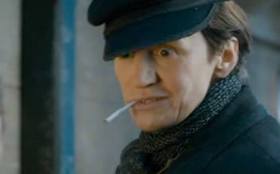
‘SHOULD WIN’ VIDEO ESSAY SERIES: Best Supporting Actress Janet McTeer, ALBERT NOBBS

‘SHOULD WIN’ VIDEO ESSAY SERIES: Best Supporting Actress Janet McTeer, ALBERT NOBBS

[EDITOR'S NOTE: Press Play presents "Should Win," a series of video essays advocating winners in seven Academy Awards categories: supporting actor and actress, best actor and actress, best director and best picture. These are consensus choices hashed out by a pool of Press Play contributors. Follow along HERE as Press Play decides the rest of the major categories including Best Picture, Best DirectorBest ActorBest ActressBest Supporting Actor and Best Documentary. Important notice: Press Play is aware that our videos can not be played on Apple mobile devices. We are, therefore, making this and every video in this series available on Vimeo for these Press Play readers. If you own an Apple mobile device, click here.]

Narration:

Pretty much all of this year's Best Supporting Actress nominees are great, although a puking, pooping Melissa McCarthy in Bridesmaids may not exactly be the stuff of Oscar dreams. Bérénice Bejo offers a charming modern take on a silent film ingenue-turned-star. Jessica Chastain especially can do no wrong as The Help's Marilyn Monroe-style damsel in distress. And in that same film, Octavia Spencer offers a terrific steadying subversion as a maid who won't tow the line. But it is Janet McTeer who should take this award. Albert Nobbs itself is nothing to write home about; its depiction of a woman masquerading as a male servant feels as dated as the myth of the tragic mulatto. McTeer is so subtly wrought as Hubert, a lesbian passing as a male painter, that she redeems the film. Too bad that Hollywood loves to lavish accolades upon straight people who play gay or transgendered, but rarely rewards actors who remain mum about their sexuality, as McTeer has. Wry and doggedly watchful, hers is the sort of unobtrusively generous performance that should define this category.

Lisa Rosman has reviewed films for Marie Claire, Time Out New York, Salon.com, LA Weekly, Us Weekly, Premiere and Flavorpill.com, where she was film editor for five years. She has also commentated for the Oxygen Channel, TNT, the IFC and NY1. You can follow Lisa on twitter here. Kevin B. Lee is Editor in Chief of Press Play. He is also a film critic and award-winning filmmaker. In addition to editing Keyframe, Kevin contributes to film publications and produces online video essays.

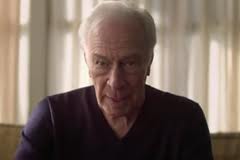
‘SHOULD WIN’ VIDEO ESSAY SERIES: Best Supporting Actor Christopher Plummer, BEGINNERS

‘SHOULD WIN’ VIDEO ESSAY SERIES: Best Supporting Actor Christopher Plummer, BEGINNERS

[EDITOR'S NOTE: Press Play presents "Should Win," a series of video essays advocating winners in seven Academy Awards categories: supporting actor and actress, best actor and actress, best director and best picture. These are consensus choices hashed out by a pool of Press Play contributors. We'll roll out the rest of the series between now and Friday. Follow along HERE as Press Play decides the rest of the major categores including Best Picture, Best DirectorBest ActorBest ActressBest Supporting Actress and Best Documentary. Important notice: Press Play is aware that our videos can not be played on Apple mobile devices. We are, therefore, making this and every video in this series available on Vimeo for these Press Play readers. If you own an Apple mobile device, click here.]

Narration:

Almost all the nominees for Best Supporting Actor do terrific work in roles that feel tailor-made to highlight their strengths. Kenneth Branagh's early work as director/star on stage and screen earned him comparisons to Laurence Olivier; he fulfills his destiny by actually playing Olivier in My Week with Marilyn. Nick Nolte reminds us why he's one of the last great tough guys as the hard-ass recovering alcoholic father in Warrior. Jonah Hill gets the MVP award as a baseball-loving numbers cruncher in Moneyball. And in Extremely Loud and Incredibly Close, Max von Sydow gives a master class in "less is more." But Christopher Plummer does something extra in Beginners. As Hal Fields, who at 75 becomes a widower and decides to come out of the closet to his sad-sack son, Plummer masterfully avoids bad laughs and cheap sentiment. Instead, he uses his experience in life and as an actor to wipe away the dignified fad that was the hallmark of his acting. In a relatively short amount of screen time, Plummer allows us to experience a man's life in full, from the regret of not being more courageous, to the casual cruelty that a father can inflict on his son, to the passion to not let a little thing like death prevent you from enjoying life. It is such a classic example of an actor and a role being perfectly matched that you realize that you've seen something more than Plummer's best performance – he's just getting started.

Kevin B. Lee is Editor in Chief of Press Play. He is also a film critic and award-winning filmmaker. San Antonio-based film critic Aaron Aradillas is a contributor to The House Next Door, a contributor to Moving Image Source, and the host of “Back at Midnight,” an Internet radio program about film and television.

FESTIVAL VIDEO: Rotterdam Sunset Chat with IndieWire Press Play + The House Next Door + Cine Qua Non

FESTIVAL VIDEO: Rotterdam Sunset Chat with IndieWire Press Play + The House Next Door + Cine Qua Non

null

The International Film Festival Rotterdam (IFFR) has been called a cinephile’s festival. This year’s edition (January 25-February 5) is living proof. Indiewire/Press Play editor-in-chief Kevin Lee talks with fellow critics Aaron Cutler (The House Next Door/Cine Qua Non) and Michal Oleszczyk (The House Next Door) about what films to see, old and new, in and out of competition. Recorded February 1, posted February 3. (pictured above: Awakening of the Beast, from the IFFR series "The Mouth of Garbage")

Index of video highlights:

0:20 – Why Rotterdam Matters
1:10 – Rotterdam vs. Sundance
2:52 – Competition Favorites
5:13 – Our Favorite Things from the Festival: Brazil's "The Mouth of Garbage", China's "Hidden Histories," James Benning's "small roads"

OSCARS 2012: PRESS PLAY contributors argue for their favorites

OSCARS 2012: PRESS PLAY’S staff picks their favorites

null

After last week’s announcement of this year’s Oscar nominees, a handful of Press Play contributors gathered together via email to discuss the highs and lows in some of the major award categories.  Below are some of the highlights of the conversation, and as always, we encourage you to keep the discussion going. The site's consensus picks for the films and individuals that should win be announced next week, starting Monday.

Matt Zoller Seitz: Has anybody seen A Better Life, for which Demián Bichir was nominated as Best Actor? That seemed out of left field. I feel like Gary Oldman might be a lock for that one, what do you think?

Glenn Close and Rooney Mara nominated for Best Actress is interesting, too. Some thought Close's work was too stunt-y. Mara seems a total surprise for me, as her character is so not Academy-friendly (in terms of looks and demeanor), and Mara is not anywhere close to a known quantity.

nullAli Arikan: Rooney Mara has been lauded by the critics and the industry, and the studio had been hyping her since the summer, so I'm not at all surprised that she got a nomination. Despite the fact that the Millennium books are terrible, people seem to love them, and Lisbeth Salander has become an iconic character. Plus, she also did sterling work in a solid film. What is interesting, however, is that either she or Glenn Close edged out Tilda Swinton for We Need to Talk About Rosemary's Omen. I thought she would be a lock.

I am happy about Moneyball, a film I thought I would hate, but ended up loving. I am one of the few in "our circles" who felt The Tree of Life was lacking, and I don't think it deserved a Best Picture nomination over Tinker Tailor Soldier Spy.

Extremely Loud and The Help are just risible. The latter was always going to be in there, but I thought Bridesmaids might have snuck in instead of Extremely Loud. Either way, having nine nominees obviously shows that the field is still pretty wide open.

nullMatt: I like The Tree of Life best of the Best Picture nominees, though I know opinion in this thread is mixed. It's the most unconventional of any nominated film, so much so that I am pleasantly surprised that it became a sort of event when it hit theaters. I think more films that experimental should be made at the Hollywood level. There are not too many directors holding down the fort for that kind of experience, not even Malick's fellow '70s movie brats Spielberg and Scorsese.

Aaron Aradillas: I would argue that in their own ways, both Hugo and Tintin are experimental films. I mean, if it wasn't for their directors, I seriously doubt a studio would've rolled the dice on 'em.

Sarah D. Bunting: Margin Call got a Best Original Screenplay nod. Shut up, Oscars. Barf.

Ali: I also second Sarah's barf. Ewww.

My feelings about Melissa McCarthy mirror Scott Tobias' thoughts on Extremely Loud and Incredibly Close. I disliked Bridesmaids, but I despised her performance.

Aaron: I've yet to fully grasp the dislike for her performance. I know it exists, but I don't get it. I don't remember anyone being offended when Kevin Kline won for making a mockery of being a dumb, sexist man.

Nick Nolte is terrific in Warrior, but it is clearly a great performance of something he does well. He makes look effortless what Tom Hardy and Joel Edgerton huff and puff and make look so tiring. Besides, Nolte did a better version of this in Affliction.

nullChristopher Plummer gives his career performance. There's no fat on it. Unlike The Insider, where he's a hoot, Plummer doesn't push it in Beginners, and that's why he leaves such an impression on those of us who love the movie. The way he embraces life at such a late date is funny, touching and ultimately quite sad. Ewan McGregor's character never acknowledges it, but he learns his father's final lessons and that's what leads to the movie's astonishingly hopeful and romantic ending. He is finally his father's son. Plummer's presence is felt in every scene. It be McGregor's story, but it's Plummer's film.

I'm a fan of Midnight in Paris, but Woody Allen's screenplay is not entirely original. It's kind of a variation on The Purple Rose of Cairo. Margin Call is a script written about how we're living right now. It trumps Mamet by not getting all tangled up in being clever with its verbal scenes.

Mara's my second choice in the Best Actress category, but Viola Davis is the only lead actress who literally has to create a character from scratch. The other performances all have something already existing that they're working off of.

Ali: I am not basing my dislike of McCarthy's performance on a curve. It was too easy, without any nuance and did not add anything to a film that definitely needed some sort of a breakout-star factor to make it less boring (and, you know, funny). So, I'd love to hear the case for her.

nullAaron: The beauty of McCarthy's performance is there isn't a trace of self-loathing or self-doubt that would probably get in a dozen other comedies with a character like hers. She is the most confident and aware person in the circle of Bridesmaids.

I'm willing to make a gentleman's bet that Meryl Streep will not win Best Actress. I think Viola Davis is going to "surprise" everyone and take it home.

Kevin B. Lee: If anything, Davis is the odd sober person surrounded by a carnival of sass, crass and crazy in The Help. Octavia Spencer and Jessica Chastain are like intrepid migrants from John Waters-land, while Davis anchors it in gravity and respectability ‒ she's the whipped cream atop the shit pie. I'm not sure whether she saves the movie or adds a layer of Oscar-mongering disingenuousness to what really should be an all-out camp farce. But her final scene standing up to Bryce Dallas Howard is a feat of acting gymnastics, going through a series of emotional states in lightning succession.

In contrast, The Iron Lady is pretty much all Meryl Streep (and everything that implies, good and bad). But it's an MVP performance; she actually made me like Margaret Thatcher for two hours.

Lisa Rosman: The Help is a tepid movie at best, offensive at worst, but as is so often the case, the performances far outstrip the film. Viola Davis never gives up an inch ‒ she may cater less as an actress than anyone else in Hollywood ‒ but so much goes on behind the eyes that she ignobles what could be a wretched role. And on that note, I love Rooney, but this is not the film for which she should win an Oscar. It's a one-trick-pony role and though she does it well, it doesn't have enough shades to win a golden naked man.

nullI hate hate hate hate the idea of McCarthy winning this. The role is not just unfunny; it's mean-spirited and she executes it more poorly than she's done anything else in her career. (Wherefore art thou, Sookie?) Nay, for me it's Janet McTeer, who does everything that Close herself fails to do in the otherwise craptacular and super outdated Albert Nobbs. It's a finely tuned performance that brings real pathos and humor and at least three dimensions to the kind of person that Hollywood always, always gets wrong.

The rest I am less adamant on. I love Malick but The Tree of Life is not legible in ways that actually matter to me. Scorsese should take Best Director for Hugo, but I can understand why others do not agree. Gary Oldman should, of course, take it; it's a terrific performance, and Tinker Tailor the Thief Cook should get Best Adapted Screenplay. I don't love any of the Best Picture nominees but think Moneyball comes closest to being what I want a big movie to be. And sorry for the barfers, but I love Margin Call for Best Original Screenplay.

Aaron: I'm for Brad Pitt. I think he gives a star turn and acting powerhouse at once. George Clooney is great (and I have no problem if he wins), but he was going deeper into a character he does best: the good-looking asshole who is brought up short by life.

nullThere is real mystery to Pitt's take on Billy Beane. He loves the game, but knows the game is changing. He knows he has to get wins in order to keep his job and is more than willing to modernize for that reason. But he also knows there is something you can't calculate about the game of baseball. The scenes of Pitt driving to work or sitting in the locker room show a man who is constantly trying to figure out the odds and knowing deep down that there are some things you can't figure out. Also, Pitt is a great subtle comic performer in the scenes where he's making deals or bossing around others in the room. Like Jesse Eisenberg, he is a natural when it comes to Aaron Sorkin's writing.

Kevin: I think Pitt's performance falls under the same school of acting I endorse. (Clooney, on the other hand, is on autopilot).

Aaron: Clooney's not on auto, but I'll leave it at that. I do know Pitt is happy as can be to be nominated in the same category as Gary Oldman. His death scene in Fight Club is inspired by Oldman. Pitt says on that film’s commentary, "No one dies like Gary!" It should also be noted that Pitt gets a slight advantage in that his work in both Moneyball and The Tree of Life show how wide a range he truly has.

Lisa: I actually agree Clooney's not on auto, but I disliked the conceit of the casting of that film immensely. (Alexander Payne loves to get notoriously charismatic actors to play schlubs; it underscores his misanthropic view of "average people.")

nullAli: I, too, am for Pitt, even though I liked Tinker Tailor Soldier Spy Doo-Dah Doo-Dah more than any other American film this year. Goldman is magnificent as George Smiley, closer to John le Carré's vision than Alec Guinness' portrayal, and he explodes with understated pathos (paradoxically) the one time he shows his emotions (the incredible Soviet national anthem scene where he sees his wife having it on with Colin Firth).

That said, I have a problem with his voice and accent. He sounds like a constipated baboon trying to do an impression of Ian McKellen. It was but a minor quibble when I first saw the film, but after three times, it's just grating. (For what it's worth, Tom Hardy gives the best performance in that movie.)

As for Brad Pitt, first of all, his is an almost old-fashioned movie star performance. He's charming and cheeky and funny, and hella good looking. (Yes, I've just used "hella" ‒ I am a 14-year-old kid from 1998.) I have no idea who Beane is, so this is my estimation of the character as he is seen on the screen: as Aaron said, here is a person who decides to ride the waves of change. Pitt plays him as a nexus of frustration; he never made the big time, so he is trying to make up for that lost opportunity. He is clever, though. He knows that he is unable to see the forest for the trees (the final scene with Jonah Hill, the earlier conversation with his daughter, etc.), but that's what obsessive-compulsive people are like. They know what they're doing is irrational, but they have to keep doing it.

Also, the final shot shows him in full command of his face ‒ an incredibly important skill for a screen actor.

Matt: What about this Demián Bichir fellow? Nobody's really mentioned him as a contender….

Aaron: A Better Life is good, and he's really good, but not award-worthy, especially when you consider someone like, say, the criminally underrated Steve Carell or Kevin Spacey's triumphant return to good acting in Margin Call. If one is going to label his nomination the Indie Nod, I much prefer Michael Shannon. Take Shelter is far from perfect, but Shannon is amazing.

The biggest problem with A Better Life is the character of the 14-year-old son. The actor is pretty bad and the character, as written, is pretty thin. An old-school Mexican dad would not put up with half the shit this kid gives him. Compared to the father-son dynamic in A Bronx Tale, A Better Life comes up short.

nullCan I make my case for The Help one more time? If the best 9/11 movies are not explicitly about 9/11 (Zodiac, Munich), then why can't one of the best films about race today be a movie about recent history? The outcry from so-called open-minded liberals was telling in that just because the movie was supposedly playing it safe by telling a story we all can agree on that it wasn't also making people think about the here and now.

Race is the one truly unspoken-about issue in this country. When it is spoken about, it is in an obvious safe way. The Help is about the moment when an open discussion was needed in order for change to occur. What the movie also makes clear is that discussion needs to be ongoing. And that is simply not the case right now.

Just because the movie delivers its "message" in bawdy, emotional, mass-appeal entertainment doesn't make it unworthy of praise (or awards). The Help not only attempts to keep recent history fresh in our minds, but also old-fashioned awards-worthy entertainment alive as well.

VIDEO: The Existential Noir of Michelangelo Antonioni

VIDEO: The Existential Noir of Michelangelo Antonioni

null

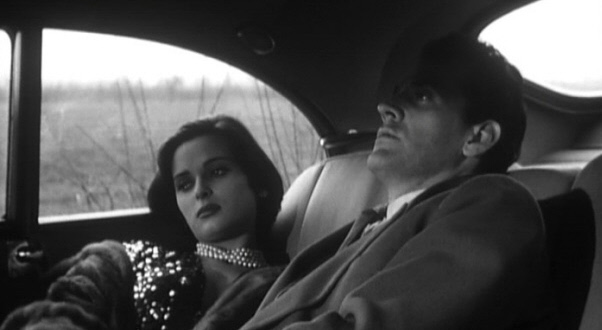
"With the Noir City Film Festival in full swing in San Francisco, we felt it was the right moment to revisit the doomed romance in Michelangelo Antonioni’s The Story of a Love Affair. Though Antonioni is best known as the Italian master of art cinema, his Antonioni’s first film, Story of a Love Affair, was fashioned after ’40s Hollywood films noir like Double Indemnity, Shadow of a Doubt and The Naked City. Watch this video essay to get a sense of what noir Antonioni-style looks like."

To read the full transcript of the video and watch The Story of a Love Affair at Fandor.

VERTIGOED: A Press Play mash-up contest

VERTIGOED: A Press Play mash up contest

EDITOR'S NOTE: You may have heard that Kim Novak, costar of Vertigo, took out an ad in Variety protesting the use of Bernard Herrmann's Vertigo score in Michel Hazanavicius’s modern silent film The Artist. "I WANT TO REPORT A RAPE," the headline blared. "I FEEL AS IF MY BODY—OR, AT LEAST MY BODY OF WORK—HAS BEEN VIOLATED BY THE MOVIE, “THE ARTIST," Novak wrote, and went on to decry the “USE AND ABUSE [OF] FAMOUS PIECES OF WORK TO GAIN ATTENTION AND APPLAUSE FOR OTHER THAN WHAT THEY WERE INTENDED.” Novak's word choice was unfortunate — more than one person, including yours truly, said that was akin to somebody sitting through the Star Wars prequels and witlessly declaring, "George Lucas raped my childhood."  

Press Play contributor and film editor Kevin Lee followed this Novak/Lucas line of thought to its logical — or illogical — end. Just for the hell of it, he matched the Vertigo cue used in The Artist with the last three minutes of the Death Star battle in Star Wars, Episode IV: A New Hope, uploaded it, and sent the link to several Press Play contributors to get their reactions.  

nullAnd it's here that things got interesting: rather than generate cheap laughs at the expense of Novak, Lucas, The Artist or Star Wars, the mash-up inspired delight. Simply put: Kevin's experiment confirmed that Bernard Herrmann's Vertigo score is so passionate and powerful that it can elevate an already good scene — and a familiar one at that — to a higher plane of expression. Score one for the master of film scoring!

We encouraged Kevin to put the same piece of music under a bit from Star Wars: Episode I, The Phantom Menace and the training sequences from Rocky and Rocky IV. Same result: The scenes seemed deeper, subtler and more haunting, solely because of Herrmann's music.

Kevin joked that these clips had been "Vertigoed" — a reference to the low-budget "Swedeing" of Hollywood movies in the cult classic Be Kind, Rewind. The term stuck, and inspired us to declare a Press Play "Vertigoed" contest. 

THE RULES:

1. Take the same Herrmann cue — "Scene D'Amour," used in this memorable moment from Vertigo — and match it with a clip from any film. (You can nick the three-minute section from one of Kevin's mash-ups if it makes things easier.) Is there any clip, no matter how silly, nonsensical, goofy or foul, that the score to Vertigo can't ennoble? Let's find out!

2. Although you can use any portion of "Scene D'Amour" as your soundtrack, the movie clip that you pair it with cannot have ANY edits; it must play straight through over the Herrmann music. This is an exercise in juxtaposition and timing. If you slice and dice the film clip to make things "work," it's cheating. MONTAGES WILL BE DISQUALIFIED.

3. Upload the result to YouTube, Vimeo, blipTV or wherever, email the link to pressplayvideoblog@gmail.com along with your name, and we'll add your mash-up to this Index page. 

The Press Play Vertigoed contest ends at 5 PM Eastern time on FRIDAY, JANUARY 20.  No mash-ups posted after that time will be considered. Press Play staff will choose a winner over the weekend and award a $50 Amazon gift certificate. The pairing that our judges decide is most imaginative and altogether satisfying will win the prize. The victor will be announced Monday, January 23. 

Now get Verti-going!

–Matt Zoller Seitz

1. STAR WARS: EPISODE I – THE PHANTOM MENACE by Kevin B. Lee

2. ROCKY by Kevin B. Lee

3. ROCKY 4 by Kevin B. Lee

4. THE GREAT DICTATOR by Jonathan Amerikaner

5. ALIEN by William D'Annucci

6. BONNIE AND CLYDE by James Grebmops

7. STRAW DOGS by James Grebmops

8. AKIRA by Greg Stevens

9. VAMPIRE'S KISS by Jake Isgar

10. THEY LIVE by Chris Mastellone 

11. INGLOURIOUS BASTERDS by Brandon Brown

12. GIRL WITH THE DRAGON TATTOO by Miguel Martinez 

13. OLDBOY by Steven Santos

14. SWINGTIME by Rocco Sardoni 

15. THE JETSONS by Rocco Sardoni

16. Mädchen in Uniform by Matthew Cheney

17. WALL-E by Donka Aleksandrova

18. Edward Dmytryk's THE SNIPER by Catherine Grant

19. NIGHT MOVES by John Levy

20. BLOODSPORT by Andre Khazar

21. INDIANA JONES AND THE RAIDERS OF THE LOST ARK by Brad Hansen

22. BADLANDS by Emma Phelps

23. FERRIS BUELLER'S DAY OFF by Hugh Lilly

24. THE BIG LEBOWSKI by Will Woolf

25. EASY RIDER by James Grebmops

26. 127 HOURS by Jason Bellamy

27. DESTINATION INNER SPACE by R.Q. Dale

28. Martin Arnold's ALONE. LIFE WASTES ANDY HARDY by Hoi Lun Law

29. BRAVEHEART by Michael Pollard

30. MINORITY REPORT by Cole Smith

31. TOP GUN by De Maltese Valk

32  THE ROOM by De Maltese Valk

33. HAROLD & KUMAR ESCAPE FROM GUANTANAMO BAY by Lynn Guest

34. HARRY POTTER AND THE DEATHLY HOLLOWS, PART 2 by Rob Cooper

35. THE THIN RED LINE by Cole Smith

36. TROLL 2 by Gustavo Costa

37. DEEP IMPACT by Richard Bellamy

38. ANIMAL HOUSE by Chip Midnight

39. ZOOLANDER by Athena Stamos

40. HANGOVER 2 by Richard Haridy

41. BLACK SWAN by Jason Bellamy

42. THE RIGHT STUFF BY Matt Rosen

43. AN AMERICAN WEREWOLF IN LONDON by Bri Frazier

44. GOD TOLD ME TO by John Keefer

45. GUMMO BY David Jenkins

46. JEANNE DIELMAN by David Jenkins

47. WET HOT AMERICAN SUMMER by Brandon Nowalk

48. PEE-WEE'S BIG ADVENTURE by Emmy Serviss

49. THE LION KING by Brandon Nowalk

50. LITTLE DARLINGS by Tanya Goldman

51. THE NOTEBOOK by Tanya Goldman

52. ED WOOD by Justin Smith

53. TOY STORY 3 by Bri Frazier

54. MEAN GIRLS by Kate Aldworth

55. BOOGIE NIGHTS by Jonathan Pacheco

56. HEAT by Jim Gabriel

57. STAR TREK II: THE WRATH OF KHAN by Jake Isgar

58. MEAN STREETS by Anthony Vitello

59. Fritz Lang's METROPOLIS by Guy Handelman

60. TRADING PLACES by Peter Scully 

61. SECONDS by Matt Maul

62. TOY STORY 2 by Jason Haggstrom

63. MELANCHOLIA by Maximilien Proctor

64. BLADE RUNNER by Dan Seagraves 

65. SILENCE OF THE LAMBS by Brittany Carter

66. SPEED RACER by Jim Gabriel

67. THE WIRE by Jason Mittell

68. PSYCHO by Matt Cheney

69. MY VIDEO FOR BRIONA (viral video) by Joseph Carson

70. VERTIGO by Matt Rosen

71. EL TOPO by Maximilien Proctor

72. DON'T LOOK NOW by Maximilien Proctor

73. DRIVE by Maximilien Proctor

74. MATILDA by Barrak Sitty

75. PLAYTIME by David Blaylock

76. THE 400 BLOWS by David Blaylock

77. CHILDREN OF MEN by Matt House

78. E.T. by Chris McCullah

79. 4 MONTHS, 3 WEEKS & 2 DAYS by Matt Rosen

80. A PERFECT WORLD by Ethan Murphy 

81. OUT OF SIGHT by P.J. Rodriguez

82. OLD SCHOOL by Colleen Koestner

83. RISE OF THE PLANET OF THE APES by Steven Boone

84. FREDDY GOT FINGERED by Dan Seagraves

85. TERMINATOR 2: JUDGEMENT DAY by Dan Seagraves

86. OBSESSION by Brandon Brown

87. Hannibal by Arnzilla

88. SEVEN by Sasha Stone

89. NO COUNTRY FOR OLD MEN by Sasha Stone

90. JACKASS NUMBER TWO by Kevin B. Lee

91. PAN'S LABYRINTH SCENE 1 by Alex Mekos

92. PAN'S LABYRINTH SCENE 2 by Alex Mekos

93. EVANGELION 2.22 by Larson Yellowhair

94. KISS MY DEADLY by P.J. Rodriguez 

95. TOY STORY 2 by David Blaylock

96. NORTH BY NORTHWEST by David Blaylock

97. THE FIVE OBSTRUCTIONS by David Blaylock

98. VINTAGE DODGE CAR COMMERCIAL by Jeremy Butler

TRAILER: Terrence Malick’s TREE OF LULZ (Hey, it could have happened. . .)

TRAILER: Terrence Malick’s TREE OF LULZ (Hey, it could have happened. . .)

“For of all sad words of tongue or pen,

The saddest are these: ‘It might have been!

Maud Muller, by John Greenleaf Whittier

 Annals of film history are filled with masterpieces that never were.  Cineastes spend many a sleepless night thinking of Stanley Kubrick’s unproduced epic on Napoleon’s life.  Film historians still search every nook and cranny to possibly locate Orson Welles’ first cut of The Magnificent Ambersons. Then there is the original script for John Huston’s Freud: The Secret passion that a little known philosopher by the name of Jean-Paul Sartre wrote; and Aldous Huxley’s Alice and the Mysterious Mr. Carroll, which was an amalgam of Alice’s Adventures in Wonderland, Through the Looking Glass, and the biography of Lewis Carroll, of which Walt Disney said: “[The script] was so literary I could understand only every third word.” There are many, many more, and probably none of these intriguing projects will ever get to see the light of day.

But don’t despair, gentle reader.  As a late Christmas present, PressPlay is proud to offer you a glimpse of another masterpiece that could have been.  Drown your cinephile sorrows in this.

— Ali Arikan

Kevin B. Lee is Editor in Chief of Fandor, a new video on demand website featuring the best of independent and international films. He is also a film critic and award-winning filmmaker. In addition to editing Keyframe, Kevin contributes to film publications and produces online video essays. Ali Arikan is the chief film critic of Dipnot TV, a Turkish news portal and iPad magazine, and one of Roger Ebert’s Far-Flung Correspondents. Ali is also a regular contributor to The House Next Door, Slant Magazine’s official blog.

VIDEO ESSAY: MAGIC AND LIGHT: THE FILMS OF STEVEN SPIELBERG, Chapter 4: Evil and Authority

VIDEO ESSAY: MAGIC AND LIGHT: THE FILMS OF STEVEN SPIELBERG, Chapter 4: Evil and Authority


[Editor's Note: Press Play is proud to present Chapter 4 of our first video essay series in direct partnership with IndieWire: Magic and Light: The Films of Steven Spielberg.  This series examines facets of Spielberg's movie career, including his stylistic evolution as a director, his depiction of violence, his interest in communication and language, his portrayal of authority and evil, and the importance of father figures — both present and absent — throughout his work.

Magic and Light is produced by Press Play founder and Salon TV critic Matt Zoller Seitz and coproduced and narrated by Ali Arikan, chief film critic of Dipknot TV, Press Play contributor, and one of Roger Ebert's Far Flung Correspondents. The Spielberg series brings many of Press Play's writers and editors together on a single long-form project. Individual episodes were written by Seitz, Arikan, Simon Abrams and Aaron Aradillas, and cut by Steven Santos, Serena Bramble, Matt Zoller Seitz, Richard Seitz and Kevin B. Lee. To watch Magic and Light: The Films of Steven Spielberg Chapter 1: Introduction, go here. To watch Magic and Light: The Films of Steven Spielberg Chapter 2: Blood & Pulp, go here.  To watch Magic and Light: The Films of Steven Spielberg, Chapter 3: Communication, click here. To watch Chapter 5, Father Figures, click here. To watch Magic and Light: The Films of Steven Spielberg Chapter 6: Indiana Jones and the Story of Life, go here]

Narration:

The antagonist, in Steven Spielberg’s films, has many faces.  It can be government scientists involved in seemingly shady plots.

It can be unstoppable behemoths such as the shark in Jaws or the tanker truck in Duel. Warped ideologies, as in Schindler’s List.  Or the tangled and self-defeating allure of vengeance, as in Munich.

What’s essential is that none of these could truly be considered “evil” in the classical — or theological — mould. You can’t blame the T-Rex for being a T-Rex in Jurassic Park. You can’t blame a Martian for being a Martian in War of the Worlds. They are what they are. And even in the most menacing moments, even the most outwardly inhuman antagonists display qualities that could even be described as, well, almost human.
 
Evil, in Spielberg’s movies, is almost purely elemental. As strange as it might sound, it seems almost value-neutral — a menacing force that is simply there, like the terrifying, almost Biblical storms that gather in the skies of many of his films.

nullThe human version of this element is authority. In Spielberg’s movies, evil, such as it is, always comes back to the use or abuse of power. The relative good or evil of people in a Spielberg film can be discerned by looking at how they use whatever authority they have in a given situation – how they tap into, and apply, power.  This is how morality is measured. It is how good or evil is measured. In the words of WH Auden, “Evil is unspectacular and always human; And shares our bed and eats at our own table.”

Individual villains in Spielberg’s films are, if not totally guiltless, then definitely warped.  Indiana Jones’ French nemesis Belloq, in Raiders of the Lost Ark, is an overly-ambitious careerist, his reason for shacking up with the Nazis.  

The American billionaire Walter Donovan does the same in Indiana Jones and the Last Crusade for greed and glory: he is a cartoon villain in the mould of Montgomery Burns.

Even in The Color Purple or Schindler’s List, central villains have a certain complexity.  

Amon Goeth, hideous as he might be, is a deranged, damaged person, and clearly not wired right – a pathetic alcoholic with a bloated beer belly.  

Albert Johnson, a drunk and violent letch who goes by the nickname Mister, transfers his resentment of the old south and Jim Crow on his household. The casual viciousness of the system is an unseen force that seems to amplify his worst qualities, and Celie bears the brunt of his self-loathing.

nullBoth Goeth and Mister are monsters and emotionally twisted; and, evil does manifest itself — but only through characters that are morally and psychologically defeated.  They’re in with the power structure set out by society; even though they’re just individuals, in another sense they ARE authority.  

It is often society’s authority that is the true enemy in the Spielberg canon.  Many of Spielberg’s antagonists are but human extensions of it. The true evil in Munich is that the state of Israel feels entitled to do anything it feels is necessary to avenge the murder of its athletes by Palestinian terrorists. As the story unfolds, it turns into a classic case of what soldiers call “mission creep.” A mission with a clearly defined, and perhaps morally defensible objective keeps getting new and more questionable duties tacked onto it.

Over time it becomes harder and harder for the heroes to tell who they’re killing — and what (if anything) the targets had to do with the original Olympic massacre. And yet they’re expected to do what they’re told without question or doubt, because the government’s representatives tell them it has to be done, and to question authority would be an offense against the motherland.  It’s yet another example in Spielberg’s films of authority slowly clenching its iron fist around the individual. Nobody in Munich is evil – not the assassins, not their handlers, not the PLO targets they’re hunting. But they all are collectively responsible for evil acts.

In Raiders of the Lost Ark, Belloq is not Satan: Like Vichy France itself, he’s cowardly, weak, and opportunistic. And he has willingly let himself be corrupted by the system.  

Goeth is a sadistic son of a bitch, but he’s been given total power by the system — and, as such, by Nazi Germany itself.

nullSpielberg’s slave-era drama Amistad pointedly avoids giving us a single, cartoonish, Mandingo slave master that we can direct our righteous ire against. The villain is a corrupt, debased and complacent system that everyone has grown used to, and that treats humans as property – a system that must be recognized as such, and resisted.  Here, as in Schindler’s List, the representatives of corrupt authority are rather bland, even borderline faceless people. They embody Hannah Arendt’s notion of the banality of evil.

Even the hero’s fellow Africans are implicated in this. Without their greedy viciousness, the noble Cinque would never have ended up in chains.

We see the government operatives clandestinely eavesdropping on the little suburb in E.T.: The Extraterrestrial — a vision of terrors to come.  

Saving Private Ryan offers a different riff. Every single GI in the group searching for the titular soldier — including the leader of the outfit, Captain Miller — gets killed because of a PR exercise. They are literally dying for a symbol.

In Jaws, it is the mayor’s decision not to shut down the beaches after the first shark attack that leads to more tragedy.  Spielberg’s adaptation of Peter Benchley’s novel is like a high seas adventure version of Henrik Ibsen’s An Enemy of the People – a play in which the citizens of a small resort town discover that the runoff from a tannery is polluting the waters of the local baths, and collectively decide not to hurt their bottom line by doing something about it. There is one authority figure in the Spielberg canon who is particularly fascinating in this respect: John Hammond, the industrialist who created Jurassic Park.

Hammond is outwardly pleasant, but ultimately very dangerous.  The character comes across as a benevolent Santa Claus or old Walt Disney figure, but is actually a genial Dr. Frankenstein. And he is ultimately responsible for every maiming and killing that happens on his tropical islands.  

This sympathy for Hammond – unique to the film since the character is a right bastard in the original novel – seems to betray something of Spielberg.  Despite the filmmaker’s inherent distaste for authority, it is undeniable that he is one of the most powerful men in the film industry.  

Frankly, Steven Spielberg IS Hollywood.  Could it be that he sees himself not only his everyman heroes, but also as the figures of authority, even the seemingly malevolent or destructive ones? The ambiguity would be very much in character for Spielberg.

nullJohn Hammond, the creator of Jurassic Park, at first seems a charming old man who just wants to dazzle people and make them happy. But if you total up the body count of all the films in the series, he seems infinitely less adorable. Hammond is a cross between Dr. Frankenstein and Walt Disney, purveying spectacular wildlife attractions that end up killing the customers.

Yet the man behind this film series, director-producer Steven Spielberg, never condemns him outright. We get the sense that he understands him and even sympathizes with him – that he sees him as a kindred spirit.

Steven Spielberg is, of course, an authority figure himself, so it should not surprise anyone that he’d have sympathy for this particular devil. He is the most financially successful filmmaker in the history of motion pictures. Many of the top-grossing movies are ones he directed or produced. He is co-owner of his own studio, and has licensed his characters and situations to theme parks and toy manufacturers. He is not just a filmmaker but a mogul … a brand .. and a cultural force. As such, his portrait of authority figures always contains a certain amount of empathy and understanding, whether the character is kindly but destructively clueless impresario like John Hammond, or a more overtly repulsive and menacing character, like some of the ones presented in the first part of this essay. Even the mayor of Amity in Jaws seems more pathetic than purely evil – a man whose moral sense was suffocated by the almighty dollar.

Spielberg’s knowing and often mordantly funny depictions of commercialization and branding flow into this as well. The filmmaker consistently manages to have it both ways — imaginatively presenting some of the comical or oppressive aspects of commercialism, while showcasing actual products and corporate logos within his films. The richest and most contradictory example of this is the slow pan across the merchandise in the original Jurassic Park.

The logos are identical to those of the Jurassic Park franchise itself. The movie is advertising itself and critiquing itself at the same time. It is a pat on the back that doubles as a warning: Let the buyer beware.

Over time, Spielberg has maintained the mentality of an independent filmmaker — an auteur director standing apart from the very system that he of course embodies as a producer, a studio boss, a multiple Oscar winner, and all-around purveyor of stuff.

This manifests itself onscreen in Spielberg’s complex and often conflicted portrait of the individual’s relationship to authority: be it the government of a small town in Jaws; the Jim Crow south in The Color Purple; the blandly menacing futureworld societies of Minority Report and A.I.: Artificial Intelligence; and military and law enforcement agents in Close Encounters of the Third Kind, E.T., Saving Private Ryan and Catch Me If You Can, which impede, manipulate, control or pursue the film’s heroes.

Spielberg’s heroes survive, and sometimes triumph, by being tough, smart, and lucky.  Most of all lucky.  

But for the sympathetic characters to survive – for their narratives to have a personal tipping point – they also require the help of a sympathetic person in authority.  

This type of character is the flip side of the more menacing or corrupt authority figures we talked about earlier. He is a regular fixture in Spielberg’s films – a reliable type. He’s inside the power structure, such as it is. He draws a paycheck from the establishment and does its bidding. And yet he maintains an outsider’s mentality and responds — perhaps nostalgically, perhaps even a touch guiltily — to true victims, rebels, and heroes.  

This type of character cannot help but admire the pluck of a resourceful hero, fugitive or troublemaker – and feel sympathy for the beleaguered, the exploited, and the dispossessed.  

We can feel his empathy and understanding even when he’s acting in concert with the forces that make life hell for the good guys. And when the chips are down, when it really and truly matters, he does the right thing.

nullThe UFOlogist Lacombe in Close Encounters might be the first major character in a Spielberg film that fits this description – the ally within the establishment. It is Lacombe who spies the escaped UFO obsessives heading for the Devil’s Tower but refrains from tipping off the army.  It is because of Lacombe that Roy is able to don a red jumpsuit and join the other extraterrestrial pilgrims. It is because of Lacombe, a government agent, that Roy ultimately gets his wish, and walks up that ramp into the mothership.

In both Close Encounters and in E.T., the military and the government scientists initially seem sinister – and inasmuch as they impede the progress of our heroes, they are definitely forces to root against. But their faceless, threatening appearance early on eventually gives way to a more nuanced portrait. Once we’ve gotten a closer look at them, we can see that they’re just people — and that they’re as curious as anybody.

The fifth column, the inside man, is often critically important to the Spielberg hero’s success. During the finale of E.T., all that Keys needs to do to bring down the alien ship is to get on his walkie-talkie. He doesn’t. Instead, he watches the ship land and the alien depart. He is happy – privileged – just to be there. He’s a cleaned up, respectable version of Roy Neary – what Roy would have turned into if he’d stayed on earth and joined the government.

Indiana Jones should have been caught and killed on that steamship in Raiders of the Lost Ark. He survived only because the owner of an African freighter intervened — supposedly a no-good scoundrel who’s only in it for the money.

The mutineers in Amistad only get a shot at freedom because one of the most influential men in America — former president John Quincy Adams no less — decides to take up their cause.  

In Catch Me if You Can, the FBI agent Carl Hanratty offers a lifeline to Frank Abagnale JR, who seizes on the opportunity, thus saving himself from life-long imprisonment.

And in Minority Report, Spielberg turns the tables on an essential wheel in the machine, the supercop John Anderton — who realizes that a conspiracy is afoot, kidnaps the precog Agatha, and becomes a hounded fugitive, and an enemy of the state.

nullOskar Schindler deserves a special mention as the ultimate Fifth Column. He is a subversive infiltrator deep in the heart of the Nazi apparatus, fueled by the moral impetus to do the right thing, even though he is almost completely inscrutable, and justifies his goodness on mercenary grounds. Initially, Schindler is a cad and a dandy; an incorrigible womaniser; an exploiter of slave labour; a boorish bully; and a member of the Nazi party.  

Earlier in the film, Schindler is an opportunist, in cahoots with the National Socialists not out of ideological sympathy, but merely because they happen to be the ones in power.  He is a cut-throat capitalist, and his first act of rescue is for blood-curdlingly self-serving, business reasons.

Later, in 1942, Schindler witnesses the initial stages of Operation Reinhard in Krakow, the annihilation of the city's Jewish ghetto.  These visceral scenes of liquidation, degradation, and execution are haunting; and leave an indelible mark in Schindler.  This moment of truth is not met with angst-ridden introspection: Schindler proves himself, and changes, through his deeds.  Through bribery, collusion, and deception, he sabotages the Nazi war effort while saving 1100 Jews from the savagery of the Holocaust.

Of course, this sort of miracle could only be achieved by someone who was in with the overall authority of the powers-that-be.  That Schindler is a member of the Nazi party, that he is an insider, is necessary to the success of his plans.   Schindler mitigates the machine from the inside by using his own connections.  He is a businessman of fine-standing with the National Socialists, who hardly bat an eyelid as Schindler pulls the run under them in order to save his Jewish workers.  In the grand scheme of things, only a wanton, libidinous, money-grubbing and wholly-inscrutable industrialist – and dyed-in-the-wool authority figure — could have flown under the radar of the Nazi machine and pulled off that sort of a miracle.

Matt Zoller Seitz is the publisher of Press Play, the staff TV columnist for Salon.com and a finalist for the Pulitzer Prize in criticism. Ali Arikan is the chief film critic of Dipnot TV, a Turkish new portal and iPad magazine, and one of Roger Ebert's Far-Flung Correspondents. Kevin B. Lee is Editor in Chief of Fandor.

VIDEO ESSAY: Moment of wonder: THE SPIELBERG FACE

VIDEO ESSAY: Moment of wonder: THE SPIELBERG FACE

null

[Editor's Note: Press Play is proud to present our first video essay series in direct partnership with IndieWire: Magic and Light: The Films of Steven Spielberg.  This series examines facets of Spielberg's movie career, including his stylistic evolution as a director, his depiction of violence, his interest in communication and language, his portrayal of authority and evil, and the importance of father figures — both present and absent — throughout his work.

Magic and Light is produced by Press Play founder and Salon TV critic Matt Zoller Seitz and coproduced and narrated by Ali Arikan, chief film critic of Dipknot TV, Press Play contributor, and one of Roger Ebert's Far Flung Correspondents. The Spielberg series brings many of Press Play's writers and editors together on a single long-form project. Individual episodes were written by Seitz, Arikan, Simon Abrams and Aaron Aradillas, and cut by Steven Santos, Serena Bramble, Matt Zoller Seitz, Richard Seitz and Kevin B. Lee. To watch Chapter 1: Introduction, go here. To watch Chapter 2: Blood & Pulp, go here. To watch Chapter 3: Communication, go here. To watch Chapter 4: Evil & Authority, click here. To watch Chapter 5: Father Figures, click here. To watch Chapter 6: Indiana Jones and the Story of Life, click here. ]

Narration:

If there is one recurring image that defines the cinema of Steven Spielberg, it is The Spielberg Face. Eyes open, staring in wordless wonder in a moment where time stands still. But above all, a child-like surrender in the act of watching, both theirs and ours.  It’s as if their total submission to what they are seeing mirrors our own.

The face tells us that a monumental event is happening; in doing so, it also tells us how we should feel. If Spielberg deserves to be called a master of audience manipulation, then this is his signature stroke. You can’t think of the most iconic moments in Spielberg’s cinema without The Spielberg Face.

Expressive close-ups of faces reacting to events offscreen. This is a common device in Hollywood filmmaking, perhaps due in part to Spielberg’s influence. Sometimes these shots even make explicit homage to his movies. This is not to say that Spielberg invented the technique.  The expressive close-up existed as early as the days of D.W. Griffith, and has long been a staple of both international and classical Hollywood filmmaking.

But it’s safe to say that none have come close applying this technique as prolifically throughout their filmmaking career as Spielberg has. He has used it in a variety of genres in any number of situations: sudden shock or creeping dread, the trauma of remembering the past or of confronting the future, discovering humanity in another person, or discovering humanity in oneself.

You can read the rest of the transcript here at Fandor.

Kevin Lee is Editor in Chief of Fandor, a new video on demand website featuring the best of independent and international films. He is also a film critic and award-winning filmmaker. In addition to editing Keyframe, Kevin contributes to film publications and produces online video essays.