VIDEO ESSAY: Looking vs. Touching

VIDEO ESSAY: Looking vs. Touching

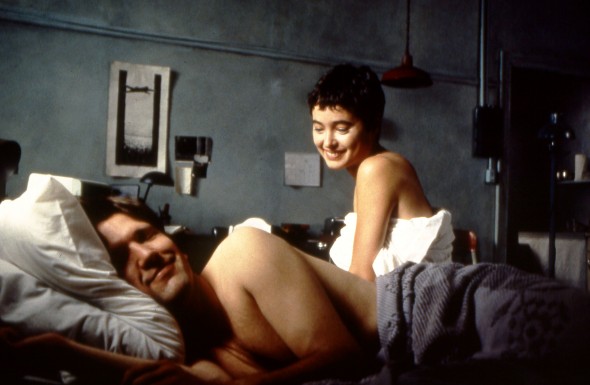
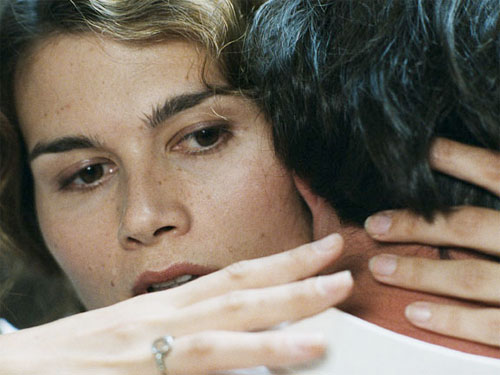
Two European-set love stories separated by nearly a century, Lady Chatterley and In the City of Sylvia share a fascination with the art and practice of “looking.” This video essay picks up on a special connection between these two films.

Kevin B. Lee is Editor in Chief of IndieWire’s PressPlay Video Blog and contributor to Roger Ebert.com. Follow him on Twitter.

VIDEO: Hal Hartley’s Must-See Moments

VIDEO: Hal Hartley’s Must-See Moments

Hal Hartley’s newest film Meanwhile is said to be about a man who can do everything from plumbing to international finance to novel-writing, but who can’t seem to find “success.” But how do we measure success? In a quarter century of iconoclastic filmmaking, Hal Hartley has redefined the “achievement” as it pertains to film. As Meanwhile makes its debut at IFC center Wednesday, February 29, we celebrate several of Hartley’s films with a tribute to classic Hartley moments, especially from his excellent 1991 film, Surviving Desire.

Originally published on Fandor.

Kevin B. Lee is Editor in Chief of IndieWire’s PressPlay Video Blog and contributor to Roger Ebert.com. Follow him on Twitter.

FESTIVALS – Berlinale 2012 Final Report: The Tantalizing and the Taboo

FESTIVALS – Berlinale 2012 Final Report: The Tantalizing and the Taboo

null

What does it take to get your film into a world class festival? That's the question asked with gleeful irreverence by "The Woman in the Septic Tank," which screened at the recently concluded 2012 Berlinale, one of the world's foremost festivals. This hilarious satire of international art filmmaking finds two aspiring auteurs sitting in a Manila café, jealously regarding a rival's Facebook photos taken at the Venice film fest. They vow to devise the ultimate movie to win festival audiences and prizes: a single mother of five suffering in the slums is forced to sell her son to a rich pedophile. But like Mel Brooks' "The Producers," the project gets out of hand, and before we know it we're watching a musical version with the pedophile singing "Is this the boy / who'll bring me endless hours of joy?" It's one of many delightful detours taken by these filmmakers seeking the road to art house glory.

Some critics find "Septic Tank's" satire too glib and cynical of the festival scene, but much of what it mocks can be found in another Filipino film that competed for the Berlinale's prestigious Golden Bear. Brilliante Mendoza is one of the standard-bearers of the blistering DIY filmmaking that thrives in the Philippines (and with an ego to match: his website describes him as a "living national treasure.") His success led to a golden ticket in the form of European funding, but his new film "Captive" finds him caught in the crossroads of no-budget trash filmmaking and festival prestige picture, doing service to neither. This hyperactive re-enactment of a 2001 terrorist incident even has Isabelle Huppert along for the ride as a kidnapped missionary, but it feels more like Michael Bay than Michael Haneke. From close-ups of menacing jungle creatures to a real baby being pulled out of a woman during a firefight, no attempt at sensationalism is spared to get a rise out of the audience.

Read the rest of this festival report, including thoughts on the best film at Berlinale 2012, at RogerEbert.com.

Kevin B. Lee is Editor in Chief of Press Play, and contributor to RogerEbert.com and Fandor. Follow him on Twitter.

VIDEO ESSAY: Love Against Irony in Maren Ade’s EVERYONE ELSE

VIDEO ESSAY: Love Against Irony in Maren Ade’s EVERYONE ELSE

null

One of the most sublime and insightful romantic films in recent memory, Maren Ade’s Everyone Else won both Best Director and Actress awards at the 2009 Berlin Film Festival. This video looks at one of the film’s key love scenes, and explores how two people struggle to express their true feelings clouded by personal insecurities, which they cloak behind a wall of smart-ass ironic statements. In other words, it’s truly a film for our time.

Read full transcript and watch the film on Fandor.

Kevin B. Lee is Editor in Chief of Press Play, and contributor to RogerEbert.com and Fandor. Follow him on Twitter.

FESTIVALS: Berlinale Decision Points Pt. 3: Billy Bob Thornton and Melissa Leo play to their own tune

FESTIVALS: Berlinale Decision Points Pt. 3: Billy Bob Thornton and Melissa Leo play to their own tune

null

Part three of my Berlinale coverage, focusing on decision points: the moment when I pretty much made up my mind about a film, and how that moment reflects on the film as a whole, capped by my Indiewire grade.

Read Part One  Read Part Two

Meteor (Spiros Stathoulopoulos) It’s hard to pick a defining moment for a film that juggles multiple modes, between hi-def animated sequences, digital landscapes, documentary/interview footage and romantic scenes between a nun and a priest secluded in a remote Thessalonian monastery. The film can be quietly audacious in isolated moments, like a matter of fact close-up shot of the nun’s genitals while she’s masturbating. But there’s a lack of cohesion between the diverse elements that keeps it from amassing dramatic power worthy of its blashemous climax. C+

Captive (Brilliante Mendoza) Basically this is the film Woman in the Septic Tank was made to ridicule, Pinoy no-budget exploitation trying to alight the festival prestige film elevator and missing the first step bigtime. A movie so mired in social issues-fellating, gratuitous audience-pandering and plain ineptitude I couldn’t stop watching just to see how bad it could get. There’s the awful CGI bird, the terrorists throwing Bibles off the boat and loads more Muslim-baiting, the shot of a baby being pulled out of a woman’s vagina in the middle of a firefight. But for me it was a shot of hostage Isabelle Huppert slurping pathetically on a flimsy bowl of instant noodles, wearing a look that deserves our outright contempt. F

friends after 3.11 (Shunji Iwai) I think it was the third consecutive extended talking head interview that made me realize that I was in for a two hour movie version of reading a long series of blog posts on the nuclear aftermath of Fukushima. Potentially great (or at least important) content thoroughly undermined by uninspired form. D+

Shadow Dancer (James Marsh) Towards the endgame of this thriller set in early 90s Northern Ireland, MI5 agent Clive Owen meets with the IRA double agent (Andrea Riseborough) he’s trying to protect. She’s wearing a red trenchcoat, a ridiculous choice for a secret outdoor meeting. They talk spy stuff and from out of the blue she kisses him. I took this to be a desperate attempt for the script to squeeze some half-baked romance into the proceedings, but upon further reflection there may be more cunning underneath the gesture. The direction throughout feels a bit flat for the narrative nuances to register, but still there may be more intelligence to this than I would initially credit. B-

Francine (Brian M. Cassidy, Melanie Shatzky) There’s a scene where Melissa Leo’s off-kilter animal lover is feeding her extended household of cats and dogs, scattering a nauseating mess of dry food all over her floor and even sprinkling it on the backs of the animals. Here the film seems to take the eccentriticies of its character too far: she’s worked at a pet store and a vet for crying out loud, and we’re to believe she resorts to this behavior? The only reason this comes off as remotely plausible is Leo’s commitment to the role portraying someone terminally lost in her own world, Leo’s guileless playfulness in the part invites us in. B-

Jayne Mansfield’s Car (Billy Bob Thornton) For all the Southern Gothic rococo and cul-de-sac subplots this film takes on, there are a lot of great little things going on, like around the start of the second act when Billy Bob is showing Frances O’Connor his car collection. He sets up the scene with a brazen obviousness of purpose (Billy Bob’s “Hey you wanna see my cars?” basically uttered like “Hey you wanna find out why you should fuck me?”) but as he geeks out over his hot rod the tone of the scene shifts in register into something dark and menacing, an all consuming obsession for things pure and fast wells up so quickly that it threatens to explode in his face. The film is chock full of such surprise tonal shifts, parting a cloud cover of narrative and thematic intentions to reveal many sublime moments underneath. This has been poorly received as a belaboured, ungainly work, but it plays like music to my ears. A-

Bestiaire (Denis Cote) For a good half hour there’s a masterful play of sound and image generated by various animals, whose organic physiognomies and noises clash wildly against the concrete and steel of their holding pens. The tipping point comes about midway with the introduction of a taxonomist plying his craft on a bird, eviscerating its carcass and reupholstering its feathered surface upon a styrofoam body. Sort of a stand-in for what the director is doing cinematically. What follows after doesn’t feel as attentive or compelling to what it’s filming, but this moment in all its tactile glory vindicates the film’s underlying thesis of us humans exerting control on all creatures with eyes and hands alike. B+

Kevin B. Lee is Editor in Chief of Press Play, and contributor to RogerEbert.com and Fandor. Follow him on Twitter.

FESTIVALS: Berlinale Decision Points Pt. 2 – Paul Dano, Zellner Brothers and the first great film of the festival

FESTIVALS: Berlinale Decision Points Pt. 2 – Paul Dano, Zellner Brothers and the first great film of the festival

null

Part two of my Berlinale coverage, focusing on decision points: the moment when I pretty much made up my mind about a film, and how that moment reflects on the film as a whole, capped by my Indiewire grade. Read Part One

Our Homeland (Yang Yonghi) For the most part this drama about a repatriated North Korean returning to his family in Japan is given a solemn, safe treatment. Things liven up when the man visits his childhood friend who’s come way out of the closet. Made by an accomplished documentarian making her fiction debut, the script feels saddled by a need to dispense documentary facts about Japan-North Korean relations, but the gay friend takes his expository function(“I’m gay and ethnic Korean, a double minority!”) and sells it like he’s making his Broadway debut. His exuberant presence catalyzes the entire ensemble, transforming them from societal representatives to flesh-and-blood characters. B-

Kid-Thing (David Zellner) Basically a candy-colored Texas version of Bresson’s Mouchette that kind of goes nowhere, but there’s no denying the ferocity of vision in some moments, especially the most disgusting ones: a reprobate girl crushes an inchworm with her bare hands; close ups of cow dung and a cattle carcass being pulverized with paint gun pellets, the screen exploding with brown and orange. There’s a lot of untamed energy in this film. B-

The Woman in the Septic Tank (Marlon N. Rivera) So many good moments in this South Park-esque satire of two young Filipino filmmakers trying to break into the film festival circuit with the ultimate third world festival movie, about a suffering slum mother forced to sell her son to a pedophile. There’s the raucous casting debate between three actresses as the lead, creating three simulated scenarios for the outcome; and Eugene Domingo running away with the show as a seasoned diva breathlessly breaking down all the DIY filmmaker bullshit into Sundance-ready formulas. But my favorite has to be when the production assistant imagines the project as a Hollywood musical, with Manila slumdogs breakdancing to lyrics like “we are burping our souls,” and a tender serenade by the pedophile to his victim. As the filmmakers say while high-fiving themselves, “Forget Cannes, we are going to the Kodak Theater!!!” B+

Caesar Must Die (Paolo and Vittorio Taviani) Julius Caesar performed by Italian inmates in a prison, moving freely (if sketchily) between straight performance of the play to actors breaking character talking about how the story relates to their lives. The movie never fully explores that interplay, leaving us with teasing moments like when an actor insinuates that another’s impeccable performance as a traitor reveals his true nature. They threaten to come to blows, and then abruptly the scene ends. But despite the shuttling, half-finished quality of it all, there is tremendous care taken to the textured black and white images and a consummate sense of staging. B-

Barbara (Christian Petzold) Barbara, a East German doctor stuck in a countryside hospital and secretly planning to escape to the West, while fending off her supervisor who has an obvious yen for her. With compelling matter-of-factness, he tells her the story of how he wound up in the boondocks: a tragedy involving a state-of-the-art baby incubator, a nurse with a crush, and a two infants blinded for life. Barbara’s response: “Is your story true?” She can’t be bothered to care about or trust the people she’s trying to escape from. But too late: her doctorly concern and shared sense of personal setback expose her weak points, camaraderie has wormed its way in. All of this is conveyed through the subtlest nuances in looks and timing. Masterful stuff. A-

Parabeton – Pier Luigi Nervi and Roman Concrete (Heinz Emigholz) In theory I get the connection between Emigholz’ amazingly dynamic 70s work and what he’s doing now with his static shot documentaries of architecture, where motion and energy are conveyed simply by the geometries of buildings. And I do like the haunted house approach to his filming buildings devoid of people, so that the focus is more on a sense of natural decay affecting the utopian lines and surfaces of modern concrete. Still, it’s hard to shake the feeling that you’re just watching shots of buildings, especially when it’s hard to discern a logical flow from one building shot to another. C

For Ellen (So Yong Kim) As a fan of Kim’s In Between Days and Treeless Mountain as well as Paul Dano’s mutant-like weirdness, I really wanted to like this one. But something is terribly missing at the center of this minimalist study of a rock star trying to retain his wife and daughter. For me the dealbreaker came when father and daughter finally sit down to their first conversation, a painfully drawn out series of banalities. Dano is usually great at being game for anything, but here it seems he’s called upon to synthesize moments for So’s characteristically docu-realist camera to capture, and his zombie-like character is so submerged inside his own inarticulacy that there’s hardly a ripple on the surface. The dreamy, shoegaze camerawork, so expressively precise in past So films, here merely compounds the obfuscation. C-

Kevin B. Lee is Editor in Chief of Press Play, and contributor to RogerEbert.com and Fandor. Follow him on Twitter.

FESTIVALS: Berlinale Decision Points Pt. 1: Herzog on DEATH ROW and Lesbian Marie Antoinette

FESTIVALS: Berlinale Decision Points Pt. 1: Herzog on DEATH ROW and Lesbian Marie Antoinette

nullAt what point do you make your mind up about a movie? It's an especially pressing question at a festival like Berlinale, where you can watch as many as seven or eight films a day. There’s a risk of just letting these films wash over you and, to borrow a French phrase, “fall from your eyes,” so that you leave the theater with just a vague impression of what you’ve seen and few specifics to say. To fight this I’ve decided to shape my Berlinale coverage around decision points: the moment where I pretty much made up my mind about a film, and how that moment reflects on the film as a whole, capped by my Indiewire grade:

Death Row (Werner Herzog) Towards the end of this three hour made-for-TV series on American murder convicts awaiting execution, Herzog has a contentious exchange with a Texas DA over a female inmate fighting for a retrial whom he's been interviewing. The DA, after making a heart-stirring plea on behalf of the victims of the case, warns Herzog about the risk of humanizing the killer in his mind by talking with her. Herzog replies, "I do not attempt to humanize her. She is already simply a human being." It's a startlingly direct statement of authorial intent that vindicates the presence of Herzog's voiceover that dominates the show. Unapologetically he asserts a clear-eyed personal sense of decency amidst an absurdly callous and punitive justice system. Someone should get him to replace Judge Judy. B+

Farewell My Queen (Benoit Jacquot) You would think a lesbian scene with Diane Kruger and Virginie Ledoyen would be something to celebrate; instead it's emblematic of what's off in this new wave costume drama. Kruger's Marie Antoinette bids adieu to her courtesan as the storm clouds of revolution approach the royal court. Kruger spouts teary platitudes of love while (Ledoyen hardly says anything, both are practically mummified in heaps of fancy dress, reducing them to decorative ornaments in their own key scene. Jacquot is a great director of in the moment cinema but his handheld camera feels wrong for a period piece, buzzing like a mosquito trapped in the grand halls of Versailles. The Paul Greengrass editing further diffuses the focus turning it into Marie Antoinette meets 24. C-

Formentera (Ann-Kristin Reyels) A remarkable middle sequence turns a late night swimming frolic involving a married couple into an eloquent dramatization of their discord, unfolding into extended sheer terror and humiliation for the wife when she's left stranded in the water. Nothing that follows matches the wordless power of that sequence, certainly not the climactic argument between the couple, featuring such accomplished dialogue as "Our life in Berlin really fucks me up." "I like our life in Berlin."   B- 

Nuclear Nation (Atsushi Funahashi) About midway in this documentary about the impact of the Fukashima nuclear disaster on the nearby city of Futaba, we encounter a cattle farmer tending to his herd, all of them contaminated and unable to be sold. The farmer, himself exposed to radiation, insists on feeding them – they wander freely through the nuclear ghost town, themselves ghosts, with no function to serve the society that abandoned them. It's the first truly immersive moment in the film, one that allows us to serve as committed witnesses to this devasting tragedy. B

The Delay (Rodrigo Pla) A weary single mother of three decides to abandon her senile father in an apartment complex, then later changes heart and seeks to retrieve for him. She spends a long cold night searching through every homeless shelter in town while her dad freezes in the apartment courtyard, remembering her command not to go anywhere so that she doesn't lose him. Several scenes later lady gets the bright idea to back to the place where she left him in order to find him, and we get the idea that the screenwriter has been stalling to milk the melodrama. Even the accomplished narrow focus camerawork can only do so much to elevate the shallow narrative. C+

Kevin B. Lee is Editor in Chief of Press Play, and contributor to RogerEbert.com and Fandor. Follow him on Twitter.
‘SHOULD WIN’ VIDEO ESSAY SERIES: Best Director Martin Scorsese, HUGO

‘SHOULD WIN’ VIDEO ESSAY SERIES: Best Director Martin Scorsese, HUGO

[EDITOR'S NOTE: Press Play presents "Should Win," a series of video essays advocating winners in seven Academy Awards categories: supporting actor and actress, best actor and actress, best director and best picture. These are consensus choices hashed out by a pool of Press Play contributors. Follow along HERE as Press Play decides the major categories including Best Picture, Best Actor, Best Actress, Best Supporting ActressBest Supporting Actor and Best Documentary.  Important notice: Press Play is aware that our videos can not be played on Apple mobile devices. We are, therefore, making this and every video in this series available on Vimeo for these Press Play readers. If you own an Apple mobile device, click here.]

Narration:

This year's Oscar race for Best Director features an especially strong roster. The five nominees are Woody Allen for Midnight in Paris, Michel Hazanavicius for The Artist, Terrence Malick for The Tree of Life, Alexander Payne for The Descendants and Martin Scorsese for Hugo. Four of them did magnificent work this year, one of them less so, but in the end there will only be one winner.

nullWoody Allen's Midnight in Paris is not a love letter to nostalgia or a trite piece of idol worship. Instead, it's a mature artist realizing his own folly. It's a melancholy film, yet Allen's direction is full of hope, with the final choice of the hero underlining the pointlessness of living in the past and the necessity of having to trudge on. Michel Hazanavicius' supreme achievement in The Artist is making people talk about the silent era again and argue about whether the film accurately represents it. Terrence Malick's canvas is as wide as they come in The Tree of Life, where he explores life, death, the universe and everything in a spasmodic stream-of-consciousness narrative. He finds the personal in the expansive. The theme of loss permeates the film. Malick arranges the beautiful movements with grandeur. The Descendants is perhaps Alexander Payne's most conventional movie to date. Loss, once again, is prominent in this family drama deftly directed by Payne with a loving eye for the minute details in the grand scheme of life.

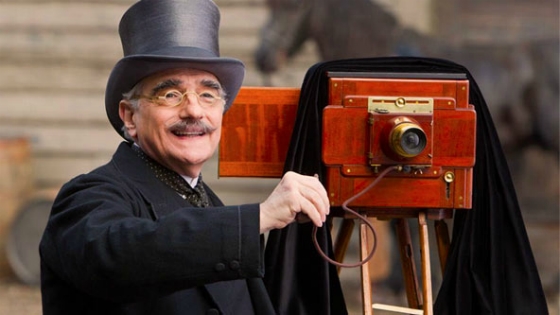
But this year's Academy Award for Best Director should go to the master, Martin Scorsese. In Hugo, Scorsese shares with the audience his eternal love of movies through a magnificent palate of colors and exuberant motion made all the more fantastic by an exemplary use of 3D. But despite the added dimension, Hugo is the rare 3D film that works without it; the opening title sequence alone is a marvel of direction. Scorsese also displays a knack for physical comedy that one wouldn't have expected. Generally, though, Scorsese's direction manages to put a sense of wonder front and center. His love of films and filmmaking may be the hidden true subject of every film he has ever made. In a strange way, Hugo might be Scorsese's most personal film to date.

Kevin B. Lee is editor in chief of Press Play. Ali Arikan is the chief film critic of Dipnot TV, a Turkish news portal and iPad magazine, and one of Roger Ebert’s Far-Flung Correspondents. Ali is also a regular contributor to The House Next Door, Slant Magazine’s official blog.

VIDEO ESSAY: An Open Source Epic – Nina Paley’s SITA SINGS THE BLUES

VIDEO ESSAY: An Open Source Epic – Nina Paley’s SITA SINGS THE BLUES

null

Adaptation and appropriation are important subtexts to Nina Paley’s award-winning animated epic, Sita Sings the Blues. Paley herself became a cause celebre among Fair Use activists seeking reforms to copyright law during her struggle to secure rights to jazz vocalist Annette Harshaw’s recordings. With this video essay, I look at how Paley took inspiration from both the tragic story of Sita in the Ramayana and Annette Harshaw’s bittersweet torch songs to deal with her own breakup, combining them to transform her personal suffering into art. In visualizing the legend of Sita, Paley incorporates traditional Indian and South Asian art forms that were themselves creative innovations on the source material at one point in history. In doing so, Paley plugs her work squarely into a cultural history too rich to be contained by digital rights restrictions, illustrating that true art is open to all.

Originally published on Fandor. Visit Fandor for a video transcript and to watch SITA SINGS THE BLUES.

Kevin B. Lee is Editor in Chief of Press Play, and contributor to RogerEbert.com and Fandor. Follow him on Twitter..

‘SHOULD WIN’ VIDEO ESSAY SERIES: Best Actress Viola Davis, THE HELP

‘SHOULD WIN’ VIDEO ESSAY SERIES: Best Actress Viola Davis, THE HELP

[EDITOR'S NOTE: Press Play presents "Should Win," a series of video essays advocating winners in seven Academy Awards categories: supporting actor and actress, best actor and actress, best director and best picture. These are consensus choices hashed out by a pool of Press Play contributors. We'll roll out the rest of the series between now and Friday. Follow along HERE as Press Play picks the rest of the categories including Best PictureBest Director, Best ActorBest Supporting ActressBest Supporting Actor and Best Documentary. Important notice: Press Play is aware that our videos can not be played on Apple mobile devices. We are, therefore, making this and every video in this series available on Vimeo for these Press Play readers. If you own an Apple mobile device, click here.]

Narration:

Four out the five performances nominated for Best Actress are in part based on fulfilling audiences’ preconceived notions of what they should be. Both Meryl Streep and Michelle Williams do impersonations on the level of genius. Streep dares to make Margaret Thatcher seem all too human; Williams lets us look beyond Marilyn Monroe’s wiggle and teasing smile and see the insecurity, sadness and natural born talent that is required to be a star. Rooney Mara becomes a star by bringing to life one of popular literature’s most revered heroines in recent history. She allows us to feel the heat of Lisbeth Salander’s rage and burgeoning soul. Glenn Close pulls off a stunt that some actors believe is the ultimate test of their talent, be it Dustin Hoffman, Linda Hunt or Hilary Swank.

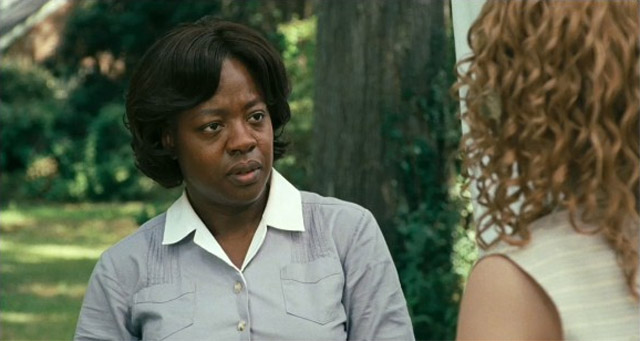
But it’s Viola Davis as Aibileen Clark in The Help who creates a character from scratch. She makes us feel the anger and unbearable sadness that comes from raising and caring for 17 white kids over the years only to have some of them grow up and see their affection turn to indifference and casual cruelty, all the while enduring the pain of burying her only son.

nullThe power of the performance is in Davis’ eyes. They take in everything – tossed-off racist remarks, a child’s need to be comforted. And her voice, which never rises above a formal submissiveness, quivers with a boiling anger that stands for generations of women whose hard work goes unnoticed. It’s a voice that needs to be heard.

The character could be seen as an example of Hollywood condescension: the quietly suffering noble black domestic. But Davis makes Aibileen unforgettable by cueing us into her quiet defiance. She knows a change is coming but worries if it’s too late. Aibileen may not possess the recklessness of youth, but in her own way she takes a stand. Davis may not raise her voice but we hear her loud and clear.

Kevin B. Lee is Editor in Chief of Press Play. He is also a film critic and award-winning filmmaker. San Antonio-based film critic Aaron Aradillas is a contributor to The House Next Door, a contributor to Moving Image Source, and the host of “Back at Midnight,” an Internet radio program about film and television.