


With any spate of Emmy nominations
come the invariable snubs and the inevitable outcry.
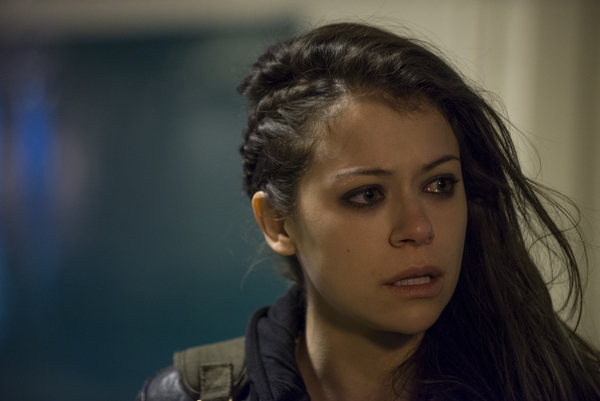
Last year, the hot topic was Tatiana Maslany,
this year it’s True Detective. Why is this show categorized as a traditional drama when the likes of Fargo and American Horror
Story—which share the same anthology format—reside in the miniseries
category? Why would HBO pit True
Detective, certainly a great program, against the juggernaut final (half-)season
of Breaking Bad (among other notables)?
The explanation involving the wording of the rules
has hardly softened
the speculation
that this is a power play on HBO’s part. FX faced similar criticisms in the
past with American Horror Story,
ultimately settling into the miniseries category, a move that many viewed as a
convenient way to avoid competing with the likes of Homeland and Game of Thrones. This all might seem
superfluous (it’s about the art, not the awards!), but the way True Detective’s
categorization issue has been handled adds new economic value to the genre,
increasing the likelihood that we’ll see an exponential surge of anthologies in
years to come.
Though American Horror Story is hardly the
first of its kind,
it is without question the catalyst for the renewed interest in the form we’re witnessing
now. Its approach—closed seasons that bear no relation to the others save for
recurring cast members—has brought FX a diversified audience
and heaps of award nominations and wins.
Capitalizing on that success, True
Detective and Fargo established
2014 as a breakout year for the televised anthology. In February, Mark Maurer
illustrated some of the benefits
of the form, citing its binge-friendly structure, potential to create
fulfilling storylines, and ability to attract star talent with demanding
schedules. I’d submit that another asset of the form is its ability to
undermine audience expectations. Like the ever-popular novel-in-stories genre
in the literary world, the anthology series allows its viewers’ minds to run
wild on a moment-to-moment basis. Where we pretty much knew that Breaking Bad wouldn’t kill off Walt in
Season 2, for instance, we can’t carry the same certainty for any of the protagonists
in Fargo—a show that is very aware of
this advantage. No matter how TV-literate we may fancy ourselves, the anthology
retains the capacity to surprise us in ways (kind, quality, and frequency) that
a traditional drama can’t match.
And there are other
benefits: self-reference and tie-ins in the form of cameos, recurring cast
members (or repeat characters played by new talent), or whole plotlines (as in
the announcement of Fargo’s setting
in Season 2). Once upon a time, syndication was king: a show needed to reach
the fabled 100-episode mark to earn the right to be bought by other networks
for reruns. Video-on-Demand streaming and rental services have changed the game
entirely. Where syndication regularly depended on the whims of the lowest
common denominator, streaming services have proven that niche consumer
interests can be just as profitable, particularly when involving cult,
award-winning, or critically acclaimed series. The result is that a quality
program—even one that didn’t necessarily wrangle many viewers during its initial
run—can still be sold to VOD services for a handsome price, thus earning its
keep in the eyes of the network, as Mad
Men’s whopping $75-$100 million price tag
in 2011 evinces.
As television becomes
increasingly oriented around streaming, the sheer watchability of anthology
shows—which tend to feature fewer episodes with tighter storylines—alongside
the aforementioned advantages, imbues them with major cash-cow potential. One
bad season need not sound a show’s death knell. With American Horror Story, for example, I was taken with the first
season’s jarring visual style and juxtaposition of horror, lightheartedness,
and suburban claustrophobia, but found the second season’s gore-focus tiresome
enough to quit after a few episodes. Because each season is self-contained, I knew
I could check back in for Season 3 without fearing I’d missed vital information—not
the kind of thing one can realistically do in the middle of a serialized,
long-form narrative. As a result, anthologies also, with some exception, renew
their access points on a rolling basis; they can grab new viewers at the start
of each season. If a potential viewer of Fargo
wanted to watch the series in terms of chronology rather than release date, for
example, they could start with next year’s 1979 Sioux Falls setting,
then “backtrack” to Bemidji 2006. I can even imagine future programs toying
with this idea, creating jigsaw puzzles intended to be watched in a variety of
sequences.
The demand for high-quality
drama, which significantly increases the costs associated with producing new
programs, has steered many channels to invest more heavily in pre-vetted source
texts: offerings that have demonstrated profitability elsewhere, such as
novels, films, comics, and international series. Alongside Fargo, Hannibal, Bates Motel, Constantine, Gotham, Agents of S.H.I.E.L.D., The Killing, Homeland, Arrow, The Bridge, and Gracepoint are just some of the adaptations to have been green-lit
for the small screen in recent memory. With any show, the hope is for a long,
lucrative run. Ideally, each season after the first textures and builds on all
that’s been established without retreading old territory, but “topping” previous
work can be tricky without defaulting to far-fetched scenarios in hopes of
recreating the dynamism that attracted viewers in the first place. For this
reason, the anthology provides a nice home for original content. What is lost
in plot continuity is gained in ease of longevity; all things being equal,
networks can trust that each season of an anthology will perform similarly to
the ones before it, and writers/producers can create new, organic work each
season.
And now, the True Detective award kerfuffle has
revealed yet another strength: the ability to hop genres come award season. As
long as the likes of the Emmy committee continues to wash its hands of
responsibility, the precedent will hold. Networks will game the system, placing
their anthologies in whichever category they believe will yield the best
results (imagine the mess when they start dipping their fingers in proper
comedy anthologies). This form is one of the most exciting things in television;
in many ways, it’s the most organic structure for the medium and the habits of its
viewership. Relegating it to the miniseries category doesn’t fit, but it
equally doesn’t belong in the traditional drama category. Until there are
enough additions to the genre, we won’t see a designated anthology category. In
the meantime, the field is wide open for those willing to experiment.
Jesse Damiani is Series Co-Editor for Best American
Experimental Writing (Omnidawn, 2014). He lives in Madison,
WI.

 As a kid, I was obsessed
 Or that our inability to



 The rise of the antihero in American dramatic television has been nearly fifteen years in the making. Since Tony Soprano revealed a gangster as touching as he was menacing in 1999 (those ducks!), television has introduced programming with a level of thematic and ethical complexity at a consistency never before achieved in the medium. A glimpse at the major award circuit in the past half-decade reveals not only a critical interest in this turn, but a popular one, as well. Mad Men, Breaking Bad, and most recently, Homeland are just three shows that have achieved widespread recognition for their presentation of morally compromised protagonists.
  FX, known for its “There is no Box” brand, is no stranger to this breed of conflicted character. Its breakthrough program, The Shield, was a benchmark in the era of the antihero, considered by many to be an answer to HBO’s oft-discussed flagship. But where Tony Soprano was already a ringleader in an entrenched system of corruption, Vic Mackey was a crime-fighter, one of the good guys. Yet, in his Machiavellian lust to thwart baddies, we witness him torture, blackmail, plant evidence, and murder. In that sense, The Shield can be seen to usher in what has become the current antihero paradigm: where moral ambiguity abounds in spaces beyond the expected arenas of gangsters and thugs—among doctors and high school teachers, ordinary people.
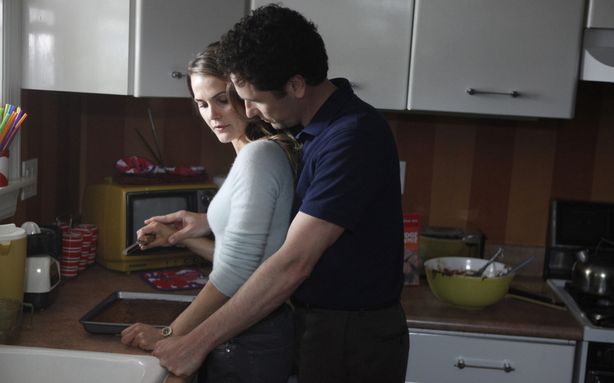
 Discussion of The Americans, thus far, has been largely centered around its relation to Showtime’s Homeland. However, the shows bear little resemblance to each other beyond their basic conversation about what it means to be a double agent, or, in a broader sense, to lead a double life. Homeland is sparked and sustained by a central terrorist plot. The romance that springs up between Claire Danes’s Carrie Mathison and Damian Lewis’s Nicholas Brody is, if a bit predictable, a delectable garnish. Specific motives correlate to known and desired effects (how will sniffing out a new piece of information help Carrie & Co. develop more effective counterterrorist responses?), and these propel the show. But neither Elizabeth nor Philip has a specific agenda—in typical Cold War style, there is no clear, overarching object—so the long-form conflict that emerges is largely character-driven, supplemented by action.
 A romance is only as good as its obstacles, and, as aforementioned, we find no shortage of obstacles in The Americans. If anything, the degree of coincidence incorporated in creating these barriers has been, for some viewers, the show’s primary shortcoming. But when coincidence deepens conflict instead of helping to resolve it—imbuing a certain degree of inevitability rather than deus ex machina—most are quick to forgive. So, when CIA agent Stan Beeman (Noah Emmerich’s savvier analog to Breaking Bad’s Hank) moves down the street from the Jenningses, we’re more interested in the “loaded gun” stress this generates than decrying its improbability. In the end, we don’t want Philip and Elizabeth to have an easy go until they’ve really earned it, and we’re rewarded amply for our masochism.
 Which maybe helps explain why the romantic moments we see unfold here are more touching than just about anything else on television. The premium channels seem to have adopted a per-episode sex quota, and meanwhile, The Americans encapsulates passion in handholding, meaningful looks, and veiled apologies. And the moments of spillover, whether pronounced or Victorian, are downright gut-wrenching. We know what’s at risk, what makes it so difficult for them. Once we understand the kind of traumas (emotional, physical, self-inflicted) Elizabeth has suffered, for instance, no amount of nudity, one night stands, or marital harmony elsewhere can better capture our affections than when, in spite of a seeming incapacity for tenderness, she reaches out and puts her hands on Philip’s shoulders. Sometimes, these romantic moments converge with violence, as in the pilot’s climax, and the effect is so powerful that it manages to transform Phil Collins’s “In the Air Tonight” into something anthemic, hard-hitting, and steamy.
  Press Play Video Blog