VIDEO ESSAY: Monsters Are a Child’s Best Friend

VIDEO ESSAY: Monsters Are a Child’s Best Friend

Most responsible parents will tell you that using the
television as a surrogate nanny is bad for kids. My own experience as a child
would argue against this.  My parents knew that they couldn’t raise me
alone, and the only reliable guides were creatures of the night.

This first became clear to me on Halloween night, 1971, when
my mom promised my sister and me a very special evening’s entertainment.  As the clock ticked towards 8:00 the lights
were dimmed in our basement rec room, the jack o’lanterns were lit, and the
popcorn was popped.  Though I’d probably
seen programs in black and white before, what soon appeared on the TV screen
would surprise me: these images seemed to come from a different world than the
Technicolor landscapes I had known. 

The sense of drama was heightened by a creepy old man coming
onto a dimly lit theater stage, offering viewers a “friendly warning” about the
frights to come.  As the credits rolled,
my anticipation intensified. Soon the first unforgettable images of James
Whale’s Frankenstein rolled across my
five-year old eyes and plunged me into a realm I have never entirely escaped.

In subsequent years I would revisit this world with greater
frequency. Frankenstein opens with a
marvelously constructed graveyard set. The mourners are surrounded by looming
grey sky, skeletal trees, and morbid gravestone figures.  The clanging church bell and quiet sobs of
the grievers sound as if they were recorded in a dank well.

The looming angles and impossibly long staircases of
Frankenstein’s castle draw from the nightmarish qualities of the
Expressionistic German horror cinema of the 1920s.  When I watched UFA productions like Nosferatu, The Cabinet of Dr. Caligari, and Vampyr years later, I would experience these angular horrors in
their purest form.

What struck me as a child watching these old Universal films
for the first time, and what still amazes me, is the concentrated power of their
characters.  The dead stare, wild arm
movements, and disconcerting forward lurch of Boris Karloff’s Creature have
become iconic. They are easy to imitate, as I would come to learn by donning a
“Frankenstein’s Monster” costume the following year. However, there is nothing
quite as compelling as the real thing. 

In the days before VCR, one could experience the most
arresting images of horror classics repeatedly through grainy photographic
reproductions. Magazines like Famous
Monsters of Filmland
, Creepy, and
Fangoria were the pulps of my youth. Their
garish covers splattered across drugstore and supermarket magazine racks across
suburbia.  The amount of time I spent
gazing at still images of movie monsters dwarfs the time spent watching moving
images on the television screen.

Yet the classic Universal monsters also offered a more
profound attraction: compassion.  The
Monster of Whale’s Frankenstein is a
creature more sinned against than sinning. 
He appeals to children because he is a child himself, his momentary joys
pathetic against a background of perpetual torment and tantrums.  In the famous scene in which he throws a
trusting little girl into the stream moments after tossing daisy petals with
her, his regret and shame is as poignant as the horrific senselessness of the
act.

Monsters, like children, can be cruel. However, the tragic
fate of figures like Frankenstein, the Wolf Man, and King Kong taught me
something essential about human behavior. Where strangeness and difference
tread, the torches and pitchforks aren’t far behind.  Classic monster movies don’t just depict the
monstrous. They convey what it feels like to be monstrous.

Since my first encounter with them on that Halloween night
long ago, monsters have helped me cope with feelings of alienation and anxiety,
teaching me a valuable lesson: friends may come and go, but monsters are
forever.

Jed Mayer is an Associate Professor of English at the State University of New York, New Paltz.

Jeffrey Canino grew up editing video on stacked VCRs. He holds a
Master’s in English Literature from the State University of New York at
New Paltz, and he blogs about horror cinema at his website, Nessun
timore:
http://nessuntimore.com
VIDEO ESSAY: My Life as a Chick Flick

VIDEO ESSAY: My Life as a Chick Flick

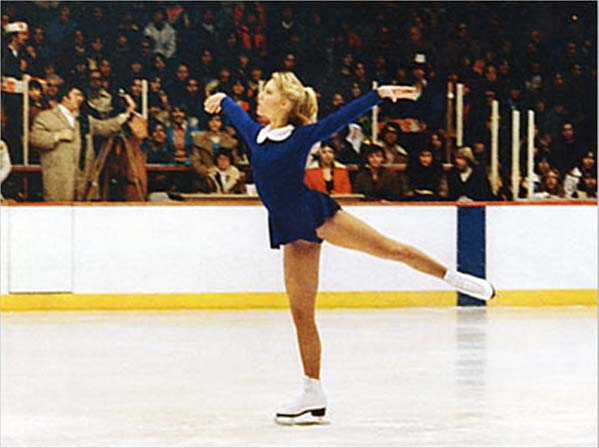
That’s me up there. 
See?  That nine-year-old boy cheering
on Lexie Winston to victory? 

No, actually I can’t see me up there either.  But I was
there, along with hundreds of other lucky people who managed to get spots as
extras on the set of Ice Castles.  Starring a promising unknown, Lynn Holly
Johnson, playing next to Robbie Benson, heartthrob of all the girls at my
school, I’m still not sure why I was so excited when a friend gave me a pass to
be on the set of this movie.  

Growing up in Minnesota during the 70s, one didn’t have too
many opportunities to rub shoulders with fame, so I guess I was excited at the
possibility of maybe seeing myself in a movie filmed in my own home state.  Like Lexie Winston, I was a small town kid
hungry for a taste of fame.

When the film was finally released several months later, I
was a little disappointed not to see my face up there in the crowd.  But something else happened to me while I was
watching Ice Castles, the kind of
movie I wouldn’t have been caught dead seeing under normal circumstances.  As I sat there, watching Lexie’s triumph
against adversity, as she wins a regional competition despite being blind, I
started to get a strange feeling inside me. 
By the time she started to trip over the roses thrown by her adoring
fans, thus revealing her secret disability to the public, something happened to
me that hadn’t happened since I was a child watching Dorothy trapped by the Wicked
Witch: I found myself crying at a movie. 

At some point during the picture I had come to identify with
this plucky gal from the Midwest, and later came to realize, hey, maybe I did
see a little of myself in that movie. 
Maybe, just maybe, a kid who watched only horror and science fiction
movies had learned to watch movies in a different way.  Maybe, like Lexie, I’d learned to see through
the eyes of love.

As I secretly wiped away my tears on a napkin greasy with
popcorn butter, I was anxious to forget about the incident, and I might have,
until a few weeks later, when, bored on a Sunday night, I decided to watch the
NBC movie of the week with the rest of the family.  The feature turned out to be The Other Side of the Mountain, based on
the true story of ski racing champion Jill Kinmont, who suffers a terrible
accident during a race and becomes a quadriplegic.  As soon as I heard Olivia Newton John singing
the maudlin theme song I should have known what I was getting myself into, but
some part of me couldn’t turn away.  Not
only was I drawn in to the story of Kinmont’s heroic struggle against
adversity, but I also realized some part of me wanted to be made to cry.  Some part of me was tired of trying to act
like the guys I hung out with at school. 
Something in these movies allowed me to be a different kind of viewer
than I was used to being.  When I watched
these films, I could be one of the girls.

Yeah, I know it’s sexist to associate getting emotional with
being female, but that’s the way Hollywood tends to divvy up its demographics,
and the movies I had been most obsessed with before what I have come to call “my
Ice Castles experience” didn’t offer
a lot of emotional range.  But the more I
watched these female-centered stories, the more I came to realize it wasn’t
just tears I was after.  I wanted to hang
out with a different crowd.  Bored with
my male friends, I wanted to see how the other half lived.  And the only place I felt I could be one of
the girls was at the movies.

I would have given anything to have friends like this.  When my friends hung out together, we
pretended we weren’t really having fun, we didn’t care too much about each
other, and that there wasn’t anything worth talking about besides music and
movies.  But I bet Annabeth Gish would
have understood my secret hopes and dreams. 
And I’m sure Lili Taylor would have accepted all my adolescent sexual
hangups, and maybe have had some good advice for me.  And if only I could work at a place like
Mystic Pizza, with a tough but lovable owner who would act as a kind of
surrogate mother…  In my naïve mind, this
is what I thought life for women was like, and I wanted to be a part of
it.  And for two hours, I could.

In the movie Satisfaction
I found the best of all possible worlds, female camaraderie and rocking
out, kicking ass, taking names, and then having a good cry together. 

What more could anyone ask for? 

There’s even a male character in the film who gets to live
out my dream, allowed into the secret world of women! 

He says it’s his own private hell, but I knew what he really
meant: it was heaven.

These kinds of films are derisively referred to as
chick-flicks, but for many viewers they hold a significance that exceeds this
condescending marketing niche.  People
who have favorite movies in common, especially those we wouldn’t admit to just
anyone, are like members of a secret community, connected despite differences
of age, gender, or taste.  And what
happens when we start looking outside of the confines of our gender roles?

Even though the stories of many so-called chick flicks tend
to be conservative—I mean, most of these movies end with marriage—the experience
of watching them might be seen as more transgressive.

Though you might not admit to it in the presence of certain
people, I bet you secretly love Dirty Dancing.  And once you get past the inane title, it’s
actually a pretty good story.  In it’s
own daffy way, it’s also quietly subversive: it’s hard to imagine the Hollywood
of today portraying a girl helping someone get an abortion in a positive
light.  By establishing a strong sense of
identification between the viewer and the character of Baby, the film takes us
through a narrative rite of passage in which we move from being Daddy’s innocent
little girl to an abortion facilitator and a dirty dancer.  And at the end, she makes everyone dance
along. 

Chick flick as agit prop? 
Maybe not, but for a girl watching this film it offers a rather racy
path to maturity.  And what about when a boy watches Dirty Dancing
Speaking for myself, I certainly don’t identify with Patrick Swayze: I
connect with Baby.  And this kind
of connection can be liberating. 
At least, it certainly has been for me.  I can’t imagine my life without
chick flicks.  Just don’t tell anyone I love this movie,
alright?

Jed Mayer is an Associate Professor of English at the State University of New York, New Paltz.

Jeffrey Canino grew up editing video on stacked VCRs. He holds a
Master’s in English Literature from the State University of New York at
New Paltz, and he blogs about horror cinema at his website, Nessun
timore:
http://nessuntimore.com