VIDEO ESSAY: Siding with the Victim, Part I: THE SHINING

VIDEO ESSAY: Siding with the Victim, Part I: THE SHINING: Death in the Family

[The script follows:]

From the time we are little children we like hearing scary stories.  Some
psychologists claim it’s because we use these stories to work through our anxieties.
 Fairy tales and nursery rhymes expose us to fearful situations, and along
with Hansel and Gretel, Goldilocks, and Little Red Riding Hood, we see our way
through to daylight.

But for every little piggy who lives, another little piggy has to die…

Maybe there’s another explanation to why we like scary stories, a darker, and
perhaps a richer one than that given by psychologists. Perhaps we don’t
identify with the victors so much as the victims.


Horror films show us the dark underside of the
American dream. As one group rises to power, another is disenfranchised. Often,
violence is visited upon those who are in the minority. 

Thrillers and action films celebrate triumph and
success. Horror films clean up the mess, mop up the blood, and show us what’s
under the rubble after the action hero lays waste.

Many horror movies’ victims, are women and
children, as in real life.

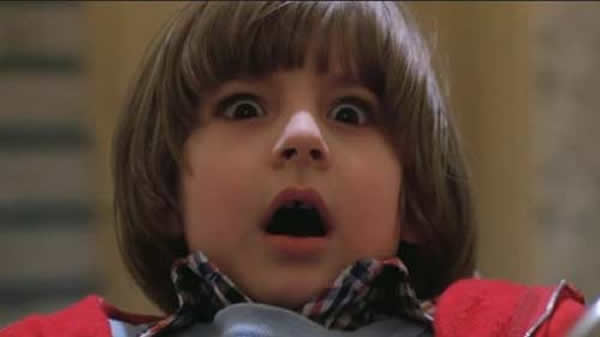
The Shining is
arguably the greatest horror film because it so movingly bears witness to the
suffering of the frightened wife and child of a violent alcoholic.
 

Wendy Torrance’s glassy-eyed smile holds a dark
history and a sense of nervous fear. This is revealed by the enormous ash
perilously dangling from her cigarette. The film will draw her repressed fears
out, writ large in bloody letters across the screen.

If this were a made for TV movie about spousal
abuse, a councilor or friend would come to the abused wife’s aid. That person
would help her to gain control of her life. 

But the narrative and moral logic of horror films
tells us a different story, one that is, perhaps, truer to life: evil never
sleeps, and the dead don’t always stay dead.

It is a common story, sadly enough, but like all
great horror films, The Shining gives this
story the magnitude of a tragic American myth. 

As family tensions mount in the Overlook, each
member of the family goes over the edge in their own special way.


“They fuck you up, your mum and dad. / They may
not mean to, but they do. / They fill you with the faults they had / And add
some extra, just for you.”  Poet Philip
Larkin’s words are particularly relevant to the American horror film.  Many of the best horror films capture the
unique vulnerability of childhood. In the end, the horror movie makes us all as
vulnerable as little children.

The tradition of gothic horror has been replete with beings
whose monstrousness is as much a burden to themselves as a threat to others.  There is no such thing as a victimless crime
in horror movies. Even the victimizers may be said to suffer.

We see Jack Torrance having a nightmare that,
the film suggests, is a kind of a vision brought on by the haunted hotel where he
and his family live. Such visitations vex him, and we can identify with his
anguish. 

Jack can still feel compassion, though, and we sense
his torment and anguish as he confronts and eventually turns toward
derangement. 

As such visitations increase in frequency and
intensity, Jack is transformed into a savage, and yet we continue to see him as
a victim driven to madness. And thus, his final transformation and his
merciless rampage seem all the more tragic. 

Even in the end, he is no monster. 

This is simply the dark side of human power. 

The waxing and waning of power itself—in
cinema as in real life—is merely an illusion.

The horror film: It shows us the dark side of
power, and reminds us that we are all, at some levels, powerless victims.

Power,
in and of itself, is not a moral virtue, but compassion is.


Jed Mayer is an Associate Professor of English at the State University of New York, New Paltz.

Ken Cancelosi is the Co-Founder and Publisher of Press Play.

TRAILER: SIDING WITH THE VICTIM: A Video Essay Series

TRAILER: SIDING WITH THE VICTIM: A Video Essay Series

July is going to be a scary month in the cineplex: horror (or at least scary) movies set to be released in the coming weeks range from V/H/S/2 to The Conjuring to Apartment 1303 to Frankenstein’s Army: as a sort of hat-tip to all of these movies coming out during the rainy, hazy, steamy days of summer, Press Play is presenting a three-part video essay series called Siding with the Victim, about the ways in which identifying with the hapless ones in horror films, the ones who do go into the basement/behind the creaky door/into the woods without a flashlight/into the attic and who don’t ever look behind them, is a crucial part of what makes these films so compelling. We’ll look at The Shining, Halloween, Rosemary’s Baby, The Texas Chainsaw Massacre, and countless other chilling films…

And here, for your consideration, is a tantalizing trailer. Watch it–if you dare!

RAISED IN FEAR: LET’S SCARE JESSICA TO DEATH and the Perils of Country Living

RAISED IN FEAR: LET’S SCARE JESSICA TO DEATH and the Perils of Country Living

null

Most
potential viewers would expect a film made in 1971 with the title Let’s Scare Jessica to Death to be a
teen slasher picture, but in fact, it is a subtle, moody piece of cinema that
explores the fragility of the mind and the persistence of the past, achieving
moments of rich psychological insight. 
It is also one of the most powerful treatments of the dream of getting
away from it all, and the horrors that ensue when we seek refuge in places we
little understand and where, in the end, we may not really belong. 

The story
is told largely from Jessica’s point of view, and creates a disturbing sense of
uncertainty in the gap between her own perceptions and those of the other
characters. This is nicely captured in
the opening scene’s voice-over narration, spoken by Jessica (Zohra Lampert):
“Nightmares or dreams … madness or sanity … I don’t know which is which.”  Her seemingly tenuous grip on reality is
partially explained in the back-story given in the early scenes of the
film. Jessica has just spent several
months in a mental institution, and she and her husband Duncan (Barton Heyman)
have decided to escape from the confines of their Manhattan apartment to try
the curative powers of country living on an apple orchard in rural
Connecticut.  Later, they encounter an
antiques dealer who made the same move, and he recognizes in them fellow
“refugees from urban blight.” But despite this antique dealer’s idyllic
portrait of the area they’ve just moved into, the newcomers are given many
signs that something is seriously wrong in this superficially bucolic retreat.

In the nearby
small town, they encounter hostility from the native population, which seems to
consist almost exclusively of old men. 
While the newcomers are all evidently in their thirties, the enmity
seems largely to derive from a generation gap, one that is reinforced by the
hippyish appearance of Jessica and Duncan’s friend Woody (Kevin O’Connor). Though their unfriendly encounters appear to
be the expected clash of anti-establishment baby boomers with the so-called
“greatest generation,” these tensions also derive from a more ancient enmity,
one between country folk and city folk. Many great films of the seventies address this theme, notably Deliverance, Straw Dogs, and The Texas
Chain Saw Massacre
, but what makes Jessica’s
treatment unique is the brooding ambiguity that shrouds the true nature of this
rural community. Since portrayed events
are filtered through the protagonist’s melancholia and relentless self-doubt,
it becomes impossible to be certain whether we are witnessing mere uncultured
rudeness and suspicion of newcomers or something much less benign.

My wife
and I moved to the mid-Hudson valley five years ago. At that time, we often felt such
doubts. The demographics of this area
are difficult to read from an outsider’s point of view, and we often felt
uncertain of the nature of our adopted community and its environs. Driving through the countryside on weekend
rambles, we would be mystified by the sudden transitions from quaintly
gentrified little towns with espresso cafes and antique shops to run-down
whistle stops with little more than a gas station and a grain silo, where
locals sip 40 ouncers and stare malevolently as you drive by.  While generally I find New Yorkers to be the
most friendly people of any state I’ve lived in, I have also walked trails in
the Catskills where people pass by stonily ignoring my hello, or worse, glaring
back silently.  Though I have come to
know my neighbors for the wonderful people they are, when we first moved in,
they frankly gave me the creeps.  Perhaps
this is because one of them introduced himself by saying that he had watched me
carry my wife over the threshold when we first moved in.  Moving into a new place has its perils, in
the city as well as the country, but there’s something especially unsettling
about the country’s unique sense of isolation. If your country neighbors turn out to be monsters, who you gonna call? I’ve seen enough horror movies to be wary of
the local sheriff’s connections. At the
end of the day, one’s doubts and suspicions most often turn out to be
groundless; but then again, what if they’re not?

As with
Roman Polanski’s Rosemary’s Baby,
Hancock’s film carefully choreographs our doubts by selectively withholding
information and calling its protagonist’s perceptions into question. And yet, as with Rosemary, Jessica’s point of view
is richly, sympathetically rendered, and as the film progresses we begin to
feel that the men in the film are the naïve, deluded ones. Jessica’s world is magical and strange, an
effect largely achieved by Joe Ryan’s complex sound design, in which
non-contextual sounds and voices form a constant countercurrent to the film’s
narrative flow. Wind blows even when the
trees are still, and queasy, seething electronic noises provide an aural
equivalent to the characters’ unease. Jessica’s disembodied voice offers a running disjointed monologue, often
uttered over spare piano or melancholy acoustic guitar figures. The increasing claustrophobia of this
would-be idyll is as much a product of the protagonist’s psychological
isolation as the characters’ rural equivalent.

With the
entrance into the story of the enigmatic character Emily (Mariclaire Costello),
Jessica’s internal monologue begins to incorporate other voices. Emily appears to be a free-spirited wanderer
squatting in the house newly purchased by the film’s protagonists, but as the
film progresses she seems more deeply connected to the town’s history.  Jessica seems uniquely attuned to this, a
connection furthered by a séance scene in which she declares her receptivity to
“everyone who has ever died in this house.” 
The abiding presence of the dead and their stories is a theme struck
early by the film, when the three main characters (who drive a hearse, by the
way) stop at an old cemetery so that Jessica can take rubbings from
tombstones. These rubbings adorn the
walls of her and Duncan’s bedroom and seem to summon further voices in
Jessica’s head.  In some respects she is
a visionary, attuned to the local spirits.
Yet this potentially empowering receptivity gives way to powerlessness as
the characters begin to reenact the family dramas of those long dead. Let’s
Scare Jessica to Death
moves subtly from being a film about retreating to
an idyllic place to being about the spirits of that place reasserting themselves.

Although
the spirit of place in Jessica is
clearly malevolent, the film’s cinematography, saturated with color and
suffused with shimmering natural light, continues to seduce us into its dark
pastoral world. Like all great horror
films, this is not so much about what horrifies us in our daily lives, but also
what entices us, revealing two seemingly conflicting sides of the same
experience. One of the voices in
Jessica’s mind often repeats the phrase “You’re home now,” but after a certain
point it becomes difficult to tell if this is the incorporated voice of the
mysterious Emily, or Jessica herself; the seemingly malevolent voice of the
rural township or the consoling voice of Jessica’s own city-bred mind, hoping
to reconcile herself to her country retreat. 
At the conclusion of the film we return to where we began, with the
voice-over musing on whether we are living a dream or a nightmare.  Though horror films can show us how easily
one can turn to another, they can also muse upon those paradoxical moments when
our life choices seem to unleash an uneasy combination of both.

Jed Mayer is an Associate Professor of English at the State University of New York, New Paltz.

RAISED IN FEAR: NIGHT OF THE HUNTER and the Horrors of Childhood

RAISED IN FEAR: NIGHT OF THE HUNTER and the Horrors of Childhood

null

The most harrowing film ever made about childhood opens with
a lullaby that is anything but soothing: “The hunter in the night / Fills your
childish heart with fright / Fear is only a dream / So dream, little one,
dream.”  As we stand on the threshold of
Charles Laughton’s haunted masterpiece Night
of the Hunter
, this lullaby sings us into the world of a scared child who,
strangely, is being encouraged to dream a dream of fear, which is a fair
description of the film that follows. While
Night of the Hunter wonderfully
defies classification, blending elements of expressionism, gothic, fairy tale,
and film noir, I would like to offer a reading of the film as a very particular
kind of horror film, one that enables us to see the world from a victim’s point
of view. Such films are anything but
empowering, in the sense used by the kind of self-help guides and memoirs of
personal struggle that litter our nation’s bookshelves. Rather, these films teach us sympathy and
compassion through a humbling sense of disempowerment,
which, in the case of Night of the Hunter,
involves taking us back to the horrors of childhood.

The tale is set in West Virginia during the Depression, and
the scarcity of those times drives the cruel deeds that unfold. We first see little Pearl and John Harper playing
happily in their yard when suddenly their father appears, on the run from the
police for a bank job in which two people were killed. He thrusts the stolen money on young John, which
will soon make him the object of murderous greed. Fear is John’s inheritance, yet the film
implies that even children who don’t experience his and his sister’s unique
form of persecution are born to suffer. Later in the film, as they flee from danger, they are forced to beg for
food along with other children. Their
grudging benefactor gives them each a potato before shooing them off, as she
muses: “Such times: when young’uns run the roads….” Near the end of the film,
when their guardian, Rachel Cooper (Lillian Gish), recites the story of Herod’s
slaughter of the innocents, she reflects: “It did seem like it was a plague
time for little ones, those olden days, those hard, hard times.” The film subtly parallels “those olden days”
with the “hard, hard times” of the Depression Era, and in its prolific use of
fairy tale motifs, connects this with the struggling peasant culture that
spawned the classic folk tales collected by the Brothers Grimm.

Although oral folk tales were traditionally recited to old
and young alike, they have a special resonance for children because of their
prominent place in the narratives, a place that is, as we all remember, often
terrifying. Whether being abandoned by
one’s parents in the woods because there isn’t enough food to go around, like
Hansel and Gretel, or being chopped up and fed to father in a stew, like the
child victim in “The Juniper Tree,” the children of fairy tales have much to
fear, especially from their parents. Once their father burdens them with the secret location of $10,000 in
stolen bank money, John and Pearl Harper’s story enters the dark dream world of
the fairy tale as they are pursued by Harry Powell (Robert Mitchum), a sinister
self-anointed preacher who is alluded to several times as “a wolf in sheep’s
clothing.” Yet the children are the only
ones able to see Harry Powell for the Big, Bad Wolf that he really is, and Night of the Hunter deftly captures that
sense of powerlessness all of us felt when, as children, we sensed something
wrong but weren’t able to do anything about it.

nullThe film is a virtual catalogue of iconic images of
childhood fears: closed basement doorways, crescent moons in night skies, empty
barns, shadowy attics, dark forests, and treacherous swamps make up Night of the Hunter’s haunted
landscapes. One of the film’s most
frightening scenes takes place in the Harpers’ basement, when Powell drags the
children down to help him find the stolen money. When the supposed cache turns out to be
empty, he turns viciously on John, who manages to extinguish the light and
overturn a shelf of canning jars on the villain’s head. Powell’s usually sly, seductive patter turns suddenly
into an animalistic wail. In the claustrophobic darkness of the basement, this
transformation is especially chilling, recalling many a downstairs journey and the accompanying fears.  The children
flee up the stairs, shot expressionistically as a thin
corridor of angular light hanging in a sea of blackness.  As in many scenes, the light and dark contrast here
is so strong as to make the image look like an old woodcut illustration. The children barely escape, slamming the
basement door, as vicious animal growls emerge from behind it.  As he continues relentlessly pursuing them as
they flee downriver, at one point John hears him singing his signature hymn,
“Leaning on the Everlasting Arms,” and wonders, “Don’t he never sleep?”  Fairy tale threats never do: they only take
on new forms as we grow older.

It’s striking to note that this film was produced amidst the
optimism and economic recovery of the nineteen-fifties, and perhaps this is why
the film initially flopped. Though
dream-like and fanciful, it nevertheless presents an unpleasant reminder of
hard times that remained all too real in the memories of older filmgoers.  Seen now, this classic takes on new life as a
dark fairy tale for an age of austerity. The world we are entering will indeed be, as the children’s guardian,
Rachel Cooper, says, “a hard world for little things.” Yet, given the grim outlook for our
collective future, it seems surprising that so many people remain so eager to
bring more little things into it. It is
this, as much as the perversely self-satisfied culture of child-rearing, that
inspired my previous piece on the film Who
Can Kill a Child? 

Climate scientists recently announced that we’ve reached a
dreaded milestone for CO2 levels, an announcement that received surprisingly
little attention.  But last year a
similar, and to my mind even more disturbing, milestone was passed, and some
actually considered it, perversely, as a cause for celebration. On March 12, 2012 the world population reached
seven billion, and while we might hope for a future in which this growing
population will be able to reduce its carbon footprint, there is no denying the
simple fact that more people means more mouths to feed, and if the wasteful way
we produce our food doesn’t change in a drastic way, those little mouths are
going to be very hungry. This is one of the things I think of when I hear
Rachel Cooper’s words during the Christmas scene that ends Night of the Hunter: “Lord save little children.  You’d think the world’d be ashamed to name
such a day as Christmas for one of them, then go on in the same old way. My
soul is humble when I see the way little ones accept their lot.”

The triumph of Laughton’s masterpiece is to make us
similarly humble by imaginatively putting us in the vulnerable position of
children.  It is a vulnerability they
share with other creatures, a point clearly established in the film’s most
memorable scene: John and Pearl’s nighttime flight down the Ohio River. As they pass a series of animals on the
Ohio’s banks—frogs, owls, turtles, foxes—they eventually come to a herd of
sheep corralled behind a fence. Time
hangs suspended as the children and the sheep stare at one another, sharing a
mutual recognition that the film has prepared us for by frequently referring to
John and Pearl as “little lambs.” This
mutual recognition anticipates the later scene of Powell’s capture by police,
when John cries out in pain at his former persecutor’s suffering. He later refuses to testify against him at
the trial, with compassion which stands in stark contrast to the vengefulness of the
townspeople, who form a lynch mob bent on Powell’s blood.  It is the virtue of great horror movies to
remind us what it was like to be a child, and to sympathetically identify with
victims, whatever their age might be.

Jed Mayer is an Associate Professor of English at the State University of New York, New Paltz.

RAISED IN FEAR: Who Can Kill a Child?

RAISED IN FEAR: Who Can Kill a Child?

null

Having
children is one of those bourgeois activities that leave me baffled, like
playing golf, eating sushi, or watching Downton Abbey.  Although I remain on speaking terms with
friends who, regretfully, choose to have children, there’s no denying the gulf
that separates the baby-haves and the baby-have-nots. And there’s nothing like the chill that grips
me when couples my wife and I have known for years, and who always claimed they
would remain child-free, suddenly announce: “We’re going to have a baby!”  From that point on all previous conversations
about how annoying kids are will be forgotten, to be replaced with the silent
assumption: yes, but ours are different. 
At such moments I turn to horror films for solace, and while Village of the Damned, The Brood, and The Omen all help, there’s only one film that truly captures the
experience of being trapped in a world of children and those who adore them.

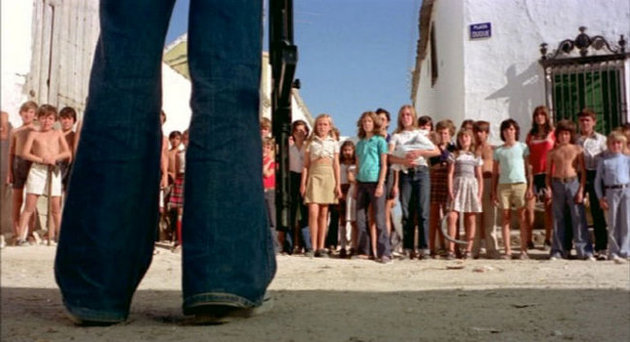
Who Can Kill a Child (1976) is a
relatively obscure Spanish horror film directed by Narcisco Ibanez Serrador,
but it should be much better known, and not only by people like me, who are sick
of having to pretend to be awed by how wonderful children are. It is a challenging, confrontational work
that raises difficult questions concerning overpopulation, inequality, and the
nature of evil. The film tells the story
of an English couple vacationing on the Spanish coast as they enjoy their last
weeks of freedom before a very pregnant Evelyn gives birth to their third
child.  Distracted by the noise and
crowds of Benavis, where a festival is being held, they rent a boat and go
alone to the island of Almanzora, which they find strangely deserted, except
for occasional bands of vacantly smiling children, who grow increasingly
threatening, and eventually homicidal. While the premise is admittedly unoriginal, if tantalizing, the power of
the narrative emerges through its sense of quiet unease, complex character
development, and provocative intrusions of topical and historical sound bytes
into the film’s otherwise eerily isolated world.

Taking its cue from the Mondo Cane films—those
pseudo-documentary films of the sixties and seventies that shocked audiences
with their depiction of violent rituals and grotesque behavior from around the
world—Who Can Kill a Child’s opening
credit sequence runs over a disturbing montage of twentieth-century atrocities,
beginning with the Holocaust and spiraling through numerous wars and civil
conflicts, in each case emphasizing the overwhelming toll on children.
  Disturbingly, the sound of children’s
laughter can be heard over the grim stock footage, as well as a child humming a
haunting melody reminiscent of Krzysztof Komeda’s indelible theme to Rosemary’s Baby. As the death roll finally reaches its height, we cut to black and white footage of barely clad children crouching
in the dirt, which seems to signal another abject image of orphaned destitution
until the camera pulls back, transforming to bright color footage of a beach
crowded by leisurely European tourists. This striking contrast
underscores the film’s later meditations on the thin borderlines between
comfort and chaos.

As Evelyn
and her husband Tom later enjoy the spectacle of a local parade, they discover
that their camera has run out of film and duck into a shop.  As they wait for the clerk to bring their
rolls of Kodak, they turn to a television on the counter, broadcasting
footage of a massacre in Bangkok. When
the clerk returns, he shrugs and observes: “The world is crazy. In the end the ones who suffer the most are
the children. From war: the
children. From famine: the children.” It
is an observation that will echo in the English couple’s minds as their
vacation continues. After making this
morose speech, however, the clerk smiles and says: “What a lovely day to take
pictures!” In the following scene, disturbingly enough,
Evelyn wades in the ocean while Tom tries to snap her picture. The thin membrane between the first world
privilege that safeguards their “lovely day” and the disorder that lurks beyond
their borders is suddenly broken by an ambiguous disturbance in the distance, a
disturbance that is later revealed to be a body washing ashore. These early scenes are loaded with many such
moments of horror lurking just beyond the vacationers’ perception.

The answer to the question of why a film that is about to present us with packs of homicidal
children is so preoccupied with reminding us how vulnerable children are in a
treacherously unstable global economy remains ambiguous, but some hints seem to
be given in the conversations between Tom and Evelyn on the night before their boat
trip.  As they walk down a crowded
street, Tom asks, “Would you like to sit down?” and she replies, “Where, it’s
so crowded.”  Looking down at her
pregnant belly, he observes: “Well, we’re not helping the situation, are
we?”  Later, as Tom broods over the
events of the day, he recounts a story from Fellini’s La Dolce Vita about a man who kills his two children, his wife, and
later himself. When Evelyn asks why, he
answers, “I imagine he was trying to save his children from the future.”  This prompts his wife to mention that they
were almost going to “kill this one,” pointing to her belly, and asks if he’s
glad they didn’t.  Tom doesn’t seem
entirely sure, and he equivocates that they had two children already, before
reassuring his wife as they go to sleep. 
Such scenes suggest a certain parallel, if not complicity, between their
household population and the rest of the world’s.  Overpopulation, the film indicates, is a problem we like to
project onto other countries when it often happens under our very noses, and it
is our privileged, first world children who are going to leave the largest
carbon footprint, and consume the most resources, indirectly fueling the
violent conflicts that hover around drought and famine like flies.

All this
might seem like a rather ponderous set-up for a horror film, but what is
astonishing is how deftly these elements are woven into the fast-paced establishing
shots. Soon we find ourselves on the
island of Almanzera, where we enter a very different reality. From the raucous crowds of the mainland we
shift to an almost silent, dreamlike space reminiscent of Val Lewton’s great
noir-thrillers of the 1940s, like I
Walked with a Zombie
, and Isle of the
Dead
, but with one significant difference: while classic horror films use
darkness as their medium of fear, Who Can
Kill a Child
uses light, an almost blinding, stark Mediterranean light, as
relentless and omnipresent as the increasing sense of menace to which it seems
tied. Like a mischievous child, the film
plays hide and go seek with the violence lurking just behind every corner. One particularly disturbing scene shows
Evelyn calling Tom’s attention to an old man huddled in a doorway in a distant
angle of a narrow but brightly lit street. A girl appears in the distance, smiling pleasantly as she walks towards
them. Once she reaches the old man she
looks happily to her right at him, though we still can’t see anything more than
his arm holding a cane. After smiling
guilelessly towards the couple, whose point of view the camera shares, she
turns to the man again, seizes his cane, and sets to beating him violently to
death, though we only see the evidence of this from the increasing amount of
red visible on the cane as it repeatedly rises and falls and the girl laughs
with glee.

Such
moments of barely concealed horror parallel the couple’s reluctance in
admitting the children’s monstrousness, a reluctance shared by another adult
whom they encounter, who tells them the story of how the children suddenly
changed. As he describes how they killed his wife, he notes with amazement that
nobody moved to stop them, because, of course, “who can kill a child?” It is an
understandable reluctance that the English couple have a hard time getting
over, putting them in even graver danger. As the film progresses towards its harrowing conclusion, it forces the
viewer into the uncomfortable position of the protagonists: though the children
are often shown blank-faced and coldly malevolent, there are also many scenes
where they are depicted as infinitely charming, seemingly innocent.  When they nevertheless show themselves
capable of horrendous violence, we are tempted to ask, along with Evelyn,
“Isn’t a normal child incapable of killing another human being?”  When we recall how violent the 1970s were,
this line has a disturbing historical resonance.  It’s sad to think there was once a time when
adults could be so innocent as to ask such a question.

Jed Mayer is an Associate Professor of English at the State University of New York, New Paltz.

Raised in Fear: The Superdynamational Horrors of Ray Harryhausen

Raised in Fear: The Superdynamational Horrors of Ray Harryhausen

nullYou never forget the
first time you fall in love, especially in the movies. My moment came when I was eight years old, at
a Saturday matinee in a cramped multiplex theater.  Setting my sights high, the object of my
adoration was Kali, Hindu goddess of Time, Change, and Death; or, rather, a
statue of her, brought to life by the magical powers of Ray Harryhausen, the
special effects wizard who, sadly, passed away this week at the age of 92. His influence on the development of cinema is
incalculable, but in many respects he will be representative of an age that is
likely never to be reborn, a time when special effects were created with the
hands as well as the mind, with clay instead of pixels, with palpable objects rather
than streaming data. By showing us how
malleable cinematic reality could become in the hands of an artist, he
anticipated the wholesale manipulation of the visual field brought off by CGI technicians,
yet the texture, the movement, and the presence of his animated creatures belong to
an entirely different realm from that of the smooth, seamless, and ultimately lifeless
digital beings wandering somnambulistically across today’s screens.

The animated statue of
Kali with whom I first fell in love appears in The Golden Voyage of Sinbad (1974) the first Harryhausen film I’d
ever seen—certainly not his best, but filled enough with wonder for anyone with
imagination. The feelings I felt for
Kali, or at least her animated model, were different from those I felt for the
sexy slave girl Morgiana (Caroline Munro), whose I Dream of Jeannie-style costume left little to my boyish
imagination. The love I felt for
Harryhausen’s Kali was pure, a sense of reverence for something beyond me, a
power outside my understanding, a life form fundamentally different from my own,
yet no less alive. Harryhausen’s
animated figures burn with a hard, gem-like flame, a quicker pulse than the one that beats
in the rest of us. Like many of the
animator’s best creations, the statue of Kali moves all of her limbs at the
same time, particularly impressive given the fact that she’s got six arms, each
wielding a scimitar. As befits her
statuesque origins, Kali’s face never moves, but she nevertheless conveys a
distinct personality in her carefully choreographed movements: graceful yet
relentless, cool yet malevolent, hard yet supple, not unlike the goddess on
whom she is based.

Harryhausen’s creations
have an undeniable presence on the screen, often eclipsing the flesh and blood
actors with whom they perform.  Yet their
life remains on a different order than that of mere mortals, and in that they
are purely cinematic. The statue of Kali
is set into motion by the evil wizard Koura, played with high camp by the
fourth Doctor Who, Tom Baker. It has
often been said that the magician Prospero from Shakespeare’s The Tempest can be read as a kind of
self-portrait, of the dramatist as maker of magic. Similarly, Baker’s Koura could be seen as a
kind of stand-in for Harryhausen himself, the wizard who brings life to
lifeless things and sets them dancing before our amazed eyes. The remarkable thing about Harryhausen’s
effects is how they never fail to convince us of their unique powers of life,
even while they remain unremittingly artificial, thing-like. Kali’s unmoving face, her claylike texture, her
blocky feet keep her firmly bound to her material origins, yet this only
makes her performance as a living thing all the more beguiling.

As with all of Harryhausen’s
creations, we know Kali is fake, but this enhances rather than diminishes her
power, since we can watch and watch and still never fully understand what makes
her move. There are documentaries that
show stop-motion animators like Harryhausen working at their painstaking craft, so that
we can more or less see how it is done, but like cinema itself, there remains
something essentially magical in what happens between the frames. Film, or at least the analog kind that moves
in frames per second, works through persistence of vision, the overlapping of
impressions left on the eye by a rapid series of photographic stills to form a
seamless illusion of movement. When we
watch Harryhausen’s animation, it is as if we see this process happening before
us, as if his creatures are embodiments of the cinematic process within the
film itself. 

nullEach movement made by Harryhausen’s
creations is made up of countless tiny sub-movements working together to
produce a living whole. This is perhaps
most dramatically demonstrated by the famous scene in which Jason battles seven
fighting skeletons in Jason and the
Argonauts
(1963). No matter where
the eye turns, it sees diverse movement: this skeleton raising a sword; that
lifting a shield; this stalking around the scene of battle, looking for an
opening; that recovering after being knocked down. Under closer scrutiny each of these figures
reveals a further host of movements, the raising of the sword involving the
lifting of the upper arm, the extending of the forearm, the extension of the
wrist, the back arching, the thigh bone connected the knee bone, etc. The more we look, the less we perceive this as
constructed by a master-craftsman and his crew: something else is happening
that ultimately evades simple cause and effect.

This “something else”
Harryhausen named “Superdynamation,” which, besides being a wonderfully
appealing branding of his distinct visual style, is also an apt description of
its peculiar appeal. The life he gave
his creatures exists in a kind of hyper-reality, their movements more dynamic
than mere organic motion. Though given a
distinctly 1960s American brand name, Superdynamation has much in common with a
visual effect that is quite ancient, one dubbed the “uncanny” by Freud. The hair-raising frisson of the uncanny is
experienced “when there is intellectual uncertainty whether an object is alive
or not, and when an inanimate object becomes too much like an animate one.” One need only mention the idea of a
ventriloquist’s dummy coming to life to convince us that Freud was on to
something here. Doors screeching,
windows rattling, shadows moving: these are all stock elements of gothic terror, but
there is something uniquely creepy about the “too much like” animation
perfected by Harryhausen. 

nullAlthough
he created a few cute and amiable beings, monsters were Harryhausen’s métier,
and the best are those that are explicitly artificial. After falling in love with Kali I needed to
see more of her sisters, brothers, and others, scanning the TV listings for
late-night showings of Harryhausen’s films. One of my favorite monsters is another statue, in this case of Talos,
the mythical Greek man of bronze, who is set into motion in an early scene of Jason. The sound effects contribute marvelously to the peculiar power of this
brazen being, whose every movement screeches like rusty metal. His brute materiality, his thingness, is,
paradoxically, what makes him a believably living being on the screen, yet it
is also what makes him vulnerable: Jason defeats him by simply unscrewing a
plug on his heel, from which his life-blood relentlessly flows. There is something grotesque yet moving in
Talos’ slow death, like Superdynamation in reverse, motion bringing death
instead of life. It remains for me one
of cinema’s, and Harryhausen’s, great moments.

Although
I will inevitably be accused of technophobic nostalgia, I can’t help but feel
that the possibility of such magical movie moments have passed away, along with
their creator. Younger viewers who have
grown up with CGI don’t seem to have the problem with it that I do. To them the special effects of yesterday
appear “fake,” yet surely the effects of today don’t look any more “real.” I’m not sure that was ever the point. When the poet Rilke stared at an “Archaic Torso
of Apollo,” the message it spoke to him was that he needed to change his life,
to aspire to the superdynamic quality embodied in great art. The question isn’t what is fake or what is
real, the question is what quality of life does it achieve. Ray Harryhausen’s uniquely analog art wasn’t
merely alive, it was in Superdynamotion, and as far as I’m concerned it’s a
life with which digitized special effects will never catch up.

Jed Mayer is an Associate Professor of English at the State University of New York, New Paltz.

Raised in Fear: The Self-Help Horror of Todd Haynes’ SAFE

Raised in Fear: The Self-Help Horror of Todd Haynes’ SAFE

null

Todd Haynes works well in a variety of genres, but his most distinctive films are those that were once described as “women’s pictures,” before the inane phrase “chick flick” gained currency. Widely recognized for his reverent tributes to the classic women’s picture, like Far From Heaven, and most recently his five-part HBO miniseries Mildred Pierce, Haynes has also extended the possibilities of the genre by combining melodrama with horror. In Safe (1995), Haynes crafted an entirely unique take on the women’s picture that is also a scathing satire set in an imaginary 1980s California haunted by self-help gurus, deep ecologists, and toxic chemicals. 

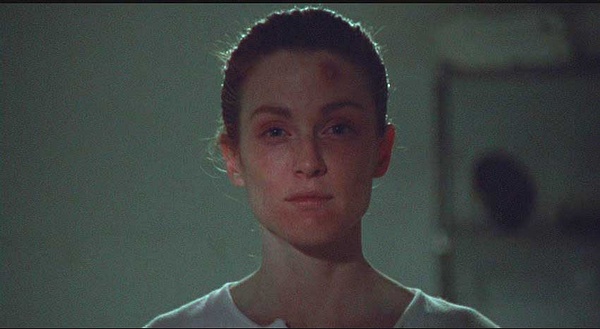
For all its originality, the film’s narrative owes much to the made-for-TV movies that once permeated the airwaves, films like The Boy in the Plastic Bubble, The Best Little Girl in the World, and Brian’s Song that have been called “disease-of-the-week” movies for their morbid fascination with newsworthy illnesses. What makes Haynes’ use of the genre so effective is its constantly shifting narrative perspective and tone: as viewers we feel encouraged to laugh at the privileged San Fernando Valley characters and their “white people’s problems” one minute, fear for their health and sanity the next, and finally identify with their plights, however absurd they might appear.  The woman at the center of this women’s picture is the appropriately named Carol White, played impeccably by Julianne Moore in her first starring role. Barely articulate, Carol is trapped in a world in which men tell all the stories, and she finds herself mercilessly shifted from one interpretation of her problems to the next. 

I know the kind of narratives that Carol White is fed, having grown up in a house littered with self-help books. Though my family was relatively well off, had many friends, had reasonably happy and healthy kids, and anticipated a seemingly secure future, an examination of our bookshelves would have suggested otherwise. I’m Okay—You’re Okay, Games People Play, Why Am I Afraid to Tell You Who I Am?, When I Say No I Feel Guilty, and Love, by Leo Buscaglia, among others, were my mother’s daily reading. Sadly, after years of such fare, nobody in our family was “okay,” there were a lot of games played, no one told anyone else who they were, people said no frequently and apparently felt guilty about it, and there was relatively little love, at least of the touchy-feely bear-hug variety preached by Buscaglia.  For the latter, however, I am actually grateful, since I always saw the games we played as another kind of love, however dysfunctional. After a while the self-help books became a family in-joke, and we laughed at the gap between their prescribed versions of happiness and the peculiar version our family had somehow created, despite all of the advice we’d been given.

What is so sinister about self-help narratives is the way they hold up a single answer to complex problems, a singularity belied by the multitude of books offering differing, even contradictory solutions.  This is the plight of Carol White, who begins to suffer from what appears to be an allergic reaction to the toxins in her environment.  A visit to the hair salon results in a nosebleed from the chemicals in her perm; a mid-afternoon commute sets off a coughing fit from automobile exhaust; a visit to the dry-cleaners puts her in the hospital.  At one point an educational video tells her that she is suffering from the vaguely-defined “environmental illness: that means that, for reasons not yet known to us, certain people’s natural tolerance to everyday substances is breaking down, usually as a result of some kind of chemical exposure.” Later she reads a flier that describes the disorder in more apocalyptic terms: “Are you allergic to the 20th century?” 

Carol addresses her respiratory problems and chronic fatigue with a variety of fad diets and treatments until discovering “Wrenwood,” a retreat from the world’s illnesses run by HIV-positive self-help guru Peter Dunning. Though set in a bucolic desert valley compound ostensibly designed to help environmental illness sufferers reduce their “load” of twentieth-century toxins, Wrenwood’s residents are, in fact, overloaded with a variety of conflicting therapeutic narratives that cause Carol to unravel during her alleged healing process. Although many at Wrenwood tell stories of becoming sick from exposure to chemicals and unsafe environments, Dunning’s therapy ultimately shifts its focus from environmental to personal causes. In one disturbingly calm scene where he subtly badgers a recalcitrant patient to say what brought on her illness, he retorts: “The only person who can make you get sick is you, right? Whatever the sickness, if our immune system is damaged, it’s because we have allowed it to be.”

nullLike most of the explanations given by the film’s various experts, this is perhaps true, but only partially. It might explain Carol’s illness, or it might not: maybe she is only suffering from an exaggerated sensitivity to her surroundings as a result of the boredom of her privileged existence, or maybe she does have a real physical reaction to a genuinely toxic environment. The ambiguous pathology of her illness is brilliantly encapsulated in the striking visual symbol of a black couch delivered by mistake in place of the teal one Carol ordered. After a morning at the gym, she returns to her immaculate home. The living room is shot with a wide, deep focus, similar to the interior shots of Kubrick’s The Shining. Recessed lighting lends a chilly, bluish light to the scene, a visual cold enhanced by the furniture’s rigidly symmetrical arrangement. After a phone conversation in which she describes each member of the family as being “fine,” the camera draws back slowly, creating suspense for the unveiling of what we can’t yet see lurking outside the frame. As Carol turns to the left she utters a horrified “Oh my god,” her gaze transfixed as the camera cuts to reveal an enormous black sectional couch, like an interior decorator’s version of the monolith from 2001: A Space Odyssey.  For the privileged Carol White, this is as much an existential crisis as it is an aesthetic one, to such an extent that later in the film Carol claims to fellow sufferers of environmental illness that her “totally toxic” couch was one of the triggers of her own breakdown.

Throughout the film the nature of that breakdown remains ambiguous, but there is no shortage of narratives to fill that diagnostic void.  Safe resembles other horror films focused on female protagonists, such as Rosemary’s Baby and the vastly-underrated Let’s Scare Jessica to Death, which dramatize the isolation that results when real terrors are written off as merely “women’s problems” by arrogantly authoritative men. In a conversation between Carol and other environmental illness sufferers, one victim says: “My doctor thinks I’m nuts. He thinks the whole thing is completely in my head. That’s what my husband still thinks,” and this is what Carol, too, experiences for much of the film. But Safe’s brilliance lies in its acute understanding of the horror that can emerge when the male experts actually do start listening to you, offering what seem to be definitive solutions to complex problems. Another woman remarks: “It is in your head. It’s in all our heads. It makes you crazy. She’s right. It ends up in your head because it affects the neurological.” What “it” is remains unexplained, but the film subtly implies that it might be the cure itself, self-help rhetoric infecting the mind until all is reduced to a meaningless rhetoric of “feelings.”

Poignantly, Carol White never really discovers who she is or what her illness is. Every time she attempts to speak about herself, her words turn into clichés, self-help versions of selfhood that invariably miss the mark. The film ends in a tiny, space-capsule-like safe house where Carol has isolated herself. She stares at the mirror and tries to speak the words “I love you” with conviction, but fails, perhaps because the words are not her own, but merely quoted from the pages of I’m Okay—You’re Okay, or Love, by Leo Buscaglia, PhD.

Jed Mayer is an Associate Professor of English at the State University of New York, New Paltz.

Raised in Fear: POLTERGEIST and the Culture of Forgetting

Raised in Fear: POLTERGEIST and the Culture of Forgetting

null

Poltergeist begins with the national anthem, once played by television networks late at night before they ended their daily broadcasts.  The montage of patriotic images that regularly accompanied these sign-offs is made strange in this film through extreme close-up shots depicting a grotesquely pixilated television screen, projecting fragmented images of Romanesque columns and military statues commemorating unidentifiable wars. The screen then fills with hissing static, from which emerges another ritual of the dead that threatens to devour the Freeling family and their community. Poltergeist is a film about the repressed traumas and anxieties underlying the American dream, a point further emphasized when we learn that Cuestra Verde, the planned community in southern California where the story takes place, was founded in the year of our nation’s bicentennial. The Freelings are the “first family” of this housing development, and as such are made to bear the burden of the community’s collective guilt.

1976 also happens to be the year my own family moved from the decaying farmhouse where my father grew up into a brand new faux-Tudor that my parents picked out of a magazine. We told ourselves stories about this move as if it were the realization of our family’s dreams, and the newness, size, and privacy of the house’s setting were the material manifestation of those dreams. Though we were one of the first families to move into this new housing development, we could dimly perceive other residents through the screen of trees surrounding our backyard. Later, when my sister and I tried to make friends with some of the local kids, we found them to be hostile to outsiders: in just a few months, cliques had formed and solidified into tribal antagonisms. By the time my parents divorced and sold the house some ten years later, our dog had shown up dead on our front steps and our healthy and surprisingly reliable cat disappeared, never to be seen again. My mother looks back on this as the happiest period of our lives. Like the Freelings, I have learned that happiness is often maintained through selective acts of forgetting.

nullThere has been much dispute about who actually did what in the making of Poltergeist, with suggestions that Tobe Hooper’s title of director was only nominal, and that producer and co-screenwriter Spielberg was the driving creative force behind the scenes. Certainly the film would seem to have little in common with Hooper’s harrowing classic The Texas Chainsaw Massacre (1974): the grainy texture and ruthless violence of that film are worlds away from the lavish visual spectacles that unfold amidst the comfortable middle class settings of Poltergeist. Nevertheless, Hooper’s direction and co-authorship may be felt in the sense of menace and threat manifested from the beyond, an otherworldly place revealed to be firmly rooted in the very earth beneath the concrete and sheetrock of Cuestra Verde. 

A comparison of Hooper’s two great films reveal them to share a common preoccupation with place, particularly in terms of the ways Americans seek to repress the past in the name of progress. The serial murdering family that haunts The Texas Chainsaw Massacre is made up of unemployed cattlemen, put out of work by the industrialized slaughterhouses and feedlots of modern agriculture. The bloodbath that unfolds in the film may be read as the grisly revenge taken by workers dismissed as casually as the animals they were once paid to slaughter. In Poltergeist, the planners of Cuestra Verde built its homes on the site of an old cemetery. As they move to expand the community into the surrounding hills, they plan to do the same with another burial site, a plan that shocks Steve Freeling (Craig T. Nelson), who says to his boss: “Oh you’re kidding. Oh come on. That’s sacreligious, isn’t it?” to which his boss glibly replies: “Oh, don’t worry about it. After all, it’s not ancient tribal burial ground. It’s just people.” 

To compare it with another film about an American haunting, Poltergeist offers a curious inversion of the genocidal logic underlying The Shining, whose horrors emerge from the Indian burial grounds that lie under the Overlook Hotel. Both stories concern the ways in which we overlook the past, but in Poltergeist the American ritual of forgetting has become more pervasive. While the builders of the Overlook Hotel had to fend off various Native American attacks during its construction, no one complained about the disinterment of the cemetery’s dead until Steve Freeling spoke up. Ancient tribal burial grounds are an alien concept to rationally planned communities: we no longer honor the household gods but simply build on top of them at our convenience.

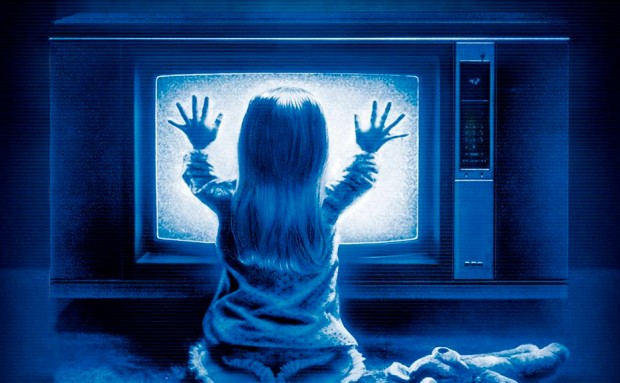
nullThe film’s totem of forgetting is the television, and the Freelings are avid worshippers. There is one in every room of the Freelings’ home, and when Carol Anne talks with “the TV People” she raises her hands to the screen as if she were one of the apes bowing before the black monolith of 2001: A Space Odyssey. The Freelings are a good family who seem to have gone slightly astray, their lives detached from the larger world outside and from the history buried beneath their feet. At night Steve and Diane (JoBeth Williams) wind down by smoking pot and watching reruns of The Twilight Zone. Tellingly, Steve is absently reading Reagan: The Man, the President, the sanctimonious biography of a public figure uniquely successful in promoting a sanitized version of progress in which American capitalism redeems the nightmares of history. While the Freelings do not commit any crimes, they are complicit in an American culture of forgetting that allows people to be bulldozed for the making of a brighter future.
After Carol Anne is abducted to the plane of the TV People, she is urged, “don’t go into the light.” In the narrative, the light represents the afterlife, but it might also suggest that light of forgetfulness that shines fitfully from the television screens glowing throughout the house. It also seems to shine brightly on Cuestra Verde itself: in several scenes the characters remark on how beautiful and sunny the weather is while horrors run rampant in the Freelings’ home. It is a world in which distractions make it easy to lose one’s way. The film is abundant with product placements, and the children’s room is covered with tie-in products from Star Wars, Alien, and other movies: like its main characters, Poltergeist is complicit in the culture it seems to condemn. Yet while the psychic investigators suggest that the children’s product-filled closet is the “heart of the house,” dwarfish medium Tangina (Zelda Rubinstein) prophetically replies, “This house has many hearts.” 

Like the Freelings, I watched a lot of Twilight Zone episodes while growing up in my suburban home.  One episode has always haunted me, and it seems like a kind of DNA sample from which Poltergeist might have been cloned. In “Little Girl Lost,” a family suddenly loses their daughter to another dimension: they seek everywhere but can only hear her disembodied voice through various points in the house that seem to intersect with the alien plane. In the period my mother remembers as the happiest in our family’s life, we all spent a great deal of time watching reruns in separate rooms, cut off from one another and from the surrounding neighborhood. Any one of us could have disappeared, like the cat who never came back, and I am embarrassed to think how long it might have taken for one of us to notice.  The monstrous threats posed in horror films are often unconsciously desired visitations that serve to transform the individuals and unite the families who face them. But there is another kind of horror, one that is almost too subtle for the camera’s lens, in which families and friends disappear while we look into the light and slowly forget.

Jed Mayer is an Associate Professor of English at the State University of New York, New Paltz.

The Bleak Spaces and Blank Faces of FARGO

The Bleak Spaces and Blank Faces of FARGO

null

When Fargo was released, I felt that my home state of Minnesota had finally been given its Oresteia, its Njal’s Saga, its Double Indemnity. Over the ensuing years, however, the popular image created by the Coen Brothers‘ regional epic has been a questionable inheritance. Thanks to Fargo, most people seem to think Minnesotans speak in cute, folksy phrases like “you betcha,” “ya, sure,” and “heckyamean?”  I’d like to say that this is totally untrue, but some Minnesotans actually do talk like that.  Sometimes I talk like that.  For instance, there’s this one phrase I picked up from one of my Mom’s friends.  She used to pause, look directly at you, wink, and say “True story!” with the trademark Minnesotan long “o.” This could be roughly translated into Laconic Midwestern as “yup.”  Now I say it.  Sure, initially we used the phrase around the house as a kind of joke, a gentle mockery of my Mom’s friend, but at some indefinable point it became an actual, living part of my vocabulary. 

The Coen Brothers do not so much write dialogue as dialects for their characters, rich vocabularies and idioms that wend through their films, giving solidity to even the most outlandish narratives. They create linguistic communities connected by language despite their often-violent conflicts. At times the very phraseology that marks them as belonging to the same tribe serves to maintain a chilly distance. The Minnesotan phrase “yah, real good,” for example, might convey warm approval, angry impatience, or curt dismissal, depending on the speaker. The characters in Fargo may speak the same language, but it shapes them in dramatically different ways.

nullAt the center of the film are two portraits of domesticity, one warm and loving, the other bitter and resentful.  When we first encounter these families there is little to distinguish them: they all seem to communicate in cheerful idioms suggesting all is hunky dory, you betcha.  As the horrible crime instigated by the secretly resentful Jerry Lundegaard begins to unfold, however, we see the void at the heart of the chirpy Midwestern family. In the terms of Icelandic saga, we might say that the Lundegaards marry
into the Gustafsons, and the tension between the tribal patriarchs
smolders into conflict.  Translated into 1980s Minnesotan: Jerry feels
threatened by his father-in-law, Wade, and hopes to score big on a
parking lot development.  Once we have first experienced the repressed anguish of the Lundegaards, their story subtly taints the film’s later portrayal of domestic life.  Marge and Norm Gunderson are expecting a child, and their shared life seems to consist mostly of trite conversations exchanged over large portions of food.  Their Minnesotan phrases and accents make them appear silly, comical, like characters in a Garrison Keillor routine.  But as they live their seemingly small, inconsequential lives, they breathe love and vitality into the very same language the Lundegaards use with so little meaning, such hidden meanness. 

nullThese very different families are brought together by a series of murders that unfold as a result of a peculiar crime instigated by Jerry Lundegaard that reads like a bad Midwestern joke: “D’ja hear the one about the guy that had his own wife kidnapped?” What drives him to this act remains something of a mystery.  When Carl Showalter (Steve Buscemi) asks him why anyone would want to do such a thing, he smiles nervously and stutters, “Well, that’s, that’s, I’m not go inta, inta—see, I just need money.” As the hired kidnappers press him, he nervously responds, “See, these are . . . personal matters.”  Like his two hapless goons, the audience learns little more of Jerry’s motives, as he turns away all unwanted scrutiny with a wooden smile and conversational clichés.  In what remains William H. Macy’s greatest performance, he transforms the annoying patter of the used car salesman into an accomplice to murder.

The television serves as the visual and conceptual link between the criminal elements set into motion by Lundegaard and the redemptive powers of the Gundersons.  After the kidnapping, Carl and his taciturn partner Gaear Grimsrud (Peter Stormare) take Jerry’s wife Jean to a cabin in the woods, where they eat TV dinners while trying to get a signal on a broken down set.  The growing tension of the film, the recent acts of violence, are renewed by Carl as he slams his fists on the television in between anxious readjustment of the jerry-rigged antenna.  The snowy screen fleetingly resolves itself into a ghostly picture with each bang, and the camera closes in on what Carl angrily refers to as “the fuckin’ shit-box.” 

nullSuddenly the picture resolves into an episode of the PBS show Nature.  The soporific voice of the narrator, in stark contrast to Showalter’s rage, intones: “The bark beetle carries the worm to its nest where it will feed its young for up to six months.”  We then see Marge and Norm Gunderson in bed, bathed in the stark light of the television, Marge watching with a glazed look while Norm sleeps against her side, both lying amidst a spilled bag of Old Dutch Potato Chips.  The narration continues: “In the spring, the larvae hatch and the cycle begins again.”  Since Marge is visibly pregnant, the program seems to comment on her own young, soon to hatch.  The Gunderson nest seems a placid place, a place of mindless gestation and hibernation.  But when the phone call comes summoning Police Chief Marge Gunderson to investigate a double homicide, their home becomes a retreat, a sanctuary from the world of meaningless violence in which we have been immersed.  It is a sanctuary from which Marge must emerge, restoring the world with love and order so that she can rear her child in peace.

The television figures prominently in another, very different, domestic scene shown earlier in the film.  Jean Lundegaard sits in her bathrobe, knitting while she watches what is perhaps the most annoying piece of local television ever recorded, KSTP-TV’s Good Company. Begun in the 1980s, the daytime variety and chat show was hosted by smarmy husband and wife team Steve and Sharon Edelman, a pair whose barely suppressed egos and strained cheeriness embody everything that is most repulsive in the Minnesotan character.  As Steve and his substitute co-host Katie Carlson describe how to make “Holidazzle Eggs” (don’t ask), Jean smiles, mesmerized by her imaginary friends.  Through the sliding glass door behind the television we see their surrounding community by way of the backs of several identical four-bedrooms. The Lundegaards aren’t typical so much as interchangeable with their neighbors; that is, until the violence unleashed by Jerry appears, in the form of a shambling, balaclava-clad figure who wanders up to the glass door and peers in. His appearance is so incongruous with the bland coziness of the domestic scene that the film seems to pause and gape along with Jean before he swings back a crow bar and smashes through the window, chasing Jean through the house as she screams in terror.

Fargo has been justly celebrated for its use of bleak, snowy landscapes to mirror the cold inner worlds of its most malevolent characters, but it should be noted that snow has many shades. The outside world prior to Jean’s abduction is decidedly beige, the neutral tones of the housing development barely standing out from the dirty late-winter snow. It is a blandness from which violence emerges, aptly reflecting the Lundegaards’ domesticity.  The film is filled with bleak spaces and blank faces, snow-covered rural roads and airport parking lots creating an appropriate backdrop to the glazed looks of blankly-smiling waitresses, dull-eyed truck-stop girls, and chatty used car salesman.  It is a blankness that threatens to devour even the film’s heroic Marge Gunderson and her cozy domestic life.

In one of the strangest scenes in the Coens’ oeuvre, Marge arranges an apparently illicit meeting with an old high school friend, Mike Yanagita, who calls her in the middle of the night hoping to catch up.  His eagerness over the phone clearly marks him as a stalker, yet Marge’s otherwise sound police instincts seem to fail her, or perhaps she simply chooses to ignore them.  In arranging a meeting with this rather sad stand-in for the role of “old flame,” her motives are suddenly as vague and shadowy as Jerry Lundegaard’s.  Their brief lunch date at The Radisson devolves quickly, as Mike’s chummy bluster grows increasingly flirtatious. When Marge checks his advances, he begins to tell the story of his wife’s death from leukemia, which at first arouses Marge’s pity, before his tearful desperation frightens her into calling a halt to the lunch. In a later phone conversation Marge discovers from a high school friend that Mike was never married, and she stares into space, having touched briefly one of the many blank spaces of the frozen world.

The film concludes with Marge and Norm Gunderson back in bed.  In between this and the earlier scene watching television in bed, Marge has conquered the forces of evil and restored order to their cozy world: their bedroom now appears touchingly intimate, nurturing. But if the contrasting greed and violence displayed earlier now lends a quiet dignity to their humble existence, it also lingers as a barely repressed threat. We have seen the violence that can emerge from blankness, and as their faces settle into a slightly glazed placidity, we can almost hear the wind howling outside. True story.

null

Jed Mayer is an Associate Professor of English at the State University of New York, New Paltz.

The Grimm Possibilities of MAMA

The Grimm Possibilities of MAMA

null

Note: This piece contains spoilers.

My wife and I arrived late to Andres Muschietti’s Mama, but not late enough.  A series of trailers even more inane and noisy than usual reached its nadir with one for a film called Hansel and Gretel: Witch Hunters, which endows the brother and sister of fairy tale fame with a vast armory of swords and gatling guns and sends them out on a loud and gory witch hunt filled with blood, explosions, and general mayhem. Nothing could have been further in tone and style from the film we were about to see, and yet Mama shares a number of key elements with the Grimms’ story from which Hansel and Gretel takes its name. Mama begins with the fairy tale formula, “Once upon a time…,” and then it tells the story of a pair of children abandoned in the woods and fed by a monstrous mother figure. From this premise the film diverges from the fairy tale’s plot, but not from its spirit, as the children go on to contend with the horrors of growing up in a world haunted by adults.

Though Mama does not ultimately succeed as a film, it does offer a set of rich possibilities for the creation of a modern fairy tale, one that, like those told once upon a time, faces the horrors of everyday life head on, also recognizing the power of fantasy to make imaginative sense of those horrors.  In the Grimm Brothers' tale, Hansel and Gretel are abandoned by their parents because they can’t afford to feed them.  Muschietti’s story begins with an overheard radio broadcast announcing a killing spree launched by a man whose fortunes were devastated by a stock market plunge.  The man turns out to be the children’s father. After he flees with his two girls, Victoria (Megan Charpentier) and Lilly (Isabelle Nelisse), the family hides out in an abandoned, snow-covered cabin. There, a surrogate mother—who is as much a grotesque parody of the clinging bourgeois parent as she is a perverse childhood fantasy made flesh—adopts the children. Mama announces her adoption in classic fairy-tale fashion, by rolling a ripe, red cherry to the children. This symbolic offering is as red as blood, yet sweet, tempting, like the apple offered to Snow White by the Witch.

nullPhilip Pullman has said “your life begins when you are born” but that “your life story begins at that moment when you discover that you are in the wrong family.”  This is the premise of all good children’s stories: once the parents are out of the way, fantasy begins. What makes Mama so rich in potential is its complex understanding of how inescapable the parental presence is, and how fantasies often end up giving more substantial form to the anxieties we had thought to escape. Once the girls are found and adopted by their uncle and his reluctant girlfriend (played by Nikolaj Coster-Waldau and Jessica Chastain), they are exposed to parental forces more messy and complicated than the ghostly figure they’ve grown up with. Mama continues to assert her presence in their new home, and she seems to be a lot more fun than the adoptive parents: the children are heard laughing and singing behind closed doors, and the younger girl, Lilly, often giggles when she catches a glimpse of Mama's ghostly movements. This mother has conformed to the desires of her children, rather than the other way around, though the children will soon find that, in fantasy as in reality, love is haunted by possession.

The children’s early development is brilliantly portrayed in the film’s title sequence through a series of pictures drawn by the girls. In them, we see the children learning to survive, becoming more animal-like as they age. One striking image shows them attempting to eat a rat: the younger girl throws it up, and the older girl cries. Later, the girls themselves become four-legged creatures, as they gradually stop walking upright. This sequence shows the evolution of humans in reverse, and offers a rich commentary on the strange world of children.  Like Lewis Carroll’s Alice, who goes down a rabbit hole to discover herself, these children are of the earth, driven by primal needs and desires.  When they are found by humans, they scuttle around like four-limbed spiders, hiding in corners and under beds. Although the film is largely about childhood fears concerning parents, it is also about parental fears regarding children, and asks the question pondered by many parents at one point or another: who are these strange creatures living in my house?

Like other folklorists, the Grimms collected their tales from families in small villages. Their work was spurred by concerns that urbanization would destroy the rural culture from which such stories sprang. The best fairy tales retain the presence of the wild woods that separated such families from modernity and change. Forests are depicted as a source of danger in the tales, but also as places of mystery and magic. Though most of the forests that fostered the original fairy tales have been cut down and sold for timber, their spirit survives in the tales themselves. In a sense, they are a metaphor for the imagination itself: wild, untamed, and haunted.  

Mama is at its best when it lets the story brood on such elements. The most effective visual effects are those half-seen, barely glimpsed, and shadowy. Mama’s presence is signaled by moths, sometimes singly, other times in ominous swarms. She travels by way of mold and mildew, which spreads from dark corners into the center of walls.  These dark spots congeal and darken to become wound-like holes from which slimy claws emerge. The domestic becomes wild, and the children are at once the victims and the bearers of this dark forest magic. Their would-be adopted mother jokes at one point that the girls are “outdoorsy.” Their faces are always dirty, marked by the rot and filth of their earthy mother. Mama is real because she is dirty.

Once the character of Mama takes more of a visible, human-like role in the story, she begins to lose her magic, largely due to the besetting sin of modern film: CGI. It may be my age, but I have never been able to suspend my disbelief when digital animation intrudes on live action. Even at its most accomplished, such moments are no more convincing to me than Dick Van Dyke dancing with cartoon penguins in Mary Poppins. This is most glaringly seen in the film’s conclusion, which is unfortunate, as the ending is so daring in other respects. Suffice to say that we do not get an entirely happy ending, and this shows more of the true spirit of the stories of “once upon a time” than of Hollywood. Like a fairy tale, the story acknowledges that death happens, but also like a fairy tale, it offers a rich and strange image to help us make sense of it: the spirit of the departed is movingly transformed into a colorful moth who flies into the night.

Mama was originally due to come out in 2012.  If it had, it would have been the third of the year’s most intelligent takes on the fairy tale tradition. The most orthodox of these was Snow White and the Huntsman, a film that exceeded my (admittedly very low) expectations as much as The Hobbit disappointed them. Snow White's success largely derives from its clear respect for the source material. Unlike Hansel and Gretel: Witch Hunters, it endows the Grimms’ story with a fast-paced action narrative that retains the fairy tale’s complex narrative logic, and it doesn’t compromise the traditional moral fabric or the original. It also breaks from Hollywood convention by offering a truly compelling female protagonist, one who is heroic, but not simply because she adopts traditionally masculine attributes.  These qualities are also shown by the year’s other compelling update on the fairy tale, Brave. Though marred by extended moments of broad humor entirely out of spirit with its main narrative, this animated epic succeeds when it's at its most Grimm, as in the scene depicting the film’s heroine playing in the woods with her mother, who has been transformed into a bear. When the bear-mother becomes too involved in their play, her animal side suddenly takes over, and she nearly attacks her daughter. Such moments capture the strange and sinister qualities of parent-child relationships. Like Brave, films like Mama are not afraid of exploring these dark places, and they show the enduring power of the fairy tale to give form to the deepest fears shared by children and their parents.

Jed Mayer is an Associate Professor of English at the State University of New York, New Paltz.