The Art of Unease: Philip Seymour Hoffman

The Art of Unease: Philip Seymour Hoffman

nullIt takes a special talent to make us uncomfortable. Inundated with obnoxious reality television,
sensationalistic twenty-four hour news coverage, and a film culture that grows
louder and brasher by the day, it is all the more remarkable when an actor is
able to unsettle us.  Philip Seymour
Hoffman had this talent in an abundance that verged on the indecent. That he was also one of the most subtle
actors of the twenty-first century seems paradoxical, until we realize that
only by stealth and imagination could someone manage to catch a jaded viewer
off-guard.

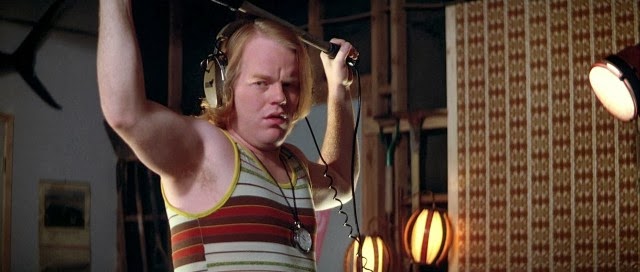
I was first caught off-guard by Hoffman in his small but
crucial role as Scotty J. in Boogie
Nights
. The first appearance of this
awkward, chubby, blindingly pale presence, nervously chewing on a pen as his
belly hung out from under his childishly bright t-shirt, instantly defined this
odd but sympathetic character. When he
comes on to Dirk Diggler, I cringed in anticipation of a violent rebuff.  But Diggler turns him away with a firmness
tempered by kindness, and somehow this makes the scene all the more painful and
awkward. What follows is to me one of
the most memorable moments in contemporary film, when Hoffman’s character
crumbles into self-loathing, repeating “I’m a fucking idiot!” while sobbing
pitiably. Director Paul Thomas Anderson
lets this go on for a disturbingly long time, until Hoffman’s performance
begins to verge on self-parody. I
remember the audience starting to laugh, then going silent, then laughing
again, uncomfortable, not knowing how we were supposed to react. In subsequent years Hoffman would take us to
this unsettling place, over and over again.

Hoffman never gave a bad performance: I can’t imagine any
other actor of whom one can say this without hyperbole. More importantly, though, he never gave a
performance that was anything less than fascinating. Every time he took on a new role, it felt
like he was reinventing the art of acting itself. The characters he created were never people
you could relate to: they were wildly imaginative creations that made you think
about human beings differently. Who else
could have created the heavy-breathing compulsive masturbator of Happiness, and who else could have made
him a (sort of) sympathetic character? It’s that “sort of” that was Hoffman’s
unique gift: all his characters, however minor, filled the screen, but there
was always something elusive, furtive about them. Even the kindly hospice caregiver in Magnolia is imbued with a certain
strangeness, his saintly self-effacement before Jason Robards’ meanness verging
on the masochistic. 

Finding a character’s motivation is central to the practice
of acting, but Hoffman’s unique talent was for hiding that motivation from the
viewer. What drives The Master? Why is Dean
Trumbell so obsessed with taking revenge in Punch
Drunk Love
? How does Capote feel
about Perry Smith? This furtiveness is what makes his performance in Doubt such compelling viewing; doubt, uncertainty, unease was what Hoffman did best. Even at his most brash, as in his brilliant
creation of Freddy in The Talented Mr.
Ripley
, he turns what could have been a caricature of an obnoxious society
boy into a study in psychological complexity. Yet while Hoffman was always unerringly precise, he never seemed
studied. Each new creation seemed
effortless, and that was part of what made his characters so marvelously
strange. 

It will be hard not to think of the tragic circumstances of
his death as we go back and watch the wealth of astonishing performances he
left us, but I hope we can let his characters lead their own, peculiar lives,
without Hoffman’s biography intruding on them. What made Hoffman utterly unique was his imagination, and like the
creations of a great novelist, his characters will continue to lead their unfathomable
lives, a little beyond our reach. Though
it is crushing to realize we will have no new performances from this actor who,
by all signs, was just getting started, it is some consolation to know that he
will continue to surprise us and catch us off-guard, no matter how many times we
see one of his films. 

Jed Mayer is an Associate Professor of English at the State University of New York, New Paltz.

VIDEO ESSAY: Monsters Are a Child’s Best Friend

VIDEO ESSAY: Monsters Are a Child’s Best Friend

Most responsible parents will tell you that using the
television as a surrogate nanny is bad for kids. My own experience as a child
would argue against this.  My parents knew that they couldn’t raise me
alone, and the only reliable guides were creatures of the night.

This first became clear to me on Halloween night, 1971, when
my mom promised my sister and me a very special evening’s entertainment.  As the clock ticked towards 8:00 the lights
were dimmed in our basement rec room, the jack o’lanterns were lit, and the
popcorn was popped.  Though I’d probably
seen programs in black and white before, what soon appeared on the TV screen
would surprise me: these images seemed to come from a different world than the
Technicolor landscapes I had known. 

The sense of drama was heightened by a creepy old man coming
onto a dimly lit theater stage, offering viewers a “friendly warning” about the
frights to come.  As the credits rolled,
my anticipation intensified. Soon the first unforgettable images of James
Whale’s Frankenstein rolled across my
five-year old eyes and plunged me into a realm I have never entirely escaped.

In subsequent years I would revisit this world with greater
frequency. Frankenstein opens with a
marvelously constructed graveyard set. The mourners are surrounded by looming
grey sky, skeletal trees, and morbid gravestone figures.  The clanging church bell and quiet sobs of
the grievers sound as if they were recorded in a dank well.

The looming angles and impossibly long staircases of
Frankenstein’s castle draw from the nightmarish qualities of the
Expressionistic German horror cinema of the 1920s.  When I watched UFA productions like Nosferatu, The Cabinet of Dr. Caligari, and Vampyr years later, I would experience these angular horrors in
their purest form.

What struck me as a child watching these old Universal films
for the first time, and what still amazes me, is the concentrated power of their
characters.  The dead stare, wild arm
movements, and disconcerting forward lurch of Boris Karloff’s Creature have
become iconic. They are easy to imitate, as I would come to learn by donning a
“Frankenstein’s Monster” costume the following year. However, there is nothing
quite as compelling as the real thing. 

In the days before VCR, one could experience the most
arresting images of horror classics repeatedly through grainy photographic
reproductions. Magazines like Famous
Monsters of Filmland
, Creepy, and
Fangoria were the pulps of my youth. Their
garish covers splattered across drugstore and supermarket magazine racks across
suburbia.  The amount of time I spent
gazing at still images of movie monsters dwarfs the time spent watching moving
images on the television screen.

Yet the classic Universal monsters also offered a more
profound attraction: compassion.  The
Monster of Whale’s Frankenstein is a
creature more sinned against than sinning. 
He appeals to children because he is a child himself, his momentary joys
pathetic against a background of perpetual torment and tantrums.  In the famous scene in which he throws a
trusting little girl into the stream moments after tossing daisy petals with
her, his regret and shame is as poignant as the horrific senselessness of the
act.

Monsters, like children, can be cruel. However, the tragic
fate of figures like Frankenstein, the Wolf Man, and King Kong taught me
something essential about human behavior. Where strangeness and difference
tread, the torches and pitchforks aren’t far behind.  Classic monster movies don’t just depict the
monstrous. They convey what it feels like to be monstrous.

Since my first encounter with them on that Halloween night
long ago, monsters have helped me cope with feelings of alienation and anxiety,
teaching me a valuable lesson: friends may come and go, but monsters are
forever.

Jed Mayer is an Associate Professor of English at the State University of New York, New Paltz.

Jeffrey Canino grew up editing video on stacked VCRs. He holds a
Master’s in English Literature from the State University of New York at
New Paltz, and he blogs about horror cinema at his website, Nessun
timore:
http://nessuntimore.com

Kubrick in Reverse: The Earthly Pull of GRAVITY

Kubrick in Reverse: The Earthly Pull of GRAVITY

null

Since its premiere at the Venice Film Festival, Gravity has generated a tremendous
amount of reverential hype, but with its general release the inevitable
critical backlash is beginning to roll—or rather troll—its way across the
web.  Where once critics compared Cuarón’s
film favorably with the work it most resembles, Stanley Kubrick’s 2001: A Space Odyssey, it is now being
criticized for falling short of that earlier film’s ambition.  While Gravity’s
special effects are sufficiently stunning to distract, potentially, from
the film’s intellectual and emotional impact, it is a much smarter film than it
is generally given credit for being.  Far
from being mere imitation or homage, Gravity
offers an ingenious and moving revision and critique of its predecessor, one
that begins in the stars but returns us to our own earthly soil. Cuarón’s
achievement is to make our own planet and the fragile lives it sustains seem as
miraculous as the cosmos that surrounds it.

Both films concern space travel, yet while 2001 reflects the sense of wonder inspired
by the golden era of space travel, Gravity
shows a space program in which the optimism of its early years has been gutted,
along with its budget. Much of the film
takes place in abandoned space stations, interiors clogged with the trash
and cast-off tchotchkes of departed astronauts. The opening scene shows a technical crew repairing
the Hubble telescope above a jaw-dropping view of the Earth, but they seem
almost bored, or, like Dr. Ryan Stone (Sandra Bullock), nauseous, as she
attempts to fight off the effects of zero-g by concentrating on her work, evidently
as dull to her as the scenery might be grand to a novice.

But dullness and nausea quickly give way to terror as the
hurtling debris from an exploded Russian satellite strikes the repair crew, and
it is telling that the film’s greatest threat comes from, essentially,
garbage.  Stone is sent spinning out of
control into space, in a scene clearly derived from that harrowing moment in 2001 when Frank Poole hurtles into the
darkness when his oxygen hose is severed. Yet it is at this early point that Cuarón begins to reverse the direction
of Kubrick’s odyssey: whereas the one surviving astronaut of 2001’s Jupiter crew will set out on a
journey “Beyond the Infinite,” Cuarón will take us into the finite, as Ryan
Stone confronts her own mortality.

Throughout Gravity we
are reminded of how fragile human beings are, how vulnerable our bodies, as we
witness Stone being thrown and pummeled through a series of deadly and dazzling
physics lessons. As in Children of Men, Cuarón’s elaborately
choreographed camera work is used to place us in almost unbearably intimate
proximity to the fear and suffering of his characters. We hear and see Stone’s breathing until it
becomes almost an extension of our own. The awkward bulkiness of her suit only serves to
emphasize the frailty of a body it cannot hope to protect. 

While some of these elements are also present in Kubrick’s 2001, human frailty and the technologies which sustain it are emphasized only to underscore the film’s final
movement towards transcendence. Though
there are a wide range of possible interpretations of 2001’s final image of a gigantic fetus floating in space, it
is clearly meant to represent some kind of rebirth, one in which David Bowman,
and by extension the human race, has moved on to its next, possibly final,
evolutionary stage, a journey that began long ago, when a giant black monolith
taught early hominids how to use tools.  Ryan
Stone, on the other hand, will journey in the opposite direction, towards a
humanness that is less cosmic, more earthly.

Cuarón explicitly references Kubrick’s final image when
Stone finally makes it to the shelter of the International Space Station. There, she frees herself from her burdensome
suit and floats, fetus-like, in the oxygenated atmosphere. The image is mesmerizing, and Kubrick-like in
its use of one-point perspective; yet Cuarón’s fetus image is radically
different in its thematic implications. Whereas Dave Bowman’s transformation signals another, clearly
post-human, phase of evolution, Cuarón emphasizes Stone’s humanity, her
corporeal, embodied self. Cuarón
replaces Kubrick’s image of transcendence with one of vulnerability.

Given the fact that most of Gravity is spent free of the earth’s pull, the title might seem
ironic, at least until we learn more about Stone’s personal history. The absorption in work that marked her first
appearance in the film is in large part an escape from the painful memory of the
death of her young daughter, who fell while playing on the schoolyard. The randomness of this tragic event serves to
underscore the film’s preoccupation with human frailty, as both mother and
daughter find themselves pulled by natural forces beyond their control. Rather than transcend these merely physical
forces, however, Cuarón asks us to accept, and even embrace, them.

In what is, to me, the film’s most powerful scene, Stone,
alone in an abandoned space station and desperate for the sound of another
voice, searches the airwaves for some signal from Earth. At last, out of the static, there emerges a
foreign male voice, apparently drunk, and laughing. Stone seems a little disappointed, until she
hears a dog in the background. Attempting to transcend the language barrier, she makes dog sounds, at
first in the hopes of engaging her human counterpart, but eventually engaging the
nonhuman.  We are pulled into an intimate
close-up as Stone begins to howl, mournfully, along with the dog, shedding
tears that float into the oxygenated air, forming globules like tiny
planets. She has found a place in herself prior to speech, allowing her to give vent to sorrows deeper than human
language.  Like the dog, she is an
embodied, vulnerable creature, and in evolutionary terms they share a common
ancestry, and a common planet.

The film’s final scene will make this evolutionary narrative
even more explicit, but I don’t want to give anything away, since this is a thriller
after all, isn’t it? While the film’s
action sequences have been justly praised as some of the most gripping and
technically accomplished ever filmed, I would argue that they are there
primarily to serve the central human narrative. This narrative is told through minimal dialogue and maximal images, yet
it is as clear and direct as fairy tale or myth. If we compare Cuarón’s space
sequences with Kubrick’s, a clear difference emerges: though the space-ships of
2001 might dance to the rhythms of a
Strauss waltz, they are cold and inhuman, whereas in Gravity the human form is at the center of nearly every shot.  One might compare the presence of CGI technology
in Gravity to that of the HAL
computer in 2001: each might guide
our journey, but after a certain point we need to cut them loose to discover
how our story will turn out.

Jed Mayer is an Associate Professor of English at the State University of New York, New Paltz.

VIDEO ESSAY: My Life as a Chick Flick

VIDEO ESSAY: My Life as a Chick Flick

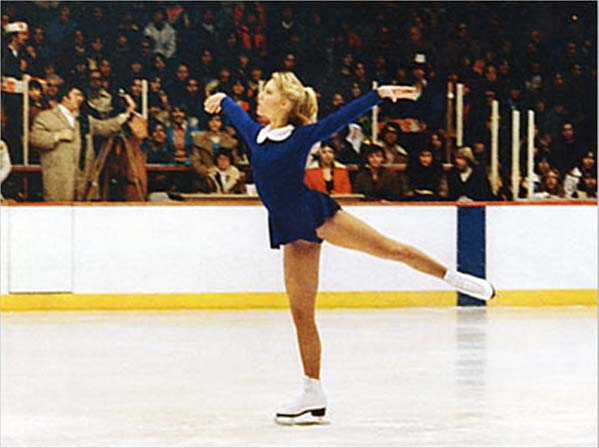
That’s me up there. 
See?  That nine-year-old boy cheering
on Lexie Winston to victory? 

No, actually I can’t see me up there either.  But I was
there, along with hundreds of other lucky people who managed to get spots as
extras on the set of Ice Castles.  Starring a promising unknown, Lynn Holly
Johnson, playing next to Robbie Benson, heartthrob of all the girls at my
school, I’m still not sure why I was so excited when a friend gave me a pass to
be on the set of this movie.  

Growing up in Minnesota during the 70s, one didn’t have too
many opportunities to rub shoulders with fame, so I guess I was excited at the
possibility of maybe seeing myself in a movie filmed in my own home state.  Like Lexie Winston, I was a small town kid
hungry for a taste of fame.

When the film was finally released several months later, I
was a little disappointed not to see my face up there in the crowd.  But something else happened to me while I was
watching Ice Castles, the kind of
movie I wouldn’t have been caught dead seeing under normal circumstances.  As I sat there, watching Lexie’s triumph
against adversity, as she wins a regional competition despite being blind, I
started to get a strange feeling inside me. 
By the time she started to trip over the roses thrown by her adoring
fans, thus revealing her secret disability to the public, something happened to
me that hadn’t happened since I was a child watching Dorothy trapped by the Wicked
Witch: I found myself crying at a movie. 

At some point during the picture I had come to identify with
this plucky gal from the Midwest, and later came to realize, hey, maybe I did
see a little of myself in that movie. 
Maybe, just maybe, a kid who watched only horror and science fiction
movies had learned to watch movies in a different way.  Maybe, like Lexie, I’d learned to see through
the eyes of love.

As I secretly wiped away my tears on a napkin greasy with
popcorn butter, I was anxious to forget about the incident, and I might have,
until a few weeks later, when, bored on a Sunday night, I decided to watch the
NBC movie of the week with the rest of the family.  The feature turned out to be The Other Side of the Mountain, based on
the true story of ski racing champion Jill Kinmont, who suffers a terrible
accident during a race and becomes a quadriplegic.  As soon as I heard Olivia Newton John singing
the maudlin theme song I should have known what I was getting myself into, but
some part of me couldn’t turn away.  Not
only was I drawn in to the story of Kinmont’s heroic struggle against
adversity, but I also realized some part of me wanted to be made to cry.  Some part of me was tired of trying to act
like the guys I hung out with at school. 
Something in these movies allowed me to be a different kind of viewer
than I was used to being.  When I watched
these films, I could be one of the girls.

Yeah, I know it’s sexist to associate getting emotional with
being female, but that’s the way Hollywood tends to divvy up its demographics,
and the movies I had been most obsessed with before what I have come to call “my
Ice Castles experience” didn’t offer
a lot of emotional range.  But the more I
watched these female-centered stories, the more I came to realize it wasn’t
just tears I was after.  I wanted to hang
out with a different crowd.  Bored with
my male friends, I wanted to see how the other half lived.  And the only place I felt I could be one of
the girls was at the movies.

I would have given anything to have friends like this.  When my friends hung out together, we
pretended we weren’t really having fun, we didn’t care too much about each
other, and that there wasn’t anything worth talking about besides music and
movies.  But I bet Annabeth Gish would
have understood my secret hopes and dreams. 
And I’m sure Lili Taylor would have accepted all my adolescent sexual
hangups, and maybe have had some good advice for me.  And if only I could work at a place like
Mystic Pizza, with a tough but lovable owner who would act as a kind of
surrogate mother…  In my naïve mind, this
is what I thought life for women was like, and I wanted to be a part of
it.  And for two hours, I could.

In the movie Satisfaction
I found the best of all possible worlds, female camaraderie and rocking
out, kicking ass, taking names, and then having a good cry together. 

What more could anyone ask for? 

There’s even a male character in the film who gets to live
out my dream, allowed into the secret world of women! 

He says it’s his own private hell, but I knew what he really
meant: it was heaven.

These kinds of films are derisively referred to as
chick-flicks, but for many viewers they hold a significance that exceeds this
condescending marketing niche.  People
who have favorite movies in common, especially those we wouldn’t admit to just
anyone, are like members of a secret community, connected despite differences
of age, gender, or taste.  And what
happens when we start looking outside of the confines of our gender roles?

Even though the stories of many so-called chick flicks tend
to be conservative—I mean, most of these movies end with marriage—the experience
of watching them might be seen as more transgressive.

Though you might not admit to it in the presence of certain
people, I bet you secretly love Dirty Dancing.  And once you get past the inane title, it’s
actually a pretty good story.  In it’s
own daffy way, it’s also quietly subversive: it’s hard to imagine the Hollywood
of today portraying a girl helping someone get an abortion in a positive
light.  By establishing a strong sense of
identification between the viewer and the character of Baby, the film takes us
through a narrative rite of passage in which we move from being Daddy’s innocent
little girl to an abortion facilitator and a dirty dancer.  And at the end, she makes everyone dance
along. 

Chick flick as agit prop? 
Maybe not, but for a girl watching this film it offers a rather racy
path to maturity.  And what about when a boy watches Dirty Dancing
Speaking for myself, I certainly don’t identify with Patrick Swayze: I
connect with Baby.  And this kind
of connection can be liberating. 
At least, it certainly has been for me.  I can’t imagine my life without
chick flicks.  Just don’t tell anyone I love this movie,
alright?

Jed Mayer is an Associate Professor of English at the State University of New York, New Paltz.

Jeffrey Canino grew up editing video on stacked VCRs. He holds a
Master’s in English Literature from the State University of New York at
New Paltz, and he blogs about horror cinema at his website, Nessun
timore:
http://nessuntimore.com

INSIDIOUS, CHAPTER 2: The Haunting of the American Male

INSIDIOUS, CHAPTER 2: The Haunting of the American Male

null

Warning: This review contains the mildest of spoilers, probably nothing you couldn’t guess for yourself.

The Insidious
films take place in an America haunted by faded dreams of a prosperity provided
by a loved and respected father.  In
James Wan’s vision this patriarchal figure has been replaced by a maniacal
presence brooding in the dark corners of a house where women are the strongest
presence and men have become peripheral. Wan’s latest film (his second this
summer) is too filled with tiresome exposition and brazen shock tactics to be
haunting, but like many horror films, good, bad, or indifferent, it is
certainly haunted.  Set in starkly
isolated locations, where it is always dusk or nighttime, with characters
slouching towards doom at dream-like pace, horror films speak as much through
their conventions as through the stories they tell.  Like its predecessor, this second chapter of
the Insidious franchise tells the
story of a father and son who have the ability to project their sleeping selves
into a ghostly realm called “The Further.” 
While this imaginatively-realized plane of the undead has its
fascinations, the world in which the Dalton family leads its waking life seems
no less lifeless and every bit as haunted as the spirit world they fear.

Like many American popular discourses, the film is
preoccupied with anxieties about masculinity. 
The story is haunted by the rise of women as chief breadwinners in the
household, a demographic shift that has somehow surprised and disturbed cable
news pundits from across the political spectrum.  At times male anxieties seem so pronounced in
the film as to suggest a horror film adaptation of Susan Faludi’s Stiffed: The Betrayal of the American Male,
which addresses the rise of “Angry White Male” politics in the face of rising
unemployment and perceived male disenfranchisement.  James Patrick Wilson turns out to be an ideal
actor to convey this brooding male anger, barely hidden behind his unnaturally
frozen, deceptively boyish good looks. 
One of the chief pleasures in watching the first Insidious film was trying to decide whether Josh Lambert’s behavior
was the result of unknown forces or simply run-of-the-mill dickishness.  As he grows increasingly unconcerned about
the plight of his family, he spends more and more time at work; it is only
later in that film that we discover he is haunted by a secret.

Chapter 2 begins
by delving further into the secret of Josh’s behavior, as we revisit his
haunted childhood.  In one especially
striking scene, an old videotape filmed by a paranormal investigator when Josh
was a child shows a brooding presence hovering over the boy’s shoulder, a
presence which turns out, on closer scrutiny, to be his adult self.  The therapeutic solution to his disturbed
childhood is a novel one for a culture otherwise obsessed with recovering and
publicly airing repressed traumas: Josh is hypnotized into forgetting.  While repression is not generally encouraged
by therapists, it is certainly a common way of dealing with complex emotional
problems, particularly among men. 

Not surprisingly, Josh’s repressed trauma does what every
psychologist from Freud onward has warned us it would do: it returns, and with
a vengeance.  While the previous film
focused primarily on Josh’s son Dalton, who shares his father’s ability to
travel between the lands of the living and the dead, Chapter 2 centers on the father, a figure who has become a haunted
simulacrum of the American male.  We soon
learn that Josh is haunted, not just by his past traumas, but also by a
maniacal, sexually ambiguous presence. 
While the plot of the film centers on the problem of how to get the real
Dad back, the most frightening scenes, and those that linger longest in the
mind, are those where Josh is both frightening and fatherly, paternal and
possessed.  The story becomes a kind of male
version of The Stepford Wives, in
which lifeless replacements can be substituted for actual people because their
behavior is only a slight but disturbing exaggeration of the gender characteristics
of their originals.  Like many American
fathers, Josh doesn’t listen to his wife, gives meaningless orders he expects
everyone to follow, and stares blankly at his children. He hides his lack of
feeling behind a fixed grin.  It seems a
surprisingly short step from this sadly familiar behavior to the more
disturbing mayhem of the film’s latter half.

So what’s wrong with Dad, exactly?  In a revealing moment, the film cuts suddenly
from the story of the attempted self-castration and suicide of a patient
overseen by Josh’s mother to a shot of Josh pulling a healthy tooth out of the
back of his own mouth, itself a kind of symbolic self-castration.  Masculinity is deeply suspect in Wan’s world,
as men become increasingly peripheral, fading away before the stronger presence
of women.  In the first film, Dalton is
saved as much through the efforts of medium Elise Rainier (Lyn Shae) as by his
devoted father.  That film ended with her
mysterious death, possibly at the hands of Josh himself.  In Chapter
2
he is under suspicion for the crime, the motive for which is obscure, but
which seems related to his increasingly misogynistic behavior, suggesting
resentment over a woman taking control. 
In both films the other psychic investigators are a pair of inept male
nerds, whose uncertain masculinity is marked by a rather tasteless moment of
homophobia in the sequel.  An older
psychic investigator misreads the signs he receives from the beyond, completing
the picture of a world where men are largely at the periphery.

Taking up the slack are Josh’s wife and mother.  As in the first film, Rose Byrne’s
performance as suspicious and frightened wife Renai is utterly persuasive. While
she is often made to succumb to stereotypically female screaming fits, her best
moments occur when she scrutinizes her husband’s appearance and behavior,
trying to figure out what’s happened to the man she thought she knew. Barbara
Hershey transforms the taciturn mother-figure she played in the first film into
a more confident and assured character who helps her daughter-in-law reclaim
her family.  When the male psychic
investigators prove too weak for the challenges thrown out by “The Further,”
the ghostly presence of Elise Rainier emerges to save their skins.  This is a woman’s world in which the presence
of men is annoying at best, insidious at worst.

The least believable yet most compelling quality in Wan’s
films is a sense of haunted isolation from the living world.  The characters live in impossibly large
houses that are completely detached, both socially and physically, from their
communities. The characters are rarely seen engaging in conventional domestic
activities, like eating together or playing board games.  They just wander around their sumptuous homes,
waiting for the next intrusion from the beyond. 
Their world is a ghostly remnant of the American dream, one grown
insubstantial as much through economic recession as through demographic
shift.   Insidious, Chapter 2 ends like its predecessor, with a hypnosis
session in which Josh is made to forget the horrors he experienced, ensuring
that there will be another sequel, and that Dad will remain as cold and empty
as his enormous house.

Jed Mayer is an Associate Professor of English at the State University of New York, New Paltz.
Kill the Rich: YOU’RE NEXT and the Discreet Charms of the One Percent

Kill the Rich: YOU’RE NEXT and the Discreet Charms of the One Percent

nullFor a culture obsessed with maintaining control—over our
minds, our bodies, our borders, and our relationships—horror films serve as a
necessary reminder of the futility of such endeavors. Horror is all about disruption, deprivation,
penetration, dislocation and all manner of mess, chaos and spillage.  And a horror film is most frightening when it
breaks through the fragile borders that protect what is most precious to
us.  Adam Wingard’s disturbing new film
makes the most of such fears by taking up the popular thriller scenario of the
home invasion.  And while You’re Next is genuinely frightening,
ranking right up there with other recent films that excel in this mode, such as
The Strangers and Them, it also offers a sharply satirical
take on a distinctively American sense of privilege and entitlement.  Embedding his fairly traditional sequential
homicide plot in a dysfunctional family drama, Wingard gives us a taste of what
Last House on the Left might have
looked like if it were directed by Luis Bunuel instead of Wes Craven, and in
the process re-politicizes a genre too often exploited for mindless thrills.

The film concerns itself with the reunion of a very wealthy family
celebrating the parents’ anniversary.  But the darker underpinnings are
set by its alarming introduction. The wealth of the Davison family is in inverse proportion to its
sense of community and compassion, as we see when mom and
dad pass a neighbor’s home not far from their own country estate. Noticing a car in the driveway, they remark
that no one has occupied it in quite a while, and Paul (Rob Moran) remarks,
“It’ll be kind of nice having neighbors – we’re so isolated out here.” Struck
by the peculiar novelty of actually living near someone else, wife Aubrey
(Barbara Crampton) eyes him uncertainly and replies, “Um, maybe.”

This sense of narcissistic detachment permeates the family,
and as their reunion gets underway a palpable chill settles on their enormous
country estate that has little to do with the weather. Beyond the usual sibling rivalry, family
relations are strained by a father who seems bored even by his children’s
achievements, while at the same time straining after an illusion of family
warmth and camaraderie. As the house
fills with guests, Aubrey seems increasingly out to lunch, a classic portrayal of a trophy
wife who has ceded her status as an individual. The significant others of the younger family
members are regarded as somewhat annoying curiosities by the other Davisons, as
if they were stray pets who haven’t been entirely housebroken. Significantly, the daughter’s partner is an
underground documentary filmmaker played by one of independent horror’s leading
figures, Ti West. The family is deeply
perplexed by the question of what would motivate anyone to direct low-budget
films, and the oldest brother encourages him instead to direct advertisements,
which he deems the twenty-first century’s premier art form.

Suffice it to say that by the time the masked invaders begin to pile up bodies,
no tears will be shed (at least by the audience). Wingard demonstrates his mastery of the genre
by knocking his annoying characters off in a disturbing, and often amusing,
variety of ways. Many of the murder
scenes verge on elaborate slapstick routines, at times suggestive of Rube
Goldberg stunts designed for the Marquis de Sade. Critics have praised the film’s deft
management of the fine line between horror and humor, and while it’s true that
this series of killings is a genuinely funny and frightening tour de force, the
film’s real appeal is in the pointed nature of its satire.

Early in the film, as Crispian Davison (A.J Bowen) and his
girlfriend Erin (Sharni Vinson) are driving up to the reunion, she asks him how
his family became so wealthy. When he
answers that his father used to work for a Halliburton-like firm of defense
contractors, he jokingly asks, “Are you sure you’re okay having dinner with
fascists?” Military concessions aren’t
the only thing the Davison paterfamilias has been contracting out: as the
siblings discuss the slow progress of their family estate’s restoration, they
note that dad bought the place as a kind of retirement project, but has lazily hired
other people to work on it rather than restore it himself. As the film progresses, certain members of
the family are shown to have a surprising connection with their killers, and
the film comes to serve as an extended meditation on the connections that exist
between members of an economic and social community, and the impossibility of
compartmentalizing them. The Davisons
would like to believe that they have achieved a pristine sense of isolation from the society they profit from, but their financial ties bind them to a
population on whom they would prefer to turn their backs.

At the other end of the social spectrum is the family
background of Crispian’s girlfriend, Erin. As the dwindling family members hunker down in their embattled home, she
reveals a surprising efficiency at defense tactics, which she confesses having
learned during a peculiar childhood raised in a militia compound in the
Australian outback. Her father was a
survivalist who believed the world’s problems of overpopulation, food and water
shortages would result in global anarchy, and devoted his life to ensuring his
and his family’s continuation. Yet while
Erin’s and Crispian’s families may come from different sides of the class
divide, their social values are surprisingly similar, and reflect some of the
dominant tendencies in American culture. Gun-toting survivalists in their militia compounds and retired
millionaires sequestered behind their capital gains share a common vision of
freedom and independence at any cost, and Wingard’s film effectively shows what
happens when this twisted version of the American dream goes horribly wrong.

While Erin is certainly the film’s most dynamic character
and the closest thing the film has to a heroine, she differs from the
familiar “last girl” figure of traditional horror films.  Unlike the resourceful Jamie Lee Curtis in Halloween or Texas Chainsaw Massacre survivor Sally Hardesty, Erin goes beyond
merely getting out of the nightmare in which she finds herself: she becomes an
essential part of that nightmare, engaging in brutal overkills that constitute some
of the film’s most uncomfortable viewing. 
In one especially complicated encounter she hesitates before the kill,
before dismissively asking, “Why the fuck not?” as she finishes the bloody
deed. Survivalist Erin is no worse than
the selfish Davisons and their ruthless assailants, but it would be quite a
stretch to suggest that she offers an alternative moral center to the violent
maelstrom in which she finds herself.

In its by turns disturbing and hilarious portrayal of a
privileged family’s reunion gone horribly wrong, You’re Next gives us what is perhaps this year’s most trenchant commentary
on an America increasingly riddled by narcissism and greed.  That it chooses to center its satire on a
family gathering points up its difference from the summer’s other major horror
offerings, The Conjuring and Insidious 2, both directed by James Wan. Where Wan gives us a disappointingly
traditional vision of the home as locus of love and solidarity, Wingard reminds
us that houses are designed as much to keep others out as to shelter those
within. Wingard’s film takes its title
from the bloody words scrawled on the walls of the Davison’s home by its
invaders, and these words might be taken as a dark reminder of our common
lot. You might think you’ve landed
yourself a comfortable position and a secure future, but as horror films remind
us, it may be only a matter of time until you’re next.

Jed Mayer is an Associate Professor of English at the State University of New York, New Paltz.

The Summer of the Sharknado

The Summer of the Sharknado

null

Remember when summer blockbusters used to be fun? When Arnold Schwarzenegger absurdly
swaggered through explosions in his shades and leather jacket? When Michael J.
Fox implausibly spun through time in his souped-up Delorean? When Michael
Keaton’s Batman actually spoke like he came out of a comic book rather than a
Dostoevsky novel? Whatever happened to such irreverent, charismatic figures and
the movies that brought them to momentary, flickering life? This year we were subjected to one bloated
action film after another, all of which treated their subject matter, however
ridiculous—whether zombie apocalypse, giant robots defending the earth against
inter-dimensional monsters, or a post-apocalyptic world exploited and abandoned
by the super-rich—with the kind of ponderous gravitas usually accorded to
European art films. Who can save our
popcorn fare from this inflated sense of self-importance?  Forget Wolverine, Iron Man, and Thor: this is
a job for Sharknado!

In early July, when the heat wave was hitting its peak in
many parts of the country, and even the air-conditioned Cineplex failed to
provide an escape from the enervating fug of 2013, the Syfy network broke a
years-long record of consistently bad entertainment with a deliciously absurd
ninety-minute escapade with the most irresistible title in recent memory. While
the network has tried several times to present campy, so-bad-they’re-good B-movies
for a contemporary mass audience (Dinocroc,
Sharktopus, Frankenfish), none of them has managed to find that essential
balance between naïve earnestness and shameless exploitation that made those
grindhouse classics of the 70s so bloody wonderful. As Nigel Tuffnel said, there’s such a fine
line between stupid and clever.  But
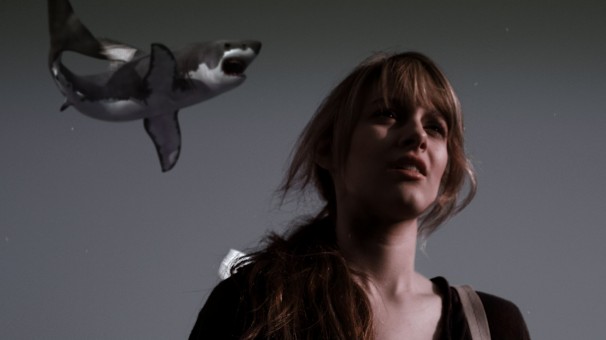
somehow Sharknado happened to find
this line and balance on it, precariously and hilariously. After airing to luke-warm ratings on July 11,
the movie sparked off a flurry of Twitter activity, generating smirking but
admiring tweets from such surprising celebrities as Mia Farrow, Wil Wheaton,
and Corey Monteith (some of the last he posted before passing away). Syfy aired it twice more in July, nearly
doubling the number of viewers of its original airing each time, and produced a
limited theatrical release, which sold out seats in the select cities where it
showed. Other than a great title, what
could make such an inauspicious production into such a phenomenon?

First of all, it’s actually really funny, but not only in
the ways one might expect. Sharknado offers horror-comedy lovers a
grand guignol of gore as herds of sharks are summarily blown up, gunned down,
stabbed with pool cues, hit with bar stools, and chain-sawed from the inside
out. This should come as no surprise, even if it is fun to see how they’re
going to top themselves in violent absurdity. What did surprise me is that I actually started to care about these
ridiculous stock characters, just a tiny bit. Not enough that I’d give up my
place in the check out line to one of them if they had only a few groceries and
I had a full cart, but, if I found myself stuck next to one of them on an
airplane, I might actually listen to that person with more than mere
politeness. This is how the story gets
us to let our guard down long enough to get taken in by the punch-lines. In an absurd
reprise of Quint’s speech in Jaws, as
he recounts the disaster of the S.S. Indianapolis, waitress Nova tells young
pilot Matt Shepherd about how she got the scar on her leg, a mystery apparently
too painful to reveal to the other characters who’d asked about it. During a childhood fishing expedition that
ended in disaster, she says, “Six people went into the water, and one little
girl came out. They took my
grandfather. That’s why I hate sharks.”
Though this last line has been often quoted and Tweeted, my favorite comes
after, when Matt eagerly says: “Now I really hate sharks too!”

Beyond these obviously appealing qualities, however, Sharknado has somehow managed to capture
the mood of the moment by presenting us with a disaster we don’t really have to
care about. In a summer of unprecedented
heat, and the by-now-anticipated escalating number of wildfires, droughts, and floods,
as we anticipate what is expected to be a horrendous hurricane season, the new
normal has become just that, and talking about the climatic apocalypse has
become about as boring as, well, talking about the weather.  In his big speech on climate change,
President Obama made the rather banal observation that “all weather events are
affected by it—more extreme droughts, floods, wildfires and hurricanes,” adding
that “the question is not whether we need to act. The question is whether we
will have the courage to act before it’s too late.” The president in The Day After Tomorrow said the same thing about a decade ago. And even such an inauspicious B-movie as Soylent Green offered a more urgent
warning about climate change, and that was forty years ago! I’m not saying it’s
too late to act, but it’s certainly too late to raise the question of whether
we will have the courage to act. Thankfully, Sharknado dispenses
with such platitudes by presenting us with a world surprisingly like our own,
one in which absurdly bad things happen, a lot of guns are fired, and beautiful
people find true love and hug. 

This isn’t to say that Sharknado
is cynical, certainly not as cynical as, say, Elysium, a film that presents a stark vision of a ruined world
abandoned to the 99% only to conclude by suggesting we could right the world’s
wrongs with better health care for everyone. Sharknado doesn’t pretend to
offer solutions, but it does manage to capture, or at least reflect, the
weirdness and stupidity of the new millennium better than anything else I’ve
seen this summer. Some of the most effective scenes are those set in Beverly
Hills, where we see torrents of water flooding into wealthy homes and
inundating the manicured landscapes of the affluent. Adding shark fins to such familiar disaster
scenarios seems less gratuitousness than commentary. And while it’s glorious, gory fun watching
the heroes and heroines of the film blow away these sharks with their arsenals,
Sharknado never demeans its viewers
by implying that natural disasters can be overcome with “courage.” The news commentators reporting on the
hurricane and waterspouts threatening California don’t hesitate to state
clearly that this extreme weather is a direct result of global warming, showing
a responsibility in reporting that may be the film’s most implausible element.

And for the record, Sharknado
does take the time to address an issue that has otherwise been given little
attention in the mainstream media. The
opening scene depicts an unscrupulous dealer in shark fins selling his wares to
an Asian buyer to use in shark fin soup. As the camera surveys heaps of dead sharks on the deck of the ship where
the deal is taking place, the foreman barks out “toss ‘em and bag ‘em!,” an
honest reflection of how this horrific practice is carried out. It’s hard to imagine an industry more
wasteful or cruel than the shark fin trade, in which these amazing animals are
caught for only one small part of their anatomy. After the fin is cut off, the shark is tossed
out of the boat to slowly bleed to death as it sinks to the bottom of the
ocean. Despite protests, the trade is so
widespread that last year over one hundred million sharks were killed in this
way (that’s over eleven thousand an hour). Number of humans killed by sharks? 12. The shark dealer in Sharknado enunciates
what might well count as the film’s hidden moral: “You don’t have to be afraid
of the sharks. They are the ones who
should be afraid of us.” You won’t hear
this on Shark Week. 

Sometimes the only reliable measure of the absurdity of our
times comes from absurd films. This is a
quality that the earliest spin-offs of Jaws
had in abundance. Piranha (1978) is about a
military-testing operation gone horribly wrong, when a super-breed of killer
fish designed for use against the North Vietnamese is set loose in domestic
waters. Barracuda (1978) and Prophecy
(1979) are about animals made into monsters by toxic chemical being dumped
in the water. Tentacles (1978) is about a giant octopus driven to a killer
rampage by intrusive underwater experiments carried out by a local developer;
one of the characters describes the eight-armed antagonist in terms applicable
to all these silly but socially-conscious B-movies: “It’s an animal, disturbed
by man’s stupidity.” Not a bad tag-line
for the Sharknado sequel.

Jed Mayer is an Associate Professor of English at the State University of New York, New Paltz.

THE CONJURING and the Specter of the Seventies

THE CONJURING and the Specter of the Seventies

nullEditor’s Note: This piece contains statements that could, loosely, be construed as spoilers, but honestly, they’re phrased in a way that won’t make the film any less scary, so let’s all just relax, okay? Read the piece, which is, after all, about slightly more elevated things than what’s BOO! scary in the film.

James Wan’s The
Conjuring
is that rare thing: a contemporary horror film that doesn’t
suck.  Critics and audiences seem to
agree on this point, and I hope that the film’s minimal use of digital effects
and focus on good acting, effective story-telling, and dramatic mood-setting
will be imitated by other makers of horror films.  Such qualities once stood, not as the
exception, but as the rule in horror film production, and Wan’s film pays
homage to the genre’s great era, the 1970s. 
Set in 1971, The Conjuring is
haunted, not only by the demon tormenting the Perron family in their rural Rhode
Island home, but by the specter of an era that disturbingly resembles our own.

Rising unemployment and inflation, soaring gas prices, oil
spills in the Gulf of Mexico, nuclear accidents, rising gun violence,
terrorism, and divisive party politics: these constituted daily life in the
1970s as they do today.  Yet unlike
today, the films of the era reflected these grim experiences, offering
audiences a chance to see their fears and anxieties brought to gritty life on
the screen.  Certainly the period had its
share of escapist films, but unlike today, these did not dominate the
Cineplex.  The period was also less
attached to that most clichéd of plot devices: the happy ending.  But while The
Conjuring
succumbs to this temptation somewhat, it remains haunted by the
dark forces of the past the film has unleashed.

Tellingly, these dark forces reside in an archive kept by
the paranormal investigators Ed and Lorraine Warren.  Based on the actual husband and wife team who
investigated over 10,000 hauntings, including the Amityville Horror, they are
marvelously portrayed by Patrick Wilson and Vera Farmiga, who accurately convey
the zealous, sober earnestness that attended unexplained phenomena in the
70s.  As a kid I devoured the seemingly
endless documentaries produced for theatrical release by studios like Sunn
Classic Pictures, responsible for such “classic pictures” as The Outer Space Connection, The Mysterious Monsters, and The Bermuda Triangle.  It was a great time to grow up, when there
seemed to be a whole lot of adults who believed in the same fairy tales you
did.  In The Conjuring, the Warrens look like 70s televangelists, but
instead of a desperate studio audience, they preach to audiences of college
students, who listen to their lectures with rapt attention, and all
simultaneously raise their hands for questions at the end. 

null

The real-life Warrens continue to maintain an occult museum
in the back of their Connecticut home. Its portrayal in The Conjuring remains
one of the film’s more potent images, part Ray Bradbury-esque curio emporium,
part small town museum.  All of the
objects stored there are cursed or possessed by spirits, and the Warrens keep
them there for the rest of the world’s protection.  The most terrifying of these is a grotesque
doll (is there any other kind in horror films?) named Annabelle, whose story
serves as a kind of prelude to the Perron family haunting.  Her sinister grin and lifeless features serve
as reference points to a host of haunted manikins, from the Zuni warrior doll hunting Karen Black in Trilogy of Terror (1975),
to Anthony Hopkins’ malign
ventriloquist’s dummy in Magic (1978), to the evil clown in Poltergeist (1982), not to mention Chucky and his seemingly endless
(and, frankly, not very scary) brood from the Child’s Play franchise.  Annabelle
serves as an emblem of the film, which itself is a kind of archive of past horrors
not entirely put to rest.

The Conjuring is
very much a period piece.  Polyester and
plaid play a significant role in the costuming, The Brady Bunch plays on the television, and the film texture is
slightly grainy, with the muted palette and natural lighting distinctive to seventies
cinema.  As such, it takes its place as
part of a growing list of recent films set in the period, including Zodiac, No Country for Old Men, Super
8
, Argo, and key sections of Cloud Atlas. These films project a
common picture of the 1970s, as a decade,rife with random violence, Byzantine
politics, and unexplained phenomena: in other words, the weird decade. 

This is a truer picture than the one conveyed by the
period’s better-known denomination, the “me decade.”  It has always seemed to me a gross injustice
that the period in which women’s and gay rights issues emerged into political
and social life, along with widespread recognition of gross disparities in the
American economy and the way those disparities served to broaden racial and
class differences, would be given such a selfish sobriquet.  That name would better be given to the decade
that followed, when right wing leaders like Reagan, Bush, and Thatcher pandered
to business interests, fostering a culture based on greed rather than
community.  In their various ways,
contemporary films that return to the seventies share a mutual preoccupation
with the darker underpinnings of the period, and how it might serve as a guide
to our own.  We are left with the legacy
of the eighties’ political and economic injustices—renewed and deepened in the
second Bush era—but we seem to have lost the shared sense of anger, frustration
and fear that characterized the seventies, and that was reflected in the era’s
films.

null

And yet The Conjuring falls
short of fully realizing such possibilities. 
The moral of the story ultimately rests on a conservative affirmation of
the power of religion and of family.  The
Warrens marshal the same Christian forces that defeated the demon haunting
Linda Blair in The Exorcist (1973),
enhanced by the powerful maternal feelings of the demon’s host, Carolyn
Perron.  This triumph of Christian family
values is buttressed by Lili Taylor’s portrayal of Carolyn as a bland, almost
childish mother of five (!), who blithely accepts her husband’s long periods of
absence on his trucking runs, smilingly managing the large household
alone.  This is a family portrait rather
out-of-sync with the age of Gloria Steinem, Maude,
and the E.R.A. While Taylor’s Stepford
Wives
-like behavior lends an effective character arc for her later
possession—and there is a certain subversive tension in her being possessed by
a witch who killed her own child—the blithe ending seems to foreclose on these
more intriguing possibilities, effectively replacing the values of the
seventies with those of the eighties and the Moral Majority.

But in the last scene of the film, we return to the Warrens’
occult museum, where Ed places a haunted music box from which all of the occult
mayhem emerged.  The sinister music
box—an abiding horror trope used to haunting effect in such films as The Innocents, Deep Red, and The Ring—as
if its melody weren’t scary enough, contains a pop-up clown, possible sibling
to Annabelle grinning evilly in the museum’s corner, effigy of the girl doll
who fought back.  This music box contains
a mirror that might serve as another emblem for The Conjuring. When we look in it we see a distorted reflection of
what’s behind us.  Wan’s film conjures
the sense of unease and violence that permeates our memories of the seventies
and seemingly puts them to rest.  But the
grinning doll doesn’t look like she wants to stay put.

Jed Mayer is an Associate Professor of English at the State University of New York, New Paltz.

VIDEO ESSAY: Siding with the Victim, Part 3: We Are All Meat

VIDEO ESSAY: Siding with the Victim, Part 3: We Are All Meat

Warning: This video contains shocking imagery, and so the faint of heart might want to gird themselves before Pressing Play.

[Complete script follows:]

We like to think we are in control, of our lives, of our
bodies, of our futures. If we work hard
and manage our lives, everything will turn out fine. 

We hold these truths to be self-evident . . . until we lose
that fragile sense of control.

Illness, injury, the loss of a loved one: all of us have
experienced moments when we realize we have no control over things, when we are
powerless.

That’s an uncomfortable place to be. But these experiences teach us that just
because we’re human, that doesn’t mean we’re special.

Art critic John Berger has said: “Animals are born, are
sentient, and are mortal. In these
things they resemble man.” In other
words, our most basic selves are animal. The horror movie reveals this, by showing us our mortality, stripping
away our arrogance.

Trapped. Tortured. Hunted. Slaughtered. This is the way of life, and death, for most animals. We’d like to forget this, but the horror film
never forgets. It reminds us that, like the over 50 billion animals killed
every year for human consumption, in the end, we are all meat.

The images of violence so abundant in modern horror movies
may seem prurient, mindless, sadistic. But
they also show us what we would otherwise turn away from: namely, the raw
material fact of our physical bodies, which, at the end of the day, are only so
much meat.

Most of us believe that human beings are more than this, but
horror movies are not so sure.

Plot and dialogue are crucial to a great horror film, but
when it comes time to immerse the audience in fear, the only sound we hear is
screaming. 

And sometimes a string section. 

To be without a voice is to be put in the place of animals:
speechless.

No film better captures this feeling of brute powerlessness
than The Texas Chainsaw Massacre. When a band of twenty-somethings pick up a
hitcher in rural Texas, he tells them about an old slaughterhouse that has been
closed down. He tells them his family’s
always been in meat, a grotesque line that cuts several ways: First, for
generations this community was sustained by the local meat industry; Second,
like the rest of the community, the hitcher and his family are no more
important to big agriculture than the animals they slaughtered; and Third,
driven to madness, they now make meat out of anything that crosses their path,
animal or human, male or female.

This scene is arguably the most terrifying ever filmed. It exemplifies
the moral force of siding with the victim. Here we see a woman stripped of every last vestige of her humanity, her
very fear made an object of derision by her monstrous hosts.

Most striking is the camera’s concentration on her eyes. A
baby’s eyes tell a mother what it needs, what it feels; in a dog’s or cat’s
eyes we can tell if it is happy or sad, scared or confident. Eyes transcend the species barrier, but,
unfortunately, that isn’t going to help this victim.

And this is why horror movies bring us to these horrifying
places: so that we can’t ignore the appeal in a victim’s eyes. In horror we
bear witness to suffering. We recognize ourselves in the victims, and the
victims in ourselves.

This family has always been in meat. For the film’s most frightening antagonist,
known as Leatherface, this is literally true. He wears a mask made from the skin from a human victim.  He is one of the most terrifying creations in
the history of cinema. Yet in this scene, unexpectedly, we feel a grudging
sense of sympathy with a monster we have already witnessed ruthlessly murdering
several hapless twenty-somethings. He is
like a guilty child, uncomfortable in his own skin. Underneath that mask we can imagine a being
stalled at a rudimentary stage of development, and made evil. But we can also recognize,
perhaps even relate to, his anguish.

Our protagonist has clearly been wounded by her experiences,
inside and out, and she can only laugh maniacally as the truck moves away at
the growing distance between herself and her erstwhile attacker. This distance, though, is only an illusion. Her
attacker’s dance of demented victory suggests a kinship between their warped
psychological states, and a reminder that monsters and victims, predator and
prey, are often two sides of the same being.


Ken Cancelosi is the Publisher and Co-Founder of Press Play.

Jed Mayer is an Associate Professor of English at the State University of New York, New Paltz.
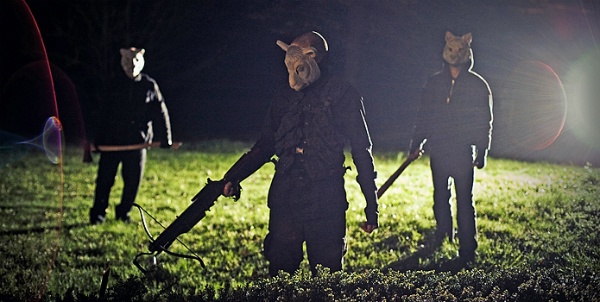
VIDEO ESSAY: Horror Films and the War on Women (Siding with the Victim, Part 2)

VIDEO ESSAY: Horror Films and the War on Women (Siding with the Victim, Part 2)

[Original script follows:]

Everyone loves a winner. 
This is why most films have happy endings.

Such films seem empowering, especially when the characters
have to struggle through difficulties before rising triumphant.

Although we all know these are fantasies, they also mirror
our real life aspirations.

In the 1970s women demonstrated in the hopes of realizing
their aspirations to be treated equally.

But the most striking films from that decade tell a
different story.

There are two sides to any social movement, tales of victory
and tales of defeat. 

Horror movies tell us tales of defeat, usually involving
women.  Most people would say that horror
films are generally anti-feminist, even misogynistic.

But the stories of victims are just as important as those of
victors. The war on women has been going
on for many years, and the stories of its victims still need to be told.

Before the modern horror film, the melodrama told such
stories to women. Most melodramas follow the lives of people who encounter
great misfortunes. In the golden age of Hollywood, melodramas flourished. Such
films came to be called “women’s pictures.” Back then, women were expected to
be seen and not heard. There was no open forum where women’s issues could be
discussed. But women could connect with others through the medium of film. They
saw their own stories reflected in those of characters played by their favorite
stars. These lives were generally filled with suffering, and this suffering was
largely caused by men.

The modern horror movie takes this scenario to an
extreme.  This is the melodrama’s dark
unconscious.  Victimization is taken to
an extreme, and this makes us uncomfortable. 
In the best horror films, the viewer learns what it’s like to have every
last vestige of power and control stripped away.

For all of Roman Polanski’s own questionable behavior with
women, his films are uniquely attuned to their plight.  Rosemary’s
Baby
, from 1968, anticipares the 70s and horror by focusing on the vulnerability of women in a male-dominated world. This scene cuts in and out of Rosemary’s dreams. This emphasizes the
fact that we are seeing the world from a female character’s perspective. That
world is a very scary place, filled with very scary men. Such scenes linger in
the mind. They create a sense that anything can happen, and all is not as it
seems.

Or is it? Polanski leaves this in doubt until the ending of
the film.

After keeping her feelings bottled up inside for several
months, Rosemary spills out her troubles. 

Her husband then tries to regain control, but this only
makes Rosemary more suspicious.

But at last Rosemary makes a decisive break from the
sinister circle that seems to be tightening around her.  Farrow’s marvelously fragile and nervous
delivery draws us in to her vulnerable state. We share her nervousness:
certainly no one will believe her.  When
he does, a door of possibility opens and we share her relief. 

But as the door to her examination room is about to open,
the camera shifts to her perspective. When the door opens to reveal her
husband, and the sinister Dr. Sapirstein, we share her entrapment. 

The moral of the story? 
Don’t hire Charles Grodin as your obstetrician.

One of the worst injustices against women is when a
complaint of sexual harassment or charges of spousal abuse are disregarded as oversensitivity or the
delusions of female biology. Rosemary’s Baby captures that experience of being a
victim who isn’t taken seriously.

Unlike melodramas, horror films don’t simply negate the
experience of suffering by tacking on a happy ending in which everything comes
out right. This can make for grim
viewing, but it also challenges us to endure even when hope seems dim or even
non-existent.

Whether it’s physical abuse, rape, or simply a quiet life of
desperation under the glass ceiling, you don’t just get over it. There’s no “closure” for women living in a
sexist society, but most Hollywood films would like to make us forget that. 

Thankfully the horror film has a way of shutting
that whole thing down.

Ken Cancelosi is the Publisher and Co-Founder of Press Play.

Jed Mayer is an Associate Professor of English at the State University of New York, New Paltz.