TRUE BLOOD RECAP 3: WHATEVER I AM, YOU MADE ME

TRUE BLOOD RECAP 3: WHATEVER I AM, YOU MADE ME

This week’s True Blood suffered a bit from Game of Thrones syndrome—too many people, parts, and ideas for all of them to properly register—but boy howdy were they mostly fine, fun and full of portent of freaky things to come.

nullAlthough the Season Five hot topic is vampire politics, the stories that gave off the most emotional heat belonged to Tara (Rutina Wesley), Jason (Ryan Kwanten) and Pam (Kristin Bauer).

““Whatever I Am, You Made Me” opens with Tara doing the full Terrence Mallick (!) as her enhanced vamp sense connects her to nature, the stars and the galaxies beyond–before hunger guts her.

Enraged with Sookie and Lafayette for not letting her rest in peace, she turns to Merlotte’s and Sam (Sam Trammell) who feeds her a six-pack of True Blood before she passes out.

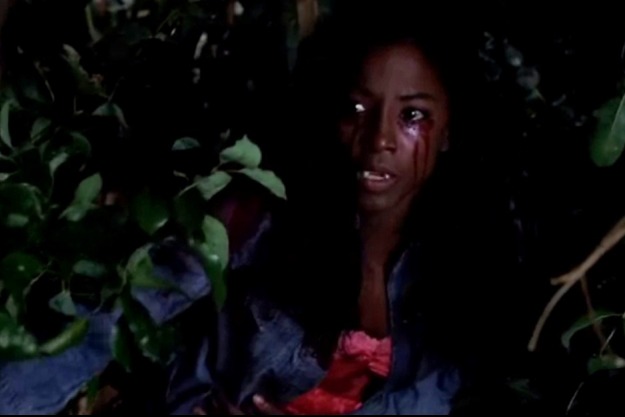
Vampire Tara is all about wonder and rage, confusion and hyper vigilance. Wesley is killing false accusations of limited thespian skills. Pre-vamp Tara was two notes: terse and bitchy. I’m loving how she does nothing eerily, how she’ll perch on a table and not watch Sookie so much as scan her.

Ryan Kwanten is also developing as an actor as Jason slowly learns why he’s Bon Temp’s automatic sex machine.

This isn't a pretty process. It starts when he meets his old high school teacher at the grocery store. In a disturbing child's voice, he says, “I remember everything you taught me.”

They have sex. But with the phrase “statutory rape” in my mind, I watched Jason realize his high school teacher’s prior predatory acts have left him scarred and left with a sad brand of compulsive sexuality, with “a hole inside I fill with sex.”

But then Jason meets up with Jessica (Deborah Ann Woll) who, in a lovely, soft scene, realizes that the last thing Jason needs is bodily intimacy. So Jessica flips off her sexy supernatural energies, and insists, strongly and intuitively that what’ll fix what’s ailing him is that he stay puts while she throws on a sweatshirt and grabs them both a beer. That is, even as an eternally teenage vampire, Jessica still has killer native nurturing skills to spare and we’re remanded that True Blood is mostly about one thing: female power.

In just this episode, we’ll see Sook use her fairy light burst to kick Pam’s ass when she fails to perform her maker’s duties with Tara.

We’ll imagine the portent of the powers of Salome (Valentina Cervi) which are literally Biblical. And see Tara’s unguided powers screw her up. The focus on female power both natural and supernatural is more repetitive than an old house beat and has been going on in endless iterations for four years now, enough to where you’d think Rolling Stone and other mass organs would have regular “Women of True Blood" issues.

Oh, how we dream. Anyway. Down in the chambers of the vampire Authority, Roman is dealing with the problem of what to do with Bill (Stephen Moyer) and (Alexander Skarsgård) and the news that Russell Edgington (Denis O'Hare) has somehow broken out of his cement grave.  

Russell Edgington, who as we all recall, is the 3,000 year old psycho-vamp who once ripped someone’s heart out on live TV, and has now somehow escaped from being buried in a few tons of cement by Bill and Eric.

In the first iteration of something we’ll hear several times, Roman explains that the only thing that will help vampires beat the insane Fundamentalism of a “Sanguinista” movement that believes in a future where all humans are farmed for food is ‘mainstreaming’, or simple co-existence with humans.

Russell Edgington, he bellows, is “the poster boy of the anti-mainstream movement . . . it’s Osama Bin laden.”

Bill promises that he is a firm anti-fundamentalist. Eric, who’s totally not into politics, kind of shrugs his agreement.

After this little chat, fans of Veronica Mars get to see Tina Majorino again playing a techie who in this case straps harnesses on Bill and Eric that are like GPS’s that blow you up. Eric: “How’s this work?” Tina Majorino: “There’s an app for that.”

What’s remarkable about this season so far is how peripheral Sookie’s been. Later, after she admits to Alcide that she did indeed kill his ex-wife—which as you’d expect, pisses him off a bit—you could have extracted Sook from the episode and lost nothing.

Especially when we get a whole lotta Pam circa 1905, San Francisco. As a whorehouse madam reaching the twilight of her years as a viable sex industry product. And yes, Bauer adds just enough vulnerability for us to buy the idea that this is Pam from over a century ago and not so much as to ruin the character’s flinty credibility.

The scene also shows Eric meeting Bill for the first time, and of course Bill’s being impossibly, annoyingly gallant.

When Bill’s gone, she explains the uselessness of an aging woman, and begs Eric to change her into a vamp.

In one of the episode’s best lines, Eric says that ‘making’ a vampire is an eternal responsibility. “Would you toss a new born baby in the gutter?” he asks, and we can’t help but think of Pam and Tara.

Pam ends the conversation by slashing her wrists—vertically, of course. “Let me walk the world with you, Mister Northman,” she says, “Or watch me die.”

America swoons as Eric’s fangs pop.

Meanwhile, back at vampire Authority HQ, Salome takes Bill for a seductive walk. She is the Salome, Daughter of Herodias, the Seven Veils, all that, and “from a seriously fucked up family,” she quips.

Of course, lost girl stories are catnip for our Bill. When she practically begs for a reason to trust him, he finds it under his zipper.

Then, after taking a shower, one hopes, she plays Eric.

The best way to Eric’s heart is through his maker, Godric. So she goes there before seducing him.

Bill and Eric meet later and realize they’ve been played but why . . . why?

We get another good teaser from the kitchen at Merlotte’s. It’s Lafayette, suddenly pouring bleach into the gumbo, looking into the mirror and he’s wearing Jesus’ demon-face. (Which freaks him out but cheers me up: Jesus will return!)

Then we’re back to Authority HQ, but a deluxe bedroom that looks like the swankest W Hotel room ever. It’s Roman’s private chambers, and Salome, who’s been a very busy girl today, is very naked because this is HBO.

Salome assures him that neither Bill nor Eric is Sanguinista.

And then Roman goes through the mainstreaming vs. Fundamentalism discourse as if this were broadcast TV before the Internet and major plot points had to be repeated endlessly.

The up side is Mr. Meloni sans shirt is a pumped and ripped side of quality beefcake.

He purrs to Salome, “You’re my secret weapon” which, when purred to someone out of the freakin’ Bible, is worth considering—or not. At this point, we don’t know just how far Ball is willing to go with his trashing of the Christian Bible’s power and so we can’t extrapolate how badass Salome might be. Still, if she’s worthy of Roman’s attention, one imagines her destructive powers must be at least above the average Biblical icon’s.

And then we see poor lost Tara, who started the episode with her mind in the stars, breaking into a tanning salon and sliding into a tanning bed. As her body fries and she screams, we cut to Pam who, as Tara’s maker, can sense this and sighs “stupid bitch” but it’s the sighed “stupid bitch” of an exasperated mom, which is, after all, what Pam’s become.

In every way that matters, in teaching her how to take care of herself, how to feed herself, when to go to ground, when to rise, everything in her new life, Pam is Tara’s new mom. Many a drinking game was played based on what would happen to Tara after she was shot in the head last season. Nobody got drunk enough to see “Pam’s a mom” coming.

Ian Grey has written, co-written or been a contributor to books on cinema, fine art, fashion, identity politics, music and tragedy. Magazines and newspapers that have his articles include Detroit Metro Times, gothic.net, Icon Magazine, International Musician and Recording World, Lacanian Ink, MusicFilmWeb, New York Post, The Perfect Sound, Salon, Smart Money Magazine, Teeth of the Divine, Venuszine, and Time Out New York.

FALLING SKIES RECAP 2: COMPASS

FALLING SKIES RECAP 2: COMPASS

null

"He is now defined by those of us who owe him our lives."

nullTom Mason, we are reminded again this episode, is a history professor. Over the course of the first season of Falling Skies, he had plenty of opportunity to let us know that, often by using overblown language to teach us all the Important Lessons of the moment. So, it is a great pleasure to note that the best line of Compass was, without a doubt, Tom Mason, History Professor, saying, “God, you’re an asshole, Pope.” BWAHAHA! That’s a laugh out loud line and it typifies the improvements of the second season.
As I said last week, this show will live or die not on the coolness of the skitters (which, by the way, are cool—last week we didn’t see them walking around much and I forgot how cool they are—skittering around on crazy reptilian spider legs) but on how high the stakes are in the post-invasion world. If we are shown a world that’s basically just like our lives, recognizable but in tents and with aliens, then the stakes are ridiculously low. If, on the other hand, it’s really an alien invasion, and humanity is really blown into a state of desperation and deprivation, fighting for survival, then this is a gripping drama in which the moment-by-moment tension of simply surviving alters every relationship, every decision, and every individual. That kind of drama requires consequences.

So, rest in peace, Jimmy.

I’m sad to see the kid go, but we all saw that he was impaled. After Carl’s miraculous recovery on The Walking Dead and Darren’s up-and-about less than a week following a paralyzing injury on The Killing, I think if Jimmy had been back on patrol two weeks after impalement, my television would have had a paralyzing injury of its own, dealt by me, and that can be pricey.

Drama requires consequences, and Jimmy’s death gives many of the other things we’re seeing much more of a sense of foreboding. Red-eye skitter? Foreboding. Glowing spikes? Foreboding! (Watch the crazy action below, glowing spikes, impalement, fireballs, and all.)

Let’s talk about glowing spikes*, shall we? It’s utterly stupid that Pope should find Tom’s presence so threatening while he is comfortable with Ben going on patrol. Tom acts like himself, albeit with occasional mechanical parasites flying out of his eye, but Ben? Ben, like all the harnessed kids, was in absolute thrall to the aliens. Upon having the harness removed, both Ben and the other kid (Ricky) exhibited all kinds of wild physical abilities, including last week's long swim in icy water with no discomfort. Ricky went back to the aliens voluntarily, but Ben, changed so much he borders on superhero, is allowed to patrol with Jimmy while Tom, apparently unchanged, is not allowed to carry a gun. It makes no sense at all. We can assume that Pope’s distrust of Tom is a bullshit gloss on a long-standing enmity, but it still doesn’t explain why anyone trusts Ben.

Whose spikes glow. So far it’s happened twice. The first time, the only witness was Jimmy, who is now conveniently dead, and the second time, there were no witnesses at all. It seems like Red-eye is unique in some way among skitters (he’s also the current host for the creepy mechanical flying eye parasite—holy crap, I can’t believe I just typed that!). No other skitter was able to make anyone’s spikes glow.

*If you’re just catching up, when humans originally tried to remove harnesses from rescued kids, the kids invariably died. Doctors discovered that leaving the spikes from the harness attached to the host’s bodies allowed the kids a good chance of surviving the surgery.

My point is two-fold: One, leaving that kid running around with a gun is inconsistent and a little stupid. Two, glowing spikes are cool and scary, and I can’t wait to see what happens next.

Despite its intermittent cheesiness, Falling Skies has always tried to Mean Something, sometimes by being self-important, and other times by constructing some nice plot motifs and deploying them with a certain elegance. This show isn't Mad Men (duh), but it has moments where the thematic stuff really works, and this week’s episode delivers in that regard.

"Compass" as a title is simple and effective. Jimmy’s compass functions to define and connect several important plot moments; the fight between Tom and Pope, the moment of intimacy between Ben and Weaver, and Ben’s bedside vigil, for which it's a talismanic object. “Compass” also refers to Anne's keeping track of the calendar, refusing to let go of a world where the date matters; it's a compass that guides her. A compass, a way forward, an arrow pointing in the correct direction, is what everyone in the 2nd Massachusetts need (because no one has a sense of direction, and Weaver and Ben's joke about Jimmy had a larger point), A pilot can come along and point their compass to Charleston, but how can they know it’s the right way to go? (As Weaver alluded, they’ve already been  fooled.) Tom says holing up for the winter will make the aliens think they've surrendered, and that speaks to a broader sort of compass question: Hide and survive, or continue to fight back, depleted though they are?

Pope has been a problematic character since he was introduced. In Season 1 the writers went through all kinds of senseless plot machinations to justify keeping him around, so I guess now we're stuck with him. Having Tom join the Berserkers was both amusing and stupid, yet it worked. Having it all fall apart within minutes also worked. Having Pope take off with a covert guard really doesn't work, because we know some future last minute rescue will be the order of the day and then he'll be back again.

All right, let's spare a moment for the anemic Tom-Anne romance. One thing The Walking Dead has gotten right is that, when the world ends, people fuck like bunnies. I have no actual evidence of this, having grown up someplace where the world has yet to end, but I'm sure. When terrible things happen we reach for flesh, for pleasure, for some affirmation that we're still alive and can feel and be human. The sad little kisses they've shared, the sense that, if only they weren't both so grief stricken and tired and busy, there might be more, strikes me as utterly wrong-headed. They should be clinging passionately to each other and to the sense of aliveness they can provide for each other in the midst of so much death and fear. Come on, Tom and Anne, go for it. Your passion can only improve Falling Skies.

Deborah Lipp is the co-owner of Basket of Kisses, whose motto is "smart discussion about smart television." She is the author of six books, including "The Ultimate James Bond Fan Book."

GREY MATTERS: The Haunted Suburban World of TEEN WOLF

GREY MATTERS: The Haunted Suburban World of TEEN WOLF

Anyone comparing Teen Wolf’s second season to Buffy either isn’t paying attention to the dark gem Jeff Davis’s show has become or doesn’t understand what Joss Whedon’s show used to be.  Think instead of this reboot of the silly Michael J. Fox '80s film as fully on par with Ronald Moore’s remake of Glen A. Larson’s way-'70s Battlestar Galactica. It’s that good. And now, it's that grim.

Gone are even the small gestures toward even nominal teen melodrama normality season one made, mostly courtesy a sound-weave that was already more Lynch than CW, more Cocteau-dream-time-floaty than let’s-sell-some-alterna-pop catchy.

From the credits onwards, the second season announces a visual sensibility that suggests Lars von Trier pace Melancholia in a suburb called Beacon Hills, where McMansions literally sit next to rotting poverty homes. Where there is never anyone on the streets, or any place of business open but the ER, the police department, and a 24-hour veterinarian’s office (Teen Wolf may be grim but it's not without humor.)

The last time I wrote about the show, I mentioned an across-the-board ache, a sense that everyone of parenting age had failed, leaving a generation of children trying to reassure the adults that everything would be okay.

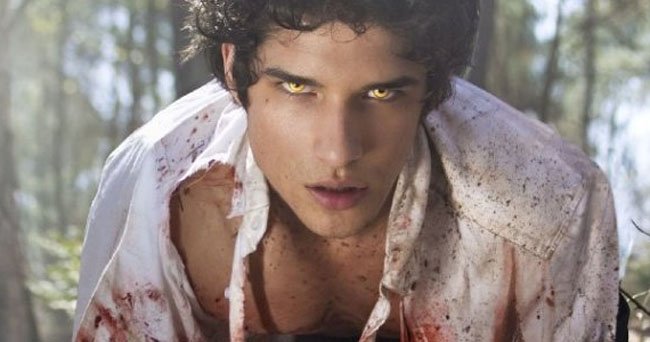
That ache has metastasized into distance, malevolence and violence. The show’s teen werewolf, Scott McCall (Tyler Posey), now keeps a certain distance from Mom since a telepathic bond with her revealed her endless well of erotic loneliness.

Scott’s best friend Stiles (Dylan O’Brien) has a father (Linden Ashby) so humiliated by his drunken confession of broken marriage anguish that he can barely face his son anymore.

And Scott’s beloved, Allison (Crystal Reed), has learned that the worst thing in the world isn’t her morally compromised father (JR Bourne), but her morally psychotic grandfather, played with scene-eating intensity by <i>Battlestar’s</i>Michael Hogan, this season’s very bad, big bad, wolf.

All of this is mirrored in the visual poetry of Teen Wolf, most often conveyed in pairs of shots that tersely convey discrete information, the cinematic version of haiku. Cinematographer Jonathan Hall—best known for The Walking Dead—somehow conveys darkness even in his day-lit school hallway scenes.

Oh. Right. Werewolves. Or as I like to say, “weres”, because it’s shorter and makes things sound as un-lame as the show Davis—best known as creator of Criminal Minds—has gifted us with.

Davis still uses his moneymaker moon howlers, but mainly as bearers of metaphor. But since I want you to fall for this show, I’ll run some Wolf basics by you before getting lost in those thickets.

When we first met Scott McCall, he was a golly, gee-whiz teen lacrosse player in love with the lovely Allison. Scott’s pal Styles was a knockabout, but not a pop-culture-spouting one.

Then Scott got clawed in the night and became a were, which, downside, meant turning halfway into a wolf, but upside, meant super-enhanced strength, night vision, speed, healing abilities, and so on. Sure, there was the whole thing with murdering people and eating their flesh, but a little forethought and some chains and locks could take care of that.

Unfortunately, Scott quickly gained the attention of longtime were Derek Hale (Tyler Lee Hoechlin).  Like the zombies hanging around the mall they loved when they were alive in Dawn of the Dead, Derek can’t stop himself from hanging at his burned down, old American dream house.

Last season, Allison not only learned of her family’s avocation—hunting down and killing weres—but saw her sadistic, morally insane aunt killed by the sadistic, morally insane ‘Alpha’—a sort of ultimate werewolf who may or may not lead the pack of weres.

Also, everyone knows that Scott’s a were when his attempts to gain some privacy with Allison at last year’s winter formal only lead to Chris, the werewolf hunter, accidentally finding him while in wolf form.

This season finds the Argent family closing ranks and forcing Allison to break up with Scott. (Of course, the two work out a complex system of signals and signs for meeting up in secret.)

Then Hell comes to town in the form of cruel, killing-‘em-old-school Gerard, who loves the sound of a young homeless were’s screams, cut off when he cuts him in two with a special sword.

Gerard believes in killing all weres, shows zero tolerance of Others, and has a pungent Tea Party vibe to him that, in an election year, one assumes, must be intended.

Then Allison finds out that she must train to take her aunt’s place and become a were killer. As Valentines to nuclear families go, this one isn’t winning anyone’s favor.

The alternative isn’t kittens and roses either. Derek is trying to create an alternative family based on the pain of others, to repel the Argent menace.

There’s Boyd (Friday Night Lights’s Sinqua Walls), a black kid bussed to Beacon Hills, where he’s forced to do menial work, who chooses Derek’s bite to gain power over a core-rotten school system. And Isaac (Daniel Sharman), a white kid whose abuse at his father’s hands reverberates horribly in a post-Penn State context. And an unnamed student (played by the awesomely-named Gage Golightly) ruined by uncontrollable, humiliating seizures is more than happy to give up a known awful life for a life living like Derek looks.

For whatever reason, because the show works under the disguise of genre, because everyone isn’t putting every word uttered under a critical electron microscope, because the show is free to use metaphor freely, Teen Wolf is free to delve deep into topics whose existence a show like Girls might deny.  

And were the show not called Teen Wolf, its to-be-continueds would surely be the stuff of virtual water cooler conversations. Breaking Bad, now there’s some word play for adults. But Teen Wolf, seriously? Next you’ll be saying Battlestar Galactica, or Buffy the Vampire Slayer or . . . Oh.

Take the battle for the soul of Jackson Whittemore (Colton Haynes). Everything that’s remarkable about Jackson—his steely good looks, his bottomless checking account, his classic Porsche—only remind him how much he didn’t earn them. And so what good there is in him is eclipsed by a need to act out his self-loathing. Worse, Jackson is aware of this extra dynamic, which makes him truly tragic. We never hate him.

And now he wants Derek to turn him into a were as well. To give him a power that comes from his body, not his Chase Titanium card. If something gay happens, well, whatever.

In direct opposition to Whedon’s wonderful alternative families, the Buffy, Firefly or Avengers crews, Teen Wolf is a dire warning against socialization, especially for Scott: if he enjoys Allison, his mom may be getting killed by Gerard. If he’s with his mom, how can he protect Stiles and Allison?

This is horror for times of terrifying scarcity. It’s why Allison hangs on to Scott and vice versa, and it doesn’t feel clingy or retrograde, and it's why Stiles will save even Derek when a new monster comes to town. In lean times where the family is verklempt due to ideology, bad breaks or character flaws, they’re all they’ve got.

Ian Grey has written, co-written or been a contributor to books on cinema, fine art, fashion, identity politics, music and tragedy. Magazines and newspapers that have his articles include Detroit Metro Times, gothic.net, Icon Magazine, International Musician and Recording World, Lacanian Ink, MusicFilmWeb, New York Post, The Perfect Sound, Salon, Smart Money Magazine, Teeth of the Divine, Venuszine, and Time Out/New York.

CRUEL SUMMER: PEE-WEE’S BIG ADVENTURE (1985)

CRUEL SUMMER: PEE-WEE’S BIG ADVENTURE (1985)

The "Cruel Summer" series of articles examines influential movies from the summers of the 1980s. The previous entries in the series have covered THE BLUES BROTHERS (1980), STRIPES (1981), ROCKY III (1982), WARGAMES (1983), and PURPLE RAIN (1984).

The summer of 1985 was, quite simply, the worst summer of the 1980s. I should qualify that statement by saying it was just impossible for that summer’s crop of movies to live up to the pop ecstasy of summer ’84. The inmates-running-the-asylum aesthetic of such movies as Indiana Jones and the Temple of Doom, Gremlins, Top Secret!, Purple Rain, and The Adventures of Buckaroo Banzai was now being replaced by a safer, more conservative one. Ronald Reagan had been re-elected and it seemed as if order was being restored. Of course there is no evidence for a correlation between Reagan’s re-election and the conservative, retro tone of the movies from summer ’85 (most of the movies were in production when Reagan was elected), but it sure felt like there was one. Rambo: First Blood Part II, A View to a Kill, Fletch, Brewster’s Millions, Pale Rider, Silverado, Mad Max Beyond the Thunderdome, D.A.R.Y.L., Cocoon, Day of the Dead, Explorers, The Black Cauldron, and European Vacation all had a haven’t-I-seen-this-before feeling about them. Spielberg, who had taken a critical lashing for the intensity of Temple of Doom and was in the middle of making his first bid at “adult” filmmaking with The Color Purple, gave a peace offering by producing the junior Indiana Jones romp The Goonies and the Eisenhower-meets-Reagan time travel comedy Back to the Future. (I should stress that some of these cinematic reruns were quite entertaining, particularly the Rambo sequel and the two Spielbergs.)

Then, near the end of the summer, a spate of movies came out that, rather than rehashing worn-out movie trends, attempted to both deconstruct and comment on certain genre conventions. Tom Holland’s Fright Night used comedy and eroticism (and gory special effects) to rebut all those witless slasher movies, while Dan O’Bannon’s The Return of the Living Dead was a much needed antidote to George Romero’s heavy-handed zombie movies. And Martha Coolidge’s Real Genius was like a teen raunch comedy written by Albert Einstein. But one movie seemingly came out of nowhere and signaled a change in mainstream American movies.

Tim Burton’s Pee-Wee’s Big Adventure is a candy-colored toy box of a movie. A series of sight gags, non-sequiturs, and flights of invention, the movie has a mad, on-the-fly structure, built with the insane logic of a children’s story. The story, as much as there is one, is about a boy and his dog, or in this case, a boy and his bike. There’s such an elemental purity to Pee-wee’s attachment to his bike, that when it’s stolen, we totally identify with his anger and feeling of helplessness and are willing to follow him anywhere in order to be reunited with his bike, even if that means going to Texas!

At the center of everything is Pee-wee Herman, a man-child who looks like a cross between 50s kids' show host Pinky Lee and a mime. As embodied by Paul Reubens, Pee-wee’s initial appeal was the way his child-like innocence allowed him to get away with making sexually-tinged remarks. The sexual innuendo and physical comedy of, say, the famous 1981 HBO special The Pee-Wee Herman Show was startling in the way it made us recognize the countless inappropriate moments that make up our childhood. And Pee-wee’s speaking voice was like a cross between a guttural snort and a high-pitched whine. Depending on your tolerance of adolescent humor, Pee-wee Herman was either the most obnoxious character since Tony Clifton or a cross between Harold Lloyd and a child star.

Burton's training as an artist and animator allows him to stretch the boundaries of movie frame. (It was his animated shorts Vincent and especially Frankenweenie, with its story of a boy re-animating his dead dog, that led to him getting the job of directing Pee-wee's Big Adventure.) He brings an animator's sensibilty to the live-action form. The cinematography by Victor J. Kemper (Dog Day Afternoon, Cloak & Dagger) has a tactile Pop Art look, as if the color processing was done by Crayola. (Red and grAy never looked so shiny.) The production design by David L. Snyder makes everything look like a pop-up book come to life. Pee-wee’s kitchen is one big impractical Rube Goldberg breakfast machine, A kid’s idea of efficiency. (The joke of this contraption is that it goes off without a hitch.) Of course, Pee-Wee’s Big Adventure is most remembered for Danny Elfman’s first collaboration with Burton. Reminiscent of Jerry Goldsmith’s ragtime Gremlins theme, Elfman’s score is a cross between Saturday morning cartoon themes and the music you hear upon arriving at the circus. Elfman has fun adapting the main musical theme for the movie’s many environments. (I especially like how the music gets a slight Mariachi flavor when Pee-wee visits Texas.) Elfman’s scores of late have been rather routine in their eccentricity, but his early collaborations with Burton (not to mention his scores for Midnight Run and the first Mission: Impossible) gave the telegraphing emotionalism of movie scores by guys like David Grusin and John Wlliams a much needed injection of playfulness.

The adventures that Pee-wee has are so disjointed that their unpredictability keeps you in a delightful state of anticipation. The screenplay by Reubens, Phil Hartman, and Michael Varhol keeps sequences brief, almost like extended sketches. (Reubens and Hartman got their start at The Groundlings.) It’s as if the vignettes are a kid’s idea of what places they’ve never been to are like. When Pee-wee attempts to hitchhike across the country, there’s no real danger because we know he can handle himself, even when he’s picked up by an escaped convict. (Curiously, this sequence contains the only moment of sexuality as Pee-wee helps the fugitive Mickey (Judd Omen) evade capture by pretending to be his wife. After they’re clear of the authorities, Mickey gives Pee-wee a fleeting once-over. The rest of the movie is devoid of Pee-wee’s trademark sexual innuendo.) A biker bar is like something out of a Looney Tunes cartoon, while all of Pee-wee’s fears are visualized through stop-motion animation, especially Large Marge. The highlight of the movie is when Pee-wee goes on a tour of the Alamo in hopes of locating his bike in the basement. Jan Hooks’ performance as the perky, gum-chewing tour guide is a little masterpiece of comic timing. (“Do we have any Mexican-Americans with us?”) As a native of San Antonio, I found this sequence almost cathartic as it deflated the unquestioned reverence towards the Alamo.

The climax of the movie is like a mini It’s a Mad, Mad, Mad, Mad World, as Pee-wee finds his bike on the Warner Brothers studio lot and cycles though several adventures in the span of ten minutes. Pee-wee makes appearances in everything from a Japanese monster movie to a Twisted Sister video all the while enjoying every moment of it. The mash-up of movie genres and sleight-of-hand visual gags is dizzying. Burton’s most subversive joke comes after Pee-wee has caused all manner of destruction, when the execs at Warners want to make his story into a movie.  Little did anyone know just how telling this twist would be as the studio’s co-opting of Pee-wee’s adventure would foretell Hollywood’s growing awareness of the audience’s desire to claim a movie (or, more accurately, a movie’s sensibility) as theirs. Studios may not have fully understood Burton’s funhouse mix of 50s horror and deadpan humor, but they could see that audiences were connecting with it. Studios quickly learned it was good business to allow directors with just enough rebel-outsider “vision” to helm their big-ticket projects as a way to entice audiences growing ever more skeptical of being “sold” a movie. Everyone from the Coen brothers to Wes Anderson to Peter Jackson to J. J. Abrams to Guillermo Del Toro to Joss Whedon have done a brilliant job of maintaining their cult figure status while shaping mainstream audiences’ tastes. With Pee-wee’s Big Adventure, both Tim Burton and Pee-wee Herman showed that you could find success in being different.

San Antonio-based film critic Aaron Aradillas is a contributor to The House Next Door, a contributor to Moving Image Source, and the host ofBack at Midnight,” an Internet radio program about film and television.

LONGMIRE RECAP 2: A DAMN SHAME

LONGMIRE RECAP 2: A DAMN SHAME

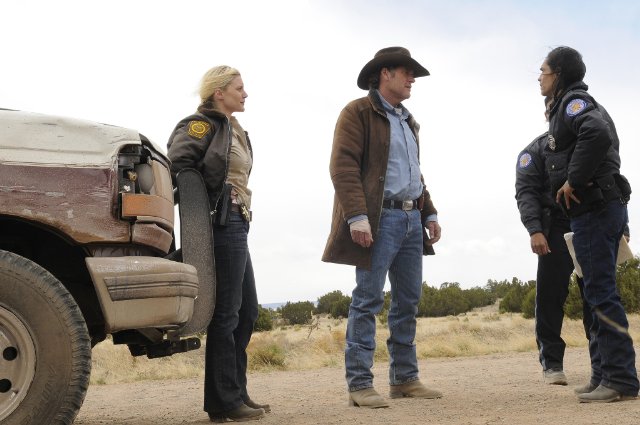
Only two scenes in “A Damn Shame”  don’t depict Walt Longmire. The opening scene depicts a fire in a barn, with horses panicking, dying, and trying to break free. It’s interwoven with Walt in a sweat lodge, in a deliberately artistic style that pays off well here, making it clear that though Walt’s not in the scene, it’s still his story. The threat to the horses also ties the audience and the show’s characters to the case emotionally. (Click on the video above to view this scene.)

nullThe second scene without Walt takes place in the middle of the investigation, when a man claiming to be an FBI agent shows up at the station with the three main cops from the office. The most junior deputy, the bumbling Ferg, attempts to calm the agent, and in so doing, gives him the location of the family he’s looking for as well as the sheriff’s location. This is necessary to the plot, but we haven’t spent much time with Ferg yet at all, and “A Damn Shame” hasn’t given much previous indication that he’s going to get this much attention. More notably, the absence of Walt, Vic, or Branch at the office makes it clear just how dependent the show is on those characters, and how much stronger the narrative is for Walt's presence.

Once that brief break with Walt’s perspective occurs, it becomes much more apparent how much the episode is built around him. Though he’s not the main character, every shot in "A Damn Shame" focuses intently on Walt, or takes his perspective, or both. (Click on the video below to view the scene.)

As the story and characters converge on a ranch house, the most dramatic moments occur. Walt and Vic start to walk towards the house, shots are fired, they take cover behind the police truck. The camera appears to take cover behind them. When new characters show up, he’s shown arriving in the distance, then he moves to the center of the shot. There are some brief wider shots, but the bulk of them are right alongside the show’s protagonist.

The tight focus on Walt and his perception here helps Walt’s tension become our tension. This can be claustrophobic at times, but in a good way. Were this a few seasons down the road, when Longmire has a larger cast of characters and more story threads to deal with, it might seem like a gimmick or worse, a waste of time. But we’re not at that point. Right now, the show really does seem like it’s just Walt’s show, and for the moment it works.

This tight focus also helps build the tension and set the stage for the solving of the mystery. Longmire, quite effectively, gives Walt as much information as the audience has, so when we’re suspicious, he's suspicious. If the audience is smarter than the main characters, a mystery show starts attracting disdain. On the other hand, if the characters are too much smarter than the audience, then the characters start seeming inhuman or the mystery begins to seem gimmicky. This show's respect for its audience’s patience shows up early in the episode, when a note from the apparently dead man in the barn fire appears. Each of the characters reads it, their reactions showing that the most likely reason for the note—suicide—is also what the note seems to indicate. Yet Longmire lets the reactions take precedence over the text, only substantiating those reactions later.

Through impressive technical competence, surprising for a show so early in its run, “A Damn Shame” maintains a down-to-earth tone in the story it tells, the characters’ reaction to the story, the way the story is shot, and the way the story is constructed. 

Yet all that competence is put into the service of a story that, well, doesn’t actually say all that much. A local man, Ray, appears to have committed suicide. But there’s just enough oddness in his pre-death behavior and the forensic investigation that Walt gets suspicious. Ray is eventually revealed to have been a mobster who bailed on his family and went on the run, and who then faked his death when he was discovered by the mob. Walt discovers Ray hiding in a basement, and confronts him on his cowardice for hiding while his family has been taken hostage, and refuses to believe otherwise based on his murder of the horses. Ray swears he’s not a coward, and wants the chance to redeem himself. Walt cuffs him, but Ray calls attention to himself anyway, helping Walt save Ray’s family, even as Ray himself ends up dead. It’s a conventional, dull redemption story, and sidelines his wife and son, who had been more interesting in the first part of the episode.

I’m much more impressed by Longmire’s ability to tell a story well than I am disappointed by any lack of creativity in its storylines. That sort of depth should come with time, character development, and world-building. Having a stand-out technical core makes the idea that the show will turn special more likely, and even if not, it should still remain high-quality.

Rowan Kaiser is a freelance pop culture critic currently living in the Bay Area. He is a staff writer at The A.V. Club, covering television and literature. He also writes about video games for several different publications, including Joystiq and Paste Magazine. Follow him on Twitter @rowankaiser for unimportant musings on media and extremely important kitten photographs.

FALLING SKIES RECAP 1: WORLDS APART and SHALL WE GATHER AT THE RIVER

FALLING SKIES RECAP 1: WORLDS APART and SHALL WE GATHER AT THE RIVER

Falling Skies is back for its second season with a two-hour premiere that, as is so often the case with "special premiere events" these days, is actually two episodes shown back-to-back. So, Episodes 2.01 Worlds Apart and 2.02 Shall We Gather at the River constitute our relaunch into the post-invasion world of Tom Mason and the Second Massachusetts. It was not perfect, but definitely was tightly constructed and presented some solid science fiction in a watchable two hours..

nullIf you're just joining this series, it's not too terribly difficult to get caught up. Last season, aliens swooped in and attacked the Earth, winning the war in relatively short order through surprise and superior technology. Now resistance armies are fighting the occupation. Our hero is Tom Mason (Noah Wyle), a history professor whose knowledge of battles of the past proves useful (sometimes cloyingly so, when he rambles on about historical context) to the current situation. In tonight's Season 2 premiere, Tom's impromptu history lectures are mentioned with fond irony by people who've been irritated by them in the past, and maybe that's a sign the show will try to be a little less heavy-handed in that regard (although I really like the conceit that a history professor is useful here; history is, after all, one way to learn battle tactics). Tom has three sons, who are part of the 2nd Mass. Weaver (Bill Paxton) is the head of the division and a career soldier. Pope (Colin Cunningham) is a smart-ass gang leader who has joined forces with the division to the consternation of many, sometimes including the audience.

How the alien thing goes is this: There are nasty creatures we call "skitters" who look like giant reptilian spiders. There are big mechanical soldier types called "mechs." Teens are kidnapped by the aliens, who attach harnesses to the teens which appear to enthrall and change them. The 2nd Mass has been able to remove harnesses from two kids, both of whom experience residual effects, including enhanced physical abilities. One of the kids missed the aliens and rejoined them, the other, Tom's son Ben, hates them.

Late in Season 1, Dr. Glass (Moon Bloodgood) dissects a skitter, discovering a harness inside it. It was obvious to me at that moment that the harness is meant to turn people (and probably other beings) into skitters, but in the S2 premiere we hear two characters wondering how skitters reproduce, so perhaps it's not meant to be as clear as I think.

In addition to skitters and mechs, at the end of S1 we learn there are "overlords," essentially Roswell-style "grays." In the finale last year, Tom Mason boarded an alien vessel to negotiate with an overlord. Now you're all caught up. See? Not painful at all.

There are places where Falling Skies is not bad, specifically, but rather too corny. Tom returns to the 2nd Mass three months later, found, at random in a battle situation, by none other than his son Ben. Corny! Tom awakens from anesthesia at the exact moment that his flashbacks bring us up to the present moment. Corny! Reunions are a skosh too touching, and musical cues a skosh too moving. It's as if the writers don't quite trust that the inherent drama of the situation will entertain anyone. Which is ridiculous because: alien invasion! Earth destroyed! Children kidnapped! No hot running water!

It really is a shame because these situations do have drama, and they are largely well-played. The world of Falling Skies is a world where everyone has post-traumatic stress, and the heightened emotions of such a world do not need clichéd musical cues to deliver the goods.

Our first two hours this year are mercifully free of inspiring speeches, self-righteous prayer, and extended rumination on the Meaning of It All. Instead, there was some very strong television and exciting science fiction adventure, including some engineering trickery and Tom's journey through other parts of the U.S., which helped create real perspective on how far-reaching the war actually is, as well as a creepy alien parasite.

Creepy alien parasite! On the same day I saw Prometheus! UGH.

The creepy alien parasite (without spoiling anything) encapsulates much of what is excellent and also what is weak about Falling Skies. On the one hand: Creepy alien parasite! That is alarming. It's a shivery, oogy journey into science fiction that makes the world of the show as dark and "other" as it needs to be. On the weak side, it is simply not taken seriously enough. The 2nd Mass has both career soldiers and civilian survivors, but the civilians simply refuse to live as though, you know, there’s an alien invasion. There are always too few guards and too little fear.

Any post-apocalyptic entertainment works by showing us how much and how little we've changed, how hard the new life is and how traumatic the loss. It awakens us to what we have, stirs our fears of what we could lose, and plunges us into a fight for survival. This is true not just of Falling Skies but of The Walking Dead, Battlestar Galactica, or any number of others. When these shows succeed, they rouse all these intense feelings. When they fail, they make us feel like the end of the world is a lot like any other television show.

Deborah Lipp is the co-owner of Basket of Kisses, whose motto is "smart discussion about smart television." She is the author of six books, including "The Ultimate James Bond Fan Book."

TRUE BLOOD RECAP 2: AUTHORITY ALWAYS WINS

TRUE BLOOD RECAP 2: AUTHORITY ALWAYS WINS

You know the endlessly self-amused Nazi prick Christoph Waltz played in Inglourious Basterds? Well, someone over at True Blood casting found a prim-o Waltz-alike in the actor Christopher Heyerdahl.

nullHeyerdahl plays Dieter, a sociable sadist and Vampire Authority operative. His vampire theology monologue—shared while torturing Bill (Stephen Moyer), no less–finally gives Alan Ball, who's leaving the show this season, a chance to actually offend people.

Dieter asks Bill if he recalls what’s special about the Vampire Bible.

And we learn that what’s special about this Bible isn’t that it predates The Old and New Testament. Or that it’s the original Testament, telling how God created Adam and Eve as food for vampires and for God’s greatest creation—Lilith. 

No, what’s remarkable in this time of election year Fundamentalist fever is that God created Lilith in his image, as God is a vampire.

As Dieter editorializes, “Powerful stuff indeed!” (To view this scene, please click on the video above.)

If this episode is any indication, Season Five will indeed be powerful stuff. I’m just not even certain what genre it is anymore.

I mean, sure, there are vamps and shifters and werewolves. But Ball is also fusing the zero sum war between Fundamentalism and sanity inside large institutions, with allusions to splintering U.S. conservatism in an election year. And making no bones about it.

But there’s much more. There’s an ongoing, Andrew Sullivan-style "death of gay culture" subtext argument, an import of the main theme of Buffy’s Season Six necro-existential crankiness, courtesy the turning of Tara (Rutina Wesley) into a vampire—or as I’ll call her from now on, the Tarapire.

And at least half the show is finally showing us the Vampire Authority. Damned if their underground realm, all chrome, sleek curving plastics amid a mid-century futurism that never happened doesn’t evoke a Swingin’ 60s spy film, equal parts Phillipe Starck and Ken Adam (the master designer behind Thunderball, Dr. No, and The Ipcress File), 

At the center is Roman, the Authority himself, played by Christopher Meloni with the a brand of hyper-intense, top-dog, apocalyptic Type A times Pi machismo imported from an edgy production of Glengarry Glen Ross.

Roman, the ultimate sanguine super CEO, who loves to toss off non sequiturs like “Do you think that the whole concept of the common good is hopelessly naïve?”—which allows Eric the drollery of “I try to stay away from politics.”

But True Blood certainly doesn't.

But on to recapping. Much of this week is devoted to the Tarapire’s freak out, when she tears down down Sookie’s house.

Dying has been a really positive thing for the Tarapire—she’s very assertive (bam, there goes the fridge), has a killer deathly stare, and most of all, she doesn’t complain.

When she does snarl to Sook and Lafayette (Nelsan Ellis) that “I will neither forgive either of you,” there’s the delicious possibility that she’ll be promoted to full-blown bad guy. (To watch Tara in vampire form, please click on the video below.)

Things are going from bad to incredibly terrible for Bill and Eric (Alexander Skarsgård).

An Authority operative new to the show named Salome (Valentina Cervi) escorts them to the 60s design extravaganza I mentioned earlier, and jails them in a facility where they’re tortured with artificial sunlight and liquid silver and interrogated by sophisticated sociopaths like the aforementioned Dieter.

Over in our werewolf subplot, Alcide (Joe Manganiello) is refusing to join the pack in eating the corpse of ex-pack leader Marcus. Among the ritual diners is Marcus’s mom, Martha (Dale Dickey).

Clearly signed up for her gnarly, white thrash outlaw Sons of Anarchy appeal, and this impressively gross scene aside, Martha is a terrific addition to the cast, a gravel-voiced biker chick in her deep fifties with a worn regal vibe that fascinates.

Martha insists in several scenes that her daughter Emma, child of Marcus and Luna (Janina Gavankar), has more in common with her werewolf father than with her. This is a teaser for a scene that is astonishing, that demands you not drink fluids for you may gag or spit them up.

But right now, we’re talking Terry flashing back to Iraq and saying, “It’s coming for us.”

Will this show ever tire of crazed Iraq storylines? Can’t Terry get possessed by fairy lemurs or something, just once?

Then, a sweet cookie of a backstory is tossed to Pam (Kristin Bauer) fans. It’s a bawdy house in San Francisco, 1905. After a Campari, she hits the street. A creep tries to kill her, but in a flash Eric, in full Victorian eveningwear, kills the guy, licks the blood off his fingers and gives Pam his charm-face. There’s something oddly tentative about the show’s depiction of pre-vamp Pam, like Ball isn’t certain what he think of her quite yet. Still, that dress is a keeper. (Pam meets her maker, Eric, below.)

Sam (Sam Trammell), meanwhile, is recovering from his own wounds when Martha shows up, again insisting that Luna and Marcus’s toddler has supernatural canine blood in her veins. “She’s wolf—I can feel it!”

Are you sitting down? If not, do.

You’ll next see a scene where Jason goes to Hoyt’s mom’s, only to be rebuffed as by Hoyt (Jim Parrack) yet again as a girlfriend-fucker. And then we’re back at Luna’s house.

Suddenly, director Michael Lehmann cuts to a puppy in pajamas.

No CG, no make-up. Just a puppy in jammies. Only on True Blood.

There’s no way to follow that, but the show must go on. We end up deep in vampire Authority HQ, where Dieter is explicating that theology we started with, ending with what I assume will be the crux of this season’s drama:

That there are Vampire Bible fundamentalists who believe in a utopia where humans are farmed for food and human/vampire intimacy is blasphemy.

And there’s the Authority and Roman, who believe in “mainstreaming” and peaceful co-existence with humans.

In their secret chambers, the congress of the Authority lorded over by Meloni, dressed in the ultimate Hugo Boss-style pinstripe power suit.

Roman considers Bill and Eric, and says, “I’m in a real pickle here, boys.”

The pickle is—he needs to mete out justice to the killer of Authority member Nan Flanagan. Who Bill and Eric did kill.

Roman is the king of the mainstreaming cause, and he tells about it in detail, which is cool: I’ll listen to Meloni yell at me about a Google search for superior celery, he’s that violently entrancing.

Meloni wants to stake Eric and Bill. Bill has something to trade: the news that psycho-vamp Russell Edgington (Denis O'Hare) is alive.

Russell the anarchist psycho-vamp who would love nothing more than to destroy the Authority’s mainstreaming initiative for the sheer fun of it.  

As Meloni considers the import of this news, Lehmann cuts to Russell in a cart, his skin cracked into a thousand bloody fissures.

In true Edgington style, he licks his ruined lips. Gross! (Awesome.)

This week’s vestigial subplots:

Luna

She falls victim to Bon Temps’ most prevalent illness: unmotivated Sudden Character Reversal Syndrome. Last year, Sam became a murderous asshole for no apparent reason. Now Luna’s becoming a mean jerk, apropos of nothing.

Steve Nawlins

Steve Nawlins claims vampires for Christ. Will this dovetail with the Authority’s interests?

Jessica (Deborah Ann Woll)

Nawlins tries to buy Jason from her. Jessica says she does not sell her friends. Like, ever.

But mainly this week is owned by  Meloni’s Roman, the Tarapire, and the puppy. Good times.

Ian Grey has written, co-written or been a contributor to books on cinema, fine art, fashion, identity politics, music and tragedy. Magazines and newspapers that have his articles include Detroit Metro Times, gothic.net, Icon Magazine, International Musician and Recording World, Lacanian Ink, MusicFilmWeb, New York Post, The Perfect Sound, Salon, Smart Money Magazine, Teeth of the Divine, Venuszine, and Time Out/New York.

Art That Speaks to Everybody: A Father and Daughter Chat About E.T.

A Father and Daughter Chat About E.T.

[Editor's note: The following is an iChat between Press Play founder Matt Zoller Seitz and his daughter Hannah, a film student, about Steven Spielberg's E.T., which was released 30 years ago this week. It is the most recent installment in a series of dialogues about popular culture; earlier pieces discussed Cinderella, Fantasia and Harry Potter vs. Star Wars.]

Matt Zoller Seitz: Do you remember the first time you saw E.T.? Wasn't it during the 2002 rerelease when you were not quite five?

Hannah Seitz: I don't remember seeing it for the first time at all. But I do remember that when I saw it for the second time a couple of years later, I had no memory of the scenes where the government interferes and E.T. is dying. Was that because I was so traumatized during those scenes the first time?

Matt: Maybe you blocked it out?

Hannah: Maybe. Do you remember me not wanting to watch it at that point? In my mind there was a blank spot between the point where E.T. and Elliott are in the bathroom and the mom comes in, and then the part when Elliot sees E.T. come back to life.

Matt: I don't remember your not wanting to watch that part of the movie when you saw it for the first time, but I do remember you bursting into tears during the scene where the older brother finds the pasty, sickly E.T. lying in that drainage ditch. You were fine up to that point.

I am always a bit surprised by the length and intensity of all the medical stuff near the end. Steven Spielberg really twists the knife. It's like the scene in Dumbo where Dumbo goes to visit his mother in the iron cage. Or the "death" of the Beast in Beauty and the Beast. Stanley Kubrick used to say that he didn't like Disney movies because he thought they were cruel to children, and I don't think he was necessarily wrong in that description. But fairy tales are often cruel, or unrelenting, and we do want to feel things very intensely when we experience art. Some excess seems forgivable when a work is really, really cooking, in the way that E.T. cooks all the way through. It's operatic or symphonic. It's so powerful that it gives me the kind of feeling that I think you're supposed to feel in church, but that I never felt there.

Hannah: I haven't seen E.T. in a while, and this was the first time I really watched it as a film. I always knew it was a great story, but the lighting in the movie and the music really did give it a symphonic feel.

I also noticed an insane amount of religious or spiritual-like imagery. I know the most famous one is when E.T. comes out of the truck wearing the robe with his heart glowing in his chest, but I noticed a lot more shots than that one.

Matt: Such as?

Hannah: One of my favorites is when the brother and the sister first meet E.T. and they're in the closet. They're all kind of peering at him. There's even something in the background that looks like a stained glass window. Then it cuts to E.T., and he's encircled by a bunch of stuffed animals that look like they could be his disciples or something. 

Matt: I hadn't even thought of those images in that way, but you're right.

That closet, which is really E.T.'s sanctuary or home, is a sacred place, part womb and part cave of contemplation. It's almost a geographical metaphor for what happens when Eliott invites him into his life. There is nothing more intimate than inviting somebody you don't really know into your room. And since Eliott's closet is the place where all the toys are stored, the symbol of the childhood innocence that Eliott is still clinging to, it's as if the boy is inviting the alien right into the center of his personality, into the deepest place.

When the devout try to bring somebody into their faith, they often couch it in terms of an invitation. Invite God into your life, let Christ into your heart: that kind of language. Spielberg and Melissa Mathison, who wrote the screenplay, are brilliant at encoding that into the images.

Hannah: I love that scene where E.T. is listening to Elliott's mom reading Peter Pan to Gertie. E.T. is a great character because it's easy to look at him as a figure of wisdom, considering he's super-intelligent. But he's also very childlike, in the sense that's he's very curious and forms attachments easily.

I think that's one of the beautiful things about Elliott's connection with E.T. When Elliott first meets E.T., he doesn't immediately think of him as a higher, more intelligent species that needs to be studied, like the scientists and government workers do. As soon as he meets E.T. he begins to show E.T. around, and he doesn't immediately question what E.T. is or where he came from. And when Elliott does inquire about E.T. and what he's capable of, he does so in a very innocent and non-pushy way.

Matt: Spielberg is a humanist filmmaker, one of the greats, and you can see that come through in the way that he depicts the meeting of different cultures or even species. E.T. and Eliott's relationship is founded on open-mindedness and mutual trust and empathy—as Michael tells one of the researchers near the end, it's not that Elliott thinks what E.T. thinks, it's that he feels what he feels—and that's why they have such a strong and pure friendship, so strong that you can't even classify it.

At various points E.T. is like a mentor to Elliott, the dad that he recently lost to divorce, a friend, an older brother, a younger brother, and a pet. And towards the end, when the full extent of his power is made visible, he becomes angelic or supernatural. And at every point Elliott goes with the flow and accepts wherever the relationship is going. The reverse is also true, of course. Both characters change in relation to one another depending on what's happening in the story.

Communication might be the most important theme in Spielberg's filmography. Close Encounters, E.T., Amistad, Munich, pretty much every one of his films contains one or more scenes of different beings learning to speak to each other, and discovering they aren't as different as they thought.

Hannah: The idea that E.T. has a power that allows him and Elliott to feel each other's feelings is very metaphorical of friendship. In the beginning of the movie, Elliot makes the mother cry by saying his father is in Mexico with some woman named Sally. Michael says, "Dammit, why don't you just grow up! Think about how other people feel for a change." When E.T. comes along, Elliot is really forced to grow up by feeling E.T.'s emotions. He has a deep mutual connection with him, and towards the end it's clear that Elliott has matured a great deal, and made sacrifices as a result of being so connected to E.T.

Matt: Yes. There's a wisdom in the boy's face during that final shot that wasn't there at the start of the film, and all the changes have come about organically, as a result of his living through these extraordinary events.

Hannah: I also love how it portrays the government workers. Although they are the antagonists, the movie doesn't necessarily portray them as evil people who only want to harm E.T. They are, after all, trying to keep him alive. They aren't coldhearted people. They just don't understand how E.T. functions, like Elliot and his siblings do. In a way, their ignorance is really what drives their role as antagonists.

Matt: That's true.  

Hannah: It always sort of gets to me when Keys is talking to Elliott at the end and he says, "He came to me too, Elliott. I've been wishing for this since I was nine years old."

Matt: As you read more about film history you may eventually come across articles about Spielberg that were written in the '70s and '80s when he first became a cultural force. He was described as being culturally very conservative for a young Baby Boomer, and in some ways that's true. But the optimistic way he depicts human understanding, and cosmic understanding, is very much in tune with hippie values. He's a lot more countercultural in his worldview than some of the overtly counterculture filmmakers. He really believes people can make up their minds to be good, to do the right thing, to overcome ignorance and build bridges, that war and violence is rarely necessary, and so forth. All the stuff that modern popular culture tells us is for suckers, Spielberg actually believes in. And I like that about him.

Are there any particular things you noticed about the tone or style of the movie, the way it moved and looked, that spoke to you?  

Hannah: The lighting. Every shot in Elliot's house was lit in a way that represented the content of the scene. A lot of the lighting felt very eerie, or sometimes kind of quiet and lonely.

But it didn't make itself too obvious. The house still felt very real and homelike, no matter what the lighting was. I think the house itself was also one of the best features of the movie. Like you said, it was sort of a temple to innocence and childhood, which was a very magical environment for E.T. to be in. Also the layout of the house felt real and comfortable, not like most Hollywood movies where homes are well furnished and spotless.

Matt: With whom did you identifying with when you watched the movie this time? I ask because when I re-watch movies I've seen many times, my point of view changes.

When I was a kid I used to identify with Elliott, then after a certain point I started to feel more of a connection with other characters, probably because I was maturing. I went through a phase where I would imagine what this experience must have been like for E.T. This time, though, I thought about Mary, the mom. The way she was always emotionally wrung-out and kind of distracted really spoke to me as a single parent. When you're in that situation it's completely plausible that an alien could be walking around behind you in a bathrobe and you wouldn't notice.

And this time I was with Michael, too. The moment where he goes into Elliott's closet and curls up in a corner looking at all the toys and stuffed animals destroyed me.   

Hannah: I can't really say whom I connected to. I'm really bad at answering that question. I'm really not the type of viewer who connects to the characters.

Matt: What kind of viewer are you?

Hannah: I don't know. I don't really connect to characters, like, throughout an entire movie. When I do feel emotionally connected, it sort of just jumps out at me in a particular moment or scene.

I'm a film student now, and although I don't like to admit it because of my high school freshman finicky-ness about the future and careers and such, filmmaking or writing may possibly (emphasis on possibly) be something I want to do with my life. When I write, I usually write about realistic characters and situations, and I would say I'm pretty good in that field. So it was a weird experience watching this movie last night, because after it was finished and I had soaked it all in, I just felt this weird surge of jealousy. Art is made to affect and speak to people, and generally when it does so, the audience is limited, be it by age, ethnicity, gender, etc. I think it's one of the most amazing things in the world when you can create a piece of art that speaks to everybody. E.T. really is a timeless movie that you can enjoy when you're a little kid and appreciate just as much when you're on your last legs. It's really an incredible thing to be able to make something like that.

CRUEL SUMMER: PURPLE RAIN (1984)

CRUEL SUMMER: PURPLE RAIN (1984)

This video essay is part of the "Cruel Summer" series of articles; this series examines influential movies from the summers of the 1980s. The previous entries in the series have covered THE BLUES BROTHERS (1980), STRIPES (1981), ROCKY III (1982), and WARGAMES (1983).

If the 1980s are considered a decade of excess, then 1984 was the peak of that excess. George Orwell’s book 1984 had already given the year so much significance that an inexplicable energy and urgency coursed through it. Reagan’s re-election was pretty much a given, a recession was ramping up, and a wave of conservative values was washing over the country. While there wasn’t yet a sense of hopelessness, there was a feeling that maybe things would get better if only we could just get through the year. All this restless energy was channeled into music. In a rare case in which the stars aligned just right, the music released during 1984 was not only the most exciting of the decade but would turn out to be some of the most endearing pop music of the next 30 years. MTV was entering its third year and had, in a sense, become the number-one radio station in the country. If you had a video in heavy rotation on MTV, you had a hit record. During the summer of 1984 you were likely in any given hour to see videos for Yes’ “Owner of a Lonely Heart,” Madonna’s “Borderline,” Van Halen’s “Jump,” Cyndi Lauper’s “Girls Just Want To Have Fun,” Billy Idol’s “Rebel Yell,” The Cars’ “You Might Think,” Thompson Twins’ “Hold Me Now,” Pretenders’ “Middle of the Road,” Huey Lewis and the News’ “Heart of Rock N’ Roll,” Kenny Loggins’ “Footloose,” Culture Club’s “Karma Chameleon,” Rick Springfield’s “Love Somebody,” Deniece Williams’ “Let’s Hear It for the Boy,” Tracy Ullman’s “They Don’t Know,” John Mellencamp’s “Pink Houses,” Duran Duran’s “The Reflex,” and Bruce Springsteen’s “Dancing in the Dark,” not to mention the videos of Michael Jackson, especially “Thriller.”

The movies took their cue from the music as Hollywood entered into A symbiotic relationship with MTV, both as a new form of storytelling but, more importantly, as a powerful marketing tool to reach the coveted youth audience. Movies like Rocky III, Flashdance, and Staying Alive demonstrated the potential success for music-fueled storytelling and an accelerated editing style, but the movies of 1984 showed Hollywood going all-in on this new aesthetic. Almost any movie worth remembering from 1984 was connected to pop music. Footloose was the movie for the high school class of ’84, while Against All Odds had a power pop sensuality. Repo Man and The Adventures of Buckaroo Banzai had a madcap sci-fi punk vibe, while This Is Spinal Tap deflated the pomposity of heavy metal. The raw energy of the burgeoning hip-hop scene was showcased in the (still exciting) Breakin’ and Beat Street. Even music-oriented movies that flopped had soundtracks that rocked. Walter Hill’s rock ‘n’ roll fable Streets of Fire gave us Dan Hartman’s “I Can Dream About You,” while Rick Springfield’s vanity project Hard to Hold had a soundtrack better that the movie. Disco mastermind Giorgio Moroder made Fritz Lang’s Metropolis relevant to the MTV generation by adding a modern rock score, while ALSO scoring the soundtrack to the unjustly forgotten computer romance Electric Dreams. Even big name directors got into the act, as Brian DePalma showcased Frankie Goes to Hollywood’s “Relax” in his horror-porno satire Body Double while Milos Forman displayed a punk-ish attitude towards classical music in the Best Picture Oscar-winner Amadeus. But there was one movie (and record) from 1984 that would not only be representative of the entire year, but also become a cornerstone of pop culture.

Albert Magnoli’s Purple Rain is a one-of-a-kind mix of rock concert, intense drama, romance, and comedy. A star vehicle designed to showcase the talents of rock-fusion musician Prince, Purple Rain was that rare vanity project that worked. (Both Rick Springfield and Paul McCartney attempted similar movie projects in ’84, but they were a bust.) Magnoli (who had been an editor on James Foley’s youth-rebel drama Reckless) made his feature debut as a director with this film, displaying a remarkable understanding of quick-cut, backbeat-driven movie-music visuals that very few filmmakers have been able to duplicate. When pop stars attempt to cross over into movies, the results are often embarrassing. The Elvis movies are a classic example. Crummy direction and writing turned one of the century’s most charismatic entertainers into a depressing robot on screen. (With the exception of Jailhouse Rock, the Elvis movies would have been perfect for MST3K.) Performers ranging from Diana Ross to Peter Frampton to Neil Diamond all tried to translate their control of the stage to the big screen, and the results were a display of ego gone wild. Their fame as pop stars worked against them, because it caused them not to work hard enough at portraying characters. (Only The Beatles in A Hard Day’s Night displayed the kind of looseness and willingness to look silly that’s required to hold a viewer’s attention.)

Purple Rain was different. Prince was still a mystery, not yet the all-caps superstar he is today. From the movie’s beginning, when we heard a voice introducing The Revolution, followed by an anticipatory electro-synth drone accompanied by Prince’s spoken-word proclamations about life, we knew we were seeing something new, something vital. On songs like “Little Red Corvette,” “Delirious,” and “Controversy” Prince’s fusion of hard rock funk and dance rhythms was like an antidote to the polish of disco. (The music sounded like the next evolutionary step following The Rolling Stones’ Some Girls.) But Prince still hadn’t broken out. Purple Rain was his coming out celebration. Young audiences flocked to it expecting a show, and Prince delivered.

The opening “Let’s Go Crazy” number both sets the stage for Prince’s showmanship and put the story into motion. Unlike, say, Footloose or Flashdance, where the pop music was used to enhance a scene by giving it a beat, Purple Rain integrated the songs into the story. All the musical numbers are both interwoven into the story and separate from the drama, as if commenting on the lives of the characters. At times, Purple Rain plays like a rock ‘n’ roll version of Cabaret. Magnoli keeps the numbers visually arresting by using movement in the foreground to give them different perspectives. Not using a steadicam, he uses the swaying of the crowd’s bodies or the back and forth of waitresses trays to let us know life is going on even while the music plays. (Streets of Fire had a similar introductory musical number, but its song, “Nowhere Fast,” was no “Let’s Go Crazy.”)

The story of Purple Rain is almost primal, with its elements of frustration and rebellion. While the movie isn’t explicitly autobiographical, it creates a heightened version of reality; Prince and all the other performers play characters they can inform with their life experiences. The inexperience of the cast and crew affords them a cocky fearlessness, as the movie has a let’s-put-on-a-show energy, crucial to its success. The young people in the audience knew they weren’t seeing high drama. Instead, they related to the story of The Kid’s (Prince) desire to express his pain as an extension of their own similar desires. The Kid’s tentative romance with Apollonia (Apollonia Kotero) is first fueled by eroticism and hostility, but soon turns into a test of The Kid’s maturity. The movie tells us that if The Kid can learn to be generous and trusting, that might be what he needs in order to become a star.

This all sounds kind of heavy, but Magnoli is wise to keep the non-musical scenes brief and direct. No dialogue-driven scene seems to last longer than five minutes. This isn’t entirely because of the inexperience of the actors, but more because the music is so powerful that the scenes don’t need to be extended. The Kid’s romancing of Apollonia happens mostly through visuals. Their first meeting is done with eye contact and the help of the camera. Their first date is when they go riding on his motorcycle as “Take Me With U” plays on the soundtrack. (“I don’t care where we go/I don’t care what we do.”) When Apollonia is being wooed by The Kid’s rival, Morris (Morris Day), he sings “The Beautiful Ones” as a defiant ultimatum. (“Do you want him? Or do you want me?/Because I want you.”) Magnoli’s editing and the hot cinematography by Donald Thorin (Thief) give each number a palpable sense of momentum. “When Doves Cry” is used powerfully in a mid-movie montage to develop characters and fill in holes in the movie’s chronology, while Thorin uses fiery red lighting for “Darling Nikki” to accentuate The Kid’s desire to humiliate Apollonia.

What’s fascinating about Purple Rain is the matter-of-fact way it presents a racially integrated world. Until Purple Rain most black characters in movies either lived in a white world, or were held at arm’s length in movies dominated by black characters. But Purple Rain presented a world where race and gender were shown in something approximating the right proportions. The explicit sexuality of the characters was thrilling, as black sexuality had been mostly chaste (Sidney Poitier movies) or presented as something mythic (Sweet Sweetback’s Baadasssss Song). The time was right for black sexuality to be presented on screen accurately, and it turned out Prince was just the man to do it. The only drawback was in the treatment of its female characters. Purple Rain isn’t wholly misogynistic but like Saturday Night Fever, it isn’t entirely enlightened either.

Prince doesn’t really act in the film, more often standing still and using his presence to draw us closer to him. This is smart because his normal speaking voice lacks authority. Prince does anger and contemplation beautifully. He’s less assured when trying to be conversational. (His best scene is with Clarence Williams III, who plays his abusive failed musician father. They create just the right amount of tension, giving the scene a hushed intimacy.) Luckily the other actors around Prince are strong enough that they balance some of the movie’s shakier scenes. Wendy Melvoin is quite good in her big showdown scene with The Kid, while Billy Sparks is a natural as the manager of the First Avenue club where all the drama unfolds. Of course the scene-stealers of the movie are Morris Day and Jerome Benton. Day is like a cross between The Mack and James Brown, with Benton as the straight man for his outrageous one-liners. (“Let’s have some asses wigglin'!”) The two performances by The Time ("Jungle Love," "The Bird") are bumptious fun and work as welcome relief from the intensity of the other numbers. Morris is the leader of his band, but he knows to share the spotlight with his fellow musicians. That’s what The Kid needs to learn in order to go to the next level.

The movie’s final act is an extended battle of the bands, as The Revolution and The Time fight for supreme dominance at the club. The three-song set by The Revolution works as a kind of three-part movement toward the movie’s conclusion. “Purple Rain” is a spellbinding one-take performance as The Kid reconciles with those he’s hurt. (I love the moment when he kisses Wendy on the cheek.) “I Would Die 4 U” is used for the movie’s final character montage, while “Baby I’m A Star” pretty much says it all. (It’s easily the best number in the movie.)

Purple Rain is an anomaly, in that no matter how hard directors have tried, its success can’t be repeated. (Anyone remember Under the Cherry Moon or Graffiti Bridge?) It’s a movie whose title conjures up a moment in time. Purple Rain is a movie, a record, a sound. Its legacy is the audience’s wanting nothing but a good time.

San Antonio-based film critic Aaron Aradillas is a contributor to The House Next Door, a contributor to Moving Image Source, and the host ofBack at Midnight,” an Internet radio program about film and television.

For more commentary on significant films of the 80s, see this 5-part video essay by Aaron Aradillas and Matt Zoller Seitz for The L Magazine! Parts 1 and 2 cover 1984.

LONGMIRE RECAP 1: THE LONG ROAD

LONGMIRE RECAP 1: THE LONG ROAD

null

While a mystery procedural isn’t the most revolutionary premise for a television series, there were several aspects of the Longmire pilot that indicated that it might be particularly interesting. First, it had a distinct visual style. The opening scene of the pilot, with Longmire in the shower, the camera bouncing around, and messages left on the answering machine conveys character and tone superbly—and simply—through style.

The show’s setting is also compelling, though not in such a positive way. The rural county in Wyoming is not a common location for a TV show, and Longmire effectively conveys how small and interconnected Absaroka County is. The placement of a Cheyenne reservation nearby also adds specificity, but tensions between the reservation police and the protagonist create an uncomfortable dynamic. The heroic white man, unfairly vilified for exposing native corruption, ends up a hero after reuniting a lost Cheyenne girl with her mother. It’s very White-Man’s-Burden, and quite awkward because of it. I’m hopeful that the show will grow more nuanced in its portrayal of the Cheyenne. Given its competence elsewhere, this seems likely, but the focus on the whites as the primary cast members is less promising.

The show’s use of an election as its main hook for long-form serialization mosyt appealed to the part of me that enjoys analyzing structure. Walt Longmire is the show’s hero, the character it’s named for, but he’s a mess. Branch Connally, his deputy, has recognized that Longmire is a mess, and decided to run against him. Connally’s reasons seem entirely valid—Longmire’s been an absentee sherriff since his wife died, a year ago, and has left the running of the station to the deputies. Had you framed most of the scenes from Connally’s perspective, he would have looked like the hero of this story. “Quality television” is often based on male anti-heroes, but Longmire’s not quite there. He’s more of a broken hero, teetering on the edge of failure. And his failure comes from inaction, not from making the wrong choices—at least, that's the show’s premise.

For better or mostly worse, not many of these qualities are on display in the second episode, “The Dark Road.” Second episodes of dramas are usually weak, to be fair. They’re produced well after the pilot, and they generally serve to reintroduce the characters and world for people who are theoretically tuning in based on word-of-mouth after the first episode. This tends to make second episodes feel watered-down, which describes “The Dark Road.”

The biggest component of the pilot missing here is any mention of the election. Branch Connally is shown as a somewhat cocky member of the department; the only visible tension between him and Longmire is a slight young pup-old dog dynamic. This makes the revelation at the end of the episode—that Connally is sleeping with Walt’s daughter Cady—lose most of its impact.

Instead,  a flashback represents the show’s serialization. Walt is having a scar on his back sewn up, as he talks to his friend Henry, saying that his daughter must never know. That’s the entirety of the scene. This is far less auspicious than the election as a hook for viewers. I tend to be quite wary about overarching mysteries like these. Here, the characters have information that the audience lacks. By not allowing us to see it, the show is essentially taunting us, and that’s not a great way to start a relationship.

This episode also doesn’t deal with the Cheyenne, either, choosing instead to focus on another group of people more common in the rural west than most other places in America: Mennonites. One of their teenagers, a girl on her “rumspringa” outside of the community, has ended up dead. She’s also a stripper, which Sheriff Longmire figures out because the show uses the TV shorthand of saying she’s covered in glitter (because as everyone knows, married men who go to strip clubs love coming home with glitter on them, as it spares them even needing to bother discussing where they’ve been).

The Mennonites come across worse here than the Cheyenne did. The only family we see in any detail is ruled by a patriarchal iron fist, which ends up being the cause of the girl’s death. Her father, knowing she was a stripper, doesn’t care about her death. Her mother is more sympathetic, but paralyzed by the fear of the patriarch. And the mystery’s resolution is that the girl’s brother accidentally killed her while chasing her, because he saw her drifting away from the culture by becoming a stripper, and he had been told that he couldn’t go back unless he returned her as well. This is also a traditionally American argument—that secular laws allowing freedom are superior to religious fundamentalism. The show strongly implies that this is intentional, showing the state flag immediately after the scene where the Mennonite mother admits she wanted her daughter to escape the household tyranny.

There’s an essential conservatism to mystery shows, especially those based around law enforcement. Longmire’s focus on “lost girls” as the victims of the first two episodes—helpless, threatened, needing rescue, or dying—instead of telling their stories shows a fear of girls doing sex work. This may be an entirely valid anxiety, but the decision to talk about the sex workers in both episodes, without actually letting them tell their story, says a lot about Longmire. It’s too early to see if that conservatism is a core feature, and I’m not sure if Longmire intends for it to be. But where the pilot involved an examination of those concepts through the struggles of the characters, “The Dark Road” plays it entirely straight, which is a shame.

Rowan Kaiser is a freelance pop culture critic currently living in the Bay Area. He is a staff writer at The A.V. Club, covering television and literature. He also writes about video games for several different publications, including Joystiq and Paste Magazine. Follow him on Twitter @rowankaiser for unimportant musings on media and extremely important kitten photographs.