

 It’s been a good few years for crazy.
Homeland’s made bipolar disorder a household ailment yet again. Sean Durkin’s Martha Marcy May Marlene located the goal posts between delusion and reality in its brainwashed hero’s mind and promptly moved them repeatedly (just like in real life!). And while William Friedkin’s incredibly distressing tale of mutually assured destruction, Bug, may not have hewed to the Diagnostic and Statistical Manual of Mental Disorders, its claustrophobic form of poetic, post-Repulsion address captured essential truths about madness a supposedly reality-based film like A Beautiful Mind could never touch.
A Beautiful Mind is saccharine Oscar bait, both inane and despicable, a flick where Russell Crowe’s mumblecore mathematician’s schizophrenia leads directly to the secrets of physics, fame and the love of Jennifer Connelly. It’s exactly not the kind of film celebrated here with this list of 10 films that do mental illness right – and by “right” I don’t mean clinically correct. But I’m getting ahead of myself.
Girl, Interrupted, meanwhile, offers Angelina Jolie as a mentally ill person who’s actually one of those “free spirits” Hollywood so loves along with Winona Ryder hosed down in a sheer top while the only people who really are sick are fat or keep dead chickens under the bed. One could argue that the film trivialized serious mental illness. It, too, is not what I’m into here.
Returning to Homeland: it’s a terrific show in which Claire Danes’ mental illness functions mainly as a means of ratcheting up stakes and tension, which is fine; it’s a spy TV show, whadaya want? But as a film/TV writer and a person who’s dealt with bipolar disorder for 20 years, my goal here is to assemble 10 films that represent and go deeper – sometimes because they’re accurate, but more often because they cut to derangement’s core using symbol and metaphor. No matter how bizarre things look through madness’ distorting lens, whatever you see is never inexplicable, not really, and sometimes the sheer rawness of it all reveals things otherwise occluded. Which, I believe, is why these films are made in the first place and why we watch them.
 Spider (Directed by David Cronenberg): Spider, a perfect film, opens with an image of abject isolation as a train dislodges a tremulous stick figure of a man, Dennis "Spider" Cleg (Ralph Fiennes), to an empty platform.
Spider, a barely functional schizophrenic, is out of the hospital prematurely (due to health care cost cutting) and staying in a boarding house with others that are mentally ill. He mutters, is terrified of changes in light or sound, wears four layers of clothing to protect him from God knows what, and smokes continually.
As he falls apart he inserts himself into a replaying hallucination of the messy Oedipal mystery of his childhood. It involves a too-beloved mom (Miranda Richardson), a terrifying dad (Gabriel Byrne), a slattern (also Richardson) and an unbearable crime.
Cronenberg suggests Freud as context but not as explanation. Like you’d expect from the past bio-horror master, his approach is more medical but also poetic, and Fiennes’ performance is a microtonal wonder of observation and barely doing anything to maximum effect. Peter Suschitzky’s in-amber cinematography suggests a world of molding things that need throwing away.
When I interviewed Mr. Cronenberg, he told me of an older woman who said her son was just like Spider and expressed her deep gratitude for someone, finally, getting schizophrenia right. It’s that kind of film.
 Titicut Follies (Directed by Frederick Wiseman): When not force-feeding, beating or washing down the mad with fire hoses, jaunty guards in smart uniforms pass time by mocking naked, terrified elderly men in filth-slicked rooms while Catholic priests perform mini-exorcisms on the comatose insane. Elsewhere, a lucid man begs a panel of contemptuous psychiatrists to stop giving him drugs; they respond by having him dragged away in leg chains and having his “medications” increased.
Welcome to the part of Hell located at Bridgewater, Massachusetts’ hospital for the criminally insane, and the setting for one of the most notorious films ever.
Shot in 1966 by director Frederick Wiseman with a skeleton crew and minimal B&W gear, and intended for release in ’67, Titicut Follies was effectively censored by our government until a 1991 broadcast on PBS when most of the guilty parties were safely dead. To watch it is to witness a near-unbearable secret history of all-American monstrosity. When The Snake Pit barely touched on the “let ‘em rot” mental health care system of the US in 1948, folks were outraged, and the madhouse industry, enjoying a post-war/PTSD boom economy, made cosmetic changes. And so folks assumed things had gotten better.
Titicut Follies teaches us that a generation’s complacency led to absolute horror for thousands. It makes one wonder what we’re getting wrong today. To watch this film, click here.
 Shutter Island (Directed by Martin Scorsese): Teddy Daniels (Leonardo DiCaprio) is a US Marshal who goes to Shutter Island’s remote prison for the criminally insane to solve a disappearance, and already we’re knee-deep in symbolism in what’s easily one of Scorsese’s top five films.
In a film shot through with schizophrenia, substance abuse, delusional psychosis, bipolar disorder and other unnameable mind terrors, “madness” in the film is actual but addressed in poetic terms. The worst parts of Shutter Island’s madhouse look ported straight from Titicut Follies’ palace of nightmare filth; the general vibe suggests Hammer horror film remixed by Samuel Fuller and Francis Bacon with couture by Mad Men. Like Kubrick with 2001, Scorsese realizes no single source can accompany his scope, and so he weaves Ligeti, Eno, Mahler, Dinah Washington, Nam June Paik and more to create 300 years of cello-range wailing.
Real world, untreated schizophrenia finds art-film analogue as our Teddy’s traumatic memories of liberating Dachau and seeing thousands of the frozen Jewish dead grows an increasingly febrile delusion that he’s onto a full blown HUAC plot. Teddy went through hell, but was he ever really okay? The film is mute on the topic, instead leaving us with an unanswerable question about personal agency.
Make that Scorsese’s top three films.
 Mysterious Skin (Directed by Gregg Araki): Gregg Araki’s finest is like the story of two privates who process the same war in different ways. There’s 18-ish Brian (Brady Corbet), plagued by blackouts since a summer day of Little League when he was 8, and now suffering a life of fear, isolation and a need to be around marginal people who believe in UFOs. And there’s Neil (Joseph Gordon-Levitt), who remembers that same Little League summer where a pedophile coach (Bill Sage) molested him daily, leading to a need in Neil to please older men, until he reaches Brady’s age and becomes a whore.
What did the monster coach really do to Neil? A friend played by Michelle Trachtenberg sums it up: "Where normal people have a heart, Neil McCormick has a bottomless black hole."
With a careful pace somewhere between a dream and a funeral floated on a gossamer score by Harold Budd and Cocteau Twins’ Robin Guthrie, Araki’s film owns a sense of increasingly aching inevitability. We realize how deeply both boys’ inner worlds have been permanently mangled by abuse. But Araki suggests, in the very last image, a balm for their hells. Recommended viewing for every idiot at Penn State who still doesn’t get it.
Pulse (Directed by Kiyoshi Kurosawa): Some young people in Tokyo loiter on a grey day. “I just feel like something’s wrong…terribly wrong,” says one. Another talks about suicide. Another kills himself. Everyone feels this intolerable heaviness where you’d slit your throat if you could only bother to lift a knife.
With a plot concerning depressed spirits escaping an afterlife of eternal, solitary unhappiness through a haunted Internet, Pulse is a monolithically slate-souled film that looks and sounds like clinical depression feels. Colored like a bruise in dirty violets, grays and blacks, and with a constant unnerving electronic noise soundtrack, Pulse follows random people through a pattern of “infection,” depression and suicide. Sometimes people try to figure out what’s up; mostly they just succumb.
There is no “safe” moment in Kiyoshi Kurosawa’s film. At one unbearably intimate juncture, Kurosawa shock-cuts ambient sound as someone curls into a fetal position, rolling on the ground weeping, “Help me, help me, help me,” as nobody does. Apropos of nothing, a girl falls to her death from a water tower in a scene devoted to something else. Later, a flaming airliner falls from the sky. Viewing it again I’m amazed at its absolute unity of vision, and as much as I love it, I’m glad there’s only one Pulse.
 Requiem for a Dream (Directed by Darren Aronofsky): Requiem for a Dream’s conceit was simple but boy-howdy did it irk critics tetchy about new ways of playing the standards. Showy and arty! Too much razzle-dazzle! Style over substance!
Whatever. In Darren Aronofsky’s adaptation of Hubert Selby’s Brooklyn-set substance abuse apocalypse, the idea was to create a film analogue to Selby’s visceral language and the rush and crash of dope. To render something visually delicious and ultimately so grotesque it was hard to view without flinching.
Throw in Clint Mansell’s stabbing post-Hermann score and Jay Rabinowitz’s surgically assaultive cutting and everything else on the topic just feels anemic. And when twinned with Ellen Burstyn’s turn as an abandoned mom addicted to food, amphetamines and the memory of a youthful prettiness long gone, the result was the peak of a great actress’ 50-odd years of work.
But mostly, Aronofsky’s film asks us to see Burstyn’s character and the beautiful addicts played by Jennifer Connelly, Marlon Wayans and Jared Leto and realize that particulars don’t matter when it’s the same monster eating you alive.
 Keane (Directed by Lodge Kerrigan): Lodge Kerrigan’s Keane is a film so focused on the breathless run of it’s title character (Damian Lewis) from agony to acting-out that there’s little room to do much more than hope he won’t do irrevocable damage. While Kerrigan never diagnoses Keane, it’s hard to imagine a more fleshed out schematic of bipolar disorder’s very particular anguishes.
It all starts in New York City’s Port Authority, where Keane’s daughter was abducted a few months prior and where he speed-babbles paranoid delusions before using his disability check to pay for a hotel room. Sometimes the mania stops and he crashes into intolerable depression. (The scene where Lewis primally screams into a fetal position of pain is nearly unwatchable.)
During a surcease in his mania, Keane meets the woman down the hall (Amy Ryan), who entrusts him with the care of her daughter (Abigail Breslin) for a day. With the clock ticking before the next manic phase, Keane tries to show this new girl a single nice day as the audience anguishes over what may happen should his better angels fail. Lewis nails the way bipolar turns you into a cruel broken brain’s meat puppet and the tragedy of the good guy trapped inside.
 Return (Directed by Liza Johnson): When Liza Johnson's Return opens, Kelli (Linda Cardellini) has just returned from war. She can’t wait to reintegrate into her small-town life with her husband (Michael Shannon) and two kids. People keep asking her what it was like over there but she says other people had it much worse, although she did experience some “weird shit.”
Return reforms the Bush-war-vet crack-up-film cliché by focusing on PTSD at the early, psychologically metastatic stage via the accrual of tiny details of behavioral wrongness. Kelli starts preferring the floor of her kids’ bedroom to the conjugal bed. A girl’s night out ends with her sneaking through a bathroom window to get some suddenly needed air. A job that was once just fine is suddenly meaningless.
Until now best known for Freaks and Geeks and ER, Cardellini underplays in perfectly realized gradations of grinding soul tension a woman of extreme self-sufficiency betrayed by that quality.
The film’s crushingly fatalistic final image makes it clear that Return is, as the title suggests, an endless loop of damage; Kelli returns, alright, and God knows what kind of weird shit and horror we’re talking now. Perhaps the correct Netflix genre is “horror prequels.”
 Chris & Don: A Love Story (Directed by Guido Santi and Tina Mascara): Chris & Don: A Love Story tells the glamorous and sweet tale of author Christopher Isherwood, who, at age 48, met and fell for Don Bachardy, age 18, who would become one of our finest portrait artists. The two would be madly in love until Isherwood’s death in 1986. It’s filled with fabulous Hollywood stories from friends like John Boorman, Leslie Caron and Liza Minnelli, but the living heart of the film is Bachardy, at 77, still a spray hoot. You might ask, WTF is this film doing here? Well, deal is, Chris & Don is a mite misleading, because there’s one more love story here – that between Don and his mentally ill brother Ken.
It shows us that as much as it blows to be sick, it’s as hard in it’s own way to be a satellite of madness. But there can be a kind of bonding that almost feels like grace. I’m thinking of a scene where we see Ken, after years of electroshock "treatment," a lost, distracted soul but still deeply in love with the movies. If you can watch how brothers enjoy each other’s hard-won company as they go about catching a matinee without choking up, then dude, you’re made of sterner stuff than I.
 Serenity (Directed by Joss Whedon): Her intelligence is so far off the charts they need to make new charts, but thanks to an empire’s relentless black op torture program, she’s deep into schizophrenia territory. And yet, when it’s time to send out the message that will save the galaxy along with the ragtag crew of idealistic outliers who populate Joss Whedon’s titular spacecraft/great cancelled TV show Firefly, who you gonna call?
The crazy girl, River Tam, as played by Summer Glau, who also appeared this year as a traumatized brainiac in the Whedonesque, extra-awesome Alphas. She gave us an icon that was newly minted and, I think, needed: a hero who represented, who was as out of it as any of us on our worst days, but when really needed, eclipsed the entire Firefly crew in derring-do.
Meanwhile, Whedon was asked by a writer why, in all his TV shows – in Buffy the Vampire Slayer, Angel, Firefly and later Dollhouse – he repeatedly worried at the well of madness. It seemed he hadn’t ever really thought about it. Then he suggested that maybe it was because what could be worse then to lose your connection to the real world? To not be able to even trust your sense of yourself?
And then I just said something like, “Yeah.”
Ian Grey has written, co-written or been a contributor to books on cinema, fine art, fashion, identity politics, music and tragedy. His column "Grey Matters" runs every week at Press Play.
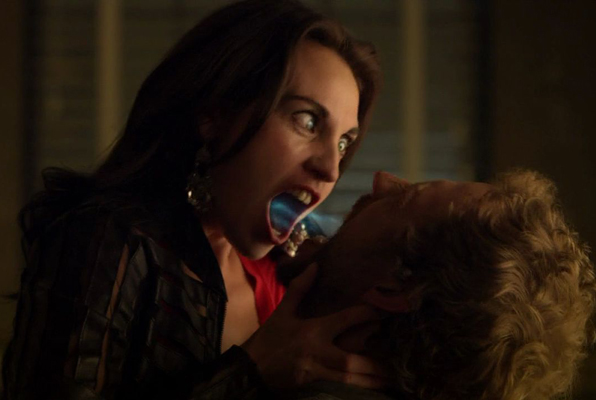
 Lost Girl is no big deal, and yet, for me, on sheer level of affection, it’s up there with the ludicrously better Luck, and I can barely wait for each episode to air. So WTF, right?
 Right off, Lost Girl offers something that differentiates itself in a way that non-genre shows would be swell to emulate: a femme hero un-crushed by her backstory. While supernaturals from Buffy to Sookie to the entire cast of Once Upon a Time suffer their supernatural-ness, Lost Girl’s hero, the casually bi, trimly pumped, no-bullshit Bo (Anna Silk) accepts that she’s a deadly Fae.
 So, want to talk about sex? Yeah? Cool. There’s tons of it here, and in the show’s world, it’s no big, which makes sense when your hero is a being whose entire deal is sexual.
 There’s the sloe-eyed Fae werewolf (Kristen Holden-Ried) who’s partial to complexly rockin’ leather combos that suggest off-label John Varvatos; the mystery bartender named Trick (Rick Howland), whose way-butch, deep-dyed denim and rolled-sleeve style is off-season Diesel all the way; and the adorable, what-the-fuck-is-she-wearing Kenzi, whose loopy gothiness suggests Betsey Johnson after listening to My Chemical Romance a lot.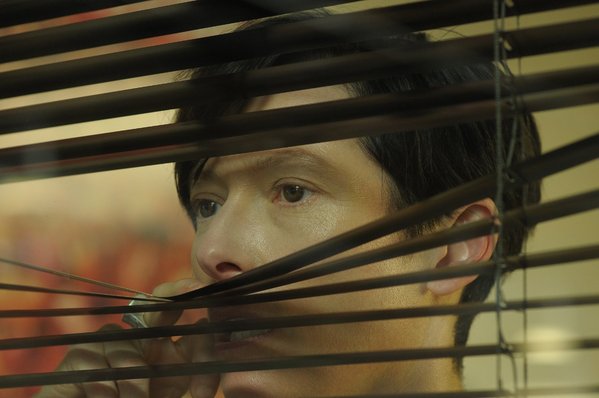
 Nothing gets a horror fan more ticked off than a director with airs claiming her new film isn’t
  Ramsay’s film fascinates like Goldfrapp’s radical, downcast remix of Lady Gaga’s “Judas” fascinates: as a remix more than an adaptation. Goldfrapp took Gaga’s pop-club banger, cut it to half time and deconstructed it to almost unrecognizable effect. It was creepy, scary, strange, way cool, but not a touch on the original, and is ultimately mainly interesting in relation to its source. In a similar way,
  In the book, which is told as a series of letters to her all-American/Republican husband Franklin (played in the film by John C. Reilly as a generic Dad), we meet Eva, a pushing-40, self-centered, unbearably obnoxious Manhattan woman who probably reads Mary Gaitskill,
  In the book, the tone and mode and Eva herself flip on a dime, and everything becomes
  The book’s grandest achievement is how it both accuses Eva as complicit in making a monster and then forgives her; how it takes a thoroughly unlikeable woman and evolves her into someone with a hard self-awareness we have to respect. The film? Ultimately, we’re back to the remix analogy, but without Goldfrapp’s unity of purpose – even if there isn’t much of one.
 Deal is, I always thought the New Wave was about deleting excess syntax so you could get to the heart of cinema. Ramsay uses some of its disjunctive tropes brilliantly so she never has to commit to anything but Swinton’s pursed grimace.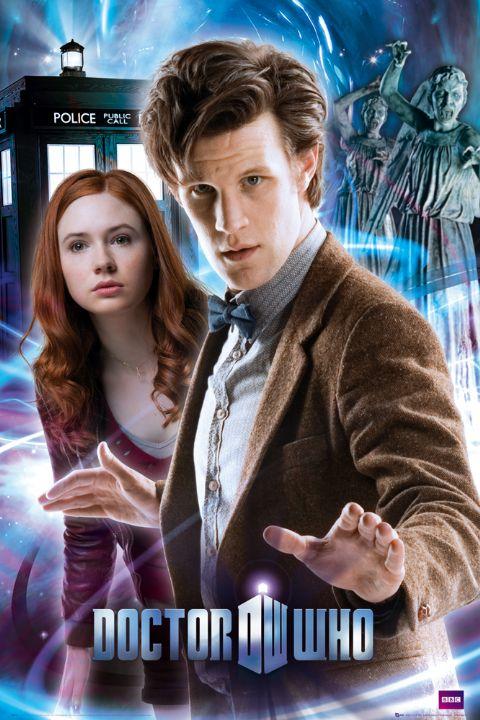
 On a recent episode of The Graham Norton Show, the genial goofball host was plainly delighted to have Karen Gillan—known worldwide as Amy Pond, the spirited, ginger-haired companion of The Doctor on Doctor Who—on his guest couch.
 The Doctor himself isn’t actually called ‘Doctor Who’. He’s the last of his race, the Timelords, obliterated after some galactic war.
 How you die on Doctor Who is romantic in the classical sense because it’s seen as very important. In television/film fan terms, it has additional appeal, as dying is usually a thing done in montage, a montage in waltz time.
 If she wasn’t such a fun/hot knock-about, River Song would be unbearably tragic.
 One of the ways Who works is by blindsiding you from oblique angles. Witness: “Vincent and the Doctor” is really about Amy and grief and…well, here’s what it seems to be about. The Doctor takes Amy to a museum to see Vincent Van Gogh’s paintings, then to the past to meet Vincent himself, who is miserable and being attacked my an invisible monster. With The Doctor’s help, the monster is slain, Vincent’s taken to 2010 to see that he’s a cherished artist in the hope he won’t kill himself. He still does.
 But not necessarily. Because this is a time-travel show, it’s possible to be conversant with people earlier in their timelines.
 Press Play Video Blog