

 The reason I write about cinema at all is because, at the age of 15, my high school French teacher sent our class to an art theater to see Jean Cocteau’s Beauty and the Beast.
At 15, I lived in a small home in a drab smear of a lower class L.A. neighborhood of strip malls and storage parks. If anything less aesthetically numbing had ever existed it had long since met the wreckers’ ball, so as to make way for depression-friendly identikit apartments.
Beauty and the Beast shocked me out of this gray limbo-world and into an exquisitely detailed surrealist 18th century that never really existed, with images that were forever branded on my frontal cortex: Human arm candelabras! An animal prince cat-licking from a stream! Teleportation via mirror! Holy shit!
The next week: Cocteau’s Orphée, featuring Death as a long cool woman in a black dress, her messengers as proto-Brando black leather bikers, and negative film stock as the Underworld as Greek myth is recalled through the lens of the French resistance.
Cocteau’s cinema made life more tolerable, less scary, impossibly beautiful.
Fast forward to last month, just before my vacation to Paris. I’m chatting with my friend Richard on the stoop of my East Village building about American amnesia.
 In particular, about that horrifically bloody week in 1863 that threatened to destroy the Union and the American experiment entirely, the week of The Draft Riots. As seen in the box office bust, Gangs of New York, the Riots started as white protests against conscription in the Union and led to a race war that killed 2,000 people.
I asked my friend how many Americans might remember what the Riots were. Memory is a big thing with me: 20 years ago a bus smashed into my face, causing traumatic brain injuries that blanked out entire years.
“Seriously? I’d guess close to none. If that many."
So when cinephiles periodically bat around the hypothetical, “Is cinema over?” you have to ask “Where?” and “Who’s asking?” And when you throw in the craft of film criticism, same thing, but more so.
After all, our country is one where mass amnesia is practically a point of pride, whether it was the candidate in our last election who amassed nearly half the popular vote while changing positions bi-weekly and, thanks to the power of forgetfulness culture, lost nary a vote with his constituency, or in a cinema that masticates its own increasingly recent past and spits out product stripped of history and motive, of cultural memory.
Meanwhile, American media hemorrhages critic jobs, and why not? Criticism, the craft and art of contextualizing the memory of narrative and image withers, as hack editors confuse criticism with for-free Yelp posts.
The French, however, are different.
Once in Paris, the notion of a dying cinema dissolved before the steam rose on my first cappuccino.
Just meters from the monolithically gorgeous Basilica of the Sacred Heart of Paris, a monument to, among other things, the excesses of the Second Empire, was a newsstand.
On the newsstand’s top row: Le Monde. Cahiers du Cinema. French Sports. Seriously, a magazine of deep cinephilia up there with the latest in football coverage.
Which totally makes sense when you consider that, in so many ways, the French invented cinema.
In 1876, the French inventor Charles-Émile Reynaudin creates the Praxinoscope, a device for the projection of moving images.
In the same decade, the Lumière brothers (appropriately, lumière translates as "light" in English) invent the cinematograph, a portable camera, printer, and projector. The Lumières project films for a paying public, thus inventing the cinema experience we're worried is dying.
 The first modern auteur—years before French directors and cinephiles writing in, you guessed it, Cahiers du Cinema, invent the “auteur theory”—is Georges Méliès, fleetingly resurrected in the American mind as a central character in Scorsese's Hugo.
Today, Paris continues to downright ooze cinema, to the point where Godfrey Cheshire’s assertion in a recent New York Times article, “If Critics Go, Culture Will Suffer,” that upwards of 400 people in France make a living writing about film feels just about right.
Meanwhile, the city is dotted with tiny theaters showing art films supporting a vibrant, living film culture.
Cinema tourism is a thriving business, as film fans swarm locations of the recent explosion of English-language, Paris-set films like Before Sunset (2004), Marie Antoinette (2006), The Bourne Ultimatum (2007), Carnage (2011), W.E.( 2011) and hundreds more. (My choice: La Bistrot Renaissance, the restaurant where Tarantino filmed Col. Landa (Christoph Waltz) and Shosanna (Mélanie Laurent)cat and mousing over cheesecake in Inglourious Basterds.)
 For cinephiles, mecca is La Cinémathèque Française. Situated in a gravity defying building by the great American architect Frank Gehry, the Cinémathèque, the museum boasts one of the largest collections of film-related materials in the world, including the robot woman of Metropolis (1927), beyond-rare drawings by Méliès, the bird masks of Georges Franju’s Judex (1963), and a new Dennis Hopper retrospective. Chuck Eddy famously said, “Rock ‘n roll always forgets”: the Cinémathèque is there to make certain the same thing doesn’t happen to cinema.
Incredibly, just a few meters away, there was more cine-worship: the Hôtel de Ville, hosting the "Paris vu par Hollywood (Paris as seen by Hollywood)" exhibit.
“Breathtaking” is a word I seldom use, but here it applied.
 Elements from 800 American films—clips, director's notes, posters, costumes, gloves, scenery and always more—are on worshipful display. A Givenchy dress worn by Audrey Hepburn in Sabrina floats in mid-chambers like a holy ghost; the words of Vincente Minelli and John Huston provide sacred texts.
I see a cluster of about 15 French children, hands over faces in delight and awe, muttering in delight like Jesus had returned as SpongeBob. The object of their delight: A never-seen interview with Alfred Hitchcock.
Forget kids—how many American adults posses the ambient culture memory connecting Hitchcock with his jaunty theme, the French composer Charles Gounod's "Funeral March for a Marionette”? How advanced is the forgetfulness virus? (Very, it would seem: The liberal-esque Romney of one week Etch-a-Sketched into the loathsome, gay-hating creep of another week, and it’s all good, that is, it’s all nothing.)
Whatever. What I believe is this: stories, sketches, films, statues, buildings, everything created is someone’s memory’s grand fuck you, the only thing standing between life and the sandblaster of eternity.
And so as an American in Paris, I could not help but be bowled over not only by a thriving new Gallic cinema but how every single centimeter of city space is inscribed with memory, be it in it in the form of stone griffins, gilt-bronze statues, arcane dedications, complex graffiti, or underground catacombs of made of the skulls, tibias, and femur bones of six million of the dead arranged in near-perfect geometric wall sculptures.
This nearly primal inclination to aestheticize is part of an ongoing dialogue, and therefore cinema can’t be dead, and even if it were, the French simply wouldn’t tolerate it.
The City of Lights? Try The City of Memory. And frankly, we all need to become more Parisian, before the enemies of the Enlightenment turn their wrecking ball on everything cinema and humanism stand for.
Ian Grey has written, co-written or been a contributor to books on cinema, fine art, fashion, identity politics, music and tragedy. Magazines and newspapers that have his articles include Detroit Metro Times, gothic.net, Icon Magazine, International Musician and Recording World, Lacanian Ink, MusicFilmWeb, New York Post, The Perfect Sound, Salon, Smart Money Magazine, Teeth of the Divine, Venuszine, and Time Out New York.

 Can’t Stop the Music (1980)
 Flash Gordon (1980)
 Sgt. Pepper's Lonely Hearts Club Band (1978)
 The Apple (1980)
 Rock n' Roll Nightmare (1987)
 Spice World (1997)
 The Happiness of the Katakuris (2001)
 Across the Universe (2007)
 REPO! The Genetic Opera (2008)
 Tron: Legacy (2010)
 As much as tonight’s episode sort of amused us it was also reminding us that it was, in this final Alan Ball-written episode of this final Ball-supervised season, one over-repeated riff, theme or trope away from self parody, accidental camp or worse.



 There’s the prepping of the MoMA space: the endless daily maddening minutiae of putting together a show that included approximately fifty works spanning over four decades of video works, installations, photographs, and collaborative performances made with ex-lover Ulay (Uwe Laysiepen).
 Other works involved cutting her flesh, whipping herself, walking the Great Wall of China, and pushing her body to extreme limits of pain and suffocation. The Artist Is Present is eventually about the limits of human giving. If they exist.


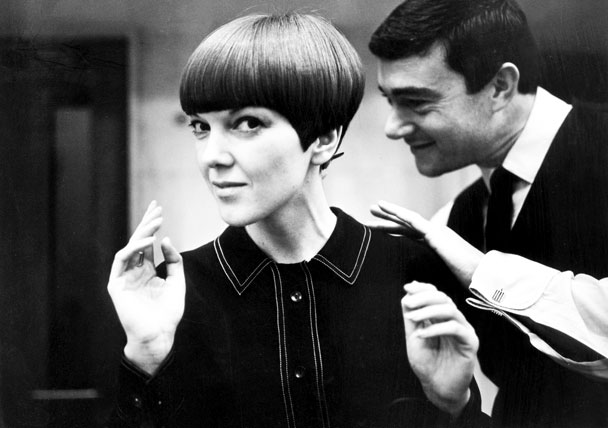
 In the mid-60s, his radical, Bauhaus-inspired cuts for Twiggy and Terrence Stamp in Joseph Losey’s Modesty Blaise defined a Mod brand of cool reemerging again today in everyone from Karen O to Ladytron to Lady Gaga; the pixie cut he crafted for Mia Farrow in Rosemary’s Baby made that film all the more effective and is now being rediscovered by Michelle Williams, Ginnifer Goodwin, and Mia Wasikowska, among others; the feathered cut he crafted for Farrah Fawcett in Charlies’s Angels
 Anyway, at school, students lined up daily as the Twins executed precise Sassoon-style versions of a Ziggy cut, a Bryan Ferry asymmetrical, a pixie, and the Master’s other contribution, the bob.
 At this time, the ‘50s and early 60s, nobody looked at hair and thought: Bone structure! Bauhaus! Geometry!
 Hollywood came calling: their new, post-war Chinese sex symbol in the making, Nancy Kwan, needed a look. Vidal created a luscious, cascading bob for Kwan for The World of Suzie Wong (1960). The Beats appropriated it, every present-day hipster girl has had one at least once, and actors like Tilda Swinton, Cate Blanchett and Charlize Theron look especially good with one.
 There’s the tale of Rosemary’s Baby (1968), where Roman Polanski desperately needed his hero to have a visual signifier of motherhood in crisis that would capitalize on both the rush and anxiety accompanying the first wave of feminism.
 Press Play Video Blog