MUSIC VIDEO ESSAY: The Year’s Best Foreign Films, Gangnam Style

MUSIC VIDEO ESSAY: The Year’s Best Foreign Films, Gangnam Style

“Gangnam Style” by South Korean pop star PSY became the first video to ever break through one billion views on YouTube. This feat, one that no U.S.-made video has yet to match, is all the more remarkable since most likely less than 1 percent of all those who watched it knew what he was saying.

If a foreign language music video can be so phenomenally popular, why not foreign language movies? Especially when there was such a wealth of wonderful foreign films this year? According to the Indiewire annual poll of film critics, the best movie of 2012 is Holy Motors by the mad French genius Leos Carax, with four other foreign films making the top ten: Amour, This Is Not a Film, Once Upon a Time in Anatolia and The Turin Horse.

This may be as many foreign films to have made the top ten since Indiewire started conducting the poll (though I can’t verify this since the results of previous Indiewire polls are no longer available on Indiewire!) And yet this was also the first year that the poll discontinued listing its Best Foreign Film category. Perhaps, given the prominence of foreign films this year, the site felt it was no longer necessary to make a distinction. But I think these movies still deserve their own moment in the spotlight.

As it turns out, so does PSY. Careful translation of the “Gangnam Style” video reveals that the lyrics are actually a celebration of the glories of foreign language cinema—as revealed in this translated version of the video, re-edited with clips from the movies that are the object of the pudgy Korean pop star’s praise. And with the karaoke lyrics added, you can even sing along!

Here are the top ranked foreign language films in the 2012 Indiewire poll, all included in the video:

1. Holy Motors
4. Amour
5. This Is Not a Film
8. Once Upon a Time in Anatolia
9. The Turin Horse
11. Tabu
15. Oslo, August 31st
17. The Kid with a Bike
22. Barbara
25. Rust and Bone
27. Neighboring Sounds
32. Elena
34. The Raid: Redemption
36. Almayer’s Folly
43. Footnote

Originally published on Fandor.

Kevin B. Lee is Editor in Chief of IndieWire’s PressPlay Video Blog, Video Essayist for Fandor’s Keyframe, and a contributor to Roger Ebert.com. Follow him on Twitter.
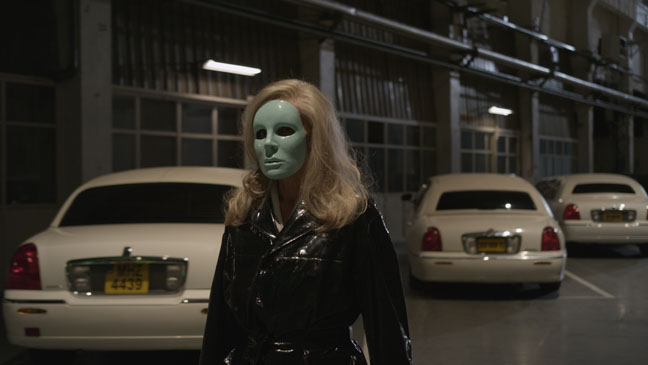
CANNES 2012: Leos Carax’s HOLY MOTORS

CANNES 2012: Leos Carax’s HOLY MOTORS

null

Where does one begin with Leos Carax’s insane Holy Motors? Maybe its incredible central performance(s) by Denis Lavant, who literally transforms into a different character in nearly every other scene, each one stranger than the next? Or perhaps its stark raving mad narrative that bends so far into the absurd, it threatens to break apart? There’s no easy answer, because Holy Motors evolves with each passing minute, both brilliantly human and purposefully silly, a prism of performance and death so different from other films that it seems to have been beamed down from another planet.

Whether you embrace or reject Holy Motors’s challenging approach (I’m still on the fence), it’s impossible to deny that Carax has created a singular mosaic, the rare film that doesn’t just crush the basic rules of storytelling but reinvents them. Lavant plays Oscar, a shape-shifting chameleon who travels around the dark streets of Paris in a white limousine driven by his advisor/chauffeur Céline (Edith Scob). Oscar hatches a new identity between each stop, as if constant metamorphosis were integral to his survival. The interior of his car is a dressing room, the outside world his stage. Oscar’s characters range from a bald assassin to an angry family man to his previous incarnation “Merde,” a raging man-beast who first appeared in the omnibus film Tokyo.

The scenarios following each transformation examine the dynamic power of cinema (with long tracking shots, detailed blocking, kinetic movement), but also the different emotions an actor can express mid-moment. Instant rage and tenderness co-exist in the Merde segment, in which the hunched-over psychotic roams a cemetery, eating flowers, capturing an American model (Eva Mendes), and subjecting her to one of the most bizarre ceremony scenes ever. Lust and instinct dominate the section in which Oscar wears a motion capture suit, grinding on another female actor in what Carax himself calls the “Coitus” dance. Their erotic physical movements lead to the animation of two mind-blowing dragon figures. A motif of mutual destruction runs throughout the film, especially in one sequence in which two identical characters stab each other in the throat, as if the very act of performance could destroy the humanity beneath the mask.

Like Alain Resnais’s You Ain’t Seen Nothing Yet, Holy Motors explores the way performance can transcend death, evoking a collective joy in direct contrast with the consistent physical ugliness on display. The film’s most rousing sequence is also its most random: Oscar leads a marching band of accordion players around a closed-off room, the camera tracking backward constantly, so it looks as if the camera is pursued by the musicians. If this sequence resonates with inspiration and joy, the musical number later in the film (with another time-traveling performer played by Kylie Minogue) is fraught with tragedy. As Oscar trails slowly behind, the woman walks through a gutted-out hotel, stepping over pieces of dismembered mannequins littering the floor. Carax's creation of dualities is endlessly fascinating.

Late in the film, Oscar confesses, “we’re having a ball in the back of beyond,” but the exhaustion on his face tells a different story. Sometimes living so deeply inside your profession is punishing to the point of madness, and with so many masks layered on top of each other, identity becomes fluid, random, even combustible. Holy Motors ends with a series of ridiculous revelations that really don’t reveal anything except more possibilities. Is Oscar an angel? Or a player in the devil’s most sadistic recess game? Like everything in Holy Motors, the answer is up for endless discussion.