GAME OF THRONES RECAP 7: A MAN WITHOUT HONOR

GAME OF THRONES RECAP 7: A MAN WITHOUT HONOR

What makes for a great Game Of Thrones episode? What stories can it tell that could put it on the rarefied level of, say, HBO’s holy trinity of The Sopranos, Deadwood, and The Wire? I’m not sure how I would have answered this question before seeing “A Man Without Honor.” I would not have expected to say that arguably the show’s best episode would have only one major event combined with a series of dialogues. This isn’t a surprise, given that the dialogue and characters are some of the strongest components of the show, but it is somewhat odd, given how many different storylines are going on at once, that so few move directly forward.

Instead, in scene after scene, we’re shown reasons why these characters are important, and why the stakes are so high. Not many of the metaphorical poker hands are fully played out, but watching them progress gives us insight into most every major character as well as a few minor ones.

Take, for example, the centerpiece of the episode, Jaime Lannister, in his cage, talking to a cousin he barely remembers. The cousin squired for Jaime once, and clearly worships Jaime as a hero. They reminisce. They bond. Jaime supplies us with a bit of exposition, a reminder of the currently missing Barristan Selmy. They discuss their current situation. “I’m not well-suited for imprisonment.” Jaime has a plan of escape. The cousin wants to know what he can do. Jaime says “die” and then kills the man he just charmed.

There are two good reasons this scene shouldn’t work. First, it’s been done before. In the middle of the first season, Jaime talked with Ned Stark’s guard, Jory Cassel. After initially dismissing Jory, the two men ended up bonding over past war stories. Shortly afterwards, Jaime killed Jory with no regrets. For this reason, and because of the slow buildup of danger via the blocking, lighting, and music cues, Jaime’s violent turn isn’t a surprise. It's still a great scene, though.

Nikolaj Coster-Waldau’s performance as Jaime Lannister deserves the credit here. From the beginning, he has imbued Jaime with the charisma and power that the novels tell but don’t show until much later. He’s been largely off-screen this season—there's only so much you can do when chained in a cage—but Coster-Waldau’s cheerful cynicism dominates anytime Jaime is on-screen.

Only writing this now do I realize that Jaime didn’t say much to the poor boy he promptly murdered, beyond generic platitudes. Perhaps he did remember the boy, and spoke to him as a friend because he wanted some pleasant human interaction even as Jaime planned his cousin’s murder. Perhaps he didn’t remember the lad, and simply told him what he wanted to hear in order to get him within arm’s reach. Jaime was built up as the primary villain in the first season, but here, imprisoned for months and covered in his own shit, plotting a desperate, doomed escape, he seems even more dangerous.

This may have been the standout scene of the episode, but “A Man Without Honor” is filled with one-on-one interactions, most of them good, some of them brilliant. Arya Stark’s dangerous sparring with Tywin Lannister is dramatically improved this week, after the too-farcical physical comedy last week. Instead, tonight it’s a game of wits. Seeing both Charles Dance and Maisie Williams take each other on is a joy, and further confirmation that Williams is a potential star. This is one of the show’s funniest-ever scenes, with Dance’s slight facial expressions showing how impressed he is with the girl’s audacity, and Arya just barely staying ahead of Tywin’s probing questions.

Almost every major character gets a scene where the tension of their surroundings is built and detailed. Sansa Stark continues her awkward, tense relationship with The Hound, who seems to have adopted her as a pet of his own, saying “You’ll be glad of the hateful things I do when you’re queen, and I’m all that stands between you and your beloved king.” This may be Sophie Turner’s best episode as Sansa, and it’s also the one where she’s had the most to do, as Sansa’s first period shows up, making her betrothal to Joffrey much more likely to be completed. With this known, she meets with Queen Cersei, whose odd mentoring of Sansa is even more explicit than The Hound's, thanks to Tywin’s parallel relationship with Arya Stark.

Cersei then meets with Tyrion Lannister, and finally shows vulnerability, admitting that her children were born of incest and how troubled she is by Joffrey. During the first season, I thought Lena Headey was the weakest actor in the ensemble, constantly relying on her “scrunchyface” to convey any emotion, genuine or manipulative. With a bit of vulnerability on display, Headey manages to make a scene where Tyrion and Cersei bond a bit seem honest and even sympathetic. It also serves as a reminder that Stannis, with his huge fleet and new army, is less than a week away from the capital, and close to the climax of the season.

Some of the most fun comes from the romantic comedy Beyond the Wall, where Jon Snow continues to hold the wildling Ygritte prisoner. Much like Jaime Lannister’s scene, there are lots of reasons to dislike this storyline: Ygritte’s sexual manipulations are so transparent as to be downright wacky, and the part where she argues about who owns the land struck me as overly-modern, with its anti-colonial discourse (“You lot just came along and put up a big wall and said it was yours!”). The acting, once again, helps—Rose Leslie sells both the sexuality and the wildlings’ different norms—but I think the real work is done by the location. The scenes north of the Wall were shot in Iceland, and the craggy hills, tundra, and cold, cold snow and rain imbue the apparently comic scenes with seriousness and even danger.

Also, impressively enough, several episodes in, Jon’s half-brother Robb Stark and his infatuation with the nurse Talisa has finally gotten to the point where it doesn’t stand out as the worst part of the episode. That, surprisingly, goes to Dany’s adventures in Qarth, where her pursuit of her dragons’ kidnappers leads her deeper and deeper into a storyline where she lacks agency, which she attempts to make up for by screaming, in increasingly petulant and shrill fashion. (She sounds like Mel Gibson in the commercials for Ransom, yelling “GIVE ME BACK MY DRAGONS.”) It’s disappointing given the depth Emilia Clarke brought to Danaerys in the first season.

And then Game Of Thrones tosses in a sucker punch. After an hour of scenes consisting almost exclusively of two people talking to one another, the action returns to Winterfell and Theon Greyjoy’s pursuit of the younger Stark boys. After a day of fruitless searching, Theon returns to Winterfell, claiming to have found the boys, and offers proof: two charred, dismembered children’s corpses. The grim music rises as we see that a character who began the season as a sidekick to one of the heroes is now a child-murderer. That doesn’t relieve the tension built up over the course of the episode—it hammers it in. That’s what will make Game Of Thrones worthy of inclusion in the tevevision pantheon.

Adaptation:

As far as I can tell, every single scene in this episode was significantly altered, or simply invented, compared with the novel. Robb’s, Arya’s, Dany’s, Jorah’s, and Jaime’s scenes with the cousin are totally new. Jon and Cat have had their scenes altered chronologically, and their motivations have also been changed due to alterations in previous episodes: Qhorin didn’t leave Jon with Ygritte for days in the novel, instead disappearing for a while, then returning.

Missing characters change the structure and meaning of Bran’s main scene in the episode—a friend with a premonition of the dead bodies has been deleted and has had his character merged with Osha, who doesn’t have that gift. Meanwhile, Theon’s worst impulses are being exacerbated by one of his crew, instead of by another major character (who will apparently be introduced later). Sansa’s scene with Cersei may be the only one to be relatively unchanged from the novel.

I would quibble with some of these decisions—in fact, I almost certainly will next week when we see the fallout from Cat’s confrontation of Jaime—but overall, I think this marks a turning point for Game Of Thrones as an adaptation. It has fully detached itself from the source material. It still uses the books' themes, characters, and overall story, but it now has the confidence to be tell that story in its own fashion.

Rowan Kaiser is a freelance pop culture critic currently living in the Bay Area. He is a staff writer at The A.V. Club, covering television and literature. He also writes about video games for several different publications, including Joystiq and Paste Magazine. Follow him on Twitter @rowankaiser for unimportant musings on media and extremely important kitten photographs.
GIRLS RECAP 5: HARD BEING EASY

GIRLS RECAP 5: HARD BEING EASY

More like "Hard Writing Consistently." What was that?
 

nullFor four episodes, Girls has stayed on the right side of believable. Not likeable or admirable, necessarily, when it came to the three leads and their behavior (I'll excuse Shoshanna from the discussion for the time being), but we don't have to like characters, or find them attractive physically or emotionally, to see something familiar in them and in the situations they move through. Our interest in a narrative isn't always about comfort, or escape. Sometimes, it's about recognition. I wouldn't characterize Girls as holding a pitiless mirror up to a generation or anything, but I think it gets at certain truths that lie underneath (and/or in) the pretension and self-absorption and unprofessional bumbling, or at least it tries to.
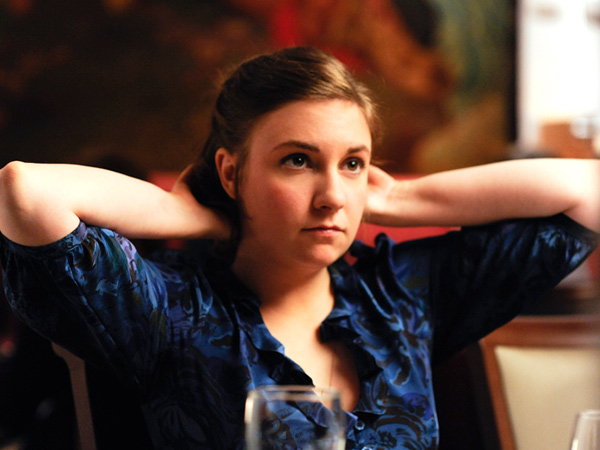
I don't know what "Hard Being Easy" was trying to do, besides annoy/baffle the audience. (Mission accomplished.) The episode has a handful of neatly observed moments, and the usual complement of too-awkward-to-watch bits . . . but the awkwardness didn't come from the characters this week. It came from Lena Dunham losing control of the material.

The Marnie/Charlie storyline picks up shortly after the end of the last episode, and it's well done—but it has to climb uphill from a ridonkulous beginning in which Charlie forces Hannah to read aloud from the journal in front of him and Marnie. Hannah goes along with this, despite the fact that 1) Charlie (well, mostly Ray, but whatever) violated her privacy, 2) Marnie threw a drink on her and called her a bitch, 3) neither of them apologized, and 4) whatever Hannah's involvement, the only credible action for any character would be to hole up elsewhere until the couple's storm blew over. And Hannah not only goes along with it, she corrects them, saying it's "notes for a book," not a journal, and asks for feedback on the writing. Yes, Hannah lives in her own bellybutton, but this isn't believable behavior from anyone.

The rest of Marnie's subplot resonates, though, from Ray overplaying the loyal-best-bud card, to the revelation that Marnie has never gone to Charlie's apartment (once there, she admiringly notes that it looks like "a Target ad"), to the flashback to college in which Marnie and Charlie meet. Marnie has taken an unknown drug at a party and is disappearing down a paranoia-hole. Hannah tends to her for a while, then heads off to dance with Elijah (to the Scissor Sisters, after Elijah "curates" Marnie's bangs with a flick of his forefinger. . . . Hannah really thought that guy was straight? For two years?), leaving Charlie to mind Marnie. The narrative pun on "high maintenance" aside, it makes perfect sense that this is how they met, that Charlie ministered to her from the beginning. (Charlie's wig, however, is inexplicable. I get why the actor is wearing one, but—that one? Did Charlie just come from an '80s-Stamos-impersonator contest?)

Their break-up/make-up/break-up talk the next day is dead-on. Marnie turns up in "my party dress and my sorry face," sure that she can change his mind. Charlie points out repeatedly that she isn't in love with him anymore; she asks repeatedly that he not break up with her. We've all had that convo, fumbling and protracted, desperate not to rip the Band-Aid off because "better the devil you know" and all that. This is where Marnie's at with it, refusing to admit the facts (and probably thinking she'd have been the one to do the dumping). Charlie purposely wounds her by saying he thought he recognized her at the party from a porn flick, Sophomore Sluts; she's shocked that he watches porn. (Ladies: they alllll watch porn. Even the Charlies. It's usually nothing pathological; please stop taking this personally. Thanks.) After she offers him the blowjobs she should be giving him anyway, they end up in his low-ceilinged bed nook, having sex, and he orders her to be nice to his friends and "act like [his] life is real." She agrees. He asks her to keep her face close to his. She does. Then he says either "say 'I love you'" or "stay; I love you"; either way, Marnie physically recoils, saying she can't, and whangs her head on the roof of the bed-nook. Immediately Charlie sits up to make sure she's okay: "I'm right here. I'm riiiight here." That's the problem, of course, and she whispers that she wants to break up.

And this is the least awkward sex in the episode.

Jessa gets it on with an ex-boyfriend, a subplot that seems to exist solely so the two of them can burst into Jessa and Shoshanna's apartment, pawing each other, before Shoshanna can announce herself or vacate. Shosh has to hide behind an Ikea curtain for the duration. The ex gets a high-dudgeon line about "a very tumultuous relationship in which one's Vespa gets destroyed for no reason" that I chuckled at; everything else flopped. Jessa finally notices Shoshanna and teases her for being a creeper, and Shoshanna, always talking at a high rate of speed prior to this point, doesn't say a word to contradict her. . . . What? We got the "virgin is both attracted and repelled" note last week, and we don't watch the show for slapstick—fortunately, since slapstick is demonstrably not its strength. What is this story doing?

Perhaps it's an effort to postpone the inevitable boinkfest between Jessa and Jeff Lavoyt—and that part of Jessa's story this week is sharp. Jessa's in the Lavoyts' bathroom, getting ready to meet the ex; Lavoyt's leaning boyfriendily in the doorway. Mrs. Lavoyt comes upon them there, chatting, and Kathryn Hahn is excellent in the scene, holding the awkward silence exactly the right amount of time, lying that it's okay that Jessa is using her lipstick ( . . . of course she is) because she doesn't want to come off like an unhip harridan.

It's also not really okay that Jessa, hearing about Hannah's boss's handsiness, suggests that Hannah "should hump" Richard "for the story." It's a hundred percent something Jessa would do, and most likely get away with, because she's a confident beauty who wears a kimono to her babysitting job. It's a hundred percent not something Hannah, as written to this point, would do, but, for reasons I can't fathom, she does it. Yeah, yeah, "for the story"—I don't see it. And based on the too-long, all-over-the-place scene that results, Dunham didn't either. Richard asks Hannah for a turkey sandwich; she tells him to cut the crap, because she knows he wants to fuck her. I write in my notebook, "Oh, this is a dream sequence." It isn't, and it's interminable, Hannah insisting that it's what Richard wants, Richard asking if she's high, Hannah switching gears and threatening to sue, Richard snorting that "there's no suing app on your iPhone" but adding that he's not going to fire her because she's "great," Hannah offering to forget about suing for one thousand dollars . . . it just. Keeps. Going. Richard is still trying to convince her to calm down and go back to work when Hannah whines, "I just tried to fuck you, sue you, and extort you! I'm fuckin' nuts, why would you want me in your office?" Perhaps that's Dunham signaling that she knows the twist is ridiculous, but the plot doesn't work, as farce or as commentary. (Hannah's big kiss-off line—"Someday I'm gonna write an essay about you? And I am not gonna change your name. And then you can sue me"—is just weak.)

Alas, the script isn't finished taking an idea over the top and then not knowing how to get back—but like others in the ep, this week's Hannah/Adam sequence starts from an interesting premise about the things we choose to hear. Hannah goes over to Adam's house to find him wearing a shirt. . . .  Just kidding. He never, ever wears a shirt. At this point, I know that guy's nips better than I know my own. When Hannah tells him what went down at work (sort of; she says "there was a sex scandal"), he grunts, "Sometimes you say shit that sounds made up"—an on-point comment, since she's also "made up" the idea that her straight talk in the prior episode (and their ensuing intercourse) has bonded them into a couple. "Surprise": Adam didn't hear it that way. What he heard is her saying they shouldn't have sex anymore. But then you kissed me, Hannah points out. "Because you were sad," Adam shrugs. And then we had sex, she points out. "Because we were kissing," Adam duhs, before telling her, "These things have an expiration date—six months or until you stop having fun," and Hannah isn't.

That 100-monkeys-typing brand of observation, simultaneously precise and insensitive, is one of the things that makes the Adam character ring true for me. Hannah, trying to make Adam jealous by over-sharing that she "almost" fucked Richard, buys time with a trip to the bathroom, and as she sits on the toilet, her eyes well up. She's wearing another dress that doesn't suit her—she looks like a hacky-sack with bad posture—and all of that rings true for me too.

But then she comes out to find Adam in his bedroom, jerking it. That he's doing it while Hannah's still there, after turning her down for sex, is galling, as she notes, but it's still in character for both of them—and it's still in character that she can't make herself get angry and/or leave. But then Adam prompts her to verbally abuse him as a turn-on, and she goes along with it, and the scene is once again too long and too aimless, and Dunham’s direction doesn’t illuminate why Hannah is doing this or what she's feeling about it, and when Hannah demands cab fare as part of the "you're a bad boy" stroke-fest, it loses me completely. I don't buy Adam as the masochist when he's gotten off on degrading dirty talk in the past, I don't buy Hannah taking control in this fashion, and the editing is a hash, but the primary problem is a flatness. The scene feels calculated to provoke, theoretical.

That's the ep as a whole. The plots begin with recognizable situations, but veer into almost academic explorations: what if we said this, what if we made her do that, wouldn't it be funny if the other thing. It's not the lack of "realism" (realism isn't always good storytelling, vis. the sixth season of Buffy the Vampire Slayer and the accurate but repetitive downward spiral of its heroine). It's that I can't relate to these situations, or these characters in them, and based on the faltering humor and tempo of the episode, I'm not sure Dunham could relate to them either.

Sarah D. Bunting co-founded TelevisionWithoutPity.com, and has written for Seventeen, New York Magazine, MSNBC.com, Salon, Yahoo!, and others. She's the chief cook and bottle-washer at TomatoNation.com.

GIRLS RECAP 4: HANNAH’S DIARY

GIRLS RECAP 4: HANNAH’S DIARY

null

I hoped the title of this week's episode wouldn't imply what I had a feeling it implied. I hoped we'd just see Hannah writing in her diary, or hear snippets in a voice-over—something, anything besides another character reading Hannah's diary and getting information s/he didn't want, while I watched, cringing, from behind a pillow.

nullNo such luck. The information we don't want, the things we can't un-know, the facts we already have but can't face: these form the contents of "Hannah's Diary."

Shoshanna's virginity is the most obvious example; it looks like she's found a likely prospect for dumping it when she runs into an old summer-camp acquaintance, Matt Kornstein, on the street. The flame rekindles with a quickness . . . er, "dork-ness": Matt speaks admiringly of "the most intense kitchen raid" that Shoshanna led as a junior counselor back in the day; she fondly remembers how he saved a camper stuck between two kayaks. Summer-camp nerdery is an easy target, but it hits its mark here; no dummy, Matt avails himself of their mutual raptness by suggesting a hang that very night.

It's still going well as they watch a movie—Matt isn't put off by the trademark Shoshanna hail of verbiage, and smooves his leg onto her lap with an excuse about how it gets achy if he can't stretch it. Next thing you know, he's peeling off her clothes (to reveal the fancy and fairly risqué lingerie she wore for a garden-variety movie date; atta girl) and diving between her legs. The overhead shot that comes next is a deft run of faces by Shoshanna: he's doing his thing, and she's simultaneously ticklish, intrigued, and unable to enjoy it because she's fixated on whether it means she can oust her hymen.

When he surfaces to rave that "this is so chill, the way this is happening, I love it," that's Shoshanna's cue to ruin it with the information that she's a virgin. Matt didn't want to know that: "This is . . . really not my thing. Virgins!" She didn't want to know that, and tries to correct her mistake by protesting that "except for the fact that I haven't had sex I'm like totally not a virgin." Shoshanna's description of herself as "the least virgin-y virgin ever" is the line everyone's going to seize on, but the "except for the fact" line is more striking—not because it's nonsensical, but because it's such a tidy nutshelling of the idea that, until you're not a virgin anymore, you have only a theoretical grasp of these distinctions.

Matt's not going to put too fine a point on it, though: "Virgins get attached. And they bleed. You get attached when you bleed." Thanks for . . . not sugar-coating it? I think this is a widely held belief among both genders (minus the blood part), but the bluntness is bracing. And non-negotiable: Shoshanna's assertion that she's "totally not an attached bleeder" doesn't change Matt's mind. Later, Shoshanna plaintively asks Jessa if she'd fuck a virgin, and when she's told Shoshanna means herself, Jessa sweetly says, "Oh, Shosh. If I had a cock, it's all I'd do."

By that time, Jessa's spent most of a day confronting what she doesn't know yet. She has a power over men, which she exercises effortlessly when she runs into her charges' dad, Jeff Lavoyt (James LeGros; took me a while to track down the character name), and his just-out-of-rehab brother Terry (Horatio Sanz, and you have to wonder where that casting is going) on the street. Terry is gobsmacked that Jeff scored a caregiver who looks like she's from "the back page of the Village Voice," but what they don't know—and Jessa hasn't admitted to herself yet—is that she has no idea what the eff she's doing, or talking about.

Chilling with the other nannies on the playground—mostly women of color who "thought she was an actress with some baby," not a babysitter—she bonds with them by complaining that Lola is acting like a "C U next Tuesday," then assures the others grandly that "I'm just like all of you." The "girl, please" faces pulled in response don't stop her from sitting on the picnic table and delivering a well-meaning but obnoxiously ignorant sermon to them about unionizing, and she's only pulled up short when the Caribbean nanny wonders where Lola and Trixie have gotten to. They're located (by the other nanny) under a gazebo, but Jessa can't make them come out, and she can't stop Lola from immediately tattling to her parents when they get home that Jessa lost them.  

The parents just assume Lola is lying, and it strikes a chord in Jessa. Not only does she know the truth about what happened in the park, she knows another truth—about Lola, and then about her own overlooked childhood.

Jessa confesses to their father that she did lose the girls. Lavoyt sighs that "we've all done it," that he lost Lola at a green market years ago, and Jessa admits that she "would run away and tell lies all the time" at Lola's age—like that her mom was awesome and they were best friends. This conversation puts the first chink in Jessa's armor of pretension; Jessa may not know how to take care of Lola, exactly, but she knows Lola.

Hannah has known for a while that Adam is a pig; it's just not something she can admit to herself without it meaning something negative about her—not when he sexts her a picture of his dick, then follows it up immediately with a bone-chilling "sorry, meant to send that to someone else" text; not when Marnie calls Adam "a noted psychopath"; not when Hannah sends him a picture of her breasts in an attempt to play along, and he doesn't respond.

It takes a conversation with her co-workers at her temp job to get the light bulb to go on. It's great that Hannah landed a gig, except that she's in over her head with building charts in Windows, and her boss, Rich (the reliably excellent Richard Masur), is a creeper. After he "demonstrates his Reiki technique" on her as an excuse to handle her boobs, Hannah is concerned and grossed out, but during a bathroom powwow lit to resemble a prison documentary, Hannah's colleagues explain that she'll get used to it, and besides, in exchange, Rich buys them iPods and looks the other way on tardiness and "sick" days. This leverage-based view of sexual harassment is interesting (and/or depressing) on its own, in light of the current economy and Hannah's specific predicament within it; it's even more interesting (and/or depressing) that the co-workers have no problem letting Rich's fingers do the walking, but all-caps demand that Hannah "have a little self-respect" when it comes to Adam. Hannah does ask why the Rich fondling is different, but they don't really answer. (Another instance in which the show presents a complex argument or hypocrisy, then doesn't draw an explicit conclusion about right or wrong. Possibly Girls feels overmatched by untangling complicated motivations; more likely, it's that real-life situations — the emotions surrounding an abortion; the compromises women may make to keep jobs—don't resolve in a narratively neat way, and Dunham doesn't want to force them to.)

After their intervention on her patchy eyebrows left her looking like Frida Kahlo as drawn by a kindergartener, Hannah probably shouldn't ask those two for the time, much less for advice about her personal life. But something in the conversation forces her to see that the only thing she "gets out of" her relationship with Adam is self-loathing and dashed hopes. And she tells Adam exactly that, standing in his doorway and cutting him loose: the dick pic made her feel "stupid and pathetic," which is how she's trained him to treat her, and she really likes him, but she can't anymore, because it hurts too much. "I just want someone who wants to hang out all the time, who thinks I'm the best person in the world, and who wants to have sex with only me." I stop taking notes to stitch that on a pillow, but Hannah's not done—Adam doesn't hear her, and he's not going to change, so sayonara. Adam doesn't say much of anything, but when her lip starts to tremble towards the end, he hooks a finger into the front of her sweater. Ohhhh no no no no no, don't do it! Walk off before he can suck you back i—dammit. Passionate making-out. She stops to say that she can't take "serious" naked pictures of herself, "it's not who I am." "Just be who you are," he says, oh so sweetly, and it's a moment Hannah is going to take out and look at with brimming eyes for months after he goes back to his regular shitheel self. Been there, done that, bought the t-shirt, and "forgot" it at his place so I'd have an excuse to come over again.

Hannah meets up with the others at Charlie and Ray's open-mic performance. She's all aglow (maybe Adam finally found her clit), but that won't last long, because the scales have fallen from Charlie's eyes. Earlier, doing some daytime song-writing with Ray at the Hannah/Marniehaus, Charlie notes that Marnie's "been completely on edge lately," but doesn't connect this with their relationship. He wants to make her something nice to cheer her up. Ray: "Like a coffee table made out of street garbage?" Actually, Ray, in Brooklyn we prefer the term "found materials," but he's right that Charlie is in denial—although Ray's assertion that Marnie needs to be fucked hard, chained to a post, and whipped "until she fuckin'—whatever" is perhaps more about Ray's hostility issues.

The snooping that follows is definitely about Ray's boundary issues, as he examines Hannah's holey undies, then holds Marnie's vibrator aloft. "That's a shared tool," Charlie sniffs. "You're a shared tool," Ray and I say in unison. But the mother lode is sitting right out on the bed: Hannah's diary, which Ray begins reading and snarking on. Then he falls silent and is suddenly super-eager to get back to helping Charlie build the table. Charlie doesn't understand that ignorance is bliss, and insists on knowing what Ray read.

And he can't un-know it, so he puts it into a song, Kathy-Griffin-on-Seinfeld-style. After dedicating the piece to "my G-friend Marnie" and Hannah, he angrily strums and sings lines from the diary: "What is Marnie thinking / she needs to know what's out there / how does it feel to date a man with a vagina." All things we know, all things we've seen, several things Hannah and Marnie have already discussed in the bathtub and elsewhere. Shoshanna, confused, asks if it's a love song as Ray whips out the diary itself and Charlie begins to read directly from it. Hannah is turning a shade of mortified spearmint; from her right comes the bubbling sound of Marnie's blood reaching a boil. Charlie finishes and storms off-stage, and Marnie, unwilling to accept that this is everyone's fault but Hannah's, dashes her cocktail down Hannah's front and calls her "such a fucking bitch." Or perhaps calls herself that. Not the most realistic burst of plot I've ever seen—but that relationship had to end, so why mess around. It also reminded me of that great line from the Toni Pavone character on Felicity, when she tells Felicity that honesty isn't as important as kindness; every writer has to decide, usually more than once, whether it's more important to nail the description or protect the feelings of those described. Granted, Hannah didn't intend for anyone to read her diary—but it can't be un-read. After Marnie storms off, Jessa chuckles, "That was awesome," and Hannah says glumly that she's going to puke, and both comments are probably accurate assessments of how it's going to feel for Hannah to have to think about someone besides herself going forward.

Sarah D. Bunting co-founded TelevisionWithoutPity.com, and has written for Seventeen, New York Magazine, MSNBC.com, Salon, Yahoo!, and others. She's the chief cook and bottle-washer at TomatoNation.com.

GIRLS RECAP 3: ALL ADVENTUROUS WOMEN DO

GIRLS RECAP 3: ALL ADVENTUROUS WOMEN DO

nullRemember those Cosmo-ish "Which Sex & the City character are you?" quizzes that every single editorial outlet featured during that show's run? Of course you couldn't take the results seriously; you can't "be" one of those people, because those people weren't people. They were slices of people, meant to illustrate (and easier to write than) the composite, contradictory whole.

nullIt was reductive to say that I "was a Miranda" (a workaholic who ate cake from the trash) ( . . . What? It was still in the box!), and it's just as reductive to say that I'm in large part a Marnie (controlling, responsible, paralyzed, gorgeous) (just kidding; I'm not that responsible). But I do relate to Marnie's rigidity, self-righteousness, the frustration and fear of change that manifest as meanness, and maybe that's why I completely hated Marnie's story in "All Adventurous Women Do."


I hated Marnie during it at times, for sure. Charlie surprises her with a stubbly new haircut, and it's actually an improvement over the previous floppy style, but Marnie's face falls straight off her head (nice work by Allison Williams, here and throughout). She hates it, sneering that he looks like "Mickey Mouse without the ears." She's basically mad that he didn't clear it with her first, and she's even madder when he reveals that he shaved his head to support a woman at work who has ovarian cancer, because now Marnie looks like a total bitch. That’s because she is a total bitch here.

We didn't need another illustration of the idea that Marnie and Charlie should split up already, but the show moves the ball at least a few feet later . At an opening at the gallery where Marnie works, Marnie's inappropriate boss (she reads as tipsy, but you get the feeling she's always like that; kitted out in a low-cut blouse, she sends another assistant to get her "tit tape," and nobody in the scene even flinches) introduces Marnie to a snotty artist, Booth Jonathan. The "introduction" takes the form of the boss yelling at Booth for sleeping with some other lady of a certain age, and noting that Marnie says she has a boyfriend, "but I've never seen him." Marnie, flustered, shares that she's a big fan of Booth's; Booth sizes her up and advises her to "try and give less of a shit." My immediately saying, out loud, "The correct usage is 'try to," means I'm not in the demo for Booth's cocky whatever, but Marnie is intrigued. Flirting. She feels obligated to inform him that she's not going to kiss him. More flirting.

And here's where I get annoyed. Booth gets right up close to her and murmurs, "But I want you to know: the first time I fuck you, I might scare you a little, because I'm a man, and I know how to do things." He walks off to enjoy being That Guy and wearing his blazer collar turned up. Marnie rushes inside, locks herself in a bathroom, and masturbates. . . . Girls, please. It's not that a line like that has never worked, but the entire sequence felt, to me, like a man's take on what Marnie needs, i.e., "That filly wants breaking to harness!" Yes, people should stand up to Marnie, but 1) I don't care for the idea that that's a result of her gender, or that the opposite gender is what's required to "take her down a peg"; and 2) snideness and pat line delivery do not a man make in the first place. Maybe I'm overthinking this, but the cure for uptight-bitch-itis is not necessarily cock.

We're seeing more than enough peen-alization on the show as it is. Hannah puts on war paint (high five on the tights-and-Chuck-Taylors wardrobe choice, though) and goes over to Adam's house, where he's lifting weights (natch). The next morning, in bed, he's making her tummy fat "talk," which she's both charmed and terrified by; he asks whether she's "tried a lot to lose weight." Mildly irritated, she tells him she decided to make other things more important in her life, but I liked the way the scene highlighted that the average straight man's cluelessness about matters lady-weight is exactly that: cluelessness. He doesn't mean to be hurtful, because he absolutely has not noticed whichever five-pound pocket his lady friend thinks is flagrantly hideous, unless it is a third breast, which he thinks is rad.

The tickly, teasing development of their bond is rudely interrupted by a call from the clinic, informing Hannah that she has HPV. Lena Dunham kills it here: Hannah is near tears as she relays this to Adam, and he continues to earn points by hugging her and saying he's sorry. Think it's all about to go pear-shaped? Correct! Hannah grumps, "Are you sorry because you gave it to me?" Adam is promptly and completely offended, claiming that he got tested recently "and I don't have that." Even if there were a screen for HPV for men, which there isn't, his claim to have gotten tested would smell like bullshit just because he’s the one making it. Hannah promptly backs down, though: she's sorry, she's only slept with two people (down from "two and a half" in a previous ep) and she doubts it's her college boyfriend, surely he can see how she might assume Adam is the source, is he mad at her? "Will you still have sex with me?" Adam, coldly: "When it's appropriate, sure." What a prince. When Hannah asks for a hug goodbye, he's too "busy" doing a shoulder-stand and cycling his legs.

Water having found its insensitive level once more, Hannah goes outside to call Marnie, who starts crying about how it's so unfair because Hannah is so careful with condoms. They discuss whether Hannah could have gotten HPV from the college ex, Elijah, and do a dead-on riff on the stupid details you inevitably have handy about your exes' exes—viz. Elijah's previous girlfriend, a cellist with a "loose-joint disorder," who annoys Hannah by "liking" her Facebook statuses. Hannah assures Marnie that she's fine, so Marnie reminds her that rent is due in a week, and asks about Hannah's job hunt. Hannah's not that fine. "I have pre-cancer!" she snaps, and hangs up on Marnie. Looks like Hannah is putting her theory from last week—that an STD is a great excuse not to bear down on looking for a job—into practice.

Hannah heads over to Shoshanna's to change clothes. Shoshanna is still kind of a cartoon at this point in the series, but Zosia Mamet is doing a great job with the broad strokes she's given. This scene doesn't do much for Shoshanna's depth, but it's still kind of fun: she's cuddled up on her couch, eating cereal, stroking a furry décor pillow in a Blofeldian manner, and watching Baggage. Baggage is apparently a real show, hosted by one Jerry Springer, in which contestants put their emotional baggage in various suitcases, and then their partners have to pick one, or something . . . . I mean, what it really is script-wise is an excuse to shorthand some background info about Shoshanna (she has IBS, unsurprisingly), and also to address the etiquette of STDs.

Shoshanna's practical inexperience doesn't hinder her here, as she shrugs that Jessa has "a couple of strains" of HPV (the Parisian and Balinese strains, I presume), and Jessa's typically self-mythologizing take on it is that "all adventurous women do." Hannah doesn't want to have to tell/ask Elijah what's going on, because she doesn't want to see him, because she thinks he's still in love with her (. . . oh, dear), but Shoshanna thinks she has to: "In the STD world, I think it's like kind of courteous." She also thinks it's totally fine if Hannah and Elijah end up having sex (. . . ohhhhhh, dear) because they both already have HPV. I know Shoshanna only has two dimensions, but I love both of them, and the insane clown logic that prevails therein.

The adventurous woman, meanwhile, is on a babysitting job, clad in a transparent floor-length white dress with neon-pink underthings. The mom, rushing off to a shoot, suggests the kids do their "mosaic work," or maybe the older one could let Jessa proofread her (ten-page) novel. Jessa is a natural with the girls, listening attentively to Trixie's grammar-school masterwork while eating string cheese in a makeshift tent in the living room. Dad (James LeGros, a casting decision I found all-caps delightful in my notes—love that actor) comes home to find Jessa snoozing on the couch; something about Jessa's artless report that she accidentally kicked one of his kids in the head appeals to him (or perhaps it's the visible hot-pink brassiere), and they smoke pot together and talk around their shared aimlessness. One of the kids wakes up and wanders into the kitchen before it Goes There, but LeGros isn't generally a throwaway-cameo guy, and the dialogue set his character up as a man who's not working and resents his hard-charging wife's blah blah justified in his own mind to fuck the babysitter blah, so! Expect these two to get it on.


Elsewhere, the Elijah talks break down in a matter of minutes. He thinks Hannah's confronting him because she heard about his emergence from the closet, but she's stunned by the news. What follows is a Horvath's Inferno-esque tour of all the insecurities women have, or could have, about ex-boyfriends who "turn out to be" gay—that they were always attracted to men, that they thought about Doing It with men during the relationship, that they could feign an attraction to a woman because she had mannish traits. Elijah confirms all these things, commenting that "there's a handsomeness to" Hannah, and Hannah snaps that maybe he could have figured his attracted-to-dudes shit out before passing her a disease. Elijah goes to DefCon 1 at that point. It's not clear where all his hostility is coming from; she's just accused him of giving her an STD, then claimed that he's affecting a "fruity little voice," but now it seems like he's been lying in the high weeds for other reasons. In any case, he hotly denies he's the carrier, informs her that Adam is full of shit about testing negative, and snots, "You were always like this." Hannah notes that he was not always like this, or she would have known he was gay. Elijah: "We're only as blind as we want to be." Then he throws a low blow he's obviously been saving: her dad is gay. Elijah cites the stud in Dad's ear, and I totally noticed that on Peter Scolari in the pilot, so it's nice that it gets a callback here. After failing to convince Elijah that her dad is straight, she passive-aggressives that she's going to ask people if they're gay before she sleeps with them from now on. Elijah wishes her a sarcastic good luck with that—"and don't be surprised if people ask you if you keep dressing like that." I agree that Hannah doesn't always dress to flatter her shape, but again, the bile seems unrelated to what's actually going on here. Hannah has had it and announces that she's going to get the last word in. Not so fast! Elijah snaps, "It was nice to see you, your dad is gay," and leaves.

Back at the Hannah/Marniehaus, Hannah is over-thinking a tweet that ends up reading, "All adventurous women do." She gets up to have a solo dance party to a song with on-the-nose lyrics ("I keep dancing on my own"). When Marnie gets home, Hannah does not stop frugging to announce to her that Elijah is gay, which she probably should have known since he "only ejaculated 30 percent of the time. And . . . he seemed gay." Marnie laughs, because you kind of have to. They dance together, but Hannah's determination to hide her hurt feelings in dance soon flags, and we fade to credits on Hannah giving Marnie a huge, almost desperate hug—making the connection she's sought all episode.


Sarah D. Bunting co-founded TelevisionWithoutPity.com, and has written for Seventeen, New York Magazine, MSNBC.com, Salon, Yahoo!, and others. She's the chief cook and bottle-washer at TomatoNation.com.

GIRLS RECAP 2: VAGINA PANIC

GIRLS RECAP 2: VAGINA PANIC

http://www.hbo.com/bin/hboPlayerV2.swf?vid=1250877


"Vagina Panic" is an attention-getting episode title—but nobody's really panicking in the second episode of Girls except Hannah, whose takeaway from a childhood viewing of Forrest Gump is an obsessive fear of contracting AIDS from "stuff that gets up around the sides of condoms." "Vagina Denial" might cover the subject a bit better.

nullHannah is, of course, still in denial about Adam's potential as a nurturing whatever-mate. We open with another awkward-because-it's-completely-on-point Hannah/Adam sex scene, in which our favorite graduate of Berlitz's porn-talk immersion course is jackhammering Hannah while carrying on about how she's a tween junkie in an alley carrying a Cabbage Patch lunchbox. Hannah plays along with "you're a dirty whore and I'm going to send you home to your parents covered in come"; and with Adam sort of clumsily choking her out with a cat-steps-on-your-face-at-6-AM maneuver; and with him ordering her to call him for permission to have an orgasm if she's touching herself at home. "You want me to call you?" she asks, touched; this is the part she chooses to hear, not the submissive role she's supposed to play for him . . . and does play, more or less. After Adam finishes, she sighs, "That was so good. I almost came," and instead of making sure she does come, he takes the comment as a compliment, and offers her a Gatorade.

It's utterly obvious to everyone but Hannah that Adam is not and will not become the guy she's telling herself he is, but kudos to the script for giving Adam's character a moment that explains why women tolerate that type for so long. During a grim convo that makes it clear Adam is 1) sleeping with other women and 2) not using condoms with them, he muses that Hannah's insistence on rubbers must be why it takes him forever to "nut" with her. Hannah's face collapses like a Vegas building demolition, but Adam catches his snap for once, saying she has "total freak-out face" and quickly reassuring her that he's "fine" with the sex they're having. And that's how Adams keep you on the hook, too—that one moment of acknowledgment, every few weeks, that you're doing a rockin' job as VP of Doormats.

Marnie's assessment of this situation is sugar-free. She informs Hannah that Adam isn't allowed to say the little-whore stuff to her: "He's not your boyfriend." Leaving aside the idea that apparently hooker-john role-play exists only in the privileged relationship space, the "not your boyfriend" nerve is the raw one.

Not that Marnie's interested in any truth-telling about her boyfriend, who she can't bring herself to look at during sex. That sex scene opens with Charlie suggesting that they stare into one another's eyes when they come; Marnie has her head turned away and eyes screwed shut. Her next move is to propose switching to doggie-style, so she's not even facing him, but it's still Charlie back there, and he seems to have confused "thrusting" with "continental drift." The next day, Marnie bitches at Charlie to . . . well, act more like Adam, to get pissed at her and not care what she thinks: "It's what men do." Then she mocks his testicles.

Hannah, eating a yogurt, observes that it's okay if Marnie is just bored. Marnie defensives, "That is a really simplistic explanation of what's going on." It's also . . . the actual explanation of what's going on, and Marnie should just break up with Charlie, but she doesn't want to be the kind of girl who breaks up with The Most Solicitous Man In New York, so she tells herself it's more complicated than that.

Jessa is also in denial, to a degree. She's moody during the first half of the episode, broodily smoking pot with her headphones on, then lashing out at Hannah and Shoshanna when they have the gall to defend a The Rules-ish self-help book about dating. (Hannah doesn't defend it so much as laughingly admit that she "hate-read" it at the airport, which is exactly what I did with the actual The Rules.) After bombasting that she's "offended by 'supposed-tos'" like those the author posits, Jessa bitches at Hannah for studying her face for "one of [her] novels," then announces that she wants kids someday, and she's going to be "amazing" at it. Of course you do, Hannah says, and of course you are—but Jessa's not done: "I want to have children with many different men of different races."

This United Jessa of Benetton declaration seemed random at first, and I didn't know how to react to it initially, other than to conclude that a character who considers her future offspring multi-racial-chic accessories should absolutely not have a baby right now. But I think that's the point—and it's touched on elsewhere in the episode, too, when Adam and Hannah discuss the abortion. Adam deems it "kind of a heavy fucking situation," but Hannah wonders if it really is: "I mean, I feel like people say that it's a huge deal, but how big a deal are these things actually."

Hannah then gets concerned that Adam thinks she's too flip about the issue, because of course it's a big deal—but the dialogue raises some interesting, sticky questions about how our culture and our narratives treat abortion. Specifically, I mean the tendency of many, many films and TV shows to classify an abortion as an incomparable trauma, as Marnie does in so many words; Hannah's raised eyebrows note, sans dialogue, that she can think of more traumatic situations—sexual assault, for example, or the death of a partner. And this is on the few occasions when the script goes through with it, versus having the character miscarry or otherwise sidestep the issue (see: Julia on Party of Five, et al.). Is that appropriate? Or do writers default to that position because it's the least likely to cause offense? Of course an abortion is a game-changer for some women, and not a positive one—but for others who avail themselves of that choice without regrets, I think there's a pressure to suffer, to grieve, to be seen as paying somehow.

The show is not necessarily equipped to answer these questions, and wisely doesn't try. Certainly Jessa isn't delving into them; she's dressed for the procedure in harem pants and complicated lace-up heels. She's also late for the procedure because she's in a bar, drinking White Russians, pontificating about the sinking of Venice (of course she is), and making out with a stranger who borrowed her cell phone—which is how she finds out she won't need the procedure in the first place, because her period is late too, but now it's here. Menses ex machina!

Everyone else has gathered at the clinic, though, to support Jessa and/or get tested for STDs. Marnie is incensed that Jessa is late, except she actually loves it, because she gets to feel a better, more responsible martyr than Jessa, which is what her whole relationship with Jessa is about. But when Hannah goes in for her appointment, Shoshanna can't maintain her denial any longer, confessing to Marnie that she's a virgin. Marnie is taken aback, but shrugs that it's no big deal and sex is "overrated" anyway. She assumes that Shoshanna has given BJs, right? "Yes! . . . No!" Maybe it's because we just saw Chris Eigeman in last week's ep, and he's a lead in Kicking and Screaming, but that put me in mind of the running gag with Otis in that movie. "Is that a pajama top, Otis?" "No! . . . Yes."

We end the episode with Hannah facing one fear head-on as she slides into the stirrups. This is Hannah, so she's babbling more or less uncontrollably to the GYN about how having HIV does in fact have its up sides: it's a great excuse to bail on your job hunt, say, or get really mad at the guy who gave it to you. (She should do that anyway, of course, but: you know. Denial.) Maybe she's not afraid of getting AIDS, she says; maybe she actually wants to get it. The GYN informs her that that's a ridonkulous thing to say, and disgorges a PSA's worth of stats about women's infection rates, and that response is no doubt the result of a network note to the effect of "please make it clear that we're not expected to think this is funny." (It put me in mind of the My So-Called Life pilot, and Angela Chase observing that Anne Frank was "lucky" because she was stuck in an attic with a boy she really liked.)

I didn't think we needed the prod, because the episode keeps coming back to a question about certain charged topics and conversations, namely: How much of what we do, of our reactions, is what we think we "should" do? It's in Adam's "little-whore stuff," which is cast as goofy rather than threatening. It's in Hannah’s wondering if abortion is always a really big deal every time, for everyone, and her frightened Googling about rogue semen. It's in Marnie’s not wanting to come off like a bitch, and coming off like an even bigger bitch as a result. And it's in that disastrous job interview Hannah goes on, when she starts out acing it on a vibing-with-the-interviewer level, then unfortunately feels comfortable enough to make a date-rape joke and shoots herself in the foot. She's supposed to feel that that isn't an "office-okay" topic or tone, because obviously it isn't—but why will she censor herself and her disappointment with Adam, then push the "humor" envelope in an interview? Why does what she "should" do, the idea of "being good," pertain more in this farkakte romantic relationship?

I don't know the answers; I don't think the show does either. But in spite of some kludgy, on-the-nose dialogue in spots this week, the episode successfully showed that issues and people are complicated, and don't resolve in 30 minutes. Or ever, sometimes.

Sarah D. Bunting co-founded TelevisionWithoutPity.com, and has written for Seventeen, New York Magazine, MSNBC.com, Salon, Yahoo!, and others. She's the chief cook and bottle-washer at TomatoNation.com.

GAME OF THRONES RECAP 4: GARDEN OF BONES

GAME OF THRONES RECAP 4: GARDEN OF BONES

null

Garden Of Bones was perhaps my least favorite episode of Game Of Thrones, period. The show has been such a success that seeing it struggle so much is a surprise. It’s still competent and watchable, but Garden Of Bones was frayed at the edges.

nullThe novel this season of Game Of Thrones is based on is called A Clash Of Kings, which makes the story clear: that of the civil war that followed Cersei’s coup and Ned’s execution. Despite the presence of multiple kings, none of them have “clashed” directly, either with blades or with words. Ever since the trailer showed bits and pieces of Stannis’ confrontation with Renly, I’ve been waiting for this scene, prepared to do an in-depth analysis of how it demonstrated the show’s themes surrounding power and legitimacy. Instead, what I got was an example of what’s wrong with Garden Of Bones, which could also make bigger problems for the show in the future.
Watch the scene here:

Two narrative questions arise immediately with the scene: why are Stannis and Renly fighting each other, and where are they fighting? Game Of Thrones’ issues with geography are highlighted here: we don’t know where Renly’s camp is, so we don’t know why this confrontation is meaningful. Shouldn’t Renly be surprised that his brother is attacking him, instead of the Lannisters? But there’s no buildup in either case—previous scenes from Renly’s camp are about the presence of Littlefinger, and it’s the first time in the episode we see Stannis at all. The stakes of this meeting are as high as any we’ve seen in the show, and instead, it’s confusing. 

Clarity has been lost in the translation from the page to the screen. In the novel, location questions are clearly answered. Renly has the strength of two of the Seven Kingdoms, Stannis, one weak kingdom. So Stannis launches a surprise attack against Renly’s capital, which makes Renly stop his march against Joffrey in the capital. There are both strategic and character-based reasons for the confrontation. The location is unclear, which tends to be when Game Of Thrones is at its weakest. (This is worsened in the episode’s final scene, when Davos smuggles Melisandre . . . somewhere?)

Once the characters start speaking, the confrontation becomes more he-said-she-said than tense and meaningful. Stannis makes small talk with Catelyn, she responds. Renly teases Stannis, he responds. More teasing, and Melisandre responds. It sounds a little bit like a radio play, where the actors record their lines in a studio at different times. This may be an intentional choice by the director: the Baratheon brothers have never gone to war with one another, so perhaps Game Of Thrones is portraying their internal struggle as externally stilted.

And it rings falsely. The worst offender is Cat Stark, whose “Listen to yourselves. If you were sons of mine I would knock your heads together until you remembered that you were brothers” is monumentally misguided (though the line is from the novel, it’s taken almost entirely out of context here). So far this season, Catelyn has been the voice of reason, telling Robb that sending Theon to Pyke was a bad idea, and recognizing Renly’s “summer knights” last week.  Here she comes across as peevish and undiplomatic, ruining whatever tiny chance this meeting had at being good for the realm.

Stephen Dillane’s performance as Stannis also leaves something to be desired. He’s supposed to be rigid, so certain of his claim to the throne that he doesn’t comprehend anything else. But what comes across is confusion and boredom. He tells Renly, “You think a few bolts of cloth will make you king?” and tilts his head like a cat. There’s no anger here, nor really anywhere in the entire scene, which would help it make more sense.

Some drama is salvaged at the end, after Stannis delivers an ultimatum. Melisandre turns to Renly and says, “Look to your sins, Lord Renly. The night is dark and full of terrors.” This is the first thing that gives any of the four characters speaking in the scene any pause, as Renly finally realizes the implications of the civil war he’s engaging in.

This scene isn’t the only weak one in Garden Of Bones. Robb Stark returns to our screen, winning a battle and then dealing with the aftermath. First he meets with one of his bannermen, a flaying-happy Lord Roose Bolton, then he meets a woman aiding the injured. I suppose we’re supposed to see some romantic chemistry here, but it comes across as just one more thing to keep track of.

Littlefinger’s visit to King Renly’s camp was dull as well. Why he’s there is never made clear—is he upset at Tyrion’s withdrawn promise of a new lordship? And how long did it take him to get to the camp? Is Renly so close to the capital? His scene with Margaery Tyrell frustrates as well. He bothers her about Renly’s sexuality, but this is such an ill-kept secret that Lannister soldiers were joking about it at the start of the episode. And there’s no real conclusion to the episode, simply Melisandre giving “birth” to something supernatural. It’s ominous, but detached from the story. Garden Of Bones has no narrative arc.

The other half of the episode does far better. Dany’s introduction to the city of Qarth, “the greatest city that ever was and ever will be,” gives it an immediate sense of place. Tyrion’s attempts to combat the worst impulses of Cersei and Joffrey are as entertaining and tense as ever, and he gets the line of the night with, “That was a threat. See the difference!” And Arya’s introduction to the Lannister stronghold of Harrenhal is ominous enough before she gets invited to be Lord Tywin Lannister’s cup-bearer. Garden Of Bones lays the groundwork for dramatic things to happen later with Robb Stark, Danaerys discovering Qarth, and Arya in the belly of the Lannister beast, but it’s worrying that the episode botches the most important scene of the season .

Adaptation:

Littlefinger’s presence in Renly’s camp at this point is a huge deviation from the novels, possibly the biggest of the series to date. It’s also an entirely negative deviation. The scene with Margaery was unpleasant. It’s his explicit offer to Cat from Tyrion that changes things the most, although most of that will take place in the future.

On the brighter side, I’m all for Arya interacting with Tywin Lannister, something that didn’t happen in A Clash Of Kings. And the depiction of Joffrey’s sociopathy, forcing prostitutes hired by Tyrion to beat each other for his pleasure, was different from the page in a way that was fairly necessary, since it had been shown previously via memory.

Still, I can’t help but compare the Stannis/Renly confrontation and shake my head at the missed opportunity. In the book, Renly eats a peach in the middle of it, adding an air of symbolic ambiguity that haunts Stannis afterward. There’s no peach on-screen, even though it probably would be better visually. And poor Cat looking like an idiot compared to lines like this:

“This is folly,” Catelyn said sharply. “Lord Tywin sits at Harrenhal with twenty thousand swords. The remnants of the Kingslayer’s army have regrouped at the Golden Tooth, another Lannister host gathers beneath the shadow of Casterly Rock, and Cersei and her son hold King’s Landing and your precious Iron Throne. You each name yourself king, yet the kingdom bleeds, and no one lifts a sword to defend it but my son.”

Where was this depth on the screen?

http://www.hbo.com/bin/hboPlayerV2.swf?vid=1249940


Rowan Kaiser is a freelance pop culture critic currently living in the Bay Area. He is a staff writer at The A.V. Club, covering television and literature. He also writes about video games for several different publications, including Joystiq and Paste Magazine. Follow him on Twitter @rowankaiser for unimportant musings on media and extremely important kitten photographs.

MATT ZOLLER SEITZ RECAP: LUCK: If Wishes Were Horses …

MATT ZOLLER SEITZ RECAP: LUCK: If Wishes Were Horses …

null

Before we delve into HBO's Luck, I need to get some housekeeping out of the way. I wrote about it in a very general way for New York magazine, then asked to recap the first season for Vulture. Luck is a rare TV drama that benefits from wonky auteurist scrutiny, and that's how I'm going to approach it. I'm fascinated by series creator David Milch and have written extensively about his great western drama Deadwood for the Star-Ledger, The House Next Door, and Salon. I'm also an aficionado of the show's executive producer and pilot director, Michael Mann. In 2009 I wrote, edited, and narrated a series of video essays about Mann's film and TV work. As I recap each episode of Luck, I'll delve into Mann and Milch's creative histories and sensibilities. I might also break down scenes and sequences in detail and talk about why they succeed or fail. I'm not interested in the details of plot except as they relate to character and theme, and I tend to hop around in an episode's chronology rather than writing about events in a linear way.

One other thing you should know: HBO sent the whole first season of Luck to critics in December, so bear in mind that when you read my (and others') recaps, you're reading observations by people who already know how everything turns out. Beyond urging readers who might be on the fence about Luck to stick around through episode four, where things really start to come together, I'll try to avoid spoilers, and ask anybody out there who's seen future episodes to do the same. I plan to delete anything resembling a spoiler from the comments threads and ban anybody who makes a habit of posting them. Them's the rules.

And … we're off!

If you would like to read the rest of Matt's recap of Luck, click here.

A critic, journalist and filmmaker, Matt Zoller Seitz is the staff TV columnist for New York Magazine and the founder of Press Play.

MATT ZOLLER SEITZ: George Harrison Living In A Material World

MATT ZOLLER SEITZ: George Harrison Living In A Material World


Martin Scorsese's new HBO documentary about George Harrison is as serious and sometimes mystifying as its subject

By Matt Zoller Seitz
Press Play Contributor

Who is your favorite Beatle? If you prize humility, generosity and gratitude — or if you’re a kid who loves the sound of his funny name –you might answer Ringo Starr. Otherwise it’s probably a two-way race between Paul McCartney, who stands for sentimentality, old-school musical craft and ceaseless productivity, or John Lennon, whose name still epitomizes rebellion, sarcasm, soulfulness and martyrdom. I’ve rarely heard anyone answer “George Harrison,” and Martin Scorsese’s two-part HBO documentary Living in the Material World (Oct. 5 and 6, 9 p.m. Eastern, 8 Central) incidentally suggests the reasons why. Harrison was the most studious, elusive and impenetrable Beatle. And as he got older, he became increasingly uninterested in celebrity except as a vehicle that could expose him to new experiences, and bring him into contact with artists and thinkers from whom he could learn something.

George — as I will refer to him from now on in this review, because calling the Beatles by their last names seems too formal — was the youngest of the Beatles, but by consensus he was the most mature. From a shockingly early age, he was a student of life, cultivating the demeanor of an acolyte on an endless pilgrimage to an unknown destination. John Lennon had a questing spirit, too, but his life had a wild, often deliberately comical performance-art aspect that George’s mostly lacked. Where Lennon’s personal evolution was a series of diary entries that he invited the world to read, George’s happened, or seemed to happen, in private. The outward evidence of whatever quest George was on (hair length, wardrobe, sitar lessons, Hare Krishna chanting) seemed mostly unconnected to his life as a public figure. He explained himself in the media only because, as one of the world’s most famous men, he had to — and because he hoped his celebrity might encourage strangers to try whatever he was excited about.

You can read the read of Matt's piece here at Salon.

A critic, journalist and filmmaker, Matt Zoller Seitz is the staff TV columnist for Salon.com and the founder of Press Play.