TRUE BLOOD RECAP 3: WHATEVER I AM, YOU MADE ME

TRUE BLOOD RECAP 3: WHATEVER I AM, YOU MADE ME

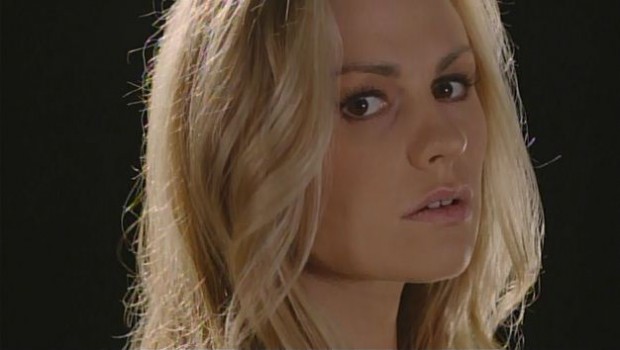
This week’s True Blood suffered a bit from Game of Thrones syndrome—too many people, parts, and ideas for all of them to properly register—but boy howdy were they mostly fine, fun and full of portent of freaky things to come.

nullAlthough the Season Five hot topic is vampire politics, the stories that gave off the most emotional heat belonged to Tara (Rutina Wesley), Jason (Ryan Kwanten) and Pam (Kristin Bauer).

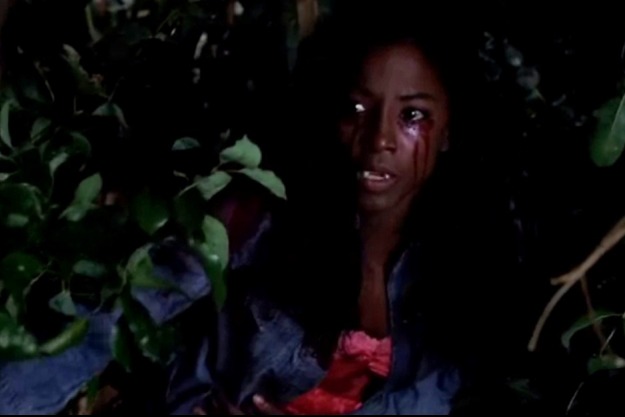
““Whatever I Am, You Made Me” opens with Tara doing the full Terrence Mallick (!) as her enhanced vamp sense connects her to nature, the stars and the galaxies beyond–before hunger guts her.

Enraged with Sookie and Lafayette for not letting her rest in peace, she turns to Merlotte’s and Sam (Sam Trammell) who feeds her a six-pack of True Blood before she passes out.

Vampire Tara is all about wonder and rage, confusion and hyper vigilance. Wesley is killing false accusations of limited thespian skills. Pre-vamp Tara was two notes: terse and bitchy. I’m loving how she does nothing eerily, how she’ll perch on a table and not watch Sookie so much as scan her.

Ryan Kwanten is also developing as an actor as Jason slowly learns why he’s Bon Temp’s automatic sex machine.

This isn't a pretty process. It starts when he meets his old high school teacher at the grocery store. In a disturbing child's voice, he says, “I remember everything you taught me.”

They have sex. But with the phrase “statutory rape” in my mind, I watched Jason realize his high school teacher’s prior predatory acts have left him scarred and left with a sad brand of compulsive sexuality, with “a hole inside I fill with sex.”

But then Jason meets up with Jessica (Deborah Ann Woll) who, in a lovely, soft scene, realizes that the last thing Jason needs is bodily intimacy. So Jessica flips off her sexy supernatural energies, and insists, strongly and intuitively that what’ll fix what’s ailing him is that he stay puts while she throws on a sweatshirt and grabs them both a beer. That is, even as an eternally teenage vampire, Jessica still has killer native nurturing skills to spare and we’re remanded that True Blood is mostly about one thing: female power.

In just this episode, we’ll see Sook use her fairy light burst to kick Pam’s ass when she fails to perform her maker’s duties with Tara.

We’ll imagine the portent of the powers of Salome (Valentina Cervi) which are literally Biblical. And see Tara’s unguided powers screw her up. The focus on female power both natural and supernatural is more repetitive than an old house beat and has been going on in endless iterations for four years now, enough to where you’d think Rolling Stone and other mass organs would have regular “Women of True Blood" issues.

Oh, how we dream. Anyway. Down in the chambers of the vampire Authority, Roman is dealing with the problem of what to do with Bill (Stephen Moyer) and (Alexander Skarsgård) and the news that Russell Edgington (Denis O'Hare) has somehow broken out of his cement grave.  

Russell Edgington, who as we all recall, is the 3,000 year old psycho-vamp who once ripped someone’s heart out on live TV, and has now somehow escaped from being buried in a few tons of cement by Bill and Eric.

In the first iteration of something we’ll hear several times, Roman explains that the only thing that will help vampires beat the insane Fundamentalism of a “Sanguinista” movement that believes in a future where all humans are farmed for food is ‘mainstreaming’, or simple co-existence with humans.

Russell Edgington, he bellows, is “the poster boy of the anti-mainstream movement . . . it’s Osama Bin laden.”

Bill promises that he is a firm anti-fundamentalist. Eric, who’s totally not into politics, kind of shrugs his agreement.

After this little chat, fans of Veronica Mars get to see Tina Majorino again playing a techie who in this case straps harnesses on Bill and Eric that are like GPS’s that blow you up. Eric: “How’s this work?” Tina Majorino: “There’s an app for that.”

What’s remarkable about this season so far is how peripheral Sookie’s been. Later, after she admits to Alcide that she did indeed kill his ex-wife—which as you’d expect, pisses him off a bit—you could have extracted Sook from the episode and lost nothing.

Especially when we get a whole lotta Pam circa 1905, San Francisco. As a whorehouse madam reaching the twilight of her years as a viable sex industry product. And yes, Bauer adds just enough vulnerability for us to buy the idea that this is Pam from over a century ago and not so much as to ruin the character’s flinty credibility.

The scene also shows Eric meeting Bill for the first time, and of course Bill’s being impossibly, annoyingly gallant.

When Bill’s gone, she explains the uselessness of an aging woman, and begs Eric to change her into a vamp.

In one of the episode’s best lines, Eric says that ‘making’ a vampire is an eternal responsibility. “Would you toss a new born baby in the gutter?” he asks, and we can’t help but think of Pam and Tara.

Pam ends the conversation by slashing her wrists—vertically, of course. “Let me walk the world with you, Mister Northman,” she says, “Or watch me die.”

America swoons as Eric’s fangs pop.

Meanwhile, back at vampire Authority HQ, Salome takes Bill for a seductive walk. She is the Salome, Daughter of Herodias, the Seven Veils, all that, and “from a seriously fucked up family,” she quips.

Of course, lost girl stories are catnip for our Bill. When she practically begs for a reason to trust him, he finds it under his zipper.

Then, after taking a shower, one hopes, she plays Eric.

The best way to Eric’s heart is through his maker, Godric. So she goes there before seducing him.

Bill and Eric meet later and realize they’ve been played but why . . . why?

We get another good teaser from the kitchen at Merlotte’s. It’s Lafayette, suddenly pouring bleach into the gumbo, looking into the mirror and he’s wearing Jesus’ demon-face. (Which freaks him out but cheers me up: Jesus will return!)

Then we’re back to Authority HQ, but a deluxe bedroom that looks like the swankest W Hotel room ever. It’s Roman’s private chambers, and Salome, who’s been a very busy girl today, is very naked because this is HBO.

Salome assures him that neither Bill nor Eric is Sanguinista.

And then Roman goes through the mainstreaming vs. Fundamentalism discourse as if this were broadcast TV before the Internet and major plot points had to be repeated endlessly.

The up side is Mr. Meloni sans shirt is a pumped and ripped side of quality beefcake.

He purrs to Salome, “You’re my secret weapon” which, when purred to someone out of the freakin’ Bible, is worth considering—or not. At this point, we don’t know just how far Ball is willing to go with his trashing of the Christian Bible’s power and so we can’t extrapolate how badass Salome might be. Still, if she’s worthy of Roman’s attention, one imagines her destructive powers must be at least above the average Biblical icon’s.

And then we see poor lost Tara, who started the episode with her mind in the stars, breaking into a tanning salon and sliding into a tanning bed. As her body fries and she screams, we cut to Pam who, as Tara’s maker, can sense this and sighs “stupid bitch” but it’s the sighed “stupid bitch” of an exasperated mom, which is, after all, what Pam’s become.

In every way that matters, in teaching her how to take care of herself, how to feed herself, when to go to ground, when to rise, everything in her new life, Pam is Tara’s new mom. Many a drinking game was played based on what would happen to Tara after she was shot in the head last season. Nobody got drunk enough to see “Pam’s a mom” coming.

Ian Grey has written, co-written or been a contributor to books on cinema, fine art, fashion, identity politics, music and tragedy. Magazines and newspapers that have his articles include Detroit Metro Times, gothic.net, Icon Magazine, International Musician and Recording World, Lacanian Ink, MusicFilmWeb, New York Post, The Perfect Sound, Salon, Smart Money Magazine, Teeth of the Divine, Venuszine, and Time Out New York.
GIRLS RECAP 10: SHE DID

GIRLS RECAP 10: SHE DID

Did she ever—no matter which of the main she's on Girls you might mean. Marnie makes good on her end of her and Hannah's big fight in the last episode; uber-responsible (read: uber-controlling) to the last, she pays the rent up to the end of the month, and then she moves out, leaving Hannah to find a new roommate.

nullJessa also has a new roommate—her husband, Thomas John, a.k.a. the sad guy from the failed three-way. Apparently they went on a couple of dates; confused "new sexual partner, delirium caused by" with "lasting commitment, fitness for"; and invited all their friends to a party that's actually a surprise wedding. Everything about the event is quintessentially Jessa, from the idea that she'll mess with everyone's preconceived notions about free spirits to the "veil" that looks like she picked it out of the trash behind Beacon's Closet. Not only will the ensuing plots for Season Two write themselves (see: the months of material "Felicity" got out of this when Noel Crane married the Doritos girl), but a season-finale wedding is the perfect deus ex cake-ina for throwing characters together and stirring vigorously.

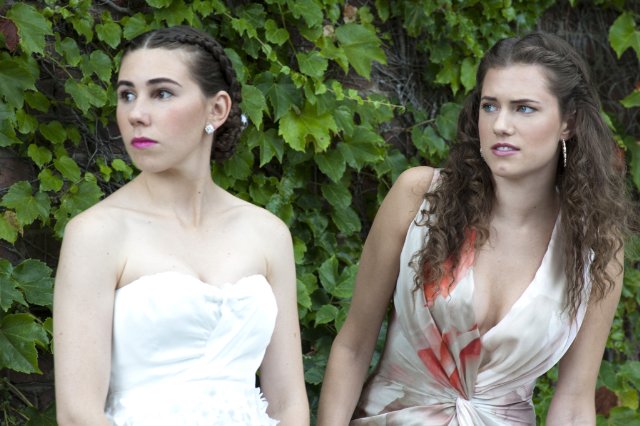
For example: Ray and Shoshanna. As predicted, Ray is really into Shoshanna; Shoshanna is really horrified that, not knowing that the party was a wedding, she dressed in white, and she's almost too preoccupied with that to overthink what she's agreeing to when Ray proposes taking her home that night. Later, in bed, Shoshanna's suffering from her usual logorrhea (observing that her aunt told her that losing her virginity felt like "scratching a sunburn" . . . wow, what?), but Ray is seemingly undeterred, and we're probably to assume that Shoshanna is relieved of her V card shortly thereafter.

Marnie, meanwhile, runs into Charlie at the wedding; he's sans new girlfriend—she's evidently live-blogging a tortilla-soup contest, or something?—and it seems like he and Marnie might go on a reunion tour together, but she isn't quite banged up enough on bubbly to go there . . . yet. The end of the night finds her draining yet another glass of champagne, eating cake with her hands, and making out with the Seth-Rogen-esque wedding emcee.

Even Elijah has moved on—to a new, older boyfriend named George, who's apparently hiding his relationship with Elijah from his homophobic teenage son. Elijah's having to live in an SRO until the kid graduates, which is the plot machination that allows Elijah to stay on the show: Hannah invites him to bunk with her, solving both their problems. (It doesn't hurt that he admits that he probably did give Hannah the HPV after all.)

But while it's a solution, it's also Hannah not moving forward, not growing up—staying stuck, facing backward. Marnie's moving out, without a plan, trying new things (or boys); Jessa's married, which is forward motion even if it's ill-considered; Shoshanna is dumping the virginity that keeps her a girl. Hannah is moving in with her gay ex-boyfriend from college, a known and safe quantity who won't challenge her. Adam has already suggested himself as the new roommate, pairing the proposition with a speech about moving on from toxic relationships without guilt, but Hannah just assumes he doesn't mean it, or that he just wanted to help. "Nobody does anything because they want to help; I did it because I love you!" he snaps.

Hannah doesn't know what to do with that information, and Adam doesn't sympathize at all, going off on her for following him "like [he's] the Beatles" for months and then giving him a "shrug" when he commits to her. The actor does a great job with a scene that, for Adam, is basically delivering an audience-proxy checklist of all the ways in which Hannah is an obnoxious, self-absorbed hypocrite: he yells that this is what Hannah wanted, and now she's not giving back. He bellows that she's pretty and a good writer and a good friend, but she doesn't believe those things about herself. Hannah tries to defend herself, to explain that she's scared, the most scared that anyone is, all the time, which I empathize with, and then Adam basically orders her to get over it, which I also empathize with. And then Adam gets clipped by a passing car, and he refuses to let her ride with him in the ambulance: "Don't let her in here. She's a monster."

The monster gets on the F train by herself.

Sarah: "Girlfriend is totally falling asleep and waking up in Coney Island with no purse, bet you a dollar."

Dirk: "No bet."

Sure enough, that's what happens—been there; walked home from that—and Hannah, who's lost her purse but managed to hold on to the slice of wedding cake, wanders out of the station and down onto the boardwalk as the light is coming up. Sunrise finds her on the beach, the Wonder Wheel behind her, sitting at the edge of the world eating cake. In a way, it's a reflection of her sitting in the bathtub eating a cupcake from the premiere—but everything's changed. But nothing has.

The finale showcases everything the show does well—which, I think, closely follows the list of reasons the show grates on people. Not everyone likes the girls of Girls, their self-absorption, their top-heavy ratio of theoretical to practical experience, their workshoppy ways of living, but Dunham and her co-writers have a perfect-pitch ear for how those people speak to and about each other. Not everyone wants to revisit the "thought we knew everything; actually knew fuck-all"-ness of their twenties, but Girls is a painstakingly researched document of that painful cluelessness.

The finale is also a great stage for the Adam character, who started out as a wince-inducingly accurate and familiar, but two-dimensional type of That Guy—dating around, waxing smug about wood craftsmanship while taking money from Grandma, not remembering where Hannah's from—and evolved into a nicely realized human being. He's also the embodiment of everything Hannah is afraid she'll never have, and at the same time that she will have—and then lose. She's still thinking like her high-school self. (And dressing like she doesn't own a mirror. I would love to know if this is intentional, because the problem is not Dunham's figure. It's that there is always always bunching. I'm just going to assume it's a character beat, because as such, it's quite effective.)

It's a strong end to the season; the writing feels confident, without the overworked or canned bits we got partway through. The show isn't for everyone, and it's about hardly anyone—and the niche appeal of/audience for what Dunham does is a legitimate reason not to watch the show or care about the characters. At the same time, though, you have to take the work for what it is. What's the expression—writing that tries to be for everyone ends up being for no one? Dunham's doing Dunham; she's doing it really well, and it's possible to hear some universals in it.

Sarah D. Bunting co-founded TelevisionWithoutPity.com, and has written for Seventeen, New York Magazine, MSNBC.com, Salon, Yahoo!, and others. She's the chief cook and bottle-washer at TomatoNation.com.

TRUE BLOOD RECAP 2: AUTHORITY ALWAYS WINS

TRUE BLOOD RECAP 2: AUTHORITY ALWAYS WINS

You know the endlessly self-amused Nazi prick Christoph Waltz played in Inglourious Basterds? Well, someone over at True Blood casting found a prim-o Waltz-alike in the actor Christopher Heyerdahl.

nullHeyerdahl plays Dieter, a sociable sadist and Vampire Authority operative. His vampire theology monologue—shared while torturing Bill (Stephen Moyer), no less–finally gives Alan Ball, who's leaving the show this season, a chance to actually offend people.

Dieter asks Bill if he recalls what’s special about the Vampire Bible.

And we learn that what’s special about this Bible isn’t that it predates The Old and New Testament. Or that it’s the original Testament, telling how God created Adam and Eve as food for vampires and for God’s greatest creation—Lilith. 

No, what’s remarkable in this time of election year Fundamentalist fever is that God created Lilith in his image, as God is a vampire.

As Dieter editorializes, “Powerful stuff indeed!” (To view this scene, please click on the video above.)

If this episode is any indication, Season Five will indeed be powerful stuff. I’m just not even certain what genre it is anymore.

I mean, sure, there are vamps and shifters and werewolves. But Ball is also fusing the zero sum war between Fundamentalism and sanity inside large institutions, with allusions to splintering U.S. conservatism in an election year. And making no bones about it.

But there’s much more. There’s an ongoing, Andrew Sullivan-style "death of gay culture" subtext argument, an import of the main theme of Buffy’s Season Six necro-existential crankiness, courtesy the turning of Tara (Rutina Wesley) into a vampire—or as I’ll call her from now on, the Tarapire.

And at least half the show is finally showing us the Vampire Authority. Damned if their underground realm, all chrome, sleek curving plastics amid a mid-century futurism that never happened doesn’t evoke a Swingin’ 60s spy film, equal parts Phillipe Starck and Ken Adam (the master designer behind Thunderball, Dr. No, and The Ipcress File), 

At the center is Roman, the Authority himself, played by Christopher Meloni with the a brand of hyper-intense, top-dog, apocalyptic Type A times Pi machismo imported from an edgy production of Glengarry Glen Ross.

Roman, the ultimate sanguine super CEO, who loves to toss off non sequiturs like “Do you think that the whole concept of the common good is hopelessly naïve?”—which allows Eric the drollery of “I try to stay away from politics.”

But True Blood certainly doesn't.

But on to recapping. Much of this week is devoted to the Tarapire’s freak out, when she tears down down Sookie’s house.

Dying has been a really positive thing for the Tarapire—she’s very assertive (bam, there goes the fridge), has a killer deathly stare, and most of all, she doesn’t complain.

When she does snarl to Sook and Lafayette (Nelsan Ellis) that “I will neither forgive either of you,” there’s the delicious possibility that she’ll be promoted to full-blown bad guy. (To watch Tara in vampire form, please click on the video below.)

Things are going from bad to incredibly terrible for Bill and Eric (Alexander Skarsgård).

An Authority operative new to the show named Salome (Valentina Cervi) escorts them to the 60s design extravaganza I mentioned earlier, and jails them in a facility where they’re tortured with artificial sunlight and liquid silver and interrogated by sophisticated sociopaths like the aforementioned Dieter.

Over in our werewolf subplot, Alcide (Joe Manganiello) is refusing to join the pack in eating the corpse of ex-pack leader Marcus. Among the ritual diners is Marcus’s mom, Martha (Dale Dickey).

Clearly signed up for her gnarly, white thrash outlaw Sons of Anarchy appeal, and this impressively gross scene aside, Martha is a terrific addition to the cast, a gravel-voiced biker chick in her deep fifties with a worn regal vibe that fascinates.

Martha insists in several scenes that her daughter Emma, child of Marcus and Luna (Janina Gavankar), has more in common with her werewolf father than with her. This is a teaser for a scene that is astonishing, that demands you not drink fluids for you may gag or spit them up.

But right now, we’re talking Terry flashing back to Iraq and saying, “It’s coming for us.”

Will this show ever tire of crazed Iraq storylines? Can’t Terry get possessed by fairy lemurs or something, just once?

Then, a sweet cookie of a backstory is tossed to Pam (Kristin Bauer) fans. It’s a bawdy house in San Francisco, 1905. After a Campari, she hits the street. A creep tries to kill her, but in a flash Eric, in full Victorian eveningwear, kills the guy, licks the blood off his fingers and gives Pam his charm-face. There’s something oddly tentative about the show’s depiction of pre-vamp Pam, like Ball isn’t certain what he think of her quite yet. Still, that dress is a keeper. (Pam meets her maker, Eric, below.)

Sam (Sam Trammell), meanwhile, is recovering from his own wounds when Martha shows up, again insisting that Luna and Marcus’s toddler has supernatural canine blood in her veins. “She’s wolf—I can feel it!”

Are you sitting down? If not, do.

You’ll next see a scene where Jason goes to Hoyt’s mom’s, only to be rebuffed as by Hoyt (Jim Parrack) yet again as a girlfriend-fucker. And then we’re back at Luna’s house.

Suddenly, director Michael Lehmann cuts to a puppy in pajamas.

No CG, no make-up. Just a puppy in jammies. Only on True Blood.

There’s no way to follow that, but the show must go on. We end up deep in vampire Authority HQ, where Dieter is explicating that theology we started with, ending with what I assume will be the crux of this season’s drama:

That there are Vampire Bible fundamentalists who believe in a utopia where humans are farmed for food and human/vampire intimacy is blasphemy.

And there’s the Authority and Roman, who believe in “mainstreaming” and peaceful co-existence with humans.

In their secret chambers, the congress of the Authority lorded over by Meloni, dressed in the ultimate Hugo Boss-style pinstripe power suit.

Roman considers Bill and Eric, and says, “I’m in a real pickle here, boys.”

The pickle is—he needs to mete out justice to the killer of Authority member Nan Flanagan. Who Bill and Eric did kill.

Roman is the king of the mainstreaming cause, and he tells about it in detail, which is cool: I’ll listen to Meloni yell at me about a Google search for superior celery, he’s that violently entrancing.

Meloni wants to stake Eric and Bill. Bill has something to trade: the news that psycho-vamp Russell Edgington (Denis O'Hare) is alive.

Russell the anarchist psycho-vamp who would love nothing more than to destroy the Authority’s mainstreaming initiative for the sheer fun of it.  

As Meloni considers the import of this news, Lehmann cuts to Russell in a cart, his skin cracked into a thousand bloody fissures.

In true Edgington style, he licks his ruined lips. Gross! (Awesome.)

This week’s vestigial subplots:

Luna

She falls victim to Bon Temps’ most prevalent illness: unmotivated Sudden Character Reversal Syndrome. Last year, Sam became a murderous asshole for no apparent reason. Now Luna’s becoming a mean jerk, apropos of nothing.

Steve Nawlins

Steve Nawlins claims vampires for Christ. Will this dovetail with the Authority’s interests?

Jessica (Deborah Ann Woll)

Nawlins tries to buy Jason from her. Jessica says she does not sell her friends. Like, ever.

But mainly this week is owned by  Meloni’s Roman, the Tarapire, and the puppy. Good times.

Ian Grey has written, co-written or been a contributor to books on cinema, fine art, fashion, identity politics, music and tragedy. Magazines and newspapers that have his articles include Detroit Metro Times, gothic.net, Icon Magazine, International Musician and Recording World, Lacanian Ink, MusicFilmWeb, New York Post, The Perfect Sound, Salon, Smart Money Magazine, Teeth of the Divine, Venuszine, and Time Out/New York.

GIRLS RECAP 9: LEAVE ME ALONE

GIRLS RECAP 9: LEAVE ME ALONE

The climactic argument between Marnie and Hannah in "Leave Me Alone" is soooo satisfying—and it's not merely because Marnie is acting as the viewer's proxy in calling Hannah fully and completely on her bullshit. That's fun, but Marnie isn't even alone in that this week, because Hannah's finally gotten a semi-, sort-of, part-time coffee-shop job . . . and her manager is Ray. Ray not only sends Hannah home to change when she shows up in a stain-tempting white dress, ordering her to "forget all the BBC you watch at home with your cats" and put on something appropriate; he also advises her on what to buy at American Apparel, complete with hand gestures ("slim leg! slim leg!") (not for nothing, but a skinny jean is about the only thing that would be less flattering to Lena Dunham's figure than the dresses Hannah already wears).

null

Ray also gives explicit voice to the anxieties of young writers about their material—specifically, whether it's "serious enough." I had to accept years ago that I'd never make that cut, because when I was Hannah's age, the internet was considered the JV, at best, never mind writing about television on the internet, or telling funny stories about karate class or doing your laundry. I didn't have an agent, I didn't write literary fiction, and it didn't really matter, at all, but back then, if a guy like Ray had blown off my subject matter as frivolous—"How about divorce? How about death?  . . . How about death?"—I would have taken it to heart, and I would have tried to write a somber, well-researched, mindful, high-fiber piece about municipal politics, and it would have bombed, just like it does for Hannah at her reading. Hannah's former writing prof is very encouraging throughout, and seems to understand what Hannah's writing strength is, whether it's one that Hannah wants to own or not. (He's also played by Michael "Christopher Moltisanti" Imperioli. Imperioli has other, more recent credits, but I have to think the casting is meant to recall "Christophuh"'s struggles with the written word over the run of The Sopranos.)

But Hannah feels that snarky essays about dating a hoarder and spending the night on a stack of flattened Chinese-food cartons won't get you onto "Fresh Air." Of course, that very sort of observation by Dunham has gotten Dunham herself onto "Fresh Air," via "Girls"; the episode really nails the insecurity and toxic envy of starting out as a writer, although I'm not sure it's something Dunham has really experienced in that way. Maybe episode co-writer (and New Yorker cartoonist) Bruce Eric Kaplan helped shape the bits with Tally Schifrin, Hannah's creative-writing program-mate who already has a memoir out. Tally's a perfectly drawn cartoon of the non-fiction classmate we all despised, the well-connected mediocrity just clever enough to leverage a single incident or tagline into a hardcover deal. If you thought Hannah snarking that Tally's "lucky" to have a boyfriend who killed himself so she could write about it was too over the top, even for Hannah, you haven't spent that much time around writers. (And you shouldn't start. We are ruthless.)

Professor Imperioli is comforting, telling Hannah the thing every struggling, lost essayist wants to hear from someone in authority—that Tally's a "shitty" writer, and Hannah is good. It's more than Marnie has mustered; asked her opinion of the hoarder-date essay earlier, Marnie deemed it "a little bit, like, whiny." But when Hannah whines that Marnie could be a bit more supportive, Marnie sighs, "Hannah, I support you. Literally."

And when Hannah comes home from the reading and bags on Marnie for throwing clothes away instead of donating them to Goodwill, it sets off a very rewarding showdown. As I said before, it's partly because Marnie is ranking on Hannah for all her friendship sins: Hannah's selfish; she uses her self-loathing as an excuse to be a narcissist; she has no other subject but herself. Hannah gets a few good shots of her own off—Marnie is too focused on achievement and comparing herself to others; her woe-is-single-me routine is getting old (we haven't really seen that, but I'm fine with inferring it from Marnie's sad-sackishness last week); this is about Hannah having a boyfriend and Marnie not having one, because it throws off the balance of power. Now, Hannah doesn't use exactly those words, and it's a topic so nuclear that most women friends would never go near it out loud—but Marnie is used to having the boyfriend, feeling the pity instead of needing it, fitting into the size 6 (a fact she makes glancing reference to by saying that one of her old dresses might fit Hannah a bit snugly—exactly the right tone and wording for that kind of slight).

It's possible that Hannah isn't only selfish and lacking in empathy for Marnie; it's possible that, as the one who's feeling more settled emotionally for a change, she doesn't know how to support Marnie. But . . . it's more likely that, just as she herself says, being a good friend "isn't a priority for" her right now. Marnie's icy "thank you" when Hannah admits this echoes of the audience—because no shit, first of all, and second of all, it's not just Hannah. It's Marnie; it was me, I think, at that age. I'm not sure I had "friends," exactly, so much as "people I stood next to while holding a beer, in order to hate myself outside my apartment now and then."

All of Hannah's scenes, and the post-collegiate writing-competition stuff, totally resonated with me—and pretty much made up for a baffling plot "development" for Jessa in which Kathryn Lavoyt shows up at her apartment to ask her to come back as her daughters' nanny in spite of everything. It's unclear what Kathryn thinks happened, or how she found out about it—Jeff could have confessed, but it seems like something Jessa would do to quit and explain exactly why—but she takes the opportunity to share a very on-the-nose dream she keeps having about stabbing Jessa and eating her body while her mother is breastfeeding her husband. Kathryn gets a speech about how Jessa causes dramas like this, to distract herself from becoming who she is. Jessa looks intrigued by that possibility, and asks who she's becoming, then; Kathryn's response is more speechifying about how that person might not have a cool job or hair "like a mermaid," but might be happier than Jessa is now. Or . . . something. I really can't tell whether we're meant to hope that Jessa hears something for herself in these Now The Married Lady Will Tell You Your Life pearls of wisdom, or to think that Kathryn's condescending and out of touch. I have to go with the latter, although I don't think the scene came out the way it may have been intended.

And speaking of things that perhaps weren't intended . . . is that a jar of mayonnaise next to Hannah's bed? And do I want to know either way?

Sarah D. Bunting co-founded TelevisionWithoutPity.com, and has written for Seventeen, New York Magazine, MSNBC.com, Salon, Yahoo!, and others. She's the chief cook and bottle-washer at TomatoNation.com.

TRUE BLOOD RECAP 1: TURN! TURN! TURN!

TRUE BLOOD RECAP 1: TURN! TURN! TURN!

I love True Blood, and I pray this is the end of it. The tea leaves all read "buh-bye," but in this first episode, we’re mainly talking mop-up from last season’s remarkably messy—even by Blood  standards—finale. But before we get into the particulars, some thoughts from this devoted Trubie.

I know there are people who feel the show was great when it was an elegant, fleet, and witty anti-intolerance fable. And feel that, as early as Season Two, when Maryanne the cannibalistic Maenad (Michelle Forbes) started having psychedelic Southern-style Burning Man-ish parties on Sookie's impeccably well-maintained lawn, the chronicles of everyone’s favorite fairy telepath—Sookie Stackhouse (Anna Paquin)—had already fallen into their shark-jumping phase.

Me? I always said that, like that lawn or the improbably ever-fresh pitcher of lemonade in Sookie’s fridge, there were things about True Blood you just accepted. I said, “Cannibalistic Burning Man run by a Mad Maenad? I’ve waited my whole life for this!”

And then when Seasons Three and Four gave us the batty-beyond-belief Russell Edgington (Denis O'Hare), Vampire King of Mississippi, a white trash were-panther named Crystal Beth, the lounging vampire Queen Sophie-Anne Leclerq (Evan Rachel Wood), who loved nothing more than to play Yahtzee (!), the revelation that Sookie was a fairy, that Jesus (Kevin Alejandro), the love of darling Lafayette (Nelsan Ellis), was in fact a powerful Mexican bruja, and a curse caused Pam (Kristin Bauer) to embark on the holy grail of finding the right foundation—Smashbox? MAC? Maybelline?—to cover her rotting face, some called foul.

But me, I was in seventh heaven as the show gave up even the slightest lip service to realism on the road to becoming the most faux Southern fried nü-Hammer, blood-Romantic, were-vamp gore-show, splat-palooza of all time,and it became clear that Blood creator Alan Ball would not drive 55, and the only way he’d stop was if he were six feet under.

And now it must end. It must not be allowed to become an undead parody of a parody of itself, like Dexter.

My sense of Season Five, from its tagline—“Everything is at Stake”—onwards points towards end games from which the show will not be able to renew itself without becoming a faint Xerox of past bloody wonders.

So with the prayer of “I love you—now die,” some highlights:

The episode opens one minute before the very end of last season’s finale, whipsawing from Sookie accidentally shooting Tara—whose fate will have to remain a secret for a spell, sorry—to a hilarious frenzy of tidying as, a few miles away, Bill (Stephen Moyer) and Eric (Alexander Skarsgård) clean up the sticky remains of Nan Flanagan (Jessica Tuck) who’d just outed herself as anti-Authority before meeting the True Death at Bill’s hands when he learned she desired some of Sookie’s fairy power.  

Alas, a pack of ninjas (or is that a flock, a murder or a bushel?) bag them in silver netting and stick them in a limo trunk. Eric’s shout of “That’s the Authority we’re up against!” not only IDs their attackers, it suggests a more epic storyline that would render any little tales from humble Bon Temps, LA passé.

Meanwhile, the Rev. Steve Newlin (Michael McMillian), ex-head of the Fellowship of the Sun, shows up gay and glamouring himself into Jason’s apartment, availing himself of that law of physics that says for every standing body of flesh there is a correlative moment when that body WILL fuck Jason Stackhouse (Ryan Kwanten).

But then the door slams open, Jessica (Deborah Ann Woll) declares herself “the progeny of the king of Louisiana!” and Newlin’s old news for now, as Jessica mounts Jason.

Shock cut to: A spy-movie-style male and female pair listening to Paul McCartney’s “Silly Love Songs” in a limousine. In the trunk, Bill and Eric are bound in silver netting (take note, slash fiction folks—this will be a good year for you).

One of the show’s more casually ridiculous escapes transpires: Bill finds an umbrella and stabs the car’s gas tank, which, after he asks Eric for some fire, blows up. Seriously. Bite this, believable solutions!

Crawling from the wreckage, the McCartney fan, whose name is Nora (Lucy Griffiths) finds Eric, and the two embrace and smooch deeply.

Nora is Eric’s sister and yeah—more TV incest. Boardwalk Empire, Game of Thrones, Bored to Death, Dexter, Supernatural, WTF?

At first I had no idea. But then a seeming cop-out, Eric’s revelation to Bill that he and Nora are “only connected through our maker” had me thinking. Because their “maker” is Godric (Allan Hyde), who died, or ascended heavenwards in a swirl of light and ecstatic disintegration season two’s “I Will Rise Up”.

With “everything at stake,” why would the show bring on someone who is Eric’s only living connection to the person he loved more than anyone or anything in his life, Godric?

Okay, before I mull myself into a coma, back to what Nora was actually doing. She’d planned to save Bill and Nora before their umbrella-gas-tank maneuver because, hot taboo sex aside, she’s a ruling member of the Authority working to tear the damned thing down from the inside.

So, Vive la révolution! Except Nora, Bill and Eric get caught by more Authority ninjas and there’s something about the way one of them bullhorns “Do not fucking move!” that makes me think Bill and Eric are screwed for quite a while.

Otherwise, here are the updates you need:

Captain Andy. An APD to all you Wire fans desirous of Chris Bauer nudity—your prayers are answered. Captain Andy is seen consorting with witch Holly (Lauren Bowles). Nice butt, Chris—who knew?

Terry. Terry (Todd Lowe) is now playing guest to his old Iraq war pal Patrick (Scott Foley). Flashbacks, fistfights, hallucinations occur—within, like, five minutes of screen time. How do you ratchet things up from there? A: Terry has kids, a wife, a life, oh dear.

Lafayette. Is this horrible? I want him to die so he can be with Jesus (boyfriend Jesus). Of everyone on True Blood, nobody has suffered more and gained less than Lafayette. So when he and Sook look for Jesus’ body and it’s not there, I’m thinking that if my end game theorem is true, maybe there’s a way Lafayette can peaceably slip this mortal coil and be forever with his beloved Jesus.

Right.

Jason. This whole episode is like a Stations of the Cross redemption trip for Sookie's older brother.

He tries to apologize to Hoyt (Jim Parrack), but Hoyt just calls him a girlfriend-fucker, accurate but hardly sporting.

He goes to Bill’s house, where Jessica is having a party with college kids her own age in a kind of adorable/pitiful simulation of what her life would have been like if the whole vampire thing hadn’t happened. After Rock Banding The Runaway’s “Cherry Bomb” (one of those True Blood moments sure to become a viral animated GIF), Jason leaves with some hottie but gives her an impassioned speech on how he wants be a better man instead of having sex with her, and still the space/time continuum did not collapse. Which leaves . . .

Alcide (Joe Manganiello). Who saves Sam (Sam Trammell)—whose problems with Luna (Janina Gavankar) are just confusing at this point—from becoming puppy chow for the werewolf pack that thinks he killed Marcus (Dan Buran). Alcide tells the pack that he’s a lone wolf now, and then he hightails it to Sookie’s to offer his protection from Russell, who, despite being buried under a few thousand tons of concrete the last time we saw him, is somehow back!

Russell. The only American vampire willing and able to punch his fist through someone’s chest on national TV and gloat about it. Russell (Denis O'Hare)—the one-vamp/one-man guarantor of True Blood quality!

Me, I’m going out on a limb here and predicting a terrific, apocalyptically satisfying season of over-the-topper-most True Blood. May it be its last.

Ian Grey has written, co-written or been a contributor to books on cinema, fine art, fashion, identity politics, music and tragedy. Magazines and newspapers that have his articles include Detroit Metro Times, gothic.net, Icon Magazine, International Musician and Recording World, Lacanian Ink, MusicFilmWeb, New York Post, The Perfect Sound, Salon, Smart Money Magazine, Teeth of the Divine, Venuszine, and Time Out/New York.

GAME OF THRONES RECAP 10: VALAR MORGHULIS

GAME OF THRONES RECAP 10: VALAR MORGHULIS

nullOne of the key questions facing Game Of Thrones the series, as well as its source material, is: “What’s this about?” And by this I mean: “What is this story? How is it being told? Where is this leading?” Certainly there’s drama, and characters change, grow, collapse, or die, but it’s difficult to see a clear structure at times. “Valar Morghulis,” as a season finale, did provide appropriate resolutions for most of the characters’ stories this season. But it struggled to collect them—it’s just a bunch of stuff that happens, in the words of Homer Simpson. Still, it’s a compelling bunch of stuff that happens.

nullThe Hero’s Journey is the default reading of most fantasy stories, and Game Of Thrones gives that opportunity with two of its characters: Jon Snow and Danaerys Targaryen. Both are born of noble blood, but are also outsiders. Both are young, and they are undergoing journeys of self-improvement as well as quests of external improvements. Both are also dealing with the most magic of any of the characters. Dany has her dragons, and Jon has fought one of the White Walkers, while the threat of more wraiths hangs over the Night’s Watch.
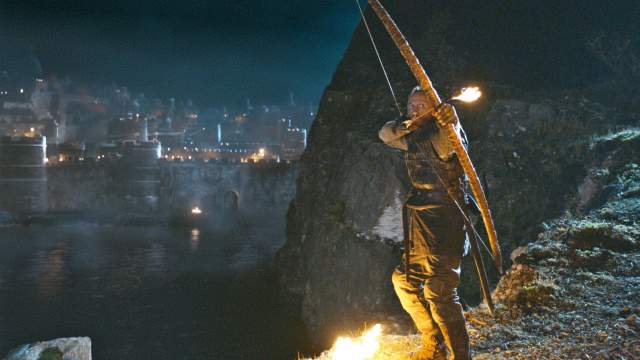
I’m not sold on this interpretation—Game Of Thrones seems too delighted to subvert fantasy tropes to fully follow through on the monomyth—but each character continues their journey in “Valar Morghulis.” Danaerys has had a bad season, sounding increasingly shrill over the course of her time in the unfriendly city of Qarth, but the climax of the episode finally justifies the time spent on her this year. Heading into the home of the warlocks led by Pyat Pree, she finally has the chance to demonstrate in action what she’s been shouting about all season, burning the magician and regaining her power. Yet her most important action isn’t her connection with her dragons, inciting them to violence. It’s rejecting the illusion of her dead husband and child. Her more youthful dream of a happy life with Khal Drogo is gone, and the steely Emilia Clarke realizes this quickly, giving her agency over her life again.

On the other hand, Jon Snow’s climactic act, a duel with the veteran ranger Qhorin Halfhand, represents arguably Game Of Thrones biggest failure this entire season. There is a reason for the duel—Qhorin mentioned it in a quick whisper two episodes ago—but if you can’t remember and extrapolate from “I hope you can do what you need to do” followed by a series of louder insults, I can’t blame you. We’re supposed to understand that Qhorin is doing this so that the wildlings will accept Jon, which will make him a more effective spy. But that relies on a single whispered line from two episodes ago. So, for all appearances, Jon is just a dupe, on multiple levels. For a character who could easily be described as the most traditional hero in the series, this is a serious problem.

A second interpretation of the overall story of Game Of Thrones is that it’s the story of the Stark family in a complicated civil war. Our main characters, after all, are Cat, Jon, Arya, Sansa, Bran, Robb, and formerly Ned (also little Rickon, attached to Bran). Dany and Tyrion are major as well, but under this theory, they exist largely to flesh out the story.

Sansa, for example, is our Stark gateway in King’s Landing. We see the new alliance between the Tyrells and the Lannisters both as the political intrigue that won the biggest battle of the civil war so far, but we also see it through Sansa’s eyes. Sophie Turner demonstrates her embarrassment at being publicly humiliated, yes, but also her joy at being free of her betrothal to the sociopathic Joffrey (though this is negated when the increasingly creepy Littlefinger promises to “help” her).

Her older brother Robb has a simpler story—he’s in love with Talisa, and decides to marry her. Cat, still under arrest for freeing Jaime Lannister, tries to talk him out of doing anything foolish, but she has no ground to stand on. Robb both follows his heart and his honor, marrying the woman he had sex with. It’s a sweet scene, and it parallels other loving scenes the episode surrounds it with, but it lacks depth.

Arya Stark has a similar issue, resolving her story with Jaqen H’ghar, but little else. I’ve complimented the child actors on the show before, but there are some issues here. Jaqen invites Arya to learn his killing strengths, but Arya says no, remembering her family. This is all good, but the struggle to remember her sister Sansa is a bit too obvious. It’s still amusing from a character perspective, but it’s quite transparently “television” in a way that Game Of Thrones, and HBO house style, tend to avoid.

A third response to the “What does it mean?” question is the most complex, subtle, and in my opinion rewarding: Game Of Thrones is about war and its effects. One of the things that has disappointed me about this season of the series, compared to the novels, is the lack of portrayal of the war’s effects. The best scene of “Valar Morghulis” finally depicts the brutality of the war, as well as the complexity of morality during civil war: Brienne of Tarth is still escorting the ever-snarky/charming Jaime Lannister to the capital, when she comes across a set of corpses.

They’re three women, hung with a sign saying that “They lay with lions.” The single image conveys brutality: we’re supposed to believe the Starks are good and the Lannister (lions) are evil. Yet here are three women killed for the crime of supposedly having slept with members of the Lannister army. The men who show up to confront Brienne—and explain the deaths—show the issues of civil war. They don’t take initial credit for the killings. They’re not dressed in uniform. They ask Brienne who she serves, but only after mocking her. And they are cruel men, quickly and violently dispatched.

Despite the initial thrill of seeing Brienne—the insulted woman—succeed in her violence, the scene is still discomfiting. The northerners are supposed to be, at the least, more heroic than their southern counterparts. These men are rapists and murderers. But worse than that: Are they even evil than Jaime Lannister, the charmingly sarcastic prisoner being saved by Brienne? Jaime is handsome, clever, and in the main credits, but he’s also Ned Stark’s rival, a man who tried to kill a 10-year-old boy, and he's conducting an incestuous, adulterous affair with the queen. Jaime survives because he’s important. These men die because they’re not. This is the war of Game Of Thrones, and it’s a difficult and bloody war at that.

The episode’s other most powerful scenes also avoid the heroes and Starks. Tyrion Lannister is surviving his wounds from the battle of Blackwater, yes. But his exploits in the battle have been ignored. His father Tywin receives the accolades while Tyrion gets moved to more modest quarters. His only ally is Lord Varys, the eunuch whom the show depicts as having been outmanuevered by Littlefinger’s successful arrangement of the Tyrell-Lannister alliance. Varys brings Tyrion his mistress Shae, leading the to the most affecting scene of the episode, wherein Shae professes her loyalty to the scarred Imp. Both Kekilli and especially Dinklage act the hell out of this scene, providing a stellar emotional core to “Valar Morghulis.”

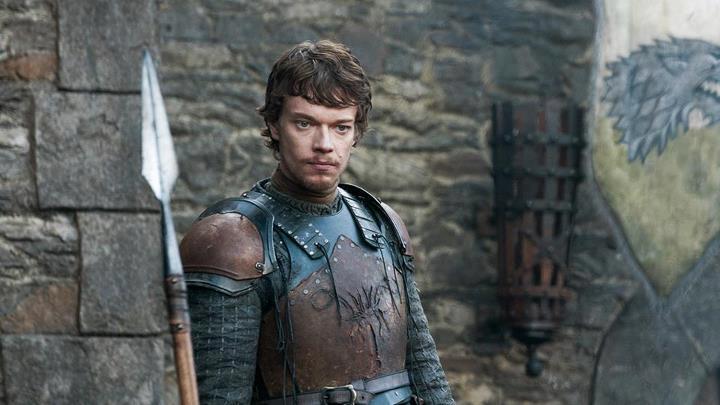
Finally, the most complete part of the episode occurs in Winterfell. Theon Greyjoy is surrounded by the Bastard of Bolton and his troops, with 500 men against 20. Maester Luwin provides Theon with council, and Theon (and Alfie Allen) lay his entire life, his motivations, and his insecurities out for the viewers and the Maester to see. Here, Theon turns from a ridiculous figure into a tragic one. He has no home and no one to trust, so he relies on his masculinity and ambition to give his pathetic life some meaning. This urge manifests itself in a speech he gives to his men, wonderful both for its position within Theon’s narrative and because it's a joke: he's cut short by his men, who just want to use Theon’s body as leverage to get home. At every point, Theon has been given chances to be better. He has wasted them, trying to gain the respect of men who never would have respected him anyway. This may be Game Of Thrones at its smartest: Theon is trapped by his attempts to be as masculine and powerful as possible. He’s not. Maybe he never has been. Everyone, including him, recognizes this. But he feels that he has no choice but to continue.

Add these stories all up, and what is the sum? I don’t think there is one, other than that the third season, ten months away, can’t arrive soon enough in plot terms. The final two episodes have demonstrated the dynamism that Game Of Thrones’ tight serialization can provide, like no other show on television right now. On the other hand, there are serious issues with Game Of Thrones’ structure. They can certainly be masked by momentum, but the connection—or lack thereof—of the myriad of stories has to be a constant concern for the series’ fans and creators.

Adaptation:

Most of the stories portrayed in “Valar Morghulis” are significantly different from those in the book, yet most of these still point to an endpoint of the later books, used as major reference. The Bastard Of Bolton may not have made his appearance here, but the ambiguity about the sack of Winterfell leaves room for interpretation. Likewise, Jon Snow’s arc as an idiot may have been painful, but it leaves him in a position to be less terrible in the future.

My biggest disappointment with the episode—apart from the lack of redemption for Arya’s story mistakes two weeks ago—comes from the Cat—Robb interaction. In the novels, both Cat and Robb discover each others’ crimes at the same time. Robb gets married in the west, then returns to discover that Cat has freed Jaime. His forgiveness for her act based on love is a defense of his own act of love, a manipulation which both impresses and frightens Cat. We only get a tiny part of that in a conversation where an ineffectual Cat attempts to persuade Robb of the virtue of arranged marriage, which Robb can dismiss thanks to her release of the Kingslayer. It’s good—but the scene in the book was great.

A final word has to be given to the cliffhanger at the end of “Valar Morghulis.” The White Walkers have been an ominous threat since the cold open of Game Of Thrones’  first episode, but have rarely been physically threatening. Now, we see an army. And while in story terms, the army of wraiths attacking the Night’s Watch is certainly ominous, the CGI used to depict the supernatural threat just can’t quite manage it. The pseudo-zombies shown are just a bit too cartoonish, and some of the horde that follows are all too obviously just topless actors’ backs staggering in front of a bluescreen. But this is the way the novels’ story goes, so some depiction is necessary. We have to see the undead threat, even if that threat, treated literally on-screen, is insufficient compared to the danger on the page. The episode’s other most powerful scenes also avoid the heroes and Starks, focusing instead on the effects of the war on two of this season's most dynamic characters, Tyrion and Theon.

Rowan Kaiser is a freelance pop culture critic currently living in the Bay Area. He is a staff writer at The A.V. Club, covering television and literature. He also writes about video games for several different publications, including Joystiq and Paste Magazine. Follow him on Twitter @rowankaiser for unimportant musings on media and extremely important kitten photographs.

GAME OF THRONES RECAP 9: BLACKWATER

GAME OF THRONES RECAP 9: BLACKWATER

We know what we’re getting when we watch a Game Of Thrones episode, right? We’re getting some beautifully shot scenes, certainly; this has been one of the best-looking shows on television since its premiere. We know that the actors will be good, if not great. We know that we’ll see a wide variety of different, possibly intersecting plots, divided by geography. And we know that while there might be some action, it’ll be parceled out for more drama, more cliffhangers, but probably not catharsis. It’s a decent structure. It’s served the show well, as well as working for other HBO shows like The Wire, Treme, and Boardwalk Empire.

Except that’s not what happened in “Blackwater.”

It takes confidence to alter the formal structure of a television show, but it’s also often the best thing a show can do. Shows like The Sopranos and Buffy The Vampire Slayer changed television dramatically while relying on a series of formal experiments: “College” and “Pine Barrens” from The Sopranos, or “Band Candy” and “The Body” from Buffy. The way you think the show should work, the way television normally works? That’s not what happens. If done competently, these experiments can be fun episodes. If done well? They’re among the best television can do.

“Blackwater” was an experiment done well.

I was partially wrong about last week’s episode. I assumed that everything was leading up to a climactic ninth episode of the season. We’d see Theon defending Winterfell; we’d see Dany chasing her dragons; we’d see a culmination of Robb’s romance; we’d see Jon trying to survive his capture by the wildlings; we’d see Arya, having escaped into the wilderness; we’d see the battle of Blackwater, with Stannis’ forces attacking Tyrion and the Lannisters at King’s Landing.

What we got was only the last of those. The climactic battle of the season turned out to be the entirety of the episode. Stannis attacks King’s Landing, and Tyrion defends it. Nothing else happens this episode. It is, unlike any other of the 18 episodes preceding it, entirely focused on a single story, focused only on the characters in one specific locale.

And that’s just what Game Of Thrones needed.

There are still issues. My complaints about Arya and Cat losing agency last week are still valid. There’s still a great deal of ground to cover next week. I don’t know that there’s going to be enough time left to tie it all together. The season has had issues of thematic coherence roughly equivalent to the difficulties with coherence in the novel A Clash Of Kings. Yet, while those things can be argued about the season as a whole, they don’t take away from the achievement of “Blackwater.”

“Blackwater” derives its power from its relative simplicity. It removes the extra plots, focusing on the overarching climax of the Clash Of Kings that gave the story its name in book form. Stannis, with the former Targaryen lands plus the Baratheon vassals, attacks King Joffrey in King’s Landing, with the power of the capital and the Lannisters behind him. As presented, these are the two most powerful forces in the southlands (with Robb Stark leading an equally powerful army from the north).

Yet while that simplicity increases the drama of the episode for the characters we care about—Tyrion primarily—it also demonstrates one of the biggest problems of the season: in the Stannis versus Joffrey confrontation, we have many reasons to cheer against Joff, but no particular reason to cheer for Stannis. That makes it necessary for “Blackwater” to build that drama via the few characters who will be affected. This means Davos and his son, preparing for the battle. This means the Hound and Bronn, whose stress makes them competitors, while battle makes them friends. This means Tyrion with Varys, with Sansa, with Joffrey, and with Shae. This means Sansa Stark, who finally gets the chance to shine, first by sarcastically undermining Joffrey, then by cleaning up the mess left by a drunken Cersei Lannister.

The action in “Blackwater” is very good. It’s fantastic, given the constraints of television. I, along with many other online commenters, compared it to the attack on Helm’s Deep from Lord Of The Rings: The Two Towers. Some of the individual pieces of action aren’t quite film-level, but in terms of building then releasing tension, the episode is great.

First, Stannis has an overwhelming advantage in numbers, which Tyrion lessens with his wildfire attack. This is a loaded sequence for a variety of reasons. First, there’s the simple technology of it: this is what HBO has been saving their CGI for, and it’s worth it. The green fire and the explosion look great. Beyond that, the number of extras involved in the action sequences give an epic feeling beyond the computer technology.

Tyrion’s surprise fire attack also links him to great strategists in literary history as well. His plan, to me, is reminiscent of the Zhou Yu/Zhuge Liang plot in the Three Kingdoms novel, most recently portrayed visually in John Woo’s uneven but fascinating 2008 film Red Cliff. The idea that a lone brilliant man can use surprise and the elements, particularly fire, in order to even out incredibly uneven odds is a common conceit of literature. Tyrion here is Odysseus, creating the Trojan Horse, or Caesar at Pharsalus, surprising Pompey’s cavalry, as well as Zhuge Liang, the near-deified strategist of the Three Kingdoms. Lord Varys even makes this clear early in the episode, saying that Stannis has allied with dark forces, and Tyrion is “the only man who can stop him.” There’s also the straightforward historical precedent of Byzantine “Greek fire,” the secret weapon of that famous fleet.

Yet Tyrion’s (and Peter Dinklage’s) greatest triumph isn’t his strategy, it’s that when the battle hangs in the balance, he builds his courage and makes a speech to save King’s Landing. His speech isn’t an appeal to the ideals of the Seven Kingdoms. Instead, it’s an appeal to the darkness of the series. He specifically tells his men not to fight for honor. He tells them to fight for their own survival, and for the survival of the people they care about. I don’t know that there’s a better encapsulation of the series’ themes than this speech.

Who is the bad guy here? Tyrion is defending Cersei and Joffrey, the biggest villains of the show so far, but we want him to survive. We want his people to survive. We want King’s Landing to avoid being sacked; we want the noble ladies not to be raped. We want Westeros to not go to hell, despite the “honorable” intentions of its leaders. There’s no good resolution here. There’s only survival. Tyrion gets that. And Dinklage nails the speech where he demonstrates that. “Those are brave men knocking on our door. Let’s go kill them!”

Yet all this doesn’t work without the formal changes of the episode. Only a handful of cast members are present, but almost every single one of them has some of their best moments. Sophie Turner gets many of her best moments as the rapidly maturing Sansa Stark, yes, but she’s matched by Sibel Kekilli, as Shae, whose fiery personality has been increasingly prominent recently. Lena Headey is also making a strong claim for “most improved” actress—her increasing desperation, combined with her rigid control over her emotions, makes her scenes some of the best of an already fantastic episode. Finally Sandor Clegane, Joffrey’s Hound, has been a background character for so long that his scenes here are something of a surprise, and a welcome one at that. It’s an odd thing for Joffrey’s right hand to say, straight up, “fuck the king,” but Rory McCann takes this, his most important line, and makes it sting.

Because Game Of Thrones focuses on the climactic event of the season, it can do this. It can make most of the characters at their most interesting. It can slowly build up the battle, and then get the battle right. I worry that this intense focus on the battle of the Blackwater will make the finale too busy. But for now, I think it’s worth basking in the glory that a single change in structure can achieve. There are many great moments to come in Game Of Thrones. An intense focus on them can break up the show’s rhythm in a remarkably positive way.

Adaptation:

George R.R. Martin wrote this episode, so even if I wanted to, it would be hard to say that “Blackwater” got anything in particular wrong. The lack of specificity to the Tyrell army's inclusion in the Lannister reinforcements is a bit of an issue—Loras in Tywin’s entourage could be missed easily, in part because it’s a surprise—but I assume this will be cleared up next week. While this season has had many issues of adaptation, “Blackwater”  is as ideal as any fan could expect.

Rowan Kaiser is a freelance pop culture critic currently living in the Bay Area. He is a staff writer at The A.V. Club, covering television and literature. He also writes about video games for several different publications, including Joystiq and Paste Magazine. Follow him on Twitter @rowankaiser for unimportant musings on media and extremely important kitten photographs.

GIRLS RECAP 7: WELCOME TO BUSHWICK, A.K.A. THE CRACKCIDENT

GIRLS RECAP 7: WELCOME TO BUSHWICK, A.K.A. THE CRACKCIDENT

null

Was anyone else surprised that the crack in this week's episode title was crack cocaine, and not the crack of an ass? We've seen stunt penises, non-stunt pubic hair, and breasts of all ages; I figured that the crackcident would involve pants falling down somehow. And it did, sort of.

nullThe "Welcome to Bushwick" part is easy: it's the location of a big loft party where all of our main characters converge.  The crack is cocaine, which Shoshanna, of all people, ends up accidentally smoking, thinking it's pot. We don't see that mistake being made, but I hope that scene makes it onto the DVD outtakes, because what we do see is brilliant. Shosh leads off with a rant about her kick-boxing class, picks compulsively at her ear, and points a lot at Jessa; then Jessa, minutes after reassuring Shoshanna that she'll be Shoshanna's "crack spirit guide," reassigns that duty to Ray. Ray balks—"I'm not a fucking JAP daycare, absolutely not"—but Jessa says it's no big deal, just make sure Shosh doesn't jump off a roof "or get fingered by a beat-boxer." Jessa swans off. (More on that in a sec.) Shoshanna strikes a thoughtful pose.

Beat.

Shoshanna sprints off. Ray sprints after her. Niftily timed slapstick ensues: Ray runs one way, and Shoshanna runs past him the other way (waving her skirt over her head). Ray chases her down an alley while she dodges and weaves as if dodging gunfire. (Any other Archer fans here? "ZIG-ZAG, BABOU!") Ray gets a cramp and slows down; Shoshanna runs back up to him (skirt now MIA), orders him to quit chasing her, and fells him with self-defense-class moves. Ray is piqued by her freakish strength, which she attributes to the crack, although it's starting to wear off. Not entirely, though, as she's still got enough aggression in her bloodstream to offer him a "non-sexual" massage. Of his groin, in which she just kneed him. Typically, she learned massage in a sports-therapy class she took to "meet jocks." Shoshanna kneels beside Ray and massages his "area" as he eyes her speculatively. Has crack forged a love connection? If so, this is the show’s second couple brought together by bad-trip baby-sitting (see also: Charlie and Marnie).

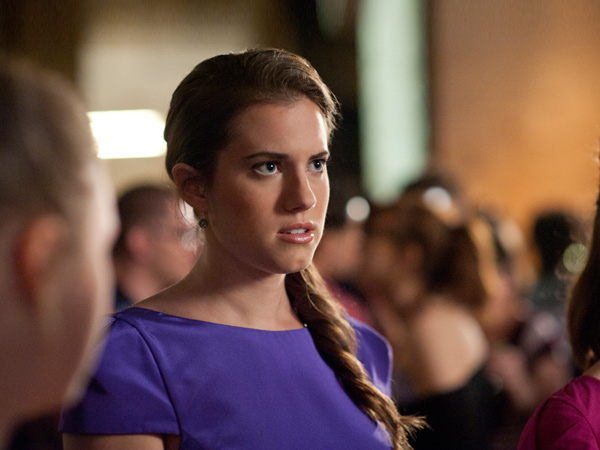
Wait: don't see them. It's horribly awkward. Marnie is nervous because Charlie's band is playing at the party —she's not nervous to see him, mind you. She's nervous that he'll see her and feel sad. Marnie approaches Charlie after his band finishes playing and compliments him on the set, and happily comments that it's mature and pleasant between them, but then of course a girl in a headband (referred to later by Marnie as "a tiny Navajo") jumps right into Charlie's arms and starts raving to him and Marnie about the band. It's clear that "Audrey" is dating Charlie and that she has no idea who Marnie is, and Allison Williams makes Marnie's face work (beautifully) through confusion, sadness, and rejected rage, but Marnie herself is totally unsympathetic when she calls Charlie a sociopath for dating another girl, just two weeks after their break-up.

The rest of the party is a trial for her. Oh, excuse me—for anyone who runs into her. Her obsession with Charlie's two-weekrebound becomes an understandable, but obnoxious, refrain (I finally started calling Marnie "Money Pit"in my notes). First she bitches about it to a stranger, who punctuates her remarks by getting up and leaving while she's talking. Then she spots Elijah slow-dancing with his boyfriend and runs up to him to say hello—if by "say hello," you mean "complain about Charlie, and how selfish Hannah is." Elijah rolls his eyes so hard, he nearly sprains his neck, then notes that if anyone's selfish, it's Marnie, because Marnie made out with him sophomore year while Hannah had mono. Marnie snorts that it doesn't count because it was at Rent rehearsals, and besides, Elijah's the one who dated Hannah for two years and secretly liked boys the whole time. Elijah's like, not so much with the "secretly" part, sneering, 'RENT rehearsals!" It's not realistic to keep working this character into the scripts, but I don't care, because Andrew Rannells is perfect. Marnie sneeringly asks him whose dick he sucked to get a part, because his voice "sounds like a bag of dying babies," and I am so stealing that comment, even if it gets me slapped in the face like it does Marnie. (I don't know why the blocking on that smack is so amateurish and fake, either, but I assume it's intentional, and I know it's hilarious.)


On top of everything else, Marnie's now marooned at the party by herself, because Jessa has accidentally invited Lavoyt to the party and now has to deal with the inevitable ugliness. While explaining to Hannah why every party could be the best party ever, Jessa gets a text from an unknown number, asking what she's up to. Hannah tells her to ask who it is, but Jessa puts adventure above common sense once again and invites the mystery texter to the best party ever. The mystery texter is, of course, Lavoyt; the wife and kids have gone out of town to visit family, and he stayed home to work. Jessa wonders why he bothered, when he doesn't have a job. To try to get a leg over you, obviously, and as Lavoyt looks sadly down at the bottle of wine he brought to a Bushwick party with a reggae band playing, he has a realization: "Oh my God, I'm That Guy."

It's probably not a "realization," given what we see later; it's probably just another way of trying to get her to pity-fuck him. She tells him to "put a pin in [his] midlife crisis" and dance with her, but then she hurls the bottle of wine over the railing and hits someone, and that guy rolls up to them and punches Lavoyt in the face, and he and Jessa end up in the ER watching a junkie try to cadge Vicodin from the desk clerk. Lavoyt starts crying; what is he going to tell his wife? Jessa looks a little scared by the tears, and suggests telling Mrs. Lavoyt the truth. Lavoyt, facedown in her lap, wails through his bloody nose and (likely fake) tears, "Let's spend the night together," adding that they "won't do anything," and now it's Jessa having the realization. Hers is about playing with fire: "I can't do this kind of thing anymore." Lavoyt is apparently used to the sad-sack routine working, because his face hardens instantly and he calls her a tease. Jessa parries with a line she's clearly used to shut assholes down before: "I liked you better when you were being a good guy." "Ain't that the way," he grunts, and gets up to leave. Why pretend his bloody nose needs medical attention if his dick isn't going to get Jessa's? Jessa suggests they can stay friends, but he grumbles, "We were never friends to begin with. You work for my kids." Ouch: Lavoyt thinks he's cutting Jessa down with that line, but Jessa isn't the one trying to take it to the hoop with the nanny instead of finding a job or spending time with his own kids. Great job by James LeGros in shifting the character from "aimless and pathetic" to "entitled douche."

Hannah, meanwhile, has spotted Adam in a dance circle of the "best dyke friends" he's alluded to previously, doing a series of weird moves probably based in theoretical mathematics. Hannah complains to the others that, after the conversation in which he said he missed her, he hasn't responded to a text in two weeks. She also observes that she's never seen him outside his house: "I've never seen him with a shirt on." I'm not going to take credit for the insight; I'm just going to feel grateful somebody on the show pointed it out.

She hides behind a wall unit and spies on him, then flees rather than talk to him, but at the bar, she's approached by one of his "best dyke friends," Tako. (Tako makes sure to note that it's not spelled "Taco." Snerk.) Tako offers Hannah a friendly drink, but Hannah notes that she doesn't really drink after an incident with Brie and hurling on her cell phone. . . . Cute line, but it's really just to set up the big reveal for Tako, wherein she asks if that's how Hannah knows Adam—from Alcoholics Anonymous. Hannah is gobsmacked, and while Tako rambles on about how this is one of the things that defines Adam (the other, obviously, is his "love of books"—and that we've seen, at least), Hannah can't decide how to feel. Should she feel hurt, again, some more, by the fact that this isn't something Adam trusted her enough to share with her? Or should she feel even more attracted to what she sees as a new and tragic dimension of Adam?

Either way, it's Hannah making a dimension of Adam about herself, so she settles for "both." Adam invites her to join him on a dumpster-diving mission, to collect scrap for a boat he's building that's designed to fall apart as it goes along . . . in the Hudson. Instead of 1) notifying her friends that she's leaving or 2) refusing on the grounds that this nautical "plan" is excessively Alexander-Supertrampy, Hannah hops aboard Adam's bike handlebars, and off they go. But he's pedaling too fast for her, and when she wails at Adam to stop the bike and let her walk, he stops suddenly, and she face-plants. I really hope for Lena Dunham's sake that they got that on the first take . . .

…but I don't think they did, because when we cut back to the pair, Hannah's got a fat lip. She's also got a chip on her shoulder, ordering Adam not to talk to her while she sends Marnie her coordinates, and she blows up at Adam for not telling her he was in AA. He responds, gently at first, that it's been a big part of his life since he was 17, but when she won't let it go, he blows up, yelling that she never asked: "You never ask me anything!" Well, she does—but only about herself, how she's doing, does this feel good, does he like her skirt. Adam does have a great point: for a woman who wants to "rate" as his girlfriend, she hasn't done much to earn the spot. Marnie pulls up in a cab and orders Adam to get away from Hannah. Finally, Adam rounds on Hannah: "Do you want me to be your boyfriend? Is that it? Do you want me to be your fucking boyfriend?"

And then, in an episode full of them, the best cut yet: Adam, Hannah, Marnie, and Adam's bike all crammed into the back seat of the cab. Hannah is trying valiantly not to grin . . . and gloriously failing.

"Welcome to Bushwick" is the most sure-handed work we've seen yet from the show. The physical humor is edited flawlessly, including the credits sequence, a little send-up mash-up that includes Asian characters and rave-y touches. 

The one-liners are confident and don't over-explain themselves or veer into dorm-monologue territory (Ray snapping into the mic, "Don't bring a baby to a party like this"; Shoshanna responding to the crack revelation with "Don't tell my parents; don't tell me!"; the throwaway "Age of Innocence fan club" exchange between Ray and Jessa, which this Wharton nerd adored). Marnie's attempted kiss-off of Adam, "Enjoy going through life as . . . yourself," encapsulates the ep really well, because it's as though the show is doing that—enjoying itself, laughing with its characters, instead of trying to be capital-D definitive all the time. Don't get me wrong, I like the show's ambitions. But when it's "just" doing this, it does it well.

Sarah D. Bunting co-founded TelevisionWithoutPity.com, and has written for Seventeen, New York Magazine, MSNBC.com, Salon, Yahoo!, and others. She's the chief cook and bottle-washer at TomatoNation.com.

GAME OF THRONES RECAP 8: THE PRINCE OF WINTERFELL

GAME OF THRONES RECAP 8: THE PRINCE OF WINTERFELL

One of the recurring discussions about this second season of Game Of Thrones concerns how much the television show is changed from the novels. While the merits of the specific changes are debatable, a running theme of both my reviews and those of other critics is that the show is more confident in its adaptation, becoming its own entity.

nullAs obvious as it might sound, we should remember that entity is a television show, and a particular form of a television show, at that: highly serialized with multiple interweaving plots, much like many of the great dramas of the last decade-plus. But the TV show-ness of Game Of Thrones works against it slightly in “The Prince Of Winterfell.” This episode leads towards the climax of the season, so it’s almost all build-up. Episodes like this are traditional in television, but they don't work so well for Game Of Thrones.

The two series associated most with the “build-up” episode are two of the most important for the current form of serialization, Buffy The Vampire Slayer and The Wire. Buffy helped develop a model of the standalone episode, with clues in each week's show leading towards a larger finale each season. After a few seasons, the overarching plot became such an important part of the show that the last batch of episodes became a string of heavily serialized “mythology” episodes, barely working by themselves. The Buffy episode “The Prince Of Winterfell” reminded me most of is “The Weight Of The World,” the fifth season's penultimate episode, in which Buffy, having lost all hope and motivation, has to be emotionally wrestled back into heroic shape for the season’s climax—the emotions before the storm. While both of these episodes may be competent, they’re fairly unmemorable out of context.

Game Of Thrones is significantly more complicated than Buffy, though, taking place across multiple geographic regions, with exponentially more major characters; in this sense, it’s more similar to The Wire. The Wire’s serialization was even more focused than Buffy’s, or any other show, really. Each of its seasons was 10-13 episodes, focused generally on a component of the society of Baltimore, and specifically on a drug case worked by the main characters. Most of the season would be build-up, the second-to-last episode would contain the climax of the investigation, and then would come the finale, the denouement. Game Of Thrones mostly followed that model in the first season, and is certainly following it here: several different plotlines are leading to what should be an explosive conclusion.

Here’s the problem: Games Of Thrones is even more scattered and geographically disjointed than The Wire. While The Wire had almost as many characters and motivations to keep track of as this show, all the events were working towards the same climax: the conclusion of the drug investigation, and then the rippling effects of that climax (although, to be fair, the fourth season deviated from this specific form). In Game Of Thrones, each smaller story seems to be moving towards a different climax.

The chief upcoming event we hear discussed is Stannis’ attack on King’s Landing, the capital. This would be the biggest battle of the war so far, and a total Stannis victory might even end that war altogether. Preparing for it makes sense. Jon Snow, now captured by wildlings and being led to their king, is also clearly moving toward a climax of some kind, as is Dany, desperate to get her dragons back. And the tension is clearly escalating in Winterfell, as Theon refuses to leave with his sister, even as a northerner army approaches.

But that’s only half of the show’s stories, maybe fewer. Robb Stark’s romance may be climaxing, but its effects are unclear, as are the actions of his mother, who has released Jaime Lannister in exchange for her children, escorted by Brienne of Tarth. This is a new story thread and an interesting choice for the show to make (these events happened relatively later in the novels than they do here). Samwell Tarly and the rest of the Night’s Watch haven’t been mentioned in several episodes, but their discovery of a cache of obsidian weapons is deemed important enough to show up here. Yes, the show is moving towards something, but the important ones can’t help but be  diluted among all the other events taking place.

Three different things make the lack of action in this episode disappointing. First, last week’s episode was also relationship-heavy and event-light. It was so good that this episode pales in comparison, though of course two high points in a row isn’t always wise structurally. Second, the eighth episode of the first season, “The Pointy End,” managed to contain several different momentous events: the death of Arya’s dancing instructor; the undead attack at the Night’s Watch, Robb Stark summoning his bannermen and gaining their respect. Meanwhile, “The Prince Of Winterfell” seems intentionally non-momentous.

Why “intentionally”? The most dramatic moment of the episode occurs when Arya and her friends leave Harrenhal by walking past a bevy of dead men, all killed off-screen by Arya’s murder genie, Jaqen H’ghar. There is craft here: the build-up to this moment involves the Stark girl's desperation and cleverness, telling Jaqen to kill himself, or aid her. When he says, “A girl lacks honor,” Arya gives a quick shrug. Honor is meaningless to her. She’s trying to survive, and win. This is all good.

There’s just one tiny problem with the resolution, though: it’s not what happened in the novels. The changes the show made from the novel end up removing Arya’s agency, the importance of her actions, the intensity of the actions themselves, and not one but two of her most badass moments. There’s still some time for the show to make it up to her, I suppose, but I simply cannot fathom why it would remove arguably the best scenes of the second book . . . unless it was to deliberately rearrange events to fit a Wire-like structural framework. It doesn’t have to work that way. Game Of Thrones has so many different characters, working on a complex enough narrative, that it could have action and preparation in each episode.

Despite a disappointing lack of events and warping of Arya’s story, there was still a lot to like about “The Prince Of Winterfell.” Its theme of finding romance and comfort in the midst of war and intrigue successfully built the emotional tension in advance of the impending climax. Robb Stark’s scene with his new crush Talisa was a major step forward for this storyline. And Peter Dinklage acted the hell out of his romantic scene with Shae, showing a vulnerability only hinted at before. Additionally, Tyrion’s scenes with Varys are among the best the show has done, filled with wit, danger, foreshadowing, and charm. (“We could throw books at his men.” “We don’t have that many books.”) This demonstrates that Game Of Thrones is telling its multiple stories well. The issue is how it’s editing those stories together into a story, and into a series.

Adaptation:

In addition to the tremendously disappointing changes in the Arya Stark story, another Stark is ill-served by the adaptation. Arya's mother Cat Stark has had her agency largely removed as well, due to a couple of changes. When Littlefinger made the offer to exchange Jaime for her daughters, her decision to free Jaime was changed from one she made on her own to one she merely accepted. In the novels, Cat also made that decision after receiving the “news” of Bran and Rickon’s death; here, she’s pushed into it by the Karstarks demanding Jaime’s death after his failed escape last week. Cat Stark’s strength made her arguably my favorite character in the novels, but the show regularly weakens her.

Rowan Kaiser is a freelance pop culture critic currently living in the Bay Area. He is a staff writer at The A.V. Club, covering television and literature. He also writes about video games for several different publications, including Joystiq and Paste Magazine. Follow him on Twitter @rowankaiser for unimportant musings on media and extremely important kitten photographs.

GIRLS RECAP 6: THE RETURN

GIRLS RECAP 6: THE RETURN

null

One of the things I liked most about The Return—and I liked a bunch of things—was its title. Nearly every series has an episode like The Return, in which the hero returns to his/her place of origin to find things much changed for the smaller; after years of recapping serial television, on seeing that title, I'd originally expected the customary uncreative variation on one of the plots sure to follow—"Going Home," for instance, or "Homecoming," or a pun on the idea that you can't go home again or it's where the heart is.

null"The Return" was written by Lena Dunham and Judd Apatow, who pick up the clichés that surround "home" and see what icky bugs run out from underneath by sending Hannah to her parents' house in Michigan for the weekend, for their thirtieth anniversary. The episode defines and redefines "home" as it applies to Hannah: as an oblivious twentysomething, as a New Yorker, and as an adult only child. And it starts with the "oblivious" part when Hannah's heading to the airport. Marnie—Hannah's mother hen by proxy—leans out the window to remind Hannah that rent is due next week, and admonishes her to "be nice to your parents. Okay?" "I'm the nicest!" Hannah chirps.


She tries to be, but not very hard. Hannah slogs off the plane, lugging the garbage bag full of laundry that's serving as her suitcase. (In what post-2001 fantasy-land would the Hefty luggage get past TSA? Marnie would have made her borrow a duffel bag, I think.) Mom and Dad are waiting over-eagerly at the curb (next to their Volvo, natch); Dad is holding a sign with a picture of bananas on it, and mentions on the ride back to the house that they couldn't think of a better way to spend their anniversary than with "our best friend, who we just happened to create." That idea, simultaneously sweet and inappropriate, comes up repeatedly in the ep; her parents seem to have always treated Hannah as a sort of peer, but now that she's a real voting adult, nobody quite knows how to deal with that reality.

Mom responds to Dad by mentioning local job listings; she's doing it because she misses Hannah, but Hannah is immediately defensive. Mom also mentions the "fun Netflix" they've got at the house, a spot-on parental detail that Hannah is too busy texting, then stomping out of the room when Mom suggests she's hungry, to appreciate. (The movie they're watching: Million Dollar Baby. Rimshot!) Hannah flops on her bed, stares at her Party Girl poster, ignores a text from Marnie asking if she got the rent money from her parents, and calls Adam's phone but hangs up after one ring—she's put herself in his mind, but can plausibly claim that she just butt-dialed him.

And Dad assumes that Hannah is going on their anniversary "date," but Hannah declines—not because it's kind of weird, although she does mention that, but because she has a date of her own. Eric , whom Hannah meets when her frantic mother sends her on a mission to pick up hot-flash meds, is a sideburned cutie who co-owns a local pharmacy with his father, and a stark contrast to Adam in every possible way: traditionally good-looking; makes good money in a non-creative field; reacts with disbelief when Hannah tries to put a finger in his poop chute during sex, then murmurs to him, "I'm tight like a baby, right?" The look on Hannah's face when he initiates no-kink missionary intercourse is almost pitying.

He's a pleasant, solicitous young man with a business-like, adult relationship with his father, and he's definitively Not Adam. He's also definitively Not New York, and the automatic, unearned superiority Hannah feels to her high-school classmates—one perpetrated by New Yorkers of all ages—is another theme of the episode. It's made explicit in the pep talk Hannah gives herself in the mirror as she's getting ready to go out: "You are from New York, therefore you are just naturally interesting, okay? It is not up to you to fill up all of the pauses. You are not in danger of mortifying yourself." The latest in a line of unbecoming vintage frocks would beg to differ on that last point, as would the moment where she mentions offhandedly to Eric that she gave up on vegetarianism because Adam had nothing to eat at his place except meat—and because she thought that, if she went out for food, Adam wouldn't let her back in.

Hannah's New York bias in favor of, well, herself is even stronger in her interactions with Heather, an old high-school friend. We've seen framed pictures of Hannah and Heather in Hannah's old room, but they haven't kept in touch; Hannah hasn't heard anything about "the benefit"—the fundraiser Heather has put together for her friend Carrie, who got Natalee Hollowayed on a spring-break trip. Hannah also hasn't heard that Heather's about to move to Los Angeles to pursue a dance career, and when she asks whether Heather has any contacts out there to help her get started, Heather shrugs airily, "I know enough to know that you don't really have to know anybody."

In a way, she's right, because based on the moves we see, no contact short of Alvin Ailey could get Heather a job that wouldn't involve a pole—but it's Hannah's attitude we're meant to look at, and she believes that she knows better than Heather simply by virtue of living in "the big city" herself. Heather's belief that she merely has to move to L.A. and go on auditions to "make it" sounds innocent, even silly, but we've seen that Hannah cherished the publishing-world version of that belief. (And may yet cherish it.) Yes, the "benefit" is low-rent (to underscore the point, Edwin McCain's obnoxiously ubiquitous "I'll Be" is playing when Hannah and Eric walk in), and when Hannah buries her face in her pint to keep from laughing, it's sad for Heather and her inappropriate booty-dance of tribute to Carrie. It's also sad for Hannah, who thinks she knows something Heather doesn't about how to make it in a creative field.

Hannah's rant to Eric afterwards is revealing; Eric concedes that Heather's show "was a little cheesy," and Hannah wails, "It was very cheesy, and nobody's telling her! She's gonna go to L.A. and live in some shitty apartment and feel, like, sad and scared and lonely and weird, all the time, but she's got a good life here. I would like her life." Noooo kidding—that speech isn't a prediction for Heather's life, it's a description of Hannah's. When Eric jokes that he knows the florist has a job opening, Hannah retreats to the safety of Gotham-centric condescension, saying she'd get "a real job, like a teacher or something." Eric, bless his heart, doesn’t point out that she'd need a master's or certification to do that, just asks what her real job in New York is. She snaps that she's a writer, like she told him. Eric is surprised: "That's how you make money?" Hannah non-answers, "I don't have any money." I had that "no no no, it's not what I do, it's what I am" conversation about my career several times. In those conversations, it’s impossible not to sound like a stubborn jackass who should suck it up and sit for the LSATs before she winds up in bankruptcy court, and that's exactly what Hannah sounds like. But I can relate.

So can her father, as it turns out, but his "relating" to Hannah is more like "projecting." He's filling the space she's left at the dinner table by worrying aloud about her. "What does a person like that turn into?" he wonders, adding that she's funny and likable, "but that and ten cents . . ." Such a dad-ly expression, that. Mom thinks his assessment is harsh, but it’s really about Dad's own disappointments: "At what point will she realize, she's not gonna get to be what she wants to be when she grows up?" Like Hannah's comments about Heather moving to L.A., this isn't so much about the subject of the remarks as it is about the utterer; apparently Dad's life didn't turn out like he'd dreamed. Mom is taken aback by his lack of faith, and asks how he knows. "You know that, you're the one who forced us to cut her off to help her realize that!" Interesting take on what we saw; Mom did force the issue, but according to her, she wanted to have a lake house. Now she's singing a different tune: "I cut her off so she'd have something to write about!" Dad grumbles that "we don't even know if her writing is any good." It's hard to tell if this is a comment on how Hannah doesn't produce much in the first place, or if her parents just don't read it (remember how they left the pages she'd brought them behind in their hotel room?), but Mom thinks that Hannah knows how to have fun, "and she thinks about that fun, and she learns from that fun." The pronouncement is completely irrelevant to what makes a good, or successful, writer—but it also shows exactly how parents misunderstand what a writer does.

Certainly her parents try to supply Hannah with material later that night. Dad, vigorously pumping Mom from behind in the shower, slips and hits his head on the bathroom floor. Hannah comes home to find them dishabille, Mom trying to revive Dad, Dad naked and worried about a back strain, and has to help Mom haul Dad off the floor and into bed, suggesting repeatedly that he put a towel or a robe on.

After Dad's safely tucked in, Mom makes a gentle "not Mr. Right, but Mr. Right Now" observation about Eric that Hannah's surprised to hear the truth in, then asks if Hannah's doing okay financially, admitting that they cut her off rather abruptly. But they're proud that she's "making it work"—and Hannah, after taking a moment to consider asking for rent money anyway, chooses to pretend that she is making it work. Or vows to actually make it work.

Later, Adam calls. When Hannah says she's at home, he duhs that he is too, but she clarifies "home home," at her parents' house. She tells Adam about Dad's "sex injury," and about her own Eric-scapade, asking if it's "weird" that she told Adam that she slept with someone else. She's hoping it is, and the fruitlessness of this attempt to arouse his jealousy is as familiar to her now as her old high-school life no longer is. But Adam—wearing black undies and a lacy green satin sleep mask—doesn't react, so she changes the subject to Eric's gigantic, cheap apartment, wondering why they kill themselves to stay in a city that doesn't want them. Adam misses her. She's pleased, because she misses him—but what she really misses is home, the city, her life. She asks Adam to tell her what's going on out his window, and as he narrates a neighborhood crackhead's perambulations, Hannah stands on her parents' silent, dark front lawn, listening.

The Return is well crafted, subtle and smart about that day in every adult child's life when she refers to "home" as college, or her current city, and her mom goes quiet. It portrays Hannah's New York tunnel vision accurately without expecting us to sign off on it, and it asks what the definition of "home" is without answering its own question. Nice work by the supporting cast, especially Becky Ann Baker and Peter Scolari as her parents (and Little Scolari, heh), as the show itself "returns" to the exact observations that make it work best.

Sarah D. Bunting co-founded TelevisionWithoutPity.com, and has written for Seventeen, New York Magazine, MSNBC.com, Salon, Yahoo!, and others. She's the chief cook and bottle-washer at TomatoNation.com.