GREY MATTERS: Exile from Guyville: The outsider heroines of HUNGER GAMES, UNDERWORLD and THE GIRL WITH THE DRAGON TATTOO

GREY MATTERS: Exile from Guyville: The outsider heroines of HUNGER GAMES, UNDERWORLD and THE GIRL WITH THE DRAGON TATTOO

null

When three of our top action heroes have names like Katniss Everdeen, Lisbeth Salander and Sookie Stackhouse, well, that at least counts for interesting. But when all three wildly different creations – The Hunger Games’ anti-war survivor, The Girl with the Dragon Tattoo’s enraged goth hacker, True Blood’s deep-fried super-powered fairy – are engaged in essentially the same radical gender role rewrite project, that’s another thing entirely. Throw in Mary Elizabeth Winstead’s flinty-fine turn as the nearly genderless Kate Lloyd in the fantastic The Thing prequel and there’s no doubt: a new wave is cresting, something wild and long in coming.

How things look when it hits the shore (in particular, when the Hunger Games film version attacks multiplexes this March) will tell us whether Twilight’s Santorum values are finally in retrograde; whether the age of the girl as just The Girl, the Mom, the Object or the Sidekick is fading a bit; and whether the culture in general is ready to one-up Liz Phair by finally allowing heroines their invigorating, self-defining exile from guyville.

But first, maybe you want to know what the hell I’m talking about.

nullSuzanne Collins’  Hunger Games trilogy is about a dystopian post-North America where tweens and teens are forced to kill each other on a nationally broadcast reality TV show. Our heroine is Katniss Everdeen – 16, and a loner who first experiences a boy’s romantic overtures as treachery, then as spiritual debt. With his every kindness, her indebtedness grows like a bad mortgage of the heart. Collins’ narratives are as non-erotic as Stephenie Meyer’s literary chastity belts, but you too might not be in the mood if, like Katniss, you were either starving, in pain or murdering children to survive. And while fans speculate endlessly over which boy Katniss would have chosen, I believe that, had she a choice, she would gladly have turned down both boys for one night of peace with her sister Prim and her mom. Readers of the trilogy know the truth of this.

But the key thing is this: when Katniss is hunting (alone or with Gale), at the market, at one with nature or with Prim, she’s full, complete, more. But after being torn between two romances she did not instigate, and after her body is waxed, shaved and peeled down to “Beauty Base Zero” so she’s ready for pre-Games fashion shows, it’s nearly impossible to imagine a more visceral, point-by-point depiction of female diminishment.

Anyway, if all this was just about one S.F. trilogy, it might be shrugged off as a weird pop culture blip.

But it’s not. As I type this, similar energies run through David Fincher’s deeply empathetic and subversive version of The Girl with the Dragon Tattoo, starring Rooney Mara’s savagely calculated reanimation of the book’s icon, Lisbeth Salander. An angry, acidly hermetic 24-year-old hacker savant, Salander was raised by a hell-father of unknowable monstrosity and is raped by her social worker. For her own reasons, she agrees to lend her incredible computer skills to a disgraced middle-aged journalist (Daniel Craig) trying to solve a corrupt family’s mystery.

Salander’s work invigorates her. But as someone raised in sexual horror, she can only express herself in the language of fucking. When she offers her body to the journalist, he takes it, despite having nothing real to offer in return.

nullSalander’s bad decision visibly diminishes her. Away goes the off-putting mohawk, bulky jacket, fetish gear and the essential protective hardness. She wears foundation, combs her hair and becomes “pretty.” She even buys Craig’s character an expensive leather jacket.

But Fincher’s got her back: when she catches the older man out on a date, Lisbeth hurls the gift in the trash, jumps on her tricked-out Honda CB350 and leaves the usurious journo in the midnight dust. As fucked up as she is, she’s at least herself again. Salander does what the guilt-wracked, self-loathing Katniss of the first two Hunger Games books can only dream of doing: she escapes “romance.”

Meanwhile, after three seasons of making a fool of herself on the horns of love, True Blood’s Sookie Stackhouse is finally learning the Salander lesson and saying no.

Increasingly super-powered and weary of being “vampire crack” (talk about triple entendres), Sookie is faced with choosing between two hot vamps – serial liar Bill and sizzling bad-boy Eric. Instead, she says no to both of them, and so a door opens to a new Sookie, one in control of those light-blast super-powers and…are you seeing a pattern here?

nullIf so, check out The Thing, which took Salander-style self-determination as far as Hollywood could stand. Our heroine is a paleontologist named Kate Lloyd (Winstead); the blunt name matches her no-nonsense character. She ends up with a group of Norwegian scientists in the Antarctic fighting a shape-shifting alien menace. Dressed in the same gender blurring winter wear as her coworkers and with not a stitch of makeup, Kate is not attracting or attracted. Undistracted, she is relentless.

Of course, the Big Kahuna of heroic self-definition is Buffy the Vampire Slayer, especially Buffy in her last moment on screen when, minus the distraction of her vampire lovers Spike and Angel or a man-created legacy to tie her down, she can finally, after 144 episodes of striving, get to live.

Still, why this deluge of Exile from Guyville properties now? You could just as easily ask why it’s raining fairy-tale-based films and TV shows, but I’ll give it a go.

I see three factors at work.

1. THE NAMES

The easiest to crack is the weird name thing. Not to ball-peen hammer my point too hard, but in properties that are all about questioning or opening spaces where it’s okay for heroines to be more, epic and amazing, it just makes sense to have people with fantastic names to match the mission. You just better buy into an enraged aggro-goth tattooing “I AM A RAPIST PIG” on a screaming rapist pig when her name is Salander instead of, say, Jody. (I love the way “Salander” sounds like an especially pissed off verb. “She salandered her money manager until he begged for mercy!”)

2. ROM-COM BRAINWASHING

Another is the  auto-critique of romance that these narratives so often represent. A single, smart, beautiful, for-now middle class New Yorker friend gave me an idea via her growing contempt of the one genre dedicated to female viewership: rom-coms. Her antipathy for the genre was simple: “Because they’re about making me go fucking insane, is why.”

She said rom-coms drive her around the bend by (1) making marriage look like the most nightmarish state of human bondage imaginable and (2) insisting that all single women must drop everything so as to enjoin that bondage at the exclusion of all other things, pronto. It’s basic cognitive dissonance — and when you look at the diminishing returns of recent genre efforts, it seems as though my friend has company.

3. SELF-DETERMINATION

nullJump-cut from rom-coms to another form of action entirely, the Underworld films – those interchangeable video game-style werewolves-and-vampires shoot-outs featuring Kate Beckinsale in a catsuit. (Another is coming out next month.) I’d always assumed the films were about dudes ogling Beckinsale’s aerodynamic, leather-clad bod wreaking gory havoc. Wrong.

When Beckinsale stripped down to make soft-focus love with some hunk, the theater erupted in howling disapproval – from women. Women who did not brave a winter Manhattan night to see their action heroine surrogate become some dude’s bottom, but rather to enjoy her kicking ass, and often.

Claiming rom-com apostates and action film lovers as core constituency for anything may seem a stretch too far. But I think they both mine the same dissatisfaction.

The female half of the entertainment market is tiring of being pandered to in degrading, conservative fantasies while reacting really well to tales of possibility, no matter how dark.

That half of Comic-Con audiences already dressing as Katniss? Or Doctor Who devotees snatching up pricey Amy Pond and River Song action figures? They’re the base — the P.R. shock troops for properties that represent this new wave. And based entirely on apocryphal evidence and years in the S.F. nerd trenches, I’m here to report that those people are more often female than not.

That base is waiting for the Hunger Games film with a passion eclipsing Potter or Twilight because it’s based on real need here in Depression 2.0, a need for a self-defined someone who beats the odds, the economy, and the expectations placed upon her gender. (And yes, I know how it all ends – with acceptance, qualified hope and a sad awareness of limitations. Not exactly Love Story.)

Meanwhile, yet another Twilight-corrective book has been greenlit for a film version: Scott Westerfeld’s Uglies, which tells of another nightmare future in which youth are force-fed crap pop culture and made to endure prettifying body modification – or else. And the heroine’s name? Tally Youngblood. Katniss would be so proud.

Anyway, as Thunderclap Newman sang decades ago, there’s something in the air, and it’s all so incredibly exciting. This is gender egalitarianism creating itself without knowing it, which is why it might be real. Films in which men live without required romantic subplots or obsessive girl problems are unremarkable, the usual, expected. But films in the Katniss, Salander, Stackhouse and Lloyd wave, films in which the equation is gender-flipped with such passion – that’s punk rock. That’s the beginning of a leveled playing field and the end of dissonance, one story at a time.

Ian Grey has written, co-written or been a contributor to books on cinema, fine art, fashion, identity politics, music and tragedy. His column "Grey Matters" runs every week at Press Play.
GREY MATTERS: HOMELAND and the art of playing crazy

GREY MATTERS: HOMELAND and the art of playing crazy

null

As a certified crazy person, I’m here to tell you that either vampires burn in daylight or they don’t. I’ll accept no wiggle room on this. Anything less and you’ll quickly lose my suspension of disbelief. To get what I’m babbling about, this way, please. I’m talking about Homeland, which is, by the way, about almost nothing but crazy people.

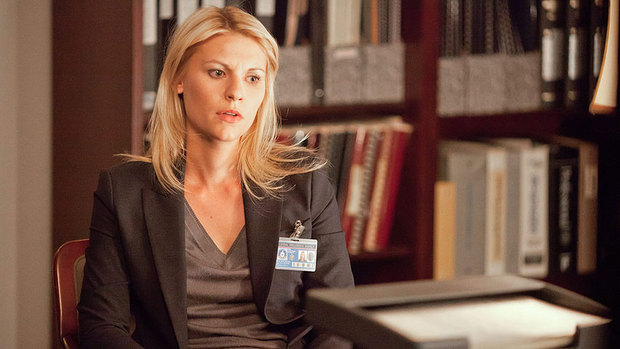
Homeland, in case you’ve been busy catching up on something more realistic – I suggest Syfy’s zero-dollar wonder, Alphas – is about Carrie Mathison (Claire Danes), a C.I.A. operations officer haunted by the notion that she failed to do something that may have stopped 9/11 from happening. She was also compromised in an Iraq operation because of an American soldier who’d turned against his country.

Then a Delta Force raid uncovers Marine Sergeant Nicholas Brody (Damian Lewis) in a compound belonging to super-terrorist Abu Nazir. Brody becomes a hero but Carrie pegs him as connected to her failed op and worse, a turned sleeper agent.

When the C.I.A. turns down Carrie’s requests for invasive surveillance because dammit, we don’t do that sort of thing in America, she does it herself with some spy pals. (Alphas, with its metaphor-fraught tales of working class, genetically “super-powered” people fighting Cheney’s still-booming and lawless torture system that Homeland needs to pretend doesn’t exist, is the more clear-eyed, adult view of post-civil liberties America.) In episodes Alfred Hitchcock would love, Carrie watches Brody eat, talk and have sex with his stunningly gorgeous wife (Morena Baccarin of Firefly fame).

The season-long hook, teased sometimes to exquisitely hair-pulling extremes, is a has-he-or-hasn’t-he game of whether or not Brody has been turned and is out for big-time trouble.

And then, for me, it all went to hell.

nullCarrie’s a character whose entire life, as the brilliant credits sequence reminds us every week, is literally defined by terrorism, fear and trying to control that fear by building a life, a personage as a person in strict control, serving her country, her profession and the one real man in her life, her mentor and father figure Saul Berenson (the mighty Mandy Patinkin).

So of course she decides to throw it all away, including, quite possibly, the security of the United States, so she can get drunk and fuck Brody.

The show recovered in fits, some so good and others so bad it was like tuning in to get whiplash, but this was the first trumpet sounding Homeland’s true nature, and televisual literature was not included in that symphony. Homeland never dived so far as The Killing. It stayed professional, keeping us interested (and glad there were no commercial breaks where we could pause to think about its manifold absurdities). Then there was last week’s finale that led to an explosive terrorist conflagration that wasn’t – because if it was, one of the players would be taken off the board, and so much for Homeland Season Two.

But what about the vampires? What about you being crazy?

Okay. What I mean is, if a show has vampires who can never walk in sunlight because they’ll burn up in flames except when the writers need them to, well, I’m not going to be watching that show, because the writers have contempt for me, or their material, or both.

On the most basic level, that’s the deal with Carrie and Brody. In order to accept Carrie and Brody, we must accept some whoppers about what we know about bipolar disorder – if only from Oprah, what millions of people know about returning Iraq vets and P.T.S.D. and what we all know about what it is to be human.

nullRight, bipolar disorder. I didn’t mention that, to add some tension spice to Carrie’s character, Homeland makes Carrie suffer really badly from bipolar disorder. Like, it’s so bad that she has to take her meds every day or else she’ll go into a manic tailspin and lose her mind. The poor thing, she can’t even go to a regular doctor for those meds because the C.I.A. would kick her out as a security risk. So, she visits her psychiatrist sister on the down-low for her weekly supply, which translates into even more suspense, and some shame and anxiety to boot; this bipolar thing is paying off big-time and all they had to do was say she has it. Poor Carrie. This is going to be one rough season.

Except, not so much, because on Homeland, vampires can walk in daylight, so to speak. After a few episodes, her bipolar kind of…goes away. Why? I would imagine because its rigors would get in the way of other plots leading to such flights of fancy as Carrie blowing off seeing her sister for meds so she can get blotto drunk for some hot Brody ooh la la. Unlike all of us, intemperance does nothing to aggravate her bipolar; hell, she doesn’t even get hangovers.

Yes, “us.” I outed myself a while ago on being bipolar. It’s no big thing – as long as you remotely behave like a grown-up about this controllable thing, i.e., not like Carrie.

nullDon't get me wrong: I don’t suggest Homeland hang itself on the horns of scientific accuracy (or a WebMD search). I just ask that it create a ‘verse where there are laws for Carrie’s condition, and then stick to those laws, like the way Vulcans can or can’t intermarry and the like. (On the other hand, absurdity met ugliness when the showrunners had Carrie, in deep depression, diagnosing herself – with her sister mutely complicit – for electroconvulsive therapy, a.k.a. shock treatment, a controversial, risky, cognition- and memory-impairing but highly photogenic treatment calling for Danes to be strapped and gagged, electrodes glued to her scalp. Then they cranked the juice as her body spasmed grotesquely. If you’re suffering from depression, there are a million other ways to get help – this is just an ignorant TV show by the guys who made the torture-happy 24.)

Danes has created a viable person built off the showrunners’ thumbnail description and her own vision of Carrie, which manifests in endlessly fascinating halting speech patterns, “talking” body language, odd glares and more. The creators of Homeland were insanely fortunate to get such an artist.

As for Brody – good grief. Here’s a man who for eight years was brutalized, beaten, locked in solitary, became a surrogate father to an adorable child who died horribly, was forced to brutalize other Americans and, for a freshet of memorable detail, was pissed on while he bled. And yet within a day or so he’s home, and aside from limited, soon-to-improve sexual dysfunctions and some behavioral dissonances, he’s on his way to a full recovery with timeouts for plot-advancing nightmares.

nullMeanwhile, in Brody’s frequent shirtless scenes we see his scars and their implied memories of unimaginable months of pain and horror, which now have no apparent effect. (Even his attempted terrorist act is based not on torture, but on love of a child.) This is Spielbergism; take a sad song and make it ludicrously better, one-upping it by saying the sad song doesn’t exist even as you’re looking at it.

As Brody breezed through photo ops, interrogations, his love affair, superior fathering, a remarkable act of remembrance in a church, the first steps towards a congressional run and the build-up to his terror attack, watching Homeland, for me, became the job of creating in my mind a less ridiculous backstory for Brody. Something Uwe Boll would not reject as failing to meet his stringent standards of realism. (I also had to ixnay the absurdity that any country would allow such damaged goods into the ‘burbs with no decompression process, where anyone could get to him, or the poor bastard could just blow his brains out in 24 minutes.)

Again, it’s entirely the actor’s art that pulls this nonsense off. It’s Lewis’ eye and neck muscle work, his oddly timed blinks, his general tightness of bearing suggesting things blowing up inside. Everything that nobody bothered to write.

But there were such great moments! Like when Brody and Carrie went to her family cabin in the woods, with its implications of a peaceful childhood she somehow missed, and his connection to a person who gets his deal. It was beautiful. And then she flat-out accuses him of being with Al Qaeda, and he’s back at her, yelling that he isn’t (which technically is true). It’s the spy scene we’ve always wanted to see: the breaking of both players’ pose.

Pure gold. But moments like this get lost in a spy show’s mechanics and, as Carrie’s mental illness makes that special guest appearance, devastating her just in time for dramatic effect, I’m just over these daywalking vampires. Next season, I’ll recalibrate my expectations of Homeland. I’ll enjoy the acting, the twists and turns. What do you want? It’s just TV.

Ian Grey has written, co-written or been a contributor to books on cinema, fine art, fashion, identity politics, music and tragedy. His column "Grey Matters" runs every week at Press Play. To read another piece about Drive, with analysis of common themes and images in all of Refn's films, click here.

GREY MATTERS: Martin Scorsese’s interesting year

GREY MATTERS: Martin Scorsese’s interesting year

null

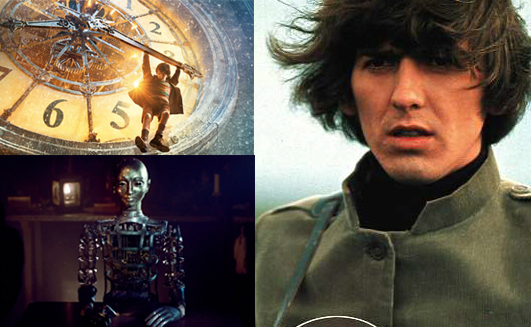
Aside from being a lousy whitewash out to prove God-knows-what, Martin Scorsese’s George Harrison: Living in the Material World doesn’t even live up to some simple realities, things like the fact that when you’re Martin Scorsese, you most certainly do have a huge responsibility when taking on such an undertaking. Nobody will ever again have your resources, access or your name, and the sobriety of purpose and sheer cred that goes with it.

And now, to super-complicate matters really interestingly, we have Hugo, easily one of Scorsese’s top five films, a masterpiece, coming mere months on the heels of the Harrison debacle. The two films, in eternal orbit and connected by “George” as a name and notion – of the guitar player and his revolution in sound, and of the disgraced special effects trailblazer, Georges Méliès, who, in our world, delighted a small, asthmatic Italian-American boy in Little Italy almost 60 years ago with his lowest-fi wonders.

My sense is that Scorsese – a Catholic boomer from the age of Aquarius, director of Kundun and The Last Temptation of Christ – simply could not have made Hugo without the mysteries of Harrison’s persona and life-long mysticism nagging him on. It’s just a damned pity that a huge chunk of facts, music history and Harrison’s vast, real legacy had to be the sacrificial lamb for Scorsese’s beautiful triumph.

So am I arguing that artists have responsibilities? Nope, no way. Do journalists? Yes. Absolutely.

nullBut in Material World Scorsese straddles art and reportage and screws the pooch on both. And yet Hugo, a film that makes no bones about being a total spin on some history using the toolbox of fiction, absolutely gets the heart of so many truths: truths about cinema, anger and healing, growing up and magic. And yeah, ironically, of the creation of history.

The irony is that the methods and mindset that serve Hugo so well are poison to Material World. Before we move on, though, a quick view of both films.

Material World offers a superfan’s mind-blow of previously unearthed Beatles and Harrison footage to drag us through a brilliantly edited but still relentlessly middlebrow, Ken Burns-like take on The Beatles and Harrison.

You know the drill. Grew up in grim, post-war Liverpool. Played crap clubs with John, Paul and Ringo until gaining world domination. Became entranced with Indian culture, the sitar and transcendental meditation under the guidance of Maharishi Mahesh Yogi. Made the magisterial All Things Must Pass solo record with the insane Phil Spector, now imprisoned for murder. Formed The Travelling Wilburys with Dylan, Tom Petty, Jeff Lynne and Roy Orbison. Did too much coke at some point. Got cancer, beat it. Suffered a knife attack by an insane person. Got cancer again, died peacefully. Every so often something new and interesting pops up – Harrison was a race car driver? – only to be summarily deleted.

nullAs you’ve probably heard, the film’s talking heads – among them Ringo and McCartney – are sometimes identified and sometimes not. About fifteen years of Harrison’s life are simply omitted, one assumes, because, like that racing bit, they just don’t fit Marty’s thesis: quiet guy becomes mystic. (You could say this lacks dimension.) The tales we’ve heard of George as a compulsive, somewhat cruel womanizer are whimsically hinted at by his wife Olivia, and then dropped. The epic coke binges occupy a fascinating single string of video that suggests the great film this could have been – I’ll return to that topic.

In general, Scorsese behaves as if his love of music will cover for the fact he truly doesn’t understand the thing, how it works or why the damned it so bewitches and obsesses him.

On the other hand, Hugo finds Scorsese not only at home in multiple cinematic languages and dialects, but talking about talking those languages. And so 3D not only works as immersion technique, but as an element with its own sacred history in a film that assumes longing for the cinematic experience and love of illusions as basic currencies.

The incredible richness of Scorsese’s visual languages allows him to express Harrisonian spiritual values delivered with an Amélie-like breathlessness and a neo-Gaultier splendor. (If costume designer Sandy Powell doesn’t win an Oscar for her designs, heads will roll – to speak only of heads.) As much as The Tree of Life is intrinsically Christian, Hugo is deeply Eastern in tradition, a film of real and metaphorical deaths and rebirths, of spirit animating the material world.

The film’s about Hugo (Asa Butterfield), a smudge-face Dickensian literally marking time by minding a Paris train station’s clocks and trying to repair the broken, beautiful automaton gifted to him by his deceased dad (Jude Law).

Hugo’s enemy is Inspector Gustav (Sacha Baron Cohen), once a foster child, now a spiritually broken policeman crippled by war. (Scorsese/Cohen/writer John Logan only play Gustav for laughs until they understand the true depths of his brokenness).

nullHugo’s redemption comes in the form of Isabelle (Chloë Moretz), a young girl who’s never seen a film, and who’s the foster granddaughter of Papa Georges (Ben Kingsley), a cranky man with a toy shop in the station, and who is on the run from the slow reveal of being the Georges Méliès – more than just special effects’ godfather, a man who rejects bleak reality for the hygienics of extreme fantasy.

By the way, we already we know far more about Hugo’s fictional characters than we ever learn about anyone in Material World. Just saying.

Scorsese’s film, the stuff of John Logan’s script (itself based on Brian Selznick’s book), unfolds a series of beautiful, almost Hindu cycles of death – Hugo’s dad and uncle’s passing – of birth – Isabelle’s discovery of cinema, the “awakening” of the automaton – and rebirth – the automaton coming to “life,” Georges’ films rediscovered, his reputation, his essence, Inspector Gustav healed of the burns of a bad childhood.

Along with its spiritual transcendences and heroic humanism, Hugo addresses, delights in and celebrates film history through mostly-fictional characters, fantastic devices and interlocking, exquisitely alive tableaus.

The reason this works with Méliès and not Harrison would seem obvious: most of Méliès’ films were destroyed after World War I, most Americans have no idea who he was, most historians have no idea what the “real” man was like. And so there’s no such thing as “doing” Méliès inaccurately. Harrison’s life, on the other hand, as we see in Scorsese’s own film, is ridiculously open to scrutiny, which means the director has to work that much harder to float his revision.

In Hugo, fiction about fact frees Scorsese. In Material World, what we get is an attempt to mold fact to fit intent. After a while, it’s like a root canal; the only painless part is when it’s over.

nullI get the temptation to rewrite George as spiritually ahead-of-the-curve, as an enigma tucked inside a mystery. Problem is, in order to do this properly, you have to commit all kinds of misdemeanors against the artist, the arts and history. Scorsese ends up so busy whitewashing alone, he has to, for example, mostly play down the matter of George’s, well, guitar playing.

Off and on, people – mostly unidentified – declare George’s playing to be “soulful.” This means nothing. Paul and Ringo – both acquitting themselves with warmth and grace – speak of their fallen mate with respect, with Paul saying he was the best musician by far when they started, which is something as George was, like, 17 years old at The Beatles’ beginning. Whatever – I eat this stuff up with a spoon, Paul and Ringo’s humbled late-life understanding of their band’s magnificence.

But aside from the static, overlong middle section of the film involving George’s interest in the sitar and Ravi Shankar, there’s not much in the way of musical insight. Scorsese seems so bent on fuck-knows-what, he misses the ready-made metaphor for Harrison’s spiritual quest sitting right there on his AVID screens.

It’s Harrison’s mysterious morph from the edgy, all-elbows player on early hits like “Don’t Bother Me” to the soaring transcendent slide guitarist you hear on Badfinger’s “Day After Day” (not in the film) and pretty much everywhere after the White Album.

What happened? How did he change? This is exciting stuff – the sound of a man’s soul in transition!

nullScorsese, literally, could not care less. Instead of this tale of self and spiritual discovery through music, Scorsese fritters away precious time with Eric Clapton, who shares tales of his cockmanship, of his creation of Scorsese’s favorite GoodFellas track, “Layla.” Scorsese is so enraptured with Clapton, who comes off as the epitome of noxious, boomer rock royalty, chortling about stealing George’s wife and choosing to not join the Beatles due to his extreme awesomeness, that Scorsese doesn’t seem aware Clapton is most recalled as a soft rock favorite and that, more importantly, aside from the solo on “While My Guitar Gently Weeps” and some shared women (nice), Clapton has fuck-all to do with our story here.

The Clapton infatuation is, however, a side effect of what’s really wrong: Scorsese refusing to leave his boomer bubble for context or insights, and in so doing, missing Harrison’s vast contributions beyond his own first edition vinyl collection.

Based on what’s here, Harrison is a minor figure – no big deal, used to be in The Beatles, saw God, Ommmmmmm…. You’d never know that Harrison’s early Beatles compositions (think “If I Needed Someone”), with their signature bell-toned arpeggios, tightly harmonized, octave-sweeping melodies and oddly chorded middle-eights, provided the vocabulary for New Wave, power pop and indie pop, inspiring/defining everyone/everything from Aimee Mann, Elvis Costello and Glenn Tilbrook to David Bowie’s wholesale theft of the song in “Blue Jean” to Elliot Smith’s post-Brit Invasion confessional aesthetic.

You’d never know that, as much as John Lennon, Harrison brought the ways and modes of the avant-garde into pop, whether it was the teeth-rattling extreme dissonances in “I Want to Tell You,” the tape-loop floaty-ness of “Blue Jay Way” or the triumphant wall of feedback in “It’s All Too Much.”

nullIt’s an amazing legacy that Scorsese omits, and it doesn’t end there. There’s George creating “world music” decades before the likes of Peter Gabriel, Sting or Björk via the 1968 Beatles track “The Inner Light” and its pulsing dress of sitar, harmonium, flute, table and santoor. (That Scorsese used world-music-style music by Gabriel for the soundtrack for The Last Temptation of Christ makes this omission a real head-scratcher – or is Scorsese simply unable to connect the dots?)

Meanwhile, wouldn’t it be clean fun to chart Harrison’s perversely “WTF?” appearances on records by Belinda Carlisle (The Go-Go’s), Fleetwood Mac and Electric Light Orchestra?

Who was that George? In particular, the George who, again like the Georges Méliès of Hugo, lived to enjoy a late-life resurgence with 1987 Top Ten hits like “Got My Mind Set on You,” “When We Was Fab” and the album Cloud Nine? You’re not going to hear much about that George. In order to buy the mystic-dude-in-the-material-world shtick, you have to – simply have to – accept that an entire fifteen or so years of Harrison’s life didn’t much matter.

Actually, Harrison seems to leave Scorsese’s radar as soon as the counter-culture dissipated. Which means that Harrison only has meaning for the director if he’s attached to a larger context, like the perky midlife crisis that was The Traveling Wilburys.

What does compel more than anything in the film comes from the artist’s cocaine days (told you I’d get back to this.). Not because it limns him bottoming out way, but because Harrison with his throat trashed by blow doing godawful Philly-soul-inflected versions of his hits so utterly deconstructs the narrative Scorsese has so painstakingly constructed. Because it turns Scorsese into Jake LaMotta beating his own film, which, for a few moments, is incredibly liberating. Here and only here is the Scorsese we all love and admire, the actual artist willing to go way out on a ledge.

Who is this George Harrison sarcastically mixing a throat concoction recommended by Barbara Streisand? We’ve been hearing, in draughts here and there, about an anger living beneath George’s placidity, a cooled, arched-eyebrow lividity amping up even early solos.

And here, in his cocaine days, finally, that anger twitches near the surface and Harrison cackles. You get the sense that if a mantra showed up, this George Harrison would spit at it and laugh.

I wish Scorsese had started here, or referenced this more. Not because it’s “dark,” or what I want to see, but because it’s true, because it goes beyond the firewall of the Harrison legend and because, if you want the mystery of George Harrison, it’s hidden in plain sight.

I want to believe that Material World will be forgotten – an aberration in a great career. I know Hugo will be remembered as long as cinema exists in any form.

Ian Grey has written, co-written or been a contributor to books on cinema, fine art, fashion, identity politics, music and tragedy. His column "Grey Matters" runs every week at Press Play. To read another piece about Drive, with analysis of common themes and images in all of Refn's films, click here.

GREY MATTERS: Here are the top 10 beautiful ideas, people and events that defined 2011

GREY MATTERS: Here are the top 10 beautiful ideas, people and events that defined 2011

null

This is my theory and I’m sticking to it: if more things were more beautiful, everything else would be way better. Even in this age of fiscal cholera, beauty for the sake of it is it’s own sacred reward.

But as Americans, we’re saddled with the Protestant curse and the attendant pathologies of fetishizing plainness, respecting the mediocre and being in thrall to outright ugliness, whether that manifests in strip malls, lip-warping Restylane or mind-rotting Rush. We could all use a bit of Stendhal syndrome, that most wonderfully strange of
psychosomatic ailments that causes the individual to experience rapid heartbeat, dizziness and even hallucinations when exposed to beautiful things.

And so: a list, where I don’t worry on a genre or platform and instead celebrate ten people, events or ideas whose beauty shook me of the uglies in 2011.


1. Alexander McQueen, "Savage Beauty," The New York Metropolitan Museum of Art, May 4 – August 7

Experiencing "Savage Beauty" was a ravishment and reminder that form is just a means, and that for Alexander McQueen, fashion, film, hologram, robotics and sculpture were all just avenues to transcendence. McQueen was expert in them all, even if he did make his mint in high end couture.

McQueen had the soul of a Romantic and a Gothic, and the sense of humor of a postmodernist who could contain and cross-reference Scorsese, Corman and Kubrick, Scottish nationalism, man versus and fucking machines, angels in water, angels in light, The Birds, and nature triumphant always. McQueen’s runway shows were performance art mixed with Oscar-worthy short films where nature, death and mourning fused.

As you walked the Met’s reverberant, church-like spaces, you encountered Poe in the thousand hand-placed raven feathers of a dress; HAL 9000 reborn in twisting machines that ejaculate clashing colors on a spinning model; the Alien as phallic chrome spine-jewelry; a hologram box of Kate Moss floating in an eternity-loop in what looked like snowy high fashion seaweed. Georges Méliès would have wept.

McQueen was on the verge of creating a new species in style, a hybrid of anime and aquatica glimpsed in Lady Gaga’s Bad Romance video. But after a protracted depression, the designer of the early 21st century took his own life at age 40.

2. The repeal of Don’t Ask, Don’t Tell

On July 22, 2011, President Obama, Secretary of Defense Leon Panetta, and Admiral Mike Mullen, Chairman of the Joint Chiefs of Staff, officially started the process that would end Don’t Ask, Don’t Tell on September 20, 2011.

It is beautiful beyond words to know that, because of Obama’s kept promise, unknown thousands now live and serve without the virus of shame eating their guts away as a country begins the process of joining the civilized world.


3. Hugo, directed by Martin Scorsese

Good God, what a fourth act Hugo finds the 69-year-old Martin Scorsese in, taking the Stendhal-inducing gorgeousity of Kundun and triple-upping it.

There isn’t an inch that isn’t gorgeously fussed over to beautiful purpose. You could take any frame from the film and have the best artwork in your home. And yet it isn’t simple-minded pictorialism. Every image powers the one coming while advancing the narrative (exactly like a McQueen runway performance, although Scorsese’s an
Armani man.)

Sandy Powell’s wool-heavy designs are almost pornographically gorgeous in a mid-period Gaultier way. If gorgeous imagery mixed with deep-bone-felt humanism were food, you could feed a family of five for a month on a screening of Hugo.


4. Alex Kingston as River Song, Doctor Who

I remember Alex Kingston from ER: sassy, brassy, British – what wasn’t there to love? But, well, it was ER, you know? Limitations were the order of business.

But then came Russell T. Davies and Steven Moffat’s resurrection of Doctor Who, which gave life to Kingston as River Song, a gleefully amoral time traveller who, unfortunately, is travelling in the reverse time direction as the good Doctor she dearly loves.

The result: every time she sees him, he remembers her a little bit less until, ultimately, he will recall her not at all.

As an elegantly painful metaphor for Alzheimer’s in particular and entropy in general, it’s hard to beat. But this is Doctor Who, for fuck’s sake, so there’s also River Song as butt-kicking, quip-popping action hero in the finest of couture. Being in kissing distance of 50 just adds some could-give-a-fuck Helen Mirren to the mix.


5. Timothy Olyphant's shoulders, Justified

It's been a really long time since a star's physiology symbolized his meaning so elegantly, so beautifully. The gold standard of this sort of thing was John Wayne's gait, which in three steps told you all you needed to know about his essence.

On FX’s Justified, Timothy Olyphant's shoulders do a Wayne sort of thing. The beauty in those shoulders is not just their sculptural appeal. It's how Olyphant, playing a modern day sheriff in white trash Kentucky, elegantly cleaves space, shoulders-first. He's carrying on those wide shoulders the weight of an angry man who must corral that rage with a moral code he most certainly did not inherit from the terrible father who betrayed him. When he's with the women he loves, his head sort of bobs down between his shoulders like a boy in trouble – which he is, really.

Along with the sadness of this new, angry, decent lawman, Timothy Olyphant’s shoulders announce a new, softer iteration of the recent masculinity-in-crisis craze (Breaking Bad, Sons of Anarchy, Terriers). “I’m willing,” those shoulders say, “and I want to be very, very reasonable. But I will hurt you if you fuck with me. And it pains me how much I will enjoy hurting you.”


6. Janelle Monáe

McQueen lived long enough to base his last collection around Lady Gaga’s “Bad Romance”. It’s a terrible tease to imagine what he no doubt would have done with the wonder that is Janelle Monáe and any song off her album The ArchAndroid (Suites II and III). They are, after all, drinking of the same wells – Fritz Lang, Hitchcock, Goldfinger, Ziggy Stardust, Philip-K.-Dickian simulacrum erotica – to which Monáe adds her amazing Cubist Afro/deco space-waitress look and her musical splashes of space-age Afro-funk, spazzy semi-metal, big band
played by a few people. There’s nobody on Earth even faintly in her league; the rapture is in listening to her Technicolor dream-trip mind flipping out at warp speed.


7. Lady Gaga, “Judas” music video, 0:44

Look at her face. The secret is she’s just…nice looking, possible looking, and she’s on this great adventure – that’s why they love her. And in this second and a half we see her at the precipice of the true beginning of the unfolding of the legend she co-wrote, programmed, played, sang, engineered. Unprecedented control. And here’s the release of joy. She may never quite have that expression again. It is ecstatic and pure.
null
8. The ascendancy of e-reader culture

As the uber-cheap Kindles rolled out this November, the elegant beauty and ascension of e-reader culture became undeniable. At a low entry price during the worst economy, a book lover now gets anything instantly, and in so doing, everyone – the reader, the retailer and (God forbid!) the writer – profits.

I like – I need – to get books at slashed prices. I love supporting my friends’ books or small presses, and I love avoiding snide clerks, battered copies, sitting on dirty floors while I try to read sample chapters or discovering that only volume three of a six-volume series  is available.

It’s a windfall being able to choose between biographies on Isabella Blow (the visionary who discovered Alexander McQueen) or books on black metal, or finding fantasies like the Hunger Games books, which
really are quite good, dammit. Having access to informed criticism saves more money and time.

The bookstore as community hub, zine and subculture publication distrib is still vital and needed – Baltimore’s Normals is a best-case scenario – but for first run books, e-books are simply, quantitatively better.


9. Black metal invades (finally!)

Black metal was originally defined in the early ‘90s by low-fi misanthropic bursts of fast-picked, super distorted guitars, blast-beat drums and throat-slashed screams about sundry Satanic miseries. It was seriously niche.

But as it cross-pollinated with ambient, new folk and soundtrack music (see Nicolas Winding Refn’s Valhalla Rising), it morphed into something blatantly beautiful. Hopped up on highly processed guitars, echoed drums and washed out keyboards, I imagine the Cocteau Twins if they'd been born on 9/11, which is probably subliminally part of the picture.

Brooklyn's Wolves in the Throne Room suggest deep space, narcosis and sudden metal attacks. Agalloch, a Portland outfit, are more pastoral: they sound like the prettiest trees ever falling into the most lovely of icy rivers. The documentary Until the Light Takes You made black metal’s ascendancy official, but bands like Agalloch, Wolves, Havnatt, Alcest, Nadja and tons more proved the new breed’s sell is based entirely on a savage glacial beauty. You get it where you can.
null
10. V for Vendetta masks

Released in 2006 at the peak of the new bellicosity, V for Vendetta’s anti-fascist/Christianist allegory was nobody’s idea of a hit or artistic success, but it did have the blunt-tool power of real political class rage you never, ever get in an American-bankrolled film.

That the film’s sardonically anonymous Guy Fawkes masks should become the 99 Percenter’s fashion accessory of choice was a beautiful bit of intuitive mass pop-political alchemy. The mask wouldn’t define the 99% movement, but a crowd without a few Fawkers just doesn’t feel quite right, you know? Talk about revolting into style.

Ian Grey has written, co-written or been a contributor to books on cinema, fine art, fashion, identity politics, music and tragedy. His column "Grey Matters" runs every week at Press Play. To read another piece about Drive, with analysis of common themes and images in all of Refn's films, click here.

GREY MATTERS: With “Grimm” and “Once Upon A Time,” TV fantasy casts its spell with mixed results

GREY MATTERS: With “Grimm” and “Once Upon A Time,” TV fantasy casts its spell with mixed results

null

Fall's two biggest TV hits center on traumatized people waking up to a universally terrible reality, and all anyone can do is work endlessly to prevent things from perpetually worsening. But what I wonder about the ascendancy of Grimm and Once Upon a Time is if people are tuning in because they directly validate our sense of things falling apart, or if viewers feel so battered that they can’t even enjoy fantasy without a substratum of neo-Depression dread and jitters. Certainly, both shows’ hard-times elements are in your face so often that interpretation mostly becomes a critical redundancy.

For this way-dedicated Joss Whedon fan, Grimm feels like a karaoke version of a cover band's take on an Angel episode, with mise-en-scène ported from Jennifer’s Body. (Steal from the best.)  The show's co-creator is Angel main man David Greenwalt, which explains Grimm’s similarities but does nothing to shed light on why it's so, well, awful.

It takes place in Portland, where there's a lot of moss. Nick Burkhardt (David Giuntoli) is a pretty detective who starts seeing flashes of citizens with monster faces. His Aunt Marie (Kate Burton) drops by in a beat up '70s station wagon, mobile home in tow – a visit from the terrible economy. Unemployed thanks to a fight with cancer that has her bald and near death, Aunt Marie wants Nick to know something: his parents did not die in a car crash. They were murdered.

Also, he's a Grimm, as in “Grimm’s Fairy Tales,” which were actually reports by Nick’s ancestors on their ongoing battles against a seemingly endless profusion of creatures that walk among us. That’s why he can see monster people.
null
After the workman-like pilot, Grimm riffs a version of "Goldilocks and the Three Bears" that only makes sense to people living in the stuck-in-glue daymare of Depression 2.0. The hook: an attractive couple breaks into a swanky country home. Do they use super criminal skills to computer-transfer gold bonds to an anonymous account in the Cayman Islands? To steal a rare diamond? To hot-wire the family's classic 1963 Porsche 356B Cabriolet Convertible?

No. They’re just two members of Generation Debt who want to pretend to be rich for a couple hours. They drink rich people wine, eat rich people food and fuck on rich people sheets. That is, until the rich people return and only the girl can get away in time, leaving the boy as prey for the week’s beasties: bear people. Like, bears in a bear market. Well, I thought it was funny.

Anyway, Grimm is a rote procedural glued to a weekly creature feature. The only time it has a pulse is when it is most Angel-like, with Nick playing straight guy to the hilariously constantly annoyed "big bad wolf," played by the delightful Silas Weir Mitchell. But while David Boreanaz owned an enjoyably self-deprecating brand of comic timing and Angel (the character) always had a backstory of epic woe to texturize his prettiness, the Brandon Routh-ian Giuntoli just leaves the always-game Mitchell with a puppy’s eagerness for a foil. Could be limiting.

Perhaps Greenwalt’s master plan is to bring current social anxieties to the forefront to get our minds off the fact that the show proper hasn’t that much on its own mind. Or perhaps Grimm's real objective is to officially add “supernatural” to the doctor/cop/hospital list of approved genre presets.
null
Luckily, there’s Once Upon a Time to distract us from such mercenary things, doing that awesome TV thing: teaching us how to watch it while also creating the kind of giddy, free-associative buzz you get after a couple hits of mellow sensimilla.

Lots of shows have practically sold the souls of virgins wetted with the tears of newborns to get people to think, “This is the new Lost”. Well, this is the new Lost in the way it sucks viewers into its tale of spiritual entrapment, now updated for the new hopelessness and told in a way that’s just super sui generis. (It helps that the show is written by ex-Lost scribes Adam Horowitz and Edward Kitsis.)

Once Upon a Time’s hook is that fairy tales are real, and that at some point in the world of these tales, the Evil Queen (Lana Parrilla) let loose a curse that threw everyone to the worst of all places in all the universes: America in 2011. Now, fairy tale characters live as normal Americans in Storybrooke, Maine, which allows us to enjoy, for example, the magnificent and delightful Robert Carlyle in two roles: Rumpelstiltskin and Mr. Gold, Storybrooke’s local one-percenter.

Our P.O.V. character is Emma Swan (Jennifer Morrison), broadly played (like many of the people in Once Upon a Time) as a sort of bounty hunter with a large chip on her shoulder. Her life's efforts have gained her a Volkswagen Bug, a red faux-leather Forever 21-style jacket, and that’s about it.  (Unlike Grimm, where Nick casually sports a good $5,000 of McQueen-level leather couture. The fashion folks here understand how class represents in style.)
null
Anyway, Emma meets 10-year-old Henry (Jared S. Gilmore), who – long story short – she becomes so compelled to take care of that she brings him to his hometown of Storybrooke to see what the deal is with his mom, Regina (the Evil Queen in fairy world), who's a real piece of work and basically runs the town. Swan instantly feels a deep affinity with Mary, Henry's elementary school teacher (Ginnifer Goodwin, rockin’ an adorable and practical short Mia Farrow/Vidal Sassoon cut), who in fairy world is Emma’s mother, which is kind of kinky in my opinion.

Little Henry, clearly a nascent Obama Democrat, thinks that by remembering how things got so terrible, the residents of Storybrooke will get back to where they once belonged. But will they? Are the events unfolding in the past/fairy world fixed, or can they be changed to change this world? Will knowing what you once were influence who you are now?

The human incarnation of the Evil Queen, Regina, loves her child Henry, but she knows something is existentially wrong about everything in Storybrooke, and we’re already getting indications that, a la Lost's Others, she may not be the repository of pure, unmotivated evil that “Grimm’s Fairy Tales” would probably like us to believe. (Holy inter-textuality, Batman!)

A lot of people gave the show’s pilot shit for being too earnest – as if irony and self-snarkiness were automatic virtues – but by its second episode, Once Upon a Time was already showing a stealthy sense of humor about itself, with Snow White giving Prince Charming (Josh Dallas) shit about his name, and the Prince pulling out a warrant for White, showing her wanted for treason, murder and the like. The original multi-camera laziness has been perked up by zippy single camera moves. Morrison has grown comfortable enough with a very stylized character; she casually tosses extra-value curveballs into already funny lines like, "Kid, telling someone their soulmate is in a coma is probably not helpful."
null
And I’m loving a narrative strategy that doesn’t work by linear storytelling but by skillfully randomized accumulation of themes, images and recalled interactions. The writers not only have cocky confidence in their skills, they have confidence in their audience. Most of all, the show works in shades of entrapment, which is why, I believe, five or so million Americans keep tuning into it during a terrible Sunday night time slot.

Just like the surviving passengers of Lost’s Flight 815 can’t really leave the island even when they leave it, the rudely Americanized fairy tale folk of Once Upon a Time feel somehow displaced, with glimmers of basic, existential wrongness indicating something vast and malign is writing the script. At a time when so many critics seem willing to wait years for Boardwalk Empire to match in quality what it has in stylish depictions of cruelty, gore-violence and horrible men (the things that automatically signify "quality" and "seriousness" sight unseen these days), it’s no surprise that viewers are happy to vote with their remotes and tune in to a show like Once Upon a Time, a show that entertains and connects with wit, spirit and soul about things that matter to them.

Me, I’m more than happy to put my Best Show sticker on Once Upon a Time, a wee smidgen above Homeland – a great show, but still a super-honed iteration of things we’ve seen before, while the loopy, lysergic Once Upon a Time has the right stuff to transcend the nihilism craze, to become awesome in a way we’ve never seen.

Ian Grey has written, co-written or been a contributor to books on cinema, fine art, fashion, identity politics, music and tragedy. Magazines and newspapers that have his articles include Detroit Metro Times, gothic.net, Icon Magazine, International Musician and Recording World, Lacanian Ink, MusicFilmWeb, New York Post, The Perfect Sound, Salon, Smart Money Magazine, Teeth of the Divine, Venuszine, and Time Out/New York

GREY MATTERS: The top 10 movie-metal moments

GREY MATTERS: The top 10 movie-metal moments

nullI blame it on David Lynch.

Until "Lost Highway," I didn't even know how to contextualize metal as anything more than a mighty but occasional pleasure. But that film's magnificently insane dreamtime imagery opened the floodgates, and suddenly, I understood how certain loud sounds connected to a freighted language of images that in turn connected to all kinds of interior "stuff".  By "Lost Highway's" end, I literally stumbled onto Second Avenue buzzed; I was seriously, no-kiddingly "high."

The lockstep tech-metal ache of Germany's industrial titans, Rammstein, was still ricocheting in my cortex while Marilyn Manson, in his disreputable, goth-Ziggy prime, worked the sleazier shadows. And there was Nine Inch Nails pounding away on "The Perfect Drug" which lived up to its name in spades. Everything else just sounded "weak" after that.

(These were my gateway drugs to Mayhem, Enslaved, Isis and beyond, but that's another story.)

I'll say this: if you're a film director in need of an instant jolt of sex, of sadness, of terror, of something really fucking seriously overwhelmingly important RIGHT NOW, metal is your best friend. Whether we're talking highbrow realist, sci-fi, vérité, '80s horror, eerie atmospherics, lowbrow comedy, social commentary or zombies — zombies! — there's pretty much nothing that can't be improved with the application of a little metal.

1. Lilya 4-Ever – "Mein Herz Brennt" by Rammstein

The genius of Rammstein is how their peerless Wagnerian metal pummel and operatic baritone act as delivery systems for an utterly bottomless sense of outraged sorrow. From the start, Lukas Moodysson's nearly flawless film about human trafficking and sex slavery hurls you into a grey, rain-splattered urban purgatory as we follow a girl running nowhere.  We see her face already bruised and red, and though we're not even one minute into the film, we already can't stand what she's been through. The most brutally, artfully affective opening in film history? It's up there. Possible without metal? Nope.

2. The Matrix – "Wake Up" by Rage Against the Machine

"The Matrix" planted entire crops of tropes that movies still harvest — in this case, the rolling, super-heavy "Kashmir"-grooved metal elephant as signifier of ultra-triumphalism. See the "Resident Evil" franchise, the "Underworld" franchise, the … oh, fuck it. If there's an apocalypse and someone is kicking ass, especially a fit woman in a cat suit, the sonic Rosetta Stone for how that sounds was set here.


3. Lost Highway – "I Put a Spell on You" by Marilyn Manson

Wiki says it's about a sax player (Bill Pullman) who kills his wife (Patricia Arquette) and, while on death row, starts hallucinating. Whatever. I mean, okay, but that's only an organizing principle amongst several for a system of skits and set pieces and meditations. "Lost Highway" is as much "about" the texture of Arquette's skin against the texture of her satin nightgown as it is about changing identities; about the glisten of blood against the shine of broken glass that's punctured someone's skull, about how precious life is at dawn. It's all those things, a little out of order.

Trent Reznor's soundtrack combines Angelo Badalamenti's richly uncanny orchestrations with a weave of modern rock eccentricities: jungle period Bowie, Smashing Pumpkins, the introduction of Rammstein and Lou Reed-sounding metal over a decade before "Lulu."

But I think it's Marilyn Manson losing his shit on "I Put a Spell on You" — a psychotic power drive of squiggly electronics, O.C.D. waltz-time drums and beyond-distorted guitars/horns — that captures the coiling, crazed erotic soul of Lynch's masterpiece.
 

4. The Wrestler – "Metal Health (Bang Your Head)" by Quiet Riot

You'd think an '80s glam metal artifact like "Metal Health" would be so spackled with kitsch that its inclusion at the dramatic peak of Darren Aronofsky's elegantly heartfelt elegy for a beaten down wrestler (Mickey Rourke) would be a total fail. But in truth, it makes your short hairs go, "Fuck yeah!" as Randy "The Ram" enters the ring One Last Time. The track explodes like grudging howitzers while singer Kevin DuBrow squees the song's crushed-nutsack screech; dumb-fun metal history does the alchemical with old-school comeback conceit, and, melodramatically, both come out way better for it.


5. Bad Dreams – "Sweet Child o' Mine" by Guns N' Roses

Before Andrew Fleming made his Wiccan softcore feature favorite "The Craft," he cut his teeth on this better-than-average "Nightmare on Elm Street" cash-in about another girl with fatal dream issues. What I remember about "Bad Dreams" is seeing it at a long-demolished Cineplex Odeon in Manhattan. I tried to rise from my seat but heard a guitar that smashed me right back down into the chair. It was the most remarkable of guitars, a way filthy, overdriven, yet very precisely plucked arpeggio. It was gorgeous, transcendent. You always remember your first time.


6. Ace Ventura: Pet Detective – "Hammer Smashed Face" by Cannibal Corpse w/ Jim Carrey

With couplets like "Created to kill, the carnage continues/Violently reshaping human facial tissue," nobody has accused death metal's more extreme goremeisters of being subtle, or even comprehensible without a cheat sheet, what with current vocalist George "Corpsegrinder" Fisher firmly ensconced in the Cookie Monster school of vocalizing. But the bruising cartoon menace of the Corpse and the mania that is Carrey meet in a perfect moment in this clip as Jimbo acquits himself just fine as lead growler, proving that if this comedy thing ever peters out….
 

7. Natural Born Killers – "Something I Can Never Have" by Nine Inch Nails

"Natural Born Killers:" an epileptic grotesquerie using as many ugly techniques as possible to out-gross itself, all in an effort to lay open the most filthy underbelly of a soul-rotting nation…or just to act out a really epic coke binge.  It's a toss-up.  Regardless, I've always thought this psycho-killer freak-out is Oliver Stone's most honest, revealing film.

The soundtrack is a violently schizophrenic style mash of Jane's Addiction's alt-metal, Duane Eddy's twang, L7's riot grrrl punk, Patti Smith's "Rock N Roll Nigger" and tons more. But the soul of the film is all Nine Inch Nails/Trent Reznor, in particular this ballad (no, Virginia, slow metal songs are not all power ballads) that gives the film the reverberant despairing soul it desperately needs.

With it, you suddenly sense the psychological depth in the story of Woody Harrelson and Juliette Lewis' gruesome twosome; everything just feels like it "stops" when the song plays. America's pre-millennial tension becomes a dirge and the movie has purpose. I think.
 

8. Return of the Living Dead – "Party Time" by 45 Grave

There are people who are going to say, "Dude, 45 Grave are totally a punk band," but fuck that because, dude, "Party Time" is a fucking "metal song" in an incredibly metal movie with toxic waste and partying zombies and a girl who begs for and has sex with the dead before they totally eat her to death.  Punks have never had sex with anything, ever, and if they did, they wouldn't be nearly as hot as Linnea Quigley, okay?


9. Nightmare on Elm Street 3: Dream Warriors – "Dream Warriors" by Dokken

Seriously, you can't just watch this.  You need to prepare, to maybe knock back two fingers of something strong and consider the '80s as a concept, as a gestalt so feckless, naïve and wrongly empowered, so Technicolor-dumbass and cartoon stupid that only America could have barfed it up and gloated, "Yeah, that's me — wanna fight about it?"

What makes the mind reel is that grown-up people who, in less shoulder-padded times, would have been happy with footage of a second-tier hair metal band performing the theme from a cashed-in "Elm Street" sequel were no longer satisfied. "No," they shouted between lines of Peruvian marching powder, "we can do better!"

And better is…this…thing, where a little blonde girl squeals in delight at a forty-something dude in makeup doing his rock face.  Where the walls explode and a Dokken dude comes out shredding while the girl claps — "Yeee!!!"  Where Freddy mugs, "IT'S A NIGHTMARE!!!" and you wouldn't be surprised if Rod Sterling showed up to do his "Twilight Zone" intro.
 

10. Valhalla Rising – "Main theme" by Peter Kyed

Before Nicolas Winding Refn mucked around in "Hollywood" with "noir," "movie stars" and other things you have to put in quotes for maximum upward postmodernability, he'd already made a film most people would be happy to kick back and claim a masterpiece, a film that's a before-the-fact neopagan answer to "The Tree of Life: Valhalla Rising."

Through its tale of a boy, a one-eyed Nordic warrior and a group of Christians seeking a crusade in the year 1000 A.D., we see the empty hell on Earth that is the natural world, where a man could go mad not only with the aid of an organic hallucinogen, but with the truth of his insignificance amidst the brutal reality of nature. Where "The Tree of Life" is warm and reassuring, "Valhalla," like its protagonist, is mute, unsparing, alone and apart. Maybe the director needed a trip to Hollywood just to recover from his own art.

For metal heads, the sound of "Valhalla," with the ominous subwoofer hums and the droning, detuned guitar crush crafted by Peter Kyed, is a familiar thing. It's somewhere between the glacial paced chamber doom of Sunn 0))), the unsettling meditations of metal-aligned neofolk masters Sol Invictus and the one-man atmospheric black metal terrornaut, Malefic, who, under the brand name Xasthur, has lent the Cheney years a soundtrack worthy of their horrors.

But I digress. Like the lost and damned in Refn's magnificent film, Kyed's soundtrack extracts the essentials of metal and drops them into a cold world where the gods aren't there to not give a shit. Skål!

Ian Grey has written, co-written or been a contributor to books on cinema, fine art, fashion, identity politics, music and tragedy. Magazines and newspapers that have his articles include Detroit Metro Times, gothic.net, Icon Magazine, International Musician and Recording World, Lacanian Ink, MusicFilmWeb, New York Post, The Perfect Sound, Salon, Smart Money Magazine, Teeth of the Divine, Venuszine, and Time Out/New York

GREY MATTERS: THE THING welcomes the return of a classic feminist hero

GREY MATTERS: THE THING welcomes the return of a classic feminist hero

By Ian Grey
Press Play Contributor

[Editor's note: This review of the new version of The Thing contains spoilers. Read at your own risk.]

Forget Drive. Matthijs van Heijningen, Jr.’s prequel/re-think of John Carpenter’s classic is easily the most intelligent genre film of the year, and the best horror film in I don’t know how long. Like Nicolas Winding Refn’s failed vision, it uses genre elements in all sorts of ways — except in van Heijningen's case, it's for good reason.

Van Heijningen lets us know he loves the cinematic source material as much as the rest of us; his Thing opens with the ‘80s Universal Pictures logo, a familiar John Carpenter-type credits font, and slices of the 1982 film's immortal, minimalist score by Ennio Morricone. But in contrast to Refn’s shiny noir-like toy, this Thing eschews fetish for its own sake, and moves on to real, scary, even triumphant human places. The first act cuts, pastes and reconfigures Carpenter’s iconography with new cinematic elements. It’s downright symphonic, and its classicist approach to postmodernity multi-tasks by doing what genre does best: acting as stealth cover for talking about things we mostly can’t discuss without genre.

Instead of Carpenter’s U.S. military base, we’re at Thule Station, a Norwegian scientific encampment in Antarctica where nobody is going buggy with cabin fever, because, say what you want about socialists, they at least take care of their peeps in horror prequels. The head of Mission: Thule is an asshole, Dr. Halvorson (Ulrich Thomsen). To help excavate something strange beneath the Thule site, he hires Dr. Kate Lloyd (Mary Elizabeth Winstead) because she’s smart and junior enough to treat like crap; this helps the rest of his crew better understand their place in the pecking order.

Van Heijningen's Thule base is all about hard work, but it's also about the camaraderie of the group, which includes an upbeat French Canadian woman (Kim Bubbs), and is thus a far cry from Carpenter’s claustrophobic male purgatory. But the good vibes don't extend to the American helicopter team members (Joel Edgerton and Adewale Akinnuoye-Agbaje) who serve as walking, talking homages to the original film’s iconic Kurt Russell/Keith David duo. And there's tension between Kate and a weaselly blond named Adam (Eric Christian Olsen) — but whether that's the remnants of an affair gone bad or just because Adam's kind of skeezy, I can't say.

Even with a dick like Dr. Halvorson in charge, the crew is stoked about what’s under the ice a few miles away. (Van Heijningen recalls that Carpenter's film had a signifying song, Stevie Wonder’s “Superstition,” and one-ups him by having a worker play “Who Can It Be Now?” by Men at Work. That’s two ironies for the cost of one song.) You know what comes next: a vast alien ship is discovered under the surface along with something trapped in the ice above it, trying to make its way out ….

Matching a similar scene in Carpenter’s film for sheer, nail-biting craftsmanship is one where a team member, urged on by Dr. Halvorson despite Kate’s repeated warnings, drills the ice to obtain a tissue sample. We watch the drill bit slowly enter the ice, and in an extraordinary bit of sound design — perhaps as good as that pioneering analog work done in the original by the great Warren Hamilton — we are treated to a symphony of foot movements, rustling jacket material, crackling ice, intakes of breath, and then … nothing.

And then the merriment at discovering alien life begins — as does delightful group drinking and dancing, complete with Norwegian folk music. But Kate? She smiles, nods along, but she’s just not one to give in to the moment. By showing her reserve and thoughtfulness — not exactly prominent features in American film — director van Heijningen and actor Winstead silently make their case for why Kate will be the person of the moment when the chips come down.

Meanwhile, there’s yet another threat; it's us Americans. Throughout the film, there’s a low-key tension between the Scandinavians and the Yanks. Later, Adam cravenly wimps out on Kate’s findings at a crucial juncture; this will lead to more deaths, and an American will accidentally kill a Norwegian; none of this will help international relations. As if to allay viewer fears that they're reading too much subtext into the film, subtitles confirm that a character is yellingm “The Americans are the real enemy!” Later, when some Americans survive, a Norwegian aims his gun at them and yells, “Don’t move, demons!” Bush-era blowback? Anger at the very idea of U.S. exceptionalism? The film's disoriented anger is inarguable, and adds another layer of paranoia.

Knowing he can’t eclipse Carpenter in the slow build, van Heijningen shock-destroys the party with explosive chaos. Watching The Thing, I was 12 again, seeing my first horror film and riding the thrill — the weird liberation at having total anarchy reign. No shit, I forgot to breathe. What a rush. Perhaps that’s why I’m oddly protective of this movie. Is it as good as Carpenter’s? By new film's halfway mark, the question no longer applies; at that point, it is Matthijs van Heijningen’s The Thing.

He improves on Carpenter's creature and his hero. Creature effects masters Tom Woodruff, Jr. and Alec Gillis perform cover versions of original effects master Rob Bottin’s greatest hits while updating the idea of The Thing itself, which looked like pissed-off abstract art. Woodruff and Gillis’ Antarctic Lovecraftian monstrosity is superficially similar to Carpenter and Bottin's, but there’s a design logic to how it functions, specifically in how it splinters into smaller but still deadly versions of itself. The film's biological specificity lets us imagine where the creature might hide. Van Heijningen’s Thing is just plain scarier than Carpenter's.

And its protagonist is more interesting. The director found somebody born five years after Alien was released, someone who had no interest in playing an assembly line badass, tomboy or tough. Courting hipster media disaster, Winstead plays Kate as — her words in an interview — “smart … strong and kind of put together” and decidedly not “neurotic or shrill … the things we [women] are in movies.”

Despite the ambient fear of America and Americans, the crew members trust and cleave towards Kate. Why? She represents some kind of class revolt against those at the top — namely the head dick, Dr. Halvorson. But there’s more to her than that. Kate is easy to trust. The others have watched Kate observe and process the whole crisis. The know that she identifies problems before others do, and asks for input, and comes to useful conclusions before everyone else. They stick with her for the same reason Kate stays alive: because she's smart.

I keep returning to my negative opinion of Drive because in the way it uses, or fails to use, genre, in many ways it's The Thing's polar opposite. While I consider Refn’s Valhalla Rising and Bronson as two of the last decade’s bravest, strangest, most singular films, I think Drive encapsulates much of what is wrong, even poisonous, in mass culture. The treasuring of unearned irony above all things, the embrace of genre out of laziness, the reduction of human behavior to wading-pool pop psychology, the viral acceptance of the Zooey Deschanel option as a desirable identity kit: it's as if a great artist made contact with American culture and the aesthetic part of his brain just fried. Drive pales in comparison to near-great genre film art like The Thing, especially in its pitiful excuse for a lead female character: a damsel in distress.

Kate's character in The Thing builds on a type perfected in Ridley Scott's original Alien over 30 years ago. She also reminds us that the brand of feminism that James Cameron showcased in Aliens and Terminator 2 drew on butch, top-girl fetish. Kate's character is an update and a corrective to that vision of action heroines. Just as van Heijningen’s camera is so elegant that you don’t notice any filmmaking! going on, Kate requires no big movie moments. Even in that giant, labyrinthine alien ship, events take place in confined, metallic, intestine-like spaces in which a woman’s smaller body mass is a plus for survival. In the end, van Heijningen makes a final nod to the film that spawned this onel he also adds a witty twist that’s symbolically tied to Kate being female that separates it from Carpenter’s macho bleakness. When facing the Final Guy who may or may not be an alien, Kate doesn’t want to spend her last moments freezing over a bottle of Scotch. She wants to live. In its own weird way, The Thing is optimistic.

Ian Grey has written, co-written or been a contributor to books on cinema, fine art, fashion, identity politics, music and tragedy. His column "Grey Matters" runs every week at Press Play. To read another piece about Drive, with analysis of common themes and images in all of Refn's films, click here.

GREY MATTERS: HOMELAND and YOU DON’T LIKE THE TRUTH go deep inside the minds of torture victims

GREY MATTERS: HOMELAND and YOU DON’T LIKE THE TRUTH go deep inside the minds of torture victims

By Ian Grey
Press Play Contributor

Have you seen Homeland? Claire Danes plays a C.I.A. operative whose failure to deliver on some intel possibly led to the 9/11 attacks. Now she's half crazy in her obsession with tracking a Marine (Damian Lewis) held by terrorists for eight years. Why wasn't he killed? Has he turned? What kind of threat does he represent — if any? It's a superior show in every way, a risky Manchurian Candidate for the terror generation, but right now my heart just isn't in it, because I just saw You Don't Like the Truth: 4 Days Inside Guantánamo. Already, I fear people are tuning out: "Oh great, more about that." But bear with me, because it just isn't often that one sees, in real time, the systemic shattering of a child's mind by American-led forces, a ruination that continues to this day. Homeland takes real chances, but the only thing you can do with Luc Côté and Patricio Henríquez's heart-wrecking documentary is endure it. We will examine both works, but for now, I just want to talk about Truth, which takes a look at a Canadian named Omar Khadr.

At the age of 15, he was recruited to a compound in Afghanistan by his militant father, and in July 2002, U.S. forces attacked that compound. Army medic Christopher Speer died. Omar was horribly injured.

Recall that after 9/11, Vice President Cheney claimed sweeping rights to spy on and torture anyone he so desired, with impunity. Any part of the Constitution dealing with civil rights as it related to suspected terrorists was dissolved. And so Speer's death went unexamined, and was instead pinned on Khadr.

Canadian authorities gave Omar to the Americans as a sort of ritual offering. He was sent to Bagram Air Base and summarily tortured by American experts before being dumped down the moral and legal black hole that is Guantánamo Bay, Cuba. At no point was he formally charged or given the right to representation, never knowing if he would ever be released.

Côté and Henríquez's film centers on a recently declassified seven-hour "interrogation" of Omar. We see him in blurry low-resolution video, a slight boy bewildered and trapped in three video quadrants, the lower right one left an unnerving black. Occasionally the Montreal-based filmmakers cut to footage of freed co-survivors from other American torture sites; all exhibit an eerie calm. There's also gut-wrenching testimony from Omar's mother and sister; empathy and clipped outrage from Lieutenant Commander William Kuebler, Khadr's military council and a conservative clearly disgusted that lawless big government crawled from the id of the Right; and Damien Corsetti, once the Army's "King of Torture," now seething with acid shame over sins you'd need Dante to catalogue.

But for the most part, we watch this boy whose Atlantic accent betrays an achingly sweet disposition. At first, he's almost jaunty when his interrogators show up (Canadians, their faces covered with digital black circles), thinking that he's finally being delivered from the Americans. But they're actually C.S.I.S., the Canadian version of the C.I.A. They ply him with offers of Subway and McDonalds, air conditioning and fluids.

For four days they systematically crush him, and we come to see that these "interrogations," these grueling sessions away from family and friends in constant terror that the American torturers will return, have little to do with fighting the War on Terror and everything to do with the interrogators. One ex-victim compares them to "salesmen whose job is on the line" — getting their subject to utter what they need to add to valueless reports that justify their employment. Seriously, what information could a child offer up to anyone a year after doing nothing in particular with people he didn't know?

I thought of the film The Lives of Others, of dead-souled East German Stasi ticking off boxes on a report as they force the answers they do or don't desire. And yes, I thought of Homeland and — this is essentially silly, I know — I got angry at it. I thought of a scene where Lewis' Sgt. Nicholas Brody takes off his shirt to reveal those awful torture scars. Morena Baccarin, playing his wife, weeps, showering him with kisses and love. In Truth, Omar also pulls up his shirt to show his tormentors his still festering torture wounds and, in pain, begs for medical help. With astonishingly glib cruelty, they mock him and tell him to be a man.

If history requires a single scene to summarize the stupid evil of Cheneyism and the uselessness of torture, it's that of Omar finally breaking. His interrogators say they want the truth. Omar begs them to please, tell him which truth they want, any truth, and he'll tell it to them. But they say they think he's lying.

Omar snaps. He curls into a fetal position, begging in Arabic for "Mommy, oh mommy." Disgusted, the monsters turn off the A.C. and leave him alone in a room that must stink with terror-sweat. The filmmakers do not cut away. He doubles up, his body wracking. "Mommy, oh mommy." It goes on and on, brutal beyond the telling of it.

The day after watching Truth, after accepting that its subject matter would never gain wide American distribution, I then wondered about Homeland, which is still a genre show — and I like genre TV. I believe it often functions best when it uses symbols and metaphors as tools to present the terrible and morally intolerable. But even with characters and situations as complex, conflicted and cruel as the show is already offering, there's something essentially safe about Homeland, even as it pushes hot buttons.

Then there's the show's central conceit that Danes' character would be be driven to illegal ends to spy on the Manchurian Marine. Until the show bends to reality and incorporates/updates its characters' and institutions' positions in the lingering torture and wiretap infrastructure, the idea that Danes' character would encounter any resistance to discretely eavesdropping on any single security risk will continue to feel like something ported from a dreamland, or, put less charitably, a fig leaf of never-mind pasted over the lingering horror of the terror state.

Just by existing, Homeland is doing its genre stealth work. Viewers who will never know Omar's story are being confronted with a show ballsy enough to show an American soldier tortured so horrifically that he beats his friend — an African-American soldier — to a bloody death. But even so, the series is localizing the disease: just one Marine destroyed by Others years ago. While it starts a conversation, Homeland's convincing vérité may also be an ornate means of denial. Omar's life still ticks away behind bars. Guantánamo is still open.

Ian Grey has written, co-written or been a contributor to books on cinema, fine art, fashion, identity politics, music and tragedy. His column "Grey Matters" runs every week at Press Play. To read another piece about Drive, with analysis of common themes and images in all of Refn's films, click here.

GREY MATTERS: SyFy’s ALPHAS excels in story and character

GREY MATTERS: SyFy’s ALPHAS excels in story and character

By Ian Grey
Press Play Contributor

X-Men, shmecks-men. Alphas is good. Really, really good. It's way better than Buffy and Alias were at this juncture in their TV lives, and these are shows with which Alphas shares stray strands of DNA. (But not enough to have a cow over.)

Watching the first season of this show, I get the sense that, after crafting scripts for X-2 and X-Men: The Last Stand, Alphas main man Zak Penn experienced an explosive learning curve which translated and morphed into a list of things to do the next time he creates a subtext-packed mutant narrative. With co-creator Michael Karnow and showrunner Ira Steven Behr, Penn has given us everything in the mutant group narrative that matters — the generalized outsider advocacy, the open-source alternative families, the (not-so) subtextual political commentary — and has trashed everything that doesn’t — self-important melodrama, whiny emo teens, effects that eat up millions of bucks when twenty will do. (Seriously, the effects budget for this show must equal how much it costs to develop two 30-second CG shots. Oh, and a blurry lens.)

Penn, Karnow and Behr — sounds like a midtown law firm — start us off in decidedly-Earthbound Queens, New York. We meet a clutch of nebbishy mutants whose super skills are positively small-scale. It’s their job to fight other alphas who’ve gone rogue, freaked out or become political liabilities. (I’ll return to this point later. And by the way, you should just download the whole season before continuing this column, as it's all one big SPOILER ALERT.)

The team meets in low-rent offices under the scatter-minded guidance of Dr. Leigh Rosen, a neatly dressed neuropsychologist with a passion for '70s glam rock. (An early Dr. Rosen montage is scored to David Bowie’s “The Jean Genie.” Bite that, Magneto!) Episode story-lines typically follow a fucked-up alpha-of-the-week structure. It's an idea that’s already deconstructing/auto-critiquing itself because the show as a whole balances it’s political elements (really, we will get back to this!) with a Gaga-era "Monsters vs. Them" pluck, but wrapped in the warm jammies of alternative family reformation positivism. So far, that optimism has outplayed the serious darkness constantly nipping at the show’s edges; then again, I haven’t seen the finale. I would not be surprised at all by how hard of a game Alphas plays with its audience. Optimism doesn’t mean you’re blind sighted.

The show makes a virtue of smallness and poverty; empathic character writing is free and Alphas has scads of it. It experienced a long gestation period — both NBC and ABC showed interest in it way back in 2006 when it was called Section 8 — which perhaps explains the remarkably rich backstory and mythology.

Written by Penn and Karnow and directed by Jack Bender (Ally McBeal, Alias, The Sopranos), the pilot episode already owned the combination of indie-ish overlapping dialogue, tight thriller construction and psychological quandaries that end in questions, moral or otherwise. All of these elements just became more unsettling as the season progressed. As a master class in zero-dollar genre multi-task writing, the pilot gave us a classic closed-room mystery. We see a prisoner in a jail cell is somehow shot in the head, and that scenario morphs into a ticking bomb actioner where the skills of all alphas come into play and all backstory flashbacks are relevant.

We meet Gary (Ryan Cartwright), an endearing autistic teen who can hack into any location in the wireless world, and Rachel (Azita Ghanizada), a girl with heightened senses, ones so potent she can pinpoint how many hearts are beating down the street. There's Bill (Malik Yoba), who is super-humanly strong and there's the svelte mind-controller Nina (Laura Mennell). We also meet this hunky recovering alcoholic named Cameron (Warren Christie), who finds himself hallucinating the words “TIME TO KILL” all over Times Square — on taxi cabs, buses and other signs. And so he does. Kill, I mean — the deed performed with a typically out-there alpha-skill, the ability to locate objects in space. He is an insanely great assassin. (As to how this assassination works, the show offers an entertaining bit of Rube-Goldberg-for-the-Noughties.)

Before Cameron can do it again, the alphas stop him and Dr. Rosen (David Strathairn) offers him the choice to either go to jail or join up with his group. Since his killing urge came only as a result of being brainwashed, Cameron chooses the Group. (Looking back, we see that Dr. Rosen was saving him from much, much more than a measly death sentence.)

Okay. Now, stay with me here: the creep who made Cameron hallucinate the whole "TIME TO KILL" thing is called Ghost. Ghost belongs to Red Flag, this show’s Big Bad, a radical terrorist group who believes that Big Pharma has a new drug that will cure autism by stopping the birth of autistic alpha babies. (Sort of like Jenny McCarthy, but with science and Sarah Palin’s fan base.)

In the “Blind Spot” episode, a captured blind Red Flag alpha (Brent Spiner) claims that the terrorist Red Flaggers who bomb pharmaceutical offices and such are simply outliers, part of an extremist wing of the group and out of touch with mainstream Red Flag thinking. Then again, how can you trust this guy? He's a mutant also, what with his usage of sonar to see like a dolphin. (May I add that one of the joys of Alphas is the moment [of which there are many] when you stop short and think, Am I dreaming? Am I actually seeing this?)

In an earlier column, I noted the ever-expanding, heart-breaking love Dr. Rosen has developed for his surrogates — such affection literally saved Rachel’s life in one episode. I also carped a bit that the show had a ways to go before attaining alt-family cohesion.

Consider my carping gone. The past.

Hacker Gary now identifies as an alpha. He works as a full member of Dr. Rosen’s team and he is not the useless autistic victim his mom used to take care of. Brawny Bill is married but he is coming home late more often. Rachel has moved in with Nina and both women are stronger, better people for it, not merging in some mutant codependency, but enhanced interdependency. This loose collection of gifted young people has become a true TV family — one that rivals the group portrayed in Buffy, Season Five, a.k.a. That By Which All Others Must Be Gauged. In Episode 10, "The Unusual Suspects," an alpha shows up — of course! — with the ability destroy that closeness, in particular, by mimicking anyone s/he wants, making an abomination of intimacy. The story presents us with two Dr. Rosen’s — one of them real, the other betraying the group. (Since Russell T. Davis didn’t write the episode, nobody is killed for the hell of it, and the group survives, stronger for what terrors it did endure.) What matters is there really is an Alpha Group now. The show has conjured up the romance and illusion of the fantastic family with its unbearable fragility and coming loss. (As the past usually predicates future behavior, I expect many more episodes in season two to play on this fragility.) With this episode, the show reached a new level of confidence in its story-line and captivating characters, so much that the writers felt free to enter a dark place seldom revealed in genre television. Even I was surprised by how much dread I felt — how much I was at the edge of my sofa yelling at the screen, “No! Not that!” With "The Unusual Suspects," I said, “Show, you just became great.”

Hanging over everyone, or every alpha, is the Compound, a place of near-mythological dimensions for alphas, a “research facility and prison” in southern New York state. Just the name elicits shudders of ceaseless, neo-Mengele horrors. The Compound simply puts in boldface, 24-point neon italics what I can’t myself overstate enough, which is that there is no way to even imagine Alphas without the context of Cheneyism, of waterboarding denialism, of the grotesque endless War on Whatever by Any Means. Since 9/11, TV and film have enjoyed a bumper crop of evil or ethically dubious corporations or governmental agencies — Lost's Dharma Initiative, Firefly's Alliance and Blue Sun, Michael Clayton's U-North, Resident Evil's Umbrella Corporation, and so on, almost endlessly. Those films and shows just find new black hats for faceless bad guys. Alphas is very specific: it’s civil liberties sci-fi-horror. Anyone inclined to say, “Politics, schmopoltics” can, like, say it, but it won't make that very real part of the show go away, just as Gary’s autism can’t just go away.

Alphas just wouldn’t even make instant sense, to say nothing of being believable, for, say, 1997 audiences the way it does for us. Audiences 14 years ago wouldn’t recognize the ominous cars spilling out as black op killers — would they even know what “black op killers” were? — mow down our heroes in a fusillade of tranq darts. It’s a humiliating, truly terrifying scene as Gary, Dr. Rosen, Nina, Rachel and Bill are shot down like dogs. Not knowing that these aren't live bullets, they scramble and fall, cry, run and fight for their lives, but all go down under their attacker's superior firepower. It’s just awful.

They wake, are assumed guilty for “treason” by unseen faces and are left in an empty warehouse lit by overhead lights of a sickly acid-yellow-green that made me think of other real captives, real dogs, another war, other profits. And I think the showrunners were of a like intention: the generally sickening Abu Ghraib vibe. I mean, they certainly didn’t choose this lighting scheme because it flatters skin tones.

Alphas has no time for cool science fiction-y Massive-Dynamics-style orgs. The bad guy here is a part of the U.S. Department of Defense that's grown bored with alphas that can walk and talk when Compound lobotomies work just fine to fix that — and gunshots to the head even better. That part of the DoD finally decides to just murder our heroes; they survive not because of their cool skills, but because a government operative (Mahershala Ali) realizes that if he follows orders, he’ll become a full-blown monster. When he tells his shooter to stand down, there’s disappointment in the would-be killer’s voice, like a dog deprived of a particularly tasty bone.

Aside from characters I uniformly like to the point of missing in that instant-nerd, show-fan kind of way, Alphas is basically about battling extremism. It’s a post-partisan sanity joint about acceptance, where the only radical extremism is the one that says it don’t cost nothin’ but brains, skill and heart to make great TV. Hurry, Season Two.

Ian Grey has written, co-written or been a contributor to books on cinema, fine art, fashion, identity politics, music and tragedy. His column "Grey Matters" runs every week at Press Play. To read another piece about Drive, with analysis of common themes and images in all of Refn's films, click here.

GREY MATTERS: Nicolas Winding Refn’s interestingly terrible DRIVE is a feat of hocus-pocus

GREY MATTERS: Nicolas Winding Refn’s interestingly terrible DRIVE is a feat of hocus-pocus

By Ian Grey
Press Play Contributor

Drive is an empty bully of a film, and its creator, Nicolas Winding Refn, is a swindler, a Generation-Whatever Malcolm McLaren whose proven high-art skills are completely absent in this U.S. directorial debut.

The film coerces audiences through an overwhelming, belligerent accruement of cultural stuff, including the bogus gravitas of sophomore semiotics, alluring but irrelevant fetish objects, and Jeopardy-level allusions to high culture. Such elements are meant to make the audience feel clever while watching this film as a beyond-hip house and synth-pop soundtrack reminds you that your CD collection could never compete with it. Cravenly expecting you to buy into all this nonsense, as well as the notion that there’s nothing more hardcore-Sartre than a fairly agreeable man-child in a shiny white satin jacket, Drive banks on American aesthetic insecurities and the tendency of some viewers to fill empty-canvas art with invented meanings. Refn’s interestingly terrible film is as close to being nothing as you can get while still having something to run through a projector.

Meanwhile, the monoculture buzz surrounding Drive has nothing to do with a sudden mass desire for the latest from the bright lunatic who gave us the gorgeously transcendent but exhausting Valhalla Rising and Bronson, a convulsively inventive, incredibly brutal film about the horrors of deformed masculinity that never forgot the broken humanity of its eponymous antihero. No, Drive instead suggests a new brand of cool, one created when an infantilized strain of Comic-Con and fanboy culture discovered serious film. It's fanboy haute couture, with its prettified coloring book simulation noir a safe pre-adolescent fantasy dotted with Mattel Hot Wheels, Peter Pans and Manic Pixie Dream Girls. Ryan Gosling, who already played a child-man in love with a doll in Lars and the Real Girl, is the perfect actor for this adult baby world.

But back to nothing. In his quest for maximum nullity, Refn’s given us a film noir that isn’t, a ‘love story’ that never materializes, and an action film with little of it shot in arty-explosive bursts — a sort of fancy-schmancy chaos cinema — instead of the rhapsodic kinetics of a Peter Yates (Bullitt) or Paul W.S. Anderson (Death Race). And for the plot, Refn — working from a screenplay by Hossein Amini, based on James Sallis’ novel — goes for the barest of bones.

(NOTE: There is one spoiler here.)

Drive is about a quiet young fellow (Gosling) with the best kid leather driving gloves money can buy. He wears that aforementioned satin jacket, the back of which sports an embroidered scorpion patch, and sports impeccably cut hair, presumably kept in place with products that contain lots of petroleum. Nobody asks him his name and he doesn’t give it; perhaps he saw Walter Hill’s The Driver at an impressionable age.

Nameless Driver works as a stunt driver in the movies while taking less savory gigs at night. His boss (Bryan Cranston) hooks him up with a mobbed-up scum bag played by Albert Brooks, who’s faintly interested in the idea of Driver tricking out a car so he can race it somewhere. Meanwhile, Driver also meets and likes a Manic Pixie named Irene (Carey Mulligan) and her kid (Kaden Leos). He likes the mom enough to help prevent her violent, ex-con, loser of a husband (Oscar Isaac) from getting killed due to some amorphous shit he did in the joint.

All of this leads to a robbery that goes astray. A redhead played by Christina Hendricks gets her head blown off and Driver, his girl Irene and her kid all end up as mob targets of one sort or another, with our boyishly laconic wheelman arguably becoming a default hero defined by the film's supporters as existential, because he doesn't seem to care if he bleeds to death.

Let me clarify that I do not hate or even dislike this film, and god knows I’ve projected myself onto some blank canvasses. And there are tiny pleasures here. The painstakingly assembled electronica soundtrack by Cliff Martinez and a variety of other like-minded artists really is terrific and at times even threatens to become a sort of audio libretto to what’s not happening on-screen. The give-and-take between Brooks, Cranston and Ron Perlman offers the sparkle of old pros having a hoot, although Cranston’s performance can meander into overly twitchy weirdness.

As for the media gush about Albert Brooks playing a schmuck — I’m at a loss there. I mean, Albert Brooks has always played a schmuck; the only difference is that this time, he likes to slice people open with a straight edge razor.

Speaking of blood: I’m guessing the rationale of hiring Hendricks was that such a high ticket attraction would dupe viewers into thinking she was — how silly — a character, and not something to attach squibs to. Still, her obliteration is nothing compared to anything that happens in any given True Blood episode and yet cineastes out there are making like Refn is the second coming of Peckinpah. He isn’t. With his sudden splats, cutaways from violence and skilled sound design, he’s more like the new Tobe Hooper.

In other news, Refn’s newfound infatuation with semiotics is, if nothing else, proof his perversity didn’t die crossing Hollywood and Vine. Portentous signs and images are everywhere. For no known reason, the Los Angeles City Hall building overlooks scenes like the Eye of Sauron. A shot lingers on a super retro “BIG 6 MARKET” sign. Other signage announces “Godless America” like a sore thumb of lameness. It’s a real heart-sinker when you think how previous Refn films — fearless, strange, conceptually conflicted on purpose — actually dealt with Big Themes — Nature vs. Essential Human Identity, Identity vs. The State — as opposed to the theme at hand: Dane director dupes Americans hungry for Next Big Thing.

Meanwhile, at the screening I attended, I heard caws about noir this, and later read stuff about existential that. As a noir, Drive is a non-starter because there is no malign fate pushing Driver into a dark corner, no fatale, no awful thing that won’t stay in the past. No-Name Driver has a hard time of it because he constantly makes stupid decisions. So does Eric Cartman. Does that make South Park noir?

Meanwhile, Driver likes driving, and lives pretty much as he pleases, which would seem to preclude any thoughts of existential suffering or even mild world-weary question-asking. That is, until his boneheadedness returns, and then he’s just blasé about it, making him a hipster with a defeatist streak.

Actually, there is one great scene in Drive. It sits there, out of place, like a Post-it for Refn’s next, good film, the one that would actually meet the height requirement for film noir. Driver and Irene are in an elevator. Some terrible darkness in Driver’s gut says the other guy in the elevator is bad news, so he just up and starts beating the crap out of the guy as the elevator dings at Level 1.

But Driver can’t stop beating up this guy and we hear his victim’s skull crumbling as Irene looks on in horror at the monster that her Peter Pan has revealed himself to be. Their eyes meet, Gosling gets that woebegone, lost-boy Gosling look, and the audience is forced to ask themselves: What if he just killed some guy who never hurt anyone? What if the hero’s boyishness covers a real monster — and the hero doesn’t even know it?

A movie like that, that’d really be something.

But until we see it, the sporting thing to do is congratulate the young, hot director for his canny entry into the American market. Drive is indeed an impressive feat of hocus-pocus. Nicolas Winding Refn has accomplished the impossible — that of selling a film on the merits of qualities it so plainly doesn’t possess.

Ian Grey has written, co-written or been a contributor to books on cinema, fine art, fashion, identity politics, music and tragedy. His column "Grey Matters" runs every week at Press Play. To read another piece about Drive, with analysis of common themes and images in all of Refn's films, click here.