GREY MATTERS: PERSON OF INTEREST: A Noir for the New Depression

GREY MATTERS: PERSON OF INTEREST A Noir for the New Depression

null

Person of Interest isn’t the sole new scripted television show in the Top Five because it’s a gold standard procedural mystery. Or because it’s a terrific grown-up look at living with regret that also finds time to explore post 9-11 hot topics of class and morality in the New Depression.

No. Person of Interest is a Top Five show with 13.5 million viewers because it’s figured out a way to use classic noir style while seeming to do something completely of this moment.

Person stars Michael Emerson, much loved for his work in Lost, as Finch, a Manhattan genius billionaire, and creator of a post 9-11 computer system, “a machine that spies on you very hour of every day,” originally designed to predict terrorist attacks.

When Finch became obsessed with the idea that The Machine should predict regular crimes, the government nixed the idea, and so Finch (somehow) took matters—and The Machine—in his own hands, but then realized he needed a partner in pre-crime enforcement.

He settled on an emotionally cauterized ex-CIA operative: "John Reese" (Jim Caviezel, best known as Jesus Christ in Mel Gibson’s gore porn movie about the Gospels). 

Not much is known about Reese aside from his remarkable military skills, detached affect, and preference for $2,000 Hugo Boss-style high couture suits worn, one assumes, out of habit from his spy days at the height of the Cheney years, killing whomever his CIA superiors order for incomprehensible reasons. The result: Reese is a hollow man, he enjoys nothing, indulges no pleasures, and is without family or friends. Caviezel works his three shades of ever-pained grey with aching, Emmy-worthy precision.

Finch favors suits as well, but more stylish numbers that made me think of recent Gucci, all business but with flair and actual color in them, suggesting a past liveliness long extinguished by . . . we don’t know what.

Like the bird whose species he suggests, Finch is wide-eyed and watchful, but thanks to an unspecified past injury, he cannot turn his head, limps, and lives in his library, alone with The Machine. It’s the most curious of pleasures, watching these true two pros feint and parry as their characters test each others’ boundaries. We all know Emerson’s skill with studied strangeness, but Caviezel has the heavier load: he has to both ‘do’ detachment with a dash of rage and occasionally freight it with the driest of drollery, without compromising Reese’s basic deadpan. Kids, don't try this at home.

Anyway, each week The Machine spits out names. They may be victims or they may be perps. Reese does whatever it takes to save or stop that person: surveillance, fighting, killing if necessary.

Eventually, an NYPD Detective named Joss Carter (Taraji P. Henson) joins Finch and Reese in their pre-crime fighting, and voila—it’s the first post-9-11 non-biological family. It takes a while, but as Carter realizes the depths of corruption in her department, she also comes to accept that the man in the striking suits and his friend with the more striking technology are the more effective crime stoppers. The process took time, but Person is all about time.

But so what? Gloomy weirdoes, ex-CIA, mopey cop. How is this really that noir? And why should I care?

The reasons that Person works as noir are intertwined with the reasons you should care. Person limns a version of our world where the shadows are a little deeper, and the debasement of institutions and the people running them are more prevalent.

Another twist is the show’s look, which hop-skips past classic Expressionist chiaroscuro and lands in a New York City Sidney Lumet would recognize, the New York only natives know, which ironically adds a certain exotica to the show. We visit the Queens of kitsch Greek diners, the East Village of fusty Alphabet City coffee shops, of deep Brooklyn storage facilities where you could shoot ten people and nobody would notice for as many days. It’s the opposite of Taxi Driver’s intoxicating filth noir. It’s what's come after Manhattan’s Disney-fication—it’s blah noir.

And corruption festers in the warrens of blah. Corrupt builders, politicians, technocrats, bankers, foster care workers, Wall Street players. An entire section of the NYPD, “the HQ,” is dedicated to facilitating more corruption.

You want mobsters? Person gives you Russian, Hungarian, Polish and Italian post-NAFTA, no-rule-or-regulation mobsters. Arguably worse than them all are the strange, horrible men seen in flashbacks, the monstrous CIA of the Cheney years, who are the source of Reese’s self-loathing and who we see ordering him to commit war crimes like they were going out of business. Which I guess they were. Anyway, the casual, decade-long density of human vileness suggests something James Ellroy would have cooked up.

Even as the show insists on noir’s golden rule—there is no way out—it argues that people have choices, however limited or hard.

In the episode "Cura Te Ipsum," a drug cartel narrative carries us through the soul crisis of a good doctor (Linda Cardellini) going bad. In “Legacy,” a Latina from the projects (April Hernandez-Castillo) trying to escape a lousy past becomes a lawyer representing the wrongfully imprisoned and almost dies for her efforts. Meanwhile, a Ludlum-style spy story powers “Foe,” where a Stasi agent (Alan Dale) who cannot forget ancient slights forces Reese to confront his own bad times. 

Repeatedly, relentlessly, as per noir tradition, episodes hinge as much on the memory of bad things as they do on actual crimes. And it comes as no surprise that the show is the creation of Jonathan Nolan, whose short story "Memento Mori" was adapted by his brother Christopher into the surprise reverse-memory noir hit, Memento (2000).

For me, this memory stuff is pure catnip. As I’ve written here at Press Play, the collision of my face with a bus in 1986 caused sufficient brain damage for me to lose memory of a goodly portion of the 90s.

But seeing as we all exist in the rush of time with only memory on our side, Person has as universal a hook as you could want. And as frenzied as Person’s stories may be, the progress of its protagonists is something best engaged with in the long form offered by television, where a twenty-three episode network order allows vastly more observed and organic character growth.

Reese, on occasion, will now share the ghost of a smile. Finch, on the other hand, is processing something—but what?

We still don’t know the real deal about Finch and his relation to Ingram (Brett Cullen), the close friend with whom he created The Machine. We don’t know if Ingram was killed by the government, by one of the people he tried to save, or any number of scenarios argued about with great relish on Person of Interest fan sites.

What we dread is that Finch killed Ingram and picked Reese because he could relate to his guilt. What we hope is that Finch gained his injuries in an explosion that killed Ingram and is in a process of healing a compromised brain.

Meanwhile, Carter’s been saying she trusts Finch. But she hits that note so hard that one wonders if she’s trying to convince herself more than anyone else. Remember: this is still noir, and trust usually comes with a body count.

At its core, Person of Interest is a noir drama that tries to go beyond noir’s limiting darkness while admitting every week the difficulty of healing and redemption, and how almost anything can screw it up. And how you never know when your number’s up. Nowadays, that’s what will have to pass for optimism.

Maybe people tune in because Person is the rare show they can trust not to lie to them.

Ian Grey has written, co-written or been a contributor to books on cinema, fine art, fashion, identity politics, music and tragedy. Magazines and newspapers that have printed his articles include Detroit Metro Times, gothic.net, Icon Magazine, International Musician and Recording World, Lacanian Ink, MusicFilmWeb, New York Post, The Perfect Sound, Salon, Smart Money Magazine, Teeth of the Divine, Venuszine, and Time Out New York.
GREY MATTERS: Cabin in the Woods, Horror in the Dumps

GREY MATTERS: Cabin in the Woods, Horror in the Dumps

null

***SPOILER ALERT: The following piece is one huge spoiler. So, if you haven’t seen this movie yet, consider yourself forewarned.***

If we’re lucky, The Cabin in the Woods will shut down the debased American horror movie machine for a good long while. God knows the damned thing has been creatively moribund for decades and hasn’t had a new idea since Scream, unless you count turning cinemas into torture porn abattoirs as new.

And actually, that was a main reason Joss Whedon co-wrote Cabin with friend and Buffy the Vampire Slayer writer Drew Goddard a few years back: as a protest of Hostel and movies of its ilk.

But Cabin—directed by Goddard—got stalled during MGM’s bankruptcy, and here it is, a dark echo of The Hunger Games, another film about kids trapped in psychotically violent arenas. This one, though, gives equal time to the people behind those funny games.

We know this because, right off, the words “CABIN IN THE WOODS” are hilariously stamped over a freeze frame of said masterminds, a bunch of middle management types in lab coats played by Richard Jenkins (delightfully worn out), Bradley Whitford, and Whedon regular Amy Acker. They joke, place bets, and work as surrogates for anyone grinding another massacre movie out during this period of the genre’s debasement.

Meanwhile, five teens get ready to vacation at the eponymous cabin. There’s Jules (Anna Hutchison), the blond who’s only dumb, it turns out, because her Clairol was secretly doped by agents of the lab (!). And Dana (Kristen Connolly), the “mostly virgin” redhead. And Curt (Chris Hemsworth), the hunk, and Holden (Jesse Williams), who’s the nice guy. And stealing the movie like he stole Whedon’s Dollhouse is Fran Kranz, as Marty the stoner.

As the teens drive “off the grid,” the stations of the Craven/Raimi cross are dully ticked off: road to nowhere. Creepy in-bred dude at gas station. And, finally, the saggy-roof cabin itself, courtesy of Evil Dead.

Once inside, Weird Shit happens. Freaky mirrors. Creepy toys. A text written in Latin is read aloud. Zombies rise. And then the violence begins, and we realize that this “cabin” and “woods” were controlled by the lab from the start of the movie, part of a vast underground installation that makes everyone do stupid horror movie stuff ending in sacrificial deaths meant to appease an Entity older than Time, blah blah blah….

Goddard/Whedon stage the first kill with savage efficiency. Three shots: girl gets aroused. Girl shows breasts. Girl gets bloodily skewered. Hip male critics love to excuse this in other films—well, Cabin says, excuse this. (Would the apologists be so enthused if films routinely showed penises being violently, bloodily liberated from their original owners? I know, I know: “Ian, you’re, like, so literal.”)

Generic zombies terrorize and kill in an efficient parody of the prototypical zombie story, which unfortunately drags the film until Marty and Dana break into the installation and find hundreds of Plexiglas cube-cages housing as many monsters for every possible teen kill scenario.

As a black opps cadre confronts Marty and Dana, the latter locates a Staples-style red button that, when pushed, handily opens the cube-cages, and . . . cowabunga! It’s the greatest monster mash in movie history!

It’s as if these beasts flew, crawled and slithered straight out of the last time American horror seethed with invention, due to a cultural cauldron boil of Thriller, the anxieties of Mutually Assured Destruction and AIDS, heavy metal, MTV, MIDI, perms, and a general global urge to out-crazy the next guy. The 80s.

The 80s could cough up an allegory for identity existentialism in the ever-shifting surrealist monster of John Carpenter’s The Thing, or the sexed-up, Lovecraftian latex abstractions from From Beyond, and still have time to create a monster metaphor for AIDS in The Fly. (And because Joss is such an Anglophile, Hellraiser and its Pinhead, the poster boy for S&M perversity in the plague years, are directly riffed on here in the form of another leather/razor creature, named “Fornicus, Lord of Bondage and Pain” in the credits.)

Speaking of politics—and you could—George Romero practically screamed his zombie-metaphor leftism in Day of the Dead while Wes Craven reported Haiti’s long suffering under dictator “Papa Doc” Duvalier in The Serpent and the Rainbow.

All of those movies, plus Gremlins, An American Werewolf in London, A Nightmare on Elm Street, Poltergeist, and dozens more comprise what turned out to be the final flowering of America’s dark imagination, and that’s what’s celebrated in Cabin’s monster mash.

And when all that’s left is a vast pool of blood, it’s like a sanguine sigh, because we all know there’s no room for such lunatic invention in American cinema, not any more.

But I digress.

Cabin ends with a trans-supernatural “Director” urging the campers to use their "free will" to die the way she tells them to. Marty and Dana choose to smoke one last doobie and let the world go to hell. What Whedon asks is: is a species that enjoys watching the graphic rape of a decapitated girl's head and worse in movies like, say, the French High Tension really worth the bother?

Cabin can’t help but be the most slight of Whedon’s efforts, mostly because even a mood master can’t quite negotiate the switches from slaughter to light comedy needed—he’s just not heartless enough. We’re just getting used to the idea that our pitiful heroes might escape, for instance, when one of them motorbikes into what turns out to be a force field that fries him like a gnat in a bug zapper. Cool effect. Which is kind of hilarious. Except then you’re like, "Wait, wasn’t I starting to like this guy?" And yeah, everyone knows Whedon is hoisting us on the petards of our affections—except we never had enough time to really like the zapped biker, so we’re in emotional limbo.

Still, what works is often funny. Goddard directs his first feature with impressive élan, and damned if that monster melee doesn’t inspire: it’s made by people who know that horror cinema can be great art or even awesome trash, carrying out a holy war against what it’s turned into. Plus—if you miss the evil white unicorn, you have nobody to blame but yourself.

But Whedon just can’t hew to the mission statement of creating teen kill archetypes: unable to resist the urge to create characters, he lands somewhere in between sometimes. He can’t even hate the engineers before starting to understand what it would be like having such a soul-killing job. He’s just too humane.

Cabin could, of course, actually fail in its intentions, as it inspires the industry to issue idiot look-alikes about entrapment scenarios that reference other movies, leading us to find, yet again, that nothing can drive a stake in the postmodern monster, because it lives freely on past dreams of the dead, no matter how much you scream.

Ian Grey has written, co-written or been a contributor to books on cinema, fine art, fashion, identity politics, music and tragedy. Magazines and newspapers that have his articles include Detroit Metro Times, gothic.net, Icon Magazine, International Musician and Recording World, Lacanian Ink, MusicFilmWeb, New York Post, The Perfect Sound, Salon, Smart Money Magazine, Teeth of the Divine, Venuszine, and Time Out New York.

GREY MATTERS: One Soul Separated: THE BALLAD OF GENESIS P-ORRIDGE AND LADY JAYE

GREY MATTERS: One Soul Separated: THE BALLAD OF GENESIS P-ORRIDGE AND LADY JAYE

null

Like high romantics everywhere, the lovebirds named Genesis P-Orridge and Lady Jaye felt as if they were really one soul separated into two bodies. Unlike everyone else, they did something about it. After meeting in New York in 1993, the two set about becoming mirror images of one another, first with small things like matching bleached bobs, matching pop and fetish inspired fashion and slashed red anime make-up, before moving on to the hard stuff in 2004: radical, transformative cosmetic surgeries meant to make them look two matching halves of a single "pandrogynous being,"  

And that is how we meet musician/artist P-Orridge (born Neil Megson, 1950) and Lady Jaye (born Jacqueline Breyer, 1969) in Marie Losier’s remarkable new film, with matching hair and fashion styles, breast implants, plumped Restalyne lips, and enhanced cheekbones.

A total break with any music-doc form, The Ballad of Genesis P-Orridge and Lady Jaye also drops any semblance of linear narrative. It opts instead for a jangly non-stop montage of associative images, ideas and sounds to navigate P-Orridge’s five-odd decades of working subcultural fringes—from being an early performance art and industrial music pioneer, to becoming a modern primitive provocateur—and makes it all seem like falling off a log.

But the illusion of effortlessness is just that. Cinema like this, that makes poetic connections entirely on symbolic, suggestive, or subconscious levels, requires a degree of aesthetic focus and rigor you find once every few years, if that.

Losier—a 2006 Whitney Biennialist and collaborator with Guy Maddin on the short film Manuelle Labor (2007)—is up to the task. Like the artist being uncovered, her film is all about a charmingly knockabout faith in strange connections—aesthetic, interdisciplinary and maybe even spiritual.

And so it’s playful and ironically perverse that Losier starts off by disconnecting P-Orridge from his/her exotic strain of fame (damn these pronouns!), limning the artist as just another eccentric expat Brit living in Brooklyn, an arty, eccentric fifty-something guy making dinner in formal drag wear.

But Losier knows she has a secret weapon that will stop audiences fromdismissing P-Orridge as a Quentin Crisp wannabe: his adorable, reserve-melting, total adoration of Lady Jaye.

She’s an ice-blond contradiction, a fetish-styling glam girl who’s also a nurse specializing in the care of kids with incurable disabilities.

P-Orridge recalls staying at a dominatrix friend’s dungeon in the East Village when a door opened, and into the light stepped Jaye, a vision in groovy 60’s style clothes and fetish accoutrements (“my two favorites!”).

Smitten, P-Orridge prayed, “Dear Universe—If you find a way for me to be with this woman, I will sleep with her forever.”

The universe would give one of the worst conditional “yes” answers ever. But P-Orridge didn’t know that, of course.

And then, only after the Genesis/Jaye origins story, does Losier make room for biography, as hercameras roam P-Orridge’s basement. Hundreds of boxes and crates hold thousands of files of newspapers, magazines and ‘zines, while more boxes hold thousands more home, network, pirate and internet video, all of it documenting and critiquing over thirty years worth of performance, music and art-making at the interstices of international fetish, BDSM, industrial, and body modification cultures.

In this blizzard of outlier arts history—post punk, Beat and UK history bits in multiple formats mix and match to becomes mini music videos accompanying P-Orridge’s stream-of-memory narration—but two elements are especially fascinating and essential: a video of P-Orridgein the ‘80s, dressed in hyper-masculine military mufti and practically attacking an admiring crowd. Where, one wonders, did this manned-up Genesis go?

And there is a lot about P-Orridge’s mentor, William S. Burroughs, who in the late 60s went out of his way to land the young and struggling P-Orridge arts funding grants and also introduced Genesis to the cut-up method, wherein linear texts are sliced into impossible-to-predict ‘new’ works.

The cut-up defined P-Orridge’s ‘70s band, Psychic TV, and his ‘80s band, Throbbing Gristle, both way-ahead-of-their-time groups that co-created the industrial genre that led to groups like Nine Inch Nails and provided basic DNA for all electronic dance music genres. But the ultimate cut-up, of course, was the form Genesis and Lady Jaye’s partnership took.

Which most people would think the act of two very disturbed people. And so, in the spirit of cutting folks off at the corner of Freud and Rosebud, Losier and P-Orridge (it’s unclear how closely the two worked on this project for the eight years of production) offer up a video recreation.

A cute sad boy of about twelve years, dressed in British school clothes stands, in front of an institutional edifice, as P-Orridge recalls years of daily bullying, in which he was almost beaten to death.

Cut to:  The real P-Orridge wearing a cacophony of contradictory fashion semiotics—Fascist S&M chic. Red lipstick. A Hitler moustache. Warhol hair. He screams, “I am so sick and tired of being told what I’m supposed to look like! This is not my body!  This is not my name! This is not my personality!

It’s an almost shockingly bare declaration of independence. But what of Lady Jaye?

During the film there’s a sense of mystery about her. She always seems to be finishing something, or leaving somewhere, of in the middle of laughing about something we don’t know about. The film has no special effects, clever editing, or odd framing, but she still seems . . it’s hard to explain . . . spectral in some way.

During a Psychic TV reunion, P-Orridge tells us she’s upset about something, but all I could see was a blur of her moving and, yes, looking pissed, but then we were on to something else.

Then the hammer fell and I wondered about that:

Lady Jaye died in 2007. Cancer. Next to her beloved after making love, or so goes the ballad.

First off, I was glad Losier didn’t cheapen Lady Jaye’s story with talking head treacle that would "explain" her. And P-Orridge, who speaks glowingly about how “we made love” or how “she looked so beautiful,”  wants to keep details about Lady Jaye private and cherished at the same time that he offers her legend as a lasting image and archetype for everything he might consider pure and beautiful.

That some of Losier’s film can be read as myth-creation does not devaluate the far greater parts that are inarguable acts of music history and culturally integrated biography. But the film doesn’t forget to remain true to its title as it evokes another ballad, another musical couple walking in another park, as P-Orridge and Lady Jaye, dressed all in white, stroll through Brooklyn’s Prospect Park.

 “I love you,” says one voice. “I know,” says the other.

Ian Grey has written, co-written or been a contributor to books on cinema, fine art, fashion, identity politics, music and tragedy. Magazines and newspapers that have his articles include Detroit Metro Times, gothic.net, Icon Magazine, International Musician and Recording World, Lacanian Ink, MusicFilmWeb, New York Post, The Perfect Sound, Salon, Smart Money Magazine, Teeth of the Divine, Venuszine, and Time Out/New York.

GREY MATTERS: More Room for Rockstars!

GREY MATTERS: More Room for Rockstars!

null

Sometimes a terrible music movie isn’t such a bad thing.

Good films made by interesting people are mediated creations, in which elements are deleted, themes considered, emphasized, or shaded. From Kevin McAlester’s deft contextualization of the relationship of Roky Erickson's madness to his sublime music in You’re Gonna Miss Me to the balancing act of accomplishment to pitifulness leveled on eternal L.A scenester/DJ Rodney Bingenheimer in The Major of Sunset Strip, there’s all this palpable thinking going on.

No Room for Rockstars (Cinedigm, 2012) isn't hindered by any of that. Whatever it observes about the 2010 Van’s Warped Tour—currently in its 17th year of existence—is just another shiny part of something slick, not terribly stylistically different from, say, an Audi commercial. Touted in the PR as the product of “the team that brought you the highly acclaimed Dogtown and Z-Boys," director Parris Patton’s No Room comes to us with plenty of sheen and literally no idea behind it.

But it’s that very thoughtlessness that allows all manner of cultural stuff to drift to the surface unfiltered, starting with what seems like (and probably is) the Tour’s devolution into absolute, possibly contemptuous, multi-quadrant cynicism, and teetering into issues of class, hyper-capitalism, and the endless, American Idol-style entitlement craze and pathology.

What is Warped? It’s a combination extreme music/sports roadshow started 17 years ago by entrepreneur Kevin Lyman with the sponsorship of skateboard and shoe manufacturer Van’s.

Bikers, skaters, indie labels and zine culture were complemented by left-ish non-profits. From 1993 to 2009, Warped hosted the rocking likes of Andrew W.K., Bring Me the Horizon, Dropkick Murphys, Green Day, NO FX, Parkway Drive, Pennywise and tons more.

The archetypal Warped band was punk and hardcore, but moved on to include metalcore bands like As I Lay Dying, The Devil Wears Prada and the inexplicably ginormous, Warped-playing Asking Alexandria, the rare extreme metal record to reach Billboard’s Top 200 at #9.

But as chronicled in No Room, Lyman—presented here as an distracted enigma wrapped in chinos and a polo shirt—decided in 2010 to expand his tour’s demographic reach to include folkie-emo tweens and R&B-pop teens, and in the process, gladly risk blowing 17 years of alt-culture history for reasons known only to Lyman’s priest, shrink, or accountant. None of Lyman’s many detractors—and they are legion–are represented in the film. Instead we get a guy worshipped by his crew and glimpsed making an apparently legendary bar-B-que. One assumes he signed off on everything in this film. Which means he’s okay with . . . well, let’s look.

The first nu-Warped act we meet is Never Shout Never, the band name of wee Christofer Drew, an adorable 20-year-old acoustic emo troubadour. With his quiff of tousled Bieber-hair and earnest Cat Stevens-esque tunes sure to set tween hearts a-flutter, he’s the film’s artist who falls from innocence.

At first Drew seems too young to buy Gatorade without adult supervision, but a rock star dive from a speaker stack breaks his leg. Immobility leads him to re-think the endless merchandise stands and corporate tie-ins of Warped. He comes to despise how everything—the corporate tie-ins, band tee shirt, belt buckles, jean jacket patches, the endless merch stalls selling boards, drinks, nipple rings, Van’s stuff, Spotify subscriptions, personal style accouterments, and other information and assistance regarding how to officially become an individual—how it’s all become a meaningless, hyper-capitalist shitstorm (I paraphrase). He declares that, after this tour, Warped is dead for him. 

null

Meanwhile, pop/R&B crooner Mike Posner is Drew’s opposite. Posner is . . . well, how to put this?

The arrogant 24 year-old Duke University business grad can’t even thank his fans without smirking. His music is sub-Timberlake Cheez-Whiz performed alone with taped backing tracks to screaming teen girls. His biggest hit is called “Cooler Than Me,” but you know he doesn’t believe such a thing would be possible.

Posner is here to drag an entirely new demographic onto the Warped Tour fairgrounds to buy Monster energy drinks. Posner uses Warped to pimp his record, find new airports from which to jet to LA, guest on The Ellen DeGeneres Show and Live! with Regis and Kelly, and otherwise chill in his luxury bus while ignoring other bands tripled up in stinky buses. Hello, first 1-percent pop star. What a . . . dick.

If Posner and Warped are the film’s Great White sharks, the suckerfish living off their dregs is Forever Came Calling.

A three-piece pop-punk group from Palms, California, Forever follows Warped in a beat-up van, and nags people into buying their demo-CD at every stop. The band has no charisma, and we hear none of their music; all we know about them is their absolute belief that they deserve a slot on the tour because they believe in it, like any other reality show contestant, except this is actually reality. The sad mix of desperation and ego here is often hard to watch.

As children of American Idol culture, Forever is using Warped to leapfrog from obscurity to fame without all the tiresome business of work and music-making. Even as The Team locates the baseless U.S. entitlement hysteria that makes Idol and its variants possible, it decides to turn the Forever story into a mini-Idol narrative itself, compete with a highly dubious finale intended for uplift. The ironies are, of course, lost in the shuffle.

When Suicide Silence actually plays its pummeling "deathcore"—death metal and hardcore mixed—the liveliness of it is almost shocking.

Suicide’s lead screamer is the charming, tatt-covered Mitch Lurker. Lurker has an anxiety disorder that only leaves him when he performs. He’s also got kids and a wife.

In the economic post-apocalypse called the music industry, where big box stores do the Darwin and legal organized crime steals his work (think Spotify, Mog, Pandora), where the only companies who reliably pay you—iTunes and Amazon—do so by the track, as the idea of the album becomes an ancient concept, endless touring is the sole means to solvency.

So I’m glad there’s a Warped for Lurker’s band and family. But at the same time it feels like strivers like Lurker are in the inexorable process of being devalued from stars in the making to something like itinerant day workers.

What Lurker does is singular, special. The Posner type will come and go; Suicide will still be here. Maybe Lyman understood that once, maybe he’s forgotten, clearly this film has no idea. Me, I want more room for rockstars: more is the whole idea, the whole dream.

null

Ian Grey has written, co-written or been a contributor to books on cinema, fine art, fashion, identity politics, music and tragedy. Magazines and newspapers that have his articles include Detroit Metro Times, gothic.net, Icon Magazine, International Musician and Recording World, Lacanian Ink, MusicFilmWeb, New York Post, The Perfect Sound, Salon, Smart Money Magazine, Teeth of the Divine, Venuszine, and Time Out/New York.

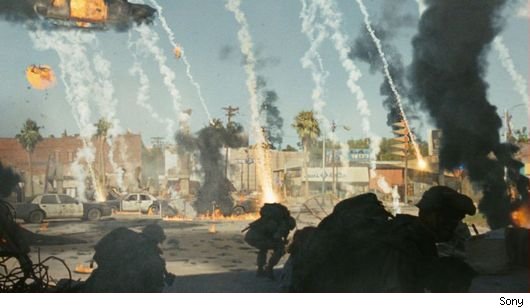
GREY MATTERS: A Defense of BATTLE: LOS ANGELES

GREY MATTERS: A Defense of BATTLE: LOS ANGELES

nullAfter the first time my interest felt forbidden, something to not share in smart company. But with my second viewing three months later, I realized my reaction wasn’t just a quirk of mood or contrarian impulse, or the film version of one of those inexplicable crushes that make your friends smile politely and count the days until sanity returns. 

No, I really, truly love the heck out of Battle: Los Angeles. And there are sound reasons powering my affection. For every knife the critics stabbed into the film–that it was a chaotic wreck of shakycam, Weed Whacker cutting, clichéd plotting, and even fascist subtext—I found an argument that not only answered these cavils but enriched my appreciation for South African director Jonathan Liebesman’s panoramic vision.

I don't expect to change minds or opinions—when was the last time that happened? But I know one thing and believe another.

I know that more than any film from 2011, Battle: Los Angeles barges through my defenses and just plain touches me in the same ways as Joss Whedon’s alternative family adventure, Firefly.

Meanwhile, I believe that all criticism is always filtered through, and colored by, the observer’s needs and desires. This is only an argument for aesthetic relativism insofar as it’s an argument from the gut that comes from living through the times when everyone agreed, no two ways about it, that Carpenter’s The Thing was an abject failure, that Mario Bava was a hack, and that Cronenberg was an artless freakshow dealer of literalized bio-erotic metaphors that just happened to happen at the peak of the AIDS epidemic.

And now we have Battle: Los Angeles, which is to Marines what Friday Night Lights was to football, and already I can see I have some ‘splainin’ to do, so here goes.

The POV character here is Staff Sergeant Michael Nantz (Aaron Eckhart). He’s about to quit active service as if in penance for a failed Iraq command where one bad decision led to the death of his entire, very young, squad.

While cable TV announces strange environmental irregularities, we meet a partying group of young Marines. They’re a racially mixed group, representative of LA’s Latino/black/white demographic. They all love the sense of belonging and service being a Marine provides.

Battle: Los Angeles (B: LA for short) offers a frighteningly pell-mell sort of invasion.

First, what look like canisters surrounded by smoke ring haloes fall on and obliterate a Navy destroyer. Liebesman sacrifices his own expensive/excellent beach-invasion effects so he can show a group of Marines watching and reacting to this on low res cable news broadcasts. Tokyo, not Manhattan, is the first city attacked. So much for American exceptionalism. The focus here is on the human reaction to the intrusion of wrongness into the everyday.

Nantz and a squad of freshmen Marines are given a mission: find whatever civilians you can before alien forces in LA are nuked in three hours.

What happens: Women and children are killed with no action-film taglines or Hollywood mercies in pitched battles with superior bio-mechanic alien forces.

By B: LA’s third reel, only an Air Force tech (Michelle Rodriguez), a veterinarian (Bridget Moynahan), a Latino named Joe (Michael Peña), and his small boy Hector (Bryce Cass) augment what’s left of the squad.

And as Joe dies of an alien-blast in Nantz’s arms, what “Marine” means—the simple notion of a branch of the US military united by Marine-specific, world-exclusive rituals–changes radically under the weight of Nantz’s guilt and the context of species extinction.

Nantz tells little Hector that his father loved him, that he has to be strong, that he needs him to be his Marine.

There’s no logical reason for this progression. But by now, we realize that “Marine” has already morphed from a traditional squad into a fluid Whedonesque alternative family group where a female Air Force tech with no field experience (Rodriguez’s character), a female veterinarian, a child, and a man (Joe)—the last three with no obvious military "worth" —now work as an effective combat unit according to their abilities and represent a stateless species patriotism. (I’m assuming the film’s lack of “USA! USA!”-style bellicosity helped with overseas box office.)

Eventually, our Marines manage to bring down a (not the) mother ship. Finally, they’re helicoptered to a functioning military base, are offered food and rest, and Nantz instead loads up on ammo. The others follow his lead. The war for the world continues.

It’s a realism-infused old school war story the critics largely hated because it was so old school. Never mind that nobody had seen this narrative style since Guadalcanal Diary, or that Drive’s hipster brand of ancient school noir-ness is celebrated (see: trend trumps quality). Or that the film plays with its own antecedents, as when a Marine jokes about one Marine’s brave actions, “That was some serious John Wayne shit!” which is followed by another’s meek question, “Who’s John Wayne?”

Otherwise, B: LA was universally and inaccurately despised for a shaky-cam style routinely compared to despicable, fun bloodbaths like  Gladiator, Black Hawk Down, and The Kingdom, where faux documentary shooting style comes off as the cinematic version of Tourette’s, meant to gin up verité on the creative cheap.

 B: LA has nothing to do with such low fare.  Liebesman’s mobile, subjective camera has the same intent as the Dardenne brothers following  Rosetta in the way his camera, once interested in a character, will not leave them, will stay with them like a guardian angel with OCD, or like Lukas Moodyson in Lilja 4-Ever, except with breaks where it pulls back to medium shot to observe the world around that character, to see what she’s up against. Or most specifically, Friday Night Lights

You can believe this last claim because B: LA begins with a hailstorm of FNL shout-outs.

Over Brian Tyler’s echoing guitar score theme, actionably similar (for three minutes) to W. G. Snuffy Walden’s FNL theme, we enjoy a FNL-like vibe of non-partisan Americana, even as the late-fortyish Nantz struggles to jog at his old pace on a setting-sun-lit beach. The camera mirrors his pains with a simultaneously rolling and halting gait.

Liebesmancuts to a young squad boasting and bullshitting, his camera excited, non-linear and lens-flared with youth, never just observing, always symmpathetic. (It’s around here that Liebesman stops with the FNL homage.)

When we meet a Marine (Jim Parrack) struggling with PTSD but trying to hide it from a shrink, Liebesman’s camera is discrete, occasionally showing clenched fists, or otherwise gently conveying tension. Even in the film’s most iconic, sci-fi-esque image, the slow, endlessly vast mother ship rising from the bowels of a ruined Earth, Liebesman keeps Nantz in the foreground, his focus on his men.

And so it goes. A director rewriting how you do this. Total character devotion. You’d think there’d be more love.

Meanwhile, here on Press Play, there a continuing discourse about “chaos cinema”, that frothy mixture of a shaky cam style B: LA doesn’t use, mixed with slapdash mise-en-scène and hyper-cutting meant to gin up excitement while disguising an ignorance of classic style.

This one is easy to disprove, courtesy of a sequence where Liebesman  does go full metal bedlam.  If what came before this sequence were nothing more than ‘chaos cinema’, this would be like adding more white to a paint mixture consisting of eggshell and ivory. Instead, it’s a gold standard nerve-wracker that shows Liebesman’s mastery in orchestrating multi-POV pandemonium and slowly restoring order.

After investigating the smoky ruins of Santa Monica during a lull in the action, our Marines are attacked and Liebesman’s camera takes the role of battle victim, always falling, getting up, and tumbling, with no sense of left or right as alien energy weapons alight in the fog in flash frames, and the audio becomes a Murch-ian soundscape of ring-modulated screams and clatter, and we glimpse the occasional mecha-alien in chiaroscuro, before a Marine finds a safe house by sheer accident, and the film, by degrees, calms down.

Is this cut too quickly? Is Moulin Rouge? Within certain parameters, you just cannot quantity too fast or slow.

I loved Rouge. But I also loved the glacial non-pace of Nicolas Winding Refn’s Valhalla Rising. I’m also aware both spoke very directly to shadow parts of my own secret history, a thing defined by extremes of alcoholism-powered chaos and the bad quiet of madness. So are my assessments incorrect due to my biographical special needs? Or am I actually more attuned to certain velocities because of my history, and therefore a better judge?

What seldom gets questioned outside of academia is the fascism of Comic-Con-y action-hero cinema, the way we all bend over backwards for Iron Man, Batman, Superman. Part of the appeal is that we give it up to these, uh, men.

So it’s ironic that B: LA, the rare action film steeped in meritocracy, should be accused of fascist subtext.

The only explanation I have is that some Americans look at young people happily in uniform and fall into one of two traps, both occluding what’s on-screen.

It’s always been a Republican-pimped sell that liberals are anti-military pussies. This is bullshit except for the extremist fringes, where, especially during the lawless Cheney years, the creeps claimed soldiers were culpable.

But what also exists is the left’s dubious comfort with our Platoons and Full Metal Jackets. More on point, I think the way B: LA celebrates being happily in The Squad (oorah!) collides with the left’s greatest fetish–endless individuality (hence the old joke that getting Democrats to organize is like herding cats. Or getting Burning Man participants to dance in lockstep. You get the point). The same dynamic was at play with the contrast between being an individual and being on the Team in FNL.

But like FNL, B: LA strips away partisanship and finds people thrown together and struggling for one goal. Not much of a fascist vision.

Why this would attract me—well, you and I don’t know each other well enough.

But I have, in my articles here at Press Play, outed myself as a person dealing since the late 80s with the life-long effects of brain trauma, so it’s not surprising that, on some Pavlovian level, a film that limns an assaultive world would resonate with me.

Brain trauma, which at one point left me able to navigate Lacan and advanced audio engineering but unable to talk at a table full of people, renders fantasies of interconnectedness incredibly seductive.

So yeah, I’m pre-inclined towards this sort of narrative, where isolated people come together to create a family unrelated to the accident of birth. But that doesn’t make me more easily impressed.

No, because I desire or even need the real deal, whether it be Firefly, or SyFy’s Alphas or Battlestar Galactica, I’ll reject the bogus item—the list is too long–with great antipathy. But that’s just one angle. I could go on about Liebesman’s unique compression of depth, ‘grain’ and perspective (the upcoming Wrath of the Titansis instantly identifiable as a Liebesman film), his love of actors’ faces, and so on.

But what perhaps more delights me on a meta-but-real level is that almost everything about  B: LA probably has something connected to it that’s connected to something else beyond the film that resonates with me. Something from when I was a kid. Or from an unrecalled painting, comic, film, toy or dream I liked. People throw around the word "awesome" too much. But this really is.

Ian Grey has written, co-written or been a contributor to books on cinema, fine art, fashion, identity politics, music and tragedy. Magazines and newspapers that have his articles include Detroit Metro Times, gothic.net, Icon Magazine, International Musician and Recording World, Lacanian Ink, MusicFilmWeb, New York Post, The Perfect Sound, Salon, Smart Money Magazine, Teeth of the Divine, Venuszine, and Time Out/New York.

GREY MATTERS: The Dark Turn of JUSTIFIED

GREY MATTERS: The Dark Turn of JUSTIFIED

null

Maybe I’m just touchy, or prone to over-reaction.  But I’m thinking there’s something about Quarles, Justified’s bleach-blond, Oxy-popping, batshit, gay-teen-torturing, Motor City gangster and all-around homosexual kill-freak that rubs me the wrong way.

Partially because he’s a huge step down from the peckerwood-noir magnificence of Margo Martindale as Harlan County’s crime matriarch, Mags Bennett.

But mainly because he’s a hateful creation that suggests the show’s creators trawled through all of American cinema and dredged up every repellant stereotype of queer mutation and threat and fused the results into one inarguably, impeccably well-dressed and well-coiffed sociopath named Quarles (Neal McDonough).

And as Quarles revealed himself, with bottomless self-pity, to be more queer-centrically worse than we’d ever imagined, with a  godawfulness that was a function of being queer, I realized that aghast was the only way to react to the new, suddenly appalling Justified.

The first question that comes to mind is why? Why did Justified’s staff need to dream up and feature this evil fuck-chop of regression?

My guess: Out of sheer, contemptuous, cynical utility. The season has been a listless bust.

Yes—the chewy nugget center of Justified, the it’s-so-wrong-it’s-right bromance between U.S. Marshal Raylan Givens (Timothy Olyphant) and jack-of-all-crimes Boyd Crowder (Walton Goggins) still sparked, but it sparked in something of a void.

Raylen’s life-love Winona (Natalie Zea) got pregnant, accepted him for who he was, and then dumped him. We learned that, without a woman to add vulnerability to his hard ass routine, Raylen often came off as distant, sour, or too cynical.

Elsewhere, we traveled to a trapped-in-time African American community called Nobble’s Holler where everyone dressed like Dexy’s Midnight Runners, run by a gnarly black godfather named Limehouse (Mykelti Williamson)who seemed perpetually on the verge of doing something epically badass . . . only to go back to cleaning pigs.  

A really promising plot strand involving black market organ harvesting from still-walking donors started, then petered out. The sole surviving Bennett, Dickie kept showing up like a persistant cough; I could never figure out why he was even in the show anymore.

And Quarles? He’s a Detroit mob enforcer who, while doing some Mob business, sees a way to cash in on the local Oxy trade. And to clarify: I was fine with Quarles for a while.

As played by McDonough, Quarles originally made an alternately terrifying and fun TV sociopath, Dexter in a Hugo Boss suit, another family man who switched between business, murder, and torturing people behind closed doors. He was fine as long as his monstrousness stayed behind those doors.

However, none of these things connected or built any narrative steam as the clock ticked on the basic Justified narrative: someone had to become sufficiently vile for Raylan to justifiably mete out frontier justice.

Thank god they had their own resident freakshow friend of Dorothy, someone to carry on the grand tradition of Peter Lorre as the barely human child killer in M,the queer-killing queer in Cruising, the incest-freak killer in Gladiator, the serial murderer of Silence of the Lambs, Big Love’s similarly impeccably dressed closet case.

One even imagines the head of the writers’ room assigning these films—and the hundreds more that came before them—as homework for the writers, inspiration for ways to make Quarles more terrifyingly gay.

Anyway, as the good ship Justified hit rough waters on the way towards its finale, the show pulled out its big gun.

One of Quarles’ victims grabbed and drew a gun on him. Quarles talked him down with a heartfelt, teary-eyed backstory of abuse, rape, and being forcibly whored out, and so on, all of it much worse because when all of that happens and it’s queer-based, well, man, that’s way worse. At least 65 per cent worse.

Of course, the boy ended up raped, tortured and dead at Quarles’ hands–Que sera—but now there’s no doubt what team Quarles plays for. Why do we need this detail? Because, once audiences know he’s a fairy on top of everything else, an alien, family-threatening, scary, seductive, anti-Leviticus queer, what else do we need to know? The writers count on audiences’ ticking the “no” box and move on.

Meanwhile, would the writing staff use a homo, boy-raping, whore-torturing, dope-fiend African American character?

No, that’s terrible. Plus, blacks have civil rights (technically). Gays, not so much, and if the election turns the wrong way . . .

Meanwhile, the writers’ choice betrays what’s really meant when the word “homophobia” is used. It’s what happens when what are probably entirely decent people try to concoct a TV bad guy and, when their imaginations are faced with an eternity of choices, the darkest, most horrible thing they can imagine is a homosexual.

Ian Grey has written, co-written or been a contributor to books on cinema, fine art, fashion, identity politics, music and tragedy. Magazines and newspapers that have his articles include Detroit Metro Times, gothic.net, Icon Magazine, International Musician and Recording World, Lacanian Ink, MusicFilmWeb, New York Post, The Perfect Sound, Salon, Smart Money Magazine, Teeth of the Divine, Venuszine, and Time Out/New York.

GREY MATTERS: The lunatics are in the hall! It’s the top 10 films about mental illness

GREY MATTERS: The lunatics are in the hall! It’s the top 10 films about mental illness

nullIt’s been a good few years for crazy.

Homeland’s made bipolar disorder a household ailment yet again. Sean Durkin’s Martha Marcy May Marlene located the goal posts between delusion and reality in its brainwashed hero’s mind and promptly moved them repeatedly (just like in real life!). And while William Friedkin’s incredibly distressing tale of mutually assured destruction, Bug, may not have hewed to the Diagnostic and Statistical Manual of Mental Disorders, its claustrophobic form of poetic, post-Repulsion address captured essential truths about madness a supposedly reality-based film like A Beautiful Mind could never touch.

A Beautiful Mind is saccharine Oscar bait, both inane and despicable, a flick where Russell Crowe’s mumblecore mathematician’s schizophrenia leads directly to the secrets of physics, fame and the love of Jennifer Connelly. It’s exactly not the kind of film celebrated here with this list of 10 films that do mental illness right – and by “right” I don’t mean clinically correct. But I’m getting ahead of myself.

Girl, Interrupted, meanwhile, offers Angelina Jolie as a mentally ill person who’s actually one of those “free spirits” Hollywood so loves along with Winona Ryder hosed down in a sheer top while the only people who really are sick are fat or keep dead chickens under the bed. One could argue that the film trivialized serious mental illness. It, too, is not what I’m into here.

Returning to Homeland: it’s a terrific show in which Claire Danes’ mental illness functions mainly as a means of ratcheting up stakes and tension, which is fine; it’s a spy TV show, whadaya want? But as a film/TV writer and a person who’s dealt with bipolar disorder for 20 years, my goal here is to assemble 10 films that represent and go deeper – sometimes because they’re accurate, but more often because they cut to derangement’s core using symbol and metaphor. No matter how bizarre things look through madness’ distorting lens, whatever you see is never inexplicable, not really, and sometimes the sheer rawness of it all reveals things otherwise occluded. Which, I believe, is why these films are made in the first place and why we watch them.

nullSpider (Directed by David Cronenberg): Spider, a perfect film, opens with an image of abject isolation as a train dislodges a tremulous stick figure of a man, Dennis "Spider" Cleg (Ralph Fiennes), to an empty platform.

Spider, a barely functional schizophrenic, is out of the hospital prematurely (due to health care cost cutting) and staying in a boarding house with others that are mentally ill. He mutters, is terrified of changes in light or sound, wears four layers of clothing to protect him from God knows what, and smokes continually.

As he falls apart he inserts himself into a replaying hallucination of the messy Oedipal mystery of his childhood. It involves a too-beloved mom (Miranda Richardson), a terrifying dad (Gabriel Byrne), a slattern (also Richardson) and an unbearable crime.

Cronenberg suggests Freud as context but not as explanation. Like you’d expect from the past bio-horror master, his approach is more medical but also poetic, and Fiennes’ performance is a microtonal wonder of observation and barely doing anything to maximum effect. Peter Suschitzky’s in-amber cinematography suggests a world of molding things that need throwing away.

When I interviewed Mr. Cronenberg, he told me of an older woman who said her son was just like Spider and expressed her deep gratitude for someone, finally, getting schizophrenia right. It’s that kind of film.

nullTiticut Follies (Directed by Frederick Wiseman): When not force-feeding, beating or washing down the mad with fire hoses, jaunty guards in smart uniforms pass time by mocking naked, terrified elderly men in filth-slicked rooms while Catholic priests perform mini-exorcisms on the comatose insane. Elsewhere, a lucid man begs a panel of contemptuous psychiatrists to stop giving him drugs; they respond by having him dragged away in leg chains and having his “medications” increased.

Welcome to the part of Hell located at Bridgewater, Massachusetts’ hospital for the criminally insane, and the setting for one of the most notorious films ever.

Shot in 1966 by director Frederick Wiseman with a skeleton crew and minimal B&W gear, and intended for release in ’67, Titicut Follies was effectively censored by our government until a 1991 broadcast on PBS when most of the guilty parties were safely dead. To watch it is to witness a near-unbearable secret history of all-American monstrosity. When The Snake Pit barely touched on the “let ‘em rot” mental health care system of the US in 1948, folks were outraged, and the madhouse industry, enjoying a post-war/PTSD boom economy, made cosmetic changes. And so folks assumed things had gotten better.

Titicut Follies teaches us that a generation’s complacency led to absolute horror for thousands. It makes one wonder what we’re getting wrong today. To watch this film, click here

nullShutter Island (Directed by Martin Scorsese): Teddy Daniels (Leonardo DiCaprio) is a US Marshal who goes to Shutter Island’s remote prison for the criminally insane to solve a disappearance, and already we’re knee-deep in symbolism in what’s easily one of Scorsese’s top five films.

In a film shot through with schizophrenia, substance abuse, delusional psychosis, bipolar disorder and other unnameable mind terrors, “madness” in the film is actual but addressed in poetic terms. The worst parts of Shutter Island’s madhouse look ported straight from Titicut Follies’ palace of nightmare filth; the general vibe suggests Hammer horror film remixed by Samuel Fuller and Francis Bacon with couture by Mad Men. Like Kubrick with 2001, Scorsese realizes no single source can accompany his scope, and so he weaves Ligeti, Eno, Mahler, Dinah Washington, Nam June Paik and more to create 300 years of cello-range wailing.

Real world, untreated schizophrenia finds art-film analogue as our Teddy’s traumatic memories of liberating Dachau and seeing thousands of the frozen Jewish dead grows an increasingly febrile delusion that he’s onto a full blown HUAC plot. Teddy went through hell, but was he ever really okay? The film is mute on the topic, instead leaving us with an unanswerable question about personal agency.

Make that Scorsese’s top three films.

nullMysterious Skin (Directed by Gregg Araki): Gregg Araki’s finest is like the story of two privates who process the same war in different ways. There’s 18-ish Brian (Brady Corbet), plagued by blackouts since a summer day of Little League when he was 8, and now suffering a life of fear, isolation and a need to be around marginal people who believe in UFOs. And there’s Neil (Joseph Gordon-Levitt), who remembers that same Little League summer where a pedophile coach (Bill Sage) molested him daily, leading to a need in Neil to please older men, until he reaches Brady’s age and becomes a whore.

What did the monster coach really do to Neil? A friend played by Michelle Trachtenberg sums it up: "Where normal people have a heart, Neil McCormick has a bottomless black hole."

With a careful pace somewhere between a dream and a funeral floated on a gossamer score by Harold Budd and Cocteau Twins’ Robin Guthrie, Araki’s film owns a sense of increasingly aching inevitability. We realize how deeply both boys’ inner worlds have been permanently mangled by abuse. But Araki suggests, in the very last image, a balm for their hells. Recommended viewing for every idiot at Penn State who still doesn’t get it.

Pulse (Directed by Kiyoshi Kurosawa): Some young people in Tokyo loiter on a grey day. “I just feel like something’s wrong…terribly wrong,” says one. Another talks about suicide. Another kills himself. Everyone feels this intolerable heaviness where you’d slit your throat if you could only bother to lift a knife.

With a plot concerning depressed spirits escaping an afterlife of eternal, solitary unhappiness through a haunted Internet, Pulse is a monolithically slate-souled film that looks and sounds like clinical depression feels. Colored like a bruise in dirty violets, grays and blacks, and with a constant unnerving electronic noise soundtrack, Pulse follows random people through a pattern of “infection,” depression and suicide. Sometimes people try to figure out what’s up; mostly they just succumb.

There is no “safe” moment in Kiyoshi Kurosawa’s film. At one unbearably intimate juncture, Kurosawa shock-cuts ambient sound as someone curls into a fetal position, rolling on the ground weeping, “Help me, help me, help me,” as nobody does. Apropos of nothing, a girl falls to her death from a water tower in a scene devoted to something else. Later, a flaming airliner falls from the sky. Viewing it again I’m amazed at its absolute unity of vision, and as much as I love it, I’m glad there’s only one Pulse.

nullRequiem for a Dream (Directed by Darren Aronofsky): Requiem for a Dream’s conceit was simple but boy-howdy did it irk critics tetchy about new ways of playing the standards. Showy and arty! Too much razzle-dazzle! Style over substance!

Whatever. In Darren Aronofsky’s adaptation of Hubert Selby’s Brooklyn-set substance abuse apocalypse, the idea was to create a film analogue to Selby’s visceral language and the rush and crash of dope. To render something visually delicious and ultimately so grotesque it was hard to view without flinching.

Throw in Clint Mansell’s stabbing post-Hermann score and Jay Rabinowitz’s surgically assaultive cutting and everything else on the topic just feels anemic. And when twinned with Ellen Burstyn’s turn as an abandoned mom addicted to food, amphetamines and the memory of a youthful prettiness long gone, the result was the peak of a great actress’ 50-odd years of work.

But mostly, Aronofsky’s film asks us to see Burstyn’s character and the beautiful addicts played by Jennifer Connelly, Marlon Wayans and Jared Leto and realize that particulars don’t matter when it’s the same monster eating you alive.

nullKeane (Directed by Lodge Kerrigan): Lodge Kerrigan’s Keane is a film so focused on the breathless run of it’s title character (Damian Lewis) from agony to acting-out that there’s little room to do much more than hope he won’t do irrevocable damage. While Kerrigan never diagnoses Keane, it’s hard to imagine a more fleshed out schematic of bipolar disorder’s very particular anguishes.

It all starts in New York City’s Port Authority, where Keane’s daughter was abducted a few months prior and where he speed-babbles paranoid delusions before using his disability check to pay for a hotel room. Sometimes the mania stops and he crashes into intolerable depression. (The scene where Lewis primally screams into a fetal position of pain is nearly unwatchable.)

During a surcease in his mania, Keane meets the woman down the hall (Amy Ryan), who entrusts him with the care of her daughter (Abigail Breslin) for a day. With the clock ticking before the next manic phase, Keane tries to show this new girl a single nice day as the audience anguishes over what may happen should his better angels fail. Lewis nails the way bipolar turns you into a cruel broken brain’s meat puppet and the tragedy of the good guy trapped inside.

nullReturn (Directed by Liza Johnson): When Liza Johnson's Return opens, Kelli (Linda Cardellini) has just returned from war. She can’t wait to reintegrate into her small-town life with her husband (Michael Shannon) and two kids. People keep asking her what it was like over there but she says other people had it much worse, although she did experience some “weird shit.”

Return reforms the Bush-war-vet crack-up-film cliché by focusing on PTSD at the early, psychologically metastatic stage via the accrual of tiny details of behavioral wrongness. Kelli starts preferring the floor of her kids’ bedroom to the conjugal bed. A girl’s night out ends with her sneaking through a bathroom window to get some suddenly needed air. A job that was once just fine is suddenly meaningless.

Until now best known for Freaks and Geeks and ER, Cardellini underplays in perfectly realized gradations of grinding soul tension a woman of extreme self-sufficiency betrayed by that quality.

The film’s crushingly fatalistic final image makes it clear that Return is, as the title suggests, an endless loop of damage; Kelli returns, alright, and God knows what kind of weird shit and horror we’re talking now. Perhaps the correct Netflix genre is “horror prequels.”

nullChris & Don: A Love Story (Directed by Guido Santi and Tina Mascara): Chris & Don: A Love Story tells the glamorous and sweet tale of author Christopher Isherwood, who, at age 48, met and fell for Don Bachardy, age 18, who would become one of our finest portrait artists. The two would be madly in love until Isherwood’s death in 1986. It’s filled with fabulous Hollywood stories from friends like John Boorman, Leslie Caron and Liza Minnelli, but the living heart of the film is Bachardy, at 77, still a spray hoot. You might ask, WTF is this film doing here? Well, deal is, Chris & Don is a mite misleading, because there’s one more love story here – that between Don and his mentally ill brother Ken.

It shows us that as much as it blows to be sick, it’s as hard in it’s own way to be a satellite of madness. But there can be a kind of bonding that almost feels like grace. I’m thinking of a scene where we see Ken, after years of electroshock "treatment," a lost, distracted soul but still deeply in love with the movies. If you can watch how brothers enjoy each other’s hard-won company as they go about catching a matinee without choking up, then dude, you’re made of sterner stuff than I.

nullSerenity (Directed by Joss Whedon): Her intelligence is so far off the charts they need to make new charts, but thanks to an empire’s relentless black op torture program, she’s deep into schizophrenia territory. And yet, when it’s time to send out the message that will save the galaxy along with the ragtag crew of idealistic outliers who populate Joss Whedon’s titular spacecraft/great cancelled TV show Firefly, who you gonna call?
The crazy girl, River Tam, as played by Summer Glau, who also appeared this year as a traumatized brainiac in the Whedonesque, extra-awesome Alphas. She gave us an icon that was newly minted and, I think, needed: a hero who represented, who was as out of it as any of us on our worst days, but when really needed, eclipsed the entire Firefly crew in derring-do.

Meanwhile, Whedon was asked by a writer why, in all his TV shows – in Buffy the Vampire Slayer, Angel, Firefly and later Dollhouse – he repeatedly worried at the well of madness. It seemed he hadn’t ever really thought about it. Then he suggested that maybe it was because what could be worse then to lose your connection to the real world? To not be able to even trust your sense of yourself?

And then I just said something like, “Yeah.”

Ian Grey has written, co-written or been a contributor to books on cinema, fine art, fashion, identity politics, music and tragedy. His column "Grey Matters" runs every week at Press Play.

GREY MATTERS: LOST GIRL is goofy, sexy entertainment, in a BUFFY vein

GREY MATTERS: LOST GIRL is goofy, sexy entertainment, in a BUFFY vein

nullLost Girl is no big deal, and yet, for me, on sheer level of affection, it’s up there with the ludicrously better Luck, and I can barely wait for each episode to air. So WTF, right?

Looked at on paper (or screen) my affection becomes even more baffling. It’s yet another televisual offering where creatures of legend turn out to be true – see Grimm, Mirror, Mirror, Once Upon a Time, Red Riding Hood, Snow White and the Huntsman, etc. The production values and directorial style vary between modest and meh, and on first approach it at best achieves the amusement level of a third-tier Buffy episode.

And yet after a mere clutch of episode I can firmly say I simply adore it. I even think I’ve a notion why. I think creator Michelle Lovretta has made a list of every post-Buffy and fairy tale trope – and I mean every freaking one of them – and has methodically tweaked them just enough, not to radically change the entire urban fantasy, but to perhaps stretch the parameters of usual pleasures just enough to make aficionados feel real gratitude at the effort expended.

nullRight off, Lost Girl offers something that differentiates itself in a way that non-genre shows would be swell to emulate: a femme hero un-crushed by her backstory. While supernaturals from Buffy to Sookie to the entire cast of Once Upon a Time suffer their supernatural-ness, Lost Girl’s hero, the casually bi, trimly pumped, no-bullshit Bo (Anna Silk) accepts that she’s a deadly Fae.

A what? A Fae, a succubus who, through an accident of birth, occasionally sexy-sucks the life out of jerks. That is, until she hooks up with a hot Fae dude who lets her in on an epic backstory.

Warning: info dump! Seems that a war between the Light and Dark clans of Fae has been been going on for ages. And it turns out that Bo was raised by human parents while kept in the dark about this Fae business. So, she must choose between Light and Dark Fae, but being stout of heart and cranky of spirit, she tells them all to piss off and, like Fleetwood Mac suggested so long ago, goes her own way.

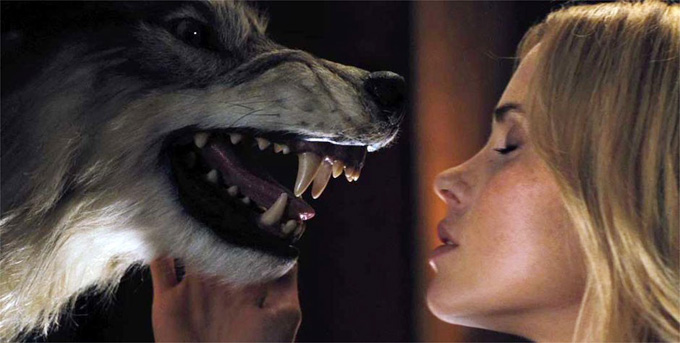
She does, however, avail herself of the Fae medicinals of the shy and lovely Dr. Lauren (Zoie Palmer), who you totally know will have supernatural sex with Bo, and who gives our hero a medication that allows her to just sort of nibble at people’s energy instead of draining them outright. (Hey, it’s that kind of show.) As it’s really early in the story’s arc, I will say no more, except to note that once-a-loner-Bo meets, pals up with and starts a PI agency with kohl-eyed Kenzi (Ksenia Solo), a goofy, post-goth petty thief human. Supernatural chemistry, kicky dialogue and Solo’s ceaselessly silly/energetic performance manage to make us buy into this beyond-absurd conceit, which comes complete with headless assassins, werewolves, underwater monsters, unearthly dwarves with agendas and so on.

Still, what’s the big? Again, the lack of hand-wringing mixed with the show’s overall light touch is constantly refreshing, as is both women’s advanced coping abilities.

nullSo, want to talk about sex? Yeah? Cool. There’s tons of it here, and in the show’s world, it’s no big, which makes sense when your hero is a being whose entire deal is sexual.

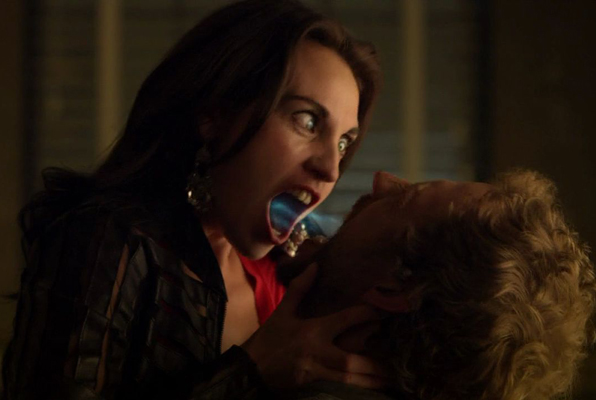
This is a show where the hero gets information from people by using her psychic abilities to get them so horny, they beg to spill (so to speak). Where, in that aforementioned Bo/scientist scene, lesbian sex-spark is a natural. Where Bo milks info from a cougar college administrator via a calf leg touch that causes the woman to practically orgasm the answers. Where another Fae literally tongue-kisses Bo back to health and to a few implied orgasms. It’s really something.

What Lost Girl isn’t is an HBO/Showtime/name-yer-basic-cable-channel-pandering-to-dudes boob parade. It is what comes after we accept as a given that gender orientation is, of course, an in-flux designation. So does that make the show feminist? Can’t say, it’s too early in its run. Certainly, Lost Girl is what comes after whatever it is we think of as “feminist” in TV action hero terms. While the show is usually having too much fun to attach itself to one congruous ideology, what it does have to say about self-determination manifests itself most often in the syntax of style.

Whereas Buffy once quipped that she was “not exactly quaking in my stylish yet affordable boots,” the girls and boys of Lost Girl look like they deal with the terrible economy with refreshing trips to retailers selling couture designers’ “diffusion lines.” Think of the iconic Missoni house creating a budget-conscious line for Target, Versace’s high style pretties for H&M at Nu Depression prices or Vera Wang dong the same at Kohl’s. Lost Girl’s constant engagement with fashion could be off-puttingly elitist but the whiff of the bargain makes it endearingly egalitarian. Instead of class resentment, we can enjoy the looks.

nullThere’s the sloe-eyed Fae werewolf (Kristen Holden-Ried) who’s partial to complexly rockin’ leather combos that suggest off-label John Varvatos; the mystery bartender named Trick (Rick Howland), whose way-butch, deep-dyed denim and rolled-sleeve style is off-season Diesel all the way; and the adorable, what-the-fuck-is-she-wearing Kenzi, whose loopy gothiness suggests Betsey Johnson after listening to My Chemical Romance a lot.
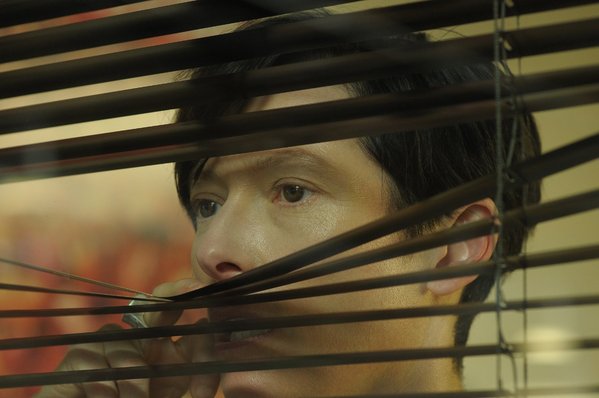
Again, just looking at these people is a tiny pleasure. I like to imagine them shopping (or in Kenzi’s case, liberating items from previous owners), which is just such an interesting way to craft a character, you know? And this isn’t about the evil tang of capitalism and over-consumption. Lost Girl loves style because fashion allows people with a unique way to beautifully present themselves to the world – and these are some pretty unique people.

As for where these stylish supernaturals hang, we see Lost Girl’s creators charming yet again with a rejection of the usual. Instead of True Blood’s “Fangtasia,” a sleaze dive straight out of a Rob Zombie lyric or an industrial metal light show hangout left over from an Underworld movie, the show’s creators offer us what looks like an airy German beer garden, heavy on the oak and steins.

But problems do exist with Lost Girl. The FX are pretty crappy, but I choose to think this as emblematic of the show having its priorities in the right place. The fact that Bo killed people before that blonde fixed up her sexual appetite is rather glossed over, but I’m trusting that we’ll be finessing that as episodes progress. And the one thing that does cause a certain amount of teeth gnashing for Bo is the least interesting part of the show for me: the whole “Who are my real parents?” thing. As played by Silk with a delicate mix of fuck-off, bite-me and muted need, Bo just doesn’t really seem the sort to need the crutch of a never-known bloodline.

But this too could be teased out and finessed; the show is called Lost Girl, after all. I’ll accentuate a positive view and say it will be a neat hat trick when the show lives up to the melancholy that lives right now in Bo’s startled responses; in Trick’s already exhausted helplessness regarding Dark/Light Fae hatreds; in the way the show plays with us with the simple fact that, unlike everyone else who is Fae and super-powered, Kenzi, the most instantly lovable character, is constantly in danger of a horrible instant death.

As of now, Lost Girl gracefully aims low-to-medium-high and always hits its mark. But I’ll be there watching as it inevitably aims higher. It’s the rare show you just have faith in.

Ian Grey has written, co-written or been a contributor to books on cinema, fine art, fashion, identity politics, music and tragedy. His column "Grey Matters" runs every week at Press Play. 

GREY MATTERS: WE NEED TO TALK ABOUT KEVIN is disjointed and brilliant and baffling

GREY MATTERS: WE NEED TO TALK ABOUT KEVIN is disjointed and brilliant and baffling

nullNothing gets a horror fan more ticked off than a director with airs claiming her new film isn’t really horror but actually a character study exploring the deep psychological recesses of blah blah blah. In the case of We Need to Talk About Kevin director Lynne Ramsay, you’ve got a fancy Scot arthouse filmmaker (Morvern Callar) big on New Wave affect who probably doesn’t think she’s making a horror movie. Lionel Shriver, author of the book the film is based upon, probably thought that, by mentioning horror movies frequently, she could escape the fact that she was blending multiple horror narratives to make one very good horror novel that wasn’t really just a genre effort.

Put the in-denial text and film together, multiply by the accumulated subtexts, carry over the pretenses and, um, wait – is this an algebra equation?

It’s at least a tripartite genre denial, but that’s just one of a panoply of self-imposed avoidances that define the annoyingly interesting We Need to Talk to Kevin. It’s a film where there’s very little to be even slightly certain about, and not in a satisfying, Don’t Look Now/Nicholas Roeg way.

nullRamsay’s film fascinates like Goldfrapp’s radical, downcast remix of Lady Gaga’s “Judas” fascinates: as a remix more than an adaptation. Goldfrapp took Gaga’s pop-club banger, cut it to half time and deconstructed it to almost unrecognizable effect. It was creepy, scary, strange, way cool, but not a touch on the original, and is ultimately mainly interesting in relation to its source. In a similar way, Kevin is big on its own abstractions and its relation to the original text, but mainly, I think back on it going, “Why?”

Like the book, Ramsay’s film is about motherhood as living hell – as Job times pi – as suffered by Eva (Tilda Swinton). But Ramsay’s dumped Shriver’s brilliant, flux-y mix of liberalism-critique-meets-Alien-meets-Frankenstein-meets-The Omen-meets-absolution (whew!) in favor of, well, I’ve no idea, really.

Instead, in Goldfrappian manner, Ramsay cuts and pastes bits and pieces of Shriver’s Eva – the cold yuppie, terrified victim, asshole liberal, terrified boomer, Accepting Woman of Eternal Suffering (there are really old blues songs to hammer this in) – and insists that Swinton perform all of them at disconnected junctures. The result is what it might feel like flipping through two twins’ life-long photo album with no captions, with years cut out in between, the pages flipping randomly, and nobody around to tell you what’s what. Could lead to serious WTF. Either that, or Ramsay wants Swinton to “do” archetypes instead of characters. Or something.

But Ramsay’s a fantastic maker of cinema. As much as I was baffled/dazzled by her super-skilled disjointedness, color-coded segues (tomato red never worked so hard) and brilliant dreamtime flow, I was still happy to go with it at the time. But still.

Here, let me tell the original story so some of this starts to make some sense.

nullIn the book, which is told as a series of letters to her all-American/Republican husband Franklin (played in the film by John C. Reilly as a generic Dad), we meet Eva, a pushing-40, self-centered, unbearably obnoxious Manhattan woman who probably reads Mary Gaitskill, Paul Bowles and Jane Austen in equal measure and occasionally sounds like all of them. Her empire of travel books has made her wealthy but also wanting. Maybe a baby is the answer!

Against the background of the 2000 presidential recount nightmare and the end of the Clinton prosperity age (all deleted in Ramsay and Rory Stewart Kinnear’s screenplay), we watch Eva grow aghast as her pregnant body bloats and she name-checks horror films like Alien and Mimic as references for motherhood. It’s a dark joke that the baby turns out to be another sort of monster – a joke Ramsay leaves out, because Ramsay doesn’t do funny. It’s an art-film thing.

When that baby is born, he refuses to breastfeed. The scene’s replayed in the film but there’s no sadness or horror since there’s not really any build-up of body horror, because Ramsay is busy using edits that make you go, “Cool edits,” to super-foreshadow what will happen years later.

Which is – no spoiler – that the grown-up child (the Kevin of the title, of course) will stage a Columbine-esque massacre in his high school, locking up a bunch of kids in a gym and shooting arrows into their bodies. This is something the film fragments in Goldfrappian style because, well, that’s what the movie does: it fragments.

The book, it flashes back and forth in ways that are motivated by theme, emotion and event. You know, literary shit. Neat literary shit that allows Eva to be a Cronenbergian post-feminist Doctor Frankenstein as her misconceived creation, as always in these archetypal tales, becomes a mess – angry, unable to communicate, howling, increasingly sociopathic, and not 4 years old yet.

nullIn the book, the tone and mode and Eva herself flip on a dime, and everything becomes The Omen as Kevin becomes more terrifyingly, more unbeatably Evil (people keep citing The Bad Seed as parallel but I think this kid is far more lowercase hell-sent, as in an inexplicable brand of utter secular badness.)  The book’s Kevin likes nothing, hates existing, loves hurting another Frankenstein project that turns out poorly – a weak, pitiable sister named Celia – and in an unbelievably disturbing bit of barely off-stage Grand Guignol, pours Liquid Plumr into her eye, burning the socket dry. But hey, it’s not horror or anything.

And yes, I’m almost sighing as I note that Ramsay, knowing how horrific this business of the missing eye is, starts abstracting it in the first reel of the film in the hope, one assumes, that we’ll be so inured to the concept that by the time Kevin eyes that bottle of Plumr, the worst the audience will feel is an ironic titter. Or something.

Every few chapters, Eva meets post-massacre Kevin (played in the film by Ezra Miller), now an inmate at a youth correctional facility. These are the film’s most engaging moments, but not for the reasons Ramsay would like. They show that all the cool filmmaking in the world is kind of no big deal when compared to a still camera recording two fantastic actors working at the top of their games.

nullThe book’s grandest achievement is how it both accuses Eva as complicit in making a monster and then forgives her; how it takes a thoroughly unlikeable woman and evolves her into someone with a hard self-awareness we have to respect. The film? Ultimately, we’re back to the remix analogy, but without Goldfrapp’s unity of purpose – even if there isn’t much of one.

Two revealing examples of Ramsay’s enforced vagueness:

There’s a shot – a single shot! – where we see Eva standing in front of a large staff of people in some kind of office; I assume it’s her travel book agency. People who’ve not read the book will, of course, have no idea why this shot is in the film. Why rob Eva of her accomplishment, of becoming an entrepreneur, of the life she could have had if she hadn’t had this demon baby? Is this an anti-capitalist gesture? Beats me.

Apropos of nothing and never once followed through, we get the Eva of Shriver’s book – the obnoxious, stereotypical, America-bashing Manhattan liberal – taking Kevin on a trip to a miniature golf course and cawing through an anti-populist rant. If you read the book, this makes sense. I would think that for casual filmgoers, though, this would seem like she was suffering a Truthdig-influenced sort of Tourette’s. Meaningless and, if you excuse the pun, out of left field.

nullDeal is, I always thought the New Wave was about deleting excess syntax so you could get to the heart of cinema. Ramsay uses some of its disjunctive tropes brilliantly so she never has to commit to anything but Swinton’s pursed grimace.
When she’s not doing that, she loves to have her camera sit still so we can watch Swinton do nothing, and then moves her camera a great deal when Swinton’s doing lots, so that we don’t know for certain what’s actually going on in the agitated frame. It’s like creating secrets, which, I suppose, could be a way of externalizing what Eva is doing with herself.

But see? Here we are, trying to fill in Ramsay’s gaps. Maybe that’s her idea, or mode, or style, or whatever. We Need to Talk About Kevin should perhaps be more accurately titled We Need to Talk About Ramsay. And here we are.

Ian Grey has written, co-written or been a contributor to books on cinema, fine art, fashion, identity politics, music and tragedy. His column "Grey Matters" runs every week at Press Play. To read another piece about Drive, with analysis of common themes and images in all of Refn's films, click here.

GREY MATTERS: DOCTOR WHO’s sublime study of grief, death and transfiguration continues to captivate its viewers

GREY MATTERS: DOCTOR WHO’s sublime study of grief, death and transfiguration continues to captivate its viewers

nullOn a recent episode of The Graham Norton Show, the genial goofball host was plainly delighted to have Karen Gillan—known worldwide as Amy Pond, the spirited, ginger-haired companion of The Doctor on Doctor Who—on his guest couch.
 
Of course, Norton couldn’t pass up commenting on a rumor that Amy Pond would meet her maker on a coming Who episode, chiding her, “Everyone knows nobody on Doctor Who dies!” The joke was that everyone on Doctor Who dies all the time and yet comes back to die yet again and again. Because dying is what you do on Who.
 
That said, if the show was just a series of expirations and miracle resurrections, it would quickly become hard to care.
 
But Who is so much more. In the way it ‘does’ mortality, it seems keenly aware of David Cronenberg’s career-long assertion that the SF and horror genres are uniquely able to allow us to rehearse finality, to play act Kübler-Ross, explore entropy, and consider matters of faith and/or the lack of it. This is, after all, a show that not only has an orchestral death theme, but an eerie, reverse-instrumental leading-to-death theme as well. It’s kind of blatant.
 
Here’s the thing: I do not believe that anyone likes anything deeply for innocent reasons, and by innocent I simply mean nobody is gaga over Star Trek, Lisbeth Salender or The Wire just because. There’s always a subconscious shadow text that makes things resonate.
 
It would be absurd not to assume linkage between my deepening attraction to Doctor Who, a time travel show that insists on memory’s primacy, just as I began a new labor in my own memory retrieval process, the result of a bus accident and brain trauma a long time ago.
 
I am even more sensitive to Who’s mortality themes as I write this column. Last week I found out that my mother, who is very old and very frail from several illnesses, will be operated on for cancer.
 
Before I got that news, the show had me thinking about Barbara — Barbara whose death was the first that shredded my world, Barbara of the too-wild black-brown hair, too-white skin, too-loud laugh, the absurd 50s ball gowns, too-everything, dead at 35 of a hidden cancer.
 
When you’re vulnerable the strangest things sneak through the cracks. And so when the Doctor tells one person after another after another that nobody is ever really gone, not really, and when The Doctor himself dies and Amy Pond literally remembers him back to life…well, I could barely swallow.
 
And so as my mother floats between worlds, and Barbara lives in memory, as I slip into a demographic where mortality—if not my own, necessarily, then those around me–the melodies sounded in Doctor Who touch me like no other film or TV. Sometimes the small tears feel almost like healing. Doctor who?
 
“Bowties are cool!”
 
nullThe Doctor himself isn’t actually called ‘Doctor Who’. He’s the last of his race, the Timelords, obliterated after some galactic war.
 
The genius of the Doctor Who conceit—the show runs back to 1963–is that that a Timelord cannot die. Instead, every few years he ‘regenerates’ and is reborn to be played by another actor.
 
Since ’63 ten actors have played him, meaning that, theoretically, Doctor Who could run forever. (I know that the Doctor says that he can only regenerate 13 times. Rule One: The Doctor always lies.) Despite being about 900, he’s a hyperactive, fashionable loon with great hair. Imagine an upbeat Jarvis Crocker and you’re 75% there.
 
The Doctor travels through space and time in what looks like a ‘60’s police phone booth but is actually a time/space travelling machine called a TARDIS.  He’s also pathetically lonely and always finds a companion, usually female, always platonic. (Come on, that thing with Rose was with a human Doctor double, sheesh.)
 
Since Steven Moffat took over the franchise from Who re-animator Russell T. Davis two years ago, the time we’ll be looking at here, the Doctor has shared his adventures with the feckless, insanely brave Rory  and his wife Amy Pond, who is the key to the continued existence of the universes. (Why aim low? the Moffat rule of thumb.)
 
Also in the mix is River Song, vivaciously played by Alex Kingston as a sort of uber-MILF in Prada complete with her own sardonically endgame-based tagline (“Spoilers!”) who may be the Doctor’s wife, mother, or murderer.
 
The Doctor, Amy, Rory, River—the closer they become, the better Moffat can hurt you when he kills them.
 
DYING
 
“If we're going to die, let's die looking like a Peruvian folk band.” – Amy Pond
 
nullHow you die on Doctor Who is romantic in the classical sense because it’s seen as very important. In television/film fan terms, it has additional appeal, as dying is usually a thing done in montage, a montage in waltz time.
 
It can also be, well, funny. There’s death by aquatic-vampire bite, pterodactyl bite, Dalek ray-blast, feral Ood, sentient tumors, infant liquefaction, being turned to dust by alien-possessed senior citizens and to stone by the Weeping Angels.
 
And sometimes death is just meaningless, abrupt and mean. In  “A Good Man Goes to War”, we meet Lorna, a 18-ish girl whose entire life has been defined by a few seconds spent running with the Doctor during an old adventure, a literal extra in his life.
 
She joins a holy war all on the chance that she’ll meet him. After a stupid battle, she’s shot—but she does meet the Doctor.
 
He caresses her forehead and assures her that he does remember her. She smiles, shudders, dies. It’s almost ghoulish it’s so true to life.
 
The same episode offers a waltz-time triptych of montage death so exquisitely morbid I imagine two tremulous thumbs up from the shadow of Alexander McQueen. Against Murray Gold’s typically gorgeous score—rather like Christopher Young’s Hellraiser rhapsody, but with the sinister extracted—we see The Doctor and his beloved cross-cut and succumbing in slo-mo, character-defining ways. I perversely wish it could have gone on a while longer.
 
But Who can also be downright cruel. In a moment that almost shocks with its naked spiritual need, its digital nihilism, “The God Complex” presents us with a Muslim girl trapped in a hallway with a murderous, belief-stealing monster.  The Doctor, trapped in another room watches helplessly on ugly, ‘80s-stle close-circuit TV as she begs him, “Please let me be robbed of my faith in private.” The Doctor, pained into silence, flicks off the video feed. It’s devastating stuff. (Moffat trashes organized religion, but he respects belief. Interestingly, when the Doctor is asked if he is an atheist, he does not answer.)
 
ENTROPY
 
“The Doctor’s death doesn’t frighten me, nor does my own. There’s a far worse day coming for me.” – River
 
nullIf she wasn’t such a fun/hot knock-about, River Song would be unbearably tragic.
 
As at ease leading militarized clerics (“The Time of Angels”) as she is raiding the Third Reich for haute couture (“Let’s Kill Hitler”), River exists in decaying romantic agony, as her ‘time stream’ is running in the opposite direction from that of The Doctor, whom she loves.
 
Every time she sees The Doctor, he remembers her a little less. Eventually, he will forget her entirely.
 
I was on the same page as The Onion’s Keith Phipps when he pointed out that River’s situation “echoes the plight of anyone who’s watched a loved one fade into the shadowlands of dementia. This is not a story that ends well for River and she knows it.”
 
In a show about time and travelling through it, addressing decay is only honest and Who worries on the topic. Every cast member has grown old and fallen apart in multiple episodes to various degrees.
 
The great literary fantasist Neil Gaiman co-wrote an episode called “The Doctor’s Wife” in which the TARDIS itself manifested in human female form just long enough to become frail and die painfully. We’re sad at the Doctor’s loss—and chilled at the reminder that ours isn’t so much longer.
 
DENIAL
 
“Does it ever bother you, Amy, that your life doesn’t make any sense?” – The Doctor
 
nullOne of the ways Who works is by blindsiding you from oblique angles. Witness: “Vincent and the Doctor” is really about Amy and grief and…well, here’s what it seems to be about. The Doctor takes Amy to a museum to see Vincent Van Gogh’s paintings, then to the past to meet Vincent himself, who is miserable and being attacked my an invisible monster. With The Doctor’s help, the monster is slain, Vincent’s taken to 2010 to see that he’s a cherished artist in the hope he won’t kill himself. He still does.
 
But this sad fable is just an armature on which to rest the episode’s real concerns, which have to do with Rory having just died in the episode prior. She cannot recall this due to a crazed religious order’s actions.  Amy’s amnesia is a way for Moffat to metaphorically address Kübler-Ross’s first stage of grief, denial.
 
Amy’s denial is the anxiety engine powering the episode. We know and The Doctor knows Rory’s dead and Amy not remembering is driving us kind of crazy.
 
When she transfers her considerable energies to poor Vincent—the same height and built as Rory—convinced she can stop his depression and suicide, metaphorically like the relative at a wake who’s cooking, pouring drinks and doing everything but admitting somebody is gone now.
 
Anyway, Vincent worries for her.
 
“Amy Pond, I hear the song of your sadness,” he says.
 
She denies it: “I’m fine!”
 
“Then why are you crying?” He asks as tears pour down her cheeks. From nowhere a funeral procession appears, covered in sunflowers. Rory is finally grieved over by proxy—and we’re bowled over and choked up because we were unprepared for this, because it only makes dream sense.
 
Amy is like a child dealing with her first loss. While Vincent’s return to 2010 and discovery of his value is a Spielberg-style spirit lifter, it’s eclipsed by Amy’s rage when she learns of Vincent’s persistent suicide and eclipsed yet again as Amy moves a small step past denial.
 
She sees that her efforts did matter: a dolly-in on a masterpiece reveals Vincent’s signature, “for Amy.” And so grief, a la Who.
 
 
DEALING
 
The Dream Lord: If you die in the dream, you wake up in reality…Ask me what happens if you die in reality.
Rory: What happens?
The Dream Lord: You die, stupid. That's why it's called "reality".
 
nullBut not necessarily. Because this is a time-travel show, it’s possible to be conversant with people earlier in their timelines.
 
But beware of SF show paradoxes. In other words–dead really is dead. Repeatedly, often in interlocking episodes, across time, space, multiverse, people, robots, aliens and elementals covering half a century of TV, films and novelizations,  we see the Kübler-Ross model—denial, anger, bargaining, depression, acceptance—play out in narratives that are so deeply geek that I’d need a some charts, maps, a PowerPoint presentation, and two laser pointers to convey the situations.
 
And anyway, the whole death thing—ultimately, it’s not literally about death. Or rather, it is and it isn’t. Doctor Who will be useless when my mother finally leaves us. And it only offers different ways to think about Barbara. Then again, the later is who lot of something. Doctor Who, I find, doesn’t have fans—it has followers. Some since 1963.
 
Just as The X-Files assured us that The Truth is Out There, Doctor Who assures us, as it obsesses over death, that nobody is forgotten, “not really”.  As The Doctor refuses to deny his faith he becomes an avatar for people with a hungry sort of closeted agnosticism.
 
But sometimes, Moffat lets his cool slip and lets us know what he’s feeling. It’s very qualified, but it’s very sweet: it’s very Doctor Who.
 
It’s Rory, surviving yet another conflagration intact to ask The Doctor, “Why am I here?”
 
“Because you are. The universe is big, it’s vast and complicated and ridiculous and sometimes, very rarely, impossible things happen and we call them miracles.”

Ian Grey has written, co-written or been a contributor to books on cinema, fine art, fashion, identity politics, music and tragedy.