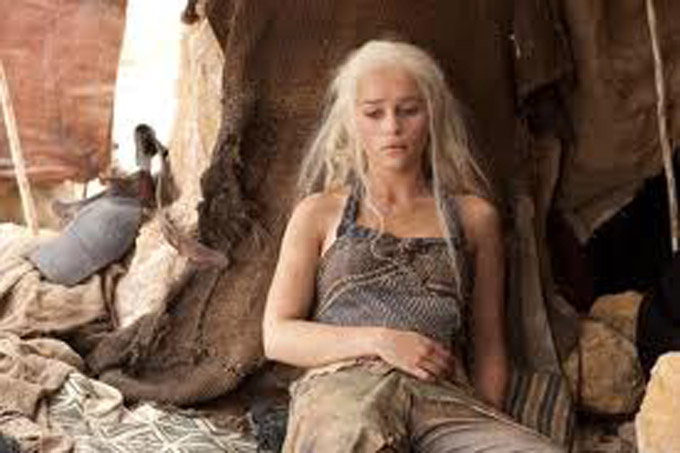
GAME OF THRONES RECAP 3: WHAT IS DEAD MAY NEVER DIE

GAME OF THRONES RECAP 3: WHAT IS DEAD MAY NEVER DIE

Back when Game Of Thrones debuted a year ago, one of the stranger criticisms was that it was made about men, for men. Perhaps in those first few episodes, when it looked like the story of Ned Stark, Viserys Targaryen, Khal Drogo, King Robert, and Jaime Lannister, you could make that argument. Of course, those of us who had read the book knew that it wasn’t about them, not really. Indeed, the characters with the most agency in the first season are women: Danaerys, Cersei, and Catelyn, whose capture of Tyrion triggered the violent confrontation between Lannister and Stark.

nullIn fact, Game Of Thrones deliberately subverts the patriarchal system its characters are stuck in, with a set of strong female characters. In “What Is Dead May Never Die," we meet Brienne Of Tarth, a new member of Renly’s Kingsguard, and Renly’s new wife, Margaery Tyrell. They’ve been joined by Melisandre, the Red Priestess, and Yara Greyjoy. Combine that with the surviving strong women, and the increasingly excellent Arya Stark, and the idea that Game Of Thrones is anti-woman becomes increasingly ridiculous.

Its setting, however, is anti-woman. Westeros is literally built on patriarchy, thanks to its use of agnatic-cognatic primogeniture, in which the oldest male inherits everything, but a female can inherit if no male is in the line—Danaerys Targaryen is the most obvious example here. Therefore these women are officially powerless. But power, as Varys says, resides where men believe it resides, making it entirely possible for women to hold power.

Brienne of Tarth, for instance, introduced as the winner of King Renly’s tournament melee, appropriates the symbols of masculine power—a sword, armor, and so on. Cat tries to call her a “Lady” but Brienne objects, and there’s no feminine form of “Ser.” She appears to be a knight, and has the skills to be a knight, defeating Ser Loras one-on-one (Loras, if you’ll recall, would have won the Hand’s Tourney in the first season). But despite her clear ability, she’ll never be fully accepted, as Loras makes clear when he pushes Renly away for reminding him of his defeat. Brienne will always be fighting on two fronts: one for victory, another for acceptance.This episode did a fine job of introducing her character without making her the entire focus.

If she’d been born ten years earlier, Arya Stark might have been just like Brienne. A younger daughter of a lord, and one far more gifted in martial arts than marital ones. But the patriarchal system sees daughters as wives for alliances, or when things go wrong, as hostages for good behavior. Arya never wanted the former, and used her physical skills to escape from the latter. But that didn’t save her. She’s on the run with a ragtag bunch of Night’s Watch recruits, and the memory of her father’s execution haunts her. When she and the Watch recruiter, Yoren, discuss their dreams of revenge, Yoren talks to her as an equal, albeit a much younger one. But that brief moment of bonding is interrupted by a Lannister attack, leaving Yoren dead and Arya captured:

Princess Myrcella, Joffrey’s rarely-seen younger sister, is a tool of the patriarchy. Beset by enemies in the capital, Tyrion seeks to use her to form an alliance—and use that alliance to figure out who, on the council, is a traitor. He proposes wedding Myrcella to, in order, the neutral and remote House Martell of Dorne (which we’ve never seen), Theon Greyjoy, to sow discontent with the northerners, and Robin Arryn. Myrcella is just a pawn, both for the alliance and for Maester Pycelle to demonstrate that he is the queen’s mole in the Small Council.

Queen Cersei, the biggest villain of the series, takes on new depth when viewed through this lens.Cersei struggles against the sexism of the patriarchal system of the Seven Kingdoms, yes, but she also wants to maintain its power for entirely selfish reasons when she’s on top. She wants to rule like a king (saying that she should be the one “to wear the armor” in the first season), and also be free to keep and protect her children, like Myrcella. Viewed in this fashion, Cersei is less a stereotypical villain than a complex, ambitious, short-sighted woman. Lena Headey was my least favorite actor in the first season, relying far too much on scrunching her face/tilting her up in order to demonstrate every emotion, but given the chance to go bigger with her acting, yelling at and shoving Tyrion, she does well.

But the star turn in the episode comes from Natalie Dormer as Margaery Tyrell. Margaery is, like Myrcella, a pawn in an alliance by marriage between Renly Baratheon and her father, Mace Tyrell, Lord of The Reach (with Dorne, the other of the Seven Kingdoms we’ve seen nothing of). Margaery knows the rules of the game: she exists to make an alliance with the strongest of the kings in the civil war, and that’s an alliance that will only be settled once Renly impregnates her.

This leads to my favorite scene in the episode, where Margaery attempt to seduce the gay King Renly:

He’s unable to perform, so she offers to bring her brother Loras, Renly’s lover, in to help. It’s a statement that could be uncomfortable, much like Theon and Yara’s interlude last week, but Dormer makes the audaciousness of it seem innocent, and makes her ambition seem perfectly reasonable. “Whatever you need to do. You are a king.”

The sprawling cast of characters is one of Game Of Thrones’ biggest potential weaknesses. Keeping track of events in four or five different locations proved one of the bigger barriers to entry for new viewers. Introducing Renly’s court could have been another problem. But, as with the Greyjoys in Pyke, and Stannis’ court at Dragonstone, the important characters are introduced with confidence and style.

Adaptation:

Margaery’s portrayal in the show is, in a single scene, deeper than her portrayal in the books, where she’s primarily a cipher. I expected this to happen given how much weight her casting was given in the show’s media between seasons, but it turned out even better than I expected. Yet again, the show does some of its best work when it diverges from the text on the page. Both the Margaery/Renly scene and the Arya/Yoren scene were new.

I’m less certain about accelerating Shae’s storyline to make her Sansa’s maid. The bigger issue is that their dynamic immediately makes Sansa look bad for talking down to her help, even as we should be building sympathy for the Stark hostage. Likewise, Yara/Asha continues to feel more like an extension of Balon Greyjoy than her own character, as she was in the novel.

Finally, no sign of Dany or Robb this week, which may be surprising to viewers, but won’t be to readers. I understand some things have been added or shifted around in order to give these characters more to do this season than they had in the books. Since most of the show’s changes to the text have been more beneficial than detrimental, I’m looking forward to these alterations.

Rowan Kaiser is a freelance writer currently living in the Bay Area, who also writes for The A.V. Club and has been published at Salon, Gamasutra, Kotaku, and more. Follow him on Twitter @rowankaiser.

GAME OF THRONES RECAP 2: THE NIGHT LANDS

GAME OF THRONES RECAP 2: THE NIGHT LANDS

Game Of Thrones uses geography to tie its stories together in a literal sense, but what keeps those stories interesting—or better, relevant—is its commitment to its themes. It’s different from most “quality television” in that its themes aren’t hammered home from the very beginning, as happened with Tony Soprano’s Gary Cooper monologue, or The Wire’s magnificent opening scene. Tony Soprano, in his first therapy session, lays out one of the key themes of The Sopranos: things were better in the old days, when men were men. The dice game gone wrong at the start of The Wire acts as a microcosm for the show’s depiction of Baltimore, where the recurring game self-destructs every week because they can’t turn a thief away.

In its pilot, Game Of Thrones didn’t include any similar scene. Instead it let its themes slowly emerge. This second season did have a moment like that in its premiere, when Cersei confronts Littlefinger, who declared that “Knowledge is power.” Cersei responded by demonstrating, with her guards, that “Power is power.” The advertising also included The second trailer for this season included a brief monologue Varys The Spider about how “Power resides where men think it resides. It’s a trick. A shadow on the wall.”

But “power” is vague. Taken on its own, the word could probably be called an important theme of any drama. Game Of Thrones focuses on three more specific aspects of power: how power is acquired, how power is distributed, and how power is maintained. Or: war, patriarchy, and honor.

For “The Night Lands,” honor is most important. The word itself is all over Tyrion’s part of the story, as he attempts to consolidate his power in King’s Landing. First, he discovers Varys meeting with his paramour Shae, which he treats as a threat. He tells Varys, “Ned Stark was a man of honor. I am not.” That comes to direct fruition when Tyrion confronts Janos Slynt, the commander of the Gold Cloaks, about both taking a bribe to betray Ned Stark as well as following the orders to kill all of King Robert’s bastards. When Slynt attempts to defend his honor, Tyrion replies: “I’m not questioning your honor. I’m denying its existence.”

In Game Of Thrones, honor is a mechanism for people—men, really—to understand their relationship to the people in power (the patriarchs generally, the feudal system and king specifically). Slynt, a two-faced murdering villain by any account, actually believes that he is an honorable man, having followed orders from the crown in both of the cases Tyrion cites. If everyone were honorable, then following the orders within the patriarchal system would keep a stable system. But there is some serious disagreement about the nature of honor, and the system in Game Of Thrones is clearly not stable.

nullHere are things from Slynt’s perspective: When Littlefinger went to bribe him to take the queen’s side against Ned Stark, he had the option to follow orders of one of the most important powers of the realm, or let Lannister and Stark war in the streets. In the first case, he gets rewarded with a lordship for his loyalty. In the second case, the queen becomes his enemy. It’s not a difficult choice. Then, he’s given an order by his king, to kill Robert’s bastards, again, for the stability of the realm—or lose his head. Honor means following the orders of the patriarch . . .
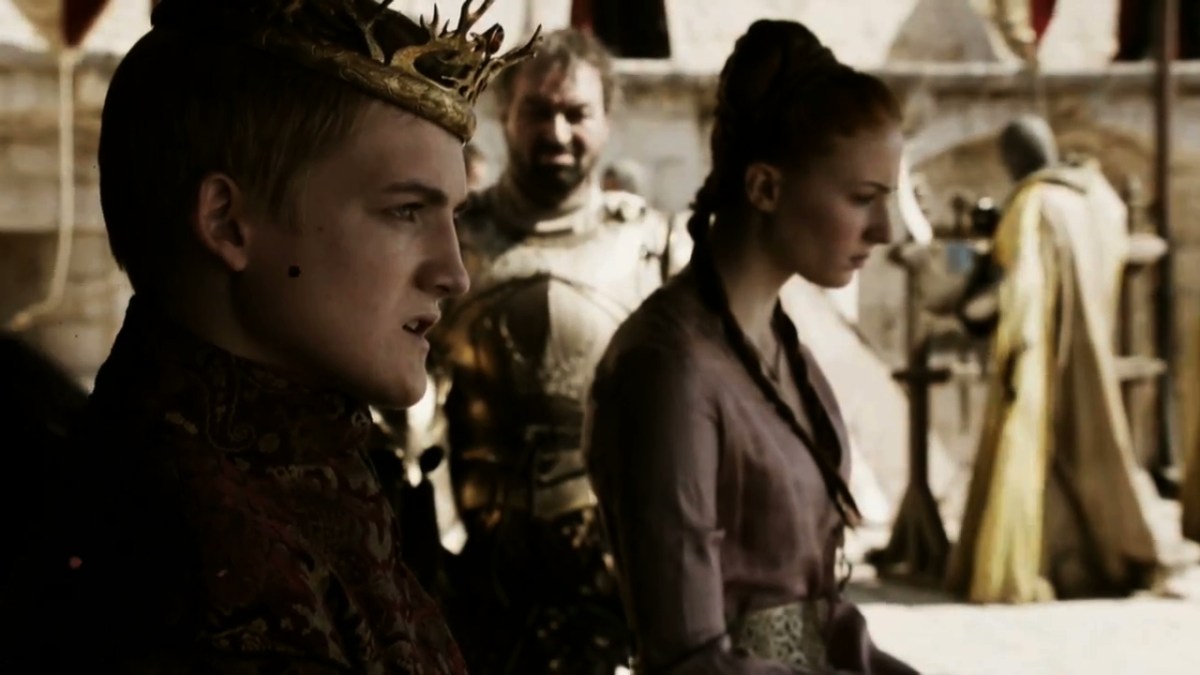
. . . or, alternately, it means doing the right thing. You could argue that Slynt’s behavior in the first season made the best of an impossible situation, keeping the Hand and the queen from outright war in King’s Landing. But no ethical system would call tearing babies from their mothers’ arms and stabbing them to death “honorable.”

These questions of honor are more subtle through the rest of “The Night Lands” but they’re still very much present. Up north, beyond the wall, Jon Snow and Samwell Tarly are learning more about Craster’s Keep. Sam saves a girl, Gilly, from Jon’s wolf, and discovers that she’s pregnant and scared. Sam wants to help her, against orders, but Jon, following Lord Mormont’s orders, says they can’t. In the end, following the code of personal honor, he ends up chasing Craster and a baby boy into the woods.

On Dragonstone, we see both Davos and Stannis in discussions of honor. Davos is expressing his, convincing the pirate Salladhor Saan to go legit for Stannis. Saan is played with swashbuckling relish by Lucian Msamati. Unlike other characters, he’s actually having fun. Saan wants to know why Davos would be so loyal to Stannis: “Man chops off your fingers and you fall in love with him.” Davos claims Stannis is an most honorable and just man, deserving of loyalty. But Stannis isn’t so honorable later. When discussing his lack of manpower in council, Lady Melisandre convinces him that she has a plan to give him manpower. She just needs his, ah, man power—to have sex with him, despite his married status. When she mentions that he doesn’t have a son, she brings up a patriarchal point which pushes him over to her side, against honor, as he takes her on his strategy table. This is a little bit over the top, though it does fit the “honor” theme of the episode.

In another area of Westeros, Theon Greyjoy returns to his homeland. His father Balon tells him he needs to pay “the iron price” for any jewelry he has, and when Theon says he paid for it in gold instead of from an enemy’s corpse, Balon tears it off of him. He is dishonorable on his homeland. The rules are different there, and he’s lost—a fact hammered home by the prank his sister Yara pulls on him, pretending they’re in a seduction. Theon is left with an apparent choice: the honor of his homeland or the honor of his foster family. This crossroads point works better than I would have expected, given Theon’s difficult characterization in the first season.

Here in our world, we have all kinds of different mechanisms for understanding and categorizing ethical choices. For example, Stannis believes Melisandre’s offer but must decide if the just ends—him taking his rightful crown—are worth the means of sleeping with a woman who is not his wife. Or there’s Tyrion, trying to do the right thing for the populace and maintain his position of power, a utilitarian dilemma. The characters don’t have any terms of this, of course, but it’s to the show’s credit that it manages to portray the concepts as meaningful to both the characters and the viewers. “The Night Lands” is almost all setup, but it’s clever and meaningful setup. The conflicts which define the show’s new, old, and suddenly important characters are clarified, and “The Night Lands” is tense and fast-paced despite its relative lack of event.

Adaptation:

We’re getting some increasingly big diversions from the show’s source material, A Clash Of Kings. The most common deviation, elimination of characters, shows up twice here: Aeron Damphair, Theon’s religious uncle, isn’t there to greet him on the docks, and Stannis doesn’t mention the daughter he has in the novels. There’s also one television-based change. Dany’s bloodrider, Rakharo, doesn’t get killed in the books, but apparently that actor got himself another show. It’s a pity, really, as Rakharo had been fairly well established in the first season as an Everyman Dothraki, making their culture sympathetic. Finally, there’s Bronn being given command of the Gold Cloaks, instead of the sympathetic knight in the novel, a change that’s somewhat surprising but makes sense—it gives Bronn more to do.

But Melisandre's active sexual corruption of Stannis is the biggest change, and it’s one I’m not fond of. Melisandre is my least favorite character in the books, and this reinforces that instead of fixing it. It makes a certain kind of logical sense given later events, but the seductress stereotype is just too much for me. There will be much more on this soon; I’m fascinated to see where the show goes with her. Other than Melisandre’s behavior, most of the changes make Game Of Thrones more viewer-friendly. Some may even make the story of A Clash Of Kings, a transitional novel in the series, a superior standalone story in Season Two of Game Of Thrones.

Rowan Kaiser is a freelance writer currently living in the Bay Area, who also writes for The A.V. Club, and has been published at Salon, Gamasutra, Kotaku, and more. Follow him on Twitter @rowankaiser.

GAME OF THRONES RECAP 1: THE NORTH REMEMBERS

GAME OF THRONES RECAP ONE: THE NORTH REMEMBERS

null

The second season of the densely, intricately plotted fantasy series Game Of Thrones is going to have to attempt something never before done on television. Even the most complex television series, such as David Simon’s The Wire and Treme, with their sprawling casts of characters, focused intently on different aspects of a single city. Game Of Thrones has dozens of major characters, scattered across a fantasy world. Its increasingly fractured and complicated story will, in the second season, have to maintain some level of coherence, even though the structure of Ned Stark’s tale that it used in the first season is largely gone.

Season One of Game Of Thrones was a fairly simple story, told with complex detail. It was the story of Ned Stark, a lord called by his king to maintain the kingdom’s peace, and his failure to achieve that goal, climaxing with his execution. Most of the show’s major characters were tied to Ned somehow. They were primarily his family, but also his advisors, friends, and betrayers. There were two major exceptions: Tyrion Lannister provided a necessary counterpoint to the way the Starks viewed the world. And Daenerys Targaryen, half a world away, still had a significant connection to Ned: her actions triggered a split between Ned and the king.

The novel maintained coherence by labeling each chapter with the name of the character who narrates it. That wasn’t possible for the show, so it attempted (and usually succeeded) at doing this by making its settings distinct. Most of the major players were at the capital, King’s Landing, with Ned and his daughters. Jon Snow was at the Wall, guarding the realm in the north. Dany was growing up in the exotic Dothraki homelands. Robb and Bran remained in Winterfell. Everything of import occurred in these four places, and when it didn’t, there were problems. There was very little sense of place (or time to travel) in “The Kingsroad,” the second episode. The Aerie, where Tyrion was imprisoned and tried, was the most fantastic (and least believable) locale in the series. The final war between the Starks and Lannisters was ill-defined, with apparently meaningful battles taking place entirely off-screen.

I think the show, to its significant credit, understands just how important a sense of place is in this wide-ranging fantasy world. Its credit sequence, one of the most powerful mechanisms for assigning meaning, is all about creating a sense of locale. We see maps, and we see focal points built up before our eyes. Its focus is dragged across Westeros, giving us a feel for each location on the map, as we watch those locations being constructed.

The plot of the first season demanded an increase in scope in the season following it. Ned’s failure to maintain stability in the realm has led to a massive civil war, with several different factions vying for control. On a personal level, many of the characters left their home bases last season: Jon Snow rode beyond the Wall, Arya Stark was dragged away by the Night’s Watch, Dany was forced to leave Dothraki, and Cat and Robb Stark were in the field, at war with the Lannisters. Immediately in the first episode of the new season, we see some of these new locations: Dragonstone, home of Stannis Baratheon, and Craster’s Keep, beyond the Wall.

I’ve never seen a series escalate its ambition as quickly as Game Of Thrones needs to, and I’m very interested in seeing how well the show manages to accomplish it. I’m not entirely certain that A Clash Of Kings, the second novel of the series, managed to succeed in maintaining the coherence established by the first book, and I will be fascinated to see if the second season show follows in the first season’s footsteps, falls apart, or (my guess and hope) improves upon the source material.

So, place-by-place, what is Game Of Thrones doing, and how well is it doing that?

King’s Landing is the heart of the series, ruled by the arch villains Queen Cersei and King Joffrey, and served by minions of various loyalties: Littlefinger, Varys, the Hound, Grand Maester Pycelle, and the guard captain Janos Slynt. The one sympathetic character remaining from the first season is Sansa, the most feminine of the Stark daughters, who discovered far too late that gallantry, handsomeness, and good manners do not prevent a prince from being a sociopath. And the wildcard, Tyrion Lannister, rides in to rule as the Hand, a title given to him by the father he hates, to rein in a king he hates as well. At a social level, King’s Landing is in chaos as well. Refugees are flooding the city, and Cersei demands that the guard keep them out. At the end of the episode, she (or Joffrey) also order the death of all of King Robert’s bastard children, in a real sucker punch of a montage.

Although it is the most important place in the story, I had mixed feelings about King’s Landing in the first season. It felt a little bit too artificial, all beautiful and warm reddish sets. It had memorable aesthetics from room to room, but it never felt like a bustling city or an important castle, only a collection of rooms. In a single moment, the second season dispels that effect to a certain extent—Tyrion’s new favorite prostitute, Shae, is looking over a balcony at the city, which looks cramped with houses, huge, and beautiful. It also looks totally fake, a reminder that no matter the scope and budget of Game Of Thrones, there are some things it just can’t do perfectly. Still, I respect it for trying.

The strongest location in the first season was Winterfell, home of the Starks, in the north, and the place where the whole story (except for Dany’s) started. Winterfell still feels exactly as it should, a place where civilization is scraping by in ramshackle villages, but it is ruled by rugged men in equally rugged castles.

Only one major character is left there now, Bran Stark, left crippled in the events of the pilot. He’s leading as best he can, accompanied by Maester Luwin of Winterfell, a recurring bit character in the first season, as well as Osha, the wildling woman who joined the Starks, and Hodor, his carrier. He’s also dreaming of wolves, or perhaps dreaming as a wolf. The shaky camera used for the wolf sequence was a little jarring, to be honest, but I don’t know how else this could have been done. Bran is seeing through his wolf’s eyes in his dreams, and that can’t feel normal.

Apart from those two locations, the sense of place is less solid in this season. “The North Remembers” ties disparate locations together with the red tail of a comet in the sky. Conveniently enough, everyone can claim the comet is an omen of whatever they wish, serving as a good way for Game Of Thrones to reintroduce characters’ motivations and standings in the world at large.

One theory put forth is that it signals a sign of dragons’ returning to the world (“Stars don’t fall for men”), but Daenerys Targaryen, the woman in possession of those dragons, does not appear powerful as the season begins. Her husband is dead, his power scattered, and her handful of people are stuck fleeing into an unknown wasteland. I enjoyed the constantly-changing grasses of Dany’s story in the first season. This fluid sense of place seemed perfect for the “Dothraki Sea.” The Red Waste, as the show labels her current location, is equally effective. It looks nasty, and if that’s not enough, we see Dany’s silver horse die—an appropriate symbol, as it was her best gift, when she became Drogo’s Khaleesi.

Two other settings on-the-move are less successful. Robb Stark’s Camp is where he, his lords, his mother, and Jaime Lannister are at the moment, but there’s little to be done that can give that a sense of place. Just the inside of a tent here, and a cage at night there: it’s enough to move the plot along, with Robb sending his friend Theon Greyjoy to form an alliance with his people on the Iron Islands, and his mother to treat with Renly Baratheon, the other most powerful rebel king. The characters are powerful—my favorite scene in the episode might have been Robb’s verbal sparring with Jaime Lannister —but it’s hard to grasp the scope of the war.

Likewise, it’s difficult to make much of the Night’s Watch at Craster’s Keep, Beyond The Wall in the far north. Craster is a mean little man, and the show does well to show just unsavory he is. He’s selfish, demands gifts, insults the Watch, and is rumored to have taken all his daughters as wives, but there’s not much else going on in this storyline yet. Jon Snow is still impetuous, and a “King-Beyond-The-Wall,” Mance Rayder, may be gathering his forces. And his keep, well, it’s a little shithole stopover in the middle of nowhere, and I suppose effective for that. But the excitement of being Beyond The Wall isn’t to see Craster’s tiny Keep.

I was, perhaps, most pleased with the new setting, Dragonstone, seat of Stannis Baratheon. It was quickly shown to be a foreboding place, all fire and darkness. Its statues are brown and grim, and our first vision is of scarecrows burning on the beach at night. All of these characters are brand new: Stannis was mentioned by name but never appeared in the first season. We also meet his advisor, Ser Davor Seaworth, but he has little to do other than very effectively force Stannis to reveal his painful rigid modes of thinking, refusing to even call his dead brother, King Robert, “beloved.” But the most important thing here is the imagery, and the introduction of Melisandre, the Red Priestess of the Lord Of Light. She feels alien, and survives a poisoning attempt so ominously that it demonstrates  something is clearly wrong at Dragonstone, and that Stannis is not going to be a hero to sweep in and save the day, even if he is the rightful heir.

Game Of Thrones is going to have a difficult time tying all these different threads together in a meaningful fashion. It might even be impossible. But “The North Remembers” makes a fine case for the show continuing to do what it does, because it does it so damn well—it looks great, its characters are vivid, and there’s a feeling that anything can happen. The sections in King’s Landing, the Stark Camp, and the Red Waste are immediately interesting, and the final shot of Arya is also a reminder that one of the show’s best characters still has her own story ahead of her. Season premieres often have difficulties maintaining the momentum of the end of the last season, but that’s not an issue here. Game Of Thrones is more confident than ever. That’s more than enough to carry the seemingly weaker sections.

Adaptation

I’m a reader of the books, and I like discussing them, although they have too many issues for me to call myself whatever George R.R. Martin super-fans prefer to call themselves. So the show is doubly interesting to me as a subject of criticism and as an adaptation of something that resists adaptation. So I’m going to discuss this (without specific spoilers, although I can’t say that there won’t be thematic discussions overall, or notes of what’s important or not) in a separate section, going forward.

I’m particularly interested in two things: how the show will adapt the books in terms of overall narrative structure, and what new scenes it adds to tell its story. On the first level, this season already seems to be diverting from the source material far more than the first season did. It’s accelerating Jon’s storyline with the Night’s Watch, and seems to be accelerating the story of Jaime Lannister’s captivity, which was the biggest event in the first season. We will be seeing more of this, though—a trailer for the season showed a certain character screaming “But I love her!”, a reference to events of the third book.

I’m always curious to see what the show does outside of the constraints of the characters’ perspectives. A Clash Of Kings loses Ned Stark, of course, but gains Davos Seaworth and Theon Greyjoy. Any scene depicting characters that doesn’t include them or the original POV characters (Tyrion, Dany, Cat, Arya, Sansa, Jon, and Bran) is entirely new to the series. Fascinatingly, in the first season, those were often the best scenes, a trend which continues here in “The North Remembers.” In addition to Robb's confronting Jaime, I also very much enjoyed Cersei’s argument with Joffrey, which depicted the story’s two biggest villains at odds, as Joffrey tried to buck her regency and insulted her to her face. And that final montage of the episode is something that would be impossible in the novel’s usual structure, and is brilliantly done here, demonstrating just how high the stakes are by depicting the murder of innocent children.

Note on spoilers: If your comment includes a spoiler from the novels, please label it SPOILER.

http://www.hbo.com/bin/hboPlayerV2.swf?vid=1241799


http://www.hbo.com/bin/hboPlayerV2.swf?vid=1234943

 
Rowan Kaiser is a freelance writer currently living in the Bay Area, who also writes for The A.V. Club, and has been published at Salon, Gamasutra, Kotaku, and more. Follow him on Twitter @rowankaiser.