Watch: For Stanley Kubrick, Color Was an Instrument

Watch: For Stanley Kubrick, Color Was an Instrument

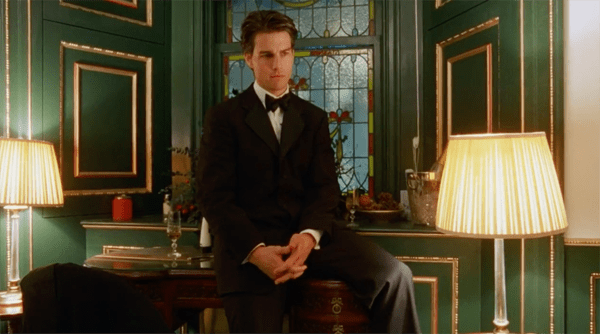
If you accept that all art is manipulation, which you should, then it should be no stretch to conclude that artists in different disciplines have tools with which they effect that manipulation. One of Stanley Kubrick’s numerous tools, one of the implements with which he managed to transport viewers, was color. The colors have an effect. We may not be able to put into word what the effect is, for instance, of seeing the hallway of the Overlook Hotel in a river of blood in ‘The Shining,’ just as we cannot say what the effect of watching a blue-lit and perturbed Tom Cruise in ‘Eyes Wide Shut’ looking down at his sleeping wife might be. Can we say that red is the color of violence? And blue the color of foreboding? Perhaps. But we could just as easily say many other things. Marc Anthony Figueras has put together a rapidfire compilation of Kubrick’s strummings on the instrument of color, and you should take a look, at the very least to explore the effect of these dazzling onslaughts on your mind. 

Watch: How Stanley Kubrick Forces Us to Look At Ourselves

Watch: How Stanley Kubrick Forces Us to Look At Ourselves

Regardless of what one might say, and there is plenty to say, about Stanley Kubrick’s technical mastery, about his sense of tragedy, about his portrayals of different modes of alienation, one thing that remains true of all of his films, to greater or lesser degrees, is their ability to spur self-reflection. Buried in all of his stories is the question: do you see yourself here? Granted, this is true of all stories, but think of it: who has not felt as lost as Tom Cruise’s William Harford in ‘Eyes Wide Shut’? Who has not felt the terror Shelley Duvall’s Wendy feels in ‘The Shining‘–or even the madness Jack feels after being cooped up for too long (even if at a much, much smaller caliber, of course)? Who hasn’t felt the misery the suicidal Private Lawrence (Vincent D’Onofrio) feels in ‘Full Metal Jacket‘? Who, after watching ‘Dr. Strangelove,’ might not question the human tendency to condone wars in certain cases? It’s too simple to call Kubrick a strictly satirical filmmaker. He is, rather, the sort of artist who causes us to look inwards even as we are lost in seemingly outward-looking narratives. This fast-paced, beautifully edited piece by Stefano Westerling takes us through Kubrick’s filmography, highlighting the works’ self-reflexive brilliance with great facility.