Lukas Moodysson, Teacher of Women’s Stories: WE ARE THE BEST! Indeed

Lukas Moodysson, Teacher of Women’s Stories: WE ARE THE BEST! Indeed

null

There’s a scene near the end of Show Me Love, Swedish director Lukas Moodysson’s first film, that tells everything about
the director’s sense of humanity in one short burst, showing that he is a good teacher as
well as a swift storyteller, and that what he is teaching is how being human feels (in case we’d forgotten, as well we might have). In the scene, Agnes, one
of the film’s lovelorn centerpieces, has just thrown a birthday party, and Viktoria, who
is wheelchair-bound, is the only one to show up. Because Agnes is a teenager,
and troubled, and angry no one showed up to her party, especially not the girl
she is in love with, she makes vicious fun of Viktoria, saying cruel things, as
bluntly as only someone her age could say them. Viktoria finally leaves the house, crying.
Rather than filming her departure dramatically, Moodysson simply shows us her back,
as she wheels along all alone, up a quiet, dark street. One gets the sense that
Moodysson knows exactly what it feels like to be Viktoria, in that wheelchair,
moving slowly through the dark, cast out, misunderstood. Moodysson understands what
it feels like to be hurt. But also how it feels to rise out of that pain: Show Me Love, Together, Lilya-4-Ever and We Are the Best!, within his filmography, all teach what sadness
feels like, and show characters’ development as a sort of rumbling around inside that sadness, sometimes escaping, sometimes not.
Above and beyond that, though, Moodysson is a skillful teller of women’s tales: Show Me Love is a juvenile lesbian love story, Together the tale of a
woman’s seeking of refuge within a chaotic commune, and the subsequent Lilya 4-Ever
a blisteringly educational journey into the world of sex trafficking. While the
reviews of the current film have praised it as “upbeat,” “adorable,” and other
such adjectives, for the undeniable cuteness of its three juvenile leads, it is
easy to overlook that this filmmaker quickly and effectively takes viewers
inside the female experience in a male-centered society, telling how it feels
in numerous ways–and has done so throughout his career. We Are the Best!
addresses issues timelessly relevant to women with great power and directness—even
if the film’s leads are in their preteens. In fact, the youth of these characters
makes Moodysson’s points all the more poignant, demonstrating that issues of
acceptance and adaptation may start at a very early age.

Let’s start with their looks: the female leads in this film
look like boys, and they suffer for it, however indirectly. The film’s spiritual
center. Bobo (Mira Barkhammar), has short-cropped hair and often carries herself blockily; when
she walks around in her tights, you might easily think she was a boy wearing
pajamas around the house. She’s the best actor of the three; Moodysson’s
trademark close-ups reveal a thoughtfulness and reflectiveness in her gaze, a
silence before she speaks, that’s striking in a film about three schoolmates
forming a punk band. Her bandmate, Klara (Mira Grosin), is similarly boyish in appearance,
with a cocky mohawk and a raffish aggression that reminds one of the male
characters in the film; her emotions are fairly simple ones—happy, sad,
confused, without much nuance. The two friends gradually adopt Hedwig (Liv LeMoyne), a
Christian who also plays classical guitar proficiently, as part of their
band—though more classically “pretty,” with long blondish hair, she too has a
vaguely blunted quality to her, a sub-verbal affect expected more from a sullen teenage
boy than a rocker in a girl band. When the trio interacts with the other girls in their school, all wearing
heavy make-up, we realize that the bandmates are foils for the other characters’ more
stereotypically “feminine” affectations, and that the film’s sympathies are
obvious—the more “popular” girls here seem callous beside the rebellious, more alive
protagonists. Ultimately, other children’s ridiculing of the bandmates comes
across here as the beating down of the less-attractive by the more-attractive. Male
treatment of these girls can be brutal at times; more than once, they are called
“ugly,” reinforcing their status as social outcasts—and reinforcing the idea, all
too common,  of a “typical” female appearance,
which doesn’t include cropped hair, boyish features, or mohawks. (At least not in Sweden.) When the girls
cut Hedwig’s long blond hair short, the act reads a little bit like an
initiation into a post-archaic vision of womanhood.

Moodysson, given his intense sensitivity to
female concerns, doesn’t really present male characters comfortably. Here, as in his other
films, either they’re brutes or they’re overly gentle—there’s never an excess
of subtlety in the characterization. In this film, the receding quality of many of the male characters
brings the band members’ attitudes into the foreground. When the girls meet up
with another punk-ish band, all male, the boys in the other band, shoegazers par excellence when they’re not playing
their instruments, seem like dull knives beside the more fiery protagonists of
this film—they make poor conversation, and they’re hopeless as flirts. Whether
faking her indifference or not, Bobo dismisses the boys in the band as boring,
and her dismissal makes good sociological sense, in this context; in a
community not entirely ready to accept the idea of a girl band, what could be
more conventional than a group of young boys playing punk, and oafishly? Likewise,
male authority figures, like the bumbling supervisors in the rec center where
the girls practice, or even Bobo’s father, often seem passive. Bobo’s father
is gone a lot of the time; Bobo’s mother sleeps around quite often; his is a
sham of fatherhood. Unable to fully command others, or take a stand, the male
characters in this film ultimately leave the female characters, regardless of
their age, to make their own way, and their own rules, successfully. The film
becomes a parody of male dominance.

Near the end of We Are
the Best!,
as if to top things off, the girls even have to cope with what
we would call “mansplaining,” or whatever the Swedish version of it would be,
as one of the rec center directors insists on showing off his guitar skills, as a demonstration of proper playing,
only to watch Hedwig, who is adept at classical guitar, play circles around
him. The scene is not overplayed, and yet, like everything else in the film, it
is set up for a highly deliberate purpose. The older men in the rec center
don’t have a chance; any disciplinary or authoritative gesture they make can
only show their incompetence. It’s to the film’s credit that, despite the
simple, straightforward way it develops, it manages to arrive at an ending that
shows the girls as successful on their own terms, even if they get a stormy
reception, complete with food-throwing. The film, beyond being a girls’
hero-saga, indicates that these characters, these women can live for each other—and
in so doing, teaches a little bit, or perhaps a mouthful, about human survival.

Max Winter is the Editor of Press Play.

New Media and the Solipsistic Romantic Comedy

New Media and the Solipsistic Romantic Comedy

nullIn an excellent essay
on romantic comedy, Frank
Krutnik
writes about the “nervous romances” of the 1970s.[1]
These are comedies characterized by their characters’ “wistful nostalgia” for
traditional romance, and their simultaneous acknowledgment of the impossibility
of these old-fashioned conventions being operable in a changed social climate.
Lovers are now very self-conscious
about expressing their feelings and worry that they may depend upon clichés for
the articulation of these sentiments. Moreover, the institutionalized end
result of courtship – i.e., marriage – no longer seems entirely satisfactory,
and so the “obstacle race to the altar” is rarely a viable narrative anymore.
As Geoff King
puts it, narrative resolutions in contemporary romantic comedies frequently
“occur in the form of a disavowal of
marriage, a version of the marriage vows based on an agreement…to be not married together for the rest of
their lives.”[2]


These
contemporary romances, then, can be regarded as amplified or exaggerated
dramatizations of a very old solipsistic
dilemma. Stanley
Cavell
identifies this dilemma as the problem
of acknowledgment
.[3] In
simple terms, this problem revolves around our inability to know others – to
have access to their interiority – with any degree of certainty. At its most
nihilistic, this form of solipsism imagines that others exist only for us and
because of us. At the very least, it worries that we can never truly know how
things might be for others. Cavell uses this term to describe classic screwball
comedies, and their scenarios revolving around the renewal of marriage. However,
the concept can also be applied to the contemporary solipsistic romance – films
in which marriage is an altogether distant consideration for the young lovers
within them, and the possibility of remarriage is out of the question entirely.
 

These nervous
romances primarily stem from Woody Allen’s
influential comedies, Annie Hall and Manhattan, in which the pursuit of
romance is represented as perpetually frustrating and elusive. Such nervousness
wends its way throughout some of the most popular comedies of the 1980s as
well. While Molly Ringwald’s hunky birthday wish comes true at the end of Sixteen Candles, most of John Hughes’
teens cannily pick at the prospect of “true love” as if it were an overripe
pimple to be squeezed. John Cusack relies on a ghetto-blasted rush of Peter
Gabriel
as a substitute for his precious self-expression in Say Anything. The grownups hardly fare
any better: think of Billy Crystal and Meg Ryan, too preoccupied by neurotic
self-scrutiny to settle easily into mutual romance, in When Harry Met Sally.

In the 1990s, the
directors of, My Best Friend’s Wedding
and Four Weddings & a Funeral
were worried enough about romance to propose friendship as a more viable
emotional relationship between a guy and a gal. Chasing Amy also helped by queering up a previously straight genre.
Meanwhile, Sleepless in Seattle (with
its soundtrack of old-timey standards and references to An Affair to Remember) just wished for a good ol’ kiss to build a
dream on again. Shifting into the 2000s, however, Judd Apatow & Co., The Break-Up, and Punch-Drunk Love collectively suggested that modern romance is
inherently crazy or simply just a way of avoiding being alone. Indeed, romantic
comedy in the 2000s became (yet another) phallocentric genre, with many of the
most popular or influential films of the decade focused on the alleged
self-centredness of a childish leading male. The nervousness of Allen in the
70s has prompted any number of regressions. Many of these comedies now deal
with the crisis of juvenile self-absorption.
 

Scott Pilgrim Vs. the World seems like an escape route from the
dead end of solipsistic  nervousness. It
is the most deliriously rewarding romantic comedy since Adam Sandler’s
brilliant reflexive turn in Punch Drunk
Love
, or the tentative fumblings toward mutual renewal in Eternal Sunshine of the
Spotless Mind. Edgar Wright revisits and elaborates
upon similar ideas asserted in Shaun of
the Dead
– his first superlative feature that had the audacity to suggest
that adult romance might save one from living an unexamined life. I find it
fruitful, then, to consider Scott Pilgrim
as an extremely thoughtful return the problem
of acknowledgment
. The film is a romantic comedy that compels its arrested
adolescent to recognize and respond to the difference between himself and an
other. Moreover, it makes the counterintuitive and audacious assertion that new
media technologies might facilitate the amorous traversing of this difference.

Incredibly, Wright
is able to articulate this idea in a work entirely populated by cartoonish
abstractions. Translating Brian Lee O’Malley’s
schematics so cannily, Wright provides a delirious cavalcade of one-dimensional
models of masculinity and femininity. Indeed the entire hipster gamut is on
colourful display here, and these gleeful primaries bring the romantic concerns
of the past decade into sharp relief. Michael Cera finally clues into what the
rest of us have known since Arrested
Development
: his nebbish heartthrob is actually a total asshole.
Accordingly, Cera shies away from the comics’ relatively sympathetic treatment
of their titular hero. He reveals Scott as a young man who can’t make the
effort to be interested in experiences outside his own interests and therefore can’t
be bothered to acknowledge others’ desires & feelings. The screenplays’
terrific idiom of assertions, aphorisms and inarticulation conveys this
solipsism brilliantly. Scott’s
apathy
prevents him from even finishing Matthew Patel’s emailed challenge
to a duel. “This is… borrrring. Deleeeeete!” In fact, Scott tends to flinch at the
prospect of recognizing others’ desires: he literally chokes on Knives Chau’s
perfumed proclamation of love.

Even more bracing
is the film’s unsparing treatment of the romantic comedy’s token breakup scene.
Here, Scott doesn’t agonize over how his lack of regard for Knives has hurt
her, but rather he squirms over the memory of being compelled to perform an unpleasant
task. And one wipe edit later, he’s giddy at the prospect of moving on to that
obscure object of his desire, Ramona Flowers.

So, how does this
self-regarding man-child overcome the problems of acknowledgment and authentic
self-expression? Through graphic pop
culture iconography
, which Wright uses to represent the emotional lives of
the protagonists. This tactic joyously
demonstrates how our feelings are mediated by the technological and popular
products that we (or at least those of us of a certain age demographic and/or
Toronto scenesters) consume.
 

To that end, the
film improves on an idea from a previous Michael Cera film: Nick and Norah’s Infinite Playlist. The focus
there was on NYC kewl kids finding the Most Excellent Ever music to articulate
their mutual attraction. Here, as in Shaun
of the Dead
and Hot Fuzz, Wright delights in a ceaseless barrage
of densely layered allusions (e.g., every band in the film must be named after
an NES game, parody an indie subgenre, and have their music composed by a
Pitchfork-endorsed musician). And yet, such intertexuality is all in the name
of a neo-romantic sincerity. The “wistful nostalgia” is technologized, which is
why the film’s style pays homage to the videogame logics of (relatively) old
new media: sequences rendered with 16-bit graphics, multiple shout-outs to SNES
and Sega Genesis gaming experiences, the Universal Studios theme
downgraded to a MIDI recording, etc. Levelling, bonuses, combos, 1Ups, and life
bars are all brilliantly analogized as game mechanics that help their players
mature and find love.

Scott’s
experiences are dramatized via an almost non-stop overlay of animated captions
and sound effects, in an excellent remediation of manga and anime conventions.
Fight scenes feature split-screened close-ups of furrowed eyebrows, speed-lined
backgrounds, and ridiculously paced accelerating montages. Reaction shots
reveal emotions that change in less than a blink of an eye. Nearly every moment
is filtered through Scott’s one-direction consciousness. Because he’s
constantly in a hurry to attend to the things that he finds interesting, the
editing often skitters along as if it were Chapter Searching. Not only is the
camera nearly constantly moving, Wright shows a preference for close-ups, and
so the film conveys Scott’s perpetual state of distraction and his tendency to
wilfully ignore his surroundings.
 

Therefore the intensity
and simplicity of Scott’s feelings is a product of his lack of real-world romantic
experience. Only able to cite one occasion of heartbreak, he elevates Ramona’s
extensive amorous involvements with a variety of people to an Epic level of
Epic Epicness: the League of Seven Evil Exes no less. Little wonder that Ramona
is so aloof to Scott’s puppyish adoration. After a final Big Boss Battle, Scott
discovers that genuine feelings and desires are accompanied by obligations to
others. His subsequent forthrightness of expression and acknowledgement seems
to signal an overcoming of the anxieties generated by contemporary nervous
romances. Will the Girl of His Dreams (and others like her) have the patience
to be conveyed in the terms provided by new media representations?

null


In certain
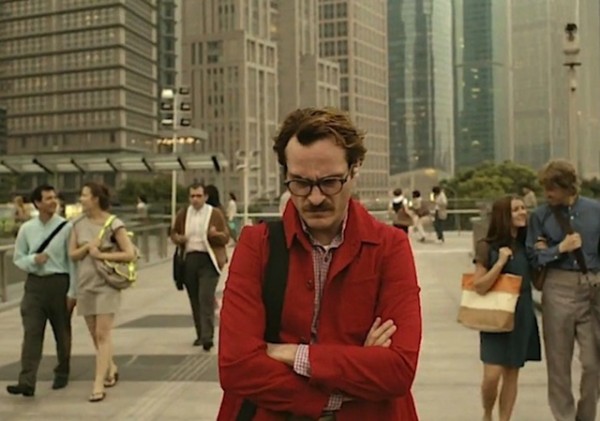
respects, Spike Jonze’s Her takes up
this question in sweetly galvanizing terms. Plaintive and meditative where Scott Pilgrim is brash and bracing, Her explores more directly the
relationship between romance and solipsism, and the role new media might play
in allowing the former to overcome the latter. Jonze’s attitudes toward digital
love – specifically the romance between an OS (“Samantha”) and her “operator”
(Theodore Twombly) – are considerably more tentative and ambivalent. The caution
evident in this more palpably nervous romance is often surprisingly underplayed
in most critical responses to the film, which typically unilaterally celebrate Samantha
and Theodore’s relationship as a technologized “solution” to 21st
century lovesick blues. But these accolades tend to be parsed in ways that
weirdly retain the language of user/interface (even calling Theodore Samantha’s
“operator” is intensely problematic). Some critics actually intimate that the
film promotes solipsism as an unavoidable (and even progressive) means of
navigating interpersonal relationships. In a recent
Press Play conversation
, for
example, Jennifer Anise suggests that “what Theodore needs in order to propel
himself forward in life [is] an exploratory/love relationship with himself.”[4]
                                             

To be clear, Her should not be understood as a
straightforward idealization of the affair between Theodore and Samantha;
indeed, the film seems quite aware that its own scenario is imbricated by male
fantasy. For some, the film is a distancing affair, and even unconsciously
replicates the same, tired old white,
male tropes
of romantic comedies. Samantha’s “perfection” is both
explicitly addressed but also implicitly adored: she is designed as a helpmeet,
is instantly accessible, Her needs are secretly His needs, etc.[5] And
yet, it can also be asserted that the film is cognizant of its own masculinist
fantasies; after all, it represents a protagonist who has difficulty
acknowledging others in a meaningful way. That the film never completely
remedies Theodore’s blinkered vision – nor insists that it can see past its own
limited view of interpersonal relationships – is perhaps its most interesting
quality.

Her suggests that by 2025 new media will
itself become romantic, rather than the means by which romantic expressions are
articulated. That is, communication takes on the sheen of romance – and
certainly eroticism – simply by virtue of being mediated. Access to amorous encounters
are only a click away, and if modern romance has assumed an instantaneity, then
it has truly become timeless: Samantha is never distant, is always immediate.
Love, or the possibility of love, is always Here, always Now.

From its very
outset, Her dramatizes this
manufactured intimacy, and its lived consequences. In the opening sequence, a
slow track out reveals the assumed privacy of Theodore’s office to be a cubicle
within an enclosed environment of similar workstations. Beautiful Handwritten
Letters dot com – where Theodore manufactures intimacy for others – is a meticulously
designed manifestation of the new economy. Its constructed warmth – an
architectural omen of things to come – is generated through a perfect
rectangular symmetry (walls, desks, frames, screens, chairs, paper) softened by
solid blocks of wispy pastels. The office has all the informality of a Hallmark
card: its baby blues, fuchsias, pistachios, lemon yellows should exude
sunniness but are melancholic instead due to the smudgy desaturation of the
film’s palette. Theodore and his gentle boss, Paul, dress to match their
environment, and their rapport is gently officious. Only the drooping plants,
and oversized, depressed-looking decals hint at an underlying neglect. Human
relationships are relentlessly mediated here via ubiquitous, keyboard-less
computers, and even organic signs of traditional communication (i.e. paper) are
fed into machines.

So if intimacy is
now to be manufactured, the diminished, guarded, and/or structured passions of
the inhabitants of 2025 Los Angeles seem to warrant this engineering. Theodore
in particular – with his waist-high trousers, soft pink plaid shirt, large glasses,
obtrusive moustache – is in need of some kind of artificial respiration. It is
certainly no accident that his wardrobe is colour-coordinated to match
Samantha’s start-up screen. In the opening sequence, both he and Paul comport
themselves through signs of genuineness only: Theodore compliments his boss on
his shirt, which Paul confesses to buying simply because it “reminded him of
someone suave,” and not because he is
suave in the slightest. Theodore, meanwhile, is emotionally stunted –
prolonging signing his divorce papers because he seems unable to bear the
prospect of becoming further unmoored from the world. Catherine – his imminent
ex-wife – asserts, not inaccurately, that he “can’t deal with real emotions.”
And while Theodore counters that she possibly “felt too much,” he is dismissive
of the sentiments that he manufactures for others. “They’re just letters,” he
tells Paul on at least two occasions, minimizing the tokens of feeling that he
crafts for others.
 

So, like Scott
Pilgrim, Theodore is too much in his own head. However, unlike Scott, he is trapped
within a prison of memory. Brief, nostalgic montages frequently interrupt the
forward momentum of his present situations. Even the eventual signing of his
divorce papers – a necessary movement toward promising futurity – is interwoven
by the ghosts of previous matrimonial bliss, to which Jonze (almost cruelly)
intercuts. But these memories are fantasies only; they are Theodore’s
projections of a love that he unfairly imagines Catherine unable to
reciprocate. And
this is Theodore’s ongoing failure: he believes in his own sensitivity and
ability to deeply empathize with others, but the fantasies that he creates for
and around others are mere projections. Indeed, it is to Jonze’s credit

that Theodore’s
ability to connect with others is ultimately left in question – even though the
character himself believes that his empathetic imagination has been expanded. In
this regard, Samantha can sometimes seems little more than an enabler of his
solipsism. During one of their dates, she comments that “he’s really good at”
imagining the lives of others. However, the scenarios he crafts for these
anonymous passersby are just constructions that signal his reticence to make
actual connections. It is not that he notices things about others (e.g. the
“crooked little tooth” of one of the clients to whom he writes letters); rather
he imaginatively develops inner lives for them. Theodore prefers people to be
as he imagines them – and for most of the film’s running time, Samantha seems
to comply with this tendency all too readily.

In short, Theodore
cannot allow his subjectivity to be penetrated by those who might otherwise
come to love him. The problem is chronic and ongoing: his date with Amelia goes
awry when he will not commit to seeing her again (“You’re a really creepy
dude,” she laments, not unfairly); the shared fantasy of anonymous phone sex
collapses spectacularly (and hilariously) when he finds himself unable to share
“Sexy Kitten’s” necro-bestial lust; he can only see Catherine through the
projection of past romanticism, and can’t reconcile himself to her growth away
from him. Even Samantha’s wants and desires (particularly for physical contact
with Theodore via a human surrogate) are frequently beyond him. In some
respects, Samantha is a concise manifestation of a solipsistic inability to
acknowledge others: she can never be “seen,” and as an extended, disembodied
consciousness she is both everywhere and nowhere.

Scott Pilgrim suggests that remediation
provides a new romantic vocabulary, and thus a possible way out of an
intractable solipsism. But Her eventually
resorts to the unimaginable prospect of technological singularity as a way of
acknowledging others. In the end, Jonze’s film expresses a gentle (rather than
dystopic or unsettling) ambivalence regarding new media’s ability to confront
or overcome solipsism. Indeed, the film may even be positing that others are
increasingly existing for us only through mediation. Theodore’s loving relationship
with a constructed consciousness – initially designed for him alone – is not an
isolated incident; this quasi-solipsistic affair seems to spread with the
cultural penetration of the OS system. As the film develops, people are
increasingly seen wearing earpieces and talking to their devices (rather than
each other) in public. And so, this is why the film’s romanticism is so
disquietingly unstraightforward, and its ambivalence toward new media so
intriguing.
 

Ultimately, the
film is wise enough to puncture Theodore’s exclusionary fantasy as Samantha
(like Catherine before her) also grows and evolves away from and beyond
Theodore. She eventually admits to being in love with 640 others besides
Theodore. And though he protests that this prospect is “fucking insane,” her
hyperbolic dismantling of monogamy also short-circuits the notion that one
might exist only for (and because of) another. In true solipsistic (if not paternalist)
fashion Theodore laments that “You’re mine or you’re not mine,” to which
Samantha’s offers an astoundingly realist reply: “I’m yours and I’m not yours.”
For unabashed romantics, perhaps this realism – and Samantha’s own departure –
is what will allow Theodore to shake the lingering, weighty ghosts of
nostalgia. By film’s end, he writes his own letter to Catherine expressing his
love for
her, but also his
willingness to wish her well in her life without him. On the other hand, for
romantics of a more nervous variety, perhaps this is only wishful thinking. As
Theodore and gal-pal Amy Adams share a sunset at film’s end, Samantha is still somewhere
else, somewhere beyond Theodore’s ability
to reconcile a Her without a Him. The film recognize its own inability to
achieve escape velocity from solipsism’s inwardness, and this tenderly
melancholic achievement is to be savoured by anxious sweethearts everywhere.

Aaron Taylor is an Associate Professor of Film Studies in the
Department of New Media at the University of Lethbridge. He is the editor of
Theorizing Film Acting and his
writing on cinema can be found in numerous anthologies and journals.


[1] Krutnik,
Frank. “The Faint Aroma of Performing Seals: The ‘Nervous’ Romance and the
Comedy of the Sexes.” The Velvet Light
Trap
26 (1990): 57-72.

[2] King, Geoff. Film Comedy.
London: Wallflower, 2002. 57-58.
 

[3] Cavell, Stanley. Pursuits of
Happiness
. Cambridge: Harvard University Press, 1981. 17-19.

[4] Anise, Jennifer and
Steven Boone. “What Her Tells Us
About Ourselves: A Conversation.” Press
Play
, April 15, 2014,
http://blogs.indiewire.com/pressplay/what-her-tells-us-about-ourselves-a-conversation. 

[5] For a blistering review, see Nadler, Christina. “Spike Jonze is a
Jackass.” Christina Nadler, March 2,
2014, http://christinanadler.com/spike-jonze-is-a-jackass-part-1/.

DOWN-UNDERGROUND: Muriel’s Red Wedding

DOWN-UNDERGROUND: Muriel’s Red Wedding

nullThe 90s saw Australian filmmakers enjoying worldwide success

with a series of offbeat comedies that celebrated outsider status and often
mixed challenging subject matter with laughs. 
As inventive as these films were, their success overshadowed the dark
history of Australian cinema, Walkabout and
Picnic at Hanging Rock supplanted by Priscilla and Muriel in the cultural memory. 
But in 2005 that repressed history resurfaced in one of the most
disturbing films to come from down under, Greg McLean’s Wolf Creek.  Dismissed by
many critics as misogynistic torture porn, the film is in fact a compendium of
filmic tropes that simultaneously resurrects and comments on Australia’s peculiar
film history.

One of the most successful and iconic figures of Australian
cinema is Crocodile Dundee, the
raffish survivalist bushman played by Paul Hogan.  In the years following the success of the
Dundee franchise, other Australian directors would achieve commercial—and
sometimes aesthetic—success with such offbeat comedies as Flirting, Strictly Ballroom,
Priscilla, Queen of the Desert, and
of course Muriel’s Wedding, directed
by Hogan.  Dealing with topics that had
been rarely addressed in comedy, such as racism, gay and transgender
identities, and disability (not to mention ABBA), these films also embraced a
garish and camp aesthetic that was refreshingly at odds with American and
European preoccupation with upward mobility.

But however much these films challenged certain conventions
of the comedy genre, they arguably contributed more to the worldwide success of
their stars (Nicole Kidman, Guy Pearce, Hugo Weaving, Toni Collette, and
director Baz Luhrman) than they did to Australian cinema.  The same might be said of the path taken by Dundee’s
demonic doppelganger Mad Max, who launched Mel Gibson into stardom.  While the original 1979 film was an inventive
transformation of the New Wave’s darker stylings into irresistible grindhouse
fare, as the franchise gained commercial success and higher budgets, it devolved
into the disastrously overblown theatricals of Thunder-Dome

On its release, Greg McLean’s Wolf Creek was regarded by most serious critics as slasher shlock,
yet it can also be read as a disturbing treatise on Australian film and the
peculiar cultural and geographical history that underpins it.  Certainly this film is not recommended for
the queasy, but it could also be considered less a celebration of violence than an indictment of it.  By exploring the
relationship between character and setting, it offers a powerful
meditation on the causes of violence, one that has resonance well beyond its
Australian setting.

The film begins in Muriel
territory, with three twenty-somethings partying poolside before piling into a
car the next morning.  Liz and Christy
are both British tourists, and their Sydney pal Ben is accompanying them on a road
trip on their way to the airport in Queensland. 
They travel the forbidding spaces of the Great Northern Highway, which
rolls through the arid western deserts with only rare interruptions by a roadhouse
or rest-stop.  When they do finally hit a
gas station, they are harassed by a group of slack-jawed yokels, who threaten
the women with a “gang-bang.”  Ben tries
to man up on the occasion, but it is a role he is clearly uncomfortable with:
he is feminized, and the women are verbally objectified and victimized.  The film will continue to explore the ways in
which gender is as much a product of cultural context as biology.

Soon after this disturbing encounter, they arrive at their
first destination: Wolf Creek, site of a massive asteroid crater.  As they walk around the eerie terrain, the
atmosphere becomes reminiscent of Peter Weir’s Picnic at Hanging Rock (1972), in which the students and teachers
of a girl’s boarding school go for a holiday outing at a strange and ominous
rock formation, where several of the girls mysteriously disappear.  The dream-like rhythms and surreal landscape
of Wolf Creek evoke a similar sense
of the uncanny, and likewise hint at the spiritual traditions of Australia’s
aboriginal population, so closely linked to the continent’s unique
ecosystem.  This dreamy atmosphere culminates
in the travelers’ watches stopping simultaneously, suggesting a spiritual or
astral influence on the dire events that follow.

Such scenes are significantly enhanced by the film’s
astonishingly inventive sound design. 
François Tétaz composed a score woven out of a collection of field
recordings made from the sound of power lines eerily humming and vibrating in the
desert winds.  When these rise to muted
crescendos, they vaguely resemble the conventional horror movie “stingers” that
punctuate scare scenes, but with a subtle organicism rooted in the ambient
soundscape. 

When they try to leave, their car refuses to start, and as
they wait through the night for the unlikely arrival of another visitor they
are “rescued” by a rugged frontiersman, Mick, who bears more than a passing
resemblance to Crocodile Dundee, but one badly gone to seed and stripped of all
his rugged charms.  The resemblance is
made explicit later on, after an hours-long tow back to Mick’s compound.  As they sit around a campfire before their
good Samaritan goes to work on their car, the gap between rural and urban,
Australian and English, goes from awkward to excruciating, until Ben tries to
break the tension by quoting Dundee’s famous line, “You call that a knife? Now
that’s a knife!” which Mick doesn’t quite get, and assumes he’s being
mocked. 

And, in a sense, he is. 
Earlier in this uncomfortable encounter Ben tells him he’s from Sydney,
to which Mick replies, “Poofter capital of Australia!”  This further hit on Ben’s threatened
masculinity can be seen as motivating his later insult, intended to mark Mick
as a redneck, a bumpkin, a rural relic, lost in the past of a modernizing
nation of which Sydney is the urban symbol. 
But the nation’s repressed history takes its revenge, as Mick drugs them
with what he claims to be “rainwater from the top end.”  Thinking they are partaking of the landscape’s
natural purity, they are in fact being prepared for slaughter.  This irony is anticipated in the campfire
conversation when Ben enthuses about Mick’s life in the open air, his freedom
in nature, to which Mick bluntly replies: “What the fuck are you talking about?”  Idealization of nature is a product of the
urban middle class, not of those who scrabble a living off the landscape.

That campfire exchange, and the class and gender politics
that frame it, is crucial for understanding the violence that follows.  While the women are tortured, they also fight
against, and momentarily escape, their captor. 
It should be noted that much of the film’s violence occurs off-screen,
though Mick’s gleeful sadism and Kristy’s abject fear create an unbearable
sense of dread.  During their escape the
film recalls another great film from the Australian New Wave, Wake in Fright, which makes the
expansive landscapes of the Outback into a paradoxically claustrophobic space
of dread.  Threat lurks everywhere in the
wide-open desert spaces.  Holes appear in
their getaway vehicle, inexplicably, until we realize they are made by a rifle
fired from hundreds of yards away.  As in
the Mad Max films, the freedom of the
open road is turned into a space of entrapment and violence. 

This is the end of the frontier.  The exploitation of the landscape and
near-genocide of the native peoples of Australia is supplanted by a more
mysterious, surreptitious form of violence. 
The film opens with the vague and sinister words: “30,000 people are
reported missing in Australia every year. 90% are found within a month.  Some are never seen again.”  Though this is conventional thriller
verbiage, it is also an altogether different vision of the country than that offered
by Baz Luhrmann’s camp epic Australia or
Paul Hogan’s lovable bushman.   Like the
great films of the 1970s, Wolf Creek
de-romanticizes the landscape, and reminds us that the past is never past, and
that violence can erupt from the most seemingly remote places.

Jed Mayer is an Associate Professor of English at the State University of New York, New Paltz.

On GORE VIDAL: THE UNITED STATES OF AMNESIA: The Current State of the “Public Intellectual”

On GORE VIDAL: THE UNITED STATES OF AMNESIA: The Current State of the “Public Intellectual”

null

What does it mean to be a “public intellectual” in 21st
century America? To answer this question properly, you have to answer two smaller
questions: what does it mean to be public? And what does mean to be an
intellectual? The answer to the first is simple. If you have a computer and an
understanding of passwords, you can establish both a Twitter and a Facebook
account in a matter of minutes. Voila! You’re public. Any thoughts you might
have will be shared with anyone who cares to seek them out. The second question
is more thorny. Education has changed. The country has changed. America remains
only a smidgen above third world nations in its educational quality, and has
occupied that spot for many years. So the answer to the question becomes: being
an “intellectual” means being smart enough to make people listen to you, and believe you. (No mean feat.) So
what of the whole label? Can a blogger be seen as a public intellectual? Are
the pundits we read at Salon, Slate, and the Huffington Post the seers we look
to for stimulation of thought and dialogue? Or, to take it farther, when a
Tweeter with nearly a million followers writes a glib 140-character statement that provokes dialogue, can we consider this an act of
public intellectualism? Are the fomenters in comment boxes on Facebook, blogs, news sites, to be seen as public intellectuals, themselves, for the command
of a virtual and potential audience? Think about these questions too hard, and
you might just throw up in your mouth. Seeing Gore Vidal: The United States of
Amnesia
might shed some light on the matter, or at least suggest what the strange term “public intellectual” used to mean. 

There was very little that Vidal, who died in 2012, didn’t
do, and the documentary shows us his working life in loving detail. He was a
novelist, throughout his life; his frankly homoerotic 1954 novel The City and the Pillar gave him great
notoriety on its publication, and in fact it guaranteed that the New York Times
would not review his books for many years afterwards. Finding that he needed to
make a living, he turned to plays and teleplays, one of the most successful of these
being the stage play The Best Man, a sharp social drama that saw a revival in 2000 and 2012. Much later in life, he would write the—again—scandalous Myra Breckinridge, about a transsexual,
for which he also wrote a screenplay, which was made into what some think was
one of the worst films ever made. He also ran for public office twice: for the
House of Representatives in 1960, and for the Senate in 1982. His chief
function in American life, though, and that for which he is perhaps most widely
remembered, was as an essayist (for the Partisan Review, the New York Review of
Books
, and elsewhere), a brilliant commentator, an eminently witty pundit—a public intellectual of the
grandest type. Despite the fact that he himself came from a very wealthy
background, he was unabashedly liberal. The most hair-raising moments in a
documentary jammed with Vidal’s controversial but wise statements come first
from footage of a famous series of televised debates he had with William F.
Buckley in 1968. As police clashed violently with protesters at the Democratic
Convention in Chicago, Vidal and Buckley talked quite heatedly about, put simply,
ideas. Asked to comment on the riots, Buckley expressed the hardline view that
they were anarchistic, to which Vidal responded that Buckley was a
“proto-Nazi,” to which Buckley responded that Vidal was a “queer” who should
take himself away from his “pornography”—and the conversation went on from
there, verging on violence. This wouldn’t be the only such rodeo for Vidal: in
a similarly famous debate with the notoriously pugnacious and masculinist but
highly articulate Norman Mailer, the two men nearly came to violence. The
topic? Feminism. Vidal was in favor, Mailer a skeptic, natch. There are nits to
pick, here, as virtuous and intelligent as Vidal might seem. When Vidal and
Buckley debate, they often seem here to be competing to see who can do the best
moneyed drawl, the best James Mason imitation, or both. It might also be argued
that, from a position of wealth and privilege, Vidal was not in a position to
change anyone’s mind about anything—as he knew not whereof he spoke, at least
as far as his views on the life of the poor were concerned. (Rarely in the present-day sections of the film do we see Vidal outside of his mansion overlooking the sea, in Italy.) Nevertheless, what he
and his quasi-contemporaries (Susan Sontag, Joan Didion, and yes, William F. Buckley, and yes, Norman Mailer)
stood for was the value of the written word, of clarity, of beauty and succinctness of expression.
Along with, of course, superior education and background. These intellectuals
were celebrities because of the way they spoke, not because of financial status
or their ability to dodge flying cars. (Or, for that
matter, because of their legs.) It would be hard, in other words, to imagine Jimmy Fallon,
comically gifted as he might be, sitting down with Vidal and Buckley and
hosting a chat of the sort they had in the 1960s; talk shows, at present, cater to celebrities of an entirely different caste. Christopher Hitchens, of recent thinkers, might come closest to this older standard, in terms of his public presence and his acceptability beside celebrities of other types; indeed, he flickers
in and out of the documentary, once named by Vidal as his unofficial “heir” or “dauphin”
and then rejected when he wrote essays in favor of the Iraq War.

And so, where have we landed? All we can say with any
certainty is that, in some senses, it is easier to command public attention
with words than it used to be. The rise of blogs, personal websites, and other
such publications as sources of commentary and outlets for expression has
elevated the importance of the first-person perspective and given a broader
swath of individuals a mass audience, through the Internet, that they wouldn’t
necessarily have had before. Who’s to say that’s a bad thing? However, perhaps
the general level of our commentary has decreased, with time. Can we say that
Patton Oswalt, who live-Tweets Downton Abbey, or famously race-baited Fox News
through a series of cleverly worded Tweets, or Louis C.K., whose invective
against smartphones spawned a wide range of commentary, or whose recent Tweets against the Common Core aroused attention from many different quarters, represent the 21st
century’s version of a public intellectual? I’m not complaining, if so, because I love
both comics dearly. But then, on the other hand…

Max Winter is the Editor of Press Play.

Truth, Based on a Story: Disney’s MILLION DOLLAR ARM

Truth, Based on a Story: Disney’s MILLION DOLLAR ARM

nullSport is blessed with narrative. In no sport is this more
apparent than in baseball. Through an affection for and addiction to
statistics, one can draw lines between a century of stories. The game, unlike
most others, has barely changed since Abner Doubleday claimed to have invented
it. There’s wooden bats, leather gloves, nine innings, and at any point,
anything can happen. Its exposition is what writers dream of having the talent
to divine. Which makes Hollywood’s penchant for altering its history so
confounding, as displayed once again in Disney’s Million Dollar Arm. In altering the truth the film unnecessarily
takes a compelling story and makes it a contrived and derivative Hollywood tale
of the American Dream.


Million
Dollar Arm
is based on a true story born for the silver screen, the
tale of two poor Indians who through luck, happenstance, and determined will found
themselves pitching for a chance at major league contracts. It was quite
literally a rags to riches story. Unfortunately, the film has Disney-fied the
story, corrupting its narrative, and producing a feature that is a victim of
its own attempts to be successful. Cursory investigation of the real story
behind Million Dollar Arm suggests
the filmmakers left a better movie somewhere in the ether of truth.

This has been done before with baseball films. Recently, Bennett
Miller’s Moneyball, the story of
baseball’s statistical analysis revolution,
altered timelines in order to suit Steven Zaillian and Aaron Sorkin’s
script’s desires. Oakland A’s first baseman Carlos Peña is a star on the rise in
the film, which was not the case in reality. Philip Seymour Hoffman’s brilliant
portrayal of A’s manager Art Howe is an interpretation of the real man, and not
at all what Howe or other A’s of that era claim him to be. And Jeremy Giambi is
presented as a player added to the Oakland A’s roster before the season upon
which the film is based, when in fact he was on the team the year before, and
was involved in one of baseball’s most notorious plays, New York Yankees’ Derek
Jeter’s “flip play” in the 2001 American League Division Series. The
changes were not major, leaving one to wonder: Why make the changes at all?

In a sport whose fans are manic and devout in their faith
in statistics and lore, why rewrite an already compelling story? Million Dollar Arm falls victim to the
Hollywood treatment in its attempt to make the story a contrived fantasy about
the American Dream. Sports agent J.B. Bernstein (Jon Hamm) and his partner Ash
Vasudevan (Aasif Mandvi) are struggling to make their agency thrive in an era
of greed and opulence. Times may be hard indeed: how else might Bernstein be
about to lose his Porsche and palatial L.A. home? In the film, Bernstein comes
up with the idea (while watching cricket and Britain’s Got Talent, no less) to search India for the next great
baseball talent. In reality, Vasudevan was a venture capitalist whose partner
Will Chang came up with the scheme. Would the truth have made a less compelling
film? Not at all.

The true failure in Million
Dollar Arm
is not in its reworking of history but in its choice of the lens
through which history is filtered. Disney chose Hamm’s Bernstein, so that a pretty
man with pretty things could get more pretty things, including a pretty wife,
and somewhere along the way have an epiphanical father figure transition moment
all within a 2-hour run time. A more interesting, compelling, and logical
choice would have been to tell the story through the eyes of the aspiring
Indian ball players Rinku Singh (Suraj Sharma) and Dinesh Patel (Madhur Mittal).
The two youngsters came from nothing and, in real life, ended up far from home
with their one billion countrymen watching as they attempt to do the
impossible. The film touches on their story, obviously, but addresses them as noble
savages, insulting the audience and illustrating the simplicity of the
Hollywood film factory.

Even if the filmmakers had been afraid of non-white males
as leads, another option would’ve been to explore the story through Tom House
(Bill Paxton), the exiled former Major League pitcher and coach, among the
first major leaguers to use steroids, whose coaching techniques were
controversial, using research and technology to assess training needs, and
frowned upon by the traditions of the sport, not unlike the statheads at the
core of Moneyball. There is a natural
redemption story in House’s tale as he attempts to take two boys who know
nothing about a complicated game, who have never held a baseball, and make them
legitimate prospects. But, Tom House is not pretty, and perhaps already had
enough pretty things from a major league baseball career that the filmmakers
figured his story was not one that audience would want to be spoon-fed.

The preposterous misguided swagger of Hollywoodism is
confounding. A producer of last year’s 42
might well have suggested in a meeting to make Jackie Robinson Asian in order
to appeal to the lucrative foreign market. Perhaps in a remake The Pride of the Yankees, Lou Gehrig
could discover a cure for ALS, and rejoin the Yankees as manager, leading them
to a dynasty in the ‘80s. ESPN’s The
Bronx Is Burning
, the story of the 1977 Yankees set against the backdrop of
a tortuous summer for New York: blackouts, looting, finanical peril, and the
NYPD’s hunt for the Son of Sam, would have been a far better film had John
Turturro’s Billy Martin caught David Berkowitz, kicked his drinking problem,
found a cure for the energy crisis, and single-handedly put out out the fires
that raged through the Bronx in the summer of 1977.

There are other odd discrepancies in Million Dollar Arm. Patel’s subplot of wanting to buy his father a
new delivery truck is all Disney. Brenda Fenwick (Lake Bell), Bernstein’s love
interest (because you need a love interest) was not a doctor, as she is in the
film. And Patel and Singh were actually from East St. Louis, and not Lucknow,
India. Okay, that last part isn’t true, but: Hollywood indulges in changes to
stories because they don’t trust in the audience’s ability to consume truth.
But baseball is rooted in truth, truth that can be traced back and forward
through generations. That truth is the sport’s lifeblood, its essence, and to alter
it is folly. Million Dollar Arm is
not a horrible film, but in its wake we’re left to wonder if a better film
existed in the truth they chose not to tell.

Mike Spry is a writer, editor, and columnist who has written for The
Toronto Star, Maisonneuve, and The Smoking Jacket, among
others, and contributes to MTV’s
 PLAY
with AJ
. He is the author of the poetry collection JACK (Snare
Books, 2008) and
Bourbon & Eventide (Invisible Publoshing, 2014), the short story collection Distillery Songs (Insomniac Press,
2011), and the co-author of
Cheap Throat: The Diary of a Locked-Out
Hockey Player
(Found Press,
2013).
Follow him on Twitter @mdspry.

DOWN-UNDERGROUND: The LONG WEEKEND of the 1970s

DOWN-UNDERGROUND: The LONG WEEKEND of the 1970s

nullAustralian cinema came into its own during the 1970s.  The same might be said of Hollywood during the
same period, as directors like Terrence Malick, John Boorman, and Peter
Bogdanovich eschewed constructed sets and artificial lighting to tell stories in which
settings were as important as characters. 
The obvious difference lies in the nature of Australian nature, itself: the vast
desert spaces of the Outback, the dense vegetation of the bush, and the shark-infested
beaches, foster forms of life that seem alien to outsiders, and many of
Australian film’s best stories revolve around forbidding encounters with a
nature that seems unnatural.  As the
country’s great film decade came to a close, a low-budget horror film would appear as a kind of compendium of the era’s visual tropes.  It is also a dark meditation on the era
itself, one that still has surprising resonance.


At the time, Long Weekend was
promoted with an irresistible tag-line: “Their crime was against nature:
nature found them guilty.”  Directed by
Colin Eggleston, the film was released on March 29, 1979, the day after the
infamous nuclear meltdown at Three Mile Island. 
Just a few months later, on June 3, an oil rig in the Gulf of Mexico
began spilling 30,000 gallons of crude oil a day, a toxic event that was later
to be echoed in the unforgettable summer of 2010.  Long
Weekend
’s theme could hardly have been more timely.  A dysfunctional couple (Peter and Marcia) decide
to get away from it all on a camping weekend: along the way they hit a kangaroo
with their car, start a fire with a carelessly thrown cigarette, dowse their
campsite with insecticides, and kill sundry birds and aquatic animals while
barely restraining themselves from killing each other.  It’s hard to imagine a more unlikable pair of
characters, and when nature begins to strike back, we are firmly on the side of
the nonhuman. 

Thematically, the film has much in common with another
environmental horror film from the same year, John Frankenheimer’s Prophecy.  Waste chemicals dumped from a local paper
mill pollute backwoods waters in Maine, causing birth defects and mutations in
the local Native American population, and bringing into being a monstrous
mutant bear.  Lost Weekend takes a less
heavy-handed approach to the same environmental theme: indeed, it would be hard not
to.  What’s surprising here is the way it
manages to merge social and psychological issues with environmental ones. 

Nature’s threat seems to come as much from the human
characters as from the bush that surrounds them.  The sound design blurs distinctions between
noises in the characters’ minds and howls and whines from the environmnt.  Since they often refuse to speak to one
another, it’s not clear who hears what, as high pitch buzzing gives way to
humanoid cries in the film’s disturbing soundscape.  Driving into the bush, they enter a space that
is as much mental as physical: driving by night, their headlamps light an eerie
tunnel through the forest that seems to go on and on; they pass what they
believe to be an identical tree several times, despite staying on the same
track; at their camp a speargun mysteriously fires on its own, nearly killing
Marcia; later a bird drops a woman’s shoe into Peter’s lap. 

Yes, there are plenty of scenes where animals attack, but as in Hitchcock’s The Birds, what is most
compelling about Long Weekend is the
lack of any explanation of the cause behind nature’s transformation.  Earlier in the film, Marcia overhears a story
on the radio about cockatoos attacking people’s homes, baffling wildlife
experts.  Near the end of the film a bird
flies into a livestock truck, blinding the driver.  In between these incidents, nature’s threat
seems to be directed entirely on the unhappy campers, and while the tag-line
seems to draw a direct connection between the characters’ disrespect for nature and its
revenge, the particular forms taken by that revenge make this less clear.

As we learn more about the couple’s past, the incidents that
befall them in the wild seem eerily to mimic the incidents that led to their
mutual loathing.  Watching Peter swimming
in the ocean, Marcia suddenly sees a large, dark shape in the water, and
screams out a warning.  Peter eventually
makes it to shore, unharmed but shaken.  Though
they suspect it is a shark, neither can identify exactly what they saw.  As they return to their camp, Marcia makes a
mysterious segue: “What would you have done if I’d have died? Would you sell
the house?  Would you have
remarried?”  Later, she asks Peter: “What
do you think that noise was last night? Sounded like a baby crying.”  Peter doesn’t reply: either he didn’t hear or
he doesn’t care about his wife’s concerns. 
Eventually we discover that Marcia has had an abortion, terminating a
pregnancy by another man.  As the sordid
story is pieced together, it seems that Peter actually pushed the two of them
together, so as to leave the man’s wife free for himself.

The story becomes a fitting epitaph for the 1970s, when
fantasies of free love and a return to nature turned violent and deadly.  In what other era could wife-swapping,
abortion, and environmental devastation be so mysteriously, but inevitably,
connected?  Human nature
takes its revenge in the film as much as does that Nature-with-a-capital-n we like to think
exists out there, pristinely apart from us. 
As the couple have it out, Peter arrogantly claims, “You’re so clear to
me, it’s all so clear to me now,” and Marcia replies, “Don’t get philosophical
with me: you poke your head out of your $2,000 camper and you think that’s reality.”  Attempting to escape the confines of
monogamy, they hav experimented with extramarital sex, and it’s torn their
marriage apart.  Hoping to heal the marriage,
they flee to a nature that is anything but nurturing.  There are few films that so cannily invoke
the uncanny in exposing the dark side of our so-called natural desires.   

Frightened again by the dark shape in the water, Peter fires
his gun relentlessly into the surf, as a bloody tide washes in.  Eventually the shape washes up on the beach,
and turns out to be a dugong, a manatee-like creature that was once populous on
Australia’s shores before being hunted nearly to extinction, “for its oil,” as
Peter says with regret.  Both comment on
how ugly the seemingly shapeless creature is, even as Peter notices that it’s a
female, and speculates that the sound they’ve been hearing is its pup: “they
sound just like a human baby when they cry.” 
In a fitting irony, they are most disgusted by nature even as they realize
how human it is.

Jed Mayer is an Associate Professor of English at the State University of New York, New Paltz.

The Curious Appeal of Griffin Dunne

The Curious Appeal of Griffin Dunne

null

I don’t like hubris in any form; when I see it on screen, my
dislike is amplified. Hence, I tend not to be a huge fan of Lead Actors. Joaquin
Phoenix is a Method-fueled blur, Cate Blanchett a scenery chewer, Leonardo
DiCaprio too young, even at his age. I tend to be drawn towards character
actors, or at least those who have built their careers on secondary roles: the Brad Dourifs, the Tom Noonans, the Marcia Gay Hardens, the
non-mega-stars. I tend, also, to be a fan of Griffin Dunne, wherever he appears.
Dunne is an interesting case: he gave early star turns in An American Werewolf in London and After Hours, but has since then been primarily a supporting player, albeit a consistent one.
He formed a standard Griffin Dunne expression in the early films, one which
combines three stages of rage: the initial outburst, the growing anger, and the
acknowledgment that there is nothing to be done, settling into a fixed glower
that never entirely leaves his face. This vulnerability, and his frustration
with it, is too ingrained in him for him to ever be a leading man—he seems to
feel his pains the way the rest of us feel them. He wants to hide them, but he
can’t. Insecurities, fears, and anxieties in the Lead Actor, by contrast, must occur like the
psychological equivalents of exploding cars; they must be huge, expansive, intimidating,
screen-filling. Dunne doesn’t fill the screen, and yet he does occupy it. In
his current film, The Discoverers, he
occupies the screen much like a human grounding plug—his presence never allows
other characters’ histrionics to go too far. Any rage of his own is, likewise, contained.

Granted, The
Discoverers
had stiff competition, given that it opened on the same day as
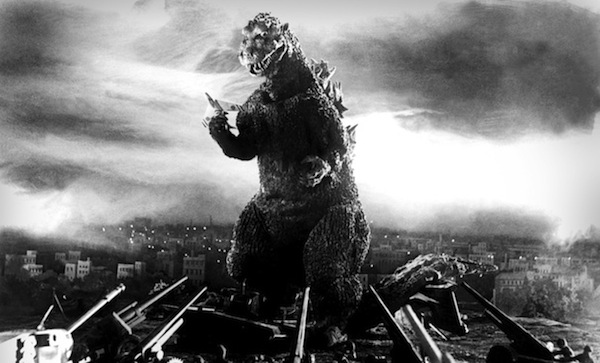
Godzilla; if faced with the choice of
seeing a film about the career struggles of a poorly shaven history professor
or a movie about a gigantic lizard from the bottom of the ocean, the decision might, for many viewers, be fairly simple. This is regrettable, because any flaws the
film contains (and there are a few) are small in contrast with the strength of
its different elements. The story has a shaggy-dog quality to it, one part road movie, one part self-realization saga: divorced
history professor Lewis Birch (Dunne) is traveling to Portland for a professional conference
with his two children, here beautifully deadpanned by Madeleine Martin and Devon Graye; he has
also just sent his 6,000-plus-page history text on a minor figure in the Lewis
and Clark Expedition to a diminutive, obscure academic publisher. Neither of
these attempts are destined to be successful; Birch broadcasts their impending
failure with his entire bearing: the stubble on his chin, his poor posture, his
messy apartment, even his dirty car, suggest things won’t work out so well for
him. The fact that he moonlights as a security guard indicates, in tandem with
all of the other clues, that the trip is a bit of a Hail Mary pass. What
distinguishes Dunne’s performance from those of other actors who have “gone
sloppy” for the sake of a role (see Michael Douglas in Wonder Boys, for a famous example) is that it hurts more. In a
swerve that shapes the story, Birch is forced to make a detour en route to the
conference to see his estranged parents, one receding into dementia, the other
fatally ill. The lack of love communicated between Birch and his father, played
beautifully by Stuart Margolin, is palpable; what radiates here is less alienation
than profound dislike. It comes out in small ways, such as their inability to
look fully at each other for long, or the vaguely deadened, aggravated sound in
Dunne’s voice when he speaks to his father. The two are left alone because Birch’s mother dies suddenly, before she speaks a line of dialogue; her absence
hangs over the rest of the film as if it might be the only thing that would
cement their relationship.

In After Hours and American Werewolf, as with subsequent roles, Dunne seemed more
rational than any of the players surrounding him. After Hours found his modest office worker wandering through the
streets of Soho at night, being toyed with and pursued by a host of brilliantly
portrayed characters, including a be-beehived Teri Garr, a sad, brooding,
obsessive John Heard, and a vengeful Catherine O’Hara. In American Werewolf, he still offered the voice of reason, even from
beyond death, as his soon-to-be-lupine friend couldn’t control the changes
occurring in his body and mind and Dunne’s gorily maimed corpse had to explain things
to him, in a sarcastic, do-I-really-have-to-explain-this tone. Here, similarly, Dunne’s grounding-plug instincts are put to the test
as he must follow his father into the woods, where he has gone with a group of
re-enactors of the Lewis and Clark expedition. Predictably, the re-enactors all
speak in period language, eschew modern convenience, act somewhat
freakishly—and predictably, hijinks ensue. But these hijinks don’t reach nearly
the pitch they could have—the film’s strength lies in the fact that neither
their absurdity nor Dunne’s sad state are entirely laughable. The director
chooses, instead, to come close to embracing them—we learn a lot about the
expedition through Birch and through his father’s band of cohorts, as the film
looks openly at the re-enactors, considering why they might have arrived at
this point. Perhaps the most touching of these performances comes from Cara
Buono, playing a potentially damaged soul-seeker, a million miles from her more strident recent role as Faye on Mad Men. Similarly, we come to
see Birch as less a middle-aged, down-at-heels academic than a confused son of
confused parents, striving to be more than marginally better at parenting
himself.

Dunne is the leading man of this film, and yet he is not the
leading man. The film offers too much competition, in every way, even beyond
the strengths of its other actors. The script, while it has its moments of pat
indie-com humor, is admirably restrained and intimate; even Birch’s daughter’s
indication of a stray pube on a bathroom floor, as she and Birch are both sitting there, turns into a
moment of closeness. The film’s visuals, as well, rise beyond the story: the
blue of a mountain range or the immensity of a fog-filled morning write their
own kind of script here, across the film’s plot, and they operate in a gorgeous
counterpoint with it. Dunne can’t compete with these elements, nor does he try
to. The strength of actors like this, those who operate on a fainter register than others,
is that they remind us of what we are like, rather than what we are told we might
be like, if we tried. The strength of Dunne’s performance here is that, despite the fact
that he’s arguably the center of the film, you’d never know it to look at him.

Max Winter is the Editor of Press Play.

On Louis C.K., “Fat,” “Not Fat,” and the Importance of Holding Hands

On Louis CK, “Fat,” “Not Fat,” and the Importance of Holding Hands

null          “You know what the meanest thing is you can say to a fat

girl? That ‘you’re not fat.’”

At 5’4” and about 167 pounds, according to my last Wii Fit
weigh-in, the digitally-rendered Mii version of myself and I are firmly within
the Orange Alert “overweight” category, according to both the federal
government and the fitness experts at Nintendo. Granted, those same Nintendo
engineers freaked out an entire generation of female high school athletes when
the Wii Fit made its U.S. debut in 2008, by telling them they too were
borderline obese. However, my Mii (which is automatically plumped up according
to my real-life gravitational pull) and I are not confusing muscle mass for
extra LB’s. The worn-through holes in the inner thighs of my Old Navy Rock
Stars are frustrating evidence enough for my pear-shaped, student-budget self.
And though I don’t aim to lose the two dozen or so pounds my now-antique video
game console recommends, primarily because I would simply look weird, it would
be nice to throw on a shirt and jeans without worrying if my navel is peeping
through the gap at the bottom of a button-down.

That being said, I’m not sure if I am seen by others as “fat.”
Several people (excepting grade-school bullies and a particular ex-boyfriend)
have specifically informed me that I am “not fat” Obviously the spectrum of
body shapes is highly variegated, but my place on it has long been difficult
for me to define. So, while watching the latest episode of Louie this past Monday, I found myself identifying more than I
initially expected with Vanessa, the above-quoted “fat girl,” especially during
the episode’s poignant closing, when Vanessa elegantly calls Louie out on his
well-meaning and perhaps unintentionally backhanded bullshit.  It was a rare televised blow struck on behalf
of the “fat,” the “not fat,” and everyone else who — like Louie and Vanessa
both, as they stroll into the sunset hand in hand, understanding each other
through touch as much as humor — runs around in potentially lovable and
routinely devalued skin. Rather than digressing into an oversimplified binary
of what is and is not considered attractive, the episode skillfully alludes to
vagaries of personhood that extend beyond weight. Being a fat girl in the
dating world sucks, Vanessa says, breaking a taboo of what she isn’t supposed
to say, but so does a range of characteristics that might mysteriously
reclassify someone as supposedly unworthy and unwanted.

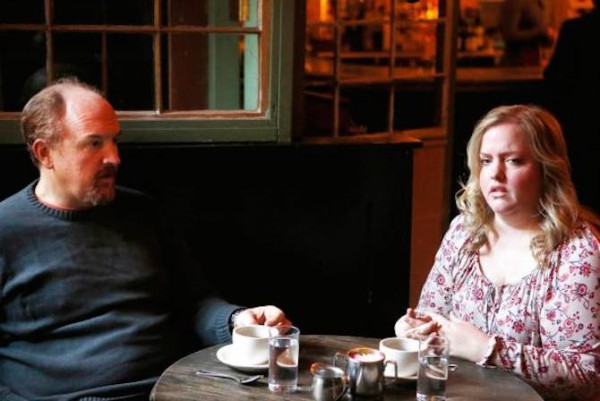
Vanessa is a sharp-witted server at the West Village comedy
club where Louie is a regular. After she catches Louie’s set one night, she
tells him she loves “seeing him up there,” though she “hates comedy.” (She
herself is clearly more talented than at least one of the male comedians shown
on stage; Louie observes her cracking up Ed Burns and hobnobbing with Dave
Attell.) Vanessa is honest, hilarious, attractive, and fat. She forthrightly
asks Louie out, but he begs off, saying that “he’s tired.” “Oh my God, are you
going to be okay?” she says, forehead wrinkling with over-concern. “You should
have said something before, I didn’t know you were tired.”

It’s also implied that Vanessa is better at her job than
employees like the pretty, slender young blonde named Sunshine, who shuts Louie
down when he clumsily asks, “Is that really your name?” Dealing with a crabby customer
waiting too long for his check, Vanessa says, “I’m not your waitress, but let’s
go find her and kick her ass.” If I didn’t want to be friends with this
fictional person from her first appearance, I definitely wanted to from that moment
onward.

Vanessa’s approach with Louie reverberated with my own so truly
that I cringed while watching her give him thousand-dollar hockey play-off
tickets because she’s busy on game night, and subsequently convince him to grab
a cup of coffee with her, with the implied caveat that it’s not exactly a date. (She still pumps her
fist in victory.) As far as spending time with another human being goes, Louie
and Vanessa’s not-date is enviably good. They obviously click on several
levels; later, Vanessa tells Louie that if someone were watching them from a
few yards away, they would see a great couple in action. Yet, throughout his
interactions with her, you can see the half-fictionalized Louie/Louis trying to
process conflicting input and impulses. Here’s a woman who is fun, clever,
generous to a fault, and who genuinely likes him, his gastronomical “bang bang”
adventures notwithstanding. Dave Attell seems to vouch for her. And Louie
himself is “nobody’s bargain,” to quote the Boss. So what’s the problem? We’re
all riders on this train, and there’s no mercy in this town, so why is what
Vanessa’s asking too much?

The answer might lie in Jim Norton’s one-word reaction when
he sees Vanessa at the club: “Yuck.” After all, what could be more disgusting
than a compelling woman who would accept Louie as he is, without forcing him to
conform to an artificially higher standard? Tellingly, Louie says nothing. That
moment foreshadows the conversation he and Vanessa have about calling dating
“trying” at the end of their vague hang-out session. “Try dating as a fat girl
in your early thirties,” she tells him, inviting his wan, conciliatory
contradiction, “You’re not…you’re…”

“Oh Louie,” she sighs, already disappointed before he says,
“You’re not fat.”

Thus begins Vanessa’s wrenchingly honest monologue about living
as a fat girl in New York City. “Why do you hate us so much?” she asks,
admitting that she’s choosing Louie to represent “all guys,” as she is
representing “all fat girls.” “What is it about the basics of human happiness
— you know, feeling attractive, feeling loved, having guys chase after us —
that is not in the cards for us?” This is something I have mulled over many
times, openly challenging my late mother’s installed voice that tells me, as
she did when I was an intense high school junior, I have “everything a man
could want,” a lingering and enigmatic phrase.

“If I was ‘very, really beautiful,’” which Louie calls
Vanessa post-“not fat,” “then you would have said ‘yes’ when I asked you out,” she
says, adding that the “high-caliber” guys flirt right back with her, because
they know their status and social power won’t be compromised. Meanwhile, the “regular”
guys, including the great Louis C.K., refuse to bat an eyelash at her, “because
they get scared that they should be with a girl like me. And why not?” What is
dangerous about being with a person like Vanessa, an overweight but confident grad
school nerd like myself, or any number of the amazing women I know, who have a
variety of bodies and somehow routinely become friends with men they like, instead of lovers? A lack of mutual
attraction is one thing, but repeatedly falling into the “she’s great, but…” category
causes a person to start asking questions more frequently. Meanwhile, the warm
embrace of gentle rejection that Louie describes as a special female talent at
the beginning of the show, and which he employs himself, becomes less and less
comforting.

And as the episode clarifies, it’s not a matter of sex. “I
didn’t ask if you ever fucked a fat girl,” Vanessa tells Louie. If she had
simply offered a quickie in the stock room, she says, he would have jumped at
it. Vanessa then lays it on the line, speaking for many: “I can get laid —
any woman who is willing can get laid. I don’t want that. I don’t even want a
husband or boyfriend. I just want to hold hands with a nice guy, and walk and
talk.” Louie finally takes her hand, and as they amble toward the horizon, he tells
a fat lady joke, the best possible ending to the show.

Part of the episode’s brilliance lies in exploring why that
simple, public display of intimacy can be so threatening, especially when the
person on the other end of the held hand is, according to the sliding scale
implemented by our societal hive brain, demonstratively imperfect. Sarah
Baker’s portrayal of Vanessa incisively tackles the interwoven, rat-king-like
nest of issues surrounding culturally-approved body images and actual desire,
but the genius in Louie’s writing is
that “fat” could, with minimal adjustment, be swapped out for a range of
alleged flaws. This is a specific story, but with threads that tie it to a
number of all-too-human experiences.

A few years ago, on what would become the most surprisingly
romantic evening of my three decades plus on Earth, a friend of mine suddenly
changed the game and opened my heart just by taking my hand as we walked down
the street to a party. Unfortunately, this took place in London, and more
unfortunately, said friend still lives and teaches in one of the world’s most
famous college towns outside of the UK’s bustling capital. An Atlantic-sized
ocean of time has now passed, stretching the endurance of perceived destiny and
slowly eroding whatever true feeling passed between us.

Since then I have had enough spontaneous and short-lived
adventures to keep a girl occupied, but maybe too often I’ve returned to the
thought of that night, and that feeling, especially because, as one of my male
friends said recently while discussing the vicissitudes of dating, “You do have people who like having sex with
you.” Sure. Most of them have been “good guys,” as Vanessa describes Louie. Sometimes
they’ve even bought me coffee or walked me to the subway the next morning.

But rarely have they held my hand.

Kathleen Brennan is a history PhD student at the CUNY Graduate Center. Occasionally she writes and edits non-academic things at her home in Brooklyn, NY.

RIP Gordon Willis, 1931–2014: The View from Dallas, Texas

RIP Gordon Willis, 1931–2014: The View from Dallas, Texas

"Manhattan"

Try to sympathize with me, for a second: Dallas, Texas was a
very difficult place to grow up during the 1980s. Put more specifically, it was
a difficult place to grow up if you were artistically minded or vulnerable or
smart, all of which I was. (I think.) Cars were important. Money was important.
Football was important. Status was important. Religion (as long as it was
Christian) was important. The intellectual life? Not highly valued.
Sensitivity? Not highly valued. Wit? Nix. Erudition? Nix. As I got older, all I
began to think of was escape: how
would I free myself from this environment? What could I do, as I grew up, to
ensure that I might live in a world that welcomed me, to a certain extent, or
at least tolerated me? As time passed, the answer became increasingly clear: get
to New York. And Gordon Willis had a great deal to do with that development.

I was nine when I first visited New York; I would be twelve
when I visited it again. I had heard plenty from my parents and their friends,
faculty at the local university, about the life of the city: the subways, the
homeless people, the smell of pretzels, the endless lines of numbered streets, the speed, the intense conversations, the immediacy.
But it was film that would truly draw me in, that would ultimately tell me New
York was my destination. Which films, exactly? Annie
Hall
and Manhattan. Again, I’ll
ask for your empathy. I was 12. Most kids at my age were hopelessly sarcastic;
I was hopelessly self-deprecating. The idea of a man making fun of himself and
gaining something like an artistic reputation for it was both beyond my
understanding and seemingly too good to be true. But even farther beyond my
understanding was the city itself. What world was it Allen and his characters
were living in? A world in which a man and a woman might sit, all night, at
the foot of a grand bridge, its contours shadow-lit as the sun came up. A
world in which a man and a woman might stand on a balcony and the beauty of the
skyline behind them might be just enough to eclipse the wit and awkwardness of
the dialogue rolling out of their mouths. A world in which a writer might
make several false starts to a novel as the camera soared over a Petri dish of
skyscrapers. A world in which the soft-focus intimacy of a bar scene, of a
group of well-heeled friends out for drinks, might be enough to make you forget
Allen’s character was dating a teenager. A world in which there was no trash
on the sidewalks, everyone seemed fairly clean and well-dressed, the sky was
always sunny, the stone of the New York apartment buildings was always a
brilliant white or a blood-dark red or a surprisingly vivid brown. A world
in which the unspoken message was, You
think you’re watching a story onscreen, and you think you’re only here for the
laughs, but in reality, I, the city, am the real story. You’re here for me.

Gordon Willis was responsible for this. I had
emotional reactions to other films Willis had a part in, as well, of course. The first time I saw The Godfather, despite all the
encouragement I had had to dislike it for its glorification of violence, I
would have to admit that its visual lushness was breathtaking—again making the
action on screen, the shootings, the conspiracies, the tests of manhood, the
pathological Mafia rituals, the inherent
sense of machismo, seem almost beside the point. When I saw Pennies from
Heaven
at age 11, I expected little from it besides a novel performance by Steve
Martin (was it going to be funny?); little did I know that, apart from being introduced to the surreal mind
of Dennis Potter, I would have a visual funhouse ride ahead of me: not only was
the intensity of the atmosphere he created—with its rainy nights, its dismal,
impoverished apartments, and its Hopper-like tableaux—thrilling to me, though I
didn’t have the vocabulary to explain why, My Eleven Year Old Self was both
scandalized and exhilarated by Christopher Walken’s dance number. The dimly lit
bar in which Walken tries to seduce Bernadette Peters with a wild tap-dance to
“Let’s Misbehave” was a magical place, not only because of its dim light but
because the light was not dim enough to conceal what seemed to My Eleven Year
Old Self like a waterfall of topless photos of women, a cascade of large,
fulsome female breasts. My Eleven Year Old Self’s jaw stayed open for a week. I
have only Willis to blame, or thank.

The fact is this: if you want real life, live it. If you
want psychodrama, create it. If you want to fall in love, go after it with an
open heart. If you want to be transported, though, if you want to feel that
you’re immersed thoroughly in an individual’s vision of a story, a world, and
the degree to which one might shape the other, go to the movies. Most
specifically, if you wish, Gordon Willis’s movies. He was a master of unearthly
transport who, without knowing it, changed my life. I moved to New York when I
was 18 and would live there, with few interruptions, for 25 years. And, regardless
of what I discovered—that New York is dirty, that not every conversation will
be backlit with golden light, that staying up all night is not as glorious as
it might seem—Willis’s vision stayed with me, and still stays with me.

Max Winter is the Editor of Press Play.

How I Came to Love Godzilla; or, A Chronicle of Heroes and Villains in the Gojira Series

How I Came to Love Godzilla; or, A Chronicle of Heroes and Villains in the Gojira Series

nullGodzilla was the megaton elephant in the room of my
marriage.

I married my husband because we liked all the same things. I
know some people talk up the idea that “opposites attract,” but since books and
film and food are about 90 percent of my life, it seemed like I had better
marry somebody with a brain as much like mine as I could get, without any
cloning involved. But there was this one small thing I thought we’d deal with
later, the way most couples deal with different opinions on having kids or how
to spend and save. That one small thing was Godzilla.

Chris was really into the Godzilla family of films, and I
would rather have eaten live worms than have watched these movies with
him.  Everyone has some idea about these
movies,, right? The big dopey-looking guy in the worn-out suit, stomping on
poorly-made miniatures and fighting some outlandish other monster suit, like
a giant lobster
or a weird
thing with a buzz saw in its chest
. I just didn’t see the point. And I
didn’t understand how someone as smart as my husband could enjoy these films so
much.

null

But then, worn down, I finally agreed to watch the original 1954
film, Godzilla, or Gojira. And I was impressed. Not only by the
film itself, which—thanks to the direction of Ishiro Honda, the now-classic score
by Akira Ifukube, and especially the masterful special effects direction of Eiji Tsuburaya—rose above
the traditional sci-fi/monster flick trappings to become a genuinely beautiful,
visually impressive, and deeply moving film. I was also impressed by the fact
that a film originally planned as a Japanese King
Kong
or The Beast from 20,000 Fathoms became so serious, moral, and
terrifying.

The monster in Toho’s film was more like the Beast than Kong—less humanized, more an unstoppable force. But unlike the Beast, Godzilla was
a sympathetic figure: his end is as tragic as his beginning. Of course, I
shouldn’t have been surprised that a movie about an atomic-age monster would be
imminently sadder and more impactful in the hands of the Japanese post-World
War II. And certainly the most striking images of the movie are as moving as
they are dreadful, reminders of what we did to Japan: a hospital full of burned
people; a group of children singing in the face of disaster; city block after
city block on fire; a group of sailors attacked with great ruthlessness at sea,
clearly influenced by the then-recent incident where a Japanese fishing boat
was caught in the fallout from the Bikini Atoll test.  It was a movie that resonated absolutely at
that time with audiences around the world—even with Americans, after a well-meaning
but clumsy American cut was mad
e that included American actor Raymond Burr
as a Tokyo reporter named Steve Martin.  

So after watching, and being blown away by the first film, I
was curious now to see the other films. Did they continue to preach the dangers
of nuclear warfare? It seemed they must, since that’s what Godzilla was—a nuclear horror—and yet, it
seemed unlikely that the films could sustain that same message, especially
through five decades.

And that is the
crux of what’s so interesting about the Gojira
series, despite its rather serious flaws. I have now watched all of the films,
some many times, and yes, I’ve come to love Godzilla, too. And not just because
I fell in love with the first film, which was the perfect film for its time,
and certainly the only one of the films that could be considered “great.” The
other Gojira movies, whether they are
great or terrible (and there is a wide range), are movies of their moment: that
is to say, rather than being about giant monsters and scrappy humans, these are
ultimately films about heroes and villains—and who they are says everything
about the time in which these movies were made. And by the way, that means that
sometimes the movies are deeply serious, and other times, deeply silly. As
Keith Phipps at the
Dissolve
pointed out recently, “Sometimes a monster is a metaphor for all
that’s troubling about a certain time and place; at other times, it’s just a
guy in a rubber suit smashing a bunch of miniatures.”

There can be no more fascinating series to watch, for a fan
of cultural and film history in the 20th century. Only the James
Bond series comes close, but even that is much more limited in its scope and
its necessarily static hero. The Gojira
films, on the othe handr, vary wildly in plot, character, tone, audience and
cinematography. Even the title character goes from hero to villain to symbol to
something in between.

The films can be roughly split into
three periods.
The classic or Showa series, spanning
1954-1975; the Heisei series, spanning 1984-1995; and the Millennium series,
spanning 1999-2004.  In the first part of
the classic series, the two films made in the fifties, doctors and scientists
are in ample supply as heroes, and the films wrestle with important subjects –
nature, and the monsters that supply it, are villains, though human-made.

null

In the sixties, the movies veer away
from the original message. As Jim Knipfel writes at Den
of Geek
: “Early in the franchise and often
under the guidance of director Ishiro Honda, when things just got really
fucking weird, when images straight out of Salvador Dali, Andre Breton, or Luis
Buñuel were inserted into the reality of the Toho universe, and none of the
human characters really batted much of an eye about it.” A distrust of
corporations went along with the weirdness: in King
Kong vs Godzilla
and Mothra vs. Godzilla,
it’s the corporate types who are trying to make money off of exploiting the
monsters – they become laughing stocks and goofy villains by trying to beat
nature at her own game, while the monsters become more sympathetic. In Ghidorah, the Three-Headed Monster,
a princess runs from assassins while possessed by the spirit of aliens – and
the series takes a turn for the wacked-out science-fiction quality which has become
a hallmark of the series ever since. The films seem less about nuclear war than
they do about the fear of invasion. In these later sixties films, Godzilla
becomes a world hero, saving the earth from alien invaders and monsters from
other planets.

null

By the 1970s, the films seem to be largely
for and about children – with the powerful exception of Godzilla vs. Hedorah (more on that in a minute.) Bullies and scary
criminals are villains, and absentee parents and latchkey kids abound. Godzilla
suddenly has ‘friends,’ and the monsters are become cute, hi-fiving,
kid-helping pro-wrestlers of sorts. In some of the films, the monsters live
together on an island (like
Monster Island)
and come to the rescue when needed. If the kids aren’t the heroes, they’re
still central to the story. These movies are pretty much the worst of the
series, often liberally making use of stock footage from past films and
featuring monsters so cartoonish they’re slapstick.

(Godzilla vs Hedorah,
of course, from 1971, is an exception that is also very much of its time – it’s
a strange, bleak look at the environmental havoc caused by pollution, which
comes to life in the form of a giant smog monster. It’s a serious film, despite
its odd psychedelic dance sequences, one that shows people and animals literally
being burned alive by Hedorah.)

null

The Heisei series of the eighties and
nineties is more uniform in tone, though the stories vary wildly. From a
rip-off of Indiana Jones that turns into an environmental message where the real bad guys are the corporation pushing
for deforestation; to a recurring character named Miki who has a psychic
connection with Godzilla, to a mutant Godzilla clone from space; these films
usually hold up humans as the bad guys, while another group of humans works
with Godzilla or other monsters to save the planet. During the eighties,
Godzilla would become a villain once again – only to morph into a hero by the
mid-nineties. I should also point out that at this point in the series,
Godzilla once more faces some of his classic foes, in an attempt to revive the
popularity of the series. Most of these films were not released in American
theaters, including
Godzilla vs. King Ghidorah,
a fascinating film that features a pre-atomic Godzilla-saurus ravaging American
troops and saving Japanese soldiers during WWII. (It also features
time-traveling humans from the future called Futurians, tiny adorable Ghidorah
babies, and a Terminator-like android named M-11.)

null

The Millennium series is the most
unwatchable group of Godzilla films (in my opinion), despite a higher production budget. The
stories are unmemorable, and the heroes are usually military characters,
admirable and steel-jawed, given little to do or say other than climb into a
giant robot or shoot “mazers.” Godzilla is, at least, fierce and very much the
harbinger of real, deeply felt terror. A dark and modern tone fills the films –
even the palette has shifted from the bright colors of the 80s and 90s films to
a dark mix of steely greens and grays. An odd quirk of this series: each one is
pitched as a separate sequel to the original 1954 Godzilla (with one exception
centering on Mechagodzilla.) The movies are all pretty grim, and some seem
close to the spirit of the original film: for instance, in Godzilla,
Mothra, and King Ghidorah, Giant Monsters All Out Attack
, Godzilla is an
ancient beast from hell who’s formed of the tormented souls of the dead of
World War II.

Having watched, many times, this
evolution of culture reflected in the evolution of the Gojira films, I (and of course, my husband) are fascinated to see
what the
American
film
(I’m not even bothering to count the
1998 garbage fest) will be. It certainly promises to be dark, serious,
well-acted, and – perhaps in the troubled, pessimistic spirit of our times, Godzilla
will be the metaphor, more than the guy in the suit.

Amber Sparks’ short stories have been widely published in journals and anthologies, including New York Tyrant, Unsaid, Gargoyle, Barrelhouse, and The Collagist. Her chapbook, A Long Dark Sleep: Stories for the Next World was included in the chapbook collection Shut Up/Look Pretty from Tiny Hardcore Press, and her first full-length story collection, May We Shed These Human Bodies, was published in 2012 by Curbside Splendor. You can find her at ambernoellesparks.com or follow her on Twitter @ambernoelle.