A New Column by Arielle Bernstein: Without a Caveat: Can Girls Look Past GoldieBlox?

A New Column by Arielle Bernstein: Without a Caveat: Can Girls Look Past GoldieBlox?

null

Consumer culture has always been about the illusion of
options. GoldieBlox, a toy that encourages girls to be engineers, both plays off
of stereotypes about female needs and yearnings (the need for a story, the
requirement of pink packaging) while also attempting to undercut current pink
princess culture, which, as I mentioned in my previous column, remains the
dominant image of “femininity” in America. In a previous ad for
GoldieBlox, we could see little girls seated in front of a television, bored out of
their skulls by ads which depicted little girls playing princess. Together they
would develop a miraculous contraption that would turn off the TV, while a parody version
of the Beastie Boys’ song “Girls” played in the background.

The ad garnered considerable attention, especially in
light of the discussion on whether or not GoldieBlox’s version of “Girls” should
be considered fair use (the makers of GoldieBlox have subsequently agreed to redo the ad). Less consideration has been given to the parody itself
and the fact that “girl power” is so often framed by pitting girls against girls, rather than creating an
environment where little girls and boys are encouraged to choose toys that
appeal to them. 

The problem with GoldieBlox’s ad was the same as in Pink’s song and
music video, “Stupid Girls,” where a little girl is encouraged to choose
between a doll and a football. After Pink showcases various dumb girl
stereotypes—the valley girl carrying her puppy in her purse, the bimbo who
wants to be loved, the skinny blonde who refuses to eat- our little tomboy
heroine makes the “right” choice and goes for the football. GoldiBlox
encourages a similarly reductive attitude towards gender, with little girls’ sing-song
voices hating on dolls: “…we
would like to use our brains. We
are all more than princess maids.” As if girls don’t use their brains when
playing dress up or with dolls. As if the very accoutrements of girlhood render
girls deaf, blind, and dumb.

Anti-princess culture is often more hostile towards girls
than princess culture itself is. It enforces negative stereotypes about
femininity by asserting that the only way girls can be smart is to reject traditionally
feminine things. It’s wonderful when girls are strongly encouraged to excel in
a range of different fields, but I’d love to see a world that also lauds men
who pursue a career as a nurse or teacher. For all the furious antipathy
towards the pink aisle it is much easier to be a tomboy in our culture than to
be a little boy that likes girlie things. One of the main reasons for this is the
fact that we still view traditionally feminine things as less important than
male ones. A girl who likes aggressive sports and toys that feature weapons is
likely to be praised for her tenacity, while a boy who likes to play dress up
and play with dolls is still seen as doing something that is fundamentally
taboo. This is clearly seen in the slew of cases where little boys have faced
repeated harassment at school for wanting to wear nail polish or wear dresses.
But we don’t have movements encouraging boys to explore their “feminine side”
precisely because we don’t view doing so as meaningful or important.

Ads like the one for GoldieBlox reinforce the idea that
girlhood is an obstacle to success, rather than simply encouraging girls to
pursue what they want and love who they are. Phrases like “more than just a
princess” do little to counter pink culture but do a lot to harm girls. By consistently
presenting girlie-girl culture as stupid, airheaded and catty, we are
effectively reducing the chance that girls who do like dolls and princesses might
see themselves as capable and competent just as they are.

In its second season, Mad Men
famously played off the idea that women had only two options for what they
could aspire to be in life: a Jackie or a Marilyn.  Today we see that false and limited dichotomy
as completely sexist, but we are still offering girls and young women shallow
and limited options: the pretty princess or the tomboy warrior, the playboy
bunny or the gaming geek. Let’s not confuse these new cookie cutter models of
female identity with genuine empowerment. True freedom will come when we don’t
feel the need to continuously remind girls that they are “more than just a
princess.” The only word that has ever stuck with this brand of messaging is
the word just. Girls need models of empowerment that don’t consistently
emphasize that their burden will be to forever fight against a world that sees
them as meek and incompetent. It’s a sad lesson, and one which perpetuates a
view in which girls will never be seen as brave or strong without a caveat.

Of course, at its root, all advertising wants to us to get
rid of our old toys and replace them with new ones, at least until we get bored
of old patterns or eventually grow up. Today, we need toys that challenge
children to explore the world around them, rather than remind them that the
gender they are born into will determine their entire path, whether they like
it or not.

Arielle Bernstein is
a writer living in Washington, DC. She teaches writing at American
University and also freelances. Her work has been published in
The
Millions, The Rumpus, St. Petersburg Review and The Ilanot Review. She
has been listed three times as a finalist in
Glimmer Train short story
contests
. She is currently writing her first book. She is Associate
Book Reviews Editor at
The Nervous Breakdown.

Craig D. Lindsey Recalls His Correspondence with James Wolcott

Craig D. Lindsey Recalls His Correspondence with James Wolcott

null

I think it’s about time I told you about my association with
James Wolcott.

It
started in early 1997. I was going to college back in Houston, and I was a
major Wolcott-head. Throughout high school and college, I’d venture to the
various libraries around town to read and/or photocopy articles he did for the
Village Voice, New York, Harper’s, Esquire, Vogue, etc. The previous Christmas,
I asked my mother for a year-long subscription to The New Yorker, where he was
doing duty as a TV/media critic at the time. I started getting the magazine at
my place of residence, but I started to sense something was amiss. I wasn’t
seeing his byline much.

It
wasn’t until I was in line at a Blockbuster Video (R.I.P., by the way) and saw
his name on the cover of Vanity Fair that I realized that he had gone back to the
magazine, where he did the “Mixed Media” column all through the ‘80s and early
‘90s —that is, until the magazine’s famed editor Tina Brown announced in 1992 that
she would be presiding over The New Yorker, taking several VF writers with her,
including Wolcott.
I was
incensed that Wolcott moved his byline back to Vanity Fair. Now, what the hell was I gonna do with this damn New Yorker? The only reason I read the magazine
was to see his latest pop-cultural dispatches. I was so livid, I actually wrote
to Wolcott, via the VF offices, where I said how disappointed I was that he
left The New Yorker. I also requested a free subscription to Vanity Fair for my
troubles. (Man, I was ballsy—or nuts—back then.)
I
stated the case that I was a major fan of the work and was studying to be a
journalist and critic much like himself. Considering that he once famously
wrote to the late Norman Mailer, informing the author of how much he inspired
him (which resulted in Mailer sending him a letter of recommendation that
Wolcott used to get into the door at the Voice), I figured he’d see my
intentions were positive. I also enclosed some articles I wrote for some free
publications to show him that I wasn’t a nutjob pissed off that he changed jobs
without my knowledge.
I sent
the letter, virtually oblivious to the fact that I sent what could be seen as
deranged hate mail to one of my heroes. Not too long after that, one Saturday
morning, I got a letter in the mail from the one and only Wolcott. It started
off as so:
“Dear Craig D. Lindsey,
I was reluctant to open your envelope because the big
writing on it made me nervous; as an amateur handwriting expert, I pride myself
on my ability to spot what is known in the trade as a ‘crank,’ ‘nutcase,’ or
even ‘a troubled loner.’ My suspicion turned out to be well-founded.”
He then
went on to say I couldn’t get a free subscription to Vanity Fair and I should
give The New Yorker another chance. (I believe he was being sarcastic about
that since he gave a few writers less-than-flattering nicknames and referred to
the magazine as “quality infotainment.”) He also said he liked the clips I sent
him, and I should send him some more. Hell, you don’t have to tell me twice.
I sent
him another letter filled with clips, and he responded with a letter that
included his New York address. (Guess he didn’t think I was as nutcasey as he
initially assumed.) I could send my correspondence directly to him now. For the
following five years—we slowed down on the letter-writing after 9/11—Wolcott and I would send missives back and forth, each filled with various
musings on pop culture and the world around us. Sure, we could’ve emailed each
other (he did hip me to his email address at one point), but for me—and I
don’t know how he felt about it—receiving letters from him felt like I was
getting exclusive, privileged content. While the rest of the world was reading
Wolcott on a monthly basis over at Vanity Fair, I was getting these personal
pearls straight from the man himself. I even got to meet Wolcott during this
time when I flew to New York for a movie press junket. We ventured to a diner
and shared a gargantuan slice of some dessert as he delighted me with stories
of his journalistic travels.
So,
what prompted this trip down memory lane? Well, Wolcott’s latest book, Critical Mass: Four Decades of Essays,
Reviews, Hand Grenades and Hurrahs
(Doubleday) has just been released,
filled with many of the pieces that made me want to get in this damn business
in the first place. What I love most about the collection (which has been a
long time coming; when his debut novel, The
Catsitters
, came out in 2001, there was talk he’d follow it up with a
collection of pieces called Personal
Attacks
) is that it shows how, when it comes to the various aspects of
popular culture, Wolcott is well-versed in practically everything.
Wolcott
may have been branded as a snob once or twice during his 40 years or so
of writing, as he racked up various enemies thanks to the printed
pimp-slappings he often gave his subjects, but the man’s pop-cultural tastes
are fascinatingly versatile. Anyone who read his 2011 memoir Lucking Out knows that dude can enjoy
both a lovely evening at the ballet and a skanky night out at CBGB with the
same wide-eyed enthusiasm. Wolcott can write about books, TV, movies, punk rock
and stand-up comedians, all with the same sharp, savvy, florid analysis, for
they are all connected. For him, a well-done episode of SCTV merits the exact kind of sophisticated kudos as a Brian De
Palma movie or a Kingsley Amis novel.
Throughout
his travels, writing for various publications, Wolcott subconsciously preached a
sense of open-mindedness. It’s OK if you love or hate something, but goddammit,
give it a chance first, especially if it’s not in your comfort zone, and it just
might be something that surprisingly suits your tastes. His writings certainly
taught me not to be instantly dismissive as a writer and a critic. You can find
critical analysis in anything, and make it quite entertaining for the reader as
well. I once remember giggling my head off while reading a piece he
wrote on Baywatch and a Sports Illustrated swimsuit-issue TV
special – IN THE NEW YORKER!
It amused me to see the articles he
compiled for the book, especially since I have photocopies of many of them in a
box in my bedroom closet. (Technically, I’ve been reading this book for years before
it came out.) It’s interesting to see what he chose
for each of the book’s five sections. For example, in the “Movies” section, he includes several
reviews he did back when he was the film critic for Texas Monthly in the ‘80s,
which became a fertile ground for him to strip down the blockbusters of that
era. As a critic, he was able to recognize the rampant homoeroticism in Top Gun, the sadistic violence in the second Indiana Jones movie
and the pitiful display of merchandise that was Return of the Jedi. It wasn’t a completely bad time—he caught
flashes of Bill Murray’s comic genius when he saw Ghostbusters.
Unfortunately,
he didn’t include any of those reviews. He also didn’t include the assessments
of Madonna, Bruce Springsteen and Janet Jackson for Vanity Fair in the 80s in
the “Pop, Punk, Rock” section, which includes many essays on the myriad punk/underground
rockers he saw and admired in his younger days. A lot of his TV pieces I adored
– he did a 1993 New Yorker review of Def
Comedy Jam
that reminded me how coonish that show could be – aren’t around.
Also missing is that 1983 New York review of Late Night with David Letterman that Letterman himself publicly
said felt like endless blows to the body. (“Dead Letter” was the headline.)
In the intro to the book, Wolcott wrote
that he omitted including pieces for various reasons: too dated, too arcane,
too mean. (He purposefully left out his notorious 1997 Vanity Fair takedown of mentor
Pauline Kael and the critics she’s influenced—the “Paulettes,” he dubbed them—since it caused a regrettable rift between Kael and him that continued right up
to her 2001 death.) But that’s the funny thing about Critical Mass: even though it clocks in at 512 pages, it only scratches
the surface. Wolcott has written so much throughout the years, enough to merit
another collection. And if the day ever comes for Wolcott to compile another
tome, perhaps his old penpal could be of some archival service.

Craig D. Lindsey used to be somebody. Now, he’s a freelancer. You can read all his latest articles over at his blog. He also does a podcast called Muhf***as I Know.

By the way, if Helen Mirren or Christina Hendricks is reading this, get at me, ladies!

In the Future We Will Have Less of Everything: On HOW I LIVE NOW and Its Predecessors

In the Future We Will Have Less of Everything: On HOW I LIVE NOW and Its Predecessors

null

Has there ever been a film about the future that advocated in favor of progress, rather than against it? Metropolis, A Clockwork Orange, Blade Runner, the Mad Max series, AI, and then onwards to such recent films as Never Let Me Go, The Hunger Games, and, most recently, How I Live Now, do not offer a bright outlook for the results of our ostensible progress, in technology, government, or in any form of broader social structure. The days of the Buck Rogers or Flash Gordon visions of the future, in which everything is easier, happier, better, or faster, are long over–increasingly, films purporting to be about our society’s future either involve an apocalypse which has left devastation behind it or predict one which may well occur during the film itself. If there is no apocalypse, then something else has been taken away: consider Children of Men, in which even women’s fertility has been taken away. The theme, then, seems to continually be one of deprivation, or a sense that something has been removed which was once present. This could occur for a number of reasons, ranging from the sense, on a given director’s part, that to predict the future carries with it a moral imperative, to the more basic sense, frightening as it might sound, that a happy future is a weak basis for a story, that unless something bad is coming, characters have nothing against which to gird themselves.

How I Live Now, the latest film in this trend, starts interestingly, suggesting that it might just be a film about the future in which the future itself doesn’t play a lead role—and, despite odds, it is successful in this attempt. Saoirse Ronan’s Daisy, resplendent in dark eyeshadow, dyed hair, and a host of voices whispering encouragements and admonishments in her head, charges through an airport, punk-ish music blasting on her headphones, to meet her cousin; she will be staying with her aunt in the English countryside because, as she views it, her father (her mother is deceased) would rather not have her around. From the beginning, relationships are foregrounded, even as little visual cues that we are in the future (such as retina identification devices at the airport) continue to pop up. This continues as the movie progresses; Daisy can’t stand her cousins, dismissing them as naive and vaguely obnoxious. There is even a love interest: Eddie, portrayed with silent charm here by George MacKay. Eddie talks to animals and seems to have a knack for accessing Daisy; he wins her over when he’s able to make an entire herd of cows and bulls move out of her way. Daisy gradually loses her punk/goth affectations, relaxes, begins to enjoy herself, make conversation: the film shows signs of being a heartwarming tale of an angry girl’s growing-up, with a winning mood of immediacy.

Then, the future enters in more aggressively. London is bombed, an attack claimed by 15 different terrorist groups. Daisy’s aunt, played briefly but memorably by Anna Chancellor, is away on a business trip when it happens; she is always away, in fact, leaving the children on their own, and at the very most she is around late in the evening and early in the morning. This core loneliness at the heart of the childrens’ lives—Eddie, being the oldest, serves as a surrogate parent, but he is, after all, only a child himself, and so he can’t provide much nurture for his younger siblings—is only the tip of the iceberg. The London bombing serves as a harbinger of what the rest of the film sets out to prove, and what many films that attempt to forecast what lies ahead tell us, as well: that the future we have to look forward to, as a race, is dark, and that self-reliance will be important because, to put it simply, there will be less of everything. Fewer people, less food, fewer landforms (after bombing has destroyed them), fewer cities, fewer options; as daily processes become more efficient, this simplification itself will come to resemble a form of deprivation. 

Slight statement though this might be, How I Live Now ends on a more optimistic note than it could have ended on, which is significant; after Daisy and her very young cousin Piper (Harley Bird) take a Homeric-cum-Arthurian-cum-Grimm’s Fairy Tale-esque march through deep woods in search of the others, from whom they have been separated (by rough, aggressive soldiers, seemingly separating them for their own good, as there is an invasion in progress), there is a homecoming, of sorts, but it isn’t without substantial loss along the way. Ultimately, the title says it all. In the film’s last moments, we see a very simple tableau: humans, caring for each other, taking care of themselves. And what are they surrounded by? A forest in the film, but nothingness, in another sense. So the future is a metaphor? Not entirely: the message of the film, and the films that have come before it, might well be more literal than this, a suggestion that more and more may be taken away from us as the decades pass, in obvious and not-so-obvious ways, until we are left, finally, staring at ourselves. There may well be any number of slap-happy movies about our future in the depths of film history–Brazil, for example, was gleeful, but in a highly mordant way, or one could always, in a pinch, try Woody Allen’s Sleeper, overcast as it was by its director’s inherent neurosis–but the films which have made the most cultural impact have, at their heart, substantial melancholy: one part regret, one part fear, one part uninventiveness , one part guilt. How I Live Now, in its own quiet way, works beautifully and admirably against this trend, pervasive as its gloom might be, in suggesting that the sanctity of human relationships can create a barrier between the self and the crumbling world.

Max Winter is the Editor of Press Play.

SUNLIGHT JR. and American Film’s Misunderstanding of Poverty

SUNLIGHT JR. and American Film’s Misunderstanding of Poverty

null

American filmmakers don’t understand the poor. From Charlie Chaplin’s Tramp films on through Push: Based on the Novel by Sapphire, the portrayal of impoverished people in films has settled into a comfortable group of cliches: living rooms crowded with children and toys. Bad teeth. Extreme lighting: either too dark or too bright. Bad posture: usually slouched. Dilapidated cars. Disgruntled employees, merciless employers. Bad pop music. Drug habits, usually debilitating. Bad luck, often contributing towards plot developments. Poor judgment in sexual, financial, and interpersonal matters. Terrible diet, often consisting of junk food. Crumbling housing, run-down neighborhoods. A taste for petty crime. Ragged clothes. Lack of personal upkeep. These are but some of the guideposts by which we, as viewers, are misled about the nature and the pervasiveness of poverty in America, or the different forms it might take. (Hey, why doesn’t someone make a film about poor graduate students, or, better yet, adjunct professors?) Sadly, Laurie Collyer’s Sunlight Jr. does little to reverse these cliches. Muzzling gifted actors with a middling script, it plunges into a sadness so deep but also so shallow that, despite the despair at the core of the storyline, about a man and a woman facing one set of closing doors after another in the strip mall territory of Florida, the film at times seems near-comic.

Matt Dillon, as Richie, and Naomi Watts, as Melissa, are both actors with a tremendous amount of control, though this manifests itself differently in each case. Films such as Drugstore Cowboy, Factotum, or even Beautiful Girls show Dillon’s comfort with his body and his size, whether he’s playing a drug addict, a drunk, or a washed-up high school hunk–here, Dillon plays a man in a wheelchair, and he looks as if he’s been in it for years. And, likewise, anyone who watched Naomi Watts in her best performance, the budding actress in Mulholland Dr., couldn’t argue that she is willing to take the risks necessary to embody an emotion fully, as in her near-orgasmic eruption during a movie audition. And yet, natural as both these talents might be, the words Dillon and Watts say in this film simply don’t fall comfortably out of their mouths, giving it more the feeling of an educational filmstrip than that of a story or a narrative.

Or perhaps it’s not so much the words as the structure in which they’re placed. Very early in the film, punishingly early, when Melissa shows up for work at the convenience store which gives the movie its name, she asks her boss, all-too-brightly, if he’s found out about the store’s college program, tapping us on the forehead with a hint that she’s ambitious. The moment doesn’t float. Later, once she and Richie have been evicted from the motel where they’ve shacked up, and she’s staying with her mother (who has a living room full of adopted children), she points at a hot plate and asks one of the kids, “You know what’s that?” Does anyone actually talk like this? And who would make conversation about a hot plate, if not to bring attention to it as a symbol of poverty? Watts fares more poorly than Dillon here; he gets through his lines by achieving a state of depressed relaxation. When he announces, early in the film, that he’s going to repair a piece of electronic equipment, and bring some money in, he almost mumbles it, which makes this exposition, this introduction of the concept of “scraping by,” a smidgen more believable.

The film takes us from one depressing locale to another. It starts in an intensely dark motel room which stays dark throughout, its bedside lamps dim, its shades always drawn. The bar where Richie goes when Melissa is at work is similarly dim, and nearly empty. The cheaply carpeted home where Melissa’s mother lives and drinks excessively isn’t necessarily dark, but it’s ratty and, as Melissa discovers, infested with bed bugs. One would think the palm trees native to Florida would provide some small uplift here–but instead they tower above the film, as if they might fall on it at any moment. The interior of the Planned Parenthood clinic where Melissa goes when she find out she’s pregnant is, as one might expect, lit by bright flourescent lights. The only seemingly hopeful moment occurs in a daydream, when Richie is (surprise, surprise) being told by a government worker there are few work options for him; he imagines that he gets up, walks out of the office, and out into a gloriously bright day that offers us the first ray of sunshine we’ve seen yet in the film.

As one might suspect, things don’t go well for these downtrodden figures–how could they? The film often reads as if Collyer took Nickel and Dimed, the Barbara Ehrenrich book about the working poor which gave the film its inspiration, a bit too literally, bleeding the element of surprise or unpredictability out of her subject matter, presenting viewers with a tale which is resolved before it has begun. And yet, as America’s economy declines, this subject matter may become increasingly common–and those who wish to render it will need to find a new way to approach it.

Max Winter is the Editor of Press Play.

A NEW COLUMN BY ARIELLE BERNSTEIN: The Princess, The Queen and The Warrior: Part 1: Teeth and Swagger.

A NEW COLUMN BY ARIELLE BERNSTEIN: The Princess, The Queen and The Warrior

PRESS PLAY HAS A NEW COLUMN.

Having been thrilled and impressed by Arielle Bernstein’s previous essays for this publication, on topics ranging from the cinematography of Breaking Bad to Melissa McCarthy to Lana Del Rey, we are excited to announce that she will be beginning an eponymous column here at Press Play, in which she will continue to surprise and awaken readers with insightful, poetically well-composed analyses of cultural and artistic issues. Please welcome–and read–our newest columnist!

nullIn
Pitchfork’s review of Janelle Monáe’s latest album, Jayson Greene describes Monáe
as an auteur. He argues that “her music
has always been about the exhilaration coming from the sensation of total
control.” When I saw Monáe perform live
recently, I was struck by the same sense of her intensity: Monáe is a tiny
wide-eyed powerhouse, strong and savvy. While artists like Nicki Minaj and
Taylor Swift enjoy playing the princess, Monáe emerged on the music scene
completely suited up, and her first single off her new album, The Electric Lady, is regal, rather than
docile. “QUEEN” is female power all grown up.

The image of the princess remains a symbol of idealized American
female identity. From the oft-lambasted pink toy aisle of the department store,
to princess-themed weddings and sweet 16 parties, much of female coming-of-age
is still centered around the narrative of a young maiden finding her prince.
Certainly the princess myth has been modernized in new stories. Today,
princesses are often smart, capable and strong. Sometimes the princess wants a
career. Sometimes she rejects marriage. Sometimes she is the one who rescues
her prince. Despite these outward changes, the princess figure persists because
it resonates with everything our culture expects, loves and hates about
girlhood. What defines a princess is not her docile nature, but the fact that
her very position is one of subordination. She may have a voice, but she is a
child, under the rule of her parents. She is in a state of perpetual
adolescence. Warrior princesses like Brave’s Merida, or
Mulan, appeal to us because they are adolescents on the verge of realizing
their power.  Princess Jasmine may claim she is not a prize to be won all
she wants, just as Ariel can flex her fins at the notion of discovering a world
of her own: In reality, both are still under the lock and key of a father who
wants to protect them.

Queens, in contrast, are sinister figures in our culture, much
more threatening than the cute female warrior types that our culture has grown
accustomed to. We are used to Buffy and Hit-Girl, badass warriors who are often
accompanied by a male guardian to ease their transition to adulthood. Likewise,
we laud the lone wolf mother narrative: Ellen Ripley and Beatrix Kiddo are seen
as strong and powerful, while still staunchly feminine, as their primary
objective is about protecting their young.

Queens, in contrast,
protect nothing but their personal influence. The queen in fairy tales is
fierce and autocratic, heartless and self absorbed. She is a threat to the
princess and is also often presented as a threat to the kingdom. She is feared
rather than beloved. While Snow
White has been given various reboots that render her less passive, the evil
queen remains an arch nemesis. Similarly, Cinderella’s various iterations are
more outspoken, while her stepmother remains a brute, uncaring force. In
Disney’s Tangled, we are given a
fiery Rapunzel with another controlling, domineering and repulsive version of
mom. In other words, for every Ripley that we praise for being assertive and
adventurous, there remains a queen alien that the princess must destroy.

This hero narrative is substantially different from the male
hero’s journey. Young Luke Skywalker has many father figures that guide him on
his journey. The male rise to power is perceived as multifaceted. The male hero
is allowed the agency to choose to become a good, benevolent leader, or a
selfish one. The female hero is only allowed tempered bits of power—she gets to
flex her little muscles a bit before finding love, but we don’t get to see her
exert her influence on the throne.

In today’s culture, power is often synonymous with dominance. We
may gently chide Don’s cheating ways, but we are poised to identify and
sympathize with his desire for power even more so than redemption.
 Masculine displays of power and dominance are seen as a force, which is
as creative as it is destructive. We rally behind Don Draper, Walter White, and
Jax from Sons of Anarchy. Even when they do terrible things, we are fascinated by their
decisions and by their gumption. Women, unless they are leaving an abuser or
protecting their children, are simply not given the latitude to commit these sorts
of actions without consequence. Indeed, women who rupture male narratives of
power are seen as threatening. Characters like Breaking Bad’s Skyler White and Mad
Men
’s Betty Draper are seen as far less sympathetic than their spouses.

This column will be centered on the question of female agency,
which I see as being fundamentally tied to positive images of women in power,
rather than princesses on the cusp of coming-of-age. Most visions of queens in
our culture today buy into male ideas and ideals of power: The dominatrix is a
popular figure in music videos for this very reason. We see Britney whip a
pretty young collared thing in her video for “Work Bitch,” just as we see Queen
Bee Beyonce tell us to bow down. But is the power displayed in these videos
substantive or reductive? In this column I’ll consider a range of media—movies,
TV shows, music videos, video games—in order to consider how power is
constructed in regards to gender, and whether power is a collaborative force,
or if it is always necessarily combative, a world of swagger and bared teeth.

Arielle Bernstein is
a writer living in Washington, DC. She teaches writing at American
University and also freelances. Her work has been published in
The
Millions, The Rumpus, St. Petersburg Review and The Ilanot Review. She
has been listed three times as a finalist in
Glimmer Train short story
contests
. She is currently writing her first book. She is Associate
Book Reviews Editor at
The Nervous Breakdown.

12 YEARS A SLAVE: Glory Without Redemption

12 YEARS A SLAVE: Glory Without Redemption

null


12 Years a Slave has arrived in
theatres already barnacled with expectations. In its festival appearances, it
met with critical acclaim, and Oscar odds-makers had already slated it for various
awards. Viewers buy their tickets, sit down in their seats, wait for the lights
to dim, and expect great things. But viewers also have other, deeper
expectations. The dominant cinematic story of slavery has been the story of
white redemption and white heroism against an unfortunate institution
perpetuated only by the most sadistic of bad white men. Even today, it is
exceedingly rare to find a story about slavery that doesn’t emphasize how
good-hearted white people can be and how inherently just, good, and equal
America is. In American movies, black suffering redeems white characters and
affirms white nobility. 

12 Years
a Slave

tells a different story, but because the familiar narrative has conditioned us
to view “slave movies” as a genre, we — especially white viewers — may find our
expectations unsettled. This unsettling is one of the great virtues of the
film.

This is a movie about slavery in the United
States from 1841 to 1853. We watch such a movie anticipating not entertainment
but enrichment, enlightenment even, though only after emotional hardship. We
expect to see terrible deeds committed by white men with Southern accents and
whips, we expect to see downtrodden, suffering black people. We expect
feelings. This affective and narrative pattern dates back at least to Uncle
Tom’s Cabin
, published a year before Solomon Northup, the movie’s
protagonist, was returned to freedom. The pattern was reiterated through
various slave narratives, where it usually served the specific and necessary
purposes of abolitionist propaganda: to educate white people, to help them see
and feel the horror of slavery, to teach them that slaves and escaped slaves
have emotions and thoughts, that such people can and should be empathized with,
that laws should be changed and slavery ended.

Solomon Northup contributed to this literature
with his own memoir, Twelve Years a Slave, one which was especially
detailed and forthright because, unlike many other ex-slaves (relatively few of
whom were able to escape from the deep south, as he did), Northup’s status as a
free man was well-established in court, so he had little to fear from his
former owners.

The average contemporary American viewer — and
particularly, like me, a white viewer — likely has a head full of ideas and
images of slavery not so much from primary sources, but elsewhere: various
novels, educational documentaries, television movies. Even Northup’s story,
which waned in popularity after the Civil War, was adapted for PBS’s American
Playhouse
in 1984 by director Gordon Parks as Solomon Northup’s Odyssey,
a staid, conventional, lugubrious adaptation. (Parks might have made a great
movie from the material, having directed not just Shaft but also an occasionally powerful biopic of Leadbelly. He was
not, though, able to break out of the standard formula for TV movies about
historical characters, and the performances often seem forced and amateur.)

Despite the images in our heads, though, there
have been few feature films that have sought to depict the everyday realities
and brutalities of slave life in any extended way, and most have been, at best,
problematic. The most viscerally affecting slavery films have both in some
manner been based in a tradition of gothicism and spectacle: Mandingo
(1975) and Django Unchained (2012). These films dig deep into the
sordidness and violence of the milieu, highlighting the sadistic psychopathy
bred by the system and, in the case of Mandingo especially, the flows of
psychosexual power. More than representations of any actual history, both are
in dialogue with the history of slavery’s representation on screen, and they
draw their effect not only from what they show but how they evoke, parody,
critique, and enact the cinematic past.

Too often, Hollywood has been unable to escape
the patterns established with The Birth of a Nation (the first movie to
be shown in the White House) and Gone with the Wind, those two great
gravitational forces that warped the depiction of race and slavery in cinema
for decades. “For many years,” Robin Wood wrote in Sexual Politics
and Narrative Cinema
, “Gone with the Wind, with its
overwhelming prestige and popularity (reinforced and perpetuated by its various
revivals), had offered general audiences a sentimental travesty of white/black
relations and the ‘realities’ of slavery in the Deep South: the proposition
that some Southern families were kind to ‘their’ blacks (the truth of which one
doesn’t have to doubt) not only distracted attention from the many that weren’t
but obliterated the fundamental humiliation, the fact of slavery itself.”

"Roots"

Wood points to a key fault with many of even the
most liberal and best-intentioned films depicting slavery: they distract
attention from fundamental evils by focusing on the sympathies and
sensitivities of white audiences. This tradition of appeasing white audiences
was central to the success, for instance, of the phenomenally popular 1984 TV
mini-series Roots. In that case, the producers were careful to highlight
white actors in promotional materials and to not only deliberately increase the
presence of white characters in the story, but also to provide more positive
and sympathetic white characters than Alex Haley’s book had. The head writer of
the TV series, William Blinn, said, “It was … unwise, we thought, to do
four hours of television without showing a white person with whom we could
identify.” Roots also deliberately emphasized the inherent goodness
of the United States and the exoticism of Africa in a way that Haley had not. Africa
became, in the words of scholars Lauren R. Tucker and Hemant Shah, more like
“an exhibition at the Smithsonian Institute than the living, breathing,
thriving community Haley describes.”

The precedent of these patterns and proclivities may
condition many viewers’ expectations for what is acceptable and appropriate in
a movie that depicts slavery. Our idea of what a “slave movie” is or
should be gets coupled with our idea of what a “great movie” should
be, and that’s further coupled with our expectations for what makes a movie
Oscar-worthy. These assumptions shape the lenses we wear when we sit down to
watch 12 Years a Slave.

Steve McQueen is aware of these assumptions, and
part of the power of his film derives from his careful acknowledgment and then
undermining of those assumptions. The wonder of 12 Years a Slave is that
it is, indeed, fully a movie about slavery, a great movie, and an Oscar-worthy
movie.

It is a movie about slavery in a way that almost
all movies concerned with slavery have not been. It pays attention to details
of slave life with rare patience and precision, vividly conveying not only the
horrors and humiliations of that life, but the basic details of the labor
itself: what it is to pick cotton, what it is to cut sugar cane. Further,
because this is a film for an adult audience, a film not seeking to be shown as
an after-school special, it does not flinch from the violence inherent in the
slave system. As he did in his first film, Hunger, McQueen allows the
camera to linger on bodies in pain. This is not violence as spectacle — the
actual representation of blood and gore is no worse than the average episode of
Criminal Minds or Bones. But the violence feels more graphic than
anything in a splatter movie, never mind network TV, because McQueen is willing
to let pain linger.

Further, our identification is consistently with
the victims, which keeps the pain meaningful. In the book Twelve Years a
Slave
, Northup speaks of the power of the slave system to make callousness
contagious, and especially of the power that witnessing daily atrocities has to
numb even the best souls and turn otherwise peaceful people into brutes.
“The influence” he writes, “of the iniquitous system necessarily
fosters an unfeeling and cruel spirit, even in the bosoms of those who, among
their equals, are regarded as humane and generous.” We similarly worry
about the effects of representations of violence on audiences — could watching
even the most honorably and realistically-presented acts of violence have the
effect of inuring us to its horror? Could a well-intentioned film about
slavery, one that tries to represent its viciousness without blinking, instead
dull viewers’ concern?

It’s a problem that 12 Years a Slave
confronts through the time it spends on particular people and images, and thus the
manner in which it asks us to think and feel our way through the narrative.

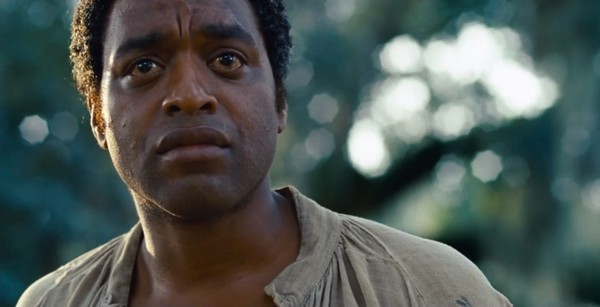
In an early scene, Solomon (Chiwetel Ejiofor), a
man born into freedom in the north, has just woken to discover he has been
kidnapped and bound in chains. He denies that he is a slave to his jailer, who
takes a paddle and beats him. We see the board smash into Solomon’s back again
and again, but from a side angle, not one that shows us the damage being done.
We see some bits of blood here and there. We hear Solomon’s screams, see the
agony on his face, the torture through his muscles. We see the paddle splinter
and break. The scene goes on longer than most directors and editors would let
it, but it needs to: to cut too soon would be to allow it to be less painful,
more entertaining, more a spectacle. We may think: “Okay, I get it, he’s
being beaten. Okay, can’t we move on? Isn’t there a story to get to?”
Finally, it stops, and we are relieved. 

But McQueen is not done with this. We might relax
as the next scene begins, as we are ready for our emotions to be given some
moment of respite, but this is, in fact, masterful misdirection. As Solomon
talks with a slaver, the man tells Solomon to take off his ruined shirt. We see
Solomon from the front. The shirt is, indeed, torn and soiled. Reluctantly, he
removes it. Finally, we see the shirt’s back: fabric soaked with blood. The
audience I was with gasped at this moment. We had let our guard down. We knew,
of course, what the paddle would have done to his back. We knew,
intellectually, the pain inflicted. Here, though, we felt it in a deeper way
than if we had simply seen Solomon’s back as he is beaten, or immediately
after.

12 Years a Slave is distinct because,
again and again, McQueen chooses to make his film more about experience than
information. Many incidents from Northup’s narrative are either barely glanced
at or skipped altogether. The challenge for any adaptation of this story is to
fit the experience of twelve years into two hours.

And this is where 12 Years a Slave reveals
its greatness. First, there is the triumph of its structure (how much of which
is the responsibility of screenwriter John Ridley, I don’t know, as I haven’t
seen the script). The film begins with Solomon having been a slave for at least
a few years, learning to cut sugar cane and trying desperately to figure some
way to write a letter to someone, anyone who might be able to help him. This
information is mostly established visually. At night, as Solomon is approached
by one of the female slaves (we don’t yet know anything about her) for sex, the
experience is unfulfilling for both, and then the film moves us back into the
past as he remembers a much more satisfying moment with his wife when he was
free.

Why start here? Why not just tell the story in
order?

null

There are many possible answers to these
questions, but I tend to think that opening segment forecasts the film’s
primary patterns. The story is similar enough to other tales of American
slavery that we don’t need any training in understanding it, but the style and
conventions of the film are not as familiar, and we do need to get accustomed
to those.

Consider, for instance, how the opening segment
helps us understand a potentially perplexing shot at the end of the movie.
Solomon has finally managed to get someone to take a letter from him to the
post office, but he does not know whether he can trust the person. Solomon looks
out at the landscape. The camera stays on his face for an extraordinary amount
of time. From the very beginning of the film, Solomon has been trying to get
word out to his family or anyone else who might be able to help him. In this film,
the relationship between shots can be associational rather than strictly linear
or expository, especially concerning Solomon’s attempts to communicate to the
free world. His desire, his yearning for freedom, shifts the representation of
time. Like Solomon, we, too, are bewildered: what is happening, what is going
on in the world beyond? Time freezes. We stare.

The next shots show us that the gazebo Solomon
had begun working on at the time he wrote his letter is now completed. Time
speeds forward.

Similarly, a refusal to cut a shot at the point
anyone conditioned by mainstream films would expect provides one of the most
powerful moments in the movie — indeed, it is among the most remarkable scenes
of any film I know. After Solomon attacks one of the white men who has been
tormenting him, John Tibeats (Paul Dano), Tibeats returns with a friend and
tries to lynch the impertinent slave. He is halted by the general overseer of
the plantation, Chapin (J.D. Evermore), but Chapin does not then cut Solomon
down. Instead, he says they’ll have to wait for the plantation owner, William
Ford (Benedict Cumberbatch), to return that night. And so Solomon remains, his
hands tied behind his back, his toes barely touching the ground, his throat
roped to a tree branch. The shot goes on and on. Solomon gasps and straining to
keep himself from strangling to death. Once, a slave sneaks to him with a small
cup of water.

The extraordinary, excruciating length of the
scene forces us to confront the physical reality of slavery to an extent
unparalleled by any other film. The audience becomes a body of witnesses. Here,
no soaring John Williams-style music plays our heartstrings, no character later
offers moral exposition. A man swings from a rope and tries to stay alive. We
watch. It is all the film allows us to do.

Yet, if the film’s power and importance come from
its careful construction of the audience as witness, what sort of witnesses are
we, and of what use is our witnessing?

These questions are hardly unique to 12 Years
a Slave
— they apply to some extent, at least, to any film with serious
intentions of recreating and representing historical atrocities. Toward an
answer, all I can offer is a hypothesis: what matters is not the recreation,
but the quality of witness, and the quality of humanity, it requires of us.

There is already a tremendous amount of Oscar
buzz around 12 Years a Slave, which more than one critic has dubbed
“the Schindler’s List of slavery movies”. In the sense of
carefully recreating a particular life from one of the great horrors of
history, and generating strong emotions in audiences, this is true. But the
Oscar talk gives a false impression of what McQueen’s film is up to.

Even in his most serious and self-consciously
“artistic” films, Steven Spielberg is a Hollywood director to the
core, a genius of audience manipulation. McQueen is no more Spielberg than Spielberg
is Michael Haneke. The kind of historical dramas and social justice dramas that
win Oscars flatter their more privileged and powerful audiences, allowing —
even encouraging — such audiences to feel good about themselves. The same choices
that propelled Roots to extraordinary popularity are the sorts of
choices approved and awarded by the Oscarati. They are also the choices that
Steve McQueen and his collaborators carefully and determinedly renounce.

And yet I would not be at all surprised to see 12
Years a Slave
sweep the Oscars–mostly because McQueen brilliantly chose to
apply his particular aesthetic to material that is deeply appealing to Oscar
voters. Northup’s original book, edited and perhaps ghostwritten for him by the
white lawyer and writer David Wilson, had to be aimed at a primarily white
audience, for, like any other slave narrative popularized through abolitionist
circles, it had a particular propagandistic purpose. An advertisement
for the book in the
abolitionist William Lloyd Garrison’s newspaper The Liberator included
numerous quotations from reviews that testified to the book’s ability to
confirm the horror of slavery for an audience that previously might have
dismissed Uncle Tom’s Cabin and other novels as fictional exaggerations.
One reviewer, for the Cayuga Chief, highlighted the qualities of the
book which McQueen’s film emulates: “It is well told, and bears internal
evidence of being a clear statement of facts. There is no attempt at display,
but the events are so graphically portrayed, that the interest in the perusal
is deep and unabated to the last. The sunshine of kind treatment sheds a few
bright beams athwart the dark canvass of twelve years of bondage: but, in the
main, the darker cruelty and wickedness of oppression is still more revolting
by the contrast.”

There we have, too, the key to why characters
like William Ford and Bass (the man who ultimately delivered the letter that
would begin the process toward Northup’s freedom, here played by Brad Pitt) are
important to the story. They are not there to appease white sensibilities, but
rather are placed in the film in proportion to their presence in Northup’s
actual life, and they highlight the oppressiveness and irredeemability of any
system where people are considered property.

Further, audiences have very little chance to sympathize
with good white characters, because they simply have too little screen time.
This is as it should be. Our sympathies and identification should be with the
slaves.

If the work of traditional, white-audience slave
movies is to encourage us to look for good white people to identify with, and
to make us witnesses to narratives in which there are good white people in even
the most hellish circumstances, then 12 Years a Slave works to undo
that. 12 Years a Slave deprives us of the familiar pathways to
identification with white saviors, and instead requires us to identify with the
people we should have been identifying with in the first place.

Matthew Cheney’s work has been published by English Journal, One Story, Web Conjunctions, Strange Horizons, Failbetter.com, Ideomancer, Pindeldyboz, Rain Taxi, Locus, The Internet Review of Science Fiction and SF Site, among other places, and he is the former series editor for Best American Fantasy. He is currently a student in the Ph.D. in Literature program at the University of New Hampshire.


Why DEEP THROAT Should Be Placed in the National Film Registry

Why DEEP THROAT Should Be Placed in the National Film Registry

null

It’s almost that time again. Every December, the National Film Preservation Board, with the sheltering authority of the Library Of Congress hovering benevolently over its shoulder, announces the twenty-five “culturally, historically,
or
aesthetically
significant”
movies
that
will
join
the
honor
roll
of
American
cinema
enshrined
in
the
National
Film
Registry.
To
the
Board’s credit, the list is startlingly egalitarian and unfussy, honoring not only obvious contenders like Gone With The Wind (1939) and Citizen Kane (1941) but also representatives from every corner of American movie-making: independents like El Mariachi
(1992) and
Night
Of
The
Living
Dead
(1968), masterpieces
both
sung
(The
Godfather
(1974), and
unsung
(Daughters
Of
The
Dust
(1991), Killer
Of
Sheep
(1977)), technological
watermarks
as
far-ranging as The Jazz Singer (1928) to 
A
Computer
Animated
Hand
(1972), and
unique
visions
like
Koyaanisqatsi (1983) and The Matrix (1999).

But, despite the Board’s inclusion
of up to fifty nominations suggested by the American public into its deliberations each year, and a curatorial eclecticism that honors diversity as far-ranging as Dog Star Man Part IV (1964), Nicholas Brothers Family Home Movies (1930s-40s), and Lets All Go To The Lobby (1957) ( you know, with the dancing popcorn and hot dogs — “to get ourselves a treat!”), one essential American movie keeps getting unfairly overlooked. It’s a movie no less essential to the trajectory of American film than Dickson Experimental Sound Film (c. 1894). In fact, it’s another early sound film, if one considers all meanings of the verb to sound: to test the depth of a hidden space. It’s Deep Throat (1972).

Gerard Damiano’s semi-surreal porno-comedic fantasy about an anatomically irregular woman (Linda Lovelace) and her search for unorthodox clitoral stimulation isn’t more cinematically interesting than other features from the so-called “golden age” of porn. (Behind The Green Door [also 1972] is the most
visually inventive of the bunch, with an aesthetic borrowed from video art of
the era—Nam June Paik, with cum shots.) Deep Throat, by contrast, is
poorly directed, scripted, shot, and “acted,” and almost as dull as Warhol’s experimental movie/endurance exercise Empire (1964), with about the same level of phallic obsession. (Empire is enshrined in the Registry. Perhaps tellingly, Warhol’s Blow Job [1964] is not.)

But all aesthetic shortcomings aside, Deep Throat certainly qualifies as a culturally significant movie. Much has already been written about how its ensuing multiple legal battles carved out First Amendment rights for all cinema to splay whatever sort of grotesque delight it saw fit across the screen, to say nothing for the
way its “four quadrant” success set in motion the current mainstreaming of pornography in American culture. In her memoir Post-Porn Modernist, porn star turned performance artist Annie Sprinkle remembers working as a popcorn girl at an Arizona theater during the height of “porno chic”, amazed at the cross-section of American humanity lining up to see Linda Lovelace “untangle her tingle”, as promised by the poster’s tagline: “[The audience was] young and elderly, couples, singles, groups, college students and teachers, blue- and white- collar workers, all types of people. I sold tons of popcorn.” (Let’s all go to the lobby, to get ourselves a treat.)

Deep Throat‘s historical importance is also undeniable because of its connection to the Watergate scandal. Disgruntled FBI agent Mark Felt was willing to confirm details for journalist Bob Woodward about the Nixon-backed burglary of Democratic National Committee offices, but only in secret.  Woodward’s mysterious source, who would only meet with the journalist in Beltway parking garages at 2 am, was given the nickname “Deep Throat” as a smirking play on the journalistic phrase “deep background,” meaning a never-quoted source who will secretly confirm confidential information obtained elsewhere. The investigation brought Nixon down, but not before revealing all sorts of unsavory tidbits about the commander in chief to the American public. (For example, Nixon’s preferred term for double-crossing was “ratfucking”—an activity Lovelace never got around to, despite the dog-on-woman action displayed in the stag loop Dog Fucker [1971] she made before Deep Throat.)

What hasn’t been acknowledged is how, despite its failures of craftsmanship, Deep Throat is not an artistically devoid movie. Its success is in the realm of theory and criticism, in providing the mathematical proof to Godard’s theorem that “film is truth 24 times a second”. While it’s laughable to think that Deep Throat invented pornography, or even the pornographic film, the fusion bomb it created by merging the tropes of Hollywood film (and all its attendant unspoken eroticism) with the animal reality of intercourse was a Manhattan Project moment. Imagine what that first vaginal penetration, twelve
interminable minutes into a previously quite dull movie, must have looked like in 1972, as big on screen as
the thrown animal bone that becomes the space station in 2001:
A Space Odyssey (1968), or the parting of the waves in The Ten Commandments (1956). And the sacred waters keep rising: semen, snot, vaginal secretions, spit, and, holiest of American elixirs, Coca-Cola, in the scene in which it is poured into a glass dildo inserted into Lovelace’s vagina.

And there are tears, too. Later in life, Lovelace maintained that she was violently coerced into a pornographic career by her abusive husband Chuck Traynor. There are bruises visible on Lovelace’s thighs, and, while her acting is uniformly quite cardboard, the frightened tears she summons instantly in the scene where her doctor informs her she has no clitoris are startlingly real. The National Film Registry has seen fit to include important documentation of many atrocities, including Hindenberg Disaster Newsreel Footage (1937) and the Zapruder Kennedy film (1963). Lovelace’s disavowal of her “performance” as a documented rape can’t be ignored, but it shouldn’t disqualify Deep Throat.

Then what’s left? Is the Board’s sheer unwillingness to address Deep Throat‘s ultra-sexed subject matter what keeps it from having its lovingly restored negative swaddled in a temperature-controlled vault in the Library of Congress for all perpetuity? Maybe. But to acknowledge Deep Throat as a benchmark of American cinema would mean acknowledging the bigger genie we can’t put back into the bottle. Deep Throat and “Deep Throat” put an end to the idea that anything is private. Sex tapes, Wikileaks, an intern’s navy blue dress spattered with presidential semen, yawn. It’s hard to believe there was a point in time when Americans could be shocked to the point of national paralysis over a piddly dirty trick burglary and the slobbery reality of a blow job. Those crowds lining up in 1972 couldn’t conceive of the day Deep Throat could be enshrined in the Library of Congress as a testament to our naivetë and innocence. We take in the whole truth now, up to the tonsils, without a thought.

Violet LeVoit is a video producer and editor, film critic, and
media educator whose film writing has appeared in many publications in
the US and UK. She is the author of the short story collection
I Am Genghis Cum (Fungasm Press). She lives in Philadelphia.

Self-Projected Artifice: The 49th Chicago International Film Festival

Self-Projected Artifice: The 49th Chicago International Film Festival

It was almost like a movie. Amat Escalante’s harrowing and
unapologetically bleak film Heli—which
looks at the crooked law enforcement and low-totem pole players of Mexico’s
drug cartel scene—came to a an ambiguous closing shot before dipping to white
for the end credits. The auditorium house lights came on at the press screening
I was at. No one moved from his or her seat. Utter silence. Then suddenly, a
critic in the row in front of me let out a groan. A very loud one. He wanted to
be heard. After 104 minutes of wince-inducing violence and despair, Heli offered no logical retribution for
its audience. The groaning critic was expressing one of two things: that he’d
witnessed a carefully nuanced, searing cross-section of a very real dilemma
south of the border—or that he’d just seen another arthouse trash film filled
with hot air. As other critics began leaving the auditorium, they started
chuckling at the thought of the groan. The groan seemed to carry an echo too,
as if it was a shared movie review, a unanimous proclamation that the Chicago
International Film Festival had once again managed to bring some of the more
polarizing films of world cinema to the Second City for the 49th consecutive
year. This year’s lineup was particularly dark in nature, from crude historical
narratives (James Gray’s The Immigrant,
Steve McQueen’s 12 Years A Slave) to
timely, devastating documentaries (the border crossing Purgatorio, the brotherly survival tale in Kenya’s Tough Bond). For all of its variety,
this year’s Chicago film fest found itself hovering over the theme of the
self-projected artifice, which was explored in three grossly differentiating
films.

You see, unlike most marquee U.S. film festivals such as
Sundance or SXSW, the Chicago International Film Festival has done a consistent
job of flying just below the radar of mainstream but several cuts above other
notable film festivals. Sure, there are “movie stars” who make appearances at
opening night and certain gala events, but the main crux of the Chicago Film
Fest is focused on its usually impressive program of world cinema. The fest’s
red carpet schmoozing takes a backseat to the discovery of new artistic voices
from international films that would be hard to find stateside.

Consider the above-mentioned Mexican film, Heli. For most of its running time, the
camera is deliberate in its movements. Slow pans reveal awful imagery: a boot
pressed against a man’s face, a man being forced to roll face down over human
vomit, and the devastating reunion of a woman with her husband after he was
savagely beaten. These images are all the more powerful because the characters
in the narrative are desperately trying to fool themselves into thinking they’re
bound to escape or even create a new life. In the violent landscape ruled by
the drug cartel, these poor Mexican peasants are disillusioned at best. In an
early scene, the protagonist’s wife visits a local psychic in hopes of hearing
the possibility of a new venture or at least to give validity to her current
situation. Later, during the film’s gruesome torture scene, a group of
adolescents in the background gleefully plays their American video games on
consoles. At one point, a young boy whips out his cell phone to film a victim
being tortured with fire and thinks out loud about the idea of uploading the
footage to YouTube. It’s that self-projected artifice—that daily routine to
dilute the horrors of one’s reality—which is what’s really striking about Heli. Lots of drug films have shocking
violence, but few observe the nameless people at the peripheries of the
screen’s frame and examine their ways of coping with their environment.

Sometimes this artifice is therapeutic. Part of the
festival’s documentary program, Rithy Panh’s The Missing Picture shows us one filmmaker’s in the 70s transcendent
retelling of his unfathomable childhood experience as a prisoner of the Khmer
Rouge in Cambodia by way of hand-made art; rather than relying solely on
historical archival footage, Panh used small whittled-down clay figures as
stand-ins for a majority of the film’s recreations. The title of the doc
resonates exponentially as the simple toy-like sets suddenly become vessels for
ghostly imagery. We can only imagine how the scenes played out in real life and
thus are forced to project our own anxieties and shock onto the stoic faces of
the tiny clay models on the screen. The effect is heartbreaking and, more
importantly, is never played for gimmickry. 

Finally, taking a hard right turn from subject matters of
drug cartels and Cambodian genocide, we land at the Cannes Palme d’Or winner,
France’s Blue Is The Warmest Color,
directed by Abdellatif Kechiche—which was one of Chicago’s festival highlights
to be sure. Centered on a remarkable lead performance by Adèle Exarchopoulos, Blue chronicles several years in the
relationship of a lesbian couple. Exarchopoulos, the youngest of the pair, has
to carefully micromanage each of her self-projected artifices. At her high
school, she “dates” a male classmate in order to ward off any suspicion or
prejudice toward her actual sexuality from her peers. At home, she deceives her
parents by insisting that her partner Emma (played by Léa Seydoux) is just a
tutor. Emma even assists with the mirage and fabricates a boyfriend during a
dinner conversation. These self-projected artifices are juxtaposed with Emma’s
own vocation. She’s a painter, using Adèle as her model for many of her works.
So, on display in the walls of Emma’s art galleries, is her true love—but for a
good portion of the film’s running time, their relationship is taboo for most
of their public appearances. When Adèle and Emma are older and living together
during the second half of the film, their struggles and strife link to the restraint
from those earlier scenes. The film floored me: Exarchopoulos is the
front-runner for the Best Actress Oscar.

With these three varied film selections—Heli, The Missing Picture,
Blue Is The Warmest Color—the theme
of the self-projected artifice rose to new challenging heights. Maybe by
looking through the eyes of our fellow foreign artists, we are able to peel
back some of our own layers of artifice (at least in what we produce in
American cinema) and see some fundamental similarities in our ways of handling
those scenarios, fiction or non-fiction. And as the 49th Chicago
International Film Festival drew to a close, I thought back to the groan from
that early press screening. If it did signify a sentiment towards a festival
that vehemently sought out challenging and polarizing titles from world cinema,
then I hope to hear the same groan next year.

Nelson Carvajal is an independent digital filmmaker, writer and content
creator based out of Chicago, Illinois. His digital short films usually
contain appropriated content and have screened at such venues as the
London Underground Film Festival. Carvajal runs a blog called FREE CINEMA NOW
which boasts the tagline: “Liberating Independent Film And Video From A
Prehistoric Value System.” You can follow Nelson on Twitter
here.

“Mwahahahaha”: The (Vincent) Price of Condescending Viewership

“Mwahahahaha”: The (Vincent) Price of Condescending Viewership

nullVincent
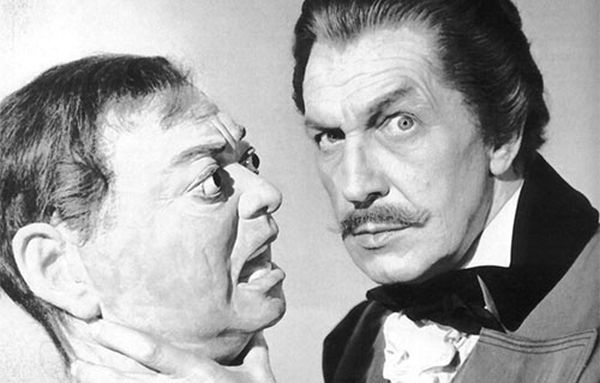
Price was a singular cult movie star, synonymous with a grandiloquent yet
bygone form of cinematic Gothicism that offered moviegoers inexpensive thrills.
Whether for good or ill, Price, a versatile actor, is shackled to the horror
genre, so much so that as of the writing of this article, Price is October’s “Star
of the Month” for the Turner Classic Movies cable channel and the Shout Factory
imprint label Scream Factory is releasing a DVD set of horror movies starring
Price called The Vincent Price Collection,
right before Halloween.

Yet
for many, Price is also synonymous with hammy, unbelievable, and histrionic screen
acting– never mind that his style was rooted in acting conventions from a
previous era. Whether good-natured or not, there are those who the idea of “Vincent
Price” as a goldmine of campiness and comedic opportunity. For instance:
comedians Dana Gould and James Adomian as well as actor Bill Hader have been
known to impersonate Price, and his persona has often been reduced to that of a
debonair, sinister,  yet silly
dandy. Heck, even I impersonate Price
every now and then to get laughs.

****** 

null

Let
me introduce something which may relate tangentially to Price’s reputation: the
concept of Condescending Viewership .In certain scenarios, people watch a
movie, TV show or play with incredulity, ultimately acting as if they’re above
it. Such an attitude depends on the equation of willful suspension of disbelief
with mindless gullibility. For instance: Tommy Wiseau and his film The Room are  recipients of C.V. and Mystery Science Theater 3000, the TV show in which abject movies
are riffed upon by a man and his robot pals,
is built on and epitomizes the practice of C.V.

Of
course, there is something indeterminable about C.V. It is a matter of subjectivity,
after all. Plus, it’s probably better to allow it when it arises than to attempt
to control the minds of fellow viewers, much like a diabolical Price character.
And the question of what works deserve condescension is arguable. One person’s
trash can be another’s sustenance. Nevertheless, many conscientious viewers
have probably encountered C.V.–or engaged in it themselves.

To
go a step further, it is safe to assume that many aficionados of classic, older
movies have occasionally encountered C.V.  It is human nature to look at something from
the past and pretend the present is more evolved and sophisticated in a
unilateral way after all. To give an example: I remember being a teenager and
watching North By Northwest with my
family and one of my older sister’s friends. During the final shot of the film–a
sexually implicit visual gag of a train entering a tunnel right after Cary
Grant gets in bed with Eva Marie Saint on that same train–my sister’s friend
exclaimed, “What? They didn’t think about sex back then!”

null

******

When
it comes to any standard Vincent Price performance– particularly those he gave
in many horror movies– it might as well be a big, opportune target for C.V. Admittedly,
I find it hard to watch 1959’s The
Tingler
, William Castle’s gimmick-loaded and nonsensical horror flick, and
not want to comment upon or lampoon aspects of Price’s performance (especially
the scene in which his character has an LSD induced freak-out).

Yet,
to haughtily spoof any Price performance in a horror movie would be shortsighted;
it would suggest that Price was not savvy enough to understand what he was
doing. Consider these biographical details: Price was a graduate of Yale, an
authoritative collector of art, a French cooking enthusiast, and a man of
letters. It isn’t beyond reason to assume that he was aware of his performance
as an actor, even when it seemed preposterous.

In
fact, Price told biographer Lucy Chase Williams that he had his tongue “in both
cheeks” and “was furious when I read a book called the hundred worst pictures
ever made, to see that several of mine weren’t in it!” And in a book about his
work and life, Price was quoted as saying, “I don’t mind making these funny
horror films at all… The minute that I take myself seriously, I’ve got to laugh
because it’s so ridiculous. It’s what gets me through an awful lot of films,
this sense of the ridiculous.” In the same book, he also stated, “I’m an old
ham… I love acting, even in nonsense films. For me, acting is an expression of
joy.”

In
an affectionate tribute made for Turner Classic Movies, John Waters stated as
much: “When Vincent Price was a ham, he was in on the joke. He celebrated the
ridiculousness of horror and he could completely hold his own.” And as Mark
Clark wrote in Smirk, Sneer and Scream:
Great Acting in Horror Cinema
, “While Price’s performances failed as
touching works of naturalistic brilliance, they usually succeeded as thrilling
romps of stylish theatricality… almost any Price performance is worth watching.…”

******* 

Herein
lie some dangers of C.V.: when self-contained and self-perpetuated, it can be
unfair, particularly to the personal sensibilities of creative talent. When
applied to older movies, it can create a monolithic and reductive historical
understanding.

C.V.
can limit the potential for a fuller enjoyment and appreciation of a film– or
a TV show or play for that matter–in that it may ignore the sheer commitment
of the actors or filmmakers that might be on display. Sure, some films may be
bad or contemptible, but there can be an inspirational pleasure in watching
anything in which people just went for it.

And
I can’t think of a Vincent Price performance in which he didn’t seem committed
to the work. An old-school professional, Price was always invested as a
performer, even in silly things like the two Dr. Goldfoot movies or his
recurring role as Egghead on the 1960s Batman
TV series. Just consider his voiceover “rap” in the Michael Jackson hit
“Thriller”—it is the most convincing part of a well-crafted yet impersonal and
calculated song.

Price’s
screen persona may be an acquired taste. Because he benefited from the steady
work that typecasting brought, he may not have always needed to stretch as an
actor or improve his reputation. He seemed to enjoy working and probably
cackled all the way to the bank. Nevertheless, he gave a number of notable
performances—particularly in Laura, The Baron of Arizona, House of Wax, most of the Roger-Corman-directed
Poe films, Witchfinder General and Edward Scissorhands—and he is a treasure
of a screen presence.

So,
when it comes to indulging in the widespread practice of Condescending
Viewership, one should be careful to pick their proverbial poison. And Price
will just about always have the last laugh, from beyond the grave: “Mwahahahaha.”

Holding
degrees in Film and Digital Media studies and Moving Image Archive
Studies, Lincoln Flynn lives in Los Angeles and writes about film on a sporadic
basis at
http://invisibleworkfilmwritings.tumblr.com. His Twitter handle is @Lincoln_Flynn.

Viva Los Hijos de la Noche: The 1931 Spanish Version of DRACULA

Viva Los Hijos de la Noche: The 1931 Spanish Version of DRACULA

null

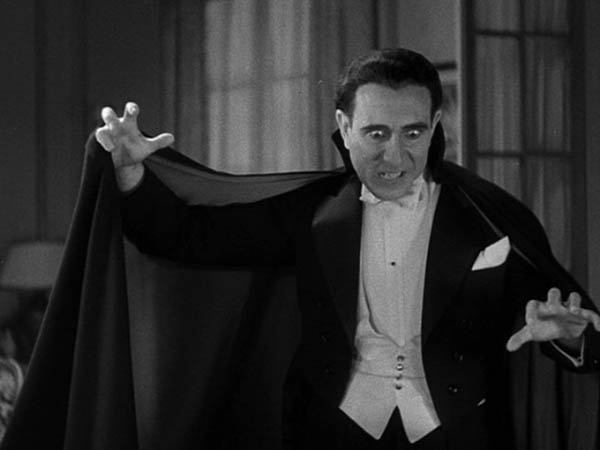
Everybody knows the iconic 1931 Dracula. Even
if they’ve never seen the film, most people can call up images of Bela Lugosi
waxing poetic about wolves on a ruined abbey staircase, or a coffin slowly
opening as a very white hand emerges. But does the phrase “hijos de la noche”
resonate in the same way? Certainly not, yet in 1930, while Tod Browning spent
his days filming Dracula with Bela Lugosi, another director, George
Melford spent his nights filming the same script, on the same set, with the
same costumes–with Spanish-speaking actors. In the early days of sound, this
was a fairly common practice; studios often produced foreign-language versions
of their films that way. Dubbing had not yet come into vogue as a practice, and
under the studio system it was simply a matter of substituting a cast who spoke
Spanish, or German, or French, and shooting on a set after the English-speaking
actors and crew were gone for the day.

The practice only lasted a few years, as it became cheaper and easier to dub or
subtitle films for a foreign audience. Most of those foreign-language versions
have faded and been forgotten, lost like so much early film. Most did little to
distinguish themselves from the English-language films. But the Spanish version of Dracula is a little different.  Not only superior to the English-language
version, it’s necessary viewing for anyone who’s watched the Lugosi film and
come away bummed. I know the English version has its champions, but I think
that has much to do with Lugosi and little with the film’s direction. It’s
creaky, static, with little camera 
movement—almost a silent film in many parts, and the actors are often
given little to do but stand and speak. The pacing is dreadfully slow and
inorganic.  Whereas the Spanish language
version  takes a script that should have
been shocking but ended up rather staid—stiff and stuffy—in the English version,
and it tops that version by leaps and bounds. Oddly, it’s a half hour longer
than the English version, but the improved pacing, the superior acting, and
better artistic direction make it much more fun to watch.

The cast and crew of the Spanish version were competitive,
and they would watch the dailies from the English-language version to figure
out how they could improve them, with better camera angles, lighting, pacing,
and acting. And it shows: in the Spanish version, the special effects are
better, the shots are more interesting, and the camera movement is much more
fluid–more modern. Watch the way the camera swims up toward Carlos Vilarilla in
the abbey, captures the wild menace of the place, and compare that to the slow,
stately pace of the camera movement toward Lugosi in the same scene. Of course,
part of this is due to Tod Browning’s and penchant for long, static shots. Browning
made some remarkable films, particularly those with Lon Chaney Sr. But here hee
was clearly still learning how to transition from silent films to talkies, a
transition that his short list of sound films and subsequent retirement from
film probably attests to.  

null

The acting, with the exception of Lugosi and Edward Van
Sloan, is also improved in the Spanish version. I love Dwight Frye, but Pablo
Rubio is a more naturalistic, interestingly mad Renfield. Frye either
plays it creepy and subservient, or fearful and guilt-ridden—two notes for the
duration of the film, while Rubio’s performance is much more subtle,
changeable—human. Barry Norton gets the thankless straight man role, but runs
circles round the notoriously stone-stiff David Manners. Lupita Tovar, only
seventeen at the time, is a beautiful, lively lead–so much more fun to watch
than the lovely but lifeless Helen Chandler.
As Lupita Tovar has said of
the film
, “We Latins have a very different way of expressing ourselves, more
emotional. And I think the Americans were just kind of subdued.”

Perhaps most
importantly of all: this film puts the sex back in Dracula. Plenty of heaving
bosoms are on display, and the sensuality is more overt than implied,
particularly in Tovar’s hungry, delightfully predatory performance as Mina/Eva.
This is Mina as she should be: seduced by Dracula, perhaps a little tormented,
but not-so-secretly enjoying the respite from stuffy society, from her safe,
boring fiancee and her overprotective father. This is the wilder Dracula
Lugosi should have starred in.

Amber Sparks’ short stories have been widely published in journals and anthologies, including New York Tyrant, Unsaid, Gargoyle, Barrelhouse, and The Collagist. Her chapbook, A Long Dark Sleep: Stories for the Next World was included in the chapbook collection Shut Up/Look Pretty from Tiny Hardcore Press, and her first full-length story collection, May We Shed These Human Bodies, was published in 2012 by Curbside Splendor. You can find her at ambernoellesparks.com or follow her on Twitter @ambernoelle.