Beautiful and Claustrophobic: MAD MEN’s Inferno

Beautiful and Claustrophobic: MAD MEN’s Inferno

nullWhen I
started taking classes in creative writing, one of my teachers told our class
that all we had was one story we would spend our entire lives rewriting. At the
time I found the prospect of this frightening. In a home of Cuban-Jewish
refugees I had grown used to two concepts: the impermanence of material things
and the permanence of loss. Both themes were ones I strove to break away from.
I nurtured an intense fascination with born-again Christianity. There seemed
something glorious to me about the idea that you could start again, fresh in
the world, free from the past. 

The longing
for rebirth is a motif, which dominates our literary imagination and our
spiritual and emotional lives. The rebirth narrative is often constructed as a
narrative of resolution. We long to read about characters who are constantly
making choices which propel their life forward and we love reading about heroes
and heroines who are brave enough to make the choices that will ultimately lead
to some kind of change. In real life we are creatures of habit. We love a
routine, because it makes an unruly universe seem manageable and safe. In
fiction we open a box in one scene and in the next we close that box for good.
In real life, we keep—consciously or subconsciously—reopening that box.

Mad Men, which at first glance seems to
be a period drama, has actually proven to be a drama that explores how every
rebirth is a repetition. When I first started watching, I’d feel a deep,
overwhelming sense of dread with every episode. Ever swig of a martini, every
suck on a cigarette, every fuck behind another spouse’s back filled me with great
anxiety. On Mad Men, no character
(except, arguably, Peggy Olson) is ever able to change, even as the world is rapidly
changing around them. Our desire to rebuild our lives is shown to be just as
much of an illusion as anything else Don Draper or Peggy or Pete Campbell tries to sell to a
client. Both Don and Betty Draper repeat patterns from their old marriage in their new
ones. The new ad agency may look different from the old ad agency, but the same
ugliness that hid beneath the surface of the old polished veneer is there under
bright lights, mod fashion and art deco design.   

In many
ways, Mad Men’s insistence on denying
us the pleasure of resolution is the secret to its success and the reason so
many of us are hooked on it, despite being frustrated that nothing ever really
changes, time and time again. Repetition of experience is electric. It grounds
us in the past and connects us to the present. We think what we seek is an
experience, which is new, but what we really want to feel connected to is an
experience that makes us feel happy and safe, in a way we once felt happy and
safe before. All addictions are nurtured by our love of repetition, a need to
feel as high as we once were, as loved as we once were loved. Don’s continuous
cheating has always had a somewhat addictive quality to it. In every case Don
wants the simultaneous thrill of the new, along with the comfort of the old.           

The
repetition of familiar collective memories and period fashions has always given
Mad Men a kind of warm intimacy,
which is strange because many of its most fervent viewers haven’t personally
experienced the 60s. In an article for Vanity
Fair
, “You Say You Want a Devolution,” Kurt Anderson claims that this
yearning for the past is a peculiar development of the 21st century,
which he claims is a reaction to constant technological newness. In Anderson’s
view we would rather rehash the past, rather than create anything new at all. We
watch television shows that are episodic, where characters continuously revisit
experiences, and we live in the age of the remix, where we borrow snippets
from the past as a way to reinvent the present.

But, in reality, I don’t think that
our desire for repetition is anything new at all. There is something very human
about our love of patterns. Our obsession with the past is more than just
fashion. It is built into our bones. We harvest food according to different
seasons. We pray for different purposes at different times of the day and
different times of the year. Ceremonies like graduation and weddings are built
into the very fabric of our culture, in both religious and secular settings. Poets
and lyricists have long been seduced by repetition. You can find the repeated
word or line in a classic love poem, and you can find it in contemporary songs.
We sing song refrains ranging from, “Hey Jude” to “Mmm Bop.” 
The repeated onomatopoeia word can be sing-songy, as in children’s
songs, or visceral and raw. Kanye West’s brutal album, My Beautiful Dark Twisted Fantasy, is often about obsession and
addiction and its most brutal, harrowing lines are repeated words. When Kanye West sings “bang, bang, bang, bang, bang,” so icy and
perfectly metered, on his new album, are these words the sound of a gang-bang
or a gunshot? The more we hear a word repeated, the stranger it sounds and the
more we re-think meaning.

Anyone who
has participated in a writing workshop knows that there is a danger in treating
art as personal therapy. Often, especially for beginning writers, we do repeat
the same story over and over, until we reach the sense that we have finally get
it “right”—we’ve made sense of the motifs we were continuously drawn back
to.  My writerly “coming-of-age” was no
different. In grad school most of my writing focused on two relationships: my
relationship with my mother and a romantic relationship that broke my heart in
two.  

One story resolved. For months after
the relationship was over the repetition of words from my ex’s poems would
drift through my brain at odd intervals, like a song I knew all the words to,
until one day, I didn’t remember many of those words at all. At that stage I no
longer loved this person any more and it felt like what it had become: a tiny,
tender loss, wholly different than the dramatic poems I wrote when I was still
angry and passionate about a love I didn’t want to see die.

In contrast, the relationship with
my mother evolved. We learned to understand each other. I’m not sentimental by
nature. I don’t obsess over pictures. When I move I throw stuff out. My mother
is the opposite. She takes forever to get rid of anything. Whenever I go back
home, my room is a museum of me, except it isn’t a museum of me at all: it is a
museum of the girl I was when I was 15 years old. Whenever I go home I am
stunned at how much I’ve changed and how I haven’t changed at all.

Repetition reminds us of that gap within each
of us: between that part of us that stays constant and that part of us that is
willing and able to evolve. It reminds
us that if everything is ephemeral, repetition is all we have. It reminds us
there are lovers we will leave behind and mothers we will love forever.

The opening image of Mad Men shows a man falling to his
death; in reality, the path down is a spiral rather than a straight line, which
means it is ultimately going to take a longer time to bottom out.  This season the space between Don’s domination of
Sylvia and his tiny voiced “please” begging her to stay is getting narrower
and narrower. This season’s first Mad Men
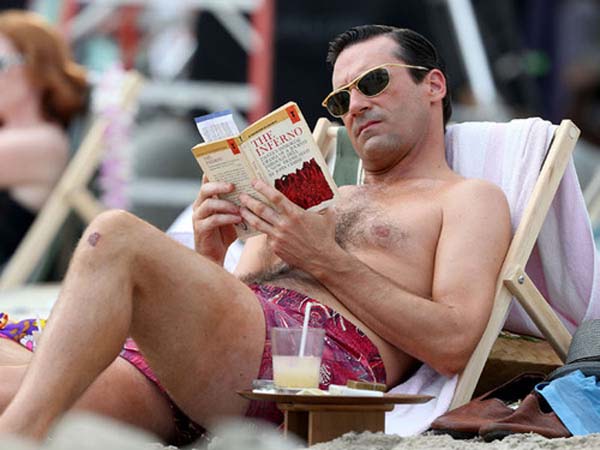
episode opened with a scene on the beach and Don reading The Inferno. It ended with an ad that Don created: the image of
an empty beach, bare tracks in the sand, discarded clothes, the open ocean. For
Don this was an image of escape. For his clients it was an image of a suicide. Escape and suicide have always been
dangerously close throughout the series, but this season, we are reminded
over and over how it is impossible to only love the beginning of things, when
everything that begins is ultimately going to end.

Arielle Bernstein is a writer living in Washington, DC. She teaches
writing at George Washington University and American University and also
freelances. Her work has been published in
The Millions, The Rumpus, St. Petersburg Review, and South Loop Review, and she has twice been listed as a finalist in Glimmertrain‘s Family Matters Short Story Contests. She is Associate Book Reviews Editor at The Nervous Breakdown.

GIRLS on Film: Secrets, Seduction and Reclaiming the Body on Camera

GIRLS on Film: Secrets, Seduction and Reclaiming the Body on Camera

null

Hannah Horvath’s constant nudity in Girls has been a point of discussion since the start of the first season; one of the reasons Girls has been successful has to do with the way it tackles our own attitudes regarding female overexposure. Recently, Howard Stern caused a minor stir when he called Dunham “a little fat chick” and likened her sex scenes to “rape.” Throughout the media, Lena Dunham is both heralded and criticized for filming her own naked body, in all its soft, unphotoshopped glory. In many ways, despite how ubiquitous it has become, female nudity on screen is directly linked to shame. It doesn’t matter what we look like. The most beautiful women in the world are subjected to criticism of their bodies, as well as their sexuality, when they take off their clothes.

The female body in photographs and film is still, at some level, considered to be public property, something that is intended to provoke, entertain, inspire or arouse the audience. We don’t often see women having agency over their own bodies and, indeed, much of the focus surrounding Dunham’s nudity has been on her insistence on placing her characters in a range of strange, unfulfilling, and sometimes humiliating sexual situations. But the scene I love most in Girls is the one of Hannah naked and happy, eating cupcakes in a bathtub. This simple image is strangely radical: a private moment where we see a woman enjoying her body just as it is, a naked woman who exists for no one else.

In many ways, 2012 has been the year of the female confession; great media attention has been given to women who are willing to tell all, unequivocally, all the time. We see this in the rise of female reality TV stars who share everything, ranging from their diet tips to their sex lives. We see this, also, in the burst of female success that has come from baring all, confessing painful past histories that include incest, eating disorders, drug use, depression, sexual liaisons, and all sorts and staples of traditionally “bad” female behavior. Perhaps there is nothing new about our constant and unwavering fascination with good girls gone bad, with hearing female sexual confessions, especially those that bear the marks of humiliation or risk. What is new is the attitude that confession, in all its messy and strange incarnations, will give women a true voice by highlighting the person behind the feminine façade, the creature who can see the outer objectified self with painful precision.

In many ways, talking about the sex on Girls leaves us in a double bind. On the one hand it makes sense to praise Dunham’s tenacity, her willingness to be nude on camera despite her “imperfections,” her determination to put her own experiences on public view for the sake of her art. On the other, it is arguable that the attention surrounding Girls is born from a kind of sensationalism that male artists, writers, and directors never have to struggle with. No one looks at Boogie Nights and considers the extent to which Paul Thomas Anderson’s own sense of sexuality helped influence his film. We assume that male auteurs are able to separate themselves from their projects in the same way that we assume the deep male voiceover, which is a mainstay in so many feature films, is the voice of “God,” omnipotent and all-knowing. Kanye West and any number of male recording artists can describe their sexual preferences and predilections, while artists like Rihanna are consistently stigmatized for doing the same.

Sometimes, as in the case of Rihanna, we conceptualize our tongue clucking as if it were borne out of concern, but the reality is a bit more sinister than that. Film, in particular, has a legacy of overt objectification of women; it is impossible to watch the camera linger on Hannah Horvath’s body, in any number of scenes in Girls, without considering the extent to which female bodies are looked at and the extent to which we still imbue the female body with meaning. The literary female confessor is still in some ways hidden—there is a separation between page and person. In her book, How Should a Person Be?, Sheila Heti can describe sexual situations and fantasies without provoking the same exact combination of excitement and ire that erupts when a female artist produces nude photographs to go alongside an artistic project. When Miranda July and Lena Dunham get naked on camera, the audience is often more obsessed with what this propensity for nudity says about them as individuals than with its contribution to their art.

While self-exposure is often intended to expose the male gaze, to illustrate how there is no blank slate that we can cast desire onto, that there is something unique and fundamentally human about being a woman and being a girl, exposure is not, in reality, always an empowered act. Nakedness, of course, can be freeing, but only if we are fully in charge of when, where, and how we are taking off our clothes. We are used to seeing young girls coerced into taking their clothes off for other people, whether in the fashion industry or in any number of films and music videos. Indeed, for many women in literature, film, and the arts, nakedness is the price we pay for attention and acclaim; for many, nakedness is the only pale shadow of acclaim we may ever really get. The female artist or writer who chooses to get naked is always seen as a naked woman first and as an artist second. The image of the naked woman, regardless of how SHE is using that image, is read into the fabric of our culture as an object we can pick apart, distribute, decimate, worship, or destroy.

The dialogue surrounding Lena Dunham’s naked body illustrates the ways that disentangling one’s self from one’s own history is still a struggle for the female artist, one for which there isn’t a single answer. The obsession with female confession is about the shapes and shades of female sadness, the ways the female body has betrayed us, the fear that our still strangely misogynistic culture has broken our collective hearts. Fifty Shades of Grey is marketable because the text ruptures nothing sacred in our culture; women are allowed to be sexual as long as they are an empty vessel waiting to be filled. We still view the connection between female sexuality and individual agency as incredibly tenuous.

Perhaps this is why, in many ways, I yearn for the partial exposure of the femme fatale to the overexposure of the ingénue. While the camera lingers on the body of vamps and vixens, their façade still seems one of power, rather than powerlessness. The femme fatale, unlike other kinds of sex bombs, is dangerous not because she is desirable, but because she has secrets. Her desires are wild and untamed, and her motives are private and unclear. The femme fatale is threatening because she is a free agent who operates according to her own moral code. Not giggly and coy like a Marilyn, not bouncy and bold like a Britney, not regal or refined like Grace Kelly, the femme fatale is blood and ice and grit. She is a hot throb of sex, naked but never exposed. Her drive is insatiable. She gives away nothing. She takes and takes and takes.

I have felt drawn to these types of female characters since I was a little girl. The minute I saw Jessica Rabbit walk onstage in "Who Framed Roger Rabbit?", all slinky red dress and deep-throated whisper, I thought, “This is what it means to be a woman.” Since then I’ve loved every femme fatale I’ve seen on screen. Marlene Dietrich. Greta Garbo. Barbara Stanwyck. Rita Hayworth. Lauren Bacall. Sharon Stone. Angelina Jolie. Dangerous, powerful, sexual women.  

In contrast, scenes of women exposed horrify and sadden me. I can’t watch Hannah Horvath lean over the couch and get told to “play the quiet game” while her obnoxious boyfriend may or may not be unwrapping a condom in preparation for anal sex without getting incredibly upset. The modern woman on film has been presented as a warrior (Katniss from The Hunger Games, The Bride from Kill Bill) or an ingénue (Bella from Twilight, any number of romantic comedies which fail the Bechdel test time and time again). Neither of these presentations of femininity gets us any closer to true personhood. Perhaps this is why my love for the femme fatale figure remains: if my only choice is to be a symbol then let me keep my secrets rather than confess them all away. Let me be fire and ice and blood.

The qualities I admire most about Lena Dunham are the ways in which she is pure steel. I love how she refuses to capitulate to the criticisms leveraged against her body, even though I feel this focus detracts from other important aspects of the show. Our fixation on female bodies highlights just how much we still need to be shocked into paying attention to young women’s wants and needs. Many times the bodies we are presented with are static—photo spreads, billboards, scenes of women posing, rather than actually doing anything purposeful at all. Images that illustrate the female body in motion, whether it's Jessica Rabbit sauntering on stage, or Hannah Horvath dancing around her room, are empowering precisely because they are about claiming ownership over one’s own body, about not being a metaphor or symbol or fantasy for anyone else.  They are about being a person in the world.

Arielle Bernstein is a writer living in Washington, DC. She teaches writing at George Washington University and American University and also freelances. Her work has been published in The Millions, The Rumpus, St. Petersburg Review, and South Loop Review, and she has twice been listed as a finalist in Glimmertrain's Family Matters Short Story Contests. She is Associate Book Reviews Editor at The Nervous Breakdown.
Chameleon Soul: On Lana Del Rey’s RIDE Video and BREAKING BAD

Chameleon Soul: On Lana Del Rey’s RIDE Video and BREAKING BAD

In Lana Del Rey’s new music video, Ride, Del Rey explores the pleasures and pitfalls of the American west. The video, directed by Anthony Mandler, depicts Del Rey cavorting with a gang of rough and tumble bikers for a life of sex, danger and free ranging passion on the open road. Del Rey’s video, like all her videos, reinvents and reinterprets cliché, which triggers reflection on what about these motifs continues to captivate us. Del Rey is especially interested in exploring the iconography behind the beautiful woman as both victim and femme fatale. The image of Del Rey in costume, which seems both especially real and especially artificial against a backdrop of faded images and video footage from the past, is designed to provoke, to cause the reader to consider the implications of the myriad ways that artful renditions of the past drift into our perception of the present. Ride subverts our expectations of a particularly American narrative; it features a female performer commanding the Wild West, a landscape that has historically been used to designate and explore the drive for male power and pathos. Del Rey is a first person protagonist throughout this ten minute video; her narrative poetry bookends a bizarre unfolding tale of her life as a singer/prostitute/biker/free-love child and ruptures our ideas and attitudes about the American drive for freedom and its curious designation as a masculine ideal.

nullRide is a portrait of a very old-fashioned kind of American ethos—where being on the open road means being unattached to anyone or anything. This idea of freedom is also found in the most complex and interesting examination of masculinity in our current cultural landscape—Breaking Bad. Throughout the series, the wide, empty open expanses of the Southwest are both intoxicatingly beautiful and dangerously deserted. Men inhabit these empty highways, driving cars, dealing meth, forging alliances, and killing off their enemies. Walter White’s (Bryan Cranston) meth production is often necessarily nomadic, constantly shifting locations, from the first RV that he and his friend, partner, and former student Jesse Pinkman (Aaron Paul) use to cook, to his use of Vamanos Pest Control as a front for moving from house to house. The few times when Walt settles into a routine, as when he has a stable job cooking for kingpin Gus Fring (Giancarlo Esposito), are the times when he feels most restricted. Walt’s journey from zero to anti-hero is driven by a desire for freedom, making the series, in a sense, a beautiful ode to an America where the world is yours for the taking, where you are never under someone else’s thumb.

One of the reasons Breaking Bad is such an appealing show (and there are many) is that there is an allure in the concept of breaking bad, in taking a risk and going off course. America’s obsession with staunch individualism has made this particular narrative an acceptable mainstay in cultural discourse. We admire men who do what they have to do to preserve their own self of self-worth and integrity. For women, however, breaking bad tends to be more loaded. Throughout Breaking Bad, women rupture scenes of male escape. The women throughout Breaking Bad are firmly planted in the domestic sphere. When Walt's wife Skyler (Anna Gunn) tries to assert herself, she kicks Walt out of their home. Skyler's sister Marie’s (Betsy Brandt) primary vice is stealing cute and pretty things from department stores. As an accountant, Skyler ends up being in charge of the money, but her taking charge of the car wash means she is almost never on the road. Even the women Jesse ends up dating, complex and varied, symbolize comforts of the home front. Jane (Krysten Ritter) is Jesse’s landlord. The time they spend together is most often in their duplex. One of the most powerful images of their bond is sitting together in two separate chairs in Jesse’s living room, when Jane reaches over to touch Jesse’s hand. Jane dies in bed in her own home from an overdose, before she and Jesse have the opportunity to hit the open road together, as a pair. Likewise, Jesse’s newer girlfriend, Andrea, is often seen with her son Brock at home, cooking (food!), or playing video games.

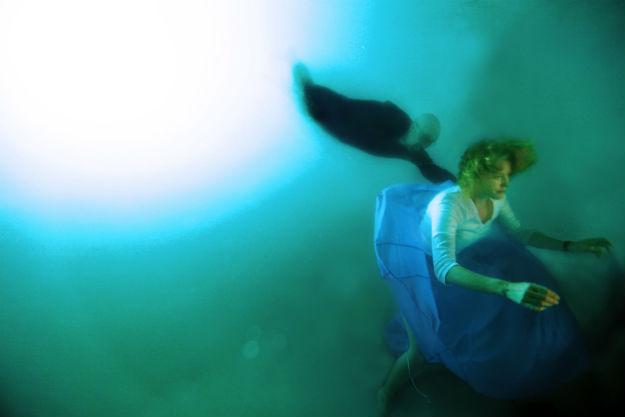
The male anti-hero has become a staple of storytelling in 2012, but the female anti-hero is still considered relatively taboo. The show is more forgiving of Walt’s bad behavior than of Skyler’s bad behavior, for example. Indeed, in one of the most uncomfortable moments in Breaking Bad, Skyler, a prisoner in her own home and feeling completely powerless to either turn Walt in or else save her family by escaping him, tries to commit suicide by walking into the family pool.The image of Skyler vacantly walking into the water and resolutely staying under while her family panics is striking because it feels so familiar. The scene conjures a particular type of female suffering and despair, one charted through the lives of Virginia Woolf and Sylvia Plath. It is a striking image precisely because it still resonates with a modern viewer: in a “post-feminist” landscape where gender rules are supposedly less restrictive than in the past, we still understand female suffering as something which is fundamentally passive.

The way we think about masculinity has undoubtedly shifted since the 1960s, but, in many ways, our concept of what it means to be a man has stayed relatively static. We respect loudness more than quiet, violence more than measured resolution, silence more than gentle talking. The mask of masculinity is compelling precisely because in recent years it seems like so much more of a mask than femininity. While femininity is perceived as a construct, an outfit that can be removed, replaced, strengthened or destroyed completely, masculinity is increasingly perceived as a fixed kind of attitude. In our culture, female characters learn to take off the artifice of “femininity” in order to find strength (perhaps this is why Del Rey’s insistence on continuing to play dress-up frustrates some viewers) while male characters, from an early age onwards, learn to put “masculinity” on.

This is clearly evident in Walt’s transformation. He starts out the series as a symbol for castrated modern masculinity and becomes a definitive alpha male character. For much of the series we are supposed to rally behind Walt, regardless of his myriad flaws. But Jesse, plays an interesting foil to this one-dimensional type of masculinity, which is still strongly lauded in our culture. Though Jesse is consistently awash in swagger, delightfully adding “bitch” to the end of every sentence he utters, he is also the show’s heart and moral compass. Jesse is a small-boned, vulnerable kind of dude, gentle in the smallest, most heart-warming ways, whether calling Skyler “Mrs. White” and trying to make conversation at the dinner table or worrying about the extent to which the drug-dealing business is hurting those around him. While Walt seeks freedom, Jesse seeks comfort, family and security, those things that Walt purports to love but ultimately leaves behind in pursuit of his own greatness. In many ways, Walt and Jesse represent opposite ends of the spectrum of masculinity—the old school domineering alpha male versus the more modern, tentative kind of masculinity, that sees strength not as the need to domineer, but in the need to protect and love.

The American West is perceived in both Breaking Bad and Ride as sensual; the open road is seen as a path to conquer. The female place in this enticing and forbidden landscape is still unsure. Del Rey’s vision of freedom is centered on a fantasy of finding a community of outlaws where she can feel at home. Critics often view Del Rey’s desires as self-abnegating, rather than self-fulfilling.  The L.A. Times music blog claimed that her stage persona is a “…put-on, and a transparent plea for attention, and a little bit sad to watch in a cute kind of way." Many dismiss Del Rey’s potential to have complete agency as a moral actor and cast her off as a mere passive and pretty image. In contrast, Walt’s transformation is portrayed as if it is entirely of his own volition. But the catalyst that triggers Walt’s transformation is cancer, an illness entirely outside the realm of his control. While Del Rey’s actions are often interpreted as self-objectifying, throughout Ride Del Rey makes it clear that she has made deliberate choices about her self-presentation and the way she interacts with the world around her. The femme fatale figure she presents is threatening precisely because she doesn’t eschew femininity; she uses the motifs of femininity to her advantage, to get what she wants regardless of the cost.

We tend to read male responses to trauma as choices and female responses as necessary outcomes. In her spoken word monologue in Ride, Del Rey describes how her mother always told her she had a chameleon soul, “no moral compass pointing due North, no fixed personality, just an inner indecisiveness that was as wide and unwavering as the ocean.” For men, the chameleon soul refuses to be tied down to anything or anyone, a pure badass. For women, the chameleon soul is an empty vessel waiting to be filled, an image to project all your hopes and desires onto. The Manic Pixie Dream Girl and Femme Fatale tropes are dangerous not because women shouldn’t be wild, but because the untamed image of the girl who got away is always told from the perspective of the man she left behind.

The New York Times argued that “Ms. Del Rey generates so much anger precisely because she does so little. People don’t know what to do with this unformed thing they’ve been told they need to care about; crushing it is easy, almost humane.” Del Rey’s greatest critics argue that her work is, at best, derivative and, at worst, a complete sham.The extent to which Del Rey’s image is authentic highlights our disbelief in the idea that female artists can conceive and construct their own identity. Lots of male artists come from wealthy, privileged backgrounds, but we balk when twenty-something privileged female artists like Lena Dunham or Emma Koenig get impressive book deals. The assumption that Del Rey is somehow not responsible for crafting her own image is part and parcel of a culture that automatically casts off the feminine as something intrinsically fragile and helpless.  

Both Breaking Bad and Ride depict an American West which is ultimately a fantasy. There are no more open roads left to be discovered in America. The American cultural landscape of today is shaped more by the desire to meet public approval than the need to upset social order. But the continued fixation on the freedom of the open road is a deeply embedded American desire, a characteristically male longing for individual autonomy. The female characters in Breaking Bad rupture the male fantasy of escape, but Del Rey’s video for Ride complicates this type of longing, taking a page from the American fable of the egoism of the open road while ripping apart its very fabric.

Arielle Bernstein is a writer living in Washington, DC. She teaches writing at George Washington University and American University and also freelances. Her work has been published in The Millions, The Rumpus, St. Petersburg Review, and South Loop Review, and she has twice been listed as a finalist in Glimmertrain's Family Matters Short Story Contests. She is Associate Book Reviews Editor at The Nervous Breakdown.