

This video essay is part of the "Cruel Summer" series of articles; this series examines influential movies from the summers of the 1980s. The previous entries in the series covered THE BLUES BROTHERS (1980), STRIPES (1981), and ROCKY III (1982).
The fantastic opening sequence of WarGames uses one of the most basic constructs of video games: just when you think you’ve figured out a level, it turns out to be part of a bigger scenario. We first see an approaching car in the middle of a nasty storm. Two men (played by the late John Spencer and Michael Madsen, both looking very young) approach a house and enter its welcoming living room. After they walk up to a mirror, we learn they’re at a military outpost. Soon they are in an elevator that immediately descends into the Earth. When they reach their destination, we realize they’re in a fortified room in a nuclear missile silo, from which they’re in charge of launching a retaliatory strike if the U.S. is ever attacked. After an alarm goes off, an emergency message is received: an order to launch the first of ten nuclear missiles. As they insert their launch keys and go through the required checklist, the one who’s a veteran (Spencer) starts to have second thoughts about turning the key. The scene climaxes with the Madsen character pointing a gun at his commanding officer and ordering him to “turn your key, sir!” The sequence ends with what is known in the gaming world as a cut scene, an abrupt transition to daylight.
WarGames is the best video game movie ever made, precisely because it isn’t explicitly based on a video game. Hollywood has had mostly disastrous results when they’ve tried to tap into the video game market. Beginning with the Tie fighter sequence from Star Wars, video game graphics and situations have been clumsily incorporated into movies like, say, 1979’s Moonraker, a classic example of Hollywood attempting to retool an established property (in this case James Bond) to take advantage of a current craze. Arcade games like Pac-Man, Defender, and Galaga became part of the youthful movie-going experience. The line from Pong to Star Wars to Pac-Man to Atari to Hollywood seems fairly obvious. Hollywood’s first official video game movie was the summer ’82 release TRON, a spectacular sight and sound show that flopped but that Roger Ebert correctly described as “. . . breaking ground for a generation of movies in which computer-generated universes will be the background for mind-generated stories about emotion-generated personalities.”
WarGames is one of those movies. It works because the story is the main focus, not the technology. (That’s why a movie like the summer ’84 release Cloak & Dagger can retain a retro freshness while TRON: Legacy plays like a rerun.) Director John Badham and screenwriters Lawrence Lasker and Walter F. Parkes knew that the sight of a home computer system was exotic enough that they didn’t need to linger on it in order to keep the audience’s attention. That’s what separated WarGames from the glut of other summer ’83 releases that had some kind of video game and/or computer plot point. There was the speeder chase in Return of the JEDI that played like a take-off on Defender, while in Superman III,Richard Pryor played a computer programmer coerced by Baddie Robert Vaughn into working for him. (The climax of the movie had Vaughn firing missiles at Supes while seated at the controls of the world’s biggest game console.) Joe Dante’s segment of Twilight Zone—The Movie played like a cross between a Tex Avery cartoon and a video game. Even The Man with Two Brains had a throwaway gag of Dr. Necissiter’s (David Warner) brain transfer machine needing quarters in order for it to work. But WarGames felt organic (even if its story was a high concept mix of Steven Spielberg suburbia and Cold War fear). WarGames has a primal pop immediacy that uses the Reagan-era fear of a Russian invasion as a way to tap into the then percolating fear of modern technology.
After that intense Fail-Safe opening, the action switches to Colorado, specifically the NORAD command center where U.S. defense strategies are enabled in the event of an enemy attack. (In reality NORAD only handles detection, not actual military defense strategies.) At the time of the movie’s production, the NORAD set was the most expensive in history ($1 million) and it remains one of the most famous, ranking with the War Room from Dr. Strangelove. The shot where we first see the set is a beaut as a single analyst walks into a rather nondescript room, then, in an unbroken shot, the camera follows him as he walks up some stairs and a panning shot allows us to take in the massive computer screens that make up the front of the NORAD complex.
It turns out that the emergency launch was a test to see if the men in the missile silos are willing to turn the key. Twenty-two per cent of the men failed the test, which is viewed as a major problem by Washington. Some of the President’s men have arrived at NORAD to discuss ways to address this problem. Gen. Beringer (Barry Corbin) is a veteran of war who acknowledges the need for technology but feels safer knowing that men are in the silos. McKittrick (Dabney Coleman) is a civilian analyst who wants to replace the men with computers in order to guarantee the President’s orders are carried out. The film allows us to see validity in both sides.
We then meet David Lightman (Matthew Broderick), a bright kid who lives to play computer games. When we first see him he’s at an arcade playing Galaga. (There’s a brief fun shot of all the games as we try to spot our personal favorite. The detail of David playing Galaga and not, say, Pac-Man is just right. Pac-Man is a game of timing where Galaga requires real skill.) At school, David likes to stay under the radar. He invites Jennifer, played by Ally Sheedy, to come over to his house where he uses his personal computer to dial into the school’s computer and changes a recent scoence test grade from an “F” to a “C.” He does the same for her, because she also did poorly. When she orders him to change the grade back, he does, only to change it to an “A” after she leaves. David and Jennifer are cut from the same cloth as the kids in a Spielberg movie; you can almost imagine a cinematic suburb where the split-level houses from E.T., Sixteen Candles, Risky Business, and, yes, Ferris Bueller’s Day Off are all lined up. The byplay between Broderick and Sheedy is charming and blessedly lacking in teen sexual anxiety. David may be the movie’s first computer hacker, but he’s devoid of paranoia or arrogance. He’s like Mark Zuckerberg’s well-adjusted older brother.
What connects David to the men in the missile silos is his desire to play with the ultimate computer system. When he hacks into a computer game company he inadvertently finds himself playing a game with the W.O.P.R. (War Operation Plan Response), the U.S. Defense computer that comes up with every possible scenario in the event of World War III. Naturally, David wants to play a game of “Global Thermonuclear War,” representing the Russians himself. The sequence where David and Jennifer play on his computer and the people at NORAD scramble to come up with a proper response is close to slapstick. (The cross-cutting by Tom Rolf sustains tension impeccably.) The moment David ends the game is chilling, equating sudden termination of game play with possible nuclear annihilation.
Finally David realizes he almost caused nuclear war, but the W.O.P.R. insists on finishing the game. The idea of computers becoming aware and taking over the world is not new. (Think of 2001, when the HAL 9000 suggested to Dave Bowman that he take a pill and reconsider what he was doing.) The W.O.P.R.’s indifference is just the natural extension of the military creed about turning men into killing machines. Why bother with the men when the machines can simply follow their programming? In its own way WarGames foretold the day when our dependency on computer technology would be at the heart of all our fears.
Of course, Badham and his collaborators don’t bludgeon you with this message in this big-studio summer movie. Badham is known as a journeyman director, something quite rare in today’s Hollywood; he’s able to adapt to whatever environment a story is set in, giving the movie a sense of pacing and character—as in the classic Saturday Night Fever. His other worthy credits include the unjustly forgotten Whose Life Is It Anyway?, Short Circuit, Stakeout, and the underrated real-time thriller Nick of Time. Released a couple of weeks before WarGames, Badham’s Blue Thunder showed a noir-ish techno style that was like an adult video game. For WarGames he was aided immensely by the cinematography of William A. Fraker (Rosemary’s Baby, 1941), whose clean, bright lighting was indicative of early ‘80s movies. (Shooting several computer screens, Fraker does a really lovely job with reflections.) The score by Arthur B. Rubinstein is a mix of militaristic bombast and early sketches of electronica. My favorite musical cue is when David has his first “conversation” with his computer and asks, “What is the primary goal?” Both the answer and accompanying music never fail to create a genuine moment of dread.
The one thing that has made WarGames hold up to countless repeated viewings long after its then novel computer terminology has become dated is the depth of its supporting characters. Today, gadgetry and armory have placed ahead of character, but WarGames is a reminder of when Hollywood seemed to have things in somewhat proper proportions. Coleman allows McKittrick’s weakness for logic to keep him from being an unfeeling martinet, while Corbin is absolutely winning as a career military man only too aware of the situation’s severity. Corbin’s delivery of the classic line, “Goddamnit, I’d piss on a spark plug if I thought it’d do any good,” is typical of his good ol’ boy charm. Maury Chaykin and the incomparable Eddie Deezen play a couple of computer geniuses with a mix of jocular aggression and know-it-all superiority. (“Mr. Potato Head! Back doors are not secrets!”) The one misstep in the movie is the conception of the character of Dr. Stephen Falken (John Wood), a computer programmer who disappeared after personal tragedy and the realization that his work was going to be used for all the wrong reasons. A cross between Stephen Hawking and Robert Oppenheimer, Dr. Falken’s pessimism about humanity and belief in futility is the only place where the movie is explicit about its no-nukes message. Wood eventually wins viewers over, especially when he tells Gen. Beringer, “What you see on these screens up here is a fantasy; a computer-enhanced hallucination. Those blips are not real missiles. They're phantoms." That’s just the set-up for the movie’s climax, a spectacular sight and sound show that suggests that the futility of war might be beside the point. It suggests that all of life’s lessons will be learned online.
San Antonio-based film critic Aaron Aradillas is a contributor to The House Next Door, a contributor to Moving Image Source, and the host of “Back at Midnight,” an Internet radio program about film and television.



 Makeup effects were always a key component of the movies. Greasepaint, wigs, putty, latex appliances and other items in the makeup master's toolkit helped make the improbable, and the impossible, seem vividly real. Boris Karloff could make us believe that he was a tormented, tragic creature built from pieces of dead men in Universal's Frankenstein films – with makeup by the great Jack Pierce. Pierce's work on The Wolfman made an ordinary man become a werewolf when the wolfbane bloomed and the moon was full and bright. A 25-year-old Orson Welles played the title character of Citizen Kane at a dazzling array of ages, thanks to inventive, at times highly theatrical effects by Maurice Seiderman.
 The 1960s through the 1980s were the high point of traditional, analog filmmaking techniques. Some of the most memorable films from this era showed transformation, decay and violence with unprecedented realism. Some of the most striking makeup effects of this period were the work of one man, Dick Smith, who finally received a special Oscar from the Academy in 2012 after decades of groundbreaking work. Nobody spilled blood with more panache.
 The late 1970s saw makeup effects moving away from realistic applications and moving toward the extremes of fantasy. Christopher Tucker's remarkable makeup for David Lynch's 1980 drama The Elephant Man may have pushed the Academy to start handing out a Best Makeup award the following year. After eight decades' worth of movie makeup effects, and 20 years of rapid technical innovations, to continue ignoring the makeup artist's craft would have seemed perverse. And speaking of perverse….
 The Oscar for American Werewolf signaled that the 1980s – the decade of high-concept blockbusters – would be the golden age of analog makeup effects. When you look back over genre movies from the period – small and big, sensitive and crass, clichéd and innovative – the special effects often hold up surprisingly well. In some cases they're the main reason that people still talk about the movies. Modern makeup effects are slicker and more consistent from scene to scene and shot to shot for reasons that we'll get to in a minute. But, given the mechanical limitations of the pre-digital era, their achievements are still impressive. Even when the storytelling falters, or when the film itself seems less an artistic statement than the end result of a studio deal memo, you can still see the behind-the-scenes craftspeople working at the peak of their powers, always striving to innovate and impress.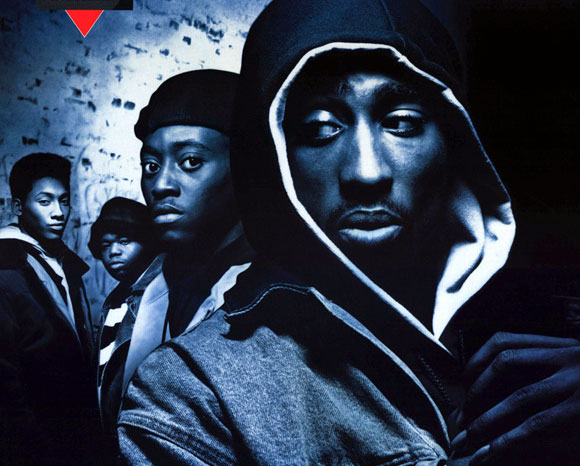
 At the same time, the New Black Wave in American movies was for the first time giving young black filmmakers the opportunity to tell stories of the contemporary black experience. Naturally, the soundtracks to most of these movies contained some of the most cutting-edge tracks around. Unlike the soundtracks to movies like Breakin’ or Krush Groove, which were dominated by the most adventurous rap acts around, the soundtracks to movies like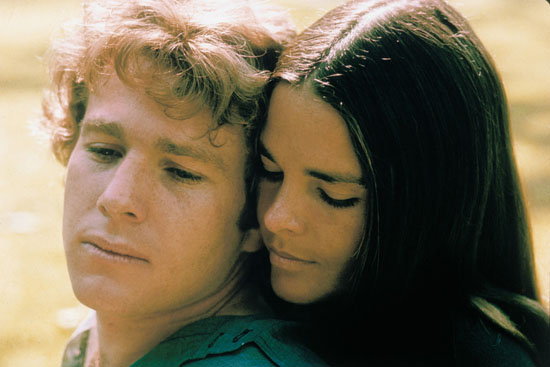
 So why was Love Story such a hit? That’s the mystery, isn’t it? The strength in Arthur Hiller’s direction is his knowing not to get in the way of the actors. He knows he’s working with very delicate material, and that if you push it you are likely to get bad laughs. (For some viewers the bad laughs were always there.) Hiller is one of those reliable journeyman directors who knows how to get you what you want. He knows how to bring movies on time and on budget. In other words, he has no real distinctive style. That’s crucial for a movie like Love Story. Both Ryan O’Neal and Ali MacGraw are onscreen almost constantly. We must believe they are drawn to each other from frame one. We do. The dialogue and plot developments are secondary to how they look and relate to one another as both actors and their characters. Hiller does do a smart thing that is key to the movie’s success; whenever possible, he places O’Neal and MacGraw in real locations. Scenes of Oliver and Jenny walking and courting are given real immediacy when we can see activity swirling around them. Hiller indulges in what Roger Ebert at the time termed the
  The success of MacGraw’s performance is due in no small part to O’Neal’s forceful acting style. Like Redford, O’Neal was also burdened with being extraordinarily good-looking. Both men spent a good part of their careers having to overcome their beautiful exteriors in order to be taken seriously as actors. Redford used his looks to deconstruct the myth of the entitled WASP male. O’Neal used his looks as a way to disarm those around him. It allowed him to play con men, cads, jerks. He both embraced and resented the fact that being good-looking enabled him to get almost anything he wanted. (It was genius on Kubrick’s part to cast him in Barry Lyndon.) There is a constant seething anger in O’Neal’s acting that charges even the most routine scenes with the possibility of violence. There’s a startling moment when he gets mad at Jenny and tells her to stay out of his life. For a moment you’re genuinely scared for her safety. (It is this scene that leads to the moment where Jenny utters the immortal line, “Love means never having to say you’re sorry.”) O’Neal’s scenes with Ray Milland as his stern father are filled with tension as both father and son are constantly unable to make any kind of connection. (I’m sure at the time the Milland character was hissed at by young viewers rebelling against their out-of-touch parents. Seen today, Milland is very good at suggesting a man who comes from a generation not accustomed to expressing emotions. His final scene with O’Neal is a little jewel of understated acting.) The final scene between O’Neal and MacGraw is deservedly famous. Both actors display such genuine love and affection toward one another that we not only feel Oliver’s loss, but Jenny’s too.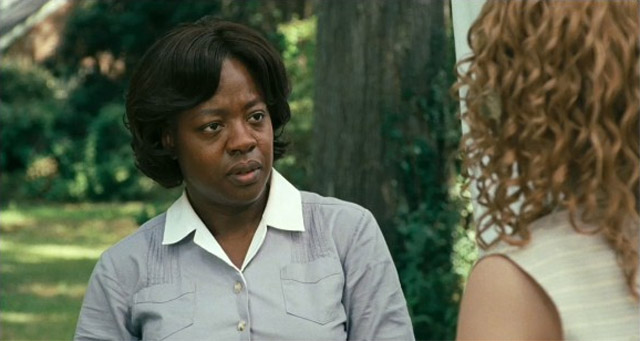
 The power of the performance is in Davis’ eyes. They take in everything – tossed-off racist remarks, a child’s need to be comforted. And her voice, which never rises above a formal submissiveness, quivers with a boiling anger that stands for generations of women whose hard work goes unnoticed. It’s a voice that needs to be heard.
 [EDITOR'S NOTE: Press Play presents "Should Win," a series of video essays advocating winners in seven Academy Awards categories: supporting actor and actress, best actor and actress, best director and best picture. These are consensus choices hashed out by a pool of Press Play contributors.]

 At the time of the Academy Awards, the film's box office take was closing in on $80 million. It was obviously hitting a chord with audiences, but the critical response was mixed at best. The positive notices seemed to be written under duress. The rest of the mixed-to-negative reviews rang of hardened resistance to being moved at the sight of two old geezers puttering about and saying the damnedest things. (I know one critic who at the time referred to the movie as On Golden Shower.) Some critics and younger film buffs scoffed at a movie they perceived as appealing to middlebrow tastes – i.e., conservative older moviegoers who probably say things like, “Why don’t they make more movies like that?” On Golden Pond was one of the first big Reagan-era dramas, the anti-Ordinary People. The pairing of
  If you didn’t know the movie was based on a play it wasn't hard to figure out, and not just because the story takes place in and around one location.
  (Watching Henry Fonda in On Golden Pond, I was struck at how son Peter Fonda’s career-capping performance in Ulee’s Gold is like the dark side of Norman Thayer; the younger Fonda is playing both his dad and Ulee Jackson.)
 Jane Fonda’s interactions with Hepburn and her father demonstrate her skill at being able to adapt to differing acting styles. Her scenes with Hepburn have a loose give-and-take feel. There’s a remarkable scene where mother and daughter go skinny-dipping at night. Seeing their heads poking above the water at night, we register that it is possible Jane could be the offspring of these two. Her sharp features and her quivering, clipped voice are just right. Her big scene with her father is one for the time capsule. The way her Strasberg-training acting style and his do-it-as-rehearsed strictness rub against each other beautifully illustrates the generational gap they are trying to close. The elder Fonda hated improvisation. He felt there was no need to change what was already on the page. This leads to a fleeting moment where the real world comes crashing into the movie. Chelsea tells Norman she wants to be his friend. When the camera switches to Henry Fonda’s side of the scene, Jane/Chelsea improvises a gesture and puts her hand on his arm. (You’ll miss it if you’re not looking for it.) This bit of business was not rehearsed and startled the elder Fonda. His fleeting reaction to this moment of affection is real. You see him turn, almost embarrassed by the intimacy of the moment. At the end of the movie, when Chelsea, who always refers to her father as “Norman,” calls him “Dad,” we can no longer separate the characters’ quiet acknowledgement of their love from seeing Jane and Henry finally connect with one another.
 Press Play Video Blog