SIMON SAYS: Trying Harder: What PROMETHEUS Gets Right

SIMON SAYS: Trying Harder: What PROMETHEUS Gets Right

null

One character in Prometheus sums up why Ridley Scott's return to his 1979 science fiction milestone is as refreshing as it is, in just two words. The protagonist in question is an android, arguably the first in the series since Aliens who’s more than an extension of the people who programmed him. Typically, androids are understood to be mental blank slates in the Alien films, so it makes sense that in Prometheus, David (Michael Fassbender) is treated as a tabula rasa. In fact, one character points this out late in Prometheus's plot, reminding him that he can't feel the emotions he professes to. So it's fitting that, when asked what his boss has communicated to him, David says: "Try harder." 

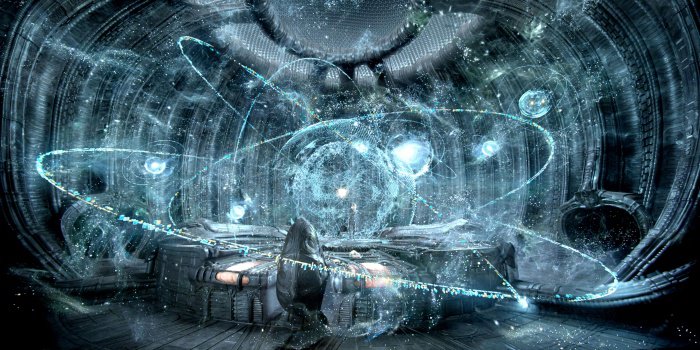
Prometheus, more ambitious than any other Alien sequel, has an impressively massive scope, both literally and figuratively. The film's mammoth CG and concept art-heavy sets are matched only by its over-arching theological speculation. Of course, because Alien 3 and Alien: Resurrection both went through production hell, their stories are understandably incoherent. But even Aliens, James Cameron's perfectly adequate follow-up to Alien, has relatively staid aspirations. 

The Alien franchise, up until Prometheus, delivered less and less of a payoff. This is most evident in the degrading of the relationship between three key figures in each film: the lead human protagonist (usually Ripley); the robot; and the Xenomorph. In Alien, Ripley (Sigourney Weaver) was the last survivor of the Xenomorph's attack on the Nostromo. She manages to escape the hazards of A mission whose main directives are unclear to all but one of its crew members. Ash (Ian Holm) is the voice of "the company," a phrase over-used in the Alien movies to describe the Weyland-Yutani Corporation. The company's motives are hidden and in this case, immediately dangerous. The Xenomorph thus represents an idiosyncratically weird fusion of technology and primal sexual tension (holy freeholey, H.R. Giger, to what libidinal depths did you plunge to come up with that concept art)—as well as all the trauma and emotions the otherwise bloodless company has suppressed. So it stands to reason that Ash admires the perverse "perfect[ion]" of the Xenomorph's feral but chilly behavior. The Xenomorph is the monster that Ash wants to become but cannot, since he was made in his creators' image.

Ripley's relationship with the Xenomorph is similarly not personal. In Alien's futuristic office space, Ripley is just one grunt among many. For the longest time, she's not the lead protagonist, just a survivor, more a concept than a character. This is striking given who Ripley is presented as in the forthcoming sequels. Each time, she's treated as the reluctant host to the Xenomorph's parasite. In Aliens, the aging Ripley's ticking biological clock gives her nightmares about motherhood, including one in which an alien shoots out of her guts. Her relationship with Newt (Carrie Henn) is simple: she is the child that Ripley wants, but the Queen Xenomorph is blocking her. The aliens are thus once again extensions of Weyland-Yutani, but this time they ultimately represent the monster the company might gradually turn Ripley into. 

The most complex character in Aliens is thus Bishop (Lance Henriksen), the one representative of Weyland-Yutani consistently portrayed as both an emissary of "the company" and an individual. In Alien, Weyland-Yutani employees only start to exist as individuals once they reject the mandates of their bosses. This is also true of David in Prometheus, who says that when his master dies, he "will be free." So it's refreshing to see that Bishop, at the end of Aliens, stands by Ripley and Newt in their final fight against the Queen. In that one moment, Bishop sets up the archetype that screenwriters Damon Lindelof and Jon Spaights will follow for David in Prometheus. Bishop's nature as a more human-like model is apparent in his lack of interest in the Xenomorphs. He, like Ripley, is there to save lives. The mission that he's on is thus not one that sympathetically associates him with the Xenomorphs. Instead, it's assumed that Bishop is trying to be, as the saying goes, "just one of the guys," a point succinctly illustrated during the famous knife trick scene.

Unfortunately, the next two sequels only perpetuate the more psychologically lacking aspects of the franchise. In Alien 3, Ripley grapples with her nascent feelings of survivor's guilt on a prison planet full of convicted murderers and rapists, some of whom have reformed. Ripley relates with the prisoners, all of whom are at least nominally atoning for their crimes. But that identification inexplicably makes the alien the cause of Ripley's feelings of impotence: in her head, the Xenomorph’s survival  is her responsibility and her fault. That theme is never fully explored but it's assumed that Ripley, who tries to get a prisoner to help her kill herself before she (and the alien she will soon give birth to) cause further damage, feels responsible for the Xenomorphs. Her death at the end of Alien 3 is not cathartic, however, because it's a drastic reduction of Alien's themes to a surreal fight between a specific character and a world-ending monster.

Furthermore, the man who created Bishop returns in the last scene of Alien 3, predictably representing Weyland-Yutani's psychopathic interest in studying and profiting from the Xenomorphs. Ripley briefly revives the robo-carcass of Bishop earlier on—meaning the Bishop android that was pretty much destroyed by the Queen at the end of Aliens. But Bishop's human creator's random appearance at the film’s conclusion is as good a sign as any of how un-nuanced that film's portrayal of "the company" and its androids have become.

That being said, Alien: Resurrection, a consistently entertaining but often ridiculous and mostly brain-dead sequel, is even more unambitious. The film starts with a heady theme: what does a post-Ripley Alien movie look like? Ripley's clone is the film's main heroine, once again restructuring the “Alien film” as a personal fight between her and the Xenomorph: ironic, given that the film's main theme is supposed to be evolution and the way that time has changed things. The Xenomorph may have transformed into a weird human-alien hybrid called a "Newborn" by film's end, and the robot Ripley deals with may be a lady (Winona Ryder), in fact. But there's nothing to suggest that anything that Ripley's relationship with these emblematic characters has grown or drastically changed from what we've seen in the last three films. Call (Ryder) is a sympathetic companion and is defined as an individual throughout Alien: Resurrection. There are thus no substantial stakes in her relationship with Ripley. And the Newborn is still just a dangling thread that Ripley has to get rid of so she can die easily. Call also has no real fascination with, or even strong hate for, the Xenomorphs or the Newborn. She just wants to kill the monster and not "die."

This thankfully brings us back to Prometheus, a film that finally builds on the foundation that Scott built with screenwriters Dan O'Bannon and Ronald Shusett. Scientist Elizabeth Shaw (Noomi Rapace) is circumstantially different than Ripley: she gets in over her head in her quest for answers. Shaw's actively searching for the unknown, unlike Ripley, who just happened to stumble upon it. Shaw is thus guided by the same impulses as David, a character who embodies a potentially pure drive towards scientific exploration. David is only corrupt because his master is corrupt. The deaths of a couple of other characters in the film suggest that Prometheus has a naive but intriguingly moralistic through-line: discovery for flawed reasons is dismissed. 

Unlike some other characters, Shaw has no ulterior motives. She genuinely wants to see, do and learn more than anyone else on the Prometheus, the ship that has replaced the Nostromo. The aliens in Prometheus, called Engineers, are the tantalizingly close realization of Shaw's search but ultimately, her encounter with them is not what it could be.  She does not learn anything from that originally wanted to. The aliens that Shaw encounters have no answers for her, leaving her right where she started at the film’s beginning.

That having been said, there is a serious danger inherent in these creatures, made clear when David suggests that the Engineers may have just made humans for the same reason man made androids: "because [they] could." But at the same time, there's a romance to David's actions. He idolizes the Engineers, and calls them "a superior race." But he also admires Peter O'Toole's Lawrence of Lawrence of Arabia, even going so far as to dye his hair an Aryan blond to match his messianic hero. David stands in awe of the Engineers and gets to "live" ultimately because he has that drive to learn and do more to learn about Prometheus' aliens.

By film's end, David and Shaw choose to continue their search for answers to big questions. And while that resolution's thematic bottom line is fairly simplistic, it's also what makes Prometheus's conclusion the second most satisfying in the series. To dream, to continue to strive for something greater than yourself and, yes, to try harder, in the face of the horrifying and the cruel is a very noble thing.

Simon Abrams is a New York-based freelance arts critic. His film reviews and features have been featured in The Village Voice, Time Out New York, Slant Magazine, The L Magazine, The New York Press and Time Out Chicago. He currently writes TV criticism for The Onion AV Club and is a contributing writer at the Comics Journal. His writings on film are collected at the blog, Extended Cut.

VIDEO ESSAY: Ridley Scott’s PROMETHEUS Timeline

VIDEO ESSAY: Ridley Scott’s PROMETHEUS Timeline

It’s perplexing to survey the recent surge of excitement from sci-fi movie fans about Ridley Scott. Sure, Scott’s two directorial sci-fi films—Alien and Blade Runner—set the benchmarks for the sci-fi horror and the sci-fi futuristic thriller, respectively, but Scott hasn’t directed a sci-fi film in thirty years. In fact, Scott hasn’t garnered much critical or financial success for a large chunk of his recent work (Body of Lies, Robin Hood, Kingdom of Heaven and A Good Year). So this excitement must be the result of two forces: 1) the studio’s clever marketing strategy of highlighting the fact that Scott only directed the original Alien, thus forgiving those late, lackluster spin-offs in the franchise; and 2) moviegoers’ desperate yearning for a credible companion piece to that same landmark 1979 film (e.g. Roger Ebert on the fourth Alien film: “There is not a single shot in the movie to fill one with wonder”). Considering these notions, Scott’s newest film, Prometheus, is destined to come under harsh scrutiny.

For starters, Prometheus was long thought to be a prequel to Alien—until Ridley Scott vehemently insisted that Prometheus was not a “prequel” per se, but a film that occupied the same fictional universe—a dark, capitalism-gone-awry space frontier full of privately funded space vessels and government-manned cargo ships—Scott created with Alien. This notion clashes with the studio’s marketing strategy of anchoring both Scott and Prometheus with Alien trademarks (the similar font for its title in the trailer, a strong female lead battling monstrous beings, etc.). As a result, much Internet speculation has surfaced regarding the possible linkage between Alien and the new Prometheus; where would Scott’s new film take place and would it feature the franchise’s aliens? The irony here is that Prometheus—once shrouded in secrecy—has become one of the year’s more transparent blockbusters. After releasing three (yes, three!) teaser videos announcing the arrival of its first theatrical trailer back in December 2011, Prometheus began a viral marketing campaign illustrating the visual history of its own place in Scott’s fictional universe. And if one were to do some homework and logical placement of events, the Prometheus-universe timeline would look something like this:

2023 – Weyland Industries Founder Peter Weyland gives a bold speech at a TEDTalks event, declaring humans’ new roles as Gods because of their ability to create human-like “cybernetic” individuals (a reality embodied in the Alien franchise, with Androids like Bishop and Call).

2089 – Archaeologist Elizabeth Shaw discovers an ancient map in a cave and then sets off a series of events leading to a space expedition to discover the origins of human life.

2093 – The Weyland Industries expedition crew, aboard the spaceship named Prometheus, lands on the distant moon LV-223. Instead of the origins of human life, they discover destructive beings (but not the titular monsters from Alien). The crew is killed. In the end, one of these destructive beings evacuates LV-223 in an ancient space pod of some sort.

The next date is not a Prometheus viral video; it is a known event from the original Alien film.

2122 –The crew of USCSS Nostromo (the cargo vessel carrying Alien heroine Ellen Ripley) investigates the planetoid LV-426 (which wouldn’t be too far from LV-223) and discovers a wrecked alien ship. Lo and behold, they find the fossilized remains of the destructive being from Prometheus.

In conclusion, Scott seems to have created a “peripheral prequel” to his historic sci-fi horror film Alien. There are no direct character lineages (outside of Weyland Industries) or same alien threats (presumably). The important difference between Alien and Prometheus seems to come down to Scott’s polarizing themes. With Alien, Scott set out to rewrite the space opera (e.g. Star Wars, Star Trek) into a terrifying gore fest. Judging from the ideas and content in the Prometheus viral videos (the origins of life, man’s ambition to play God), Scott now looks to expound on the hazards of ambition and hubris. If that’s the case, then maybe Scott’s thirty-year absence from sci-fi is worth the wait.

But this is all speculation. Maybe Scott just wants another monster to pop out of someone’s chest. We’ll find out on June 8th.

Nelson Carvajal is an independent digital filmmaker, writer and content creator based out of Chicago, Illinois. His digital short films usually contain appropriated content and have screened at such venues as the London Underground Film Festival. Carvajal runs a blog called FREE CINEMA NOW which boasts the tagline: "Liberating Independent Film And Video From A Prehistoric Value System."

VIDEO ESSAYS: The Seventh Art on GIRL WITH THE DRAGON TATTOO and SON FRERE

VIDEO ESSAYS: The Seventh Art on GIRL WITH THE DRAGON TATTOO and SON FRERE

This month the online video film magazine The Seventh Art has published two video essays on films: one on David Fincher's remake of The Girl with the Dragon Tattoo, and one on Son Frere and depictions of death and dying in cinema. The videos are part of The Seventh Art Issue 4.

"The Girl with the Dragon Tattoo as a Meta-Remake". Written by Christopher Heron, edited by Simone Smith, sound recording by Brian Robertson, narrated by John Cohen. Excerpt:

The two most common types of film remakes at the moment are remakes of older films and remakes of recent foreign language films. The remakes of these foreign films aim to port the domestic success of a film to a North American market that has not seen the original. David Fincher’s remake of The Girl with the Dragon Tattoo is somewhat of an aberration because the original film had grossed a very healthy $10 million in the United States based, in part, on the success of the source novel. Compare that with the recent remake of Let the Right One In, another Swedish domestic success, which only accumulated $2.1 million in the U.S. ahead of its own American remake. It’s fair to say that The Girl with the Dragon Tattoo is a unique remake where a fair amount of the prospective audience is aware that it’s a remake.  

"'The Color & the Texture of Blood': Visible Mortification of the Body in Son frere." Written by Elysse Leonard, edited by Christopher Heron, sound recording by Brian Robertson, narrated by John Cohen. Excerpt:

Classical cinema’s approach to non-­‐violent, or “natural,” death can be differentiated from that of post-­‐classical cinema in several ways. Death in classical cinema is meaningful, narratively functional, and, perhaps most significantly, invisible. Post-­‐classical death, however, is irrational, contemplated, and highly visible as a material process. This is represented in Son frère through a nonlinear story, close-­‐up shots of the body and the use of camera to identify with the dying character.

VIDEO: Sight & Sound Film Poll: Ekkehard Knörer and Michael Baute on UNDER THE BRIDGES

VIDEO: Sight & Sound Film Poll: Ekkehard Knörer and Michael Baute on UNDER THE BRIDGES

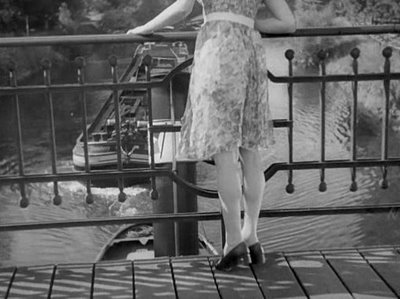
The fifth video in our ongoing series is the first to involve a film on my own top ten list for the Sight & Sound Film Poll. But I'm not one of the commentators on the video. Nor is the film on the top ten list of either of the commentators. But somehow the three of us form "an inclusive whole" (to use a phrase in the video) to make the case for why Helmut Käutner's Under the Bridges is one of the greatest films ever made.

I first watched the film three years ago as part of Shooting Down Pictures, where I started producing video essays. My viewing of the film came weeks before a trip to Berlin, where I discussed my video essays in public for the first time, as part of the series Kunst der Vermittlung (translated as "Cultural Education" according to Google) organized by Stefan Pethke, Michael Baute, Volker Pantenburg, Stefanie Schluter and Erik Stein. This was an extensive series of screenings and talks dedicated to showcasing film criticism and scholarship performed within the medium of film and video.

I was really taken by the project organizers' enthusiasm for this sub-genre of filmmaking and film criticism, and proposed to collaborate on a video essay on Under the Bridges. Michael Baute accepted the invitation and also enlisted the help of Ekkehard Knörer, editor of the film journal Cargo and one of Germany's leading film critics. We met at Michael's apartment in Kreuzberg, I with my recording equipment and Michael and Ekkehard with a voiceover script they prepared. We recorded the narration; later that day Michael accompanied me on a boat tour of Berlin's Spree River, where we filmed several bridges, thinking it might be a good visual element for the video. I concluded my visit happily and went back to the States with freshly recorded footage ready to edit.

Three years later, the video is finished. I'll refrain from listing extenuating circumstances for why it took three years to make this video essay. I've already apologized to my collaborators, and I am happy to report that they are satisfied with the results. This comes as a relief to me, because the quality of their commentary is such that it may have caused some trepidation on my part, contributing to the delay. Until that time, I had never been handed such an eloquent and extensively prepared narration with which to produce a video. In fact, this narration played no small part in opening my eyes to the splendor of this film.

Knörer and Baute talk about the film's attempt to create beauty in the most unlikely and unyielding circumstances: the end of the Nazi regime, with bombs falling all over Berlin and hardly any resources for filmmaking. They talk about a film whose style embodies a richness borne of poverty: finding the sublime in the most quotidian images and slightest of gestures. They talk about the alchemy of filmmaking, creating miraculous effects out of an improbable scenario bordering on a whimsical absurdity out of touch with the reality of its times – and yet strangely appropriate, even necessary. Necessary because of the small, delicate, and redemptive human touches that float across the screen from start to finish, and that culminate in a feeling of unassuming yet profound grace.

As modest in its brilliance as it is brilliant in its modesty, Under the Bridges is precisely the kind of film that deserves to benefit from an exercise like the Sight & Sound Critics Poll. While many come to the list curious about the new consensus over what the greatest films are, many others are craving to discover lesser-known titles that others passionately cherish. This is such a film. Please watch this video, and learn about one of the greatest films ever made. – Kevin B. Lee

Ekkehard Knörer is a film critic and editor and co-founder of Cargo Film/Medien/Kultur as well as the editor of Merkur Deutsche Zeitschrift für europäisches Denken.

Michael Baute works as an author, critic and curator and in various media-related projects. Since 2001 he is a contributor to the weblog newfilmkritik. In 2006 he (together with Volker Pantenburg) published a book on Charles Laughton’s Night of the Hunter. Recently he’s been the artistic director of Kunst der vermittlung, a website and screening series exploring the art of video-form criticism.

Kevin B. Lee is Editor in Chief of IndieWire’s PressPlay Video Blog, Video Essayist for Fandor Keyframe, and contributor to Roger Ebert.com. Follow him on Twitter.

TRANSCRIPT

EK: "Under the bridges" is a film about Willy and Hendrik, two skippers on a cargo barge who, as a song sung by one of them makes explicitly clear, have led a skipper's promiscuous life. This, however, they have now decided, has to come to an end. They are, very literally, on the lookout for a woman to love. They both are, which brings up the issue of their friendship, their life together on this barge named Lotte. "Under the bridges" on the surface is not much more than a romantic comedy about these two men and their attempt to find a way of integrating a woman in their unsteady lives. But "Under the bridges" is far stranger than it seems. It was shot in wartime, from May to October 1944. You wouldn't know from the film. The Berlin you see is a city in peace. Its buildings are unscathed. Indeed, everything here, these industrial buildings, the landscapes and even these people and their relationships, seem made up from the scraps of better times. But they had no means at all, no money, when they did it, bombs were falling at the time, it really is an arte povera film.

MB: The question then becomes: Is this escapism? The devastations of real life in Germany at the time seem purposefully suppressed in every single image and montage. But at the same time something else makes itself felt underneath the peaceful floating of the barge and the joking and the erotic innuendo. "Under the bridges" is in every respect a film about having to make do, about never expecting too much, about confining yourself to what is near. This is true of Hendrik and Willy who are never es free and independent as they seem. There is even an explicit symbol for that in the film: their barge lacks an engine so they have to rely on other boats taking their barge upriver.

EK: Anna, the woman, with whose fate theirs will be connected, is in quite similar a position. She has very recently arrived in Berlin from an Eastern province and her first attempt to find a partner has disastrously failed. When Hendrik and Willy "meet" her she is standing on a bridge, at night, throwing money in the water. Hendrik and Willy suspect that she may jump and follow the money, with suicidal intent. They take her on board and they begin, in their unassuming ways, wooing her. It seems an impossible task this story has set for itself: Making one out out of these three on an allegorically floating thing like this barge.

MB: There is a kind of suspense in the film that has little to do with the question of how to succeed with that. (And it is obvious that success can only lie in all of them finally taking something like a back seat.) No, the real suspense of the film has much to do with a back and forth of little charges and discharges. This is one of the film's most intimate scenes. It is Anna's first night on the boat, she can't sleep, alone on a boat with two strangers, but also because of all the little noises. Hendrik, however, explains it to her. These natural sounds, made by the rope and the reed, are not noises, but in fact they are music. Natural life, the everyday, is in this way charged with the notion that in fact it is something more poetic. In this case: music. Listen to that.

EK: "Under the bridges" is a film about efforts, but in an almost paradoxical way: efforts are being made to make things seem effortless. It is a film where every feast is frugal, but frugality is made into a feast. And love, the feast of feasts, is effortlessly made into something on which not too many efforts, nor too many words or too many gestures or feelings should be spent. Modesty is what this film strives for, in the middle of a war it makes every effort to ignore. Efforts are visibly made, however, also on the aesthetic plane. "Under the bridges" is not simply a film in the vein of what very soon will be called neo-realism. The expressionist heritage makes itself felt in quite a few scenes playing with darkness and light. The camera moves in rather sophisticated ways, and also the actors are moving naturally and at the same time seem quite choreografed. The effortless flow Käutner achieves comes from his blending of these two seemingly contradictory movements.

MB: Let's concentrate on two emblematic scenes. In the first one Hendrik comes to surprisingly visit Anna at her place. She lives in one of those Berlin courtyards. All she can see of the city is a cigarette ad on the wall of a building and a rather small aperture between the walls of this yard. And now they are intimately together. It is, in its very own way, the film's major love scene. Nothing much happens but in this "nothing much" lies the core of this film's ideology. You have to make do. Käutner manages to charge the most frugal rapprochment with a lot. This is the film's most moving scene because it sums up what "Under the bridges" is all about: You have to be able to find the jubilatory in even the most everyday gesture. One later scene even plays out like a montage reminding of Walter Ruttmann's "Berlin, Symphony of a Big City". We see Anna and Willy on a small lake in a much smaller boat. They stop, under a bridge, in the dark. What we experience here is more than one denouement. This is the moment when Willy learns that all his hopes are dashed, that Anna will never love him, but has always only loved Hendrik. All Käutner needs and wants at the moment is another very small gesture: Willy is lowering his head. He takes this blow in the most modest and gentle way possible.

EK: This most definitely is not a typical scene for the film. But it is decisive and absolutely necessary because it delivers all the plot details whose postponement has kept this potentially melodramatic story so low key before. All the melodramatic potential that Käutner so purposefully never unfolds is compressed into this fast and technically rather elaborate montage. It's a film in the film, so to speak, that by absorbing most of the narrative as well as the emotional pressures makes possible the seeming effortlessness of the low key semi-comedic rest of the film. And, one could argue, the solution that will be found is only possible after this intricate denouement. This scene, I would say, is the film's hidden engine. It makes the rest of it flow so effortlessly. The happy ending is no longer a miracle after that.

CRUEL SUMMER: WARGAMES (1983)

CRUEL SUMMER: WARGAMES (1983)

This video essay is part of the "Cruel Summer" series of articles; this series examines influential movies from the summers of the 1980s. The previous entries in the series covered THE BLUES BROTHERS (1980), STRIPES (1981), and ROCKY III (1982).

The fantastic opening sequence of WarGames uses one of the most basic constructs of video games: just when you think you’ve figured out a level, it turns out to be part of a bigger scenario. We first see an approaching car in the middle of a nasty storm. Two men (played by the late John Spencer and Michael Madsen, both looking very young) approach a house and enter its welcoming living room. After they walk up to a mirror, we learn they’re at a military outpost. Soon they are in an elevator that immediately descends into the Earth. When they reach their destination, we realize they’re in a fortified room in a nuclear missile silo, from which they’re in charge of launching a retaliatory strike if the U.S. is ever attacked. After an alarm goes off, an emergency message is received: an order to launch the first of ten nuclear missiles. As they insert their launch keys and go through the required checklist, the one who’s a veteran (Spencer) starts to have second thoughts about turning the key. The scene climaxes with the Madsen character pointing a gun at his commanding officer and ordering him to “turn your key, sir!” The sequence ends with what is known in the gaming world as a cut scene, an abrupt transition to daylight.

WarGames is the best video game movie ever made, precisely because it isn’t explicitly based on a video game. Hollywood has had mostly disastrous results when they’ve tried to tap into the video game market. Beginning with the Tie fighter sequence from Star Wars, video game graphics and situations have been clumsily incorporated into movies like, say, 1979’s Moonraker, a classic example of Hollywood attempting to retool an established property (in this case James Bond) to take advantage of a current craze. Arcade games like Pac-Man, Defender, and Galaga became part of the youthful movie-going experience. The line from Pong to Star Wars to Pac-Man to Atari to Hollywood seems fairly obvious. Hollywood’s first official video game movie was the summer ’82 release TRON, a spectacular sight and sound show that flopped but that Roger Ebert correctly described as “. . . breaking ground for a generation of movies in which computer-generated universes will be the background for mind-generated stories about emotion-generated personalities.”

WarGames is one of those movies. It works because the story is the main focus, not the technology. (That’s why a movie like the summer ’84 release Cloak & Dagger can retain a retro freshness while TRON: Legacy plays like a rerun.) Director John Badham and screenwriters Lawrence Lasker and Walter F. Parkes knew that the sight of a home computer system was exotic enough that they didn’t need to linger on it in order to keep the audience’s attention. That’s what separated WarGames from the glut of other summer ’83 releases that had some kind of video game and/or computer plot point. There was the speeder chase in Return of the JEDI that played like a take-off on Defender, while in Superman III,Richard Pryor played a computer programmer coerced by Baddie Robert Vaughn into working for him. (The climax of the movie had Vaughn firing missiles at Supes while seated at the controls of the world’s biggest game console.) Joe Dante’s segment of Twilight Zone—The Movie played like a cross between a Tex Avery cartoon and a video game. Even The Man with Two Brains had a throwaway gag of Dr. Necissiter’s (David Warner) brain transfer machine needing quarters in order for it to work. But WarGames felt organic (even if its story was a high concept mix of Steven Spielberg suburbia and Cold War fear). WarGames has a primal pop immediacy that uses the Reagan-era fear of a Russian invasion as a way to tap into the then percolating fear of modern technology.

After that intense Fail-Safe opening, the action switches to Colorado, specifically the NORAD command center where U.S. defense strategies are enabled in the event of an enemy attack. (In reality NORAD only handles detection, not actual military defense strategies.) At the time of the movie’s production, the NORAD set was the most expensive in history ($1 million) and it remains one of the most famous, ranking with the War Room from Dr. Strangelove. The shot where we first see the set is a beaut as a single analyst walks into a rather nondescript room, then, in an unbroken shot, the camera follows him as he walks up some stairs and a panning shot allows us to take in the massive computer screens that make up the front of the NORAD complex.

It turns out that the emergency launch was a test to see if the men in the missile silos are willing to turn the key. Twenty-two per cent of the men failed the test, which is viewed as a major problem by Washington. Some of the President’s men have arrived at NORAD to discuss ways to address this problem. Gen. Beringer (Barry Corbin) is a veteran of war who acknowledges the need for technology but feels safer knowing that men are in the silos. McKittrick (Dabney Coleman) is a civilian analyst who wants to replace the men with computers in order to guarantee the President’s orders are carried out. The film allows us to see validity in both sides.

We then meet David Lightman (Matthew Broderick), a bright kid who lives to play computer games. When we first see him he’s at an arcade playing Galaga. (There’s a brief fun shot of all the games as we try to spot our personal favorite. The detail of David playing Galaga and not, say, Pac-Man is just right. Pac-Man is a game of timing where Galaga requires real skill.) At school, David likes to stay under the radar. He invites Jennifer, played by Ally Sheedy, to come over to his house where he uses his personal computer to dial into the school’s computer and changes a recent scoence test grade from an “F” to a “C.” He does the same for her, because she also did poorly. When she orders him to change the grade back, he does, only to change it to an “A” after she leaves. David and Jennifer are cut from the same cloth as the kids in a Spielberg movie; you can almost imagine a cinematic suburb where the split-level houses from E.T., Sixteen Candles, Risky Business, and, yes, Ferris Bueller’s Day Off are all lined up. The byplay between Broderick and Sheedy is charming and blessedly lacking in teen sexual anxiety. David may be the movie’s first computer hacker, but he’s devoid of paranoia or arrogance. He’s like Mark Zuckerberg’s well-adjusted older brother.

What connects David to the men in the missile silos is his desire to play with the ultimate computer system. When he hacks into a computer game company he inadvertently finds himself playing a game with the W.O.P.R. (War Operation Plan Response), the U.S. Defense computer that comes up with every possible scenario in the event of World War III. Naturally, David wants to play a game of “Global Thermonuclear War,” representing the Russians himself. The sequence where David and Jennifer play on his computer and the people at NORAD scramble to come up with a proper response is close to slapstick. (The cross-cutting by Tom Rolf sustains tension impeccably.) The moment David ends the game is chilling, equating sudden termination of game play with possible nuclear annihilation.

Finally David realizes he almost caused nuclear war, but the W.O.P.R. insists on finishing the game. The idea of computers becoming aware and taking over the world is not new. (Think of 2001, when the HAL 9000 suggested to Dave Bowman that he take a pill and reconsider what he was doing.) The W.O.P.R.’s indifference is just the natural extension of the military creed about turning men into killing machines. Why bother with the men when the machines can simply follow their programming? In its own way WarGames foretold the day when our dependency on computer technology would be at the heart of all our fears.

Of course, Badham and his collaborators don’t bludgeon you with this message in this big-studio summer movie. Badham is known as a journeyman director, something quite rare in today’s Hollywood; he’s able to adapt to whatever environment a story is set in, giving the movie a sense of pacing and character—as in the classic Saturday Night Fever. His other worthy credits include the unjustly forgotten Whose Life Is It Anyway?, Short Circuit, Stakeout, and the underrated real-time thriller Nick of Time. Released a couple of weeks before WarGames, Badham’s Blue Thunder showed a noir-ish techno style that was like an adult video game. For WarGames he was aided immensely by the cinematography of William A. Fraker (Rosemary’s Baby, 1941), whose clean, bright lighting was indicative of early ‘80s movies. (Shooting several computer screens, Fraker does a really lovely job with reflections.) The score by Arthur B. Rubinstein is a mix of militaristic bombast and early sketches of electronica. My favorite musical cue is when David has his first “conversation” with his computer and asks, “What is the primary goal?” Both the answer and accompanying music never fail to create a genuine moment of dread.

The one thing that has made WarGames hold up to countless repeated viewings long after its then novel computer terminology has become dated is the depth of its supporting characters. Today, gadgetry and armory have placed ahead of character, but WarGames is a reminder of when Hollywood seemed to have things in somewhat proper proportions. Coleman allows McKittrick’s weakness for logic to keep him from being an unfeeling martinet, while Corbin is absolutely winning as a career military man only too aware of the situation’s severity. Corbin’s delivery of the classic line, “Goddamnit, I’d piss on a spark plug if I thought it’d do any good,” is typical of his good ol’ boy charm. Maury Chaykin and the incomparable Eddie Deezen play a couple of computer geniuses with a mix of jocular aggression and know-it-all superiority. (“Mr. Potato Head! Back doors are not secrets!”) The one misstep in the movie is the conception of the character of Dr. Stephen Falken (John Wood), a computer programmer who disappeared after personal tragedy and the realization that his work was going to be used for all the wrong reasons. A cross between Stephen Hawking and Robert Oppenheimer, Dr. Falken’s pessimism about humanity and belief in futility is the only place where the movie is explicit about its no-nukes message. Wood eventually wins viewers over, especially when he tells Gen. Beringer, “What you see on these screens up here is a fantasy; a computer-enhanced hallucination. Those blips are not real missiles. They're phantoms." That’s just the set-up for the movie’s climax, a spectacular sight and sound show that suggests that the futility of war might be beside the point. It suggests that all of life’s lessons will be learned online.

San Antonio-based film critic Aaron Aradillas is a contributor to The House Next Door, a contributor to Moving Image Source, and the host ofBack at Midnight,” an Internet radio program about film and television.

VIDEO ESSAY: THREE REASONS: Kaneto Shindô’s HUMAN

VIDEO ESSAY: THREE REASONS: Kaneto Shindô’s HUMAN

In the early morning of May 29th, Japan lost its oldest living director, and in my opinion one of the best. Kaneto Shindô lived to be 100 years old, as old as Nikkatsu Studios, who would later employ Shindô before he decided to quit the studio system altogether.  Born on April 22, 1912 in Hiroshima prefecture, Shindô began working as an assistant director and screenwriter in 1934, collaborating with such cinematic luminaries as Kenji Mizoguchi, Keisuke Kinoshita, and Kōzaburō Yoshimura. Shindô's first film as a director was Story of a Beloved Wife in 1951. That film’s star, Nobuko Otowa, whom he had met while working on Kōzaburō Yoshimura's The Tale of Genji, immediately became his leading lady in life and in all his subsequent films. Although Kaneto Shindô had been successful working as a writer and director for various major studios throughout the 1950′s, by 1960 Shindô was starting to find his true voice as a director. He founded his own production company, Kindai Eiga Kaikyo (Modern Film Association), to independently finance what would be his first masterpiece, The Naked Island. He followed that with Human, an underrated, yet equally compelling little “love story” set on a boat lost at sea.

Naturally, without the help of the major studios to back him, Shindô had trouble exhibiting the film. At that same time, the fledgling independent cinema group, The Art Theatre Guild, was gaining influence with their single art-house cinema in Shinjuku. By that point, the ATG was primarily showing foreign films that the majors couldn’t care less about (Fellini, Godard, Bergman, and other no-name hacks), but Shindô’s Human was to be the first domestic title for ATG exhibition (along with Hiroshi Teshigahara’s Pitfall). It was the beginning of the most significant period in Japanese film history, and it helped kick start a movement that would completely change Japanese cinema. With the help of the ATG to finance Shindô's films, he was able to make the kind of films he wanted to make without restrictions. The result was one of the most impressive bodies of work from any director, in such a short amount of time. Coincidentally, when the ATG finally dissolved in 1992, it was Shindô’s film, The Strange Tale of Oyuki, that closed the curtain.

Based on Nogami Yaeko’s original novel, The Neptune, which was based on real-life events, Human follows four people stuck on a small fishing boat adrift at sea. After running out of fuel and losing their rudder in a storm, they find themselves lost with no way to navigate, and very little food. It’s also during Obon, a weeklong Japanese religious holiday, which means no one will be out looking for them during the festival. As they drift farther and farther out to sea, their provisions running out, they turn on each other. They immediately split into two groups, the Captain and his young nephew (Taiji Tonoyama and Kei Yamamoto, respectively), and headstrong Hachizo (Kei Satô) and Gorosuke (Nobuko Otowa), the woman who is corrupted by Hachizo as the film progresses. Everyone becomes increasingly desperate as they realize the inevitable conclusion of their situation.

It's unfortunate that it takes a director's death to make most people aware the director even existed. One of Shindô’s notable fans was actor Benicio Del Toro, who presented retrospectives of Shindo’s work both in Los Angeles and Puerto Rico to celebrate Shindo’s 100th birthday. But Criterion had always included Shindô in its catalogue, alongside the other masters of Japanese film. Criterion's release of Onibaba was my first introduction to his work, and provoked me to seek out as much as I could from Japan's first indie darling.  Criterion may be gearing up to release more from Shindô, given the recent tragic news, and they certainly have many amazing films to choose from. Human would be a good addition if Criterion is looking for titles. It’s really a remarkably distilled and tightly edited film that never fails to engage me and make me hungry for more Kaneto Shindô (as well as food) whenever I watch it.

Robert Nishimura is a Japan-based filmmaker, artist, and freelance designer. His designs can be found at Primolandia Productions. You can follow him on Twitter here.

GIRLS RECAP 8: WEIRDOS NEED GIRLFRIENDS TOO

GIRLS RECAP 8: WEIRDOS NEED GIRLFRIENDS TOO

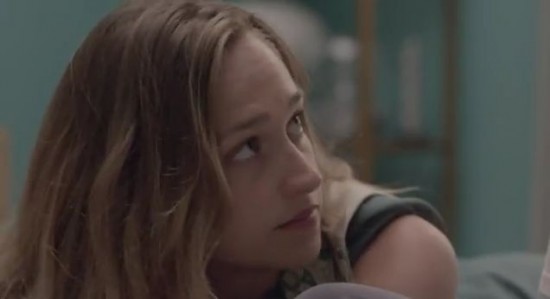
"Weirdos Need Girlfriends Too" is another Girls episode title that contains multitudes. Or at least Marnies, since the title doesn't just mean romantic girlfriends, but platonic friends too.

null

Sure, Adam needs a girlfriend — which is interesting, since this didn't seem true of him in prior episodes, when he spent a lot of time lifting weights (shirtless) and reading books (shirtless) and not particularly caring whether Hannah came and went (also shirtless). He was pretty content with the status quo, or so it appeared. As much credit as I gave Dunham and the show for nailing Adam's specific style of twentysomething pretension and indifference toward women with crushes on him, I have to give Girls even more for flipping the script. I think many of us look back on the Adams we "dated" in our twenties and wonder what would have happened if we'd just blown up: "You treat me like ass! It hurts! Commit or fuck off!" Granted, it's Adam who went there, but hat tip to the show for realizing that that subplot had to do something different in order to continue existing.  

And now that he's Hannah's boyfriend, per the end of the last episode, it's as though that's what Adam's wanted all along — closeness, companionship, with one person. He convinces Hannah to go jogging with him, joking around to motivate her, buying her ice cream after she lies down and pulls her shoes off in protest. He brings her along to a tech rehearsal for his play (and corrects her gently on theater terminology), and allows her to witness his selfish meltdown, then screams at a driver who almost hits her in a crosswalk. He listens patiently when Marnie is obsessing over Charlie's trip to Rome with his new girlfriend Audrey — more patiently than Hannah, in fact — and chides Hannah for not taking Marnie's profound feelings of hurt seriously.

In short, Adam is . . . kind of shockingly perfect at boyfriend-dom. Hannah is more relaxed, holds herself less rigid, is having a way better time in bed with him (at least, if the orgasms a revolted Marnie is forced to endure through their paper-thin walls are any indication)—everything's great. So, of course I spent most of the episode waiting for the other shoe to drop, even if Hannah didn't.

What drops isn't exactly a shoe: joining Hannah uninvited in the shower, Adam stares at her creepily, smears conditioner on her in an unappealingly serial-killerish way, then feels comfortable enough with her to start peeing in the shower with her standing two feet away, which sends Hannah screaming out into the apartment. (I would have run screaming at all the soap scum and mildew, myself, but I'm an old lady.) This, after Adam has an existential tantrum about the play he's doing, and quits on the project two days before the show, leaving his friend and co-star Gavin in the lurch after Gavin spent thousands to mount the play.

Eventually, after a highly off-putting exchange in which he and Hannah debate which is more important, integrity or getting a valuable writing credit, while wearing union suits, Adam relents—he agrees to do the play. But he tells Hannah this after rousting her out of bed in the middle of the night to see all the signs he's pasted to a neighborhood wall that read "SORRY" — Adam's apology to a driver he'd yelled at earlier. Hannah is finally realizing that Adam isn't perfect, or any better than she is; he's a mix of adorable and clueless and insightful and self-absorbed, the same as anyone else.

And the same as Hannah, of course, and Marnie is already utterly fed up with New Relationship Hannah: the sex through the walls, the bailing on plans with friends to hang out with Adam instead, the overly apologetic response when she's called on it. And because Hannah's busy with a new relationship, Marnie can't confide her about the other new relationship that's bugging her: Charlie's, with his new girlfriend Audrey, which Marnie is following obsessively via his Facebook photo feed, and using to flagellate herself for her own shortcomings. What's worse, Marnie is forced to complain to Jessa about Charlie, and everything else, because Hannah's not around. (Or she is, but she's having noisy sex that Marnie has to slam her closet door repeatedly to protest.)

Jessa, who practically has "FREE SPIRIT" tattooed on her forehead, is probably the last person Marnie wants to confess to about her own uptightness and lack of spontaneity. But Jessa is there, just by chance, listening patiently, snarking encouragingly about Hannah's boyfriend-related absences and makeup-application failures and how weird Adam is, telling Marnie she looks like Brooke Shields. Marnie is reluctant to open up, but finally admits that she knows she's the uptight one—and she hates it.

"Being inside my own head is so exhausting that it makes me want to cry"—a great line from Marnie, and obviously true for the character, which is what saves Marnie from presenting as a 2D bitch rather than a real (if often irritating) person.

Jessa volunteers to get Marnie out of her head, so they get gussied up and go out for martinis. A promising cutie (Chris O'Dowd of Bridesmaids) sends over another round—well, Marnie thinks he's promising; Jessa thinks he's boring—and invites them back to his place to show off his pricey red wine, expensively sterile furniture, and inept and painfully sincere DJ "skills." Marnie responds to her surroundings, for some reason, by starting to make out with Jessa; when the two of them don't let O'Dowd join in, then spill wine on his hideous shag carpet, O'Dowd goes off on a rant: Don't they know what it is to work for a living? Do they know how spoiled they are?


The scene goes on too long, and I don't know that I believe the girls would have kept sitting there while O'Dowd yelled at them for what felt like 15 minutes — but it makes its points. This weirdo needs a girlfriend, to be impressed with his CB2-catalog apartment and taste in red wine, to help him feel less lonely in Brooklyn. And Marnie and Jessa need each other, to save each other from guys like O'Dowd when things get weird or scary. (Not that Jessa's intimidated, of course; while yanking Marnie out of O'Dowd's apartment, she sneers that she's going to go down on Marnie out on the sidewalk.) (…She isn't. I'd kind of love it if she did, just to mess with Marnie's head a little, Booth-Jonathan-style, but most intra-straight-girls make-outs have nothing to do with anything.)

The episode nails the giddy-get-to-know-you part of the New Relationship for the participants—viz. Hannah and Adam looking at his home movies, or the only-funny-to-them "she'll show you her tits for an ice-cream cone"/"just kidding, I have five dollars" exchange—but also how exasperating and saccharine it can be from the outside. Marnie doesn't even feign happiness for Hannah, just resents Hannah's contentment and failure to fulfill friendship duties. (Jessa finds it more annoying than hurtful; it's more about Hannah not being available to hang out than it is Hannah not listening.) It's not all that attractive on Marnie's part, but her "how could you go and get a boyfriend at a time like this?!" attitude is totally familiar. Still, it's nice to see the relationship between Marnie and Jessa move forward—at least for now.

But I think we're headed for an ugly Marnie/Hannah showdown; each of these weirdos needs her best girlfriend, and they've been like ships in the night the last few episodes. Things may come to a head next week when rent comes due once more…

Sarah D. Bunting co-founded TelevisionWithoutPity.com, and has written for Seventeen, New York Magazine, MSNBC.com, Salon, Yahoo!, and others. She's the chief cook and bottle-washer at TomatoNation.com.

GAME OF THRONES RECAP 10: VALAR MORGHULIS

GAME OF THRONES RECAP 10: VALAR MORGHULIS

nullOne of the key questions facing Game Of Thrones the series, as well as its source material, is: “What’s this about?” And by this I mean: “What is this story? How is it being told? Where is this leading?” Certainly there’s drama, and characters change, grow, collapse, or die, but it’s difficult to see a clear structure at times. “Valar Morghulis,” as a season finale, did provide appropriate resolutions for most of the characters’ stories this season. But it struggled to collect them—it’s just a bunch of stuff that happens, in the words of Homer Simpson. Still, it’s a compelling bunch of stuff that happens.

nullThe Hero’s Journey is the default reading of most fantasy stories, and Game Of Thrones gives that opportunity with two of its characters: Jon Snow and Danaerys Targaryen. Both are born of noble blood, but are also outsiders. Both are young, and they are undergoing journeys of self-improvement as well as quests of external improvements. Both are also dealing with the most magic of any of the characters. Dany has her dragons, and Jon has fought one of the White Walkers, while the threat of more wraiths hangs over the Night’s Watch.
I’m not sold on this interpretation—Game Of Thrones seems too delighted to subvert fantasy tropes to fully follow through on the monomyth—but each character continues their journey in “Valar Morghulis.” Danaerys has had a bad season, sounding increasingly shrill over the course of her time in the unfriendly city of Qarth, but the climax of the episode finally justifies the time spent on her this year. Heading into the home of the warlocks led by Pyat Pree, she finally has the chance to demonstrate in action what she’s been shouting about all season, burning the magician and regaining her power. Yet her most important action isn’t her connection with her dragons, inciting them to violence. It’s rejecting the illusion of her dead husband and child. Her more youthful dream of a happy life with Khal Drogo is gone, and the steely Emilia Clarke realizes this quickly, giving her agency over her life again.

On the other hand, Jon Snow’s climactic act, a duel with the veteran ranger Qhorin Halfhand, represents arguably Game Of Thrones biggest failure this entire season. There is a reason for the duel—Qhorin mentioned it in a quick whisper two episodes ago—but if you can’t remember and extrapolate from “I hope you can do what you need to do” followed by a series of louder insults, I can’t blame you. We’re supposed to understand that Qhorin is doing this so that the wildlings will accept Jon, which will make him a more effective spy. But that relies on a single whispered line from two episodes ago. So, for all appearances, Jon is just a dupe, on multiple levels. For a character who could easily be described as the most traditional hero in the series, this is a serious problem.

A second interpretation of the overall story of Game Of Thrones is that it’s the story of the Stark family in a complicated civil war. Our main characters, after all, are Cat, Jon, Arya, Sansa, Bran, Robb, and formerly Ned (also little Rickon, attached to Bran). Dany and Tyrion are major as well, but under this theory, they exist largely to flesh out the story.

Sansa, for example, is our Stark gateway in King’s Landing. We see the new alliance between the Tyrells and the Lannisters both as the political intrigue that won the biggest battle of the civil war so far, but we also see it through Sansa’s eyes. Sophie Turner demonstrates her embarrassment at being publicly humiliated, yes, but also her joy at being free of her betrothal to the sociopathic Joffrey (though this is negated when the increasingly creepy Littlefinger promises to “help” her).

Her older brother Robb has a simpler story—he’s in love with Talisa, and decides to marry her. Cat, still under arrest for freeing Jaime Lannister, tries to talk him out of doing anything foolish, but she has no ground to stand on. Robb both follows his heart and his honor, marrying the woman he had sex with. It’s a sweet scene, and it parallels other loving scenes the episode surrounds it with, but it lacks depth.

Arya Stark has a similar issue, resolving her story with Jaqen H’ghar, but little else. I’ve complimented the child actors on the show before, but there are some issues here. Jaqen invites Arya to learn his killing strengths, but Arya says no, remembering her family. This is all good, but the struggle to remember her sister Sansa is a bit too obvious. It’s still amusing from a character perspective, but it’s quite transparently “television” in a way that Game Of Thrones, and HBO house style, tend to avoid.

A third response to the “What does it mean?” question is the most complex, subtle, and in my opinion rewarding: Game Of Thrones is about war and its effects. One of the things that has disappointed me about this season of the series, compared to the novels, is the lack of portrayal of the war’s effects. The best scene of “Valar Morghulis” finally depicts the brutality of the war, as well as the complexity of morality during civil war: Brienne of Tarth is still escorting the ever-snarky/charming Jaime Lannister to the capital, when she comes across a set of corpses.

They’re three women, hung with a sign saying that “They lay with lions.” The single image conveys brutality: we’re supposed to believe the Starks are good and the Lannister (lions) are evil. Yet here are three women killed for the crime of supposedly having slept with members of the Lannister army. The men who show up to confront Brienne—and explain the deaths—show the issues of civil war. They don’t take initial credit for the killings. They’re not dressed in uniform. They ask Brienne who she serves, but only after mocking her. And they are cruel men, quickly and violently dispatched.

Despite the initial thrill of seeing Brienne—the insulted woman—succeed in her violence, the scene is still discomfiting. The northerners are supposed to be, at the least, more heroic than their southern counterparts. These men are rapists and murderers. But worse than that: Are they even evil than Jaime Lannister, the charmingly sarcastic prisoner being saved by Brienne? Jaime is handsome, clever, and in the main credits, but he’s also Ned Stark’s rival, a man who tried to kill a 10-year-old boy, and he's conducting an incestuous, adulterous affair with the queen. Jaime survives because he’s important. These men die because they’re not. This is the war of Game Of Thrones, and it’s a difficult and bloody war at that.

The episode’s other most powerful scenes also avoid the heroes and Starks. Tyrion Lannister is surviving his wounds from the battle of Blackwater, yes. But his exploits in the battle have been ignored. His father Tywin receives the accolades while Tyrion gets moved to more modest quarters. His only ally is Lord Varys, the eunuch whom the show depicts as having been outmanuevered by Littlefinger’s successful arrangement of the Tyrell-Lannister alliance. Varys brings Tyrion his mistress Shae, leading the to the most affecting scene of the episode, wherein Shae professes her loyalty to the scarred Imp. Both Kekilli and especially Dinklage act the hell out of this scene, providing a stellar emotional core to “Valar Morghulis.”

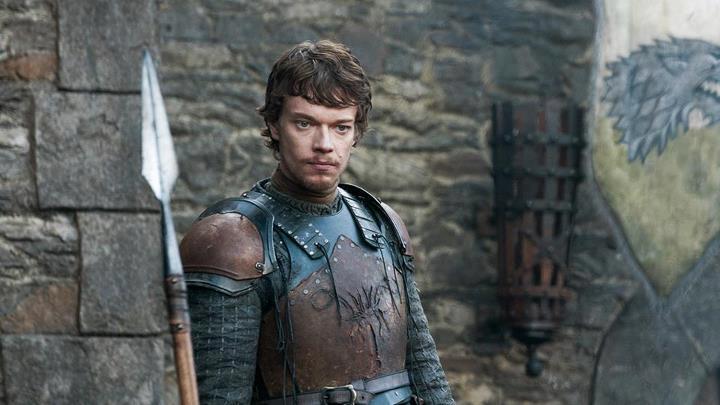
Finally, the most complete part of the episode occurs in Winterfell. Theon Greyjoy is surrounded by the Bastard of Bolton and his troops, with 500 men against 20. Maester Luwin provides Theon with council, and Theon (and Alfie Allen) lay his entire life, his motivations, and his insecurities out for the viewers and the Maester to see. Here, Theon turns from a ridiculous figure into a tragic one. He has no home and no one to trust, so he relies on his masculinity and ambition to give his pathetic life some meaning. This urge manifests itself in a speech he gives to his men, wonderful both for its position within Theon’s narrative and because it's a joke: he's cut short by his men, who just want to use Theon’s body as leverage to get home. At every point, Theon has been given chances to be better. He has wasted them, trying to gain the respect of men who never would have respected him anyway. This may be Game Of Thrones at its smartest: Theon is trapped by his attempts to be as masculine and powerful as possible. He’s not. Maybe he never has been. Everyone, including him, recognizes this. But he feels that he has no choice but to continue.

Add these stories all up, and what is the sum? I don’t think there is one, other than that the third season, ten months away, can’t arrive soon enough in plot terms. The final two episodes have demonstrated the dynamism that Game Of Thrones’ tight serialization can provide, like no other show on television right now. On the other hand, there are serious issues with Game Of Thrones’ structure. They can certainly be masked by momentum, but the connection—or lack thereof—of the myriad of stories has to be a constant concern for the series’ fans and creators.

Adaptation:

Most of the stories portrayed in “Valar Morghulis” are significantly different from those in the book, yet most of these still point to an endpoint of the later books, used as major reference. The Bastard Of Bolton may not have made his appearance here, but the ambiguity about the sack of Winterfell leaves room for interpretation. Likewise, Jon Snow’s arc as an idiot may have been painful, but it leaves him in a position to be less terrible in the future.

My biggest disappointment with the episode—apart from the lack of redemption for Arya’s story mistakes two weeks ago—comes from the Cat—Robb interaction. In the novels, both Cat and Robb discover each others’ crimes at the same time. Robb gets married in the west, then returns to discover that Cat has freed Jaime. His forgiveness for her act based on love is a defense of his own act of love, a manipulation which both impresses and frightens Cat. We only get a tiny part of that in a conversation where an ineffectual Cat attempts to persuade Robb of the virtue of arranged marriage, which Robb can dismiss thanks to her release of the Kingslayer. It’s good—but the scene in the book was great.

A final word has to be given to the cliffhanger at the end of “Valar Morghulis.” The White Walkers have been an ominous threat since the cold open of Game Of Thrones’  first episode, but have rarely been physically threatening. Now, we see an army. And while in story terms, the army of wraiths attacking the Night’s Watch is certainly ominous, the CGI used to depict the supernatural threat just can’t quite manage it. The pseudo-zombies shown are just a bit too cartoonish, and some of the horde that follows are all too obviously just topless actors’ backs staggering in front of a bluescreen. But this is the way the novels’ story goes, so some depiction is necessary. We have to see the undead threat, even if that threat, treated literally on-screen, is insufficient compared to the danger on the page. The episode’s other most powerful scenes also avoid the heroes and Starks, focusing instead on the effects of the war on two of this season's most dynamic characters, Tyrion and Theon.

Rowan Kaiser is a freelance pop culture critic currently living in the Bay Area. He is a staff writer at The A.V. Club, covering television and literature. He also writes about video games for several different publications, including Joystiq and Paste Magazine. Follow him on Twitter @rowankaiser for unimportant musings on media and extremely important kitten photographs.

MAD MEN RECAP 11: COMMISSIONS AND FEES

MAD MEN RECAP ELEVEN: COMMISSIONS AND FEES

"Everything you think’s going to make you happy just turns to crap."

nullLast week, Megan was annoyed with the Jaguar ad campaign. A wife is a Buick in the garage, she said with a touch of bitterness, but a mistress is an exotic and temperamental Jaguar. I don't know what kind of car Don Draper drives these days, but it's not a Jaguar, and at the end of Commissions and Fees, the person driving that ordinary car was the only one who was happy.
Rest in peace, Lane Pryce.

I've been doing this recap dance long enough to know that even when I imagine I have nothing to say, there are plenty of words to come. Yet I am in the strange position of feeling that the very act of writing is disrespectful to what I have just seen. Lane felt, tonight, like a person, not a character. A person we lost. A person Don tried desperately to treat with dignity. A person who deserves, not a recap, but a eulogy.

Rest in peace, Lane Pryce.

The things we want, the magical, out-of-reach things, they just don't work. Glen knew it, in the end, as quoted above. Don pitched the living shit out of Dow Corning. He pitched desire. He pitched never being happy enough as a net positive, as a sign of life. McManus (the current agency) is just bringing them happiness, just bringing them success, but Don insists that's not enough.

In Episode 5.01, A Little Kiss Part 1, Trudy said to Pete, "Dissatisfaction is a symptom of ambition." This is, essentially, Don's pitch: "What is happiness? It’s a moment before you need more happiness."

The magical, impossible, unmanageable thing, the thing we think we want but which cannot satisfy us, is clearly represented by Jaguar. That's the pitch. Remember last week: "If they weren’t temperamental, if they weren’t beyond our reach and a little out of our control"? Jaguar is so fundamentally unsatisfying you can't even kill yourself in it. Poor Lane, so desperate, and relying on such notoriously shoddy engineering. Watch the failed attempt:

The clip is funny, and its bona fides have been fully established, with the two prior episodes making sure we understand that Jaguars just don't start. It's also tragic, since lousy English technology won't stop Lane, who loves the U.S. and weeps that he will lose his visa—he kills himself instead in an office lavishly decorated in Americana. The position in which he hung himself meant that one of his last sights was his replica of the Statue of Liberty. Ah, Lane, the American Dream failed you, and you didn't even enjoy that moment before you needed more happiness.

Don will blame himself, you can already see that. He has shame and remorse all over his face when he hears the news. Last week, Joan touched him kindly and said, "You're a good one." It's likely he married Megan because she believed he was good, but it's the one thing he never believes of himself. He often does terrible things, but Megan was right in Tomorrowland, he always tries to do better.

How impotent his efforts to do good must feel to him now; that much is obvious in the bitter way he condemned the partners for voting last week without him: "Should I leave so you all can do whatever you want?" he pointedly asks.

He couldn't save Joan from Herb. He couldn't save Lane from himself. In the back of his mind, always, is that he couldn't save Adam (his brother, who hung himself in Season 1), and probably that he couldn't save the real Don Draper (whose death can be blamed on Dick Whitman). The only one he could save was Glen Bishop, for whom he could fulfill a simple wish. "We’re worried about you," he said of young people in Episode 5.03, Tea Leaves. He can't prevent Sally from becoming a woman (and "spreading her legs to fly away" as Emile Calvet would have it), or save lives that should be saved. But he can take Glen driving. Sometimes we can only do little things.

Megan, too, is intensely protective of children, protecting Glen, she says, because she wasn't able to protect Sally. Substituting a lesser form of protection for a more necessary one is a motif this episode.

But instead of talking about themes or motifs, I would rather describe streams: two directions in which this episode flows. One is towards dissatisfaction, dissolution, and death, the other is towards life, rebirth, and becoming. Creation and destruction, momentum and inertia: the two great forces of life. Don tried to talk to Lane about starting over, and in fact, I think Don was as kind as humanly possible. When he says, "I’m doing the most decent thing I could possibly do," he is telling the truth. But Lane is not flowing towards rebirth as Don advises, he is unwinding, and the only kind thing Don can do is lay Lane gently to rest on the couch.

Sally, on the other hand, flows towards rebirth as a woman. Her first "date" with Glen may not have been very romantic, but it was very satisfying for her (until it became too much, physically and metaphorically). Her movement towards sexuality, innocent as it is, is life-affirming, just as Roger's boredom with sex is life-denying. Roger, whose enlightenment "wore off," is in the stream of dissolution with Lane.

There are a lot of ways to talk to a young girl about her first period. What Betty said was lovely, and also important; she talked about babies, and about a healthy body, and about Sally joining in the grand cycle: the stream of becoming that will come around to Sally's someday being in the mother role that Betty is in today. Ask any mother—when we have children of our own, our relationships with our own mothers are transformed. Betty, with her arms around Sally, sees Sally becoming herself, sees her own mother and her future granddaughter in a stream as circular as Betty's arms when they envelop her daughter.

Easter is mentioned several times, and Lane specifically talks about resurrection to Joan—all this while snow is visible through the window. Winter and spring. Death and rebirth.

Rest in peace, Lane Pryce.

Some additional thoughts:

  • Suicide has been foreshadowed heavily all season. In this episode, it was Betty's turn: "I wanted to know if you would have any problem with me strangling Sally." Sally, of course, is not the one who ends up strangled.
  • Betty's could be the quote of the week, but instead I'm giving it to Kenny: "I don’t mind waiting 20 minutes for an unspecified meeting with my boss. I mean, it’s not like your imagination would run wild."
  • For her museum date, Sally wore the go-go boots Megan had bought her in At the Codfish Ball: the boots that Don made her take off because they were too mature.
  • The drive from Park Avenue to Hotchkiss Academy in Lakeville, Connecticut is just about 100 miles each way.

Deborah Lipp is the co-owner of Basket of Kisses, whose motto is "smart discussion about smart television." She is the author of six books, including "The Ultimate James Bond Fan Book."

Watch Mad Men Moments, a series of videos on Mad Men, produced by Indiewire Press Play.

VIDEO ESSAY: Sight & Sound Film Poll – Vadim Rizov on Apichatpong Weerasethakul’s THE ANTHEM

VIDEO ESSAY: Sight & Sound Film Poll – Vadim Rizov on Apichatpong Weerasethakul’s THE ANTHEM

As discussed in part three of Press Play's preview of the Sight & Sound film poll, if you look at the results of the last poll, you would think that the last 40 years of cinema amounted to a dark age following the golden era of the 50s and 60s, with hardly any films from that period showing up in the top results. In contrast, each of the videos produced so far for Press Play's Sight and Sound Critics Picks series has featured one post-1970 film: Roger Ebert praised Aguirre, The Wrath of God (1972), Jonathan Rosenbaum picked Satantango (1994), and Molly Haskell selected Claire's Knee (1970). But what films from the last decade are worth consideration? Is it "too soon to be sure" if these films truly rank among the greatest, as David Jenkins wondered in part two our discussion

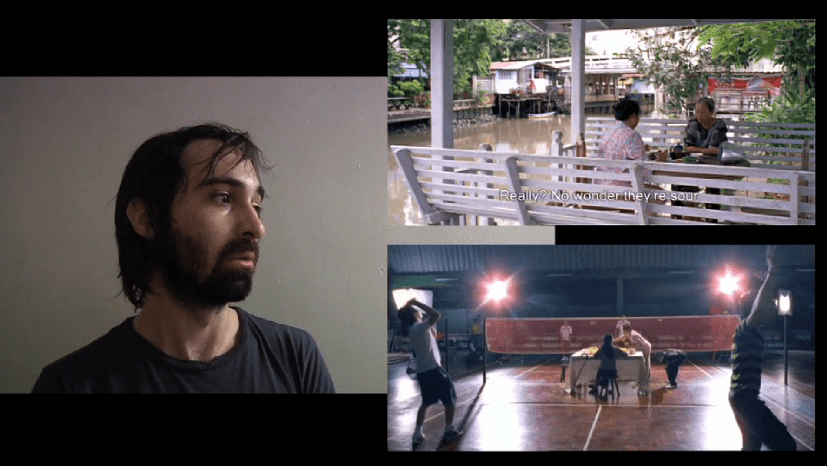
Critic and Sight & Sound contributor Vadim Rizov submits his answer with his selection of a film by Apichatpong Weerasethakul, one of the pre-eminent directors to have emerged in the past decade; with his first feature Mysterious Object at Noon released in 2000, he can be considered one of the first true post-millennial filmmakers. Rizov takes his selection further by not choosing one of Apichatpong (aka Joe)'s most critically vaunted features, Tropical Malady (2004), Syndromes and a Century (2007) or Uncle Boonmee Who Can Recall His Past Lives (2010). In fact, Rizov doesn't select a feature film, but Joe's short film The Anthem, co-commissioned by Frieze Projects and LUX in 2005. The short, intended as a "cinematic purification ceremony" to be played in movie theaters at the start of a screening, takes its inspiration from two ceremonial fixtures in Thai culture: Buddhist purification rituals and the playing of the Thai royal anthem at the start of film screenings and other public events. Rizov explains his selection in the video: "If I had to choose one film to show someone who was completely unfamiliar with arthouse cinema of the last 10-15 years what they had been missing in five minutes, I would choose Joe's short film The Anthem."

The selection of a short as one of the all-time greatest films may be more significant than selecting a film that is only seven years old. Shorts are all too often overlooked; I've spoken with more than one poll participant who was surprised to learn that short films were even eligible for consideration. But the first Sight and Sound Poll in 1952 placed a short film in the top ten: Jean Vigo's Zero for Conduct. Since then, no short film has come close to that ranking, though 1992 featured an especially strong showing of short films in the top 50: Maya Deren's Meshes of the Afternoon, Humphrey Jennings' Listen to Britain, Alain Resnais' Night and Fog and Luis Bunuel's Un Chien Andalou. All of those shorts fell in the 2002 balloting, excet for Un Chien Andalou, the only short in the top 100, and along with Chris Marker's La Jetee, the only short to receive three votes or more. 

My own 2012 ballot features two shorts: Farough Farrokzad's The House is Black (1962) and Peter Tscherkassky's Outer Space (1999). I don't expect either of these to place well in the aggregate results, but that doesn't stop them from being two of the most stunning films I've seen: Farrokhzad's is a supreme fusion of non-fiction, essay and poetry; Tscherkassky's is a horrifying, spellbinding eulogy to the end of 20th century celluloid cinema. They do more in ten minutes than most films can do in 100. 

Special thanks to Bill Georgaris of They Shoot PIctures, Don't They? for the Sight and Sound poll statistics cited in this entry.

Vadim Rizov is a freelance film writer based in Brooklyn. His work regularly appears in Sight & Sound, the L Magazine, the LA Weekly and the AV Club, among others. Follow him on Twitter.

Kevin B. Lee is Editor in Chief of IndieWire’s PressPlay Video Blog, Video Essayist for Fandor Keyframe, and contributor to Roger Ebert.com. Follow him on Twitter.