The Technology, the Art, and the Ethics of Watching: Talking With Brian De Palma at Toronto

The Technology, the Art, and the Ethics of Watching: Talking With Brian De Palma

null

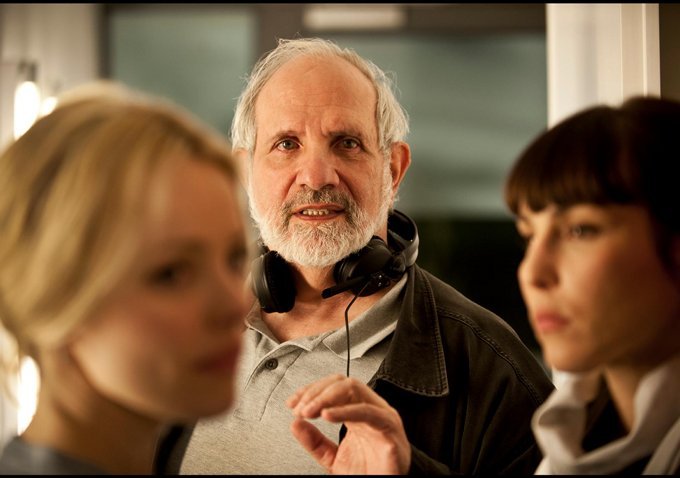
"I suffer from the fact that people have so many preconceptions about the kinds of movies I make," Brian De Palma lamented, "that they don't really look at what's on the screen." At the time, the 72 year-old New Jersey-born filmmaker was talking about how his reputation as a cynic made it impossible for some to see his sincere attempt in the 2000 sci-fi oddity Mission to Mars to replicate the sense of "awe" astronauts get when they visit space. "The exploration of space fascinated me when I was in high school: going to the moon was all we thought about," De Palma said, in a recent conversation during the Toronto International Film Festival. "I'm fascinated by this technology. And what you discover when you talk to people that have done these missions is that they're extremely idealistic, they're extremely awed. They've seen things we've never seen. And their reaction is that of, how can I say? Awe."

The way that De Palma sought to achieve such an ecstatic effect is intriguing: like the hard science fiction sub-genre of literature that inspired it, De Palma's film is primarily concerned with the mechanics and terrestrial procedures that allow the film's astronaut protagonists to see and experience more. Seeing better through technology is a recurring thematic concern for De Palma, from Passion, his most recent thriller, to the 1974 black comedy/cult musical Phantom of the Paradise, and even earlier. For instance, in films like Phantom of the Paradise, where cutting-edge technology is represented by the bulky recording machinery in the Phantom's studio, technology is impossibly big. However, more recently, in films like Passion and De Palma's provocative 2007 war drama Redacted, technology is tiny, and it’s everywhere. 

"That's what inspired me about Redacted, the way that the soldiers were communicating, either with their loved ones or in their diaries," De Palma explained. "Everyone has these digital cameras and now they're getting smaller. Everyone’s phone's going to get a camera that's even better, and we're going to see this stuff all over the place. So, I don't know. Am I a big investigator of this? Absolutely. I'm fascinated by all the new forms that pop up on YouTube, all these video forms. Plus, all the surveillance cameras that are around all the time. Everything's being watched by somebody."

This is just as true of Passion, a remake of the 2010 French thriller Love Crime in which two business colleagues, played by Rachel McAdams and Noomi Rapace, use various cameras to implicate each other in convoluted schemes. In a key scene, one of these two characters has a meltdown in a parking garage, and the other uses surveillance camera footage to publicly humiliate her at a company party. To De Palma, the surveillance camera is inherently cinematic, an extension of the point-of-view shot.

"What's unique to cinema is that you shoot the point-of-view shot," De Palma suggested. "The audience is getting the same information as the character is getting. We're seeing what the character is seeing. And then, in Hitchcock, you cut back as he's smiling or leering–it depends on how you react to visual information that's being presented to you. But the fact is: the point-of-view shot is a unique tool of cinema. So when we start moving into surveillance cameras, that's an extension of the point-of-view shot. And much of cinema is about watching. Watching people do things, following people—which is what we do when we're sitting around. We're looking over here, we're looking over there. We're living a point-of-view shot."

The fact that De Palma sees this as an extension of human nature speaks to the amoral nature of voyeurism and watching in his films. In Passion, McAdams and Rapace's dueling anti-heroines photograph themselves using camera phones and are in turn furtively filmed by each other using those same miniature phones. This creates an interesting power dynamic: according to De Palma, if the voyeur's subject knows that they're being watched, there is nothing to implicate the viewer in whatever act they are looking at. "It's like a keyhole that everyone's looking through," De Palma explained. "If everyone's looking through it–otherwise it's on the internet. I don't know, you have a kind of anonymous complicit-ness. Who's looking at it? The world's looking at it. So because I'm part of the world looking, does that make me part of the crime? I think it's more to do with exhibitionism. I think anyone that's taking a photograph of themselves or a video for themselves is posing for the camera. If they're posing for the camera, they want to be seen. So anybody looking is hardly complicit, they're basically fulfilling what the exhibitionist wants to do: expose themselves."

This is an important distinction, given that Rapace's character in Passion is one of the two subjects of a sex tape filmed without her knowledge and then circulated. Funnily enough, De Palma did not have to give his game cast members detailed instructions on how to film this touchy scene. "In the [sex tape] they made in the hotel room in London, I just gave them a camera and said, 'Go in there and make a sex tape,'" De Palma shrugged. "I just gave them the camera and closed the door. And for when they got into bed, I said, 'Make sure the camera goes here, because that's what we're going to use to show when [Christine] humiliates [Isabelle].' They did five or six takes, with one wild thing after the other. And Noomi is quite aware of being photographed. They're posing for the camera together, but they're making a sex tape together."

He continued: "And if you've ever looked at sex tapes, both participants—in the ones I've seen—seem to be aware of the camera. They don't say, 'No, no, don't do that,' they're sort of passively aware that the camera is there. Well, as I found when I was editing the movie, it makes Noomi more sympathetic if she's not. She's not aware that she's being photographed. He's making the video, like a guy that takes a girl into a bedroom and has a hidden camera somewhere. And that to me made her more empathetic, as she's a victim of this sex tape."

The fact that this violation could only be caught on film because of the small size of the camera filming Rapace's character is a vital detail. But the fact that cameras are now almost invisible does not mean that voyeurism is now exclusively the province of camera phones. Again, De Palma insists that all roads lead back to the point-of-view shot. When asked if the way that his films treat sex and violence as spectacle spoke to the fact that cinema, as a medium, could best represent the id, De Palma’s response was impatient but insistent.

"You're pointing to things that are intrinsic to the cinematic form. You're pointing to the point-of-view shot, you're talking about violence, so you're talking about images that are quickly cut together that exist in no other art form except cinema. So you're talking about unique building blocks of cinema. So when you say, 'Can this be considered exploitative,' or 'excessive,' or whatever other pejorative you want to use, the fact remains: these are colors in the palette of the filmmaker."

With that in mind, it makes sense that De Palma is not anti-3D so much as he opposes the constant abuse of the technology. De Palma's innovative aesthetic takes the Eisenstein-ian concept of montage as the collision of individual shots with each other to its logical conclusion: the collision and juxtaposition of moving people and objects on separate visual planes within a single shot. But he considers 3D, as used in films like Avatar ("Cameron knows what he's doing with it."), to be "just another technique, and you'd better know how to use it." "But to shoot everything in 3D is debasing the form," De Palma added.

But to return momentarily to Mars: it's also not surprising that De Palma is fascinated by the recent Mars photos from the Curiosity rover. To him, these photographs represent the apex of what technology can allow us to see. He added that he can't imagine a future where the act of looking wasn't dependent on the limits of the technology we use. "What happens is that you discover things the technology reveals," De Palma said. "You just have to be attuned to see—it's like Curiosity, wandering around on Mars. It's fascinating to me, because we're seeing images that we would never see any other way. It's so awe-inspiring."

Simon Abrams is a New York-based freelance arts critic. His film reviews and features have been featured in The Village Voice, Time Out New York, Slant Magazine, The L Magazine, The New York Press and Time Out Chicago. He currently writes TV criticism for The Onion AV Club and is a contributing writer at the Comics Journal. His writings on film are collected at the blog, Extended Cut.

In David Cronenberg’s COSMOPOLIS, the language can’t keep up.

COSMOPOLIS: A Masterwork of Compression

null

David Cronenberg’s movie version of Don DeLillo’s Cosmopolis, a black comedy about a financier whose life is falling apart, is a snapshot of Western civilization in existential panic. It’s the early 21st century. Labels and categories are blurring or dissolving. Economies and governments are disintegrating too, melting like Cronenbergian flesh. We humans don’t know who we are anymore as individuals, as a nation, as a race, as a species. Everything—philosophy, politics, religion, economics—has become data. So it's no wonder DeLillo’s characters compulsively narrate their lives, stating, in hilariously hyper-specific words, what they think, feel, and believe, defining and re-defining themselves as they speak: “What happens to all these stretch limos that prowl the throbbing city all day long?” “One learns about the countries where war is occurring by riding the taxis here.” “You have your mother’s breasts.” “Talent is more erotic when it’s wasted.”  “A person rises on a word and falls on a syllable.” The words sound desperate even when delivered in a DeLillo/Cronenberg fervent/mesmerized monotone. “This is good,” says one member of a conversation. “We sound like people talk. This is how they talk.” But language is not enough. “Life is evolving so fast,” a character muses, “that language can’t keep up.”

Rob Pattinson stars as Eric Packer, the aforementioned billionaire—a 28-year asset manager inching through Manhattan in his stretch limo, headed for a haircut appointment. When the story begins, he’s cool and collected, if a bit frayed around the edges. He thinks he’s insulated from harm by his wealth, his tank-like limousine, his deadpan driver (Abdul Ayoola), and his unflappable chief of security (Kevin Durand). But he doesn’t control anything. His limo can’t get anywhere because a presidential visit and a beloved rapper’s public funeral have gridlocked the city. Eric’s brittle young wife Elise Schifrin (Sarah Gadon) won’t have sex with him because, she says, she wants to conserve her energy for her career; she’s also hip to his alpha-male infidelities, and she keeps insisting he smells sex on him. (“It’s hunger you smell,” he says, lamely.) He can’t really control his fortune, either. He thinks he’s made smart investments, but soon enough his net worth trends downward.

All these frustrations and misfortunes feel less like moralistic punishment than something more chillingly mysterious: a disaster/miracle creeping over everything, like the Airborne Toxic Event in DeLillo’s 1986 novel White Noise.  “I think you acquire information and turn it into something awful,” Elise tells him at one point, unwittingly describing what society itself has been doing for decades. As Arthur Jensen bellowed in Network, “There are no nations. There are no peoples. There are no Russians. There are no Arabs. There are no third worlds. There is no West. There is only one holistic system of systems, one vast and immense, interwoven, interacting, multivariate, multinational dominion of dollars.” Or to quote Johnny in Mike Leigh’s Naked, “Well, basically, there was this little dot, right? And the dot went bang and the bang expanded. Energy formed into matter, matter cooled, matter lived, the amoeba to fish, to fish to fowl, to fowl to frog, to frog to mammal, the mammal to monkey, to monkey to man, amo amas amat, quid pro quo, memento mori, ad infinitum, sprinkle on a little bit of grated cheese and leave under the grill till Doomsday.”

This is the smallest movie Cronenberg has directed in a long time, and yet its containment seems more like a proof of his ability than a constraint. Even though Cronenberg wrote the script for the screen, I will always think of Cosmopolis as a filmed play, one of the best I’ve seen. It compresses DeLillo’s novel (which itself feels play-like in spots) without trying to “open it out,” as hack movie producers are always begging playwrights to do.  Lumet’s 12 Angry Men, James Foley’s Glengarry Glen Ross, Tom Noonan’s What Happened Was…, and Louis Malle’s Vanya on 42nd Street and My Dinner With Andre pursued a strategy similar to Cronenberg's. Roughly 60% of the movie occurs inside Eric’s limo, its ribbed dark interior evoking the telepod in Cronenberg’s The Fly; the other 40% takes place on streets and sidewalks and in garages and claustrophobic nightclubs packed with writhing bodies. Its climax is a ten-minute conversation between Eric and a shadowy tormentor (Paul Giamatti) in a depopulated, run-down warehouse. By that point, we’re so starved for open air that its narrow hallways and cluttered offices feel as big as palace throne rooms.

Even though its tone is resigned and mordantly funny and its pace is slow, Cosmopolis is a thrillingly spare, controlled work. But you have to be willing to adapt to its sleepwalking mood and to its performances, which occur within such a narrow emotional bandwidth that at one point I pictured an orchestra conductor handing a violinist a Stradivarius with one string and saying, “You can make beautiful music with this, trust me.” Every actor rises to the challenge. The movie features one bizarre knockout supporting turn after another: Juliette Binoche as a lover who interrogates Eric after fucking him; Gadon’s Elise, whose beyond-her-years cynicism is a bulwark against emotional collapse; Durand’s security guy Torval, who’s got more didja-know tidbits than Johnny the Shoeshine Guy on Police Squad! but ultimately comes to seem like just another lost soul blustering through chaos. Giamatti’s all-out anguish in the finale almost steals the picture from Pattinson.

But the star never loses his grip. I never would have guessed from the Twilight movies that he was capable of a performance this intelligent, despairing, and honest; at his best he reminded me of James Spader’s character in sex, lies and videotape, a smug bastard who intellectualizes his selfishness into faux-philosophy. If Pattinson gets nominated for awards for Cosmopolis, the clip should be the scene where Eric carries on a high-flown conversation while enduring the longest prostate exam in history, an invasion of an asshole’s asshole. But there’s a real person beneath Eric’s shellacked surface, and when it finally cracks—in a surprisingly tender exchange with a rapper (Gouchy Boy) grieving for his dead hero and his own mortality—the character’s pain feels real, and true.

Cronenberg doesn’t just ask his actors to be ascetics. He keeps the camera far back whenever possible, cuts to closeups as punctuation, and sometimes lets amazingly intense moments run from one angle for a minute or longer, the better to allow us to scrutinize speakers and listeners. This stripped-down approach makes Cosmopolis feel a bit like live TV drama from the ‘50s, devoted mainly to performance and dialogue but constantly thinking in pictures. An opening scene featuring Love Boat-level rear-screen projection would sink lesser films, but here it seems to fit because the action is (for all its perversity, violence and sudden bursts of emotion) more figurative than literal.

More so than any other Cronenberg film—including the manifesto-like Play of Ideas eXistenZ—this one feels like a summing up of everything he’s been telling and showing us since the 1970s. Flesh, identity, consciousness are all prone to disintegrate or morph. By adapting a book by DeLillo, a fellow chronicler of slow-motion apocalypse, the filmmaker expands his vision to encompass a species grappling with cataclysmic change.

Matt Zoller Seitz is the co-founder of Press Play.

EYE OPENERS: Peter Labuza’s THE CINEPHILIACS, A New Podcast

EYE OPENERS: Peter Labuza’s THE CINEPHILIACS, A New Podcast

In the last twenty years, film culture and cinephilia specifically have radically changed and altered the way we watch and think about film. Today, cinephiles come in all different shapes and forms. They watch films at theaters but also on DVDs and from streaming sites. Their taste might by low budget horror films or Romanian cinema or animated films. There’s no end to what form and shape a cinephile might be today.

So who are these cinephiles? How did they become interested in film? And what makes them so passionate about this medium? I started The Cinephiliacs back in July as a longform interview show where I could talk with those who have made it their life to explore cinema. Think of the show as “WTF With Marc Maron,” except with cinephiles in the chair. Matt Seitz, who was on episode #2, has kindly offered to cross-promote the show here and I'm glad to bring this show to the Press Play audience. I'm now on the fifth episode, which includes a great talk with Bilge Ebiri about his work as a film critic and filmmaker, as well as a long discussion of one of his favorite film, Barry Lyndon. I hope you enjoy the show, and please subscribe in iTunes, where you can see all the previous episodes and receive new episodes as they're released. — Peter Labuza

null

Click here to download the episode

“I’d like to think while I’m watching a film, I try and approach it on its own terms. I think to myself, ‘What is the review this movie wants? And what is the review this movie is going to get?’ But really it’s about asking, what is the ideal version of this movie? What is it trying to be and to what extent does it get there?”

New York Magazine film critic Bilge Ebiri loves films that he can constantly revisit and pry into more and more deeply, so Peter has no problem prying into Bilge’s own head for his conversation on The Cinephiliacs. Bilge talks about his early exposure to the Hollywood New Wave in Turkey as a young boy, and then traces his cinephilia through his desires to trying to become a filmmaker (including working on a film by Nikita Mikhalkov) before finding his voice as a critic. The two then discuss his love of films that indulge their wildest pleasures, some of his favorite auteurs (a list that includes Terrence Malick and Christopher Nolan side by side), and his own feature film, New Guy. Finally, the two dive into the truly daunting task of investigating Stanley Kubrick’s masterpiece Barry Lyndon and trying to make sense of a film that asks us to identify with “The Past,” yet always undercuts and manifests itself as something even more audacious.

0:00-4:48 Opening / Establishing Shots – Film Vs. Digital

5:04-1:14:17 Deep Focus – Bilge Ebiri

1:15:13-1:45:31 Double Exposure – Barry Lyndon (Stanley Kubrick)

1:45:32-1:47:58 Close / Outtake

VENICE INTERNATIONAL FILM FESTIVAL: Brian De Palma’s PASSION

VENICE INTERNATIONAL FILM FESTIVAL: Brian De Palma’s PASSION

null

If it weren’t for 2007’s Redacted, Passion would be a neat, coherent follow-up to both Femme Fatale and The Black Dahlia in Brian De Palma’s filmography, in addition to being a rehashing of many of the director’s themes and trademarks. And yet Redacted, with its fragmented approach and centerless viewpoint, still seems like a thorn in Passion’s side. In the newer film, the classic De Palma milieu—doubles, voyeurism, camera movements, split screens, etc.—greets viewers like a cozy living room after a long vacation, but you’ll find that this is milieu coated in digital frenzy and wild proliferation of recorded footage. This might just be an inevitable update to go with the times, or indeed the result of a particularly heavy product-placement strategy, but it’s possible that this film's approach can be traced back to Redacted. Back then, it felt like the director was taking an unfamiliar, daring turn; now, in the age of the second screen, it could be said that there are few filmmakers out there more suited to its celebration than De Palma.

Shooting almost entirely indoors, De Palma plays hide-and-seek in his Berlin location, while simultaneously making the most of the city's predictably modern, clear-cut interior design in the advertising agency where Christine (Rachel McAdams) and Isabelle (Noomi Rapace) are working on Panasonic’s new smartphone campaign. Tension is palpable between the two—professional as well as personal. There’s attraction, a sharp rivalry, and a power struggle, in addition to a cheating boyfriend (an impressive Paul Anderson, completing the reunion of Sherlock Holmes cast members and adding an elegant hint of danger) caught in the middle. Things quickly take a turn for the worse, leading to psychological warfare at first and outright violence later on.

Before the situation escalates, giving De Palma a chance to unleash his wild imagination with a rollout of his most famous visual tricks, the story (a remake of Alain Corneau’s Love Crime from 2010) unfortunately gets stuck in a series of unconvincing and ultimately puzzling sequences. At times it feels like a parody, like a self-conscious, deliberate repetition of old solutions to new visual problems. Constantly pulling away from the characters, the camera traces sinuous trajectories in the air with no noticeable result. Everything feels stiff, as if each shot were only a stripped-down placeholder. The more visceral experimentalism of Redacted, however problematic, felt comparably much more lively (bagging a Best Director award in the process, right here in Venice). That was a new direction; this film is a retracing of the director’s footsteps, albeit without quality in mind.

The latter part of the movie proves that De Palma is still perfectly able to engage his own legacy and put a spin on it, but it’s also proof that the preceding part is simply unworthy of his talent. An anticlimactic conclusion for the Venice Competition, but hopefully yet another step in the evolution of a great director. 

Tommaso Tocci is an Italian film critic, copywriter and translator. Follow him on Twitter.

The Venice International Film Festival reviews are in. Viva Italia!

The Venice International Film Festival reviews are in. Viva Italia!

null

EDITOR'S NOTE: Writer Tommaso Tocci is covering the Venice International Film Festival for Press Play this year and so we have created this landing page which collects all of those links together. Here they are.

VENICE INTERNATIONAL FILM FESTIVAL: Robert Redford’s THE COMPANY YOU KEEP

VENICE INTERNATIONAL FILM FESTIVAL: Robert Redford’s THE COMPANY YOU KEEP

null

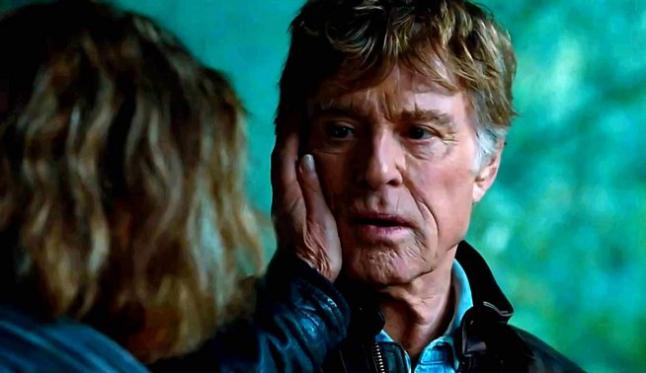
The title of Robert Redford’s The Company You Keep, adapted from Neil Gordon‘s 2003 novel of the same name, echoes the title and sentiment of Sarah Polley’s excellent documentary Stories We Tell, also shown here in Venice a few days ago. While the latter is a very intimate story dealing with the plurality of voices and truths at the heart of family narratives, and the former engages American history looking at the actions of radical-left organization the Weathermen in the 70s, Redford is just as concerned as Polley with the necessity of starting a discourse, specifically an inter-generational one. He seems earnestly consumed by this feeling, and does nothing to hide it in his movies. The last three films he’s made, in particular, all have this signature.  

Usually, for this discourse to happen, Redford needs a recipient, a representative of youth to interact with. This time the honor goes to Shia LaBeouf, who has played an awful lot of "young recipients" in the last few years and seems to have no intention of stopping. Here he plays Ben Shepard, a scruffy reporter for the Albany Sun Times who uncovers the real identity of Jim Grant (Redford), a lawyer and seemingly model citizen. It turns out Grant is actually Nicholas Sloan, a former member of the Weathermen, wanted by the FBI for the murder of a security guard during one of the group’s attacks. The revelation triggers a double quest for the truth that sends Redford and LaBeouf on two parallel strands, one trying to clear his name and go back to his daughter, the other interviewing his way to the core of the group’s past.

Predictably, there is little excitement here. The whole film seems to be an excuse for Redford to do a bit of talking, and discussing, and negotiating. He explores the subject of the actual Weathermen group far less than he deals with the twin themes of legacy and memory. He meets LaBeouf at the start and end of the movie, basically paraphrasing what he told Andrew Garfield's young student in Lion for Lambs. Not that there’s anything wrong with that—you have to admire Redford’s trademark benevolent prodding. It’s never too preachy, it’s never absolute. And it always has just the right amount of cheekiness. He excels at telling young kids to get off their arses and pay attention to what’s around them.

Despite his being at the front and center of the movie (it’s interesting he chose to play Nick Sloan, given his dislike of simultaneously acting and directing—a sincere reluctance that transfers to his portrayal of a fugitive, tired, single-dad character), the most impressive feature of The Company You Keep is the roster of supporting players Redford strategically places in Sloan's path. Mostly appearing as Redford’s ex-comrades, the likes of Susan Sarandon, Nick Nolte, Chris Cooper, Sam Elliot, Brendan Gleeson, Richard Jenkins and Julie Christie all make lasting impressions as worn-out survivors from a different era. Each new encounter provides a different viewpoint on the group’s cause, methods, and struggle, while also making great use of such an abundance of talent to create little sketches of different shades of humanity, from all walks of life.

Enjoyable despite its limitations, The Company You Keep (safely kept away from the Competition here in Venice, yet still given the exposure Redford presumably wanted) is an undoubtedly sincere entry in the director’s gallery of movies devoted to illuminating gray areas of American history. Yes, it’s terribly didactic, but one suspects Redford doesn’t really care, as long as he can have a kid in front of him to nudge towards awareness. Gently.

Tommaso Tocci is an Italian film critic, copywriter and translator. Follow him on Twitter.

Raised in Fear: PHANTASM and the Uses of Enchantment

Raised in Fear: Phantasm and the Uses of Enchantment

nullFor many filmgoers, seeing their first horror movie is a rite of passage: mine came at the tender age of six, on our first family visit to the drive-in to see The Satanic Rites of Dracula (1973). Though I imagine I must have been scared, what I remember most from the experience was getting out of the car when we returned home, and looking up at the moon, which now held a newly ominous sense of enchantment. Contrary to the prohibitive logic of our ratings classification system, horror films, like fairy tales and märchen in an earlier era, can and do provide young minds with a visual vocabulary for structuring imaginative experience.

Don Coscarelli’s low-budget auteur classic Phantasm (1979) explores the dynamic relationship between fact and fantasy in its dream-like variation on the coming-of-age narrative. As the somewhat equivocal conclusion of the film suggests, the entire story would seem to be the extended dream, or “phantasm,” of its thirteen-year-old protagonist, Michael (A. Michael Baldwin). The film’s bold melding of science fiction, fantasy, and horror narratives is a testament to the vibrant spirit of unfettered independent film-making, but it is also a vivid portrayal of the ways in which our teenage minds were structured by a rich and eclectic variety of media and stories.

nullWhen Michael visits a blind old fortune-teller and her starry-eyed granddaughter for advice on how to cope with the increasing absence of his beloved older brother, Jody, for example, the old crone subjects him to a fear-test copped directly from Frank Herbert’s Dune. This is the first of several hints that the gothic horror mode in which the film begins will point towards other genres.  The intermingling of horror and science fiction (not to mention 1970s interior decorating) is nicely encapsulated in the set of Michael’s bedroom, where we see him covered in an orange and brown afghan, slumbering beneath a wall-size poster of NASA’s famous “Earthrise” image. The camera cuts to another image of Michael’s bed, now in a graveyard, as the earth around him suddenly erupts and he is covered by a host of corpses who seem to draw him beneath the earth. These are the things alienated kids obsess over, and hence it makes sense that these would shape the dream life of the main character. 

nullBut the interweaving of narrative conventions in the film is not merely playful: as the film slowly unveils its science fiction underpinnings, it begins to explore fears and anxieties that haunt the borders between genres and the ways those genres reflect our imaginative perception of the world. In one of the most sensitive readings of the film, John Kenneth Muir describes the nuanced ways in which the film uses horror conventions to structure the story of a teenage boy’s coming to terms with death and loss. Most intriguingly, Muir addresses the film’s concern, not merely with the passing of loved ones, but also with the “death industry” which profits from such loss. This industry is hauntingly embodied by the glowing white edifice of Morningside Funeral Parlor, first shown in a striking wide-angle shot where it stands ominously in the background, framed between Jody (Bill Thornbury) and his band-mate Reggie (Reggie Bannister), as they discuss the recent loss of their friend and third band member, Tommy (Bill Cone). From that point forward, Morningside will cast a long shadow over the lives of the characters, repelling and alluring them in equal measure. 

nullWhile loss and mourning are certainly keynotes of this often surprisingly poignant film, the science fiction story which lies at the heart of the mystery that is Morningside Funeral Parlor will direct our attention, and our fears, towards what is perhaps an even more traumatic part of growing up: getting a job. Imagined through the dreaming mind of our protagonist, this fate takes the form of an outlandish conspiracy theory: the Funeral Director, referred to only as the Tall Man (Angus Scrimm), turns out to be an emissary from another world, sent to retrieve reanimated corpses who will serve as slave labor on a distant planetary wasteland. 

nullWhat cannot help sounding ridiculous when summarized in a few words takes on a horrifying vividness in the film, largely through the working details of this zombie slave industry. Michael, Jody, and Reggie eventually meet in a glowing white room filled with three-foot canisters complete with ventilation holes revealing the dwarf workers trapped within. These transport cases uniformly line the walls in a grotesque image of efficiency.  In the center of the room stands a two-pronged gateway into the destination world, which Michael briefly passes through, to hover over an eerie red desert on which a long line of forced laborers march towards a distant horizon. After being rescued from the portal, Michael describes his vision to his brother and friend, and works through the infernal logic of what’s been going on up at Morningside: “Slaves.  They're usin' 'em for slaves. The dwarfs. And they got to crush 'em 'cause of the gravity. And the heat. And this is the door to their planet.” Where once the protagonists feared death at the hands of the ominous Tall Man, they are now faced with an even more horrifying life-in-death that resembles a grotesque dream version of that forced labor politely termed a “career,” looming just over the dwindling horizon of youth.

nullIn contrast to this envisioned slavery is the characters’ earlier life, which seems to consist largely of tradin’ tasty guitar licks on the front porch, tinkering with Jody’s muscle car, drinking Dos Equis, slinging ice cream, getting laid in the graveyard, spying on an older brother getting laid in the graveyard, and pursuing paranormal mysteries on a mini-bike. The film, like many low-budget horror films of the period, seems to take place in a land where it is always late summer, the streets are strangely deserted, and the parents strangely absent. The disturbing mystery that eventually engrosses our youthful heroes emerges through Michael’s binoculars as he witnesses the Tall Man lifting a casket with his bare hands and loading it into the back of his hearse. In one of the film’s delightfully dumb but idiomatically pitch-perfect conversations, Jody responds: “You’re crazy. I helped carry that sucker myself. It must have weighed over five hundred pounds. Well, I can’t figure this thing out. But I do know one thing: something weird is going on up there.” Later, when Reggie boastfully proposes a plan to “lay that sucker out flat and drive a stake right through his goddamn heart,” Michael replies in the film’s rich period vernacular, “You gotta be shittin’ me man: that mother’s strong.” And indeed he is.

As Michael, Jody and Reggie begin to pursue “that Tall Dude” in earnest, the story assumes a Boy’s Own Story-like charm, while deftly retaining the sense of uncanny menace established so effectively in the film’s opening scenes. Accompanied by a marvelously supple score in which the haunting theme song shifts through ominous, groovy, and somber variations, the unlikely story pursues its digressive path towards an equivocal conclusion that leaves the reader to determine the relative truth-value of the story’s many layers. Ambiguity and circularity of plot come to serve as this wildly inventive film’s most effective means of warding off the deadening sense of closure looming over the horizon. Perhaps Phantasm has become such an enduring cult film, at least in part, because its outlandish narrative strategies offer such a compelling way of re-scripting our own life stories.

Jed Mayer is an Assistant Professor of English at the State University of New York, New Paltz.

VENICE INTERNATIONAL FILM FESTIVAL: Harmony Korine’s SPRING BREAKERS

VENICE INTERNATIONAL FILM FESTIVAL: Harmony Korine’s SPRING BREAKERS

null

I haven’t seen a longer queue for a Venice press screening this year than the one for Harmony Korine’s Spring Breakers, which premieres today in Competition. It makes sense—the film carried with it the promise of wild excitement, some young American stars who attract a lot of attention (Vanessa Hudgens, Selena Gomez, Ashley Benson) plus James Franco, who knows a thing or two about attracting attention as well. The sort of loud mainstream baggage the film brought to the Lido was somewhat awkwardly paired with the long-lasting cinephile appeal Korine has garnered with his cultish body of work (Gummo screened here in Venice in 1997, and he has been throwing audiences off balance ever since).

And Spring Breakers certainly did not disappoint, positioning itself in a fascinating dead zone of expectations. Those who came to see the aforementioned young stars partying and making a mess of their college spring break found exactly that—only cranked up to eleven, speeding past darkness to reach a kind of deranged grotesque. On the other hand, those who came for Korine found the director’s trademark themes bathed in glittering softness, apparently downplayed even in the undeniable aesthetic of excess on display here.

Similarly to this year’s intriguing Project X, the beginning of Spring Breakers seems to tap into a form of "alienated awareness," as it confronts the viewer’s gaze with a spirit of defiance. Opening with a prolonged montage of a beach party—naked bodies, hip-hop, alcohol, etc.—Korine knows that context is everything: he takes his time before getting to the story itself, letting a couple of other introductory sequences accumulate to establish a mood and philosophy. This has always been his main asset, after all; he loves spaces, locations that need to be filled, the feeling of emptiness, the collective void.

With its repetition and estrangement, this sharp collage makes it clear that our four girls hate their college life and are staking everything on the upcoming spring break, hoping to somehow alter their entire existence. The problem, though, is money—they don’t have enough to properly enjoy their trip to Florida. Their solution is, of cours,e an armed robbery (a gem of a tracking shot from the outside of a diner, with the action only intermittently visible through the windows), and the fact that this still seems like reasonable thinking on their part says a lot about what comes later in the movie.

Once the girls get to St. Petersburg, it’s suddenly the James Franco show: he plays a gangsta-hustler-dj with golden teeth, tattoos and dreadlocks, too conceptual and on-the-nose to work in any self-respecting movie. Here, though, it’s all part of the meta-grinding fun. And at moments it actually achieves a higher poignancy, transcending this character's joke of an exterior and finding something truly unsettling about him: as in a piano rendition of a Britney Spears ballad framing a slow-mo montage of drug rips, or a painstakingly long enunciation of things he possesses, from guns to perfume, as the ultimate reclamation of individual identity. Listen to him shouting Look at mah shit! and for a moment you’ll spring free from the alienating cage of this film.

This is a director who’s always been great at using ugliness (urban or personal) as a vehicle for meaning. With Spring Breakers he seems to have updated that notion to include the worst degradation of low-brow residue in contemporary American culture. Everything is pink, red, and glossy; Britney Spears is evoked nostalgically and ironically as a lost icon. Teen starlets are used as bait. Gangsta culture is a cartoonish reminiscence. It’s a bit like a farcical distortion of Drive, if that film's references were from ten minutes ago. And yet, for all its uneven pacing and debatable cunningness, Spring Breakers is an energetic and formally daring effort.

Tommaso Tocci is an Italian film critic, copywriter and translator. Follow him on Twitter.

VIDEO ESSAY: Gliding Over All: The Cinematography of BREAKING BAD, Season 5.1

VIDEO ESSAY: Gliding Over All: The Cinematography of BREAKING BAD, Season 5.1

Gliding Over All: The Cinematography of Breaking Bad, Season 5.1 from Press Play Video Blog on Vimeo.

Every great television show has an episode that pushes the medium in some bold, even experimental manner, either visually and/or in the way the plot is structured. It's usually something the writers and director do as a challenge for themselves and the audience to quicken the blood. Historically, cinema has been the arena for directors with a robust visual sense. Television, on the other hand, was the safe haven for writers. This has changed significantly in recent years with the rise of cable networks willing to accommodate writers and directors with ambitious projects. Now, the emphasis on high production values and vibrant imagery is just as essential as a great script. Breaking Bad, with its carefully thought-out look, dependably relies on its cinematography to deliver crucial narrative/thematic information, just as it relies on its characters to deliver significant exposition in a straightforward manner.      

A truly great dramatic series, such as Breaking Bad, tends to show brilliance fairly consistently, but episode ten from the third season—"Fly," directed by Rian Johnson (Brick, Looper) and written by Sam Catlin and Moira Walley-Beckett—sprints ahead as a major creative standout. The entire episode plays out in the confines of the sublevel lab where ex-high school chemistry teacher Walter White (Bryan Cranston), now a big time meth cooker, makes the drug with his ex-student and now-assistant, Jesse Pinkman (Aaron Paul). But through the entire 48-minute episode, Walter and Jesse aren't cranking out batches of meth for their boss, the highly successful fast food entrepreneur and bloodthirsty drug kingpin Gus Fring (Giancarlo Esposito). A fly has somehow gotten into the lab and Walter obsesses over killing it. He can't cook until the lab is sterilized and free from any taint. Of course, it's not really about the fly. Walter is paralyzed by fear and the knowledge that he's about to die. It's only a matter of time before the cancer inside him will reawaken and the stalemate between him and Gus will dissolve. Regardless of which one gets to him first, Walter is a dead man.

Since the writers have trapped Rian Johnson, in a sense, with this plot, he must, along with cinematographer Michael Slovis and editor Kelley Dixon, figure out ways to keep the whole thing visually dynamic. It's a difficult challenge considering the action is primarily contained to one setting and the variety of camera setups are limited to a large degree. They pull it off, but that shouldn't surprise anyone who's been watching closely; Breaking Bad has consistently been one of the most cinematic serial dramas on television.

All of the great serial dramas over roughly the last decade—The Sopranos, The Wire, Battlestar Galactica, Deadwood, and Mad Men—excel in their different ways at the art of storytelling. However, only Breaking Bad, and Mad Men to a large degree, also deliver a strong cinematic visual scheme to accompany the stellar writing. From its first episode, Breaking Bad has told its story of the transformation of nebbish teacher Walter White into sociopathic monster Heisenberg with imagery as much as with writing and acting. The show's sophisticated compositions and its ability to convey meaning and thematic resonance through classic framing and symmetry over the course of its five seasons is something that should interest any serious cinephile. On a visual level, Breaking Bad rivals anything you'll see in the theater.

What makes the show special? It works in a seemingly dormant tradition of classic visual storytelling; what it reveals through its images is just as important as the dialogue. The trust in the audience displayed by the show's creator/showrunner, Vince Gilligan, makes it feel daring and even radical at times. With some major exceptions, this form of bold stylization in major commercial filmmaking (particularly in action and crime features) has fallen out of fashion in lieu of hyperkinetic editing schemes and discordant action sequences, the rivet-headed mode of style in so-called chaos cinema. What Breaking Bad has is visual literacy; it draws on the muscular richness of past masters of the action genre, such as Sergio Leone, John Sturges, Budd Boetticher, Sam Peckinpah, William Friedkin, and Michael Mann, to deliver the goods.

Set in modern-day Albuquerque, New Mexico, Breaking Bad is ostensibly a crime show. It explores the realism and grittiness of urban decay to great effect, but it also uses and reconfigures the visual motifs of the Western and horror genres. What's remarkable and distinctive here is that the show swipes from these genres in a way completely opposite to the approach of a pop postmodernist like Quentin Tarantino. The style and signature visual metaphors of Breaking Bad cannot be extricated from the psychological subjectivity of its characters.

The show frequently jazzes around (as fiction writer John Gardner said of experimentation), positioning the camera in holes, toilets, underneath corpses, at the bottom of a bathtub, in a safety deposit box, submerged in a deep fat fryer, and in crawlspaces, showing us the world from vantage points that are more or less unseen by our eyes in real life. The camera even microscopically observes the movements of a fly. And the show aggressively embraces the musical montage sequence (usually during its meth cooking scenes), as is the norm for contemporary dramas like this.

But the most stirring cinematic moments in Breaking Bad occur during less virtuosic sequences. They rise from the show's visual metaphors, from the way cinematographer Slovis frames the actors (traps them) behind barred windows, in darkly lit hallways and doorways, behind cracked windows, and frequently on their backs peering up at us from the ground, where the symmetry of the image and the existential despair of the characters' psychological headspace meld.

Actors in the frame are typically juxtaposed with advertising signs or dwarfed by urban architecture, a sort of primetime visual semiotics. Although the show ostensibly explores Walter and Jesse's trajectories through the seedy, violent world of drug dealing and crime, it's really about capitalism at its most savage. Walter's justification for his involvement in the meth business has always been his need to financially support his family. That's what he tells himself and his wife Skyler (Anna Gunn). It's a lie, however, since Walter has had many opportunities to walk away with the fortune he's made. Greed and the American need to dominate have taken root in Walter now. Jesse, a low-level drug dealer before hooking up with his old teacher, is seduced by the luxuries of wealth as well, although he's also a victim of its violence. Sometimes, the scourge of unfettered capitalism is portrayed in a humorous fashion, as in the scene when Jesse runs into his drug buddy Badger (Matt Jones) dressed as a $1 bill, trying to draw in customers for a savings and loan. Capitalism offers a bounty of comfort, but it can likewise deliver our doom.

In Breaking Bad, mundane places like fast food joints, big box stores, and strip malls, can easily change from the innocuous to the malevolent. The ingredients and instruments of death can be readily purchased at your everyday building supplies store. Gus, an outstanding member of the community and the proprietor of the Los Pollos Hermanos fast food chicken chain, is a brutal murderer and high-level drug lord. His restaurant is frequently used as a meeting place with associates. Places where families gather for fun, such as a rundown laser tag amusement center that corrupt lawyer Saul Goodman (Bob Odenkirk) tries to get Walter to purchase for money laundering purposes, can be nests for corruption and vice. Not even the beauty and the expansiveness of the high desert country around Albuquerque is free from the corruption. Equipped in their RV, Walter and Jesse cooked meth in the country in the early episodes, a stark reminder of how widespread the drug’s reach can be.

The West has always been violent. It hasn't really changed. It's just that in the world of Breaking Bad, the outlaws sport pocket protectors and wear garish Ed Hardy shirts. In this new American Nightmare, no place and no one is spared its destruction.


null

nullnullnullnull

Dave Bunting is the co-owner (with his sister and fellow Press Play contributor, Sarah D. Bunting) of King Killer Studios, a popular music rehearsal and performance space in Gowanus, Brooklyn. He plays guitar and sings in his band, The Stink, and dabbles in photography, video editing, french press coffee, and real estate. Dave lives in Brooklyn with his wife, son, and sister.

Derek Hill is the author of Charlie Kaufman and Hollywood’s Merry Band of Pranksters, Fabulists and Dreamers (Kamera Books), a study of the films of Charlie Kaufman, Richard Linklater, David O. Russell, Wes Anderson, Sofia Coppola, and others. He is also a movie reviewer for the Athens, Georgia alternative newsweekly Flagpole, contributing editor/movie critic for the online arts journal Sinescope, and reviews books for Mystery Scene magazine.

VENICE INTERNATIONAL FILM FESTIVAL: Olivier Assayas’s SOMETHING IN THE AIR

VENICE INTERNATIONAL FILM FESTIVAL: Olivier Assayas’s SOMETHING IN THE AIR

null

A revolution might not be a dinner party, but its aftermath presents similar problems: someone has to clean up, someone else arrives tragically late, and someone who wasn’t there at all may still want to hold their own the next day. Olivier Assayas, whose last festival appearance was in Cannes in 2010 with Carlos, has now brought to Venice Apres Mai (which literally means "after May" but is internationally titled Something in the Air), looking back to his formative years in 1971 France—when the 70s still looked like the 60s, and a new generation of teenagers was starting to come into its own in a world in which the idea of the revolution was no longer a chimera; in fact, it was an ongoing process.

With his semi-autobiographical focus on the character of Gilles, still in high school but more concerned about painting and politics than class lectures, Assayas strikes an impressive balance between nostalgic understanding and critical assessment of high school students' hopes and aspirations. This young cast of virtually-unknown actors slips with ease into their perfect costumes ("I remember every single shirt," gasped an older critic next to me) as they play characters who are collectively stuck in a very crowded no-man’s land. In many ways, they are the ones truly in contact with the time, having been born into it. And yet their "revolution" is already a second-hand struggle. Those who were there in May ‘68 disagree with their methods, foreshadowing the nasty consequences of one of their raids on police barracks. The older generation remains light-years away.

Instead of applying their own cultural and political education to the revolutionary business, these kids have no choice but to dive into action first, trying to make sense of it only later. Après Mai is punctuated with references, influences, mentions, with allusions ranging from literature to philosophy, from music to cinema—but the winning card up Assayas’ sleeve is the uncanny ability to let these references float softly around the characters, never bringing them to the foreground. You only see them as reflections in their eyes, parts of a confused sentimental education without boundaries.

Where Bertolucci’s The Dreamers was reverent, Après Mai opts for a healthy dose of relativism. Where Garrell’s Les Amants réguliers felt a little one-dimensional, Assayas covers all grounds, moulding characters who are believable when they fight, when they love each other, when they learn, and when they make stupid mistakes. This is not a studious placement of pieces on a board, like Michele Placido’s borderline-offensive Il Grande sogno. There’s no need to assign "functions" to characters in order to correctly recreate a conflicted period.

With its free-flowing narration and gentle directorial style, this strong entry in the Venice Competition has the relaxed confidence its protagonists have, with the ability to be many things at once. It’s about political commitment—Assayas casts his generation’s journey in a melancholic light—just as much as it is about the process of creation. It even finds a way to discuss the necessity of a "revolutionary syntax" in cinema. This is all a bit tongue-in-cheek, but ultimately the movie creates a rich, ambivalent, and heartfelt portrait of a generation who arrived too late at the dinner party and must now decide where to go next.

Tommaso Tocci is an Italian film critic, copywriter and translator. Follow him on Twitter.