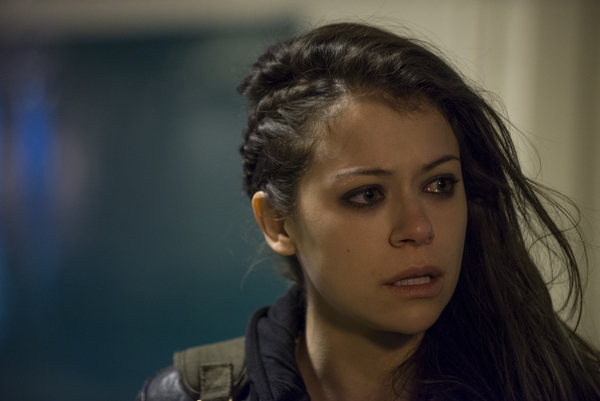
Tatiana Maslany in ORPHAN BLACK: An Acting Feat Wrapped in a Larger Accomplishment

Tatiana Maslany in ORPHAN BLACK: An Acting Feat Wrapped in a Larger Accomplishment

null

[Warning: This piece contains what could be considered to be spoilers.]

The recent Emmy
nomination snub of Tatiana Maslany, the star of BBC America’s Orphan Black, has been almost immediately
regarded
as one of the most painful in recent memory. In the months since the show’s Season
1 finale, artists
and critics
alike have raved about this 27-year-old surprise breakout. Few actors, established
or otherwise, could have pulled off the feat of acting virtuosity the show’s
star accomplished so powerfully: playing seven different roles in the same show,
characters that often share screen time. Sure, the clone thing may have been
done before, but never in this way or to this extent; on more than one
occasion, her characters—hailing thus far from Canada, the United States,
Ukraine, and Germany—actually impersonate each other, meaning Maslany must often
endeavor with Kirk Lazarushian magnitudes (“I’m the dude playin’ the
dude, disguised as another dude!
”). Comedy aside, Kirk Lazarus is an apt
comparison—Downey Jr., in Tropic Thunder,
is himself parodying Daniel Day-Lewis, whose method acting is mirrored in Maslany’s
own
practice
. What’s more, it turns out the actress is every bit as tenacious
as her on-screen personae, undertaking an exhaustive regimen of promotional interviews
and panels
on the warpath to awards season. In the wake of her snub, just watch her acceptance
speech from her Critic’s Choice Award win and try to keep your heart from
melting:

But amid the award
hullabaloo, it’s easy to overlook the show’s merits, which lie with its
writing, itself a stunt of character differentiation. Without good writers,
Maslany would have no acting feats to pull off in the first place. After
Brit-punk Sarah Manning—the first clone introduced and the show’s core
protagonist—witnesses a woman, who appears to be her identical twin, commit suicide,
she begins to discover that she is one of a series of clones scattered all over
the world, and part of a conspiracy to boot. Despite genetics, the clones have
led different lives. From a writing standpoint, these characters need to be
varied enough to generate interest, but still only as different shades of the
same person. And the writers execute handily; for such a diverse bunch, these
women feel surprisingly consistent. Each is crafty, intelligent, and
tough—willing to fight when the need arises, but tinged nevertheless with a compassionate
center. It’s always refreshing to see strong female characters in the
male-dominated antihero era, but it’s even more refreshing to see them
presented in a way that doesn’t call attention to that strength. In the manner
of politically inclined shows like Borgen
and Homeland, these women aren’t
idealized, and, like their canonical male counterparts, their most endearing
qualities often double as their vices. In some sense, this collection of
characters is the most complex character study in television history. Instead
of speculating, for instance, what Sarah would be like in a different life, we
get to watch it play out firsthand. From a production standpoint, the show
assists its audience in differentiating among its characters via motif. Helena,
a feral, tortured zealot, is often presented with rack focusing tilt-shift,
off-center shot compositions, and recurring minor key scoring. Cosima, a
dread-locked doctoral student, is typically offset with patterned reds and
oranges, visually reminiscent of the DNA double helix, befitting her course of
study (Experimental Evolutionary Developmental Biology). Meanwhile, scenes that
focus on Alison, a suburban housewife, are balanced in composition, featuring
muted pastel tones and still camera.

However hackneyed a
device, it is through the central conspiracy that the show instigates and
explores its deep moral questions—with a broader scope than its conceit may
initially imply. Though it probes the ethics of cloning, it doesn’t outright demonize
it, even while holding its perpetrators accountable. Paying homage to the
growing canon of clone narrative, the show first presents advocates of
“Neolution”—the process of self-directed evolution that functions as the “justification”
for human cloning—as sinister. But that slick veneer of scientific evil has
chinks. Seemingly, some of those involved are conducting what they believe to
be morality-oriented (or at least socially pragmatic) research, even if their
methods may be questionable. The obvious pro-con discussion of cloning’s ethics
is unavoidable. It could benefit the larger population, but at the potential cost
of identity crises or other unforeseen problems among its subjects. The show,
however, is most interested in examining the idea in terms of the human processes
that shape it and result from it. Which personality types are drawn to this
sort of study, and what are their motivations? What is the government’s role in
this process, if any? Should private corporations be given license to conduct
experiments outside of the government’s direct purview? As technology advances
at an ever-quickening pace, old decision-making structures become increasingly
obsolete, and this is as true of cloning as it is for plenty other emerging
capabilities—whether political, economic, or technological—in modern society.

But for all its
conspiracy, Orphan Black is a
character drama, and its creators don’t let these ruminations usurp priority
over the narrative. Through narrative decisions, though, they take implicit
stands on a number of cultural hot topics. Principal among them is nature vs.
nurture, exhibited most notably in Cosima’s sexual orientation. So far, she’s
the only one of the bunch with a pronounced attraction to women (the others
haven’t proven a definite disinterest in women, but appear heterosexual). If
she’s technically the same person as her counterparts, this implies that circumstance,
not nativism, is at work. And if there is observable nativism, it is only insofar
as genetic predisposition. Even if homosexuality were to be considered a “choice,”
why would Cosima choose this lifestyle for herself when her counterparts so
clearly chose heterosexuality—meaning, by this logic, that she could too—amid a
still
less-than-ideal sociocultural climate? Whatever the rationale, the existence of
this disparity asserts the equal significance of “nurture” in personality
formation alongside “nature.”

These debates don’t end
with era-defining scientific ones; the show’s creators are also interested in
exploring fundamental ideas of identity and family. What exactly are these clones to each other? Do they
count as family? In a sense, they know each other better than anyone else, but
that is only based on what they already know of themselves, and, given the
clear significance of “nurture,” even that is subject to review. So, when Sarah
discovers that Helena is a psychologically troubled flagellant, her horror is
not just theoretical—it’s personal. Unlike normal family dynamics, there’s no
guesswork in the implications of each other’s actions; if one is capable of
something, so are the others. In this way, the show elicits a deeper form of empathy
from its characters and its audience.

Despite a sometimes
action-heavy plot, the show reveals itself in its character moments. There’s an
uncanny delight in watching these women exacerbate each other. Obstinacy and
individuality are core traits to all, and while this knowledge helps guide
attempts at predicting each other’s actions—a process made muddy by a lack of knowledge
as to the others’ life experiences—they also know to suspect ulterior motives
in even the most benign circumstances. Further complicating the landscape of
trust and paranoia, Orphan Black doesn’t
default to easy alliances (even if it gives the impression of doing exactly the
opposite)—a feature that swells in significance when the notion of “monitors”
comes into play, where anybody could be withholding their true identity for as of
yet unknown purposes.

Like its medley of
clones, Orphan Black is an amalgam of
disparate influences. Simultaneously a conspiracy drama, speculative science
fiction, and a quasi-entry into the budding “Slow TV” movement, it
exists at the intersection of The X-Files, Lost, and Six Feet Under. Of course, its first season had some rough edges,
but the same could be said of Seinfeld,
The West Wing, The Simpsons, and Parks and
Recreation
. Its flaws are forgivable because the show refuses to push light
fare—even in its playful moments, its weighty questions have complicated
implications—and rather than default to plot action to distract, it uses these dilemmas
to push into complex terrain. Tatiana Maslany deserved that Emmy, but maybe the
slight can serve the greater good by incentivizing the show’s fans to broaden
its exposure during the coming year. On that note: go
watch it
.

Jesse Damiani is Series Co-Editor for Best American
Experimental Writing (Omnidawn, 2014). He lives in Madison,
WI.
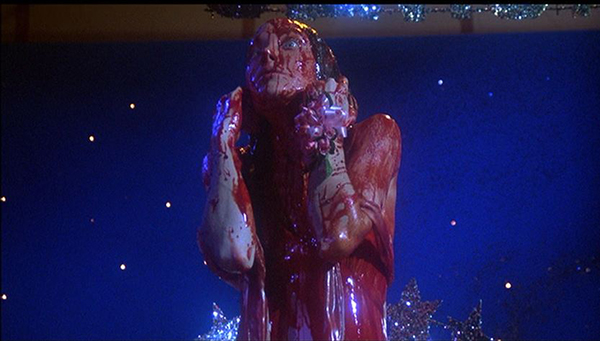
VIDEO ESSAY: Horror Films and the War on Women (Siding with the Victim, Part 2)

VIDEO ESSAY: Horror Films and the War on Women (Siding with the Victim, Part 2)

[Original script follows:]

Everyone loves a winner. 
This is why most films have happy endings.

Such films seem empowering, especially when the characters
have to struggle through difficulties before rising triumphant.

Although we all know these are fantasies, they also mirror
our real life aspirations.

In the 1970s women demonstrated in the hopes of realizing
their aspirations to be treated equally.

But the most striking films from that decade tell a
different story.

There are two sides to any social movement, tales of victory
and tales of defeat. 

Horror movies tell us tales of defeat, usually involving
women.  Most people would say that horror
films are generally anti-feminist, even misogynistic.

But the stories of victims are just as important as those of
victors. The war on women has been going
on for many years, and the stories of its victims still need to be told.

Before the modern horror film, the melodrama told such
stories to women. Most melodramas follow the lives of people who encounter
great misfortunes. In the golden age of Hollywood, melodramas flourished. Such
films came to be called “women’s pictures.” Back then, women were expected to
be seen and not heard. There was no open forum where women’s issues could be
discussed. But women could connect with others through the medium of film. They
saw their own stories reflected in those of characters played by their favorite
stars. These lives were generally filled with suffering, and this suffering was
largely caused by men.

The modern horror movie takes this scenario to an
extreme.  This is the melodrama’s dark
unconscious.  Victimization is taken to
an extreme, and this makes us uncomfortable. 
In the best horror films, the viewer learns what it’s like to have every
last vestige of power and control stripped away.

For all of Roman Polanski’s own questionable behavior with
women, his films are uniquely attuned to their plight.  Rosemary’s
Baby
, from 1968, anticipares the 70s and horror by focusing on the vulnerability of women in a male-dominated world. This scene cuts in and out of Rosemary’s dreams. This emphasizes the
fact that we are seeing the world from a female character’s perspective. That
world is a very scary place, filled with very scary men. Such scenes linger in
the mind. They create a sense that anything can happen, and all is not as it
seems.

Or is it? Polanski leaves this in doubt until the ending of
the film.

After keeping her feelings bottled up inside for several
months, Rosemary spills out her troubles. 

Her husband then tries to regain control, but this only
makes Rosemary more suspicious.

But at last Rosemary makes a decisive break from the
sinister circle that seems to be tightening around her.  Farrow’s marvelously fragile and nervous
delivery draws us in to her vulnerable state. We share her nervousness:
certainly no one will believe her.  When
he does, a door of possibility opens and we share her relief. 

But as the door to her examination room is about to open,
the camera shifts to her perspective. When the door opens to reveal her
husband, and the sinister Dr. Sapirstein, we share her entrapment. 

The moral of the story? 
Don’t hire Charles Grodin as your obstetrician.

One of the worst injustices against women is when a
complaint of sexual harassment or charges of spousal abuse are disregarded as oversensitivity or the
delusions of female biology. Rosemary’s Baby captures that experience of being a
victim who isn’t taken seriously.

Unlike melodramas, horror films don’t simply negate the
experience of suffering by tacking on a happy ending in which everything comes
out right. This can make for grim
viewing, but it also challenges us to endure even when hope seems dim or even
non-existent.

Whether it’s physical abuse, rape, or simply a quiet life of
desperation under the glass ceiling, you don’t just get over it. There’s no “closure” for women living in a
sexist society, but most Hollywood films would like to make us forget that. 

Thankfully the horror film has a way of shutting
that whole thing down.

Ken Cancelosi is the Publisher and Co-Founder of Press Play.

Jed Mayer is an Associate Professor of English at the State University of New York, New Paltz.

Cracking the Mold? Melissa McCarthy’s Position in 21st Century Female Comedy

Cracking the Mold? Melissa McCarthy’s Position in 21st Century Female Comedy

null

The idea that a comedy centering on the lives and
experiences of women cannot be a moneymaker has all but faded away after Bridesmaids’ release back in 2011, but
the debate over whether or not women, as a gender, are as funny as their male
counterparts is still being actively debated today. In many ways, this is
rather strange. After all, we have no shortage of funny women performing standup
and starring in various roles on TV and in the movies. Of course, humor is
highly subjective and culturally loaded. The things we find funny are a
combination of personal preference and social constructs. Melissa
McCarthy’s success as a comedian and status as the “new face” of female comedy
is likewise a combination of fierce talent and the
media’s willingness to give her support.

The support that McCarthy, and other female comedians,
receive tends to be tremendously ambivalent, a buttressing that continuously
comes back to the idea that funny women are rare and unusual. Female comedians are still perceived as
subversive, even though women like McCarthy have been performing comedy for
years.

All of this points to the fact that
our heightened awareness of sexism doesn’t necessarily stop it from occurring.
Two years ago I ran into a male acquaintance who I hadn’t seen for some time.
We caught up about career and relationship things, and then he mentioned that
the woman he was seeing was a few years younger than himself, a ripe old 27.

“I really prefer dating younger
women,” he told me earnestly. “After all, once a woman is my age—the late
twenties—she starts having certain expectations. It must be sad that, as a
woman, you have so much less time to explore and be young, what with your
biological clock and all.”

This was said one part in earnest, one
part as a playful jab, one part in an almost endearing attempt to talk to me about what it
was like to be a woman, but it hit me like a brick and left me feeling
exhausted and angry. I felt the same way when a male friend told me that he
could gain as much weight as he liked without bearing any social consequences
because that was just a women’s issue. Both women and men have stated
unflinchingly that women just don’t age well, period. Comments like these are
not intended to engage me in a dialogue about pressing gender concerns, nor are
they attempts to think critically about an inherently sexist system. Instead,
comments like these, which position gender stereotypes as stark, unchanging
facts, are intended to keep women in a position of vulnerability and
learned helplessness.

I keep being reminded of these
types of comments as I consider the recent hubbub about McCarthy, whose
tremendous success in TV shows (SNL,
Gilmore Girls, Mike and Molly
) and films (Bridesmaids and, most recently, The
Heat
) has inspired women and fueled further debate about whether women are
funny or not.  The debate, which is a
recurrent one, seems to boil down to the issue of whether or not female
comedians are as funny as male comedians. You can find such esteemed
thinkers as Jerry Lewis, Christopher Hitchens and Adam Carolla considering it
from various vantage points of subjectivity. Their comparisons always imply
that women, rather than being seen as individuals who either possess or lack a capacity for
humor, are instead seen as being somehow representative of all womankind.nullWhile McCarthy is talented and incredibly likeable, she is also not
the first female comedian to do physical comedy (Lucille Ball did that way back
in the 50s, when stuffing chocolate into her bra, or contorting her face when
crying, or falling over or into things when dancing). Nor is she the first to
wear her weight proudly (Roseanne Barr did that throughout Roseanne in the 80s and 90s). She is also not the first to be
raunchy and in-your-face (fortunately or not Joan Rivers still does that now). I don’t say this to downgrade McCarthy’s
accomplishments or to criticize her work. However, I do find it strange that women
are still perceived as being unusual when they are talented at any and all of
these things. If McCarthy has broken out of a mold, she has broken out of a
mold that many, many female comedians have already cracked.

The female comic, like the female
writer, the female artist, the female filmmaker or the female public
intellectual, is always seen as representative of a female experience, not a
human one. True, female comedians today are allowed to play with a greater
number of facades than they used to. There are “sexy” comedians like Chelsea
Handler, Whitney Cummings and Sarah Silverman, who are each perceived as pretty
first and funny second; “quirky” comedians (my favorite brand) like Tig Notaro,
Aubrey Plaza and Kristen Schaal, whose dedication to awkwardness is thoroughly
genderless; and “self deprecating” comedians like Tina Fey, Janeane Garofalo
and Roseanne Barr, who willingly put themselves down for the sake of a few
laughs. While each of these women individually brings great, unique talent to
the industry, female comedians, more so than their male counterparts, are pigeonholed
into certain set personas.

nullOf course, this is seen outside of
Hollywood as well. It may be a function of our Internet age as much as
run-of-the-mill sexism. I’ve been alternately thrilled and dismayed at the way online
magazines like Slate and The Atlantic feature women’s issues sections—which serve the
dual function of bringing women’s issues to attention and ghetto-izing them. It
certainly is helpful to have all of my feminist commentary in one handy section
of a magazine, but these publications, condescengingly enough, clearly don’t consider
issues that affect women to be “news.” Issues pertaining to gender in general
are presented as loftier lifestyle-oriented pieces. Bridesmaids was marketed as a game changer and seen as subversive
because it featured an all-female cast, but it was also only one of a long line
of female-centered films about getting married. While Bridesmaids was innovative in that it placed women in situations
more rough and raunchy than was previously deemed appropriate or acceptable, Bridesmaids’ success did not reinvent
Hollywood. as many feminists hoped it would. It simply paved the way for a new
female brand, one which Melissa McCarthy has become the poster child for: the
rough and raunchy female comic.

The
Heat
, McCarthy’s latest film, is effective and funny, but it is also hardly
revolutionary in its approach to comedy. Its appeal to both genders is really
based on the fact that the buddy cop comedy genre has been a historically male-oriented
one. In determining a film’s importance, we still mainly worry about whether or
not that film is going to appeal to men. Perhaps my cynicism sounds a bit
world-weary. After all, The Heat does
pass the Bechdel test, which posits that a movie’s gender equity can be gauged
by whether or not we encounter two or more women in a film who talk about
something other than a man. It highlights a positive and affirming
female-friendship that seems genuinely affectionate and is not based around
relationships with men.  That said, I am coming to a point as a feminist critic where watching two women who
don’t seem pathetic, or boring, or insular, or don’t make me feel like I want
to shoot myself in the head is not enough for me anymore. The summer months are
still a sea of bromances, as well as male-centered action and superhero movies,
and I don’t feel grateful when I see women “allowed” to engage in the same
vulgar and offensive humor that men have been playing at for years.

When writing this piece, I talked
it over with a friend, who tried playing devil’s advocate with me. My friend
said that all the female comics of the past 60 years were courageous game changers.
They have worked hard to help women break into the comedy world. But while I
agree that the socially-minded commentary of women like Margaret Cho, Wanda
Sykes and Roseanne Barr have been tremendously inspiring and empowering, it is
clear that the comedy circuit is still incredibly hostile to women. Our culture
itself is hostile to women, skeptical of their successes, unwilling
to see women’s accomplishments as anything more than a special interest work.
The recent and prolonged debate about whether or not it is okay to joke about
rape is often derailed by critics and comedians alike. Big headliners like
Daniel Tosh often claim impunity when confronted by angry critics, highlighting
how comedy can only be successful when there is complete freedom of speech. Unfortunately,
the sheer ubiquity of these types of jokes reinforces the idea that women’s
needs—for safety, consideration and respect—are simply not important, and that
women’s needs are actually counter to the goals of comedy as a whole.

nullThe trend of creating a kind of
false gender discourse as a means of actually reinstating the status quo is not
unique to the comedy circuit. In the past month blogger,
researcher and artist Nickolay Lamm tried his hand at transforming Barbie so that her
measurements would reflect the height, size and shape of an “average” American
woman, rather than the obviously out-of-proportion measurements of the much worshipped
and maligned traditional Barbie doll. In the pictures of this version of Barbie,
you can see a shorter, slightly thicker Barbie, with a rounder chin and ass.

I’m not sure what I am supposed to
feel about these kinds of projects. Most likely the same kind of gratitude I am
expected to feel when women are given the main billing in a comedy. Are these
new Barbies intended to help us recognize that the unattainable images we
constantly see are, in fact, unattainable? That a short lived dialogue
surrounding a trendy new meme will promote some kind of tangible change? The
reality is very different. Every few years someone else comes along with a new
reason for why the original Barbie is bad and how a more realistically shaped
Barbie would help girls learn to feel good about themselves. And we all know that
Barbie isn’t going anywhere. Little girls are not going to be fighting over
these new Barbie models. If Barbie sells
a bill of lies to girls and young women, “average” Barbie sells an even bigger such bill:
that continuing a dialogue around a problematic image will help heal us. In
reality, Barbie’s ubiquity is strengthened by clichés. These clichés surround
her very existence, which is a part of America’s cultural fabric.

Our current view of female
comedians reduces them to dolls. By this I don’t mean to suggest that we don’t
laugh at the jokes female comedians make or listen to them when they talk about
their experiences. What I mean is that we still reduce female comedians to
their gender. Perhaps this is a problem of consumerism, as well as sexism.
After all, we have just as many ridiculous and offensive stereotypes about
masculinity being marketed to us today ( the idea that men are buffoons who can’t
take care of children, for example, is a staple in sitcoms and commercials
alike,) and the culture of masculinity is not one that most of us are trained
to think critically about. At the end of the day, we buy the bill of goods we
are sold, which is why PSAs about how unrealistic photoshopping is are doing
nothing to help women (and men) feel better about themselves.

I enjoy laughing more than I enjoy
criticizing things. In researching this piece, I loved having the opportunity
to watch a lot of really wonderful and talented female comedians at their best.
But the longer I kept researching, the angrier I got. Our world pretends to
offer women a tremendous array of options, only to continuously remind women
that we should be thankful for getting anything at all.

Anger, of course, often comes from
a feeling of being out-of-control or helpless, and that is truly how I often
feel when I talk about these issues. I know I have seen them constantly, every day,
since I was a little girl. I know that there are a lot of compassionate and
concerned thinkers, male and female, who really want to improve these issues. I
also know, however, that real, permanent, far-reaching change won’t come from
simply allowing women a greater number of stereotypes to play into. What we don’t need is another a parade of
Barbies. It doesn’t matter if we accept all shapes, sizes, colors and any
number of interesting and evocative outfits. At the end of the day, funny,
talented women notwithstanding, the cultural machine is still just interested
in churning out plastic.


Arielle Bernstein is a writer living in Washington, DC. She teaches
writing at George Washington University and American University and also
freelances. Her work has been published in
The Millions, The Rumpus, St. Petersburg Review, and South Loop Review, and she has twice been listed as a finalist in Glimmertrain‘s Family Matters Short Story Contests. She is Associate Book Reviews Editor at The Nervous Breakdown.

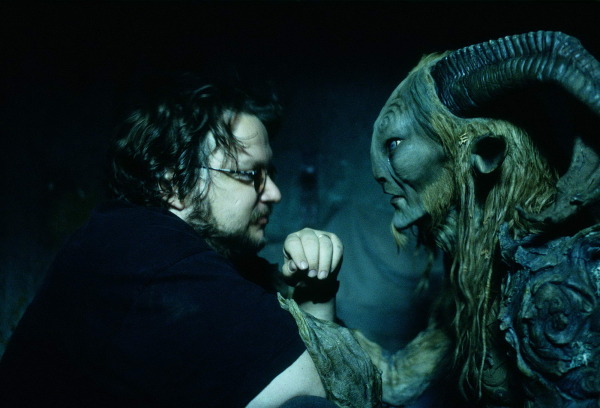
VIDEO AND TEXT: Nelson Carvajal and Amber Sparks on Guillermo del Toro

VIDEO AND TEXT: Nelson Carvajal and Amber Sparks on Guillermo del Toro

Guillermo del Toro: The
Unlikely Auteur

As Guillermo del Toro’s Pacific Rim release date fast
approaches, I can’t help but feel a little depressed.

Don’t get me wrong. I’m a huge fan (pun intended) of the kaiju—or giant monster—film, so I really
am looking forward to the release of this film, director and ultimate fanboy
Guillermo del Toro’s attempt to reboot giant monsters and mecha warriors for a
new generation. I seriously can’t wait to see Idris Elba and Ron Perlman battle
giant monsters from the deeps.

That said, I’m still in mourning for The
Hobbit
-that-could-have-been, a film that—instead of a lesser Lord of the Rings for small children and
people who love dwarf slapstick—might have featured an entirely new Middle
Earth. Imagine a brilliant, sadistic dragon-against-type; imagine troll-like dwarves
and sylph-like hobbits inhabiting an alien, immersive new world (instead of
wandering around in the digital landscape of LOTR like wide-eyed tourists:
“Look! There’s Galadriel!”); imagine Tolkien’s book, transformed utterly, in
the hands of a true auteur.

That’s right. An auteur. But,
you might say, shocked and appalled—he does genre
pictures
!

Yes. And?

His body of work reveals a filmmaker
who, along with a handful of contemporaries (both Andersons, Malick, Haneke,
Von Trier, etc.) has transformed his source
material so that it reflects absolutely his personal vision. And after
all, Hitchcock did genre, as Kurosawa often did. In del Toro’s case, the
personal vision was shaped by perhaps less
traditional sources
: by Forrest Ackerman’s Famous Monsters of Filmland, by Universal Horror classics and
Godzilla and Gamera films, by a childhood in Mexico steeped in Catholicism, and
by a self-confessed nerd’s affinity for children, outcasts, and monsters.

His interest in film began as an interest in makeup
and effects
, and his films are his
films precisely because of the love and care he takes in designing his
creatures and his unreal worlds: the pagan, organic nature of his creatures is
uncanny and frightening—even the mechanized creatures resemble insects or
animals or very old gods. In a Hollywood in which horror movies routinely make
monsters and demons from a few ready-made molds, when comic book films
(with a few exceptions) follow a format that doesn’t deviate too much from the
standard—del Toro makes films like Pan’s
Labyrinth
, with possibly the most terrifying creature in all of recent
cinema—The Pale Man, Norn-like and flesh-draped and utterly original. He makes
films like The Devil’s Backbone,
which turned the ghost story genre on its head. He makes films like Hellboy and Hellboy II: The Golden Army,
which took a wildly popular comic book and transformed it completely. The Troll
Market in Hellboy II is worth the
price of admission alone, as are the bizarre and frightening tooth fairies.
These creatures are unlike any you will find in any other film, because they
don’t come from formula and they aren’t lifted from other films. As Daniel
Zalewski wrote in his fascinating New Yorker profile of del Toro, “When movie monsters look largely the same, Del
Toro’s reach deep into the past and into mystic and pagan iconography to
present something else entirely—something far more terrifying and familiar . . . A
del Toro monster is as connected to a succubus in a Fuseli painting as it is to
the beast in ‘Predator.’ His films remind you that looking at monsters is a
centuries-old ritual—a way of understanding our own bodies through gorgeous
images of deformation.”

Del Toro himself seems motivated to keep moving, to keep
making it new. On
his sources of inspiration:
“The worst thing that you can do is be inspired
solely by movie monsters. You need to be inspired by National
Geographic,
by biological treatises, by literature, by fine painters, by bad
painters.” Indeed, in Pacific Rim,
del Toro has said he wants to create something entirely new, despite the
Godzilla and Gamera-like kaijus of
the genre’s heyday. He was instead inspired by perhaps not such an unlikely
source: Goya’s
The Colossus.

But a visual feast alone would make del Toro a great artist,
not a great filmmaker. The compelling and very dark stories he chooses to tell
are what animate the films and give them their haunting quality. Beauty holds
hands with horror, two sides of a coin in all of his films. Del Toro seems much
more in debt to Grimm’s Fairy Tales
than to The Texas Chainsaw Massacre.

One gets the impression that perhaps del Toro deals in
horror because of his dark view of human nature. People are the real monsters
in most of his films, not the fantastic, often ambivalent, only cruel-as-nature
creatures that inhabit his worlds. Humans are the ones who do the real, lasting
damage. He says, “I ended up thinking that monsters are sort of the patron saints
of imperfection. I try to celebrate imperfection in my movies; the really scary
characters are always the ones who insist everything has to be perfect.”

All this is the reason I’m still in mourning. I loved Peter
Jackson’s Lord of the Rings trilogy
just like everyone else, and after that it would have been great to see what a
true auteur could do to put a different spin on the prequel. (I also would have
loved to see Del
Toro’s canceled adaptation of Lovecraft’s At the Mountains of Madness
.) But
I suppose it’s not such a bad consolation prize to get a new and exciting kaiju movie, one that will feature new
creatures but follow the old wild joy of the kaiju orgy of destruction in the (important for a pacifist
director) empty city (thus the scenes
of frantic evacuation in every giant monster movie ever). And maybe I’ll even
(fingers crossed) get to see him team with Charlie Kaufman to make what could
be the first
good screen adaptation of Slaughterhouse Five.

The man with endless creative ideas, who lives
in a mansion he calls Bleak House—filled with monsters, aliens, and comics—seems
perhaps more in touch with a pop-culture obsessed public hungry for good horror than any other director
since Hitchcock. And as del
Toro has said himself
, “Hitchcock would have gone
to Comic-Con. He would have signed collectible shower curtains. He
was a showman and an auteur.”
–Amber Sparks


Nelson Carvajal is an independent digital filmmaker, writer and content
creator based out of Chicago, Illinois. His digital short films usually
contain appropriated content and have screened at such venues as the
London Underground Film Festival. Carvajal runs a blog called FREE CINEMA NOW
which boasts the tagline: “Liberating Independent Film And Video From A
Prehistoric Value System.” You can follow Nelson on Twitter
here.

Amber Sparks’ short stories have been widely published in journals and anthologies, including New York Tyrant, Unsaid, Gargoyle, Barrelhouse, and The Collagist. Her chapbook, A Long Dark Sleep: Stories for the Next World was included in the chapbook collection Shut Up/Look Pretty from Tiny Hardcore Press, and her first full-length story collection, May We Shed These Human Bodies, was published in 2012 by Curbside Splendor. You can find her at ambernoellesparks.com or follow her on Twitter @ambernoelle.

VIDEO ESSAY: Siding with the Victim, Part I: THE SHINING

VIDEO ESSAY: Siding with the Victim, Part I: THE SHINING: Death in the Family

[The script follows:]

From the time we are little children we like hearing scary stories.  Some
psychologists claim it’s because we use these stories to work through our anxieties.
 Fairy tales and nursery rhymes expose us to fearful situations, and along
with Hansel and Gretel, Goldilocks, and Little Red Riding Hood, we see our way
through to daylight.

But for every little piggy who lives, another little piggy has to die…

Maybe there’s another explanation to why we like scary stories, a darker, and
perhaps a richer one than that given by psychologists. Perhaps we don’t
identify with the victors so much as the victims.


Horror films show us the dark underside of the
American dream. As one group rises to power, another is disenfranchised. Often,
violence is visited upon those who are in the minority. 

Thrillers and action films celebrate triumph and
success. Horror films clean up the mess, mop up the blood, and show us what’s
under the rubble after the action hero lays waste.

Many horror movies’ victims, are women and
children, as in real life.

The Shining is
arguably the greatest horror film because it so movingly bears witness to the
suffering of the frightened wife and child of a violent alcoholic.
 

Wendy Torrance’s glassy-eyed smile holds a dark
history and a sense of nervous fear. This is revealed by the enormous ash
perilously dangling from her cigarette. The film will draw her repressed fears
out, writ large in bloody letters across the screen.

If this were a made for TV movie about spousal
abuse, a councilor or friend would come to the abused wife’s aid. That person
would help her to gain control of her life. 

But the narrative and moral logic of horror films
tells us a different story, one that is, perhaps, truer to life: evil never
sleeps, and the dead don’t always stay dead.

It is a common story, sadly enough, but like all
great horror films, The Shining gives this
story the magnitude of a tragic American myth. 

As family tensions mount in the Overlook, each
member of the family goes over the edge in their own special way.


“They fuck you up, your mum and dad. / They may
not mean to, but they do. / They fill you with the faults they had / And add
some extra, just for you.”  Poet Philip
Larkin’s words are particularly relevant to the American horror film.  Many of the best horror films capture the
unique vulnerability of childhood. In the end, the horror movie makes us all as
vulnerable as little children.

The tradition of gothic horror has been replete with beings
whose monstrousness is as much a burden to themselves as a threat to others.  There is no such thing as a victimless crime
in horror movies. Even the victimizers may be said to suffer.

We see Jack Torrance having a nightmare that,
the film suggests, is a kind of a vision brought on by the haunted hotel where he
and his family live. Such visitations vex him, and we can identify with his
anguish. 

Jack can still feel compassion, though, and we sense
his torment and anguish as he confronts and eventually turns toward
derangement. 

As such visitations increase in frequency and
intensity, Jack is transformed into a savage, and yet we continue to see him as
a victim driven to madness. And thus, his final transformation and his
merciless rampage seem all the more tragic. 

Even in the end, he is no monster. 

This is simply the dark side of human power. 

The waxing and waning of power itself—in
cinema as in real life—is merely an illusion.

The horror film: It shows us the dark side of
power, and reminds us that we are all, at some levels, powerless victims.

Power,
in and of itself, is not a moral virtue, but compassion is.


Jed Mayer is an Associate Professor of English at the State University of New York, New Paltz.

Ken Cancelosi is the Co-Founder and Publisher of Press Play.

Rehabbing Tonto: THE LONE RANGER as Picaresque Tale

Rehabbing Tonto: THE LONE RANGER as Picaresque Tale

null

As The Lone Ranger
shifts from the point of view of its hero, John Reid (Armie Hammer), to the
first-person narrative of his Indian sidekick Tonto (Johnny Depp), the tired
pulp story becomes a postmodern picaresque. A type of story with a long
literary tradition but seldom seen on film, a picaresque is usually episodic in
nature, a fact that contributes to what many perceive is the messiness of The Lone Ranger. Tonto exemplifies the
typical picaresque hero (or picaro), noble in intentions but misguided and
perhaps even unreliable in his perception of the events in which he is usually at
the center. Like Arthur Penn’s Little Big Man, this film begins with a
rather decrepit Indian as a dubious storyteller, spinning a yarn full of
non-sequiturs and magical realism that both uncomfortably overlap with heinous
atrocities in order to subvert the typical white victor’s perspective of the
American western. The first appearance of Depp, made up to look a hundred-odd years
old, is itself a metatextual reference to Little
Big Man
’s protagonist, Jack Crabb (Dustin Hoffman). Crabb is a white man
raised by the Cheyenne who encounters famous figures like Wild Bill Hickok and
George Armstrong Custer (who, in The Lone
Ranger
, finds his own visual parallel in a cavalry officer played by Barry
Pepper), just before their grand, untimely ends. 

Tonto’s pseudo-mysticism is one exaggeration highlighted in his narration,
later revealed to Reid by his sidekick’s own people as the mad ravings of a
fool. But Tonto’s skewed imaginings serve to leaven the social commentary with
humor as is typical in other picaresques like Don Quixote. A dark flashback showing the extermination of Tonto’s
tribe by plundering strip-miners backs up against a hallucinatory image of the
Lone Ranger’s horse Silver standing comfortably at the tip of a branch of a
tall tree. “There’s something very wrong with that horse,” says Tonto, an odd
laugh line at that point of his story. But isn’t it also a bit of humor meant
to both mitigate the horror that precedes it as well as heighten it in sharp
relief? It certainly inspires Reid to take the role Tonto has bestowed on him
more seriously than he does initially, if for no other reason than he fears the
crackpot may not be up to the task.

Still, Reid is more of a milquetoast here than in any previous iteration of
the Lone Ranger character. Consequently, Tonto becomes a tragic hero looking
for redemption. He is indirectly responsible for the genocide of his own
people, but he strives to make amends by stymieing the advance of the railroad
(and attendant whites) into Indian lands, ultimately with no success. This the
film makes clear even before the story proper starts. Our introduction to the
wizened, old Tonto is in a travelling circus sideshow display behind a racially
charged nameplate that reads “The Noble Savage.” Even Tonto’s name,
as alluded to when Reid asks him if he knows what it means in Spanish, befits
that of the typical picaro. “Tonto” is Spanish for “idiot,” an
apt description for other picaresque heroes such as Redmond Barry Lyndon or
Forrest Gump.

Much of the gleeful critical piling-on directed at The Lone Ranger is
conflated with politically correct hand-wringing, involving Hollywood’s
depiction of Indians and the casting of Depp to play the Masked Man’s Indian
sidekick, Tonto. One camp is offended by the very existence of Tonto, a
mishmash of Hollywood’s stereotypes of indigenous people. Of Depp’s
performance, Mark Dujsik
says, “…speaking in broken English and gratuitously mugging for the
camera—perhaps it’s for the best that a Native American actor has been spared
the indignity of the role…” Another sillier group’s outrage seems to stem from
nostalgia for the television Tonto they grew up with. Badass
Digest
’s Devin Faraci says “… The Lone Ranger is a movie that seems
to be embarrassed of its own source material…. Unwilling to just degrade The Lone
Ranger himself by making him a buffoon, the movie also makes Tonto a gibbering
lunatic.…”

Critics are insulted that Depp, whose claims of Indian ancestry are remote
if not entirely questionable, was cast as a quite evidently made-up Indian icon.
However, before the previous 1981 disaster, only one Indian actor had ever played Tonto, TV’s Jay Silverheels (a Canadian
Mohawk whose real name was Harold J. Smith). Silverheels did his best to imbue
a character that was basically an expository soundboard with elements of his
own heritage in order to position the character as a hero his people could look
up to. But at his foundation, Tonto is still a thin character. Being upset that
the mutable Depp is playing Tonto is like feeling insulted that British
chameleon Peter Sellers played the faux-French Inspector Clouseau.

Depp’s performance as Tonto is a memorable tragicomic creation, made
perfectly viable by the framing device utilized by director Gore Verbinski to
tell the movie’s story. Indeed, when seen as a picaresque told by an
anti-establishment fool, it becomes clearer that Depp and Verbinski are not only
not denigrating the Indians; by
rehabilitating the subservient character of Tonto, they are elevating the
Indian people to their rightful place as the central figures of the story of
the American West. As if to bear out this idea, Verbinski offers us, as the
final credits roll, an elegiac, silent crane shot of Depp’s aged Tonto
shuffling off into the sunset, not in his stereotypical buckskin but his titular
partner’s now-threadbare black outfit. He has become the hero of his own tale.

Atlanta-based freelance writer Tony Dayoub writes about film and
television for his blog,
Cinema Viewfinder. His criticism has also been
featured in Slant’s The House Next Door blog,
Wide Screen, Opposing
Views and Blogcritics.org. Follow him on Twitter.

Are the Belchers of BOB’S BURGERS the New All-American Family?

Are the Belchers of BOB’S BURGERS the New All-American Family?

null

The conceit that made The Simpsons the
longest-running animated series and sitcom in U.S. television history was
simple enough: Focus attention on a working-class family whose members are all
of above-average intelligence relative to their age—with the notable exception
of the breadwinner—and let hilarity ensue. Most of the resultant humor
focused, in the early seasons, on Bart’s ready ability to outsmart his elders;
in later seasons, Homer’s tendency to win the day without any know-how or even really
trying stole the show. Here and there, toddler Maggie’s age-inappropriate
intelligence, Lisa’s nerdy maturity, and Marge’s throwback do-gooderism offered
a spoonful of additional comic relief.
 

The premise behind Bob’s Burgers is altogether
different. Instead of being across-the-board shrewder and more insightful than
their peers, the Belcher kids are defined by the type of their intellects rather than their magnitudes: Louise is
strategic, Tina self-conscious, and Gene unpredictable. More broadly, and far
more importantly, all three seem to suffer from significant mental and
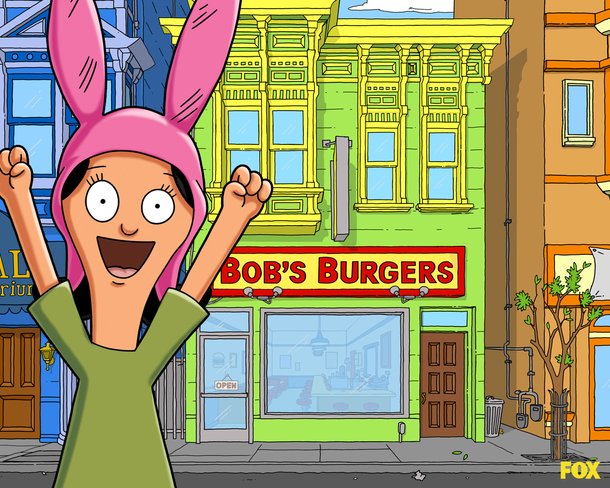
emotional disabilities. Louise, the youngest Belcher, wears bunny ears at all
times, relishes violence and conflict, and only rarely shows even a hint of
emotional attachment to her parents and siblings; Tina, the eldest, is a
depressed and anxious pre-teen whose creepy obsession with sex is made all the
more unsettling by the fact that she speaks in a boyish monotone; Gene, the
only son and middle child, alternates between making insightful observations
and farting uncontrollably, between an attention span measured in seconds and
being willing to eat or say or do absolutely anything if asked. The upshot of
all this is that viewers can smell the dysfunction a mile away—even if they
lack the clinical terminology to diagnose it.
 

nullBy comparison, Bob and Linda Belcher, the show’s Baby Boomer
parents, are refreshingly normal-seeming. Linda is on occasion overbearing and
melodramatic, and her voice and physical mannerisms undoubtedly grating, but
she’s reasonably intelligent and loves her children ferociously. Bob’s not a
particularly good father, in part owing to his fixation on an ailing small
business and in part due to his garden-variety egotism—which has, over the
years, made him less attentive to his offspring. Viewers therefore get to
witness all at once two common fears about Baby Boomers: either that they’ve
grown up to become squares like their parents (as with Linda), or that their
narcissism and baseline immaturity has doomed them and their families to a
diminished quality of life (as with Bob). Meanwhile, their kids stand in for
not one but two generations of overdiagnosed and overtreated younger Americans,
though in Bob’s Burgers there’s a notable twist on even that (somewhat
tired) form of social satire: The Belcher kids’ presumptive diagnoses would probably turn out
to be perfectly well-founded.
 

A few of the show’s peripheral characters are interesting as
well—there’s erstwhile burger-joint patron Teddy, a middle-aged bachelor who’s
chatty, “local,” and unsophisticated; the mysterious Calvin
Fischoeder, Bob’s landlord and a likely grifter; and Mort, a white-bread
funeral home director with no social circle—but most of the show’s extras are
simply foils for its ingeniously zany plotlines. More important is that, unlike
Bob and Linda, who have at least a dollop of parental instinct, the Belcher
children live in a borderless world, one in which kids are free to give vocal
and dramatic expression to their every neurosis.

nullAs middle-school-aged children on the cusp of young
adulthood, the looming question for the Belcher brood is, “Will they stay
like this into adulthood? Is this what the next generation of Americans looks
like, in crude caricature?” Of course this has been the chief fear of
red-blooded middle-class Americans for years: That soft, upper middle-class
living, marked by self-indulgent lawlessness, will become standard in the
United States. Thus Louise’s instinctive unwillingness to be feminized by her
father, mother, or school; Tina’s androgyny and repressed sexual deviance; and
Gene’s perpetual infancy. These same phenomena likewise encapsulate two fears
long endemic to the nation’s eldest two generations: That women will refuse to
or forget how to “act like women,” and that boys will never evolve
into “real men” capable of fighting and winning wars and running the
economy. Implied in all of this is that Bob, and perhaps America, would meet
with greater economic success if a lid were finally put on such first-world
eccentricities as the Belcher children display.

And yet, never has an animated show exhibited such
light-hearted contempt for average men, women, and children. To call Louise,
Tina, and Gene’s middle-school classmates drooling idiots is to merely describe
their appearance, demeanor, and intelligence with precision. Some of them
actually do drool, and all are imbeciles for whom two-dimensionality would be
an improvement on their characters. What few neighborhood adults populate the
Belchers’ highly-circumscribed little world are conspicuously underwhelming.
All of which encourages the view that, while the Belcher kids are indeed
suffering from emotional and (as to Tina and Gene, if not Louise) intellectual
degeneration, at least they’re not flatliners like everyone else. This celebration
of eccentricity would be a tad
unsettling if it wasn’t also so uniquely American. What others abroad might
term antisocialism is, in the United States, individualism at the level of the
individual and patriotism at the level of the nation. 

Ultimately, what makes Bob’s Burgers perhaps the funniest
animated series ever aired on U.S. television—and adorably escapist, rather
than arch-conservatively dystopic–is the sitcom format, which ensures that
borderlessness does not, ultimately, lead to chaos. True, the humor of the
series is often predicated on every joke or snippet of dialogue going two or
three steps farther than one normally might be comfortable with, but the
emphasis is finally not on American family life permanently jumping the rails
but on the ways modern living lets families ride their own nonsense to its farthest
waystations. So it is that when Tina threatens to punch a female classmate if
she ever gossips about her, the violent threat is issued not merely once or
twice but ten times. In the same episode, Gene confronts mild, harmless,
intermittent bullying at school with severe, persistent, physically threatening
bullying of his own. Louise, meanwhile, makes manifest her anger at her
father’s shifting affections by literally attacking a gift her father gets for
her brother with a sharp object. In other words, the overstimulated Belcher
kids habitually pass on their over-stimulation in the form of overreaction, or
else honor the ways they’re emotionally and intellectually underdeveloped with
gross under-reaction—much like, many would say, American culture tends
to do. These days, any crank will tell you, no public nuisance fails to produce
a public outcry, no private slight fails to become an occasion for a public
meltdown, and no grotesque facet of American culture is so harrowing that the
nation’s children can’t gradually become desensitized to it.

nullThe Belchers’ five-booth diner may require a re-opening

after its initial opening (and a re-re-opening after that, and a
re-re-re-opening after that; ephemeral disasters seem to follow this family),
but open for good it finally does, and if it makes virtually no money at all—a
fact uncomfortably remarked upon by Bob in most episodes—it also never quite
goes bankrupt, either. The message is implicit: With a younger generation like
this, and with parents like these, America’s middle class may never prosper,
but it’ll somehow eke by. If this throughline seems identical to the one
popularized by The Simpsons in the 1990s, it’s because, while the
Belchers are certainly not the Simpsons, they’re still, at base, an
all-American family whose members are perfect avatars for an empire in decline.
Only in a nation unmoved by its own excesses and turgid economy can simply
treading water as small businesses come and go—the opening of each episode of Bob’s Burgers features at least one
local storefront that won’t make it to the next episode—be considered good
enough.

It’s nearly impossible to find an animated television family
designed to be lifelike, so it’s not reasonable to expect animated art to
mirror actual life. But for all that, there’s a sense in which—at the level of
metaphor, and with an eye towards an entire nation rather than just one nuclear
family—the Belchers are as representative an American family as we’ve seen on
TV in a very, very long time.

Seth Abramson is the author of three collections of poetry, most recently Thievery (University of Akron Press, 2013). He has published work in numerous magazines and anthologies, including Best New Poets, American Poetry Review, Boston Review, New American Writing, Colorado Review, Denver Quarterly, and The Southern Review.
A graduate of Dartmouth College, Harvard Law School, and the Iowa
Writers’ Workshop, he was a public defender from 2001 to 2007 and is
presently a doctoral candidate in English Literature at University of
Wisconsin-Madison. He runs a contemporary poetry review series for
The Huffington Post and has covered graduate creative writing programs for Poets & Writers magazine since 2008.

STAR TREK Into Remission: Gene Roddenberry’s Most Famous Creation, Cancer and Me

STAR TREK Into Remission: Gene Roddenberry’s Most Famous Creation, Cancer and Me

null  

To
begin as Spock might begin: often, when a full-blown crisis happens in a
person’s life, media may be used to cope with stress and adversity. And no matter
how relevant or irrelevant that media is to the circumstances of the crisis, it
may be a source of comfort, distraction and catharsis. This is a personal
account of such coping.

From
February 2006 to March 2007, I was diagnosed with and treated for Hodgkin’s Disease,
also known as Lymphoma, a form of cancer. I was in my early twenties,
unemployed, back to living at my parents’ house as recourse, and I had too
much dreadful time on my hands.

At
first I was given a combination of relatively standard chemotherapy and
radiation treatments, but my cancer relapsed a month after those ended. As a
last ditch effort, I had an autologous stem cell or bone marrow transplant,
which involved higher, more potent doses of chemotherapy, a harvesting of my
white blood stem cells through an extracorporeal process called Apheresis,
“rebooting” my immune system by replanting the harvested stem cells into my
body, and a month of hospitalized medical isolation due to being severely
immuno-compromised. It was the closest thing to being put through an actual
wringer, and my immune system is still recovering from the ordeal.

Besides
causing diseases and infections in me like shingles and pneumonia, which would
normally cause anxiety but were then seen as ancillary concerns, the treatments
exhausted me and caused a type of cognitive impairment that is often called  “chemo brain.” Things like reading, writing or
maintaining a conversation became difficult. Yet despite my diminished faculties,
I watched movies and TV shows, as I am wont to do. In the latter category, I
watched Mad Men, The Wire, Lost and Breaking Bad. Most notably, I became
more familiar with the original Star Trek
series, which ran on NBC from 1966-69.

*******

Growing
up, I had seen the numerous Trek
series and movies, but by no means was I a bona fide fan, who might attend a
Trekkie convention, or who could tell you the fuel used in the Enterprise’s
warp engine. My appreciation was casual. Yet I watched the original Star Trek series as well as the movies
starring the original series cast, and I came to intuit the shows’ significance
as my treatments progressed. The very ideas of the show grew in me, and I
became a Trekkie as I was cheating death, Captain-Kirk style.

nullOne
reason for this reappraisal was a sense of wish fulfillment. In the world of Star Trek, medical science is so
advanced that it is only really tested by strange, intergalactic diseases and
disorders. Curing the cancer that I had would be a cinch for Dr. “Bones” McCoy,
and if he had seen me during my treatments, he would’ve ranted against the
barbarity of pre-23rd century medicine, just as he did in Star Trek IV: The Voyage Home. I would
have found such commiseration from him comforting.

This
ideal healthcare could be seen as an extension of the progressive and utopian
ethos of the show’s world, best embodied in its fictional government, The
Federation, a republic of planetary governments based on the ideas of liberty,
basic rights, and equality.

Yet,
aspects of Star Trek’s future or the
Federation could be criticized by those who have a more conservative political
worldview: for instance, the Starfleet-based concept of the Prime Directive (to
not deliberately interfere with or influence alien cultures) could be seen as
“bleeding heart” liberalism. But as someone who has liberal leanings, that’s a
world in which I wouldn’t mind living. And the notion of an improved future gave
me hope as I fought cancer, even as I identified the elements of the show that
could now be seen as naïve (i.e. the episode “Let That Be Your Last
Battlefield”, an all-too-simplistic allegory on conflicted race relations),
dated (the show’s overall mise-en-scene), campy (i.e. Kirk fighting Gorn in
“Arena”) or politically incorrect (why do the female crew members have to wear
mini-skirts? and why is a Caucasian man assumed to be more qualified as captain
than the biracial and multi-talented Spock?)

However,
Star Trek isn’t just fantasy. Because
it is by its nature an episodic, scenario-driven TV show, problems and dilemmas
occur, and it presents a utopia riddled with caveats. Sure, things are good in
the future of Star Trek, but in it
there are still things like warring Klingons or Romulans, strange
extraterrestrial entities or plagues that destroy other beings, dangerous and
demented megalomaniacs, an evil parallel universe, accidental time travel, specifically
anachronistic planetary cultures, and even Spock’s seven year itch.

Yet an upside is that intelligent life in the world of Trek has never been more able to deal with and acquire social understanding and self-knowledge from these challenges. Consequently,
the show is as much about personal and interpersonal exploration and discovery
as it is about new universes and beings: an optimistic interpretation of the
often repeated Nietzsche aphorism that if you gaze long enough into an abyss,
the abyss will gaze back into you. And, existentially, what is cancer besides a
look into an ever-increasing void or extension of nothingness that
paradoxically provides an opportunity for growth, clarity and resolve?

nullAlso,
the resolutions of many Star Trek
episodes involve some sort of relativistic thinking. Captain Kirk and crew are
often presented with difficult, problematic and threatening situations, but
what often saves them and others is a seemingly counter-intuitive shift in
perspective. For instance: in “The Corbomite Maneuver,” the USS Enterprise is
forced into combat with a bizarre alien ship that is commandeered by Balok. During
its height, Spock compares the dire situation to a game of chess, but Kirk changes the analogy to a game of poker, which inspires him to bluff Balok by making him believe that the Enterprise is encased in Corbomite, a fictitious substance that will defensively rebuff any attack. This buys Kirk and his crew more time, which leads to a surprising resolution to the standoff. (And it is
notable that foes like Khan, Gary Mitchell, and Garth of Izar tend to be undone
by their maniacal absolutism, and their unwillingness to compromise or shift
perspective.)

Ingenuity,
bravery, adaptable thinking, and, sometimes, traumatic loss or sacrifice are
key to survival and prosperity—as in the show’s most renowned episode, “The
City on the Edge of Forever,” in which Kirk and Spock have to go through a time
doorway on a planet in order to stop a temporarily insane McCoy, who
impulsively jumped through the doorway, from somehow retroactively changing history
to their total disadvantage. The two travel to New York City in the 1930s,
where they meet social worker Edith Keeler (Joan Collins). Kirk falls for
Edith, but Spock drops a bombshell: McCoy will prevent Edith from dying in a
traffic accident, which needs to happen in order to prevent Edith from starting
a pacifist movement that will cause the U.S. to delay its involvement in World
War II. This allows the Nazis time to develop an atomic bomb and take over the
world, which causes the non-existence of the Federation.  At the climax, Kirk and Spock reunite with a
sane McCoy, but Kirk has to deny his love for Edith by stopping McCoy from
saving her life. It is the most heartbreaking moment in the series.

nullAnd
in the episode “The Immunity Syndrome,” the Enterprise encounters and becomes
trapped by a giant, energy-sucking amoeba. After some setbacks, which include
Spock’s disappearance on a suicide mission by means of the shuttlecraft Galileo, Kirk and McCoy brainstorm to find
a solution after framing the situation in medical terms: send an “antibiotic” antimatter
time-bomb into the amoeba in order to stop it. Kirk and crew do so, and they
kill the parasitic organism. They also save Spock in the process. Truly, Space
becomes a metaphor here for a disease that the Enterprise triumphs over and
learns from.

*******

Like
any life-threatening disease, cancer can transform outlooks. It’s a state of
being where the ground constantly shifts and one has to find new, unexpected
ways to be bolstered. It’s a dark frontier, and if there’s a Star Trek episode title that evokes the
feeling of having and dealing with it, it’s “For the World is Hollow and I Have
Touched the Sky.”

But
when you have cancer or anything like it, optimism, an honest acceptance of
struggle and a flexible point-of-view can be as crucial to improving and
beating the odds as any medical treatment. At their best, Captain Kirk and his
crew—as well as subsequent Trek
captains and crews—embody these attributes. And at the show’s best, Star Trek promotes these virtues as
things to emulate, emblems of a shining future. For this reason alone, it’s not
difficult to see why it has melded with the minds of so many fans.

It
is also for these reasons that—through the haze of a cure that was almost as
bad as the disease, during my own Kobyashi Maru, in which I had to find a way
to rig the situation in my favor—the show resonated with me. And it, along with
the Trek movies that star the
original series cast, still resonates, sometimes to the point of bringing
embarrassing tears to my eyes.

I
survive for a number of reasons, including good luck, health insurance, medical
financial assistance, skilled medical professionals who constitute the staff of
the Stanford Cancer Center in Palo Alto, the care and support of loved ones,
and even a supplemental and experimental treatment like one that a modern day
McCoy would devise. Yet—because Star Trek
provided me with extra incentive to boldly go on further down the road to
remission—it is a sentimental favorite. I like to imagine that Spock in his
older, wiser and more humanistic form would find this fascinating.

Holding
degrees in Film and Digital Media studies and Moving Image Archive
Studies, Lincoln Flynn lives in Los Angeles and writes about film on a sporadic
basis at
http://invisibleworkfilmwritings.tumblr.com. His Twitter handle is @Lincoln_Flynn.

TRAILER: SIDING WITH THE VICTIM: A Video Essay Series

TRAILER: SIDING WITH THE VICTIM: A Video Essay Series

July is going to be a scary month in the cineplex: horror (or at least scary) movies set to be released in the coming weeks range from V/H/S/2 to The Conjuring to Apartment 1303 to Frankenstein’s Army: as a sort of hat-tip to all of these movies coming out during the rainy, hazy, steamy days of summer, Press Play is presenting a three-part video essay series called Siding with the Victim, about the ways in which identifying with the hapless ones in horror films, the ones who do go into the basement/behind the creaky door/into the woods without a flashlight/into the attic and who don’t ever look behind them, is a crucial part of what makes these films so compelling. We’ll look at The Shining, Halloween, Rosemary’s Baby, The Texas Chainsaw Massacre, and countless other chilling films…

And here, for your consideration, is a tantalizing trailer. Watch it–if you dare!

VIDEO ESSAY: LIE BACK AND ENJOY IT by Jessica Bardsley

VIDEO ESSAY: LIE BACK AND ENJOY IT by Jessica Bardsley

What does it mean to watch, and to record, daily life? Can
plain, simple documentation, which would seem at times to be anti-lyrical, have
its own music? These are two questions raised by Lie Back and Enjoy It, Jessica Bardsley’s driven and dynamic video
essay about JoAnn Elam, an experimental documentary filmmaker who passed away
in Chicago in 2009. Much of what’s here will strike you at first because of its
intimacy: we are forced to look at a dress, or the shoes someone is wearing,
and then you begin to observe these things in a slightly more clinical way, and
then you begin to learn something, if slowly. This is what Chicago’s Logan Square looked like during the 1960s. This
is the way people dressed during the 1970s. This is the way JoAnn Elam smiled
when she was being filmed.
We learn, via printed lines that roll across the screen at irregular intervals, that Elam was a postal carrier for many
years, and that she worked on a documentary about the USPS for a decade. This
only adds to the luminous daily-ness of the film, as we begin to pay attention
to smaller and smaller things, such as the way someone smiles, the way they
tilt their head, or the way Elam delivers mail. Throughout the film, drummer
Tim Kinsella’s percussion runs at differing speeds, depending on which of the
entirely spontaneous and yet also personal images we are watching on screen.
This is an entirely perfect choice for the film at hand, reflective as it is of
motion, of a kind, and evocative as it is of the endless pushing forward of
minutes and hours. The grayness of the sound, too, each drumbeat maintaining a
tone and timbre identical with the next, reminds us that what we are watching
is a document—but also that documents have their own rhythms, and why shouldn’t
they? When, in its second half, the film goes into more abstract territory, as
we learn that Elam discovered she had cancer relatively early in life and then died
at age 60, leaving behind reel upon reel of film, much of which had never been
seen publicly, the drumming slows and we recall, perhaps by design, perhaps by
accident, nothing more loudly than our own heartbeats, nudging us forward. To
watch this piece is to be reminded of just how fascinating the things we don’t
see can be.–Max Winter

Jessica Bardsley is a film
artist and critical writer exploring experimental non-fiction forms. Her
work has screened across the U.S. and internationally at esteemed
venues such CPH:DOX, Visions du Réel, Antimatter Film Festival, European
Media Arts Festival, Kassel Dokfest, Rencontres Internationales
Paris/Berlin/Madrid, Images Festival, Big Sky Documentary Film Festival,
Rooftop Films and more. She is the recipient of a Princess Grace Award
in Film (2010), a Flaherty Fellowship (2011), Director’s Choice at the
Black Maria Film and Video Festival (2012), Grand Prix at 25fps (2012),
and the Eileen Maitland Award at the Ann Arbor Film Festival (2013). She
received an MFA in Film, Video, New Media and Animation as well as an
MA in Visual and Critical Studies at the School of the Art Institute of
Chicago, and is a first year PhD student in Film and Visual Studies at
Harvard University.
www.jessicabardsley.com

Max Winter is the Editor-in-Chief of Press Play.