Watch: Pixar’s Best Nods to Movie History

Watch: Pixar’s Best Nods to Movie History

Even if you’re an avowed Pixar skeptic, as I am, this new video compilation by Jorge Luengo on Pixar’s movie allusions will turn your head. The reality is that what will save Pixar, in the end, is its smarts and cleverness; its visual sheen really couldn’t, unless you’ve got android DNA. Pixar films are frisky, and self-aware; their virtues show when they quote "The Shining," or "Vertigo," or "Mission: Impossible," and demonstrate that their reach expands beyond the bounds of what technological virtuosity alone can offer. Watch this, and you’ll be reminded of what it means to have fun at the movies. 

Watch: Michael Mann’s ‘Collateral’ and Sam Mendes’ ‘Skyfall’: How to Build a Scene

Watch: Michael Mann’s ‘Collateral’ and Sam Mendes’ ‘Skyfall’: How to Build a Scene

For a scene to be truly suspenseful, one must have a sense of the director’s omniscience. What this means is that the viewer must be made to feel on top of, inside, outside, behind, beneath, all over a scene from its beginning to its end, each hairpin plot turn a twist in the viewer’s gut, each moment of respite a breeze on the viewer’s brow. In comparing two key scenes from Michael Mann’s ‘Collateral’ and Sam Mendes’ ‘Skyfall,’ Michael Mclennan shows us how the two directors and cinematographers Dion Beebe and Roger Deakins have placed us inside and outside of the action onscreen simultaneously. 

Watch: ‘The Wizard of Oz’, As You Most Definitely Have Not Seen It Before

Watch: ‘The Wizard of Oz’, As You Most Definitely Have Not Seen It Before

There are many questions that could be asked about Matt Bucy’s video, which presents us with ‘The Wizard of Oz,’ in its entirety… in alphabetical order. The first question might be, "What do you mean by alphabetical order?" What I mean is that every word in the film, from a to z, has been sorted into an alphabetical list; repeats, such as the word "do," "did," or "can," are presented in clumps. The piece is a little alarming, but also funny, and telling. It raises questions such as "How long did it take?" or "Was it difficult?" or "Do you worry that you might have missed a word?" The one question it inspires which you should nevertheless not ask is this: why?  

Watch: Michael Mann’s ‘Heat’ Is an Excellent Story Wrapped in Grander Technique

Watch: Michael Mann’s ‘Heat’ Is an Excellent Story Wrapped in Grander Technique

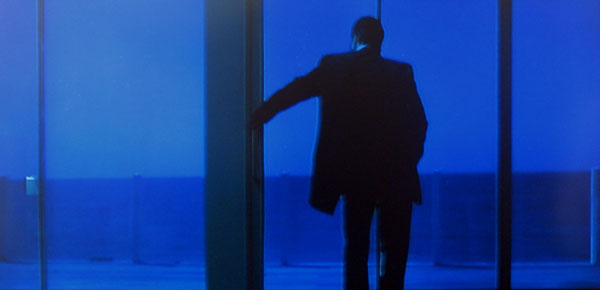
Evan Puschak’s work in his newest ‘Nerdwriter’ installment, on style in Michael Mann’s ‘Heat,’ is fine and detailed. Puschak manages to separate the core of Mann’s L.A. noir tale from the technique Mann adds to it with the precision of someone carving meat away from the bones of a freshly cooked bird. One of the main points the piece makes about Mann’s work is that it is always a blend of what Puschak calls the "functional" and the "stylistic": films that keep you watching through the relentless drive of their stories but have a sleek sheen over them that is unmistakably Mann’s. Puschak has also done his research, pointing out that one of the most famous images from the film, the silhouette shot from behind of DeNiro, looking out into an unbroken blue field (the promo photo for this post, in fact), is actually based on a 1964 painting by Alex Colville called "Pacific"–or that the entire film is based on the true tale of an L.A. detective named Neil McCauley. It’s always a pleasure to revisit Mann’s work, but it’s even more of a pleasure to see it so attentively examined.  

KICKING TELEVISION: TV and the Death of the American Marriage

KICKING TELEVISION: TV and the Death of the American Marriage

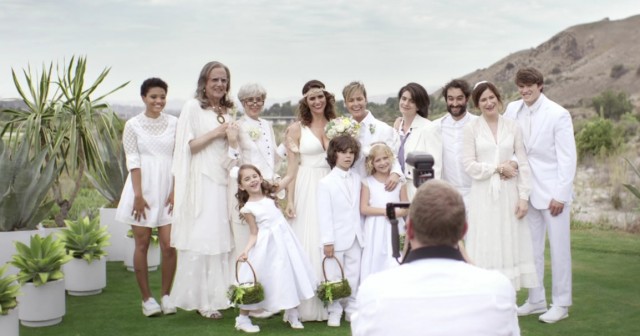
nullThe first episode of season two of Transparent begins with a wedding. “Kina Hora” opens with a long, uninterrupted shot of the Pfefferman clan, draped in expensive, virginal white vestments, opulent garb against an epic California coastal backdrop. The series, which is the anti-thesis of tradition in society and on television, chose to invite the viewer into its sophomore effort by indulging in the very essence of tradition. Despite the immaculate aesthetic of the event, the wedding and its participants and guests were ugly, and in such a depiction Transparent stood with the traditions of its medium in presenting marriage as a deeply flawed and false institution.

Transparent explores the challenges of relationships. It beautifully examines how individuals construct, compromise, and conform in order to find happiness, or at least endure the journey. At the center of Transparent lie several marriages: the transitioned Maura and his ex Shelly; the newly betrothed Sarah and Tammy; Sarah and her ex Len; Josh and his partner Raquel; and all the bits and pieces, characters and relations who intersect and intertwine. It’s a look at marriage that introduces the contemporary evolution of our culture to the medium of television, a medium that tends to treat marriage with contempt. It’s also a medium that has evolved with the advent of streaming services like Amazon, which allows shows like Transparent the freedom to discuss an institution like marriage with less attachment to the traditions that permeate the network model. 

In “Kina Hora”, the defining moment—as the ugliness of the event meets the realities of the institution—finds Rabbi Raquel (the exceptional Kathryn Hahn) describing weddings as, “a ritual. It’s a pageant. It’s a very expensive play.” The same could be said about television itself. It’s part of our lives, an ongoing and unannotated play, in many parts, in many forms, with no end in sight. It’s a filter by which we quantify and qualify our own attempts at life. The streaming services have broadened the modes and conversations by which we apply that filter. And for the most part what we know as “television” seems to deplore marriage.

I got married this past summer, which was a surprise to many because I had never expressed any interest in marriage. This is not because I didn’t believe in love, which I did; or eternal happiness, which I aspired to; or gifts, which I rely on. I didn’t really want kids, but that became irrelevant, as marriage and kids ceased to be connected the way they once were. I think diamonds are a contrived industry, but I’m not wearing one. Ceremonies seemed opulent and gluttonous, but we eloped. Marriage, to me, had seemed simply a precursor to infidelity and divorce.

I’m not sure why I believed this. My parents have been together for more than 40 years and are very happy. My sister has been married for a dozen years or so, and my niece and nephew report no issue. Many of my high school friends are married and don’t complain about it much. But still, I had issues with the institution. And then, a few weeks ago, I was reading one of the many asinine and short-sighted op-eds that link television and movie violence to American gun culture, and I decided to blame what I believed to be the death of marriage on TV as well.

Television has killed the American marriage.

Unlike the facile arguments that blame media for gun violence, I decided to attempt to link my hypothesis to fact before asking my editors at Indiewire to publish it. Kind of like what Fox News does except the complete opposite. Is marriage, as television to me implies, dead—only worthy of farce, ridicule, and revile? Apparently, the meme that 50% of all marriages end in divorce is actually untrue. According to a New York Times study, “The divorce rate peaked in the 1970s and early 1980s and has been declining for the three decades since.” The piece also cites Fox, ABC, and Bravo references to the divorce rate myth as fact. The same media that both perpetuate and deride TV and film violence as contributing to a violent culture apparently do the same for the institution of marriage.

Violent shows bear ad revenue, as does programming of punditry that condemns them, as does the contemporary news model that treats myth as fact and viewers as sheep. Entertainment is an industry, and I like capitalism as much as the next guy with a paralyzing disinterest in nuptials. But I like facts and informed discourse too, which doesn’t explain why my own fears about marriage were tied to a straw man with commitment issues.

Interestingly, the Times piece begins with a reference to Chris Martin (a musician of some sort) and Gwyneth Paltrow (Blythe Danner’s daughter) ending their marriage. Of course it does. Even a respected outfit like the New York Times can’t make a concise argument in this day and age without tying it to B-list celebrities. It’s a trope of contemporary discourse that we filter issues through celebrity and media institutions. Television is a convenient barometer by which we tend to measure ourselves. It’s in our homes, a flawed mirror reflecting society and our notions of self. Am I as pretty as Rachel? Am I as funny as Chandler? Am I as successful as… well, none of the Friendswere particularly successful, but they had nice apartments and love and friendship and pet monkeys.

But beyond the aesthetic comparisons, there are institutional quantifications, which has lead me to believe that what has actually died is the representation of marriage on television. Once marriage was the aspiration of television, a narrative progression borrowed from Shakespeare. Boy meets girl, boy marries girl, and if it lasts more than four seasons everyone gets rich in syndication money. Weddings were sweeps staples, the ultimate achievement of television narratives: Luke and Laura, Jim and Pam, Ross and Emily. Weddings were beautiful, happy, defining moments that led to a lifetime of martial bliss, either on screen or in the world we imagined as completed series continued in our minds.

The current TV landscape sees marriage as either a cartoonish institution or one unworthy of reverence, perhaps as a result of the false meme or as a contributor to it. The sitcom revels in the former; a contrived wonderland where marriage is bliss, where flaws are adorable, and divorce is just a preamble to second chance happiness. Modern Family is a mockumentary meant to capture the contemporary American marriage, but instead it gives us animated generalizations. Phil the goofy loving father is married to Claire the overbearing mom, whose pratfalls bring us such joy. Jay is on his second marriage to the buxom Gloria, whose accent and ethnicity are a source of endless amusement. Cameron is married to Mitchell, and they’re both men, which is hilarious!

Two and a Half MenThe MiddleThe GoldbergsMindy: these shows all portray similar caricatures of marriage. Marriage is goofy. Men like football and synthetic cheese and drinking and they have penises, while women like shopping and makeup and Jon Hamm and they have vaginas. The dichotomy therein is a hoot.

In dramas marriage is a dismissed relic. The genre just doesn’t seem to like marriage very much. The modern day pulp of Shondaland savours infidelity common as oxygen and rarely attached to repercussion. The adulterous spouse can still be a president or a tenured prof or happy. Game of Thrones is filled with marriages of convenience and despair. Parenthood aspired to a more realistic depiction of marriage, but still filled its six seasons with adulterous leanings and desperate compromise. Maybe that’s what marriage is. Maybe mine is too new. Maybe I’m naïve. Maybe I should ask my wife.

These two representations perhaps help explain my media-driven fear of commitment. While marriage itself is a healthy and vital institution, television revels in its mockery. In actuality, marriage is a joyous union, an entry to a better life, not one of restriction or farce. I like being married, though I’m not very good at it yet. I’m heavier than I was when I was single, attentive but somewhat lazy with my affection, and not as responsible as a married man should be. But I’m trying. I aspire to better. I wish TV felt the same way.

Mike Spry is a writer, editor, and columnist who has written for The Toronto Star, Maisonneuve, and The Smoking Jacket, among others, and contributes to MTV’s PLAY with AJHe is the author of the poetry collection JACK (Snare Books, 2008) and Bourbon & Eventide (Invisible Publishing, 2014), the short story collection Distillery Songs (Insomniac Press, 2011), and the co-author of Cheap Throat: The Diary of a Locked-Out Hockey Player (Found Press, 2013). Follow him on Twitter @mdspry.

Watch: RIP Haskell Wexler, 1922–2015

Watch: RIP Haskell Wexler, 1922-2015

‘Medium Cool’ is probably my favorite Chicago movie. I remember learning about it in college and then frantically seeking it out on DVD; at the time it was a hard film to find. (This was before it got the Criterion release.) I eventually got my hands on a burned DVD copy and watched it several times. For those unfamiliar with the film, it tells the story of a TV news cameraman (Robert Forster) who gets swept up in the melting hot summer of 1968 in Chicago, climaxing with the riots at the Democratic National Convention. The film had a cinéma vérité-style look to it, with many handheld shots that punch in on the action and moments of high drama. It’s an immersive experience, that is documentary-like at times, with the success owed directly to the film’s writer, director and cinematographer, Haskell Wexler. It’s amazing that Wexler pulled this all off, too, considering that he actually filmed it in the summer of 1968, placing his lead actors right in the middle of the riots as they were happening. When I learned of Wexler’s passing on Sunday afternoon, I was visiting some friends just down the street from Grant Park, where the climactic and stirring riot footage of ‘Medium Cool‘ was filmed. I couldn’t stop thinking about the film as I took the "L" (our elevated transit train in Chicago) home that night, looking out the windows, seeing all the city landmarks that Wexler shot with his camera. I then remembered a special evening back in 2010, when I attended a small screening of ‘Medium Cool’ at the University of Chicago’s Film Studies Center. Wexler was in attendance, and afterwards he discussed the film in front of the cozily seated audience. I leaned forward in my seat for most of that discussion, studying this accomplished cinematographer, who wore a baseball hat and leather jacket. He spoke with an insight devoid of cynicism. It was just plain, simple diction, but still full of depth and takeaways. I later learned that he was also a two-time Oscar-winning cinematographer (for ‘Who’s Afraid of Virginia Woolf?’ and ‘Bound For Glory’), who, in addition to working on big Hollywood films, also made a laundry list of commercials and documentary short films. This was in addition to his passion projects (like ‘Medium Cool’) which he funded by working on those bigger feature films. He even photographed what looks to be at least half of Terrence Malick’s ‘Days of Heaven’—but bizarrely only received an "additional photography" credit (the Oscar for that film would go to director of photography Néstor Almendros). Even today I’m still learning more about the endlessly fascinating and unquestionably prolific Wexler. Revisiting just a fraction of his filmography in my video tribute to him, I can only begin to scratch at the surface of how great his eye for images was. And now that he’s gone, his films will continue to live on, and Wexler should find peace in knowing that "the whole world is watching."

Nelson Carvajal is an independent digital filmmaker, writer and content creator based out of Chicago, Illinois. His digital short films usually contain appropriated content and have screened at such venues as the London Underground Film Festival. Carvajal runs a blog called FREE CINEMA NOW which boasts the tagline: "Liberating Independent Film And Video From A Prehistoric Value System." You can follow Nelson on Twitter here.

Watch: Was David Lynch’s ‘Lost Highway’ A Dig at Oliver Stone?

Watch: Was David Lynch’s ‘Lost Highway’ A Dig at Oliver Stone?

Every work is, whether it knows it or not, a comment on another work. The filmmaker, the poet, the songwriter may pray for originality and often the prayers are answered. But, the work produced will always be the product of all the works that have come before it, absorbed and re-emitted by the artist. Sometimes the work will comment on other works, either slyly or openly. Take, for example, ‘Lost Highway,’ David Lynch’s 1997 tale of crime and loss. This video essay by Jeff Keeling takes a close, methodical look at the film’s potential commentary on two works by Oliver Stone–‘Natural Born Killers‘ and ‘Wild Palms‘–for which Stone received a tremendous amount of acclaim. The similarities and points of careful divergence are striking; the films’ casts overlap (Robert Loggia and Balthasar Getty), and certain scenes from Stone are quoted by Lynch, but the dialogue is significantly different. What do you think?

Watch: What If Stan Brakhage Directed Mariah Carey’s ‘All I Want For Christmas?’ Video?

Watch: What If Stan Brakhage Directed Mariah Carey’s ‘All I Want For Christmas?’ Video?

The question of the hour: what IF Stan Brakhage directed Mariah Carey’s ‘All I Want for Christmas" video? Having asked that question, I can’t think of much to follow it up. I could talk about Brakhage’s abstract, layered methodology, or I could talk about Carey’s seemingly immortal Christmas hit, but why? That would just be adding words upon words, for no reason. Just watch Conor Williams’ ingenious video, and get in the holiday spirit.

Watch: Alfred Hitchcock’s Editing Mastery in the ‘Psycho’ Shower Scene

Watch: Alfred Hitchcock’s Editing Mastery in the ‘Psycho’ Shower Scene

While it’s perfectly conceivable that someone might create a scene with as much tension and suspense as the famous shower scene from Alfred Hitchcock’s ‘Psycho,’ there’s a level of panic to the scene that would be hard to match, created primarily with Hitchcock’s cuts, the swoops he makes from one perspective to another, the shifts, the disjunctures. This video essay by "Love of Film" shows us Hitch’s cuts, arranged in a nice, boxlike organization, which actually makes the method and strategy employed here quite clear, from the start of the shower to the screaming from the Bates house. Take a look…

Watch: ‘The Force Awakens’ Meets ‘Please, Mr. Kennedy’

Watch: ‘The Force Awakens’ Meets ‘Please Mr. Kennedy’

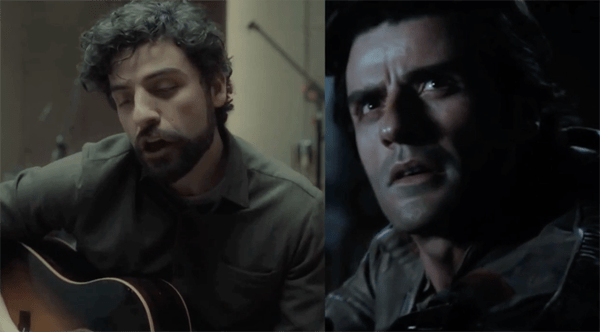
Nelson Carvajal likes to put pairs together. Usually, it’s pairs; sometimes, he might add an extra element. I first became aware of this tendency when I saw his match-up of ‘There Will Be Blood’ and ‘2001: A Space Odyssey,’ after which the thunk my jaw made as it hit the floor could be heard across the Hudson. Now, he’s mixed and matched ‘Please Mr. Kennedy,’ a ditty from the Coen Brothers’ ‘Inside Llewyn Davis,’ with scenes from ‘The Force Awakens.’ Does it work? Yes it does. The swooping nature of the song, goofy as it is, syncs beautifully with the gestural, sinewy visuals of J.J. Abrams’ film. Just watch!