VIDEO ESSAY: Alfonso Cuarón’s Cinematic Canvas

VIDEO ESSAY: Alfonso Cuarón’s Cinematic Canvas

Alfonso Cuarón and
the Prisoner of Azkaban

The following is an
appreciation of my personal favorite film by Alfonso Cuarón, which I fear has
been somewhat critically neglected. But for more on the man’s impressive career
as a whole, see Nelson Carvajal’s video “Alfonso
Cuarón’s Cinematic Canvas
.”

People sometimes ask me whether I think “the kids today” are
all right. That always seems to me a strange question and perhaps a rhetorical
one where the speaker is really suggesting that there’s something wrong with
anyone younger than us. The logic, inasmuch as I follow it, is that
thirty-somethings had the privilege of growing up with movies like The Dark Crystal and Labyrinth and Time Bandits, and those movies fucked us up, and made us the clever
intelligent beautiful sophisticates we are today. Well, I’m not so sure it
works like that, and for every subversive film by Gilliam and Henson, there
were many more popular flicks like The
Karate Kid
, Teen Wolf, and Short Circuit. But, sure, I always
respond, “the kids today” should be totally fine, because they had Pokémon—surely
one of the strangest cartoons I’ve ever witnessed—and what’s more, they had Alfonso
Cuarón’s Harry Potter and the
Prisoner of Azkaban
.

I disliked the
first two Potter films, though I also wasn’t fond of the first two books. But
with Prisoner of Azkaban, J. K.
Rowling started hitting her stride, complicating Harry’s bright happy world with
more intricate plotting and morally ambiguous characters, the prime example of
which was the titular prisoner himself, Sirius Black. And can you imagine what
Chris Columbus would have done with that character? But Columbus bowed out of
the franchise, allowing Cuarón to inherit it—and totally redesign it.

Casting
Gary Oldman as Black was a bit of genius—this is the guy who previously played Sid
Vicious, Dracula, Lee Harvey Oswald, Guildenstern (I mean Rosencrantz), Mason
Verger, Jean-Baptiste Emanuel Zorg, and that deranged cop determined to kill the
pubescent Natalie Portman and her kindly middle-aged French hit man boyfriend.
(Although come to think about it, had Stansfield succeeded, might we have been
spared the Star Wars Prequel Trilogy?) Oldman’s mere presence—recall those
initial glimpses of the man, howling in rage in those animated wanted
posters—made Black feel genuinely dangerous, and made the Potterverse feel suddenly
dangerous. Adding David Thewlis to the mix, as the reluctant, melancholy
werewolf Remus Lupin (he’s rather Hulk-like), pushed that fictional world even
further into some dark corner of the crooked Diagon Alley. Think about it: Azkaban’s the movie where Harry Potter’s
stable of mentors swelled to include not just Oldman, but Johnny from Naked (and were we meant to sense in
Thewlis’s presence a hint of the Verlaine / Rimbaud relationship in Total Eclipse?).

More
importantly, with Azkaban, the Potter
films went from something with the look and feel of an after-school special to the
look and feel of cinema. If you’re
shaky on the details, just compare any scene in Columbus’s version with any
from Cuarón’s—for instance, these two classroom bits:

Note, in that Azkaban
scene, the wide variety of techniques on display—long gliding takes and dramatic
insert shots—as well as the inventive staging. (I particularly like the moment
when Harry steps up to the boggart, and the camera affixes itself momentarily to
the bobbing jack-in-the-box.) Azkaban
was also the movie where Hogwarts—until now a stable, horizontal, and above all
else comfortable boarding school—went
all cockeyed, becoming in Cuarón’s hands someplace sprawling and ancient, a
place with enormous swinging clock pendulums that could kill an unwary kid, and
perched precariously amidst crags and ravines. Here’s what Cuaron did: when
Columbus left the project, the producers initially turned to Guillermo del
Toro. But del Toro declined, having found Columbus’s first two installments “so
bright and happy and full of light.” But a few years later, he
expressed interest in helming a later installment
:

“After seeing the last few films,
however, the director famed for a shadowy imagination and morally ambiguous
characters has begun to reconsider. ‘They seem to be getting eerie and darker
… If they come back to me, I’ll think about it.’”

Thank Cuarón for that eeriness, that darkness (though to be
fair, the books do get more complex with that installment).

He departed
after Azkaban, but he left his mark
on the franchise: successors Mike Newell and David Yates kept the basics of his
approach, even if their direction never matched Cuarón’s. With the exception of
Bruno Delbonnel, who provided the cinematography for Half-Blood
Prince
, no one else ever came across as having as much fun with Rowling’s
sprawling world as Cuarón.

For
my own part, I saw The Prisoner of
Azkaban
three times in the theater. And whenever anyone asked me what I
thought of it, I said, “It’s great. It’s this generation’s Time Bandits.”

Nelson Carvajal is an independent digital filmmaker, writer and content
creator based out of Chicago, Illinois. His digital short films usually
contain appropriated content and have screened at such venues as the
London Underground Film Festival. Carvajal runs a blog called FREE CINEMA NOW
which boasts the tagline: “Liberating Independent Film And Video From A
Prehistoric Value System.” You can follow Nelson on Twitter
here.

A.D Jameson is the author
of the prose collection
Amazing
Adult Fantasy
(Mutable Sound, 2011), in
which he tries to come to terms with having been raised on ’80s pop culture, and the novel
Giant
Slugs
(Lawrence
and Gibson
, 2011), an absurdist retelling of the Epic of
Gilgamesh. He’s taught
classes at the School of the Art Institute of Chicago, Lake Forest College,
DePaul University, Facets Multimedia, and
StoryStudio Chicago. He’s also the
nonfiction / reviews editor of the online journal
Requited. He recently
started the PhD program in Creative Writing at the University of Illinois at
Chicago. In his spare
time, he contributes to the group blogs
Big
Other
and HTMLGIANT. Follow him on Twitter at @adjameson.

VIDEO ESSAY: Gliding Over All: The Cinematography of BREAKING BAD, Season 5.2

VIDEO ESSAY: Gliding Over All: The Cinematography of BREAKING BAD, Season 5.2

This video essay is a co-production of Press Play and RogerEbert.com.

Because
He Wanted To

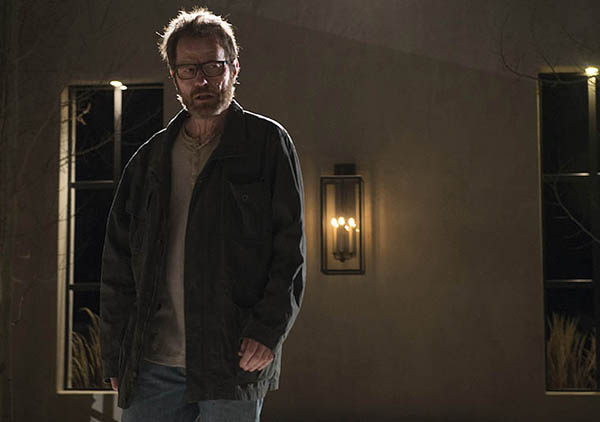
The final episode of Breaking Bad was a tender goodbye. I’ve watched
the entire series with my heart firmly planted in my mouth, but watching the
last moments of Walt’s life, his look of contentment as he sees the gas mask he
used to wear when cooking, that smear of his blood on metal as he finally
collapses to the ground, felt gentle. The great Heisenberg went out with a sigh
of contentment, rather than a roar of pride.

For five seasons critics have debated just what about Breaking Bad
has captured the American zeitgeist. In some ways, the show is surely
emblematic of some pressing cultural concerns—the desperation of the working
class and the changing face of American masculinity, for example. But ultimately,
the heart of Breaking Bad is not a public service announcement about the
dangers of meth, the need for better health care or the importance of family. Breaking
Bad
is about existential terror. It’s about the choices we make when
confronted with death and the disintegration of our own very identity. It’s
about the limits of free will and the recognition that we have minimal control
over our own destiny.  And it’s about how we all push for some kind of a
high, even though we know everything we do eventually has an expiration date.

In the end, Walt is a hero and a villain in equal measure. The same Walt who
murders his enemies in cold blood is the one who ties his wedding ring to a
string around his neck when his fingers become too thin to wear it, just as the
same Walt who kidnaps Holly is the one who touches her tenderly in her crib in
a final farewell.

Joan Didion once wrote, “We tell ourselves stories in order to live.” Walter
White rewrote his story in order to survive. In the final episode we see Walt
claiming this story, owning his responsibility in the chaotic landscape that
nourished and destroyed him. In the end, Walt’s relationships with the people
who meant the most to him were faded fragments from a time when Walt was living
a different story, a time when he truly believed that he was making moral
choices to protect the family he loved. Nowhere is this clearer than in the
final showdown, where Walt is forced to look at the life to which he condemned
his former friend and partner Jesse. Even after respect and trust are long gone
between Walt and Jesse, there always remains the weight of a sad, long dead
love.

I cried watching that last moment of Walt wandering around what, at this point
in his life, had become his natural habitat—a meth lab littered with bodies and
blood. Walt died very alone, in every sense of the word. His meticulously
planned out last hurrah to set things right was, certainly, a suicide mission.
In the final episode of the series we see Walt, who had always resisted death at
every turn, finally resign himself to it, even though, in true Heisenberg
fashion, he went out in his own terms.

The final episode of Breaking Bad gives the illusion of closure, as
if the entire world will fade away now that Heisenberg and Walter White are one
and gone. In reality, there were things that Walt did that will never be
healed. Walt was proud of letting Jane die and poisoning Brock, both decisions
which he felt were made out of necessity. But this same Walt was terribly
ashamed of his betrayals—leading Hank to his death and losing the love and
trust of his only son. Walt’s confession to Skyler, where he says he did it all
for himself, that he liked it, he was good at it and it made him feel alive,
betrays the weight of his tremendous guilt, but doesn’t necessarily give us the
whole truth to his story. In earlier episodes one can clearly see a man who is
struggling to make moral choices; somewhere along the way his motivations
changed. The difficulty in pinpointing that catalyst is what makes Breaking
Bad
great art and it is what makes this touching, quiet finale emotionally
wrenching.

For me, Walt’s guilt tempers those last moments of Breaking Bad,
where we see Heisenberg wandering about the meth lab—his reflection beaming
back at him, all stretched and misshapen. Walt’s tremendous pride in his
creation, his love for his “baby blue” is palpable in that moment, but so is
the image of his bloodied hand, tarnishing a space that requires cleanliness in
order to make a dirty product a signature product: it got close, but was never
100% pure.


To read a wonderful essay by Scott Eric Kaufman about the season finale at RogerEbert.com, click here:

http://www.rogerebert.com/balder-and-dash/the-cinematography-of-breaking-bad-season-5-part-2

To watch the entire series on Press Play, go here:

http://blogs.indiewire.com/pressplay/tag/dave-bunting-jr

Arielle Bernstein is
a writer living in Washington, DC. She teaches writing at American
University and also freelances. Her work has been published in
The
Millions, The Rumpus, St. Petersburg Review and The Ilanot Review. She
has been listed three times as a finalist in
Glimmer Train short story
contests
. She is currently writing her first book. She is Associate
Book Reviews Editor at
The Nervous Breakdown.

Dave Bunting, Jr. is the co-owner (with his sister and fellow Press Play contributor, Sarah D. Bunting) of King Killer Studios, a popular music rehearsal and performance space in Gowanus, Brooklyn.  He plays guitar and sings in his band, The Stink,
and dabbles in photography, video editing, french press coffee, and
real estate.  Dave lives in Brooklyn with his wife, son, and sister.

VIDEO ESSAY: My Life as a Chick Flick

VIDEO ESSAY: My Life as a Chick Flick

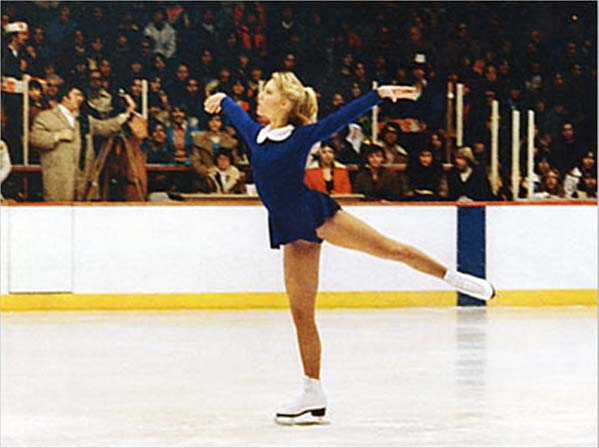
That’s me up there. 
See?  That nine-year-old boy cheering
on Lexie Winston to victory? 

No, actually I can’t see me up there either.  But I was
there, along with hundreds of other lucky people who managed to get spots as
extras on the set of Ice Castles.  Starring a promising unknown, Lynn Holly
Johnson, playing next to Robbie Benson, heartthrob of all the girls at my
school, I’m still not sure why I was so excited when a friend gave me a pass to
be on the set of this movie.  

Growing up in Minnesota during the 70s, one didn’t have too
many opportunities to rub shoulders with fame, so I guess I was excited at the
possibility of maybe seeing myself in a movie filmed in my own home state.  Like Lexie Winston, I was a small town kid
hungry for a taste of fame.

When the film was finally released several months later, I
was a little disappointed not to see my face up there in the crowd.  But something else happened to me while I was
watching Ice Castles, the kind of
movie I wouldn’t have been caught dead seeing under normal circumstances.  As I sat there, watching Lexie’s triumph
against adversity, as she wins a regional competition despite being blind, I
started to get a strange feeling inside me. 
By the time she started to trip over the roses thrown by her adoring
fans, thus revealing her secret disability to the public, something happened to
me that hadn’t happened since I was a child watching Dorothy trapped by the Wicked
Witch: I found myself crying at a movie. 

At some point during the picture I had come to identify with
this plucky gal from the Midwest, and later came to realize, hey, maybe I did
see a little of myself in that movie. 
Maybe, just maybe, a kid who watched only horror and science fiction
movies had learned to watch movies in a different way.  Maybe, like Lexie, I’d learned to see through
the eyes of love.

As I secretly wiped away my tears on a napkin greasy with
popcorn butter, I was anxious to forget about the incident, and I might have,
until a few weeks later, when, bored on a Sunday night, I decided to watch the
NBC movie of the week with the rest of the family.  The feature turned out to be The Other Side of the Mountain, based on
the true story of ski racing champion Jill Kinmont, who suffers a terrible
accident during a race and becomes a quadriplegic.  As soon as I heard Olivia Newton John singing
the maudlin theme song I should have known what I was getting myself into, but
some part of me couldn’t turn away.  Not
only was I drawn in to the story of Kinmont’s heroic struggle against
adversity, but I also realized some part of me wanted to be made to cry.  Some part of me was tired of trying to act
like the guys I hung out with at school. 
Something in these movies allowed me to be a different kind of viewer
than I was used to being.  When I watched
these films, I could be one of the girls.

Yeah, I know it’s sexist to associate getting emotional with
being female, but that’s the way Hollywood tends to divvy up its demographics,
and the movies I had been most obsessed with before what I have come to call “my
Ice Castles experience” didn’t offer
a lot of emotional range.  But the more I
watched these female-centered stories, the more I came to realize it wasn’t
just tears I was after.  I wanted to hang
out with a different crowd.  Bored with
my male friends, I wanted to see how the other half lived.  And the only place I felt I could be one of
the girls was at the movies.

I would have given anything to have friends like this.  When my friends hung out together, we
pretended we weren’t really having fun, we didn’t care too much about each
other, and that there wasn’t anything worth talking about besides music and
movies.  But I bet Annabeth Gish would
have understood my secret hopes and dreams. 
And I’m sure Lili Taylor would have accepted all my adolescent sexual
hangups, and maybe have had some good advice for me.  And if only I could work at a place like
Mystic Pizza, with a tough but lovable owner who would act as a kind of
surrogate mother…  In my naïve mind, this
is what I thought life for women was like, and I wanted to be a part of
it.  And for two hours, I could.

In the movie Satisfaction
I found the best of all possible worlds, female camaraderie and rocking
out, kicking ass, taking names, and then having a good cry together. 

What more could anyone ask for? 

There’s even a male character in the film who gets to live
out my dream, allowed into the secret world of women! 

He says it’s his own private hell, but I knew what he really
meant: it was heaven.

These kinds of films are derisively referred to as
chick-flicks, but for many viewers they hold a significance that exceeds this
condescending marketing niche.  People
who have favorite movies in common, especially those we wouldn’t admit to just
anyone, are like members of a secret community, connected despite differences
of age, gender, or taste.  And what
happens when we start looking outside of the confines of our gender roles?

Even though the stories of many so-called chick flicks tend
to be conservative—I mean, most of these movies end with marriage—the experience
of watching them might be seen as more transgressive.

Though you might not admit to it in the presence of certain
people, I bet you secretly love Dirty Dancing.  And once you get past the inane title, it’s
actually a pretty good story.  In it’s
own daffy way, it’s also quietly subversive: it’s hard to imagine the Hollywood
of today portraying a girl helping someone get an abortion in a positive
light.  By establishing a strong sense of
identification between the viewer and the character of Baby, the film takes us
through a narrative rite of passage in which we move from being Daddy’s innocent
little girl to an abortion facilitator and a dirty dancer.  And at the end, she makes everyone dance
along. 

Chick flick as agit prop? 
Maybe not, but for a girl watching this film it offers a rather racy
path to maturity.  And what about when a boy watches Dirty Dancing
Speaking for myself, I certainly don’t identify with Patrick Swayze: I
connect with Baby.  And this kind
of connection can be liberating. 
At least, it certainly has been for me.  I can’t imagine my life without
chick flicks.  Just don’t tell anyone I love this movie,
alright?

Jed Mayer is an Associate Professor of English at the State University of New York, New Paltz.

Jeffrey Canino grew up editing video on stacked VCRs. He holds a
Master’s in English Literature from the State University of New York at
New Paltz, and he blogs about horror cinema at his website, Nessun
timore:
http://nessuntimore.com

Turning 40 with the Help of THE ROCKFORD FILES

Turning 40 with the Help of THE ROCKFORD FILES


This
is Jim Rockford. At the tone, leave your name and message. I’ll get back to you
.

The
party plans had been elaborate: my wife had invited all of my friends,
including several from out of town who bought airplane tickets for the
occasion, to surprise me at a steakhouse in Chicago’s South Loop. The party was
to have an eighteenth-century “Clubb” theme, inspired by my love of James Boswell’s
Life of Johnson and his journals, and
by the elaborate dinners often enjoyed by Jack Aubrey and Stephen Maturin of
the Royal Navy, as depicted in Patrick O’Brian’s series of novels. There would
be costumes; there would be wigs; there would be speeches and heroic couplets
and all the prime steak and good Scotch we could swallow. But: two or three
days before I turned forty, I came down with a fever. The fever became severe
and the glands in my neck swelled to the size of golf balls. The doctors
concluded that I had a particularly virulent strain of strep throat, or maybe
it was mono. I could barely speak or swallow, and the pain in my neck,
shoulder, and especially my sinuses was excruciating: it felt as if a sadistic
clown were inflating a giant party balloon inside my skull. The party, which
was going to be a surprise party, was canceled, and Emily tearfully narrated
all the details of it to me so that I could imagine it, almost taste it. Then I
retreated upstairs to our bedroom, scarcely to emerge for the next two weeks, while
Emily played the unfamiliar roles of nurse and single mom, and my colleagues in
the English Department scrambled to cover my missed classes. The antibiotics
weren’t helping and neither were fistfuls of ibuprofen. I was too dazed to
read. I was forty years old. I had one comfort: my iPad, Netflix, and James
Garner in The Rockford Files.

Who
is Jim Rockford? The opening credits show him practicing his vocation as
private eye: tailing people, asking questions on the street, arguing with cops,
covering his face with an enormous bug-eyed pair of binoculars in one still.
But we also see him on dates, breaking into a grin as he gets a laugh out of the
woman he’s with. We see him in his trailer, cigarette on his lip, hanging up
the phone, pulling a jacket on, heading purposefully out the door. We see him
nonplussed in the frozen food aisle of a supermarket, recalling, at least for
me, Allen Ginsberg: “In my hungry fatigue, and shopping for images, I went into
the neon fruit supermarket, dreaming of your enumerations!” Ginsberg is talking
about Walt Whitman, but he could just as easily be talking about the six
seasons and 123 episodes of Rockford,
not to mention the eight TV movies released in the 1990s. I saw you, Jim Rockford, childless, lonely old grubber, poking among
the meats in the refrigerator

But Jim’s
loneliness is not as essential to his character as it is for other fictional
PIs, and this is affirmed most resonantly by the last images in the credits,
which show Jim fishing with his dad Rocky. Played by Noah Beery, Jr. during the
show’s regular run (another actor played him in the pilot), Rocky is the show’s
secret weapon, its emotional anchor, the tip of the iceberg of Rockford’s
bottomless likability. Jim has a dad, and they care for and squabble with and
go fishing with each other: that simple emotional fact roots Rockford’s heroics
in something more human than the chilly abstract chivalry of a Philip Marlowe.
It helps too that Rockford, though perennially unattached, doesn’t have a
misogynistic bone in his body: here is a man who genuinely loves and
appreciates women, whose body in no way shrinks or tightens in the presence of
the opposite sex, who has the enviable gift of becoming larger and more like
himself when he talks to a woman and makes her laugh. The Rockford Files was often a vehicle for an un-showy 70s
feminism, embodied most frequently in Gretchen Corbett’s Beth Davenport. Beth
is Rockford’s attorney and sometime love interest, whose mental toughness and
sharp comebacks to preening judges and leering small-town cops mark her as Jim’s
equal. Her sometimes brittle vulnerability makes her a good match for Rockford,
who is averse to physical violence and rarely resorts to carrying the small
revolver that he keeps tucked into a cookie jar in his kitchen.

There’s not much
else to Rockford’s back story: we know that he did time in prison for a robbery
that he didn’t commit, that he was pardoned for the crime but maintains a
network of contacts from those shady days that help and more often hinder him
in his work. Most memorably there’s Stuart Margolin’s Angel: squirmy, febrile,
cowardly, honest about nothing except his own brazen self-interest, the venal
Pancho to Rockford’s wearily forgiving Quixote. But Jim has a never-ending
series of friends from the old days always coming out of the woodwork to
provide plots and motivations deeper than the two hundred bucks a day (“plus
expenses”) that he routinely demands and very rarely receives from his clients.
More often than not, he gets emotionally invested in his cases, and he follows
them through to the end, invariably outwitting the bad guys without ever lining
his wallet in the process.

Jim’s capacity for
friendship is emblematic of the most enduring of the old pre-cable network
shows, before HBO turned scripted television dramas into serialized
nineteenth-century novels, fundamentally literary in their storytelling
resources and techniques. Don’t get me wrong, I like many of those shows: The Sopranos, Deadwood, and The Wire form for me, as for many
others, a profane trinity of high-quality storytelling, not least for their
remarkable feel for language. And no one will ever compare The Rockford Files to Shakespeare or Dickens, as routinely happens
with the three shows mentioned (though it’s worth noting that Sopranos creator David Chase cut his
teeth as a scriptwriter on Rockford).
But those shows’ unfolding intricacies of darkly thwarted patriarchies and institutions—the
moral bleakness, the frustration of aspirations that inevitably spirals into
gruesome violence—had little appeal for me during the sickness that knocked me
down on my birthday. I lay in bed and watched episode after episode, becoming
quietly addicted to the theme music (especially the bluesy harmonica bridge)
and the square aspect ratio that fits an iPad perfectly. The Rockford Files is ghostly and homeless on a modern widescreen
TV, with two black bars running down either side of it, as if parodying the
horizontal letterboxed bars signifying that one is worshipping at the shrine of
the dead god Cinema. That squareness extends to the show’s worldview: in spite
of its veneer of post-Watergate cynicism, in spite of Jim’s willingness to bend
and break the rules (most often by posing as some sort of businessman or
official, usually with the help of business cards that he cranks out using a
little printing press he keeps in the trunk of his iconic Pontiac Firebird), the
arc of The Rockford Files bends
always toward justice.

When I watch the
show, I am comfortably enclosed in a decade that eerily resembles ours, with
its breakdown in trust in public institutions, its vague guilty consciousness
of environmental degradation, its retreat from political life into narcissism and navel-gazing. That feeling
of regression is amplified by the show’s imagery, which recalls my 1970s
childhood: the hairstyles, the clothes, the fragments of outdated slang, the
gigantic boat-like cars that chase or are chased by Jim’s Firebird in seemingly
endless, frankly boring sequences that serve now as tours of a seemingly
pre-capitalist semi-urban landscape, devoid of product placement or corporate
brand-names, long shots of empty sun-flooded boulevards and parking lots
through which the essential dead desert of Los Angeles makes itself visible in
winks and flashes. The desert of the present: sweating into pillows, the day
and its business passing out of reach, my wife’s tightening face or my
three-year-old daughter’s voice from downstairs asking how much longer Daddy will
be sick. Steady on: here’s Jim tracking down missing girls, breaking a corrupt
ring of truckers and unraveling insurance scams, and tracking down more missing
girls, without ever losing his sense of humor. This isn’t the same as never
losing his cool, because Jim Rockford is not cool, even in sunglasses: he lives
in a trailer and drives a car the color of a polished turd and wears shapeless
sportcoats and lives on tacos with extra hot sauce. Jim is warm: the character
exudes compassion, cracks jokes at his own expense, bleeds when he gets
punched, and has a capacity for enjoying life on and off the case that is so infectious
that to me, ebbing on the bed, it felt like an almost adequate substitute for
life itself.

Nostalgia encased
me and buffered me from the ravages of my infection, and protected me for a
while from something even more irresistible: the reality of aging. I never
watched The Rockford Files when it
was originally on the air: my parents only let me and my sister watch a little
PBS, though when I was a little older I snuck episodes of Knight Rider and Airwolf and
the Tom Baker Doctor Who whenever I
could. I guess I’ve always been susceptible to stories of lone investigators
and solitary knights (though they rarely lack female company). There was an odd
purity to my nostalgia in watching the show, then, since nostalgia is always a
longing for something fundamentally imaginary. The show had formed no part of
my real experience. And yet lying there watching it through my haze of
antibiotics and prescription painkillers was
a real experience: there was a halo, a boundary, surrounding the washed-out
colors flickering across the screen, and I was all too conscious of what that
boundary was keeping out. In my vulnerable state I feared the future as I never
had before: it was not just my own aging that worried me, but what seemed to be
the rapid aging of the world: the ever-accelerating Rube Goldberg machine of
climate change was often on my mind, and in my fever dreams I could see the
desert of Jim Rockford’s Los Angeles growing and spreading and rippling outward
to cover the earth. To a hallucinatory synthesized bluesy beat, the gold
Firebird wove its way through the empty, sunbaked streets as if it were tracing
a mandala, past poker-faced houses and burnt umber hills, a vast landscape made
tiny and inconsequential. Then Jim’s face again, that grin. Action: a fist to
the jaw, a hail of harmless bullets. Another case closed. Another fit of banter
between Jim and his companions, his friends, of whom I was one.

 That’s what a certain kind of television can
do at its best: scripted series television, not reality shows or intricately
plotted season-long plots or funny cat videos on YouTube. The Rockford Files, Taxi, Barney Miller: the old shows
characterized by their smallness of scale, their putting plot in the service of
characters or a mood. These shows weren’t Seinfeld;
they weren’t “about nothing,” not exactly. They function, strangely, like
poetry. In its very inconsequence, its mere being, The Rockford Files makes nothing happen:

                                                            it
survives

In the valley of
its making where executives

Would never want to
tamper, flows on south

From ranches of isolation
and the busy griefs,

Raw towns that we
believe and die in; it survives,

A way of
happening, a mouth.

                                                (W.H.
Auden, “In Memory of W.B. Yeats”)

It survives, a way
of happening, in the face of James Garner in the years 1974—1979, a man in
his forties rueful, grinning, scolding, surprised, sly, smiling. Perpetually
unattached to any woman, perpetually childless, yet saved always by his
relationships: with his father and with Beth and with Angel and with Sergeant
Dennis Becker, the irascible but upright policeman who is Jim’s only friend on
the force. Wise to the ways of the world, yet capable of being shocked: Jim’s
fundamental innocence (he is, remember, that rara avis, an innocent jailbird)
is the show’s hallmark: the hallmark of a decade whose pervasive cynicism is rendered
moot by the simple fact of its being encased impregnably in a past that looks
less fundamentally damaged, more reparable, and more fun than our present. The
Seventies has become a small town, populated by familiar faces, an object of
nostalgia, a homeland that never was. MeTV, indeed.

Yet Rockford’s unglamorous
Los Angeles is also a raw town, and in every episode he encounters the desolate
inhabitants of “ranches of isolation” with their “busy griefs.” There’s real
darkness on the edges of some of the early episodes. Season One’s “Slight of
Hand” presents us with a tale of Jim’s disappeared girlfriend, who vanishes
from his car after a trip up the coast with the woman’s daughter, who
hauntingly murmurs the phrase, “Mommy didn’t come home with us last night.” Jim
solves the case but it leaves him bruised, bitter, and as close to noir as The Rockford Files ever comes. In Season
Three’s “The Family Hour,” Jim and Rocky get mixed up with a twelve-year-old
girl who has seemingly been abandoned by her father, played by the ubiquitous
Burt Young (the sweaty cuckolded husband in Chinatown;
the sweaty brother-in-law of the title character in the Rocky movies, the sweaty trucker Pig Pen in Convoy, etc., etc.). In a wrenching confrontation late in the
episode, Young’s desperate father challenges a drug-dealing federal agent to
kill both him and his daughter, who’s standing right there. The bad guy
flinches and the day is saved, but the raw anguish on the father’s face stayed
with me long after the smirky or sentimental freeze-frame that ends every
episode and which, by freezing on a single image, usually of Jim’s grin, separates
this universe from the universe of future episodes.

These fragments of
real terror, real feeling, are hermetically sealed off from each other, and so
we are shielded from the full impact of the sunlit noir that may be the
decade’s most enduring contribution to pop culture. The Conversation, Night Moves, The Long Goodbye, The Parallax View,
Chinatown
: the great neo-noirs of the Seventies always end in the
corruption, if not the outright destruction, of the hero, whose personal code
proves to be no match for the systemic pervasiveness of the evil that he
confronts. Jim is saved in part by not having a code: only warm responsiveness,
and wisecracks, and a network of relationships that never really let him down:
even Angel is reliable in his venal unreliability. But what really preserves
him is the show’s illusory continuity, fundamental to the form of episodic television.
There are recurring characters and very occasional references to past events,
but it’s as if the show and its characters were created anew each time the
credits roll. That’s the nature of nostalgia: we never play, we re-play. And
I’ve seen enough episodes of The Rockford
Files
to feel like each new one I see is something I’ve seen before. The
déjà vu is built in.

I got over my
infection and got over turning forty, but I never did get over Jim Rockford.
He’s still out there, somehow, waiting for the call of imaginary friendship.
When you’re finished watching you may feel the chill of the twenty-first
century, of real relationships rendered somehow intangible by social media or
distraction or sheer carelessness. You might remember the news, or Mad Men, or the weirdness of the
weather, and be impelled back toward—or father away—from what we’ve agreed to
call reality. But if you’re like me you’ll also remember friendship: how
fragile it is, how necessary. Nostalgia can be self-indulgent and escapist, yes.
It’s also a form of friendship with the self. So the next time you’re feeling
low, defenses down, the world too much with you, spend an hour with Jim
Rockford. You’ll be glad you did.

Joshua Corey has two books forthcoming in 2014: Beautiful Soul, a novel (Spuyten Duyvil); and The
Barons and Other Poems (Omnidawn Publishing). Author of the poetry
collections
Severance Songs (Tupelo Press, 2011), Fourier Series
(Spineless Books, 2005), and Selah (Barrow Street Press, 2003). With
G.C. Waldrep he edited
The Arcadia Project: North American Postmodern
Pastoral (Ahsahta Press, 2012). He is Co-Director of Lake Forest College
Press / &NOW Books and lives in Evanston, Illinois. He tweets
here and blogs here.

Press Play Hosts Dear Television: Letter # 4: Ghosts of Emmys Past

Press Play Hosts Dear Television: Letter # 4: Ghosts of Emmys Past

null


This
week, Dear Television—Jane Hu, Lili Loofbourow, Phillip Maciak, and new
addition Anne Helen Petersen—will be hosting a very special Emmy Anti-Prom here
at Press Play. Why Anti-Prom? We love the Emmys—the red carpet, the goofy
speeches, the spectacle of Jon Hamm and Jennifer Westfeldt’s perfect
relationship—and we love reading Emmy coverage—the dissection of the host, the
hand-wringing, the Poehler-worship. But the world has enough think-pieces about
whether or not Emmy voters need to chill on
Modern Family—they
do! Instead, we’ve decided to exploit the generosity of Press Play and get all
abstract, in order to showcase the snubbed, the losers, and all the other kids
who didn’t get invited to the dance. 
This Emmy week, we will attempt the possibly foolish task of having a
conversation about the Emmys without stepping into the
who-will-win/who-deserves-to-win maelstrom. We have plenty of personal
investments in the outcomes of this crazy program, but, for the moment, we want
to ask: What are we really talking about when we talk about the Emmys?

(To read Phillip Maciak’s previous post, click here.)

(To read Anne Helen Petersen’s previous post, click here.)

(To read Jane Hu’s previous post, click here.)

Dear TV,

The Grammys won two Emmys this year. As the viewing public gets more fickle
and viewing platforms expand, TV circles are getting tighter, y’all.

If so far we’ve focused on the social dynamics
in our Anti-Prom—the obsession with
who got snubbed at the dance, the
misfit cluster
all the miniseries get shoved into, and how the Emmys King (Primetime) is more
Likely To Succeed than the womanish Emmys Queen
(Daytime)
, cooler than the AV and drama kids (Creative Arts), more
urbane than the jocks (Sports Emmys), and less pedantic than the Model UN (News
and Documentary Emmys)—I want to close our Anti-Prom by talking about the dance
itself. How’s the décor? The Grammys got two Emmys. Do the Emmys deserve an
Emmy?

The answer is, by popular consensus, a giant NO.
The Primetime Emmys are famously boring, so much so that many an Emmy opening
monologue dwells lovingly on its dullness. So much so that Ryan McGee has
pleaded compellingly
for a change in format. The Emmys are so dull
that even an internet obsessed with documenting everything—including old
insurance commercials, including this—lets the glittery Emmys slip, unframed, out of
the archive. I’ve been trying to find old Emmys to rewatch as research for this
here Anti-Prom, you guys, and it cannot be done. Not even on the Emmys site. No
one, it seems, wants to throw an Emmys-Rewatching Party. All that survives is a
small, sometimes desperate cluster of skits that show an entire industry straining
to make the awards show on television, about television, mildly watchable.

I’m exaggerating. There are survivals: some
encyclopedic pellet-wikis of who won what, lots more photosets of who wore
what—but what’s striking is how completely the content itself just disappears.
Like Prom, which everyone tries to repress in their own way, substituting for
The Awkward Thing Itself the Cheesy-But-Tolerable photo structured by pose and
the theme and the big corsage, the Emmys is both forever nostalgic and forever
erasing last year’s failure to live up to its own myth as entertainment. And
the culture, just as it forgives Prom, forgives this. It doesn’t cling to or
punish the Emmys of yore; it has rigorously respected the evanescence of the
format.

So let’s look briefly at the handful of stuff
that didn’t slip through the internet’s fingers. I discovered this Emmys
Amnesia Hole, I repeat, because I was looking for footage—footage of Eddie
Murphy and Joan Rivers hosting in 1983, for instance. There is none. I did find
this opening skit from 2011, when Jane Lynch hosted, though, as well as Jimmy Fallon’s 2010 skit and Jimmy Kimmel’s 2012
skit
. All three of these, remember, are scripted and produced, so
they really do represent the Emmys trying to do good TV, even apart from its
live format and the tedium built into the awards show as a genre:

Jane Lynch is a lanky fantastic charisma
factory. The production values on this thing are good. (Who knows, maybe they
even got a Grammy!) As TV, though, it’s pretty terrible, and the skit knows it:
“I know this seems stupid and schlocky and already feels overly long,” Lynch
sings, “but it’s the Emmys!” “TV is a vast wasteland where good ideas go to die
and mediocre ones make zillions of dollars,” Sue Sylvester says to Emmys Host
Lynch in the next segment, doing that self-deprecating thing the Emmys do.

(AHP just informed me this is a famous quote from FCC chairman Newton Minow’s 1962 speech, “Television and the Public Interest,” which contextualizes that self-deprecation in a longer history of TV criticism and makes the move a lot more interesting.)

Still, one of the only things worth salvaging from that
opening is the sexy look Lynch shares with Elisabeth Moss’ Peggy on the set of Mad
Men
. Its value is that it dares to say something other than “This is good!”
Or “This is great!” Or—because we live in the age of the meta-put-down—“We are
terrible!” It’s a sliver of content, of commentary on content, even, in
what otherwise amounts to an avalanche of cameos in search of a plot. That the
joke is as satisfying as it is, despite being easy and paper-thin, illustrates
what I think we’ve been saying throughout this Anti-Prom, namely, that the
Emmys has a problem. The competing shows are so staggeringly different from one
another in such a sustained way that what we hunger for, as viewers, isn’t an
empty declaration of supremacy but rather an articulation, however small, of
the relationship between them.

That’s true of Prom too: the stakes of the vote
for Prom King and Queen are never reducible to simple popularity. Nobody cares
what a giant undifferentiated mass of high schoolers think. The juicy story,
the interest—the thing that makes for good TV—lives between the
contestants, in the subdivisions, in the differences.

There’s no reason to make the case that the
Emmys skits have gotten worse (I don’t have enough data to make that
determination anyway), but Conan’s 2006 skit—where he survives a plane crash,
fashions a blow-drier out of twigs on the island from Lost, then has a
moment with Pam on the set of The Office—is pretty good TV in
comparison:

The Lynch skit was written under the assumption
that the fun, for viewers, consists in watching beloved actors interact. What
we really want, and what Conan’s skit provides, isn’t the interaction of actors
but rather characters. (The Lynch Emmys have some of this too; at one
point
Pinkman comes into The
Office
to sell Creed meth, and those thirty seconds overshadow
most of Lynch’s seven-minute opening.) This is why Jon Stewart and Stephen
Colbert are such good Emmy announcers; few celebrities have blurred character
and persona as adeptly as those two, and their real-life friendship gives the
thing a reality-tv frisson.

So let’s talk now about the live but scripted
stuff. There are a few “canonical” Primetime Emmys moments that survived the
Black Hole, but their goodness, again, tends to be a function of how they
expose the intersections between shows. This one’s a favorite, and it’s
easy to see why.

(If you can’t watch, don’t worry.) “Awards show
banter is not pabulum,” says Jon Stewart indignantly to a ranting Colbert who
opens with “Good evening, godless sodomites.” Ever the obedient straight man,
Stewart restores discipline and reads from the teleprompter. His voice gets
small and ashamed as the script gets more and more emptily approving: “Reality
television celebrates the human condition by illuminating what’s extraordinary
in the ordinary,” he begins, and trails off with “the results are dramatic and
often unexpected.” It’s a statement about the Emmys, obviously, which are
supposed to be dramatic and unexpected but continually fail to be either.
Still, if Emmy-bashing is constitutive of the Emmys, what gives this clip its oomph
is the way it develops Stewart as himself and the ideal Emmys announcer
in a real-life context and Colbert as himself and the Emmys’ disruptive id even
as it does the expected self-deprecating schtick.

This one, in
contrast—in which Jon Stewart and Stephen Colbert announce the nominees for
best miniseries—falls pretty flat. It’s built around a prune gag, doesn’t
connect with either of their shows or capitalize on their characters, and just
doesn’t quite land. The former rewards our TV knowledge and uses it to mock the
event; the latter leaves that knowledge less than completely used, (sort of
like the recent season of Arrested Development). We leave the clip
dissatisfied.

The most satisfying Primetime Emmys footage in
Youtube memory doesn’t just go meta on the Emmys or bridge the gap between two
shows, it does both and builds an actual serial storyline. This Colbert-Stewart
exchange from 2007 starts with Colbert and a leafblower and ends with a
meta-joke:

“Perhaps we shouldn’t even have an awards show,” Stewart says after admitting to using a “private jet sandwich” to get to the Emmys.
“What?” says Colbert. “If entertainers stop publicly congratulating each other,
then the earth wins!” (Emmys burn: check.) Then they announce the nominees, and
the show takes an amazing turn in which they give Ricky Gervais’ Emmy to Steve
Carell and all three sometime Daily Show dudes hug ecstatically over The
Office
. And then—and this is what made the Emmys seem like maybe it
could do TV after all—a full year later,
Ricky Gervais took the
Emmy back
.

The Primetime Emmys has yet to top that.

Okay, you might say, but the Emmys are only
tangentially about the scripted stuff. What we’re ostensibly watching for is
the competitive aspect: the suspense on the faces of the nominees and (less
enthusiastically) the winner’s acceptance. I don’t need to go into how
magnificently dull this formula is in practice—the fact that we all go bonkers when anyone does
anything even slightly unexpected
at any of these awards shows
testifies to the rigidity of the format. It might not be possible for the
Primetime Emmys to escape its own lacquered formula. It’s trapped in a weird position
where it has to commit to bombast and cloying sincerity even as it tries to
entertain us by mocking its own commitments.

But here’s an interesting thing: in trawling the
internet for clips, the two most entertaining and moving unscripted moments I
found came not from the Primetime Emmys but from their less prestigious, less
“masculinized”—to Anne’s point—and less popular brethren. The first is Fred
Rogers’ acceptance of the Lifetime Achievement Award at the 1997 Daytime Emmys
(start at 1:30), where he invites everyone present to take ten seconds to think
of the people who “wanted the best for you in life”:

“Whomever you’ve been thinking about, how
pleased they must be to know the difference you feel they’ve made,” he says.
“You know, they’re the kind of people television does well to offer our world.”
It’s a moment that makes good television not just for the explicit content, but
because we get to watch Fred Rogers definitively erase the terrible possibility
of difference between himself and his character. (What if he were Bob Saget? Or
Peewee Herman?) It stitches television to reality. The second is more recent: Bob Newhart wept at the Creative Arts Emmy Awards
when he finally won an Emmy for his role on The Big Bang Theory after a
lifetime in showbiz.

Newhart crying and Mr. Rogers gently donating
ten seconds of his acceptance to asking a roomful of giant egos to think of others? That’s good reality TV. Not to mention
other magical moments at the non-Primetime Emmys—take Bob Barker’s “I wish I
had a refrigerator for every one of you” at the 1999 Daytime Emmys, Frontier
Airlines’
big win for
its commercial, “Leather Seats,” at the Heartland Regional Emmys. The odd, the
off-kilter, the weepy and weird happens, at Prom and award shows alike, in the
corners people aren’t watching quite so hard while the Prom royalty brandish
their scepters in the scripted limelight.

The Emmys’ return this year to a less
stringently pre-recorded format with Neil Patrick Harris, a man capable of actually doing pageantry well in the old vaudevillian tradition—holds out hope that we might get a little more air in our Emmys
and spark in our statues.

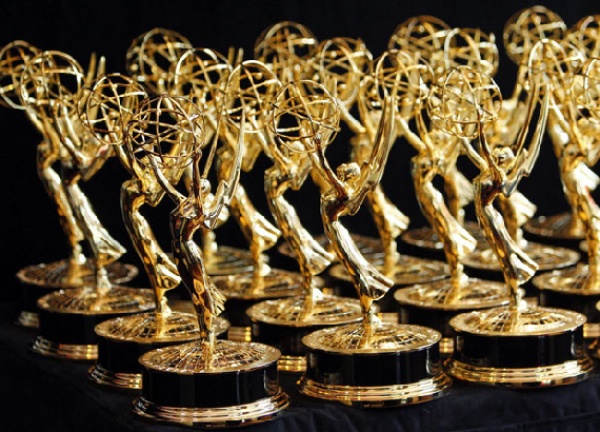
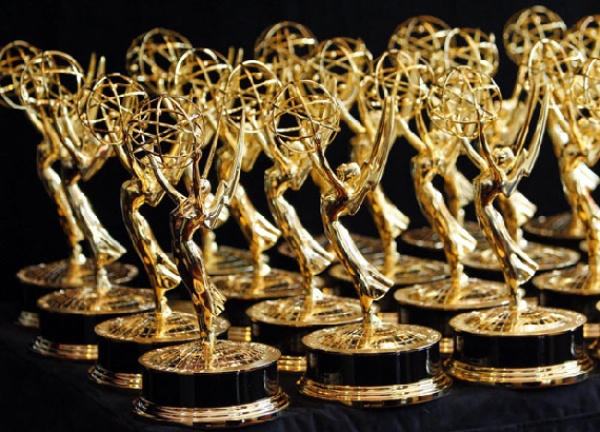
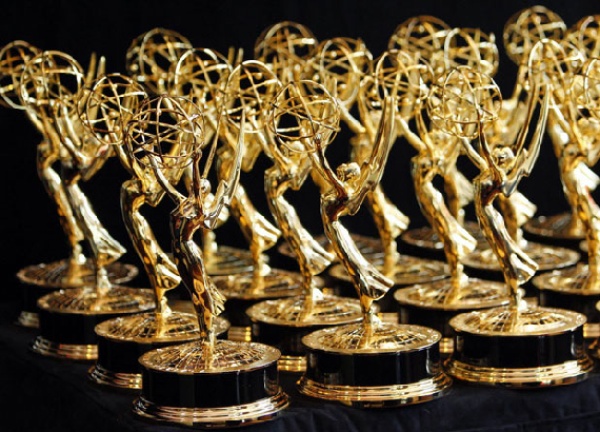
Speaking of which, I found out today that the
Emmy’s statuette
is supposed to be a muse
holding an atom
: “The wings represent the muse of art; the atom the
electron of science.” I love this. It’s so spectacularly backwards. And it is
spectacle for an atom to represent the electron orbiting it, for Ahab to
represent his leg, for the whole to represent the part. But the Emmys’
commitment to parts is sort of its charm, yes? Here’s hoping the glittery frame
is worth watching before it drops lightly out of its own televisual history.

Yours in the electron of science,

Lili

Lili Loofbourow is a seventh-year graduate student who works on early
modern constructions of reading as a form of eating—theologically,
physiologically, etc. In addition to her research and teaching, Lili
writes for a number of publications, including
The Hairpin, The Awl, The Los Angeles Review of Books, and The New Republic, where she contributes TV criticism to the Dear Television series. She also maintains a personal blog called Excremental Virtue. Follow her on Twitter here.

A head’s up: Dear Television will be blogging each week at the Los Angeles Review of Books this fall, so keep an eye out for them there!

Press Play Hosts Dear Television: Letter # 3: In Praise of the Haven’t-Seens

Press Play Hosts Dear Television: Letter # 3: In Praise of the Haven’t-Seens

null

This
week, Dear Television—Jane Hu, Lili Loofbourow, Phillip Maciak, and new
addition Anne Helen Petersen—will be hosting a very special Emmy Anti-Prom here
at Press Play. Why Anti-Prom? We love the Emmys—the red carpet, the goofy
speeches, the spectacle of Jon Hamm and Jennifer Westfeldt’s perfect
relationship—and we love reading Emmy coverage—the dissection of the host, the
hand-wringing, the Poehler-worship. But the world has enough think-pieces about
whether or not Emmy voters need to chill on
Modern Family—they
do! Instead, we’ve decided to exploit the generosity of Press Play and get all
abstract, in order to showcase the snubbed, the losers, and all the other kids
who didn’t get invited to the dance. 
This Emmy week, we will attempt the possibly foolish task of having a
conversation about the Emmys without stepping into the
who-will-win/who-deserves-to-win maelstrom. We have plenty of personal
investments in the outcomes of this crazy program, but, for the moment, we want
to ask: What are we really talking about when we talk about the Emmys?

(To read Phillip Maciak’s previous post, click here.)

(To read Anne Helen Petersen’s previous post, click here.)

Dear Television,

Happy to be here with you all at our first Emmys Anti-Prom! Not
that I ever expected an actual invitation from the Emmys, but I think I like
this better anyway. Not being invited to the dance is the new being invited to
the dance! Or something. And from what I’ve gleaned of the Emmys, actual prom
doesn’t look all that gratifying anyway. (Though those dresses—I will say that
the sartorial surprises of the Emmys can make up, at least for me, for some of
its other disappointments.) But “Will cream colours rule the red carpet this
year” questions aside (not that these aren’t taken
seriously
, let’s turn to some more pressing questions asked by
critics.

The annual Who-Will-Who-Won’t (Who-Should-But-Won’t) predictions
and buzz anticipating the Emmys will never flag, but let’s be serious: it can
only end in heartache. We even know to prepare, as HitFix’s
Alan Sepinwall and Dan Fienberg separate their thoughts into who should win and who will win. As Phil and
Anne have already noted, some things don’t change about the Emmys—and one of
them is that this award show that purportedly celebrates television has a
rather narrow, indeed bland, view of what exactly television is today. At least
in America, the Emmys’ TV might not really coincide with viewers’ (and
critics’!) TV. The Homecoming Queen rarely turns out to be who you hoped, as
the women of Mad Men might sympathize.

So Anti-Prom starts looking less and less like a collection of outliers
than like the majority. And we all know that to rage against the machine is,
partly, to be absorbed into it. It’s hard to talk against
the conventions of the Emmys without falling into speaking in conventions
ourselves (as Phil’s “snub-bait” might attest). Ah yes, Parenthood’s
Monica Potter
: a classic Emmy snub. In a way, though, this gives us
more leeway in how we celebrate Anti-Prom—as well as how we approach who won’t
be attending (that’s not to mention those that simply
can’t
, and I want to stretch this expansive space of the snubbed to
include those who, though they are attending, might still feel a little out of
place.

null

Yes, I’m talking about Outstanding Miniseries or Movie category.
That thing that happens in the final third of the awards show, and which has
that palpable force of making the ceremony suddenly feel verrrry drawwwn
outttt. You might not remember the Miniseries/Movie section from last year if
you, like so many, stopped watching at that point. Most Emmy viewers have seen
at least some scenes of Modern Family or
Two and a Half Men. But what
percentage of them have watched, say, Phil
Spector
or Behind The Candelabra?
I’m not trying to affirm HBO’s elitist judgment that “It’s not TV,”
but it’s good to remind ourselves that “It requires a subscription to
watch” 1/3 of the shows nominated under this category. This year, also
nominated are FX’s American Horror Story:
Asylum
, the History Channel’s The
Bible
, USA’s cable miniseries Political
Animals
, and Sundance’s miniseries Top
of the Lake
. More and more, this loosely-grouped set of odd nominees feels
like they could stand in for a kind of insurgent Anti-Prom themselves. We have
two Oscar-studded HBO films, an Oscar winner film director’s miniseries, a
commercial hit docudrama from the History Channel, a campy season of horror
that you might read as a miniseries by virtue of the fact that it is contained,
and a cable miniseries that never really caught on. Also, it’s partly a
category of convenience—how else would film talent get their EGOTs
otherwise??

Though in the current heat of week-to-week exegeses on the
current final season of Breaking Bad,
there might be especially something vital to be said about not just what gets
snubbed and subsequently mourned, but what is never really noticed to begin
with: what is untimely, or watched on one’s own time, or belatedly. There are
some things you can’t live-tweet; for everything else, there’s the Outstanding
Miniseries and Movie category. There cannot be enough said about the sheer fact
of access and convenience that would hinder a person from watching even one,
not to mention all, of the nominees under the category, but we should also take
into consideration that because most of these nominees don’t fit the
traditional season-long week-by-week episode format, it makes generating viewer
interest or investment that much harder.

null

The rhythm of a miniseries like Top of the Lake is dramatically different from that of a two hour
film, or a season of American Horror
Story
. Jane Campion’s miniseries—when it did finally find its way to
television—aired its seven episodes on three separate nights. To split the
seven hours of Top of the Lake—originally
aired without breaks at the Berlin Film Festival—into three chunks of seven
episodes each feels not just odd, but arbitrary. (My desire to keep watching
only speaks to the power of Campion’s storytelling—maybe this season’s Breaking Bad episode cliffhangers can
take a page out of her book,

 e.g., you can give your audience enough credit that if they’re still
watching at this point, they don’t need episodes to black out with literal questions
of life and death.

) Still, the very otherness of the
Miniseries/Movie-On-TV genre makes me wonder if we can find a better way to
fit, say, Campion’s miniseries into the context of our television sets. Or, is
it best to just think of it as a long film, however interrupted? You can always,
after all, stream it on your computer. And for TV bingers, seven hours is
hardly an outlandish commitment. The slipperiness of miniseries into movie is
also affirmed by the Emmys’ choice to group them together (funny for an award show
that acknowledges the genre differences between comedy and drama!)—a pairing
that happened only 2011, when the Emmys realized there weren’t enough
miniseries in production. But the miniseries has also recently made a
comeback—just this time in extended and pay cable, rather than in its previous
realm of broadcast. Due to FX’s and Sundance’s newfound interest in the genre,
though, might this change again in the future?

Whether we consider it a miniseries or an extended film, Top of the Lake didn’t create too much
buzz when it premiered on the Sundance Channel. Michelle Dean and I found that
by the time we had time to complete the second instalment of our
yak about the show
, it was no longer, as they say, timely. Hence, no
second instalment. But speaking with filmmaker Barry Jenkins afterward (who
came to the series months after it aired), he expressed how much he wished we’d
written on how the show ended. And even if we were looking for pegs, Top of the
Lake has something the rest of its fellow nominees this year don’t: it was
available on Netflix Instant almost immediately upon completing its run on the
Sundance Channel, giving the miniseries a chance to experience another surge of
interest. People watched it. Of course they did—it’s really, really good.

But will Top of the Lake win
among its category of outcasts come Monday evening? Certainly more people have
watched American Horror Story or The Bible, both of which are important
experiments in genre and storytelling especially when it comes to television.
Sepinwall and Feinberg agree that the Emmys are too conservative to vouch for
AHS, and that “‘Top of the Lake’ is probably too challenging and Sundance is
probably too inexperienced at making the push,” so HBO’s Candelabra will probably, in the end, bring home the goods. Perhaps
one cheering aspect of the Outstanding Miniseries or Movie subset is that
almost any win will feel like a virtuous act on behalf of the Emmys. These
nominees! They’re so different. Let’s not forget them; let’s throw them
into this crazy category we don’t really know what to do with. Still, it’s a
category that rewards experimentation to a point. We still
want our glossy prestige film to win, for goodness sake.

The fact that the Emmys can be, well, unpredictable at times, by
virtue of not giving prizes to what, as Phil said, might be judged as
Most Aesthetically Inventive or Most Subtle Acting Range (can you imagine
Elisabeth Moss might get her first Emmy not because of Peggy Olson, but because
of her portrayal of Robin? I mean, I sort of can!) can also mean that the Emmys
can also go so far as to surprise us. And as Anne said, television qua
television isn’t getting much respect out there in Promland, so when it
does—when the mundane and milquetoast gets recognition—it sort of results in
a mixed delight. Remember when a burgeoning Modern
Family
racked up all those awards after its first season? Such results give
viewers hope that they’ve got a say in their television.

So this year, don’t turn off the television when the Emmys turn
to their miniseries and movies. Because the question “Who Cares?” is
tied to the more simple question “Who Has Seen It”—and the best way
to start is to tune in. This Anti-Prommer wants more American Horror Stories, more Top
of the Lakes
, more Behind The
Candelabras
, just as much as she wants Elisabeth Moss to get her damn Emmy.

It’s not just TV, it’s the Emmys,

Jane

Jane Hu is a writer and student living in Montreal. You can follow her on Twitter.

A head’s up: Dear Television will be blogging each week at the Los Angeles Review of Books this fall, so keep an eye out for them there!

INSIDIOUS, CHAPTER 2: The Haunting of the American Male

INSIDIOUS, CHAPTER 2: The Haunting of the American Male

null

Warning: This review contains the mildest of spoilers, probably nothing you couldn’t guess for yourself.

The Insidious
films take place in an America haunted by faded dreams of a prosperity provided
by a loved and respected father.  In
James Wan’s vision this patriarchal figure has been replaced by a maniacal
presence brooding in the dark corners of a house where women are the strongest
presence and men have become peripheral. Wan’s latest film (his second this
summer) is too filled with tiresome exposition and brazen shock tactics to be
haunting, but like many horror films, good, bad, or indifferent, it is
certainly haunted.  Set in starkly
isolated locations, where it is always dusk or nighttime, with characters
slouching towards doom at dream-like pace, horror films speak as much through
their conventions as through the stories they tell.  Like its predecessor, this second chapter of
the Insidious franchise tells the
story of a father and son who have the ability to project their sleeping selves
into a ghostly realm called “The Further.” 
While this imaginatively-realized plane of the undead has its
fascinations, the world in which the Dalton family leads its waking life seems
no less lifeless and every bit as haunted as the spirit world they fear.

Like many American popular discourses, the film is
preoccupied with anxieties about masculinity. 
The story is haunted by the rise of women as chief breadwinners in the
household, a demographic shift that has somehow surprised and disturbed cable
news pundits from across the political spectrum.  At times male anxieties seem so pronounced in
the film as to suggest a horror film adaptation of Susan Faludi’s Stiffed: The Betrayal of the American Male,
which addresses the rise of “Angry White Male” politics in the face of rising
unemployment and perceived male disenfranchisement.  James Patrick Wilson turns out to be an ideal
actor to convey this brooding male anger, barely hidden behind his unnaturally
frozen, deceptively boyish good looks. 
One of the chief pleasures in watching the first Insidious film was trying to decide whether Josh Lambert’s behavior
was the result of unknown forces or simply run-of-the-mill dickishness.  As he grows increasingly unconcerned about
the plight of his family, he spends more and more time at work; it is only
later in that film that we discover he is haunted by a secret.

Chapter 2 begins
by delving further into the secret of Josh’s behavior, as we revisit his
haunted childhood.  In one especially
striking scene, an old videotape filmed by a paranormal investigator when Josh
was a child shows a brooding presence hovering over the boy’s shoulder, a
presence which turns out, on closer scrutiny, to be his adult self.  The therapeutic solution to his disturbed
childhood is a novel one for a culture otherwise obsessed with recovering and
publicly airing repressed traumas: Josh is hypnotized into forgetting.  While repression is not generally encouraged
by therapists, it is certainly a common way of dealing with complex emotional
problems, particularly among men. 

Not surprisingly, Josh’s repressed trauma does what every
psychologist from Freud onward has warned us it would do: it returns, and with
a vengeance.  While the previous film
focused primarily on Josh’s son Dalton, who shares his father’s ability to
travel between the lands of the living and the dead, Chapter 2 centers on the father, a figure who has become a haunted
simulacrum of the American male.  We soon
learn that Josh is haunted, not just by his past traumas, but also by a
maniacal, sexually ambiguous presence. 
While the plot of the film centers on the problem of how to get the real
Dad back, the most frightening scenes, and those that linger longest in the
mind, are those where Josh is both frightening and fatherly, paternal and
possessed.  The story becomes a kind of male
version of The Stepford Wives, in
which lifeless replacements can be substituted for actual people because their
behavior is only a slight but disturbing exaggeration of the gender characteristics
of their originals.  Like many American
fathers, Josh doesn’t listen to his wife, gives meaningless orders he expects
everyone to follow, and stares blankly at his children. He hides his lack of
feeling behind a fixed grin.  It seems a
surprisingly short step from this sadly familiar behavior to the more
disturbing mayhem of the film’s latter half.

So what’s wrong with Dad, exactly?  In a revealing moment, the film cuts suddenly
from the story of the attempted self-castration and suicide of a patient
overseen by Josh’s mother to a shot of Josh pulling a healthy tooth out of the
back of his own mouth, itself a kind of symbolic self-castration.  Masculinity is deeply suspect in Wan’s world,
as men become increasingly peripheral, fading away before the stronger presence
of women.  In the first film, Dalton is
saved as much through the efforts of medium Elise Rainier (Lyn Shae) as by his
devoted father.  That film ended with her
mysterious death, possibly at the hands of Josh himself.  In Chapter
2
he is under suspicion for the crime, the motive for which is obscure, but
which seems related to his increasingly misogynistic behavior, suggesting
resentment over a woman taking control. 
In both films the other psychic investigators are a pair of inept male
nerds, whose uncertain masculinity is marked by a rather tasteless moment of
homophobia in the sequel.  An older
psychic investigator misreads the signs he receives from the beyond, completing
the picture of a world where men are largely at the periphery.

Taking up the slack are Josh’s wife and mother.  As in the first film, Rose Byrne’s
performance as suspicious and frightened wife Renai is utterly persuasive. While
she is often made to succumb to stereotypically female screaming fits, her best
moments occur when she scrutinizes her husband’s appearance and behavior,
trying to figure out what’s happened to the man she thought she knew. Barbara
Hershey transforms the taciturn mother-figure she played in the first film into
a more confident and assured character who helps her daughter-in-law reclaim
her family.  When the male psychic
investigators prove too weak for the challenges thrown out by “The Further,”
the ghostly presence of Elise Rainier emerges to save their skins.  This is a woman’s world in which the presence
of men is annoying at best, insidious at worst.

The least believable yet most compelling quality in Wan’s
films is a sense of haunted isolation from the living world.  The characters live in impossibly large
houses that are completely detached, both socially and physically, from their
communities. The characters are rarely seen engaging in conventional domestic
activities, like eating together or playing board games.  They just wander around their sumptuous homes,
waiting for the next intrusion from the beyond. 
Their world is a ghostly remnant of the American dream, one grown
insubstantial as much through economic recession as through demographic
shift.   Insidious, Chapter 2 ends like its predecessor, with a hypnosis
session in which Josh is made to forget the horrors he experienced, ensuring
that there will be another sequel, and that Dad will remain as cold and empty
as his enormous house.

Jed Mayer is an Associate Professor of English at the State University of New York, New Paltz.

Press Play Hosts Dear Television: Letter # 2: The Emmys Anti-Prom Continues

Press Play Hosts Dear Television: Letter # 2: The Emmys Anti-Prom Continues

null

This
week, Dear Television—Jane Hu, Lili Loofbourow, Phillip Maciak, and new
addition Anne Helen Petersen—will be hosting a very special Emmy Anti-Prom here
at Press Play. Why Anti-Prom? We love the Emmys—the red carpet, the goofy
speeches, the spectacle of Jon Hamm and Jennifer Westfeldt’s perfect
relationship—and we love reading Emmy coverage—the dissection of the host, the
hand-wringing, the Poehler-worship. But the world has enough think-pieces about
whether or not Emmy voters need to chill on
Modern Family—they
do! Instead, we’ve decided to exploit the generosity of Press Play and get all
abstract, in order to showcase the snubbed, the losers, and all the other kids
who didn’t get invited to the dance. 
This Emmy week, we will attempt the possibly foolish task of having a
conversation about the Emmys without stepping into the
who-will-win/who-deserves-to-win maelstrom. We have plenty of personal
investments in the outcomes of this crazy program, but, for the moment, we want
to ask: What are we really talking about when we talk about the Emmys?

(To read Phillip Maciak’s previous post, click here.)

Dear Television,

Here’s the thing about the Emmys: it doesn’t
matter who wins so much as how we talk about it. Which is why we’re having an
Anti-Prom—we want to change the tenor of the conversations that have previously
been organized around the awards and their merit.

It’s notable, for instance, that what we know as
“The Emmys” are but one of six Emmy Awards ceremonies—it’s just that the
primetime Emmys honor the shows that are ostensibly watched by more people and,
as such, are more important. But that assumption belies a general understanding
that primetime offerings are, by default, more important than what airs at all
other times, because primetime is when serious adults, with their serious
tastes, come out to watch. Under this rubric, everything that airs during the
day is either kid stuff or sappy soap operas for bored housewives: juvenile,
feminized, less than.

That might sound a bit old fashioned, which it
is. But it’s also just one of the ways that we cordon off “quality” television
from “trash,” creating an explicit hierarchy with pay cable primetime at the
top and daytime broadcast at the bottom. Quality television looks better; its
seriality demands sustained engagement; it’s for smart people, people who like
novels and films, Dickens and Tolstoy—or so the rhetoric goes. The rise of the
cult of the showrunner is thus just one of many narratives, woven by the
industry and embraced by its public, positing that quality television is art,
e.g. everything that its commercial cousins are not.

But you’ve heard this before. The giddy haze of
the so-called “golden age” has begun to fade, and several authors, our own Phil
Maciak included, have attempted to complicate this overarching narrative of
quality, in which we can only appreciate television if we wrap it in the
rhetoric of other, more highbrow mediums. It’s only okay to talk about
television, in other words, if we’re not talking about that television.

It’s hard to think of this division as anything
other than elitist. Television has long been “the democratic medium,” a
distinctly American mode of entertainment, distinguished by its intermingling
of commercials and spectacle. The vast majority of Americans are still
consuming television in this traditional mode, commercials and all. Many
critics, especially those “slumming” in television from the fields of film and
literary criticism, only want to talk about what people aren’t watching:
it’s a curious form of hipster logic, one that I’ve seen defended in and
outside of the academy with the type of condescension usually reserved for,
well, hipsters.

The Emmys have been tasked with negotiating this
divide. How can the Academy of Television Arts and Sciences (ATAS) acknowledge
and flatter the legions of “quality” television fans, many of whom pay
attention to the Emmys for the sole reason of having their tastes validated,
while remaining dedicated to television qua television?

I’d argue that much of the Emmys’ irrationality
can be traced to this divide. Like the Academy of Motion Picture Arts and
Sciences, the ATAS is divided into “peer groups” according to who does what on
set—actors, directors, set designers, etc. Also like the Oscars, each peer
group votes on its own category, but everyone gets to vote for the
“Outstanding” categories (Best Drama, Best Comedy, Best Actress in a Comedy,
etc.). Shows, performers, and writers “present themselves” for nomination, then
the entire academy—15,000 members!—gets to vote on those nominations. I’m
sure the return rate is somewhat akin to wedding RSVPs (meaning: middle-aged
and old people do it; young people forget how to use stamps) but you can
understand how many varied understandings of television, its purpose, its
future, and definitions of “outstanding” are vying against each other.

null

Take, for example, the somewhat bonkers
nominations for Outstanding Lead Actress in a Drama Series. You have Vera
Farmiga in A&E’s Bates Motel, a show that garnered mixed reviews at
best but has a sort of nostalgic support: it’s not that people were nostalgic
for incestuous relationships so much as Hitchcock, Psycho, and the early
days of the high concept era. There’s Michelle Dockery in Downton Abbey,
a show labeled as quality simply because it airs on PBS, it’s a costume drama,
and the actors speak with posh accents; and Connie Britton in Nashville,
a pale shadow of her turn in Friday Night Lights in a primetime soap
with dismal reviews, disappointing ratings, and a fabulous soundtrack. There’s
Kerry Washington’s showy performance in Scandal, yet another primetime
soap; and Robin Wright’s understated turn in House of Cards, the
Netflix-Emmy-Generator-That-Could that is also notably less than the sum of its
beautiful parts. Finally, there’s the perennial bridesmaid Elisabeth Moss for Mad
Men
and the incumbent Claire Danes for Homeland.

So we have seven shows, six “channels,” a mix of
broadcast, public broadcast, extended cable, pay cable, and internet
delivery. The sheer number of nominations—each category is normally limited to
five—betrays the diffusion of voter tastes. But to return to Phil’s argument
about the type of performances that the Emmys prefer, whether they’re more
“naturalistic” or showy, this list runs the gamut: bordering on camp (Farmiga),
high melodrama (Britton, Washington), mannered and traditional (Dockery),
psychological realism (Wright, Moss), and the showy illness route (Danes). It’s
like Joan Crawford, Bette Davis, Katharine Hepburn, Shirley McLaine, and
Elizabeth Taylor vying for a single award, which coincidentally happens to be
my idea of heaven.

The relative diversity of the nominations makes
the voting members of the ATAS look pretty savvy: they’re resisting being sticks
in the mud about Netflix, instead essentially inviting the bully to the party
in the hopes that he’ll play nice. They’re acknowledging that excellence
manifests in different genres and in different performance modes. They’re not
just watching pay cable. Just like us, they’re willing to forgive Connie
Britton’s weak vocals if it means they can get close to her hair.

But what happens if, say, Kerry Washington wins?
After Danes won last year, many wanted to believe that the Emmys had come to
their senses: they’d put away childish things—like awarding actresses on Law
& Order SVU
, Brothers and Sisters, and other primetime soaps and
procedurals—and joined the adults at the quality tv table.

I can’t overemphasize what an aberration Danes’
win was. For the last ten years, the winners have been from shows that share
DNA with quality television (Damages, Medium, The Good Wife, The West
Wing
) but are never grouped with the “golden era.” Apart from Edie Falco’s
three wins for The Sopranos c. 1999 – 2003, all of the winners have been
from broadcast or broadcast’s cable siblings (FX, TNT). A win for Washington,
then, wouldn’t be surprising—but I can only imagine the sort of critiques it
would inspire, rife with the implication that awarding an “old-fashioned” show
(read: non-quality) is yet another testament to the Emmys’ irrelevance.

null

In truth, Scandal might be the best
reflection of the current state of television. It’s on a broadcast channel but
it garnered much of its fandom through its availability on Netflix. It boasts
an outspoken, successful showrunner—it just so happens that that showrunner is
a black female, and that her previous projects have also been primetime soap
operas. It mixes series qualities (a new case opened and solved every episode)
with serial ones; over the course of season two, the serial arcs have almost
wholly overtaken the “case of the week.” It has steamy sex—arguably as much as Game
of Thrones
—which is all the more titillating because of the creative ways
the show employs montage to suggest hotness instead of lazily throwing
boobs in your face. And its devoted fans have made it the Most Tweeted Show on
television, underlining the new modes of engaging with televisual texts and
shattering the myth that audiences refuse to watch in real time. It’s proof of
the ways in which the markers and modes of quality have “trickled down” from on
high, but it’s also a testament to their mutability.

Like Justified, The Americans, and The
Good Wife
, Scandal is a quality mutation. It confuses the hierarchy;
it resists classification. Which is part of why I love all of those shows: I
have little interest in sustaining the bifurcation between “quality” and
non-quality, especially since that divide, at least as popularly propagated,
has very little room for women, whether in the role of stars, showrunners, or
writers. Indeed, so much of the discursive labor invested in turning television
into something of value has, in essence, been to distance it from its feminized
roots. The feminine soap opera becomes the masculine “serial”; the passive
viewer of broadcast becomes the active viewer of quality.

These quality mutations have but a smattering of
nominations and are unlikely to win. But my hope, again, is that you think less
about who wins and whether you agree with it, and more about the language
employed to circumscribe “good” television and various programs’ refusal to hew
to that definition. If we are, to some extent, the media we consume, we are
also the shitty things we say to separate “our” television (“it’s not TV!”)
from others’.

Game of Thrones is a soap opera with swords,

AHP

Anne Helen Petersen teaches media studies at Whitman College in Walla Walla, Washington.  Her first book, Scandals of Classic Hollywood, is forthcoming from Plume/Penguin Press in 2014.  She writes on scandal, celebrity, and classic Hollywood for The Hairpin and on her own blog, Celebrity Gossip, Academic Style.

A head’s up: Dear Television will be blogging each week at the Los Angeles Review of Books this fall, so keep an eye out for them there!

Press Play Hosts Dear Television: Letter # 1: The First Annual Dear Television Emmy Anti-Prom

Press Play Hosts Dear Television: Letter # 1: The First Annual Dear Television Emmy Anti-Prom

null


This
week, Dear Television—Jane Hu, Lili Loofbourow, Phillip Maciak, and new
addition Anne Helen Petersen—will be hosting a very special Emmy Anti-Prom here
at Press Play. Why Anti-Prom? We love the Emmys—the red carpet, the goofy
speeches, the spectacle of Jon Hamm and Jennifer Westfeldt’s perfect
relationship—and we love reading Emmy coverage—the dissection of the host, the
hand-wringing, the Poehler-worship. But the world has enough think-pieces about
whether or not Emmy voters need to chill on
Modern Family—they
do! Instead, we’ve decided to exploit the generosity of Press Play and get all
abstract, in order to showcase the snubbed, the losers, and all the other kids
who didn’t get invited to the dance. 
This Emmy week, we will attempt the possibly foolish task of having a
conversation about the Emmys without stepping into the
who-will-win/who-deserves-to-win maelstrom. We have plenty of personal
investments in the outcomes of this crazy program, but, for the moment, we want
to ask: What are we really talking about when we talk about the Emmys?

Monica Potter’s Field

by Phillip Maciak

Dear television,

Last year’s Emmy red carpet
rolled out in a completely different world. Host Jimmy Kimmel was not yet the
P.T. Barnum-meets-The-Grinch figure he was to become post-Twerkgate; Lena
Dunham was not yet running a Tammany Hall-style influence machine for the NYC
comptroller elections; and Netflix was still just the place where I would
compulsively watch The Office episodes
until I fell asleep every night, not the place where I could pile all of my
irrational hopes and dreams about the future of serial narrative. But here we
are in 2013, the Emmys are back, G.O.A.T. awards show host Neil Patrick Harris
is at the helm, and I am excited!

Before I start getting all gooey
about it, though, let’s take a step back. This is an Anti-Prom, after all—we’re
dancing to 70s-era punk music, everybody’s cross-dressing, we’re all using air
quotes about everything. So now is not the time to start pinning corsages. As
the first poster in this Anti-Prom, I want to try to shatter some paradigms,
deconstruct cultures of value, put my distant-reading goggles on. But, as a
human person with a heart and tear ducts, I also have an intense desire to moan
about snubs! So, in order to split the difference, I want to talk a little
about a performance I instinctively felt was snubbed and then think a little
bit about why maybe my instinct was a false one.

null

Let’s begin with my instinctive
reaction: Parenthood’s Monica Potter
should have been nominated for an Emmy. If Judd Apatow and John Cassavetes had
a baby boy, and that baby was raised by Connie Britton, he would grow up to be
Jason Katims.  Katims cut his teeth on
the brilliant, belated My So-Called Life,
he was head writer and showrunner for the pop naturalist epic Friday Night Lights, and, in 2010, he
created NBC’s Parenthood, a show that
many critics consider among the best ensemble dramas on TV and that Emmy voters
have seemingly never heard of. The observational realism, improvisatory acting,
and fragile humanity of the series he writes make them feel almost avant-garde
compared to their network mates. And you would quickly run out of fingers and
toes trying to count the number of previously unassuming actors who have given
transcendent, career-best performances under his guidance. Chief among those
actors, at the moment, is Monica Potter.

This past season on Parenthood, partly as a result of
Potter’s own suggestion, her character Kristina received a breast cancer
diagnosis. Her arc was predictably tough and redemptive—she weakens physically,
goes through chemo, hides aspects of her illness from her college-bound
daughter, and struggles with sex, drugs, and the oppressive support of her
adoptive family before ultimately going into remission by season’s end. It
sought a particular, almost polemical, sense of audience empathy, and it attempted
to turn Kristina into a kind of Everywoman survivor. While the beats might have
been familiar, Potter played them with heartbreaking comic style and a
startling lack of vanity. A career television actress was handed a
traditionally sentimental role, and what emerged was a performance that both
embraced and challenged that sentimentality. Monica Potter crafted, this past
year, a radiantly intelligent performance about the costs and benefits of feeling, at all.

In turn, I figured that Potter
was a lock for an Emmy nomination. (And I was not alone—at least among the
twitterati.) She was a dark horse—coming from a series that had, in its four
seasons, received only a guest actor nomination—but the role was so juicy and
so well-played, so topically direct even, in a way other Emmy-repellent Katims
roles often resist, that many felt this was Parenthood’s
breakthrough moment. Monica Potter as Kristina Braverman, in other words, had
become “Emmy-bait.”

But the Emmys did not bite.
Potter was “snubbed” in favor of Breaking
Bad
’s Anna Gunn, Game of Thrones
Emilia Clarke, The Good Wife’s
Christine Baranski, Homeland’s Morena
Baccarin, Mad Men’s Christina
Hendricks, and, of course, the Dowager Countess Dame Maggie Smith. Gunn,
Baranski, Hendricks, and Smith are all repeat nominees, coming from series that
are also repeat nominees. Clarke and Baccarin are central ensemble members for
two of the biggest Premium Cable sensations since The Sopranos.  It’s not a
surprise that Potter wasn’t included here—though it’s certainly dispiriting,
considering the aimlessness of Baccarin’s performance. (It’s a surprise we ever
thought Potter could be nominated in the first place.)

The role Potter played was identified
as Emmy-bait almost as a knee-jerk reaction, but, looking at the above list—and
others like it over the past number of years—it’s hard to find another
performance like it. Do the Emmys really like to reward performances like
Potter’s? In 2012, Smith won for her wit and gravitas; in 2011, Margo
Martindale won for her matriarchal villainy on Justified; in 2010 Archie Panjabi won for the dangerous sexuality
of her Kalinda on The Good Wife. In
fact, you have to go back to 2007’s Katherine Heigl to find a supporting
actress winner whose role was even remotely comparable to the emotionality that
characterized Kristina Braverman and mistakenly marked the role as a perfect
fit for the Emmys. And Katherine Heigl is no Monica Potter.

What we’re talking about when we
talk about Emmy-bait in this way is really, to some extent, Oscar-bait.  The Emmys, in this category’s recent history
at least, don’t seem that interested in the kind of broad sentiment and deep
tearful emotion of a performance like Potter’s. The Oscars, however, eat that up.
Anne Hathaway, Octavia Spencer, Melissa Leo, Mo’Nique, Penelope Cruz—for the
past several years, the best supporting actress Oscar has primarily been a
prize for raw emotion. If Parenthood had
been a film, Monica Potter would be picking out a dress and borrowing designer
jewelry Shirley MacLaine-style.

But what does all of this mean? I
certainly don’t claim that I’ve definitively disproved the concept of
“Emmy-bait,” but the past few years in this one category certainly don’t hold
up as evidence. So if it’s not based on precedent or logic, why do we sometimes
have a tendency to conflate what the Emmys want with what the Oscars want? I
think part of this is aspirational. Online writers like us continue to claim
that either television is becoming more like cinema or that television is now
the place where a certain mid-budget mode of filmmaking now lives and breathes,
and we want the Emmys to act like it. Not only do we feel these awards should nominate a certain type of
performance, we retroactively insist—despite evidence to the contrary—that they
traditionally do reward a certain
type of performance.  

The Oscars, for their part, have
notable and exploitable pressure points. Mental or physical illness, historical
roles, complex villains, alcoholics, old actors making last stabs at
profundity, young actors taking ambitious first stabs at it, attractive
actresses “going ugly”—these are reliable prejudices that provide entry-points
for marginal performances or major performances in marginal films. Moreover,
they are archetypal roles, roles that define certain traditions in American
screen acting. The Oscars have prejudices, but they are based in what we are
constantly reminded is a storied and glorious—and conservative and misguided
and sometimes pretty racist—history. Asking the Emmys to have prejudices like
these is a way of asking television to have a more prestigious—more
cinematic—history. And this perspective—an admittedly snobbish one—invites
disappointment. Monica Potter’s performance was less Emmy-bait than it was
snub-bait.

null

On the other hand, there’s also
a tendency to apply a qualitative logic to a profoundly non-qualitative
selection procedure. Sure a lot of those performances are great, but a lot of
the nominations are based alternately in habit and trend. Performances like
Clarke’s and Baccarin’s get swept up in fever for their shows, and Dame Maggie
Smith will have a slot in this race until the day she dies, if that ever even
happens. Christina Hendricks will likely never have the clout or the momentum
to win this category, but she’s been nominated four times and likely has a
fifth coming for next year’s final season. Hendricks is and has always been
sensational on Mad Men, but you have
to ask yourself why the voters keep nominating an actress they never intend on
awarding. The quality of a performance is often secondary to the context in
which it occurs, and the Emmys are not often friendly to breakthrough
performances that are not otherwise a part of some larger zeitgeist. (It’s
worth noting that Connie Britton basically had to become a meme before the
Emmys would even nominate her supernaturally good lead performance on Katims’ Friday Night Lights.)

And then there’s the question of
popularity, viewership, and cultures of taste. Hopefully, you all will delve a
little further into this than I have, but I just want to note here that Adam
Sternbergh’s recent spectacular spread on popularity in the New York Times Magazine is particularly
enlightening here. For every TV critic who felt Potter was snubbed, there is a
viewer who doesn’t know Parenthood is
a show on television. The viewing world is made up now of micro-cultures, some
of which are silent, others of which are loud and influential. The snubbing of
Monica Potter is, in some sense, the result of some weird Venn-diagramming of
these cultures. As Sternbergh says of HBO’s Girls,
“By one measure, no one watches Girls.
By another, it’s fantastically popular.” Parenthood
has fallen under the bleachers of this popularity contest. The season four
finale of Parenthood was watched by
nearly five times the number of people who watched the season two finale of Girls. But Girls has captured popular culture in a way that Parenthood never will. Likewise, despite
its commanding lead over Girls, Parenthood has by no means the same kind
of numbers that The Big Bang Theory—another
Emmy favorite—has. We talk optimistically about the idea that small-scale, naturalist,
emotional adult drama has found a home on television after having been evicted
from Hollywood, but, in between prestige and popularity, does it really have a
home at the Emmys? And who else is hanging out with you, me, and Monica Potter
beneath the bleachers?

Clear eyes, full hearts,

Phil.

Phillip Maciak is Assistant Professor of English and Film Studies at Louisiana State University, and he is at work on a book about secularism and U.S. culture at the turn of the twentieth century. His film and television criticism has appeared at Salon, The House Next Door, Slant Magazine, In Media Res, and The New Republic. He is co-founder—with Jane Hu, Evan Kindley, and Lili Loofbourow—of the weekly television criticism blog, Dear Television. He tweets @pjmaciak and keeps a website at phillipmaciak.com.

A head’s up: Dear Television will be blogging each week at the Los Angeles Review of Books this fall, so keep an eye out for them there!

VIDEO ESSAY: Female Sexual Agency in a World of Blurred Lines

VIDEO ESSAY: Female Sexual Agency in a World of Blurred LInes

We live in a culture where female
bodies are constantly on display. However, most images of female sexuality we
see are passive and two-dimensional.

For the past two weeks Miley Cyrus’s MTV
VMA performance has been decried by parents’ groups and feminists alike. The
response to Cyrus’s performance is more interesting than Cyrus’s performance
itself. It hit on every cultural nerve about what is appropriate and inappropriate
for a young woman to do with her body. Of course, this dialogue has been going
on for years. Female artists from Madonna to Lady Gaga to Rihanna to Nicki
Minaj all have used sexuality to express themselves.

The main reason that Cyrus’s
performance stood out is twofold. Cyrus grew up in the public eye. Like Britney
Spears, Christina Aguilera, Selena Gomez and other child stars, Cyrus’s sexual
display is not seen as a natural transition to adulthood. Instead, critics are
concerned  to see a coveted virginal
starlet transforming into just another sexual object.

We are still uncomfortable with the
idea that young women have sexual agency. In general, our media depicts
powerful women as direct and aggressive on the streets or on the battlefield. In
the bedroom, however, they are still prizes to be won over. The trope of the
strong female who needs the male lead to work extra hard to win her over is
commonplace. The theme here is that strong women don’t put it out for just
anybody, and sexual and romantic longing make a woman weak.  

This can be seen in any range of shows,
such as Daria and 30Rock, where the smart, savvy female seems
patently disinterested or not good at garnering male attention. In the film Bridesmaids, Annie Walker puts up with
male bad behavior until a sweet guy she initially pushes away wins her heart. In
Iron Man we root for Pepper Potts, a
higher quality woman than the types Tony Stark bangs early on.

Today, strength and sexuality are
perceived as mutually exclusive. This trend became even more readily apparent
this past summer. Look at songs like “Blurred Lines,” for instance, or our
obsession with the female submission narrative 50 Shades of Grey, which is less about a sexually secure woman
exploring her own kinks (a la Secretary)
than a genuinely meek young woman submitting to a man’s control.

Lena Dunham’s Girls has been lauded and reviled
for its focus on young women’s unhappy sexual encounters, which are perceived
as being more authentic than those of Samantha in Sex in the City. Indeed sex is different for young women in 2013
than it was in the late 90s. What is public and private space has changed and
the risks associated with getting naked have increased. In this culture, a
woman’s body can easily become shared public property, whether or not she wants
it.

To me, what is most shocking about Miley
Cyrus’s performance is that it is devoid of pleasure. Cyrus looks gawky and
uncomfortable, her tongue sticks out cheekily, rather than sensually, her
twerking looks like something she practiced in the mirror for a few hours. If
Cyrus was offensively appropriating symbols of “blackness” in her act,
she was also appropriating elements of raunch culture. When Madonna and Lady
Gaga present sexual displays they own it, while Cyrus seems to be figuring out
how she feels about her own sexual awakening.

Most displays of female desire are so
prescriptive that it is hard to differentiate between raw want and
commercialized longing. In many ways the pre-packaged version of sexuality is
less threatening than the unscripted version. We question whether or not
Rihanna really loves S&M, or whether Madonna’s sexually provocative videos
were merely about capturing attention.

Women can rarely be seen as sexual
beings without being reduced to objects or otherwise exploited. This is part of
what keeps women from being viewed as whole people, capable of intellectual bravado,
as well as great desire.

Of course, opening up this kind of
dialogue means listening to women. Films such as Easy A and The To-Do List attempt
to dismantle the stereotype that young women cannot be in control of their
sexuality, but the idea that young women can be sexual agents is still not
mainstream. We believe that young women cannot possibly be sexual agents, and that
sexuality for young women is about display and attention, rather than desire.

Allowing women the space to be sexual,
either in pop culture or in society at large, matters. When female sexuality is
most commonly depicted as either incredibly dangerous or incredibly vulnerable,
the narrative that coming-of-age for a girl is a time of loss needs to change. Girls
and young women deserve to be offered the possibility that their sexual
awakening could signal that a world is opening up.


Arielle Bernstein
is
a writer living in Washington, DC. She teaches writing at American
University and also freelances. Her work has been published in
The
Millions, The Rumpus, St. Petersburg Review and The Ilanot Review. She
has been listed three times as a finalist in
Glimmer Train short story
contests
. She is currently writing her first book. She is Associate
Book Reviews Editor at
The Nervous Breakdown.


Serena Bramble is a film editor whose
montage skills are an end result of accumulated years of movie-watching
and loving. Serena is a graduate from the Teledramatic Arts and
Technology department at Cal State Monterey Bay. In addition to editing,
she also writes on her blog Brief Encounters of the Cinematic Kind.