Self-Projected Artifice: The 49th Chicago International Film Festival

Self-Projected Artifice: The 49th Chicago International Film Festival

It was almost like a movie. Amat Escalante’s harrowing and
unapologetically bleak film Heli—which
looks at the crooked law enforcement and low-totem pole players of Mexico’s
drug cartel scene—came to a an ambiguous closing shot before dipping to white
for the end credits. The auditorium house lights came on at the press screening
I was at. No one moved from his or her seat. Utter silence. Then suddenly, a
critic in the row in front of me let out a groan. A very loud one. He wanted to
be heard. After 104 minutes of wince-inducing violence and despair, Heli offered no logical retribution for
its audience. The groaning critic was expressing one of two things: that he’d
witnessed a carefully nuanced, searing cross-section of a very real dilemma
south of the border—or that he’d just seen another arthouse trash film filled
with hot air. As other critics began leaving the auditorium, they started
chuckling at the thought of the groan. The groan seemed to carry an echo too,
as if it was a shared movie review, a unanimous proclamation that the Chicago
International Film Festival had once again managed to bring some of the more
polarizing films of world cinema to the Second City for the 49th consecutive
year. This year’s lineup was particularly dark in nature, from crude historical
narratives (James Gray’s The Immigrant,
Steve McQueen’s 12 Years A Slave) to
timely, devastating documentaries (the border crossing Purgatorio, the brotherly survival tale in Kenya’s Tough Bond). For all of its variety,
this year’s Chicago film fest found itself hovering over the theme of the
self-projected artifice, which was explored in three grossly differentiating
films.

You see, unlike most marquee U.S. film festivals such as
Sundance or SXSW, the Chicago International Film Festival has done a consistent
job of flying just below the radar of mainstream but several cuts above other
notable film festivals. Sure, there are “movie stars” who make appearances at
opening night and certain gala events, but the main crux of the Chicago Film
Fest is focused on its usually impressive program of world cinema. The fest’s
red carpet schmoozing takes a backseat to the discovery of new artistic voices
from international films that would be hard to find stateside.

Consider the above-mentioned Mexican film, Heli. For most of its running time, the
camera is deliberate in its movements. Slow pans reveal awful imagery: a boot
pressed against a man’s face, a man being forced to roll face down over human
vomit, and the devastating reunion of a woman with her husband after he was
savagely beaten. These images are all the more powerful because the characters
in the narrative are desperately trying to fool themselves into thinking they’re
bound to escape or even create a new life. In the violent landscape ruled by
the drug cartel, these poor Mexican peasants are disillusioned at best. In an
early scene, the protagonist’s wife visits a local psychic in hopes of hearing
the possibility of a new venture or at least to give validity to her current
situation. Later, during the film’s gruesome torture scene, a group of
adolescents in the background gleefully plays their American video games on
consoles. At one point, a young boy whips out his cell phone to film a victim
being tortured with fire and thinks out loud about the idea of uploading the
footage to YouTube. It’s that self-projected artifice—that daily routine to
dilute the horrors of one’s reality—which is what’s really striking about Heli. Lots of drug films have shocking
violence, but few observe the nameless people at the peripheries of the
screen’s frame and examine their ways of coping with their environment.

Sometimes this artifice is therapeutic. Part of the
festival’s documentary program, Rithy Panh’s The Missing Picture shows us one filmmaker’s in the 70s transcendent
retelling of his unfathomable childhood experience as a prisoner of the Khmer
Rouge in Cambodia by way of hand-made art; rather than relying solely on
historical archival footage, Panh used small whittled-down clay figures as
stand-ins for a majority of the film’s recreations. The title of the doc
resonates exponentially as the simple toy-like sets suddenly become vessels for
ghostly imagery. We can only imagine how the scenes played out in real life and
thus are forced to project our own anxieties and shock onto the stoic faces of
the tiny clay models on the screen. The effect is heartbreaking and, more
importantly, is never played for gimmickry. 

Finally, taking a hard right turn from subject matters of
drug cartels and Cambodian genocide, we land at the Cannes Palme d’Or winner,
France’s Blue Is The Warmest Color,
directed by Abdellatif Kechiche—which was one of Chicago’s festival highlights
to be sure. Centered on a remarkable lead performance by Adèle Exarchopoulos, Blue chronicles several years in the
relationship of a lesbian couple. Exarchopoulos, the youngest of the pair, has
to carefully micromanage each of her self-projected artifices. At her high
school, she “dates” a male classmate in order to ward off any suspicion or
prejudice toward her actual sexuality from her peers. At home, she deceives her
parents by insisting that her partner Emma (played by Léa Seydoux) is just a
tutor. Emma even assists with the mirage and fabricates a boyfriend during a
dinner conversation. These self-projected artifices are juxtaposed with Emma’s
own vocation. She’s a painter, using Adèle as her model for many of her works.
So, on display in the walls of Emma’s art galleries, is her true love—but for a
good portion of the film’s running time, their relationship is taboo for most
of their public appearances. When Adèle and Emma are older and living together
during the second half of the film, their struggles and strife link to the restraint
from those earlier scenes. The film floored me: Exarchopoulos is the
front-runner for the Best Actress Oscar.

With these three varied film selections—Heli, The Missing Picture,
Blue Is The Warmest Color—the theme
of the self-projected artifice rose to new challenging heights. Maybe by
looking through the eyes of our fellow foreign artists, we are able to peel
back some of our own layers of artifice (at least in what we produce in
American cinema) and see some fundamental similarities in our ways of handling
those scenarios, fiction or non-fiction. And as the 49th Chicago
International Film Festival drew to a close, I thought back to the groan from
that early press screening. If it did signify a sentiment towards a festival
that vehemently sought out challenging and polarizing titles from world cinema,
then I hope to hear the same groan next year.

Nelson Carvajal is an independent digital filmmaker, writer and content
creator based out of Chicago, Illinois. His digital short films usually
contain appropriated content and have screened at such venues as the
London Underground Film Festival. Carvajal runs a blog called FREE CINEMA NOW
which boasts the tagline: “Liberating Independent Film And Video From A
Prehistoric Value System.” You can follow Nelson on Twitter
here.
VIDEO ESSAY: Rob Zombie and the Cinema of Cruelty

VIDEO ESSAY: Rob Zombie and the Cinema of Cruelty

CINEMAS OF CRUELTY!

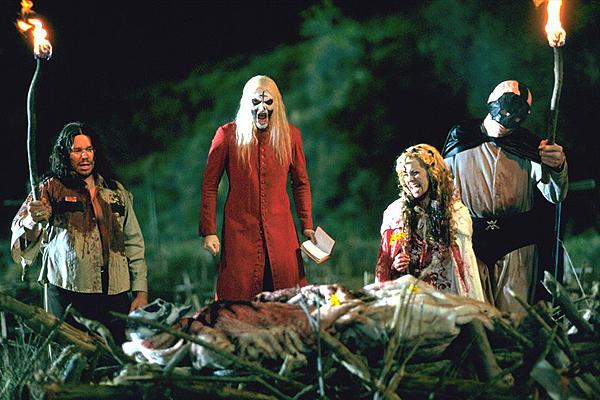
The
feature films that Rob Zombie has made between 2000 and 2013 create new
styles of emotional and perceptual disturbance from the corpses of
cultural products past. True to his name, Zombie reanimates dead tropes,
turns, and troubles into powerful attacks on our expectations and
desires.

By
summoning the spirit of previous movies, particularly, Zombie
encourages us to think we are watching a familiar pattern of story and
character. We think we know how and where to be shocked or repulsed,
whom to put our faith, trust, and hope in. We let down our guard.

Into the gap between our expectations and the reality of the film in front of us, Zombie sets traps to shred our desires.

It
was sort of like Ken Russell films or like Polanski or some Argento
films or Kubrick. There’s only certain filmmakers who really do this –
and David Lynch does it—where just the vibe of the movie is odd all
the way through. A David Lynch movie is just odd even when people are
doing normal things. You’re like, “Why does this feel so weird? What’s
happening here?”

—Rob Zombie, The Playlist interview with Drew Taylor, 29 April 2013

Zombie’s
movies are explicitly, extravagantly, and defiantly products of low
culture. The only sort of filmmaking less reputable than gory horror
movies is porn. Both traffic in sensation and exploitation. This is why
we need them. They’re all that’s left to break through the cool surface
of protective irony and oh-so-earnest, respectable emotionalism that so
many of us perform and parade and reward every day — to break through
into some part of our selves that few of us want to share with the rest
of the world. Such movies are the antidote to mumblecore and emo and
Oscar bait. We should watch these movies in seedy theatres where the
floors are covered with entire archaeologies of dirt, grime, rot, and
petrified bodily fluids. We should stare down at those floors and look
for our reflection, for it is there that we will find ourselves best
preserved.

Which
is why I thought of Antonin Artaud when I was putting together this
video essay. I want us to reclaim Artaud from the high cult of goodness,
where so many academics and critics have made excuses for him, tried to
tame him, tried to make him fit the higher cults. Those of us with some
academic persuasions need more shit in our systems.

I go to the library and grab a book off the shelf: Antonin Artaud: A Critical Reader, edited by Edward Scheer, where, in an essay titled “Cinemas of Cruelty?”, Francis Vanoye writes:

If
we want to stay close to Artaud while betraying him, as we must, since
we are trying to promote a cinema of cruelty, we must exclude all pure
and simple representations of cruelty (Sergio Leone?), all reductions of
cruelty to violence, crude sadism and blood, we must therefore exclude a
good part of the cinematic production of the past and especially the
present. Quentin Tarantino, for example, and his emulators, French or
American, who make of cruelty an object of representation and of
spectatorial pleasure.

Maybe
such a betrayal of Artaud is necessary in France, but it sure isn’t
necessary for me, an American, someone whose tax dollars have funded
atrocities throughout the world, whose political system is nothing if
not cruel, whose economic system is designed to strengthen the powerful
and marginalize the weak. No no no, we need a cinema of cruelty that
matches the cruelty of our hearts and citizenship. We need
representations that show us ourselves. We need images that make us want
to look away at the same time they make us want to watch. The Devil’s Rejects
shows us, for instance, sadists we at first fear and detest, and then
it shows us that these are our heroes, and it gives us just enough of
the necessary tropes to make us want them to suceed in what we know is
sadistic. These, the film says to us, THESE are your heroes. They could be tour guides at Abu Ghraib.

What Zombie recognized in his Halloween movies is that our slasher films are character studies in disguise. The 2007 remake of Halloween
tempts us to learn to love Michael Myers, tempts us to recognize him
within the realm of child psychology, tempts us to recognize him as our
child or ourselves. He is no mere cypher, no flat archetype, but rather a
black hole of desire to attract our matter. Halloween II
is another world altogether, the beginning of a new (more explicitly
Lynchian) direction in Zombie’s work, an oneiric trap. Real and unreal
don’t exist in such a world: they are each other. We seek realities, but
Halloween II and The Lords of Salem refuse to give in to that desire, and instead show us that our need for the real is a need for comfort.

We
want our movies to be respectable, we want the feelings they give us to
be ones we don’t mind exalting to our families and friends. Those are
the movies we’ll give Oscars to, those are the movies we’ll assign our
students to watch, those are the movies we will proudly display in our
living rooms, those are the movies we’ll invite our friends to. Movies
that confirm our respectability. Movies that help us feel good about who
we are.

In
the practice of cruelty there is a kind of higher determinism, to which
the executioner-tormenter himself is subjected and which he must be determined
to endure when the time comes. Cruelty is above all lucid, a kind of
rigid control and submission to necessity. There is no cruelty without
consciousness and without the application of consciousness. It is
consciousness that gives to the exercise of every act of life its
blood-red color, its cruel nuance, since it is understood that life is
always someone’s death.

—Antonin Artaud, “First Letter on Cruelty”, trans. Mary Caroline Richards

If Rob Zombie’s movies understand nothing else, they understand that life is always someone’s death.

Why
does this feel so weird? What’s happening here? Our perspective is
being readjusted, our shame exposed. We have not earned the comfort we
desire. For a moment, we must recognize what perhaps we have
unconsciously known, the horrid truth we have repressed: that we are not
the innocent victims, but rather the executioner-tormenters. And deep
down, that’s what we’d rather be.

Matthew Cheney’s work has been published by English Journal, One Story, Web Conjunctions, Strange Horizons, Failbetter.com, Ideomancer, Pindeldyboz, Rain Taxi, Locus, The Internet Review of Science Fiction and SF Site, among other places, and he is the former series editor for Best American Fantasy. He is currently a student in the Ph.D. in Literature program at the University of New Hampshire.

“Mwahahahaha”: The (Vincent) Price of Condescending Viewership

“Mwahahahaha”: The (Vincent) Price of Condescending Viewership

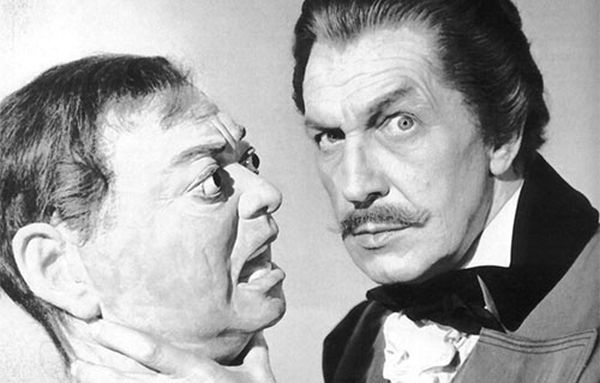
nullVincent
Price was a singular cult movie star, synonymous with a grandiloquent yet
bygone form of cinematic Gothicism that offered moviegoers inexpensive thrills.
Whether for good or ill, Price, a versatile actor, is shackled to the horror
genre, so much so that as of the writing of this article, Price is October’s “Star
of the Month” for the Turner Classic Movies cable channel and the Shout Factory
imprint label Scream Factory is releasing a DVD set of horror movies starring
Price called The Vincent Price Collection,
right before Halloween.

Yet
for many, Price is also synonymous with hammy, unbelievable, and histrionic screen
acting– never mind that his style was rooted in acting conventions from a
previous era. Whether good-natured or not, there are those who the idea of “Vincent
Price” as a goldmine of campiness and comedic opportunity. For instance:
comedians Dana Gould and James Adomian as well as actor Bill Hader have been
known to impersonate Price, and his persona has often been reduced to that of a
debonair, sinister,  yet silly
dandy. Heck, even I impersonate Price
every now and then to get laughs.

****** 

null

Let
me introduce something which may relate tangentially to Price’s reputation: the
concept of Condescending Viewership .In certain scenarios, people watch a
movie, TV show or play with incredulity, ultimately acting as if they’re above
it. Such an attitude depends on the equation of willful suspension of disbelief
with mindless gullibility. For instance: Tommy Wiseau and his film The Room are  recipients of C.V. and Mystery Science Theater 3000, the TV show in which abject movies
are riffed upon by a man and his robot pals,
is built on and epitomizes the practice of C.V.

Of
course, there is something indeterminable about C.V. It is a matter of subjectivity,
after all. Plus, it’s probably better to allow it when it arises than to attempt
to control the minds of fellow viewers, much like a diabolical Price character.
And the question of what works deserve condescension is arguable. One person’s
trash can be another’s sustenance. Nevertheless, many conscientious viewers
have probably encountered C.V.–or engaged in it themselves.

To
go a step further, it is safe to assume that many aficionados of classic, older
movies have occasionally encountered C.V.  It is human nature to look at something from
the past and pretend the present is more evolved and sophisticated in a
unilateral way after all. To give an example: I remember being a teenager and
watching North By Northwest with my
family and one of my older sister’s friends. During the final shot of the film–a
sexually implicit visual gag of a train entering a tunnel right after Cary
Grant gets in bed with Eva Marie Saint on that same train–my sister’s friend
exclaimed, “What? They didn’t think about sex back then!”

null

******

When
it comes to any standard Vincent Price performance– particularly those he gave
in many horror movies– it might as well be a big, opportune target for C.V. Admittedly,
I find it hard to watch 1959’s The
Tingler
, William Castle’s gimmick-loaded and nonsensical horror flick, and
not want to comment upon or lampoon aspects of Price’s performance (especially
the scene in which his character has an LSD induced freak-out).

Yet,
to haughtily spoof any Price performance in a horror movie would be shortsighted;
it would suggest that Price was not savvy enough to understand what he was
doing. Consider these biographical details: Price was a graduate of Yale, an
authoritative collector of art, a French cooking enthusiast, and a man of
letters. It isn’t beyond reason to assume that he was aware of his performance
as an actor, even when it seemed preposterous.

In
fact, Price told biographer Lucy Chase Williams that he had his tongue “in both
cheeks” and “was furious when I read a book called the hundred worst pictures
ever made, to see that several of mine weren’t in it!” And in a book about his
work and life, Price was quoted as saying, “I don’t mind making these funny
horror films at all… The minute that I take myself seriously, I’ve got to laugh
because it’s so ridiculous. It’s what gets me through an awful lot of films,
this sense of the ridiculous.” In the same book, he also stated, “I’m an old
ham… I love acting, even in nonsense films. For me, acting is an expression of
joy.”

In
an affectionate tribute made for Turner Classic Movies, John Waters stated as
much: “When Vincent Price was a ham, he was in on the joke. He celebrated the
ridiculousness of horror and he could completely hold his own.” And as Mark
Clark wrote in Smirk, Sneer and Scream:
Great Acting in Horror Cinema
, “While Price’s performances failed as
touching works of naturalistic brilliance, they usually succeeded as thrilling
romps of stylish theatricality… almost any Price performance is worth watching.…”

******* 

Herein
lie some dangers of C.V.: when self-contained and self-perpetuated, it can be
unfair, particularly to the personal sensibilities of creative talent. When
applied to older movies, it can create a monolithic and reductive historical
understanding.

C.V.
can limit the potential for a fuller enjoyment and appreciation of a film– or
a TV show or play for that matter–in that it may ignore the sheer commitment
of the actors or filmmakers that might be on display. Sure, some films may be
bad or contemptible, but there can be an inspirational pleasure in watching
anything in which people just went for it.

And
I can’t think of a Vincent Price performance in which he didn’t seem committed
to the work. An old-school professional, Price was always invested as a
performer, even in silly things like the two Dr. Goldfoot movies or his
recurring role as Egghead on the 1960s Batman
TV series. Just consider his voiceover “rap” in the Michael Jackson hit
“Thriller”—it is the most convincing part of a well-crafted yet impersonal and
calculated song.

Price’s
screen persona may be an acquired taste. Because he benefited from the steady
work that typecasting brought, he may not have always needed to stretch as an
actor or improve his reputation. He seemed to enjoy working and probably
cackled all the way to the bank. Nevertheless, he gave a number of notable
performances—particularly in Laura, The Baron of Arizona, House of Wax, most of the Roger-Corman-directed
Poe films, Witchfinder General and Edward Scissorhands—and he is a treasure
of a screen presence.

So,
when it comes to indulging in the widespread practice of Condescending
Viewership, one should be careful to pick their proverbial poison. And Price
will just about always have the last laugh, from beyond the grave: “Mwahahahaha.”

Holding
degrees in Film and Digital Media studies and Moving Image Archive
Studies, Lincoln Flynn lives in Los Angeles and writes about film on a sporadic
basis at
http://invisibleworkfilmwritings.tumblr.com. His Twitter handle is @Lincoln_Flynn.

Viva Los Hijos de la Noche: The 1931 Spanish Version of DRACULA

Viva Los Hijos de la Noche: The 1931 Spanish Version of DRACULA

null

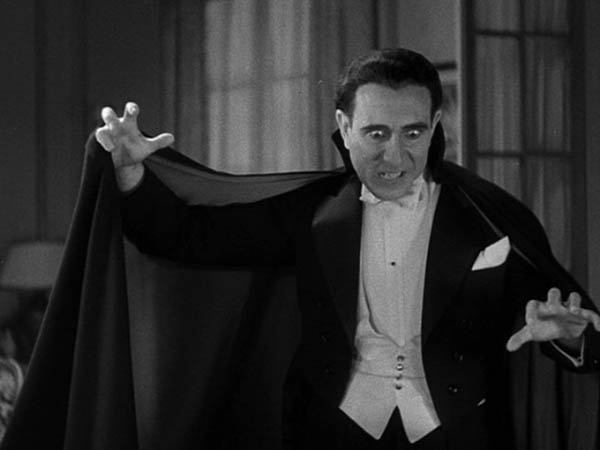
Everybody knows the iconic 1931 Dracula. Even
if they’ve never seen the film, most people can call up images of Bela Lugosi
waxing poetic about wolves on a ruined abbey staircase, or a coffin slowly
opening as a very white hand emerges. But does the phrase “hijos de la noche”
resonate in the same way? Certainly not, yet in 1930, while Tod Browning spent
his days filming Dracula with Bela Lugosi, another director, George
Melford spent his nights filming the same script, on the same set, with the
same costumes–with Spanish-speaking actors. In the early days of sound, this
was a fairly common practice; studios often produced foreign-language versions
of their films that way. Dubbing had not yet come into vogue as a practice, and
under the studio system it was simply a matter of substituting a cast who spoke
Spanish, or German, or French, and shooting on a set after the English-speaking
actors and crew were gone for the day.

The practice only lasted a few years, as it became cheaper and easier to dub or
subtitle films for a foreign audience. Most of those foreign-language versions
have faded and been forgotten, lost like so much early film. Most did little to
distinguish themselves from the English-language films. But the Spanish version of Dracula is a little different.  Not only superior to the English-language
version, it’s necessary viewing for anyone who’s watched the Lugosi film and
come away bummed. I know the English version has its champions, but I think
that has much to do with Lugosi and little with the film’s direction. It’s
creaky, static, with little camera 
movement—almost a silent film in many parts, and the actors are often
given little to do but stand and speak. The pacing is dreadfully slow and
inorganic.  Whereas the Spanish language
version  takes a script that should have
been shocking but ended up rather staid—stiff and stuffy—in the English version,
and it tops that version by leaps and bounds. Oddly, it’s a half hour longer
than the English version, but the improved pacing, the superior acting, and
better artistic direction make it much more fun to watch.

The cast and crew of the Spanish version were competitive,
and they would watch the dailies from the English-language version to figure
out how they could improve them, with better camera angles, lighting, pacing,
and acting. And it shows: in the Spanish version, the special effects are
better, the shots are more interesting, and the camera movement is much more
fluid–more modern. Watch the way the camera swims up toward Carlos Vilarilla in
the abbey, captures the wild menace of the place, and compare that to the slow,
stately pace of the camera movement toward Lugosi in the same scene. Of course,
part of this is due to Tod Browning’s and penchant for long, static shots. Browning
made some remarkable films, particularly those with Lon Chaney Sr. But here hee
was clearly still learning how to transition from silent films to talkies, a
transition that his short list of sound films and subsequent retirement from
film probably attests to.  

null

The acting, with the exception of Lugosi and Edward Van
Sloan, is also improved in the Spanish version. I love Dwight Frye, but Pablo
Rubio is a more naturalistic, interestingly mad Renfield. Frye either
plays it creepy and subservient, or fearful and guilt-ridden—two notes for the
duration of the film, while Rubio’s performance is much more subtle,
changeable—human. Barry Norton gets the thankless straight man role, but runs
circles round the notoriously stone-stiff David Manners. Lupita Tovar, only
seventeen at the time, is a beautiful, lively lead–so much more fun to watch
than the lovely but lifeless Helen Chandler.
As Lupita Tovar has said of
the film
, “We Latins have a very different way of expressing ourselves, more
emotional. And I think the Americans were just kind of subdued.”

Perhaps most
importantly of all: this film puts the sex back in Dracula. Plenty of heaving
bosoms are on display, and the sensuality is more overt than implied,
particularly in Tovar’s hungry, delightfully predatory performance as Mina/Eva.
This is Mina as she should be: seduced by Dracula, perhaps a little tormented,
but not-so-secretly enjoying the respite from stuffy society, from her safe,
boring fiancee and her overprotective father. This is the wilder Dracula
Lugosi should have starred in.

Amber Sparks’ short stories have been widely published in journals and anthologies, including New York Tyrant, Unsaid, Gargoyle, Barrelhouse, and The Collagist. Her chapbook, A Long Dark Sleep: Stories for the Next World was included in the chapbook collection Shut Up/Look Pretty from Tiny Hardcore Press, and her first full-length story collection, May We Shed These Human Bodies, was published in 2012 by Curbside Splendor. You can find her at ambernoellesparks.com or follow her on Twitter @ambernoelle.

Joseph Gordon-Levitt Dons the Jerk Gear for DON JON

Joseph Gordon-Levitt Dons the Jerk Gear for DON JON

null

Recently, Buzzfeed published a widely read listicle entitled, “40 Things Every Self-Respecting Man Over 30 Should Own”. Reaction online was mixed. Some men and women considered the list—which included head-scratchers like duct tape, a wine key, a chef’s knife, a flask, playing cards, sunglasses, heavy liquor, a bar set, and a French press—a reasonable tally of objects prerequisite to being a man. Others, largely men, considered the list patronizing at best and destructive at worst. One commenter wrote, “I had twenty out of forty [of these items], and was more proud of the twenty I didn’t have than the twenty I did.” The Buzzfeed list was light on objects indicating any interest in civil society: computers, newspapers, and magazines were deemed inessential. It also lacked objects encouraging men to be interested in their own emotional development. Tools for self-reflection were mysteriously absent, unless you count “a book collection” which, the list’s author noted, didn’t need to have been read, or a record player which, as the list’s author noted, was primarily useful for playing records that make their owner look good. One suspects that a thirty-something male who owns all or nearly all of the items on the Buzzfeed list is more likely smug than admirable—or adult. Enter Jon Martello, the character played by Joseph Gordon-Levitt in the porn-addiction dramedy Don Jon. Martello is just the sort of man for whom the Buzzfeed list functions as an essential guidebook, and if Don Jon is successful in its satire of contemporary living, it is primarily in reminding us—as if any reminder were needed—just how invasive and insidious gender typecasting is in America.

Martello is called
“Don Jon” by his friends because he has a long, unbroken streak of
post-clubbing sexual conquests. As with everything in Martello’s life, sex is a
mathematical function; a night out ends with intercourse just as surely as
Mondays are abs, Tuesdays are back, Wednesdays are legs, Thursdays are chest,
and Fridays are shoulders. Don Jon is the sort of borderline sociopath who,
with pathological self-consciousness, aims at and hits all the markers on the Buzzfeed shopping
list: a decent car (#38), black dress shoes (#2), cologne (#7), proper bedding
(#9), a grooming kit (#14), an ironing board (#22), multiple sheet sets (#35),
and so on.

Needless to say, a number
of these items could indeed be considered useful to both men and women of any
age past twenty-one. The problem is with counting them obsessively, as Buzzfeed
and Martello do, as though the only way to get through life is to regularly
award oneself gold stars for meeting the presumed requirements of adulthood.
Despite these daily self-assessments, Martello is forced to endure his boorish
father’s persistent insistence that he’s not yet a man. This likely explains
the fact that the first half of Don Jon is one of the most depressing
movie-going experiences you’ll ever encounter. Never has a young man’s life
seemed so grasping yet emptily routine. Martello surrounds himself with the
trappings of adulthood, but receives none of its satisfactions in return. Would
picking up a newspaper help? Writing in a journal? Reading a favorite literary
classic? Who knows.

Certainly, Martello doesn’t
own any such items, and even if he did it’s not clear that he’d know what to do
with them. In fact, he has so little imagination that he can’t masturbate
without a visual aid; so little patience behind the wheel of a car that he’s a
road-rage homicide waiting to happen; so little self-knowledge that he reacts
with instinctive anger when his closest friend engages him in conversation of a
personal nature; so little soul he can’t look women in the eye when he speaks
to them; so little emotional support that he never speaks to his parents
without arguing with them (and never speaks to his largely mute sister at all);
and so little self-possession that he falls madly in love with a woman
(Scarlett Johansson) simply because she’s a “dime” (a
“ten”) physically.

On the bright side, he does
seem to own a French press (#31).

null

Of course, being an adult
isn’t a matter of either/or; it’s possible to both own a French press and also
have a rich inner life. The problem, as Don Jon sees it, is that men and
women alike have so routinized their lives and their identities that these days,
lists like the one on Buzzfeed really do, for many, resemble exhaustive
how-to manuals for adulthood. Perhaps this is why the first half of Don Jon
seems at once harrowingly true-to-life but also dizzyingly pornographic in its
broad brushstrokes and general moral shabbiness. Viewers have no idea why
Martello and his two friends (he appears to have no others) continue to spend
time together, as they do nothing but club and criticize one another; Jon even
gets visibly upset when one of the two deigns to knock on his apartment door
unannounced. Viewers likewise have no sense of Jon’s professional life, as his
unsatisfying bartending job is only alluded to twice and seen on-screen (in a
two-second jump-cut) just once. Jon’s family and church life are little more
than a pastiche of uncomfortable Italian and Catholic stereotypes. His
relationship with the seductive, romantic comedy-loving Barbara Sugarman (Johansson)
is miles wide and inches deep, so much so that it’s difficult to say whether
either of the two says an honest word to the other during the film’s
ninety-minute run-time.

This, then, is what romantic
comedies and pornography alike promise their consumers: a world in which
expectations are obvious and always met, deviations from the norm are both
predictable and harmless, and bean-counting one’s own successes is the only way
to escape one’s suppressed misery. A list of essential man-objects from Buzzfeed
serves much the same function, as it sets easily-attainable expectations for
men while avoiding even the implication that idiosyncrasies are
permissible. Years of being an adult male have taught me that the only
essential objects in a man’s life are those that help him authentically
distinguish himself from his demographic. Equating masculinity with conformity
calls to mind Barbara’s final rebuke of Jon (“I thought you were
different!”)—
which is notable primarily because
no viewer of Don Jon could ever have made that mistake in judgment.

Two moments in Don Jon
are particularly revelatory of the movie’s implicit critique of contemporary
masculinity. In the first, Jon patronizingly tells a friend that “if you
do things right,” you end up with a great girl, having the best sex of
your life. It’s a fraught moment because Jon—an under-employed porn addict with
an anger management problem who also (horrors!) loves vacuuming and dusting—has
no more sense of how a man “does things right” than does Buzzfeed.
His sense of a man’s moral obligation begins and ends with confession-eligible
sins, destructive but obligatory family dinners, misogynistic male bonding
exercises, and favoring weightlifting to cardio.

He even misuses the items
on the Buzzfeed list. He drives his souped-up car like an ass, he uses
his dressing and grooming and apartment-cleaning skills to no purpose other
than casual sex with women whose names he doesn’t know, and he deploys his
ostentatious masculinity (one imagines him owning #27, a Leatherman) to
intimidate classmates at night school, belittle his peers, and perpetuate an
emotionally abusive relationship with his father.

In a second great moment of
gender critique, Jon interrogates a priest who’s given him the same penance for
two sins: affectionate premarital sex with a woman he respects, and emotionally
empty premarital sex with multiple women he doesn’t. Having been assigned ten
Hail Marys for each, he asks, “How did you arrive at that number?”
It’s a poignant question, one that could be directed to Justin Abarca, author
of the Buzzfeed list.

How did “40
Things Every Self-Respecting Man Over 30 Should Own” end up including a
flask and not a magazine subscription? Or “good socks” (#32) and not a
pet you have to care for? Or “brown dress shoes” (#3)  and not some area of interest you might have actually
read up on, rather than merely (as Abarca condones) appearing to have done so?
Why forty items, rather than twenty or sixty? Why only items you can buy, and not
abstractions you can access for free? What magical fairy-dust alights on a
man’s shoulder at thirty, making him need undershirts (#24) afterwards, but not
before that age? And who is our hypothetical “self-respecting man”
doing this all for, anyway? Himself? A woman who thinks “jumper
cables” (#23) are more essential to a self-respecting thirty-something
than, say, integrity, courage, articulateness, and generosity?

null

Reasonable people can
disagree as to whether rom-com cliches are as destructive to a woman’s sense of
self and her romantic expectations as pornography is to the same things in
men’s lives. Reasonable people can disagree as to whether hair gel (absent from
Abarca’s list) is a worthy addition to a man’s grooming kit, or—as Martello’s
eventual savior, middle-aged pothead Esther (Julianne Moore), says—entirely
superfluous. But what seems beyond contention or debate is the noxious first
principle proposed by Buzzfeed: that self-respect arises from
a short roster of material goods, rather than strength of character, a sense of
humor, and self-possession. As well to say that a woman may be judged (to
borrow from one Martello voice-over) by whether her breasts are fake, her butt
perfect, her willingness to give oral sex and receive a facial unambiguous, and
her facility with ten or more sexual positions incontrovertible. 

The second half of Don
Jon
is remarkable—and surprisingly affecting—because in it we see Martello
indulging what are, to him, eccentricities: playing basketball, drinking
coffee, listening to and making eye contact with women when they speak, styling
his hair without product, treating his friends decently, subduing his perpetually
creepy and aggressive body language, and judging a woman by the way she makes
him feel, not by the boxes she ticks on some teenager-ready jerk-off checklist.
Maybe all those who lauded a thirty-something’s version of that checklist—”40
Things Every Self-Respecting Man Over 30 Should Own”—should steal a page
from Martello’s revised playbook and close their eyes, imagine a man or woman
whose presentation and lifestyle hasn’t been pre-approved by American media,
and see whether they can still find physical and emotional delight in the
unsupervised oddities of a real-life man.

Seth Abramson is the author of three collections of poetry, most recently Thievery (University of Akron Press, 2013). He has published work in numerous magazines and anthologies, including Best New Poets, American Poetry Review, Boston Review, New American Writing, Colorado Review, Denver Quarterly, and The Southern Review.
A graduate of Dartmouth College, Harvard Law School, and the Iowa
Writers’ Workshop, he was a public defender from 2001 to 2007 and is
presently a doctoral candidate in English Literature at University of
Wisconsin-Madison. He runs a contemporary poetry review series for
The Huffington Post and has covered graduate creative writing programs for Poets & Writers magazine since 2008.

Gregarious and Kind, Dark and Mysterious: Greg Sestero on THE ROOM

Gregarious and Kind, Dark and Mysterious: Greg Sestero on THE ROOM

null
There’s no
way to talk about The Room without talking
about irony. The theater 2003 release of the movie —funded mysteriously by its
writer/director/self-proclaimed vampire Tommy Wiseau—failed to outlast the
Hollywood billboard Wiseau purchased to advertise it. Given that The Room was considered cinematic
anti-matter, a piece of cinema so illogically conceived that Scott Foundas of Variety said it “
prompts most of its viewers to ask for their
money back…before even 30 minutes have passed,” that was no surprise. What was a surprise was how The
Room
rediscovered life in the late aughts as a new-millennium Rocky Horror. Prime ironists like David
Wain, David Cross and Patton Oswalt
saluted the splendor
of its awfulness
. Theaters began holding raucous midnight showings
packed with scene-quoting devotees who threw platsic silverware at the screen
and chanted its creators name wildly throughout the credits, proving that the
nation’s complex relationship to irony was—almost a decade after its proclaimed
cutural death—a pretty resilient thing.

Which makes
it all the more remarkable that The
Disaster Artist
, cast member Greg Sestero’s memoir about his experience
making The Room and living with its
aftermath, is a work of shocking sincerity. Written with an assist from
journalist/Room enthusiast Tom Bissell,
Sestero’s smart, wicked, yet (somehow) moving book proves sneakily ambitious. Yes,
it chronicles the making of the worst movie ever, and how Sestero was
reluctantly cast as Mark, the traitorous best friend of the film’s hero. But it’s
also a tale of Sestero’s peculiar, enduring friendship with Wiseau, a ruthless
tell-all, a fluid critique on the nature of mass enthusiasm, and a work of
invesitigative journalism, positing what might be the closest anyone’s gotten
to the slippery origins of The Room’s
creator.

I talked
with Sestero about the making of “the making of The Room,” the legacy of irony, what he (and the film) owes to
Anthony Minghella, and how he forced himself to say one
of the worst lines of dialogue in cinema history
.

Mike Scalise: You mentioned you’d been working on The Disaster Artist for four years. What
made you stick with it?

Greg Sestero: I really
felt strongly about the material. The stories about my experience were etched
in my memory. I told them to several people over the years, and they thought it
was such a unique and fascinating story. Then, in 2008, I got a call from Clark
Collis at Entertainment Weekly, who
had just experienced the movie and wanted to write an article about it. Once that article
ran in late 2008, The Room completely
took off. Needless to say, I was shocked. So I started to piece together how I wanted
to tell my story. I met Tom Bissell, who
wrote an incredible piece about the movie in Harper’s around that time, and we instantly clicked. We
came up with a narrative to tell about both the making of The Room and my unlikely friendship with Tommy.

MS: Part of your goal seemed to be to
clear the air about the nature of your involvement with The Room, and how important your previous friendship with Tommy
[Wiseau] was to that movie’s existence.

GS: The only
reason I ever ended up in the movie was to help him make it. Obviously when
you’re in your early twenties, you don’t think about your decisions and their
long term effects [laughs]. I decided
to take an acting class in San Francisco and ended up meeting this eccentric person
no one really gave a chance to, mostly because of his vampirish exterior and his
awkward social skills. But maybe because of both of us coming from a European
background, I could see something was interesting there. I’ve always been
fascinated by characters, and part of me wanted to help him at least accomplish
something he’d always wanted to do. But then there were times on set where he
would sabotage everything, yelling at people who were trying to help him
finally realize this goal of being a “movie star” or make this movie he’s
always wanted.

That’s part
of what got me through, I think: helping him complete this passion project. A
lot of the movie is about friendship, which is kind of weird [laughs]. In the
original script, everybody’s best friends. Michelle and Lisa are best friends,
Peter and Johnny are best friends. Its really kind of a fascinating study about
the life Tommy wanted to have.

MS: In the book you don’t shy away from
the many ways in which The Room was a
complete mess, from the script to the casting, filming, and editing. Those are
the funniest parts of the book, but you still remain so generous with regards
to your depiction of Tommy. How difficult was it to maintain that balance when
you wrote it?

GS: I know that
many of the book’s readers will have never seen the movie. So the only way to
do it was to be genuine and say, “this is really how it was” rather than
judging it. And to honor both sides of Tommy. The gregarious and kind coupled
with the dark and mysterious.

MS: Which is an acting credo as
well—don’t judge your character.

GS: I felt like
if I glamorized it, or protected it, or made it something that it wasn’t, that
wouldn’t be the right experience for people dying to find out what really
happened and people who are following the story.

MS: Like in that insane scene in the
book in which Tommy forced the cast to be silent for five straight minutes
(“for America”) while prepping for a day of shooting…

GS: Tommy’s
always got to do everything to the extreme—not ten seconds of silence, but five
minutes. Let’s not shoot with one camera, let’s shoot with two.

MS: Did you earn any sympathy for Tommy
when you tried with the book to add order to all the chaos?

GS: Absolutely.
I realized how hard it is to get something off the ground, and to get someone
to believe in what you’re trying to do, and for you, yourself, to take that
vision of what you want and make something that resembles it.

MS: I get two kinds of responses when I
bring up The Room: one is from the
type who I imagine shows up to the screenings, who see something valuable in
it, ironic or not. But there’s also the kind of person that responds to the
idea of The Room as a vanity
project—that Tommy’s an unchecked narcissist, out just to self-promote. But the
book makes the case that The Room
came from a far more complicated place.

GS: It
definitely does. Tommy had several motivations. One, I think, was to feel
understood. To feel accepted. No one was wiling to hire Tommy as an actor, so
he figured, “I will do it myself.”  It
was therapeutic for him to explore the ways in which he didn’t fit in, or to
explore aspects of human nature that he had a vendetta towards. We’ve all had
someone break our hearts, or have been fired from a job, or have been cheated.
For him, I think it was a way to show everyone he was mainstream.

One review called
it a vanity project gone horribly wrong, and there definitely is some truth in
that. But I think he made it with sincerity, and that’s what people respond to.
 Watching someone really put himself out
there, even if it’s an inept attempt.

MS: And as you detail in the book, Tommy
went to a really dark place during
the months he was writing it.

GS: I think in
some ways, he was trying to survive himself, tearing apart his psyche in a way
that he couldn’t even see. I don’t think it was to get fame, or girls, he was
just coming out of this dark place, and needed to feel accepted.

MS: You start each chapter with an
epilogue from either Billy Wilder’s Sunset
Boulevard
, or Anthony Minghella’s film adaptation of The Talented Mr. Ripley. What do you think those films to say to
the experience of filming The Room,
watching The Room, watching people
watch The Room

GS: Both films
deal with not only delusion, but—like I said—wanting to be accepted. Norma
Desmond sees herself as someone meant to be a star, and Joe Gillis’ tries to
guide her, and protect that delusion. Poor guy. So much of that movie paired up
with The Room in strange ways, all
the way down to where The Room premiered, which was at Schwab’s Pharmacy, where
Joe Gillis goes to get work.

With Tom Ripley,
again, it’s a character who wants to feel like he’s respected and important.
And he sees in Dickie Greenleaf a guy who he thinks has all that and pursues a
friendship. Tommy, I think, saw me as this all-American kid who made him feel
like he belonged.

MS: You talked a bit about how you
wanted to bring The Room to a new
audience, but you also debunk many of the myths that persist among the film’s
rabid, midnight-screening-attending, spoon-carrying fanbase.

GS: One of the
things I did was consult with some of the biggest Room fans out there to make sure they were getting what they
wanted. My goal was to give them correct information and make the movie a
deeper, richer experience. Those people are the original fans, and have seen
the movie so many times, so I took their feedback.

MS: I think they’ll be happy with the
long, anguished passages that depict the inner struggle you endured in order to
say the line “leave your stupid comments in your pocket.”

GS: That was a
definite challenge to say that line with a serious face. When people watch this
movie, they probably see a bunch of young actors who thought this movie would
be their big break. That’s obviously not the case, but I I’ve done the same
thing with certain movies. You wonder what actors were thinking when they had
to say certain lines in a movie.  They
almost become a figment of your imagination. If you remember this movie called Private Resort, which came out in 1985. .
.

MS: Oh, I remember Private Resort.

GS: I’d watch
it as a kid and make fun of the characters, and they weren’t real to me: just
these people on screen. Obviously with The
Room
, I wasn’t on set thinking “I’m going to be Daniel Day Lewis” playing
Mark, but explaining how I even got involved in the movie shows how we all get
stuck in situations as actors—and this one ended up being one of the craziest.
Working on this movie, saying that dialogue, you’re almost surviving rather than acting. Saying that line—you just had to “get
it out” rather than “say it right.”

MS: Despite the quality of the end
product, through your involvement with The
Room
you’ve actually gotten many opportunities to try your had at a ton of
different roles. You were a model before you were an actor. You acted in The
Room, but you were also a crew member. Now you’re an author. What do you want
to focus on next?

GS: In the end,
I’m grateful for the experience. I’m looking forward to going in a different
direction and do creative projects I believe in and am passionate about. 

Mike Scalise’s essays and
articles have appeared or are forthcoming in
Agni, The Paris Review, PopMatters, The Wall Street Journal, and elsewhere. Follow him on Twitter here.

Alice Munro, Meet Kristen Wiig

Alice Munro, Meet Kristen Wiig

null

Many writers breathed a huge sigh of… something happy, recently, when famed-but-thought-underappreciated Canadian fiction writer Alice Munro won the Nobel Prize for Literature; believed to be among her competitors were Haruki Murakami and Joyce Carol Oates, both of whom have huge followings around the world (and, in Oates’ case, on Twitter). There are few prizes that don’t provoke outrage and argument both before and after their announcement, but the Nobel is the largest magnet for this sort of discussion.

Interestingly enough, the world of independent film crosses with Munro’s trajectory–per the LA Times, a new film called “Hateship Loveship” will most likely coming out next year, an adaptation of a 2001 Munro story (“Hateship, Friendship, Loveship, Courtship, Marriage”); it features none other than Kristen Wiig–she called acting in the adaptation using “a different muscle.” The film was directed by Liza Johnson and adapted by novelist and screenwriter Mark Jude Poirier; after a successful appearance at the Toronto International Film Festival, IFC Films picked it up.

Read more about the film here. And after you’ve read more, go ahead and read some Alice Munro! Her quiet but seething stories will surprise you, and they might even change you.

Abraham Zapruder, Errol Morris, the Umbrella Man, JFK, and You

Abraham Zapruder, Errol Morris, the Umbrella Man, JFK, and You

null


Smithsonian Magazine recently printed a wonderful piece by Ron Rosenbaum about a short film Errol Morris made in 2011, in which he placed a few seconds of Abraham Zapruder’s famous film of the 1963 assassination of John F. Kennedy under a critical microscope. One of the dominant protozoans falling within the scope of Morris’s analysis was a figure called the Umbrella Man, a gentleman holding an umbrella despite the lack of inclimate weather on 11/22/63, who gives the film its title. Various theories have hatched about the Umbrella Man, including the idea that he was shooting small blades called fléchettes out of his umbrella, and that one of those fléchettes might have contributed to the President’s assassination. But: the Umbrella Man eventually identified himself, and explained that his appearance was a political statement:

“His name was Louie Steven Witt and he testified that he brought the
umbrella on that sunny day because—wait for it—he wanted to express his
displeasure with JFK’s father, Joseph Kennedy.

“‘Who, Morris says, ‘had been ambassador to England in the 1930s and
[was] known for his policies of appeasement to the Third Reich.’


“’Symbolized,’ I say, ‘by the umbrella that Neville Chamberlain
carried back from Munich, after Chamberlain claimed to have brought
‘peace for our time’ by letting Hitler swallow up half of
Czechoslovakia, giving Hitler the impetus to launch World War II. The
umbrella became the symbol of appeasement in 1938 and here in 1963, this
guy carries an umbrella and thinks, ‘Whoa, people are really going to
be blown away, this is really going to make a statement!’ And it turns
out he becomes a symbol himself. It’s almost like history is a kind of
snake swallowing its tail.’


“‘Part of the problem of rationality and irrationality—and it really
is a problem—is how do you separate the two? Where is that line of
demarcation between nutso thinking and good thinking?’

In any event, you can read the rest of the piece here:

http://www.smithsonianmag.com/history-archaeology/us-history/What-Does-the-Zapruder-Film-Really-Tell…

And, if you wish, you can watch the Errol Morris film here:

http://www.nytimes.com/video/2011/11/21/opinion/100000001183275/the-umbrella-man.html

And, if you can’t get enough, you can watch Alex Cox (director of, among other films, Sid and Nancy and Straight to Hell) contesting the content of that film here:

The whole story has special significance for me because I grew up in Dallas, born seven years after the assassination, perpetually in its shadow, whether I knew it or not. I can’t say that the city’s own reverence towards JFK was that distinguished, given that the JFK Memorial planted in the center of the downtown business district is, historically, more of a public pissoir than anything else. But I can say that the event probably instilled in me a sense of the precariousness of history, in which one minute’s glory can amount to another minute’s downfall–or that one lunatic with a rifle and a reasonable sense of organization can bring about a moment which devastates and intrigues an entire population for decades. 

Max Winter is the Editor of Press Play.

You Got the Miley You Paid For, America

You Got the Miley You Paid For, America

Just days after Miley Cyrus’
bizarre, off-putting performance at the 2013 MTV Video Music Awards—which saw
the twenty year-old performer rubbing herself provocatively with a foam finger,
“twerking” against the genitals of thirty-six year-old singer Robin Thicke, and
gleefully slapping the buttocks of her backup dancers—Camille Paglia wrote a
piece for Time decrying Cyrus’
decidedly unsexy three-ring circus primarily on artistic grounds. Miley has
never been given “the time or space to develop emotional depth or creative
skills,” and therefore lacks “professional focus,” wrote Paglia. Paglia ended
her essay with an impassioned exhortation: “Miley, go back to school!” Instead,
Miley went to New York City, where she hosted Saturday Night Live and
announced to a cheering studio audience that her reasonably well-behaved Disney
Channel alter ego, teenage schoolgirl Hannah Montana, had been “murdered.”
Played for laughs, the gag was funny in part because it was true: the Disney
Corporation, with a subtle but equally reckless assist by Miley’s
fans, killed Miley’s childhood dead, and neither wishes nor revisionism
will ever bring it back. It’s a cycle we’ve seen played out with
nausea-inducing regularity: America, its legions of consumers just as much as
its faceless institutions, siphons away any sense of normalcy its artist-heroes
might ever have enjoyed, then stands in mock outrage above the debris field
that invariably results.

The idea that performing artists need time and space—perhaps
even the time and space afforded by a school-like setting—to learn something
about the history of their art and thereby develop so-called “professional
focus” makes a certain sense in the music industry. Because touring brings in
as much or more revenue than album sales do, there’s a strong incentive for
recording artists to stay perpetually in the limelight. The utility of time,
space, focus, and professionalism is less clear in other art-making genres.
It’s easy to see why singers ought to sometimes flee the glare of the national
spotlight and the equally searing heat of their record companies’
profit-margin assessments, but what about poets, sculptors, painters, potters,
and the millions of other artists working daily in unprofitable and rarely
acknowledged sectors of America’s art culture? What (and when and how) should they
be fleeing?

One possible answer: the ravages of a culture that annually
finds ever more ingenious ways to screw up the lives of profit-driven and
profit-blind artists alike. The means of such systemic destruction may be
different in different genres, but the end result is all too frequently the
same—whether it’s for Miley Cyrus or Lindsay Lohan, Justin Bieber or Britney
Spears, Corey Feldman or Danny Bonaduce. Whenever an artistic sensibility is
given too much or too little leash, the risk of a public or private disaster
resulting is high. A young singer with little proper schooling (Miley was home-,
set-, and tour-schooled following middle school), a perpetually abnormal social
life, only sporadic parenting, and too much expendable income to use
responsibly will often enough end up—using Miley as just one example—twerking
on the privates of someone almost twice her age for a screaming national
audience. Likewise, a writer with no job, no health insurance, no stable and
affordable housing, no reliably encouraging community, a spotty sense of
history, and a virtual rogues’ gallery of indifferent role models is equally
likely to end up in an emergency room as making Great Art. When
individuals as emotionally and psychologically temperamental as artists
habitually are lack access to high-quality healthcare, employment, and support
networks, they all too often under-medicate, 
under-insure, under-employ, and over-isolate themselves into episodes of
financial and spiritual despair.

Because often it’s lack, not surfeit, that’s most conducive
to artistic greatness, we can’t really say that instability is always unhealthy
for budding artists in the short term. What we can say is that the Muse
of suffering ought not be foisted upon all artists indiscriminately, as even
those who benefit from it often don’t benefit from it for long, and even when
and where suffering inspires an artist one can’t know whether a different
medium might have worked as well or better as a conduit for genius. In any
case, at no point in the process of watching artists’ lives play out do
audiences earn the right to expect more from their artists than the
pitfall-riddled lives to which they’ve been left. You (that is to say, we) get
the Miley we overpaid for, just as we invariably get the poets, sculptors, painters, and potters we’ve habitually refused to pay for at
all. While formal schooling only lends focus to those artists already inclined
to be focused or to benefit from a particular emphasis on skill-development and
historical awareness, the time, space, depth of seriousness, and range of
skills Camille Paglia wished for Miley in her Time essay should be
wished for for all our nation’s artists—and so we shouldn’t be
surprised when the lack of any of these leads an artist to a public or private
meltdown. 

This isn’t to say that denying artists time and space for
the development of serious ambitions and a versatile skill-set invariably leads
to disaster, merely to note that the fact that it may is
foreseeable and therefore unworthy of public shamings in Time or
elsewhere. Likewise, none of this is to say that artists should face no
censure for poor behavior; they can be, they should be, and they frequently are held
to account (often unfairly) for bucking the norms our culture so
authoritatively insists upon. A media outlet like TMZ, for instance, exists for
no other reason than to shame artists for their ill-considered antics; the vicissitudes
of the academic and corporate job markets do similar work in ensuring that
literary and visual artists never stray too far from the behavior employers
expect from their investments.

Yet even if we account for all of this, it’s still the case
that public criticism of artists should not be willfully ignorant of the
personal and professional milieu of working artists generally. Those
criticizing Miley Cyrus should somewhere in their critiques give some
indication that they know they’re criticizing a socially maladjusted
teen-equivalent who’s been surrounded by uncaring, selfish, morally incompetent
adults her entire life. Should Miley’s mother be managing her daughter’s most
important professional decisions, thereby confusing two roles with entirely
different expectations, responsibilities, and prerequisites? Should someone
have stopped a fifteen year-old Miley from granting what appeared to be a
topless photo-shoot to Annie Leibovitz? Should the bosses at the Disney Channel
have granted the then-thirteen year-old Miley a shooting schedule that
permitted her to be schooled amongst her peers rather than hurriedly and
on-set? Could Miley’s father, the one-hit wonder country singer Billy Ray
Cyrus—who recently said that Hannah
Montana
“destroyed my family . . . I’d take [Miley being on the show] back in a
second”—have resuscitated his own fading career via something other than a co-starring role alongside
his teenage daughter? Absolutely. A bevy of poor decisions—personal,
professional, educational, and otherwise—led Miley to where she is now, and
only a few of those decisions were solely Miley’s to make.

Miley’s decision to appropriate black culture for financial
gain was certainly an elective act—but it shouldn’t be deconstructed in the
same way one academic takes another to task. Rather,  critics should in some way acknowledge that
however foolish and race/gender-insensitive Miley’s shtick may be, she’s still
a young woman with little education who’s had no reasonable limits on her
spending since she was a child, who’s grown up in full view of the nation’s
hundred million living rooms, and who hasn’t lived the sort of life that
induces more temperate conduct since, well, never. Miley gets paid an
exorbitant amount of money to have no sense whatsoever of musical history or
even the barest standards of professionalism, and she gets paid that money by
the very same culture that subsequently derides her misbehavior as though it
were evidence of a system failure rather than a young person’s temperamental
decision-making. In other words, Miley’s been exploited by corporations,
unscrupulous charlatans, and blindly adoring fans her whole life, and almost certainly
hasn’t enjoyed a truly “normal” moment in more than a decade. Under the same
circumstances, you’d be twerking, too.

*

That an artist’s life is a relatively easy one is as much an
invisible presumption of American culture as is the idea that no culture can
long survive without Art. You’d think that decades of celebrity mug-shots, Behind
the Music
episodes, and checkout-aisle gossip rags would have convinced us
that the last thing you’d want your son or daughter to become is an artist of
any kind. Yet somehow America still encourages its children to pursue their
artistic inclinations, and celebrates their ambitions and successes as unambiguously
healthy and just. What’s the harm, after all? Sure, we know from mountains of
academic and pop-culture biographies that an alarming number of the literary,
musical, dramatic, and material artists whose work we most enjoy have died
penniless in ditches, or by their own hand, or with their hands on a bottle, or
choking on their own vomit following a drug overdose, but wasn’t that song
sublime? That poem? That novel? That sculpture? We know making Art often takes
a terrible toll on the psyche, on one’s mental health and physical well-being,
and on one’s finances—think Sylvia Plath, Kurt Cobain, Gary Coleman, or any one
of a thousand other young, much-heralded artists. But nothing can stop American
culture from consuming the energies of its artists so voraciously that hardly
any time or space is left them to catch their breath.

No one but Miley Cyrus’ doctor
and closest family and friends know her mental health status specifically or
her current medical condition generally, and no one outside that circle should
deign to speculate authoritatively on either. But here’s what we do know: Miley
has been in the public eye since she was eleven. When I was eleven, I was still
alone in my room trying to figure out how to masturbate properly. So to
converse about Miley Cyrus as though she were a normally socialized twenty
year-old defies both the evidence and common sense.

This isn’t a matter of crying
“Leave Britney alone!”, it’s a question of knowing the cost and value of the
throes of American culture. In other words, with Miley, as with all artists,
you get what you pay for, America: If you offer your artists no jobs, no
patronage, no supportive communities, and no means for coexisting with any
measure of comfort alongside their fellow citizens, you end up with artists
whose lives are unstable, uncertain, and in at least some identifiable
percentage of instances, psychologically and/or physically unhealthy. Moreover,
you end up with artists who begin to falsely associate infelicities with
predestination, who believe that being at loose ends emotionally and
financially is the only way to make Art that they and—on occasion, perhaps—other
Americans will respect. On the other end of the spectrum, if you throw millions
of dollars at children before they’ve reached puberty, if you pull them from
their local middle school to “help” them avoid paparazzi they shouldn’t have to
deal with in the first instance, if you juxtapose the roles of parent and
manager, if you reward ethical misbehavior or profligate spending or shoddy
songwriting with ever larger and larger royalty checks, you are ruining a
childhood and you’ll undoubtedly see that ruination play out on your television
set in a few short years. The conversation about Miley Cyrus isn’t dull because
we’ve done it before—it isn’t dull because it’s hard to see much daylight
between Paris Hilton, Amy Winehouse, Justin Bieber, Lindsay Lohan, et cetera—but
because it’s so cynically and insidiously hypocritical it’s nauseating. Miley
isn’t shocking; in fact, she’s so predictably derivative of the way our culture
condones the abuse of young artists across all genres that it’s painful to see
all our self-servingly unreasonable expectations unfolding in real time.

Those who take Miley to task for appropriating black
culture, or for undercutting responsible notions of femininity—as Sinead
O’Connor infamously did recently—are willfully missing the point. The time for
cultural critics to have intervened in the fiasco Miley’s life has become was
when she was a corporate wunderkind on the Disney Channel. Time and time again
we’ve seen children ruined by early success go on to harrowing tribulations as
adults—for every resurgent Christina Aguilera or Justin Timberlake, there’s a
whole dollar-bin of Britneys—yet we speak of an unsocialized teen’s predictable
nervous breakdown (or, the apparent non-clinical equivalent) as though it takes
a gaggle of scholars to sort it all out. Though the analogy is by no means a
perfect one, I for one am no more surprised by Miley appropriating black culture
or undercutting third-wave feminism’s political gains than I would be by an
abused child re-enacting the horrors once visited upon her by insidious
elders. 

If indeed Miley has offended or done damage with her
straight-from-the-playbook youth rebellion, I’m more insulted by those who are
insulted than by the one purportedly doing the insulting. If you don’t want
your consumer dollars going directly to the abuse of children whose antics
you’ll later find repugnant and comment-worthy, don’t watch the MTV Video Music
Awards, don’t watch Miley’s YouTube videos or follow her on Twitter, don’t buy
her albums or attend her concerts, and most of all don’t participate in
farcical remonstrations over Miley’s antisocial displays. Not because Miley
does or doesn’t deserve your patronage, but because America’s moral degradation
is long past the point you’ve any right left to ignore it. After all, this is a
country that establishes national campaigns to protect urban youth from the
ravages of drugs—on the theory that many such youth have few or no responsible
adults available to help them avoid drug addiction—and then pounces on them
when they turn sixteen, as the nation’s anti-drug campaign, having failed to
save any of those it was charged to save, turns on a dime into a nationwide,
incarceration-happy flash-mob. Miley bears a good deal of responsibility for
Miley, certainly, but the responsibility of a child to raise herself in a nest
of vipers is by no means limitless. America helped raise Miley in a very real
way—indeed, it did so carefully, consciously, and conscientiously over
more than a decade—so it has little right now to decry its own failure to
protect a vulnerable, impressionable, and naive young artist. To Camille Paglia
I would say, Miley doesn’t need a better school; what she’s long needed, and
what she never got nor will ever get, is a better country to grow up in.

Seth Abramson is the author of three collections of poetry, most recently Thievery (University of Akron Press, 2013). He has published work in numerous magazines and anthologies, including Best New Poets, American Poetry Review, Boston Review, New American Writing, Colorado Review, Denver Quarterly, and The Southern Review.
A graduate of Dartmouth College, Harvard Law School, and the Iowa
Writers’ Workshop, he was a public defender from 2001 to 2007 and is
presently a doctoral candidate in English Literature at University of
Wisconsin-Madison. He runs a contemporary poetry review series for
The Huffington Post and has covered graduate creative writing programs for Poets & Writers magazine since 2008.

Kubrick in Reverse: The Earthly Pull of GRAVITY

Kubrick in Reverse: The Earthly Pull of GRAVITY

null

Since its premiere at the Venice Film Festival, Gravity has generated a tremendous
amount of reverential hype, but with its general release the inevitable
critical backlash is beginning to roll—or rather troll—its way across the
web.  Where once critics compared Cuarón’s
film favorably with the work it most resembles, Stanley Kubrick’s 2001: A Space Odyssey, it is now being
criticized for falling short of that earlier film’s ambition.  While Gravity’s
special effects are sufficiently stunning to distract, potentially, from
the film’s intellectual and emotional impact, it is a much smarter film than it
is generally given credit for being.  Far
from being mere imitation or homage, Gravity
offers an ingenious and moving revision and critique of its predecessor, one
that begins in the stars but returns us to our own earthly soil. Cuarón’s
achievement is to make our own planet and the fragile lives it sustains seem as
miraculous as the cosmos that surrounds it.

Both films concern space travel, yet while 2001 reflects the sense of wonder inspired
by the golden era of space travel, Gravity
shows a space program in which the optimism of its early years has been gutted,
along with its budget. Much of the film
takes place in abandoned space stations, interiors clogged with the trash
and cast-off tchotchkes of departed astronauts. The opening scene shows a technical crew repairing
the Hubble telescope above a jaw-dropping view of the Earth, but they seem
almost bored, or, like Dr. Ryan Stone (Sandra Bullock), nauseous, as she
attempts to fight off the effects of zero-g by concentrating on her work, evidently
as dull to her as the scenery might be grand to a novice.

But dullness and nausea quickly give way to terror as the
hurtling debris from an exploded Russian satellite strikes the repair crew, and
it is telling that the film’s greatest threat comes from, essentially,
garbage.  Stone is sent spinning out of
control into space, in a scene clearly derived from that harrowing moment in 2001 when Frank Poole hurtles into the
darkness when his oxygen hose is severed. Yet it is at this early point that Cuarón begins to reverse the direction
of Kubrick’s odyssey: whereas the one surviving astronaut of 2001’s Jupiter crew will set out on a
journey “Beyond the Infinite,” Cuarón will take us into the finite, as Ryan
Stone confronts her own mortality.

Throughout Gravity we
are reminded of how fragile human beings are, how vulnerable our bodies, as we
witness Stone being thrown and pummeled through a series of deadly and dazzling
physics lessons. As in Children of Men, Cuarón’s elaborately
choreographed camera work is used to place us in almost unbearably intimate
proximity to the fear and suffering of his characters. We hear and see Stone’s breathing until it
becomes almost an extension of our own. The awkward bulkiness of her suit only serves to
emphasize the frailty of a body it cannot hope to protect. 

While some of these elements are also present in Kubrick’s 2001, human frailty and the technologies which sustain it are emphasized only to underscore the film’s final
movement towards transcendence. Though
there are a wide range of possible interpretations of 2001’s final image of a gigantic fetus floating in space, it
is clearly meant to represent some kind of rebirth, one in which David Bowman,
and by extension the human race, has moved on to its next, possibly final,
evolutionary stage, a journey that began long ago, when a giant black monolith
taught early hominids how to use tools.  Ryan
Stone, on the other hand, will journey in the opposite direction, towards a
humanness that is less cosmic, more earthly.

Cuarón explicitly references Kubrick’s final image when
Stone finally makes it to the shelter of the International Space Station. There, she frees herself from her burdensome
suit and floats, fetus-like, in the oxygenated atmosphere. The image is mesmerizing, and Kubrick-like in
its use of one-point perspective; yet Cuarón’s fetus image is radically
different in its thematic implications. Whereas Dave Bowman’s transformation signals another, clearly
post-human, phase of evolution, Cuarón emphasizes Stone’s humanity, her
corporeal, embodied self. Cuarón
replaces Kubrick’s image of transcendence with one of vulnerability.

Given the fact that most of Gravity is spent free of the earth’s pull, the title might seem
ironic, at least until we learn more about Stone’s personal history. The absorption in work that marked her first
appearance in the film is in large part an escape from the painful memory of the
death of her young daughter, who fell while playing on the schoolyard. The randomness of this tragic event serves to
underscore the film’s preoccupation with human frailty, as both mother and
daughter find themselves pulled by natural forces beyond their control. Rather than transcend these merely physical
forces, however, Cuarón asks us to accept, and even embrace, them.

In what is, to me, the film’s most powerful scene, Stone,
alone in an abandoned space station and desperate for the sound of another
voice, searches the airwaves for some signal from Earth. At last, out of the static, there emerges a
foreign male voice, apparently drunk, and laughing. Stone seems a little disappointed, until she
hears a dog in the background. Attempting to transcend the language barrier, she makes dog sounds, at
first in the hopes of engaging her human counterpart, but eventually engaging the
nonhuman.  We are pulled into an intimate
close-up as Stone begins to howl, mournfully, along with the dog, shedding
tears that float into the oxygenated air, forming globules like tiny
planets. She has found a place in herself prior to speech, allowing her to give vent to sorrows deeper than human
language.  Like the dog, she is an
embodied, vulnerable creature, and in evolutionary terms they share a common
ancestry, and a common planet.

The film’s final scene will make this evolutionary narrative
even more explicit, but I don’t want to give anything away, since this is a thriller
after all, isn’t it? While the film’s
action sequences have been justly praised as some of the most gripping and
technically accomplished ever filmed, I would argue that they are there
primarily to serve the central human narrative. This narrative is told through minimal dialogue and maximal images, yet
it is as clear and direct as fairy tale or myth. If we compare Cuarón’s space
sequences with Kubrick’s, a clear difference emerges: though the space-ships of
2001 might dance to the rhythms of a
Strauss waltz, they are cold and inhuman, whereas in Gravity the human form is at the center of nearly every shot.  One might compare the presence of CGI technology
in Gravity to that of the HAL
computer in 2001: each might guide
our journey, but after a certain point we need to cut them loose to discover
how our story will turn out.

Jed Mayer is an Associate Professor of English at the State University of New York, New Paltz.