The Brando Standard: How Modern Actors Struggle Productively With Marlon Brando’s Legacy

The Brando Standard: How Modern Actors Struggle Productively With Marlon Brando’s Legacy

null

Nearly ten years after his death, Marlon Brando
remains a walking alchemist’s vial of contradictions: the heavy build of a
bruiser, a brawler, a thug, that still evinces a leonine haughtiness that let
him play noblemen and generals in his prime; a quicksilver sensitivity that
flits through his most savage actions like the tail of an electric eel whipping
through dark water. And, of course, there is his handsomeness: a masculine
angularity so intense that it can’t help but invite the same worshipful scrutiny
commonly shown to the Marilyns, the Bardots, and the Lorens – which puts him,
like them, in a gilded cage of good looks, where people are reduced to their
bodies.

Though the name Brando
still evokes the memory of a time when nobody had ever seen anyone like him
before; it has also, ironically, become an adjective of choice when describing
a certain type of actor: a (usually) White, (usually) young, (always)
attractive man of great talent who will let himself be broken down over the
course of a film, who will brood and rage heroically and release a few
strategic tears before his inevitable (even if pyrrhic) triumph. Leonardo
DiCaprio is one of these actors, so is Christian Bale. Nicolas Cage was one of
these actors until he devoted his post-Oscar career to the sort of He-Man action
hero parts that Channing Tatum could sleepwalk through. When Cage does return
to the kind of rigorous roles that defined him as a capital-A actor—like his
turn as an ex-con in Joe—even the
most positive reviews lament his overall artistic decline (the headline for one
recent write-up says it best: “Joe
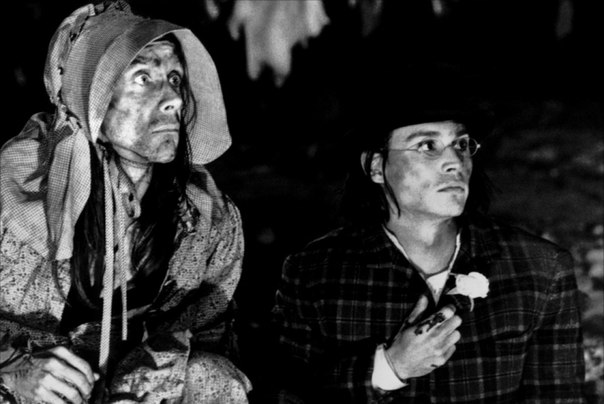
reminds us why we liked Nicolas Cage”). Johnny Depp literally wore a leather
jacket in one of his first classic roles; that of teen dream/gearhead hellion
Crybaby, which was, in and of itself, an homage to and a loving spoof of
Brando’s Wild One

Each of these actors has an onscreen element stitched
together with aspects of the Brandoesque. And yet, for all of their formidable
talents, and for all of the power and ingenuity in their performances, this new
generation still doesn’t quite compare with Brando himself. The Brando standard
(which derives its definition, for my purposes, from the “young Brando’s”
persona and body of work) isn’t ultimately about swagger or artful brutishness.
It’s about vulnerability—but not the conventional vulnerability traditionally
allowed to leading men: coming gently undone in front of his love interest;
crashing hard after his mission or merger or perfect family life (or all three
at once) falls apart; surviving (barely) a brutal beating from his nemesis.

null

Brando’s vulnerability is rooted in what his acting teacher,
Stella Adler, defined as “his great physical beauty—not just good looks, but
that rarer thing that can only be called beauty.” That beauty is an essence
that feels as delicate and attenuated as Terry Malloy’s fingertips while he
plays with Edie’s white glove in On The Waterfront; and as elemental, as
thick with sex and need as Stanley Kowalski’s cry for his wife. “Brando took
over the vanity and posing and sheer willfulness of a good-looking woman … and
he gave it a male twist”: With these words, critic Harold Brodkey most aptly
describes the dichotomy that defines the Brando standard and gives it its
power—a tempestuous blend of what Brodkey calls “the rigorously male” with a
surrealistic kind of beauty that can’t help but call attention to itself, the
kind of beauty most associated with actresses and models, the kind of beauty
seen as a means to an end. Most of Brando’s early roles, the ones he’s most
known for, use this tension between brawn and beauty to accomplish something
extraordinarily subversive for the time of Father
Knows Best
: turning the alpha male into a sex object.

Terry Malloy may be the anti-hero of On the Waterfront,
pissing away his talents as a boxer by serving as hired muscle for the mob; but
Edie, the brainy “Plain Jane” sister of the kid whose death Terry inadvertently
causes, sends the plot into motion. The heart of the film may be the arch of
Terry’s redemption, but it finds its pulse in the parallel narrative of Edie’s
sexual awakening. He’s in awe of her education, and all-too-keenly aware of his
own limitations—his bosses call him a dummy, all brawn and no brains. Edie is
the convent girl with the teaching job in her future; her belief in him gives
him a sense of legitimacy he’s incapable of finding on his own. All he can
offer her in return is his magnificent body and the promise of pleasure. Edie’s
face in the infamous glove scene, and in the scene where Terry teaches her to
drink beer, is a symphony of barely-repressed lust.  

Smart, ambitious and uncompromising, Edie is the archetype
of a heroine in an early Brando film. What makes her, and all her cinematic
sisters, such as Cathy from The Wild One or
Josefina Zapata from Viva Zapata! (In
which Brando plays the late revolutionary Emiliano Zapata) so unique is that
she doesn’t particularly need
Brando’s character, but she wants
him—even though she has more promise in her pinkie finger than he has in the
sculptural bulk of his entire body. Perhaps the clearest crystallization of
this kind of relationship comes from Viva
Zapata!
where Josefina teaches her peasant-born husband to read while
they’re in bed. Zapata is shirtless, his dark, muscular chest thrown into
relief by thin white sheets; our attention is called to the earthy grandeur of
his physique, but also to the emotions playing over his face—awe of the words
themselves, fear that he’ll never learn them, and shame that he’s as needy as a
child before the woman who was, moments before, in thrall to him.

Terry Malloy and Emiliano Zapata are certainly two of young
Brando’s more tender characters, but even his unabashed brutes like Stanley
Kowalski or Johnny from The Wild One embody
(quite literally) this dynamic. Stanley and Johnny are capricious beasts,
animated by instinct and chaotic whim; this gives them their erotic potency.
Stella Kowalski waxes raptly to her sister about how Stanley broke all the
lights in the house on their wedding night. She’s of the manor-born and he’s a
grease jockey; she’s vastly smarter than he is, but that doesn’t matter when he
rips his shirt off.

null

In The Wild One,
Cathy, the shy waitress who finds herself drawn to Johnny after his biker gang
invades her small town, doesn’t gain the same pleasure of a bare-chested
Brando; she does, however, get to hold onto him as they ride on his chopper, to
feel the engine thrum through the small of his back and the backs of his
thighs. The leather-jacketed rebel astride his Harley is an icon of American
masculinity (which Brando was arguably an architect of), but Johnny’s face
remains inscrutable, impassive; the camera holds on Cathy as desire blooms
across her features. Still, in the scene that follows, she dresses him down for
ravaging her town, calls him out on his macho bluster. All Johnny can do is sit
and listen. He knows she’s right. She’s more than right, in fact. She’s superior to him.

 Many of Brando’s
supposed heirs apparent don’t allow themselves to be as similarly objectified
as he was. Like Cage or Bale, or latter-day DiCaprio, the roles they choose are
too rooted in a more conventional masculinity: These characters may possess
great depth and sensitivity, but they are, at the end of the day, cops and
superheroes, soldiers and executives who just happen to have matinee idol
looks. One could argue that Nicolas Cage’s performance in Moonstruck comes close to the Brando standard, given that his
character, Ronny, a baker who lost his hand to a bread slicer, strikes a spark
inside lonely widow Loretta. However, the friction that strikes this spark
comes from equality, not imbalance: Ronny and Loretta well-matched in intellect
and temperament; their first date is at the opera, and they first fall into bed
after one of those fights where the lovers are really parsing out who’ll be the
unstoppable force and who’ll play immovable object. Unlike Edie and Terry, or Josefina
and Emiliano, nobody is “the brain” and nobody is “the body.” 

DiCaprio, who started his career as a teen heartthrob, has
transitioned away from films like Titanic
or even Total Eclipse, where his
gamine prettiness drives the movement of the film—whether that’s stirring the
heroine to abandon her posh, if constraining, lifestyle for him or driving a
legendary poet to madness and his greatest work. Some of Christian Bale’s
roles, like Bruce Wayne or Patrick Bateman, have required only a sort of
perfunctory handsomeness; a good-looking man will fit the bill, but he doesn’t
have to inspire actual lust. Indeed, the hyper-attentiveness to Bale’s
appearance in American Psycho is a
testament to his character’s soulless superficiality.

null

Actors like Depp or Jared Leto are almost singularly
distinguished by their prettiness—even (perhaps especially) when they take
roles meant to subvert that prettiness. Much of the press surrounding Leto’s
turn as a doomed transgender woman in Dallas Buyers Club focused on how
exquisite his features looked under his drug store make-up. Depp’s portrayal of
Edward Scissorhands has a romantic pathos, and not a horror villain’s
grotesquerie, because we know that his diamond-cutting cheekbones are under
that putty-pale skin with its constellations of scars. These actors lack that
tantalizing sense of menace inherent in the beefcake side of the Brando
standard. Could we ever imagine teen dream-era Johnny Depp breaking down Edie’s
door as Terry Malloy does, his embrace so forceful with need that he pulls them
both to the floor?

To embody the Brando standard is
become a razor’s edge, to possess a beauty that seems too fine to be dangerous,
even as it draws that first delectable lick of blood. Michael Fassbender is
making a career of dancing on that edge. In one of his first breakthrough
roles, as the cad who seduces the adolescent heroine of the film Fish Tank,
Fassbender seemingly exists to be objectified. The movie is skewed through
fifteen-year-old Mia’s perspective, and the viewer partakes of Fassbender’s
body with the same fusion of intrigue, awe, and lust that Mia feels. In an
early scene, Connor teaches her to catch fish with her hands; as he wades out
into the river, the camera holds tight on his back and we see the sculptural
planes of muscle shift under his snug t-shirt just as she does.

null

As Mia
watches the fish twitch and writhe inside his grasp, sunlight dapples the
water—illuminating how agile, how strong his hands are. That sun-color is
referenced again when Mia has sex with Connor: A crisp, painterly crescent of
yellow (presumably from a streetlamp outside her window) connects the side of
Mia’s cheek with Connor’s fingers, which stroke Mia’s hair. Connor is the male
equivalent of the party girl who coasts on a hard body and an easy charm; he
can’t give Mia any of the perks we’d commonly expect the December to offer the
May in that sort of affair: no hard-won wisdom, no finer things in life—just
pure bone-quaking pleasure. But there is a dark current churning under the
stream of Connor’s roguish good looks: When Mia discovers that he has a wife
and a daughter not-too-far from her age, Connor lashes out at her with the
force of a cornered snake. And yet, Mia seems as if she’s always known that
Connor had the capacity for great cruelty. Her facial expressions, post-coitus,
register equal measures relief and regret; she knows better than to do what
she’s just done. Then again, so does Stella Kowalski.

None of the sex in Shame, which is arguably the film
that Fassbender is most known for (mostly because it showcases the organ he is
most celebrated for), approaches the roughest approximation of pleasure. His
character, Brandon Sullivan, compulsively seeks out encounters that are the
equivalent of pressing his thumb into bruises hidden under his clothes. He
cycles through a coterie of call girls, Web-cam hook-ups and skin mag models;
so there is no lover whose view we can enter. The only prominent female
character, Brandon’s sister Sissy, is a sloppy jangle of raw nerve; she serves
as a mirror image of Brandon’s arctic reserve. Director Steve McQueen’s camera frames
Fassbender’s body like a museum centerpiece: We first behold him in the nude,
walking drowsily from bedroom and bathroom; everything behind him is lit in
muted hues, giving Technicolor clarity to a musculature that would make
Michelangelo weep.

Fassbender certainly possesses a Brandoesque beauty, but
he’s also got Brando’s chaotic potency. Brandon’s most pronounced moments of
self-loathing come as assaults on Sissy: The scene when he, half-naked, pins
her to the couch and screams in her face is a sort of nihilistic inverse to
Terry Malloy’s romantic door-smashing. Like Terry, Brandon is savage with need,
but his need isn’t for love or affirmation; it’s for obliteration, release.
Still, the film seems to wink at us by casting a GQ Man of the Year as a sex
addict; even as we watch Brandon debase himself with increasing abandon, we’re
tacitly asked, “Yeah, but you’d still hit that, right?”

null

Like Fassbender, Ryan Gosling has been branded as the
thinking woman’s sex symbol. And like Fassbender—and like Brando before
them—his handsomeness (to put it mildly) is inextricable from his onscreen
persona.  The Place Beyond the Pines opens
with a close-up of Gosling’s immaculate abs as his character, a stunt rider
turned bank robber, flicks his switchblade around with an absent-minded
elegance. His lover, Romina, knows that he’s impulsive at best, violent at
worst; no good will come of him, and she’s got a better man at home. And yet,
like Edie and Stella and Cathy before her—and like every male protagonist who
has ever found himself helpless before a femme fatale—she is powerless before
the promises inherent in his sly half-smile.

Gosling’s character in Blue Valentine, Dean, has
a similar blue-collar appeal; he’s a high school dropout who, much to the
consternation of his wife, Cindy, a successful nurse, doesn’t aspire to be anything
other than a house painter. When they first meet, Cindy is an Edie, a quiet,
studious girl who comes alive under his touch. The most significant (or at
least, the most discussed) sex scene in Blue Valentine is the moment
when Dean goes down on Cindy; the focus gliding from his back and shoulders to
her rapt face. Gosling exists only as an agent and avenue of female desire; the
camera doesn’t return to him afterward, it holds on Cindy as she sighs “Oh God,
Oh God,” again and again.

Brando’s talent is a large diamond held to the sun, casting
light in an infinite array of colors. There are many other elements of his work
worth excavating and many worthy successors to that work. Idris Elba’s turn as
Stringer Bell, the wannabe kingpin who could’ve been a contender, comes
immediately to mind, as does Joaquin Phoenix’s war-wrecked vagrant in The
Master.
So parsing out such a narrow standard for the Brandoesque may seem
unnecessary in a supposed golden age of acting (for men, at least), where
performers on the small and silver screen alike are challenged to renegotiate
the tropes of conventional masculinity.

But even in a time when Batman can have his back broken in a
summer blockbuster and the man in the gray flannel suit can break down in a
pivotal pitch session, male protagonists are allowed to be much more than their
appearances; and this is seen as something that gives them their heft, their
depth. Most of the actors who’ve been deemed modern-day Brandos possess degrees
of his talents and intensity, but precious few of them come close to evoking
his vulnerability. Brando’s willingness to open himself as more than just a
lover or a fighter, a rebel or a brute, but an object of lust still feels
transgressive. He is naked, even in a torn t-shirt.

Laura Bogart’s work has appeared on The Rumpus, Salon, Manifest-Station,
The Nervous Breakdown, RogerEbert.com and JMWW Journal, among other
publications. She is currently at work on a novel.
Stuck in the Middle: 30 Great Films about Middle Age, PART THREE

Stuck in the Middle: 30 Great Films about Middle Age, PART THREE

And so we arrive at the top ten films about middle age, at which point I must
finally ask myself: did I become a perpetual adolescent because I make lists,
or do I make lists because I’m a perpetual adolescent?  At any rate, while I had intended to exorcise
my inner fanboy by accepting my age, I find that I have simply repeated
patterns already set.  Perhaps this is
what it really means to be stuck in the middle…

10.       Georgia (1985)

null

Nothing is worse than being compared unfavorably with a more
successful sibling, and the virtue of this film is that it doesn’t take that
predictable and judgmental route. 
Although the downward spiral taken by drug-abusing singer Sadie
(Jennifer Jason Leigh) is a sad one, the staid, predictable life of her sister
Georgia (Mare Winningham) is hardly exemplary. 
The choice to name the film after the less compelling sister is an apt
one, reflecting as it does her commercial success as compared to her needy and
depressive sister’s lack thereof.  Although the
encounters between the sisters are ostensibly the film’s center, the real drama
occurs onstage.  Director Ulu Grosbard
lets the camera roll allowing Leigh to give some of the most emotionally
exhausting performances of her life, screeching her way through alt-country
numbers as she bares every nerve.  Like
her life, these scenes verge on the unbearable, but are infinitely more
fascinating than her sister’s accomplished but ultimately dull renditions of
folk classics.  While films about
musicians usually suggest that it’s better to burn out than to fade away, this
one actually suggests there might be a dark virtue in doing both at the same
time.

 9.        Jackie
Brown
(1997)

null

The opening credit sequence of this film alone makes it
worthy of inclusion on this list, as we watch a middle-aged flight attendant
ride a moving walkway through LAX to the accompaniment of Bobby Womack’s
“Across 110th Street.”  Pam
Grier conveys a mood of resignation as the automatic machinery of her life
pulls her forward, the blue mosaic tiles rolling by behind her, marking the
passage of time.  By casting a middle-aged
black woman as the central character in a crime drama, Quentin Tarantino not
only revives the politics of liberation that fueled the blacksploitation genre
in the seventies, but also explores the role nostalgia plays in our lives.  The film’s touching portrayal of awakening
mid-life passion, in the relationship between Jackie and her bond agent Max
Cherry (in a mesmerizing late performance by seventies character actor Robert
Forster), is conveyed by the couple’s mutual fascination with Philly soul group
The Delfonics.  Although Jackie’s
criminal life prevents her and Max from finally getting together, they are
still able to share the past.

8.         Hannah and Her Sisters (1986)

null

A film with a happy ending for a change, although the
anguished moments the characters go through to arrive continue to linger even
while they celebrate that rare thing: a happy Thanksgiving.  Structured around three main narratives, providing
intimate perspectives on the many ways of being stuck in the middle, the story
gradually weaves these different experiences together so seamlessly that we
conclude feeling like we’ve lived an entire life in the two years of the
story’s tight arc.  From Elliott’s
(Michael Caine) reawakening of passion for his wife’s sister, to Holly’s
(Dianne Wiest) stumbling attempts to find her life’s direction, to
hypochondriac Mickey’s (Woody Allen) belatedly discovering joy as the meaning
of life, all reflect on distinct aspects of the middle age experience.  The settings, too, resonate with a nostalgia
only those of us past our thirties can know: wandering through New York’s old
bookshops, seeing a Marx Brothers movie at the Metro, and bumping into an old
acquaintance while shopping at Tower Records: these lost places are almost as
romantic as the love affairs.

7.         All That Heaven Allows (1955)

null

Lavish Hollywood melodrama at its finest, this also remains
a daring account of a Spring-Autumn romance, largely because of its reversal of
the expected gender roles.  Middle-age
and well-to-do Cary Scott (Jane Wyman) falls for her hunky gardener Ron (Rock
Hudson) and Cary’s propriety-obsessed set is scandalized.  Particularly incensed are her daughters, who
so forcefully scorn her that she gives up her paramour.  In one of the most painful scenes of 1950s
American cinema, the children give their mother a television set to keep her
company, now that they are all moving away from home.  But in time-honored melodramatic convention,
they are reunited via an improbable deus
ex machina
, and the film ends with a lapidary Technicolor image of a deer in
the snow blessing their reunion, so kitsch it actually works.  It’s all so marvelously complete that when
Todd Haynes reprised it in Far From
Heaven,
he could only write in the margins.

6.         Groundhog Day (1993)

null

Bill Murray was forty-three when he made this
film. The premise of being trapped in a repetitive life is a quintessentially
middle-aged dilemma; and thankfully, so is the promise of self-reinvention that
the story offers.  The brilliance of the
film’s conceit is in the fact that only by embracing every nuance of what we
see every day can we make it new, a potent metaphor for the possibilities that
lie in what seems to confine us.  As a
revision of Frank Capra’s It’s a
Wonderful Life
, Harold Ramis’ masterpiece brings a greater sense of
relevance and urgency to the premise of appreciating what you’ve got by
shifting the emphasis away from small-town communities and into the experience
of rutted repetition in general.  The
result is at once more universal and more precise, and I continue to go back to
this film for perspective on whatever frustrates me.

5.         Savages (2007)

null

Tamara Jenkins’ subtle, understated account of two alienated
siblings dealing with their father’s dementia is a darkly comic relief from the
sentimental twaddle with which such life-experiences are too often met.  Philip Seymour Hoffman gives one of his
subtlest performances as Jon Savage, who teaches drama in a Buffalo college while
writing a book about Bertolt Brecht.  His
sister Wendy, played by Laura Linney with a curious mixture of childishness and
world-weariness, is a struggling playwright so anxious about her lack of
success that she lies to her brother about receiving a Guggenheim Grant.  These mid-life dramas are played out against
a background of encroaching mortality, which the characters confront with a
gracelessness so extreme it verges on grace. 
In one particularly brilliant scene, during an argument in the parking
lot of a high-class nursing home from which their father has just been
rejected, Jon shouts: “People are DYING, Wendy! Right inside that beautiful
building — right now! It’s a fucking HORROR show! And all this wellness
propaganda and landscaping is just trying to obscure the miserable fact that
people die and death is gaseous and gruesome and filled with piss and shit and
rot and stink!” The camera then pulls back to reveal a nurse pushing an elderly
patient past in a wheelchair, and Jon and Wendy hang their heads in shame.  Mixing dry wit with stark sadness, the film
is something like what Charles M. Schulz might have produced in later life if
he hadn’t been stuck writing comic strips about children.

4.         Alice Doesn’t Live Here Anymore (1974)

null

Focusing on a female character for a change, Martin
Scorsese’s portrait of Alice (Ellen Burstyn), a middle-age woman struggling to
make it after the death of her husband, flirts with the conventions of
melodrama, though tempered by astonishing candor and naturalism.  If Burstyn never made another film, this
should have been enough to make her a legend, and her interactions with her
mouthy son Tommy (Alfred Lutter) are as funny and endearing as those in Paper Moon.  Like that film, this is also an unconventional
road movie, but instead of selling bibles, Alice is trying to sell herself, as
a singer that is, and Scorcese films her sweet but rather awkward performance
scenes with a touching intimacy that doesn’t cover up or mock the signs of age
that lie just beneath her make-up and tawdry dress.  The tensions that beset her developing love
affair with rancher David (Kris Kristofferson) are real, as when he disciplines
Tommy to harshly for her mother’s liking, so that when the film concludes with
a rather formulaic happy ending, you believe it because you want to.  Burstyn’s Alice may be film’s most enduring
and endearing middle-age everywoman.

3.         Close Encounters of the Third Kind
(1977)

null

“Like Halloween for grown-ups,” Roy (Richard Dreyfuss) says to Jillian (Melinda Dillon) as they
anxiously wait for the aliens to arrive, and indeed the entire film is a
magical evocation of the resurrection of childhood dreams in middle age.  What keeps this from straying into the trite
sentimentality of Spielberg’s later fantasy films is its attention to the emotional
costs of following the sense of wonder, as Roy increasingly alienates and is
ultimately abandoned by his family.  “I
guess you’ve noticed something a little strange with old Dad,” Roy says with rueful self-mockery, and he might be talking about any number of mid-life
crises.  But the magic of this film is in
the realization of Roy’s dream of escape, one that is anything but nihilistic
but almost an evolutionary step beyond the human self, as the realization of a
fantasy becomes a kind of heroism.

2.         Amarcord (1973)

null

With a few minor exceptions, none of the characters in this
film are middle-aged, only the director, as he brings his childhood past to
lavish life with unembarrassed affection and hyperbole.  Was the snow once so deep that the townspeople
had to dig paths like high ceilinged corridors through the streets?  Did the cruise ship come that close when the
bewitched boaters rowed out to see its dazzling lights at night?  Was the late-winter bonfire really that
high?  Were the tobacconist’s breasts
really that big?  Of course not, and
that’s the whole point.  Fellini
simultaneously mocks and relishes nostalgia’s penchant for fabrication,
creating a magical realist portrait of a world that hasn’t so much faded away
as never really existed, except in the middle-aged film-maker’s mind.

1. Adaptation
(2002)

null

Mid-life self-doubt as post-modernism: this is Charlie
Kaufman’s raison d’etre and this may well be his finest, most ambitious
rendering of that wholly original conception. 
In this layered self-portrait we watch Kaufman struggle to adapt Susan
Orleans’ seemingly unadaptable The Orchid
Thief
, as the struggle becomes a metaphor for, or perhaps just the most
acute manifestation of, a mid-life crisis. 
Just as Kaufman is unable to settle on one plot line he is incapable of
opening himself up to others, particularly to his female friend Amelia Kavan
(Cara Seymour), on whom he has a blindingly obvious crush.  Kaufman’s divided self is hilariously
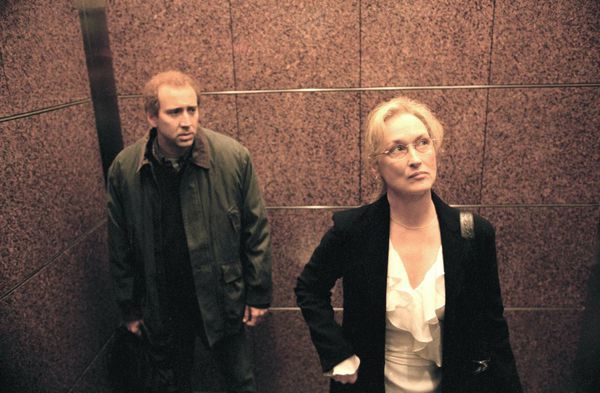
embodied by his twin brother Donald, both played by Nicholas Cage in what is
surely his greatest performance. 
Kaufman’s anxieties are matched by Susan Orleans’ herself, whose loss of
passion forms a subtext to her book: “I want to know how it feels like to care
about something passionately,” she writes, and this desire to desire draws her
to orchid hustler John Laroche (Chris Cooper). 
She discovers that to care passionately about something “whittles the
world down to a more manageable size,” and this becomes the principle
discovered by Kaufman as he puts his script and his life into a (barely)
manageable order.

[Click here to read Part One of this journey into the films of middle age…]


[Click here to read Part Two of this journey into the films of middle age…]

Jed Mayer is an Associate Professor of English at the State University of New York, New Paltz.

Stuck in the Middle: 30 Great Films about Middle Age, PART TWO

Stuck in the Middle: 30 Great Films about Middle Age, PART TWO

I must go on, I can’t go on, I’ll go on: here we are with Part Two of the list of what I consider to be the best movies about middle age.  If you’re still with me, you’ve admitted your
age, and acceptance is the first step towards… whatever, here’s the list.

20. The Prime of Miss
Jean Brodie
(1969)

null

Like so many of us at middle age, teacher Jean Brodie (Maggie
Smith) likes to proclaim she is in the prime of her life, and the devoted
following of her select girl students (whom she dubs the crème de la crème) would seem to confirm it.  But as much as she inspires her charges with
a love of art and nature, she also leads them astray through her misguided adoration
of Francisco Franco and Mussolini.  The
film implies that aging without grace can sometimes land one on the wrong side
of history, and it can also land one on the wrong side of the young.  Pamela Franklin brings a severe intensity to
her performance as Sandy, a student who grows to resent her former idol and
takes revenge by stealing Brodie’s former lover, exposing her dark
secrets.  As Brodie leaves in disgrace, only
Maggie Smith could make us feel sorry for a misguided fascist. 

19. The Man Who Shot
Liberty Valance
(1962)

null

One of John Ford’s most emotionally complex Westerns is also
an ambivalent meditation on the aging process. The film begins with Senator
Ransom Stoddard (James Stewart) returning to the once lawless Old West town
that made his name.  He’s there to attend
the funeral of his old friend Tom Doniphon (John Wayne), and as this frame
narrative gives way to flashback, we hear a story that is as much about
the historical as the personal past.  As
“Ranse” Stoddard progresses from emasculated dishwasher and busboy to the
killer of the film’s title, his brand of pacifism and justice is juxtaposed,
and finally undermined, by his rival turned friend, Doniphon.  While I’m no fan of “the Duke,” he gives a
stunning performance here as a man embodying frontier values at the very moment
of their dissolution.  His trademark
wooden delivery somehow manages to capture the alienation of a man whom history
is passing by, and Stewart’s familiar earnestness is almost childish by
contrast.  The film leaves us wondering
if what we call the wisdom of age might simply depend on a selective memory of
the past.

18. The Big Lebowski
(1998)

null

When I first saw this film in the theater, I felt that it was one
of the funniest, but also the most pointless, of the Coen brothers’ films; now I
regard it as offering one of their more pointed political commentaries on
generational politics.  Set less than a
decade before its release, in 1990, the film raises complex questions about how history is
made, and what role we play in the making of it.  In characteristic fashion, the Coens
foreground the constitutive role of language in shaping how we perceive events:
the Dude (Jeff Bridges) acts as a kind of linguistic sponge, picking up and
recirculating phrases spoken by those around him, including George Bush, Sr.’s
(in)famous “This aggression will not stand” speech.  Once a member of the subversive political
group “the Seattle Seven,” “Dude” Lebowski now spends his time bowling, getting
high, and drinking White Russians, seeming to confirm the accusation leveled
against by his namesake: “Your ‘revolution’ is over, Mr. Lebowski!  Condolences! 
The bums lost!”  But in a world
where the possibility of meaningful political change seems to have been shut
down, perhaps the best answer is to echo back the meaningless rhetoric of the
status quo, making of its very emptiness a kind of accusation: “This will not
stand, ya know, this will not stand, man!”

17. Sideways
(2004)

null

This hilarious road movie about a couple of buddies on a
kind of “stag” wine tour moves effortlessly into a moving meditation on slowly
fading joie de vivre, for which wine
serves as ironic metaphor: ironic, because the characters aren’t necessarily
getting better with age.  In the film’s
most memorable scene, Miles (Paul Giamatti) and Maya (Virginia Madsen) share
their passion for pinots, while tacitly reflecting on how other passions have
grown sour.  Maya movingly observes how
“a bottle of wine is actually alive — it’s constantly evolving and gaining
complexity. That is, until it peaks—like your ’61—and begins its steady,
inevitable decline.”  Though the film
offers a glimmer of hope and possibility at its conclusion, this is its abiding
mood, but fortunately, as Maya adds, “it tastes so fucking good.”

16. The Accidental
Tourist
(1988)

null

Writing travel guides for people who don’t want to travel,
Macon Leary (William Hurt) is a walking advertisement for middle age
malaise.  Fittingly, the symbol used on
his popular series of books is a lounge chair with wings.  The loss of a son has further strained his
marriage, and Macon seems fated to spend his life in a chair for one until his
dysfunctional Welsh corgi leads him to winningly daffy obedience trainer Muriel
Pritchett (Geena Davis), who awakens in Macon something bearing a vague
resemblance to passion.  In addition to its compellingly eccentric love story is, the film also includes an ensemble cast of other aging
eccentrics, offering diverse perspectives on the waning and rekindling of
affections.  Macon’s siblings are all
co-dependently repressed, until spinster Rose (Amy Wright) manages to capture
the heart of her brother’s publisher (winsomely played by Bill Pullman).  The fittingly beige-toned yet romantic
conclusion manages to land somewhere between “The Love Song of J. Alfred
Prufrock” and Breakfast at Tiffany’s.

15. The Squid and the
Whale
(2005)

null

This semi-autobiographical journey into the dark places of
family life is as much an exploration of middle age as it is of
adolescence.  Though told largely from
the point of view of two boys, Walt and Frank, their parents’ split-up becomes
the focus of the film, resulting in a funny and sad account of how people grow
apart.  Their father, struggling writer
Bernard (Jeff Daniels), forces his tastes and lifestyle onto his boys, a habit
that grows worse as he feels threatened by his estranged wife’s publishing
success.  The film shows how early we can
become middle-aged in spirit, as the older son, Frank, begins spouting the formulaic
literary preferences and dislikes of his father, and adopts his cynical,
self-serving worldview.  As he gradually
comes to realize the uncredited role his mother (Laura Linney) played in his
life, we understand that the conflict between his middle-age parents has become
Walt’s inner conflict as well.  Our mom
and dad, they fuck us up, indeed…

14. Picnic (1955)

null

This film is as much an enactment of mid-life crisis as it
is a portrayal of one, in that star William Holden is an actor in his late thirties
playing a character in his early twenties. 
The result is wildly implausible but, because it’s William Holden,
unexpectedly poignant.  As aimless
drifter Hal, he shows up in a small Kansas town on Labor Day, seeking out a
fraternity brother whose father owns a local mill.  Along the way he encounters Madge Owens (Kim
Novak), and passion smolders.  But a
sadder, and in some ways more compelling, romance is also taking place, that
between middle-aged schoolteacher Rosemary (Rosalind Russell) and store owner
Howard Bevens (Arthur O’Connell). 
Rosemary has been trying to get Howard to marry him, and her desperation
spills over as the whiskey flask grows emptier at the annual town picnic,
culminating in a painful scene where she throws herself at William Holden to
make Howard jealous, accidentally ripping the shirt of the “young Adonis” in
front of all.  Layers of awkwardness are
at work here: Rosalind Russell’s vivid portrayal of mid-life sexual desperation
ironically paralleling William Holden’s mid-life desperation as an actor
playing well beneath his age.  Yet it
somehow works.

13. Now, Voyager
(1942)

null

Bette Davis is mesmerizing as a middle-age spinster coming
out of her shell.  Bullied to the point
of mental breakdown by her oppressive mother, mousy Charlotte Vale seeks the
help of psychiatrist Dr. Jaquith (Claude Rains).  As she grows more confident under his care,
she gets away from it all on a therapeutic cruise where she reinvents herself
and falls in love with married man Jerry (Paul Henreid).  If their star-crossed love affair were all
this film were about, it might be just another forties Hollywood melodrama, but
when Charlotte ends up at an asylum under Dr. Jaquith’s care, she
befriends Tina, a young woman who reminds her of her own repressed self.  Though Tina turns out, rather improbably, to
be old flame Jerry’s daughter, the film ends with Charlotte taking the girl
under her wing, and settling for a life of quiet female companionship rather
than torrid romance.  This resolution is
somewhat sad, but poetically right, offering an unconventional view of
middle-age life choices.

12. Mildred Pierce
(1945)

null

As with Picnic and
The Wrestler, this film gains added
depth from the middle-age drama of the actress as much as that of the character
she portrays.  Thanks to Mommie Dearest, we all know how
desperate an aging Joan Crawford was to get this part, and how much she threw herself
into her role; thus, it’s difficult not to see the character of Mildred as
autobiographical.  Left by her husband, Mildred
Pierce works herself out of her and her daughters’ financial desperation, first
as a waitress, then as the owner of a successful chain of restaurants.  Along with Barbara Stanwyck’s Stella Dallas, this is one of the most
powerful portrayals of a working woman from Hollywood’s golden age.  Yet, while she finds satisfaction in work,
her wayward second husband reminds her of her age when she finds him cheating—with
her own daughter.  Rarely has the
generation gap been so nastily rendered.

11. Lost in
Translation
(2003)

null

From the moment Bill Murray stood on the diving board in Rushmore, belly sagging over Budweiser
swimsuit, cigarette hanging out of his drooping mouth, he has become
Hollywood’s great icon of middle age. 
Here he internalizes that sad-sack pose, making it more tragic by hiding
it behind the pasted-on smile of Bob Harris, an aging actor doing a photo shoot
for a series of advertisements for Suntory, a Japanese whiskey (!).  Paralleling Bob’s mid-life crisis, Charlotte
(Scarlett Johansson) is having a “mid-twenties crisis,” and many of the film’s
most compelling scenes are without dialogue, showing her walking through Tokyo,
where nothing seems to make sense.  When
they meet at a hotel bar, their mutual malaise is a perfect match.  “I’m planning a prison escape; we first have
to get out of this hotel, then out of the city, then out of the country,” Bob
tells her, and she answers: “I’m in,” leading to a night of bar-hopping that ends in a karaoke bar.  Murray’s
off-key rendition of Roxy Music’s world-weary “More Than This” is surely one of
cinema’s great moments, turning the classic song into a mid-life anthem.  When they part, Bob whispers something
inaudible in her ear, and they both wander off in irresolution: a perfect way
to (not) end this movingly understated film.

[Click here to read Part One of this journey into the films of middle age…]

Jed Mayer is an Associate Professor of English at the State University of New York, New Paltz.

Days Like Lost Dogs: In Support of Loose Ends in Procedurals from TWIN PEAKS to TOP OF THE LAKE

Days Like Lost Dogs: In Support of Loose Ends in Procedurals from TWIN PEAKS to TOP OF THE LAKE

null

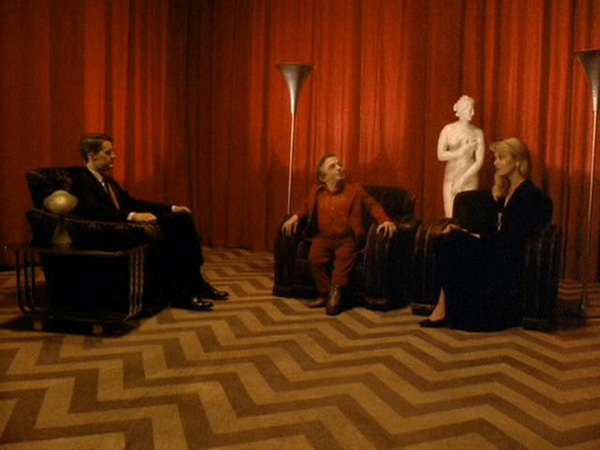
This month marks the 24th anniversary of what
could be considered the first of the now-increasingly popular season-long
“hyperserial” procedural crime dramas—the pilot episode of David Lynch’s Twin Peaks. This show swapped the sequins
and mansions of traditional nighttime soap operas for a talking log and a Black
Lodge, and it countered TV’s biggest previous question at the time—Dallas’ “Who shot J.R.?”—with another
question: “Who Killed Laura Palmer?”

In a criminal courtroom, a prosecutor wouldn’t ask a
question to which she didn’t know the answer, but the opposite is true during
an investigation—anyone confronting a mystery must ask an ocean’s-worth of
questions and learn from whatever might wash ashore: grief, silence, anger,
misdirection, more questions. A crime show called “Occam’s Razor” would almost
certainly be a flop (or last for only one episode). Television has evolved
since the 1980s to accept that audiences can handle more than simple resolution,
but why is it too much to ask that viewers push past the need for any resolution at
all?

Though Twin Peaks (or perhaps ABC’s marketing department)
began with a big question that set up
an expectation that the show would be high in single-plot resolution, it was arguably
most successful when it provided more questions than answer. Lynch himself said:
“The murder of Laura Palmer was the center of the story, the thing around
which all the show’s other elements revolved—like a sun in a little solar
system. It was not supposed to get solved. The idea was for it to recede a bit
into the background, and the foreground would be that week’s show.”

Laura Palmer’s murder—not the revelation of her
murderer—gave the show its heat, its gravity. Without that sun, once Laura’s
killer was revealed (well into season 2), the show’s planetary makeup began to
spin a bit out of its orbit.

Twin Peaks was
dark, but sincere. It was ambitious, but also terrifically personal. It made
television humor lyrical. And it was both hyper-local, and also situated a bit
outside of time—leading us to wonder if the red curtain separating our world
from the next was actually inside the Black Lodge, or rather hanging at the Twin
Peaks town border itself. The show set a new standard of negative capability that
television had never seen before—striking notes of the low-ball absurdity of shows
like Fantasy Island
(sans quicksand traps) and the macabre of The Twilight
Zone
, and impleading Lynch’s cinematic influences, like Hitchcock.

Enjoyment of Twin
Peaks
also required this negative capability from its viewers, but Lynch
didn’t ask anything of his audience that he didn’t seduce out of his own
characters, or even his collaborators on the show. Agent Dale Cooper was just
as enchanted by his cherry pie as he was by the specter of a dancing dwarf.
Sheriff Truman may have been a bit puzzled by Cooper’s strategies (e.g., looking
for leads by saying a suspect’s name, then throwing a rock at a bottle to see
if it breaks[1]), but
gladly accepted his new friend’s help in whatever form it arrived. And when
Lynch called up Twin Peaks co-creator
and screenwriter Mark Frost during the show’s production and said, “Mark,
I think there’s a giant in Agent Cooper’s room
,” the only possible response
from Frost was “OK.”

And it was, hypnotically, OK. The whole knot of Twin
Peaks
became greater than the sum of its loose ends.

Often the mark of a show’s fortitude is measured by how deftly
it sets its fish hooks into shows that follow: X-Files, Buffy the Vampire
Slayer
, Lost, and
even—specifically admitted by David Chase—The
Sopranos
took permission first granted by Twin Peaks and used it towards freely weird ends. These shows all
delighted in the unresolved. People still ask David Chase about what happened
to the
wounded Russian in “Pine Barrens”
as much as they might have water-coolered
about what they knew happened to Adriana, Vito or Big Pussy (RIP Adriana &
Vito, who didn’t deserve it).

And this fearless evasion  of resolution also delighted its viewers. Each
of these shows has, at its base, a cult adoration that lounges at the core of
any larger popularity it might also enjoy. The truth is out there, but so are we.

Now a new post-Sopranos generation of shows has taken on the
specific task of the season-long crime procedural model pioneered in Twin Peaks and re-introduced us to the
hyperserial killer: AMC’s version of The
Killing
, Sundance’s Top of the Lake,
and most recently and bro-splosively, HBO’s True
Detective
, just to name a few. Each sets itself in motion on the rational
tracks of a whodunit and attempts to use both the intuitive and the atmospheric
as a third, energizing rail. There are plenty of valid critiques of each of
these shows, but in the end, the most pervasive seem to be aimed at the coherence
with which they resolve their central crime-question.

But what if these types of shows refused to answer their own
big question? What if they began with
an answer (“Laura Palmer is dead.”)
and let the show ask the questions? If what they do best is mystery, and what
they do worst is solution, then why not simply not do the worst thing. Why not let the viewers metabolize their
expectations and let the stories do their own work?

Who Didn’t Kill Rosie Larsen?

The Killing is
arguably less ambitious than Twin Peaks
and a bit less interested in its main characters than True Detective, but AMC has certainly proved itself to be a network interested
in creating original, rule-busting shows. It was smart to adapt the original Danish
series of The Killing, but the network set
up its audience with too clear a directive from the jump, nodding to its
predecessor by reprising its promising big
question
strategy—this time: “Who Killed Rosie Larsen?”

Again we have a murder, a (supposed) angel/devil girl-victim,
and an angel/devil obsessed investigator. The big question wasn’t answered for
audiences until the end of Season Two, which left many viewers feeling like the
show broke up with them via text message (on a flip phone, no less) after two years
of a wrenching but ultimately forgettable committed relationship. The nuance,
mood and humanity of the show—though slickly meditative—concerned itself only
with a linear path to Rosie’s killer, and when all you have is a murder,
everything looks like a crime scene.[2]

Push past the conceit of the investigation, however, and
exacting, nuanced character interaction become richly visible, like dusting for
prints. Michelle Forbes as Rosie’s mother Mitch delivers one of her finest
performances. She’s physically etched with her pain. Add that to the ways she
and Brent Sexton as her husband Stan Larsen convey the way tragedy distorts the
passage of time, the way tragedy distorts routine, and the show—though
difficult and raw—finds a particular, necessary truth in storytelling. As such,
The Killing might best be categorized
as an intelligent TV show about grief asking its audience over on a date to
watch a mediocre TV show about solving a murder.

“You Don’t Own It
Like You Thought You Did”

True Detective
spends imagery as currency to put a down payment on its audience’s loyalty. The
South spreads out before us like a Sally Mann retrospective, tired and
tempting, one long morning after. Just like Twin
Peaks
and The Killing, though not
part of its marketing package, we get a big
question
in the first episode: “Who killed Dora Lange?” Just as in Twin Peaks and The Killing, a young girl’s corpse is arranged for us like
sculpture, in all its macabre beauty.

True Detective attempts
to specialize (and spectacle-ize), as might delight Agent Dale Cooper, in the
local color. Sweet tea and obese women in day pajamas. Long stretches of two-lane
highways and weary prostitutes in trailer communities. A certain way the
landscape infiltrates the characters—the way Rust Cohle uses a drag on a
cigarette as a semicolon. Everything an invitation for us to come over for
supper. Everything lined up for us to drawl some conclusions.

Throughout each episode, though, an image narrative runs
parallel to the action and dialogue—the visual version of a voice-over. We are
excited because of where the layered images and dialogue and characters take
us, not because of where the plot narrative leaves us. With the exception of
being nearly entirely humorless, True
Detective
seemed to have all the tools it needed to overcome its own big
question, to charm its audience into valuing storyline over plotline.

And yet much of the chatter leading up to the finale zeroed
in on Who Killed Dora Lange, the detailed speculation sometimes
reaching A Beautiful Mind-esque
heights
. When the show’s finale proved a bit more ordinary—or at least
didn’t answer all the questions each episode’s clues seemed to collage—it
was as if the Internet itself audibly pouted
.

The Portrait of a
Lady

From my view, the most successful of these crime-hyperserials
since Twin Peaks is Sundance’s Top of the Lake, created, written and
directed by Jane Campion. It’s billed as a “TV Mini-series,” though it turns in
only one fewer episode than the first season of True Detective. The show leans
on the lush New Zealand landscape just as heavily as True Detective leans on the languor of the South or The Killing leans on the drear of
Seattle, and it offers us the familiar victim with talent/grit and
protagonist-investigator with accompanying angels/demons and introversion/strength
(Elisabeth Moss as lead detective Robyn Griffin—and if I can forgive Woody
Harrelson’s marble-mouthed Southern accent, you can forgive her bent-nail of a
New Zealand one).

But even from its opening act, the show distinguishes itself
in an important way—we know something has happened to a young girl named Tui, but
we also know she’s not dead. Even so, Campion still generates a haunting story,
a rich tension, and shades in the classic detective-victim bond in a more
nuanced, less fetishizing fashion than True
Detective
or The Killing (or Twin Peaks, even). Top of the Lake takes Lynch’s note of letting the crime recede into
the background while the characters unfold their lives in its wake.

The varsity-level discomfort this produced in some critics
was perhaps a sign of its success. Mike Hale of the New York Times began
his review
with what I thought was a compliment: “There are times during
‘Top of the Lake’ when you can convince yourself that you’re watching a mystery
story about a girl who goes missing. But that sensation never lasts.” That was
not a compliment. Hale later calls Tui’s disappearance “a MacGuffin,” and seems
to demand that each of the show’s plotlines come attached to a life preserver
he can cling to.

With a small show, Jane Campion made the landscape bigger.
She does answer the crime-question (and it is
the weakest moment of the show), but she does it quickly enough that viewers
aren’t left in a comfortable, or resolved, place. She doesn’t ignore the notion
that a criminal can be discovered and punished, but that discovery and
punishment don’t solve the crime—the
consequences continue to be lived by everyone involved.

“Harry, I’m going to
let you in on a little secret. Every day, once a day, give yourself a present.
Don’t plan it. Don’t wait for it. Just let it happen.”

Campion has said “acting is about vulnerability.” I’d offer
that viewing is likewise. What I wish for audiences is to give themselves a
present: resist that feeling of betrayal fingered by David Foster Wallace in “David
Lynch Keeps His Head
”—resist the feeling that when directors and writers
seem to fail in rewarding the suspense an audience endures with a morally
self-satisfying conclusion, that “an unspoken but very important covenant has
been violated.” 

Let there be shows that hold an audience in suspense, but
not hold as in handcuffs—hold as in a spell. Let the crime be another part of
the landscape. If there is a big question, let it be answered with other intimate
questions. Let viewers sit in the discomfort of their not-knowing, of their wonder
and fear, of the unresolved-ness of a show’s resolve. Let these hyperserial
crime shows live in the world of poems and short stories, rather than airport novels—not
puzzles to be solved
, but lakes to be dredged by the imagination.


[1] Kimmy Robertson, who played receptionist Lucy Moran
in Twin Peaks, illuminates this idea one bulb further with an anecdote from her days on the set: “There’s a scene where Kyle [MacLachlan] had to
throw a rock and hit a glass bottle. [Lynch] sat us down and told Kyle he was
going to hit the bottle—and that bottle was freaking far away. Kyle hit it, and
everybody freaked out. It was like David used the power of the universe to make
Twin Peaks.”

[2] Part of the let-down, too, of finally knowing Who
Killed Rosie Larsen wasn’t just the short walk on a long pier—it was also what
David Foster Wallace prescienced based on an insightful notion in one of his
essays from 1995. Wallace:

The
mystery’s final ‘resolution’, in particular, was felt by critics and audiences
alike to be deeply unsatisfying. And it was…but the really deep
dissatisfaction—the one that made audiences feel screwed and betrayed…was, I
submit, a moral one. I submit that [the victim’s] exhaustively revealed ‘sins’
required, by the moral logic of American mass entertainment, that the
circumstances of her death turn out to be causally related to those sins. We as
an audience have certain core certainties about sowing and reaping, and these
certainties need to be affirmed and massaged.”

The show to which Wallace was
referring? Twin Peaks.


Amy Woolard is a writer and child welfare/juvenile justice
policy attorney who lives in Charlottesville, Virginia. She is a graduate of
the Iowa Writers’ Workshop and the University of Virginia School of Law. Her
work has appeared or is forthcoming in the
Virginia Quarterly Review,
the Massachusetts Review, the Indiana Review, The Journal, Fence, and the Best
New Poets 2013 anthology, among others. You can find her at shift7.me, and on Twitter as @awoo_.

A Video Essay On Jim Jarmusch: Dead Men & Ghosts, Limited

A Video Essay On Jim Jarmusch: Dead Men & Ghosts, Limited

The secret of poetry lies in treading the middle path between the reality and the vacuity of the world.
—Basho
trans. by Robert Hass

Of the various Jim Jarmusch films I’ve seen, three have nagged
at me, haunted me, teased me until I came back to them again and again. I
was a student in New York City when Dead Man was released, and I saw it
in the theatre, having read a review, having heard Jarmusch’s name
whispered or echoed somewhere, and I wanted to see what the fuss was. I
didn’t know what to make of it then, but if I knew anything at all about
the film, I knew it was beautiful. Ghost Dog was easier to apprehend on
a first viewing (in Boston, if I remember correctly), a film that is,
for Jarmusch at least, relatively conventional in its narrative
progress, its episodes clearly linked together through cause, effect,
motivation. The Limits of Control is the most abstract of the three, a
film to dream to. Indeed, when I first watched it (late one night at
home in New Hampshire), I drifted in and out of sleep. This seems
appropriate, perhaps the perfect first encounter with such an enigmatic,
oneiric movie.

I began to think of the three films together. They appealed to me
significantly more than Jarmusch’s other works, significantly more than
most movies. The reasons could, of course, be personal and
idiosyncratic, but perhaps there was something there, some line of
thought, some mix of imagery and style. Certainly, they share concerns
and motifs: questions of wisdom and wandering, art and death, repetition
and revision. They let genres become ghosts. They propose that white
men are the scourge of reality. I knew the only way to begin an
exploration would be with a movie of my own, made from pilfered pieces,
because while I could analyze with text, it held no appeal: too dry, too
awkward, too much like a manual on taxidermy. I knew I couldn’t script
it, either; I just needed to dig into the sounds and images, to see what
stuck, to trust a certain intuition in juxtaposition.

“Dead Men & Ghosts, Limited” is the result. Its great flaw is that I was awake when I made it.

Matthew Cheney’s work has been published by English Journal, One Story, Web Conjunctions, Strange Horizons, Failbetter.com, Ideomancer, Pindeldyboz, Rain Taxi, Locus, The Internet Review of Science Fiction and SF Site, among other places, and he is the former series editor for Best American Fantasy. He is currently a student in the Ph.D. in Literature program at the University of New Hampshire.

Stuck in the Middle: 30 Great Films about Middle Age, PART ONE

Stuck in the Middle: 30 Great Films about Middle Age, PART ONE

null

Like most movie fans, I’m a compulsive list maker.  The habit began in my teens with naïve
exuberance (best monster movies, best science fiction), grew more pretentious
as I began taking film classes in college (best Nouvelle Vague films, best
German Expressionist works), finally reaching monomaniacal proportions in grad school
(50 best non-American Westerns, 25 best Japanese gangster films).  Though I probably should have grown out of
the habit, I remain a list-oriented viewer. 
Recently I came across a list of teen films by a writer I’d always
respected, but was so annoyed by his failure to include what I take to be the
greatest teen film of all time, Over the
Edge
, that I started to prepare a rebuttal.

But as I sat down to write about teen films I thought:
what’s wrong with me? I just turned forty-eight and I’m getting worked up about what
the greatest teen film should be? 
Shouldn’t I be more interested in films about people a little closer to
my age?  Then I started looking to see
what kinds of lists about middle-age films critics have compiled and found
none, or rather found several films about the Middle Ages–but not about middle
age.  In speculating on why this might be,
one might be inclined to trot out familiar arguments about our culture’s
obsession with youth and the commercial tendency to market to younger
demographics.  But plenty of critics are
older, and films about middle age often receive positive, intelligent reviews.  So why no lists?  It’s easy to find lists of best women’s
films, best teen films, best African-American films, but the middle seems to be
missing.

Perhaps it’s because few people want to acknowledge that
they are middle-aged.  If you’re among
the small number of readers who didn’t automatically pass over this piece on
the basis of its title, you belong to that rare group of people who acknowledge
their age and are interested in seeing films that do the same.  It’s not a pleasant admission, but films can
help.  I’ve always turned to film to give
me perspective on my life, its difficulties as well as its joys.  So over the next couple of weeks I’m going to
share my list of some films that have given me perspective on the middle stage
of life, even when I didn’t realize that that’s what these films were doing.

30. Lost in America (1985)

null

“It’ll be like Easy
Rider
, but in a motor home”: the perfect metaphor for middle age.  In what is perhaps the funniest film ever
about a mid-life crisis, Albert Brooks gently mocks the desire to reinvent
yourself while still retaining the poignancy of discovering you can’t be young
again.  Fed up with a dead-end executive
job, David Howard and his wife Linda (Julie Hagerty) decide to drop out of society. As they
head out on the highway in their Winnebago, the gap between dream and reality
is made clear when David waves admiringly at a Harley driver who flips him
off.  After Linda loses their nest egg
gambling in a Las Vegas casino, they are forced to take pathetic minimum wage
jobs.  Finally they realize David has to
go back to his boss “and eat shit,” and they resume their former lives.  A little cynical, a little sad, Brooks’ film
nevertheless makes high comedy out of compromise, in a refreshing honest
rebuttal to mendacious claims that life begins at forty.

29. You Can Count on Me (2000)

null

In what remains one of Laura Linney’s finest performances,
she plays Sammy, a single mother and lending officer at a small town bank whose
dull life is both enlivened and threatened by a visit from her errant brother,
Terry (Mark Ruffalo).  Both characters share
an abiding sadness, perhaps because of the early death of their parents in a
car-crash, but Terry is more free-spirited, if compulsively irresponsible, and
at first he seems to represent everything Sammy gave up for a secure,
predictable life.  But as he begins to
meddle in her son’s life, and as a sordid affair with her boss (played with
impeccable comic presence by Matthew Broderick) begins to spiral out of
control, her old humdrum life begins to seem almost attractive.  Kenneth Lonergan’s funny, wistful take on the
peculiar nature of sibling relationships makes what would otherwise seem an
inconsequential visit into a poignant meditation on the roads not taken.

28. Portrait of Jennie (1948)

null

This criminally overlooked David O. Selznick production
stars Joseph Cotten as a struggling artist whose creative wellspring seems to
have run prematurely dry.  But then he
encounters a wise and enigmatic little girl in the park and in painting a
portrait of her from memory he rediscovers his art.  The girl reappears at intervals, growing
rapidly older with each encounter, and his artistic powers grow along with
her.  I can’t help associating this film
with the final, haunting scene in Fellini’s La
Dolce Vita
, where an aimless Marcello Mastroianni sees a mysterious,
wistfully smiling little girl waving at him across the water: symbol of his
lost innocence? repressed and undeveloped feminine self? elusive paramour?  Portrait
of Jennie
, though it adopts the conventions of the ghost story, remains
similarly ambiguous on what this muse figure represents for the artist, and the
film passes by like a sad and wistful middle-aged daydream.

27. Home for the Holidays (1995)

null

Though this Jodie Foster comedy could be written off as
trite holiday fare, Holly Hunter’s standout performance as a single mother at
the crossroads brings a quiet gravitas to this sometimes slapstick comedy.  While Robert Downey, Jr., threatens to steal
the show as her gay, rebellious brother, it is their eccentric parents, played
expertly by Anne Bancroft and Charles Durning, and their complicated
relationship with their children, that give the film its surprising emotional
depth.  Steve Guttenberg and Cynthia
Stevenson play the children who struggle to make what they perceive as a normal
life as a defense against the rest of the family, but succeed only in making
themselves miserable.  Everyone in this
film experiences some kind of crisis, appropriately brought to the surface over
the tensions of Thanksgiving, but ends with a poignant memory of Holly Hunter’s
character as a girl, sitting on her father’s shoulders as a 747 takes off in
front of them: an apt image of youthful dreams that dazzle even as they fly
away, leaving the sad and funny oddities of our grown-up selves.

26. Who’s Afraid of Virginia Woolf? (1966)

null

As an aging academic, this one hits a little too close to
home for me, but Edward Albee’s genius was in creating stories that pull the viewer
through discomfort to redemption.  Mike
Nichols’ disarming point-of-view cinematography immerses us into the awkward
encounter between alcoholic professors and the seemingly naïve young couple who
are their late-night guests.  As the film
progresses, this immersion moves subtly from repulsion to sympathy, and we end
with a surprisingly touching scene of Liz and Burt on the moonlit lawn, exchanging
words of long-rehearsed but no less real affection.  Marriage, like tenure, can have a numbing
effect over time, but it is also a source of enduring comfort: even
passion.  The aging couple at the center
of this film remain intense despite their repetitive lives, and if the price of
that intensity is slow self-destruction, the story suggests, it might just be
worth it.

25. Waiting for Guffman (1996)

null

This remains the funniest of Christopher Guest’s
mockumentaries, and also the most touching, largely because it captures people
desperate for something to believe in.  When
washed-up dramatist Corky St. Clair gets the chance to present his absurd
musical production to a New York critic, he draws his hilariously amateurish small
town ensemble into his fantasy.  The irony
is that the play, Red, White, and Blaine,
is meant to honor the small Missouri town’s sesquicentennial, yet all of the
characters embrace the opportunity of getting out and making it big.  The hilarity ends in disappointment, somehow
made more sad by the epilogue, which shows the characters having abandoned
their town for questionable, even demeaning, gigs in the business we call
show.  Like many, I have watched this
film so many times that I’ve memorized nearly every line, probably because I am
drawn nostalgically to my small-town past, as much as I like to mock it.

24. Thief (1981)

null

The plot of this groundbreaking and stylish thriller could
be read as a metaphor for middle age: hardworking safecracker Frank (James
Caan), falls in love with a cashier, Jessie (Tuesday Weld), and decides to try
and get out of the crime racket and live free. 
Juxtaposing surprisingly labor-intensive, grueling break-ins with
intimate conversations, Mann’s film is as much about the burdens of clocking in
as of the dream of getting away.  In one
of the most compelling first date scenes ever filmed, Frank and Jessie, shot
against a plate glass window giving onto a dark highway, pledge themselves to
one another, essentially because neither of them are getting any younger, and
life’s too short to let something they know is real slip by.  When Luciferian crime-lord Leo enters the
picture, offering Frank an opportunity for one last heist, the deal turns into
a kind of indentured servitude, and we root for the protagonist’s liberation as
we might for any working stiff aging his life away in a soul-crushing job. 

23. Thelma and Louise (1991)

null

Why is it that so many of the best films about middle age
end in death and destruction?  Ridley
Scott’s classic road movie suggests that it’s because it might be better to die
than to fade away, but does so with a bold twist on the convention by focusing
on women.  Thelma and Louise aren’t
breaking away from dead-end jobs and marriages so much as they are from men in
general, and their final, liberatory drive takes on added political power as an
affront to the patriarchy that drove them to it.  Susan Sarandon plays Louise as one of those
aging diner waitresses who seem fonts of wisdom and calm, only to reveal the
anger and bitterness underneath, a result of men’s abuse.  Her fiery reinvention of herself draws in the
younger Thelma (Geena Davis), as the older woman becomes a kind of
sharp-tongued prophet of women’s liberation, at whatever cost. 

22. The Wrestler (2008)

null

Much of the pathos of this landmark Darren Aronofsky film
derives from the tragic symmetry between the lives of the leading actor, Mickey
Rourke, and his character, Randy “The Ram” Robinson.  The scars and blemishes on that ravaged face
are real, and tell a story every bit as harrowing as the downward spiral of the
washed-up wrestler of the film.  Rourke’s
brave self-exposure is ably matched by Marisa Tomei’s performance as an aging
stripper, and the two bond out of a mutual recognition of living past their
prime.  They share an affection for
eighties music, and the era of good times and younger days it encapsulates.  But living in the past becomes
self-destructive when “the Ram” tries to rekindle his former glory, in a
grotesque parody of the showbiz comeback, that is as much as a commentary on
the fickleness of fame as it is on the inevitability of age.

21. The Station Agent (2003)

null

On a happier note, this gentle comedy courts tragedy, only to
allow its three misfit characters to find friendship and a renewed sense of
purpose.  Although Finbar McBride (Peter
Dinklage) is at the film’s center, as an aging dwarf cut loose from his beloved
job, Patricia Clarkson brings an awesome presence to her alternately ditzy and
tragic character, Olivia, a middle-aged artist whose marriage is breaking up
following the death of their son.  Bobby
Canavale threatens to steal almost every scene he’s in with his pitch-perfect
rendering of Joe, an attention-deficit-afflicted food truck entrepreneur, but
ultimately he serves as the intermediary between his disaffected older friends,
just as Finbar’s obsession with trains serves to reignite the other characters’
dwindling love of life.  Alienation and
eccentricity become somehow heroic, even livable qualities in this enduring
independent film.

Jed Mayer is an Associate Professor of English at the State University of New York, New Paltz.

David Gordon Green on Challenging the Audience and Challenging the Character

David Gordon Green on Challenging the Audience and Challenging the Character

nullDavid Gordon Green has proved himself to be a remarkably flexible and unpredictable
filmmaker. After All the Real Girls, he has vacillated between blockbuster
comedy and intimate indie. His evolution from George Washington to Pineapple
Express
to Prince Avalanche brings
him now to Joe.

In this dark drama, Nicolas Cage plays Joe, an
ex-con who befriends a young boy, Gary (Tye Sheridan). The boy’s abusive father
Wade (Gary Poulter) only further ignites Joe’s urge to step in as a father
figure. As Gary’s safety is pushed to dangerous limits, Joe must decide what
he’s willing to sacrifice and where his redemption lies.

I chatted with Green at The Four
Seasons in LA this week about his complex film. It was refreshing to see such a respectable filmmaker be so
incredibly personable. After a few Texas hellos, we got down to business, as Green revealed insights on his film family, his role as a
ringmaster of sorts, and the complexities of Joe’s characters: Green has always had to ability to make his subjects simultaneously monstrous
and sympathetic.  

Meredith Alloway: You’ve said that
the story of Joe is ultimately about people that sculpt your life. It’s fitting that
screenwriter Gary Hawkins has been such an inspiration for you. Was that a
theme you were interested in exploring? 

David Gordon Green: Yes. It certainly was. Everybody has father figures or
older brothers or inspirational teachers or gurus of their lives that help keep
them on track. For me, it’s a perfect circle in a lot of ways because Gary
Hawkins was a very valuable professor of mine in college. He introduced me to
the work of Charles Burnett, Jerry Shatzberg, Polanski, [and] Terrence Malick.
A lot of these guys that have become very influential in my movie-loving
appetite were introduced to me by a guy who knew I would connect with the regional stories and voices of these directors. Having met Gary, who had a taste
that was a little left of center and saw that little twinkle in my eye when I
started to discover these films, it’s amazing to now be collaborating with him
on a professional level. He introduced me to Larry Brown, the novelist who wrote the book Joe is based on. My first job was working on a
documentary about Larry, with Jeff Nichols as another production assistant on it; Gary was the director of the film. I work with quite a large family of filmmakers.

MA: I was going to
ask about that, your producer Lisa Muskat and then Tim Orr, your DP. Then you’ve
also got Seth Rogen and that gang. What are those family relationships like?
It’s definitely something all filmmakers look for. 

DGG: I don’t think that’s what all filmmakers look for. I have a lot of filmmaker friends, in fact, that want the
opposite of that. They don’t hire the same crew over and over because then they feel like
they’re getting too close and emotionally attached. Personally, I like the social
endeavor of the production process. I love having people to challenge me, to
question what I’m doing, because if I know they’re coming from an intelligent
and supportive place, wanting what’s best for the end product, those
are questions I should be asking during the production process. I work with
people that are inspiring and challenging. I’m fortunate enough that they
happen to be my friends, and at the end of a hard day we can go out and
celebrate with a beer or commiserate about how to be better the next day.

MA: You also
challenge yourself with actors you work with. You want your actors to get their
hands dirty and pull apart what you’ve written. Tell me about some specific
moments in the script where Nicolas and Tye brought something new to their
characters.
 

DGG: There’s a sequence where they’re searching for Joe’s
dog. It’s all improvised. These are just two guys that have
gotten to know each other over a few weeks, gotten to trust each other and have
a sense of humor; know their characters and how they’re relating to each other.
They’re just speaking from their hearts and they’re having fun with it and we
get to see the humanity and humor of these characters. It’s one of my favorite
sequences as well. ‘How to make a cool face.’ The cigarette lighter–that was an
idea that Nic had with a prop, and we integrated it into the movie. I don’t
approach the process of directing movies like I’m the authority. I’m more the
ringmaster of the circus. Let’s bring all the animals in the ring, and then
let’s get loose. Play, feel out what works. 

MA: You do have that
playful tone in the film but underneath it there are some heavy issues. There
are over a million kids in the US who are homeless, but you rarely see movies
made about it. Was that something you were interested in exploring as well?

DGG: The dramatic realities of the novel really intrigued
me. They’re heartbreaking circumstances that lead to inspirational
discoveries.  There’s difficult subject
matter that’s dealt with … in tenderness. That was one of the things that really
intrigued me about the story, the juxtaposition of
brutality and humanity. Where you can find someone that has very likeable qualities
and then find his flaws? Someone who has monstrous qualities, what’s
sympathetic about them? Challenge the audience. Challenge the characters.

MA: There’s a scene
that wasn’t in the novel with Wade, Gary’s father. You wrote it in to show more
of his humanity. Why?

DGG: Gary Poulter, the actor that played Wade, who’s
amazing, was a street performer in downtown Austin and he was a break-dancer. When you have an actor like that with a face like
that and ability like that, you want to utilize it. If you don’t, you’re a
fool. We knew he had these abilities and this amazing charisma and he was
really funny, a wonderful guy in terms of our chapter together in his life. I
thought it would be important to add some threads of humanity, humility
and sensibility to this character that was going to such villainous places: he’s the bad guy in the movie but I wanted to make it more complicated than that.

MA: The scene where
Wade attacks the other homeless man is crucial. Did you approach that scene to
encapsulate the idea that a man is a villain, but perhaps he’s the product of
his environment? 

DGG: I’m not sure how much Wade is a product of his
environment. I think he’s mentally ill and he’s taking out some of
his own frustration and disappointment with himself out on his son. And I think
he’s desperate, as he sees his son slipping away from his family life and drawn
to Joe, as he sees his son rising to the responsibility of being the caretaker of
his mother and his sister. I think it’s humiliating for Wade to deal with the descent
of masculinity. He does what a lot of desperate people do, really unfortunate
actions.

MA: There’s also the
thread of alcoholism and substance abuse in a lot of your work, in Pineapple Express and even Prince Avalanche. Being from the south
as well, I see it’s a big issue. Do you approach it from a personal place?

DGG: Alcohol, drugs, violence, affection, all these things
illustrate the emotions that are explored with these characters. They’re
all devices to get to know people, devices to watch a character exhibit
something internal. In Avalanche,
the characters use alcohol as medication and as a cleansing that connects two
people in a joyous way. It’s a celebration of life, and getting over it, and
moving on.

MA: I wish I were
part of that party.

DGG: That’s a good party! That’s a positive party. In Pineapple
Express,
it’s what slows these guys down but also makes them really
likeable. In Joe, it’s illustrated as
a disease as something that really debilitates the character of Wade. At the
same time, it helps suppress some of the actions Joe might normally do. He uses it to
medicate. If he sees Gary getting hit by his father, and he’s about to open the
door, luckily he’s got a little sauce in his truck to take that edge off. I don’t
think Joe’s an alcoholic, per se. If so, he’s highly functional. I don’t think
he’s ever late for work, I don’t think he wakes up too hung over. I don’t think
he needs alcohol to talk to the ladies.

MA: Was
it a conscious decision to have the last shot not have Gary looking at Joe, but down at his real father, Wade?

DGG: It was a conscious decision for a couple of reasons.
One is, I wanted to reveal that his father was dead. I didn’t want viewers to see it
through Joe’s eyes because that was less important. I wanted them to see it through
his son’s eyes. Then, technically, we shot it day for night. It wouldn’t have looked
consistent if we were to show it from Joe’s perspective anyway. There’s a
different exposure to it.

MA: It’s a story
about redemption and Joe finds it when he puts himself in front of Gary and
says I will commit this act you’re about
to commit.
Did you, even in your imagination, explore if Gary had gone
through with killing his father?

DGG: Always. I think to communicate effectively with Nic, we
needed to be in Joe’s head, and Joe’s playing out the story in his own head.
That’s why Joe steps up to really be the protector in that situation. He’s considered what will happen if Gary falls on the other side of the fence.

MA: You had to go
there with Nic to visualize it.

DGG: We talked about what would happen. You know if someone doesn’t step in, you know Gary’s capable.
He’s a man. He’s not an adolescent in
this movie. It’s the coming of age into manhood. He says to Joe, ‘I could kill him
just as well as you could.’ And Joe says, ‘I know you could.’ Earlier in the
film Joe says, ‘I don’t like to get my hands dirty in every little thing.’

MA: This is not a
little thing, though.

DGG: This is not a little thing, so it’s time to get his
hands dirty.

Meredith Alloway is a LA local and Texas native. She is currently Senior
Editor at TheScriptLab.com where she focuses on screenwriting education
and entertainment resources. She also launched her own interview showm
“All the Way with Alloway,” where she scoops the latest up and coming
industry insiders. She received her Playwriting and Theatre degree from
Southern Methodist University and continues to pursue her own writing
for film and stage.

Waleed Zuaiter Discusses Producing and Starring In OMAR

Waleed Zuaiter Discusses Producing and Starring In OMAR

null

Over
the past decade, actor Waleed Zuaiter has made a strong impression in
theater, film and TV roles such as an Iraqi translator screwed over by
the American military in George Packer’s play Betrayed (filmed and broadcast by PBS) and Saddam Hussein’s friend in the HBO/BBC mini-series House of Saddam.
Born in California to Palestinian parents, he grew up in Kuwait and
traveled around the U.S., the Middle East, and Europe as a youth. He has recently appeared on American movie screens in Palestinian director Hany
Abu-Assad’s Omar, in which he plays the crucial role of Israeli
Agent Rami. Rami, who seems to work for the Israeli equivalent of our
FBI, convinces the title character to snitch on his radical Palestinian
friends in order to get out of jail. In other hands, the part could have
become that of a caricatured tough guy, but Zuaiter brings out Rami’s complexity
and nuances. In addition to acting in Omar, Zuaiter also
produced the film. In fact, he played the  main role in bringing the
film into existence, setting up a production company along with his two
brothers to fund it.  Zuaiter is also appearing in the NBC series Revolution. He spoke to me recently by phone from his California home. 

Steven Erickson: How did you get involved with Omar
Waleed Zuaiter: Hany Abu-Assad is a friend. We were introduced by a mutual friend in L.A. shortly after he made Paradise Now.
We hit it off and always wanted to work together. Then, about three
years ago, he sent me the script and said he was interested in having me
play the role of Rami. It was one of the fastest scripts I’ve ever read. I read a lot
of scripts, but I’m not a quick reader by any means. This one I just
ripped through. It was 72 pages, one of the shortest feature-length
scripts I’ve ever read, but it felt very full and fleshed-out. I called
him up and said “I love the role,  but even more than the role, I love
the script. Where are you with financing?” He had some feelers out to
European financing, but nothing too firm. I said, “I’d love to help you
produce this film and raise money.” That’s how I came onboard as a
producer. 
SE: Given your Palestinian background, did you have any second thoughts about playing an Israeli? 
WZ:
I did. Very briefly. I just felt a sense of responsibility. I feel that
with every role I play, but especially with what the world would
consider the enemy of Palestinians. I’ve been in this business for a
while and have seen non-Arabs play Arab roles. Sometimes I’ve been
extremely impressed and sometimes I’ve thought, “I wish they’d done a
little more research or been a little more authentic.” My opinion has
changed over the years. Ultimately it comes down to the essence of the character. Hany
saw the essence of Rami in me. If this guy was living under different
circumstances, he probably wouldn’t have this job. That’s what I saw
when I read the script. Then it was up to me to make it authentic,
believable, grounded, and personal. I’ve always felt that apprehension at
the beginning was because, as a Palestinian playing an Israeli, I wanted
even Israelis to feel like the performance was real. I also feel that
one of the first steps to peace is stepping into your enemy’s shoes and
walking in their life, seeing things from their perspective. Looking at
it from the other side was very important to me. 
SE
I was surprised by the scene in which you speak in Hebrew. Did you have
any knowledge of the language before taking the role? 
WZ:
Absolutely none. I knew a couple words, like “shalom” and “l’chaim.” My
grandmother, who’s from Haifa, spoke Hebrew fluently. I remember
hearing her speaking it as a kid and I had no idea what she was saying.
That was one of the things I was very nervous about, heading to the
shoot. But I had the luxury as a producer of being involved in every
single detail of production for two to three years. I was physically
there for four months, and everyone spoke Hebrew. We also had a really
great dialect coach named Yoni Lucas. He works on all the big Israeli
films and even works with politicians. I went to his home two or three
times for several hours each time. We broke down every syllable. every
sound. That’s just the way I approach it when I’m learning new
languages. I needed to know what the stresses are for each word, how the
character would say it. I tested it on everybody: people who hadn’t
read the script, people who had, Israelis, Palestinians,
Russian-speaking Israelis. Everyone has a different opinion on how
something is said because of the immigrant community in Israel. Hany
didn’t necessarily want people to know where Rami is from. We wanted to keep it ambiguous, but one of the things we
did do, just as backstory, was deciding that Rami’s wife is Ashkenazi,
and there’s a little tension between them because he’s trying to be
Ashkenazi but he’s not. There’s a bit of elitism in Israel. The
equivalent here would be a husband who’s more urban and trying to be a
yuppie. 
SE: There was an interesting documentary called Forget Baghdad about Iraqi Jews living in Israel, and the discrimination they face. 
WZ: I had heard a lot about that from actors on House of Saddam.
The star of the mini-series, who played Saddam Hussein, is
Iraqi-Jewish. I played his best friend on it, and we became friends in
real life. There
were 4 or 5 other Iraqi-Jewish cast members. They were the ones who told
me that there’s some discrimination against them. The actor who played
Saddam refused to serve in the Israeli army because he refused to be an
occupier, but he’s very proud of being Israeli and being Jewish. I think
it’s because of those very qualities that he didn’t want to serve on
occupied land. I hope I’m not outing him here, but one of the ways you
can get out of the army is if you can prove you have some medical
handicap, so he convinced them he was crazy. I really respected that. 
SE: The film was made almost entirely with private Palestinian money,
right? Would it have been easier to go to Canal + or other European TV
channels? 
WZ:
From the beginning, I had the dream of doing a privately financed,
entirely Palestinian film. I even sent out emails to investors calling
it “a purely Palestinian film.” There were some bites, but ultimately it
was very hard. So I reached out to everybody. Hany had some interest
from Germany and France and a company in the Middle East. So we said,
“Let’s try to get at least half the financing from Palestine.” My
brothers were my anchor investors. They have a very good reputation in
the Palestinian business community. I knew with them onboard, it
would help raise money in Palestinian and Arab circles. What wound up
happening is this MIddle East company that was in for a quarter of the
budget dropped out in preproduction. We didn’t have a good meeting of
the minds. I had to replace $500,000 in preproduction and delay shooting
for a month and a half. There was a very good chance the movie wasn’t
going to happen. My brothers insisted
that we get the movie bonded, which means that all the money has to be
in at the same time, otherwise you can’t start spending. People had
been working since June or July, and we were supposed to start shooting
in August. I think it was October 21st
when we first started shooting. It was a very stressful time. I
remember being on the rooftop of Hany’s place. The production offices
were in the basement, and his mom lived on the floor above us. I was on the
rooftop, with very bad cell phone reception trying to make calls
everywhere with sirens and mosques around us. I went back to one
investor who doubled their investment and another investor who initially
refused us but came back and said yes and brought two more people
onboard. Hany and I also loaned out the bulk of our salaries. That’s how
we were able to raise the money. It just happened that 95%  of the
financing ended up being Palestinian. 5% came from Dubai, for
post-production funds. I went to everybody, especially when we were
fighting the calendar, and it just so happened that we wound up with
what I had originally imagined. 
SE: This may be a naive question, but does the whole West Bank look as scarred as it does in Omar
WZ: What do you mean by “scarred”? 
SE: Well, it often looks like a construction site. There’s a real irony to
the way all these billboards with positive messages are next to the
separation wall, which looks ugly and is often covered in graffiti. Did
Hany search out ugly locations or just depict them? 
WZ:
Some of the locations are actually much more beautiful than a lot of
the places in the film. It’s a combination of both. There are some
beautiful places in the West Bank, like Nablus. That’s where my father’s
from. Everything with the separation wall was actually filmed in East
Jerusalem. The graffiti you see on the wall is real. The billboard was a very artistic choice for Hany. He didn’t
want to use title cards or spoon-fed people  about the passage of time. I
was actually surprised when I went to Ramallah with my father, and it
seemed like a very progressive, very commercially active place. We
wanted to show that too. Because we were doing this almost entirely
Palestinian funded and made film, we wanted to show a vibrant
Palestinian culture. But there’s the irony of companies like Paltel
giving messages of hope and family and “living a normal life” juxtaposed with the actual circumstance of Omar, which is anything but that. We did it in green-screen. We shot those scenes in the
first week, with a blue screen, and then added the billboards. The last
one is this nice bright blue, which is a contrast with what Omar’s
wearing. It felt very new. 
SE: Do you plan to produce any more films, either in the U.S. or Middle East? 
WZ: That was probably the hardest, most stressful thing I’ve had to do in my
life. Because I made so many mistakes along the way, I learned a lot. I
ultimately came to the conclusion that I would like to produce
again. I just have to be extremely selective with what I produce. I’m
interested in the Middle East, but ultimately I’m just interested in
very good stories. 
SE: Looking over your resume, your ethnicity seems central to the
bulk of the film and TV roles you’ve played. Do you struggle with that,
feeling typecast, or have you made your peace with it? 
WZ:
I do feel fortunate because you have to make peace with it in
order to move beyond it. I have made peace it but a lot of people in the
industry have told me, “You can play anything, and you should be playing
anything. You’re very versatile.” When you have casting directors
telling you that, it gives you confidence. I kind of compare myself to
Tony Shalhoub, who’s a friend. I wanted him to direct a play I was
interested in here in L.A. We met up, and I said, “I’d like to try to
utilize you as a mentor of sorts, because I love how your career has
gone.” He’s less Arab than me, because he doesn’t speak the language and
he’s originally from Kansas or Kentucky. But both of his parents are
Lebanese. And I’d love to have a career like his, where he’s played
MIddle Eastern, Italian and Jewish characters. I was a little nervous
accepting the role of a terrorist on Homeland. What attracted me
to the role was that he was an unapologetically powerful presence. I
liked that. I hadn’t played a character like that before, where they’re
so powerful and not a victim. In another context, he could be Bernie
Madoff. It just so happens that he’s from Syria and he’s a terrorist
torturing Nicholas Brody. Acting and good storytelling is about power
shifts and struggles. One of the first acting classes I took said that
the three most popular themes are violence, sex or love, and power. As I
saw it, this guy had all three qualities in him. Rami’s role is similar
to that. I’ve come to peace with it, but it comes down to who I’m
working with and whether I’m going to be challenged. Also, when I did Homeland,
I was broke. That’s also the practical reason of why actors take
certain roles. Who knows? That may change in five years, but it’s how I
feel now. 
SE: Do you think American TV and movies are heading towards a greater
comfort level with Arabs, rather than just using you as the go-to guys
for “Terrorist #1”? 
WZ:
That’s a good question. I don’t know where TV’s heading in terms of
what types of roles are available for Middle Eastern people. My wife
noticed a couple of years ago that all these new shows had a token
Indian person. She wondered if it would be the same for Arabs. If
anything, it would show how Arabs are assimilating. It’s hard to tell
where that’s going. The Tv world is really exciting now. I’m an
optimist. You kind of have to be if you’re an actor to survive. I’m
looking for interesting, complex roles. They don’t have to be good guys.
Look at Shakespeare. He wrote some of the greatest villains. Giancarlo
Esposito on Breaking Bad is such a great, versatile actor played such a good bad guy. I see Rami like that. I watched four seasons of Breaking Bad
in the span of two weeks when I was in Nazareth when we were filming.
Hany didn’t have TV, just a monitor and an amazing collection of films. I
went through a lot of the films I wanted to see. I was looking for more
material. David Gerson, the producer we hired, had his iPad with him,
with Netflix on it. I had watched maybe the first season of Breaking Bad
with my wife before I left. I said “We’re hooked on the show. Let’s
wait and pick up where we left off.” Of course, I couldn’t keep my
promise. I was almost missing my wake-up calls because I was up till 2 AM watching it and I had to get up at 6 AM. Unintentionally, it was part of my preparation for my role because I learned so much about acting from that show. 
SE: Has Omar played Israel yet, and if so, what kind of reaction did it get? 
WZ: We had a premiere, January 7th
of this year, in Tel Aviv. It was very well-received. Hany was just
over last night, and he was talking about how all the Israeli papers had
mostly good things to say about it. The box office doesn’t reflect
that. I heard this from an Israeli paper that interviewed me: films
about the Israeli-Palestinian conflict don’t do well there. Although Bethlehem,
which is somewhat similar, did well. There’s been some mixed reactions
here and there,but we found some mixed reactions from Palestinian
papers. Most Palestinians loved the movie and felt that it told their
story, but some felt that it perpetuated the image of Palestinians as
violent. I can see where that perspective is coming from, but I think
that’s a surface reading.   

Steven Erickson is a writer and
filmmaker based in New York. He has published in newspapers and websites
across America, including
The Village Voice, Gay City News, The Atlantic, Salon, indieWIRE, The Nashville Scene, Studio Daily and many others. His most recent film is the 2009 short Squawk.

VIDEO ESSAY: Lars Von Trier: Cinema’s Dancer in the Dark

VIDEO ESSAY: Lars Von Trier: Cinema’s Dancer in the Dark

In my writing group, a friend describes the way that, when
you edit a piece of writing, you should look for hot spots, places where the
strength of emotion is so great that heat radiates outwards. These are the
places that jolt the heart, that cause a vibration in your spine.

In Lars von Trier’s body of work there is nothing but this
kind of heat: piercing, exhilarating, painful, heartbreaking. When you watch
von Trier, every part of you wakes up, even parts you don’t like very much. A
von Trier film is a visceral experience. You can see this in Nelson Carvajal’s
brilliant video essay: a clamor of sounds, an array of confusing images,
panicked cuts. In a von Trier film you aren’t allowed to look away: not from
suffering, not from sex, not from heartache, not from desperation, not from
human evil, and not from the pain of lost innocence either. 

In many of von Trier’s earlier works, like Breaking the Waves and The Idiots, overwhelming emotion is
evoked through quick, jerky camera movements and raw acting. In his Golden
Hearts Trilogy, von Trier is particularly interested in looking at the purity
of altruism, while his more painful films often beg the question of whether
there is anything noble in sacrifice at all. 
Some feminists criticize the way von Trier depicts his heroines, his
obsession with their suffering, but von Trier’s films never struck me as
misogynistic, as some critics claim. His heroines are complex and authentic.
They make choices with conviction, even when those choices end up being the end
of them. In short, von Trier’s female characters are given permission to have a
kind of existential hunger that few “strong female characters” are ever able to
explore.

In recent films, like Melancholia,
Antichrist and Nymphomaniac, von Trier commands this same intensity as in his
earlier movies, while focusing more on languid scenes that showcase the horror
and beauty contained within the natural world. In von Trier’s universe, human
beings are brainy and removed from this landscape, yet also inextricably bound
up in it, constantly coming into contact with their animal selves, naked,
lustful, hungry. At the start of Antichrist a couple makes love to
classical music, while their baby falls out a window to his death. In Nymphomaniac,
a character muses about Fibonacci sequences and the intellectual pleasures of
fly-fishing, in between scenes of animalistic intercourse. And in Melancholia
all the scientific study in the world can’t save humanity from a star quietly
hurling itself into the earth.

While von Trier’s heroines are often presented as
Christ-like figures, he is less invested in exploring the fall from grace than in showing the messiness of the human experience and what happens when
Icarus flies too close to the sun.

In this way, von Trier’s power comes not simply from making
us empathize with another’s pain, but also allowing us to feel the dizzying
hope of free fall: from that moment before we give up, when all we can do is
reach.–Arielle Bernstein

Nelson Carvajal is an independent digital filmmaker, writer and content
creator based out of Chicago, Illinois. His digital short films usually
contain appropriated content and have screened at such venues as the
London Underground Film Festival. Carvajal runs a blog called FREE CINEMA NOW
which boasts the tagline: “Liberating Independent Film And Video From A
Prehistoric Value System.” You can follow Nelson on Twitter
here.

Arielle Bernstein is
a writer living in Washington, DC. She teaches writing at American
University and also freelances. Her work has been published in
The
Millions, The Rumpus, St. Petersburg Review and The Ilanot Review. She
has been listed four times as a finalist in
Glimmer Train short story
contests
. She is currently writing her first book.

METAMERICANA: Is James Franco a Creep? Thank God We’ll Never Know

METAMERICANA: Is James Franco a Creep? Thank God We’ll Never Know

nullThis
past week, James Franco was “caught” propositioning a seventeen
year-old Scottish tourist via Instagram and text message. The
Internet subsequently exploded with speculation that the scandal was a cynical
concoction, just a clever bit of performance art-cum-free publicity for
Franco’s forthcoming film Palo Alto, whose plot (based on a Franco short
story from the collection of the same name) details
a high school soccer coach’s illicit
affair
with one of his female players. If you have a lot of time and even more
patience, you can read the intricate conspiracy theories alleging that we’re all being played
for fools, or (alternately) that the whole brouhaha merely proves that Franco
is celebrity swine. You can also find subtle variations
on these two themes, for instance in an article on Slate that begs Franco
to “just” be a creep rather than that far more odious manifestation
of eerie eccentricity, a performance artist.

In
keeping with the theme of this column, however, I’ll offer a third hypothesis:
That the real question is, why should we care whether James Franco’s a creep?

I
don’t say this as a moral observation, since the fact that Scottish teen Lucy
Clode (if any such person exists) is above the age of consent certainly doesn’t
clear Franco of the taint of impropriety. This is a high-schooler on holiday
with her mom, after all, and the celebrities we most admire refrain from cynically
exploiting their positions for sexual advantage. Nor am I offering up some
holier-than-thou nonsense about how we shouldn’t hold celebrities to a higher
standard than anyone else, or shouldn’t care about their personal lives at all.
It’s no more unreasonable to titter about what Brad and Angelina are doing than
it is to marvel at Michelle Obama’s latest dress; it’s natural to be interested
by those we believe have more interesting lives than we do, even if,
admittedly, that sort of interest saps our energies for more productive,
ennobling, and (not for nothing) interesting endeavors. 

In
any case, if we’re to be enthralled by the lives of the young and famous, James
Franco isn’t a bad place to start. Whatever else he may be, he’s undoubtedly an
interesting man. In addition to pursuing four graduate degrees simultaneously
and requesting public financing for
his film projects despite his enormous wealth, Franco has also made some of the
most interesting meta-art of this century and done yeoman’s work as a
philanthropist, not just including work on behalf of young filmmakers but also
the fight to cure AIDS and eradicate illiteracy.

So
the reason to set aside the question of whether James Franco is a creep has
nothing to do with whether the man himself is of natural interest to
self-anointed celebrity-watchers; no, the main reason not to care whether
Franco is or is not a creep is that it’s far more interesting not to know than
to know. Whatever your opinion of fellow budding auteur Shia LaBeouf—who Franco
infamously defended in the New York Times after
the former plagiarized several individuals and then plagiarized his apologies
for those plagiarisms—he’s
certainly a more compelling figure now that he appears to have become an icon
of American metamodernism
than he was when running away from
explosions in slow-motion with Megan Fox in the dismal Transformers: Revenge
of the Fallen
. Some may quibble here and say that the only thing worse than
being a self-indulgent artist is being a self-indulgent wannabe artiste—as
LaBeouf would indeed be, were his stunts not partly inspired by an entirely
serious artistic philosophy originating in the most respected salons of Western
Europe—but
the argument here isn’t that LaBeouf is interesting because he’s
(alternately) the genuine article or a phony, but that he’s interesting because
in the Age of Information, the only mysteries left are those no amount of
information can dispel. 

It’s
widely known among metamodernists that Shia LaBeouf did not, in fact, write the
“Metamodernist Manifesto” that now bears his name, which was in fact written three
years ago
by British photographer Luke Turner;
likewise, it’s widely known to committed metamodernists that metamodernism
isn’t particularly interested in plagiarism like LaBeouf’s, nor are the
“metamodern” influences LaBeouf has publicly cited (like postmodern
poet Kenneth Goldsmith) actually metamodernists themselves. But when does it
stop mattering what someone intends, or knows or doesn’t know, or (in the case
of Franco) is or is not—when the ambiguities they leave in their wake are not
only intellectually provocative and ethically instructive but also pretty damn
entertaining? Which was more interesting to you: Joaquin Phoenix’s bizarre
appearance on David Letterman at a time when we believed the Academy
Award-nominated actor had retired from acting and inexplicably taken up rap, or the movie it turned out he was
putting on that act for, 2010’s I’m Still Here, which managed
even a middling 54% on Rotten Tomatoes only because, at the time it was
released, the jury was still out on whether it was a documentary or performance
art
?

The
ambiguities that lie behind these actors’ behaviors suggest not that ignorance
is sublime, but rather that the particular breed of ignorance born when either
of two diametrically opposed possibilities is equally possible is, in fact, one
of the only avenues of transcendence left for us. Whether it’s trying to determine
if Alison Gold’s now-infamous song “Chinese Food” was sincere or a parody, or trying to
make the same determination regarding this song, we increasingly find the most
rigorous challenges to the status quo to be, rather than those that entrench
long-abandoned principles or deconstruct still-conventional structures, those
that remind us that the phrase “Information Age” is and always will
be a misnomer. The idea of the  Information Age is perpetually dangerous, not
because it permits us to act lousily both anonymously and with impunity—though
it does—but because it deludes us into believing we know much more than we
actually do.

For
all the social media hoopla surrounding James Franco and Shia LaBeouf, and all
the “news articles” detailing the latest escapades of both actors,
the newsflash the Information Age denies us is this one: We don’t know the first damn thing about either James Franco or Shia
LaBeouf.
All we even think we know is the fraction of what
James and Shia choose to let us see which media filters then permit us to
discover online. This distillation is then further filtered through our own
ability to comprehend lives and contexts entirely foreign to our own. And
because what James and Shia choose to let us see is undoubtedly dictated by
inscrutable personality traits and obscure eccentricities inherent to both men,
the sincerity or insincerity of any data relating to Franco or LaBeouf is not
only unknown to us but also (to quote Donald Rumsfeld) unknowable. 

We
can watch films in which either Franco or LaBeouf is featured and know whether
we’ve enjoyed each actor’s performance; we can decide for ourselves whether we
find either man attractive or charismatic; we can choose to be titillated or
bored by either one’s shenanigans; but ultimately, “James Franco” and
“Shia LaBeouf” are merely constellations of data that make us feel
things we do or don’t like to feel. James Franco is not a realizable human
being to me, nor is Shia LaBeouf, nor could they ever be until I had met them several
times and observed first-hand all those human quirks the “Information
Age” makes it harder rather than easier to access: body language;
intonation; treatment of strangers in real-time; split-second reactions to
unexpected stimuli; the ability to listen; general temperament; private
fidelities and infidelities; and so on. The biggest lie of the Information Age
is that it’s the age of actionable and reliable information. Our need to know
whether James Franco is respectful to women and capable of distinguishing
between a child and an age-appropriate peer is merely our need to cash in on
the promises implicitly made to us by the Age. We think that we ought to
be able to know things, so we insist that we do—even when we manifestly don’t.
Or else, as in the “Lucy Clode” imbroglio, we chase the rabbit down the
rabbit-hole in a vain attempt to locate “truth.”

When
I consider how misinformation (or merely information that’s impossible to
confirm or deny) can empower me by denying me access to ready conclusions—that
is, by keeping me in a state of suspended intellectual and emotional
titillation—I realize that, unless I get to know James Franco or Shia
LaBeouf personally, the value of the terms “James Franco” and
“Shia LaBeouf” is really no more and no less than the quality of the
ambiguities they leave in their wake. To observe the same phenomenon in another
public sphere, I can, for instance, dislike U.S. Senator Ted Cruz (R-TX)
because he’s an obvious fraud—which he undoubtedly is, even according to
members of his own party—but
I can also dislike him for being an uninteresting compendium of data in a world
in which parcels of data constantly compete for my attention. The fact that Ted
Cruz doesn’t really require my attention is attributable not only to his
political rhetoric being conspicuously unjust and destructive, but also to the
fact that it’s all too easy to slot him into my mental diagram of the American
superstructure. 

We
are, all of us, powerless in the face of so much data. We can’t distinguish its
value, and pretending otherwise diminishes us. The best course of action for
those of us hoping to weather or even transcend this generation of
unaccountable hot air is to watch, when we have time, astrophysicist Neil
deGrasse Tyson on “Cosmos” (a television program that deals only in data that’s been
subjected to the scientific method), and then, whenever we don’t have time, let
the generative ambiguities of data-dumps like “James Franco” and
“Shia LaBeouf” power-wash us clean of all our false ambitions.

Seth Abramson is the author of three collections of poetry, most recently Thievery (University of Akron Press, 2013). He has published work in numerous magazines and anthologies, including Best New Poets, American Poetry Review, Boston Review, New American Writing, Colorado Review, Denver Quarterly, and The Southern Review.
A graduate of Dartmouth College, Harvard Law School, and the Iowa
Writers’ Workshop, he was a public defender from 2001 to 2007 and is
presently a doctoral candidate in English Literature at University of
Wisconsin-Madison. He runs a contemporary poetry review series for
The Huffington Post and has covered graduate creative writing programs for Poets & Writers magazine since 2008.