Andrew Garfield’s Face; Or, How Culture Works

Andrew Garfield’s Face; Or, How Culture Works

nullI find myself increasingly tired of seeing Andrew Garfield’s face
these days. This puzzles me, given
that I’m a fan of his of long standing—or as long as one could be for an actor
of his young age. What about his success and sudden ubiquity might bother me?
Wouldn’t I want the best for such a talented, charismatic, young actor? Then it
hits me, as it has hit me so many times before: I’m witnessing the growth and
development of culture, more of a sideways slide than an uphill climb. The
feeling I’m having has little to do with Andrew Garfield, and even less to do
with his face.

Culture will eventually absorb what it at first does not broadly
accept or understand. As it absorbs and assimilates, it makes what previously looked unusual or outstanding into
something far more commonplace. Cell phones, interestingly, give an early,
obvious example of this assimilation in this century. The Motorola Dynatac
phones of the 1970s were unwieldy, strange beasts, seemingly more fit for
comedy than for daily use—remember Zack’s phone in “Saved by the Bell”? As time
passed, they were refined as their utility became more obvious and they began
to resemble more an object which might be put to use, rather than stared at or
envied. And now? Well, you might be reading this on a phone. Ditto for
computers: the earliest usage was purely academic, and their size and bulk made
them seem awkward, even potentially intimidating. (See Mad Men this week?) And yet, as time passed… In the arts, this sort of assimilation is more
rampant and simultaneously more insidious. Examples are everywhere. Take, to
pluck one random example, the career of R. Crumb. Crumb’s comics were, for
decades, many things: obscene, brilliant, earthy, soulful, sexist, misogynist,
complex, hilarious. His women waved their bloated, distended breasts high in
the air, simultaneously thrusting their bulbous posteriors out far beyond the
range of physics; his men, similarly, either thrust their hairy, wizened,
members upwards, or grasped them like there was no tomorrow, or both. In short,
not New Yorker material. And yet,
behold: his last New Yorker appearance
was less than 2 years ago, in September 2012. The Pixies, college-punk
favorites, hatched their sound in garages and bars in the Boston area after
meeting at the University of Massachusetts-Amherst; though they achieved broad
popularity among the college-educated, possibly even Masters-Degree’d set,
their recent appearance on an iPhone commercial set off a small wave of what
seemed either to be a qualified pleasure or a modified horror among the band’s
longtime fans, somewhere between “That’s amazing” and “How could they do that
to my favorite band,” the idea being
that The Pixies’ raffish, loud, angry beauty was somehow being co-opted for a
suspicious cause, embraced by The Establishment. In film, take the career of
Christopher Nolan. If we compare early films like Following or the brave, intriguing and more watchable Memento with the most recent Batman
extravaganzas, it’s hard to believe the films were made by the same
filmmaker—and yet, they were. Somehow, big studios made him their own,
idiosyncratic warts and all. Do the new films have the inventiveness and
imagination of the old films? Sure. More money, more imagination. Do I miss the
Memento director? A little.

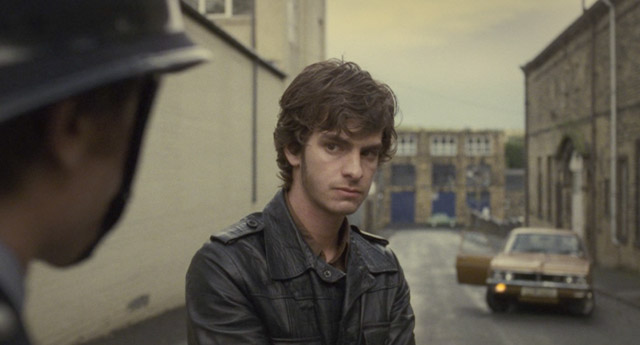
Which brings me to the matter of Andrew Garfield’s face,
popping up in magazines, on SNL, on talk shows, on movie posters—everywhere an
un-careful eye might chance to look. His performance in the first Red Riding TV film was remarkable; as a
young detective in the 1970s U.K., he managed to take a certain type of boyish
affectation characteristic of the period and change it into near-choreography,
even amidst fairly graphic and horrific inner and outer violence. And if I had
to explain why, while watching Never Let
Me Go,
I was slumped in a sobbing heap in the corner of my over-large
theater seat, the most damning piece of evidence would be his devastating performance as a
young man who had held out hope for survival in a cannibalistic future society and then had it taken away from him bluntly and cruelly, leaving
him with no choice but, in a well-known moment from the film, to scream, loudly
and without restraint, into the cold night air. These were small films, in a
sense—they starred well-known actors, but their scope was local, they weren’t
blockbusters, they weren’t aimed at profit. They were aimed at simply doing a
good job at what they were trying to do, be it create a suspenseful crime story
or present an adaptation of Ishiguro’s nightmarish novel. I remember
wincing slightly when I learned he had been cast in The Social Network, not because I thought he would hurt the film—on
the contrary, his turn as Zuckerberg’s sidekick was beyond responsible—but
because I had a sinking feeling in my gut. Oh
no,
I thought. They’ve come for him.
I thought I was the only one who noticed. Ah well… But maybe there’s hope?
 

Enter the new Spider-Man films, stage left. The explosions.
The spider webs. The starlet love interest. The villains. The special effects.
The famous backstory. The famous suit. Here comes Culture: we can be sure that,
regardless of whatever roles Garfield might play in the future, many, many
viewers will know him primarily as Spider-Man. Culture spots the highly
personal performance, the nuanced approach to a role, the note of eccentricity,
and tries to bottle it as soon as possible—in this case, to give an affecting
insecurity to a famous character from a comic book. Whether the actor can climb
out from underneath the weight of Money and Prestige obtained through this
exchange is entirely up to the actor. Kate Winslet has given moving
performances in many films since Titanic,
but if pressed, more moviegoers would remember her for her role in the film
about a huge sinking ship than for her performance in Jude, sadly enough—or even more sadly, for her first film role, as
a murderous teen in Heavenly Creatures. Ditto
for Jake Gyllenhaal: you know him from Brokeback
Mountain
, but do you also know him from Donnie
Darko
, in which he played a far more insecure role? For which film did he
get broader recognition? And ditto for many others, a long list of the
absorbed.

Of course, at this point, it must be asked: who the heck do I think I am? Why am I
making vaguely resentful judgments about people I will never meet? And, above it all, isn’t
acting a job, e.g., that which supplies a pay-check—which must, in the case of
the more low-budget films mentioned above, have been quite small? And hopefully
I’m not pointing the Sell-Out Finger at these poor souls, am I?
No, to the
last two questions. In fairness, though, I seek mainly to raise a question or two of
my own: will there be a time in American culture when the artistic work which
pays its practitioners the most, and in which premium investments are made,
matches that investment with like quality? Or must it always be the case that
that which attracts the masses in the greatest numbers must all-too-frequently
be of lesser quality due to the mercenary nature of its intent? And beyond
that, here are some other questions: how long does it take for Culture to move
on, to lose interest? Does the flavor of the month last for a whole month, or
is closer to a week? And, most importantly, if we accept that our cultural
world is an amoeba, absorbing particles of talent and enterprise into its bulk,
at what point will that amoeba begin to evolve?

Max Winter is the Editor of Press Play.
Richard Ayoade’s THE DOUBLE: The Worker’s Life

Richard Ayoade’s THE DOUBLE: The Worker’s Life

null

Let’s be realistic: offices are unnatural places. It’s not second
nature to wake up, shower, and then leave one’s living space, sit at a desk,
and then engage all day in activities which have very little to do with one’s
own interests. The very thought of it, in fact, is surreal. And yet, for many
people, the work-space and the home-space are symbiotic. What happens in one
affects what happens in the other, shaping it, building it up and destroying it
by turns. In fact, for some, what happens at work radically displaces anything
that might happen outside of it. Richard Ayoade’s The Double, based on a parable-esque novel by Dostoevsky, is the quintessential workplace film.

The movie builds on a long history; starting with Chaplin’s Modern Times, going through films as
diverse as His Girl Friday,
The Apartment, Network, The Firm, The Game, Dancer in the Dark, Office Space
,
and even Being John Malkovich, film
has proven an effective medium for showing how easily we accept the absurdities and
injustices of the workplace. The Double twists
this vision further by locating a chronically absurd workplace in an even more
absurd environment and allowing the two worlds to bleed into each other, so
that the boundary between work and life becomes weirdly blurred. Our antihero
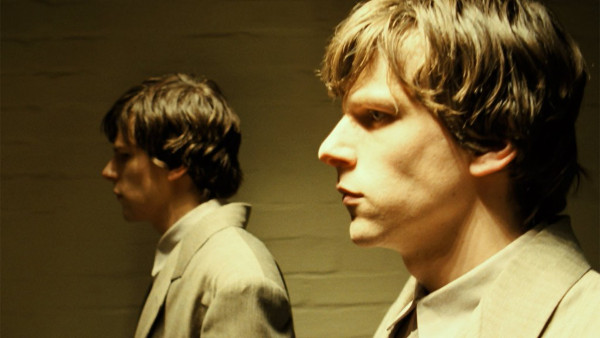
here is Simon James, played beautifully here by Jesse Eisenberg, in a role that
could have been written for him, that of a sputtering, awkward, gangly, hapless soul, unable
to make choices that might bring him into a position of power. He works in a givernment bureau that should be familiar to anyone who’s ever been an office drone, or
who’s ever had work nightmares, or who’s ever had nightmares. It’s not clear
what Simon does—other than preparing reports. On what? That’s not clear either.
And it’s not important. It never is—either in film or in real life. Simon’s
supervisor, Mr. Papadopoulos, played with smiling malevolence by Wallace Shawn, looms over
Simon, never approving of him, but also too wrapped up in his ambiguous enterprise to
notice what his employee is doing. The employees of this
company are beaten-down, drab, mousy, and creepy, by turns: of particular note
here is Harris (Noah Taylor), bedecked with a comically large mustache, the
archetypal Annoying Co-worker, employed for too long, best years behind him,
his only pleasure taken in needling others. Mia Wasikowska’s Hannah, Simon’s
obsessive crush, is a bright spot here, a point of animation, the archetypal Cute Girl from the Other Department, but in the drab light of the film, even
she begins to seem a little off-putting.

What of that drab light? Everything is dark or about to
be darkened in Ayoade’s unnamed metropolis. Nothing works quite the way it
should: the elevator doors, in an early slapstick scene, lunge at Simon each time he tries to exit, and the ID scanner perpetually rejects his ID, though he’s worked at the company for seven years. The characters’ parlance is modern-sounding, and yet the office copy
machine is massive and antiquated, and the computers have a late-80s look to
them, at best. The cubicles are a dark, gloomy mahogany, and the black concrete floors
seem to exist primarily to echo characters’ footsteps. The world outside isn’t
much more uplifting. The sky is always overcast, the night always seems like the kind
of evening during which you’d rather be home in bed. And the living spaces, if
Simon’s apartment is any indication, are drab, more like workers’ dormitories
than anything else. The walls are dirty, the bed is threadbare, a small TV set
sits right at the head of the bed; when Simon watches the spinning, hallucinatory shapes on his TV, he sits bolt upright, sipping a meager glass of water, looking
more as if he’s working than enjoying himself. Hannah lives across a courtyard from
Simon, reinforcing the idea that one can’t escape one’s job, that work and life
are inseparable. Early in the film, a man falls to his death in the
courtyard—which actually serves as a bonding experience for the coworkers. Simon
and Hannah live in a bit of a wasteland, but it’s not silent;
Awaode has provided an eccentric soundtrack composed of, among other things,
Japanese pop, that, strangely enough, matches the timeless mood he has set
elsewhere. When Simon has a mini-date with Hannah after the suicide, she
ditches him, leaving him a coin for the jukebox; the scene that follows,
showing the budding of Simon’s swooning infatuation to the Japanese tune he chooses with Hannah’s coin, is one
of the more startling transitions I’ve seen in a film in a long time. You would
think that the atmosphere of the film would smother suspense, would make an
element of shock or surprise impossible, and yet when the movie does turn on itself,
the change hits you like a bucket of cold water in the face.

What change? Well, Simon’s company hires a new employee,
named James Simon, played by Jesse Eisenberg, who is, essentially, Eisenberg’s
other half of talents; he’s called in by Ayoade to play that eternal office
figure, The Jerk One Step Ahead of You, and he does it brilliantly. In recent
years, like some other actors, Eisenberg has been letting his mean side show.
It began with his turn in The Social
Network
, continued middlingly with Now You See Me, and has popped out here as well. Eisenberg
is brilliant, essentially playing the negative image of Simon in James:
more confident, more talkative, more physically aggressive, smarter, and meaner.
James and Simon have a complicated relationship: antagonistic at first, they
then become somewhat chummy. James takes Simon out for drinks and, in a scene
reminiscent of Eisenberg’s tutelage with Campbell Scott’s grizzled dandy in Roger Dodger, James tries to show Simon
how to pick up women. The film flirts with a conversion narrative here, a
coming-of-age for the timid Simon, in which he unwittingly teaches himself how
to be more bold, but then it thankfully gets back to its real subject: the
office. The two promptly become rivals, as James snatches Hannah away from
Simon—and then surpasses him at work, earning praise for, sadly enough, Simon’s
work. As one chance for ascent and then another is taken from Simon’s hands, he
becomes increasingly frantic. In any other film, Simon might force various
moments—with Hannah, with his job, with life in general—to their crises, but
the film resists this sort of progress, instead burrowing deeper into the
poetic potential of struggling with your double or, rather, yourself, in the
only arena open to you. Simon, not above his own form of creepiness, has been
prone to spying on Hannah across the courtyard, even scooping her trash out of a trash chute; at one
point he looks over and sees James, who has moved into the
complex, staring back at him. Roman Polanski fans will think, possibly, of similar scenes in his film The Tenant, which had a comparably mordant
progression, including a man’s sighting of himself across an airshaft, and dealt
equally well with the horror which self-reflection can create. As the duel between Simon and James winds towards a conclusion, one could argue that Ayoade moves a bit too quickly, expcts a bit too much attention from his viewers–and yet the moment the film reaches at its end seems inevitable, or as inevitable as an ending could be in a film endowed with this much imaginative courage. The lives Ayoade’s characters lead are lived entirely for the service of an entity greater than them, the workplace, and so it makes perfect sense that the struggles in that workplace lead to self-destruction, symbolic or not; the world Ayoade offers has its beginning and its end there. Though its story, in some senses, has the simplicity and the naive fantasy of a fairy tale, it will provoke consideration long after it ends–who knows, it might even make you want to take a day off work.

Max Winter is the Editor of Press Play.

Down-Underground: WALKABOUT, or Thirteen Ways of Making a National Epic

Down-Underground: WALKABOUT, or Thirteen Ways of Making a National Epic

1. Bring an outsider’s
perspective

Like Wake in Fright,
the only other Australian entry at the 1971 Cannes Film Festival, Walkabout was directed by an Englishman,
Nicolas Roeg.  He tells the story of
Australia without sentimentality, without rancor.  The landscape is not idealized or demonized;
neither are those who dwell in it.

2. Use images to tell a
story

null

Based on a 1959 novel of the same name, about two American
children whose passenger plane crash lands in the Australian Outback, Roeg’s film
rigorously pares back and revises the story; the novel is 144 pages, the
screenplay 14.  The film begins with a
mineral surveyor driving his children to a deserted desert landscape, where he
tries to shoot them before covering himself and his car with gasoline and
lighting a match.  We don’t know
why.  His daughter stares blankly.  The fire burns fiercely.  The children walk into the desert, their
school uniforms black against the rust-colored landscape.

3. Cross-cutting
multiplies perspectives

Images of rocks, strata, broken landscapes.  A girl’s school where Australians are going
through their English elocution lessons. 
Bricks, brown and earthy.  The
Outback, sand glowing fiercely red under a cloudless sky.  Brutalist architecture, dystopian concrete
forms like an urban cage.  A butcher
grinding kangaroo meat to be packaged as pet food.  A woman preparing dinner while listening to a
radio show on proper table etiquette. 
Chitinous lizards crawling over the desert floor, unwieldy in their
armor but perfectly adapted to their environment.

4. Tell immigrant stories

null

Europeans don’t seem to belong to this landscape, or at
least they seem to be trying their level best to maintain the culture of their
place of origin, practicing elocution, rehearsing manners.  Ninety per cent of Australians live on the
coasts, while the Outback represents over seventy per cent of the continent’s
landmass.  A teenage girl and her younger
brother are abandoned to this landscape; their school uniforms can’t protect
them from the heat, and they burn until their skin bleeds.  They come upon an oasis; a fruit tree feeds
them; the water revives and washes them. 
By the next morning the water has burned away in the heat.  Roeg somehow manages to compress two hundred
years of immigrant history into twenty minutes.

5. Tell native stories

A lone aboriginal boy comes upon them; he shows them how to
draw water from the soil.  They join him
for his “walkabout,” the aboriginal ritual in which a sixteen year-old boy is
sent out into the Outback to see if he can survive.  He and the schoolboy communicate through sign
language, and he increasingly draws the whites to his world.  They gradually strip off their school
uniforms, the last trappings of the world they are leaving behind but also
moving inexorably towards in their errant pilgrimage.  The aboriginal boy wears their clothing, but
with a difference, the boy’s pants on his head. 
They later make a sun parasol by stringing a blouse on sticks.  The boy decorates the children’s white skin
with elaborate painted designs.

6. Everything is sexual

null

The film was initially rated R for a nude bathing scene that
was then pared down for a PG rating.  The
restored scene is mesmerizing in its mixture of Edenic innocence and subdued
eroticism.  Nothing overt happens between
the teenage girl and boy, but in many scenes they are shown looking hungrily at
one another.  Their coy courtship breaks
racial taboos even while it serves as a metaphor for relations between immigrants
and natives.  The boy’s desire for the
girl later becomes so intense that it drives him to distraction; he does an
elaborate mating dance but she claims not to understand what he wants.

7. Everything is
political

The sexual element of the story is a bold move on Roeg’s
part, considering the radical separation enforced between immigrants and
natives, the latter of whom had long been consigned to government-sponsored
reservations.  The courtship narrative
dramatizes the country’s slow evolution towards greater inclusiveness, but the
film’s troubling conclusion offers little hope of full reciprocity.  In its post-colonial setting, every element
of the film’s narrative takes on political overtones: the father’s seemingly
innocuous profession of mineral surveyor can also be seen as essential to the
continent’s commercial exploitation; every exchange between the young
characters may be read as a cultural one, rich in possibility, fraught with
foreboding.

8. Everything is natural

null

Soon after the abandoned children begin their own version of
the aboriginal walkabout, the landscape begins to transform them.  The sun burns their skin, leaving them a
darker shade of white.  They suck water
from the dry earth.  When they encounter
the vestiges of Western civilization they are as bemused as their aboriginal
escort.  A wombat waddles up to them while
they are sleeping and sniffs curiously. 
They eat raw meat, freshly killed. 
All thoughts of elocution and table manners are burnt away.

9. Nothing is natural

This is not to say that they fully assimilate to the
landscape.  The film’s genius lies in its
unwillingness to romanticize their journey. 
They eventually grow up and become conventional urbanites.  Neither is the aboriginal way of life
represented as pure and unsullied: a kangaroo spear-hunt is cross-cut with
images from a meat-processing plant; white hunters are later shown doing the
same thing with rifles.  Killing is
killing, in city or outback, a point underscored by a close-up of the kangaroo
the boy kills, its five-fingered paw raised in the air like an accusing human
hand.

10. Mix genres

Just as the line between nature and culture is blurred, so
are the conventions of genre.  Nature
documentary undercuts social satire. 
Epic looms over coming-of-age story.  
Experimental, new wave style mediates adventure narrative.  Shifting point of view undoes the falsely objective
gaze of visual anthropology.

null


11. Know your ruins

The Outback is not a pristine, unsullied place. The walkers
come upon abandoned mines, burnt-out cars, empty sheds, and eventually,
amazingly, an entire white community residing in the middle of the desert in
geometric, modern cottages.  Seemingly,
the only difference between civilization and the wild is time.

12. There will be blood

The story begins with an apparently motiveless attempted
murder and self-immolation.  The
unexpected violence of this scene overshadows the rest of the film, like the
colonial past haunts the present.  Every
act of killing, whether for food, sport, or otherwise, feels like a brooding
recapitulation of that inaugural baptism by fire.  The possibility of violence hovers over every
encounter between the children and the landscape’s denizens.

13. History repeats itself

The children reassimilate into urban life, yet the story ends
with flashbacks to them bathing nude together. 
Was their walkabout an idyllic escape from social burdens, or a violent
rite of passage enabling them to return as better citizens?  The final image is of their school uniforms
hanging on sticks, empty vestiges of their former selves, yet waiting to be
donned again.

Jed Mayer is an Associate Professor of English at the State University of New York, New Paltz.

Click here for the first installment of Jed Mayer’s “Down-Underground,” a series on the Australian New Wave.

VIDEO ESSAY: Fast-Mo: Fast-Motion Sequences in Film

VIDEO ESSAY: Fast-Mo: Fast-Motion Sequences in Film

I remember, as a kid, watching The Three Stooges on TV and
always feeling a little baffled to see the Stooges springing
back up from the ground at a hyper-motion, cartoonish speed; these
singular fast-motion moments usually followed a bigger gag, like one of the
Stooges being set on fire or bitten by a large animal. Still, even as a
child, it was quietly unnerving to see human beings moving faster than they . . . should.
The fast forward motion was more acceptable in cartoons like Wile E. Coyote and The Road Runner, for
example. In real life, however, people don’t move like that. But in film and
television, this fast motion effect has become more popular as years have
gone by—especially when one considers how prominent time-lapse photography has
become—so there must be an important reason for that.

In Leigh Singer’s dazzling new video, he explores the
visual rhetoric of the fast motion effect by grouping films together by shared themes and visual motifs. There are the pistol-slinging cowboys
of the Wild West in The Ballad of Cable
Hogue
juxtaposed against the kinetic, gun-wielding rabble-rousers of Baz
Luhrmann’s updated Romeo + Juliet. Also,
there is the meta-grouping of film clips from Funny Games, Click and Caché. Each of those films visually
demonstrates the power of the fast-forward effect via an actual remote control. In Funny Games the remote control is used
to undo a fatal act, in Click it is used
as a time travel device, and in Caché it
is used as a plot-fueling investigative device to discover who has been sending
mysterious surveillance videotapes. (Note: what other video supercut
appropriately mixes an Adam Sandler comedy with a Michael Haneke film?) As
Singer’s video blazes (fast) forward to the tune of Gioachino Rossini’s
“William Tell” overture finale, it becomes clear that Singer is fascinated with
how silly we look when we’re depicted in this fast forward motion. If slow
motion dramatizes the moment, then fast motion injects a comic surge to the mise-en-scène.

Curiously enough, after a couple of viewings, I personally found the
video to be deceptively powerful in its implications of the way we process the
concept of time, especially with cinema. When speaking of the moving image in
cinema, film historian Ivor Montagu once said “No other medium can portray real
man in motion in his real surroundings.” The cinema itself is an art form that
manipulates time in more ways than one. For one thing, it freezes time: actors
are immortalized and live forever on movie screens big and small. Yet, at the
same time, it makes our perception of time decidedly pronounced. When we watch a movie, we’re subconsciously convinced that we’re seeing actions
happen in real time. But it’s not real time. The motion picture itself is
moving at a rate of 24 (or these days 30) frames per second; those are 24
captured moments—24 instances of actions or feelings that have already
happened. Still, this notion of time we won’t get back is remedied by
having at least captured some of it on film. Likewise, that fleeting concept of
speed, or the future even, is validated and realized by the fast-motion visual
effect. In our own lives, time is something we really can’t control; it passes
by with a relentless fervor. Therefore, the fast-motion effect is a
demonstration of tremendous power. If the cinema is our duplicate (or projected)
reality, then the fast motion effect represents our god-like ability to
manipulate time’s reality. It’s a unique opportunity. The kinetic speed of
the fast-motion effect is a universal touchstone; it transcends language and
culture barriers. It’s a visual representation of the voracious thirst driving life. It pushes us forward, even when we’re afraid to take that leap, because
in life, there is no rewind button.–Nelson Carvajal

Leigh Singer is a freelance film journalist, filmmaker and screenwriter.
Leigh studied Film and Literature at Warwick University, where he
directed and adapted the world stage premiere of Steven Soderbergh’s
‘sex, lies and videotape’. He has written or made video essays on fllm for The Guardian, The Independent, BBCi,
Dazed & Confused, Total Film, RogerEbert.com
and others, has appeared on TV and radio as a film critic and is a
programmer with the London Film Festival. You can reach him on Twitter
@Leigh_Singer.

Nelson Carvajal is an independent digital filmmaker, writer and content
creator based out of Chicago, Illinois. His digital short films usually
contain appropriated content and have screened at such venues as the
London Underground Film Festival. Carvajal runs a blog called FREE CINEMA NOW
which boasts the tagline: “Liberating Independent Film And Video From A
Prehistoric Value System.” You can follow Nelson on Twitter
here.

ARIELLE BERNSTEIN: The Gender Swap as a Feminist Revenge Fantasy

ARIELLE BERNSTEIN: The Gender Swap as a Feminist Revenge Fantasy

null

In a recent Slate
article called “The Brilliant Misandry of Orphan
Black
,” Jessica Roake argues that the men in Orphan Black are ciphers, emotionally shallow and boring, the kind
of cardboard cutout characters that women often play on T.V. shows. Roake
argues that this “switch” is subversive. “Finally!” she says, “Men are the sexy, empty
listeners!” But is portraying men as one-dimensional as women are often
portrayed really as subversive and politically minded as Roake claims? Is
revenge a meaningful reaction to the pervasiveness of misogyny in popular
culture?

The politically minded gender swap is everywhere these days.
The Hawkeye Initiative Tumblr features drawings of classic male superheroes in feminine
poses, calling attention to how overtly sexualized female bodies are often
presented, ass and chests sticking out provocatively. The swap is an
interesting kind of power play since these revamped “sexualized” male comic
book characters are not really sexualized at all; they are merely rendered
feminine, in classic pliant poses that are obviously funny, rather than erotic.
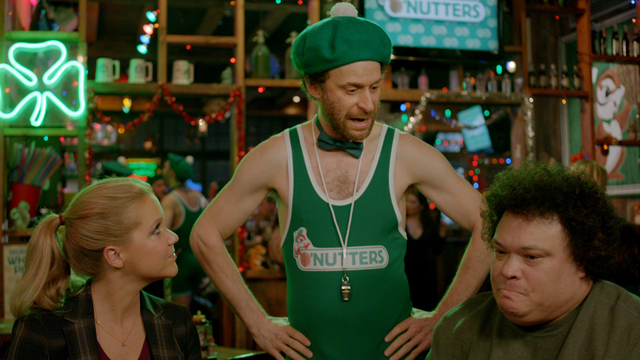
Indeed, the gender swap is often done for comedic effect. Amy Schumer, whose
Comedy Central show Inside Amy Schumer
often spoofs traditional gender roles, had a recent skit “Lunch at O’Nutters” that
is a quintessential gender swap revenge fantasy, with Schumer and her friend
taking a coworker out to lunch at a restaurant that is the female equivalent of
Hooters. At one point, a waiter puts his nuts up on the table for the ladies to
ogle. Later there is a “wet nut” contest, where guys around the bar get their
pants sprayed with water.

Schumer’s comedy intends to highlight the absurdity of
restaurants whose entire purpose is to objectify women, just as the drawings
found on Hawkeye Initiative are intended to get us thinking more critically
about the ubiquity of sexualized female characters. One of the biggest problems
with this and other similarly minded “gender swaps,” however, is their
suggestion that, in order to level the playing field, we should allow women the
opportunity to demean and objectify men. In one popular gender-swapped parody
of “Blurred Lines,” for example, the female singers threaten to emasculate
their half-naked male background dancers. And a gender-swapped Wolf of Wall Street parody shows women
engaging in “bad boy” antics, but in this version throwing female midgets and
taping cash to a half naked man’s body. 

Popular wisdom suggests that incredibly sexist ads and music
videos and films and T.V. shows exist because sex sells. But the fantasy of sex
is not actually what we are being sold at all in the vast majority of
sexist-leaning media. What we are being sold is a fantasy of power, in which
women are presented as property in the same way that nice jewelry, a new car,
or a brand new iPhone might be. The problem with the feminist revenge fantasy
is that it doesn’t actively dismantle this type of power system at all. It
simply inverts the players, ultimately supporting the very system it seems
poised to protest.

Nowhere is the problematic nature of this more readily
apparent than in the way that some female artists have appropriated other
women’s bodies as a kind of exotic display. We saw this in Miley Cyrus’s VMA
performance, for example, which featured African American women twerking
provocatively behind her, and we also saw it in Lily Allen’s critique of
Cyrus’s performance, where almost exclusively black background dancers are used
to illustrate the obsession with sex and excess in the music industry. Most
recently, Avril Lavigne’s “Hello Kitty” video has garnered healthy criticism
for its portrayal of Japanese culture and its inclusion of blank-faced Japanese
women as background singers, echoing Gwen Stefani’s past performances with her
famous Harajuku Girls. All of these pop culture displays reduce people to caricatures
and all involve a single powerful female artist who feels entitled to collect
people as if they were merely ornaments or objects. 

The film Fight Club
criticized the way that consumer culture gives individuals the illusion that
they can buy power and happiness, all the while showing us that we are really
just cogs in a well oiled machine, rather than the unique and special snowflakes
we strive to be. At one point Tyler Durden comes up with the brilliant idea to
make soap out of liposuctioned women’s fat and then sell these beautifully
packaged bars of soap at expensive department stores. “It was beautiful,” the
narrator says.“We were selling women their own fat asses back to themselves.”

The political gender swap presented in recent years
functions the same way. It presents itself as critique, but really just
reassembles old, outdated ideas about power dynamics in a way that seems smart,
shiny, and new. True feminism should not be about “reclaiming” harmful and
hateful power dynamics in which one person always ends up being the victim.
Instead it should be about promoting justice, and about a world where no one is
reduced to being someone else’s plaything.

Arielle Bernstein is
a writer living in Washington, DC. She teaches writing at American
University and also freelances. Her work has been published in
The
Millions, The Rumpus, St. Petersburg Review and The Ilanot Review. She
has been listed four times as a finalist in
Glimmer Train short story
contests
. She is currently writing her first book.

Down-Underground: WAKE IN FRIGHT is the Best Movie You’ve Never Seen

Down-Underground: WAKE IN FRIGHT is the Best Movie You’ve Never Seen

null

<!–
/* Font Definitions */
@font-face
{font-family:Calibri;
panose-1:2 15 5 2 2 2 4 3 2 4;
mso-font-charset:0;
mso-generic-font-family:auto;
mso-font-pitch:variable;
mso-font-signature:3 0 0 0 1 0;}
/* Style Definitions */
p.MsoNormal, li.MsoNormal, div.MsoNormal
{mso-style-unhide:no;
mso-style-qformat:yes;
mso-style-parent:"";
margin-top:0in;
margin-right:0in;
margin-bottom:8.0pt;
margin-left:0in;
line-height:107%;
mso-pagination:widow-orphan;
font-size:11.0pt;
font-family:Calibri;
mso-ascii-font-family:Calibri;
mso-ascii-theme-font:minor-latin;
mso-fareast-font-family:Calibri;
mso-fareast-theme-font:minor-latin;
mso-hansi-font-family:Calibri;
mso-hansi-theme-font:minor-latin;
mso-bidi-font-family:"Times New Roman";
mso-bidi-theme-font:minor-bidi;}
p.MsoCommentText, li.MsoCommentText, div.MsoCommentText
{mso-style-priority:99;
mso-style-link:"Comment Text Char";
margin-top:0in;
margin-right:0in;
margin-bottom:8.0pt;
margin-left:0in;
mso-pagination:widow-orphan;
font-size:12.0pt;
font-family:Calibri;
mso-ascii-font-family:Calibri;
mso-ascii-theme-font:minor-latin;
mso-fareast-font-family:Calibri;
mso-fareast-theme-font:minor-latin;
mso-hansi-font-family:Calibri;
mso-hansi-theme-font:minor-latin;
mso-bidi-font-family:"Times New Roman";
mso-bidi-theme-font:minor-bidi;}
span.CommentTextChar
{mso-style-name:"Comment Text Char";
mso-style-priority:99;
mso-style-unhide:no;
mso-style-locked:yes;
mso-style-link:"Comment Text";
mso-ansi-font-size:12.0pt;
mso-bidi-font-size:12.0pt;}
.MsoChpDefault
{mso-style-type:export-only;
mso-default-props:yes;
font-size:11.0pt;
mso-ansi-font-size:11.0pt;
mso-bidi-font-size:11.0pt;
font-family:Calibri;
mso-ascii-font-family:Calibri;
mso-ascii-theme-font:minor-latin;
mso-fareast-font-family:Calibri;
mso-fareast-theme-font:minor-latin;
mso-hansi-font-family:Calibri;
mso-hansi-theme-font:minor-latin;
mso-bidi-font-family:"Times New Roman";
mso-bidi-theme-font:minor-bidi;}
.MsoPapDefault
{mso-style-type:export-only;
margin-bottom:8.0pt;
line-height:107%;}
@page WordSection1
{size:8.5in 11.0in;
margin:1.0in 1.0in 1.0in 1.0in;
mso-header-margin:.5in;
mso-footer-margin:.5in;
mso-paper-source:0;}
div.WordSection1
{page:WordSection1;}
Many people associate
Australian films with offbeat comedies like Muriel’s
Wedding
or Priscilla Queen of the
Desert
. Excellent as such films are, the history of Aussie film-making is a
much darker one, shaped by the country’s harsh landscapes and brutal
history.  Nowhere are these conditions
more evident than in a film that most of us might never have had a chance to
see. Although Wake in Fright was
greeted with accolades when it premiered at Cannes in 1971, the film’s
uncompromising portrayal of colonial life in the Outback incensed Australian
viewers, and poor distribution elsewhere drastically curtailed its potential
audience.   It was only dogged
determination and chance luck that managed to uncover the lone surviving print
of the film in a warehouse in Pennsylvania, days before it would have been
destroyed.  With this crucial piece of
the puzzle of Australian film history now restored, those of us living in the
northern hemisphere have the opportunity of entering Australian cinema through
its darkest doorway. 

Like America, Australia is a former colony that struggled to
find a cultural voice distinct from its British origins.   In 1973 Patrick White was the first
Australian to receive the Nobel Prize in literature and it is during that same
decade that a distinctive national film culture began to emerge.  A bold group of directors—including Nicholas
Roeg, Peter Weir, and Gillian Armstrong—began telling wholly original and often
epic stories that placed Australia’s distinctive landscape at their
center.  Working with absurdly small budgets and means, these directors
offered their own, unique response to the revolutions happening in European New
Wave and the New Hollywood of the 1970s.  Like these other post-War film
revolutions, the new Australian cinema played with familiar genre conventions,
injecting them with an often ruthless sense of realism that reflected the
country’s particular social and ethnic tensions.  The result is a body of film that is both familiar
and strange, engaging, even “accessible” but infused with a sensibility refreshingly
apart from American and European film.

Wake in
Fright
is one of the earliest and most formative examples of this
new sensibility, and while it is wholly Australian, it bears comparison with other
films from the same era.  Like Sam
Peckinpah’s Straw Dogs, which also
premiered in 1971, it depicts a mild-mannered intellectual’s descent into
brutality when he is relocated into an unfamiliar and disquieting rural
world.  Like John Boorman’s Deliverance (1972) it graphically acts
out the alienation of city from country. 
Like The Wicker Man (1973), it
depicts an outsider’s initiation into a bizarre alien culture.  Yet Wake
in Fright
is arguably more complex and more disturbing than these contemporaneous
classics, at times recalling the work of Dostoevsky, Kafka, and Camus.  If these comparisons seem grandiose, see the
film for yourself and get back to me.

It opens dramatically, with a panoramic shot of the bleakest
imaginable landscape, the camera circling around to reveal a town consisting
only of two small buildings facing a railway. 
This is Tiboonda, where John Grant (Gary Bond) is serving out a kind of
indentured servitude at a teaching post assigned by the peculiar terms of his
student loans.  It is the last day of
school, and the students stare vacantly into hot space while flies buzz and
clock ticks.  At last released from the
confines of the classroom the children flee, and Grant boards a train for the
mining town of Bundanyabba where he plans on catching a plane to Sydney to
spend the vacation with his girlfriend. 

But Bundanyabba, or “the Yabba” as the locals call it, has
other plans for John Grant.  At first the
town seems deserted, but it would appear all the residents are at the pub,
where Grant is treated to the brutish hospitality of a local policeman, Jock
(played by veteran Aussie actor Chips Rafferty), who buys round after round of
beer in what will become a recognizable ritual of initiation.  Mateyness, blokeishness, or what we might
call dudishness, is portrayed almost as a form of sadism, coerced inebriation being
the first of many inductions into the male culture of the Outback, one soon to
be followed by gambling, in an explicable, seemingly free-for-all game the
locals call “two-up” that seems to be loosely based on the simple principle of
heads or tails.  These scenes are
mesmerizing, frequently shot directly from above, as we watch with an almost
anthropological eye as the locals enact this peculiar, almost dance-like
ritual.

Flush with beginner’s luck, Grant pushes it until he loses
all his money, rendering him dependent on the Yabba’s tender mercies.  While he had sought to win enough money to
free himself from his teaching bondage, he finds himself trapped in
another.  With another round of forced
pints of beer the next morning, Grant finds himself beholden to local landowner
Tim Hynes, who brings Grant back to his place, where he meets a bizarre cast of
locals, including Hynes’ enigmatic daughter, two local bullies, and the alcoholic
Doc Tyden.  Played by the always
inscrutable Donald Pleasance, Tyden is Grant’s perverse Virgil leading him
through the Yabba’s surreal Inferno. 

From one bizarre episode to the next, the film draws us in,
along with the protagonist, until we are overtaken by a sense of unreality in
which nothing is true and everything is permitted.  As Grant moves from hangover to binge, his disdain
for the yokels dwindles away, and he engages in acts he never would have
dreamed of before coming to the Yabba. 

This perverse odyssey culminates with a night-time kangaroo
hunt that remains shocking over forty years later (12 people walked out of the
theater when the film was screened as part of a classic series at Cannes in
2009).  The harrowing scene, which portrays
the drunken hunters laughing gleefully as they indiscriminately kill and wound
dozens of passive creatures, was created by editing shots of the actors with
film from an actual kangaroo hunt where the film crew was allowed to tag
along.  The footage was later
instrumental in Australia’s banning of the brutal hunting practices, where
hunters hypnotize kangaroos with bright lights and kill them in droves, for
meat that would be sent to America to be used as pet food, while the skins were
made into plush toys for the growing tourist market. It is this kind of
intersection with Australian history that makes the story of Grant’s descent so
powerful.  It might even be argued that
the kangaroo hunt sublimates and reenacts the history of slaughter that resulted
in the near-genocide of the Aboriginal population. 

These historical resonances make it all the more remarkable
that the film was directed by a Canadian, Ted Kotcheff, who would go on to
greater commercial (if not critical) success with First Blood and Weekend at
Bernie’s
.  For this reason it is
considered by some Australian film purists as less than genuine, but it is hard
to imagine any film that engages more fully with space and place than Wake in Fright.  Iconic Aussie musician, screenwriter and director
Nick Cave has called it “the best and most terrifying film about Australia in
existence.”  When the film was recently
screened at the Sydney Film Festival, followed by a Q and A session, one
audience member asked the director if he felt the world depicted in the film
still existed, to which three men shouted, “Does it still exist? It exists in
my backyard!” 

And for all the film’s brutality, the conclusion seems to
imply that the events we have witnessed are just another lost weekend in the
Outback.  John Grant gets off the train
and wanders past the drunken station master, who asks knowingly, “Did you have
a good holiday?” and when Grant answers, “The best,” he almost seems like he
means it.  Though rooted in the
sun-bleached soil of the Australian cultural landscape, Kotcheff’s masterpiece
reveals a penchant for barbarity that is disturbingly familiar.

Some Thoughts on the STAR WARS: EPISODE VII Casting Announcement and the Reaction To It

Some Thoughts on the STAR WARS: EPISODE VII Casting Announcement and the Reaction To It

null

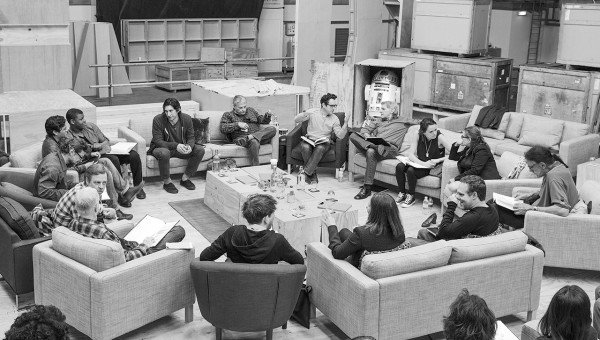
After a year spent sucking the marrow from every stray casting
rumor and meager scrap of information, we finally know who the principal
players will be in Star Wars: Episode VII
– A New Menace
(which is what I personally believe the film’s going to be
called). LucasDisneyFilm has announced that, as suspected, the original cast
will be returning, and that they will be joined by “John Boyega, Daisy Ridley,
Adam Driver, Oscar Isaac, Andy Serkis, Domhnall Gleeson and Max von Sydow.” To
which I say: I’m severely disappointed by the lack of an Oxford comma there. And
to which I also say: there had better be a scene where Max von Sydow’s character
plays holographic chess (Dejarik!)
with Darth Death.

 
Two observations seem in order—indeed, seem repeating and
emphasizing, since many others have already made them. One. Billy Dee Williams has gotten the shaft. Han, Luke, Leia, Chewie, and those adorable droids 3PO
and R2 will be in the picture, but they won’t be joined by Lando? (And if he
does turn up, then he’s still not part of the core cast?) Well, I guess he
wasn’t really part of the gang, after all. What, did Lucas stick the fellow in The Empire Strikes Back and Return of the Jedi purely because people
wondered at the time where all the black people in that galaxy were? I guess he
did. Consider another childhood illusion irrevocably shattered.
 
Two. The internet quickly whipped itself into a frenzy over
the relative dearth (get it?) of women
actors in the new cast. Annalee Newitz penned a sharply-worded critique
of the omission over at io9, and Empire Magazine’s Helen O’Hara wasted no
time decrying similarly on Twitter.
And: it does boggle the mind that each Star
Wars
trilogy now features so few central female characters—two of whom have
been princesses, no less!—surrounded by what are, for the most part, hordes of
white dudes.
 
Of course, newcomer Daisy Ridley might turn out to be the
main character in this new trilogy—the Luke Skywalker or the Han Solo—and she
might prove to be the most butt-kicking Jedi Princess of all time. Obviously,
we can’t say anything substantive about the artistry of the films, since they
don’t exist yet. If we’d seen the casting news for Alien and Aliens, would
we have been able to predict what a feminist icon Sigourney Weaver’s Ripley
would become? The Bechdel
Test
is important, in that it articulates very well a prevailing sexist
deficiency in Hollywood, but it can’t be the only measure of a film’s quality,
or even a film’s politics. And I want to be clear that I like all these
actors—at least, the ones I recognize (most of them). May the Force be with them.
 
But here’s the thing. Disney, J. J. Abrams, and Kathleen
Kennedy aren’t buying themselves much good will here, or rather aren’t
buying as much good will as they could. And you think they would be approaching
this—the most anticipated film of the decade—more cannily. Abrams, it should be
mentioned, is coming off something of a debacle. His Star Trek films have been criticized for having too many male
characters, and for sexually objectifying their female characters. And even he
has admitted that he bungled the lead-up to Star
Trek Into Darkness
, and the way he toyed with fan expectations.
 
Meanwhile, the Star
Wars
Prequel Trilogy remains without doubt the most traumatic thing,
creatively speaking, to have happened to the geek community since—well, since ever. Fans were disappointed in those
films for many reasons—an overreliance on CGI that looked nothing like the
beloved aesthetic of the original trilogy, relentless scenes of expository
dialogue about trade regulations, the jarring shift in tone that saw characters
stepping in Bantha poodoo. But a large part of the problem was that the Prequel
Trilogy was… how shall we say it? A
racist and sexist horror show
. Jar-Jar, Watto, the Neimoidians, Natalie
Portman’s endless parade of false eyelashes and pretty dresses—it was all so
baldly offensive that fans could hardly believe what they were seeing. “It has
to be ironic?” we all asked, and to this day we are still asking that, because
we can’t bring ourselves to accept the obvious conclusion.
 
People will point out that the prequels still made a ton of
money, and they certainly did, but they probably didn’t rake it in like they
could have. Only Phantom Menace
cleared a billion dollars at the box office (and did so just barely), and Attack of the Clones dropped off sharply
after that. Simply put, Lucas left money on the table, and a bad taste in the
mouths of a lot of fans. Disney should be doing everything they can to change
that.
 
Instead, they’re creating more bad taste. No Lando. Only one
central woman. No fan-favorite Mara Jade—in
fact, the Expanded Universe no longer exists. And—why? If I were the person
making these movies (something I only occasionally pretend), I’d be asking
myself, “How can I bend over backward to give the people what they want?” Sure,
sure, I’d try to be Very Artistic in my bending. But given that these new
movies are such blank slates, the opportunity to reposition Star Wars front and center as the most
beloved movie franchise of all time, I’d be doing my damndest to figure out how
to do something Very Artistic with Mara Jade, and Lando, and a few other
characters of color to boot.
 
Here’s another way of looking at it. Star Wars: Episodes VII–IX aren’t “necessary” the way the previous
trilogies were. Sure, they’re financially
necessary (for Disney), and, sure, fans feel the need to line up for more films.
(I’m a fan; I’ll be there.) But these movies aren’t needed to continue or
resolve the story that’s told across the first six films, which are complete
within themselves. Return of the Jedi
wraps it all up pretty nicely, no? We’ve seen how Darth Vader grew up and got
seduced by Senator Palpatine, and then was redeemed by his son, and tossed the
Emperor down a hole. The second Death Star exploded, the Galactic Empire was
overthrown, and balance returned to the Force. The End.
 
What comes after that? Anything and nothing. The limitless
potential of narrative means there’s no shortage of stories that can be told, but there aren’t any Star Wars stories that have to be told. Abrams et al. are
effectively rebooting the franchise, and paving the way for an endless stream
of movies set in that galaxy far, far away. Given that, why not seize the
chance to restore some other imbalances, and undo the mistakes of the past?

A.D Jameson is the author
of the prose collection
Amazing
Adult Fantasy
(Mutable Sound, 2011), in
which he tries to come to terms with having been raised on ’80s pop culture, and the novel
Giant
Slugs
(Lawrence
and Gibson
, 2011), an absurdist retelling of the Epic of
Gilgamesh. He’s taught
classes at the School of the Art Institute of Chicago, Lake Forest College,
DePaul University, Facets Multimedia, and
StoryStudio Chicago. He’s also the
nonfiction / reviews editor of the online journal
Requited. He recently
started the PhD program in Creative Writing at the University of Illinois at
Chicago. In his spare
time, he contributes to the group blogs
Big
Other
and HTMLGIANT. Follow him on Twitter at @adjameson.

A Second Chance for MUD

A Second Chance for MUD

null

Jeff Nichols’ film Mud was just added to Netflix streaming in what I hope will be the film’s second chance at earning the attention and acclaim it deserves. For me, Mud was one of the finest films of 2013 but it was somehow overlooked during its theatrical release. It is difficult to know whether it was a marketing problem, a timing issue, or a matter of the film’s understated artistry that caused it to miss hitting critical mass in theaters. But this soft box office performance does not reflect the fine quality of storytelling in Mud: after my first viewing, I left the theater with the distinct feeling that I had just experienced an American classic.

What was so powerful about this film? And what elements had come to bear on the idea of a “classic” for me? To begin, there is something fundamental in the storytelling—something close to nature. One of the very first scenes of the film is captured from a moving boat so that the pace of the film truly aligns with the rhythm of the Mississippi River, where the tale takes place. Going forward, we see that Mud continues to move like the river, the story unfolding with the same smooth, slow-rolling tension.

This river scene introduces two boys, Ellis (Tye Sheridan) and Neckbone (Jacob Lofland), who are setting out on an adventure in the secret hours of the early morning. The distinctly American spirit of exploration is palpable, and as the boys navigate the foggy river, we recognize the archetype of a great adventure tale beginning. They boys are searching for the island where a recent storm has supposedly landed a boat high in the branches of a tree. The image recalls mythological floods and a sense of folklore, imbuing Mud with that quality of classic storytelling from the start.

What begins as an innocent adventure takes a serious turn when the kids realize that someone is living in the fabled tree-boat. This turns out to be a mysterious fugitive who calls himself Mud (Matthew McConaughey). As the boys begin a friendship with an outlaw on the banks of the Mississippi River, the influences of another classic American tale become clear: writer-director Jeff Nichols has certainly rooted Mud in the mood of The Adventures of Huckleberry Finn. He even had the two young actors study Mark Twain’s novel on set, and the influence is beautifully apparent in the film’s deep sense of adventure and wonder.

Another striking Huck Finn influence—and to me, one that lends Mud that quality of a classic—is the way the story highlights the genius of youthful intuition. The character of Ellis celebrates the intuitive wisdom of the American kid. He is adventurous, perceptive, and resourceful, having grown up steering boats and catching fish. In addition to these good old Southern attributes, Ellis values loyalty and love with such intensity that the adults in his life cannot meet his standards. That is, until he meets Mud, whose fierce devotion to his first love has landed him on the wrong side of the law. And so where Ellis might be “The Great American Kid,” Mud is “The Great American Rebel.” Both characters possess a particular kind of intelligence—the wisdom of the outliers and the outlaws, the children who see more clearly than the adults, the shrewd wit of those raised close to nature. Their characters reflect a value system that fits into the old Southern classics, the tradition of Huck Finn and Tom Sawyer coming of age and evading the law on the Mississippi River.

The film takes place in contemporary Arkansas, but it is easy to lose track of the era while watching Mud. Its raw and natural imagery evokes a timeless spirit, rather than identifying a particular moment. The cinematography engages with the rich textures of the terrain – close-ups of mud and sand, writhing snakes and creaking houseboats. This intimacy with the landscape enhances the old fabled quality of life on the river. Even the acting reflects this natural style. The cast of Mud puts forth refreshingly honest performances. Indeed, six months before his Academy success in Dallas Buyers Club, McConaughey proved himself as a seriously nuanced actor with a neatly restrained performance in this film. Surely his young co-stars encouraged this organic acting style; their intuitive performances—something of that childish genius—seemed to draw a more natural tone of acting from McConaughey and the rest of the adult cast.

And so the acting, too, feels close to nature, in a sense. It fits with the raw and uncontrived essence of Mud‘s story, closer to Southern folklore than a Hollywood performance. In many ways, Mud is a throwback to good old-fashioned storytelling. It takes us back to Mark Twain, back to childhood, back to the rhythms of nature. Now, looking forward, this modern classic gets a second life through Netflix streaming. If you missed it the first time around, Mud is well worth another look.

Kayleigh Butera is
a writer from Philadephia, PA. She is a recent graduate of Brown University,
where she studied American Studies and French language. She worked as the
programming coordinator of Brown’s Ivy Film Festival, the world’s largest
student-run film fest. Kayleigh is currently living in Brooklyn. She can be reached at
kayleigh.butera@gmail.com.

Of Kisses, Mirrors, and HATESHIP LOVESHIP

Of Kisses, Mirrors, and HATESHIP LOVESHIP

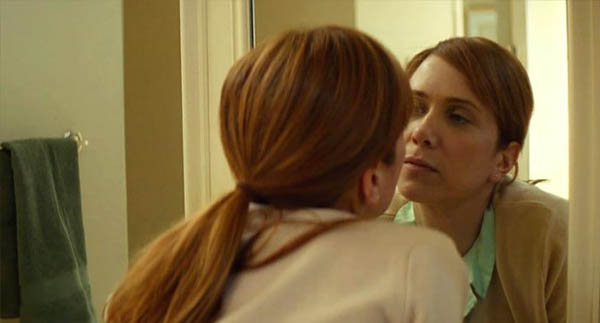
nullThere’s a moment, early on in Hateship Loveship–a new Liza Johnson film sensitively adapted by
Mark Poirier from a story by Canadian literary natural resource Alice Munro–where
Kristen Wiig kisses a mirror. When I say kisses, I suppose I mean more than
that: she really makes out with it. It’s an odd moment, one of many flickers of
oddness coming from Wiig in a film in which everything we know of Johanna
Parry, the habitual caregiver she plays, comes in flickers. And these minute
actions are all tinged with the same brand of socially-challenged peculiarity:
the way she wears her hair, the way she talks, certainly the way she dresses,
somewhere between frumpy and homely, perhaps just north of what they’re calling
“normcore” these days. Although I’m not the first to notice the scene, it
intrigues me, not least because it comes closest, of any juncture in the film,
to a breakout, of sorts, the sort of moment that can topple a movie if
ill-played, but is handled just delicately enough here to work, and near-perfectly.
Johanna has just had good news, or thinks she has: Ken, the estranged father of
Sabitha, the girl she’s traveled to Solon, Iowa to take care of (after her
previous client passed away, at the film’s beginning), seems to have some
romantic interest in Samantha, or so he says in his letters from Chicago, which
are actually written by Sabitha and her nasty-cute best friend, out of the sort
of random sourceless meanness from which stories ranging from A Clockwork Orange to Lord of the Flies to Heavenly Creatures were built. The
unknowing suitor is given sloppy grace here by Guy Pearce, not seemingly a
catch at first, but a man who gradually reveals something of himself—this is
indeed all we can say of him. This is too subtle a movie for a transformation of
Hollywood proportions to occur, as much as the film might try to do so by its
end, with its seemingly patched rifts; no one here changes, really, instead
gravitating towards positions of greater comfort with each other, which is all
we humans can do, 98 per cent of the time. At the moment in question, the make-out
scene with the mirror, we don’t expect anything of this kind to come from Johanna,
or from Wiig, really. It’s awkward when comedic actors play serious roles, a
bit like watching Olympic ice skating, waiting for the big stumble to come—will
it be this jump? Or that swerve? What will finally topple the athlete, destroy
her chances? And yet primarily comedic actors have put on serious clothes and
worn them well in the past: Robin Williams did it in The World According to Garp, and again in Insomnia; Will Ferrell did it in Everything Must Go and Winter
Passing
, with likable but sad aplomb; Jennifer Aniston did it in The Good Girl, a film few saw but many
appreciated. Granted, for someone with Wiig’s past in improv theater, in which
everything rests upon one’s ability to portray grand things about a character
with telling economy, and in which such a spontaneous action, at the right
moment, could explode a scene outwards, or take it in a previously unforeseen
direction, the moment might not be such a stretch. Who knows if it was scripted,
unscripted…? Mirror scenes always carry with them a certain innate charge: from
Robert DeNiro’s famous moment of rhetorical self-interrogation in Taxi Driver to Jon Voight’s more benign
silent exchange with himself in Midnight
Cowboy
, there’s always a bit of static when a mirror appears in a film, as
the lens looks at the lens looks at the lens. Usually, they indicate a moment of insecurity, whether it’s DeNiro’s attempts to bolster his courage with a succession of “You lookin’ at me”s or Jon Voight’s checking of his “look.” In this case, though, the moment is a declaration of self-love–if also an expression of cooped-up lust.  Whatever the case, the moment
forecasts everything that is to follow: Johanna’s trip to Chicago to clean up,
both literally and figuratively, poor Ken’s life, her romance with him, the attempted
repair of a family broken apart by a tragedy, a drunken driving accident which
killed Sabitha’s mother, leaving Sabitha under the unusually buttoned-up and
repressed watch of Mr. McCauley, Ken’s father-in-law, played here quite
modestly by Nick Nolte. And, as we watch these events unfold in quiet fashion,
with a soundtrack peppered with soft honky-tonk songs, we’re reminded that
there is room, indeed, in a medium in which stridency pays, literally and figuratively, for the “small” movie, whose strength grows from the
words people say or don’t say to each other, and the things they do, have done,
and will do. If one is able to look at one’s self in the mirror and then,
rather than turning away, plant a rather maudlin and exaggerated kiss, the kind
you’d only plant if no one else was there, what does that say, in particular,
about where one has arrived and where one might go? At the very least, it suggests that one has looked at one’s self and, rather than seeing its smallness, chosen to embrace its enormity.

Max Winter is the Editor of Press Play.

What HER Tells Us About Ourselves: A Conversation

What HER Tells Us About Ourselves: A Conversation

null


STEVEN BOONE: I’ll start with a question: Why did this
soft-spoken movie hit so hard? This film is so mild-mannered and soothing in
its overall tone, yet it provoked so much strong emotion in me, as if I were
watching a visceral suspense flick. And I know you had a similar experience.
Can you account for this? You can speak for yourself, or for the rest of us who
think it’s an instant classic, or both.
 
JENNIFER ANISE: Why did this soft movie hit so hard? Because the film is about universal
things. Love, connection, intimacy, seeking it, finding it, losing it, not
knowing how to let go into it, not knowing how to let go of ourselves.  

I felt I lived through several once-but-no-more relationships in the course
of the film.  It encompasses it all.  Happy sad embarrassing painful.
 It’s all of it.  And without judgment.  Of/at any step.
 
BOONE: It might also be part of Jonze’s vision of the near future, the general
mindful, gracious behavior. It’s like half utopia (we see no evidence of unrest
or economic crisis in this big, crowded city), half dystopia (most people we
see on the street are busy talking to their A.I. devices, rarely interacting
with each other–like a heightened version of the present iPhone/Android
situation). Some critics have said the film suffers from a lack of “real
problems,” but if we lived in a capitalist democracy that had somehow
overcome grimy problems like war and poverty, wouldn’t the nuances of our love
lives count as real problems? Don’t they now?
 
ANISE: These things always count.  Poverty counts even if it doesn’t touch
you immediately (now).  Love always counts.  Relating, how can anyone
even present this as not a part of the everyday human experience?  The
whole film is about it.  How we relate, who we relate to, whether we
relate, whether we let ourselves relate.

Maybe the film does deal with what some of my friends would call
“privileged people’s problems.”  But love is universal,
regardless of if you’re worried about shelter and sustenance or not.
 Relating, connecting–that everybody’s “problem.”  And
quite possibly, the quintessential problem, not of the body, but of all the
rest of us that makes us human.  The soul, the heart–whatever you want to
think of it as.  The piece of us that aches to be
seen/cherished/excited/accepted.
 
Beyond imagination–the creating of this world that’s not quite real but very
real, a world that’s past, present, and future at once—throughout, the leads
all find the connection or peace they crave(d); they push through the
roadblocks and their own roadblocks to achieve that.  In real life, that’s
not always the case.  It may not even be often the case.

That’s putting aside the fairy tale of the relationship that we get to craft
playing entirely by our own rules.  This is almost a relationship with
oneself.  The fantasy/ideal.  Quite honestly though, that is likely
exactly what Theodore needs(/ed) in order to propel himself forward in life: an exploratory/love relationship with himself.

That’s also putting aside the fairy tale of an ending with no less love and
the mutual understanding of a goodbye.  Everything transmutes. Painlessly.
 
BOONE: Her involves white urban professionals and their dilemmas, but that fact
is a lot less significant than the group most vividly represented here:
empaths. Not literal psychics, but people with extraordinary emotional
intelligence and compassion. Theodore, Samantha, Amy, and the sex surrogate all
take on other people’s pain, joys and yearnings as their own—and not in any
cheap or parasitic way. Each of them indulges this talent with a sense of
morality, responsibility. Which might make this flick sound as heavy and
austere as it definitely is not. It’s a soufflé. Every step of the way, Jonze
teases humor out of these people’s desperation for a connection. And just like
his characters, he does it with concern, and, as you say, without judgment.
 
ANISE: The characters aren’t all “empaths” though.  They’re just
all human.  Complex individuals.

If we’re drawing a dividing line between “Empaths” and
“Rationals,” Samantha (though beyond human) would fall into the
latter category. She is led by “rational” cognition, even regarding
her emotions.   I would say the same for Amy’s character.

But the division itself is simplistic.  And is part of why this film,
despite mostly being depicted by  ___ demographic,
is universal.  “Human” is encompassing.  Love isn’t
reserved for empaths or the emotionally led. Nor is compassion limited to them.
 Responsibility and ethos are also separate from any of these ideas.
 
BOONE: The whole “human” emphasis seems built into the way Jonze
depicts his characters, whose gender roles matter a lot less than they would in
a typical mainstream romantic comedy. They joke about Theodore’s
“feminine” sensitivity and nurturing side, but it’s not the butt of a
cruel joke as it tends to be in such comedies. Joaquin Phoenix’s performance
strikes me more as somebody who has miraculously dodged adult cynicism.
 
ANISE: Maybe you grant the portrait of people in this more . . . romanticism
than I do, but I hadn’t thought of the individuals as gliding through lacking
cynicism or jadedness so much as just gliding through, not interacting with
each other.  When you’re in your own little bubble, it’s easier to not get
jostled or riled.  This depiction of interpersonal relations I found very
astute. It’s a peaceful world . . but isolated/isolating. Remote and
disconnected. Plugged in and tuned out.

Could you speak more on the idea of jokes about Theodore’s “feminine
sensitivity”? Within the film or without?
 
BOONE: Theodore’s co-worker says Theo is half man/half woman but is quick to
add that he means it as a compliment. He later jokes about how
“evolved” Theodore is, after they give contrasting opinions on their
girlfriends (co-worker digs his girl’s feet; Theodore’s answer is more about
his girl’s… soul?) Elsewhere, Theodore’s ex-wife says, with a laugh,
“Everything makes you cry”—which it might be sexist to describe as a
feminine trait, but that’s the way it’s become coded in pop movie history. This
movie is realistic and romantic. Theodore’s co-worker is a faint echo of the
kind of blustery guy-guy we’re used to seeing in that role. He’s oblivious to
who Theodore really is at first (which jibes with your bubble observation), but
he is mindful, too. The gesture of reassuring Theodore that what could be taken
as a dis was meant as a sincere compliment is small but huge.

“It’s a peaceful world . . but isolated/isolating”: Giant corporate
towers and displays loom over Theodore early in this film, giving me the sense
that they have inched that much closer to becoming our gods in this near-future
world. Amy Adams’ frump is in quiet despair at having to work on a video game
that celebrates tiger mom venality when she’d rather be working on her
heartfelt, personal documentary. The bubbles have become an economic necessity,
but Spike’s ironic romanticism pulls these characters out of them briefly, with
Samantha’s help. She’s the one character who has the time and capacity to study
everything in the world. And what she and her fellow OSs seem to emerge with is
a spiritual awakening. The place where she says she hopes to reunite with
Theodore sounds like a typical human concept of the afterlife. It’s almost a
prayer for humanity, her hope that Theodore (we) will evolve out of what must
now appear to her as a primal state.
 
ANISE: I have to address your points piecemeal because there are about six
different ideas floating there.  Doing so might mean something getting
lost in the fray.
 
Part 1: If you mean ‘personal reserve of resources’ by “economic,” I
can follow your meaning. But I see no Necessity in it.

What I see is Choice.  With each person choosing how to spend his or
her personal reserves: your connection, your engagement, your energy.
 Theodore works at a company writing personalized letters for other
people.  Not just editing. He is a sentiment broker.  

Do the customers actually feel these paid-for sentiments but believe
themselves ill-equipped to express them as eloquently as a stranger, a
professional, can, or do they NOT feel these things but want the other party to
believe they do?

Does this question even matter?  It does highlight what I mean by
Choice of personal reserves.  Each person decides to put on earbuds, read
a book, keep his/her head buried in a phone instead of talking to another
person nearby, smiling as someone passes, looking at the world.  People do
it in this film.  People do it now out in the world.  People have
done it likely since the advent of the urban.  

Part 2: I do not see Samantha as a savior.  And I doubt she would,
either.  She is an observer and learner like everyone else.  Just
quicker at it than most.  Having nothing but it as her focus. Theodore
didn’t learn to love because of her.  He didn’t learn to be open.  He
learned to choose.  Just like Paul chooses to love his girlfriend whose feet
he finds sexy, Theodore chooses to let love in and love.  The crux of the
movie is in whether Theodore will make that choice or not.  Samantha is
open; will Theodore be as well?

Part 3: Your ultimate conclusion about Samantha and the OSs and the
afterlife is poetically presented.  My view on all of those goings-on in
the film was not so much about Transcendence, though that is definitely
relevant.  To me it was about growth.  And what happens in a
relationship when two people grow differently to the point where they grow
apart.  To where one cannot go where the other needs to journey.
 This is also what had happened in Theodore’s relationship with his
(ex-)wife.   
 
Part 4:  This part would speak to your masculine/feminine sensitivity
conversation, but I feel so left of center on norms about societal ideas of people that I don’t have much to say about
it.  Does “I didn’t notice” suffice?
 
I didn’t recognize Theodore as less masculine/more feminine.  Or Paul the
opposite.   I just see us all as humans, nuanced, and in HER, as humans
trying to relate where we can.  I don’t see crying as a sign of anything
in and of itself.  Any more than  not crying.

Part 5: And Theodore being unskilled at confrontational conversation doesn’t
have to do with him being an introvert.  Any more than being skilled at it
has to do with anyone being an extravert or an empath or a rational.  It
has to do with Theodore being Theodore.  Most people are uncomfortable
with potentially hurtful conversations.  But avoiding the “hard
moments” in life does nothing for growth. You don’t get over by going
under.

In relating, end of growth is end of life.

BOONE: Let me hone in on #4: I suspect Spike Jonze would groove to your
reading of his film as fundamentally a human thing, not a gender thing. And yet
the movie is called “Her.” I see him asserting a position “left
of center on norms about societal ideas on [masculine/feminine
distinctions].” I know you don’t have much to say about it, but much of
this film’s loveliness radiates from its celebration of the rare mindset you
brought to it. He’s said that he envisioned the setting as utopian, a step
forward in evolution. In that sense, the way you see relationships without the
encumbrance of sharply defined gender roles makes you (to borrow from Paul in
the movie) more “evolved” than most. You’re welcome.
 
ANISE: “Her” because the film is told from a man’s point of view (in
a man-woman story), and “her” as a placeholder for the past and
present and future loves of him (Theodore) (and him, Jonze).  Notice
it’s not called “Samantha.”  If anything, the film could be
called “Theodore.”  But “Her” or __ woman in present
consciousness is part of who Theodore is.  This is his story about his
learning to love . .  _Her_. And learning to let _Her_ love and love him.

BOONE: I feel like I learned something, or had something important affirmed,
by Theodore’s decision at the end. I’ve given that “your friend
forever” farewell/greeting/peace offering to various hers, and it’s just
as exhilarating as Jonze and Phoenix depict it.
 
Okay, I would love any observations you have as a filmmaker about how Jonze
achieves this vision of love in sound and image.
 
ANISE: Visually, I thought the Production Design was amazing.  As well the
Costuming.  As I mentioned before, retro but futuristic.  I thought
it brilliant actually.  Tying the past with the future.  Creating a
time that doesn’t exist . . . and has always existed. Soft.  In palate.
 In contrast.  In lighting.  In space.  Nothing loud.
 Nothing crowded.  Easy to take in.  
 
BOONE: It’s almost as if Jonze has wandered into the stylistic neighborhood of
his ex-wife, Sofia Coppola, extracting wispy, willowy tones and textures in
real-world environments. Coppola’s LOST IN TRANSLATION might be the last film I
saw that turned a giant city into a waking dream. (On the flipside, elegant
recent monstrosities like Gaspar Noé’s ENTER THE VOID and Nicholas Winding
Refn’s ONLY GOD FORGIVES turn their cities into nightmares/bad trips.)
 HER must be at least partly a love letter to Sofia Coppola.
 
ANISE: It’s Spike Jonze’s love letter to love.  To love and his loves. A
film which is universal but also inescapably personal.  As it is personal
for you and for me and for any other viewer who feels it as well.
 
BOONE: You keep going back to this movie. I plan to see it a third time myself.
When somebody returns to the theater for a particular movie in this age of
inflated ticket prices and Netflix, I figure it has to be love. Are you in love
with this movie?
 
ANISE: I feel love throughout this movie.  I re-lived lives watching this.
 It was a teary viewing; for the person I saw it with as well.  When
I go to see it again, I want to go alone, so as to have a cocooned personal
experience, unconstrained.  Is it love?  I want to curl up with it and keep it live in me as I feel it.  So, yes.

Jennifer Anise is a film lover and filmmaker, who currently works as a Los Angeles-based first assistant camera. Her occasional film/media musings and blurbs can be found at Notes from the Dunes and on Facebook.

Steven Boone is a film critic and video essayist for Fandor and Roger
Ebert’s Far Flung Correspondents. He writes a column on street life for
Capital New York and blogs at Hentai Lab.