Watch: A Video Essay About Witches in Film

Watch: A Video Essay About Witches in Film

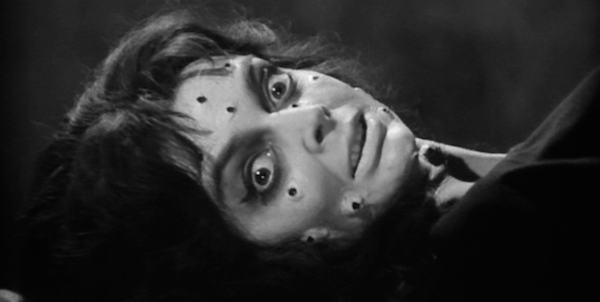
The venerable Film Comment has started publishing video essays! Their first entry is a brilliant piece on witches in film by Pam Grossman. Grossman’s research was extensive, and fascinating. We see clips from many countries, times, and aesthetics here; the 16-minute video should answer anyone’s questions about the roles of witches in film, who played them, what movies they appeared in, and how they’ve changed over time. Grossman offers us the obvious roles that everyone knows, of course, from Angelina Jolie’s stepmother in Maleficent to the Wicked Witch of the West in The Wizard of Oz–but she also digs significantly deeper into film history to roll out clips from Mario Bava’s Black Sunday, George Miller’s The Witches of Eastwick and George Romero’s Season of the Witch. The crucial message here is that the state of being a witch–should we call it witchery?–is empowering to the witch, and potentially either threatening or helpful to those within the reach of her wand. On this tour of cinematic witch history, Grossman takes us from a Scandinavian silent film all the way up to the present day, being careful to show the ambivalence of the witch figure throughout, even highlighting such films as The Craft, in which witchcraft is both an agent of needed revenge (as an outlet for teen angst) and problematic for its young users. This expertly edited and thoughtfully executed piece would be an informative watch for anyone interested in the history of witchcraft or the changing face of the occult in film.

Watch: A Video Essay About Jacques Tati, A Glass Door, and The Importance of Appearances

Watch: A Video Essay About Jacques Tati, A Glass Door, and The Importance of Appearances

It would be very easy to watch the event which forms the center of this beautiful video essay from David Cairns for Criterion, on Jacques Tati’s Playtime, and think it was merely a gag, nothing more, nothing less. Monsieur Hulot breaks a glass door at a fancy restaurant because he is trying to enter too politely; everyone pretends it’s still there; madcap and hilarious hijinx ensue. But, in fact, there’s more to it than that. As Cairns sagely points out, the gag has its own architecture, as the door’s parts become markers for a scene within a larger film. Beyond that, though, the gag is a telling one, about human nature and the desire to pretend, beyond hope, that everything is fine. The doorman continues to hold the door handle "open" for restaurant customers, even though there is no door; when the shards of the door replace ice in a champagne bucket, the drinkers think they are at fault when their champagne is warm. The short scene anatomized here points out something immortal about so much of physical comedy, and reminds us of an oft-forgotten fact: whatever it is we think the mind is, or may be, it is ultimately a product of the brain, and the body. What happens in the body, such as smashing into a door, ultimately happens within the mind as well.

ARIELLE BERNSTEIN: PARKS AND RECREATION, A Feminist Utopia

ARIELLE BERNSTEIN: PARKS AND RECREATION, A Feminist Utopia

nullAt the end of the penultimate season of Parks and Recreation, our heroine Leslie Knope gets everything—the
man, the kids, the high profile job. She even manages to move her new position right smack into the middle of her beloved hometown Pawnee.
Though the finale of the most recent season was wrapped up in a very pretty bow, it still felt genuinely satisfying, as well as genuinely
subversive. In a world where the T.V. show Girls
portrays sex and romance as empty and unsatisfying for its female leads, and
heroines in shows from Game of Thrones
to American Horror Story navigate a
landscape where sexism is rampant and men are often depicted as deeply
misogynistic, Leslie Knope’s triumphant success felt like a kind of joyful
respite and relief from a terrifying and cruel world.

One of the reasons Parks
and Recreation
has succeeded as a feminist T.V. show is not simply because
the female characters have remained funny, dynamic, ambitious, unique and
interesting, but also because the show succeeds at presenting male characters
that are equal parts strong, vulnerable, silly and staunch advocates for the
rights and successes of female characters throughout the series. Male and
female characters in Parks and Recreation
actively root for one another, rather than tearing each other down. Ben and
Lesley’s marriage is a model of egalitarianism; April and Andy’s young, silly
love is presented as a string of silly, ridiculous games and make out parties,
with each character deeply invested in helping the other grow. Even Ron
Swanson, staunch individualist and rugged he-man, is distinguished throughout
the series by his commitment to women’s rights. By the end of the series he is
a proud dad and loving husband, all without having to give up his signature “strong
silent type” brand of masculinity. Ron’s appreciation of feminism doesn’t
diminish his hatred of vegans, or devotion to woodworking—it simply makes him a
much more interesting and funny character.

Many of the current debates about female representation
onscreen are about granting female protagonists access to male spaces. We saw
this in the 80s and 90s when there was a proliferation of women as warrior
motifs from Xena the Warrior Princess
to Buffy the Vampire Slayer.
Recently, a slew of articles have called for women to have access to the joys
and pitfalls of the antihero world as well, as we praise the glorious brutality
of Orange is the New Black’s character
Vee and go to theaters in droves to see the icy villainy of Gone Girl. 

Heroines today are more diverse and complex than ever
before, yet few serious dramas that feature a cast of strong female characters
showcase romantic relationships that are genuinely egalitarian, the way we see
romance unfold in Parks and Recreation.
Often, female protagonists who are strong and willful are presented as
rejecting male romantic interest. In modern Disney Princess films like Brave, the heroine often makes a big
deal about not needing a man or romantic partner. In some films, like The Hunger Games, the romantic scripts
are flipped and male romantic interests are portrayed as doting, helpful and encouraging
mates. In truth, while many
cluck their tongues
at the unhealthy dynamics presented in teen romances
like Twilight, and their adult
equivalents Fifty Shades of Grey, one
of the pleasures of both these series is the positioning of boys and men as
being the objects of desire, even if the female protagonists within these
worlds aren’t particularly interesting in and of themselves.

The suggestion that strong female characters are the sole
hallmarks of feminist media may simply not be setting the bar high enough. In
order to really dismantle the patriarchy we need to see more varied
presentations of men. This is not to say that we should do away with the
douchey bros, bullies and alpha assholes that have become a mainstay in popular
media. Complex villains are fascinating, but excellent dramas like Breaking Bad, Mad Men, American Horror
Story
and The Walking Dead too
often pit men and women against each other, as if one gender’s success is
another’s loss.

The great T.V. dramas of today are about creating immersive
fantasies where we are transported to different times, places and worlds. The
adherence, then, to the narrative that men and women are consistently at odds
with one another is not about portraying a kind of gritty realism; it’s about
perpetuating the status quo and limiting our imagination about the
possibilities for a feminist future. I’d like to see a media landscape that
acknowledges the changing roles of men and women with greater nuance and
compassion, and also recognizes that there are many men today who are
incredibly happy to be living in a world where they aren’t shackled to one
particular model of male strength. Parks
and Recreation’s
greatest feminist success is not simply that the heroine
is allowed to “have it all” but in creating a world where male and female
characters are equally one another’s allies.

Arielle Bernstein is
a writer living in Washington, DC. She teaches writing at American
University and also freelances. Her work has been published in
The
Millions, The Rumpus, St. Petersburg Review and The Ilanot Review. She
has been listed four times as a finalist in
Glimmer Train short story
contests
. She is currently writing her first book.

Children in Horror Films: The Kids Are Not Alright

Children in Horror Films: The Kids Are Not Alright

nullYour life is going along normally, and then it happens: you
or someone you love suddenly finds that something is growing inside, a life
form that feeds.  In the morning you are
nauseous, and as it grows you shift uncomfortably through the night, struggling
to sleep.  You feel it moving inside you,
shifting, kicking, altering your moods, influencing your thoughts.  And then, finally, after nine long months, it
wants to get out.  You want this too,
desperately, but the emergence is violent, excruciating, prolonged.  After what seems like days of pain, you hear
a cry, a wail, from the just opened mouth of a being who is at once a part of
you and utterly alien.  As it grows, it
begins to do things, without warning, without discernible motive: knocking a
juice glass off the table, pulling kitty’s tail, hitting another child on the
playground.  When scolded, it cries, and
you feel guilty for being so harsh, until later, with little provocation, it
breaks into a fit of rage, screaming, kicking. 
Gradually, you become isolated, a veil drawn between you and the friends
you used to see; you sleep poorly, awakened by cries; even your spouse seems
far away, separated by the daily and nightly routine of caring for the
child who has taken over your life.

Is it any wonder there are so many horror movies about
children?  We regard children with pious
adoration, yet lurking just beneath this reverence is a sense of dread, an
awareness of how little we really know about our kids.  And for every family sitcom or melodrama
celebrating the wonders of parenting and childhood, there is a horror film that
dwells in the child’s dark shadow.

The mainstream rebirth of the horror film in the seventies
happened through a child.  Linda Blair’s
uncanny performance as the possessed twelve-year-old Regan McNeil in The Exorcist (1973) remains one of the
iconic moments in the genre’s history, making audiences squirm as they watch
a loving daughter turn into a bile-spewing monster.  The transformation is so horrifying because
we first experience the parental love of Ellyn Burstyn’s Chris through
touchingly candid moments of mother-daughter laughing and cuddling.  As Regan is taken through a nightmarish
battery of painful tests to discover why her personality is changing, we
experience these horrors from both mother’s and daughter’s perspective.  Yet when Regan goes entirely over to the dark
side, she becomes another being altogether, one that we have only glimpsed in
isolated moments.  Although the tale is
one of demonic possession, it works because we have all seen such isolated moments
of uncanny child behavior—talking to no one, staring into the distance,
inexplicable bursts of anger—and wondered what it meant.

Before The Exorcist
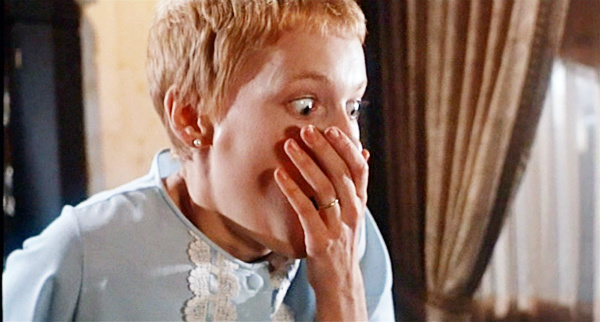
there was Rosemary’s Baby (1966),
which focused on how a child can take one’s life over even before it’s
born.  Roman Polanski’s vision is a
powerfully feminist one, as the narrative focuses on the ways in which a
woman’s body can be appropriated by men. 
John Cassevete’s Guy Woodhouse essentially sells his wife’s womb to the
devil in exchange for a boost in his acting career, and while the supernatural
element is strong, his betrayal serves as a metaphor for all of the selfish
reasons men might have for wanting children—either for public prestige or for
want of an heir, a kind of immortality. 
As Mia Farrow’s Rosemary grows increasingly ill, however, we enter the
special hell that for some women is the experience of pregnancy.  Stymied at every turn as she seeks personal
and professional help, the film frustrates our and Rosemary’s need to discover
whether her fears are real or only in her head. 
Yet when she finally discovers the truth, Rosemary’s acceptance of her
child is at once touching and repulsive, and we are left with the feeling that
the mother-child bond is something unknowable, uncanny.

Larry Cohen’s masterpiece It’s Alive follows a similar arc, as Frank and Lenore Davis are
initially repulsed by, but gradually learn to love, their monstrous
progeny.  The film begins with one of the
most horrifying portrayals of childbirth ever filmed, with a delivery room strewn
with gore, and as the fanged, clawed child escapes, the body count grows.  Desperate for sustenance, he attacks a
milkman, feeding on fresh meat along with that more traditional baby food, milk. Indeed, a
stream of milk and blood flows from the delivery truck, a raw image of the fluids with which mothers have always sustained their children.  Yet somehow out of these horrors comes love. As Frank comes to understand and even embrace the creature he produced, the
film miraculously transforms into a moving meditation on the strange powers of
parental affection.

For the record, I must confess that I have never had such
feelings. My wife and I remain happily childless, and have no urge to change
that.  The topic came up when we got to
the ticket counter to see George Ratliffe’s criminally-underrated Joshua (2007), and the usher asked, “Um,
do you have kids?”  “No,” I replied.  “Are you thinking of ever having kids?”
“Definitely not,” said my wife, laughing. 
The usher smiled and said, “Then you’re going to love this film!”  And certainly nothing I have seen better
expresses all of the reasons one might not want to have a child.  Vera Farmiga gives a magnificent performance
as a mother who tries, but fails, to love creepy son Joshua.  As she nurses their second child, a girl, the
older boy’s behavior grows increasingly strange, as he asks questions about
embalming techniques and hovers around his baby sister’s crib in the dark.  Sensing his parents’ growing fear of him, he
digs out old videotapes of his childhood, and discovers that as a baby he
nearly drove his mother insane with his incessant crying and screaming.  As his behavior grows more disturbing, father
Sam Rockwell begins to unravel, and Joshua knows just how to push him over the
edge without incurring any blame.

The precocious monster theme is fairly prevalent in child
horror films, but most compelling is the apocalyptic subgenre that imagines
such children taking over the world. 
Perhaps the best example is Village
of the Damned
(1960), which manages to conjure a fully realized alternate
world of dread in merely 77 minutes. 
Everyone in the quiet English village of Midwich simultaneously falls
asleep, after which unexplained event all of the women of childbearing age
discover themselves to be pregnant. 
Later, they all give birth on the same day, to children with golden eyes
and pale blonde hair, somewhere between alien humanoids and Nazi youth.  Their uncanny mental powers place them in the
realm of science fiction, yet the fears they evoke—of our growing obsolescence
and eventual replacement by a new generation, better adapted to a changing
world—are very real.

More subtle and ultimately more troubling is the
slow-creeping apocalypse imagined in the Spanish horror film, Who Can Kill a Child? (1976), in which a
young English couple on vacation make the mistake of visiting an island where
the children have violently seized power from the adults.  Director Narciso Ibáñez Serrador cunningly
opens the film with a montage of black and white photographs of child-victims
of war, juxtaposed with data recording the number of children fallen victim to
the world’s major conflicts.  Although we
share the English couple’s horrified point of view as they struggle to survive
against the malicious onslaught of a new breed of children, we have also been
shown how little right we have to the sovereign power of adulthood.  The film lays bare the naked self-interest
and condescension that lies beneath our sentimental reverence of childhood and
self-aggrandizement of parenthood, as we discover that the real answer to the
question asked by the film’s title is: adults.

Jed Mayer is an Associate Professor of English at the State University of New York, New Paltz.

WATCH: This New Video Essay Shows the Turning Point in Movies From SNOWPIERCER Back to Looney Tunes

WATCH: This New Video Essay Shows the Turning Point in Movies From SNOWPIERCER Back to Looney Tunes

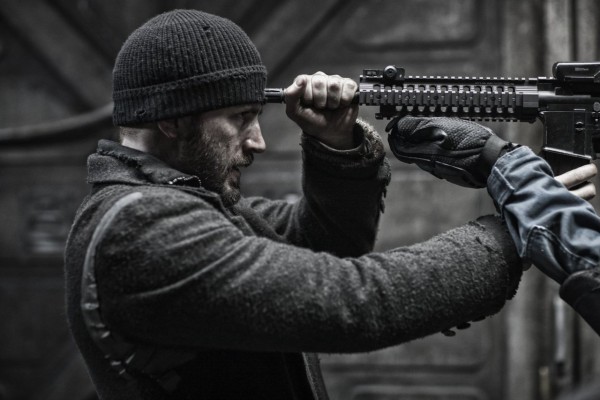
Tony Zhou’s newest video essay reminds us that a Warner Brothers cartoon, Snowpiercer, The Walking Dead, The Matrix, Eyes Wide Shut, Batman Begins, The Untouchables, and many other films have one thing in common: a point where, to quote the films (as the video does, repeatedly), "There’s no turning back." This would commonly be referred to in literature classes as the turning point, the spot in a narrative where the protagonist, the hero whose exploits you’ve been following throughout the story and the figure for whom you root for the most, must make a choice. The choice the character makes will send the narrative in one of several directions. Sometimes, Zhou suggests, the choice a story presents is not that complex; sometimes it’s the equivalent of turning left or right. Zhou uses Snowpiercer as an example of such a choice–a perfect example, indeed, since the characters in this film, imprisoned as they are on a train hurtling around the globe, can only go in one of two directions. In Snowpiercer, the left-right choice represents a dichotomy between two radically different castes or social strata, the ruling class vs. the downtrodden, impoverished class. In Eyes Wide Shut, to take a radically different example, the choice the masked figures offer Tom Cruise’s hapless interloper could affect the life or death of another human, as well as his own sense of himself as a moral being. In The Untouchables, the choice Jim Malone offers Elliot Ness is a choice between bending to the will of bullies or standing up for what he believes is decency. One question a piece like Zhou’s raises is: how common is it that a film offers us such a choice, any more? Is it possible that as cinematic history progresses, it is rarer and rarer that films hinge on gigantic moral questions which are no less gigantic for being represented by a simple choice between "right" or "left"? This ingenious piece does quite a bit of prodding in a very small space: kudos to the much-ballyhooed Tony Zhou for yet another job well done.

Watch: A Video Essay About the Power of the Lens Flare

Watch: A Video Essay About the Power of the Lens Flare

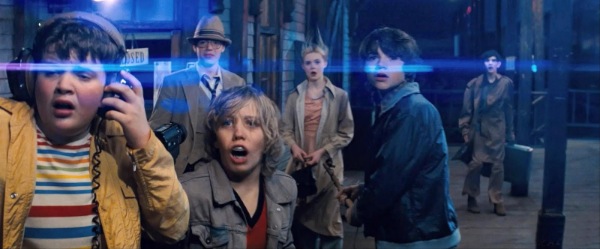
The lens flare is typically used, or perhaps over-used, to show a brush with the unnameable, in whatever form that might take. Jacob Swinney takes us through over 50 of these instances in this video essay, but they are all unified by a sense of sublimity, either benign or horrific. We see lens flares at the opening of Saving Private Ryan to signal the enormity of the war carnage approaching. When Leatherface spins his chainsaw around, and around, and around, the lens flares recall the grandiosity of the bloodshed that has preceded this moment. The technique doesn’t always have to signal dread, though, of course. In Punch Drunk Love, its presence signals the growth of love between Barry and Lena; in There Will Be Blood, we catch lens flare as Daniel Plainview ponders the possibilities of oil. It’s been argued that the technique is a cinematic trick, somewhat facile; it’s also been suggested that lens flares are annoying, little bursts of light that interrupt visual narrative for not certain purpose. This viewer tends to find their effect somewhat different–the lens flare almost always expands what I’m looking at, increases its potential, and brings speculativeness into the picture. Swinney’s beautiful video piece concludes, quite sensibly, with lens flare from one of the more expansive and widely appreciated stories of the last century: E.T., in which the earthly touched the unearthly, both in a literal and figurative sense.

WATCH: This OK Go Music Video for “I Won’t Let You Down” Channels Busby Berkeley, Bollywood, and SINGIN’ IN THE RAIN

WATCH: This OK Go Music Video for “I Won’t Let You Down” Channels Bollywood and SINGIN’ IN THE RAIN

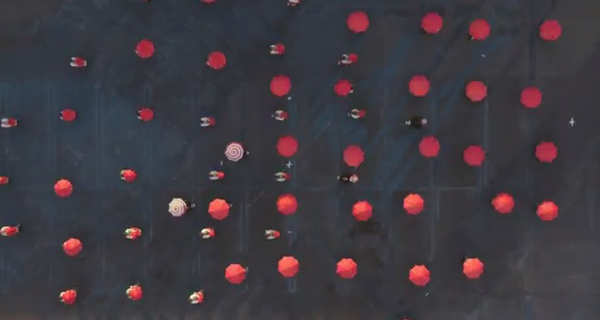
OK Go’s new music video for "I Won’t Let You Down" is a refreshing, vigorous burst of cinematic energy, referencing everything from Busby Berkeley’s spinning geometrical fever-dreams to the wild happiness of Bollywood dance numbers to the lyrical outpourings (and downpourings) of Singin’ in the Rain. The song itself is a throwback, of sorts; its sincere croons about truth in love could have sprouted straight from the depths of Saturday Night Fever. In the video, the band zips around an immaculate urban landscape on scooters; we see them head-on at first, and then the camera moves upwards, until we witness the design behind their zipping. How dos it do this? With a drone camera! In any other band’s video, this might have seemed like a cheap move; here, though, the shift achieves some cosmic significance, as if the comfort of love might offer some balm for life’s battering. And then: they whip out the primary-colored umbrellas. Gene Kelly, anyone? The symbolism is obvious, sure: partners provide shelter for each other. But in this little film, what OK Go has done is transporting.

And it’s not the first time they’ve pulled it off–they have a long-standing reputation for well-crafted videos. Look, for instance, at this Neo-Geo masterpiece for "The Writing’s on the Wall":

The first time I listened to OK Go was on a CD The Believer offered as part of their annual music issue, a few years ago–I remember being struck by their upbeat charm, their clear enunciation, their rambling chord structure, and above all, the way in which, despite the fact that they seemed unlike the selections surrounding them, all of which had a slightly more handmade, "indie" feel, the combination worked, somehow–which is part of the band’s virtue. OK Go fits anywhere.

WATCH: This Video Essay Explores the Way We See Ourselves in Movies, from Charlie Chaplin to THE MATRIX

WATCH: This Video Essay Explores the Way We See Ourselves in Movies, from Chaplin to THE MATRIX

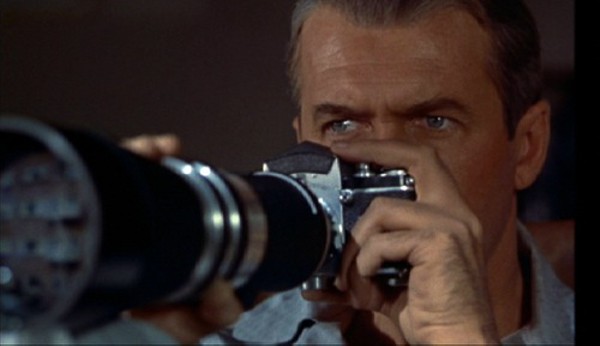
This gorgeously executed video essay takes us from The Great Train Robbery to Lost Highway to The Matrix to the original Dracula to Rear Window to explore what’s happening when we watch movies. The elegant point made here is two fold. One part is that when we watch a film, we are immediately brought back to what Jacques Lacan called the mirror stage, or the point at which an infant recognizs himself or herself in a mirror. The other part, and the more more ominous part, is that we look to movies to find idealized versions of ourselves–which is perhaps a childish impulse. That impulse, when reflected in a film, is chilling. Who could forget Bill Pullman’s phone conversation with Robert Blake in Lost Highway, as Blake was standing a couple of feet away from Pullman? Or Jimmy Stewart’s building revelations through his binoculars in Rear Window? This piece from Little Studio navigates, with delicacy and swiftness, some thorny concepts, threaded together with extensive film scholarship and great perceptiveness.

Why Alex Ross Perry’s LISTEN UP PHILIP Is the Kindest Movie You’ll See All Year

Why Alex Ross Perry’s LISTEN UP PHILIP Is the Kindest Movie You’ll See All Year

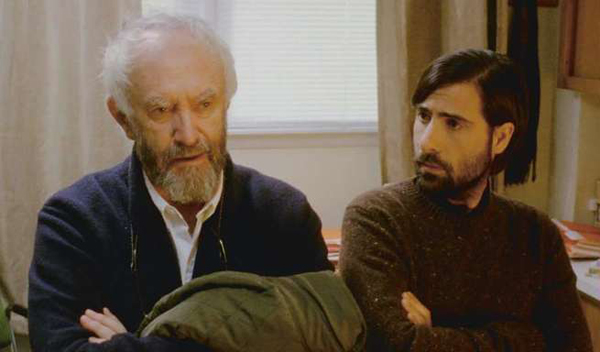
nullAlex Ross Perry’s LISTEN UP PHILIP, besides featuring Jason Schwartzman’s best acting job and wrestling remarkable turns from Jonathan Pryce and Elizabeth Moss, performs an act of kindness for its viewers. This tale of an abusive, alienated, successful novelist’s spiral into loneliness lays out, in excruciating detail, the relationship between cause and effect that can govern the shape a human life takes. In showing us, painfully clearly, the results of novelist Philip Lewis Friedman’s poor behavior, both within his own life and in the reactions of those around him, Perry advocates strongly against such behavior, making his film the equivalent of watching a Biblical punishment unfold on film. The critical reception has focused almost entirely on Philip’s meanness, and the entertainment value therein, and not on why such a story might be told. Philip’s behavior is not, in fact, the most interesting part of the film–there is no novelty in the idea of a cruel, clever writer. That story’s been told, many times, and without such a shaky camera. There is, however, a great deal of novelty and originality in holding that cruel clever writer accountable, at length, and in so doing, prodding at viewers’ consciences. The play’s the thing, after all.

This reviewer will confess that it is a great relief to see Schwartzman out from under the thumb of Wes Anderson’s coddling genius. So deft and believable is his performance as Philip that I hated practically every nasty word that came out of his mouth. I disliked his smarmy smile. I found his walk annoyingly stridant. I was aghast that his girlfriend, played with reserve and likable cool by Moss, might find herself, for even one second, happy in his presence–unless her character was, in fact, akin to his. At some points, I hated his chin. When Philip discloses, in an intimate moment, that his parents died when he was young, and describes that as the source of "sadness," I will confess to thinking, "Cry me a river, you stupid, pathetic cliche. Are you even telling the truth?" In any event, what of the story being told here? It’s a simple one. Philip decides, upon the release of his second book, to forgo all tours or publicity, choosing instead to go upstate and lick the boots of Ike Zimmerman, a well-established and successful novelist who is Philip’s elder spiritual doppelganger: blunt, anti-social, manipulative, in search of the perfect quip at all times, vigorously dismissive. And alienated from his daughter, who, while not exactly a charmer herself, has a few beautifully executed moments of pain at Zimmerman’s hands. In so retreating to the country, Philip lands himself an adjunct teaching position–which most holders of such positions would chuckle at, given that it’s a cruel hand dealt upon Philip; such jobs are generally unglamorous, poorly paid, uninsured, and short-lived. As circumstances prove true to that latter characteristic, Philip makes no friends and finds himself bounced from his position, nevertheless managing to charm a French colleague whose initial action upon meeting him was to persuade all of his colleagues to dislike him. Throughout the film’s miserable sojourn, Philip is told off numerous times, by people from various walks of life, including a former college roommate who calls him a "Jew bastard" and a former girlfriend who responds to his request for a kiss by running away. The sad part, but the part which is the root of the film’s charity: Philip has it coming. He is arrogant towards his students in the face of open worship; he treats his agent badly (and is called an "asshole" for it); when he learns that a journalist who was supposed to intervew him committed suicide, he pines that it would have been a great piece for him. These moments of cruelty have some entertainment value, but for anyone who’s known a lot of writers, they’re unremarkable, since most writers know that, from the time of James Joyce onwards, the capacity for cruelty in literary sorts is as bottomless as the River Lethe. What’s remarkable here is what happens. And what is that? Well, Philip happens. In our last sighting of him, we see him walking down a crowded street, carrying a box of his belongings, alone, bereft of his former girfriend, who wouldn’t even open the door for him; the suggestion is that he’s walking towards more of the same. Are these his just desserts? Does he deserve to be this alone, to have all these people shouting at him, to be patronizd by a writer he worships, to be shown such anger by those around him? Yes, he does. If you have to ask why, then perhaos you should watch the movie again.

American culture, it must be understood, generally congratulates selfishness. It’s not typically seen as such, this quality, but it manifests itself that way. Slavish attention to career advancement, fierce competition with others, establishment of political alliances solely for the purpose of said advancement, dismissal of people, things, and ideas lying outside of one’s world view: these actions will, typically, make one successful and content in the world at large. The better car, the better phone, the better TV set, the better shirt, the better face: these things matter. Celebrity homes, celebrity surgeries, celebrity photos, celebrity "selfies," celebrity photo leaks: these things matter as well, perhaps more than we even think. The impact on human behavior of the absorption of these values is insidious. Talking becomes less important; a phone call becomes a rarer and rarer thing; and a handwritten letter? Forget it. The self is all. And if, one day, there’s a shooting in a mall, or a school, we cry mental illness, when in fact what we mean is national illness. It’s doubtful that Perry, in telling this story–and an old-fashioned story it is, with plenty of contrasting motivations, an antagonist, a protagonist, a climax, and a resolution (though perhaps antagonist and protagonist) have switched costumes here–intended it to be a fable, with a clear moral. It’s a character portrait, after all, an experiment as such, to see what happens if, instead of ignoring callousness and accepting it, we hold it up to a "hard Sophoclean light." The experiment, as conducted, performs a valuable service, providing a cutaway, of sorts, into a human psyche in the process of decay, or hardening; the cutaway is explicit, and gory, and eye-opening about the potential rebound effects of cruelty. It could be said that such a cutaway speaks out strongly in favor of kindness, of the opposite of Philip’s behavior. Beyond this, though, in the manner of all good experiments, Listen Up Philip points a way forward: towards different movies about writers, and perhaps different films about people, in which we take a good look at characters’ flaws and virtues, instead of waiting for them to sprout wings or replace their microchips. One might then hope that, as time passes, life might come to imitate art.

Max Winter is the Editor of Press Play.

All Truffaut Fans Should Watch This French Animated Short About DAY FOR NIGHT

All Truffaut Fans Should Watch This French Animated Short About DAY FOR NIGHT

La nuit américaine d’Angélique, or Angelique’s Day for Night, is, on one level, a story about a young girl’s experience of watching Francois Truffaut’s Day For Night at a young age and fantasizing about being, like Nathalie Baye in the film, a script supervisor. As a child, she romanticized the job, imagining, for instance, how wonderful it would be to place "messages," or revised script pages, under hotel guests’ doors. As she grows up, of course, she realizes that the job is too secondary and would not be nearly as exciting as it might have seemed to her as a child. Adult reflection reveals other things to Angelique that she was not conscious of as a child–most significantly that the act of seeing, when watching a film, is often more important than what you’re seeing. You might watch, as in Day for Night, implied sex on a screen, but the way the sex is represented is more important. Angelique also has significant revelations about the changing nature of her relationship with her father, with whom she saw the movie for the first time, during a period when he was divorcing her mother. As if to highlight the elegance of this small, bittersweet tale, directors Pierre-Emmanuel Lyet and Joris Clerté present it in a simple, cut-out style–in some of the passages that instruct about the nature of film-watching, the short even resembles a puppet show, with heads and other symbols held at the ends of long sticks. Based on a graphic novel by Olivia Rosenthal, this feature, in just over six minutes, manages to impart some hard messages about growing up, albeit ameliorated by snowfall, present from the beginning of the story to the end.