KICKING TELEVISION: Re-imagining the Sitcom

KICKING TELEVISION: Re-imagining the Sitcom

null

The sitcom is dead. Though we’re
continually told we’re living in the New Golden Age of Television, a quick
survey of the situational comedy landscape suggests that this is not the case.
After The Sopranos gave television
permission to tell stories in more cinematic and innovative ways, we have been
blessed with unparalleled artistry and achievement on its dramatic side. Breaking Bad, Lost, Mad Men, True Detective, The Walking Dead, Friday
Night Lights
and their brethren have treated audiences to heretofore-unseen
storytelling and production on the small screen. And yet on the comedy side,
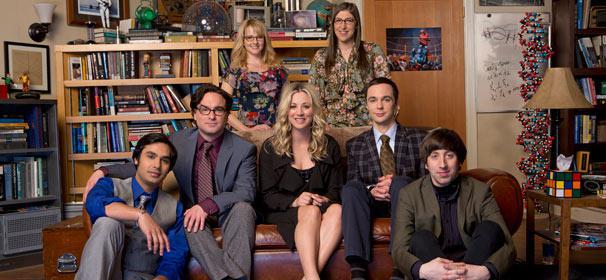
we’re left with The Big Bang Theory,
capable if uninspiring television that is forgotten moments after the credits
roll.

It wasn’t that long ago that the
sitcom ruled the airwaves. In the ‘90s, Seinfeld
and Friends were not just the most
watched shows on TV—they were part of the cultural zeitgeist. Before that, Cheers and Roseanne reveled in blue-collar settings with grace and humour.
Their predecessors, like Maude and All in the Family, contributed to the
greater discourse, addressing societal change and issues beyond what TV had
discussed previously. The sitcom wasn’t just entertainment time-filler. It was
art.

And then came Chuck Lorre.

I’m certainly not blaming the
creator of Two and a Half Men and The Big Bang Theory for the demise of
the medium, but rather pointing to these productions as indicators of the
critical flaws in the sitcom. These shows lack ambition. The writing is
borrowed from episodes we’ve seen ad infintum. The characters are stock. The
format is flat. Consider the new sitcoms cancelled already this fall season: Bad Judge, A to Z, Manhattan Love Story,
and Selfie. There was nothing
memorable or exciting about them. There was nothing we haven’t seen before.
Bland versions of those same four shows have been rolled out each season,
pillaged from the pile of pilot season dreck. And even more bland versions will
be rolled out midseason.

There is some hope. In the
instances of a post-Seinfeld TV-scape
where the industry was ambitious, there has been success. The Office in its first few seasons was as funny and clever as
anything that has ever fit beneath the sitcom umbrella. Arrested Development was punished for its ingenuity, a victim of
poor scheduling and a network that failed to see its burgeoning cult status. It’s Always Sunny in Philadelphia was Seinfeld on crack, before it became It’s Always Sunny in Philadelphia on
crack and lost its way. Party Down
was imaginative and inventive, and yet its location on the upstart Starz network
and its micro-budget couldn’t maintain its momentum nor cast. Louie is more original than most, but it
limits itself and fails to step to far beyond the confines of the genre,
despite the overwhelming sensation that it wants to. Community was the one great hope. A show that satirized the genre,
that defied the tropes. But NBC did its best to kill it, and now its left with
a fraction of its original cast in the unknown wasteland of Yahoo TV, whatever
that is. But what we’re left with, what the industry trumpets as successful, is
Modern Family, a fading Parks and Rec, a middling Mindy Project, and a sea of forgettable
offerings that don’t resonate with the audience and don’t challenge the medium.

(You’re the Worst, as I
have previously written
, is absolute genius and exempt from this tirade.)

And that’s it, other than a few
episodes here and there and a cancelled-too-early show that had promise that
we’ll never see realized. Is Modern
Family
really the best sitcom the industry can offer, as the Emmy voters
would contend, or is it simply the most not incompetent? It’s overly celebrated
in a manner that proves my thesis: It is the best of a genre that doesn’t try;
it is inoffensive and forgettable. In reality, it’s a milquetoast offering that
offends no one and takes up twenty-two minutes of twelve million people’s
Wednesday night. It is not appointment viewing. It is not Must See TV. Quite
simply, it’s all that’s on.

So is the sitcom really dead, or
is it just on life support, in desperate need of a shot of adrenaline or
whiskey or Wes Anderson?

Writing, in any of its
incarnations, is simply about telling a story. At its best, it’s telling
stories in ways that are interesting. I don’t know if the Vassar MFA grads that
currently make up 80% of the sitcom writer pool are afraid to be progressive or
are just cursed with moderate talents, but it’s time the industry looked past a
writer’s room that couldn’t get an honest guffaw without a bag of shrooms and a
laugh track.

While television dramas have
mined external resources for auteurship, the sitcom has stayed with the
tried-and-tired formula of an unambitious rotation of series creators with
pilots directed by James Burrows. David Fincher (House of Cards), Frank Darabont (The Walking Dead), and Martin Scorsese (Boardwalk Empire) are just a few of the prominent filmmakers who
have made successful forays into serial storytelling on the small screen during
the unprecedented rise of the drama in the past decade or so. Nic Pizzolatto
was a celebrated novelist, a finalist for the Edgar and National Magazine awards,
an honourable mention for the Pushcart Prize, and the winner of the Prix du Premier Roman étranger, as well
as a creative writing professor, before True
Detective
took him out of the classroom and Barnes & Noble discount
bin.

And yet, in the sitcom world,
we’re still saddled with shows “from the creators of Suburgatory and According to
Jim
.” In an industry that loves to attempt to Xerox success, why has the
comedy side of television refused to learn from its drama cousins? Would we not
be interested to see what interesting and progressive comedic filmmakers could
do with a television comedy? This trend may be slowly beginning, with TV
projects forthcoming from Mark and Jay Duplass (Togetherness) and Jason Reitman (Casual). Wouldn’t you love to see what Anderson could do with the
medium? Nicholas Stoller? Lorene Scafaria? Jonathan Dayton and Valerie Faris?

And why be so shortsighted as to
stay within the Hollywood bubble? Did HBO’s moderate success with Bored to Death, from the celebrated
novelist Jonathan Ames, not prove that literary quality has a place on
television? I’d love to see a sitcom born of the mind of George Saunders, or Jennifer
Egan, or Irvine Welsh, or Chuck Klosterman, or Sam Lipsyte, or Sloane Crosley,
or Elna Baker, or… the list borders on infinite. At least their adaptation of Pygmalion (ahem, Selfie) would come from people who had actually read the book.

The limits of the contemporary in
TV are not confined to its writing. The entire production has become stale. Let’s
put up the fourth wall once and for all, and be done with the live studio
audience, shall we? I suppose the multi-camera sitcom was supposed to be the television
version of a play, but the genre has become tired. What was the last
multi-camera sitcom to be interesting or innovative? (And if your answer in any
way suggests a Chuck Lorre production, your punishment is to watch Mom and only Mom for eternity.) The last multi-cam sitcom of any significant cultural
value was likely Seinfeld, and it
went off the air in 1998. Since then, every September and February, networks
march out a slew of carbon copy multi-camera endeavours that are rarely funny,
never innovative, and suffer tremendously at the will of their tropes.

And the laugh track? How in the
name of the Charles brothers does the laugh track still exist? I think an
audience knows when to laugh without 240 tourists on the Warner Brothers lot
telling us for twenty-two minutes.

Twenty-two excruciating minutes.

Does anyone know why the sitcom
is only a half-hour (with commercials)? Why is comedy limited and tragedy
open-ended? Would you rather laugh for an hour or cry for an hour? And from a
purely budgetary standpoint, why do Mark Harmon and Jon Cryer make the same
amount of money per episode for the same mediocre and unimaginative drivel? If
comedic and dramatic films can be of similar length, who is to say that the
same can’t be done on television?

Beyond the temporal structure of
the sitcom, its aesthetic structure is in need of contemporization and
ambition. The industry has limited the genre to two options: multi-camera and
single camera. The worlds of sitcoms are confined, insulated. They exist on
three to five sets. They are painted in the same colours, shot with the same
filters, and staged as they were three generations ago.

The incredible six-minute-long
take from the episode "Who Goes There" of True Detective is an example of what the talents of an innovative
director like Cary Fukunaga can bring to the medium. Why can’t sitcoms be
visually inventive? We have seen glimpses of such inventiveness in Pushing Daisies and to a certain extent
in the aesthetic of Community, but
their absence elsewhere in television are tenable. Why the reluctance to push
boundaries and challenge formula the way dramatic television has?

The answer to most of these
questions is that the television industry is remarkably stubborn and unimaginative,
for a business that requires creative minds. But the ability of dramatic
television to evolve in the past decade suggests that comedic television could
do the same, if just given the chance. Cable and streaming television have
reinvigorated an industry once limited by the whims of the four major networks.
The exodus of talent from film to TV has proved that the small screen is not
limiting to artistic or material aspirations among the Hollywood elite.
Removing the antiquated reins from the sitcom would certainly produce a
defining new era of the medium, and no doubt reduce the amount of half-hours of
our lives ruled by Chuck Lorre.

Mike Spry is a writer, editor, and columnist who has written for The
Toronto Star, Maisonneuve, and The Smoking Jacket, among
others, and contributes to MTV’s
 PLAY
with AJ
. He is the author of the poetry collection JACK (Snare
Books, 2008) and
Bourbon & Eventide (Invisible Publishing, 2014), the short story collection Distillery Songs (Insomniac Press,
2011), and the co-author of
Cheap Throat: The Diary of a Locked-Out
Hockey Player
(Found Press,
2013).
Follow him on Twitter @mdspry.
METAMERICANA: Christopher Nolan’s INTERSTELLAR Offers Us a New Theory of Everything

METAMERICANA: Christopher Nolan’s INTERSTELLAR Offers Us a New Theory of Everything

nullScientists have recently claimed that a possible
“theory of everything,” an escape from our dreary four-dimensional reality, resides
in “M-theory,” an eleven-dimensional unification of all extant superstring
equations. As crazy as a mathematical maxim that resides in the eleventh
dimension may sound, M-theory is endorsed by renowned genius Stephen Hawking
and others of his ilk as a sort of universal codebreaker—what the alchemists of
old would have called the Philosopher’s Stone, and what religious people in all
periods have loosely thought of as God. If we presently feel bounded by our
limited understanding of the universe, M-theory would obliterate that sense of
imprisonment.

Simultaneously, poets have striven for a similar
escape, only through words. However, they have not kept pace with their
opposite numbers in the sciences. This is in part because they’ve come to
believe themselves mathematicians’ competitors. For the last forty years, the
most innovative Western poetry has been so layered and nuanced that it has
written itself out of all sociocultural coherence. Not only is it no longer a
counterweight to the intricacies of science, it no longer speaks to the great mass
of persons now living. The belief that innovative poetries must be every bit as
theorized and conceptually indecipherable as M-theory is to most of us has
guaranteed poetry a marginalized place in our collective consciousness, if that.

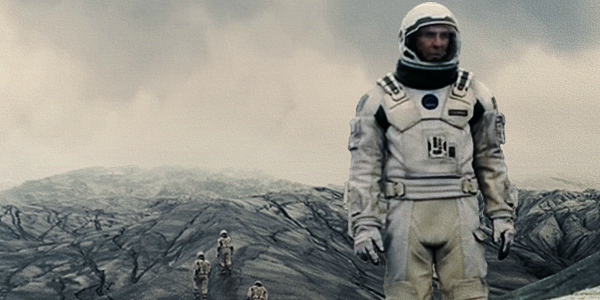
Christopher Nolan’s new film Interstellar, which addresses both science and poetry in
implicit and explicit ways, offers us a possible “theory of everything”—one
in which the simple beauties of art are conjoined with the complex mathematics
of science in a middle space between the two, with that middle space
corresponding to the pathway from our collective reality so many of us have
been seeking for so long.

That scientists have always looked to the stars
(literally) and higher dimensions (figuratively) for the key to unlocking all
we can’t access is no surprise; the notion that poets have been engaged in the
same task from the very beginning of art is perhaps a more controversial
submission. Don’t the best poets find timeless ways to drill down on individual
words and phrases and ideas, rather than creating and testing out entirely new
realities through new forms of speech? A cynic might say so, but French critic
and theoretician Jacques Derrida said differently: he imagined that speech and
the written word could transcend spacetime. Derrida suggested that language can
outlive both its author and its intended recipient, providing
a pathway to unanchoring language from its moorings in time and space. The
much-vaunted “death of the author” Derrida’s (and French theorist Roland
Barthes’) work eventually heralded in Western literature was intended as a
freeing of language, not its imprisonment. So those who study and perform the
capacities and incapacities of language have always, in their own way, been
reaching for the stars—even if the way they’ve gone about it of late is to
surround their work with such a volume of theory and abstraction that it looks
and sounds to most like quantum physics.

“Love is the only thing we can observe that transcends
space and time,” says astronaut Amelia Brand (Anne Hathaway) to Cooper
(Matthew McConaughey) in Interstellar, and as cornball as that sentiment
sounds out of context, it happens to be true. Though “love” is a term that
should by all rights require the presence of two entities—an author and an
intended recipient who are both necessary if interchangeable—in fact love often
survives the separation of entities by space and time. We continue to love
those who’ve left us, whether they’ve left us figuratively (by emotional
detachment), geographically (by distance in space), or literally and finally
(by dint of death). So maybe Interstellar is on to something. The film’s
suggestion that just as quantum physics now resides in the fifth and higher
dimensions, so too must the simple emotions both art and life invoke in us, is
less a play on our heartstrings than an actionable suggestion for living.
Perhaps art and science were intended to take dramatically different paths
toward the same conclusion, not so much because each can independently come up
with a satisfactory answer to the problem of everything but because the two
jointly just might. If many of this decade’s newest forms of innovative art
find ways to juxtapose polar opposites like sincerity and irony or cynicism and
optimism, perhaps they ought to add to those generatively contending forces art
and science. Perhaps art must be as different from science as it can possibly
be—while maintaining a common purpose—in order for it to fulfill its implicit
promise to the species.

For much of its lengthy run-time, Interstellar
is a slow and quiet movie, but once it picks up it amps up its melodrama. The
film’s elegantly simple visuals are finally matched by equally simple
sentiments that run the risk of mawkishness. Yet somehow the film always stays
on the right side of that line. Perhaps that’s because watching four astronauts
seek habitable planets in order to save the species—a species, in the
near-future world of Interstellar, starving from food shortages and
choking on unpredictable dustclouds—is not, actually, something we can detach
ourselves from sufficiently to smother it with our cynicism and irony. So the
film’s final solution to the problem of getting astronauts decades out into
space and then having them send helpful messages back to Earth—the idea that
love is to art what gravity is to science, i.e. transdimensional—seems less
like treacly wisdom and more like something today’s creative avant-garde would
do well to consider.

In the realm of the scientific, increasing degrees
of complexity are welcome so long as they’re intellectually solvent; in the
realm of art, perhaps increasing degrees of simplicity should be welcome as
long as they’re spiritually mimetic—that is, as long as they trace human
experience as faithfully as the tenets of physics do. The late great David
Foster Wallace once predicted that the next authentic literary avant-garde
wouldn’t need tenured boosters in the academy to sell it, or pedigreed authors
to write it, or a sufficiently jaded populace to read it, as in fact it would
endorse just the sort of “single-entendre principles” that already guide our
lives (however imperfectly). Though the means of their operation is frequently
hidden from us, our guiding stars as civic and creative beings are still basic
principles like courage, integrity, charity, empathy, grace, kindness, and
inquisitiveness. These are not ideas we need to shroud in the coded language of
theory to enact; in fact, as important as these ideas are to the contemporary
arts—every bit as important as unfathomably intricate equations are to quantum
physics—they require no steeping in elevated language to remain fully
operational.

The final thirty minutes of Interstellar are as
strange a cinematic experience as you’ll ever have, so strange an experience
that their logic at times seems beyond the grasp of anyone but a Hawking or the
equivalent. But in fact the emotional and creative logic of Interstellar
is every bit as simple as its science is complex. This doesn’t mean that its
emotional and creative logic is less advanced than its science; instead, it
merely reminds us that the boundaries we need to push in art are not
necessarily those of science, even as the two are collaborators (not
competitors) in the development of a theory of everything. Just as the new
science looks absolutely nothing like the old science, however much it builds
on the discoveries of mathematicians long dead, our new art will look (and
read) absolutely nothing like our old art, however much it couldn’t have been
produced without the countless generations of poets and other artists who
preceded it and who reached for transcendence and fell short. Show me a theory
of the avant-garde in art as easily spoken and easy to understand as M-theory
is beyond my grasp and I’ll show you a step forward in time our leading lights
in the arts have yet to take.

Seth Abramson is the author of five poetry collections, including two, Metamericana and DATA,
forthcoming in 2015 and 2016. Currently a doctoral candidate at
University of Wisconsin-Madison, he is also Series Co-Editor for
Best American Experimental Writing, whose next edition will be published by Wesleyan University Press in 2015.

Watch: A Video Essay on the Truly Iconic Figures in Sergio Leone’s ONCE UPON A TIME IN THE WEST

Watch: A Video Essay on the Truly Iconic Figures in Sergio Leone’s ONCE UPON A TIME IN THE WEST

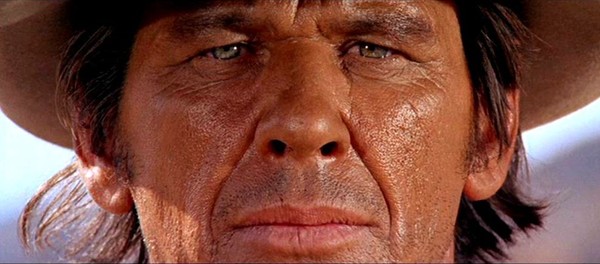
Sergio Leone, as indicated in such films as Once Upon a Time in the West, The Good, the Bad, and the Ugly, and A Fistful of Dollars, and as shown in this beautiful video essay by Michael Mirasol, recently posted at Movie Mezzanine, understood a couple of basic things about the human gaze. One was that if you look into another’s face for a long time, really, hold the gaze, really stare deeply, the effect is unsettling. You begin to see things in the face: possibilities, flaws, other faces, perhaps. The gravity of an expression grows, the longer you look at it. A well-placed squint becomes a predictor of future danger. Similarly, a human figure, positioned against a landscape, may in one sense seem dwarfed by it, as the figures in Once Upon a Time in the West seem here, but in another sense become all you notice in the frame. The story you’re watching ultimately comes to hinge on these solitary figures and their relationship to the landscape–which begins to be equated with ther relationship to the universe itself. It’s been said that the grandstanding expressions the American Founding Fathers wear in early portraits come directly from the proud way in which the subjects often carried themselves, which would today seem exaggerated; similarly, the slow strut of a Charles Bronson, a Henry Fonda, a Clint Eastwood, or a Jason Robards in one of Leone’s westerns suggests, when one considers the context Mirasol offers here, a readiness for battle with consuming forces (history, industry, the railroads) which will eventually win out, but which the humans will not give up without a struggle–and in so being, the figures Leone portrays become equivalent with the heroes of Ovid, Homer, and Virgil, timeless icons surrounded by swirling dust.

Watch: Nicolas Winding Refn’s Film Violence Is Horrible and Beautiful: A Video Essay

Watch: Nicolas Winding Refn’s Film Violence Is Horrible and Beautiful: A Video Essay

This video essay, in showing us the most violent snippets in Nicolas Winding Refn’s filmography, including films such as Bronson, Drive, and Only God Forgives, raises an important question. A couple of questions, really. The scenes Dávid Velenczei has assembled include a shot of good ol’ Albert Brooks stabbing a hapless old friend more than repeatedly; a man being strangled by two thugs, a rope, and the force of gravity; a lot of bloodied faces; many bloodied mouths; and the fairly blank face of Ryan Gosling as a visual thread. The scenes here are very difficult to watch, but they’re also beautiful: precise, elaborately composed, lush. So, the first question raised is this: is it okay to eroticize violence in this fashion? For that is, indeed, what is happening. The carnage here is one step away from the Red Shoe Diaries in its affect and presentation, but that in itself is nothing new. The choreographed gunplay of Brian De Palma’s Scarface; the pastoral annihilation of Francis Ford Coppola’s Apocalypse Now or The Godfather; the orchestrated trouncing of Martin Scorsese’s Goodfellas, or Casino, or… or… And the viewer responds with a cringe but also a beckoning, like a particularly twisted flower leaning toward light: more, more. Because, as P.T. Barnum might have said, people love this stuff! And the directors in question (a tiny faction of a vast number) know this, and manipulate their viewers from a comfortable and profitable distance, begging the question: is the director morally culpable? Is this the proper use of film? Of course, the questions don’t stop there, or decrease in importance: the biggest of these is whether or not it’s okay to ask if such films are "okay," whether it is appropriate to apply moral judgments to aesthetic evaluations. If Peter Greenaway wants us to watch a man stuffed with food and then cooked for dinner (as he did in The Cook, The Thief, His Wife, and Her Lover), do you let the visceral response (roughly translated as "wow, gross") or the analytical response ("beautiful glint on that body-glaze") take hold, or do you acknowldge that the two are linked and have a somewhat symbiotic relationship, each drawing from the other? And beyond that, what’s a "proper" use of film?

Watch: A Video Essay on Ridley Scott’s Lyrical Vision of Modernity in BLADE RUNNER

Watch: A Video Essay on Ridley Scott’s Lyrical Vision of Modernity in BLADE RUNNER

Evan Puschak, or "The Nerdwriter" on YouTube, recently posted a probing and highly articulate video essay on Ridley Scott’s "Blade Runner." In it, he manages to address, quite fluidly, many of the most significant themes and accomplishments of a film that, for many people, is an aesthetic ground zero, a point of measurement for all other science fiction films to follow. I’m tremulous on science fiction films, and not entirely confident in Scott’s films (the greatness of Alien, Thelma and Louise, and Prometheus aside), but Blade Runner‘s many virtues aren’t lost on me, and it’s a thrill to watch them elucidated here: the stormy, overcast, dark-lit mood, which has practically been unequalled since the film’s release; Harrison Ford’s impressive performance, which Puschak highlights by focusing on a little-noticed exchange Deckard has with a liquor store clerk, and making us watch the pathos in his expression; and the intensity of the clash between old and new, as in one scene where a replicant leads Deckard down a dark alleyway, just missing a group of bicyclists. Bicyclists? Here? In 2019 Los Angeles? There are no shortage of homages to this well-covered film, but this piece is certainly one which brings home Scott’s skill at its best.

Watch: Imagine a Film In Which Earth (Seen From the ISS) Is the Main Character

Watch: Imagine a Film In Which Earth (Seen From the ISS) Is the Main Character

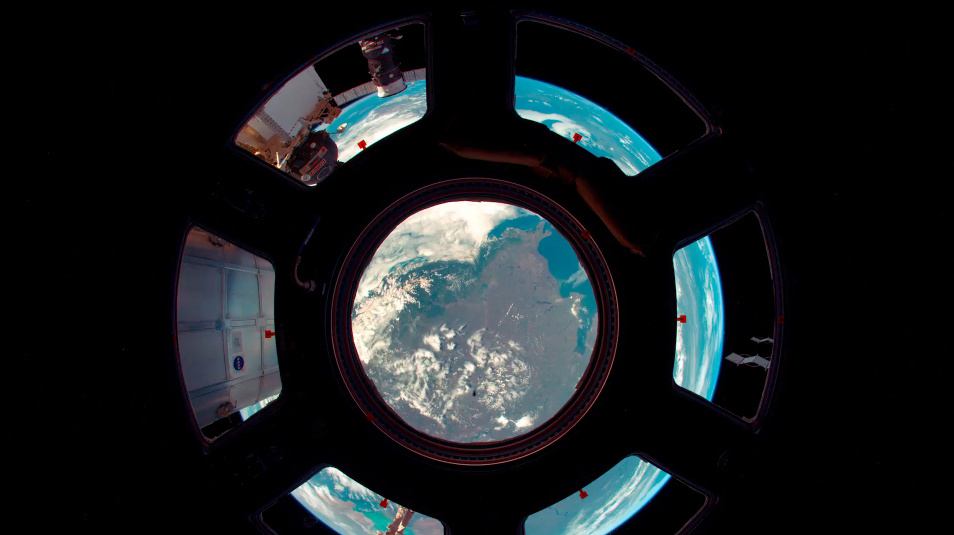
While photos of Earth from space almost always catch us by surprise, this video essay by Guillaume Juin is a different animal. Using footage taken by NASA scientists, which is, by definition, in the public domain, Juin made a small film–which could properly be called a video essay, by the standards applied to most of the pieces posted here–showing a voyage around Earth by the International Space Station, which travels at 28 kilometers per hour. Or rather, several voyages, merged into one exhilarating journey, cast in blazing, sharp colors, with explosions of light in the darkness that represent entire cities on our planet. In his acknowledgments, Juin thanks the members of five different ISS expeditions for footage shot over the course of three years, all available at the Earth Science and Remote Sensing Unit of the NASA Johnson Space Center. Really, though, the credit should go to Juin. Imagine as we might what traveling in outer space might be like, in films like Gravity, Insterstellar, and their myriad ancestors, there is very little substitute for reality, as this film shows; the exhilaration it offers is authentic, and the wonderment it causes (if you’re receptive enough) is quite real.

METAMERICANA: BIRDMAN Is the IRON MAN Finale You’ve Been Waiting For

METAMERICANA: BIRDMAN Is the IRON MAN Finale You’ve Been Waiting For

null

Rumor has it that Robert Downey Jr. will appear in Iron Man 4—and probably Iron Man 5—but
surely that particular Marvel Cinematic Universe franchise, however
lucrative, has to end sometime. Or does it? Does anyone doubt that Iron Man 10 would still earn its studio backers a truckload of coin? Maybe the question isn’t how many Iron Man
sequels (and, soon enough, prequels) can be made, but how long
the superhero genre Iron Man epitomizes can be the toast of Hollywood.
While it sometimes takes much longer than it should, American art genres do
evolve over time, and sooner or later American arts will evolve such that playboy
anti-heroes with mechanical or innate superpowers will get left behind.
What Michael Keaton’s Birdman makes clear is that even the end of superheroism would be insufficient to end the relentless onslaught of Iron Man
vehicles. This metamodern period in America may tire of
its superheroes, but the real question is when or whether our
superheroes will tire of America. So we can imagine, sometime in 2030,
an Iron Man 11 in which Robert Downey Jr. plays Robert Downey Jr., the former "Iron Man" of ten Hollywood films by that name. Iron Man 11
would be a superhero movie for the Age we live in, a movie in which our
collective exhaustion with spectacle would be conjoined with our
collective boredom at the absence of spectacle; in Iron Man 11
Downey would play both himself and Iron Man simultaneously, and from
minute to minute we wouldn’t know what the point of distinguishing between
the two really was.
But maybe we won’t have to wait that long.
In Birdman,
Michael Keaton—who played Batman in 1989 and 1992 films featuring the
Caped Crusader—plays, more or less, Michael Keaton. Sure, the credits
say he’s playing "Riggan Thompson," a washed-up celebrity made famous by
playing "Birdman" in three superhero films, the most recent being
(ahem) a 1992 release, but anyone over thirty watching Birdman knows full well this is Keaton-as-Keaton—or at least
a lightly tweaked version of the Keaton we believe Michael Keaton to
be.
Say what you will, Michael Keaton’s career as an A-list actor basically ended with Batman Returns in 1992, a few roles (charitably, 1996’s Multiplicity and 1997’s Jackie Brown)
notwithstanding. So watching "Riggan Thompson" stage a self-written and
self-directed Raymond Carver adaptation on Broadway as a way of
"finally doing something honest" strikes about as close to home as it’s
supposed to. In other words, if Keaton’s fictional Thompson was the star
of Birdman, Birdman 2, and Birdman 3, this iteration of the Birdman franchise might as well be titled Birdman 4: Riggan’s Return, or Keaton’s Batman Returns Again, or, twenty years from now, Iron Man 11.
The film asks us to consider what happens when a
celebrity-cum-superhero tries to take off his Lycra jumpsuit, only to
find out that it can’t ever be taken off. Riggan is stuck as Birdman
both figuratively and literally, as playing the role has left Thompson
hearing the hectoring, hateful voice of "Birdman" in his head at all
hours of the day. He even believes himself capable of Birdman’s two
foremost powers: the power of telekinesis and the power of flight. (You
can probably see where that’s headed, though in the end Birdman surprises even on that score.)
But it’d be wrong to call Birdman
merely a "meta" superhero film, just as it would be wrong to call it—as
one might be tempted to do—a "meta" film about actors or a "metamodern"
film about how reality and fiction collide to form a higher order
experience that draws from both reality and fiction but is finally
neither. Like most films that try to capture a cultural moment in which
we’re equally attentive to, distracted by, enamored with, and
distrustful of all manmade stimuli—Birdman
doesn’t want to settle for being any one thing. Much like the Internet,
it has about forty messages it would like to deliver, and also like the
Internet, it would prefer to deliver them all at once.
The
film’s first message is that attention is power. At one point Riggan’s
daughter shows him a viral YouTube clip and says, "Believe it or not, this is power…" Birdman
submits that because attention in a fully networked world is in fact a
substantive good—it can briefly nourish the spirit of the sort of
temperamental, ego-surfing American our present Age has birthed—the
power that comes from being paid attention to is by no means an empty or
merely formal gesture. The second message Birdman
delivers is that admiration is not love, but because so many of us are
unable to make the distinction, it might as well be. A third message is
that choosing truth as an end-game isn’t the same as living truthfully. A
fourth message is that our eccentricities strengthen us in the long
term, but only by weakening us in the short term—thereby forcing a
confrontation, perhaps sooner than we’d like, with how unlivable our
eccentricities sometimes cause our lives to be. A fifth message we
encounter is that distinct artistic genres can never be confused for one
another, except when, paradoxically, they become one another—for instance, by making a film appear (as Birdman
is made to appear) to have been filmed the way a play is performed,
with a single tracking shot and in a single take. A sixth message is
that turning one’s faults into a narrative doesn’t bring one any closer to
transcending them, as all narrative is necessarily a reentrenchment of
archetypes rather than a recasting of terms. And yet another message
available to Birdman viewers is
that there’s a difference between popularity and prestige, between being
a celebrity and being an actor, between knowing how to interpret art
and knowing how to enact it.
There are several dozen more throughlines in Birdman,
all equally close to the surface of Riggan’s interactions with his
resentful attorney-cum-assistant (Zach Galifianakis); his resentful,
diva-like leading lady (Naomi Watts); his resentful, brooding, "purist"
male lead (Edward Norton); his resentful yet strangely hot-and-cold
ex-wife (Amy Ryan); and his stereotypically rebellious daughter—played
as a resentful sort of girl by Emma Stone. The point of all these
disparate messages—some internally contradictory, some merely
contradictory to one another—is that they be delivered all at once, in
an onrushing cacophony, making Birdman
at once a terminal superhero flick, a black comedy about celebrity, and
a metafiction about cross-genre acts of creative narration. It’s a
credit to its terrific ensemble cast that Birdman is a superlative example of each of these cinematic subgenres. 
It used to be the case that someone would say to you, "If you like Butch Cassidy and the Sundance Kid, you’ll love The Assassination of Jesse James by the Coward Robert Ford."
In other words, if you like a genre you like a genre, or if you like a
movie you’ll also like its tangentially related contemporary update. Now,
a moviegoer is more likely to hear, "If you’re excited about the
upcoming, fourth-wall-breaking Deadpool movie, you’ll like Birdman; also, if you like the hardcore "meta" bent of Philip Seymour Hoffman’s Synecdoche, New York;
also, if you admire Michael Keaton’s ineffable, decade-spanning ability
to play Michael Keaton; also…" and so on. It’s fair to say, that is,
that the films that speak most effectively into and out of America in
2014 are those that give us everything we want all at once and with no
clear direction on what to do with it all. Not coincidentally, that’s
exactly how one might feel after having just been granted a superpower; or
having been granted an elongated career in Hollywood; or having just
been made the parent of a someday-to-be resentful child; or–and perhaps
this is really the point–having just been born into our collective
four-dimensional reality as a human. When we say a film is "metamodern,"
as we must certainly say of Birdman,
we are saying that it enacts the joining of Art and Life, or artifice
and authenticity, that all of us inherit merely by virtue of being
alive—and that it performs this elegant symphony of contradictions
without offering us any interpretation or any hope of reducing our
experience to a series of helpfully labeled micro-philosophies.
In
the end, Keaton-Riggan-Birdman gets his heart’s desire, or maybe he does;
embraces the hybridity of his self-identity, or maybe he does; makes good on the
promise of his natural talent, or maybe he does. He looks, in other words, the
way all of us do from the great height of higher dimensions of space and
time: like a simultaneously perfected and imperfect philosophical
vehicle who still has to put his Lycra jumpsuit on one leg at a
time.

Seth Abramson is the author of five poetry collections, including two, Metamericana and DATA,
forthcoming in 2015 and 2016. Currently a doctoral candidate at
University of Wisconsin-Madison, he is also Series Co-Editor for
Best American Experimental Writing, whose next edition will be published by Wesleyan University Press in 2015.

Walking Toward the Flame: An Interview with Robert Greene About ACTRESS

Walking Toward the Flame: An Interview with Robert Greene About ACTRESS

null

Documentarian Robert Greene’s evolution has been astonishing. His second and third features, Kati with an i and Fake It So Real,
are immersive portraits of his half-sister during the period leading up
to her high school graduation and a team of amateur wrestlers,
respectively. They’re accomplished films, but they don’t prepare one for
the skill shown in his latest film, Actress. Depicting Brandy Burre, an actress who appeared on The Wire
but gave her craft up to became a homemaker, it comes as close to
Douglas Sirk as it does to Frederick Wiseman. Using devices like slow motion and
saturated color, Greene follows Brandy over a troubled year in her life,
as her relationship with her partner Tim crumbles and she tries to get
back into acting. His next film will integrate fictional devices even
further, as it tells the story of an actress (Kate Lyn Sheil) playing a
news anchor who committed suicide on air in the ‘70s.
Greene recently ran a (successful!) crowdsourcing campaign to raise money for the music rights
so that Actress could be released on November 7th
(Note: I don’t think Actress
is the kind of narrative film for which spoiler warnings need apply,
but readers should be forewarned that this interview discusses its final
scene.) 
Press Play: At what point did it become apparent that Actress was as much a melodrama as a documentary? 
Robert Greene:
That’s an interesting question. Brandy is my neighbor. We’ve known
each other for years. We have kids the same age, so that our friendship was
based more on children than on being grown-up friends. When you’re
friends with other parents, it’s often through what your children are
taking you to, like parties. From the beginning, my interest in Brandy
as a subject grew before the story became so dramatic. She’s a theatrical
human being. The basic premise was, “What happens if you make an
observational documentary about an actor?” What is the effect that has?
Maybe she’ll be overacting. That has aspects of melodrama from the
beginning. That could’ve found its way in different forms. One of my
original ideas was just to show her performing acts of wife-ness, and
motherhood, and showing instability and fragility in these performances.
Then that could’ve taken us anywhere. Before we knew where the movie was
going, we thought about staging things and revealing they were staged.
The actual events in her life gave us the grounding I needed. All the slow motion stuff was shot in camera as slow motion. There’s a
technical difference between doing that and adding slow motion effects later.
The scene where Tim walks in behind her as she’s putting makeup on was
done when I had the camera around, and I just liked the framing, so I
put it on in slow motion, but it’s as observational as anything else.
The miracle of the film, I guess, is that the things that were happening
matched my instincts from the beginning. 
Press Play: Were there any aspects of her life that she hesitated to let you film? 
Greene:
Yes. As she says in the movie, she has a real love/hate relationship
with the camera, as most actors do. I think she was hesitant about the
whole thing and also wanted to embrace it. I think Brandy’s the type of
person who, if she feels hesitant, will walk towards the flame.
That’s her natural instinct. A lot of actors go, “If I’m scared, do it.”
The whole concept of stage fright is fascinating. Actors get stage
fright,  but they wouldn’t be on the stage in the first place if they
just succumbed to it. There’s this love/hate relationship with the
spotlight. You sense that tension, hopefully, throughout the film. It’s a
totally natural response. My instinct was to protect some things. I
knew that a portrait of Brandy was never going to be a sweet,
no-blemishes depiction, because that’s not the type of human being she
is. She’s tough and prickly. I knew there was always going to be an edge
to it. At the same time, I never put in fights that she and Tim had,
and she appreciated it. It’s all true, but like all documentaries, it’s
my version of the truth.  
Press
Play:
That scene with the bruise over her eye creates some expectations
in the spectator. When I first saw it, I thought that Tim had hit her,
and I didn’t completely believe her story that it was an accident. Is
that kind of question something you want viewers to ask? 
Greene:
The reason that scene is in there the way it is—I would prefer not to
spoil it if possible—is to elicit that reaction. When I first saw Tim
after it happened, he said “I didn’t do it” jokingly. The whole movie
is about her stepping out of line in some ways. It’s about her testing
the boundaries of what’s OK. The response that a fair number of people
have is that she deserves to be swatted down. I don’t think most people
think she deserves physical violence. But the fact that it happened and
that we could play with that expectation and the viewer could think
about where they stand with Brandy’s decisions was fascinating.
Hopefully, by this point, the viewer is thinking about the layers of
reality around everything. Is she acting? Is she being authentic? Is
this real? All these things that are happening in every scene pay off.
You don’t know what you’re looking at. It’s totally true that she did
fall out of a car. But the fact that you don’t believe her is an
interesting way that women are often viewed. The whole film is about a
woman with a radically specific take on her life, by a filmmaker with a
radically specific take on her life. It puts you in a position where you
have to think through some things and judge, as we often do. When
people go through breakups, we judge people, and the film pushes that
last scene to some extreme point. I’d like viewers to cycle through all
their thoughts. Who hit her? Is she lying? Is this a role she got when
she walked through the ABC building? Is this some stupid metaphor the
director came up with to describe her plight? In thinking through those,
hopefully you’re thinking about your own take on the image of a bruised
face. Beyond that, this is something documentaries are often afraid to
do. Forget observation! Go for expression! The image of a bruised face
should mean something, even if it’s a complex thing and seems like a
stunt at first. Also, it’s the last thing we filmed. It’s literally the
end of the story. 
Press Play: How do you think your interest in performance developed? It’s nascent in Kati With an i, blossoms in Fake It So Real and Actress and is developing even further in your next film. 
Greene:
I was probably 14 when I heard this cliché that there are 17 words for
snow in the Inuit language and became completely obsessed with language
and the way words function in culture. Similarly, the idea of social
performance, that we’re always performing identities, is something I got
fairly obsessed with. I think it’s probably because I am a person who
went to 15 different elementary and middle schools. I moved all the
time, often having to run out in the middle of the night because my mom
couldn’t pay the bills. There were schools where I’d be the poor loser
kid. There were schools where I’d suddenly be the smart kid or the cool
kid, although that was very seldom. By the fourth grade, it was clear
that I was taking this role on. It troubled me, because I’m not the
person who was cool five days ago. I find it fascinating. I don’t think
it’s a dead end. In Actress, the goal of talking about
performance is to show that these are traps. The role of wife, mother,
or filmmaker is only part of the truth. We’re supposed to “do the right
thing” all the time, but it’s often filling what Joshua Oppenheimer, in
an interview I did with him recently, called “unacknowledged social
scripts.” So that’s fascinating to me. The documentary camera—specifically, an observational camera—held by someone who’s attentive
to behavior can detect these layers and reveal what makes up society. In
Kati With an i, you have a girl who says she’s getting married
and going to college, but she’s just repeating back what society tells
her to say. What does that mean and why? In Fake It So Real, these guys are creating escape fantasies for themselves and creating art out of it. Actress
is a step forward from that. It’s about how you get out of that role.
Because Brandy has a master’s degree in acting, I knew she could bring
something more to it. Who knows how many more times I can explore this? I
just think there’s something in the non-fiction form that allows
you to see things clearly, if you’re patient.
Press Play: Kati With an i and Fake It So Real both depict your relatives, although I don’t think the films mention that. Did that make the filming easier? 
Greene: It does. I think I appear very briefly in Kati With an i,
and you see me hugging Kati very briefly with a camera. You can put two
and two together and figure out who I am, especially because I say in
the credits that I appear. I didn’t feel the need to say that Chris
Solar is my cousin in Fake It So Real. But it does make it
easier. It’s simply that these are films I could get made. I’ve never
raised any money upfront to pay for a movie. That’s changing now with my
next film. I was supported by a company I used to work for, 4th Row
Films, who could give me equipment and help pay for travel expenses if
necessary and buy tapes for my DIVX camera. There’s no big sum of money
upfront. At the same time, I’m not interested in my personal take on the
stories. I had Sean Williams shoot Kati With an i because he was
looking at my half-sister in a way that I never would have. It was much
more interesting. That movie wouldn’t exist if I had shot it. Chris Solar
was the “in” for this world in Fake It So Real, but it’s an ensemble piece. For Actress,
I’m looking out my window now at Brandy’s house. It’s obvious that’s
the only way this could have been made. It’s very pretentious to call
out John Cassavetes as an influence, but we made a grown-up movie about
grown-up themes in each other’s homes with a similar “go for broke,
let’s see what happens” aesthetic. The next film stars a friend of mine.
I was hesitant to make Actress because I didn’t want to keep
making films about people who are close to me. But in the end, the movie
took hold, as they tend to do. I don’t care about the idea of objective
distance from your subject. Hopefully there’s something explored here. 
Press Play: Is it frustrating to have a distributor for Actress and an opening date locked in, but still have to raise money for the music rights? 
Greene: It’s frustrating in some sense, but I’m lucky to be able to do it. Basically, the Cinema
Guild is great, but they don’t pay money. They help you get your film
out there, and hopefully if all things click in some beautiful and
magical way, Actress could be one of a hundred documentaries that
succeeds. I hope that could happen, but I don’t expect it. I’ve seen
the movie connect with people that aren’t just cinephiles. I’m hoping it
continues and we’re working hard to make it happen. 4th Row Films paid
for The Rachels and Colleen and several other songs in the film, and
the posters, with no money raised upfront. It eventually got to a point
where it wasn’t sustainable. They’ve supported every one of my films,
and I felt like I couldn’t ask them to do it anymore. They believed in
these songs. We’d been working for months to get the quotes on those
songs down. The original price was much, much higher. We had several
choices. Do we cut these songs? We got the prices down to a manageable
level where I didn’t feel like it was an obscene or absurd amount of
money. The choice really was to cut the songs or raise the money this
way. At the same time, it’s an effort to preserve the vision I had for
the money. For a movie that was made for no money, you would never
assume you would use that music. I feel lucky to be able to fight for my
vision. Cutting those songs would physically hurt me. I usually think
“Don’t fall in love with a song in a rough cut, because you’re gonna
have to cut it.” This isn’t that case. This is a case of expressing
something through music. One of them is the love song that Brandy and
her boyfriend have. It’s their song. It would kill me to cut that song
or use some cheap alternative. So it’s frustrating, but thank God I have
people around who think it’s worthy. 
Press Play: In Kati With an i, you used a song by the Red Jumpsuit Apparatus. Were there any similar issues? 
Greene:
No, they loved it. It’s a different ballgame. They’re a big deal in
certain circles, but they’re not Harry Belafonte. They don’t have legacy
costs built in. Colin Blunstone and Belafonte are owned by Sony. I used
a Guided By Voices song in Fake It So Real. Those were manageable costs: in the hundreds, not thousands and thousands. As crucial as that song is to Kati With an i,
I probably would’ve had to cut that scene if I couldn’t afford it.
Here, it’s a case of believing strongly that the film deserves that
moment. I’ve always cringed at crowdfunding, but this film’s done and
ready to go. The only thing we had to do is a fun, behind-the-scenes
clip of the Red Jumpsuit Apparatus watching that clip on the DVD of Kati With an i. I flew down to Florida to shoot it. That was a slightly bigger cost than the cost of the song, but it was worth it. 
Press Play: Do you think Actress will be the performance for which Brandy will most likely be remembered? 
Greene: She’s in what I consider to be the greatest television show of all time, The Wire, and she’s pretty great in it. I think she’s extraordinary in Actress.
How many movies are going to be able to shed a light on all that she
is, like this movie? It would be presumptuous to think that’s the
answer. The sky’s the limit for her. She wants to act in good stuff, but
she has to pay the bills. She has to work the same balance we all do,
between art and commerce. When people see her in this movie, she’s going
to be able to choose some very interesting things. On the one hand, how
could another role be as fully Brandy as that role? On another, who
knows what’s going to happen? I would like to be one of her memorable
roles. I think that’s a better way to put it. 
Press Play: Do you consider it a feminist film? 
Greene: Feminism is basically “Do women deserve equal treatment?” Yes, obviously. 
Press
Play:
Well, it goes beyond that. You explore several examples of
sexism, like the scene where Brandy talks about the lack of a
diaper-changing board in Tim’s restaurant and that the only roles
available for her are the “wife or girlfriend.” It gets into the
specifics of how women in their thirties are treated, both in Hollywood
and in the larger world. 
Greene:
Absolutely. From the start, it was clear that we could make a film
about a woman in her thirties. When I heard the story about her being
passed over for parts because she’s in her thirties, that was the first
time I felt like I had a movie, because I’ve constantly heard those
kinds of stories but couldn’t remember seeing them in a movie. I
consider it a feminist film, in some ways radically so. Tim is
deliberately marginalized. He’s an aloof person—that’s just how he
conducts himself. This is a magnified version of himself. It’s radically
her perspective, about a woman in her situation. At the same time,
hopefully the film doesn’t stop at feminism or a political perspective
on womanhood. I want the viewer to think about exploitation but also
about Brandy exploiting herself, the camera exploiting her and all these
levels of intricacy. Hopefully the experience is complex enough that it
goes into spaces that are sometimes troubling and upsetting and moving.
It’s sometimes hard to talk about politics and art. Obviously, I have my
core beliefs, but I think art is best when it’s troublesome and pushes
against stuff. Did I want to make a film that confirms that it’s hard to
be a woman when you’re repressed creatively? Yes, I wanted to reveal
that. Hopefully it doesn’t stop at that statement. 
Press Play: That also ties into the ending. 
Greene:
The ending is a provocation, but it’s tied into non-fiction filmmaking.
That’s what happened. My job was to say “Shit! In some ways, this has
to be in the movie. “ Along the way, a lot of filmmakers get rid of
things that are messy or don’t fit in some ways. To me, I want to work
with serendipity and things we happened upon. That’s our job, that’s
what the form demands. It absolutely does speak to a feminist 
perspective. You could take the image of her face with a bruise out of
context and use it as a feminist provocation, but hopefully there’s also
more going on. 
Press Play: Your next film sounds like your most complex narrative yet. Do you think you’re moving closer to fiction? 
Greene: I’m gonna do what a lot of documentary filmmakers do and move into fiction, royally screw up. That’s my goal. 
Press Play: I said “move closer to fiction,” not make a fiction film. 
Greene:
It’s a joke that Alex [Ross Perry] always says:  ”You’re going to be a
laughingstock in no time. Why don’t you make a comedy about an actress?”
I think with Actress it’s not fiction I was interested in, but
filmmaking, aesthetic choices that touched on the reality of the
situation. With the next film I find myself continuing to step back and
say, “I make non-fiction partly because I’m not that good of a writer. My
talent, if I have any, is in balancing, capturing and directing
reality, rather than creating scenarios.” That’s how I would describe
fiction. I’m much more interested in finding a chaos in reality which
you can swim in. Only because that’s what I’m good at and feel
comfortable doing. When I think about the new film, I think I can do
whatever I want with fiction, but the more documentary it is, the better
it will be because that’s what I’m good at. I’m good at observing
people’s behavior and putting these unspoken things into movie contexts
in ways that other people can sometimes miss. Not to compare myself to
the Maysles brothers, but they were great at taking sensational things
out of reality. If they tried to write those things, they would be
failures. At the same time, I love working with Alex and editing things [such as Ross Perry’s film Listen Up Philip] and working in the
fiction realm. I can’t imagine that I’m not going to challenge myself to
try it at some point. But I think the potential for formal
boundary-pushing is higher in documentaries.   
Press Play: How did your column in Sight and Sound come about? 
Greene: I wrote a few things for Hammer to Nail,
and then they reached out. I write from a filmmaker’s perspective about
documentary, which means that I’m talking about camera, editing and
performance. These are things that don’t find their way into mainstream
writing about these films. I started saying things that found some
small audience. Then, Nick Bradshaw at Sight and Sound was
expanding their online presence. It’s amazing to have that monthly
deadline, even if I’ve tip-toed it. It allows me to flex a muscle, and that’s
very satisfying.    

Steven Erickson is a writer and
filmmaker based in New York. He has published in newspapers and websites
across America, including
The Village Voice, Gay City News, The Atlantic, Salon, indieWIRE, The Nashville Scene, Studio Daily and many others. His most recent film is the 2009 short Squawk.

Watch: A Video Essay on the Afterlife, from Albert Brooks to Woody Allen

Watch: A Video Essay on the Afterlife, from Albert Brooks to Woody Allen

This remarkable piece, which takes us through visions of the afterlife ranging from Albert Brooks’ Defending Your Life to Woody Allen’s vision of Hell in Deconstructing Harry, threaded along with clever music (Jessica Lurie’s cover of David Byrne’s "Heaven" for the former half, "Disco Inferno" for the latter half), managing to instersperse cameos from South Park‘s version of the Devil, Seth Rogen, and Harry Potter along the way, raises a question: how do we arrive at these visions? Heaven, in the Christian sense, is thought of as a reward for good behavior–and in many of the scenes "brutzelpretzel" has arranged here, it’s a tranquil place, even beautiful (as in What Dreams May Come, with its poignant Robin Williams performance). But what about the person sent there? What if tranquility isn’t their idea of a reward, nor physical beauty? For a person who had been active all his or her life, would an eternity of inactivity and comfort be a reward? Similarly, is a burning, chaotic pit necessarily the best punishment for a person who has done evil deeds for a lifetime? In both extremes, many of the characters seem baffled; the most apparent emotion on the face of Woody Allen’s Harry as he descends into the inferno ("Floor 7: The Media") is disgruntlement–and on that of Richard Dreyfuss’s pilot in Always, confusion. Watching these afterlife sequences makes one think, mainly, that our cinematic visions of Heaven and Hell tell more a story of displacement than of right and wrong–and that when Keanu Reeve’s Ted says "No way" upon learning he is dead, and Alex Winter’s Bill replies, "Yes way," this is perhaps as profound a statement as a character might realistically make on the experience: that of stunned acceptance.  

Watch: A Video Essay about Aliens in Movies: Scary, Wondrous, Awful, Magnificent

Watch: A Video Essay about Aliens in Movies: Scary, Wondrous, Awful, Magnificent

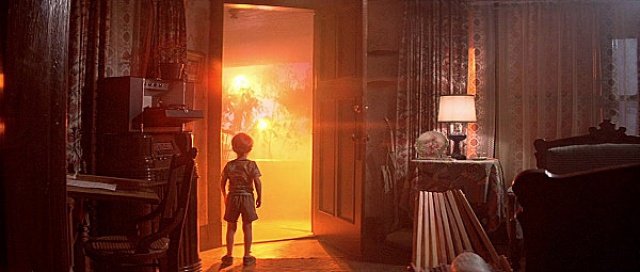
As I watched this briskly edited video essay by Waterclock about aliens in movies from Alien to Close Encounters of the Third Kind to E.T. to Super Eight, I found myself, oddly enough, drawn back to a memory from my childhood that had very little to do with outer space, but every bit to do with unfamiliar visitors. I grew up in an area of Dallas called the Park Cities, so named for the ample greenery, lush landscaping, and manicured lawns to be seen everywhere. It was an affluent neighborhood, and an implicitly guarded one; as I grew older and smarter, I grew increasingly frustrated and disgusted with the fact that anyone who wasn’t white or, for that matter, wasn’t driving a fairly expensive car was under suspicion in the area. In any event, when I was young, a group of gypsies moved into my neighborhood. No one knew where they came from. No one knew much about them, period, except that they were supposed to be "dangerous." The primary evidence of their dangerousness was their blunt behavior in grocery stores; an anecdote about "one of those gypsies" throwing a loaf of bread across the Safeway Market down the street from me because he "didn’t like the price" made the rounds repeatedly. I read a lot at that time, and my main curiosity about the gypsies was whether they had a covered wagon with them, and whether they played gyspy music on elaborately painted violins. This didn’t seem to be the case. The only palpable detail I gleaned about them, having never seen one of them, was that they wore jogging suits, the idea being that they’d stolen them, for how would traveling gypsies obtain jogging suits otherwise? According to popular wisdom, "they just took things." They were "greedy." I was told, in school, to watch out for them, to stay out of alleys, because they apparently loved alleys–and if I saw anyone in a jogging suit who looked, well, "different," to be on my guard. Apparently, the gypsies "traveled in groups": another criterion. The Park Cities had a local newspaper that conveyed to local residents the news of their biosphere, and the gypsies were definitely a hot item–the small organ probably expended more ink on the gypsies than it did on any other subject in its history. Though the gypsy furor died down, as well one might suspect, and without a ringing certainty as to whether the gypsies were, in fact, members of the Roma people, it taught me a valuable lesson about the American character. Americans are full of fear: fear of invasion, fear of theft, fear of difference, fear of instability, fear of death, of sickness, and, most sadly, of showing vulnerability. Americans flock to watch films about aliens, and, in particular alien invasions, because these films touch a crucial American nerve: what if our safety were threatened by forces we didn’t understand? Or, put another way, what if these forces simply showed up one day, and we had no idea what to do other than eliminate them? Or, put more accurately, what do we do about those who are different from us? Sadly, acceptance is not a part of the American sensibility, despite what certain parts of the Constitution might have us believe. Correspondingly, the alien narratives presented to Americans are always ones of destruction, of terror, of invasion, of a foreign menace moving in that must be stopped. This video piece brings home the excitement inherent in this narrative, the quickening of the blood that takes place when we believe we have something to defend, and it does so with great skill. In so doing, though, it points up the scary side of our country’s fascination with these creatures, and it makes viewers like me wonder what that fascination might mean–and, beyond that, if we might ever grow past the fears that make these films so successful.