Watch: The POV Shot in Film, Part Two (Jacob Swinney’s Take)

Watch: The POV Shot in Film, Part Two (Jacob Swinney’s Take)

In Part 1 of this 2-parter, Leigh Singer’s video made us intensely aware of the way POV shots can bring you inside cinematography, making you feel a film’s visual workings more intensely than you might otherwise feel them. But what about the use of this shot as a more practical narrative tool? Jacob Swinney takes this possibility and runs with it in his take on the POV shot. In the scenes assembled here, the shot is an agent of development, moving the story and the viewer forward in a way that pops us, if only momentarily, out of that story. That departure is an illusion, though, because frequently we’re tugged right back in. When we look, for instance, out of the car trunk at Vincent and Jules in Pulp Fiction, this is an agressive narrative move; Tarantino wants the viewer to experience the story somewhat cubistically, from all directions at once. When, during the famous shower scene in Psycho, we watch Janet Leigh being stabbed repeatedly from the killer’s point of view, our sudden displacement is important–because it’s important that we humor the idea that someone besides Norman Bates is doing the killing in the film, if only momentarily. (For, in that scene, we get the victim’s POV as well.) And in a film like Her, POV shots are crucial–they give life to Scarlett Johansson’s digital muse, and give viewers a significantly probing look at Joaquin Phoenix’s grasp for companionship. It doesn’t hurt that Swinney runs the soft-rock hit "These Eyes" over these images from over 100 movies. What, after all, is the POV shot but a way of reminding us that there’s more than one way to see, tell, or experience a story–and that being reflective on these things is part of the filmmaker’s responsibility?

ARIELLE BERNSTEIN: Feminist Camp: Reclaiming the Booty in a Digital Age

ARIELLE BERNSTEIN: Feminist Camp: Reclaiming the Booty in a Digital Age

nullI grew
up with thin white girl icons—with angry girl rockers like Fiona Apple crawling
half naked and hungry all over the floor, and Poe’s deep sultry voice, shifting
from ethereal to mad, everything about her skinny-armed longing. The feminist
rockers when I was a teen wilted and cried and clawed and spit. In the late 90s
a loud voice was always about rage, and female artists often sold a seemingly
contradictory image—a strong heart and fragile body.

My
mother, who emigrated from Cuba to America in the late sixties, could never
understand my obsession with thinness as a teenager. She drank water with heaps
of sugar in it to try and put on weight—curviness was seen as a sign of
sensuality, of sexiness. Certainly, there were curvier icons I could have looked
up to. The waif craze was in many ways a reaction to the aerobics-inspired look
of the 80s, with super models like Cindy Crawford and Naomi Campbell and pop
sensations like Madonna ushering in an era of sexuality that was large-bosomed
and muscular. And throughout the 90s, pop stars from J-Lo to Beyonce were famous
for their impeccable curves.

The waif
look appealed to me because it seemed defiant and dangerous. In reality it just
offered a different type of body as a fashion accessory.

To my mother,
my preference for thinness was more than a trend; it represented a kind of
cultural abandonment, a desire to be perceived as WASP-y and white, rather than
who I really was: a daughter of immigrants, a Latin American Jew. Two specific
markers of American assimilation—my thinness and blond hair, coupled with my
not having an accent, seemed to grant me access to things my mother never felt
she had access to.

But I
never felt as though I had complete access either, even if on the surface I
seemed to have it. I always felt like an imposter, as if I was wearing a mask I
could never take off.

We are all reduced to
our body parts.

The past several months
have been particularly depressing for anyone with a female body. Headlines
describing rape and sexual assault are virtually everywhere, from the numerous women speaking out against Bill Cosby, to the attention placed on
college campuses and how they could be doing more to prevent rape and sexual
assault.

In his essay on the rape
allegations against Cosby, Ta-Nehisi Coates reflects on the horrors of rape,
saying, “Rape
constitutes the loss of your body, which is all you are, to someone else.”
Likewise, in a recent essay, Roxane Gay considers the language of a sexual
assault from a Rolling Stone article that chronicles the experiences of a UVA
student who describes being gang raped at a frat party, how she was reduced to
an object and referred to as an “it.” In her essay, Gay implores her readers to
think long and hard on that word, to let that “it” haunt us.

What does it mean to acknowledge that our bodies are all that we are?

And where does this “it” stand in relation to the droves of young,
female pop stars today commanding us to look at “it,” to check “it,” to
smack “it,”—“it” being, in this case, their twerking behinds?

To
some, these close up images of the booty dehumanize and victimize women,
reducing us to sexual playthings. But I actually see something else here: a
reclaiming of the “it,” a defiant assertion of bodily autonomy, a demand for women
to be able to be as big and sexual as we damn well please.

The recent big booty craze is still fashion, of course, and some aspects
of the current trend, from Miley Cyrus’s use of black women as props in her
2013 VMA performance to Kim Kardashian’s photo spread for PAPER Magazine, are
infuriatingly disrespectful to black women in particular. And, of course, while
songs like Meghan Trainor’s “All About That Bass” preach body positivity, the
big booty trend really only praises a particular brand of curve, one belonging
to Kim Kardashian rather than Melissa McCarthy.

Yet
there is something also exciting about the way that some female performers are
reclaiming and celebrating the female body, about the way Nicki Minaj takes parts and
pieces of Sir Mix-A-Lot’s ode to women’s backsides in “Baby Got Back” and
transforms the booty from an object to be admired to a symbol of female sexual
appetite in “Anaconda.” The playful,
kitschy, over-the-top big booty shenanigans on Nicki Minaj’s video for the song are about self-love and swagger. “You love this fat ass,” she
manically cackles. It’s that cackle—wild, unhinged, defiantly unpretty—that
made me grow to love “Anaconda,” where the big booty becomes a symbol of
excess, sexiness, and silliness, all at once. Minaj’s “Anaconda”
doesn’t offer women a kind of empowerment fantasy, where women’s sexual
liberation will bring about a feminist revolution, but it does give women the
chance to reclaim that “it”: rather than being an object of someone else’s
consumption, it becomes a symbol of female sexual appetite and power.

The same thing could be said for Beyonce’s video for “7/11” where the
self-described feminist is seen hanging around in her underwear, having fun and
being silly, throwing her hands in the air and shaking her butt. Unlike her
classic ballads, or even her sexually explicit songs about getting it on with
her husband, this video focuses instead on women just having a good time, being
as loud, ridiculous, and playful as they want to be.

For the female body to be perceived as a source of pleasure, rather than
an object that is always on the brink of violation, is an incredible subversion
of our expectations about what it means to live in that body. The act of
reclaiming a word or an image is, of course, always fraught. I’m sure many
people feel there is simply no difference between a male-gaze-centric focus on
female curves and the booty-centered fashions surfacing in all sorts of media
today. Certainly, J.Lo and Iggy Azalea’s collaboration on the video for “Booty”
is no work of high art, and is replete with product placement and traditional
artifacts of the male gaze, but the delightfully campy videos of Nicki Minaj
and Beyonce, which showcase the female body as a source of unending amusement,
happiness, and power, are in fact changing the way we see that body. They
dare us to not only appreciate greater female involvement in the creative
process, but also challenge us to see a woman’s body as something inherently
powerful—as something, which can, and should, take up space.

Arielle Bernstein is
a writer living in Washington, DC. She teaches writing at American
University and also freelances. Her work has been published in
The
Millions, The Rumpus, St. Petersburg Review and The Ilanot Review. She
has been listed four times as a finalist in
Glimmer Train short story
contests
. She is currently writing her first book.

Watch: This Is How You Make a Low-Budget Horror Film–Err, Comedy: A Video Essay on Sam Raimi’s EVIL DEAD 2

Watch: This Is How You Make a Low-Budget Horror Film–Err, Comedy: A Video Essay on EVIL DEAD 2

To say I laughed until I cried while watching Kevin B. Lee’s video essay on the low-budget Sam Raimi horror film Evil Dead 2 would be a misstatement, since I don’t recall any actual tears rolling down my face. But: there are a lot of laughs here. In this installment of his Shooting Down Pictures project, in which Lee (the former Editor of this very blog!) chronicled his viewing of the 1000 greatest films of all time, Lee uses the director’s admittedly over-acted, mawkishly fake, chaotic quasi-masterpiece of after-dinner-theater style horror as a basis for discussion of the value of such films. And in so doing, Lee instructs us on the way this kind of film is actually made. As one fairly artificially constructed special effect is piled on top of another, the scenes we see here acquire a level of absurdity which could be said to be next to artfulness. We laugh, but we’re also genuinely unsettled at certain moments. The drive, the singular energy behind what we’re watching, the focus of the director’s animus, is what causes the disturbance. The giggles come when the car goes off the road a bit–which happens quite often in this film, and others of its type. Lee provides helpful nuggets of information onscreen along the way, such as "fake hand filled with gelatin," as a knife plunges into flesh, or "440 gallons of fake blood used for this scene," as a powerful gusher of blood erupts, wholly spontaneously. And, viewed in this light, with the seams of the film exposed, somewhat, the question is raised: what was Raimi doing here? Is it what it seems like he was doing, or something more complex? And beyond that: at what point could we say that what would seem on the surface to be the opposite of artfulness is actually pushing, perhaps in spite of itself, towards something which is poetic and profound in its own right?

KICKING TELEVISION: NASHVILLE is the Best Network Drama on TV

KICKING TELEVISION: NASHVILLE is the Best Network Drama on TV

nullI can already hear the denizens
of Good Wife fandom anger-typing
emails in dispute of my title. And I’ll admit to a bit of click-baiting here,
but as much as I
bemoaned the death of the sitcom in my last column
, the
network drama stands in equal peril. The medium of dramatic television is
successful only if it’s interesting, entertaining, or a form of escapism. At
its best, it’s all three, and a survey of the current network television
landscape finds little if any of these qualities. The frustrating lack of
dramatic programming worth indulging in on ABC, NBC, CBS, Fox, and the CW is
almost enough to drive audiences to pick up a book or listen to a podcast. But
hold on y’all, before you put on the latest episode of Serial and mosey on down to the local bookery to fetch a new
hardcover, take a minute or forty-two and settle in to ABC’s Nashville.

Networks lack imagination in
their programming. They have long ceded creativity and ambition to cable,
satisfied with an unhealthy affection for naval crimes and criminal forensics. Primetime
network dramas are exclusively about fighting crime, fighting the supernatural,
fighting disease, or fighting government. The only exceptions are Once Upon a Time, a show that from what
I can gather is about House’s Allison
Cameron slipping into a coma in which she exists in world populated by drunken
fairytale characters; Parenthood, a
show about actors who were once on good shows; and Jane the Virgin, which I have not seen nor read of, but assume
borrows its plot from Tom Waits’ story from the preamble to “Train Song” on Big Time, in which a stray bullet pierces
the testicle of a Union soldier, and then lodges itself in the ovaries of an
eighteen year old girl.

Nashville is a throwback to primetime soap operas of
yesteryear. It’s about beautiful people doing exceptional things while getting
laid and singing about it. And it is absolutely fearless and unapologetic about
its intentions. In the adolescence of my affection for television, I was raised
on the saccharin frivolity of Beverly
Hills 90210
and Melrose Place, which
themselves were the TV offspring of Dynasty
and The Love Boat, Aaron Spelling
productions so wondrously escapist that we forgive him for Tori and Randy. These
shows serialized the medium, and created loyal fan bases who, in the absence of
DVRs, needed to find themselves in front of a TV at an appointed hour to find
out if Dylan would choose Brenda or Kelly, and how long our sideburns should
be.

There was nothing revolutionary
about these programs, and they didn’t aspire to revolution. They weren’t
preaching. There was very little in the way of murder. Vampires and aliens only
appeared in Halloween episodes. The beauty in shows like Spelling’s were that
they didn’t condescend to the audience, they weren’t written to be lauded by
critics, or celebrated by those who claim to not watch television except for
Ken Burns documentaries and The Wire.
Primetime soaps were built for escape, to provide a breath from the day, to
revel in the frivolous.

Nashville is wonderfully reminiscent of those programs
without being derivative. The show is soapier than a Dove factory and often as cloying
as that simile. Set in and around the country music industry in Music City,
USA, Nashville boasts what few other
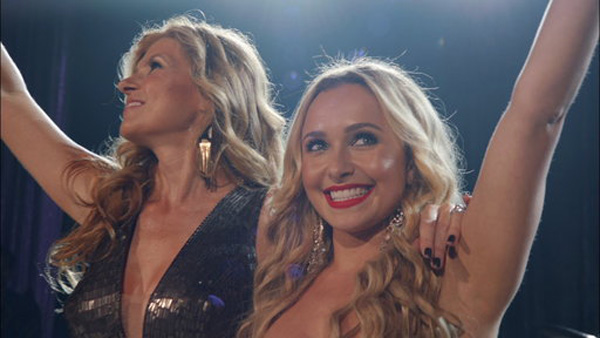
dramas can: Two strong female leads. Connie Britton’s established country
superstar Rayna James and Hayden Panettiere’s embattled rising star Juliette
Barnes anchor the program in their representations of polarized embodiments of
the American dream. Rayna is old money privilege. Juliette is a trailer park
rescue. They’re the old and new country . . . music that is.

The show is rounded out by a
cross-section of not quite stock but not quite unique characters. Deacon Claybourne
(Charles Esten) is the lovelorn recovering alcoholic. Gunnar Scott (Sam
Palladio) is the aw-shucks fella doomed to heartbreak. Scarlett O’Connor (Clare
Bowen) is the shy talent waiting tables. Will Lexington (Chris Carmack) is the
rising star with secrets. Avery Barkley (Jonathan Jackson) is alt-country,
where punk meets Patsy. Maddie and Daphne Conrad (Lennon and Maisy Stella) are
Rayna’s daughters who aspire to be just like Momma. And though there’s nothing
exceptional about these characters by description, each actor and actress
portrays them with an honest simplicity and subtle tweaks that eschew any
notion of stock.

Oh, and they sing.

The soundtrack of each episode
is a marvel, and a testament to the exceptional work of music supervisor
Frankie Pine and established by Season One’s supervisor, Grammy and Oscar
winner T. Bone Burnett, who just happens to be married to Nashville’s creator and showrunner Callie Khouri. Being set and filmed
in Nashville allows the show to use the city’s exceptional talent pool of
professional songwriters, not unlike the ones on the show portrayed by Esten,
Palladio, Jackson, and Bowen. The original compositions, the Tennessee set, and
that the actors play and sing themselves gives the show an authenticity that is
rare on television. And counter to Hollywood tendency, the authenticity escapes
contrivance. Executive producer Steve Buchanan is president of the Grand Ole
Opry Group. The actors playing Scarlett, Avery, and Gunnar have all worked at
the legendary Bluebird Café, where Rayna and Deacon are known to drop in for a
quick set, and which the show has reproduced as a set of its own. Nashville’s sincerity is augmented by
the producers’ inclusion of contemporary country music artists in the show and
its narrative (if peripheral), which contributes to the audience’s comfort and Nashville’s genuine and natural
escapism.

[And, if you’ll indulge me and
pardon a quick digression: Connie Britton is a criminally underappreciated and
under-celebrated actress. Very few performers have the range to play such a
diversity of roles and in different genres. She makes Christopher Walken look
limited. Britton has starred in a hit sitcom (Spin City), a seminal TV drama (Friday
Night Lights
), a redefining mini-series (American Horror Story), and owns “y’all” like she invented it.]

In an era of instant gratification
and unparalleled media attention, shows are rarely given time to grow into
themselves, to discover what they truly are. Nashville went through its growing pains. In Season One, it tried
to be Dallas set in Tennessee. Powers
Boothe played Rayna’s baron-like tyrant of a father, who perhaps killed her
mother, and was manipulating her husband, who had committed fraud in a land
deal, who burned papers in the fireplace while drinking scotch, and perhaps
wasn’t the father of their eldest child. The show created complex mythologies,
but they seemed contrived and tired. Granted a second season by ABC, the show
quickly retooled, and made the country music industry the centre of the show’s
universe, an industry that comes complete with heroes and villains, defying the
need to create them from borrowed characters like Boothe’s. Nashville’s music, authenticity, and placement within the actual
Nashville and industry immersed the show’s characters into the mythology of
country music, and gave it a life it lacked in in its first season.

And that’s what sets Nashville
apart. It aspires to be itself and nothing else. It’s amplified by well-crafted
characters and measured performances. It’s a soap opera, but one that the
audience can invest in because it feels genuine. It’s at once a tribute to
country music and a bygone era of primetime television. And you can tap your
toe to its both its musical and narrative exposition in that they’re familiar
and new. Each episode is a new album from a band you’ve loved since you were a
kid.

The network drama is in dire
straits. Lost is but a distant
memory. Friday Night Lights was
perhaps the last of the medium to truly excel in craft and creation, and is the
last to be nominated for a Best Drama Emmy (along with The Good Wife in 2011). Grey’s
Anatomy
is long past its expiration date, now that Derek and Meredith’s
grandchildren work at Seattle Grace. Scandal
is parody that refuses to admit its parody. Madam
Secretary
is West Wing-lite. CSI’s legacy will be the poisoning the
national jury pool with false science. Blue
Bloods
, Elementary, NCIS: Bowling Green, The Blacklist, et al. are all ultimately
forgettable. I’ll admit I’ve never seen The
Good Wife
, but I couldn’t bear the experience of another show about
lawyers. Hidden within the cacophony of nondescript programming is a burgeoning
gem. Nashville is not a seminal
masterpiece, nor does it want to be. It’s an homage to a genre of television
that is inexplicably absent from the current network programming landscape.

Mike Spry is a writer, editor, and columnist who has written for The
Toronto Star, Maisonneuve, and The Smoking Jacket, among
others, and contributes to MTV’s
 PLAY
with AJ
. He is the author of the poetry collection JACK (Snare
Books, 2008) and
Bourbon & Eventide (Invisible Publishing, 2014), the short story collection Distillery Songs (Insomniac Press,
2011), and the co-author of
Cheap Throat: The Diary of a Locked-Out
Hockey Player
(Found Press,
2013).
Follow him on Twitter @mdspry.

Watch: The POV Shot in Film, Part One (Leigh Singer’s Take)

Watch: The POV Shot in Film, Part One (Leigh Singer’s Take)

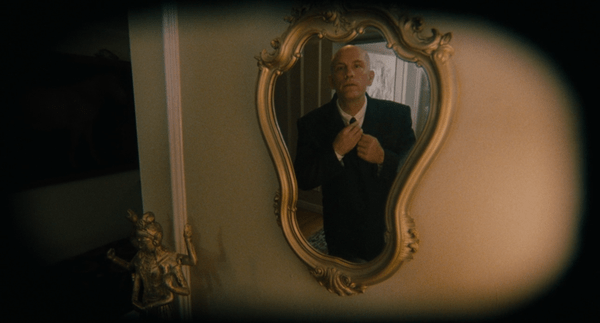
How do we quantify what happens when a film assumes the first person point of view, and instead of watching events unfold on camera, viewers become, in a sense, part of those events? Leigh Singer takes us through the varieties of experience possible with such POV shots in his latest video essay (which covers 74 films!). The first experience is a sense of dizziness, which can either be darkly funny, as it was in Being John Malkovich, or darkly jarring. The technique often occurs in films in which empathy is important: films as different as The Blair Witch Project or Reservoir Dogs depend upon our ability to identify with the person carrying the story to us, whether that story is presented as nonfiction or fiction. It may communicate power, in different forms: contrast the famous (in different ways) uses of first person POV in Robocop and Bram Stoker’s Dracula, both signalling the advent of disorder and mayhem, one disorder somewhat deserved, one disorder decidedly undeserved. It may be used to let us in on a voyeur’s discovery, as it does for the hero of Blue Velvet, as he spies on the horrors of the abusive relationship between a nightclub singer and a perverted small time criminal. And, then again, it may be done simply for what should be called, for lack of a better label, the "what if" factor: what if we could sit on the back of a bullet as it flew towards its destination, and then, having reached the destination, what if we went a little farther? In a sense, the use of the first person POV shot is the point at which film mingles with the other arts, whose purpose is, after all, to show us the beautiful wildness inside the human imagination: sublimated, glorified, alive.–Max Winter

Leigh Singer is a freelance film journalist, filmmaker and screenwriter.
Leigh studied Film and Literature at Warwick University, where he
directed and adapted the world stage premiere of Steven Soderbergh’s
‘sex, lies and videotape’. He has written or made video essays on fllm for The Guardian, The Independent, BBCi,
Dazed & Confused, Total Film, RogerEbert.com
and others, has appeared on TV and radio as a film critic and is a
programmer with the London Film Festival. You can reach him on Twitter
@Leigh_Singer.

The STAR WARS Films and Their Hold on Viewers’ Inner Lives: A Video Essay

The STAR WARS Films and Their Hold on Viewers’ Inner Lives: A Video Essay

Most American moviegoers who are old enough to have seen the original Star Wars films in the theater, back in the 1970s and 1980s, oversized iced beverage on one side, tooth-rotting candy or dehydrating popcorn on the other, air conditioners blasting, every seat full, utter silence in the days before cell phones, have some emotional relationship with them. It may be awe at the scope of their story, with its aspiration to an epic structure (in the true sense of that word, not the recent malapropic usage that has been popular in recent years). It may be amusement at the stilted acting pervading the original series, the black-and-white themes and messages as tall as the screen on which the tales were projected. It may be disappointment at their successors, which have all been flawed in one large way or another. Regardless, it’s safe to say that George Lucas’s three original films burned themselves into America’s cultural DNA, forming a point of reference for individuals of different backgrounds, tastes, professions, and levels of intelligence. The Prince-Valiant-esque goodness of Luke Skywalker, the raffish heroism of Han Solo, the misshapen evil of Darth Vader are all as familiar to many Americans as apple pie, the American flag, or George Washington. So, too, as this personal and sharply edited video piece by Clara Darko points out, are the ideas the films express. Good may in fact triumph over evil. Self-confidence can help the ordinary human become extra-ordinary. Wisdom trumps reckless ambition. Huge things come in small, odd-looking packages with distended green ears, inverted grammatical constructions, and frog-like voices. And so on. The funny thing about these ideas is that many viewers search for them, perpetually, in films, regardless of how well-trodden they might be. Those ideas might not be sought in isolation–the same viewer might seek out both stories of dissolution and hopelessness along with tales of triumph. The person who watches eight hours of footage of the Empire State Building today might easily gaze at the adventures of dashingly dressed heroes on a desert planet tomorrow. The point about these films is what they tapped into, a yearning for myth, for story, and perhaps for closure that has proven to be universal. Darko calls her piece "All you need to know about life," suggesting that the films taught her many such lessons. And perhaps they could teach these lessons. I wonder, though, if the piece also couldn’t have been called "All you need to know about you."

THE BABADOOK as Fairy Tale Therapy: “Committed to the monster theory”

THE BABADOOK as Fairy Tale Therapy: “Committed to the monster theory”

nullThe Babadook opens
with an enigmatic, dream-like sequence depicting a car crash with one fatality: Oskar, husband and father to Amelia and Samuel, the film’s protagonists.  This traumatic event haunts them, as mother
and son try to make sense of their loss. 
Like the film itself, they have recourse to those age-old narrative
structures we call fairy tales, whose major themes run like red threads through
the often-maligned horror genre.  This is
the first film by Australian director Jennifer Kent, and with it she boldly
reclaims horror as a nuanced and imaginative structure for working through the
deepest of psychic traumas, enfolding us in an uncompromising and original
vision that is at the same time disturbingly familiar.

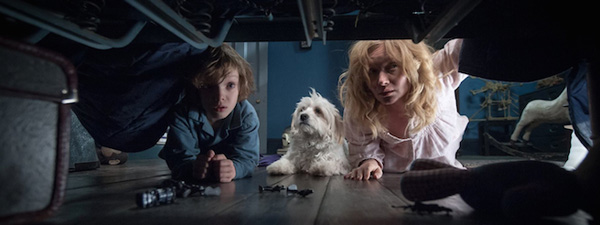
After the opening car-crash sequence, we see six-year old
Samuel waking his mother to tell her, “I had the dream again.” She helps him
look under the bed for his imaginary assailant, and then she reads him a fairy tale
in which the Big Bad Wolf is destroyed. 
“Did they really kill the wolf, Mom?” Sam asks.  “I’m sure they did,” Amelia replies.  Then a strange look comes over the boy’s face
as he says, “I’ll kill the monster when it comes and smash its head in.” Fear
at the unexpected violence of this outburst passes briefly over Amelia’s face
before she rearranges it into a motherly smile. 
Then Sam demands she read the story over again and Amelia wearily
complies.

This early sequence establishes the tensions in this
mother-child relationship with remarkable economy and vividness.  Intriguingly, the fairy tale is as much a
soothing force on Samuel’s psyche as it is a weapon of manipulation.  In the sequences that follow, Amelia struggles to keep it together while her boy goes from one disturbing
outburst to the next, alienating friends and family.  The ostensible cause of these outbursts is an
imaginary monster who Samuel feels compelled to slay, in order to protect him
and his mother.   At one point he speaks
to the imagined presence of his father, assuring him that he’ll protect Mum,
underlining the Oedipal dimension of this obsessive narrative. Yet, as in the
Big Bad Wolf scene, this monster narrative is used as much against his mother
as for psychic release.  “Acting out” is
how a child therapist might describe Samuel’s behavior, a cliché that
inadvertently reveals the abiding role of drama and narrative in the troubled
mental lives of children, as well as adults.

The film’s visual and symbolic hook is an evil pop-up book, Mr. Babadook, that magically appears on
Samuel’s bookshelf, and which, of course, he forces his reluctant mother to
read to him.  Both are frightened yet
fascinated by the book’s sinister, black and white images of a top-hatted, trench-coated
figure who occasionally smiles with evil, three-dimensional glee.  This dramatic figure provides Samuel’s vague
monster a more palpable identity, and his obsession with slaying it becomes increasingly
urgent and violent.  When his cousin
mocks him for believing in monsters, he pushes her out of a tree-house and
breaks her nose.  The fanciful, Goonies-like weapons he builds in the
basement to defend himself against Mr. Babadook are eventually turned on his
classmates.  When they seek help from a
therapist, he observes that Samuel is “committed to the monster theory.”

As Amelia and Samuel grow increasingly isolated, they both
become committed to this theory, and the figure of Mr. Babadook serves as both
an externalization of their fears and a weapon to be used against one another.  Through intimate close-ups emphasizing the
pair’s uncomfortable proximity, and agonizing shouting matches and screaming
fits, mother-child tension builds to the point where the horror sequences
actually serve as an emotional release.  Kent
has said that in the film she wanted “to explore parenting from a very real
perspective. Now, I’m not saying we all want to go and kill our kids, but a lot
of women struggle. And it is a very taboo subject, to say that motherhood is
anything but a perfect experience for women.” How do mothers cope with such
feelings, in a culture where they are expected to be consistently loving and
lovable? 

The Babadook makes
a persuasive case for horror films as a form of therapy.  Relentlessly kept awake by Samuel’s outbursts,
an increasingly insomniac Amelia seeks escape by watching television, but the
shows that seem magically to appear become visual manifestations of her mental
life.  Kent displays an extensive
knowledge of the history of horror, and of the fantastic in film
generally.  One sequence portrays Amelia
watching some particularly haunting sequences from early film master Georges Melies,
featuring dancing devils, tentacled monsters, and flying body parts.  Out of these black and white sequences from
the early age of film emerge images of the Babadook, at once an homage to one
of the director’s inspirations as well as an uncanny merging of personal demons
and public domain.  The pop-up book,
which later reappears after Amelia tore it up and threw it out, takes on a
stop-motion animated life of its own, in sequences that deftly combine the
visual styles of figures as diverse as Edward Gorey, Maurice Sendak, Jan
Svankmajer, and F. W. Murnau. 

The Victorian-styled house in which Amelia and Samuel live gradually begins to look
more like the black and white illustrations of the book, and the realistic
elements of the narrative gradually fall away to plunge us into a realm of
utter horror.  With nods to the lurid and
dream-like European horror films of the 1970s, by directors like Mario Bava,
George Franju and Roman Polanski, Kent creates an imaginary realm in which the
commonplace becomes fantastic, as the domestic sphere draws in like a noose on
mother and child.  In a clear nod to
Polanski’s agoraphobic masterpiece Repulsion,
Amelia becomes obsessed with a scratching sound coming from behind the
refrigerator.  As she moves the appliance
away, she sees cockroaches crawling from a slit in the wall, which she worries
until it becomes an ugly gash, at once wound and vagina. 

The Babadook addresses
difficult issues from a uniquely feminine perspective, and the female-led
production is able to take us into areas where few films have been able to go
without falling back on clichés and stereotypes.  Essie Davis turns in a harrowing performance
as increasingly unhinged mother Amelia, and Kent’s careful direction just
manages to keep this character from becoming a caricature of the hysterical
mother.  At one point she watches Lon
Chaney’s Phantom of the Opera on television, and Davis shows a similar
capacity for physical transformation, at times recalling Faye Dunaway’s
exploitation-camp meets Kabuki-theater wildness of Mommie Dearest.  From mousey,
beleaguered mother to vengeful monster, Davis shows an astonishing range,
inhabiting the many personae horror films and fairy tales have to offer.

If Amelia begins as the damsel in distress of Samuel’s
boyhood fantasies, she eventually becomes the evil stepmother of fairy tale
myth.  But this, too, is only a role, and
whatever constitutes her true identity remains elusive, hidden.  The monstrous figures and harrowing
narratives of horror, like the fairy tale, can serve as a means of imaginative
self-actualization, as psychologist Bruno Bettelheim famously argued.  But The
Babadook
suggests that they can also become traps, enclosing us in vivid
fictions that cunningly replicate our repressed mental lives.  Or, in the words of Samuel’s pop-up book, “If
it’s in a word, or it’s in a book, you can’t get rid of the Babadook.”

Jed Mayer is an Associate Professor of English at the State University of New York, New Paltz.

Watch: The Louisiana Landscapes of TRUE DETECTIVE As One Grand Open Stage: A Video Essay

Watch: The Louisiana Landscapes of TRUE DETECTIVE As One Grand Open Stage: A Video Essay

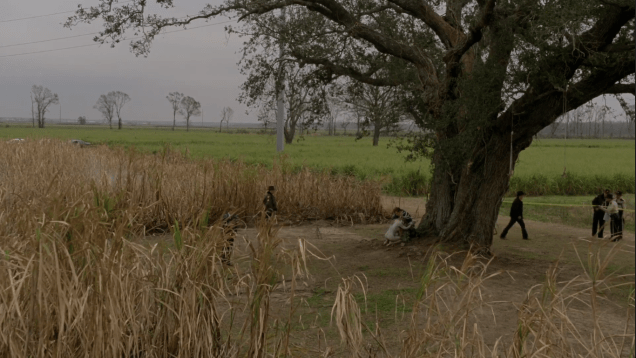
It is entirely appropriate that True Detective takes place in Louisiana. That might sound like a tautology, somewhat like saying that it’s appropriate that A Christmas Carol takes place in London or Vertigo takes place in San Francisco. However, what I mean is something different, which is called up by Jaume Lloret’s gathering of the more gorgeous landscapes of HBO’s recent episodic masterwork, filmed lovingly by Cary Fukunaga and Adam Arkapaw. The landscape of Louisiana can be described many ways: lush, verdant, mysterious, overgrown, swampy, humid, shadowy, punishing, endless. But one simple adjective which could also be applied to it is flat. The land pushes onwards until it gets tired of pushing, and then it just keeps going. Some might view the landscape, devoid of mountains, valleys, mesas, buttes, canyons, and all the other things that form the common conception of whatever spectacular is, to be quite dull. But another way of looking at it is as a tabula rasa of sorts. Rust Cohle can unfurl his eccentric, rambling monologues into the air without fear that they will ever bounce back at him. The detectives can drive on, in pursuit of one lead or another, without ever being certain that they will find the person they are looking for. And the criminals, as well, commit their acts of violence in something of a void: our first sight of the villain in the series finds him all by himself amidst the trees and shrubs of his backyard, a tiny figure, engulfed by the natural world around him even as he tries to punctuate it, in his own cruel manner. What makes True Detective so interesting, for so many people, is not its story, which is a fairly run-of-the-mill procedural with, granted, some spooky effects tossed in. It’s not the post-Tarantino digressiveness of its dialogue. And it’s not its relationships, since the parable of the man too involved in his job to be a loving marital partner has been oft-told, as has the story of the two work partners who need each other despite disagreements. It’s that all of the story’s horrific events occur on a flat plane whose closest analog, strangely enough, is reality itself.  

Watch: The Sublime Presence in Michael Mann’s Films: A Video Essay

Watch: The Sublime Presence in Michael Mann’s Films: A Video Essay

It’s hard to say what it is that’s surging beneath so many of Michael Mann’s films, what gives them their energy. It could be that he comes the closest to the sublime of any American director. For those keeping score, the word sublime is often used to describe something that reaches heights we did not expect, beyond excellence. But what the term means for artistic works is quite different: it describes a force, somewhat inexplicable, that moves forward and dwarfs everything else around it, that is near-frightening in its intensity. And that’s what we have here, in Michael Mann’s films, which Tom Kramer has managed to get at with this video piece. It’s there in the shimmering tension between Al Pacino and Robert De Niro in Heat. It’s there, believe it or not, in Colin Farrell’s momentary love in Miami Vice. Certainly the poor tormented soul at the heart of Manhunter faces it as he goes about his disturbed criminal-profiling craft. And, of course, it pervades The Last of the Mohicans, both in the characters’ relationships with each other and in their facing of the vast, complex mass of untamed America. It could be said that Mann coats his films with too much style, too much visual slickness–and that’s evident in Kramer’s piece too. But, on the other hand, that sense of visual craft could also be said to ameliorate the near-atomic power always simmering within Mann’s subject matter, always threatening to overtake all else.

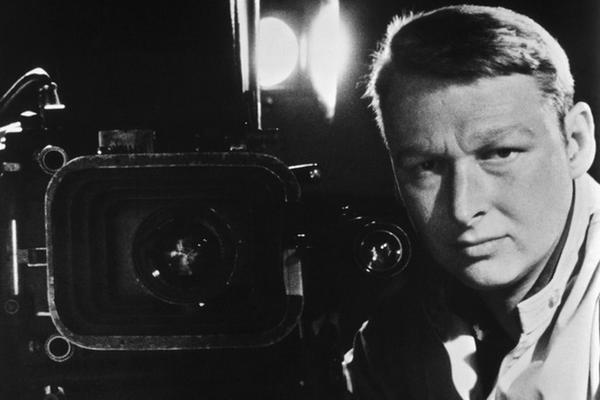
Watch: For Mike Nichols (1931-2014): A Video Essay

Watch: For Mike Nichols (1931-2014): A Video Essay

There were three big “Mike Nichols moments” in my life. The first was the universally shared one: watching The Graduate for the first time. I was a teenager and an interest in sexuality, excitement, and a nose for mischief were at their height. Watching Dustin Hoffman sleep with an older woman and then run off with her daughter, all to the tune of Simon & Garfunkel, even had me sweating as a so-called Generation Y-er. Visually, the film was doing interesting things with its pans and sudden zooms. They weren’t cheesy. They were oddly endearing. And to think that this film was made in the 1960s was all the more impressive. The next moment came when I saw Closer in the theatre back in 2004. I was well versed in the Nichols film canon (Primary Colors, Working Girl, etc.) and was expecting warmth and light at the end of the tunnel for this story of four miserable people who kept fucking each other over, literally and figuratively. But it never came. Yes, as per many Mike Nichols films, it was brilliantly acted. But this film was relentlessly blunt. It was cold. Was this really a Mike Nichols film? Yes, Nichols had made groundbreaking films in the past, but none that ever told America’s Sweetheart to “fuck off and die.” It had such a startling affect on me that when I re-watched some of his films (Wolf, Silkwood), I ardently searched to find even more tangible nastiness in some of those characters. I wanted to not like some of the fully realized, compassionate characters from those past films simply so I could connect them back to the characters of Closer—and ultimately give myself vindication as a viewer. But I couldn’t. I could never dislike Harrison Ford in Regarding Henry as much as I disliked Jude Law in Closer. But that’s okay. Nichols was showing me that he handled every type of person equally. By the time Nichols made Charlie Wilson’s War in 2007, it was obvious that Nichols really wasn’t interested in the dynamic movements of the camera; contrast that to The Graduate, which has something going on in nearly every frame. Nichols was basically creating a cinema of the theatre. He was going back to his roots. His camera was much more calm in the last feature films. He was just watching his players, smiling behind the camera. This speaks directly to the third Nichols moment for me, which happened a few years ago. I was on the “L” train in Chicago, headed downtown, listening to a podcast of Radiolab on NPR. The segment was on the origin of laughter. It opened by playing some archival audio of Nichols and Elaine May laughing hysterically as they attempted to get through a comedy bit. It was such an infectious sound, so hearty and real, that I kept playing it over and over. I was so obsessed with the clip that I found myself researching Nichols’ early comedic past, of which I was not too informed. I was shocked to learn that his original improv troupe (the Compass Players) was the predecessor to what would eventually become the Second City improv powerhouse of Chicago. Nichols was closer to my roots that I even realized.

At the end of the day, what these three moments signify was that Mike Nichols was always a filmmaker that kept surprising me. I never had him figured out. There was always a fascinating development or a piece of information about his life that was waiting to be discovered. I put this video essay together with a heavy heart. Aside from seeing such recent artists who have passed (like Philip Seymour Hoffman and Robin Williams) in the clips, the overwhelming fact that there were going to be no more films or pieces of theatre created by this great storyteller was piercing. But then I just remember that great laugh of his from that comedy sketch outtake. Something tells me that he still has some surprises waiting for me.

Nelson Carvajal is an independent digital filmmaker, writer and content creator based out of Chicago, Illinois. His digital short films usually contain appropriated content and have screened at such venues as the London Underground Film Festival. Carvajal runs a blog called FREE CINEMA NOW which boasts the tagline: "Liberating Independent Film And Video From A Prehistoric Value System." You can follow Nelson on Twitter here.