Watch: In Charlie Kaufman’s Work, The Self Is Bottomless and Will Outlast You

Watch: In Charlie Kaufman’s Work, The Self Is Bottomless and Will Outlast You

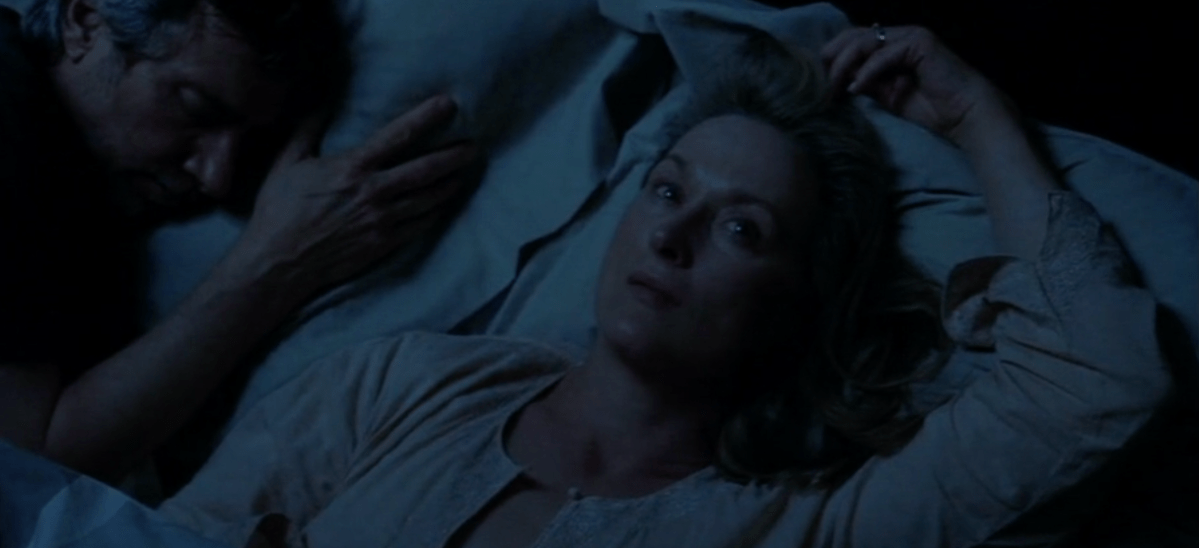
A sense of poignant exhaustion runs through Charlie Kaufman’s stories. Not the bad kind of exhaustion, where you simply want to pass out, but the clear kind, in which you see only one thing in front of you, and that thing, that idea, that concept, becomes the entire world; the reason this idea becomes the entire world is that you’ve been thinking about it almost constantly. It may be a screenplay, such as the one Charlie Kaufman impales himself on in ‘Adaptation’; it may be an art project as big as the Ritz, as in ‘Synecdoche, New York’; it may be one’s memories, and the gulf before and after them, as in ‘Eternal Sunshine of the Spotless Mind.’ Whatever it may be, all it does is drive you deeper inside yourself. Leigh Singer’s latest probing, soulful video essay for Fandor points up the loneliness at the heart of self-examination, even as it is essential. In Charlie Kaufman’s vision of the gaze into the self, we are all either running along a deserted wintry beach, like the two hapless guinea pigs in ‘Eternal Sunshine,’ or spat out on a New Jersey interstate, as in ‘Being John Malkovich.’

Watch: Vera Chytilova Makes the Richest Kind of Fun

Watch: Vera Chytilova Makes the Richest Kind of Fun

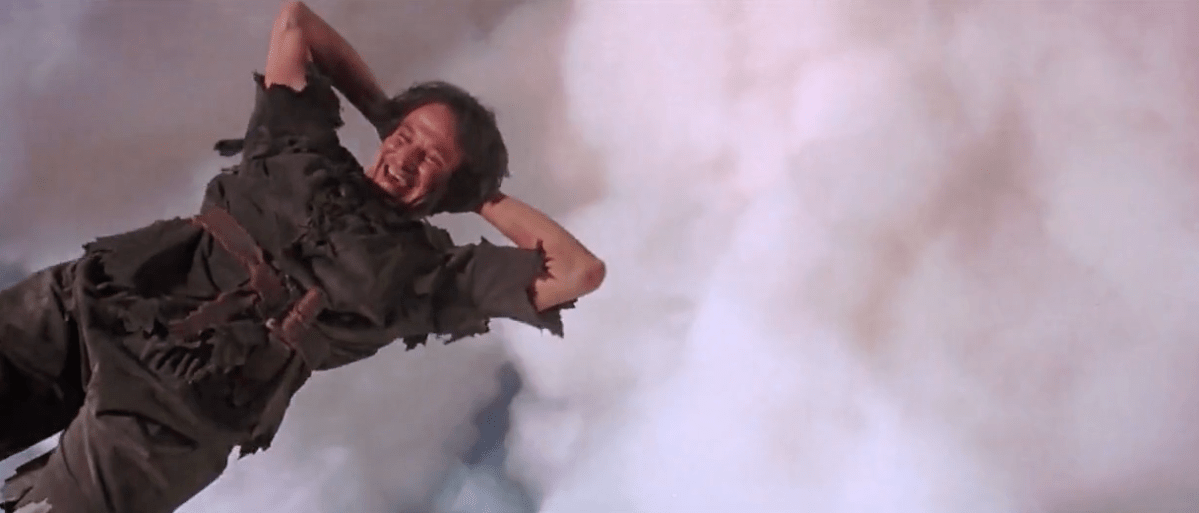
Watch this video essay. It’s okay if you haven’t heard of Vera Chytilova. It’s okay if you never saw ‘Daisies,’ the film about two young rebellious sexy kids the essay is centered around. All you need to enjoy this standout piece by Joel Bocko is a pair of eyes, a pair of ears (for the rocking soundtrack) and a couple of minutes. It won’t be what you’re expecting. And if you’re made more curious about Chytilova after watching, all the better!

On Louis C.K., ‘Horace and Pete,’ and the Meanness of Donald Trump

On Louis C.K., ‘Horace and Pete,’ and the Meanness of Donald Trump

I woke up late on Saturday morning to good news in my email inbox: a new episode of ‘Horace and Pete,’ Louis C.K.’s online series, had dropped. The first part of the email was fun and games as usual, but then there was a PS, during which C.K. delivered a lengthy and much-publicized rant against Donald Trump. As one might expect, C.K. had choice words for Trump, calling him a liar, a bigot, the equivalent of Hitler–all fair labels. Most saliently, though, C.K. called Trump out for a couple of things: he stated that he’s “not one of you. He is one of him,” urging readers not to be fooled by Trump’s promises. And he described, at length, Trump’s bullying, threatening tendencies, his pure meanness. Meanness should be distinguished from cruelty: meanness is inherent, deep, and yet also tacky; cruelty is slightly different, possibly situational. There’s a reason why C.K.’s words on the meanness and pretense of Trump should be taken seriously, and that his rant should not be dismissed as yet another self-serious celebrity’s conscious political statement. The reason is that C.K. is a student, practically a scholar, of both these qualities in humans. This knowledge is in glowing and wince-worthy evidence in Episode 6 of ‘Horace and Pete.’

Pretense and meanness are, in fact, what the series is all about. Horace (C.K.) and Pete (Steve Buscemi) are cousins who thought they were brothers until Uncle Pete (Alan Alda), their late uncle (to Horace)/father (to Pete), revealed otherwise, running a bar which seems like a solid establishment but is in fact losing money and serving watered-down drinks. Horace presents as affable but is in fact highly dishonest in his relationships, and, in some ways, mean-spirited, with a damaged, unhappy daughter and a son who doesn’t speak to him. Pete seems like a retiring sort, but is in fact heavily medicated—without his meds, he begins having visions. And then there’s the meanness. Throughout this brilliant series, characters say unabashedly mean things to each other, from Uncle Pete’s call to Horace to say hi to his “fat daughter” onwards. The drama’s characters regularly tell each other to go fuck themselves, believably, with full-throated anger. And they do mean things too; in one particularly harrowing and beautifully executed episode, we learn that Horace’s marriage ended because he slept with his wife’s sister. Repeatedly. And we learn this after Horace’s previous wife has announced that she’s cheating on her current partner with his father.

Episode 6 cranks this sort of ultra-meanness up a notch. It
begins benignly, as Pete springs around his bedroom, preparing for a blind
date. Then we cut to the date itself, as Pete and Jenny, played with great
honesty and forwardness by Hannah Dunne, muddle around a bit and then speak openly with each other about their attributes and shortcomings. Nothing mean yet, really, but in the next scene, which takes place after the two have become a couple, Pete and his new partner have dinner with Horace and Horace’s sister Sylvia (Edie Falco), a tightly wound, short of phrase, long of vindictiveness, cancer patient. The dinner starts awkward and gets worse as probing questions turn into snappish judgments (she’s 26, he’s 46). And then, finally, the kicker: Horace explains, explicitly and bluntly, Pete’s condition. Crushed, Jenny leaves, but not before telling Horace and his sister off, as Pete sits, head bowed, destroyed and ashamed. After Pete leaves, Horace and Sylvia go on eating dinner. So, the siblings have taken an unstable, lonely man, who was clearly enjoying a chance at happiness, decided that he wasn’t being forthright enough about his past, made a decision for him, crushed him, and then savored a plate of family-style spaghetti and meatballs. If you want a definition of meanness, look no farther. But simultaneously, if you want a definition of nakedness, the absence of pretense, the conclusion of this dinner gathering would be an apt illustration, as well. Nothing is hidden. Everything is revealed. Everything is ugly. Pass the parmesan.

What is the origin of nastiness? The sad reality is that its origins are often hard to place. One could hazard a number of explanations for why Horace spills Pete’s beans for him: he didn’t want a painful situation to develop later; he was doing his cousin a favor by not allowing him to become involved with a woman not mature enough to handle Pete’s reality; he was protecting Pete’s stability by stopping things before he got in over his head; he was bringing truth in where there had been none before. But none of these explanations are quite as strong as: he felt like it. And: humans are like that. So, the spectacle of Trump must be quite interesting to Louis C.K.: a man who says whatever he wants, and who promises to commit acts of great barbarism if elected President, for no other reason than impulse. Simultaneously, Trump is a pretender, someone who acts as if he has compassion for the downtrodden and yet has none, clearly. C.K. understands this man, because he’s watched this behavior in others, and he has allowed it to spark ‘Horace and Pete,’ and, to a lesser extent, ‘Louie.’ In C.K.’s dramas, the urge to be nasty or brutal or mean floats around like a life force, at times seeming like its own character. There are other impulses as well, but the injustice humans do to each other is often the catalyst behind each storyline. Dissembling is germane to C.K.’s work as well; C.K. plays himself, in a sense, in his dramas and in his stand-up–and yet who is this man? C.K. pretends to be a likable schlub, an everyman, a junk food addict, an ordinary guy–and yet, look: he’s assembled a remarkable cast for ‘Horace and Pete,’ with a theme song by one of the best songwriters of the past 50 years, a drama packed with incisive, acute analysis of American sadness. Not the work of a schlub! C.K. demonstrates by example that there are two kinds of dissembling. His is the good kind. Trump’s? Something else altogether.

Watch: Yasujiro Ozu’s Glorious Repetition

Watch: Yasujiro Ozu’s Glorious Repetition

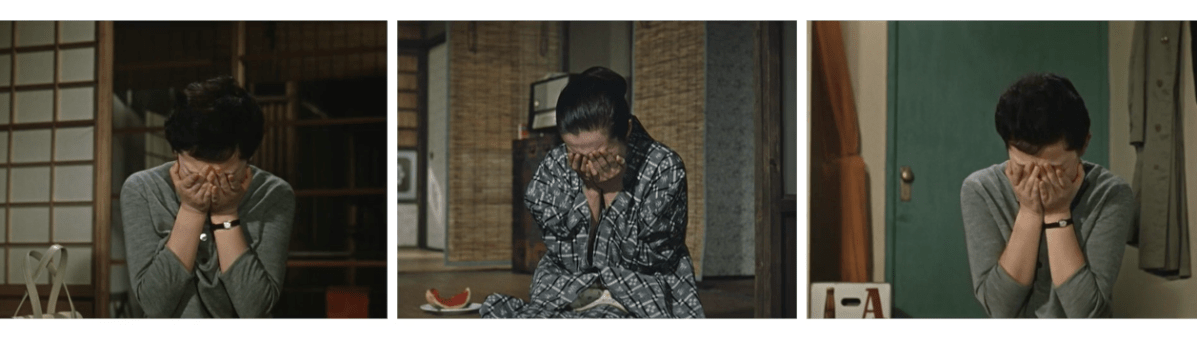
If you watch enough of the films of a particular director, be it Martin Scorsese, Jane Campion, or Robert Altman, you will begin to understand the code in their work: the way shots are framed, the way characters tilt their heads, the way figures move through a space, all come to mean something. These configurations become a visual language that works alongside the language of a script, at times helping to tell the script’s story, at times telling an entirely different story. In kogonada’s most recent outing, he examines the work of Yasujiro Ozu. Three frames, side by side: three couples eating together; three women, head in hands; three men staring broodingly into space. These visual displays, compiled from 24 different films, have as much of an effect on us as the words of the screenplay might, but they speak to us differently, accessing a subconscious "eye," if you want, that is different from the two eyes we use to watch the film. kogonada’s piece strikes a quiet, offbeat chord, and should serve as an excellent way into the work of this Japanese master     

Watch: Steven Spielberg, Housebuilder, Shot by Shot

Watch: Steven Spielberg, Housebuilder, Shot by Shot

If you want your teeth done, contact the sumptuous Paolo Sorrentino. If you want a house built, contact Steven Spielberg. The great risk a director like Spielberg, whose films grapple with vast subjects like the Holocaust, life on other planets, slavery, and Abraham Lincoln, takes is that his film will never be able to grasp it all, that it will fall prostrate before its subject, flopping into mediocrity and cliche. What keeps Spielberg’s films from doing this is his profound sense of structure, of arrangement, of timing, of letting the stages of a story, such as Frank Abagnale Jr.’s from ‘Catch Me If You Can‘, unfold gradually rather than cutting to the maudlin chase too soon. This sense of craft, of what English majors would call the "well-wrought urn," can be found all over his work, perhaps most notably, as video essay dynamo Jacob T. Swinney points out, in his shots. Swinney has assembled 30 shots here, all of which bring that reaction—you know, the sharp intake of breath that follows a dramatic, thematic leap by a director, a jump into territory that might be (but isn’t) too big for the film at hand (cf. the red sweater in ‘Schindler’s List‘). If you look at the shot, you see that it’s the composition, as much as the extenuating circumstances, that bring the reaction. If you were to try to pin down what it is about the composition that’s giving you chills… you would come up short. But the structure is there, and it’s usually a part of a much larger story structure, one that is, in the words of many a financial journalist, too big to fail. Why is it that a bicycle moving across a full moon in ‘E.T.’ is so magical? It could be because everything in the frame is centered; it could be because a full moon is very close to a perfect circle; it could be because we like imagining such an arc, because it recalls our own dreams as children. Whatever the cause, if you want to study Spielberg’s magisterial structure, his shots provide a good place to start.

Watch: ‘Carol’: The Power of the Glance

Watch: ‘Carol’: The Power of the Glance

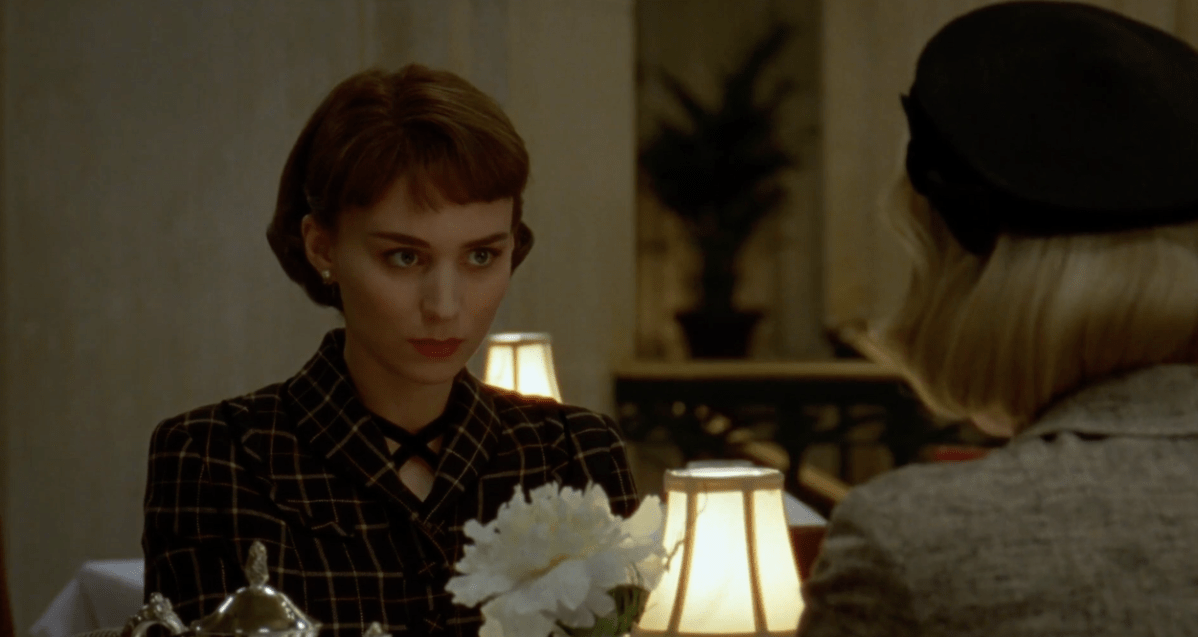
In the right context, a glance can be as powerful as a hand on the thigh or even a kiss. One recent movie that proves this idea, the latest in a long line of films dependent on the power of the optical nerves, is Todd Haynes’ ‘Carol.’ Much of the erotic push of the film relies upon the way the two women at the film’s heart look at each other: what it means, what it could mean, what has led up to it, what will follow it. Blanchett is a natural for this sort of scenario, being possessed of somewhat bottomless eyes and a capacity for unpredictability. Roberto Bra does us a service by showing that, beyond the script, beyond the cinematography, there lies the spark ignited when two people simply look, and that looking forms a world that cannot be penetrated.

Watch: How Much Are the Oscars Shaped by Advertising?

Watch: How Much Are the Oscars Shaped by Advertising?

Most contests, of any sort, are rigged. The course by which the "winner" is chosen is never a straight one, and extenuating circumstances almost always shape outcomes. And yet we notice them. The Oscars are no exception. As many angry or indifferent essays may be written each year (!) about the ceremony, and about the awards, and about who won, and who was left out, and who should have been included, the Academy Awards nevertheless register with us, even if we’re not entirely sure how the awards were assigned. This deft and smart video essay by Leigh Singer takes a look at how the awards shape themselves, spotlighting the advertising motion picture companies do, by way of the insidious "For Your Consideration" tag, with its many variations. 

KICKING TELEVISION: The Superhero Procedural

KICKING TELEVISION: The Superhero Procedural

Some people say that we’re in the golden age of TV, but those people also tell you the small screen is the new novel. The argument is an oversimplification that doesn’t recognize the evolution of the digital landscape, which sees TV as more than what’s available on your 50” plasma. Television, in actuality, is going through its microevolution, the speciation of the medium as we watch TV as we know it divide and isolate itself from its origins. And in its current phase of speciation, TV has developed superpowers.

Or, rather, developed endless superhero series.

There’s a lot to love about superheroes. Their narratives engage a variety of issues, often subversively, making excellent use of metaphor along the way. The characters are well-drawn and patiently constructed, crafted over decades. The villains, vices, and virtues in the universe of the superhero are analogous to real-life evils: big business, corrupt politicians, prejudice, substance abuse, and fighting for the common man. Superheroes can leap tall buildings in single bounds. Superman, as a character, makes sense to us because we can both admire and identify with the themes of love, loss, loneliness, otherness, and good versus evil writ large across his life.

The root of the appeal of the superhero series for networks and digital content providers is obvious: a built in audience that understands the malleability of the property and existing narratives from which to populate a series. Comics tend to have multiple universes, timelines, narratives, and writers, so their audience understands an adaptation may take licence to suit the needs of a new medium, and may have many voices contributing to its construction. Characters may be added or amalgamated, origin stories retold or rebooted, and narratives diverged from expectation or canon. 

None of this is new, either. From George Reeves’ Superman of the 1950s and the kitschy Adam West Batman to the questionable appeal of Lois and Clarkand Smallville to the before-its-time genius of The Tick, television has, with varying degrees of success, brought many a superhero universe to the small screen. But with the expansion of television—or what we call television—comes the need for more and more content. And there are only so many Kardashians.

A recent count by Den of Geek put the number of comic book television adaptations—for the most part super- or antiheroes—at no less than forty, adding to the dozen or so currently on TV. What I’ve found interesting is that for the most part they’re not compelling at all. I love superhero narratives. I love the popcorn excursion of a summer Marvel blockbuster. But for some reason, when they venture to TV, I lose interest.

Writer and producer Greg Berlanti has been responsible for bringing four DC Comics properties to TV. SupergirlArrowThe Flash, and Legends of Tomorrow were developed for the small screen by the erstwhile formerDawson’s CreekJack & Bobby, and Brothers & Sisters writer. And, frankly, all of those productions have the teen soap quality of his former endeavours. They’re dating arcs wrapped around saving-the-world narratives, romcoms with action sequences. Perhaps that’s what happens when big screen ambitions meet small screen realities, but I just can’t bring myself to invest in the series. I made it through two seasons of Arrow before Stephen Amell’s abs proved tiresome, two episodes of The Flash just to take solace in the fact that Tom Cavanagh was still alive and getting work, the pilot of Supergirl before groaning, and I don’t know what Legends of Tomorrow is.

The disappointing adaptations are not limited to Berlanti. Over at ABC, where good projects go to be Disneyfied, Marvel’s Agents of S.H.I.E.L.D. and Agent Carter failed to yield products equal to their promise. Perhaps they should’ve let Shonda Rhimes produce. FOX is doing its best to kill any interest in Batman with Gotham, a show that answers the question no one asked: What was Gotham City like before it was interesting?

Admittedly, I’m being a little harsh. These adaptations aren’t awful. They’re not Dads. The problem is, we’ve simply got too many superheroes doing the same thing, much as we have too many medical and police procedurals, too many white men hosting late night shows, too many sitcoms that don’t make anyone laugh. The problem is that, as with many TV forms, those producing the programming are disinclined to push the limits of the medium. Superheroes are easy, and they’re ultimately forgettable. They’re taking up schedule space, but they lack the enduring longevity and inherent legacy of the literature that birthed them.

The only place where superheroes seem to thrive, at least in terms of presenting interesting and dare I say literary series, is on Netflix. Unrestricted by the network model, the properties they’ve invested in have shone.Daredevil is a gritted, violent twist on the procedural that is a tribute to its source material and rids us the memory of Ben Affleck in tights—until this summer, anyway. Jessica Jones is an intelligent, bold, and creative essay-like dissemination of consent, rape, PTSD, gender stereotypes, sexuality, and patriarchy. Jones uses the format of a noir thriller as a mode for the titular character to confront her, and our, issues.

The streaming service will add Luke CageIron Fist, and Marvel’s The Defenders to its superhero stable by year’s end, and one can only hope that they employ the same formula that made Jessica Jones compelling: ambitious adult television that engages in important contemporary issues that just happen to have characters who have superpowers. Jessica Jones addresses societal concerns that the rest of television either ignores or mocks. Hell, Jessica Jonesaddresses societal concerns that the rest of the western world either ignores or mocks. The series confronts more important issues in 13 episodes than the media can manage in a year.

The challenge content producers have is to keep the viewer from feeling the affects of a saturated market. The medium evolves quickly in a digital universe, and the ever-fickle viewer can only allow a few brief moments of interest before attaching to something new. Look how quickly the sitcom died. Superhero series could be primetime game shows before the calendar bleeds into 2017. Unfortunately, with a few exceptions, TV has failed to adapt to its new realities as swiftly as the market has. So how does the superhero series remain a viable TV genre without simply over-producing existing properties?

Like any art form, the best way to adapt to evolution is to disseminate materials in a different way. Music has adapted to technology by introducing new techniques, new genres, and new ways of arranging old chords. Visual art has stumbled sideways into new media and interactive installations. Like any TV genre, the superhero series needs to find new ways to tell old stories. One such ambitious endeavour is NBC’s Powerless (sidenote: this is the first time since 1987 NBC has been referred to by anyone as ambitious), which Varietynotes is “a workplace comedy set at one of the worst insurance companies in America — with the twist being that it also takes place in the universe of DC Comics. The show is about the reality of working life for a normal, powerless person in a world of superheroes and villains.”

Genius. Exploring a universe from the periphery is exactly what the genre needs, not unlike Marvel One-Shots, short films set within the Marvel Cinematic Universe that explore less grand and hero-inclined narratives. In one of the shorts, a couple finds a Chitauri gun left over from the attack on New York seen in The Avengers, which the couple uses to go on a crime spree. It’s a fascinating look into what happens in the margins of the superhero universe. This is the route Gotham should have taken instead of desperately pandering to its source material by featuring villains before they were villains and heroes before origin. But Gotham is victim to a malady that has befallen many TV genres: becoming common, and blending into seemingly endless TV landscape.

With endless source material at the disposal of desperate programmers, the superhero series is now a genre, like comedy or drama or reality TV. Television, as an art form, is better off with its inclusion. It promotes a more diverse schedule. But in order to remain relevant as an art form, it needs to adapt and challenge itself to avoid the descent of the sitcom into recycled and tired concepts or the pandering simplicity of network dramas that refuse to break the tropes of their structure. Truthfully, it needs a hero.

Mike Spry is a writer, editor, and columnist who has written for The Toronto Star, Maisonneuve, and The Smoking Jacket, among others, and contributes to MTV’s PLAY with AJHe is the author of the poetry collection JACK (Snare Books, 2008) and Bourbon & Eventide (Invisible Publishing, 2014), the short story collection Distillery Songs (Insomniac Press, 2011), and the co-author of  Cheap Throat: The Diary of a Locked-Out Hockey Player (Found Press, 2013). Follow him on Twitter @mdspry.

Watch: One Person, One Frame: The Coen Brothers’ Embrace of Human Imperfection

Watch: One Person, One Frame: The Coen Brothers’ Embrace of Human Imperfection

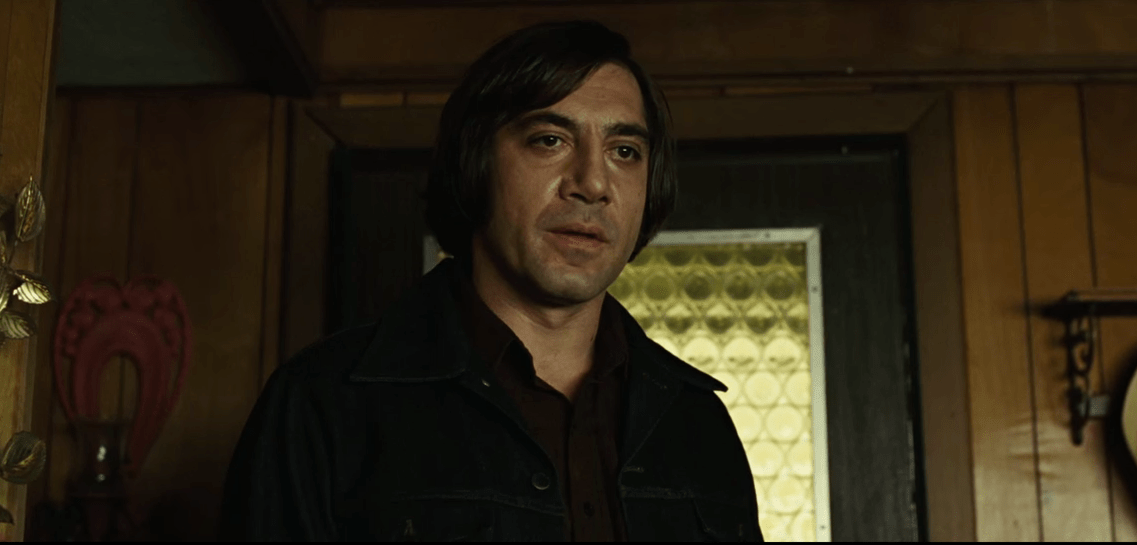
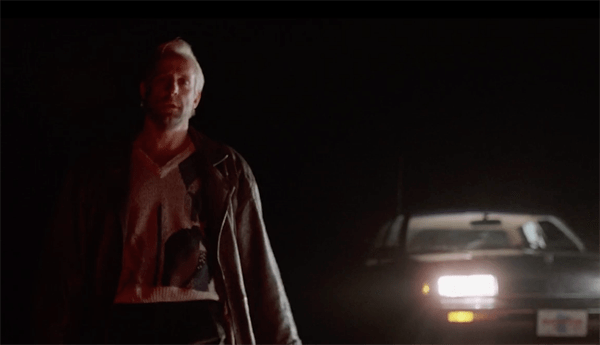
The compassion of the Coen Brothers cannot be ignored. It shows up everywhere: in their storylines, which demonstrate repeatedly how difficult it is to simply live, carry on a life, without someone barging into your home and tossing a ferret in the bathtub with you; in their production design, which glorifies kitsch on the one hand and valorizes the clarity of a green desk lamp (as in ‘Miller’s Crossing’); and in their cinematography, which, as Tony Zhou demonstrates in his latest brilliant technique-obsessed video essay, allows us to become intimately familiar with the faces and souls of characters by simply letting them occupy an entire frame by themselves.

Watch: ‘Fargo’: The Cross-References and the Reshaping

Watch: ‘Fargo’: The Cross-References and the Reshaping

When I first learned of the existence of ‘Fargo,’ I’ll have to admit I was a bit skeptical. I’ve never been one for TV spin-offs of any kind, probably since I was traumatized by ‘Joanie Loves Chachi’ as a child. There are some ideas that are self-contained, and would best remain so. ‘Fargo,’ though, as has oft been said, is both a noble expansion of the Coen Brothers’ original film and, really, its own creation. The show runners took a world, created for the original, with its own prim, hospitable rules which dug in against violent animuses swooping in from the depths of the midwest–and expanded on it. What they have now is edgy, trans-generational, and wholly unpredictable. Arnau Orengo has created a video essay on ‘Fargo’ that both defeats and satisfies viewers’ expectations of the series, or the film.