Watch: A Video Essay About Albert Maysles’ Larger Than Life Film Subjects

Watch: A Video Essay About Albert Maysles’ Larger Than Life Film Subjects

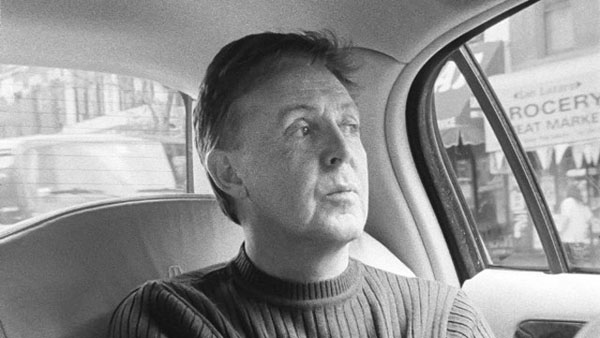
If you were going to teach a child about the Berlin Wall, it would probably be best to start by showing them one stone and explaining the story behind it. If you wanted to teach someone about Heironymous Bosch’s great painting "The Garden of Earthly Delights," you would go forward detail by detail, rather than trying to take in the whole painting at once. If you want to understand Beethoven’s Fifth, go after it note by note first. Similarly, the late Albert Maysles went after the details of his subjects’ lives, and magnified them, and in so doing showed us more about their enormity than twenty dense biographies might show, whatever those books scholarly attributes might be. In this touching and respectful video essay by Nelson Carvajal, we can see that what Albert Maysles was after in his documentaries was the details–he wanted a way to show the vastness of his subjects’ accomplishments, from Muhammad Ali to Vladimir Horowitz to Paul McCartney, and so he showed us the facial expressions, mannerisms, turns of phrase, and quirks of movement which characterized their off-camera moments, their time out of the public eye. In teaching us about their humanity, he showed in what sense they could be called greater than human.–Max Winter

Watch: Will You Watch This Homage to Stanley Kubrick?

Watch: Will You Watch This Homage to Stanley Kubrick?

The chances are good that the answer to the question above is "yes." Why is this the case? I’m not suggesting, in the slightest, that you shouldn’t watch this homage to Stanley Kubrick by Gabriel Fasano. If I didn’t like it, I wouldn’t have posted it; it’s excellently edited, and it reminds us that within the body of work of a director such as Kubrick, the surprises will last an eternity. The term "mystery" shouldn’t be used too loosely: I don’t mean that films such as A Clockwork Orange, Lolita, Dr. Strangelove, Full Metal Jacket, or Eyes Wide Shut are puzzling movies, because they’re not, really. An entire film was devoted to the supposed "mysteries" of The Shining, as if there were a simple solution to them, but that film did more harm than good to Kubrick studies. Kubrick causes a Pavlovian reaction in his fans because the mystery lies elsewhere; the director leaves those sensitive enough to be interested in his artistic methods in the dark about them, so that they will watch him over and over again, almost Quixotically, hoping to find an answer that may not exist–but whose non-existence does not diminish the size of the question.

Watch: What Makes Spike Jonze Movies Unique? A Video Essay

Watch: What Makes Spike Jonze Movies Unique? A Video Essay

Despite the fact that the look of his films often takes a
back seat to bizarre stories and quirky characters, Spike Jonze has
crafted a uniquely whimsical visual style over the course of his four
feature films. Making the most out of simple elements such as lens
flares, floating camera movement, centered framing, and wide-angle close-ups, Jonze creates an atmosphere that appears to be lifted straight from
the pages of a fairytale storybook. His camera is fascinated
with the mundane; intently exploring fabrics and materials, finding
beauty and significance in the obscure and unnoticed. Dust particles
floating in a beam of sunlight become hypnotic. The delicate plaster of
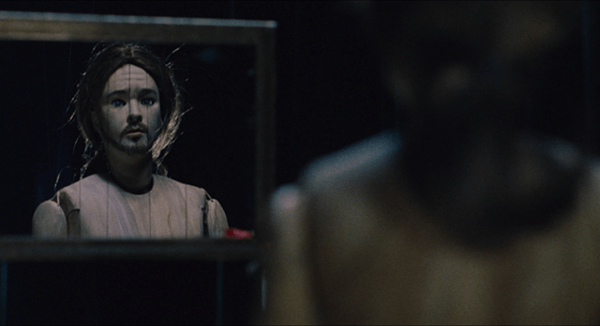
marionettes feels as lifelike as human flesh. The matted fur wrapped
around a child strikes us with an overwhelming sense of marvel and
nostalgia.

In his first two films, Being John Malkovich (1999) and Adaptation
(2002), Jonze used a much more subdued sense of whimsy to express the
playfully dark atmospheres. His two most recent works, Where the Wild
Things Are
(2009) and Her (2013), are saturated with the whimsy
aesthetic, mirroring the wonderment and childlike fascinations
associated with the films. Jonze utilizes the aesthetic in order to
stitch together worlds suitable for his equally whimsical characters.

Films used:
Being John Malkovich (1999)
Adaptation (2002)
Where the Wild Things Are (2009)
Her (2013)

Music:
"Igloo" and "The Moon Song" by Karen O

Jacob T. Swinney is an industrious film editor and filmmaker, as well as a recent graduate of Salisbury University.

Watch: 88 Films, 88 Rude Awakenings: A Video Tribute

Watch: 88 Films, 88 Rude Awakenings: A Video Tribute

You’re being chased. You’re being strangled. You’re lost in a maze. You’re running through the jungle. A lion is after you. A bear is after you. Two bears are after you. You’re falling off a cliff. You’re being hit by a car. You’re about to be hit by a car. You’re being smothered. You’re being punched. The walls are closing in. There’s no escape. And so what do you do? 

You wake up, with a start. You scream. It’s all a terrible, terrible dream.

This supercut by Roman Holiday, running at just under 2 minutes, shows 88 scenes of such "rude awakenings," in films ranging from ‘Vertigo’ to ‘The Matrix’ to ‘Pulp Fiction’ to ‘The Manchurian Candidate’ to ‘Pee-Wee’s Big Adventure," with the unlikely but strangely appropriate Vivaldi composition ‘Winter’ in the background. Take a look at this piece, and see if it jolts you awake…

Watch: Was Luis Buñuel a Fetishist? A Video Essay

Watch: Was Luis Buñuel a Fetishist? A Video Essay

The question of the hour! Was Luis Buñuel a fetishist? Quite possibly. As you watch the array of feet, fancy shoes, lingerie, stockings, and other typical objects of fetishism drift through this lovely video essay Cole Smithey recently made for Criterion, it would be hard to think he was anything else. And yet what about that, in his work? Are these semi-prurient images from such great, frustrating films as The Phantom of Liberty or Belle de Jour meant to be satisfaction of the viewer’s depraved cravings or are they, in fact, studies of these cravings? Is each fetish meant to be seen in quote marks, as a commentary on humans’ uncontrollable impulses? It will probably be best for you to watch this short piece, to the tune of the Hallelujah chorus, and decide for yourself.

KICKING TELEVISION: An Ambitious DIG

KICKING TELEVISION: An Ambitious DIG

nullTelevision
is like most of my failed relationships. Much of what I desire leaves me too
soon, unfulfilled, unresolved, unloved. Tangential and peripheral lesser characters,
often caricatures, play too large a role. Expectations are high. Infidelity abound. But good television, like love, is ambitious, patient, and true to
itself. Often TV is none of these. Series are rushed to order based on a
premise and not a realization. Unappealing actors are forced into unsuitable
roles. Katherine Heigl is involved. Most often, though, TV is a victim of its
own parameters. It’s designed to live infinitely, or at least for enough episodes
to be syndicated. Narrative arcs are left open, because to close them is
suicide. In recent years, however, the mini- (or event) series has returned to
prominence. The successes of True
Detective
and American Horror Story
have revitalized the genre, giving birth to new opportunities for
storytelling and for actors. Even love has a complete cycle, and USA’s DIG (premiering March 5th) is
an example of how a mini-series can be successful by limiting its life.

DIG is particularly ambitious in its theological concerns and the international scope of its narrative. Action takes
place in Norway, New Mexico, and Jerusalem. The event series centers on an FBI
agent stationed in Jerusalem, Peter Connelly (Jason Isaacs), who while
investigating the murder of a young American becomes embroiled in a 2000-year old
mystery. The series also stars Anne Heche as Connelly’s superior and lover, and
David Costabile as Tad Billingham, an enigmatic cult leader. The cast is
rounded out by a uniquely diverse cast including Ori Pfeffer, Regina Taylor, Alison
Sudol, and David Ambrose, which in and of itself separates DIG from what we are accustomed to on TV. It’s multiracial,
multi-generational, and multilingual. Yes, DIG
has subtitles. SUBTITLES! How will the American viewing public cope?

Frankly,
DIG doesn’t care. Nor should it. The
best TV is made with story in mind, not demographics or live plus seven numbers
or syndication. DIG comes to USA from
Homeland executive producer Gideon
Raff and Heroes creator Tim Kring. To
combine the credits of the two to make a series is a good recipe for TV
that goes beyond simple loglines and average ambition. Star Jason Isaacs was
also intrigued by the unlikely collaboration, noting “generally showrunners
like running the show” and not as a duet. But, Raff and Kring are “enormously
successful at telling stories on television. Both leapt at the chance to do
what they were born to do, which was tell a story with a beginning, middle, and
end.” And when taken through the elements of the story, it “scared the living
shit” out of him.

Isaacs
was excited to work within the mini-series medium, and it suits his tremendous
talent. He’s a leading man without wearing it on his sleeve. He found DIG “inherently satisfying, like telling
a joke with a punchline.” His last series, Awake,
was an event series trapped in the body of a planned serial. The premise, a cop
awakes in two realities, was ahead of its time (way back in ’12) and its
aesthetic was too progressive for network TV. If it had premiered today on
Netflix or Amazon or, indeed, USA, it would have had a better life and place in
the canon of great television.

But,
according to Isaacs, maybe it lived long enough: “When you make 12 hours of
complicated satisfying television, as we did with Awake, and it works, that’s a triumphant achievement. In the UK,
drama series are only six episodes long. [Awake]
was two drama series. In America [as opposed to the UK] if it doesn’t run for a
decade people look down . . . with slight embarrassment in their voice. I thought
[with Awake] we did a remarkable
thing. Not sure that we would have sustained it or done many more. Twelve hours
is as much as I want to see about most things.”

And
that perfectly illustrates the inherent flaw of the multi-year serial. It
becomes a victim of its own immortality. Awake
may have died prematurely, but DIG is
set to live the perfect life. Heche calls the event series “its own art form,
as opposed to ‘let’s see where it all goes,’ which is what we’re used to on
television. [As opposed to viewers wondering] am I still going to be hooked
after six years?”

Not
unlike Awake, what is immediately
striking about DIG is its aesthetic.
It has a grainy filter that very much suits its diversity of locals and gives
the series an unvarnished feel. It reminds the viewer of international series
more likely to come out of Canadian-Croatian co-productions, and I mean that in
the most positive way. Costabile mentions “the risk that the network was
taking… and their [USA’s] interest in going outside of what had been
successful for them. Much bigger, much more provocative, and much more
challenging to their audience.” And DIG most certainly takes, and conquers,
those risks.

Unfortunately,
as many a good TV show has discovered, simply being good and ambitious isn’t
enough. The TV graveyard is full and caskets are falling into the creek behind
the chapel. It wasn’t too long ago when a show wasn’t on one day, and the next
day it was. Now, there are multi-platform rollouts for even the smallest of
shows. From social media to YouTube to interactive websites to junkets by the
dozen. DIG had a multi-city touring installation
called DIG: Escape the Room, which allowed viewers to indulge in the spirit of the show long before they could revel in its
reality. Heche, who is excellent in what is essentially an unforgiving and
forgotten role, notes that the scope of what goes into promoting a show is
“incredible. You have to bombard the public. It’s not just, ‘I’m going to go do Letterman and I’ll do The Today Show and then I’ll be home.’”

Every
series needs its antagonist, and DIG
is very fortunate to have Costabile play Billingham, who’s somehow part of the
theological mystery at the heart of the show. A few weeks ago in this space I wrote about how Costabile was in
need of a vehicle to match his incredible talent. In DIG, he is the villainous edge the series needs. But the best
villain can’t know they’re the bad guys, and only in that can the character
succeed. The Joker doesn’t know he’s evil, Michael Corleone is a good man, he
thinks. Jason is just out for a walk with a machete and a hockey mask. Says
Costabile, “when people do things that look at and consider bad or morally
bankrupt or morally questionable it’s dangerous for me, as a performer, to villainize
them. You’ll lose out on the possibility that they could be charming or
likeable in need of something else in a loving way. [Tad Billingham] has a misguided
sense of the world, but if I played him that way he’d appear at odds with
himself.”

Costabile
is a veteran of the most interesting television of the past
decade: DamagesBreaking BadThe WireHouse, The Office, Flight of the
Conchords, United States of Tara… His
IMDB page reads like a Labor Day weekend marathon binge of the best of the
past decade. Once again, in DIG, he
is the best thing onscreen, which is a huge accomplishment, as his co-stars are
wonderful.

DIG is not quite in the pantheon of
TV’s most noted endeavors, but nor does it want to be. It wants to be
something special, if just for a moment. It wants to indulge in itself, its
aesthetic, and its contextual universe, and it does so with a delicate touch,
patient exposition despite its finite nature, and superb storytelling. And it
can stand as a sea change in how interesting and dynamic television can be fed
to a North American audience. Simply put, DIG
is great television. If television is indeed like a relationship, DIG is a lover you can spend some time
with, guilt-free, unencumbered by commitment or the future. It is a moment in
your life, a moment in your television life. And it’s worth the time.

Mike Spry is a writer, editor, and columnist who has written for The
Toronto Star, Maisonneuve, and The Smoking Jacket, among
others, and contributes to MTV’s
 PLAY
with AJ
. He is the author of the poetry collection JACK (Snare
Books, 2008) and
Bourbon & Eventide (Invisible Publishing, 2014), the short story collection Distillery Songs (Insomniac Press,
2011), and the co-author of
Cheap Throat: The Diary of a Locked-Out
Hockey Player
(Found Press,
2013).
Follow him on Twitter @mdspry.

Watch: 29 Movies Shaped by (and Preceding) Ingmar Bergman’s ‘Persona’: A Video Essay

Watch: 29 Movies Shaped by (and Preceding) Ingmar Bergman’s ‘Persona’: A Video Essay

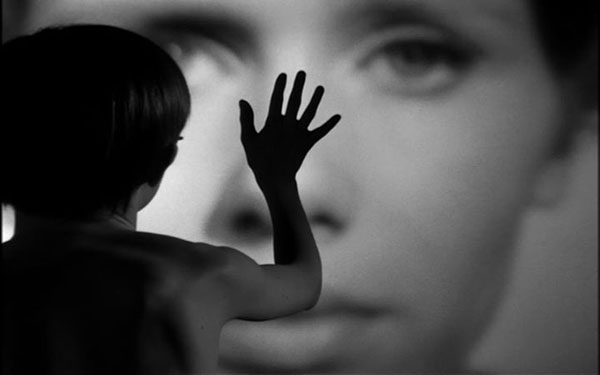
The influence of Ingmar Bergman’s Persona is legion. Using 29
other films, this essay positions his masterpiece in terms of what came after
it and what went before. It shows how Bergman visualized his central theme of identity
by way of reflections, splitting the screen, and shadows.

Films Referenced in This Piece:

Poltergeist (Tobe Hooper, 1982)
Persona (Ingmar Bergman, 1966)
Orphée (Jean Cocteau, 1950)
The Truman Show (Peter Weir, 1998)
Shadows (John Cassavetes, 1959)
Mulholland Drive (David Lynch, 2001)
The Talented Mr. Ripley (1999)
Don’t Look Back (Marina de Van, 2009)
Don’t Look Now (Nicolas Roeg, 1973)
Apocalypse Now (Francis Ford Coppola, 1979)
Vertigo (Alfred Hitchcock, 1958)
Performance (Nicolas Roeg, Donald Cammell, 1970)
Stardust Memories (Woody Allen 1980)
Old Boy (Park Chan-wook, 2003)
The Double Life of Veronique (Krzysztof Kieswlowski, 1991)
The Tenant (Roman Polanski, 1976)
Talk to Her (Pedro Almodovar, 2002)
The Crying Game (Neil Jordan, 1993)
Dead Ringers (David Cronenberg, 1988)
Minority Report (Steven Spielberg, 2002)
Les Biches (Claude Chabrol, 1968)
Black Swan (Darren Aronofsky, 2010)
3 Women (Robert Altman, 1977)
Angel Heart (Alan Parker, 1987)
Splice (Vincenzo Natali, 2009)
The Silence of the Lambs (Jonathan Demme, 1991)
Fight Club (David Fincher, 1999)
Heat (Michael Mann, 1995)
Dr. Jekyll & Mr. Hyde (Victor Fleming, 1941)
Psycho (Alfred Hitchcock, 1960)

Watch: A Video Essay That Breaks Down the Beatles Film ‘A Hard Day’s Night’ Shot By Shot

Watch: A Video Essay That Breaks Down the Beatles Film ‘A Hard Day’s Night’ Shot By Shot

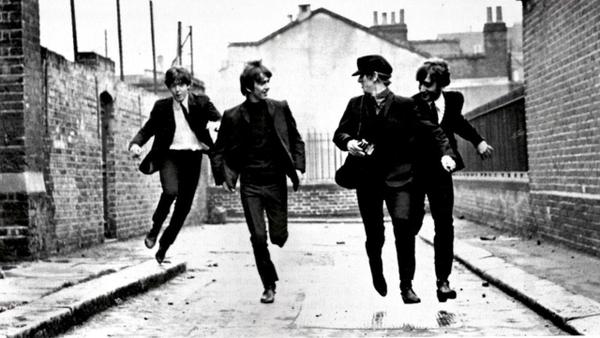
It’s easy enough to take The Beatles for granted: Oh, them. Of course. I’ve heard it all. Hey Jude. Help. Let It Be. Here Comes the Sun. Sure. They’re great. Whatever. Part of the reason one does this so easily is that their music is engrained within many listeners’ ideas of what constitutes good music, whether the listeners know it or not. We compare every soulful ballad with "Hey Jude." We compare every punk anthem, believe it or not with "Revolution." And, as time passes, it begin to seem as if this is not by accident: we become ever more aware of the ways the band shaped its image with the express purpose of permeating the music of an era, of making themselves into legends. This is no less true of such great Beatles films as Yellow Submarine, Help!, or A Hard Day’s Night; they set a high bar for the films of their type that followed, such as Pink Floyd’s The Wall or Tommy, and it’s not clear that these films have ever measured up. In his most recent video essay for Fandor, Kevin B. Lee uses cinemetrics, a technique he’s used before, to better understand the way the opening sequence of A Hard Day’s Night works; is it true that the opener shows the band seemingly at war with an ocean of fans, or is something else going on? Lee uses frames (labeled cleverly as "Beatle Cam," "Paul Cam," or "Fan Cam") to show the screen time given to all of the different players in the sequence–and in so doing, he teaches us something about the way the film is put together. While it might seem as if the struggle between the band and its admirers is perpetual, in fact the fans take up a fraction of the screen time the band takes up; the worshippers’ presence here is slight but powerful. In examining the film this way, Lee gives us a very significant insight into the way the band constructed the larger-than-life, eternal impression it made on fans worldwide.

Watch: What Does A Graphic Designer Do? These Films and TV Shows Won’t Tell You…

Watch: What Does A Graphic Designer Do? These Films and TV Shows Won’t Tell You…

If you watch enough films, you begin to see where filmmakers’ creativity flags. There’s the aerial shot of wooded landscapes that often precedes films of suspense; there’s the rock music that blasts in first-day-of-school scenes during teen comedies; there’s the ubiquitous shot of someone waking up and slapping an alarm clock right after the opening credits have finished. And, when someone is asked what their job is, it’s often… "graphic designer." This job title has popped up in many films, from Prelude to a Kiss to Friends to Girls to Parenthood to Juno, and yet do we learn what the job entails? Not really. Is it a good job? Not sure. Does it fill out the script? Yes it does. This funny supercut by Ellen Mercer and Lucy Streule fills us in–or doesn’t–on the recurrence of this job, from the small screen to the big screen. Enjoy!

Watch: The 30 Saddest Scenes in Recent Movie History: A Supercut

Watch: The 30 Saddest Scenes in Recent Movie History: A Supercut

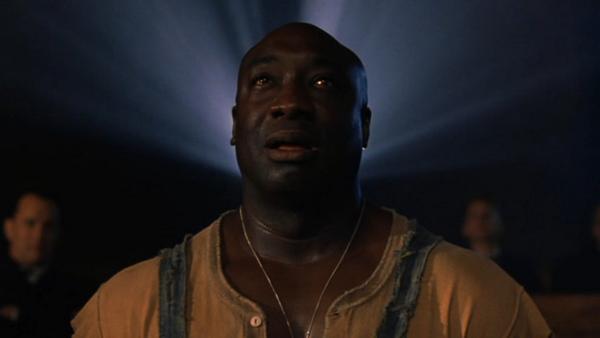
I have only cried during two movies. The first time was during Ingmar Bergman’s Shame, when I was 13, and the other was during Mark Romanek’s Never Let Me Go, almost 30 years later. The first tearful outburst was, perhaps, my fault. My parents were attending a local screening of the film, and they decided to bring me along, a decision primarily inspired by my avowed passion for foreign films. In this case, my passion was driven by the film’s R rating, catnip to my cinephilic tendencies. Also, I was, after all, 13, and I had used my understanding of cinema to determine that an R-rating might mean any number of things would appear on screen. Nudity? Sex? Shocking violence? The sky was the limit! What excitement! I felt proud of myself for having eased my way into the film so cleverly. But: Was there nudity? Was there sex? Was there wrenching violence? Not so sure. What did happen was that, near the end of the film, the two main characters ate some poison berries and killed themselves, on a boat in the middle of the ocean, having lost all of their possessions. Needless to say, this wasn’t what I was expecting. Tears followed, along with profound disappointment. Anyhoo, the second movie I cried during, and I mean really sobbed, was Never Let Me Go, Romanek’s 2010 adaptation of Kazuo Ishiguro’s heartbreaking and rashly dystopian novel. Many of the characters in the film were facing having all their organs removed for a massive cloning experiment, and something about the low-key despair of the film brought many deep sobs out of me. In fairness, I cried while reading the book too. Invenire Films has created a compendium of movie scenes from recent years that, for one reason or another, might have caused viewers to weep. Many great films are here–The Shawshank Redemption, Saving Private Ryan, One Flew Over the Cuckoo’s Nest–clipped together in a frenzied way that nevertheless pays due homage to the poignance of the original works. The collection raises a question: what is it, exactly, that makes us cry while watching a film? Usually, it’s over-empathy. When a drama is powerful enough, or confident enough in its methods, you forget it’s a drama, and some part of your mind begins to believe that the events in the film are happening to you. At moments of victory, you feel exhilarated; in moments of rage, you feel your blood pressure rise. And at moments of great sadness, you may cry because you can’t see how to avoid confronting the problems characters are wrestling with–and you think things may not get better. You know they will internally, but the terms of your viewer’s contract with the film won’t let you do anything but cry, as if you might never stop.