MATT ZOLLER SEITZ: A LONE RANGER remake for $215 million? The price of silver has gone up

MATT ZOLLER SEITZ: A LONE RANGER remake for $215 million? The price of silver has gone up

By Matt Zoller Seitz
Press Play Contributors

Apparently Disney has given Rango and Pirates of the Caribbean director Gore Verbinski and his star, Johnny Depp, a greenlight to shoot a new feature film version of The Lone Ranger, budgeted at $215 million. That might seem an exorbitant price tag for a concept that ran for years on TV in the 1950s, despite Ed Wood-level production values. But it’s a reduced price compared to what Verbinski originally envisioned; Disney pulled the plug on the project a couple of months ago because its initial price tag, $250 million, was deemed too high.

Where is the money going, you ask? Well, originally it was going to pay for all the werewolves.

Yes, werewolves. The Lone Ranger and Tonto were going to fight werewolves.

When Disney spiked the project, citing worries about recouping its massive cost, there was an online outcry about how mind-bogglingly inappropriate it was to add frickin’ werewolves to the Lone Ranger myth, Verbinski and Depp agreed to salary cuts and went back to the drawing board, and supposedly the new film won’t have any werewolves.

But it will, apparently, have $215 million worth of production values.

My question is: Why?

You can read the rest of Matt's piece here at Salon.

A critic, journalist and filmmaker, Matt Zoller Seitz is the staff TV columnist for Salon.com and the founder of Press Play.

Sarah Bunting: Paradise Lost 3: Purgatory and the Mixing of Blessings

Sarah Bunting: Paradise Lost 3: Purgatory and the Mixing of Blessings

By Sarah D. Bunting
Press Play Contributor

Joe R and I walked into Alice Tully Hall last night and I spotted him right away, on a balcony entrance above us: Damien Echols, surveying the scene. Right there, in a sharp black shirt and blue Bono shades — just right there! I gave Joe the “fame ahoy” arm-whap and pointed up. Then I stopped in the middle of the swirl of ticket-holders and looked at Damien like you look at a rainbow. I wanted to take a picture, but I knew I wouldn’t need one. Damien, rocking civilian hair product and the tattoo he just got, a real one, not sausage grease and ballpoint ink. Just…right there. Unbelievable.

The movie itself is about what you expect, if you’ve seen either of the other Paradise Lost films or followed the case, and as such, it’s almost beside the point. I would almost rather have seen the version the filmmakers had nearly in the can before the Alford plea — the ending to the story that WM3 supporters had feared, the end of the line — to see what got changed, and how they shaped a narrative that, essentially, still hadn’t changed at that point. And then I would like to see, in two years’ time, PL 4: Mixed Blessings, and see their lives, their workaday average lives, lizard-brain driving around on errands, dealing with customer-service phone menus and pesty housepets, their bafflement at the whole Twilight thing, just right here alongside the rest of us. The moment when “Anyone else want another beer?” happens without thinking.

You can read the rest of Sarah’s piece here at her blog tomatonation.

Sarah D. Bunting co-founded Television Without Pity.com, and has written for Seventeen, New York Magazine, MSNBC.com, Salon, Yahoo!, and others. She’s the chief cook and bottle-washer at TomatoNation.com.

RECAP: BREAKING BAD, Season 4, Episode 13: “Face Off”

RECAP: BREAKING BAD, Season 4, Episode 13: “Face Off”


The dazzling season finale of Breaking Bad eliminates many of Walt's problems while creating new ones. The following recap of Breaking Bad Season 4, Episode 13 contains spoilers. Read at your own risk.

By Matt Zoller Seitz
Press Play Contributor

The last thing Gus Fring did was straighten his tie.

The seemingly indestructible drug lord bought it in a nursing home after going with his henchman Tyrus to kill his mute enemy, Hector Salamanca. The visit had been secretly engineered by Walt with the cooperation of Hector, who falsely made it seem as though he was about to become an informant for the drug enforcement agency in order to lure his enemies into range. The killing device was a bomb strapped to the undercarriage of Hector’s wheelchair. In a brilliant touch, the mute Hector triggered the bomb the same way he communicated his wishes, by repeatedly hammering on a small silver bell. In an even more brilliant touch, the explosion was conveyed in long shot as its force blew the front door off Hector’s room and sent debris and smoke into the hallway. When Gus stepped out of the room, I thought for a moment that he had miraculously survived the explosion — an outcome that would not have surprised me, given Gus’ past track record of surviving attempts on his life; but then the camera tracked forward and situated itself in front of Gus, revealing that half his face had been blown off. He fell out of frame, and buenas noches.

So where does that leave Breaking Bad? As is often the case — on the show and in life — an act of violence created or intensified as many problems as it solved. Jesse and the Whites no longer have to worry about Gus trying to kill them, nor do they have to worry about reprisals from the Salamanca clan, the most prominent members of which were already offed in previous episodes.

But a bombing at a nursing home will surely intensify the search for Heisenberg once the DEA realizes that the device was homemade, and therefore devised by someone with an intimate knowledge of chemistry. The law enforcement scrutiny of Walt isn’t going to go away; logically Jesse should get drawn into it as well, once the DEA figures out (via witnesses and surveillance footage) that Walt was at the same hospital as Gus and Tyrus at the same time earlier that day, and that Jesse and Walt had frequent cell phone contact, and even had a conversation on a hospital hallway bench in plain view of cops who later questioned Jesse about the poisoning.

You can read the rest of Matt's piece here at Salon.

A critic, journalist and filmmaker, Matt Zoller Seitz is the staff TV columnist for Salon.com and the founder of Press Play.

GREY MATTERS: HOMELAND and YOU DON’T LIKE THE TRUTH go deep inside the minds of torture victims

GREY MATTERS: HOMELAND and YOU DON’T LIKE THE TRUTH go deep inside the minds of torture victims

By Ian Grey
Press Play Contributor

Have you seen Homeland? Claire Danes plays a C.I.A. operative whose failure to deliver on some intel possibly led to the 9/11 attacks. Now she's half crazy in her obsession with tracking a Marine (Damian Lewis) held by terrorists for eight years. Why wasn't he killed? Has he turned? What kind of threat does he represent — if any? It's a superior show in every way, a risky Manchurian Candidate for the terror generation, but right now my heart just isn't in it, because I just saw You Don't Like the Truth: 4 Days Inside Guantánamo. Already, I fear people are tuning out: "Oh great, more about that." But bear with me, because it just isn't often that one sees, in real time, the systemic shattering of a child's mind by American-led forces, a ruination that continues to this day. Homeland takes real chances, but the only thing you can do with Luc Côté and Patricio Henríquez's heart-wrecking documentary is endure it. We will examine both works, but for now, I just want to talk about Truth, which takes a look at a Canadian named Omar Khadr.

At the age of 15, he was recruited to a compound in Afghanistan by his militant father, and in July 2002, U.S. forces attacked that compound. Army medic Christopher Speer died. Omar was horribly injured.

Recall that after 9/11, Vice President Cheney claimed sweeping rights to spy on and torture anyone he so desired, with impunity. Any part of the Constitution dealing with civil rights as it related to suspected terrorists was dissolved. And so Speer's death went unexamined, and was instead pinned on Khadr.

Canadian authorities gave Omar to the Americans as a sort of ritual offering. He was sent to Bagram Air Base and summarily tortured by American experts before being dumped down the moral and legal black hole that is Guantánamo Bay, Cuba. At no point was he formally charged or given the right to representation, never knowing if he would ever be released.

Côté and Henríquez's film centers on a recently declassified seven-hour "interrogation" of Omar. We see him in blurry low-resolution video, a slight boy bewildered and trapped in three video quadrants, the lower right one left an unnerving black. Occasionally the Montreal-based filmmakers cut to footage of freed co-survivors from other American torture sites; all exhibit an eerie calm. There's also gut-wrenching testimony from Omar's mother and sister; empathy and clipped outrage from Lieutenant Commander William Kuebler, Khadr's military council and a conservative clearly disgusted that lawless big government crawled from the id of the Right; and Damien Corsetti, once the Army's "King of Torture," now seething with acid shame over sins you'd need Dante to catalogue.

But for the most part, we watch this boy whose Atlantic accent betrays an achingly sweet disposition. At first, he's almost jaunty when his interrogators show up (Canadians, their faces covered with digital black circles), thinking that he's finally being delivered from the Americans. But they're actually C.S.I.S., the Canadian version of the C.I.A. They ply him with offers of Subway and McDonalds, air conditioning and fluids.

For four days they systematically crush him, and we come to see that these "interrogations," these grueling sessions away from family and friends in constant terror that the American torturers will return, have little to do with fighting the War on Terror and everything to do with the interrogators. One ex-victim compares them to "salesmen whose job is on the line" — getting their subject to utter what they need to add to valueless reports that justify their employment. Seriously, what information could a child offer up to anyone a year after doing nothing in particular with people he didn't know?

I thought of the film The Lives of Others, of dead-souled East German Stasi ticking off boxes on a report as they force the answers they do or don't desire. And yes, I thought of Homeland and — this is essentially silly, I know — I got angry at it. I thought of a scene where Lewis' Sgt. Nicholas Brody takes off his shirt to reveal those awful torture scars. Morena Baccarin, playing his wife, weeps, showering him with kisses and love. In Truth, Omar also pulls up his shirt to show his tormentors his still festering torture wounds and, in pain, begs for medical help. With astonishingly glib cruelty, they mock him and tell him to be a man.

If history requires a single scene to summarize the stupid evil of Cheneyism and the uselessness of torture, it's that of Omar finally breaking. His interrogators say they want the truth. Omar begs them to please, tell him which truth they want, any truth, and he'll tell it to them. But they say they think he's lying.

Omar snaps. He curls into a fetal position, begging in Arabic for "Mommy, oh mommy." Disgusted, the monsters turn off the A.C. and leave him alone in a room that must stink with terror-sweat. The filmmakers do not cut away. He doubles up, his body wracking. "Mommy, oh mommy." It goes on and on, brutal beyond the telling of it.

The day after watching Truth, after accepting that its subject matter would never gain wide American distribution, I then wondered about Homeland, which is still a genre show — and I like genre TV. I believe it often functions best when it uses symbols and metaphors as tools to present the terrible and morally intolerable. But even with characters and situations as complex, conflicted and cruel as the show is already offering, there's something essentially safe about Homeland, even as it pushes hot buttons.

Then there's the show's central conceit that Danes' character would be be driven to illegal ends to spy on the Manchurian Marine. Until the show bends to reality and incorporates/updates its characters' and institutions' positions in the lingering torture and wiretap infrastructure, the idea that Danes' character would encounter any resistance to discretely eavesdropping on any single security risk will continue to feel like something ported from a dreamland, or, put less charitably, a fig leaf of never-mind pasted over the lingering horror of the terror state.

Just by existing, Homeland is doing its genre stealth work. Viewers who will never know Omar's story are being confronted with a show ballsy enough to show an American soldier tortured so horrifically that he beats his friend — an African-American soldier — to a bloody death. But even so, the series is localizing the disease: just one Marine destroyed by Others years ago. While it starts a conversation, Homeland's convincing vérité may also be an ornate means of denial. Omar's life still ticks away behind bars. Guantánamo is still open.

Ian Grey has written, co-written or been a contributor to books on cinema, fine art, fashion, identity politics, music and tragedy. His column "Grey Matters" runs every week at Press Play. To read another piece about Drive, with analysis of common themes and images in all of Refn's films, click here.

SLIDE SHOW: The greatest performances by child actors

SLIDE SHOW: The greatest performances by child actors


Why act your age? These young stars — including Jodie Foster and Kirsten Dunst — had it from day one.

By Matt Zoller Seitz
Press Play Contributor

Terrence Malick’s The Tree of Life, which arrives on DVD next week, inspired divided reactions, but almost everyone agreed that it featured outstanding performances by child actors — particularly Hunter McCracken as the preadolescent version of the film’s protagonist (Sean Penn). McCracken, who had never acted in a movie before, is so unaffected that his performance seems less like a construct than a natural event, captured on film along with the film’s sunrises, waterfalls and volcanic eruptions. It’s the latest entry of a long list of great performances by child actors, the subject of tonight’s slide show.

Before we start, let’s get some caveats out of the way. First, because great acting is subjective anyhow, and great acting by children even more so, this is not an attempt to list the greatest child performances of all time, nor is it trying to be comprehensive. I didn’t “forget” to list anybody, and if one of your favorites didn’t make it on here, it just means that for whatever reason it didn’t speak to me as strongly as the ones I did cite.

Second, the parameters for inclusion here were fairly narrow. For an actor to qualify as a “child actor” in this slide show, they had to have been 7-13 years old at the time of the film’s production. I believe that a kid younger than 7 cannot be said to give a “performance” in the traditional sense, because he or she lacks the life experience and intellectual capacity to make the kinds of artistic choices that a fully professional adult (or older child) might make. I also think that actors older than 13 are teenagers, which put them in a different category for evaluation. So if you’re wondering why I didn’t list Justin Henry (who was 6 when he appeared in Kramer vs. Kramer), Cary Guffey (5 years old during the shooting of Close Encounters of the Third Kind) or Linda Manz (15 when Days of Heaven was filmed in 1976) or James Dean (who played a teenager in Rebel Without a Cause at age 24), well, there’s your answer.

You can view Matt’s slide show here at Salon.

A critic, journalist and filmmaker, Matt Zoller Seitz is the staff TV columnist for Salon.com and the founder of Press Play.

SIMON SAYS: Finding the obscure and the strange at Austin’s Fantastic Fest

SIMON SAYS: Finding the obscure and the strange at Austin’s Fantastic Fest

By Simon Abrams
Press Play Contributor

I feel like I have to preface this second of two Fantastic Fest dispatches with a disclaimer: I didn’t go to Fantastic Fest this year. In fact, I’ve yet to attend Fantastic Fest.

So, because I’m a cheapskate, this past weekend I plowed through a number of screeners. One week and seven films after my first Fantastic Fest report, I’m sad to say that my blasé attitude toward this year’s slate hasn’t changed much. To be fair, I’m still mostly ambivalent about this year’s selection. Extraterrestrial, Livid, Carré blanc, Melancholia, Take Shelter, Beyond the Black Rainbow, Karate Robo Zaborgar, Let the Bullets Fly, Milocrorze: A Love Story — all of these films are terrific, but I’ve already seen them at other fests and have written about them in one form or another, so I kinda don’t want to pimp them out again. I mean, there’s just not much in it for me, I’m just that good.

And that’s what sucks about reading festival coverage from someone as difficult to please as myself: I’m more likely to look up the obscure stuff playing at Fantastic Fest because, ultimately, I have to keep myself interested. That subjective interest is something most film festival correspondents don’t talk about but hey, I have to be entertained in order to convey some kind of enthusiasm to you, hypothetical reader o’mine. Basically, I try to be as wide-ranging as I’d like to be in the kinds of films I check out, but I’m not going to rehash stuff for the sake of putting together a better “Best of the Fest” post.

Besides, don’t you want to know about the other flawed but neat stuff that mostly fell by the wayside while everyone made a big stink about how puerile and ugly The Human Centipede 2: Full Sequence was? I’d like to think so. Of the seven new films I watched, I didn’t really discover anything truly great to write home about, but I did catch a bunch of noteworthy also-rans. So that’s what I’ll talk about instead, because that’s what Fantastic Fest is good for, to my mind: getting you interested in little genre films from around the world.

Aardvark: This brooding thriller sounds a lot stranger in theory than it actually is in practice, but I think that strangeness also accounts for its allure. A blind, recovering alcoholic befriends a young alcoholic jujutsu instructor, and that’s most of the movie right there. You follow the film’s sight-deprived protag, who is in fact played by a blind actor, as he bonds with his martial arts-practicing new buddy, who may or may not be a hitman of some kind. Director Kitao Sakurai does a great job of approximating a feeling of disorientation similar to his protagonist’s psychological dilemma: who can an older, blind single man confide in, knowing that he can’t see any new acquaintances? Aardvark‘s big take-away — maybe we never really know the people we trust the most — is on the nose and I honestly have no clue what the title means. But apart from a lame ending, this one’s pretty decent. B.

Blind: A South Korean murder mystery where the protagonist is an ex-cop suspended after her brother dies in a freak car accident. True to its Italian giallo roots, the film’s heroine “witnesses” a crime in progress, making her the prime target of a ruthless serial killer. I like Blind more than most of the other films I saw during my screener binge because, while the film’s plot is strictly by the numbers, it’s, y’know, tense and stuff. I love the way that the killer is filmed with Bava-esque lighting cues (purple front-lighting!) and all of the chase scenes are a hoot as well. Plus, even if the film’s script is pretty schmaltzy, I actually cared about the protagonists, more than I might have in any other film of this kind. B+.

A Lonely Place to Die: I’d heard nothing but good things about this supposedly no-nonsense survival horror flick. Unfortunately, here’s way too much nonsense for my liking. Eventually, Lonely stops being a survival horror flick and becomes a doughy thriller in which a child is ransomed by generic Euro-baddies. Still, in spite of some seriously distracting trick shots that simulate the P.O.V. of the film’s imperiled protags, the survival horror stuff is pretty good. B-.

Retreat: Thandie Newton and Cillian Murphy shack up on a small, isolated Irish island. True to generic form, their relationship is falling apart slowly until Jamie Bell stumbles upon their cabin and warns them of a global pandemic with no cure. The final twist is satisfying, but the rest of the movie, save for Murphy’s typically compelling performance, is not. C.

Revenge: A Love Story: This batshit thriller is rabid in the most energizing way possible. Director Ching-Po Wong has no concept of restraint when it comes to dramatizing the lengths one man will go to defend his more-innocent-than-Mary girlfriend. This girl is so kittenishly innocent that she ought to wear a bull’s-eye t-shirt so that even the dimmest badman will know who to hassle. The most fun part about Revenge is watching as this cute young thing’s bugfuck protector, played by Dream Home‘s Juno Mak, goes to the mat and then some when it comes to defending his girlfriend’s honor, by which I mean he gets his head mashed into a bed of thumb tacks and a long, thin, pointy stick shoved in his ear in one of the film’s first couple of scenes. The film’s consummately over-the-top action scenes are redolently gruesome and churlishly violent. They’re also tons of fun. The romantic melodrama at the heart of the film is its weakest part, but it’s otherwise negligible. Still: wow, this movie is screwy. B+.

The Squad: An effectively moody Spanish thriller but not much more than that. I like the way that certain scenes showed us, sans dialogue, the psychology of a unit of soldiers before the soldiers in question start to generically fight amongst themselves. Pervasive dread matters more here than the film’s plot, which is kind of a bland, post-Ten Little Indians, the-enemy-within horror film. It just doesn’t matter that much more, unfortunately. B-.

Two Eyes Staring: While the final twist in this Danish ghost story overtaxes what was otherwise a wonderfully spare horror film, most everything else about Two Eyes Staring is very atmospheric and exciting. I was surprised at how well the film’s formulaic “girl discovers ghost who explains why her mother doesn’t like her” narrative worked. Until the ending, that is. No amount of atmosphere could rescue this film from its totally unnecessary final plot twist. B.

Simon Abrams is a New York-based freelance arts critic. His film reviews and features have been featured in the Village Voice, Time Out New York, Slant Magazine, The L Magazine, New York Press and Time Out Chicago. He currently writes TV criticism for The Onion AV Club and is a contributing writer at the Comics Journal. His writings on film are collected at the blog, The Extended Cut.

MATT ZOLLER SEITZ: George Harrison Living In A Material World

MATT ZOLLER SEITZ: George Harrison Living In A Material World


Martin Scorsese's new HBO documentary about George Harrison is as serious and sometimes mystifying as its subject

By Matt Zoller Seitz
Press Play Contributor

Who is your favorite Beatle? If you prize humility, generosity and gratitude — or if you’re a kid who loves the sound of his funny name –you might answer Ringo Starr. Otherwise it’s probably a two-way race between Paul McCartney, who stands for sentimentality, old-school musical craft and ceaseless productivity, or John Lennon, whose name still epitomizes rebellion, sarcasm, soulfulness and martyrdom. I’ve rarely heard anyone answer “George Harrison,” and Martin Scorsese’s two-part HBO documentary Living in the Material World (Oct. 5 and 6, 9 p.m. Eastern, 8 Central) incidentally suggests the reasons why. Harrison was the most studious, elusive and impenetrable Beatle. And as he got older, he became increasingly uninterested in celebrity except as a vehicle that could expose him to new experiences, and bring him into contact with artists and thinkers from whom he could learn something.

George — as I will refer to him from now on in this review, because calling the Beatles by their last names seems too formal — was the youngest of the Beatles, but by consensus he was the most mature. From a shockingly early age, he was a student of life, cultivating the demeanor of an acolyte on an endless pilgrimage to an unknown destination. John Lennon had a questing spirit, too, but his life had a wild, often deliberately comical performance-art aspect that George’s mostly lacked. Where Lennon’s personal evolution was a series of diary entries that he invited the world to read, George’s happened, or seemed to happen, in private. The outward evidence of whatever quest George was on (hair length, wardrobe, sitar lessons, Hare Krishna chanting) seemed mostly unconnected to his life as a public figure. He explained himself in the media only because, as one of the world’s most famous men, he had to — and because he hoped his celebrity might encourage strangers to try whatever he was excited about.

You can read the read of Matt's piece here at Salon.

A critic, journalist and filmmaker, Matt Zoller Seitz is the staff TV columnist for Salon.com and the founder of Press Play.

MATT ZOLLER SEITZ: AMERICAN HORROR STORY Prizes camp over suspense

MATT ZOLLER SEITZ: AMERICAN HORROR STORY Prizes camp over suspense


This self-aware new show from the producers of Glee and Nip/Tuck is one-stop shopping for horror film imagery

By Matt Zoller Seitz
Press Play Contributor

American Horror Story doesn’t seem like the right title for this new FX series, which debuts tonight at 10 p.m./9 Central; "American Camp” might have been more accurate. It’s being sold as a noveau gothic ghost story, and purely in terms of imagery in situations, that description isn’t entirely misleading, but it’s not quite accurate, either. Co-created by Ryan Murphy and Brad Falchuk, the show is one-stop shopping for horror tropes, ancient and recent.

The central family, the Harmons, live in a textbook haunted house — a spacious Victorian-style L.A. mansion that was built in the 1920s and that hosted a horrific double murder-suicide. Of course it’s haunted; there wouldn’t be a show if it weren’t. But in case that’s not enough to sustain a series built around gore, shocks and spookiness, Murphy and Falchuck pile on still more unsettling elements, including Seven-style opening credits; a dysfunctional back story for the main couple, Vivian (Connie Britton) and her psychologist husband, Ben (Dylan McDermott); relentless, verging-on-Carrie bullying of the Harmons’ teenage daughter Violet (Taissa Farmiga); a kooky neighbor named Constance (Jessica Lange) who came out to Hollywood to be an actress in the ’60s and now runs a doggie day care center and tends to her teenage daughter Adelaide (Jamie Brewer) who has Down syndrome; time-shifted shocks that seem to allude to horrors that happened in the deep past, or that will happen in the future; and last but certainly not least, an unnerving teenage patient of Ben’s (Evan Peters) who brags of murderous impulses and hallucinates bloody corpses.

You can read the rest of Matt's piece here at Salon.

A critic, journalist and filmmaker, Matt Zoller Seitz is the staff TV columnist for Salon.com and the founder of Press Play.

LIFE’S WORK: THE FILMS OF ROMAN POLANSKI – Chapter 5: REPULSION: The Dark Side of Desire

LIFE’S WORK: THE FILMS OF ROMAN POLANSKI – Chapter 5: REPULSION: The Dark Side of Desire

LIFE'S WORK: THE FILMS OF ROMAN POLANSKI CHAPTER 5: REPULSION, THE DARK ART OF DESIRE from Matt Zoller Seitz on Vimeo.

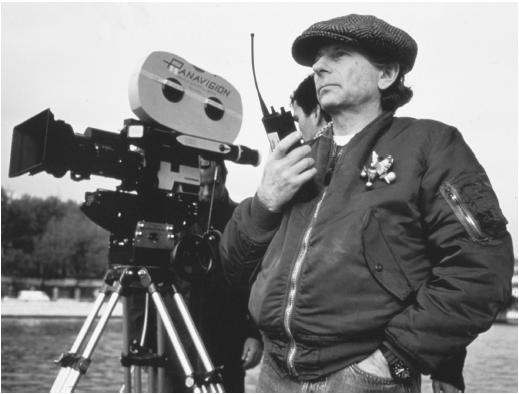
[EDITOR’S NOTE: Today, Press Play concludes its study of the films of Roman Polanski, whose new movie Carnage opened Friday, September 30, 2011 at the New York Film Festival. This is the final video essay under the title series Life’s Work: The Films of Roman Polanski. Chapter 5 of the series is a video essay by Press Play publisher Matt Zoller Seitz and contributor Kim Morgan titled Repulsion: The Dark Art of Desire, based on a column originally published by Kim at her blog Sunset Gun. You can view Chapter 1 of this series, Polanski’s God, here. Chapter 2 of this series, Spaces — a video essay about Polanski's use of architecture — is here. You can view Chapter 3 of the series, Uniting The Fragments: Cul-de-Sac, here. Chapter 4 of the series, Chinatown: Frames and Lenses, is here.]

A video essay written and narrated by Kim Morgan and edited by Matt Zoller Seitr
Press Play Contributors

Roman Polanski knows women because he understands men. He knows both sexes because he understands the games both genders play, either consciously or instinctively. He understands the perversions formed from such relations and translates them into visions that are erotic, disturbing, humorous and, most important, allegorical in their potency. One should not (as so many did with his misunderstood Bitter Moon) take Polanski's films entirely literally, for they are often heightened versions of what occurs naturally in our world: desire, perversion, repulsion.

Film scholar Molly Haskell said that at the core of Polanski's work is the "image of the anesthetized woman, the beautiful, inarticulate, and possibly even murderous somnambulate.” Her observation is astute, but it's followed by the criticism that in all of Polanski's films, including Repulsion, "the titillations of torture are stronger than the bonds of empathy." Of course. And then, no. And then, of course. Polanski's removed morality is exactly why he is often brilliant: He is so empathetic to his characters that, like a trauma victim floating above the pain, he is personally impersonal. He insightfully scrutinizes what is so frightening about being human, yet he doesn't feel the need to be resolute or sentimental about his cognizance. He is also, consciously or subconsciously, aware of the darkness he explores, especially in his female characters, who could be seen as extensions of himself. 1965's Repulsion proves as much.

Starring Catherine Deneuve, Repulsion is one of the most frightening studies of madness ever filmed. Deneuve plays Carol, a nervous young manicurist who shares an apartment with her sexually active sister (Yvonne Furneaux). At first Carol goes about her days in the salon, where she quietly tends to bossy old ladies' fleshy cuticles; walking outside, where she unsuccessfully avoids the leering glances and advances of men; and languishing about the apartment, where, with disgust, she listens to the noises of her sister's lovemaking and silently despises the men who visit. She exhibits a pathological shyness and repression that slowly spiral into madness after her sister leaves on holiday. Carol's dementia creates perplexing hallucinations: sexual acts with a greasy man whom she simultaneously loathes and lusts after; greedy hands poking through walls and kneading her soft flesh; and the moving and cracking of walls. Left alone, she is able to act out what she is so afraid of: the dark sludge of desire.

The obscure, slippery and decayed complexities of such desire are conveyed brilliantly in Repulsion. The diseased atmosphere of Carol's womb is meticulously created with Polanski's use of camera angles, sound effects and images of clutter. Though music is used effectively, Polanski relies more on amplifying the sounds of everyday life — the ticking of a clock, the voices of nuns playing catch in the convent garden, the dripping of a faucet — to convey the acute awareness Carol acquires in response to her fear. Polanski also dresses the film with pertinent details that further exemplify both Carol's madness and the aching passage of time: Potatoes sprout in the kitchen, meat (rabbit meat, no less) rots on a plate and eventually collects flies, various debris of blood, food and liquids form naturally around Carol. The film's inventive use of black-and-white film, wide-angle lenses and close-ups creates an unsparing vision of sickness, and Deneuve's performance is effectively mysterious. The viewer, however, is able to empathize with Carol, which is how she lures us into her web in the first place. As Polanski cameraman Gil Taylor muttered during filming, "I hate doing this to a beautiful woman."

And yet, one loves doing this to a beautiful woman, especially one like Deneuve. Deneuve's loveliness makes Carol's madness more palatable (her unfortunate suitor thinks she is odd, but he can't help but "love" this gorgeous woman), but eventually it becomes horrifying. Carol is not simply a Hitchcockian aberration of what lies beneath the "perfect woman," she is the reflection of what lies beneath repressed desire — in men and women. Polanski has a knack for casting women who are nervously exciting and in their own way, fighting oppression. In Chinatown, Faye Dunaway is a beautiful blinking, twitching mess, harboring that terrible secret about her father. Mia Farrow’s Rosemary is the small voiced good girl, desperately, valiantly trying to save her baby from not just Satanists, but from the sexist controls of husband and doctors who continually tell women they’re hysterical. Bitter Moon’s Emmanuelle Seigner is ludicrously sensual, only to turn despondent and then monstrously vengeful towards the man who not only broke her heart but humiliated her and who in turn, becomes a kind of symbol for all men. Natasha Kinksi’s Tess is so beautiful she’s almost scary and strange, haunting the picture, underscoring the film's lilting doom. Like most of Polanski’s heroine’s, Tess is trapped in a world of judgment, shame, social position and fate. These women feel dangerous to desire. Polanski doesn’t hand their beauty to the viewer so easily — he makes one insecure, fearful about longing for them.

And Deneuve is certainly nerve-racking. She is so physically flawless that she often seems half human: An anemic girl, she can barely lift up her arm, yet at the same time she is highly sensual, an ample, heavily breathing woman with more than a glint of carnality in her dreamily vacant eyes. Deneuve makes one feel the confusion of a corrupted child: She is an arrested adolescent who, like an anorexic, cannot face her womanliness without visions of perverse opulence and violence. Carol is the personification of sexual mystery — she is what lurks beneath the orgasms of pleasure and pain. What Polanski finds intriguing and revolting is perceptively female, making Repulsion a woman's picture more than women may want to know, or care to face.

Kim Morgan is a film, music and culture writer. She’s written for numerous outlets including LA Weekly, The Oregonian, The Willamette Week, MSN Movies, Salon, IFC, Entertainment Weekly, GQ and Garage Magazine. She’s guest lectured at Cal State, presented movies at both the Los Angeles and Palm Springs Film Noir Festival and for the New School noir series, and served on the Sundance Film Festival's short films jury. Read her at Sunset Gun. A critic, journalist and filmmaker, Matt Zoller Seitz is the staff TV columnist for Salon.com and the founder of Press Play.

RECAP: BREAKING BAD, Season 4, Episode 12: “End Times”

RECAP: BREAKING BAD, Season 4, Episode 12: “End Times”


EDITOR'S NOTE: Did Breaking Bad stumble near the finish line? Either clumsy plotting broke a great season's final momentum, or this show is ahead of its audience yet again. This recap of Breaking Bad, season four, episode 12, "End Times" contains spoilers. Read at your own risk.

By Matt Zoller Seitz
Press Play Contributor

“He has been ten steps ahead of me at every turn,” Walt said, begging Jesse for his life in “End Times”. He was talking about Gustavo “Gus” Fring, the drug dealer and fast food magnate who’d made his life hell.

But the line lingered in my mind as I sat down to write this piece and weighed whether to come down hard on some of this episode’s more absurd sequences, especially that business with Andrea’s young son Brock apparently becoming poisoned after … well, after what? Bear with me here, because the “what” seemed uncharacteristically muddy for a Breaking Bad subplot. Bottom line: I hope — and expect — that Breaking Bad is ten steps ahead of its audience, as it often tends to be, and that it didn’t suddenly exhaust its cleverness this season and start winging it.

First, the business with the ricin. When Jesse dumped his pack out on the sidewalk in front of the hospital and figured the boy had ingested the ricin he’d been smuggling for weeks but couldn’t bring himself to use on Gus, I thought maybe it just was a horrible accident — that maybe Brock filched a smoke, as curious boys sometimes do, and picked the absolute wrong one to experiment with. But Brock is probably too young for that — six, according to the “Breaking Bad” wiki entry on Andrea — and the cigarette pack time line established in subsequent scenes would seem to rule that out anyway.

You can read the rest of Matt's recap here at Salon.

A critic, journalist and filmmaker, Matt Zoller Seitz is the staff TV columnist for Salon.com and the founder of Press Play.