In creating “Blind Love: In Memory of Steve Jobs,” Illusionist Paul Gertner wonders how humans will process emotions in a digital realm

In creating “Blind Love: In Memory of Steve Jobs,” Illusionist Paul Gertner wonders how humans will process emotions in a digital realm

null

Look, I don't mean to come across as crass or insensitive, but I'm officially tired of hearing about Steve Jobs' legacy. I'm not saying he wasn't the visionary, creative genius we've been reading about or that the changes he brought to the human world aren't remarkable. But there are only so many words one can read and only so many lazy documentaries one can watch on this one guy. (Besides, I’ve read tens of thousands of words by writers famous, infamous and unknown, and none come closer to explaining Jobs' purpose, personality and legacy than the commencement speech that he himself delivered at Stanford University.)

So, when my friend Rich sent me a link to a Steve Jobs tribute video by a magician named Paul Gertner, I will admit to a little eye-rolling – that is, until I saw the video.

About halfway into "Blind Love: In Memory of Steve Jobs", a six-minute video featuring one of illusion's most talented figures, it hits you hard that this is no magic trick. Sure, we see the traditional moves and we watch familiar tools whiz by us – the deck of cards, the coins, the delicate unfolding of hands and fingers. But what stands out is the power of the story itself, and every sublime detail, every articulated nuance of emotion is conveyed in the most unusual way possible: through sleight-of-hand magic.

"Blind Love" couldn't possibly be mistaken for a feature film at just six minutes in length, but its theme – how technology has come to dominate our lives – and its kaleidoscope of sublime choreography takes the viewer through an emotional transformation that seems just as effective as it would be a feature. With a little help from an iPad and Tom Waits' classic "Grapefruit Moon," Paul Gertner weaves an unexpected spell of melancholy and longing, detailing one man's inner journey from love to the bittersweet celebration of loss.

I'm under no illusions that this routine was created especially for America's newly minted patron saint of technology. It wasn't. The choreography is far too complex to have been created in a matter of days and the technical preparation seems head-spinning when you start to deconstruct it. Therefore, it seems all the more remarkable and generous to me that Mr. Gertner, who makes his living performing at trade shows on behalf of companies like Apple, took his intimate, hard-won creation and handed it to the memory of Steve Jobs, and he did it free of charge!

Depending on who you are, the name Paul Gertner will either inspire wondrous amazement or utter indifference. Those in the former camp know him to be without a doubt one of the finest sleight-of-hand, close-up magicians in the world, and that's no hyperbole. For the purposes of this article, those in the latter camp sit uncomfortably, indeed, because it is likely they have never had the good fortune of witnessing his remarkable deceptions, whether in person or on television. (The late Johnny Carson, himself an amateur magician, sat in the former camp, having witnessed Paul's work up close and personal on the Tonight Show on three occasions.)

null
Penn and Teller and David Copperfield – acts who work on a larger scale – get more press because they play to big crowds. By its very nature, Paul Gertner's specialty, micromagic (or table magic), is an intimate and intricate affair traditionally performed sitting down at a table with a skeptical audience surrounding the magician on all sides, scrutinizing his illusions from mere inches away.

While researching Paul's career for this piece, I came across his most renowned creation: an ingenious variation on the well-worn cups and balls routine. In the past, magicians who had mastered this illusion gave themselves an advantage by using felt or rubber balls to make it easier to move them around. (Such balls don't make any noise when you load them under the cups.) But, as you can plainly see in this video, Paul doesn't give himself any advantage; he uses balls made of steel, and the result is thrilling. Take a look.


But, this piece doesn’t seek to burnish the man's reputation; he certainly doesn't need any help from me. I wanted to know how a man like Paul Gertner, a technical sleight-of-hand master, came to create a video as transcendently moving and fascinating as the one you saw above.

So, I called him and we talked about it.

Ken: Thanks for doing this. Talk about this type of performance art – the use of music and emotion in magic. I know David Copperfield does a little bit of this.

Paul: You're right. Copperfield has done a good bit with this angle, these ideas, in terms of using the music and a story. Magicians are always attempting to incorporate a story or emotion into magic […] and I say attempting because a lot of times what magicians tend to do is they base everything on the trick. And if it fools you, that's all there is to it. But there is history of [illusionists] doing that. I'm certainly not the first one to attempt it. But it's not done as often as it should be.

Ken: When you created "Blind Love," did you tell yourself, "I want to move my audience. I want to speak to them in a way that I've never spoken to them before"?

Paul: Yes. In fact, this was designed for a magician audience initially and my thoughts were to confront them with the emotional choice that many performers make. That choice is between people – their relationships and so on – and their art. The initial routine had a different ending than the one we see now. The initial routine was designed to present a performer sitting with a deck of cards and thinking of the woman who he [is in] a relationship with. He had to make a choice between her and the cards. In fact, at the end of the routine, he did make a choice. In the original version, she ended up on the floor. It was a bit of a brutal ending. In the magic world there are magicians out there, very well-known magicians, that have made that choice, and I wanted to confront [them] and [have them] see themselves in that situation and say, “Oh my god. This is about me and [what] choice did I make.” Some magicians have made the same decision to have both, like I did – a career and a relationship. Some chose just the career. Some [have] said the magic just has to be a pastime and that family is more important.

Ken: That comes across in a section of the routine where you are dealing below a picture of your wife. You appear to have a choice between your two loves: your wife and your magic.

Paul: I'm doing at that point what magicians refer to as a “second deal.” It's a gambling technique. You aren't dealing the top card. You are dealing the one under [it]. The second card. Hence the name second deal. I'm [attempting] to grab the woman's photograph and
it is my wife's high school photo, and each time I attempt to, there is a flash on the screen of her image. Finally…I grab the card and the moment it's in my hand, my face on the screen morphs into her image just for a few seconds…and as I set her down she fades away. My thinking [is], what's going on at home? What am I missing by staying on the road?
null
Ken: It does come across.

Paul: Good.

Ken: The way I figured it, about 3 1/2 minutes of this routine is accomplished holding your breath. I read about the…secrecy surrounding the methodology of magicians. Is that something you want to talk about?

Paul: I'm trying to be careful not to reveal too much of the method. Because, hopefully, I'm not going to see too many people picking up and copying the ideas.

Ken: Did Tom Waits' “Grapefruit Moon” reach you in some way? How did you come to pick that one for this routine?

Paul: I had the idea for the act sitting on a plane going from Pittsburgh to L.A. I always wanted to do something with a Tom Waits tune. So, I started going through Tom Waits' music on my iPhone […]. When I hit “Grapefruit Moon,” as I listened to the song, this whole routine came into my head. Within three hours, the exact routine was in my head. That hasn't happened too often. It was kind of a bolt of lightning.

Ken: To be clear, you thought of it in three hours and it took you how long to execute it?

Paul: Yeah, five months to put together. Before I could do it the first time, I had to build it. The little tree [in the video] took a month and a half to build. You don't go into a magic shop and buy one of those.
null
Ken: In this piece, there's plenty of acting on your part – most of it projected onto an iPad. I was struck that this appears to be the perfect metaphor for the way technology has changed the way we conduct our lives. The way we remember. The way we grieve. The way we fall in love. All of it projected into cyberspace. There is, sort of, a digital version of ourselves now that didn't exist 20 years ago. This feeds the idea of dedicating this piece to Steve Jobs, who brought these technologies together that changed our lives.

Paul: I think you’re right on target in terms of this whole idea of projecting our emotions into cyberspace. You see this on YouTube. It's very freeing on some level. I'm not an actor. I'm a magician and I've been taking acting lessons over the last ten years. Most magicians probably view me as more corporate and…business-like. So, when they see me do something like this, it's like – whoa! Where did that come from? For this piece, I was [acting] for a camera that was going to be on an iPad that I can't see. It frees you up to be totally different. It's sort of like an actor [getting into] a role and [letting] himself go. I can't see [the audience], and since I can't see them, I don't pull back in relationship to how the audience is reacting, and I think many times, actors do [exactly that]. In my case, [the performance] is already done. I've done it in my private little studio.
null
Ken: Let's zero in on this. Are digital emotions just as valid as real ones?

Paul: That's where it will be interesting to find out. I don't know. That's the big question mark…whether these digital emotions that I'm doing on the screen are able to connect with the audience. I don't know whether it does [connect] as well over the video. When I've done this act live, it's freaky, because people forget whether it's me [looking] through the screen at them and at the cards or if I'm not looking through the screen at the cards. I've gotten quite a few responses from magicians who have watched this online who have said, "Damn, I was halfway through the routine before I realized that he can't see anything. That's not him looking at me. That's the video." I just had a good friend write me, and he told me, "It's not connecting with me because of that wall there. The video."

Ken: That guy is nuts.

Paul: (Laughs)

Ken: I totally bought into the idea that I was looking at an expression of your digital self. That those emotions were valid. There is a bittersweetness to that performance which really affected me.

Paul: If it does comes through, [it's because] it's an honest performance. I've been through that phone call with my wife many, many times. Fortunately, we're still married. She's put up with a lot – a crazy performer who’s obsessed with magic.

Ken: How many magicians out there – and I'm talking about micromagic performers – how many are doing this kind of emotional storytelling?

Paul: There's a small handful. There's a gentleman named René Lavand from Argentina. Juan Tamariz from Spain. It's an honor to be considered in those categories. These are my heroes. I think it's kind of harder with close-up magic because you're so close to your audience. It's much easier to fool people with a card trick. [Creating a storyline] is much more risky because…you're baring your soul a little bit. When I did this the first time, my feet were shaking […] because it was for a group of magicians in Buffalo, New York at a very exclusive close-up magic convention.

Ken: How long have you been in this business?

Paul: Since 1974.

Ken: Coming up on 40 years. How much of that time have you spent speaking to your audience emotionally, rather then just inspiring a sense of awe through your illusions?

Paul: Unfortunately, sad to say only within the last 10 years. I started working with an acting teacher. I started that in 2001. That opened me up toward being willing to do things a little different. Before that, I was more corporate. Very business-like. My magic was very good technically. My presentation was a bit more one-dimensional, though. I could fool you really bad. But, I wouldn't draw you in as much because I would not expose that much of myself. My magic was almost robotic at times. If I hadn't been exposed to acting class, I wouldn't have been able to come up with this routine.

Ken: You got past 50 and you decided to take more risks.

Paul: You look at things differently. I wish I would have taken acting class when I was 20. The weird thing you have to realize about magicians as performers is they do everything themselves. They write the script. They direct the show. They pick the music. Other performers have directors and composers. A magician is a solitary [profession].
null
Ken: Talk about how technology affected your life.

Paul: I recently did this act at a TEDx conference [Technology Entertainment and Design] and…I opened up the presentation by showing home movies that were filmed by my father on Super 8 in 1954, 1955, 1956 when I was a one-, two- and three-year-old, and he loved making movies. Do you remember the show Candid Camera?

Ken: Of course, Allen Funt.

Paul: He loved Candid Camera. My sense of reality was distorted at a very young age and in our house nothing was quite as it seemed. My father liked making these crazy, funny home movies with me, the kid, being the butt of most of the jokes. That was what created my interest in this world of magic and illusion. [In the movies] he was basically pulling magic tricks on me, but using editing. He did it with a Bell & Howell camera and a Cathcart editing machine. Today, he would be shocked to discover what I'm doing with an iPad. He wouldn't understand what an iPad was because he died at age 47 in 1969. So, that was the beginning of my experience with technology.

[Note to reader: if you would like to watch Paul's home movies, go here.]


Ken: People are going to say that this trick was built in the editing room with digital effects. I want you to speak to those people directly. I know that's not true because you are completely blind in this routine. They only way to know where you are in the trick is to listen to the music and take your cues from that.

Paul: What you see there is what I'm performing live. Now, obviously, I shot a number of takes in the course of doing the routine. I'm shooting from a couple different angles only to give the best representation of the routine. When I showed it to my brother for the very first time on video, he looked at it and said, "Now, this isn't something you're going to do for anybody live. Right?"

Ken: (Laughs)

Paul: I said, "What do you mean?" He said, "Who did the C.G.I. for you? Who did the green-screen stuff? How are you creating that illusion of your face?" I said, "No, you're watching a live performance." So [there is] no trick photography. If you watch me do it live, that's what you'd see.

Ken: You're considered one of the finest technical sleight-of-hand magicians around. A friend of mine told me that you can force a card behind your back. Is that right?

[Note to the reader: When a magician asks you to "pick a card" as part of a magic trick, he is usually executing a classic "force." The magician has usually picked the card ahead of time, and with various techniques, he can induce you to choose the exact one he wants you to pick.]

Paul: Yeah. (Laughing)

Ken: You can force a card from behind your back!

Paul: Yeah, I can fan out a deck of cards behind my back and ask you reach in and pick a card. I can control what you take and make you feel like you've had a free choice.

Ken: That seems impossibly hard, like learning to read lips or something. Deaf people can read lips but that doesn't make it any less remarkable. This seems amazing to me.

Paul: Without revealing too much of a magic secret, there are certain techniques magicians learn on the fly. You use your audience as guinea pigs and after you've done it for five years, it gets to the point where it becomes natural.

Ken: Let's change course. Why Apple? Did Apple products change your life?

Paul: I bought one of the very first Apple computers in 1981, I think it was. I've had nothing but Apple my entire life. About 30 of them. I love Apple products.

Ken: What about this latest round of technologies? The target [market] is the regular guy on the street [as opposed to the techno-hobbyist] who wants to experience that Jetsons moment.

Paul: I'm fascinated by this new round [of technologies]. In the TEDx talk, I use the Arthur C. Clarke quote, "Any sufficiently developed technology is indistinguishable from magic." I tell my audience, “If today I was able to demonstrate some of the technologies you’ll be using 40 years from now, you’d walk out of the room thinking you'd seen the most amazing magic trick you've ever seen.” The technology we'll be using 40 years from now will be inconceivable to us while we sit here today. When I saw the iPad for the first time, I didn't want to see it right away, ‘cause I didn't want to buy one.

Ken: (Laughs)

Paul: I couldn't afford to go home with another device. I didn't look at it for the first two or three months. And somebody showed it to me and I went out that night and bought one. Because I said to Cathy [Paul’s wife], it's like a [magic] trick. If I went into a magic shop and plunked that thing down on the counter and said, "This is a new trick," I'd pay thousands of dollars for that. I've paid thousands of dollars for [magic] tricks many times that didn't do half of what [the iPad] does. It was just shocking at the time that it was available to the general public.

Ken: What about Steve Jobs himself?

Paul: Yeah. I found him to be an interesting personality to keep an eye on. They say that he wasn't that technically brilliant. But he could envision what people would buy next. He had an interesting mind on him and on some level, it was magical thinking. I'm sorry I didn't get to meet him.

Ken Cancelosi lives in Dallas, Texas and is co-founder of Press Play.
RECAP: Dexter heads over the edge

RECAP: Dexter heads over the edge

null

This recap contains spoilers for "Dexter" season six, episode seven; read at your own risk.
 

Something extraordinary happened on “Dexter” this week. As Dexter split into two personas as he struggled to hang on to his remaining humanity, a show that’s been MIA suddenly reported ready for duty.

It’s as if the death of Brother Sam (Mos Def) last week performed a ritual cleansing of all that was wrong with “Dexter’s” sixth season. Gone is the ceaseless God talk, the ill-advised forays into slapstick comedy — serial-killer slapstick golf, really? — and even a super-tardy entry into the Manic Pixie Dream Girl sweepstakes.

Brother Sam’s murder also quashed any hope that Dexter (Michael C. Hall) had in redemption, as it led to the rebirth of the ghost of Dexter’s brother Brian (Christian Camargo), a killer who Dexter himself killed in the show’s first season. Brian is here to remind Dex of some core principles, such as “You don’t turn the other cheek — you slice it.”

Brian’s monstrous effect on Dexter runs parallel to Travis’ attempts to free himself of the monstrous Professor Gellar (Edward James Olmos). And you know what? Salon readers discussing the show in the comments were probably right. There probably is no Professor Gellar. The Apocalypse-crazed installation artist may actually be Travis’ killer alter-ego. It would have been nice if it hadn’t taken six episodes to get to this fascinating juncture, but let’s not dwell. Instead, let’s appreciate how this episode didn’t feel like the writers dutifully hitting plot points they didn’t care much about. About how director Romeo Tirone favored long, moody takes of this gifted cast.

You can read the rest of Matt's recap of Dexter here at Salon.

Matt Zoller Seitz is the co-founder and publisher of Press Play.

RECAP: “The Walking Dead” Season Two, episode 5, “Chupacabra.”

RECAP: “The Walking Dead” Season Two, episode 5, “Chupacabra.”

null"The Walking Dead" has craft and atmosphere; if only the characters weren't so insufferably earnest and dense. This recap contains spoilers for "The Walking Dead" Season Two, episode 5, "Chupacabra." Read at your own risk.
There were huge revelations on Sunday’s episode of “The Walking Dead,” including a tantalizing hint that the missing girl Sophie might still be alive, and a climactic reveal that the courtly old religious veterinarian Hershel (Scott Greene) was keeping captured zombies alive inside his barn, presumably in hopes of one day curing them. There was another big revelation last week in the form of a surprise pregnancy, Lori’s.

But that’s not enough to stave off charges that “The Walking Dead” is taking a Hamburger Helper approach to TV drama, padding out meager amounts of dramatic meat with bags of bland dramatic stuffing. Sophie has been missing for the entire season; Carl has been bedridden since the end of episode two; Lori found out about her pregnancy last week but still hasn’t told Rick; etc. If you added up the screen time devoted to the genuinely interesting elements, they might total maybe ten minutes per episode, if that. The rest is wandering, suffering, and talking, talking, talking, courtesy of characters who are for the most part so naive and/or irritating that if you were watching them on a big screen at a drive-in movie theater, you’d cheer for them to be eaten.

The “WTF?” count in my “Walking Dead” notebook is nearing 200 by now, and this week’s installment, “Chupacabra”, added a few more, including the cutesy back-and-forth between end-of-the-world sex buddies Glenn (Steven Yeun) and Maggie (Laurie Cohen), complete with scribbled dinner-table notes; the protracted sequence of the wounded Daryl (Norman Reedus) falling down that cliff, then climbing up, then falling again; and that somebody-please-kill-all-these-stupid-characters moment when Andrea (Lauren Holden) mistook the returning Daryl for a zombie and winged him across the temple with a rifle shot. (I’m sure the producers didn’t intend this as a “You can’t trust women with guns” moment, but given the male-dominated power structure on this series, that’s how it played.)

You can read the rest of Matt's recap here at Salon.

Matt Zoller Seitz is publisher of Press Play.

RECAP: A bear, a baseball glove and Boardwalk Empire

RECAP: A bear, a baseball glove and “Boardwalk Empire”

nullEditor's Note: The following article contains spoilers for "Boardwalk Episode" season two, episode eight, "Two Boats and a Lifeguard." Read at your own risk.

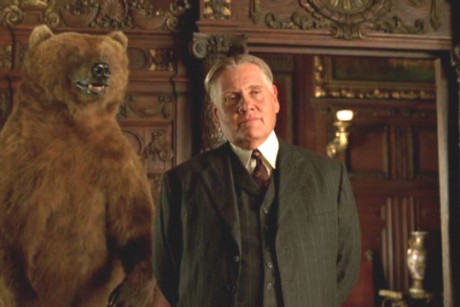
“Powerful” episodes of cable dramas make a huge impression on viewers, and are often acclaimed as the best of their season. Sometimes the praise is deserved; other times it’s a reaction to the sight of characters we like being diagnosed with fatal illnesses, beaten, raped, killed, etc.  Meanwhile, low-key but complex episodes often get short shrift from critics and viewers. I hope that doesn’t happen with tonight’s “Boardwalk Empire” episode, “Two Boats and a Lifeguard,” because in degree of difficulty, it’s impressive, in some ways extraordinary.

As written by Terence Winter and directed by Tim Van Patten — a dynamic duo on a lot of great “Sopranos” episodes — “Two Boats and a Lifeguard” seems like just a  “housekeeping” episode that’s mainly concerned with wrangling subplots and exploring characters. But as I’ll explain in a moment, the episode went way beyond that.

Nucky and Eli buried their father and had an uncomfortable moment of almost-reconciliation at the memorial. (This episode marked the final appearance of the late stage and screen actor Tom Aldredge, who played both Nucky and Eli’s dad and Carmela’s father on “The Sopranos.”) Nucky responded to his dad’s death — the psychological aftershock of the second assassination attempt against him, this one set up by his surrogate son Jimmy Darmody — by declaring that he was quitting his job as Atlantic City treasurer and was going to try to mend his ways and become a respectable citizen. (Fat chance of that happening on a show like this, but it was still a fascinating development that let star Steve Buscemi show us intriguing new shadings.) Nucky even asked Margaret’s son to address him as “Dad” rather than “Uncle Nucky” — a huge step toward commitment and emotional availability, even though it was conveyed in a rigid 19th century manner. Van Alden hired a nanny to take care of his baby with Lucy, in the process confirming his near-total inability to respond to the child as a father should, but revealing very faint glimmerings of potential near the end. (Or was that just wishful thinking on my part? Probably so — Van Alden is such a rancid sour persimmon — and so encrusted with lame graphic novel pathology, from religious fanaticism to sexual hypocrisy to cold sadism and murderous rage — that the writers might be unable to salvage him as a workable character.)

You read the rest of Matt's piece here at Salon. 

Matt Zoller Seitz is TV critic for Salon  and publisher of Press Play.

Are We Penn State

Are We Penn State

null"Then it took a week and a half before the graduate assistant was asked to tell his story to Curley and Gary Schultz, who oversaw the Penn State University police department. And then, the grand jury charges, the incident was buried and Sandusky was more or less allowed to maintain his office (though he was supposedly restricted from bringing any children into the building)."

This is from one of Joe Posnanski's's recent blog entries on the Penn State contretemps. Joe Posnanski, in case you don't know the name, is a "sportswriter," but really he's a writer straight ahead, a very good one who can probably make you care about whatever sport he's addressing even if you thought you couldn't. He also has a fun podcast, The Sports Poscast, on which Parks & Rec's Michael "Ken Tremendous" Schur frequently guests, but Posnanski hasn't done many episodes lately because he went to State College, PA to write a book about Joe Paterno. Several times over the last few days, I wondered in passing how he would handle that, how he was doing, whether he was sitting on the edge of the bed and just kind of staring into his lap. I wondered how I would handle that, in his position, having to incorporate ongoing history into a planned biography.

You can read the rest of Sarah's piece here at tomatonation.com.

Sarah D. Bunting co-founded Television Without Pity.com, and has
written for Seventeen, New York Magazine, MSNBC.com, Salon, Yahoo!, and others. She's the chief cook and bottle-washer at TomatoNation.com.

SLIDE SHOW: John Williams’ Greatest Hits

SLIDE SHOW: John Williams’ Greatest Hits

nullA couple of weeks ago, my young son asked me if I had “any more DVDs of John Williams movies.” It took me a second to register what he meant by this. He thought that the prolific Hollywood composer was actually the director of some of his favorite movies, a list that at this point consists entirely of the fantasy, science fiction and adventure films that thrilled me and his older sister as kids and kids-at-heart: “E.T.,” “Jaws” and “Close Encounters of the Third Kind,” the “Jurassic Park” and “Harry Potter” and “Star Wars” and the Indiana Jones pictures, and many others. I started to explain that Williams was not actually a filmmaker. But then the truth of his assumption hit me: In a sense, Williams is the unnamed co-author of a good many of the films he’s scored. His galloping, wondrous tone promises a particular type of entertainment, and is so recognizable that we can’t think of certain blockbusters without hearing their themes in our heads.

But as even some adult moviegoers sometimes have to stop and remind themselves, there is more to Williams’ career than iconic theme music for tales of mayhem and magic. He’s been the go-to composer for a particular type of blockbuster ever since his second collaboration with Spielberg, 1975′s “Jaws”; their long collaboration will be analyzed on Turner Classic Movies next week in an episode of “AFI Master Class.”

But the 79-year-old multiple Oscar-winner’s work predates the career of Spielberg, George Lucas and almost everyone else he’s worked with. His career spans an array of eras, genres and modes. He started out as a jazz pianist and session musician and has often worked brilliantly in that vein. He’s done superb scores for horror films, mysteries, romances and grim historical epics. He even did fanfare for the 1984 Olympic games and the long-running theme to “The NBC Nightly News With Tom Brokaw.” He’s as versatile as any character actor and as durable as any great movie star. His résumé is so lengthy — 140 titles and counting! — that the following list of 10 favorites could easily be swapped out for a totally different list. And knowing you, my dear reader, you’ll do precisely that in the Letters section.

You can read the read the rest of Matt's slide show here at Salon.

Matt Zoller Seitz is publisher of Press Play and writes for Salon.

24: Kiefer Sutherland’s ticking clock classic turns 10

24: Kiefer Sutherland’s ticking clock classic turns 10

nullEDITOR'S NOTE: Kiefer Sutherland's ticking clock classic debuted 10 years ago this week. To mark this milestone, Press Play is re-publishing the video essay series "5 on 24" which was created by Matt Zoller Seitz and Aaron Aradillas for the Museum of Moving Image in 2010. According to their introduction, "5 on 24" examines various aspects of the show, including its real-time structure, its depiction of torture, and the psychology of its hero, counterterrorist agent Jack Bauer. The show tapped into the ticking-clock on-the-go mentality of post-millennial society. And its machine-gun pacing, real time structure, and long-form plotting took aesthetic risks that no other action show had dared.

http://www.movingimagesource.us/flash/mediaplayer.swf?id=110/872 http://www.movingimagesource.us/flash/mediaplayer.swf?id=112/873 http://www.movingimagesource.us/flash/mediaplayer.swf?id=111/867 http://www.movingimagesource.us/flash/mediaplayer.swf?id=113/874 http://www.movingimagesource.us/flash/mediaplayer.swf?id=114/875

San Antonio-based film critic Aaron Aradillas is a contributor to The House Next Door, a contributor to Moving Image Source, and the host of “Back at Midnight,” an Internet radio program about film and television. Matt Zoller Seitz is publisher of Press Play.

SIMON SAYS: Is Frank Henenlotter a horror genius or a sick man?

SIMON SAYS: Is Frank Henenlotter a horror genius or sick bastard?

null

Somehow, it seems wrong to single out two of Frank Henenlotter's more "horror-comedy" films as examples of the writer/director's style — which, in a sense, is fitting. Henenlotter's a guy whose crew has abandoned him on two separate projects because they found what he was making to be in such poor taste that they refused to be a part of it. You can complain all you want about how his films are juvenile and gross and unpolished and what have you. But don't you want to see a penis-shaped monster suck the brains out of a woman through her mouth like he were a very evil boner and she were giving the world's worst blowy? Doesn't the thought of seeing something so uniquely low and disgusting intrigue you? Don't you want to see a man with no shame, no sense of good taste and no self-restraint at work?

The main pleasure in watching Henenlotter's films is in watching an inspired caricaturist earn yuks through some genuinely vile horror-themed body jokes. Between 1982 and 1990, Henelotter, whose films are being celebrated at New York's Anthology Film Archives this weekend, made his splatter comedies while David Cronenberg was at the height of his powers. Cronenberg made everything from "Videodrome" to "Dead Ringers" in the time it took Henelotter to produce three sloppy but invigoratingly scatological features: "Basket Case," a valentine to the grimy Manhattan of the early '80s and a slobbering tongue-in-cheek dramedy about a boy and the separation anxiety he shares with his evil, lumpen Siamese twin; "Brain Damage," a Lovecraft-inspired comedy about a boy that gets hooked on the mind-altering secretions of a murderous, parasitic "H.R. Pufnstuf" monster from beyond; and "Frankenhooker," a gleefully deranged story about inequality between the sexes that happens to star a slavering, undead prostitute who inadvertently electrocutes all of her clients. This piece focuses on "Brain Damage" and "Frankenhooker," but not because they're necessarily more worthy than "Basket Case." On the contrary, while I prefer these two films because they are more accomplished farces, given the anarchic nature of Henenlotter's comedies, that doesn't make them better films.
null
Of the two Henenlotter-helmed projects I've singled out, "Brain Damage" is most similar tonally to "Basket Case." Henenlotter makes a more concentrated effort to mix semi-serious melodrama with his eccentric brand of scattershot comedy, frequently crossing lines that other filmmakers, ones guided by more hands-on producers or advisors, almost certainly would not go near. For an especially gross example, see the infamous blowjob scene in "Brain Damage," in which Aylmer (voiced by John Zacherle), the film's bulbous, phallic monster, slithers out of the fly of Brian (Rick Hearst), his host, and devours an incautiously flirtatious woman's brain. Henenlotter's crew reportedly fled when it came time to film the scene, which revels in a proudly crass it's-not-what-it-looks-like-but-it-kind-of-is sight gag.

If you are intrepid and depraved enough to seek out "Brain Damage" after reading this piece, you should thank your lucky stars that Synapse Films released a cut of the film featuring the aforementioned fellatio scene. That sequence was cut from both the film's theatrical cut and, if you can imagine that such a thing exists, its television cut. It's a particularly ugly and uncomfortable scene. Don't miss it!

All kidding aside, "Brain Damage" is as weirdly funny as it is because it seems to have been made by a proudly deranged filmmaker. In one scene, Henenlotter shamelessly asks viewers to care about Brian's addiction to the blue-tinted liquid Aylmer injects directly into his brain — "shamelessly" because that same addiction is the stuff of no-brow comedy in several earlier scenes, my favorite of which has Brian sitting in his bathtub, tripping out of his mind. Meanwhile, his roommate and his girlfriend are both worriedly standing outside the bathroom door, intently listening to him squeal with joy as Aylmer sprays hallucinogenic ejaculate all over his chest. So watching Brian in a later scene shiver and shake while he begs for a fix, soaked in fecal-colored sweat that stains his white cotton wife-beater and his oversized tidy-whities, is remarkably unseemly.
null
At least when you watch "Frankenhooker," a feature-length put-on that advertises in its title Henenlotter's commitment to a pointedly perverted scenario, you immediately know what you're getting into. "Frankenhooker" doesn't have a serious bone in its body, a fact which becomes apparent when the film breaks down during its half-assed Grand Guignol finale. Jeffrey Franken (James Lorinz), a young medical student in the tradition of Herbert West, loses his mind after Elizabeth Shelley (Patty Mullen), his fiancée, dies in a freak lawnmower accident. We hear the news of her demise as it's covered by an opportunistic news reporter who facetiously pouts about callous community members who are more concerned with the macabre details of Jeffrey's tragic loss than in the victims' well-being. She says this just before she idly speculates that Mary's disembodied head was probably stolen “by person or persons unknown.” Nobody really cares in this film, or at least, nobody really has emotionally stable or sympathetic responses to events. This is especially true of Brian, the film's lead protagonist and a nebbish psychopath who cooks up a batch of homemade "Super Crack" in order to kill prostitutes so that he can chop them up and give Elizabeth a new body composed of his victims' parts. Brian reflexively psychoanalyzes himself thusly: “I seem to be disassociating myself from reality. I’m becoming anti-social, dangerously amoral.”

That sentiment explains the off-kilter tenor of Henenlotter's films, if only partially. They're gleefully unsound films with charming volatility. This is best expressed in "Frankenhooker" when the aforementioned Super Crack causes a cabal of street-walkers to explode one by one in spectacular slow-motion. It's like "Zabriskie Point" but with more prostitutes and less counter-cultural commentary. In other words: "Frankenhooker" is exactly what you've been jonesing for — you just didn't know it until now.

Simon Abrams is a New York-based freelance arts critic. His film reviews and features have been featured in the Village Voice, Time Out New York, Slant Magazine, the L Magazine, the New York Press and Time Out Chicago. He currently writes TV criticism for The Onion AV Club and is a contributing writer at the Comics Journal. His writings on film are collected at the blog, Extended Cut.

GREY MATTERS: The top 10 movie-metal moments

GREY MATTERS: The top 10 movie-metal moments

nullI blame it on David Lynch.

Until "Lost Highway," I didn't even know how to contextualize metal as anything more than a mighty but occasional pleasure. But that film's magnificently insane dreamtime imagery opened the floodgates, and suddenly, I understood how certain loud sounds connected to a freighted language of images that in turn connected to all kinds of interior "stuff".  By "Lost Highway's" end, I literally stumbled onto Second Avenue buzzed; I was seriously, no-kiddingly "high."

The lockstep tech-metal ache of Germany's industrial titans, Rammstein, was still ricocheting in my cortex while Marilyn Manson, in his disreputable, goth-Ziggy prime, worked the sleazier shadows. And there was Nine Inch Nails pounding away on "The Perfect Drug" which lived up to its name in spades. Everything else just sounded "weak" after that.

(These were my gateway drugs to Mayhem, Enslaved, Isis and beyond, but that's another story.)

I'll say this: if you're a film director in need of an instant jolt of sex, of sadness, of terror, of something really fucking seriously overwhelmingly important RIGHT NOW, metal is your best friend. Whether we're talking highbrow realist, sci-fi, vérité, '80s horror, eerie atmospherics, lowbrow comedy, social commentary or zombies — zombies! — there's pretty much nothing that can't be improved with the application of a little metal.

1. Lilya 4-Ever – "Mein Herz Brennt" by Rammstein

The genius of Rammstein is how their peerless Wagnerian metal pummel and operatic baritone act as delivery systems for an utterly bottomless sense of outraged sorrow. From the start, Lukas Moodysson's nearly flawless film about human trafficking and sex slavery hurls you into a grey, rain-splattered urban purgatory as we follow a girl running nowhere.  We see her face already bruised and red, and though we're not even one minute into the film, we already can't stand what she's been through. The most brutally, artfully affective opening in film history? It's up there. Possible without metal? Nope.

2. The Matrix – "Wake Up" by Rage Against the Machine

"The Matrix" planted entire crops of tropes that movies still harvest — in this case, the rolling, super-heavy "Kashmir"-grooved metal elephant as signifier of ultra-triumphalism. See the "Resident Evil" franchise, the "Underworld" franchise, the … oh, fuck it. If there's an apocalypse and someone is kicking ass, especially a fit woman in a cat suit, the sonic Rosetta Stone for how that sounds was set here.


3. Lost Highway – "I Put a Spell on You" by Marilyn Manson

Wiki says it's about a sax player (Bill Pullman) who kills his wife (Patricia Arquette) and, while on death row, starts hallucinating. Whatever. I mean, okay, but that's only an organizing principle amongst several for a system of skits and set pieces and meditations. "Lost Highway" is as much "about" the texture of Arquette's skin against the texture of her satin nightgown as it is about changing identities; about the glisten of blood against the shine of broken glass that's punctured someone's skull, about how precious life is at dawn. It's all those things, a little out of order.

Trent Reznor's soundtrack combines Angelo Badalamenti's richly uncanny orchestrations with a weave of modern rock eccentricities: jungle period Bowie, Smashing Pumpkins, the introduction of Rammstein and Lou Reed-sounding metal over a decade before "Lulu."

But I think it's Marilyn Manson losing his shit on "I Put a Spell on You" — a psychotic power drive of squiggly electronics, O.C.D. waltz-time drums and beyond-distorted guitars/horns — that captures the coiling, crazed erotic soul of Lynch's masterpiece.
 

4. The Wrestler – "Metal Health (Bang Your Head)" by Quiet Riot

You'd think an '80s glam metal artifact like "Metal Health" would be so spackled with kitsch that its inclusion at the dramatic peak of Darren Aronofsky's elegantly heartfelt elegy for a beaten down wrestler (Mickey Rourke) would be a total fail. But in truth, it makes your short hairs go, "Fuck yeah!" as Randy "The Ram" enters the ring One Last Time. The track explodes like grudging howitzers while singer Kevin DuBrow squees the song's crushed-nutsack screech; dumb-fun metal history does the alchemical with old-school comeback conceit, and, melodramatically, both come out way better for it.


5. Bad Dreams – "Sweet Child o' Mine" by Guns N' Roses

Before Andrew Fleming made his Wiccan softcore feature favorite "The Craft," he cut his teeth on this better-than-average "Nightmare on Elm Street" cash-in about another girl with fatal dream issues. What I remember about "Bad Dreams" is seeing it at a long-demolished Cineplex Odeon in Manhattan. I tried to rise from my seat but heard a guitar that smashed me right back down into the chair. It was the most remarkable of guitars, a way filthy, overdriven, yet very precisely plucked arpeggio. It was gorgeous, transcendent. You always remember your first time.


6. Ace Ventura: Pet Detective – "Hammer Smashed Face" by Cannibal Corpse w/ Jim Carrey

With couplets like "Created to kill, the carnage continues/Violently reshaping human facial tissue," nobody has accused death metal's more extreme goremeisters of being subtle, or even comprehensible without a cheat sheet, what with current vocalist George "Corpsegrinder" Fisher firmly ensconced in the Cookie Monster school of vocalizing. But the bruising cartoon menace of the Corpse and the mania that is Carrey meet in a perfect moment in this clip as Jimbo acquits himself just fine as lead growler, proving that if this comedy thing ever peters out….
 

7. Natural Born Killers – "Something I Can Never Have" by Nine Inch Nails

"Natural Born Killers:" an epileptic grotesquerie using as many ugly techniques as possible to out-gross itself, all in an effort to lay open the most filthy underbelly of a soul-rotting nation…or just to act out a really epic coke binge.  It's a toss-up.  Regardless, I've always thought this psycho-killer freak-out is Oliver Stone's most honest, revealing film.

The soundtrack is a violently schizophrenic style mash of Jane's Addiction's alt-metal, Duane Eddy's twang, L7's riot grrrl punk, Patti Smith's "Rock N Roll Nigger" and tons more. But the soul of the film is all Nine Inch Nails/Trent Reznor, in particular this ballad (no, Virginia, slow metal songs are not all power ballads) that gives the film the reverberant despairing soul it desperately needs.

With it, you suddenly sense the psychological depth in the story of Woody Harrelson and Juliette Lewis' gruesome twosome; everything just feels like it "stops" when the song plays. America's pre-millennial tension becomes a dirge and the movie has purpose. I think.
 

8. Return of the Living Dead – "Party Time" by 45 Grave

There are people who are going to say, "Dude, 45 Grave are totally a punk band," but fuck that because, dude, "Party Time" is a fucking "metal song" in an incredibly metal movie with toxic waste and partying zombies and a girl who begs for and has sex with the dead before they totally eat her to death.  Punks have never had sex with anything, ever, and if they did, they wouldn't be nearly as hot as Linnea Quigley, okay?


9. Nightmare on Elm Street 3: Dream Warriors – "Dream Warriors" by Dokken

Seriously, you can't just watch this.  You need to prepare, to maybe knock back two fingers of something strong and consider the '80s as a concept, as a gestalt so feckless, naïve and wrongly empowered, so Technicolor-dumbass and cartoon stupid that only America could have barfed it up and gloated, "Yeah, that's me — wanna fight about it?"

What makes the mind reel is that grown-up people who, in less shoulder-padded times, would have been happy with footage of a second-tier hair metal band performing the theme from a cashed-in "Elm Street" sequel were no longer satisfied. "No," they shouted between lines of Peruvian marching powder, "we can do better!"

And better is…this…thing, where a little blonde girl squeals in delight at a forty-something dude in makeup doing his rock face.  Where the walls explode and a Dokken dude comes out shredding while the girl claps — "Yeee!!!"  Where Freddy mugs, "IT'S A NIGHTMARE!!!" and you wouldn't be surprised if Rod Sterling showed up to do his "Twilight Zone" intro.
 

10. Valhalla Rising – "Main theme" by Peter Kyed

Before Nicolas Winding Refn mucked around in "Hollywood" with "noir," "movie stars" and other things you have to put in quotes for maximum upward postmodernability, he'd already made a film most people would be happy to kick back and claim a masterpiece, a film that's a before-the-fact neopagan answer to "The Tree of Life: Valhalla Rising."

Through its tale of a boy, a one-eyed Nordic warrior and a group of Christians seeking a crusade in the year 1000 A.D., we see the empty hell on Earth that is the natural world, where a man could go mad not only with the aid of an organic hallucinogen, but with the truth of his insignificance amidst the brutal reality of nature. Where "The Tree of Life" is warm and reassuring, "Valhalla," like its protagonist, is mute, unsparing, alone and apart. Maybe the director needed a trip to Hollywood just to recover from his own art.

For metal heads, the sound of "Valhalla," with the ominous subwoofer hums and the droning, detuned guitar crush crafted by Peter Kyed, is a familiar thing. It's somewhere between the glacial paced chamber doom of Sunn 0))), the unsettling meditations of metal-aligned neofolk masters Sol Invictus and the one-man atmospheric black metal terrornaut, Malefic, who, under the brand name Xasthur, has lent the Cheney years a soundtrack worthy of their horrors.

But I digress. Like the lost and damned in Refn's magnificent film, Kyed's soundtrack extracts the essentials of metal and drops them into a cold world where the gods aren't there to not give a shit. Skål!

Ian Grey has written, co-written or been a contributor to books on cinema, fine art, fashion, identity politics, music and tragedy. Magazines and newspapers that have his articles include Detroit Metro Times, gothic.net, Icon Magazine, International Musician and Recording World, Lacanian Ink, MusicFilmWeb, New York Post, The Perfect Sound, Salon, Smart Money Magazine, Teeth of the Divine, Venuszine, and Time Out/New York

Eastwood’s “J. Edgar” takes few risks with its controversial subject

Eastwood’s “J. Edgar” takes few risks with its controversial subject

null

You'd think Clint Eastwood would be the right guy to direct a movie about J. Edgar Hoover. After all, who better to tell the story of the 20th century's most influential law enforcement officer, the man who wrote the rule book on fighting crime only to disregard those rules when they prevented him from getting his man, than Dirty Harry himself? Or, to be less obvious, what would the man responsible for "White Hunter Black Heart," "A Perfect World" and "Million Dollar Baby" — movies about men who defied authority, be it Hollywood, the law or God — bring to the life story of the man who held authority over the country for nearly 50 years? Alas, Clint Eastwood's stately biopic "J. Edgar" is a frustrating experience. For nearly 2 hours and 20 minutes we are held captive by the possibility of a major revelation or insight into a man whose obsession with cataloging every single detail of a person's personal and professional life foretold the collapse of privacy. We get hints, intimations and suggestions of darker urges that shaped Hoover's behavior, but nothing concrete about the man's personality, and no attitude whatsoever toward his actions. Eastwood mistakes vagueness for ambiguity and puts us in the position of being armchair psychiatrists.
null
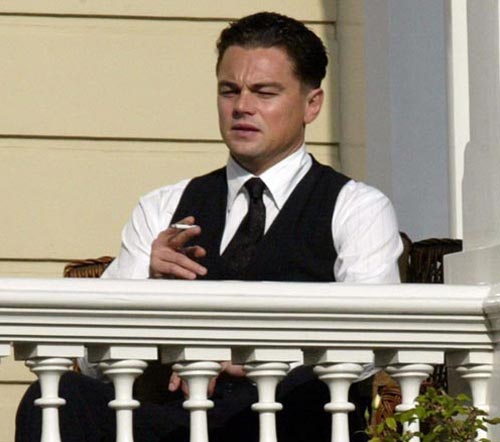
Working from a screenplay by Dustin Lance Black and starring Leonardo DiCaprio in the lead role, J. Edgar certainly has a high-end pedigree, but the film is so concerned with being "refined" that it sacrifices momentum. Opening with Hoover dictating his autobiography in an effort to set the record straight, the film shows promise, even if the investigative flashback structure it employs should've been retired a long time ago. It inevitably leads to a then-this-happened-then-this-followed-by-this rhythm that can be a grind. But Hoover's origin story is fascinating, especially as he tries to convince his boss Mitchell Palmer (Geoff Pierson) to invest in new sciences like fingerprint analysis. We see how Hoover's crusade against communist radicals led to his being put in charge of the F.B.I., which he would remake into his own image of clean-cut American righteousness. We are introduced to the three key people in his life: his mother Annie (Judi Dench), who molded her Edgar into a model of properness; Helen Gandy (Naomi Watts), his loyal secretary; and Clyde Tolson (Armie Hammer), his most loyal…friend?

Then…we wait, patiently, for a theme or pattern to emerge. One never quite comes through. By trying to condense a 50-year history into a 2 1/3-hour runtime, "J. Edgar" becomes a highlight reel with some of the best parts edited out. Hoover's war against '30s gangsters like Baby Face Nelson and John Dillinger is reduced to more or less a montage. Hoover during World War II? Nothing. Hoover during McCarthyism? We get one line of dialogue dismissing McCarthy as an opportunist. The movie's greatest flaw is how it does not deal with Hoover's clashes with the Kennedys, especially Bobby. Hoover's hatred of Bobby Kennedy was legendary, and for a movie about his life to omit that part is just wrong. Instead we get too many scenes of Hoover's mother laying on guilt trips about what he must do. This is Psych 101 screenwriting territory, way below the thinking of Eastwood and his collaborators.


The most obvious (and possibly most entertaining) approach to this material would be to treat it like one of those ripped-from-the-headlines '30s Warners pictures, complete with gossip and innuendo. (We get a charge in one scene when we see famous bits from "The Public Enemy" being shown to a cheering audience.) The other approach to the material would be to concentrate on just a few defining moments. It is extremely difficult to condense a man's life into an extended runtime. "Malcolm X" did it, but then again it was focusing on 20 years, not 50. (It still managed to bring it up to the present with that startling final scene of Nelson Mandela addressing a classroom.) "Nixon" also did it, but Oliver Stone, unlike Eastwood, has a singular gift for innovative visuals and editing that gives his movies drive. The model for a movie like "J. Edgar" is something like Danny DeVito's criminally underrated "Hoffa." Like "J. Edgar," it also uses a flashback structure, butscreenwriter David Mamet doesn't bother with trying to cram a man's lifeinto a conventional narrative. Hoffa is simply presented as-is, and we take in how those around him react to his actions. By doing that, we come away understanding Hoffa's achievements as a labor leader, but also understand that his ego and quest for power led to him eventually losing sight of his original intentions. (Interestingly, the highlight of "Hoffa" is the extended sequences where he squares off with Robert Kennedy.) A typical scene in "J. Edgar" is of two people sitting in a darkened room talking around what is on their minds. If you're going to make a movie consisting of these kinds of scenes, you'd better make sure they have something interesting to say. Or, at the very least make clear what it is they are "not" saying. (Tom Stern's drab cinematography doesn't help matters. While not as bad as his work in Eastwood's "Changeling," it makes you not want to see the color brown for at least three months. His lighting is like Gordon Willis minus texture — or soul.)
null

At 81, Eastwood has spent the last 10 to 15 years making movies where he seems to be re-examining not only his own image, but the image of stoic, non-verbal men, He's been deconstructing the notion of masculinity before men were told it was okay to get in touch with their feelings. The idea that men needed to do whatever it took to get the job done was being undercut by the (necessary) assertion of feminine and racial equality. Eastwood's best films are about men reeling from change and how they either reject it or are humbled by it. In "Million Dollar Baby" (his best film in the last decade), boxing trainer Frankie Dunn is constantly questioning God's plan only to get a comeuppance when he demands unquestioning faith in his training methods from his fighters. A "Perfect World" saw Eastwood deconstructing the Western showdown by setting a generational clash of law and disorder on the eve of the Kennedy assassination. ("A Perfect World" is a far more complex breakdown of Western myths than the somewhat overrated "Unforgiven.") "White Hunter Black Heart" told a thinly fictionalized version of John Huston's recklessness while making "The African Queen," with Eastwood playing Huston as a filmmaker learning that trying to exert the same kind of control he has on a movie set in everyday life can lead to self-destruction. Even less successfulefforts saw Eastwood attempting to re-think history, considering if his generation got things wrong. His two-part World War II saga "Flags of Our Fathers" and "Letters from Iwo Jima" had moments of great irony hinting that Eastwood might've learned something from "Saving Private Ryan;" too bad, in the end, he wound up buying into the myths of the Greatest Generation. "Hereafter" found Eastwood confronting mortality; too bad the movie got all New Age-y in its final sequence. And in the disastrous "Gran Torino," Eastwood directed himself in what felt like his farewell performance as Korean War vet Walt Kowalski, a longstanding racist forced to realize he was wrong about everything; too bad the movie played Walt's racism for laughs and came off like a recruitment film for the Tea Party.

Every movie Eastwood makes seems to be in preparation for his next one. Taking on the life of J. Edgar Hoover suggested Eastwood was ready to tackle one of the most polarizing figures of his generation, and by doing so confronting the two topics he's often accused of shying away from: sexuality and race. There is evidence that Eastwood is more than capable of handling adult sexuality; his performance in the New Orleans cop procedural "Tightrope" saw him playing a man grappling with unhealthy sexual urges. Unfortunately Eastwood has given his critics more than enough opportunities to accuse him of insensitivity with ugly portrayals of women and gays in movies like "The Rookie" and "Sudden Impact." His track record for handling race is even spottier, with black characters being subservient yet equal. (Don't even bother bringing up "Bird.") But with "J. Edgar" it would seem Eastwood would have to tackle these issues head-on. He doesn't. He blinks. Hoover's sexuality is treated as a case of repression crossed with the smothering of a mother from hell. Screenwriter Black, who wrote the terrifically insightful "Milk," seems to have written the script of "J. Edgar" from a 2011 perspective, as if he's saying, "Isn't it too bad Hoover wasn't allowed to live in a more open society where his sexuality wouldn't have been an issue?" That's a great notion but it's one that Eastwood and DiCaprio are not operating from. The movie winds up working at cross-purposes, and would've been better served by simply dumping all the scenes with Hoover's mother or just relegating her to one early sequence. (That's why biopics like "Citizen Cohn" and "The Aviator" work so well.) That extra time could've been used to strengthen one of the other more interesting relationships, like Hoover's connection with his longtime companion Clyde Tolson. As it stands, Hoover's relationship with Tolson comes awfully close in some scenes to resembling that of Mr. Burns and Smithers. They're like the first bromance. They're so chaste in their affection that when they have their big fight, the scene seems to come out of nowhere. When they kiss, we laugh, not out of nervousness, but because there's no passion or preparation. When Hoover takes out Ms. Gandy on a date and she rebuffs his advances, we don't know if her rejection sours him on women or if he's thrilled that she's as dedicated to her work as he is. On a basic psychological level the movie doesn't even bother with suggesting that Hoover wanted to sleep with his mother, Ms. Gandy or Tolson. We think that's what's going on, but we're never certain. (If we were to go by the movie, Hoover apparently died without ever having sex.)

And Hoover's racism is transformed into his crusade against communist radicals. His battles against civil rights leaders are reduced to his attempts to ruin the reputation of Dr. Martin Luther King, Jr. When he's listening to a recording of King having sex, we wonder if Hoover is jealous of such a blatant act of sexuality. The same goes with his taping of President Kennedy. Is Hoover envious because they're having all the fun? And why does he hate communists so much? We never hear him articulate an argument. WhenBobby Kennedy tells him that our enemies are now foreign, not domestic, he makes perfect sense. But Hoover disregards his warnings, suggesting a deep-seeded paranoia of everyone. There's a whiff if Jack D. Ripper to his campaign against Dr. King. He believes King to be a communist threatening to contaminate the soul of the American people. (I was going to write "our precious bodily fluids.") A racial slur by Hoover's mother plants the notion early on that he is someone who parrots his mother's views, but we never hear him use a racial slur himself.
null
But there are moments when you feel the movie starting to come alive. All the scenes involving Charles Lindbergh and the kidnapping of the Lindbergh baby crackle with tension. (Unfortunately these scenes are broken up by that damn flashback structure. You spend a good part of the time doing your own mental re-editing of the movie.) This entire episode should be the centerpiece of the movie. It should both showcase Hoover's achievements and his weaknesses. His defiance of his superiors to employ new techniques of gathering evidence in order to apprehend those responsible for the Lindbergh kidnapping plays like the origin story of "C.S.I." The case also shows Hoover's eagerness to present the appearance of justice without bothering with the thorny details of degrees of guilt or innocence. DiCaprio gives another strong performance, all the more impressive considering he has to fill in the blanks of the script. He's able to suggest what isn't on the page through a glance or a sigh or his old-man shuffle. (The aging makeup would seem to have a lock on the Oscar.) There are moments where DiCaprio gets you to feel Hoover's loneliness and repressed rage. A startling scene late in the movie when Hoover is dictating a letter that he hopes will intimidate Dr. King into declining the Nobel Peace Prize suggests the darker movie this could've been, while also pointing out the weakness in the character of Ms. Gandy. It's the only time she seems to question her "Edgar" if he's doing the right thing. Is this really the first instance of someone questioning Hoover? I doubt it. Very little is known about Hoover's secretary, but that shouldn't prevent Eastwood and his team from speculating on the nature of their relationship. The same goes for Armie Hammer's characterization of Tolson. There's a hint of Tolson assuming the role of submissive to Hoover, but it's never followed through. Hammer, coming off his triumph as the Winklevoss twins in "The Social Network," gives one of those supporting performances you find on the IMDb page of big movie stars; it's a good credit to have at the start of your career, as proof you're willing to tackle "risky" material. He's captivating and, like DiCaprio, does his best to fill in the blanks. And Josh Lucas gives his best performance since "Wonderland" in the small but vivid role of Charles Lindbergh.

In the end, "J. Edgar" is neither defensive nor offensive. It's the definition of "respectful," and that's something you'd never expect from a movie about J. Edgar Hoover. There is one scene towards the end that does manage to create a sense of discomfort. A montage of late '60s turmoil (including the assassination of Dr. King) is juxtaposed with Hoover narrating that if we don't remember history we're destined to repeat it. For a few fleeting moments, the movie seems to be offering a justification of Hoover's tactics. The scene suggests that the upheavals of the Vietnam era were a result of Hoover not being allowed to keep an eye on everyone. That's a provocative stance that the movie doesn't attempt to defend or refute. (A better movie would pick a side. A great movie would suggest Hoover was both right and wrong.) That scene is topped by a brief scene of Nixon being informed of Hoover's death; the president's immediate response is like an outtake from an Oliver Stone movie. It's moments like these that "J. Edgar" flirts with playing dirty.

San Antonio-based film critic Aaron Aradillas is a contributor to The House Next Door, a contributor to Moving Image Source, and the host of “Back at Midnight,” an Internet radio program about film and television.