VERTIGOED: A Press Play mash-up contest

VERTIGOED: A Press Play mash up contest

EDITOR'S NOTE: You may have heard that Kim Novak, costar of Vertigo, took out an ad in Variety protesting the use of Bernard Herrmann's Vertigo score in Michel Hazanavicius’s modern silent film The Artist. "I WANT TO REPORT A RAPE," the headline blared. "I FEEL AS IF MY BODY—OR, AT LEAST MY BODY OF WORK—HAS BEEN VIOLATED BY THE MOVIE, “THE ARTIST," Novak wrote, and went on to decry the “USE AND ABUSE [OF] FAMOUS PIECES OF WORK TO GAIN ATTENTION AND APPLAUSE FOR OTHER THAN WHAT THEY WERE INTENDED.” Novak's word choice was unfortunate — more than one person, including yours truly, said that was akin to somebody sitting through the Star Wars prequels and witlessly declaring, "George Lucas raped my childhood."  

Press Play contributor and film editor Kevin Lee followed this Novak/Lucas line of thought to its logical — or illogical — end. Just for the hell of it, he matched the Vertigo cue used in The Artist with the last three minutes of the Death Star battle in Star Wars, Episode IV: A New Hope, uploaded it, and sent the link to several Press Play contributors to get their reactions.  

nullAnd it's here that things got interesting: rather than generate cheap laughs at the expense of Novak, Lucas, The Artist or Star Wars, the mash-up inspired delight. Simply put: Kevin's experiment confirmed that Bernard Herrmann's Vertigo score is so passionate and powerful that it can elevate an already good scene — and a familiar one at that — to a higher plane of expression. Score one for the master of film scoring!

We encouraged Kevin to put the same piece of music under a bit from Star Wars: Episode I, The Phantom Menace and the training sequences from Rocky and Rocky IV. Same result: The scenes seemed deeper, subtler and more haunting, solely because of Herrmann's music.

Kevin joked that these clips had been "Vertigoed" — a reference to the low-budget "Swedeing" of Hollywood movies in the cult classic Be Kind, Rewind. The term stuck, and inspired us to declare a Press Play "Vertigoed" contest. 

THE RULES:

1. Take the same Herrmann cue — "Scene D'Amour," used in this memorable moment from Vertigo — and match it with a clip from any film. (You can nick the three-minute section from one of Kevin's mash-ups if it makes things easier.) Is there any clip, no matter how silly, nonsensical, goofy or foul, that the score to Vertigo can't ennoble? Let's find out!

2. Although you can use any portion of "Scene D'Amour" as your soundtrack, the movie clip that you pair it with cannot have ANY edits; it must play straight through over the Herrmann music. This is an exercise in juxtaposition and timing. If you slice and dice the film clip to make things "work," it's cheating. MONTAGES WILL BE DISQUALIFIED.

3. Upload the result to YouTube, Vimeo, blipTV or wherever, email the link to pressplayvideoblog@gmail.com along with your name, and we'll add your mash-up to this Index page. 

The Press Play Vertigoed contest ends at 5 PM Eastern time on FRIDAY, JANUARY 20.  No mash-ups posted after that time will be considered. Press Play staff will choose a winner over the weekend and award a $50 Amazon gift certificate. The pairing that our judges decide is most imaginative and altogether satisfying will win the prize. The victor will be announced Monday, January 23. 

Now get Verti-going!

–Matt Zoller Seitz

1. STAR WARS: EPISODE I – THE PHANTOM MENACE by Kevin B. Lee

2. ROCKY by Kevin B. Lee

3. ROCKY 4 by Kevin B. Lee

4. THE GREAT DICTATOR by Jonathan Amerikaner

5. ALIEN by William D'Annucci

6. BONNIE AND CLYDE by James Grebmops

7. STRAW DOGS by James Grebmops

8. AKIRA by Greg Stevens

9. VAMPIRE'S KISS by Jake Isgar

10. THEY LIVE by Chris Mastellone 

11. INGLOURIOUS BASTERDS by Brandon Brown

12. GIRL WITH THE DRAGON TATTOO by Miguel Martinez 

13. OLDBOY by Steven Santos

14. SWINGTIME by Rocco Sardoni 

15. THE JETSONS by Rocco Sardoni

16. Mädchen in Uniform by Matthew Cheney

17. WALL-E by Donka Aleksandrova

18. Edward Dmytryk's THE SNIPER by Catherine Grant

19. NIGHT MOVES by John Levy

20. BLOODSPORT by Andre Khazar

21. INDIANA JONES AND THE RAIDERS OF THE LOST ARK by Brad Hansen

22. BADLANDS by Emma Phelps

23. FERRIS BUELLER'S DAY OFF by Hugh Lilly

24. THE BIG LEBOWSKI by Will Woolf

25. EASY RIDER by James Grebmops

26. 127 HOURS by Jason Bellamy

27. DESTINATION INNER SPACE by R.Q. Dale

28. Martin Arnold's ALONE. LIFE WASTES ANDY HARDY by Hoi Lun Law

29. BRAVEHEART by Michael Pollard

30. MINORITY REPORT by Cole Smith

31. TOP GUN by De Maltese Valk

32  THE ROOM by De Maltese Valk

33. HAROLD & KUMAR ESCAPE FROM GUANTANAMO BAY by Lynn Guest

34. HARRY POTTER AND THE DEATHLY HOLLOWS, PART 2 by Rob Cooper

35. THE THIN RED LINE by Cole Smith

36. TROLL 2 by Gustavo Costa

37. DEEP IMPACT by Richard Bellamy

38. ANIMAL HOUSE by Chip Midnight

39. ZOOLANDER by Athena Stamos

40. HANGOVER 2 by Richard Haridy

41. BLACK SWAN by Jason Bellamy

42. THE RIGHT STUFF BY Matt Rosen

43. AN AMERICAN WEREWOLF IN LONDON by Bri Frazier

44. GOD TOLD ME TO by John Keefer

45. GUMMO BY David Jenkins

46. JEANNE DIELMAN by David Jenkins

47. WET HOT AMERICAN SUMMER by Brandon Nowalk

48. PEE-WEE'S BIG ADVENTURE by Emmy Serviss

49. THE LION KING by Brandon Nowalk

50. LITTLE DARLINGS by Tanya Goldman

51. THE NOTEBOOK by Tanya Goldman

52. ED WOOD by Justin Smith

53. TOY STORY 3 by Bri Frazier

54. MEAN GIRLS by Kate Aldworth

55. BOOGIE NIGHTS by Jonathan Pacheco

56. HEAT by Jim Gabriel

57. STAR TREK II: THE WRATH OF KHAN by Jake Isgar

58. MEAN STREETS by Anthony Vitello

59. Fritz Lang's METROPOLIS by Guy Handelman

60. TRADING PLACES by Peter Scully 

61. SECONDS by Matt Maul

62. TOY STORY 2 by Jason Haggstrom

63. MELANCHOLIA by Maximilien Proctor

64. BLADE RUNNER by Dan Seagraves 

65. SILENCE OF THE LAMBS by Brittany Carter

66. SPEED RACER by Jim Gabriel

67. THE WIRE by Jason Mittell

68. PSYCHO by Matt Cheney

69. MY VIDEO FOR BRIONA (viral video) by Joseph Carson

70. VERTIGO by Matt Rosen

71. EL TOPO by Maximilien Proctor

72. DON'T LOOK NOW by Maximilien Proctor

73. DRIVE by Maximilien Proctor

74. MATILDA by Barrak Sitty

75. PLAYTIME by David Blaylock

76. THE 400 BLOWS by David Blaylock

77. CHILDREN OF MEN by Matt House

78. E.T. by Chris McCullah

79. 4 MONTHS, 3 WEEKS & 2 DAYS by Matt Rosen

80. A PERFECT WORLD by Ethan Murphy 

81. OUT OF SIGHT by P.J. Rodriguez

82. OLD SCHOOL by Colleen Koestner

83. RISE OF THE PLANET OF THE APES by Steven Boone

84. FREDDY GOT FINGERED by Dan Seagraves

85. TERMINATOR 2: JUDGEMENT DAY by Dan Seagraves

86. OBSESSION by Brandon Brown

87. Hannibal by Arnzilla

88. SEVEN by Sasha Stone

89. NO COUNTRY FOR OLD MEN by Sasha Stone

90. JACKASS NUMBER TWO by Kevin B. Lee

91. PAN'S LABYRINTH SCENE 1 by Alex Mekos

92. PAN'S LABYRINTH SCENE 2 by Alex Mekos

93. EVANGELION 2.22 by Larson Yellowhair

94. KISS MY DEADLY by P.J. Rodriguez 

95. TOY STORY 2 by David Blaylock

96. NORTH BY NORTHWEST by David Blaylock

97. THE FIVE OBSTRUCTIONS by David Blaylock

98. VINTAGE DODGE CAR COMMERCIAL by Jeremy Butler

MATT ZOLLER SEITZ: The engrossing, surprising SOUTHLAND returns

MATT ZOLLER SEITZ: The engrossing, surprising SOUTHLAND returns

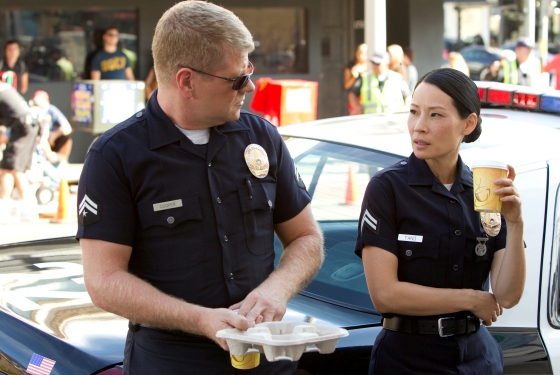
nullWatching TNT’s cop series Southland (Tuesday 10 pm/9 c) puts knots in my stomach, and I mean that as praise. It’s the most engrossing cop series since season one of NBC’s Homicide, and maybe the most raggedy and real. Chaos erupts out of nowhere, zooming in from off-screen, and then escalates into horror or takes a right turn into absurdity. There are several moments in the premiere that illustrate what I’m talking about. In one of them, Sgt. Cooper (Michael Cudlitz), who has just returned to active duty after last season’s personal disasters, and his new partner, Officer Jessica Tang (new castmember Lucy Liu), pull over a young black man for running a red light. The ingrained resentments assert themselves; the driver talks trash to the cops and refuses to get out of the car, Cooper threatens him with violence, the whole situation verges on hysteria, and then suddenly there’s a roar of gunning engines from off-screen. A black sport utility vehicle cuts across several lanes of traffic and screeches to a halt right in front of the pulled-over car, the terrified officers draw their guns …  and out jumps the young man’s mother. She just happened to be driving by and saw her son’s car pulled over by police. She dresses her son down for texting behind the wheel and disrespecting police officers and tells him he’ll never drive that car again. “It’s gonna take Jesus and two more white folks to keep me from kicking your ass!” she shouts.

You can read the rest of Matt's review here at New York Magazine. 

A critic, journalist and filmmaker, Matt Zoller Seitz is the staff TV columnist for New York Magazine and the founder of Press Play.

REVIEW: Virtues of a Nasty Girl: Jason Reitman’s YOUNG ADULT

REVIEW: Virtues of a Nasty Girl: Jason Reitman’s YOUNG ADULT

null

It would be easy to mistake Charlize Theron’s words and deeds in Young Adult for plain nastiness. She finds everything wanting, lacking, somehow deficient, especially when it comes to the people who live in motley Mercury, Minnesota, her hometown. She left there long ago and condemns those who didn’t follow her shining example. When someone calls the baby of a friend “darling-looking,” she says, quietly but firmly, “Have you seen it? Up close?” She makes fun of the friend’s wife’s amateur rock band. She is brazen about all of this, not batting an eye as she lies to a hotel desk clerk about having a small dog with her (even as we hear the yapping thing in her bag).

That Theron plays a writer (her claim to fame—or not—is a series of books for young adults) is the key to understanding what is behind these attacks. She isn’t just being disdainful. She is taking notes. Did screenwriter Diablo Cody choose to call the character “Mavis Gary” because the name sounds so similar to that of Mavis Gallant, the great New Yorker short story writer? It doesn’t seem entirely out of the question. Forget the worthlessness of Mavis Gary’s genre. She cares about writing—any kind of writing. After all, it was her ticket out of Mercury. Her work habits are no better or worse than most of us—not taking calls from her editor when she is on a deadline, playing it fast and loose with low printer ink—but she demonstrates her seriousness when she does what all writers are supposed to do: watch, listen and write. During a visit to Staples, she eavesdrops on the conversation of two lovesick adolescent clerks. Their exchange ends up as dialogue in her next book.

nullIt is not in this spirit that Mavis returns to Mercury—on a whim, she decides she wants to renew a romance with an old, now-married boyfriend (Patrick Wilson)—but the trip actually provides her with more material. Mavis uses what she is feeling and thinking for her work. She may not realize it at first, but her meanness is a way for her to create a distance between herself and her subject. If Mavis errs, it is only in thinking at first that she can inhabit Mercury innocently, as though she could ever woo her former beau away from his wife and baby, as though he would ever find her values and preferences as worthwhile as his own. Mavis is delusional in that she fails for a long time to grasp that she is, by virtue of her chosen profession, an outsider. She will always be the only one in Mercury who shows up at a “baby naming” ceremony in a silk blouse among a sea of sweatshirts, looking put-together as only Charlize Theron can. As Clark Kent said at his high school reunion in Superman III: “The prettiest girl in school… is still the prettiest girl in school.”

Yet a merely pretty actress would not have cut it as Mavis. The part required the striking, almost ungainly beauty of Charlize Theron, whose height makes everyone around her seem tiny. Even when Mavis is slumming, as she often is, she retains a kind of elegance. Every time she turns the TV on, it is a Kardashian we hear talking, but the director, Jason Reitman, is too smart to go for a cheap laugh. Who among us hasn’t found mindlessness of this sort fortifying at one time or another? There is a scene late in the movie where Mavis orders a horrifying tray of food from Kentucky Fried Chicken and Pizza Hut, and proceeds to chow down. The truth is that sometimes we could do with a little junk, and as Diablo Cody has written her, Mavis is always ingesting junky things: the Kardashians, fast food, liquor, beer, a jug of coke for her hangover the morning after. It is Cody’s ingenious metaphor for Mavis’s voracious appetite for the ugliness of life.

nullThe direction of Jason Reitman is relaxed, unobtrusive, recalling Woody Allen at his most unassuming. The casual handheld camera of Manhattan Murder Mystery has resurfaced here, catching quirks of behavior without seeming to try very hard—in a way, not unlike Mavis, who view things so critically but also so softly. 

Is it Mavis’s fault that what she sees around her is so unappealing? When she momentarily reconsiders her scornful feelings for Mercury, she is assured that its residents really are, for the most part, “fat and dumb.” This seems to be so, and it is all that Mavis needs. Her instincts about the place were right. Francine du Plessix Gray once said that “in any decent writing one must observe with cruelty, describe with cruelty, yet end up with some sense of mercy.” It is the quality of mercy that Mavis lacks, but we ought not to discount the importance of the quality of cruelty. Is there such a difference between cruelty and wit?

If Mavis is guilty of anything, it is of wasting her wit on silly novels for adolescent girls. The hopeful conclusion of Young Adult doesn’t suggest that Mavis is suddenly filled with goodwill toward men. Instead, it left me with the conviction that our unkind star has gained a renewed sense of ambition. I wonder: How many great writers throughout history hated their hometowns as much as Mavis Gary does?

Peter Tonguette is the author of Orson Welles Remembered and The Films of James Bridges. He is currently writing a critical study of the films of Peter Bogdanovich for the University Press of Kentucky and editing a collection of interviews with Bogdanovich for the University Press of Mississippi. You can visit Peter's website here.

MATT ZOLLER SEITZ: The Failures, Successes, Possibilities, and Danger Signs of HELL ON WHEELS

MATT ZOLLER SEITZ: The Failures, Successes, Possibilities, and Danger Signs of HELL ON WHEELS

nullLike a lot of people, I watched the first few episodes of AMC's Hell on Wheels,Joe and Tony Gayton’s drama about the building of the transcontinental railroad, and then checked out. It wasn't awful, but a lot of it was weak, and even in its better moments it seemed not to have found its tone yet. The pilot and the next couple of episodes seemed stranded between grubby naturalism and slick, empty mythmaking. In one scene, the show would feel like a wannabe McCabe and Mrs. Miller or Deadwood, muddy and lyrical and depressive. In another it would echo Sergio Leone or early Clint Eastwood (High Plains Drifter and The Outlaw Josey Wales especially). Yet another scene would feel anachronistic, glossy, and weightless. When I finally did catch up after the New Year, what I saw made me wish I'd been watching the show in real time. Hell on Wheelsdidn't turn into a great drama, but it settled into a distinctive groove, growing more relaxed and confident by the week, dealing with painful historical subjects and unique personal crises that most TV, even Western-themed TV, often ignores, and indulging in some of the most deliriously cinematic montages this side of Breaking Bad. Some scenes and moments were flat-out amazing — so unlike anything else on TV that they made me want to forgive or forget the just-okay dialogue and production design and hit-and-miss performances.

Last night's season finale — which cut between vengeance-obsessed lone wolf hero Cullen Bohannon (Anson Mount) chasing one of the men he believed raped and killed his wife and a dance party celebrating the completion of 40 miles of track — encapsulated the show's flaws as well as its promise. The gathering-of-a-misfit-community scenario is such a durable Western trope that it's tough to mess up, but here the editing was choppy and the staging of important action was undistinguished (few of the dancers looked comfortable dancing). And the dialogue — never the show's strong suit — was so full of clunkers that I'm having a hard time singling out the worst line; it's probably a toss-up between the former John Brown follower turned man of God, Reverend Cole (Tom Noonan), telling Bohannon, "Choose hate, it's so much easier," and the ex-Pawnee concubine turned prostitute Eva (Robin McLeavy) telling her ex-slave boyfriend, "I love you, Elam, and I'm tired of being a tramp."

You can read the rest of Matt's review here at New York Magazine.

A critic, journalist and filmmaker, Matt Zoller Seitz is the staff TV columnist for New York Magazine and the founder of Press Play.

MATT ZOLLER SEITZ: ALCATRAZ should never have been freed

MATT ZOLLER SEITZ: ALCATRAZ should never have been freed

nullWhat if the prisoners of Alcatraz all mysteriously disappeared when the prison closed in 1963 and then started reappearing in the year 2012? And what if they hadn't aged a day and were set on finishing unfinished business, settling old grudges and the like? If that sounds fascinating to you, then you’ll probably give the new J.J. Abrams–produced series Alcatraz (Fox, Mondays 8 p.m.) more of the benefit of the doubt than I did. I found tonight’s two-hour premiere so listless that I’m having a hard time mustering the energy to pan it. And the second episode is only a slight improvement. My fascination with the real prison probably has at least something to do with my resistance. The place has such a rich history — one that has already been alluded to in such films asBirdman of Alcatraz and Escape From Alcatraz — that I’m not yet convinced that it should be reduced to a mere backdrop for sci-fi mythologizing by remnants of the Lost writers room and cast. But we’ll see.

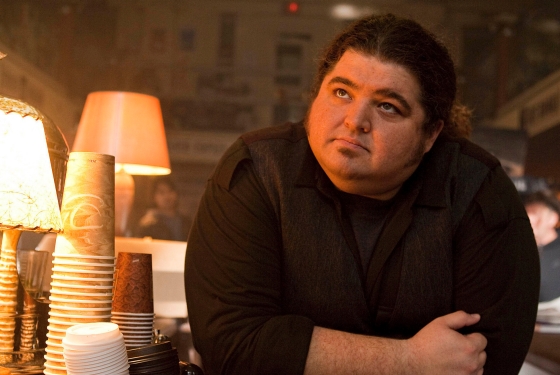
Sarah Jones stars as San Francisco police Detective Rebecca Madsen (Sarah Jones), who finds a fingerprint at a murder scene that belongs to Jack Sylvane (Jeffrey Pierce), an Alcatraz prisoner who died a long time ago. Lost co-star Jorge Garcia plays the buddy she’s teamed up with: Dr. Diego "Doc" Soto, an Alcatraz expert and comic-book aficionado. As she tries to get to the bottom of the mystery, she’s aided by scientist Lucy Banerjee (Parminder Nagra) and by her surrogate uncle Ray (Robert Forster, charming but underused). She's also hindered by a sinister government agent named Emerson Hauser (Sam Neill, doing his Wasp Satan thing), who promises revelations but delivers mostly red herrings and warnings. Sarah’s family has deep roots in Alcatraz — both Ray and her grandfather were guards there. There are hints that the show might meld science fiction and mystery with ghost-story elements; the time-tripping prisoners are trying to avenge past sins or otherwise rebalance the cosmic scales. I’m sure it will take four or five years for us to find out, but only ifAlcatraz can get through this season without driving even its most dogged partisans into a funk, as Fox’s promising but infuriatingly mediocre Terra Novadid last fall.

You can read the rest of Matt's review here at NYMAG.

A critic, journalist and filmmaker, Matt Zoller Seitz is the staff TV columnist for New York Magazine and the founder of Press Play.

DVD REVIEW: JEAN-PIERRE GORIN: a new DVD box set spotlights the director’s best documentaries

DVD REVIEW: JEAN-PIERRE GORIN: a new DVD box set spotlights the director’s best documentaries

nullAt first glance, the title of Three Popular Films by Jean-Pierre Gorin looks like a joke. If Jean-Pierre Gorin, a Frenchman who moved to San Diego to teach at UCSD in the ‘70s, is known in the U.S. at all, it’s because he collaborated with Jean-Luc Godard as a member of the Dziga Vertov Group. However, except for Tout Va Bien and Letter to Jane, most of the Dziga Vertov Group’s work is now difficult to see. Eclipse’s 3-DVD set of Gorin’s California-made documentaries, completed between 1980 and 1992, rescues them from oblivion. They’ve rarely been screened theatrically in the U.S. in the twenty years since the most recent one, My Crasy Life, was made, apart from a 2010 retrospective at New York’s Migrating Forms festival.

All that said, “popular culture” doesn’t necessarily have to mean corporate-produced media. In Gorin’s case, it usually means an amused but respectful look at American subcultures, whether they be model train enthusiasts or Samoan gangbangers. While Burden of Dreams director Les Blank, an accomplished documentarian in his own right, was the cameraman on the Paris native's first film, Poto and Cabengo, the Jonathan Demme of Handle with Care and Melvin and Howard is the filmmaker Gorin most recalls. Gorin and Demme share a fondness for the byways of lower-middle-class Americana and the ways the American Dream can be a pitfall, as well as an honest outsider’s distance from their characters or subjects.

Poto and Cabengo is, not surprisingly, his most Godardian film. Starting with the story of two six-year-old twins who have apparently invented their own language, it fills the screen with text and, as Kent Jones’ astute liner notes testify, creates a symphony of voices and languages. Grace and Virginia Kennedy (“Poto” and “Cabengo” are their nicknames for each other), raised in isolation due to the belief that they might be mentally challenged, came up with their own variation on English, completely unintelligible to most observers. Their father is a real estate salesman whose dreams of becoming a millionaire were widely out of synch with the family’s reality. Their mother and grandmother are German.Gorin isn’t interested in the issue of whether the twins really invented a new language so much as exploring what kind of upbringing could have produced such an odd set of little girls.

Poto and Cabengo is formally striking, with much use of black leader and repeated bits of onscreen text, like a question mark floating across the screen and the phrase “What are they saying?” The film eventually answers this, but it’s far more concerned with the economic fate of the Kennedy family. Its final ten minutes are devastating, as their dreams of holding onto a middle-class lifestyle slip away. Gorin’s closing voice-over compresses an emotional and narrative charge which most films would spend a reel developing into thirty seconds

Routine Pleasures is the most complex and perplexing of the films included in this set. Its inspiration isn’t immediately apparent; as quoted in Jones’ liner notes, Gorin says “ It seemed interesting in the eighties to investigate the conservative imagination.” However, the director didn’t do so by any conventional means. Instead, he takes a model train club, whose members meet every Tuesday, and film critic/painter Manny Farber as his subjects. Farber refused to appear on camera, so Gorin concentrated on two of his paintings instead.

This is the most obviously autobiographical of the three films in this set, as Gorin explores what it means to be – or, more personally, to become – an American in the ‘80s. He chooses to do so by means of filming some pretty idiosyncratic men. His main inspiration for Routine Pleasures was ‘30s American cinema, particularly the films of William Wellman and Howard Hawks. Audaciously, one section of it is titled Only Angels Have Wings (Part 2). He often films the train club in black and white, to add to the retro ambiance.

The only politics Gorin explicitly evokes are his own; he quotes Farber calling him an “ex-Marxist.” The kind of conservatism preoccupying him is more emotional than ideological, lying in nostalgia and a fondness for childhood pleasures, evoked (not without some critique and anxiety) in Farber’s painting “Birthplace, Douglas, Ariz.” Even more than Gorin’s other work, the film seems designed to live up to Farber’s definition of “termite art”: a small-scale take on subject matter that practically begs you to call it trivial, yet contains a hidden wealth of substance and resonance. Like many of the best films, it’s impossible to summarize what it’s about in a sentence or two.

My Crasy Life, made at the height of the craze for “hood” films, bears more obvious signs of fictionalization than Gorin’s other two films: stilted line deliveries from young men who seem slightly drunk or stoned, not to mention a robbery whose perpetrator would be a fool to commit it for real on camera. There’s also a talking computer, built into a police car, that delivers ironic commentary on the action, as well as a bibliography on Samoa. The film focuses on Samoan gangstas in Long Beach, California.

nullOn one level, it’s ridiculous to interpret this film as being as autobiographical as Routine Pleasures. In its world, white people are few and far between: barely glimpsed cops or crime victims. Rather than making his presence directly felt through his voice, as in his previous two films, Gorin has his subjects interview each other. However, on a deeper level, the film examines the pain of statelessness and the costs of emigration. It uses shots of beautiful Samoan landscapes as punctuation, even as one gang member shouts “Fuck Margaret Mead!” Brought to Hawaii or Samoa, his subjects are torn between wanting to hang out with their friends in L.A. and craving a deeper connection to their island roots, like learning to speak Samoan fluently.

Thanks to TV shows like Gangland and the proliferation of gangsta rap over the past 20 years – several hip-hop songs are performed here by the group West Side Strong – this is the most familiar-seeming of Gorin’s films. Yet its similarities to films like Menace II Society only make its personal touches – the HAL-like computer, the sobering montages of bloody crime scene photos, the deliberately jarring mixture of fiction and documentary – all the more unusual and powerful. It makes one wish that Gorin had been able to sustain a more prolific body of work as a filmmaker.

Due to space limitations, Jones’ liner notes had to restrict themselves to the three Gorin films included in this set. For a supplement addressing Gorin’s work with Godard and the two music-themed videos made after My Crasy Life, I recommend Erik Ulman’s article for Senses of Cinema.

Steve Erickson is a freelance writer who lives in New York. He writes for Gay City News, Fandor's blog, the Nashville Scene, Film Comment, The Atlantic website and other publications. He has made four short films, the most recent being 2009's "Squawk".

Putting pen to paper, or the virtues of analog writing

Writing reviews in pen

null[EDITOR'S NOTE: This is the first installment in "Egg Timer," pieces written in 30 minutes or less.]

Yesterday I got into the office at my new job and realized I had forgotten the power cord to my Apple laptop.  I figured I had three options: (1) take a 30-minute subway ride home to get it; (2) buy another power cord at an Apple store nearby, or (3) walk around my new workplace like a total dork, asking, "Pardon me, do any of you people I don't know yet, and who appear to be working on Windows desktop computers, have an Apple power cord that I can borrow?"

So I decided to go with yet another option: (4) turn off my computer to save power, write the reviews in longhand on a notepad, and turn the computer on long enough to type them and send them to my editor.

I filed two medium-length reviews yesterday, both scrawled on a memo pad in longhand in black pen. Each review took me about two hours to write. I wandered off down a blind alley on the first one and ended up not transcribing one of my paragraphs once I turned on the computer. But I entered the second review almost exactly as I had written it in longhand.

A medium-length review (between 700 and 1500 words) almost always takes me the same amount of time to write, about two hours. It's been that way since I was in my twenties. Of course writing time can vary if the subject is particularly detailed or conceptually difficult, or if I am in an environment not conducive to writing, but for the most part that's a pretty reliable time frame for me.

nullHere's the thing, though: I found that because I was writing with a pen, I spent less time revising I went and instead spent that time thinking about what I wanted to say, because as you all know, if you write continuously for too long, your hand starts to cramp. And I probably spent more time writing, or thinking about what I wanted to write, because I was disconnected from the Internet and could not check Facebook or Twitter or my various email accounts, or my blog, or anything else online.  

When I read the two reviews on the magazine's site, they didn't seem inferior to or stylistically different from my usual. If anything they seemed a bit more relaxed and confident. I credit this to the removal of online distractions and the thinking time that I gained by deciding to compose on paper before turning on the computer to transcribe.

I'm going to try writing my reviews in longhand for a while and see what happens. I haven't written reviews that way in a long time, except for those rare instances where I had a deadline to meet and was trapped on a subway train without a computer and had to get started anyway.

If IndieWire had a longhand option, I would have handwritten this piece. But that's just as well, because my handwriting has so deteriorated from disuse that none of you would have been able to read it.

INTERVIEW: What You Can Get Away With: The Collegial Cutting Room Collaborators of Joe Dante, Part 2

INTERVIEW: What You Can Get Away With: The Collegial Cutting Room Collaborators of Joe Dante, Part 2

null
[EDITOR'S NOTE: A much-shortened version of this article originally appeared in CinemaEditor magazine, Volume 60, Issue 1, First Quarter 2010, under the title, “The Collegial Cutting Room Collaborators of Joe Dante: A Symposium.”]

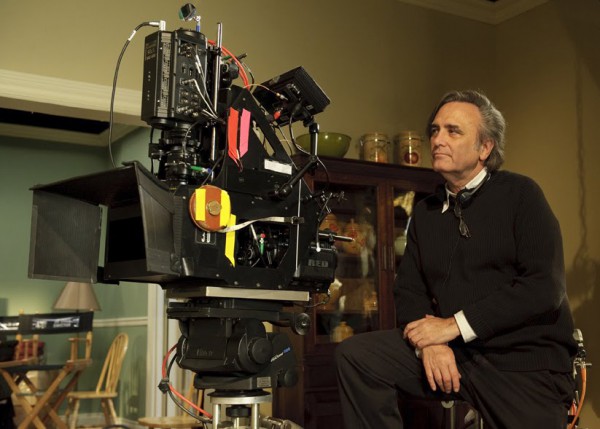
My conversation with Joe Dante, Tina Hirsch, and Marshall Harvey continues with a discussion of the director’s most famous film—Gremlins—and several later productions with more challenging post-production circumstances.–Peter Tonguette.

Tina Hirsch: Joe was so worried about the gremlins. He just thought the puppets were completely phony and nobody was going to believe them.

Joe Dante: This was a giant Muppet movie. When you make a picture like this, the question always is, “Are people going to buy this?”

nullTH: It comes to the end of shooting and he was supposed to stay away and give me a week to finish cutting all of the material. But he came in the next Monday or Tuesday, soon after wrap, and I said, “Joe, you look awful.” [Laughs.] We hadn’t shot all of the puppet stuff yet. They were going to take a break for a month and figure out what they needed to shoot. He said, “They’re so phony and awful.” I said, “Joe, they’re not. I believe them. I’m the audience! I’ll tell you what: I’m not completely finished, but I have 95% of the picture finished. How about we have a screening?” We go in, we look at the film, and he comes out and says, “Well, it’s not a disaster.”

JD: Our job was to try to take this puppet footage, of which there was an immense amount, and hone it down to the parts that were the most believable. A lot of times, that came down to which reaction shot of the character we used. I’m a firm believer that even a great special effect is going to look lousy if the reaction shot doesn’t convince you. The real trick was to make the audience believe that the characters on screen believe that the puppets are real.

TH: To cap it off, he got hate mail from people about how cruel he was to these gremlins! [Laughs.] It was exactly how I felt. I said, “I buy that they’re real. You know they’re not, but to me they’re real. Look at the dog! The dog believes they’re real!” That was the smartest thing they could have done, to have a dog at the beginning of the movie react to Gizmo.

JD: It was the best dog that I ever worked with. His name was Mushroom. I actually met him years later and he remembered me. This dog was incredibly
expressive and fascinated by the puppets. He was seemed to think they were real. We found that the more we cut to the dog, the more people bought it!
[Laughs.]

Peter Tonguette: I understand that Explorers was a difficult film from a post-production standpoint.

JD: The script wasn’t finished when we started filming and they had a release date in mind. The other problem was that the studio changed hands during the
post-production and the new people said, “This picture is coming out two months too late. We’ve got to have it two months earlier.” So we were basically told to stop work on it at a certain point, just finish it.

Movies get found in the editing room. The movie that you make is not always necessarily the movie that comes out of the editing room. The trick is to perfect
the movie that you have and make it the best version of what you’ve shot, regardless of what the intent may have been. In this case, we were still finding
the movie. The script we shot didn’t have an ending, so we made up a lot of stuff. Here we were, sifting through all this material, trying to focus it, and suddenly it’s, “Okay, all done.” And there it went, out to the public in the rough cut.

nullTH: Had they only given us another two weeks. A scene was written for the end of the picture which would have been with Dick Miller’s character. It would really have summed up the picture. There was no button at the end of the picture. It just kind of dropped off a cliff. It could have been done really cheaply, with one set, so it’s really sad. But the new studio just didn’t care.

JD: The basic conceptual problem with the movie is that it’s the opposite of E.T. (1982). The first half of the movie is Spielbergian and the second half of the movie is the opposite of that. The kids believe that they are going to find the meaning of life and God in space and they find only a reflection of themselves as distorted through pop culture. That didn’t turn out to be that popular! [Laughs.]

PT: Dave Kehr has written appreciatively about that very aspect of Explorers, noting that the film “perfectly mimics the nocturnal, nostalgic tone of Steven Spielberg’s E.T. the Extra-Terrestrial and Close Encounters of the Third Kind until the moment [it] explodes into the unrestrained delirium of a Bob Clampett cartoon.”

JD: I’m a firm believer that a movie can come out a year later or a year earlier and be successful or not depending on what the Zeitgeist is at the moment. But right then, that was not what people wanted to hear! [Laughs.]

PT: Starting with the segments you directed for Amazon Women on the Moon (1987), and then The ‘burbs shortly thereafter, you’ve worked extensively with Marshall Harvey.

nullJD: I had known Marshall since the Roger days and I’d seen a lot of the exploitation pictures he had cut. We just had a rapport. We liked the same movies and we had the same background.

Marshall Harvey: Joe and I have always gotten along together probably because we share a very similar sense of humor.

JD: The 'burbs was a particularly difficult movie because we shot it in sequence and we ad-libbed most of it.

MH: It was shot during the writers’ strike which meant there was no writer on the set. There were problems with the script, particularly in the third act. It was a great premise, which I think gives the movie its longevity. A lot of the funniest lines were ad-libs that the actors came up with. Joe would just let the camera run and let people improvise at the end of takes.

JD: We were trying to hone in on the good the parts and get rid of the bad parts. The rough cut was two-and-a-half hours and completely different than the
released movie. I’d say he really pulled that out and so the further I went on, Marshall was my go-to guy.

MH: He’s always been the best director in the editing room, partially because he started as an editor. He understands editing and he understands film history. If something isn’t working editorially, he understands why.

PT: Does he like to be in the cutting room?

MH: He likes to be there, which is helpful for the editor. Sometimes you want to try something and then you discover you don’t have the right footage to make that kind of cut. I’ve worked with directors who give their notes and go play golf and you realize, “Oh, geez, this idea is not going to work.” Then they come back and go, “What?” Whereas Joe is right there all the time and he can see immediately that it won’t work. “Why don’t we try this instead?”

At the time we were making The ‘burbs, Joe was pooh-poohing it. “This isn’t exactly my magnum opus!” Yet I’m with him at these events and people come up and the first thing out of their mouths is, “Oh, we love The ‘burbs!” There are web sites dedicated to the movie. We can’t quite believe it has such a following and a longevity to it.

nullPT: What were some of the difficulties in making Looney Tunes: Back in Action (2003)?

JD: From about 1997 on, the atmosphere in town about making movies has changed. It has become more corporate, there are more cooks in the kitchen than there have ever been, and the effort to get your idea of what the movie should be through has become like plodding through quicksand.

There were twenty-five writers on Looney Tunes, and that’s too many writers for a movie. It was being changed up until the minute that it was shown. It took a year-and-a-half and it was an extremely depressing experience. It pretty much soured me on the whole studio set-up.

MH: The only reason he took on that project, I think, was to preserve the Looney Tunes heritage. He knew Chuck Jones. If you go to Joe’s house, he has a big framed, signed thing from Chuck Jones. He disliked Space Jam (1996) and thought it was kind of a travesty to those characters.

JD: Chuck had just passed away. I thought, “I owe this to Chuck.” I owe him to not have the characters do hip-hop. They need to be true to themselves. My
mission in the movie, and [animation director] Eric Goldberg’s mission, was to try to make sure that these characters emerged intact.

MH: He sent me the script and I thought, “This is not very good.” But if we could make it like a Bob Hope-Bing Crosby road picture, with Daffy Duck as Bob Hope and Bugs as Bing Crosby, I thought it could be fun. Unfortunately, the studio didn’t quite see it that way and insisted on cutting out all of those kinds of things. The fact that the movie still ends up preserving the Looney Tunes sensibility is kind of a miracle, really.

PT: Coming on the heels of Looney Tunes, it must have been a relief to make your Masters of Horror episodes, Homecoming and The Screwfly Solution.

JD: They were a blessing for all of us. Directors who are used to battling the studio over everything are suddenly given carte blanche to do whatever they
want provided they could do it in ten days and for not much money. There was absolutely no interference on any level on that show. I was very proud and happy about the two episodes I did that I could never have done anywhere else. They were just too weird, dark, and controversial.

MH: Mick Garris, who created the show, is a director himself. The whole idea was that it was a director-oriented television series.

PT: Tell me about your current project, The Hole.

JD: It’s a small picture with a small cast and not a lot of locations. It’s basically a psychological horror film. It’s a little old-fashioned and it’s a movie that’s suitable to take kids to.

nullIt’s a movie that I went in on. I’m sure they were talking to twelve other guys, but for whatever reason, they liked my take. I went back and I said, “I think there’s one thing that would improve this movie. I don’t know if you’ll go for it or not, but I think this would be a good 3-D movie.” After a couple of days thought and some research, they said, “We think you’re right and we’re going to add a couple of bucks to the budget to pay for the 3-D.” That was great for me because I love 3-D.

PT: What are the challenges of editing a 3-D film in this day and age?

MH: It’s a lot easier than you would think. First of all, we don’t cut it in 3-D. It’s really no different for me than doing a regular movie, except you have to keep in mind that, when it is in 3-D, how certain things will be affected. The Hole doesn’t have a lot of gimmicky throwing things at the audience stuff in it. He took more of the Alfred Hitchcock approach to 3-D in how he staged it, giving depth to each shot.

The most difficult thing about it is that, because I wasn’t able to see the dailies in 3-D, a lot of the shots I’ve never seen in 3-D. Some of the visual effects
shots I’ve now seen in 3-D and I’m going, “Wow! That looks a lot different than I thought it would!” [Laughs.] If there’s something in the foreground, you don’t
really pay any attention to it in a normal movie, but when you see it in 3-D, it’s a totally different experience. You’ve locked the picture and now you’re seeing it in 3-D. “That’s really cool! I wish we could have stayed on that shot longer!”

Joe’s great with child actors and all three leads in it are quite good, particularly Nathan Gamble, who played Commissioner Gordon’s son in The Dark Knight
(2008). He plays the younger brother in this and he’s really good. For a guy who doesn’t have kids, Joe really connects to child actors.

nullPT: How does Joe work with young actors?

TH: Well, I think he’s one of them. [Laughs.] It’s very natural for him to be with young actors because he has not lost the six-year-old boy. That person is still inside him. I remember one time going on the set of Explorers and he was with the three guys [Ethan Hawke, River Phoenix, Jason Pressen]. He was telling them to do something and then they did the scene and it didn’t happen. And then he didn’t get it a second time. I thought, “Oh, boy.” But he just said, “Okay, we got it, let’s move on.” He realized, “This is all I’m going to get.” He had a day to make and he had kids he was dealing with. They can only do what they can do. He felt, “This is good enough.” To me, that’s a very sane way to work.

PT: You’ve worked with many of the same editors again and again, notably Marshall, Tina, and Kent Beyda. Do you find that to be beneficial?

JD: I find it beneficial in every category: the composer, the DP, the art director. You do form a cadre of people that you trust and who are good at their jobs and who know you and what your quirks and foibles are. It makes making movies very collegial and a lot more fun.

MH: In my experience, Joe is the most loyal person in the film industry. There aren’t that many people that are so loyal to stick with the same group of people.

PT: Do you think you are a better director for having been an editor?

JD: Unquestionably. I think that anybody that wants to direct, particularly writers, should spend some time in an editing room, whether it’s a film of theirs or someone else’s, or shoot their own picture on video and cut it. There’s a way of thinking that comes with being an editor that is incredibly useful on the set.
People who don’t have that sometimes find themselves getting into trouble. It’s not just a vocabulary thing or a right-to-left thing or script supervisor stuff. It’s a way of thinking about the film and the shots and the way they fit together—what you need and what you don’t need, and what you can get away with if you have to.

Peter Tonguette is the author of Orson Welles Remembered and The Films of James Bridges. He is currently writing a critical study of the films of Peter Bogdanovich for the University Press of Kentucky and editing a collection of interviews with Bogdanovich for the University Press of Mississippi. You can visit Peter's website here.

What You Can Get Away With: The Collegial Cutting Room Collaborators of Joe Dante, Part 1

What You Can Get Away With: The Collegial Cutting Room Collaborators of Joe Dante, Part 1

[EDITOR'S NOTE: A much-shortened version of this article originally appeared in CinemaEditor magazine, Volume 60, Issue 1, First Quarter 2010, under the title, “The Collegial Cutting Room Collaborators of Joe Dante: A Symposium.]

Like so many children of the eighties, I grew up with Joe Dante’s films, and knew even the less heralded ones—like Explorers (1985) or Innerspace (1987)—by heart. When I decided to write about his work, I spent a long time searching for an angle or hook before I asked myself a very simple question: How many directors began their professional careers by editing trailers for Roger Corman?

null

Joe Dante did. If I wanted to tell the story of his films, I had to tell it through the editors he worked with, starting with himself. With Mark Goldblatt, Dante co-edited his first two features—Piranha (1978) and The Howling (1981). He would later work with a succession of devoted editors. Tina Hirsch edited Dante’s biggest successes, like Gremlins (1984) and his acclaimed segment of Twilight Zone: The Movie (1983), while Marshall Harvey has been with him on most of his projects since the late-eighties, including The ‘burbs (1989) and Matinee (1993).

In the summer of 2009, I interviewed Dante, Hirsch, and Harvey, and I started where I felt I had to: with the director in the cutting room.

Joe Dante: I began as a film editor on The Movie Orgy (1968), which was a 16 mm compilation film that was patched together by me and Jon Davison when we were in college. It’s seven hours of stuff. We kept changing it around and a beer company gave us money to take it to college campuses. We didn’t have the rights to anything, but it was an exercise in editing, basically. And it’s pretty much where I learned how to edit, on a 16 mm print with optical track and one splicer.

Peter Tonguette: Did you want to become an editor or did you see this as a way to eventually become a director?

nullJD: I think I wanted to be a director, but I really wasn’t sure what I wanted to do. I knew I wanted to have something to do with the movies. I was a film critic and I had some expertise. When Jon Davison came out here to work for Roger Corman and asked me to come to edit a trailer, I thought, “Well, why not? I’ll see if this is something that I’m good at.” I was having some family issues at the time. My mother was passing away. It was a time of real turmoil, and they often say that’s the time when you change the direction of your life.

So I came out here and did a trailer for Roger for The Student Teachers (1973). George Van Noy cut it and I sort of supervised it and wrote the copy. It was way, way too long. [Laughs.] It was three times as long as a trailer should be. I came back home and the picture came out and made money. Somehow my name was associated with the trailer and when it came time to replace the piecemeal editors that Corman had been hiring with a “department”—consisting of two people—I was asked to come back. I did a couple more trailers and then was joined by Allan Arkush. We became the trailer “department.”

PT: How did this lead to you and Arkush co-directing your first feature, Hollywood Boulevard (1976)?

JD: We were very familiar with the contents of the various New World pictures because we had done the trailers. Of course, we both wanted to direct. The idea came to us that what if we tried to put together a really, really cheap movie. And we’re talking really cheap because this is New World Pictures.

Roger didn’t really want to let us go away from the trailers because he needed continuity. So his deal was, “I’ll let you guys do this movie. But it’s the cheapest movie we’ve ever made, you’ve only got ten days, and you’ve got to do trailers at night.” So we figured out a way to do a very cheap movie with all the action scenes being inserted from other pictures. We never could have afforded to stage any of those. The only concept that we could come up with that made any sense to use all of this disparate footage was a movie company making a bunch of different kinds of movies. So Hollywood Boulevard was born.

It was a very educational experience. I learned that I liked directing. Editing is kind of a solitary job. But then I found on my first day on the set that I really enjoyed the electricity and the camaraderie and the ability to discuss and get ideas.

PT: You and Arkush edited Hollywood Boulevard yourselves, along with Amy Jones.

nullJD: We had cut our own movie and cut our own footage, which I recommend to directors. If you sit down and are forced to confront the mistakes that you made, and try to figure out a way around them, then those are lessons that you are going to carry with you. A lot of people at New World would do the picture and then go away and let the editor cut it and then come back and declare themselves a genius! But, in fact, many, many tricks had been employed to make the footage usable. And so they would make the same mistakes on their next picture. Well, we didn’t do that. We were very scrupulous about making sure that we knew why things didn’t work. It was film school where your movie was actually going to play in drive-ins.

PT: Hollywood Boulevard was made before you edited Ron Howard’s Grand Theft Auto (1977), so did you initially go back to editing?

JD: We went back to trailers. Hollywood Boulevard was not exactly the biggest success in the world! In fact, it only played for two days on 42nd Street and was pulled.

The idea of directing still burned, more than ever now, but we needed a job and Roger had kind of a little family there. This was when the foreign trailers began to come in, the Fellinis and Truffauts. That was a lot of fun because we got to meet them.

Then two projects came down the pike: Rock ‘n’ Roll High School (1979) and Piranha (1978). Allan really, really, really wanted to do Rock ‘n’ Roll High School. I didn’t particularly think Piranha was a great idea because it was a Jaws rip-off too many years later. But Allan got Rock ‘n’ Roll and I got stuck with the fish! 

In the meantime, Ron Howard had asked us both to work on Grand Theft Auto because we had meet him while doing the trailers for Eat My Dust (1976), which he was in. His deal with Roger was that if he starred in Eat My Dust, Roger would let him direct the next picture that he starred in. So I cut it and Allan did second-unit.

It was my first and pretty much only stab at editing somebody else’s picture.

PT: How did you find working with Ron Howard?

JD: Working with Ron was great. He was a really nice guy and he knew his craft. He’d been studying during all of the movies that he’d been in. He’d been confabbing with the directors about how they did things. He worked with a lot of really good people. He took those lessons to heart and he knew exactly what he was doing. The footage cut together beautifully.

The only problem I had was that in those days Roger printed all of the film in black-and-white, even if the film was in color, because it was cheaper. We wouldn’t see the picture in color until it was finished. Well, I don’t drive, so I couldn’t tell the back end of a Chevy from the front end of a Buick. There were all these demolition derby scenes where I couldn’t tell which cars were which! So I had to make educated guesses. Later, Allan Arkush said it was the only car movie he ever saw where there were no shots of anybody shifting. [Laughs.]

PT: On Piranha, you’re credited as co-editor with Mark Goldblatt.

nullJD: One of the reasons that I joined the Editors Guild eventually was that I wanted to edit my own films. But unfortunately that’s kind of frowned upon or at least it was at that time. It’s a lot of power to give the director to edit his own stuff. It’s also a time thing: you don’t want to have to wait for the guy to finish shooting before he starts editing.

When I was shooting Piranha, Mark was cutting. Then I would come back and do what a director would do. I’d look at the edit, except in this case I’d take it over and go into a room and do it myself. Then the later scenes we’d just split up. He would do half of them and I would do the other half. Ultimately, once we had gotten the picture to a certain point, I started to go through it and make immense changes. I was so sure the picture was a disaster that I didn’t go to the wrap party. I thought that every second that I spent editing the movie was important. I lived in the editing room. I have memories of people coming in and I would look up from my stupor and I didn’t know who they were. [Laughs.] “Is it better if the piranhas are eight frames long? Is it better if they’re three frames long? Is it better if they’re sped up? Is it better if they’re slowed down?”

It was the first picture Roger had printed in color. In those days, the film stock was such that if you made a tape splice and pulled the tape off, it would pull off the emulsion, so there would be a big green blotch on the print. You could always tell what I had second-guessed because when you would run the work print there would be these green blotches!

It turned out that the picture worked very well. It made a lot of money and all of a sudden I was not working for Roger anymore. People were asking me to do other films.

PT: Your next film was The Howling (1981), which you again co-edited with Mark Goldblatt. You mentioned earlier that you tried as a director to not make the same mistakes twice. Were you quite as obsessive on The Howling as you were on Piranha?

JD: I don’t think I was quite as obsessive because I didn’t have the bad feeling about it that I did about Piranha. I had always wanted to do a werewolf film. I was not the original director on the film. My friend Mike Finnell, who had worked on the previous two pictures, was one of the producers and when the original director was let go, he called me while I was on another movie called Jaws 3, People 0, which never got made, and said, “I’ve got this werewolf movie and they’re looking for somebody.”

I came in and I re-worked it quite a bit by bringing in first Terry Winkless and then John Sayles. It turned out quite well.

nullPT: You next directed an episode of Twilight Zone: The Movie (1983). Tina Hirsch was the editor and it was the first of three films you made together, followed by Gremlins and Explorers. This was the first time that you weren’t editing one of your own films.

JD: Now I’m working for a studio. New World and Avco Embassy were one thing. Now I’m in the Directors Guild, now I’m working on a major film, and there was no way that I was going to be able to cut it. I had known Tina since we had shared editing rooms at Roger’s. I was doing trailers and she was doing features.

Tina Hirsch: It was the most joyous time [at New World]. We were young and just in love with movies. That’s all we ever talked about. Joe would cut the trailers of the movies that I cut. He said to me one day, “You know what you always do? You always cut when the person leaving the scene is still in frame!” I said, “Oh, I do? I didn’t know that.” Then and now, the truth is I’m aware after the fact, but while I’m working I’m in some kind of strange alpha place. I don’t have a conscious attitude about what I’m doing.

JD: I asked her to do Twilight Zone, she said yes, and we got along great.

TH: He called me when he got the job, but I was in New York on another movie. I was so disappointed because I really wanted to work with him. Then the next week they cancelled the movie. The first thing I did was call him and I said, “They cancelled the movie! I can do it!” Then the next day, the unfortunate Twilight Zone accident happened. We thought the film wasn’t going to happen, but it did.

JD: They left us completely alone because of the fallout of the accident that had happened. The movie, which went ahead anyway, to my surprise, was pretty much done in a vacuum. It was a studio picture and there was studio money and care and craft, but there wasn’t a lot of oversight because nobody really wanted to be responsible for the movie. It had a kind of cloud over it. Here we are going through all of these Warner Bros. cartoon tracks and doing all of this crazy stuff with this fairly straightforward Twilight Zone adaptation that had been done before for television very well. But we were taking it in a completely different direction and nobody said anything. I got the erroneous impression that that’s how studio movies were made!

TH: There was a scene in Twilight Zone that we called “Nowhere.” It’s after Anthony [Jeremy Licht] wishes up all these demons and the teacher [Kathleen Quinlan] whom he’s brought home to his house says, “Wish it away, Anthony. Wish it away.” He thought he was giving her the greatest gift ever of these crazy puppet things. He says, “I wish it away. I wish it all away.” As planned, we were going to dissolve to a totally white stage that was supposed to be nowhere. There was nothing in it at all. The boy who was playing Anthony was seven-years-old. A seven-year-old boy tends to be a little ADD, even in those days. Little boys have a lot of energy and not a lot of focus.

I think Joe printed three takes of a one-er. He choreographed the scene where the teacher and the boy kind of walk around each other. In a way, it’s a little bit like a dance. It was really quite lovely. It was well-imagined and well-designed because they start out apart and in the end they come together. He also shot coverage for safety, but I didn’t even look at the coverage. The scene had to play in one big master.

The third printed master was the best of all of them. However, it started tight on the boy’s face and his eyelids are flapping in the breeze. In various parts of the scenes, he wasn’t looking at her. He’d look at her and then he’d look over at Joe and then he’d look at the camera! After I ran the scene with Joe, I said, “God, it would be so great if we could just put something over it.” He said, “Okay, why don’t you try?” I said, “You mean I’ll just take another take and put it on top?” He said, “Yeah, let’s just look at it.” It takes a lot of courage to do that. I would say most of the people I’ve worked with would say, “That’s a stupid idea. We can’t do that. Let’s just cut it up in pieces.”

Anyway, I took take nine, which was the second best, I stripped the track out of it, and I just put it in the picture head on top of the other one, just arbitrarily. We start running it. You could only hear the one track of the main piece, but you could see that the timing was off just enough to be really interesting. It was completely magical. We came to the end, I put on the break, and I said, “What’d you think?” He said, “That was pretty good!” In walked our optical effects guy. I said, “Shall we have him do a test?” He said, “Yeah.” I literally took it, went back to the head, paper-clipped it together the way we had just looked at it—the one time only—and ordered it. And it lives that way in the film today.

Peter Tonguette is the author of Orson Welles Remembered and The Films of James Bridges. He is currently writing a critical study of the films of Peter Bogdanovich for the University Press of Kentucky and editing a collection of interviews with Bogdanovich for the University Press of Mississippi. You can visit Peter's website here.

THREE REASONS: ELECTRA GLIDE IN BLUE, directed by James William Guercio

THREE REASONS: ELECTRA GLIDE IN BLUE, directed by James William Guercio


[EDITOR'S NOTE: Contributor Robert Nishimura's video series Three Reasons continues with James William Guercio's Electra Glide In Blue. He feels this cult film is a perfect candidate for restoration and release on the Criterion label.]

Cult films have always remained one of the more enigmatic areas in Cinema Studies. There doesn't seem to be a distinct aesthetic that all cult films follow. Films that have been deemed cult-worthy come from any genre, country or time period. They are not limited to the independent or the underground, either. More often than not, cult films come from Hollywood's fly-by-night flops that end up in the bargain bin only to be fished out by eager or unsuspecting viewers. Since most cult films evade any common elements, any critical investigation on the subject quickly falls apart. The only definitive thread in this phenomenon is the fanatical devotion of its audience. Like any cult, the uncompromising worship among their marginal fan bases are what set these films apart from the rest.  

Cult Cinema Studies really began with the advent of home-viewing technologies. Danny Peary's landmark book, Cult Movies (1981), was the first to make that classification, collecting all the obscure films and the extreme effects they have on their audiences. For the first time, fans could cull their resources to satiate their limitless appetites for that obscure film of their desire. Tape trading, bootlegging, midnight screenings and fan conventions became an immediate subculture that progressed so quickly that we have already reached the point where you would be hard-pressed to find someone who WASN'T a cultist in some regard. Social media sites and apps seem to be tailor-made for the cultist, allowing instant access and confirmation. Thirty years later the inmates are already running the asylum.

nullThe most important component that entices the cult film fan is the film's relative obscurity – the exclusivity that comes from finding a rare cinematic gem, being a part of the privileged few who know about it, obsess over it, and quote from it incessantly. Prime examples for cultist celebration are films that had a limited run or never saw a proper release. Usually this was due to poor initial reviews or controversy involving the production or subject matter. The most popular examples of the cult film are those which, by mainstream standards, are "bad" movies. The argument that "it's so bad, it's good" is one that allows fans to have an ironic distance from the films, and is the major pitfall in the cultist ethos. The pinnacle of this would be the riffing maestros who ran Mystery Science Theatre 3000, their constant comedic commentary even overshadowing a few "good" movies. Another unfortunate aspect of the cult film is that once a film is given that status, it rarely, if at all, is allowed to transcend that distinction. The kitsch label is impossible to shake.

Such is the case with James William Guercio and his sole directorial effort, Electra Glide in Blue. Loathed and lambasted by critics upon its release, it came and went with nary a second thought until the cultists got their hands on it. It was too easily regarded as a Republican response to Easy Rider, which is probably why it was labeled “fascist” by critics and the hippie movement of which the film takes aim. But Electra Glide in Blue offers much more in its politics, style and genre than any film to emerge from the ‘70s counterculture. Easy Rider, in addition to kick-starting the New Hollywood movement, was the touchstone of a generation. It has become the quintessential document of the ‘60s counterculture movement, the transformation of the American Dream and the rise and fall of the hippie movement. Electra Glide in Blue offers much of the same thing, only from the pig's point of view. That is not to say it justifies the actions of the conservative right; it is a condemnation of both sides, and its moral ambiguity would mark the beginning of a new era in film history. If Easy Rider should be the film that encapsulates the decade of the ‘60s, Electra Glide in Blue deserves that distinction for the decade that followed.

nullRobert Blake gives an amazingly humane performance as John Wintergreen, an Arizona motorcycle cop whose moral code is so steadfast that it stands in opposition to both the left and the right. Wintergreen ritualizes his preparation for work, donning his uniform, determined to uphold the letter of the law in the protection of the innocent. Wintergreen only wants to get away from "the white elephant" they make him ride and become a detective, where he would be paid to think and not merely pass out speeding tickets. When he stumbles upon an apparent suicide in this sleepy little town, only Wintergreen can recognize it as a homicide, and is finally given an opportunity to show his skills as a detective. Under the inept tutelage of a senior detective, Wintergreen quickly realizes that corruption and ignorance is beset on both sides of the law. The opposing forces of the right and left leave Wintergreen little space to stand his own ground as a humanist.

At the time of its release, the knee jerk reaction by critics to classify the film as fascist was to be expected. The Vietnam War was still raging, the counterculture movement stood in such a stark contrast to the conservative right that there was no room for a neutral middle ground – certainly not from a motorcycle cop. Everyone in the film except Wintergreen is a caricature, from the long-haired pig-farming hippies to the racist, fascist rednecks who torment them. Both sides are ludicrous representations, but each are guilty of have the same narrow viewpoint. Electra Glide in Blue doesn't take sides; it only portrays the shortcomings of a two-sided argument. Never more applicable than today, a humanist without affiliation will only be drowned out by the clash of the right and left, Democrats and Republicans, Pepsi and Coke. The cultist phenomenon mirrors this same ambiguity in regard to viewer ownership and appreciation. The cultist can position films by Jean-Luc Godard and sexploitationist Doris Wishman on the same pedestal. The political message of each film(maker) is irrelevant to the cultist, only it's entertainment value.

nullJust as its politics were easily misconstrued, Electra Glide in Blue takes on various styles which makes it difficult to define. Rarely do we find a more confident directorial debut that runs the gamut from experimentalism to classic traditionalism. James William Guercio began his career as the producer of The Chicago Transit Authority (better known as just Chicago), and his roots in music production shine through. The film has elements of a concert film and frequent moments of musical montage. On the surface it seems like a typical murder mystery, but as in its Easy Rider counterpart, the plot has little consequence on how the story unfolds. Guercio was set to make a modern western parable and hired veteran cinematographer Conrad L. Hall, who had just won the Oscar for Butch Cassidy and the Sundance Kid. Setting the film in Arizona's Monument Valley, Guercio allows Wintergreen (and the viewer) to soak up the landscape. At several points in the film, usually at Wintergreen's introspective moments, Hall's beautiful cinematography lingers on the surroundings, evoking the same spirit of John Ford's western classics. Similarly, Guercio's Wintergreen acts as the lone lawman, supervising the desolate expanse of lawlessness. By the end of the film, Guercio accentuates this theme by having what may be one of the longest single-take tracking shots in film history. The long and winding road on which Wintergreen has served and protected will be his final resting place. For those who have already seen Electra Glide in Blue, it's easy to see why it has been given the cult film seal of approval. The cultist can recognize the value in this rarely seen film. But the cult film usually stands outside the canon of widely accepted films. On the surface, the film could be associated with the countless exploitation flicks that flooded the market after the Easy Rider/Biker Film craze had its heyday. Or it could be Robert Blake's current infamy that keeps the film within the cultist realm. Electra Glide in Blue isn't a lost or forgotten film, it's just been unjustly ignored as socially relevant. We have already reached the point where all information is readily available. Cultural memes and viral videos are continually introduced at a breakneck speed, so the very idea of cult status has become redundant and irrelevant. Forgotten films are no longer inaccessible for those outside the cult. All things are available for public evaluation, and Electra Glide in Blue deserves to be reevaluated by mainstream audiences. It is a film ahead of its time, in form, politics and it's compassion for humankind.

Robert Nishimura is a Japan-based filmmaker, artist, and freelance designer. His designs can be found at Primolandia Productions. His non-commercial video work is at For Criterion Consideration. You can follow him on Twitter here. To watch other videos in his "Three Reasons" series, click here.