MATT ZOLLER SEITZ: The Fan-Made Star Wars Uncut Is the Greatest Viral Video Ever

MATT ZOLLER SEITZ: The Fan-Made Star Wars Uncut Is the Greatest Viral Video Ever

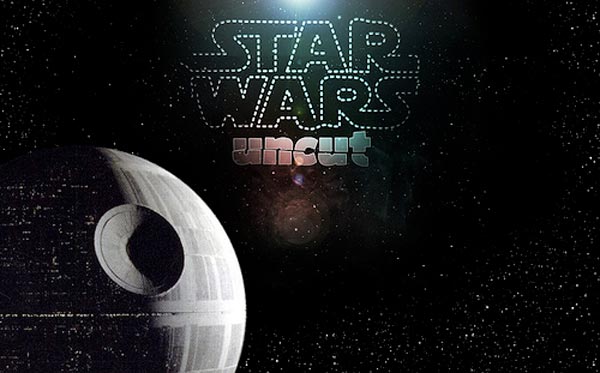
nullStar Wars Uncut: Director's Cut, a full-length sweding of the original Star Wars made by hundreds of participants, might be the greatest viral video in the still-young history of the Internet. It's also the best argument I've seen for an overhaul of outmoded copyright laws which, if enforced to the entertainment industry's satisfaction, would make such works illegal and essentially un-viewable.

The project started out as a bit of a lark. In 2009, director Casey Pugh asked fans to re-create a fifteen-second piece of Lucas's 1977 Star Wars, Episode IV: A New Hope as a building block for a feature. To everyone's surprise, the result won an Emmy last summer in the still-young "interactive media" category. That accolade is surely one of the reasons why YouTube, which has been slammed by big media companies over unauthorized uploads and forced to adopt a "guilty until proven innocent" attitude toward infringement, is hosting all two hours and ten minutes of the project. Well, that and the fact that Lucasfilm and 20th Century Fox, rapacious big media companies for the most part, have often adopted a "don't ask, don't tell" policy toward the Star Wars saga, a franchise that has somehow overcome its deficiencies as drama to become as much a part of everyday life as the lyrics to "Happy Birthday" (which, of course, is also copyrighted).

The sheer variety of storytelling modes showcased in Pugh's cut-rate epic is a show in itself. Star Wars Uncut includes countless examples of live-action "drama" (scare quotes mine), some of it staged on elaborately decorated sets, the rest performed in kitchens, rec rooms, living rooms, basements, and backyards. Some of the actors are surprisingly good; others are merely spirited. The movie also boasts cel animation, flash animation, Claymation, 3-D animation, old- and new-school video-game graphics, stop-motion-animated action figures and Lego characters and paper dolls, masked performers, and sock puppets.

If you would like to read the rest of Matt's article, click here at New York Magazine.

A critic, journalist and filmmaker, Matt Zoller Seitz is the staff TV columnist for New York Magazine and the founder of Press Play.

PRESS PLAY’S VERTIGOED CONTEST: And the winners are….

PRESS PLAY’S VERTIGOED CONTEST: And the winners are….

null

We started Press Play's first-ever contest on a lark, spinning off from complaints by Vertigo star Kim Novak that she felt violated by hearing portions of Bernard Herrmann's Vertigo score in the modern silent picture The Artist. We thought a mash-up contest involving that same bit of music might be a fun way to jump-start discussion of how music can enhance or subvert a scene. We never anticipated such an enthusiastic response: 98 entries!

And now it's time to announce the results.

THE RULES

1. The image track must consist of one (1) clip from any pre-existing work.

2. Clips must be scored, in whole or in part, with Bernard Herrmann's "Scene D'Amour" from Vertigo.

3. The clip cannot be cut or otherwise altered to finesse the timing.

THE JUDGING CRITERIA

1. Thoughtful synchronization.

2. A marriage of music and picture that illuminates or comments upon existing aspects of the scene or pushes it in a new direction.

3. The element of surprise.

THE JUDGING PROCESS

The 98 entries were winnowed down to five (5) finalists, based on email debate amongst Press Play editors and writers, and comments on social media and video upload sites. Mash-ups submitted by Press Play contributors were excluded from consideration as finalists.

The finalists were then sent on to a panel of outside judges, listed below.  The judges were asked to rank the finalists in order of preference from first to fifth; first place was worth five points, fifth was worth one. The finalist with the highest point total was declared the winner. Contest judges and Press Play contributors were also encouraged to give special citations to works that that did not make the final cut but that tickled their fancy.

THE JUDGES

JIM BEAVER. Actor in films and TV series, including Supernatural, In Country, Geronimo: An American Legend, The Silence of BeesDeadwood, Justified, Breaking Bad, Big Love and Criminal Minds. Writer of episodes of Vietnam War Story and Tour of Duty. Author of 14 plays, including Verdigris, The Ox-Bow Incident and Semper Fi.  Films in Review contributor. Former film archivist for the Variety Arts Center in Los Angeles.

DAVID LEVIEN. Co-director (with regular collaborator Brian Koppleman) of Solitary Man. Cowriter of Ocean's Thirteen, Rounders and Knockaround Guys. Producer of Interview with the Assassin, Knockaround Guys, The Illusionist and The Lucky Ones. Author of the novels City of the Sun, Where the Dead Lay and Thirteen Million Dollar Pop.

MARGARET NAGLEScreenwriter of Warm Springs, the Emmy-winning HBO film about Franklin and Eleanor Roosevelt, and its forthcoming sequel The Defining Moment. Winner of two Emmy Awards and two Writer's Guild of America awards. Creator of the Lifetime series Side Order of Life.  Writer of the Boardwalk Empire episodes, "Anastasia" and "Broadway Limited."

GREG PAK. Award-winning writer-director-producer of Robot Stories. Writer of the comics Vision Machine, Planet Hulk and Incredible Hercules and cowriter of Magneto Testament. His latest comic project is Dead Man's Run, from Gale Anne Hurd's Valhalla and Aspen Comics. His acclaimed miniseries Red Skull Incarnate comes out this week in trade paperback. For more, visit www.gregpak.com and twitter.com/gregpak.

JODY WORTH. Writer and producer for Hill Street Blues, NYPD Blue and Deadwood. Nominated along with the Deadwood staff for an Emmy and a Writers Guild of America awards for season two of the series. Writer of the Deadwood episodes "Reconnoitering the Rim," "Bullock Returns to the Camp," "A Lie Agreed Upon, Part II" and "E.B. Was Left Out."

GRAND PRIZEWINNER

STAR TREK II: THE WRATH OF KHAN, by Jake Isgar ($50 Amazon gift certificate)

"Somehow the Vertigo score made Shatner and his sweet toupee a bit lyrical." — David Levien

"The last 90 seconds are just about perfect. The last ten seconds knock it out of the ballpark. I also particularly love the way the fast surging theme at 4:09 perfectly coincides with Scotty fiercely blowing into his bagpipes." — Greg Pak

"Douglas Sirk goes sci-fi." — Jody Worth

F I N A L I S T S  (alphabetical by title)

AKIRA, by Greg Stevens

"Akira actually moved me at the end… the syncing of the music was pretty damn perfect. It's a piece of film I'm unfamiliar with, and that might have added to my enjoyment. But on a purely technical level of matching the music to the image, [for me] it was the easy winner." — Margaret Nagle

ALIEN, by William D'Annucci

"I forgot I was watching a mash-up and instead was completely drawn into a gorgeous piece of complete cinema. It's a clever clip to use because the scene has no dialogue — there are no silently moving lips that remind us we're watching a hybrid creation. And every single beat and surge of the music matches beautifully with the imagery. But what pushes it into the sublime is that I found myself seeing and feeling emotions I've never felt before while watching this scene. I've probably seen this movie 20 times. But this is the first time I've felt the alien's pain. And watching Ripley's face, I felt her feeling the alien's pain as well. What a gorgeous, weird, unexpected experience." — Greg Pak

"Hermann's score could have been written for this scene. The matching of musical emotion with the visual is rather astonishing in light of the [contest's] no-cuts rule and the completely unrelated nature of the two films, Vertigo and Alien. If serendipitous, then it's amazing. If the mash-up artist chose Alien because he knew this scene would fit so well with Herrmann's music, then behold, a genius in our midst." — Jim Beaver

MY VIDEO FOR BRIONA, by Joseph Carson

"When we first announced the 'Vertigoed' contest, we didn't even consider that online viral videos might be great fodder for a mash-up. Kudos to Joseph Carson for thinking out of the box and finding a subject even creepier than Scotty Ferguson to set to Bernard Herrmann's obsessive strains. Extra points for being the only video not to use the crescendoing sections of 'Scene d'Amour,' opting instead for the more tranquil opening section. Used here, its subtle sinister undertones bubble to the surface. Love ya, baby girl!" — Press Play editor-in-chief Kevin B. Lee

THE SILENCE OF THE LAMBS, by Brittany Carter

"Jonathan Demme's The Silence of the Lambs is an unholy mash-up all its own, equal parts thriller, horror movie, psychoanalytic odyssey and perverse love story. So is Alfred Hitchcock's Vertigo. I never considered that there might be a deep connection between the two movies — both of which pivot on an invasive attempt to recapture the past — until I saw Brittany Carter's entry." — Press Play founder Matt Zoller Seitz

Citation for Synchronized Head-Cracking

NIGHT MOVES, by John Levy

Citation for Balletic Totalitarianism

THE GREAT DICTATOR, by Jonathan Amerikaner

Citation for Homoerotic Grandeur

TOP GUN, by De Maltese Valk

Citation for Chaos-as-Poetry

GUMMO, by David Jenkins

Citations for Comic Madness

ZOOLANDER, by Athena Stamos, and MEAN GIRLS, by Katie Aldworth

Citations for Snake-Swallowing-Its-Own-Tail Postmodernism

VERTIGO, by Matt Rosen, and OBSESSION, by Brandon Brown

We officially end our "Vertigoed" contest with one more mash-up, a Chuck Jones tribute by Press Play editor Kevin B. Lee. Th-th-th-that's all, folks!

WHAT'S OPERA, DOC? VERTIGOED:

SIMON SAYS: Celebrate Chinese New Year with these blockbusters

SIMON SAYS: Celebrate Chinese New Year with these blockbusters

nullThis weekend is Chinese Lunar New Year, a cultural landmark that even some of my Chinese friends needed to be reminded is almost upon us. One way you can tell that the holiday is impending is to look for Chinese films at your local movie theater. In the same way that a crop of big budget Bollywood premieres are perennially released in time for autumn’s Diwali festivities, so too are a number of studio-produced would-be Chinese blockbusters released in time for the new year. But blink and you'll miss ‘em: there are only two Chinese films being released at AMC theater chains.

But hey, that's more than you knew were being released last year, right?

China Lion, a relatively new company dedicated to releasing mostly mainland Chinese (and some Hong Kong) films to American multiplexes, will release All's Well, Ends Well 2012 (unrelated to the Shakespeare play, though it is the seventh film in the romantic comedy series that began in 1992 with a film starring the likes of Stephen Chow and the lamentably deceased Leslie Cheung) next Friday and The Viral Factor this Friday. That may not sound like a three-car pile-up but considering that China Lion has heretofore staggered their releases over a matter of weeks (sometimes even a couple months), it's a sign that the Lunar New Year is here.

More importantly, it's a good time to take stock and see what China Lion has released over the last year. Sadly, while the idea behind the new company is great—introducing both established and new fans of popular Chinese/H.K. films to the latest pop cinema—the results have been mostly underwhelming. Don't expect China Lion to bring you prime-grade films from Wilson Yip, a guy that went from making films with titles like Bio Zombie and Daze Raper to Ip Man and Dragon Tiger Gate. Don't get me wrong, Ip Man and Dragon Tiger Gate are both enjoyable in their own ways, but Magic to Win, Yip's latest and most flavorless film in a while, is totally underwhelming.

If last year's worth of releases is any indication, China Lion films are, at best, immediately likable but largely disposable melodramas. My vote for their most, ahem, outstanding title would be 3D Sex and Zen: Extreme Ecstasy, a funky little softcore comedy that was a hit in Hong Kong last year thanks to its endearingly unsound use of 3D technology.null

Sadly, more often than not, China Lion puts out movies like The Viral Factor, a frenetic but totally shallow and mostly inert action movie starring milquetoast stars Nicolas Tse and Jay Chou. Directed by Dante Lam (Fire of Conscience, Beast Stalker), The Viral Factor is a cop drama high on bathos and lackluster action scenes; Lam and co-writers Candy Leung and Wai Lun Ng haven’t met a cliché that they didn’t like. Two estranged brothers, one an amoral thief (Tse) and one a righteous cop (Chou), reunite in order to fight an evil cartel of corrupt policemen-cum-terrorists. Tse and Chou run around and struggle to remind each other of their similarities.

Between lame plot points, Lam delivers typically frenetic but unpolished action scenes that are distinguished largely by their hints of preposterousness. Early on, Chou’s cop gets shot in the brain, and the bullet is still lodged there throughout the film. Still, he persists in running around and fighting bad guys—with an actual bullet lodged in his brainpan. This is impressive even when you compare it to the scene where Tse stumbles out of a hospital after jumping several stories and landing gracelessly on a car below him. If there were more crazy stuff like this throughout The Viral Factor, it’d be worth the price of admission. Unfortunately, such insanity only serves as garnish for Lam’s otherwise flavorless film.

Thankfully, China Lion hasn’t just released disappointing piffle like The Viral Factor. They’ve also released charming piffle like Love in Space, a romantic comedy about three self-centered sisters that struggle to fall in love, and Aftershock, an epic family drama about two siblings that were separated during the 1976 Tangshan earthquake. null

Aftershock is probably the more durable of the two aforementioned titles. Its pseudo-progressive depiction of Chinese history is fairly compelling, if only for the light touch that director Xiaogang Feng (The Banquet, If You Are the One) brings to his film’s series of minor domestic crises. Love in Space does have one of the most charismatic ensemble casts of any of China Lion’s films to date, but, like The Viral Factor, it’s mostly worthwhile for its quirks. (Love in Space is just as cliché-ridden as The Viral Factor, but it’s mostly amiably cheesy.) Aftershock is at least compelling, if sappy, for its core story, which is taken from a novel by Ling Zhang.

So if you want to celebrate the Lunar New Year with a new Chinese flick, fire up your Netflix account and check out Aftershock, now available on Instant Streaming. It’s not a must-see film, but it is as good of a representative of the China Lion brand as you can currently get. Unless, that is, titillating comedies about libidinal enhancement (i.e., donkey penises) are more your thing, in which case you’ll probably want to check out 3D Sex and Zen: Extreme Ecstasy. Either way, come for the shrill melodrama, stay for the sincere cheese.

Simon Abrams is a New York-based freelance arts critic. His film reviews and features have been featured in the Village Voice< andTime Out Chicago. He currently writes TV criticism for The Onion AV Club and is a contributing writer at the Comic Journal. His writings on film are collected at the blog, The Extended Cut.  Simon reviewed 3D Sex and Zen: Extreme Ecstacy here for Press Play. 

STAR WARS UNCUT: DIRECTOR’S CUT may be the strangest, most enchanting fan remake of that classic ever attempted

STAR WARS UNCUT: DIRECTOR’S CUT may be the strangest, most enchanting fan remake of that classic ever attempted

[EDITOR'S NOTE: In 2009, Casey Pugh asked thousands of internet users to remake Star Wars: Episode IV – A New Hope into a fan film, 15 seconds at a time. Contributors were allowed to recreate scenes from that film however they wanted. Within just a few months, Star Wars Uncut grew into a wild success. Press Play urges each and every one of you to take 10 minutes (the film is over 2 hours in length), click on this link and look upon this effort. Pick any scene you want. By now, this story is so widely known and so completely understood in such minute detail that there is nothing left to interpret, nothing left add to a discussion about it and nothing left to do but wait around until George Lucas decides to release another version of it into theaters, having ordered his team of talented artists to change it one . . . .more. . . .time. (3-D, anyone?) But, here is Luke Skywalker, Han Solo and Princess Leia's triumphant story presented once again — performed by an amature cast of hundreds, stitched together with Bondo and dental floss, shot in environments real and animated, presented and reconceived with a low-tech, zero-budget aesthetic. And still the story survives. Take heart, Lucas-haters, if this mythic tale can survive this democratic treatment, it can even survive its creator. It is quite possibly the sweetest, funniest tribute to the Star Wars fable ever mounted. Look upon it, you should.]

VIDEO: Last Call to Enter VERTIGOED Contest! Don’t Be a “Jackass”! (Or You’ll End Up Like This Guy)

VIDEO: Last Call to Enter VERTIGOED Contest! Don’t Be a “Jackass”! (Or You’ll End Up Like This Guy)

nullIt's the last day to enter VERTIGOED, Press Play's first ever video contest. The response has been outstanding – even The Huffington Post took notice. We've received dozens upon dozens of entries and Team Press Play has been up all hours of the week watching and marvelling at these clips. Is there any film that Bernard Herrmann's swooning music can't handle? Maybe this clip below can put him to the test: 

This is just to remind you: don't get caught with your pants down! If you are working on or thinking of making a VERTIGOED clip for the contest, you have until 5 PM Eastern Time TODAY to send it to us. Just email the link to pressplayvideoblog@gmail.com along with your name.  Thanks and stay tuned for contest updates and results next week!

GREY MATTERS: DOCTOR WHO’s sublime study of grief, death and transfiguration continues to captivate its viewers

GREY MATTERS: DOCTOR WHO’s sublime study of grief, death and transfiguration continues to captivate its viewers

nullOn a recent episode of The Graham Norton Show, the genial goofball host was plainly delighted to have Karen Gillan—known worldwide as Amy Pond, the spirited, ginger-haired companion of The Doctor on Doctor Who—on his guest couch.
 
Of course, Norton couldn’t pass up commenting on a rumor that Amy Pond would meet her maker on a coming Who episode, chiding her, “Everyone knows nobody on Doctor Who dies!” The joke was that everyone on Doctor Who dies all the time and yet comes back to die yet again and again. Because dying is what you do on Who.
 
That said, if the show was just a series of expirations and miracle resurrections, it would quickly become hard to care.
 
But Who is so much more. In the way it ‘does’ mortality, it seems keenly aware of David Cronenberg’s career-long assertion that the SF and horror genres are uniquely able to allow us to rehearse finality, to play act Kübler-Ross, explore entropy, and consider matters of faith and/or the lack of it. This is, after all, a show that not only has an orchestral death theme, but an eerie, reverse-instrumental leading-to-death theme as well. It’s kind of blatant.
 
Here’s the thing: I do not believe that anyone likes anything deeply for innocent reasons, and by innocent I simply mean nobody is gaga over Star Trek, Lisbeth Salender or The Wire just because. There’s always a subconscious shadow text that makes things resonate.
 
It would be absurd not to assume linkage between my deepening attraction to Doctor Who, a time travel show that insists on memory’s primacy, just as I began a new labor in my own memory retrieval process, the result of a bus accident and brain trauma a long time ago.
 
I am even more sensitive to Who’s mortality themes as I write this column. Last week I found out that my mother, who is very old and very frail from several illnesses, will be operated on for cancer.
 
Before I got that news, the show had me thinking about Barbara — Barbara whose death was the first that shredded my world, Barbara of the too-wild black-brown hair, too-white skin, too-loud laugh, the absurd 50s ball gowns, too-everything, dead at 35 of a hidden cancer.
 
When you’re vulnerable the strangest things sneak through the cracks. And so when the Doctor tells one person after another after another that nobody is ever really gone, not really, and when The Doctor himself dies and Amy Pond literally remembers him back to life…well, I could barely swallow.
 
And so as my mother floats between worlds, and Barbara lives in memory, as I slip into a demographic where mortality—if not my own, necessarily, then those around me–the melodies sounded in Doctor Who touch me like no other film or TV. Sometimes the small tears feel almost like healing. Doctor who?
 
“Bowties are cool!”
 
nullThe Doctor himself isn’t actually called ‘Doctor Who’. He’s the last of his race, the Timelords, obliterated after some galactic war.
 
The genius of the Doctor Who conceit—the show runs back to 1963–is that that a Timelord cannot die. Instead, every few years he ‘regenerates’ and is reborn to be played by another actor.
 
Since ’63 ten actors have played him, meaning that, theoretically, Doctor Who could run forever. (I know that the Doctor says that he can only regenerate 13 times. Rule One: The Doctor always lies.) Despite being about 900, he’s a hyperactive, fashionable loon with great hair. Imagine an upbeat Jarvis Crocker and you’re 75% there.
 
The Doctor travels through space and time in what looks like a ‘60’s police phone booth but is actually a time/space travelling machine called a TARDIS.  He’s also pathetically lonely and always finds a companion, usually female, always platonic. (Come on, that thing with Rose was with a human Doctor double, sheesh.)
 
Since Steven Moffat took over the franchise from Who re-animator Russell T. Davis two years ago, the time we’ll be looking at here, the Doctor has shared his adventures with the feckless, insanely brave Rory  and his wife Amy Pond, who is the key to the continued existence of the universes. (Why aim low? the Moffat rule of thumb.)
 
Also in the mix is River Song, vivaciously played by Alex Kingston as a sort of uber-MILF in Prada complete with her own sardonically endgame-based tagline (“Spoilers!”) who may be the Doctor’s wife, mother, or murderer.
 
The Doctor, Amy, Rory, River—the closer they become, the better Moffat can hurt you when he kills them.
 
DYING
 
“If we're going to die, let's die looking like a Peruvian folk band.” – Amy Pond
 
nullHow you die on Doctor Who is romantic in the classical sense because it’s seen as very important. In television/film fan terms, it has additional appeal, as dying is usually a thing done in montage, a montage in waltz time.
 
It can also be, well, funny. There’s death by aquatic-vampire bite, pterodactyl bite, Dalek ray-blast, feral Ood, sentient tumors, infant liquefaction, being turned to dust by alien-possessed senior citizens and to stone by the Weeping Angels.
 
And sometimes death is just meaningless, abrupt and mean. In  “A Good Man Goes to War”, we meet Lorna, a 18-ish girl whose entire life has been defined by a few seconds spent running with the Doctor during an old adventure, a literal extra in his life.
 
She joins a holy war all on the chance that she’ll meet him. After a stupid battle, she’s shot—but she does meet the Doctor.
 
He caresses her forehead and assures her that he does remember her. She smiles, shudders, dies. It’s almost ghoulish it’s so true to life.
 
The same episode offers a waltz-time triptych of montage death so exquisitely morbid I imagine two tremulous thumbs up from the shadow of Alexander McQueen. Against Murray Gold’s typically gorgeous score—rather like Christopher Young’s Hellraiser rhapsody, but with the sinister extracted—we see The Doctor and his beloved cross-cut and succumbing in slo-mo, character-defining ways. I perversely wish it could have gone on a while longer.
 
But Who can also be downright cruel. In a moment that almost shocks with its naked spiritual need, its digital nihilism, “The God Complex” presents us with a Muslim girl trapped in a hallway with a murderous, belief-stealing monster.  The Doctor, trapped in another room watches helplessly on ugly, ‘80s-stle close-circuit TV as she begs him, “Please let me be robbed of my faith in private.” The Doctor, pained into silence, flicks off the video feed. It’s devastating stuff. (Moffat trashes organized religion, but he respects belief. Interestingly, when the Doctor is asked if he is an atheist, he does not answer.)
 
ENTROPY
 
“The Doctor’s death doesn’t frighten me, nor does my own. There’s a far worse day coming for me.” – River
 
nullIf she wasn’t such a fun/hot knock-about, River Song would be unbearably tragic.
 
As at ease leading militarized clerics (“The Time of Angels”) as she is raiding the Third Reich for haute couture (“Let’s Kill Hitler”), River exists in decaying romantic agony, as her ‘time stream’ is running in the opposite direction from that of The Doctor, whom she loves.
 
Every time she sees The Doctor, he remembers her a little less. Eventually, he will forget her entirely.
 
I was on the same page as The Onion’s Keith Phipps when he pointed out that River’s situation “echoes the plight of anyone who’s watched a loved one fade into the shadowlands of dementia. This is not a story that ends well for River and she knows it.”
 
In a show about time and travelling through it, addressing decay is only honest and Who worries on the topic. Every cast member has grown old and fallen apart in multiple episodes to various degrees.
 
The great literary fantasist Neil Gaiman co-wrote an episode called “The Doctor’s Wife” in which the TARDIS itself manifested in human female form just long enough to become frail and die painfully. We’re sad at the Doctor’s loss—and chilled at the reminder that ours isn’t so much longer.
 
DENIAL
 
“Does it ever bother you, Amy, that your life doesn’t make any sense?” – The Doctor
 
nullOne of the ways Who works is by blindsiding you from oblique angles. Witness: “Vincent and the Doctor” is really about Amy and grief and…well, here’s what it seems to be about. The Doctor takes Amy to a museum to see Vincent Van Gogh’s paintings, then to the past to meet Vincent himself, who is miserable and being attacked my an invisible monster. With The Doctor’s help, the monster is slain, Vincent’s taken to 2010 to see that he’s a cherished artist in the hope he won’t kill himself. He still does.
 
But this sad fable is just an armature on which to rest the episode’s real concerns, which have to do with Rory having just died in the episode prior. She cannot recall this due to a crazed religious order’s actions.  Amy’s amnesia is a way for Moffat to metaphorically address Kübler-Ross’s first stage of grief, denial.
 
Amy’s denial is the anxiety engine powering the episode. We know and The Doctor knows Rory’s dead and Amy not remembering is driving us kind of crazy.
 
When she transfers her considerable energies to poor Vincent—the same height and built as Rory—convinced she can stop his depression and suicide, metaphorically like the relative at a wake who’s cooking, pouring drinks and doing everything but admitting somebody is gone now.
 
Anyway, Vincent worries for her.
 
“Amy Pond, I hear the song of your sadness,” he says.
 
She denies it: “I’m fine!”
 
“Then why are you crying?” He asks as tears pour down her cheeks. From nowhere a funeral procession appears, covered in sunflowers. Rory is finally grieved over by proxy—and we’re bowled over and choked up because we were unprepared for this, because it only makes dream sense.
 
Amy is like a child dealing with her first loss. While Vincent’s return to 2010 and discovery of his value is a Spielberg-style spirit lifter, it’s eclipsed by Amy’s rage when she learns of Vincent’s persistent suicide and eclipsed yet again as Amy moves a small step past denial.
 
She sees that her efforts did matter: a dolly-in on a masterpiece reveals Vincent’s signature, “for Amy.” And so grief, a la Who.
 
 
DEALING
 
The Dream Lord: If you die in the dream, you wake up in reality…Ask me what happens if you die in reality.
Rory: What happens?
The Dream Lord: You die, stupid. That's why it's called "reality".
 
nullBut not necessarily. Because this is a time-travel show, it’s possible to be conversant with people earlier in their timelines.
 
But beware of SF show paradoxes. In other words–dead really is dead. Repeatedly, often in interlocking episodes, across time, space, multiverse, people, robots, aliens and elementals covering half a century of TV, films and novelizations,  we see the Kübler-Ross model—denial, anger, bargaining, depression, acceptance—play out in narratives that are so deeply geek that I’d need a some charts, maps, a PowerPoint presentation, and two laser pointers to convey the situations.
 
And anyway, the whole death thing—ultimately, it’s not literally about death. Or rather, it is and it isn’t. Doctor Who will be useless when my mother finally leaves us. And it only offers different ways to think about Barbara. Then again, the later is who lot of something. Doctor Who, I find, doesn’t have fans—it has followers. Some since 1963.
 
Just as The X-Files assured us that The Truth is Out There, Doctor Who assures us, as it obsesses over death, that nobody is forgotten, “not really”.  As The Doctor refuses to deny his faith he becomes an avatar for people with a hungry sort of closeted agnosticism.
 
But sometimes, Moffat lets his cool slip and lets us know what he’s feeling. It’s very qualified, but it’s very sweet: it’s very Doctor Who.
 
It’s Rory, surviving yet another conflagration intact to ask The Doctor, “Why am I here?”
 
“Because you are. The universe is big, it’s vast and complicated and ridiculous and sometimes, very rarely, impossible things happen and we call them miracles.”

Ian Grey has written, co-written or been a contributor to books on cinema, fine art, fashion, identity politics, music and tragedy.

KEVIN B. LEE: The strange case of the 103 year-old film director

KEVIN B. LEE: The strange case of the 103 year-old film director

null

Few of us can expect to live 100 years, much less have that age represent the prime of our career. But Portuguese director Manoel de Oliveira, who last month celebrated his 103rd birthday, has averaged one new film a year since 1985 (Ron Howard's "Cocoon," in which Florida retirees meet space aliens who hold the secret to youth, was released the same year — coincidence?). Two-thirds of Oliveira's 30 features were made in his eighties and nineties; Clint Eastwood, who last year turned 81, has his work cut out for him.

Oliveira's prodigious output, which would put most directors to shame regardless of their age, may be his way of making up for lost time. While he can trace his career all the way to the silent era, he didn't make his first feature "Aniki Bobo" until he was 34; his second feature "Rite of Spring" came 21 years later. His stalled output can partly be attributed to his decades-long resistance to Portugal's oppressive right-wing Estado Novo regime, during which Oliveira spent time in jail. Ironically, when leftists finally took over in the 1970s, they seized Oliveira's family business that had sustained him throughout his artistic struggles. Fortunately by that point he had achieved international acclaim, heralded by film critic J. Hoberman as "one of the 70s leading modernists" just as he entered his seventies.

You can read the rest of Kevin's review here at Roger Ebert's Demanders.

Kevin B. Lee is a film critic and video essayist. Follow him on Twitter.

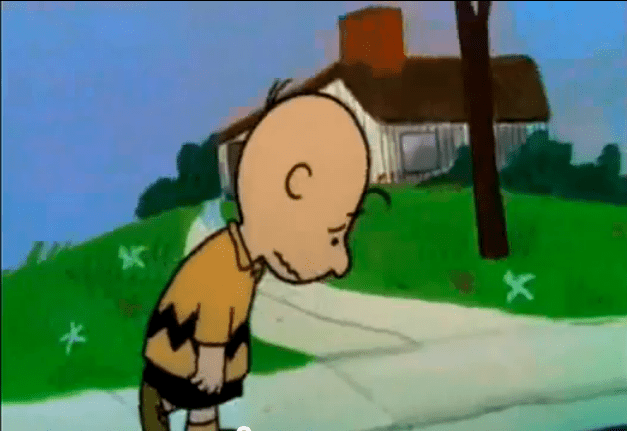
VIDEO: You’re a Creep, Charlie Brown!

Round head meats Radiohead – this is the kind of song-video mashup that seems so obvious in retrospect you wonder why it hadn’t been thought of long ago.

The Great Round Head meats Radiohead. This is the kind of song-video mashup that seems so obvious in retrospect you wonder why it hadn't been thought of long ago. Using the a capella version is a great touch, makes it feel like it came straight out of "A Charlie Brown Christmas." HT to Ali Arikan.

SIMON SAYS: Top Five From the New Wave of French Horror

SIMON SAYS: Top Five From the New Wave of French Horror

null

Xavier Gens used to be cutting edge. Which is to say, he used to be a sign of what horror fans optimistically thought was going to be changing times. This was in 2008, mind you, back when Gens’s Frontier(s) was released in the US. Apart from catching on with American gorehounds in a big way (it seemed like you couldn’t get away from the title for the rest of the year), the Film Society at Lincoln Center singled Frontier(s) out as part of their annual Film Comment Selects program. Festival programmers used both Gens’s film and Inside, Julien Maury and Alexandre Bustillo’s 2007 gutting chiller, as prime examples of a burgeoning new wave in French horror cinema. The cult success of Frontier(s) opened the doors for gritty dystopian French horror and science fiction films like Them, Martyrs, and even Inside, which didn’t come out in America until 2008.

If you believed the hype behind the film, Frontier(s) was the first sign that the French were re-inventing the generic wheel. This was an exciting prospect for horror fans bored of shit like teen-oriented remakes of ‘80s films like The Fog (2005) and The Stepfather (2009). If you believed the hype, then you thought the French were coming and that they were going to bring horror back to horror films and they were going to do it with ungodly amounts of blood and guts, too. These mythical films were talked about as if they were what “torture porn” films could have been like if they were filmed by vraie artistes and not brats like Eli Roth and Rob Zombie (Hey, this may not have been so long ago but it’s what many thought! The cult of The Devil’s Rejects had yet to form and people were still having a great time kicking Roth around for being a mouthy, exploitative huckster.).

Too bad Frontier(s) isn’t very good.

I’m reminded of this salient fact because Gens has a new film out this weekend, one that he hasn’t yet publicly disowned (he didn’t have such a good time making Hitman, saying that this bland video game was taken out of his hands by studio execs). The film’s called The Divide and it is also not a very good film, in spite of the fact that it stars The Terminator’s Michael Biehn smoking a stogey and doing his best Dennis Hopper impression.

nullLike Frontier(s) before it, The Divide is a grungy pastiche of a classic horror film; it is to Night of the Living Dead what Frontier(s) is to The Texas Chain Saw Massacre. In The Divide, the sudden impact of a nuclear explosion in Manhattan forces a group of survivors to pile into a subterranean shelter where they bicker shrilly, form cliques and devolve into monsters. In the film, Gens tries to prove that he can be even more cynical than his predecessors were, if that’s imaginable. So instead of the black guy getting shot and killed at the very end, the black guy gets shot and killed about midway through the film while his murderer’s silhouette is hidden behind an American flag; take that, Romero!

Still, there’s one thing about The Divide’s current limited NYC engagement that has me excited: it’s getting exactly the kind of roadshow release that such a film deserves, namely a limited midnight-only engagement at the Landmark Sunshine.

(A brief tangent: This is the kind of clever event programming that the Sunshine used to regularly take chances on as far back as, oh, 2007 and 2008, incidentally. At that time, the Sunshine tried midnight showings of contemporary horror movies like Midnight Meat Train (which is pretty fun in a dopey way, incidentally). That film was sandwiched between older midnight movie fare like A Boy and His Dog and Night of the Creeps (Before the latter film was even released on DVD!). Now, the Sunshine typically shows Jurassic Park, Breakfast at Tiffany’s and The Goonies, though there are an encouraging number of cult films in their upcoming slate of midnight movies (The Room and Cruising being the most exciting of the bunch). End tangent.)

Horror fans should be excited about new horror films. So seeing The Divide play a couple of midnight showings at the Sunshine is an encouraging sign that somebody out there knows what they’re doing with the film. Just wish The Divide was, you know, good.

Though maybe I expect too much from Gens. He may end up being an important filmmaker in the long run because of the way that Frontier(s) and maybe The Divide helped to keep the presence of new French horror movies in the public eye. After all, while The Divide now has a small theatrical release, Livid, Bustillo and Maury’s sloppy but effective follow-up to Inside, still hasn’t gotten a theatrical release beyond touring the international festival circuit (midnight audiences ate Livid up when it screened at the Toronto International Film Festival this past September).

So if you go see The Divide and you’re hungry for more (and hopefully better) Gallic fare, try these on for size:

nullFor people that just can’t stand gore: Them (2006). This spare, based-on-a-true-story house invasion film is so gripping that people still maintain that, even though its plot is pretty much pure formula storytelling, The Strangers is somehow a rip-off of Them. Them’s just that good.

For anyone that doesn’t mind gore so long as it means good chills: Inside (2007). Really one of the best films of the recent spate of French horror flicks and one whose vision of the post-urban apocalypse is uniquely expressed via a relentless, feature-length chase where a pregnant woman plays Roadrunner to a very violent murderess’s Wil E. Coyote. Creepy, claustrophobic and very grisly.

For fans of bone-headedly macho stories of the post-apocalypse: Eden Log (2007). If you like watching a mute amnesiac with a caveman mentality scramble around the ruins of a futuristic commune, then you’ll probably dig this.

For the fans of Humanoid comic books and stories about men with God complexes: Dante 01 (2008). Delicatessen co-creator Marc Caro directed and co-wrote this acid-soaked story about a schizophrenic mental patient that saves the universe by transforming into a human glow stick. It’s not very deep, mind you, but Dante 01 is kind of fascinating. Though only kind of.

For anyone looking for something a little stronger, shall we say: Martyrs (2008). If you still haven’t seen this one, don’t read anything else about it. Go in blind and expect to be totally drained in the end.