Matt Zoller Seitz: Have you heard there's a new Avengers trailer? All those great Marvel superheroes are in one trailer, just like in the comics! And Iron Man is there, and Thor, and …. sorry, I just can't get excited about this. As you might have heard, I'm sick unto death of superhero movies. Sick, sick, sick. I can't remember the last time I saw a big budget version that really departed from formula, in terms of either subject matter or tone — Superman Returns is one, and that came out five years ago and flopped; anybody who wants to watch a quixotic defense of it can click here.
Ang Lee's Hulk was another — a pretty bizarre movie in its old-school Freudian psychology, but interesting for that reason, vastly more interesting than the remake, or re-boot, The Incredible Hulk, which played like, "Let's take the same concept and leach all the personality out of it."
There's a new Batman movie coming out — the latest in a franchise that we can at least rely on to produce what feels like real movies, with characterization and dramatic stakes and stuff. But if The Dark Knight is the absolute pinnacle of the genre as we now know it, directorially and in terms of the quality of its dialogue and characterization, then the genre has nothing to brag about.
Compare this to the best that the western had produced thirty years into the sound era — I'm dating the start of the modern superhero film to Superman: The Movie in 1978 — and it's pretty embarassing, really. Reboots of Spider-Man and Superman?Thor? Who gives a shit? Green Lantern?
Simon, I know you defend that movie — we all have our idiosyncracies, and I already listed a couple of mine — but you know? Throughout my career as a critic I've been accused of having a bit of a fanboy mentality, but not for this genre. Why, by and large, does it suck so bad? Or am I just not seeing the artistry?

Simon Abrams: I don't know, the superhero movie as a genre strikes me as something with as much untapped potential as the medium of Video On Demand: it could be good but right now nobody knows what to do with it. Everyone's trying to court every potential audience member because comic book companies are still deathly afraid of losing potential audience members.
Christopher Nolan is an anomaly that proves the rules. He's a director/writer whose style with forceful presence and he has the box office standing to get the studios to take some creative risks. Otherwise, publishers and studios still think their own characters are too campy to have mass appeal. They think being conservative equals box office potential. I mean, did you see Ghost Rider: Spirit of Vengeance? Neveldine/Taylor fans such as myself are just relieved that, unlike the unmitigated disaster that was Jonah Hex, a film whose Neveldine/Taylor script was totally mangled beyond comprehensibility, Ghost Rider 2 actually looked like a Neveldine/Taylor movie. It was watered-down as all hell but it definitely retained their unique personalities.
 Meanwhile, in contemporary comics, Grant Morrison has turned Batman into an international franchise and made the caped crusader conquer death after hurtling through various different epochs as a human time bomb. How did this happen and why can't I see THAT movie?
Morrison is another figurehead, a comics writer that DC execs were originally reluctant to turn over their biggest characters to. One exec famously asked him, when he was still a young pischer and not the major creative force we know him as today, what he wanted to do next in his still-nascent career. This is one of those possibly apocryphal stories, but to put it into context: young Grant Morrison was the guy that would go on to make Animal Man's alter-ego a peace-loving, existential-crisis-having non-conformist and turned the Doom Patrol into Dada-fighting, Borges-alluding super-freaks.
And Grant said to the exec, (and I'm paraphrasing: "GIVE ME BAHT-MAHN. He's Scottish, see.
And the exec thought, "Hm…no. But what about Animal Man?"
 They were scared of Grant's psychedelic might. But later, in 1989, Grant got his shot to do Batman, and it was called Arkham Asylum. It was a major hit. Like, a, big, big hit, much bigger than DC had hoped for. Arkham Asylum was also insanely abstract: it was drawn by Sandman cover artist Dave McKean and basically devolved into a non-linear trip through an insane asylum where super-villains would, without much dialogue, just emerge from the shadows, muttering to themselves by way of an introduction. All while Batman tried to escape.
I mean, think of it: Morrison was once an untested quantity, too. But he's since gone on to write a mega-lthic, titles-spanning Batman story arc, one that he's still currently hacking away at, and has also written other big, continuity-based events and series as Final Crisis, in which everybody dies in a hulking homage to Jack Kirby, and Seven Soldiers of Victory, in which old, obscure heroes and antiheroes like Klarion the Witch Boy and Frankenstein's monster team-up to save the universe. Not to mention Grant's long runs on New X-Men and Justice League of America. Most of these experiments were hits, guys! And even the ones that weren't didn't prevent Grant from ascending to the status of rock star comic writer that he so richly deserves.
So what I'm saying is: Christopher Nolan, as relatively conservative as his Batman movies may be, may be the comic book movie's Grant Morrison. He's an emblem of how much freedom a singular creator can be given. It's not going to happen immediately because nobody wants to rock the boat too much, no matter how much it needs to be rocked. But we've seen this creative stupor before from Marvel and DC as they try to cash in on big creative properties, as in the '70s when Marvel tried to make a wave of live-action made-for-TV films. But this time, mass audiences are buying into it. So we'll get sequels to movies like The Avengers and yet another Spider-Man movie, too.
And at this point, considering that we've already built a foundation of mediocre, connect-the-dots, don't-scare-the-plebs-too-much mismanagement, hopefully, we can get another Iron Man 2 or The Incredible Hulk or even a Spidey movie that lives up to the potential of the latest trailer for The Amazing Spider-Man. I'm not asking for much, really. But in this case, all we can do is wait and see, no?
 Matt: Calling Christopher Nolan the Grant Morrison of comic book movies would work for me if I felt like what Nolan was doing thematically, and in terms of form, really pushed the superhero movie genre further along, and really opened people's eyes to what was possible. But I feel like what Nolan did in his first two Batman movies was comparable to what Frank Miller and Alan Moore did with the Batman myth in the late '80s and early '90s. I know people said that about the first Tim Burton Batman as well, but I think the comparison fits better here because if you go back and look at those two Burton Batman films, they actually feel like hybrids of 1980s comic book bleakness and the 1960s TV show, which was a complete lark, practically a counterculture sendup of superhero posturing and what were, back then, the only kind of comic book conventions that most people knew.
The Burton films, in contrast, are very knowing, and the villains, at least, are very campy. They look dark but feel light. They're bloody and sometimes perverse but they never go too far, into the genuinely disturbing. They're serious, but in another sense they're kidding around, having fun. They take the characters' emotions seriously but you don't feel as if you're at a funeral every single minute, which is how I feel watching the Nolan movies. I don't particularly care for Nolan as a visual stylist, and I think that anybody working in such a flamboyantly visual genre should not rely so heavily on conversation and monologue to advance his stories. I wish he had more of an eye. But I'm grateful that he's in there trying, really sincerely trying, to smarten up and toughen up the genre, even though.
 I appreciated The Crow and Sin City, which strictly speaking weren't superhero movies, even though they felt rather thin in retrospect, more like crazy visceral experiences than totally satisfying works of popular art. And I liked Watchmen, which was a superhero movie, for the same reason, even though there was something deeply ridiculous about it, which was not the case with the original books. I am tempted to blame Zack Snyder, who brought a lot of passion to the movie but maybe treated it too reverently, too much like a sacred text that he was called upon to illustrate.
But maybe the problem is the same one that plagues so many superhero films, which is that when you're looking at these characters and situations frozen there on the page, just a lot of ink on a page, it's abstracted, easier to accept as a free-standing thing, something to contemplate and immerse yourself in. When you put that same material up on a big screen, suddenly you're looking at actors in what are, let's be honest, pretty silly costumes, no matter how beautiful designed they are, and their dialogue, which you might accept on its own terms if you were reading a comic book, seems affected no matter how skillful the actors are. Maybe it's just a translation problem.
And a budget problem: Making a comic or graphic novel doesn't cost very much, not compared to a movie. There's so much money at stake in a convincingly produced superhero film that they can't take chances. The very economics of the genre might be the number one thing preventing it from really evolving as a form, becoming more daring and varied and sophisticated. Set aside differences in pacing, tone and design, and the difference between the original Superman movies, the Burton and Joel Schumacher Batmans, the Nolan Batman, Jon Favreau's Iron Man movies, the X-Men/Hulk movies are not that great. I feel like we're seeing different versions of the fast food cheeseburger. There's only so much you can do with beef patties, cheese, pickles and a sesame-seed bun, and if you're in this business, that's what you have to serve, because that's what audiences have been conditioned to expect: a $100 to $200 million fast-food cheeseburger. And if they show up and the filmmaker serves them something that's even faintly different from that, they revolt and start moaning about how the movie sucks and the people who did it have no idea how to make a superhero movie.
 Which makes me wonder if what we're seeing here isn't an example of an original genre simply evolving by leaps and bounds beyond what the cinematic version of it is able to accomplish. In other words, maybe it's just a matter of time before superhero movies finally escape the bounds of what's expected of them and really take a lot of chances. But what's it going to take for that to happen?
Simon: I completely agree that the drastically increased cost of production is a direct cause of the comparatively conservative nature of the comic book movie. But to clarify something: I never meant to imply a 1:1 connection between Grant Morrison and Christopher Nolan. Nolan is however unfortunately as close we've gotten to a guy that's in a position to change the status quo. He's the only bull in the china shop right now and that sucks because somebody's got to make a mess and it doesn't look like it will be him.
Also: yes, I agree with you that Nolan's take on Batman is fundamentally lacking. I found this to be more troubling in Batman Begins than in The Dark Knight because I think the explicit emphasis on Nolan's Batman's origins were more directly problematic. Meaning: Nolan and co-writer David Goyer's understanding of the character as a noble, symbolic and yes, operatic character bugged me more in Batman Begins because that film tamped down the character's inherent flamboyance instead of embracing it as Burton did.
 Say what you want about the quality of the Joel Schumacher Batman movies but they at least that guy was willing to go out on a limb by forcing viewers to overdose on the character's more outre aspects. I mean, yes, there is a grown man in a Bat-costume that has spent billions of dollars to fight crime and he's fighting one guy that has a think for riddles and another guy that has a split personality–this is pretty nutty, guys! There should be a mix of severity and silliness, in other words, and so far, Burton's Batman movies have come closest to achieving that. But I like The Dark Knight too, if only because its over-serious politics are over-shadowed by a sleeker and more dynamic story. I could care less that Batman is basically telling me that the War on Terror is totally defensible: I just found The Dark Knight to be immediately absorbing.
And I think a lot of people did. It was refreshing to see a filmmaker like Nolan with such a clear vision for how his version of the character should be like take it on and accomplish exactly what he wanted to. But again, Nolan's exceptional in that regard. Studio execs don't implicitly trust anyone else. They want marketable talent to handle their films but they don't want to give that recognized talent that should come with the job of directing the latest would-be tentpole film. And that stinks. I wanted to see Kenneth Branagh's Thor and instead got a movie directed by an emasculated artist named Kenneth Branagh. There are some artful flourishes to Thor. But the film is generally underwhelming. I similarly felt Captain America: The First Avenger was imaginatively hobbled out of the gate. So now, what was once a theoretically promising series of films that were supposed to culminate with The Avengers only looks similar in the sense that they're all pretty much forgettable. So I get your gloom and doom and despair, too. But again: I'm only going to really be bummed when Avengers 2 sucks. Because by then, we'll know that the general public is fine with Happy Meal-quality superhero movies.
 But generally speaking, the best mainstream superhero comic books, as I suggested in my first post, provide higher quality product but they're still just a very good burger. Which is totally fine! It's Shake Shack but after a while, you too would get bored of Shake Shack. The problem with Marvel Comics vs. Marvel Comics's movies is, in other words, not too different. Generally speaking, the more inspired creators that are currently working on big crossover events turn out work that's superior to the majority of other writers' stuff. But they're still just producing well-done but instantly forgettable product.
I've lent you copies of Scalped, the title I'd point to as the best contemporary title being published by either DC or Marvel, so you know what comics writer Jason Aaron can do. But would you believe that Aaron's X-Men comics and his Hulk stuff are so far just ok? I mean, the only other semi-mainstream thing that he's done that I kinda like is an adult take on the Punisher, where he kills Frank Castle. That character arc is wonderful. Every issue is like an episode of a 22-minute HBO black comedy starring Frank Castle as the guy that really has gotten too old for this shit and now is just looking to die on a high note.
But that series, Punisher Max, was recently cancelled after 22 issues. It got less than two years because not enough fans were buying it. That sucks because it was something exciting, new and, yeah, different. But people were much more willing to give Aaron's Wolverine a shot because, hey, Wolverine! And while I do enjoy Wolverine, Aaron's recent run is just basically a series of clever variations on familiar themes. I'll remember Aaron's run on Wolverine fondly when it ends. But he's not doing anything with the character beyond taking him farther in directions that previous creators already have. They're pretty decent superhero stories, but they're not great ones.
 Still, that's better than what we've got when it comes comic book movies. Snyder's Watchmen is better than Rodriguez and Miller's Sin City because of the reverence that you just dismissed. Reverence to me is just an extreme form of love for the material. More comic book movie-makerss should be creatively hobbled in the same way that Snyder was. Because for the most part, Marvel makes look-alike, smell-alike, taste-alike movies. And within those limitations, only fanboy creators can add their own personal flourishes and make the movies we get more than just your average assembly line product. Granted, Burton was not a comics fan and neither is Nolan. But I think DC has been a little more willing to give creators freedom when it comes to their movies, though that's open for debate. I mean, jeez, Jonah Hex really is abysmal. But at least Bryan Singer got the chance to make a movie as idiosyncratic as Superman Returns and ditto re: Watchmen, which was as daring as Snyder wanted it to be.
So when it comes to Marvel movies however, I like the stuff that Jon Favreau and Justin Theroux brought to Iron Man 2 because it showed that they knew who their Tony Stark was and not just from a, "Well, we already did one movie with this guy, can't we just do it again," perspective. Favreau and Theroux are nerds! And right now, we need more nerds making comic book movies. More Andrew Stantons and less Kenneth Branaghs, more Frank Darabonts and less Joe Johnstons. It can be done, man, but they gotta get this stupid first wave cycle of films out of their system if it's ever going to happen. Get me Paul Verhoeven!
Matt: On one hand, I feel at a disadvantage talking about comics with you, Simon, because your references are, to put it mildly, a lot more current than mine. I don't know what's going on in the field unless somebody like you says, "Hey, this new thing is interesting, check it out." I was really into comics in the '80s and '90s and then kind of lost interest, not because the work wasn't interesting but because at a certain point the 24-hours-in-a-day rule kicked in and I just couldn't keep abreast of everything; I had to choose a few areas of interest and really drill down.
 But in a way, that ought to put me in a somewhat more receptive position as a viewer of superhero films, because I don't know what I'm missing. I'm not aware of many of the possibilities that movies aren't exploiting that the printed page has been all over for like, ten or even twenty years. I grew up loving comics of all kinds — I still have ancient copies of 1970s Peanuts anthologies from when I was a kid, and I'm still pissed that collection of rare Marvels from that era got sold at my grandparents' estate sale. I had all the existing issues of Rom: Spaceknight and Godzilla and Micronauts, for God's sake! But that's a subject for therapy, probably; my point is, my sense of the medium was mostly frozen about fifteen years ago, and yet when I go to the movies, the superhero stories haven't even advanced to that point, with certain rare exceptions.
I keep going back to other genres as points of comparison. Look at the zombie picture, which is in its rotting little heart is even more constricted than the most utterly boring and conservative notion of what a superhero story can be. The basic story beats in the zombie picture are nearly always the same: the zombie plague begins, society falls apart, and we get to see what people are like when there are no institutions constraining their behavior. That's a very limiting template, or so it would seem, yet somehow, in the 44 years since George Romero made the first modern zombie film, Night of the Living Dead, we've seen the genre reinterpreted in all kinds of ways: as social satire (Romero's sequels), as comedy (Shaun of the Dead and Zombieland), as action picture (Zack Snyder's Dawn of the Dead remake), as postmodern statement on subjectivity and filmmaking itself (the Rec films, Romero's Diary of the Dead). There's even a whole subgenre of what I call zombie-by-proxy films, which come up with some other explanation for the zombie plague besides a mysterious force raising the dead, yet explore many of the same issues and that are, for all intents and purposes, zombie movies: The Days films, the two remakes of The Crazies, John Carpenter's Prince of Darkness.
 There is no comparable variety within the superhero genre for the most part. There are just two kinds of stories: origins and sequels. The origin stories all hit the same beats, whether it's Superman or Spider-Man or whatever. Guy discovers he has a power, learns how to use it for good, battles bad guy, gets girl, saves planet, etc. And it's always a guy, which is a whole separate issue; this is still a very young male genre, very adolescent, even in the so-called "adult" permutations, which tend to offer the same thing as the family-friendly versions of the superhero narrative, but with harsher language and violence and maybe a little bit of sex. We're almost as far along in the modern superhero movie, timeline-wise, as we are in the zombie picture, if you accept my premise that the modern superhero film as we know it started with 1978's Superman: The Movie, and we just haven't seen a comparable variety of tones, flavors and styles. When I see something that's even mildly different from the norm, like Ang Lee's Hulk or Superman Returns — which for all their flaws were trying to mix things up a bit and try something mildly new, but were rejected by mainstream audiences — I tend to give them bonus points for at least not being so mind-numbingly safe. And if you compare the superhero genre to the most traditional and constricted version of the western — gunfighter wants to hang up his guns but gets drawn into a battle with ranchers or a quick-draw at noon or whatever — again you see a much more impressive array of moods, modes and themes. Clint Eastwood's gunfighter movies alone display more diversity, in terms of both subject matter and tone, than the entire superhero genre, at least as we've seen it enacted at the Hollywood level.
 The greatest superhero movie I've ever seen — the greatest work of both entertainment and art — is The Incredibles. That thing works as a James Bond spoof; a meditation on identities, secret and otherwise; a domestic comedy; a statement on exceptionalism vs. mediocrity, and the perils of the nanny state, and the kind of unstable emotional bond between mentors and pupils, and so many other things, including a consideration of how the world might react if there were superheroes in it — the public, the media and so forth. And yet it all hangs together. No part feels perfunctory or stupid. It's all deeply felt. And in terms of design alone, it would be some kind of masterpiece even if it wasn't a great movie, which it absolutely is. But films like that, which are so amazingly good that people tend to think of them as simply movies rather than superhero movies, are the exception. A "success" in the genre is more likely to be something like Batman Begins or Spider-Man 2 or the first Iron Man, which were well-done but were definitely wringing variations on an established formula, variations that are, if you want to get ruthless about it, pretty minor.
 Thinking about it again, I'm not sure that the bigness of the budget necessarily explains why superhero movies are, by and large, so tepid and emotionally stunted, so relentlessly juvenile even when they're affecting sophistication. There must be something else going on. Every other thriving genre has managed to produce a large number of medium- and even low-budget variations on the template, and a lot of them are fantastic. Back in the 1960s, Monte Hellman made two low-budget westerns back-to-back with Jack Nicholson, Ride the Whirlwind and The Shooting, and they're still fascinating, and should be as rewarding to anybody who loves westerns as a more expensive picture like Open Range or Silverado. And Jim Jarmusch's Dead Man is one of the most original westerns ever made, a work so eerily controlled and disquieting that it makes most other movies in any genre seem pathetically limited, and it cost a pittance. Where's the superhero version of Dead Man? Or Ride the Whirlwind? Or McCabe and Mrs. Miller? Is that ever going to happen?
And why do you think audiences seem to be so deeply hostile to the idea of a superhero film departing from formula in a really significant way? I'm sure that when a lot of people read me asking for a superhero equivalent of McCabe and Mrs. Miller, they laughed derisively, knowing in their hearts that nobody would want that, and God knows they wouldn't, and feeling absolutely convinced that you have to be some kind of art-house chauvinist sipping tea with his pinky out to even fantasize about such a thing. Well, why is that? Are audiences just that conditioned? Or is this a case of people maybe not knowing what they want until you show it to them? Is the problem the audiences, the studios, the comics juggernauts like Marvel and DC, or is it something else? If superhero movies are always going to be with us — and judging from how long the genre has been existing at the forefront of the collective moviegoing brain, I'd say they're going to be with us for a long time — can't they at least be more innovative?
 Simon Abrams: I don't know why audiences are afraid of radical change, nor do I think that they necessarily are. In fact, I'd like to think it really is just a matter of them not knowing what they want until they see it. And unfortunately, the Monte Hellman-directed acid westerns you listed were made on a miniscule budget. Likewise, ex-fashion photographer William Klein's bonkers 1969 superhero spoof Mr. Freedom, now available via the Criterion Collection in a handy Eclipse box set dedicated to Klein's "fiction" films, was made on the cheap. The closest I've seen a filmmaker come to replicating big budget production values and making a truly radical work of pop art is Alex Cox's Walker. Unlike Cox's Repo Man or Straight to Hell, Cox had a budget to work with when he made Walker, but he fought to get every penny to make that film. And wound up getting blacklisted for making a hilarious, wonky and pretty innovative indictment of Reagan-era politics. And yeah, it was a western. Incidentally, Cox had wanted to make a Dr. Strange movie but, y'know, somehow, after Walker, they never seemed too enthused about working with Cox…
But that's the kind of guy both you and I want to be making superhero movies. But, as I wrote, in the current, established climate, the best you can hope for is either a sharp sequel or a really out-of-left-field wannabe tentpole like Hellboy. That movie didn't do so well financially when it was initially released but, because of the success of director Guillermo del Toro's Pan's Labyrinth, there was a sequel. I think the first Hellboy movie is my favorite contemporary superhero film, mostly because it was made by a guy that clearly loved the source material enough to faithfully adapt it while adding his own flourishes throughout. Del Toro's Hellboy is not Mike Mignola's Hellboy, but the two aren't drastically different from each other. And right now, that's pretty much what we've got to deal with.
I jokingly said that we needed Paul Verhoeven to come back and shake shit up, and I kinda think we still do. But I'm also not going to say that I don't really admire guys like Christopher Nolan, Guillermo del Toro, Louis Leterrier and Sam Raimi, individual creators that were able to make their movies within the narrow confines of the studio system. But yes, I'd love to see more films like The Incredibles. Hell, I'd love to see more movies like Bruce Timm's multiple Emmy Award-winning Batman: The Animated Series. The one theatrical film that that series produced, Batman: Mask of the Phantasm, is a personal favorite of mine, but again, the box office success of the current spate of Marvel movies sends a direct message to Marvel HQ: this is perfectly fine, too. Their strategy of hedging their bets is, in their eyes, working. Why fix what isn't broke? Well, because it's boring, to put it plainly.
But honestly, I don't think we know what the genre can be yet so all of this is really just idle speculation. Marvel's current plan to take some of their less popular properties and turn them into a series of "independent" films could be fantastic! Or it could suck. I want to see a great Warlock movie or a great Nova or Rom movie. Fuck, give me a shot-for-shot remake of any John Byrne Fantastic Four story arc and I'd be happy, even if it is directed by Zack Snyder and does feature an annoying amount of speed-ramping. Ooh ooh, let's get Tarsem Singh, the guy that did Immortals, to make an adaptation of the Bob Layton Hercules stories! I think there can still be a great and substantially different supehero movie made with a budget backing it. But we're probably not going to be able to imagine how it could happen until it actually gets made.
Matt Zoller Seitz is the staff TV columnist for New York Magazine and the founder of Press Play.
Simon Abrams is a New York-based freelance arts critic. His film reviews and features have been featured in theVillage Voice, Time Out New York, Slant Magazine, The L Magazine, New York Press and Time Out Chicago. He currently writes TV criticism for The Onion AV Club and is a contributing writer at the Comics Journal. His writings on film are collected at the blog, The Extended Cut.



 In a scene from the great 1984 comedy Top Secret!, American rocker Nick Rivers (Val Kilmer) is savagely beaten by East German jailers and falls into a hallucination.
 First we have gas mask man, who is a chemistry teacher, on medical leave due to his fight with cancer. It is clear that he is living a double life. His wife, Skyler, appears to have no idea that he is also a Drug Lord running a meth lab out of a battered RV. They visit the oncologist. The prognosis does not look good. He is very ill, balding and thin (although he has a full head of hair in the first scene with the getaway RV). The FBI calls a meeting of the school board to discuss the recent theft of chemistry equipment. The teacher gets a round of applause because he is so ill and yet has the commitment to show up at the meeting. Little do they all know that he was the one behind the ransacking of the chem lab in the first place. He spends the meeting distracted, silent, and putting his hand between his wife's legs under the table.
 We also see them back in the crashed RV in the desert, staring at the dead bodies in the back, one of which, horrifyingly, starts to move and moan. Flashing back, we see the two of them in a house, wearing gas masks, cleaning up after a brutal murder, body parts blown apart, flushing the meaty pieces down the toilet. They choke and gag at what they are doing. These two bodies are the missing Mexicans we've seen earlier, swimming across a muddy river.
 A meth lab has blown up in a nice suburban home with a swimming pool. A charred pink teddy bear, with one missing eyeball, floats in the pool, before being lifted out by a looming figure in a Hazmat suit. Evidence is bagged and lined up on the concrete. There are two body bags in the driveway. These are recurring dreamlike images, filmed entirely in black and white, except for the teddy bear, which blazes in pink against the monochromatic background. The bear is shown floating through the water, one side completely burnt from the explosion. This scene is shown repeatedly throughout the series and takes on an increasingly haunting aspect with each insistent repetition. The floating lone eyeball peers up through the water into the blazing light of day before being sucked into the bowels of the pool.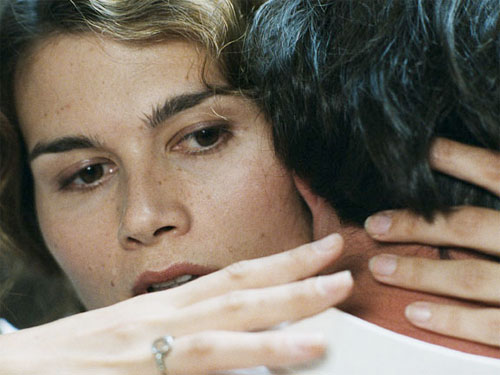


 Speaking of the Arab Spring,
  The Impostor
 It’s been a good few years for crazy.
 Spider (Directed by David Cronenberg): Spider, a perfect film, opens with an image of abject isolation as a train dislodges a tremulous stick figure of a man, Dennis "Spider" Cleg (Ralph Fiennes), to an empty platform.
 Titicut Follies (Directed by Frederick Wiseman): When not force-feeding, beating or washing down the mad with fire hoses, jaunty guards in smart uniforms pass time by mocking naked, terrified elderly men in filth-slicked rooms while Catholic priests perform mini-exorcisms on the comatose insane. Elsewhere, a lucid man begs a panel of contemptuous psychiatrists to stop giving him drugs; they respond by having him dragged away in leg chains and having his “medications” increased.
 Shutter Island (Directed by Martin Scorsese): Teddy Daniels (Leonardo DiCaprio) is a US Marshal who goes to Shutter Island’s remote prison for the criminally insane to solve a disappearance, and already we’re knee-deep in symbolism in what’s easily one of Scorsese’s top five films.
 Mysterious Skin (Directed by Gregg Araki): Gregg Araki’s finest is like the story of two privates who process the same war in different ways. There’s 18-ish Brian (Brady Corbet), plagued by blackouts since a summer day of Little League when he was 8, and now suffering a life of fear, isolation and a need to be around marginal people who believe in UFOs. And there’s Neil (Joseph Gordon-Levitt), who remembers that same Little League summer where a pedophile coach (Bill Sage) molested him daily, leading to a need in Neil to please older men, until he reaches Brady’s age and becomes a whore.
 Requiem for a Dream (Directed by Darren Aronofsky): Requiem for a Dream’s conceit was simple but boy-howdy did it irk critics tetchy about new ways of playing the standards. Showy and arty! Too much razzle-dazzle! Style over substance!
  Keane (Directed by Lodge Kerrigan): Lodge Kerrigan’s Keane is a film so focused on the breathless run of it’s title character (Damian Lewis) from agony to acting-out that there’s little room to do much more than hope he won’t do irrevocable damage. While Kerrigan never diagnoses Keane, it’s hard to imagine a more fleshed out schematic of bipolar disorder’s very particular anguishes.
 Return (Directed by Liza Johnson): When Liza Johnson's Return opens, Kelli (Linda Cardellini) has just returned from war. She can’t wait to reintegrate into her small-town life with her husband (Michael Shannon) and two kids. People keep asking her what it was like over there but she says other people had it much worse, although she did experience some “weird shit.”
 Chris & Don: A Love Story (Directed by Guido Santi and Tina Mascara): Chris & Don: A Love Story tells the glamorous and sweet tale of author Christopher Isherwood, who, at age 48, met and fell for Don Bachardy, age 18, who would become one of our finest portrait artists. The two would be madly in love until Isherwood’s death in 1986. It’s filled with fabulous Hollywood stories from friends like John Boorman, Leslie Caron and Liza Minnelli, but the living heart of the film is Bachardy, at 77, still a spray hoot. You might ask, WTF is this film doing here? Well, deal is, Chris & Don is a mite misleading, because there’s one more love story here – that between Don and his mentally ill brother Ken.
 Serenity (Directed by Joss Whedon): Her intelligence is so far off the charts they need to make new charts, but thanks to an empire’s relentless black op torture program, she’s deep into schizophrenia territory. And yet, when it’s time to send out the message that will save the galaxy along with the ragtag crew of idealistic outliers who populate Joss Whedon’s titular spacecraft/great cancelled TV show Firefly, who you gonna call?
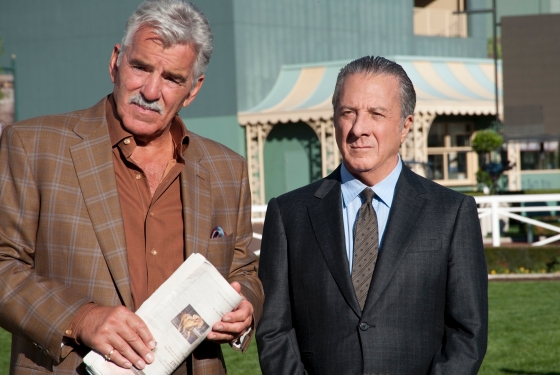
 About a third of the way through episode six of Luck, a conversation between the horse trainer Turo Escalante and the veterinarian Jo is cut short by portents. A flock of birds erupts from behind, or within, the stands; silhouetted, they look like bats. The horses freak out. Then comes an earthquake. The walls tremble. The ground shakes. And then it's over.
 We head into Mad Men’s" fifth season knowing nothing about it. The on-air promos recycle moments from past seasons, and the teaser art has been cryptic even by this show’s standards: an opening-credits-styled image of a falling man that could be hawking any season, and a photo of hero Don Draper staring at two mannequins — a clothed male and a naked female* — through a dress-shop window. Matthew Weiner, who banned advance screeners after a New York Times review revealed innocuous details from the season-four premiere, has dropped a cone of silence over the production. We have no idea if Don went through with plans to wed his young secretary, Megan; if Joan had Roger’s baby; or if the new agency is still in business. We don’t even know the year in which this season takes place, which at least would prepare us for the wingspan of Roger’s lapels.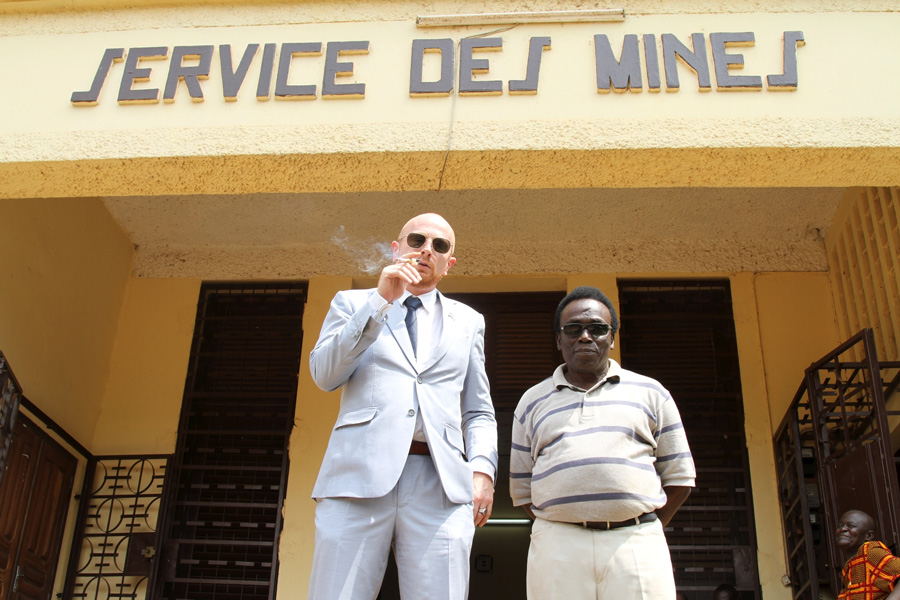
 There's a strange sense of connectedness between the films I'm seeing at this year's True/False festival. Whether that's accidental or because of the way True/False is curated, I can't say, but some of the movies I'm seeing seem to be rhymes of other movies. Sometimes it's visual. Sometimes it's thematic. Often, it's both. This year's films seem to be grouped around intersections of race, healthcare, art, queerness, and activism. Having said this, I can't actually support this observation as well as I'd like, because the keystone film that ties all of this together in my own mind is one of those secret screenings I can't talk about. Listening to the buzz around the fest, I get the feeling that more than one of those secret films would supply the glue for this feeling of intersectionality.
 Performance art is as much about the viewer as it is about the artist. Really good performance art engages the viewer in a way that encourages or even forces them to think about their own relationship to art. The audience, as the saying goes, completes the picture.
  True/False's annual True Vision Award was presented to Russian filmmaker Victor Kossakovsky. In addition to Kossakovsky's first film,
  How to Survive a Plague
  Press Play Video Blog