Watch: Buster Keaton’s Immortal Gags, and Their Influence

Watch: Buster Keaton’s Immortal Gags, and Their Influence

With expected aplomb and sensitivity, Tony Zhou’s newest piece gives us a peek inside the mind of Buster Keaton. Not satisfied with merely stringing together a group of gags, which would be cinematic nourishment enough in and of itself, this video essay breaks down some parts of Keaton’s gags, such as the action performed within them, the importance of the camera angle for a gag’s humor, and the physical rules of the world in which the gag occurs, while also looking at Keaton’s influence on directors such as Wes Anderson and Sofia Coppola. Because of the nature of Keaton’s humor, knowing these things about his jokes doesn’t ruin them–on the contrary, it makes them richer and stranger. And it doesn’t hurt to learn that he did so many of his own stunts… 

Watch: For Christopher Nolan, The Image Comes First, Then the Film

Watch: For Christopher Nolan, The Image Comes First, Then the Film

To say that Christopher Nolan’s films emphasize the importance of the image is not a tautology. Some filmmakers might take us on a thrill ride, filled with jumpcuts, closeups, and other visual grace notes that cause us to focus on action or plot events more than the images moving across the screen. Nolan, though, wants viewers to linger. Think of these things: Robin Williams running across logs in the water in ‘Insomnia.’ Heath Ledger’s Joker standing at a corner, head down, mask in hand, facing us as Ledger faces away in ‘The Dark Knight.’ The collapsing landscapes and cityscapes in ‘Inception’–any of them. The beauty of these moments is that they move you through the film but they also hold you in place. This excellent new Art of the Film video essay casts a new light on an extremelywell-covered director, but one from whom attention may not diverge for a long, long time.

Watch: How Did Batman’s Gotham City Develop?

Watch: How Did Batman’s Gotham City Develop?

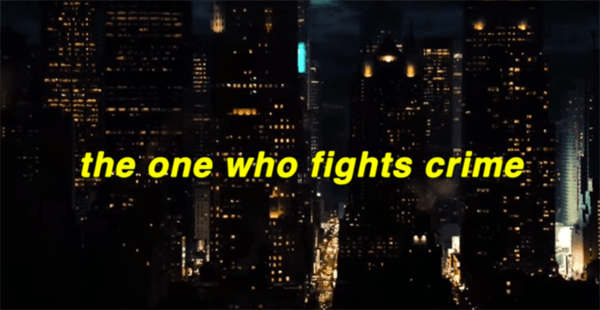
In his latest video essay, Evan Puschak, aka "NerdWriter," has taken on a potentially unwieldy subject: Gotham City. When we casually refer to "Gotham," we tend to mean a whole world of things, all centering around the crucial idea of urban corruption through political machinery. As Puschak indicates, though, the concept of Gotham City has gone through many changes from its earliest days in the Batman comic books to its re-imaginings in the hands of Tim Burton, Christopher Nolan, and the Fox Network, and at this point, if we say that Gotham City is itself a living, breathing character, we’re not necessarily spouting a cliche; the city Puschak describes here has drawn the imaginations of many for decades, and will probably continue to grow as films, books, and television shows proliferate. We just can’t get enough of it. 

Watch: In ‘Breaking Bad’ the Wide Shot Is the Gateway to the Soul

Watch: In ‘Breaking Bad’ the Wide Shot Is the Gateway to the Soul

Have you ever been to New Mexico? If you have, you would know why the wide shot is so crucial to ‘Breaking Bad.’ A story set there simply could not be filmed without giving due to the landscape’s expansiveness, to the sense that it could, in reality, progress forever, and that beyond whatever edge of the horizon you might see is not a different state, or other kinds of terrain, but just more of the same, onward and onward. For the purpose of the show, the desert wide shot reflects not so much self-realization as self-confrontation, a grappling with inner impulses, desires, and stresses uninterrupted by distractions from the world of common morality. Jorge Luengo’s newest compilation, a moving one, shows how the careful visual planning by Michael Slovis and John Toll serves to intensify and develop Vince Gilligan’s creation. 

If you’d like to see other arresting video homages to the show, check out Dave Bunting’s work here, here, or here, for starters.

Watch: Sam Mendes Is a Visual Completist

Watch: Sam Mendes Is a Visual Completist

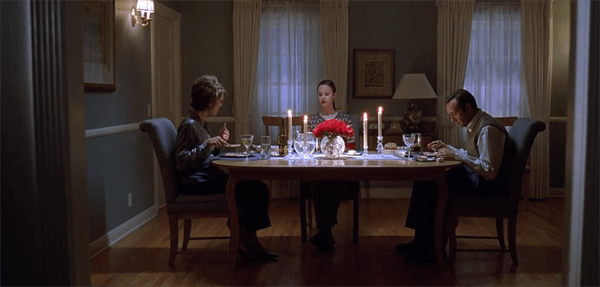
You may, with my blessing, comment on the inconsistency of Sam Mendes’s films, possibly proposing that many of them are all dramatic onrush, without payoff, or ‘American Beauty‘ is a high point to which his other films do not much up, or asking why ‘Road to Perdition’?, or what’s up with ‘Spectre’? Good thoughts, all. However, one thing you cannot say is that Mendes spares one ounce of effort, one kilowatt of creative energy on the lush and detailed settings of his films. Art of the Film‘s new video piece takes us through some of these settings, from the drab London of ‘Skyfall’ to the simmering domestic order of ‘American Beauty’ to the deceptively bucolic suburbs of ‘Revolutionary Road.’ Praise goes to Roger Deakins, Mendes’ frequent collaborator, for surrounding us; equal kudos, though, to Mendes for wanting to surround us in the first place.

Watch: What If Paul Thomas Anderson’s Films Are All Reincarnations of Each Other?

Watch: What If Paul Thomas Anderson’s Films Are All Reincarnations of Each Other?

As a filmmaker accumulates a body of work, it is inevitable that elements will recur, echoing each other and possibly growing in significance over time. Jeremy Ratzlaff proposes something slightly different about the work of Paul Thomas Anderson, suggesting that in fact his stories are all variations on each other, not an indicator of unoriginality but of symphonic intelligence. What if the tortured relationship between Daniel Plainview and Paul Sunday in ‘There Will Be Blood’ was reborn in the warped instructor-pupil relationship between Lancaster Dodd and Freddie Quell in ‘The Master’? What if the drug-addled protagonist of ‘Inherent Vice’ is actually Freddie Quell reborn? This is a finely made and meticulous consideration of an ancient truth.

Watch: Sidney Lumet’s ‘Twelve Angry Men’ Tells a Silent Story

Watch: Sidney Lumet’s ‘Twelve Angry Men’ Tells a Silent Story

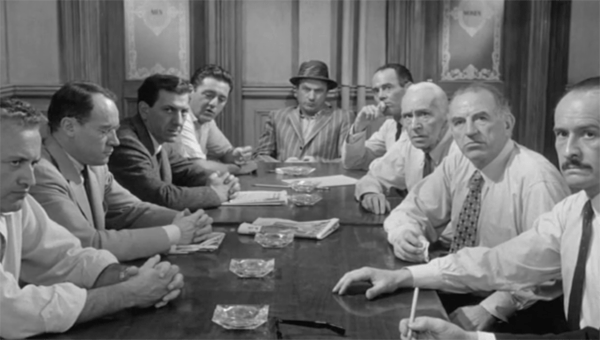
Although obviously dialogue is crucial to Sidney Lumet’s classic ’12 Angry Men,’ Filmscalpel‘s newest piece raises the following question: how crucial is it, exactly? To find out, the editors at Filmscalpel have removed the dialogue, offering us instead a series of silent scenes that tell just as compelling a story…

Watch: FARGO’s Blank Interiors and Crushing Exteriors

Watch: FARGO’s Blank Interiors and Crushing Exteriors

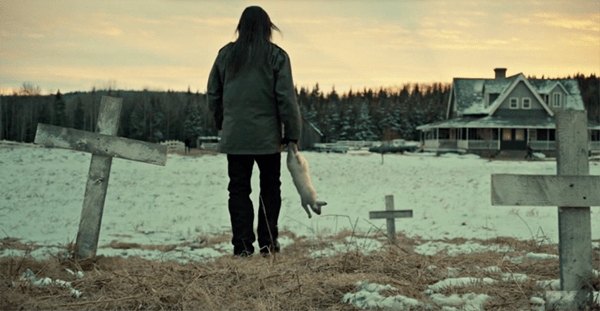
The characters in FX’s ‘Fargo‘ wage a steady war against each other–a quiet war, but a persistent one. Just as fervent and just as persistent, however is the clash between the show’s interior rooms and businesses and the sublimity lying just outside them. The tranquil diners, the bland living rooms, the weirdly sleek mansions push stubbornly against the windswept plains and long, frosty highways of the most deserted part of the midwest, where anything could and will happen. You feel cold just looking at the screen. Roger Okamoto does a wonderful job, in this video essay, of juxtaposing inside vs. outside, shelter vs. storm, civilization vs. primordial wilderness, showing that what Noah Hawley and the show’s DP, Dana Gonzales, have created here is not so much a "prestige TV" drama as an ode to the human urge to punctuate silence, either with gunfire, laughter, or good old-fashioned conversation.–Max Winter

Watch: What Props Do for The Films in Which They Appear, and Vice Versa

Watch: What Props Do for The Films in Which They Appear, and Vice Versa

Can the heart of a film be its props? The light saber. The movie camera. The gun. The tape deck. These are all things we see as we watch our Spielberg, our Andersons, our Hitchcocks, our Godards, and yet we somehow view them as incidental. Rishi Kaneria argues, with this new video essay, that they are essential. He has set himself a difficult exercise here and exceeded its limits, taking us through the use of seemingly incidental items from the beginnings of film to its most recent developments.

Watch: What Is David Fincher’s Favorite Recurring Detail?

Watch: What Is David Fincher’s Favorite Recurring Detail?

If you guessed "the refrigerator," you’re correct! And yet chances are you didn’t. The refrigerator, for Fincher, is oddly enough a perfect locus for the sorts of stories he is drawn to; stories of containment and of personal degradation, going from ‘The Game’ to ‘Se7en’ to ‘Gone Girl.’ And, in balance, the good old ice box turns out to be a miniature stage for Fincher: inside its icy depths, you get to know a subject, from creepy introverts to jubilant young lovers to hard-working detectives. This new video by De FilmKrant takes us to the back of the fridge, as it were–and inside Fincher himself: inside his methods, inside the tools he uses to get the work of storytelling done.