


[EDITOR'S NOTE: Press Play's Robert Nishimura spotlights the provocative career of the late Japanese avant-garde director Shuji Terayama. He has created this essay with the accompanying trailer for Pastoral, To Die In The Country in an effort to convince Criterion to restore and release this important work as part of its collection.]
Every great filmmaker reaches a point in their career when they need to reflect upon their life and childhood, tracing the path that lead them to where they are today. Most often these nostalgic quandaries find their way into new fictionalized scenarios, drawing on personal experience to entertain themselves as well as audiences. Sometimes a director takes a more direct approach, probing their past in the form of autobiographical diaries. Our experiences as children inevitably make us who we are today, and tapping into those memories can provide some tasty material for any filmmaker who questions why they make the kind of films they make. (Look to Federico Fellini’s entire career for further evidence of that point.) Not all memories are immediately accessible to recall, especially those associated with extreme emotional connections.
Those particular memories are stored in the deep recesses of our subconscious and often emerge in our dreams; even then, they're not exactly clearly defined. So, then, what happens when a director decides to make a film about their childhood, but also must confront issues of psychological trauma that have been buried within their subconscious? The result is Shûji Terayama's Pastoral, To Die in the Country, a film so unique and spellbinding that it transcends all classification.
Shûji Terayama is probably the most radically subversive yet well-respected director in Japanese film history. He was the filmmaker's filmmaker, a media darling and a true Renaissance man. For many directors from the 1970s onward, Terayama was pure inspiration. In my previous Three Reasons installment for The Noisy Requiem, Matsui Yoshihiko told me that seeing Pastoral was an eye-opening experience, one that immediately inspired him to become a filmmaker himself. In Japan, Terayama was a well-known poet, artist, writer, street performer and leading figure in Japan's growing avant-garde theater movement in Tokyo. He had a profound effect on the art community in Tokyo, but remained elusive to mainstream attention outside of Japan. One of his first films, Emperor Tomato Ketchup, a wildly experimental short in which children overthrow the adult world, shocked critics upon its release and managed to get banned outright in several countries. Despite being completely avant-garde and metaphoric, what offended the censors were the film's scenes of simulated sex involving children. By today's standards, these same scenes would hardly lift an eyebrow. Even a casual Freudian reading of the film reveals what would be his strongest contextual trademark: serious mommy issues.
For anyone who would like to know more about Terayama's life, Pastoral is as good a place as any to start. For the most part it is an autobiographical film, teaching us all about Terayama's upbringing in a small countryside village in Aomori Prefecture. After losing his father during WWII, Shûji was raised by his very domineering mother as well as the determinedly traditional and superstitious townspeople. We see Shûji compete with these traditional values, struggling to find stimuli and sexual satisfaction in a small town that is very much stuck in time. All Shûji wants to do is break away from his mother and the other backward hillbillies, get laid by the milf next door and catch the first train out of town. Such a synopsis might very well have been from the movie you watched last night at the multiplex (like Judd Apatow's Midnight Train to Bonerland, coming to a cinema near you…probably), but Pastoral is in no way a traditional narrative. Just as our own memory becomes fragmented and nonlinear, Terayama utilizes the same disjointed dream logic that corrupts all our memories. Characters float in and out inexplicably, settings change without warning, the cinematography and editing are highly expressionistic, and just when you start getting comfortable with this style of storytelling the film abruptly stops. Halfway through Pastoral, we learn that not only are we watching a film, but that Terayama hasn't finished making it yet. The director (played by Kantarô Suga) isn't satisfied with how things are going and must go back in time, enter his own film and change the outcome.
The film begins (as does the Three Reasons video) with his earliest childhood memory: playing kakurenbo (the Japanese equivalent to hide and seek) in a cemetery. As little Shûji lifts his head to find his playmates, all the people associated with his youth come creeping into view from behind the tombstones. At this point we see that all the characters in the film are wearing whiteface, a characteristic usually reserved for ghosts. But these are not ghosts come to haunt him, they are the specters of his past that have become faded over time, himself included. These characters are stuck in time as well as place. Terayama uses images of clocks throughout the film to exemplify this point, especially in his own childhood home, where his mother's refusal to fix their broken clock indicates her unwillingness to change, forcing young Shûji to be stuck along with her. The film maintains dull monochromatic tones whenever Terayama is at home or in the village. The villagers are represented by a coven of black-hooded, eyepatch-wearing old women who keep the town in a stranglehold of superstition. Just outside the town is a traveling circus troupe, constantly preparing for a show that never occurs. Whenever we visit this particular location, a kaleidoscopic spectrum of color fills the screen and covers the circus characters. For Terayama, these characters represent modernity with their wild sexual escapades and complete freedom from time and tradition. Once Shûji is exposed to these people his desire to run away is firmly cemented. The only thing holding him back is his mother.
Terayama once wrote that life was like an enormous outgoing book. So if we needed to change something about ourselves, we need only go back and rewrite what happened. Pastoral represents his desire to do just that. This is why the Terayama character must go back and confront his younger self. In order to complete his film Terayama must convince his younger self of what needs to be done: kill their mother. In scenes where Terayama is in contact with the younger Shûji, his subconscious is allowed to run wild. Free associations and dream-derived figures parade past the two Terayamas in one particularly beautiful sequence. Fans of Luis Buñuel's surrealistic films or Guy Maddin's recent introspective films will find a kindred spirit in Terayama. But in many ways Terayama is Maddin's stylistic opposite, and Buñuel couldn't hold a two-sided candle to the effortless phantasmagorical freedom of Pastoral.
Albeit titled "For Criterion Consideration," I largely use that phrase as a euphemism. This film needs to be seen; I just point to Criterion because they are respected for bringing important films to a wider audience (in the best editions, etc., etc.). Needless to say, Pastoral, To Die in the Country is an important film by an important filmmaker. The unfortunate fact that none of Terayama's films are distributed anywhere outside of Japan forces determined cinephiles to use questionably legal means to find them. Japan's FilmForum does have the English-friendly four volume compilation of Terayama's short films, which includes the oh-my-god-think-of-the-children Emperor Tomato Ketchup. Die-hard fans of Japanese cinema or the avant-garde will know Terayama, but it is time that the West pay their proper respects to a great filmmaker by allowing his films to be widely seen. I cannot think of a better salute to Shûji Terayama than a Criterion release in the U.S. or a Masters of Cinema release in the U.K.
Robert Nishimura is a Japan-based filmmaker, artist, and freelance designer. Born and raised in Panamá, he then moved to the US, working at the University of Pittsburgh and co-directing Life During Wartime, a short-lived video collective for local television. After fleeing to Japan, he co-founded the Capi Gallery in Western Honshu before becoming a permanent resident.


 Where Sesame Street is designed to educate, The Muppet Show is designed to entertain. Full of frenetic song-and-dance routines, intentionally bad jokes and chest-heaving off-stage drama, The Muppet Show is a loud, loony, heartfelt variety act that’s transparently disguised as a loud, loony, heartfelt variety act.


 EDITOR'S NOTE: Kiefer Sutherland's ticking clock classic debuted 10 years ago this week. To mark this milestone, Press Play is re-publishing the video essay series "5 on 24" which was created by Matt Zoller Seitz and Aaron Aradillas for the Museum of Moving Image in 2010. According to their introduction, "5 on 24" examines various aspects of the show, including its real-time structure, its depiction of torture, and the psychology of its hero, counterterrorist agent Jack Bauer. The show tapped into the ticking-clock on-the-go mentality of post-millennial society. And its machine-gun pacing, real time structure, and long-form plotting took aesthetic risks that no other action show had dared.

 Sharon, played by Mimi Rogers, is someone whose life is adrift. She lives an existence numb to human emotions, trying to get whatever cheap thrills she can find. Only when Sharon begins to notice how others are at peace with themselves does she begin to find her purpose. Sharon completely embraces the beliefs of Christianity, finding a way out of her past life.
 Sharon marries and has a daughter with one of her early sex partners (David Duchovny), saving him from his own aimless existence. This is where the film starts to challenge the beliefs of Christians and non-Christians alike. After Sharon loses her husband in a mass shooting, both she and her daughter are not deterred. They are both fully convinced that the rapture is soon approaching. Sharon believes she receives a message from God to take her daughter to a remote park until the rapture happens.
 The thesis of The Rapture is that God is a narcissist, giving us life for the sole purpose of demanding unconditional love in return, no matter how much damage his demands have inflicted on human lives. The film posits the theory that God is undeserving of our love even if he does exist, that he is in no way any less fallible to pettiness and power trips than the human beings he created. Like many humans, God lives by a set of rules and laws that he applies arbitrarily at his own moral convenience. Tolkin illustrates this by showing the non-believing cop immediately being accepted into heaven by declaring his love for God in a last ditch effort to be saved. He's merely saying what God wants to hear to save his own skin.
 Rapid editing, close framings, bipolar lens lengths and promiscuous camera movement now define commercial filmmaking. Film scholar
  Consider
  Chaos films may not offer concrete visual information, but they insist that we hear what is happening onscreen. Ironically, as the visuals in action films have become sloppier, shallower and blurrier, the sound design has become more creative, dense and exact. This is what happens when you lose your eyesight: your other senses try to compensate. Consider how relentless machine-gun fire, roaring engines and bursting metal dominate the opening of
  French auteur
  This deficiency is especially discernible in the musical film, a genre that ordinarily relies heavily on clear-cut choreography and expressive gestures. But the woozy camera and A.D.D. editing pattern of contemporary releases clearly destroy any sense of spatial integrity. No matter how closely we look, the onscreen space remains a chaotic mess. For comparison, consider a scene from the classic Singin’ in the Rain. Long, uninterrupted takes allow us to see the extraordinary performances of the actors. No false manipulation necessary.
 To be fair, the techniques of chaos cinema can be used intelligently and with a sense of purpose. Case in point:
  Chaos cinema seems to mark a return to the medium’s primitive origins, highlighting film’s potential for novelty and sheer spectacle – the allure of such formative early works as The Great Train Robbery. You can trace the roots of chaos cinema to several possible factors: the influence of music video aesthetics, the commercial success of TV, increasingly short viewer attention spans, the limitless possibilities of CGI, and a growing belief in more rather than less. Those who look closer, though, may wonder when cinema will recapture the early visceral appeal of the train pulling into the station at La Ciotat — truly a symbolic relic, powerful in its simplicity. Chaos cinema hijacks the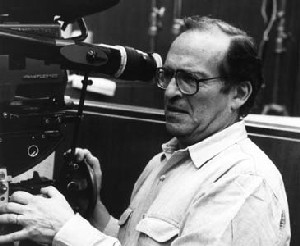

 Prince is a complex tale of police corruption in the 1970’s adapted from the book by
  But from the opening scene, you begin to see the cracks in this prince’s facade. An argument with his drug addicted brother shows that there is someone unwilling to continue the charade that Ciello and his partners are somehow upstanding officers of the law. In a key scene, Ciello is forced to rob a drug addict to supply heroin to his informant. He begins to take pity on him, perhaps recognizing his own addicted brother. More importantly, he begins to witness firsthand the consequences his illegal acts as a cop have on others.Ciello remembers why he wanted to become a detective, and makes an effort to change because he can no longer see much of a difference between the cops and the criminals no matter how much he tries to justify his actions by blaming the way the criminal justice system works. Perhaps you would think that this film will be a simple tale of redemption, where a man acknowledges his wrongdoings and then helps to put the remorseless criminals behind bars.
 Prince was not the first or last time that Sidney Lumet examined this subject. 1973’s “Serpico”, based on the real-life detective
  In addition to Serpico and Prince of the City, Lumet returned to the theme of police corruption twice more in the 1990’s with Q & A (1990) and Night Falls on Manhattan (1997). Of the four films, Q & A is the one that plays most like a crime thriller, as we watch a fairly degenerate cop (
 Lumet is fascinated by the logic behind corruption. What is the thought process that causes people to lose their way? The key to Lumet’s success in exploring this theme is the degree to which he does not pass black and white judgment on his characters. The more we see ourselves reflected in people who justify their amoral actions, the more Lumet has made these people human. While Q & A and Night Falls on Manhattan admirably try to explore the gray zone of morality and corruption, it is Prince of the City that is Sidney Lumet’s masterwork on that theme.
 As this was a tribute to Lumet, Williams and Leuci told stories about the making of Prince, talking about the long audition process Williams went through and how Lumet did not want Leuci around set due to the not-very-happy experience of having Frank Serpico on set all the time during the production of Serpico. Although Lumet is not acknowledged as a significant auteur by cinephiles because his almost invisible direction served the story rather than himself, the Williams/Leuci Q & A re-asserted that Lumet was a filmmaker with a true vision, and highlighted the choices he made that enabled Prince to be so effective.
 The shapeshifting T-1000 is a more effective killing machine than the original T-800 model played by Schwarzenegger in both films, but humanity ultimately wins out when the older Terminator model outsmarts him. With both the cyborg assassin and Cyberdyne Systems' technological research destroyed, the sequel presents a definitive ending. The victorious T-800 lowers himself into burning liquid metal, ensuring the world will not be destroyed and humanity will triumph. James Cameron leaves us with amessage of hope. At least, that is what we thought when we watched the film end back in 1991. Unfortunately, the story did not end there. Not unlike Cyberdyne, Cameron had let his creation turn against him. It is easy to point out both the unnecessary sequels and television show which undid the ending to Terminator 2 to shamelessly cash in on the premise again and again. But those were not necessarily Cameron's doing. They may instead be long-term effects of building movies out of CGI blocks. This is the film's true legacy, and Cameron himself — the director of such CGI-laden films as True Lies, Titanic and Avatar — is not only a practitioner of this type of filmmaking, but a vocal advocate as well. We must ask: Is James Cameron Cyberdyne, building the technology that will be used against humanity?
 When we look more closely at Terminator 2, one can see the seeds of this planted in the contradictory ways it presents its ideas. Surprisingly, the CGI in Cameron's Terminator sequel is restrained in its use, especially compared to what subsequent movies, including Cameron's, have done since. At the time, Cameron was still using practical in-camera effects, a product of his earlier work in low-budget filmmaking. His 1980s movies often employed models, miniatures and puppets, even as he eventually moved towards digital effects in 1989's The Abyss. Cameron's vision at the time was not as disconnected from the human experience as it is now. We could differentiate between the machines and true flesh and blood. This is why Terminator 2 cannot be dismissed so easily. Yes, Cameron is playing with a bigger toy box, but he does not do so at the expense of his ideas or the genuine affection he has for his characters. The movie never forgets that it is about a mother-son relationship, though one that has the future of the world at stake. As with many Cameron films, there is a great deal of skepticism about how we employ technology in the modern age, particularly when it leads to some sort of blowback. The villains in the Terminator movies are not only the machines, but those who created them — namely the researchers at Cyberdyne Systems, the fictional corporation in T2 that allowed the machines the opportunity to wipe out humanity. The film preaches a message that machines are not to be trusted.
 Press Play Video Blog
