FEATURE FILM WITH VIDEO ESSAY: Brian De Palma’s RAISING CAIN is re-cut

VIDEO ESSAY WITH FEATURE: Brian De Palma’s RAISING CAIN RE-CUT

Raising Cain Re-cut is my attempt to approximate Brian De Palma’s original vision of Raising Cain, before the director chose to compromise its structure in post-production. The re-cut uses all of the scenes in the theatrical release and puts them back in the order they were intended, giving rise to a dramatically different viewing experience.

Acquired taste

Within Brian De Palma’s already divisive filmography, appreciation of Raising Cain (1992) is thought of as something of an acquired taste. While some critics consider the film minor De Palma, others claim it’s his overlooked masterpiece. No matter what the consensus, it is clearly the work of a formalist at the top of his game, having a ball screwing around with audience expectations. If you like your storytelling plain and unobtrusive, look away: this movie is not for you.

De Palma is a full-blooded visual stylist. So visual, in fact, that he’s the polar opposite of an invisible narrator. Like any other filmmaker, he manipulates. What sets De Palma apart is that he’s frank enough to show his hand. This refusal to cover his tracks, I feel, is the main reason why people either love or hate his work. De Palma directs classic suspense with a deliriously postmodern sensibility. He’ll have you trapped inside a cinematic moment at the same time he’s commenting on it. The fourth wall be damned!

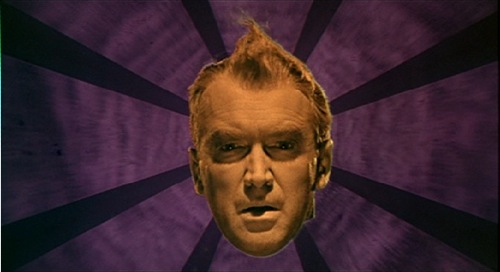
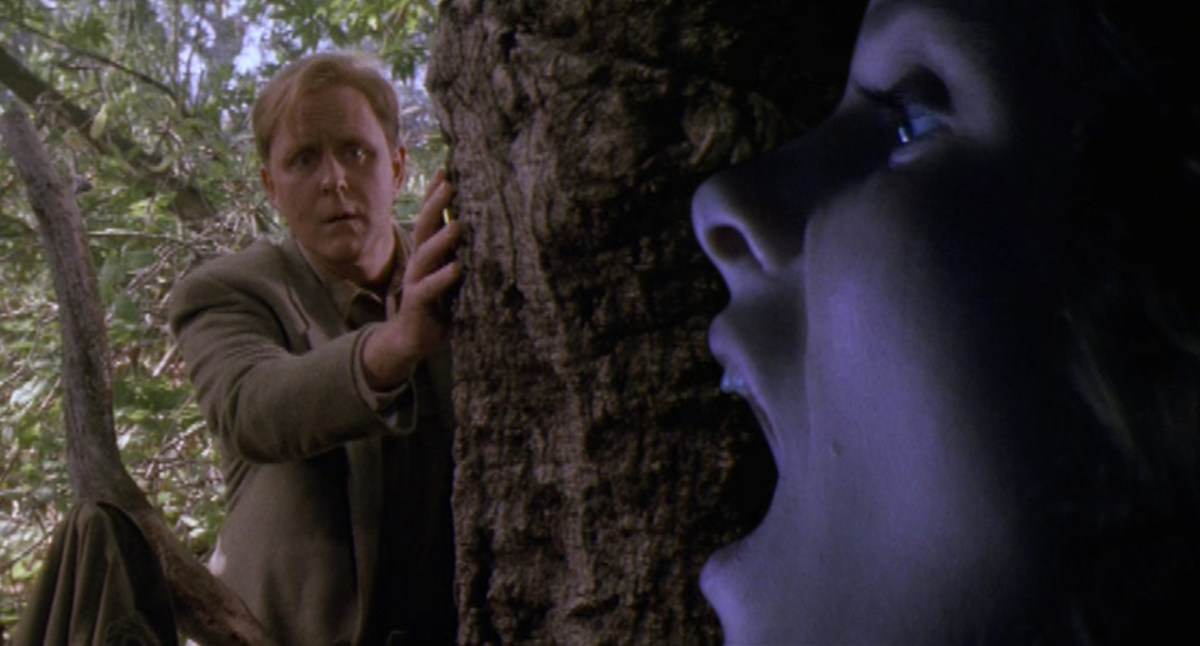
nullRaising Cain combines all of the elements of a vintage De Palma thriller and raises the stakes for both maker and spectator. It’s easy to get lost in the film’s labyrinthine framework centered on Dr. Carter Nix (John Lithgow), a murdering child psychologist with multiple-personality disorder, and his unfaithful wife Jenny (Lolita Davidovich). But for those who are able to keep up with the various role reversals, dream-like transitions and densely interwoven plot threads, the journey is all the more rewarding.

Second thoughts

Such artistic playfulness can be a tough balancing act. Even De Palma himself wondered throughout the process of making Raising Cain if he was going too far. In the final stages of post-production, he drastically re-arranged his film and settled on a more or less chronological order, mainly to avoid a drawn-out flashback that may have alienated the viewer.

In an interview with CHUD.com in 2006, the director admitted to regretting this last-minute decision:

“The interesting thing about that movie is that I could not make the beginning work, and it drove me crazy. (…) I always wanted to start the movie with (the woman) and her dilemma instead of with the Lithgow story.”

The Lithgow story is front and center in the theatrical release. One of the strongest readings of the film is that of John Kenneth Muir, who explained Raising Cain as a caustic social satire on the crisis in masculinity in the heyday of Mr. Mom. This analogy makes perfect sense, particularly because the film introduces Carter Nix straight off the bat as a caring husband and parent, very much in touch with his feminine side—until his suppressed “inner macho” shows up in the form of Cain, his id-ridden imagined twin brother.

nullIn the book Brian De Palma by Samuel Blumenfeld and Laurent Vachaud (in French and currently out of print), the director explains how this first act hurts the film:

The problem with the current cut is that it starts with scenes featuring Cain. Because I'm starting the film in an atmosphere of schizophrenia, with this guy with 25 personalities, the audience is not ready to accept the romantic fantasy that follows, which is what Jenny's story is about.”

I tend to agree with De Palma that Jenny’s story pales in comparison to what precedes it in the theatrical cut. And judging from the puzzled reaction of the audience I first saw the movie with, a case could be made that the overall narrative derails a little too quickly. The switch to chronology may have made Raising Cain easier to follow, but the trade-off is unevenness in tone and minimal build-up.

A different beast

Film critic Jim Emerson once wrote that the opening shot of a movie teaches you how to watch it. Seen in this light, the restructuring of Raising Cain Re-cut couldn’t be more radical. Right from the very first shot after the credits, it’s a different beast altogether.

Now, we start with the camera shooting from Jenny’s point of view, leading us to her recorded image on a television screen, caught in a heart-shaped frame. Presented as such, Jenny almost literally casts herself in the leading role of a romantic melodrama, where Jack awaits her as the ultimate Prince Charming, holding the keys to another life.

nullCrisis in masculinity isn’t even part of the equation anymore. This is going to be a movie about self-projection, about imagined lives, shifting perspectives and the collapsing present. The deliberate soap-opera framing of Jenny’s section, featuring lots of talking heads and over-the-shoulder shots that are atypical for bravura filmmaker De Palma, feels all the more fitting when isolated from parallel storylines.

For over 22 minutes, the focus of the re-cut stays on Jenny—not unlike the way De Palma put the spotlight on Angie Dickinson in the first half hour of Dressed to Kill. We watch Jenny fall in love with old flame Jack, feel the pain of her dilemma, fool around, wake up the next morning in the wrong bed, hurry back home, die, and wake up all over again. Meanwhile, her husband Carter is nothing more than a figure in the background. Then something unexpected puts an end to the romance and a string of flashbacks shows us that there’s more to Carter’s personality than we thought. Much, much more…

Problems and solutions

Of course, I didn’t have access to footage left on the cutting room floor. After a few disastrous test screenings, De Palma felt compelled to make drastic cuts in Jenny’s story for the theatrical release to work. A leaked second draft of the screenplay – entitled Father’s Day at that point – reveals deeper layers of complexity in the form of a quickie in the changing room, additional flashbacks (including Carter’s marriage proposal to Jenny), Jack doing a private investigation following Jenny’s disappearance, and a vengeful Jenny attacking Carter at the playground using twin carriages as bait. Fortunately, most of these missing elements had already been scrapped or rewritten by the time of shooting and none of them are crucial to the plot.

nullOne transition in the re-cut proved particularly tricky. To make up for a lack of coverage, I deployed a technique De Palma repeatedly relies on in the second draft of his screenplay: repetition. By quickly playing back a key moment earlier in the film, the viewer is reminded of where the upcoming scene fits in the overall chronology. To soften the transition, I lifted an establishing shot from the epilogue.


Does it work?

Whether De Palma was right to regret the theatrical cut or my attempt to approach his original vision improves on it— that’s for you to decide. To my eyes, however, the re-cut plays spectacularly well. While it’s heartbreaking to think of deleted scenes that will never see the light of day, it’s very well possible that the cuts that were made to improve the chronological version have made a tighter re-cut possible, easier to digest than the first time around.

I wouldn’t be surprised if the average filmgoer agrees. Since the release of Raising Cain, the language of cinema has continued to evolve. Elliptical head scratchers such as Pulp Fiction (1994), Memento (2000) and 21 Grams (2003) broke with classical continuity and were all the more successful for it. There’s a chance that a new generation of non-linear features has primed today’s audiences for the wild experiments De Palma had in mind earlier. Perhaps it’s high time, then, to unleash Raising Cain in its most uncompromising form.

null

Special thanks to Laurent Vachaud, Geoff Beran and James M. Moran

For a limited time the complete Raising Cain Re-cut can be seen right here (for critical and educational purposes only).

Raising Cain Re-cut from Press Play Video Blog on Vimeo.

Peet Gelderblom is a freelance director/editor/motion-designer from the Netherlands. He drew the weekly webcomic Directorama for Slant’s The House Next Door and Smallformat magazine. Between 2004 and 2008, he was the founding editor of 24LiesASecond, a now-defunct platform for provocative film criticism with an underdog bite, for which he wrote a number of essays. For commercial assignments he’s represented by In Case of Fire/Firestarter, Amsterdam. A selection of his work can be found on his personal website Directorama, where he also keeps a blog.
VIDEO: The Existential Noir of Michelangelo Antonioni

VIDEO: The Existential Noir of Michelangelo Antonioni

null

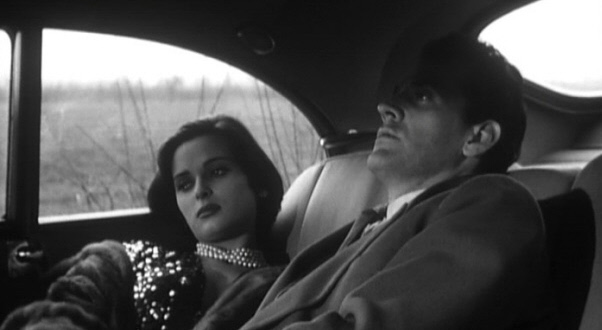
"With the Noir City Film Festival in full swing in San Francisco, we felt it was the right moment to revisit the doomed romance in Michelangelo Antonioni’s The Story of a Love Affair. Though Antonioni is best known as the Italian master of art cinema, his Antonioni’s first film, Story of a Love Affair, was fashioned after ’40s Hollywood films noir like Double Indemnity, Shadow of a Doubt and The Naked City. Watch this video essay to get a sense of what noir Antonioni-style looks like."

To read the full transcript of the video and watch The Story of a Love Affair at Fandor.

PRESS PLAY’S VERTIGOED CONTEST: And the winners are….

PRESS PLAY’S VERTIGOED CONTEST: And the winners are….

null

We started Press Play's first-ever contest on a lark, spinning off from complaints by Vertigo star Kim Novak that she felt violated by hearing portions of Bernard Herrmann's Vertigo score in the modern silent picture The Artist. We thought a mash-up contest involving that same bit of music might be a fun way to jump-start discussion of how music can enhance or subvert a scene. We never anticipated such an enthusiastic response: 98 entries!

And now it's time to announce the results.

THE RULES

1. The image track must consist of one (1) clip from any pre-existing work.

2. Clips must be scored, in whole or in part, with Bernard Herrmann's "Scene D'Amour" from Vertigo.

3. The clip cannot be cut or otherwise altered to finesse the timing.

THE JUDGING CRITERIA

1. Thoughtful synchronization.

2. A marriage of music and picture that illuminates or comments upon existing aspects of the scene or pushes it in a new direction.

3. The element of surprise.

THE JUDGING PROCESS

The 98 entries were winnowed down to five (5) finalists, based on email debate amongst Press Play editors and writers, and comments on social media and video upload sites. Mash-ups submitted by Press Play contributors were excluded from consideration as finalists.

The finalists were then sent on to a panel of outside judges, listed below.  The judges were asked to rank the finalists in order of preference from first to fifth; first place was worth five points, fifth was worth one. The finalist with the highest point total was declared the winner. Contest judges and Press Play contributors were also encouraged to give special citations to works that that did not make the final cut but that tickled their fancy.

THE JUDGES

JIM BEAVER. Actor in films and TV series, including Supernatural, In Country, Geronimo: An American Legend, The Silence of BeesDeadwood, Justified, Breaking Bad, Big Love and Criminal Minds. Writer of episodes of Vietnam War Story and Tour of Duty. Author of 14 plays, including Verdigris, The Ox-Bow Incident and Semper Fi.  Films in Review contributor. Former film archivist for the Variety Arts Center in Los Angeles.

DAVID LEVIEN. Co-director (with regular collaborator Brian Koppleman) of Solitary Man. Cowriter of Ocean's Thirteen, Rounders and Knockaround Guys. Producer of Interview with the Assassin, Knockaround Guys, The Illusionist and The Lucky Ones. Author of the novels City of the Sun, Where the Dead Lay and Thirteen Million Dollar Pop.

MARGARET NAGLEScreenwriter of Warm Springs, the Emmy-winning HBO film about Franklin and Eleanor Roosevelt, and its forthcoming sequel The Defining Moment. Winner of two Emmy Awards and two Writer's Guild of America awards. Creator of the Lifetime series Side Order of Life.  Writer of the Boardwalk Empire episodes, "Anastasia" and "Broadway Limited."

GREG PAK. Award-winning writer-director-producer of Robot Stories. Writer of the comics Vision Machine, Planet Hulk and Incredible Hercules and cowriter of Magneto Testament. His latest comic project is Dead Man's Run, from Gale Anne Hurd's Valhalla and Aspen Comics. His acclaimed miniseries Red Skull Incarnate comes out this week in trade paperback. For more, visit www.gregpak.com and twitter.com/gregpak.

JODY WORTH. Writer and producer for Hill Street Blues, NYPD Blue and Deadwood. Nominated along with the Deadwood staff for an Emmy and a Writers Guild of America awards for season two of the series. Writer of the Deadwood episodes "Reconnoitering the Rim," "Bullock Returns to the Camp," "A Lie Agreed Upon, Part II" and "E.B. Was Left Out."

GRAND PRIZEWINNER

STAR TREK II: THE WRATH OF KHAN, by Jake Isgar ($50 Amazon gift certificate)

"Somehow the Vertigo score made Shatner and his sweet toupee a bit lyrical." — David Levien

"The last 90 seconds are just about perfect. The last ten seconds knock it out of the ballpark. I also particularly love the way the fast surging theme at 4:09 perfectly coincides with Scotty fiercely blowing into his bagpipes." — Greg Pak

"Douglas Sirk goes sci-fi." — Jody Worth

F I N A L I S T S  (alphabetical by title)

AKIRA, by Greg Stevens

"Akira actually moved me at the end… the syncing of the music was pretty damn perfect. It's a piece of film I'm unfamiliar with, and that might have added to my enjoyment. But on a purely technical level of matching the music to the image, [for me] it was the easy winner." — Margaret Nagle

ALIEN, by William D'Annucci

"I forgot I was watching a mash-up and instead was completely drawn into a gorgeous piece of complete cinema. It's a clever clip to use because the scene has no dialogue — there are no silently moving lips that remind us we're watching a hybrid creation. And every single beat and surge of the music matches beautifully with the imagery. But what pushes it into the sublime is that I found myself seeing and feeling emotions I've never felt before while watching this scene. I've probably seen this movie 20 times. But this is the first time I've felt the alien's pain. And watching Ripley's face, I felt her feeling the alien's pain as well. What a gorgeous, weird, unexpected experience." — Greg Pak

"Hermann's score could have been written for this scene. The matching of musical emotion with the visual is rather astonishing in light of the [contest's] no-cuts rule and the completely unrelated nature of the two films, Vertigo and Alien. If serendipitous, then it's amazing. If the mash-up artist chose Alien because he knew this scene would fit so well with Herrmann's music, then behold, a genius in our midst." — Jim Beaver

MY VIDEO FOR BRIONA, by Joseph Carson

"When we first announced the 'Vertigoed' contest, we didn't even consider that online viral videos might be great fodder for a mash-up. Kudos to Joseph Carson for thinking out of the box and finding a subject even creepier than Scotty Ferguson to set to Bernard Herrmann's obsessive strains. Extra points for being the only video not to use the crescendoing sections of 'Scene d'Amour,' opting instead for the more tranquil opening section. Used here, its subtle sinister undertones bubble to the surface. Love ya, baby girl!" — Press Play editor-in-chief Kevin B. Lee

THE SILENCE OF THE LAMBS, by Brittany Carter

"Jonathan Demme's The Silence of the Lambs is an unholy mash-up all its own, equal parts thriller, horror movie, psychoanalytic odyssey and perverse love story. So is Alfred Hitchcock's Vertigo. I never considered that there might be a deep connection between the two movies — both of which pivot on an invasive attempt to recapture the past — until I saw Brittany Carter's entry." — Press Play founder Matt Zoller Seitz

Citation for Synchronized Head-Cracking

NIGHT MOVES, by John Levy

Citation for Balletic Totalitarianism

THE GREAT DICTATOR, by Jonathan Amerikaner

Citation for Homoerotic Grandeur

TOP GUN, by De Maltese Valk

Citation for Chaos-as-Poetry

GUMMO, by David Jenkins

Citations for Comic Madness

ZOOLANDER, by Athena Stamos, and MEAN GIRLS, by Katie Aldworth

Citations for Snake-Swallowing-Its-Own-Tail Postmodernism

VERTIGO, by Matt Rosen, and OBSESSION, by Brandon Brown

We officially end our "Vertigoed" contest with one more mash-up, a Chuck Jones tribute by Press Play editor Kevin B. Lee. Th-th-th-that's all, folks!

WHAT'S OPERA, DOC? VERTIGOED:

STAR WARS UNCUT: DIRECTOR’S CUT may be the strangest, most enchanting fan remake of that classic ever attempted

STAR WARS UNCUT: DIRECTOR’S CUT may be the strangest, most enchanting fan remake of that classic ever attempted

[EDITOR'S NOTE: In 2009, Casey Pugh asked thousands of internet users to remake Star Wars: Episode IV – A New Hope into a fan film, 15 seconds at a time. Contributors were allowed to recreate scenes from that film however they wanted. Within just a few months, Star Wars Uncut grew into a wild success. Press Play urges each and every one of you to take 10 minutes (the film is over 2 hours in length), click on this link and look upon this effort. Pick any scene you want. By now, this story is so widely known and so completely understood in such minute detail that there is nothing left to interpret, nothing left add to a discussion about it and nothing left to do but wait around until George Lucas decides to release another version of it into theaters, having ordered his team of talented artists to change it one . . . .more. . . .time. (3-D, anyone?) But, here is Luke Skywalker, Han Solo and Princess Leia's triumphant story presented once again — performed by an amature cast of hundreds, stitched together with Bondo and dental floss, shot in environments real and animated, presented and reconceived with a low-tech, zero-budget aesthetic. And still the story survives. Take heart, Lucas-haters, if this mythic tale can survive this democratic treatment, it can even survive its creator. It is quite possibly the sweetest, funniest tribute to the Star Wars fable ever mounted. Look upon it, you should.]

VIDEO: Last Call to Enter VERTIGOED Contest! Don’t Be a “Jackass”! (Or You’ll End Up Like This Guy)

VIDEO: Last Call to Enter VERTIGOED Contest! Don’t Be a “Jackass”! (Or You’ll End Up Like This Guy)

nullIt's the last day to enter VERTIGOED, Press Play's first ever video contest. The response has been outstanding – even The Huffington Post took notice. We've received dozens upon dozens of entries and Team Press Play has been up all hours of the week watching and marvelling at these clips. Is there any film that Bernard Herrmann's swooning music can't handle? Maybe this clip below can put him to the test: 

This is just to remind you: don't get caught with your pants down! If you are working on or thinking of making a VERTIGOED clip for the contest, you have until 5 PM Eastern Time TODAY to send it to us. Just email the link to pressplayvideoblog@gmail.com along with your name.  Thanks and stay tuned for contest updates and results next week!

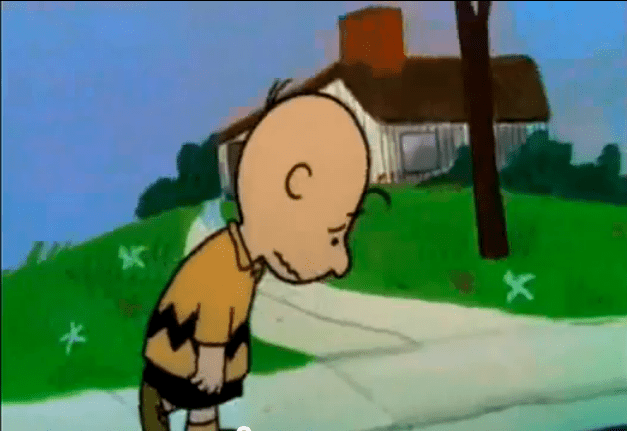
VIDEO: You’re a Creep, Charlie Brown!

Round head meats Radiohead – this is the kind of song-video mashup that seems so obvious in retrospect you wonder why it hadn’t been thought of long ago.

The Great Round Head meats Radiohead. This is the kind of song-video mashup that seems so obvious in retrospect you wonder why it hadn't been thought of long ago. Using the a capella version is a great touch, makes it feel like it came straight out of "A Charlie Brown Christmas." HT to Ali Arikan.

VERTIGOED: A Press Play mash-up contest

VERTIGOED: A Press Play mash up contest

EDITOR'S NOTE: You may have heard that Kim Novak, costar of Vertigo, took out an ad in Variety protesting the use of Bernard Herrmann's Vertigo score in Michel Hazanavicius’s modern silent film The Artist. "I WANT TO REPORT A RAPE," the headline blared. "I FEEL AS IF MY BODY—OR, AT LEAST MY BODY OF WORK—HAS BEEN VIOLATED BY THE MOVIE, “THE ARTIST," Novak wrote, and went on to decry the “USE AND ABUSE [OF] FAMOUS PIECES OF WORK TO GAIN ATTENTION AND APPLAUSE FOR OTHER THAN WHAT THEY WERE INTENDED.” Novak's word choice was unfortunate — more than one person, including yours truly, said that was akin to somebody sitting through the Star Wars prequels and witlessly declaring, "George Lucas raped my childhood."  

Press Play contributor and film editor Kevin Lee followed this Novak/Lucas line of thought to its logical — or illogical — end. Just for the hell of it, he matched the Vertigo cue used in The Artist with the last three minutes of the Death Star battle in Star Wars, Episode IV: A New Hope, uploaded it, and sent the link to several Press Play contributors to get their reactions.  

nullAnd it's here that things got interesting: rather than generate cheap laughs at the expense of Novak, Lucas, The Artist or Star Wars, the mash-up inspired delight. Simply put: Kevin's experiment confirmed that Bernard Herrmann's Vertigo score is so passionate and powerful that it can elevate an already good scene — and a familiar one at that — to a higher plane of expression. Score one for the master of film scoring!

We encouraged Kevin to put the same piece of music under a bit from Star Wars: Episode I, The Phantom Menace and the training sequences from Rocky and Rocky IV. Same result: The scenes seemed deeper, subtler and more haunting, solely because of Herrmann's music.

Kevin joked that these clips had been "Vertigoed" — a reference to the low-budget "Swedeing" of Hollywood movies in the cult classic Be Kind, Rewind. The term stuck, and inspired us to declare a Press Play "Vertigoed" contest. 

THE RULES:

1. Take the same Herrmann cue — "Scene D'Amour," used in this memorable moment from Vertigo — and match it with a clip from any film. (You can nick the three-minute section from one of Kevin's mash-ups if it makes things easier.) Is there any clip, no matter how silly, nonsensical, goofy or foul, that the score to Vertigo can't ennoble? Let's find out!

2. Although you can use any portion of "Scene D'Amour" as your soundtrack, the movie clip that you pair it with cannot have ANY edits; it must play straight through over the Herrmann music. This is an exercise in juxtaposition and timing. If you slice and dice the film clip to make things "work," it's cheating. MONTAGES WILL BE DISQUALIFIED.

3. Upload the result to YouTube, Vimeo, blipTV or wherever, email the link to pressplayvideoblog@gmail.com along with your name, and we'll add your mash-up to this Index page. 

The Press Play Vertigoed contest ends at 5 PM Eastern time on FRIDAY, JANUARY 20.  No mash-ups posted after that time will be considered. Press Play staff will choose a winner over the weekend and award a $50 Amazon gift certificate. The pairing that our judges decide is most imaginative and altogether satisfying will win the prize. The victor will be announced Monday, January 23. 

Now get Verti-going!

–Matt Zoller Seitz

1. STAR WARS: EPISODE I – THE PHANTOM MENACE by Kevin B. Lee

2. ROCKY by Kevin B. Lee

3. ROCKY 4 by Kevin B. Lee

4. THE GREAT DICTATOR by Jonathan Amerikaner

5. ALIEN by William D'Annucci

6. BONNIE AND CLYDE by James Grebmops

7. STRAW DOGS by James Grebmops

8. AKIRA by Greg Stevens

9. VAMPIRE'S KISS by Jake Isgar

10. THEY LIVE by Chris Mastellone 

11. INGLOURIOUS BASTERDS by Brandon Brown

12. GIRL WITH THE DRAGON TATTOO by Miguel Martinez 

13. OLDBOY by Steven Santos

14. SWINGTIME by Rocco Sardoni 

15. THE JETSONS by Rocco Sardoni

16. Mädchen in Uniform by Matthew Cheney

17. WALL-E by Donka Aleksandrova

18. Edward Dmytryk's THE SNIPER by Catherine Grant

19. NIGHT MOVES by John Levy

20. BLOODSPORT by Andre Khazar

21. INDIANA JONES AND THE RAIDERS OF THE LOST ARK by Brad Hansen

22. BADLANDS by Emma Phelps

23. FERRIS BUELLER'S DAY OFF by Hugh Lilly

24. THE BIG LEBOWSKI by Will Woolf

25. EASY RIDER by James Grebmops

26. 127 HOURS by Jason Bellamy

27. DESTINATION INNER SPACE by R.Q. Dale

28. Martin Arnold's ALONE. LIFE WASTES ANDY HARDY by Hoi Lun Law

29. BRAVEHEART by Michael Pollard

30. MINORITY REPORT by Cole Smith

31. TOP GUN by De Maltese Valk

32  THE ROOM by De Maltese Valk

33. HAROLD & KUMAR ESCAPE FROM GUANTANAMO BAY by Lynn Guest

34. HARRY POTTER AND THE DEATHLY HOLLOWS, PART 2 by Rob Cooper

35. THE THIN RED LINE by Cole Smith

36. TROLL 2 by Gustavo Costa

37. DEEP IMPACT by Richard Bellamy

38. ANIMAL HOUSE by Chip Midnight

39. ZOOLANDER by Athena Stamos

40. HANGOVER 2 by Richard Haridy

41. BLACK SWAN by Jason Bellamy

42. THE RIGHT STUFF BY Matt Rosen

43. AN AMERICAN WEREWOLF IN LONDON by Bri Frazier

44. GOD TOLD ME TO by John Keefer

45. GUMMO BY David Jenkins

46. JEANNE DIELMAN by David Jenkins

47. WET HOT AMERICAN SUMMER by Brandon Nowalk

48. PEE-WEE'S BIG ADVENTURE by Emmy Serviss

49. THE LION KING by Brandon Nowalk

50. LITTLE DARLINGS by Tanya Goldman

51. THE NOTEBOOK by Tanya Goldman

52. ED WOOD by Justin Smith

53. TOY STORY 3 by Bri Frazier

54. MEAN GIRLS by Kate Aldworth

55. BOOGIE NIGHTS by Jonathan Pacheco

56. HEAT by Jim Gabriel

57. STAR TREK II: THE WRATH OF KHAN by Jake Isgar

58. MEAN STREETS by Anthony Vitello

59. Fritz Lang's METROPOLIS by Guy Handelman

60. TRADING PLACES by Peter Scully 

61. SECONDS by Matt Maul

62. TOY STORY 2 by Jason Haggstrom

63. MELANCHOLIA by Maximilien Proctor

64. BLADE RUNNER by Dan Seagraves 

65. SILENCE OF THE LAMBS by Brittany Carter

66. SPEED RACER by Jim Gabriel

67. THE WIRE by Jason Mittell

68. PSYCHO by Matt Cheney

69. MY VIDEO FOR BRIONA (viral video) by Joseph Carson

70. VERTIGO by Matt Rosen

71. EL TOPO by Maximilien Proctor

72. DON'T LOOK NOW by Maximilien Proctor

73. DRIVE by Maximilien Proctor

74. MATILDA by Barrak Sitty

75. PLAYTIME by David Blaylock

76. THE 400 BLOWS by David Blaylock

77. CHILDREN OF MEN by Matt House

78. E.T. by Chris McCullah

79. 4 MONTHS, 3 WEEKS & 2 DAYS by Matt Rosen

80. A PERFECT WORLD by Ethan Murphy 

81. OUT OF SIGHT by P.J. Rodriguez

82. OLD SCHOOL by Colleen Koestner

83. RISE OF THE PLANET OF THE APES by Steven Boone

84. FREDDY GOT FINGERED by Dan Seagraves

85. TERMINATOR 2: JUDGEMENT DAY by Dan Seagraves

86. OBSESSION by Brandon Brown

87. Hannibal by Arnzilla

88. SEVEN by Sasha Stone

89. NO COUNTRY FOR OLD MEN by Sasha Stone

90. JACKASS NUMBER TWO by Kevin B. Lee

91. PAN'S LABYRINTH SCENE 1 by Alex Mekos

92. PAN'S LABYRINTH SCENE 2 by Alex Mekos

93. EVANGELION 2.22 by Larson Yellowhair

94. KISS MY DEADLY by P.J. Rodriguez 

95. TOY STORY 2 by David Blaylock

96. NORTH BY NORTHWEST by David Blaylock

97. THE FIVE OBSTRUCTIONS by David Blaylock

98. VINTAGE DODGE CAR COMMERCIAL by Jeremy Butler

THREE REASONS: ELECTRA GLIDE IN BLUE, directed by James William Guercio

THREE REASONS: ELECTRA GLIDE IN BLUE, directed by James William Guercio


[EDITOR'S NOTE: Contributor Robert Nishimura's video series Three Reasons continues with James William Guercio's Electra Glide In Blue. He feels this cult film is a perfect candidate for restoration and release on the Criterion label.]

Cult films have always remained one of the more enigmatic areas in Cinema Studies. There doesn't seem to be a distinct aesthetic that all cult films follow. Films that have been deemed cult-worthy come from any genre, country or time period. They are not limited to the independent or the underground, either. More often than not, cult films come from Hollywood's fly-by-night flops that end up in the bargain bin only to be fished out by eager or unsuspecting viewers. Since most cult films evade any common elements, any critical investigation on the subject quickly falls apart. The only definitive thread in this phenomenon is the fanatical devotion of its audience. Like any cult, the uncompromising worship among their marginal fan bases are what set these films apart from the rest.  

Cult Cinema Studies really began with the advent of home-viewing technologies. Danny Peary's landmark book, Cult Movies (1981), was the first to make that classification, collecting all the obscure films and the extreme effects they have on their audiences. For the first time, fans could cull their resources to satiate their limitless appetites for that obscure film of their desire. Tape trading, bootlegging, midnight screenings and fan conventions became an immediate subculture that progressed so quickly that we have already reached the point where you would be hard-pressed to find someone who WASN'T a cultist in some regard. Social media sites and apps seem to be tailor-made for the cultist, allowing instant access and confirmation. Thirty years later the inmates are already running the asylum.

nullThe most important component that entices the cult film fan is the film's relative obscurity – the exclusivity that comes from finding a rare cinematic gem, being a part of the privileged few who know about it, obsess over it, and quote from it incessantly. Prime examples for cultist celebration are films that had a limited run or never saw a proper release. Usually this was due to poor initial reviews or controversy involving the production or subject matter. The most popular examples of the cult film are those which, by mainstream standards, are "bad" movies. The argument that "it's so bad, it's good" is one that allows fans to have an ironic distance from the films, and is the major pitfall in the cultist ethos. The pinnacle of this would be the riffing maestros who ran Mystery Science Theatre 3000, their constant comedic commentary even overshadowing a few "good" movies. Another unfortunate aspect of the cult film is that once a film is given that status, it rarely, if at all, is allowed to transcend that distinction. The kitsch label is impossible to shake.

Such is the case with James William Guercio and his sole directorial effort, Electra Glide in Blue. Loathed and lambasted by critics upon its release, it came and went with nary a second thought until the cultists got their hands on it. It was too easily regarded as a Republican response to Easy Rider, which is probably why it was labeled “fascist” by critics and the hippie movement of which the film takes aim. But Electra Glide in Blue offers much more in its politics, style and genre than any film to emerge from the ‘70s counterculture. Easy Rider, in addition to kick-starting the New Hollywood movement, was the touchstone of a generation. It has become the quintessential document of the ‘60s counterculture movement, the transformation of the American Dream and the rise and fall of the hippie movement. Electra Glide in Blue offers much of the same thing, only from the pig's point of view. That is not to say it justifies the actions of the conservative right; it is a condemnation of both sides, and its moral ambiguity would mark the beginning of a new era in film history. If Easy Rider should be the film that encapsulates the decade of the ‘60s, Electra Glide in Blue deserves that distinction for the decade that followed.

nullRobert Blake gives an amazingly humane performance as John Wintergreen, an Arizona motorcycle cop whose moral code is so steadfast that it stands in opposition to both the left and the right. Wintergreen ritualizes his preparation for work, donning his uniform, determined to uphold the letter of the law in the protection of the innocent. Wintergreen only wants to get away from "the white elephant" they make him ride and become a detective, where he would be paid to think and not merely pass out speeding tickets. When he stumbles upon an apparent suicide in this sleepy little town, only Wintergreen can recognize it as a homicide, and is finally given an opportunity to show his skills as a detective. Under the inept tutelage of a senior detective, Wintergreen quickly realizes that corruption and ignorance is beset on both sides of the law. The opposing forces of the right and left leave Wintergreen little space to stand his own ground as a humanist.

At the time of its release, the knee jerk reaction by critics to classify the film as fascist was to be expected. The Vietnam War was still raging, the counterculture movement stood in such a stark contrast to the conservative right that there was no room for a neutral middle ground – certainly not from a motorcycle cop. Everyone in the film except Wintergreen is a caricature, from the long-haired pig-farming hippies to the racist, fascist rednecks who torment them. Both sides are ludicrous representations, but each are guilty of have the same narrow viewpoint. Electra Glide in Blue doesn't take sides; it only portrays the shortcomings of a two-sided argument. Never more applicable than today, a humanist without affiliation will only be drowned out by the clash of the right and left, Democrats and Republicans, Pepsi and Coke. The cultist phenomenon mirrors this same ambiguity in regard to viewer ownership and appreciation. The cultist can position films by Jean-Luc Godard and sexploitationist Doris Wishman on the same pedestal. The political message of each film(maker) is irrelevant to the cultist, only it's entertainment value.

nullJust as its politics were easily misconstrued, Electra Glide in Blue takes on various styles which makes it difficult to define. Rarely do we find a more confident directorial debut that runs the gamut from experimentalism to classic traditionalism. James William Guercio began his career as the producer of The Chicago Transit Authority (better known as just Chicago), and his roots in music production shine through. The film has elements of a concert film and frequent moments of musical montage. On the surface it seems like a typical murder mystery, but as in its Easy Rider counterpart, the plot has little consequence on how the story unfolds. Guercio was set to make a modern western parable and hired veteran cinematographer Conrad L. Hall, who had just won the Oscar for Butch Cassidy and the Sundance Kid. Setting the film in Arizona's Monument Valley, Guercio allows Wintergreen (and the viewer) to soak up the landscape. At several points in the film, usually at Wintergreen's introspective moments, Hall's beautiful cinematography lingers on the surroundings, evoking the same spirit of John Ford's western classics. Similarly, Guercio's Wintergreen acts as the lone lawman, supervising the desolate expanse of lawlessness. By the end of the film, Guercio accentuates this theme by having what may be one of the longest single-take tracking shots in film history. The long and winding road on which Wintergreen has served and protected will be his final resting place. For those who have already seen Electra Glide in Blue, it's easy to see why it has been given the cult film seal of approval. The cultist can recognize the value in this rarely seen film. But the cult film usually stands outside the canon of widely accepted films. On the surface, the film could be associated with the countless exploitation flicks that flooded the market after the Easy Rider/Biker Film craze had its heyday. Or it could be Robert Blake's current infamy that keeps the film within the cultist realm. Electra Glide in Blue isn't a lost or forgotten film, it's just been unjustly ignored as socially relevant. We have already reached the point where all information is readily available. Cultural memes and viral videos are continually introduced at a breakneck speed, so the very idea of cult status has become redundant and irrelevant. Forgotten films are no longer inaccessible for those outside the cult. All things are available for public evaluation, and Electra Glide in Blue deserves to be reevaluated by mainstream audiences. It is a film ahead of its time, in form, politics and it's compassion for humankind.

Robert Nishimura is a Japan-based filmmaker, artist, and freelance designer. His designs can be found at Primolandia Productions. His non-commercial video work is at For Criterion Consideration. You can follow him on Twitter here. To watch other videos in his "Three Reasons" series, click here.

VIDEO ESSAY: DEEP FOCUS: SUPERMAN RETURNS, Angel of America

VIDEO ESSAY: DEEP FOCUS: SUPERMAN RETURNS, Angel of America

[EDITOR’S NOTE: The inspiration for this piece, Deep Focus: Superman Returns – Angel of America, comes from a review Matt Zoller Seitz wrote for the New York Press in 2006 at the time of the film’s release. We have reprinted that piece below with this video essay as point of comparison.]

Review:

Bryan Singer’s Superman Returns is no masterpiece. The movie’s first act is hobbled by weird misjudgments (including a criminally underused Eva Marie Saint as Ma Kent), and it’s so choppy that it seems to have been edited with a meat axe. Kevin Spacey’s snidely campy performance as Lex Luthor unbalances the film’s otherwise sincere tone. It’s also so dependent upon our knowing what happened in 1978’s Superman: The Movie and its follow-up, Superman II, that at times it feels like a long-delayed sequel in which the principal cast has been replaced.
Yet these flaws don’t diminish the film’s impact. From the moment that its hero (Brandon Routh) returns to the sky to rescue Lois Lane (Kate Bosworth) from a plummeting jet, Superman Returns flirts with greatness. Its greatness originates in its respect for Superman’s decency: Routh’s graceful incarnation of the character, and Singer’s decision to express the hero’s goodness in a cascade of iconic images as beautiful as Superman himself.

Superman (aka Jor El, aka Clark Kent) left earth years ago to revisit Krypton to see if there was anything left (there wasn’t). He returns to earth in a meteor that lands near his Smallville homestead—a mirror image of his arrival in Superman: The Movie, and a tipoff that we’re about to see a bubblegum epic about loss, renewal and the continuity of values. Singer expresses this continuity by reviving elements from the Reeve movies, including John Williams’ score, the designs of Krypton, the Daily Planet, the Fortress of Solitude, the Kent Farm and—most strikingly—the late Marlon Brando’s hambone performance, revived through archive footage.

nullLuthor’s out of prison (thanks to the absent hero’s failure to testify at his trial) and up to his old tricks, scheming around Metropolis with his thug henchmen, his wiseass gal pal (Parker Posey) and two yippy but vicious little dogs. In Superman’s absence, Lois Lane (Bosworth, swapping stoic warmth for Margot Kidder’s abrasive ’70s kookiness) won a Pulitzer for an editorial about why the world doesn’t need him, and then settled down with Daily Planet colleague Richard White (James Marsden), nephew of publisher, Perry White (a brusque yet warm performance by Frank Langella).

She also has a moody, asthmatic son (Tristan Lake Leabu) whose existence puts a period at the end of a relationship, which Superman and Lois would rather treat as an ellipse. The tension between Lois, Richard and Clark/Superman forms the film’s bittersweet core; she loves him but just can’t be with him. Superman and Lois’ nighttime slow dance in the skies of Metropolis is richer than the similar scene in 1978’s Superman because of its acknowledgment of unrealized dreams. In scene after scene,  implicitly asks what it might feel like to be Superman and to live in a world that has the Man of Steel in it. Routh articulates the first part of that equation with sweet precision. Though he lacks Reeve’s sunbeam warmth, he compensates with a soft-spoken, Boy Scout melancholy that’s unique among superhero performances.

Singer backs Routh by deftly illustrating Superman’s casual mastery of his own powers. When a frazzled Lois leaves the Daily Planet newsroom and takes an elevator to the roof to smoke a cigarette, Clark’s X-ray vision allows him to peer through walls and elevator doors and observe every step in her short journey. Then he joins her on the roof as Superman, slyly announcing his presence by blowing out her flame from afar.

nullWhere most comic book movies are paradoxically inclined to make their points verbally—bulldozing heaps of raw data in our faces, a la The Matrix movies, Batman Begins and Singer’s own X-Men films — Superman Returns is conceived as a visionary spectacle, a series of mythic tableaus that brazenly liken Superman to Mercury, Jesus, Atlas and Prometheus. It’s a sensory—at times sensuous—experience, modeled not just on great comic book art, but on the crème-de-la-crème of machine-age spectacles: 2001: A Space Odyssey and Close Encounters of the Third Kind. (Warning, that segue means possible spoilers ahead.)

A slow Kubrickian pull-out from Krypton diminishes Superman’s homeworld against a boiling sun, and then obliterates it like a shotgunned chandelier. When Luthor experiments with pilfered kryptonite to produce a new crystal continent, the miniature prototype punches up through a model train diorama like the scale model of Devil’s Tower in Richard Dreyfuss’ rec room. The film’s powerful, often intensely violent final act—in which Superman tries to thwart Luthor’s plan, falls into a devastating trap, only to endure a Passion of the Christ-style beatdown and a plunge into the sea—climaxes with a biblically awesome panorama of a Texas-sized landmass ascending heavenward like the mother ship going home.

Singer never stops being amazed at the very idea that a man could fly. Yet, he treats his protagonist as an adult man who pays a price for his goodness. He is physically almost invulnerable, but he is not omnipotent: He can’t be everywhere at once, and he doesn’t always want to be.

The film’s most haunting scene finds Superman floating above the earth, eavesdropping on layers of conversation, then becoming overwhelmed and shutting them all out. He could be a two-fisted cousin of the angels from Wings of Desire. He feels guilt over needing not to be needed, if only for an instant. He’s an extraordinary ordinary man—the better angel of our nature.

A critic, journalist and filmmaker, Matt Zoller Seitz is the staff TV columnist for New York Magazine and the founder of Press Play. Ken Cancelosi is a writer and photographer living in Dallas, Texas.