[EDITOR'S NOTE: In this series of video essays, Press Play founder Matt Zoller Seitz argues for the creation of a new Academy Awards category: Outstanding Collaborative Performance. This category would honor memorable characters created by mixing performance with CGI, immersive makeup, puppetry, or other behind-the-scenes craft. Part 1 — a piece the motion capture performances of Andy Serkis, edited by Press Play contributor Steven Santos — is embedded above; to view the piece on an Apple mobile device, click here. David Cronenberg's make up and effects team in The Fly (1986) certainly would have garnered this award had it existed at the time. We make a case for Jeff Goldblum's The Fly here. A case can also be made for Yoda and E.T. Click on the links!]
Why hasn't Andy Serkis won an Oscar? Should he win one? Is Serkis an actor, or is his physical performance in a CGI-assisted role just a guide for digital effects?
Press Play's staff kicked these questions around last summer following the release of Rise of the Planet of the Apes, a movie dominated by Serkis' magnetic performance as the rebellious ape Caesar. We discussed them again when Serkis co-starred as Capt. Haddock in Steven Spielberg's The Adventures of Tintin. It was not a new conversation. It's been happening among moviegoers all over the world for long time. And it's the subject of a new series of four Press Play video essays titled "Collaborative Performance."
 This series argues for a new Oscar category that would honor characters brought to life through a combination of acting and behind-scenes-craft. This new category would not just acknowledge the important role that motion capture plays in modern cinema; it would open the door for honoring other forms of performance that have traditionally gotten snubbed by awards groups, including puppetry and acting under very heavy makeup.
Some background: In late 2001, Peter Jackson's first Lord of the Rings picture The Fellowship of the Ring merged special effects and acting with a new cleverness. That film and its sequels, The Two Towers and Return of the King, were populated by CGI characters whose movements were based on human actors. The performances were later merged with CGI brushwork — basically digital costumes and makeup. Earlier movies had attempted similar CGI trickery, notably 1999's Star Wars: Episode I – The Phantom Menace, and the practice itself was descended from Rotoscoping, a cel animation process that traced over live-action performers. (For historical context, read James Clarke's article here.) But the crew at Jackson's New Zealand-based special effects shop Weta Digital raised the bar, especially in scenes featuring Gollum, a character portrayed by Serkis.
Each time a new chapter of the Rings saga came out, there was a buzz about Serkis being nominated as an Oscar as best supporting actor, or perhaps getting a special award.
It never happened.
 It also didn't happen for Tom Hanks or Jim Carrey, who played multiple roles in Robert Zemeckis' The Polar Express and A Christmas Carol respectively, or Crispin Glover, who was brilliant as Grendel in Zemeckis' Beowulf; all three films used motion capture technology.
Collaborative performance has a long history of greatness, and an equally long history of being snubbed by awards groups. That's a shame, because the best collaborative performances have a huge number of moving parts, yet result in characters that seem as real as any created by solo actors. Back in 1981, fans of The Empire Strikes Back floated the idea of giving Frank Oz a special award for his masterful puppetry in the role of Yoda, but in the end Oz had to be content with being implicitly honored as part of a team that also created tauntauns, walkers, TIE fighters, asteroids and space worms. There was talk of Jeff Goldbum getting nominated as Best Actor for playing Seth Brundle in The Fly — one of the most moving performances in all of horrror — but he got snubbed; when Chris Walas and Stephen DuPuis won a special makeup Oscar for their work on the film, they thanked Goldblum for making their victory possible. The irony, of course, is that, like many genre films, The Empire Strikes Back and The Fly were hugely dependent on the intuitive genius of performers.
Yes, it's true; these films and others won awards for their special effects. But the specific characterizations — the performances — that gave the films their magic were never given their due. To be fair to the Academy and other awards groups, there's no established method for judging the kinds of performances that somebody like Andy Serkis gives. What Serkls is doing in Apes and Tintin counts as acting, but not in exactly the same way as, say, Brad Pitt in Moneyball. In the latter, Pitt is playing a regular person in real surroundings. We can look at Moneyball and say, "That's Brad Pitt playing Billy Bean," and judge the performance's quality apart from other aspects of filmmaking that surround and/or support it. We can't really do that with Serkis' motion-capture performances because we can't see Serkis. He's wrapped in digital skin.
 However, Serkis' motion capture acting can be compared, sort of, to Brad Pitt's work in 2008's The Curious Case of Benjamin Button, in which the star played a man who ages backward. Pitt's performance generated the expressions and body language that CGI artists needed to create Button's gnarled-old-man physique in early scenes, as well as the "youthful" face and body that he acquired later. Pitt earned an Oscar nod as Best Actor for Button but did not win; I would not be surprised to learn that the special effects disqualified him in voters' minds. Some people consider this kind of performance to be "cheating," and think the same of performances given under immersive makeup. John Hurt's makeup-submerged performance as the disfigured John Merrick in The Elephant Man (1980) was nominated as Best Actor that year, but didn't win, maybe for similar reasons. That year's eventual Best Actor winner Robert DeNiro sported heavy makeup in the fat-middle-aged scenes of Raging Bull, but you could always tell it was DeNiro; he wasn't swallowed up like Hurt in The Elephant Man, Pitt in most of Button, and Jeff Goldblum in the second half of The Fly.
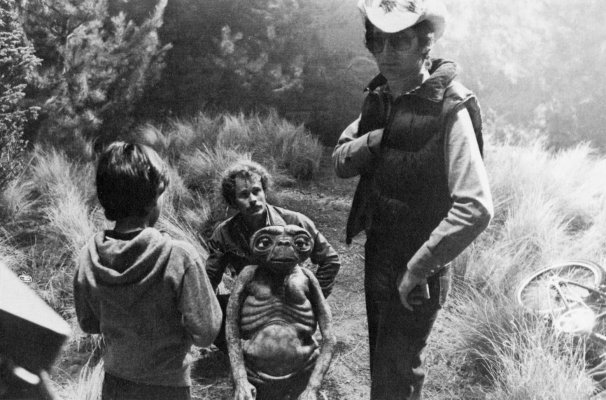
The devil's advocate might argue, "The Oscars already have categories honoring visual effects and makeup. Why should they add yet another category? When E.T. won an award for its visual effects, that basically counted as an award for creating the charater of E.T." Such objections miss the point of my proposal, and betray a prejudce against anything but the most plain-vanilla types of performance. E.T. is the result of a collaborative performance among many dedicated professionals who are tasked with a single purpose: to make us believe that this character is real. He is not one more special effect among many. The character is a singular achievement that deserves recognition apart from other accolades bestowed on the movie, just as Marlon Brando's performance in On the Waterfront deserved to be cited apart from that film's script, direction and photography.
The current method for judging collaborative performances factors makeup and special effects out of the equation. Why not change our way of thinking, and factor them in?
All the existing Oscars categories would still exist. We'd just add a new one: Outstanding Collaborative Performance.
Collaborative Performance would be a character-based category. It would be distinct from actor, actress, supporting actor and supporting actress. It would also be distinct from special effects and special makeup, which honor excellence in design and technique for whole films, not just a particular character.
The actor and the heads of any relevant filmmaking departments would be cited in a Collaborative Performance nomination. The actor's name would come first.
 For example: "The Oscar for Outstanding Collaborative Performance of 1980 goes to: Yoda in The Empire Strikes Back. Frank Oz, performance and voice; Jim Henson's Creature Shop, fabrication; Industrial Light and Magic, motion control."
Or: "The Oscar for Outstanding Collaborative Performance of 2011 goes to Caesar in Rise of the Planet of the Apes. Andy Serkis, performance and voice; Weta Digital, motion capture and computer-generated imagery."
I don't know precisely how a Collaborative Performance category might be administered, which branches of the Academy would choose it or vote for it, or which individuals or groups might be eligible to win it. I don't know how many nominees there should be, either — although considering the large number of special-effects driven movies being made every year, I bet you could find at least three characters worthy of nomination.
What I do know is that awards groups should find a way to honor one of the most potent sources of magic throughout movie history: the Collaborative Performance.
Discuss.
Matt Zoller Seitz is the staff TV columnist for New York Magazine and the founder of Press Play. Steven Santos is a freelance TV editor/filmmaker based who has cut docu-series for cable networks such as MTV, The Travel Channel, The Biography Channel, The Science Channel and Animal Planet.



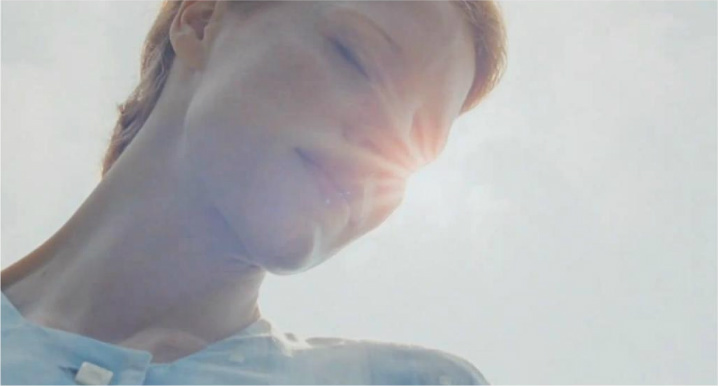
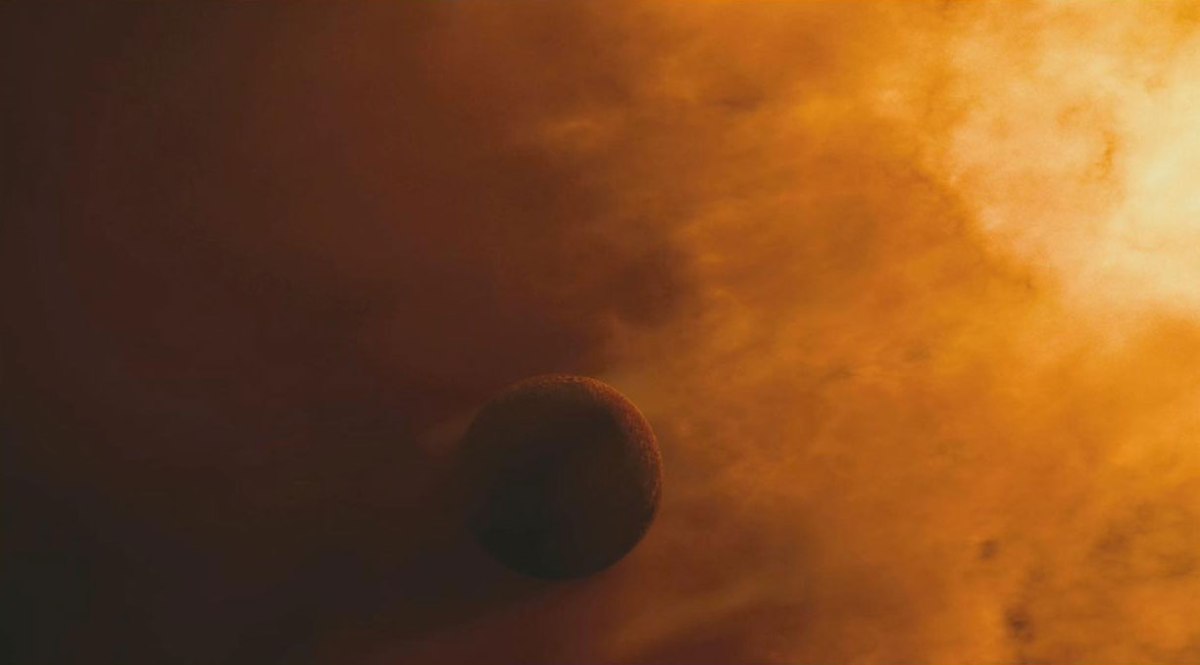
 It's impossible to discuss the movie without posing a number of questions. Whose story are we seeing here? Is it the story of the middle-aged Jack, played by Sean Penn, and his younger self? That point of view would not account for the voiceovers and subjective sequences told from the point of view of the father, played by Brad Pitt, and the mother, played by Jessica Chastain. Is the creation sequence an integral part of the movie's vision or an unnecessary and indulgent side-trip? In the scene between the wounded dinosaur and the predator down by that prehistoric river, why does the predator seem as though he's going to crush his skull, and then suddenly back off? Are we seeing the first stirrings of the schism that is discussed and visualized in different sections of the film – the way of nature versus the way of grace? Or is there some other explanation? Is there a God in Terrence Malick's universe? The repeated shots of trees, water, clouds, sky and figures haloed or backlit by intense, almost heavenly light would seem to indicate that, yes, there is a God, but uncertainty permeates the entire story, if indeed there is a story – and this, too, was the subject of debate.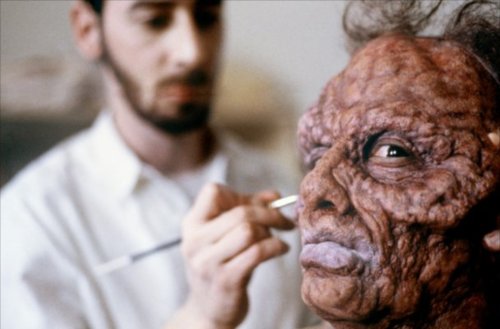
 David Cronenberg’s 1986 remake of The Fly would have been a shoo-in for a theoretical best collaborative performance Oscar. What makes it truly special is its empathy for its arrogant scientist hero, Seth Brundle, who tests his revolutionary new matter transporter on himself and becomes genetically fused with a fly that was not supposed to be in the telepod with him. Jeff Goldblum’s performance as Seth Brundle is a nexus point for all the film’s creative elements: direction, writing, acting, makeup, optical effects, miniatures and puppetry. Goldblum’s work here brings everything together. It’s kind of a thespian telepod.
 The effects are layered on incrementally, scene by scene, and they are showcased almost entirely through a single character, Seth Brundle, and a single performance, Jeff Goldblum’s.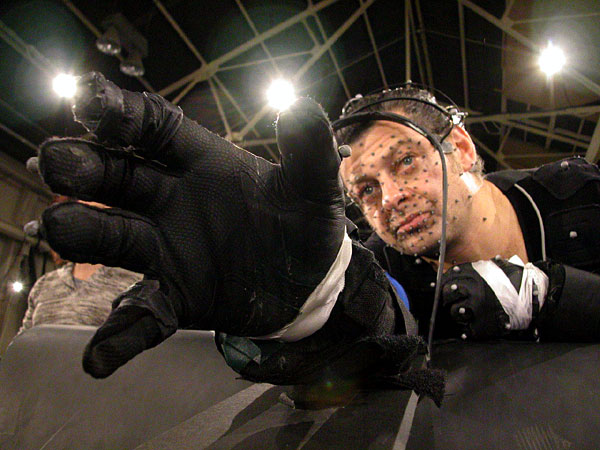



 Yet, the most striking of this year's nominees is the underdog sports film Undefeated. Following what at first seems to be a hopeless season with the Manassas High School varsity football team in Memphis, Tennessee; Undefeated emerges as one of the more impressive examples of cinema verite, otherwise known as "direct cinema." Nearly every shot is handheld; in fact much of the film seems to be unfurling in real time, in front of our very eyes. The camera is free flowing and reacts to the reality of every situation. Like other great examples of direct cinema, from Don't Look Back to the thematically similar Hoop Dreams, Undefeated breathes with an immediacy that is void of headline political agenda, broad-stroke narrative fallacies and any sort of forced sentiment. This is observant, go-for-the-throat filmmaking.

 Press Play Video Blog