Editor's Note: Press Play is aware that our videos can not be played on Apple mobile devices. We are, therefore, making this and every video in this series available on Vimeo for these Press Play readers. If you own an Apple mobile device, click here.]
Narration:
The practitioners of visual effects have a favorite phrase for what they do: the Invisible Art – effects that are imaginative, even astonishing, but that are ultimately there to sell a world, a character or a moment. Special makeup might be the best illustration of this principle. One of makeup's greatest triumphs is An American Werewolf in London, which in 1982 became the first film to win an Oscar for makeup in regular competition. Overseen by Rick Baker, who supervised all of the film's makeup effects, it shows a man changing into a werewolf in real time…right in front of your eyes. This sequence was the culmination of eight decades of movie makeup. And the film's Oscar represented a coming-out for a once-neglected aspect of filmmaking.
 Makeup effects were always a key component of the movies. Greasepaint, wigs, putty, latex appliances and other items in the makeup master's toolkit helped make the improbable, and the impossible, seem vividly real. Boris Karloff could make us believe that he was a tormented, tragic creature built from pieces of dead men in Universal's Frankenstein films – with makeup by the great Jack Pierce. Pierce's work on The Wolfman made an ordinary man become a werewolf when the wolfbane bloomed and the moon was full and bright. A 25-year-old Orson Welles played the title character of Citizen Kane at a dazzling array of ages, thanks to inventive, at times highly theatrical effects by Maurice Seiderman.
Yet despite these and other examples of the makeup master's art, the Academy refused to acknowledge the contribution of makeup artists. Prior to the 1980s, just two Special Achievement awards were given for makeup effects. Both were handed out in the 1960s. One was for 1964’s 7 Faces of Dr. Lao, which sported effects by William Tuttle. The other was for 1968’s Planet of the Apes –makeup by John Chambers. The latter citation is fascinating because, while the Academy was right to recognize the extraordinary achievement of Apes, it ignored a film from that same year whose ape makeup was even more impressive. The ape makeup in the Dawn of Man sequence of 2001: A Space Odyssey was so good that many people assumed that director Stanley Kubrick used actual, trained apes. This uptake in visual sophistication was par for the course in that period of American film.
 The 1960s through the 1980s were the high point of traditional, analog filmmaking techniques. Some of the most memorable films from this era showed transformation, decay and violence with unprecedented realism. Some of the most striking makeup effects of this period were the work of one man, Dick Smith, who finally received a special Oscar from the Academy in 2012 after decades of groundbreaking work. Nobody spilled blood with more panache.
And nobody has ever done more convincing old-age makeup. For The Exorcist, Dick Smith helped turn preteen actress Linda Blair into a rotting, puking, devil-possessed monstrosity so profoundly revolting that it haunted the dreams of millions. But the film also contains a much subtler triumph: Max von Sydow's transformation into the title character. Von Sydow was just 43 when he played the role. But Dick Smith's wrinkles and liver spots were so believable that for years afterward, casting agents kept offering him old man parts. Just as viewers thought that the costumed actors in 2001 were real apes, casting agents unfamiliar with von Sydow's work for director Ingmar Bergman thought he was some doddering European character actor. For makeup artists, such misperceptions are the highest possible praise.
 The late 1970s saw makeup effects moving away from realistic applications and moving toward the extremes of fantasy. Christopher Tucker's remarkable makeup for David Lynch's 1980 drama The Elephant Man may have pushed the Academy to start handing out a Best Makeup award the following year. After eight decades' worth of movie makeup effects, and 20 years of rapid technical innovations, to continue ignoring the makeup artist's craft would have seemed perverse. And speaking of perverse….
When Rick Baker received the first Best Makeup Oscar ever given in regular competition for 1981's An American Werewolf in London, it was sweet vindication, not just for makeup artists, but for fans of genre movies. The creation of a makeup category was not just a means of acknowledging a branch of the industry that had been glossed over in the past. It was also a sneaky way to let Academy voters bestow awards on horror, science fiction, fantasy, action and other genres that were, and maybe still are, considered un-serious, or low-class. With its still-unique mix of slapstick, romance and gore, American Werewolf never could have gotten Oscar nominations in the major categories. In retrospect, the makeup award seems not just a prize for the movie's sophisticated use of latex, air bladders and audio-animatronic puppets, but for the originality of writer-director John Landis' vision. The technical categories let Academy voters honor offbeat fare – including genre films that tend not to get nominated in the picture, director, screenplay or acting categories.
The 1970s and '80s were the age of the makeup artist as cult figure. Magazines aimed at genre buffs and wannabe-gore wizards turned the giants of the field into heroes: Jack Pierce; Dick Smith; John Chambers; Tom Savini, George Romero's go-to guy for zombie makeup; Rob Bottin, who created similarly dazzling lycanthropes a year before American Werewolf in Joe Dante's The Howling and still-unmatched alien transformation effects in John Carpenter's The Thing.
 The Oscar for American Werewolf signaled that the 1980s – the decade of high-concept blockbusters – would be the golden age of analog makeup effects. When you look back over genre movies from the period – small and big, sensitive and crass, clichéd and innovative – the special effects often hold up surprisingly well. In some cases they're the main reason that people still talk about the movies. Modern makeup effects are slicker and more consistent from scene to scene and shot to shot for reasons that we'll get to in a minute. But, given the mechanical limitations of the pre-digital era, their achievements are still impressive. Even when the storytelling falters, or when the film itself seems less an artistic statement than the end result of a studio deal memo, you can still see the behind-the-scenes craftspeople working at the peak of their powers, always striving to innovate and impress.
But as it turned out, this golden age also represented a final flowering. The industry was about to change in ways that transformed every aspect of production, including makeup. With few exceptions, the '80s heyday of makeup focused on the fantastic – the spectacular. For every film like The Elephant Man or Mask, which integrated extraordinary makeup into a realistic drama, there were a dozen more films in which the makeup was the real show. But the thing is, on some fundamental level, even in the very best makeup-driven movies of that period, you were still aware of the makeup. The effects looked, at times, a little too wet – too painted-on. This was always true, even in earlier periods, when the abstracting effect of black-and-white film gave makeup people another layer of artifice to work with. In the early '90s, right around the time that Bram Stoker's Dracula was winning an Oscar for its state-of-the-art yet old-school makeup effects, new technological advances were making it harder to tell the difference between the real and the virtual. Starting in the late 1980s, advancements in computer generated imagery had begun to offer a level of detail that wasn't possible when done practically. It reached a point where you couldn’t tell where the makeup ended and the computer imagery began.
By the time of The Dark Knight and The Curious Case of Benjamin Button, viewers started to assume that makeup effects were achieved not with putty, powder, latex or other physical materials, but with computer generated effects. And increasingly, they were right. Movies were always driven by the mandate to make the implausible plausible. But this became an even more urgent mission in the '90s and aughts. Entertainment became centered on TVs, then computers, then ultimately phones. Hollywood strove to give viewers reasons to go to theaters and experience movies on a big screen. That increasingly meant spotlighting the unreal. The ostentatious. The overwhelming. All these qualities were more achievable with CGI. Special makeup effects have gradually become less apparent, and ultimately almost invisible, thanks to CGI. The work of makeup artists and visual effects wizards became intertwined – blended together after-the-fact by digital manipulation. The new tools blend acting, photography and visual effects with makeup. CGI is like a finishing coat of paint, applied to everything. For makeup artists, and indeed for all special effects people, this is the ultimate irony. The invisible art has finally earned its nickname.
San Antonio-based film critic Aaron Aradillas is a contributor to The House Next Door, a contributor to Moving Image Source, and the host of “Back at Midnight,” an Internet radio program about film and television. A critic, journalist and filmmaker, Matt Zoller Seitz is the staff TV columnist for New York Magazine and the founder of Press Play. Ken Cancelosi is the co-founder of Press Play and photographer living in Dallas, Texas



 The subjects and characters that Korine presents exist outside the mainstream frame of heroes or villains. The silver screen heroines of Hollywood are now replaced with the rebellious, foul-mouthed street teens in Act Da Fool. The team of charming casino robbers or frontier-bound cowboys is now replaced with the outcast garbage can fornicators in Trash Humpers. By stripping away any safe scenario that would be found in a typical "movie," Korine forces the audience to reevaluate their primal reactions to some of the most obtuse and harrowing images. Therefore, these films transcend the visual mechanics behind the “normal” American narrative. Added, the locations that Korine uses for these films–decrepit housing, low-income neighborhoods–represent an underexposed cross-section of very real America (when compared to popular Hollywood content).
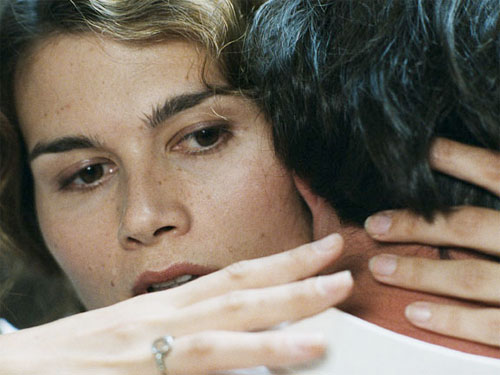

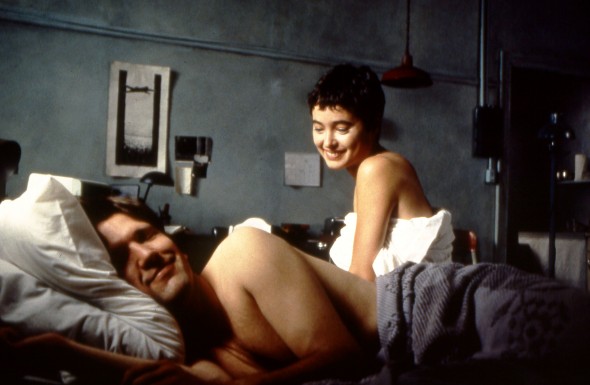
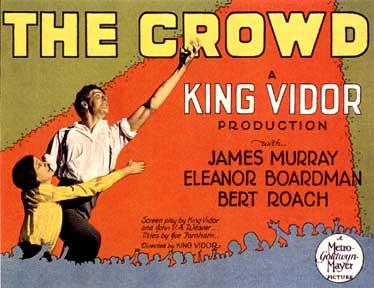
 Among the films nominated for Best (Artistic) Picture at that first fabled ceremony was King Vidor's The Crowd. Considered by many to be his masterpiece and a timeless American classic, The Crowd shares many thematic elements to this years Best Picture winner, Michel Hazanavicus' The Artist. Although both film's protagonists have similar trajectories, The Crowd is the opposite of how The Artist presents itself. King Vidor's film was remarkably different for its time in portraying a very non-Hollywood representation of everyday life. While revealing the stylistic influence of his European predecessors, Vidor evoked a natural realism that had not been seen before on American screens. Casting a relatively unknown actor (James Murray) in the lead role of John Sims, he embodied the everyday struggle of a typically average American trying his best to make his mark in a massively foreboding big city. An ambitious, experimental, and socially relevant film, its no wonder why it had been nominated for Best Picture, or why it still resonates today.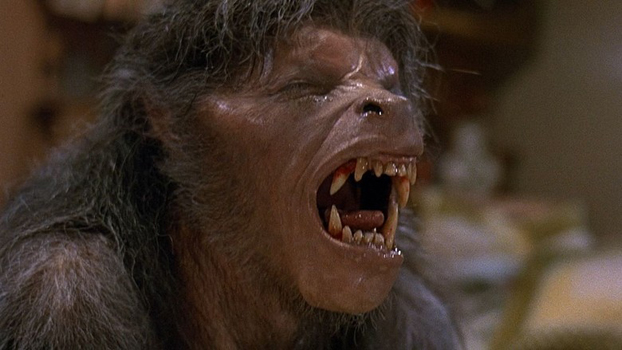

 If you doubt it, go back and watch Star Wars: Episode V – The Empire Strikes Back, the Star Wars film that introduced Frank Oz’s first great non-Muppet character, the 800-year old, swamp-dwelling Jedi master Yoda.
 You never see Frank Oz when you’re watching Yoda. When he performs the character, he’s hidden behind props or underneath a platform. But this is nevertheless a performance, one that’s as imaginative, serious and engaging as any that are given by the movie’s human characters. Maybe more so. In the training scene with Luke, Yoda is mainly played by a dummy, affixed to the shoulders of actor Mark Hamill and the stuntman who plays Luke during his more acrobatic moments. The sequence relies entirely on our suspension of disbelief, carried over from earlier scenes that were more obviously dominated by Frank Oz the puppeteer.
 Press Play Video Blog