Watch: Michael Mann’s ‘Collateral’ and Sam Mendes’ ‘Skyfall’: How to Build a Scene

Watch: Michael Mann’s ‘Collateral’ and Sam Mendes’ ‘Skyfall’: How to Build a Scene

For a scene to be truly suspenseful, one must have a sense of the director’s omniscience. What this means is that the viewer must be made to feel on top of, inside, outside, behind, beneath, all over a scene from its beginning to its end, each hairpin plot turn a twist in the viewer’s gut, each moment of respite a breeze on the viewer’s brow. In comparing two key scenes from Michael Mann’s ‘Collateral’ and Sam Mendes’ ‘Skyfall,’ Michael Mclennan shows us how the two directors and cinematographers Dion Beebe and Roger Deakins have placed us inside and outside of the action onscreen simultaneously. 

Watch: ‘The Wizard of Oz’, As You Most Definitely Have Not Seen It Before

Watch: ‘The Wizard of Oz’, As You Most Definitely Have Not Seen It Before

There are many questions that could be asked about Matt Bucy’s video, which presents us with ‘The Wizard of Oz,’ in its entirety… in alphabetical order. The first question might be, "What do you mean by alphabetical order?" What I mean is that every word in the film, from a to z, has been sorted into an alphabetical list; repeats, such as the word "do," "did," or "can," are presented in clumps. The piece is a little alarming, but also funny, and telling. It raises questions such as "How long did it take?" or "Was it difficult?" or "Do you worry that you might have missed a word?" The one question it inspires which you should nevertheless not ask is this: why?  

Watch: Michael Mann’s ‘Heat’ Is an Excellent Story Wrapped in Grander Technique

Watch: Michael Mann’s ‘Heat’ Is an Excellent Story Wrapped in Grander Technique

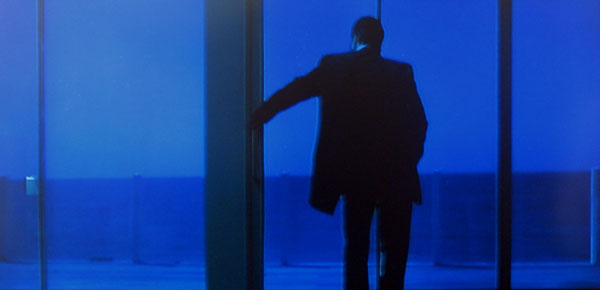
Evan Puschak’s work in his newest ‘Nerdwriter’ installment, on style in Michael Mann’s ‘Heat,’ is fine and detailed. Puschak manages to separate the core of Mann’s L.A. noir tale from the technique Mann adds to it with the precision of someone carving meat away from the bones of a freshly cooked bird. One of the main points the piece makes about Mann’s work is that it is always a blend of what Puschak calls the "functional" and the "stylistic": films that keep you watching through the relentless drive of their stories but have a sleek sheen over them that is unmistakably Mann’s. Puschak has also done his research, pointing out that one of the most famous images from the film, the silhouette shot from behind of DeNiro, looking out into an unbroken blue field (the promo photo for this post, in fact), is actually based on a 1964 painting by Alex Colville called "Pacific"–or that the entire film is based on the true tale of an L.A. detective named Neil McCauley. It’s always a pleasure to revisit Mann’s work, but it’s even more of a pleasure to see it so attentively examined.  

Watch: RIP Haskell Wexler, 1922–2015

Watch: RIP Haskell Wexler, 1922-2015

‘Medium Cool’ is probably my favorite Chicago movie. I remember learning about it in college and then frantically seeking it out on DVD; at the time it was a hard film to find. (This was before it got the Criterion release.) I eventually got my hands on a burned DVD copy and watched it several times. For those unfamiliar with the film, it tells the story of a TV news cameraman (Robert Forster) who gets swept up in the melting hot summer of 1968 in Chicago, climaxing with the riots at the Democratic National Convention. The film had a cinéma vérité-style look to it, with many handheld shots that punch in on the action and moments of high drama. It’s an immersive experience, that is documentary-like at times, with the success owed directly to the film’s writer, director and cinematographer, Haskell Wexler. It’s amazing that Wexler pulled this all off, too, considering that he actually filmed it in the summer of 1968, placing his lead actors right in the middle of the riots as they were happening. When I learned of Wexler’s passing on Sunday afternoon, I was visiting some friends just down the street from Grant Park, where the climactic and stirring riot footage of ‘Medium Cool‘ was filmed. I couldn’t stop thinking about the film as I took the "L" (our elevated transit train in Chicago) home that night, looking out the windows, seeing all the city landmarks that Wexler shot with his camera. I then remembered a special evening back in 2010, when I attended a small screening of ‘Medium Cool’ at the University of Chicago’s Film Studies Center. Wexler was in attendance, and afterwards he discussed the film in front of the cozily seated audience. I leaned forward in my seat for most of that discussion, studying this accomplished cinematographer, who wore a baseball hat and leather jacket. He spoke with an insight devoid of cynicism. It was just plain, simple diction, but still full of depth and takeaways. I later learned that he was also a two-time Oscar-winning cinematographer (for ‘Who’s Afraid of Virginia Woolf?’ and ‘Bound For Glory’), who, in addition to working on big Hollywood films, also made a laundry list of commercials and documentary short films. This was in addition to his passion projects (like ‘Medium Cool’) which he funded by working on those bigger feature films. He even photographed what looks to be at least half of Terrence Malick’s ‘Days of Heaven’—but bizarrely only received an "additional photography" credit (the Oscar for that film would go to director of photography Néstor Almendros). Even today I’m still learning more about the endlessly fascinating and unquestionably prolific Wexler. Revisiting just a fraction of his filmography in my video tribute to him, I can only begin to scratch at the surface of how great his eye for images was. And now that he’s gone, his films will continue to live on, and Wexler should find peace in knowing that "the whole world is watching."

Nelson Carvajal is an independent digital filmmaker, writer and content creator based out of Chicago, Illinois. His digital short films usually contain appropriated content and have screened at such venues as the London Underground Film Festival. Carvajal runs a blog called FREE CINEMA NOW which boasts the tagline: "Liberating Independent Film And Video From A Prehistoric Value System." You can follow Nelson on Twitter here.

Watch: Was David Lynch’s ‘Lost Highway’ A Dig at Oliver Stone?

Watch: Was David Lynch’s ‘Lost Highway’ A Dig at Oliver Stone?

Every work is, whether it knows it or not, a comment on another work. The filmmaker, the poet, the songwriter may pray for originality and often the prayers are answered. But, the work produced will always be the product of all the works that have come before it, absorbed and re-emitted by the artist. Sometimes the work will comment on other works, either slyly or openly. Take, for example, ‘Lost Highway,’ David Lynch’s 1997 tale of crime and loss. This video essay by Jeff Keeling takes a close, methodical look at the film’s potential commentary on two works by Oliver Stone–‘Natural Born Killers‘ and ‘Wild Palms‘–for which Stone received a tremendous amount of acclaim. The similarities and points of careful divergence are striking; the films’ casts overlap (Robert Loggia and Balthasar Getty), and certain scenes from Stone are quoted by Lynch, but the dialogue is significantly different. What do you think?

Watch: What If Stan Brakhage Directed Mariah Carey’s ‘All I Want For Christmas?’ Video?

Watch: What If Stan Brakhage Directed Mariah Carey’s ‘All I Want For Christmas?’ Video?

The question of the hour: what IF Stan Brakhage directed Mariah Carey’s ‘All I Want for Christmas" video? Having asked that question, I can’t think of much to follow it up. I could talk about Brakhage’s abstract, layered methodology, or I could talk about Carey’s seemingly immortal Christmas hit, but why? That would just be adding words upon words, for no reason. Just watch Conor Williams’ ingenious video, and get in the holiday spirit.

Watch: Alfred Hitchcock’s Editing Mastery in the ‘Psycho’ Shower Scene

Watch: Alfred Hitchcock’s Editing Mastery in the ‘Psycho’ Shower Scene

While it’s perfectly conceivable that someone might create a scene with as much tension and suspense as the famous shower scene from Alfred Hitchcock’s ‘Psycho,’ there’s a level of panic to the scene that would be hard to match, created primarily with Hitchcock’s cuts, the swoops he makes from one perspective to another, the shifts, the disjunctures. This video essay by "Love of Film" shows us Hitch’s cuts, arranged in a nice, boxlike organization, which actually makes the method and strategy employed here quite clear, from the start of the shower to the screaming from the Bates house. Take a look…

Watch: ‘The Force Awakens’ Meets ‘Please, Mr. Kennedy’

Watch: ‘The Force Awakens’ Meets ‘Please Mr. Kennedy’

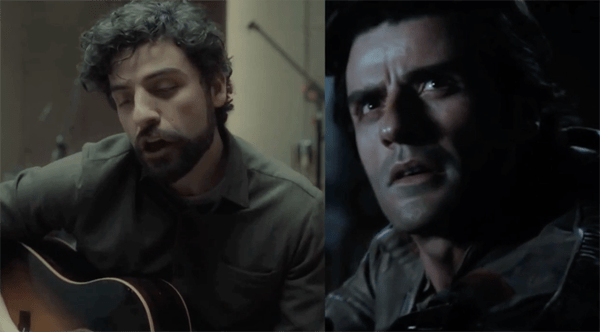
Nelson Carvajal likes to put pairs together. Usually, it’s pairs; sometimes, he might add an extra element. I first became aware of this tendency when I saw his match-up of ‘There Will Be Blood’ and ‘2001: A Space Odyssey,’ after which the thunk my jaw made as it hit the floor could be heard across the Hudson. Now, he’s mixed and matched ‘Please Mr. Kennedy,’ a ditty from the Coen Brothers’ ‘Inside Llewyn Davis,’ with scenes from ‘The Force Awakens.’ Does it work? Yes it does. The swooping nature of the song, goofy as it is, syncs beautifully with the gestural, sinewy visuals of J.J. Abrams’ film. Just watch!

Watch: Chantal Akerman’s ‘Jeanne Dielman’ Is a True Action Movie

Watch: Chantal Akerman’s ‘Jeanne Dielman’ Is a True Action Movie

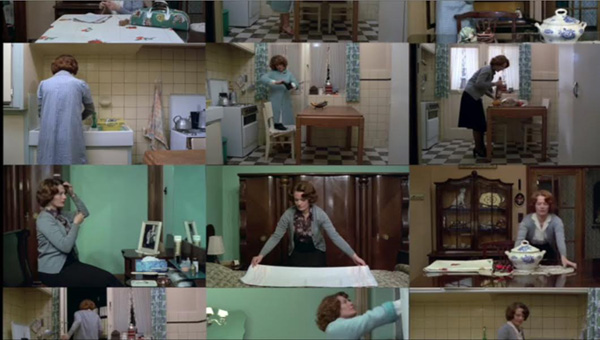
In Chantal Akerman’s ‘Jeanne Dielman, 23 quai du Commerce, 1080 Bruxelles,’ a series of mundane actions are transformed into hugely communicative gestures that keep the viewer suspended between a place of understanding the main character’s inner world and a place of total ambiguity. Akerman establishes a routine and then uses variations and interruptions in that routine to expose the protagonist’s psychology. Tasks such as cooking and cleaning become pure narrative, events in sequence moving forward in a suspenseful and ominous arc. In reducing a film to such actions, and imbuing them with meaning, these otherwise dull activities become compelling. Actions speak louder than words, and ‘Jeanne Dielman’ is cinema’s purest action movie. 

Adam Cook is a Vancouver-based independent film critic, editor, and programmer. He is a regular contributor to Cinema Scope and a columnist for Little White Lies. He has written for, among others, Sight & Sound, Cineaste, Film Comment, Fandor, Indiewire, and Brooklyn Magazine.

Watch: What’s the Body Count in Quentin Tarantino’s Films? Warning: Not Safe for Lunch

Watch: What’s the Body Count in Quentin Tarantino’s Films?

One of the things Quentin Tarantino’s films are known for, aside from their film references, their dialogue, their story structure, their resurrection of actors’ careers, is, of course, their violence. In his newest piece for Fandor, an effort which took him three years to complete, Kevin B. Lee has counted the number of deaths that have taken place in Tarantino’s films to date, to as close a degree of accuracy as anyone could reach. The answer? You’ll just have to watch for yourself.

One thing: don’t watch this while you eat.